1. Introduction
Since its creation, paper has had a significant impact on humanity, gradually becoming a widely used resource in both ancient and modern societies. Since the first rolls of paper were produced, the environment has been significantly impacted, as the primary raw material used in papermaking is wood [
1,
2,
3]. This has led to an exponential increase in deforestation worldwide over the years, causing significant harm to the environment and the planet, including the loss of habitats for endangered species [
4,
5,
6]. The paper industry has expressed concern about the environmental impact associated with deforestation, as well as the use of fossil fuels in the paper manufacturing process, which contribute to the emission of greenhouse gases such as carbon dioxide (CO
2) and methane (CH
4) [
7,
8,
9]. This situation has driven paper industries to seek more sustainable alternatives for papermaking, shifting toward the use of non-wood raw materials [
10,
11,
12]. These include agricultural waste, such as sugarcane bagasse, banana fibers, and pineapple fibers, among other materials that reduce environmental impact and utilize byproducts that are traditionally considered waste [
13,
14,
15]. In [
16], the use of organic banana waste is proposed as a raw material for the production of bacterial cellulose. This biopolymer has several advantages over plant cellulose, including its greater tensile and compressive strength, making it a promising alternative for cardboard manufacturing. According to the analysis presented in [
17], materials such as corn stalks, rice straw, and cotton stalks are viable alternatives to wood for the production of specialty paper. Regarding non-wood lignocellulosic fibers, bamboo has been the subject of research that highlights its potential in the paper industry. The review presented in [
18] compiles the main advances in this area, pointing out that bamboo, due to its rapid growth, high yield per unit area, and the favorable physical properties of its fibers, represents a promising alternative to wood for the production of pulp and paper, allowing for significantly reduced supply times. In addition to their potential as a raw material, these agricultural residues offer significant economic advantages, as their processing requires less energy than traditional methods based on wood pulp. From an economic perspective, the use of non-wood fibers offers a viable alternative with significant advantages. For example, it reduces raw material costs in agricultural areas, helps diversify the supply chain, and enables access to market niches that prioritize ecological products or those with sustainability certifications. Furthermore, several comparative studies have analyzed the morphological, chemical, and mechanical properties of materials such as bagasse, wheat straw, bamboo, and rice straw, demonstrating their lower cost, higher energy efficiency, and reduced environmental impact compared to wood-based fibers [
19].
In [
20], the use of nanocellulose and chitosan is proposed for the production of biodegradable paper. Nanocellulose, a renewable and biodegradable material, contributes to improving the strength, retention, filtration, and coating properties of paper. In parallel, chitosan, obtained from chitin, is the second most common polysaccharide in nature. It is a sustainable, non-harmful biomaterial with a high cationic charge, antibacterial properties, and a strong affinity for cellulose. When incorporated into papermaking, it enhances both dry and wet strength by forming hydrogen bonds with nanocellulose, thereby optimizing the physical, mechanical, thermal, and antimicrobial properties of the resulting paper. In [
21], combinations of refined Kraft pulp and cellulose filaments were used to produce paper with high barrier properties. The findings indicated that incorporating cellulose filaments significantly increased resistance to water vapor permeability and water barrier capacity, without requiring additional chemical agents. In [
22], three classes of lignocellulosic feedstocks for replacing plastic packaging are examined: agricultural residues, fruit and vegetable byproducts, and forest waste, evaluating their physicochemical composition, including cellulose crystallinity, hemicellulose ratio, and lignin content, as well as the main processing methods. In addition, various manufacturing techniques, including compression molding, extrusion, and solvent pouring, are analyzed, and the influence of compositional characteristics on the properties of the resulting films, including tensile strength, elongation, water vapor permeability, thermal stability, and biodegradability, is determined.
Previous studies have evaluated the potential of
Eichhornia crassipes as an alternative lignocellulosic source for sustainable paper production. In these studies, potassium hydroxide (KOH)-based chemical pulping processes have been employed to obtain cellulose fibers suitable for handmade papermaking, achieving satisfactory mechanical properties that can be further enhanced through bleaching treatments. Additionally, analyses have been conducted on the mechanical strength, flexibility, and structural behavior of paper sheets produced from water hyacinth fibers, demonstrating that fiber processing and treatment conditions directly influence the final product’s quality. Overall, these works highlight the technical feasibility and environmental value of utilizing invasive aquatic biomass as a sustainable alternative for paper production and plant waste valorization [
23,
24,
25].
Despite the ecological and environmental advantages of paper production using alternative fibers or agricultural waste, these processes face various technical, economic, and operational challenges that must be overcome to enable their large-scale, sustainable implementation [
26,
27,
28]. While fibers such as straw, bagasse, hemp, flax, and other agricultural waste offer important environmental benefits, the current scientific literature highlights limitations that must be addressed for these alternatives to compete effectively with traditional sources [
29,
30]. Agricultural fibers, due to their unique structure and composition, can be more challenging to bleach without harsh chemicals. Chlorine-free methods have difficulty achieving levels of whiteness and brightness comparable to those obtained with wood fibers [
31]. Alternative fibers may exhibit lower tear strength, reduced double-fold capacity, and shorter breaking lengths, particularly under humid conditions. Agricultural residues are also often geographically dispersed, which can increase collection and transportation costs. Post-harvest losses also occur if not properly managed [
32].
This article proposes an industrial-oriented framework for the production of eco-friendly paper from cellulose fibers extracted from water hyacinth (
Eichhornia crassipes), with potential application in corrugated cardboard packaging manufacturing. Due to its high cellulose content, this plant represents a renewable, alternative, and sustainable source for biopaper production [
33,
34]. The proposed methodology is designed to meet the technical requirements of the packaging industry through standardized stages, including biomass preparation, chemical pulping, fiber characterization, sheet formation and drying, and the evaluation of critical mechanical properties for corrugated board applications, such as CMT, CCT, RCT, and SCT.
The scientific novelty of this study lies in the fact that, unlike previous works such as [
23,
24], which primarily focus on handmade paper production and the evaluation of basic handsheet mechanical properties, such as tensile index, tear index, and Young’s modulus, this research proposes an approach oriented toward industrial packaging applications. In particular, it addresses a research gap related to the limited evaluation of compressive strength and structural performance properties required for corrugated cardboard manufacturing using water hyacinth fibers. Therefore, this study not only investigates the feasibility of water hyacinth as an alternative raw material for paper production but also incorporates mechanical performance criteria specific to the packaging industry, providing experimental evidence of its potential application in sustainable packaging and contributing to the development of solutions that reduce dependence on conventional wood-based fibers.
The aim of this study is to evaluate the technical feasibility of producing eco-friendly paper from water hyacinth fibers (Eichhornia crassipes) within an industrial framework for corrugated cardboard applications. Unlike previous studies focused on handmade paper, this research addresses the packaging industry’s requirements by incorporating mechanical performance criteria relevant to structural applications.
Specifically, this study aims to: (1) analyze the effects of different fiber treatment and pulping conditions on cellulose characteristics and fiber quality; (2) evaluate the relationship between processing parameters and the fundamental and compressive mechanical properties of paper; and (3) develop a scalable and sustainable production approach for paper based on Eichhornia crassipes, suitable for industrial packaging applications. The results of this study are expected to contribute to closing a critical research gap in the valorization of water hyacinth fibers by moving beyond basic laboratory handsheet characterization to evaluate mechanical performance relevant to industrial applications.
2. Materials and Methods
The species
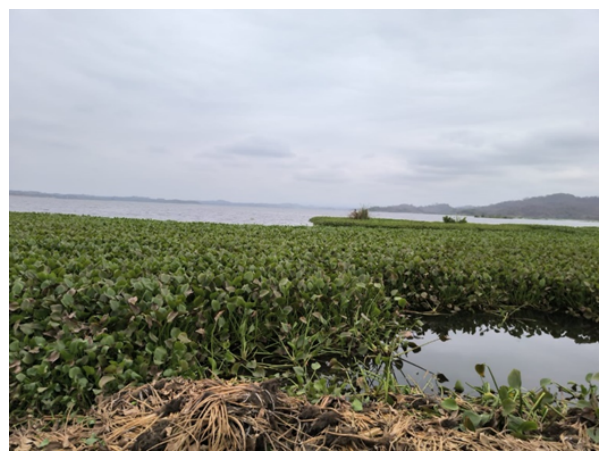
Eichhornia crassipes tends to grow more favorably in slightly brackish waters. For this reason, specimens were collected from the “Parque El Lago” reserve, located along the coastal highway in Guayaquil, Ecuador, as shown in
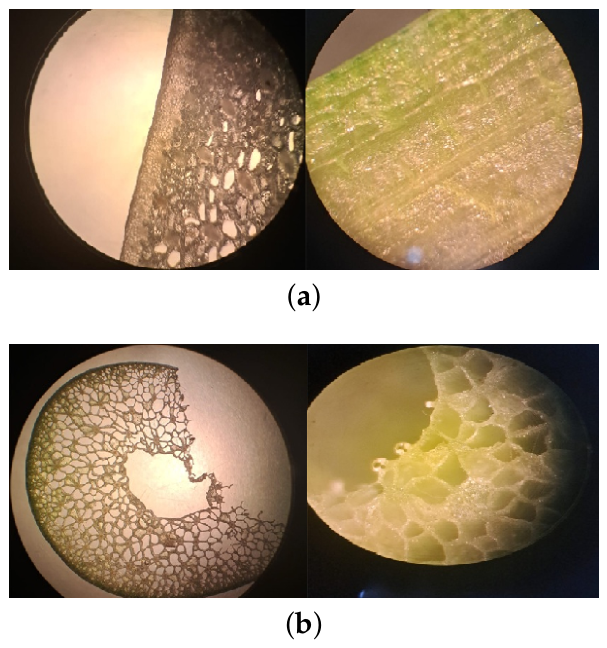
Figure 1. The water conditions in this area are suitable for plant growth, allowing the species to grow to larger sizes than in other locations. The selected plants had an average length of 60 cm and a maximum average width of 42.5 cm per specimen. The stems had a maximum diameter of 2 to 3.5 cm. Regarding the leaves, they had an average diameter of 15–20 cm. Upon internal examination of the stems, numerous microscopic tubular structures were observed. An axial and sagittal section was made of the stem of a collected water hyacinth, as shown in
Figure 2, where the presence of capillary tubes can be observed through a stereoscopic microscope. The function of these tubular structures (known as aerenchyma) is to store water obtained from the primary source to generate food for the plant. They are also made of plant fiber capable of generating retention and storage bags. To produce eco-friendly paper from
Eichhornia crassipes, the main materials employed are described below.
Water hyacinth: Raw material used or paper production.
Sodium hydroxide: Used to promote disintegration by increasing the pH, thereby weakening the internal fibers enough to break. A maximum of 1 to 3 g was used.
Recycled cardboard fibers (OCC): This is the standard material used to prepare the reference samples and the material used to test the compatibility of the water hyacinth fibers for quality analysis.
Disintegration equipment: Transforms the raw material into pulp and then forms a sheet.
Measuring cylinders (1000 mL, 500 mL, and 250 mL): These are used to measure the pulp extracted from the pulp disintegrator. Different amounts of pulp are required for each production phase to perform the respective analysis.
Industrial fiber mesh classifier: After measuring and calculating the consistency of each pulp sample taken, a fiber classifier is used to analyze how much short fiber, long fiber, or waste (fine) exists.
Vacuum filter system: This refers to a vacuum system, 1000 mL of Kitazate, a Buchner funnel, and a vacuum suction pump. This equipment is necessary to remove excess water from the samples so they can be taken to the drying oven.
Paper forming equipment: This equipment is divided into two parts: the fiber arrangement equipment and the forming oven. Both are used to produce paper, shaping the fibers radially and then ironing them to weave and adhere them to form the paper.
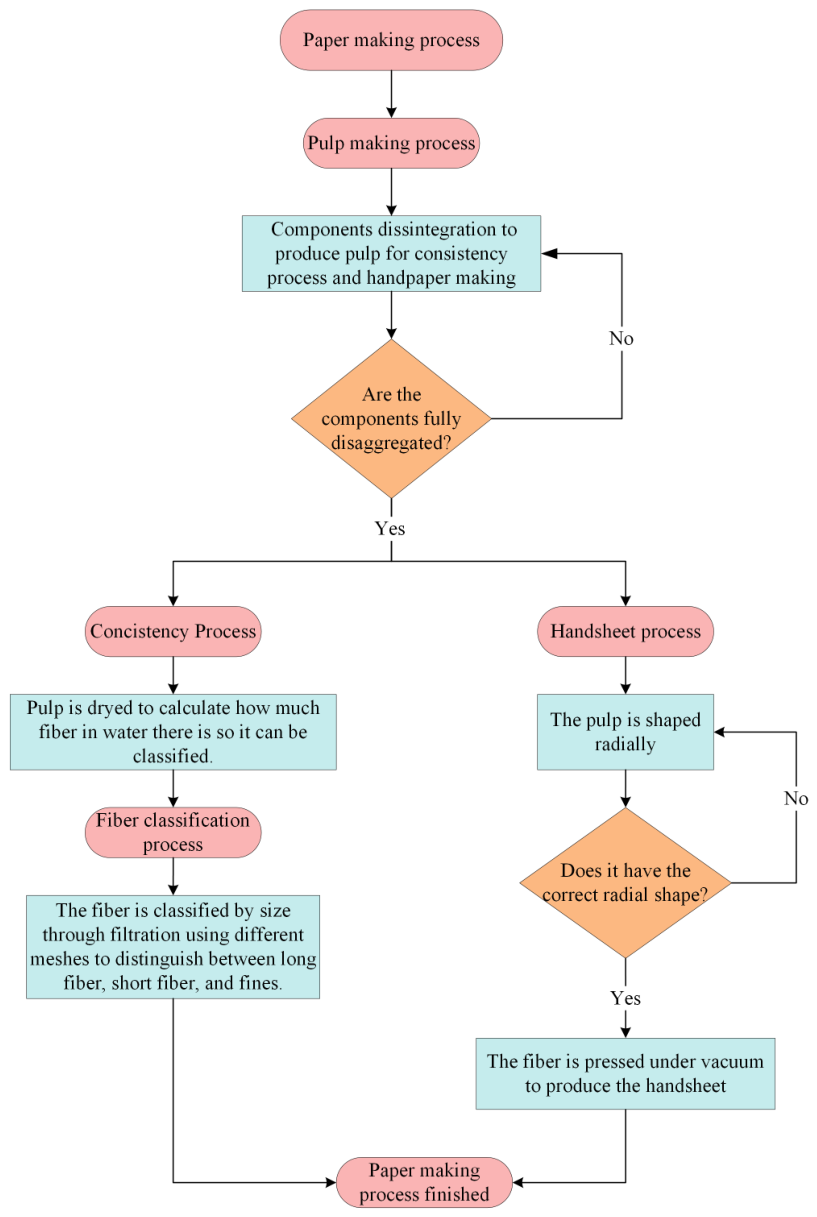
The methodology used for the production of eco-friendly paper from Eichhornia crassipes was divided into five stages.
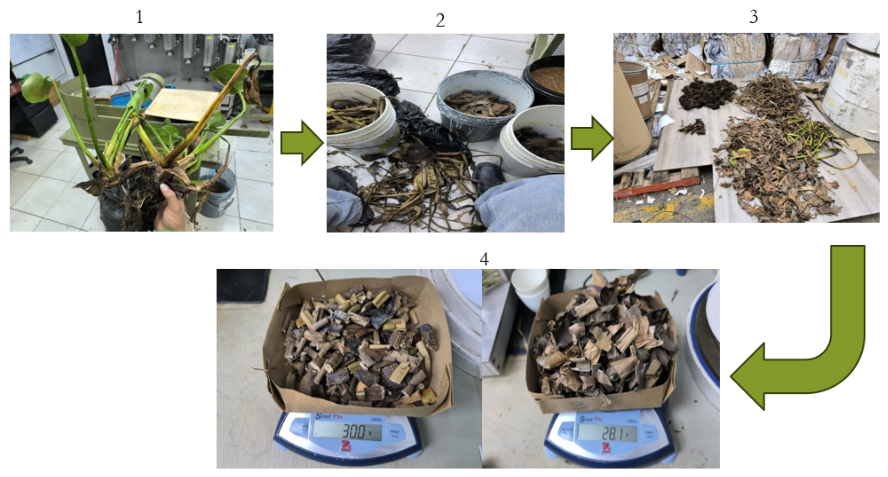
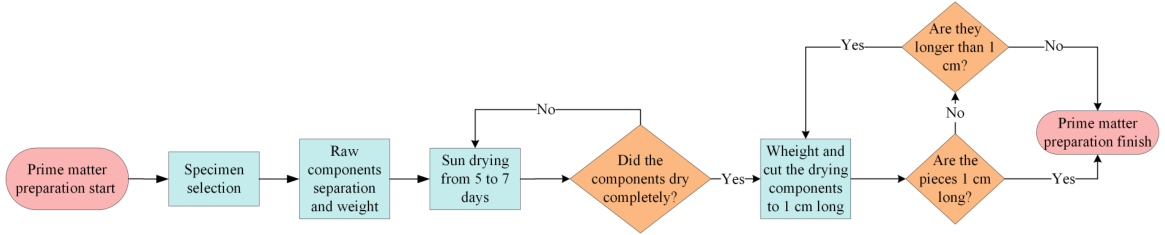
Stage 1: Preparation of raw materials. The process began with separating the plant components (stem, leaf, and root). The material was then sun-dried for 5 to 7 days at temperatures between 25 and 29 °C. Subsequently, the components suitable for processing (leaf and stem only) were cut into 1 cm pieces, thereby preparing the dry raw material. Additionally, after cutting, the sample was placed in a drying oven at 105 °C for 2 h to remove any residual moisture.
Each element is weighed separately to determine its individual weight and the total weight, with the plant still in its fresh (non-dried) state. The plant components are then left to dry in the sun for five to seven days. They are then weighed again to determine their moisture content and the fiber each can provide (plant yield), as shown in
Figure 3, steps 1, 2, and 3.
The preparation phase ends with the leaves and stems being chopped to approximately 1 cm in length. The roots do not meet this requirement due to their fragility and easy disintegration (see
Figure 3, step 4). A flowchart summarizing Stage 1 is shown in
Figure 4.
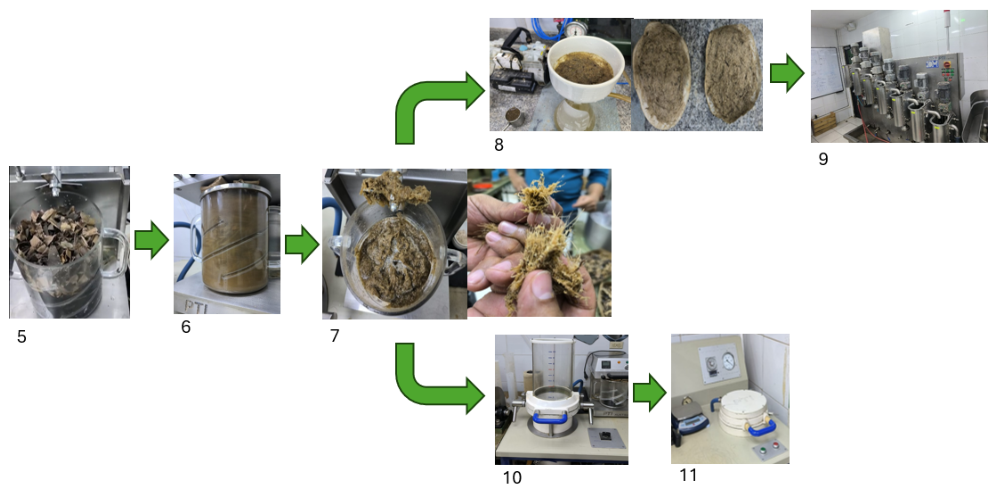
Stage 2: Pulp-making process. The process begins by filling a disintegration tank with 2 L of water and 30 g of raw material consisting of stems, leaves, roots, or a mixture thereof. This procedure follows TAPPI T 200 sp-21 standard (Technical Association of the Paper and Pulp Industry, [
35]). Depending on the test conditions, caustic soda (NaOH) may be added. The pH of the sample should range from 10 to 12; therefore, approximately 1 g of NaOH (average concentration of 0.01251 M) was added to the disintegration vessel in accordance with TAPPI T 235 cm-22, [
35]. This promotes disintegration while minimizing fiber degradation, as shown in
Figure 5, steps 5, 6, and 7.
The disintegration process takes 25–30 min at 3000 rpm (the default parameters of the disintegration machine for this type of fiber). Once the process concludes, pieces that did not disintegrate must be checked to allow for more time.
Stage 3: Consistency process. The process begins with a 100 mL pulp sample, which is first vacuum-dried and then oven-dried at 105 °C for 1 to 2 h. The dried sample is weighed, and its consistency is calculated from its mass. Determining consistency allows adjusting the pulp to the appropriate concentration, which is essential for efficient fiber classification (see
Figure 5, steps 8 and 9).
Stage 4: Fiber classification process. Fiber classification is performed to determine the predominant fiber size in the pulp and to quantify the proportion of fines generated as a percentage. The sieves used throughout the process enable separation of fibers by size, with mesh sizes of 8, 10, 12, 30, 50, 100, and 200. The mesh number corresponds to the number of openings per
in each sieve (TAPPI T 233 cm-25 standard, [
35]). Following separation, the retained fibers are collected, dried, and weighed in order to calculate the percentage distribution of fibers and fines. In this procedure, a consistency of 10 g of fiber per 100 mL of pulp suspension was used. The filters must be labeled with each mesh number to classify the fibers obtained after the process is complete. Subsequently, the samples were dried in an oven at 105 °C for 2 h and finally weighed using a four-decimal precision balance (
g). Afterward, fiber was classified as long fiber, short fiber, and fine (the term fine refers to the loss of material that is not considered beneficial fiber). Long fibers have a greater capacity for hydrogen bonding due to their length and larger anchoring area, which contributes significantly to the mechanical strength of the paper sheet. In contrast, short fibers, although they also participate in forming hydrogen bonds, provide lower strength per unit area. Finally, the fine fiber is not retained in the paper sheet and is removed through a drainage system.
Stage 5: Handsheet process. According to TAPPI T 205 sp-24, [
35] the final phase begins by placing 400 mL of pulp in a test tube integrated into the forming system and ensuring proper sealing to prevent dripping or water spillage. The volume is then adjusted to 700 mL with water, and a bubbling system integrated into the mechanism induces precipitation for 5 s. The mixture is then left to stand for another 5 s to allow the fibers to stabilize. Finally, the system drains the water until vacuum drying is achieved, leaving only the pulp. The fiber is then transferred to a radial forming blade and positioned on a vacuum compactor plate (
bar ) at 95 °C for 15 min, resulting in the formation of a new sheet (see
Figure 5, steps 10 and 11). The methodology for producing eco-friendly paper from water hyacinth is summarized in
Figure 6.
Calculations. To evaluate the process efficiency and the physical properties of the samples, experimental calculations were carried out. The moisture percentages of each
Eichhornia crassipes are calculated using (
1).
where,
represents each sample of
Eichhornia crassipes for
.
The calculation of the fiber weight is done using (
2).
where the fiber weight for each sample
is obtained by a weight differential using an analytical balance; this information is necessary to calculate the fiber percentage using a standardized value of 10 g of fiber per pulp (M), as shown in (
3).
To obtain long fibers, (
4) is used, adding the fiber percentages per sample obtained in meshes with numbers 8, 10, 12, 30, and 50. A mesh of 8 indicates that for each mm
2 of the mesh, there are eight openings, and so on with the rest of the meshes.
Similarly, the percentage of short fibers is calculated using mesh sizes 100 and 200, as shown in (
5).
Finally, to calculate the waste (fine material), the percentage differential is calculated as shown in (
6).
For quality analysis, standard references provided by the TAPPI standards are used [
35]. We calculate the grammage as shown in (
7), taking into account that the standardized area of all the test pieces is 0.0019355
.
The non-dimensional quality indices are calculated as shown in (
8)–(
11).
Although Equations (
8)–(
11) are similar, each tests the paper under different conditions. In the CCT, the applied force is vertical, whereas in the CMT, the specimen is corrugated and subjected to a horizontal force. The difference between the equations for calculating the SCT and the RCT is solely due to the term 0.1751. This is because only a small portion at the end is subjected to compressive force, whereas in the RCT, the compression is complete and occurs in a vertical ring.
3. Results and Discussion
To evaluate the yield and quality of water hyacinth as a raw material for papermaking, ten samples of
Eichhornia crassipes (labeled as
, …,
) were used. Firstly, the drying of the water hyacinths revealed that the total mass consisted predominantly of moisture, ranging from 87% to 91%. This indicates that most of this weight is lost after sun-drying. This finding is significant, as it shows that the usable biomass of all sampled populations represents only between 9.62% and 12.19% of the total mass. The pulp preparation procedure was similar in all cases. A total of 30 g of raw material was added to 2 L of water (maximum capacity of the disintegration vessel), according to TAPPI T 205, [
35] (handsheet preparations). However, in certain conditions, sodium hydroxide was added to provide a mild alkaline treatment following TAPPI T 200, [
35] (laboratory disintegration of pulp) guidelines. This resulted in a slight degradation of the lignin and hemicellulose present in the biomass. In these specific cases, the applied conditions are presented as follows.
: 1.007 g NaOH, initial pH: 12.10, estimated final pH: 11.1, concentration: 0.01259 M.
: 1.019 g NaOH, initial pH: 12.11, estimated final pH: 11.2, concentration: 0.01274 M.
: 0.964 g NaOH, initial pH: 12.08, estimated final pH: 11.0, concentration: 0.01205 M.
: 1.011 g NaOH, initial pH: 12.10, estimated final pH: 10.9, concentration: 0.01264 M.
Table 1 and
Table 2 show the fresh and dried weights, respectively, of the anatomical structures (roots, leaves, and stems) of each collected specimen of
Eichhornia crassipes. A consistent comparative evaluation of biomass reduction and moisture removal can be established, since each dried sample corresponds directly to its fresh counterpart. It is shown that there is a substantial loss in mass in all structural components after the drying process. Under fresh conditions, biomass total values ranged from 219.1 g to 513.6 g, whereas after the drying process, this total ranged between 23.2 g and 68.8 g in a major decrease in biomass, representing only a small fraction of the initial fresh mass.
The average total of fresh biomass after calculations for 10 samples was 402.0 g approximately, while in dry biomass, it was about 46.5 g, corresponding to an average mass retention of 11.6%, which indicates that 88.4% of the prior mass was associated with water removed from the original weight.
Among the different plant structures, the stem is represented as the largest fraction in biomass in both fresh and dry conditions. In the fresh samples, this component weighs between 95.5 g and 291.4 g, while in dried samples, the same components decrease to values from 13.2 g to 33.5 g, making an average reduction of approximately 86% to 88%. Despite this significant reduction, stems remain as the dominant structural component after drying, suggesting a greater accumulation of fibrous material.
Roots also exhibit a great reduction in mass after drying. Fresh weights ranged from 94.3 g to 195.8 g, while dried roots weighed between 4.5 g and 22.8 g. This signifies that there was even less fibrous material than stems, but they carried more water in their mass.
Leaves, on the other hand, hold the smallest biomass values in comparison to roots and stems. In fresh leaves, their weight values ranged from 27.5 g to 63.2 g, while after the drying process, they swung between 5.1 g and 12.5 g. This shows that leaves generally retained a slightly higher proportion of fibrous matter relative to their fresh weight.
Table 3 presents the dry weight percentages of the root, stem, and leaf components, as well as the overall dry weight percentage of each analyzed plant. These values highlight the contribution of each component after drying and facilitate comparison among samples.
Table 4 shows the percentage of moisture in each part of
Eichhornia crassipes based on weight differences. This percentage is calculated based on the weights of the plant components shown in
Table 1 and
Table 2.
The results presented in
Table 4 refer to the weight loss due to moisture content retained within each sample. The moisture loss ranged from 86% to 91%, indicating a significant reduction in the total weight of the plant material. In contrast, the dry matter content of the plant varied approximately between 9% and 12%, representing the usable raw material fraction.
Furthermore, when analyzing the individual components, the leaf fraction consistently exhibited the highest percentage of dry weight, ranging from 14.08% to 22.40%. In comparison, the root (4.77% to 12.26%) and the stem (8.89% to 13.82%) showed lower contributions to the total dry weight.
Table 5 and
Table 6 summarize the maximum, minimum, and average values obtained from
Table 3 and
Table 4, allowing a clearer comparison of how moisture and dry matter are distributed across the different plant structures.
From
Table 5, it can be observed that the root consistently shows the highest moisture content. On average, the root reaches 90.2%, which is slightly higher than the stem (89.3%) and noticeably higher than the leaf (81.6%), with a difference of 8.6 percentage points between root and leaf. This pattern is also reflected in the maximum values, where the root reaches 95.2%, compared to 91.1% for the stem and 85.9% for the leaf. Even the minimum value of the root (87.7%) remains relatively high, indicating that its moisture content is consistently elevated across samples. In contrast, the leaf shows the lowest values and a wider spread (77.6% to 85.9%), suggesting greater variability in its moisture content.
A similar but opposite trend appears in
Table 6. The leaf tends to concentrate more dry matter, reaching a maximum of 22.40%, which is considerably higher than the stem (13.82%) and the root (12.26%). However, when looking at the average values, the differences are smaller: 11.22% for the leaf, 10.73% for the stem, and 9.81% for the root. This indicates that, although the leaf can reach higher dry matter values, the overall distribution is more balanced among the structures. In terms of variability, the stem shows the most stable behavior (range of 4.93 percentage points), while the root and leaf present wider ranges.
Overall, the data suggest a clear contrast between moisture retention and dry matter distribution within Eichhornia crassipes. The root, which remains in direct contact with water, retains up to 9.3 percentage points more moisture than the leaf, while the leaf can exceed the root in dry matter content by more than 10 percentage points under certain conditions. This difference is important from a processing perspective, since structures with lower moisture content, such as the leaf, may be more suitable for applications requiring higher solid yield, whereas the root and stem would likely require more intensive drying before further use.
The moisture behavior observed in the present study is consistent with previous investigations on
Eichhornia crassipes fibers. Similar studies have reported that the hydrophilic nature of water hyacinth fibers is associated with the presence of hydroxyl groups in cellulose and hemicellulose structures, which contribute to elevated moisture sorption and water retention capacity [
24]. Similarly, ref. [
23] reported that water hyacinth has relatively high cellulose and hemicellulose content, along with a comparatively low lignin composition, supporting its suitability as a non-wood lignocellulosic source for the production of handmade pulp and paper. These findings are in agreement with the present work, in which the untreated fibers demonstrated favorable structural behavior and acceptable mechanical performance during paper formation. However, despite these advantages, previous studies have also indicated that water hyacinth may accumulate contaminants and heavy metals when collected from polluted aquatic environments due to its phytoremediation properties [
23]. Therefore, appropriate raw material monitoring should be considered prior to large-scale industrial applications.
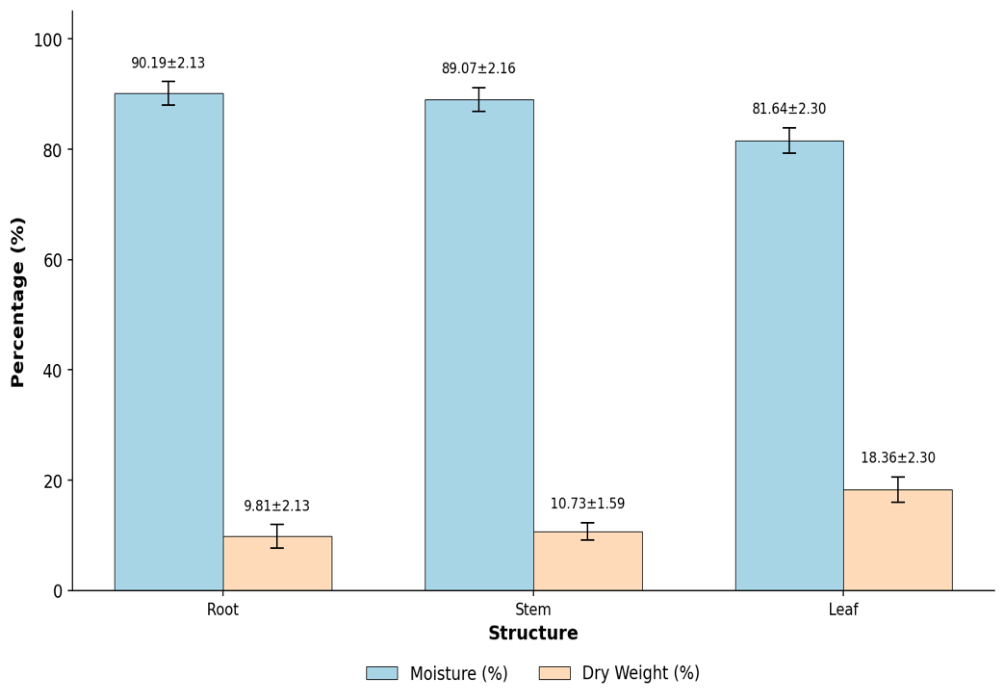
Figure 7 and
Table 7 compares moisture vs. dry percentages, showing significant differences among roots, leaves, and stems. Regarding moisture, roots present the highest content (90.19 ± 2.13%), followed by stems (89.07 ± 2.16%), with the leaves ultimately having the lowest moisture percentage (81.64 ± 2.30%).
Conversely, after drying, leaves show the highest percentage (18.36 ± 2.30%), with stems being next (10.73 ± 1.59%) and roots being last (9.81 ± 2.13 %). This comparison demonstrates that the content of the leaves is 87% higher than the roots, indicating a greater concentration of structural biomass components. On the other hand, roots and stems displayed congruent behaviors, with a difference of 1.12%.
The fiber fraction analysis of
Eichhornia crassipes shows considerable variability in the distribution between long, short, and fine among the evaluated samples, as shown in
Table 8 and
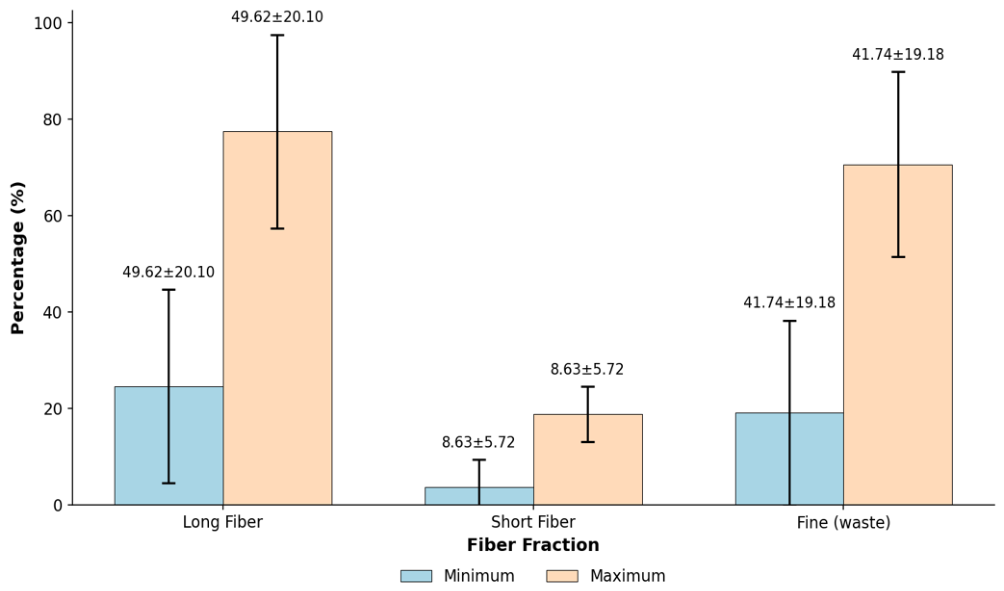
Table 9. Percentage compositions demonstrate the predominance of long and short fibers in biomass, whereas short fibers are the smallest proportions in all cases.
This analysis presents long fibers as the largest average fraction (49.62 ± 20.10%), followed by fine (41.74 ± 19.18%), while short fibers present the lowest percentage (8.63 ± 5.72%). Long fiber content varied considerably among the samples, ranging from 24.55% to 77.39%, whereas short fibers reached a maximum value of 18.78%. In contrast, the fine fraction, which is considered a residual waste material generated after the disintegration process, showed substantial variability, with values ranging between 19.03% and 70.58% (see
Figure 8). An inverse relationship analysis showed that samples with greater long fiber content generally showed lesser fine content of fine materials; this was represented in all untreated samples (
,
,
,
and
). In contrast, samples with NaOH presented more fine materials.
After analyzing the raw material (Eichhornia crassipes) used for sheet formation, a quality assessment of the finished paper hand-sheets was conducted. Only the paper obtained from samples 8 and 9 was selected for evaluation, as these samples included all the structural components of the water hyacinth. Sample 9, although prepared using the same composition as sample 8, had an addition of sodium hydroxide to facilitate comparative quality analysis.
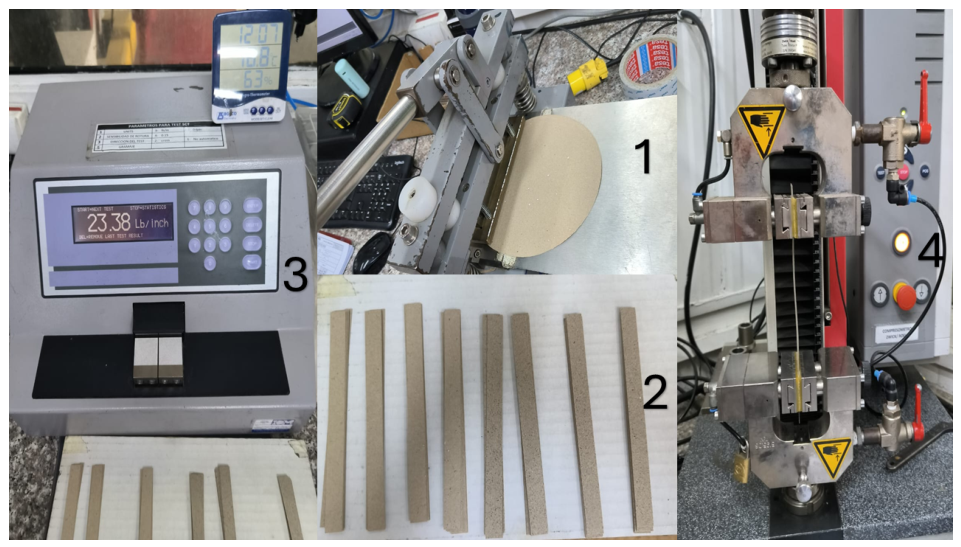
For the evaluation, rectangular test specimens were cut from the finished hand-sheets (see
Figure 9) and subjected to various physical strength and resistance tests. Four groups of eight specimens were prepared using commercially available paper as a reference control, while four additional groups of eight specimens where prepared from the water hyacinth hand-sheets. Each group of eight specimens underwent one test to assess and compare their quality. In total, 16 specimens were prepared from sample 8, 16 from sample 9, and 32 reference control specimens (16 for each evaluated tests).
The trimming process was carried out by a guillotine (see
Figure 9, stage 1) to obtain standard-sized dimensions and ensure consistency between the control and experimental samples (stage 2). Subsequently, the specimens underwent quality assessment procedures, employing specialized instruments for each test. For example, the SCT machine (stage 3) uses only one end of the test specimen to calculate the force. Additionally, to evaluate the shear forces, an expansion machine is used (stage 4). This allows for the observation of the forces at which the sheet can be stretched prior to its breaking point, enabling the calculation of the resistance.
The tests they underwent are the following. The Corrugating Medium Test (CMT) evaluates the paper’s resistance to crushing force after corrugation. This test is commonly used to determine the structural performance of papers intended for corrugated cardboard production. The Concora Crush Test (CCT) measures the compressive strength of corrugated paper under vertical loading conditions. It is used to evaluate the material’s ability to withstand compression during handling and stacking processes. The Ring Crush Test (RCT) is used to determine the ring compressive strength of paper or paperboard. This test evaluates the structural rigidity and the material’s ability to withstand compressive loads applied to its edges, and the Short Compression Test (SCT) evaluates the compressive strength of paper over a short span. This analysis is used to assess the internal bonding capacity and the resistance of the fibrous network to localized compressive stresses. Each test was compared based on a dimensionless index to provide a numerical indication of how closely the water hyacinth-based paper compares to the reference samples.
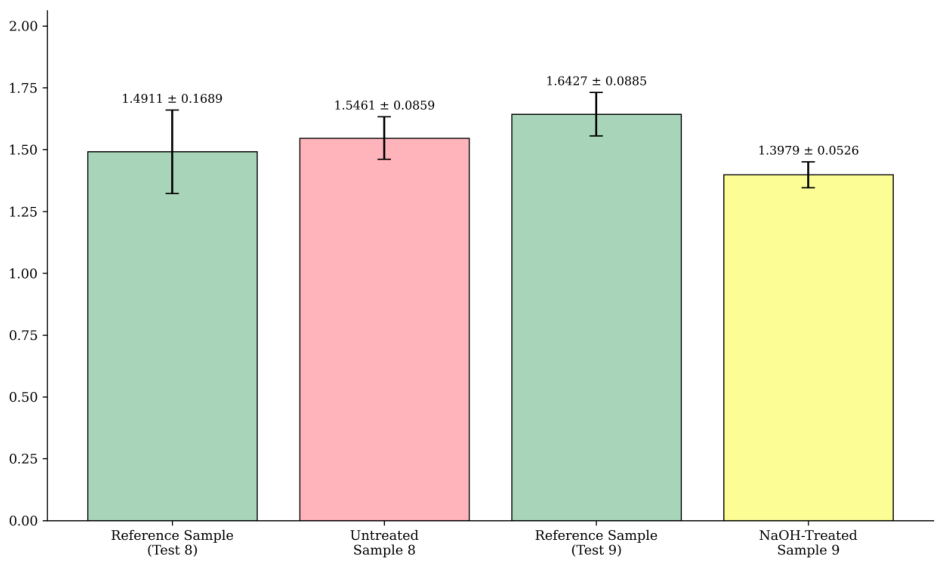
For assessing how samples respond, corrugating medium tests were carried out. Observing the data from test 8 (see
Table 10 and
Table 11), we can notice that sample 8 reached an average CMT of 1.5461, slightly higher than the reference (1.4911) with a 3.7% improvement. As it can be seen, the standard deviation of sample 8 only shows a deviation of 0.0859 in comparison to the reference (0.1689), thus suggesting that the material behaves like a normal hand-sheet paper.
In contrast, the treated sample averaged 1.3979, 15% lower than its reference at 1.6427. Alkaline treatment considerably weakened the material, as NaOH can partially break down cellulose chains affecting the fiber-to-fiber bonds. On the other hand, the samples showed less scatter in the data provided (standard deviation of 0.0526 vs 0.0855 of the reference) pointing to a more homogeneous structure at the cost of the overall strength (see
Figure 10).
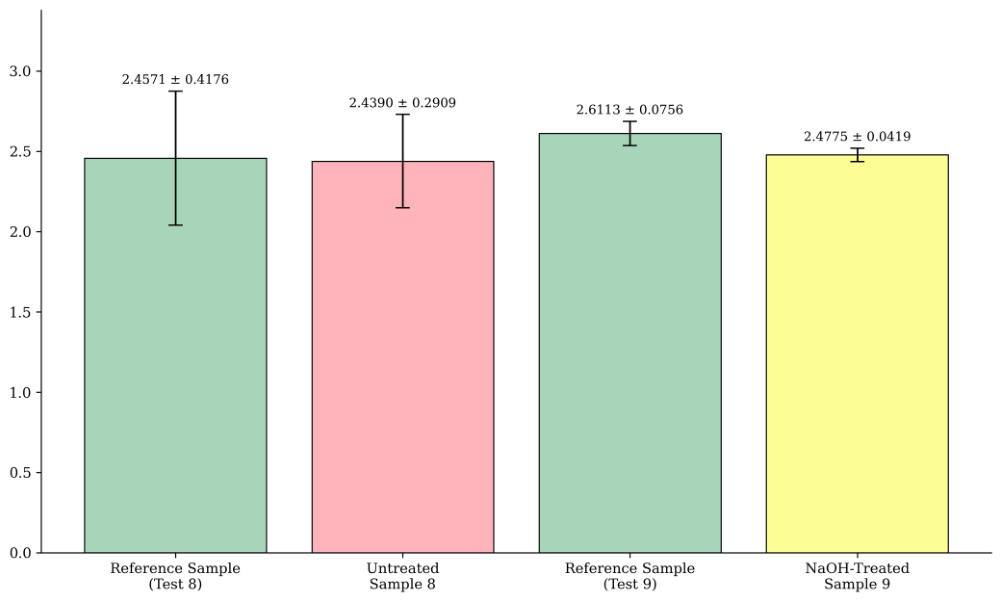
The CCT evaluation showed that sample 8 recorded 2.4390 compared to the reference (2.4571); it shows that there is less than 1% of difference. Standard deviation reduction from 0.4176 to 0.2909 also indicates that the material tends to respond more predictably (see
Table 12 and
Table 13).
The treated sample showed a comparison between 2.4775 and a reference of 2.6113, a 5% decrease and a smaller comparison to the CMT test (15%), suggesting that the CCT is less affected by the alkaline treatment, and improving the standard deviation significantly from 0.0756 to 0.0419. In both cases, the CCT is largely stable (see
Figure 11).
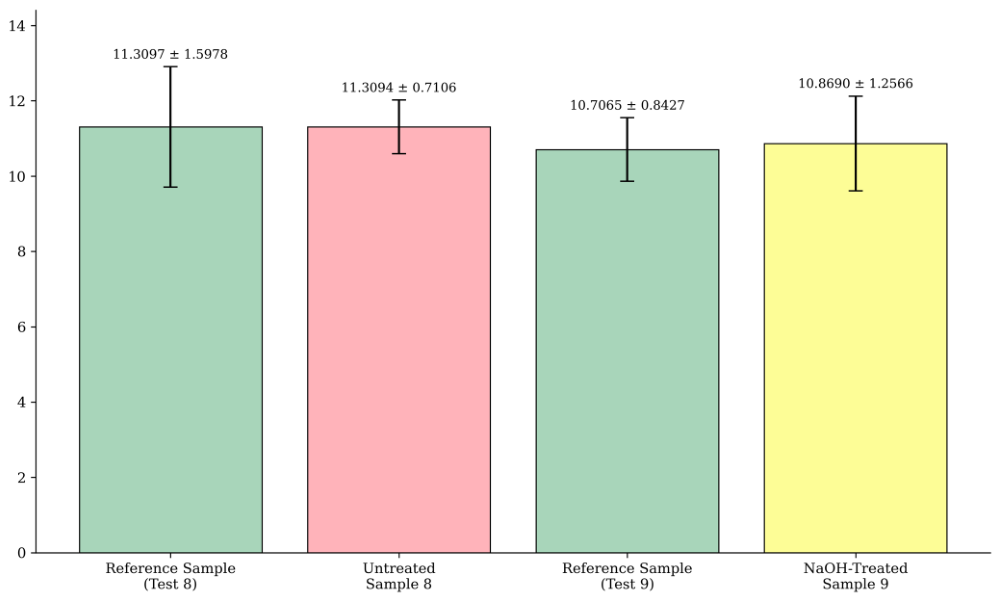
The Ring Crush Test measures the edgewise compression; sample 8 recorded a mean of 11.3094 vs. 11.3097 from its reference, virtually no difference between both values, but the standard deviation dropped drastically from 1.5978 to 0.7106 as a 55% reduction in variability (see
Table 14 and
Table 15).
In test 9, the treated sample showed 10.8690 against its reference (10.7065) with a slight increase of 1.5%. Surprisingly, this is the only test where the treated sample did not reduce the mean value and where the standard deviation increased from 0.8427 to 1.2566, showing more variability for this particular test (see
Figure 12).
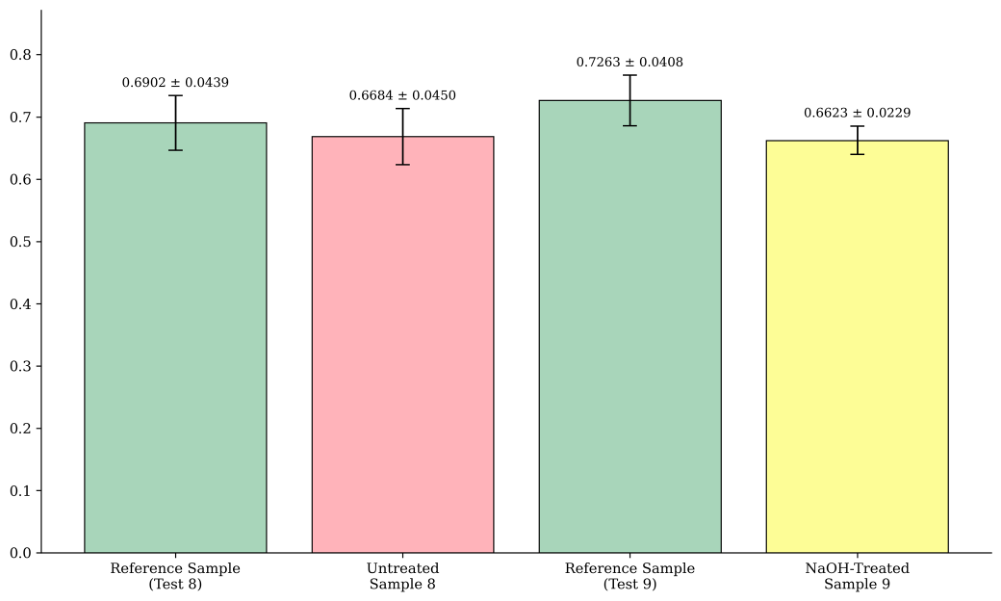
Finally, the Short Compression Test was conducted to measure the compressive strength of the samples over a short span. Sample 8 presents a mean of 0.6684, comparing it to 0.6902 from its reference, showing a reduction of 3.2% with a standard deviation reduction from 0.0450 to 0.0439 (almost unchanged), presenting similar variability (see
Table 16 and
Table 17).
While Sample 9 records 0.6623 to 0.7263 from its reference sample, showing a decrease of 8.8%. Alkaline treatment makes this reduction consistent within the pattern of CMT. Also, standard deviation drops from 0.0408 to 0.0229, an almost 44% reduction, showing much better uniformity after treatment (see
Figure 13).
Table 18 presents a one-way ANOVA analysis applied to the mechanical properties of paper produced from
Eichhornia crassipes. The objective of this analysis was to determine whether statistically significant differences exist between NaOH-treated and untreated samples compared with the commercial reference paper for each evaluated mechanical test.
The results of the CMT test (, ) revealed highly significant differences among treatments, indicating that the alkaline NaOH treatment considerably affected the corrugating resistance of the paper, possibly due to fiber fragmentation. Similarly, the CCT test (, ) showed significant differences in compressive strength between NaOH-treated samples, potentially compromising their ability to withstand vertical loads.
In contrast, the RCT test (, ) did not show statistically significant differences between samples, suggesting that the ring crush resistance remained practically unchanged regardless of the applied treatment. On the other hand, the SCT test (, ) evidenced significant differences, indicating a reduction in short-span compressive strength in the samples subjected to alkaline treatment.
Overall, these results suggest that NaOH treatment may cause partial hemicellulose degradation, fragmentation of long fibers, increased generation of fine material, and reduced interfiber bonding, thereby negatively affecting certain mechanical properties of paper produced from Eichhornia crassipes.
Although
Eichhornia crassipes has demonstrated significant potential as a non-wood lignocellulosic source for sustainable paper production, previous studies have highlighted its ability to absorb and accumulate heavy metals and other contaminants present in polluted aquatic ecosystems [
36,
37]. These studies reported that this species can bioaccumulate elements such as Cd, Co, Cr, Cu, Fe, Mn, Ni, Pb, and Zn, with significant correlations observed between contaminant concentrations in water and those detected in plant tissues. Furthermore, the bioadsorption and bioaccumulation properties of
Eichhornia crassipes have been emphasized, mainly due to the chemical nature of its lignocellulosic structure, which promotes the retention of contaminants and heavy metals. Consequently, the physicochemical composition of the biomass may be strongly influenced by the harvesting location and the environmental conditions of the surrounding aquatic ecosystem. This situation represents an important limitation that should be carefully considered in industrial applications, particularly in the production of packaging materials intended for commercial use.
4. Conclusions
The results of the present study provided evidence of the technical feasibility of producing eco-friendly paper from water hyacinth using a non-wood fiber processing framework oriented toward sustainable paper manufacturing. The moisture characterization of ten different plant groups showed that Eichhornia crassipes biomass contains a high amount of water, with total values ranging from 86.60% to 90.83% and an overall average of 88.8%. Only 11.22% of the original fresh biomass remained usable after drying. Among the evaluated structures, leaves had the highest dry content (18.36 ± 2.30%), followed by stems (10.73 ± 1.59%) and roots (9.81 ± 2.13%), suggesting that the leaves represent a suitable biomass fraction for pulp production processes due to their greater relative availability of fibrous material.
Analysis of fiber fractions confirmed the predominance of long fibers among the processed biomass. The average long fiber content reached 46.62 ± 20.10%, with maximum values up to 77.39%, while short fibers accounted for only 8.63 ± 5.72% of the total fraction. In contrast, fine (waste) averaged 41.74 ± 19.18%, with treated samples showing higher fine material generation after disintegration with NaOH. Results demonstrated an inverse relationship between long fibers and fine production, indicating that the alkaline matrix promotes fiber fragmentation within the structures, thereby reducing anchoring capacity.
Mechanical evaluations of paper produced from Eichhornia crassipes using the CMT, CCT, RCT, and SCT tests demonstrated performance comparable to that of wood-based paper for corrugated cardboard manufacturing. In the CMT test, sample 8 (without NaOH treatment) achieved an average value of 1.5461, compared to 1.4911 for the reference sample, indicating a 3.7% improvement in quality. In the RCT test, sample 8 exhibited performance virtually identical to that of the reference sample (11.3094 vs. 11.3097). Similarly, the CCT test showed a difference of less than 1% between sample 8 and the industrial reference material (2.4390 vs. 2.4571).
On the other hand, samples treated with NaOH showed reductions in mechanical performance. Sample 9 (treated with NaOH) exhibited a 15% reduction in CMT values compared to traditional paper (1.3979 vs. 1.6427), as well as an 8.8% reduction in SCT values (0.6623 vs. 0.7263), indicating that the chemical treatment generated partial fiber fragmentation, thereby reducing the structural strength and, consequently, the mechanical quality of the resulting sheet.
The experimental results demonstrate that water hyacinth has suitable lignocellulosic properties and mechanical performance for sustainable paper production, highlighting its potential as a non-wood raw material for the corrugated cardboard manufacturing industry. However, some limitations should be acknowledged. The experimental analysis was conducted using a limited number of Eichhornia crassipes sample groups under restricted industrial testing conditions due to limited access to specialized equipment. Therefore, although the statistical analyses demonstrated significant trends, the broader applicability of the results remains subject to the experimental scope of this study.
Future research should focus on optimizing pulping procedures to minimize the generation of fine residues and preserve fiber structural integrity during alkaline treatments. In addition, detailed contaminant analyses and advanced physicochemical characterization techniques should be incorporated to evaluate the environmental safety, chemical stability, and industrial feasibility of paper produced from Eichhornia crassipes.