
Effect of Copper Slag Content and Hybrid Steel Fiber Addition on the Mechanical Response of an Alkali-Activated Geopolymer Composite




Abstract
1. Introduction
2. Materials and Methods
2.1. Experimental Program
2.2. Materials and Specimen Preparation

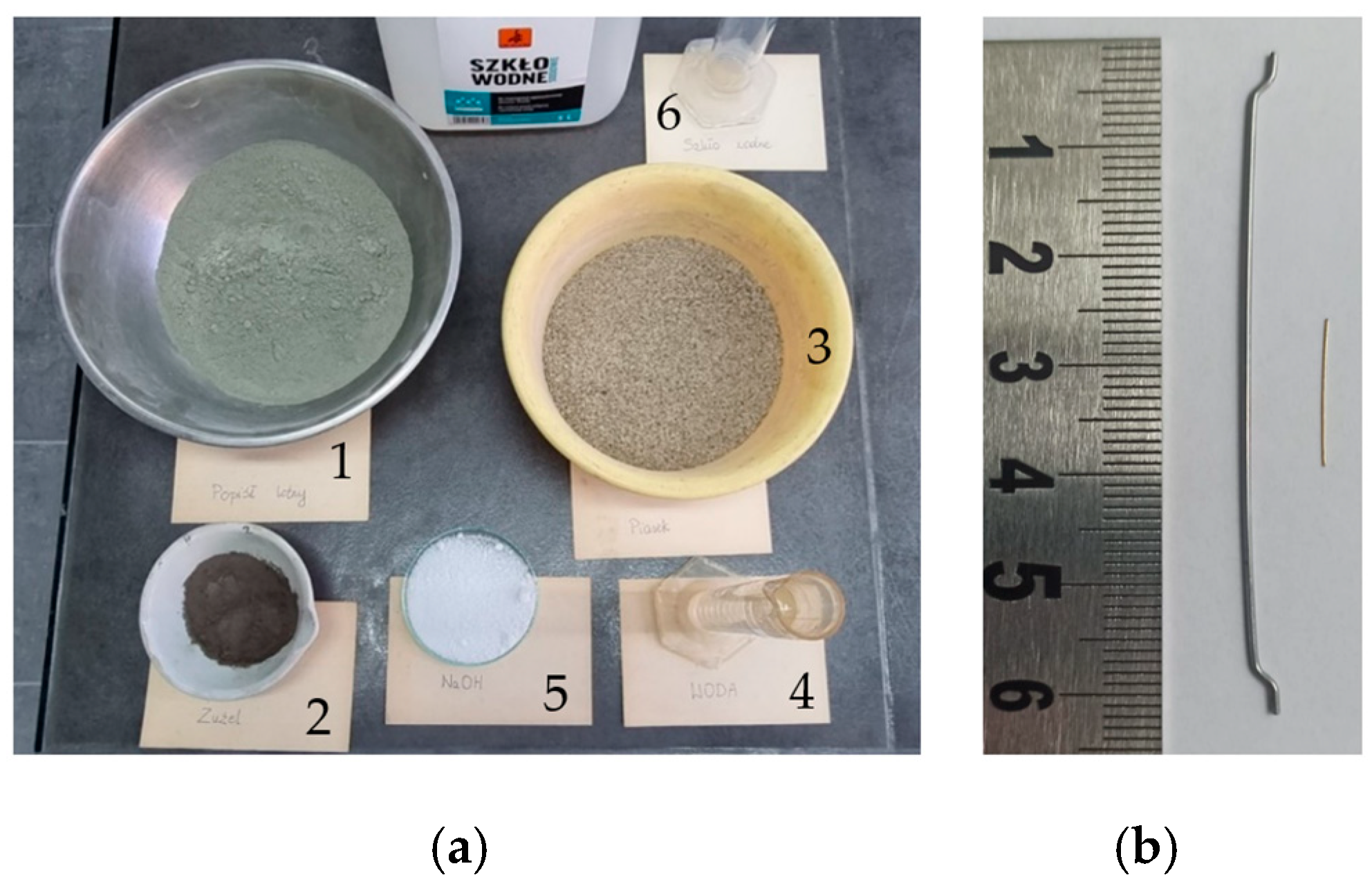
| Series | FA | CS | Sand | Alkaline Solution | Vf (%) | ||
|---|---|---|---|---|---|---|---|
| Water * | NaOH Pellets | Sodium Silicate | |||||
| CS-0 | 850.0 | 0.0 | 850.0 | 107.3 | 34.3 | 283.3 | 0; 0.5; 1 |
| CS-7.5 | 796.0 | 59.7 | 855.7 | 108.0 | 34.6 | 285.2 | |
| CS-15 | 749.0 | 112.4 | 861.4 | 108.8 | 34.8 | 287.1 | |
| CS-22.5 | 707.0 | 159.1 | 866.1 | 109.4 | 35.0 | 288.7 | |


2.3. Research Methodology

3. Results and Discussion
3.1. Compressive and Splitting Tensile Strength
| fc | fct.sp | |||||
|---|---|---|---|---|---|---|
| Vf | 0% | 0.5% | 1% | 0% | 0.5% | 1% |
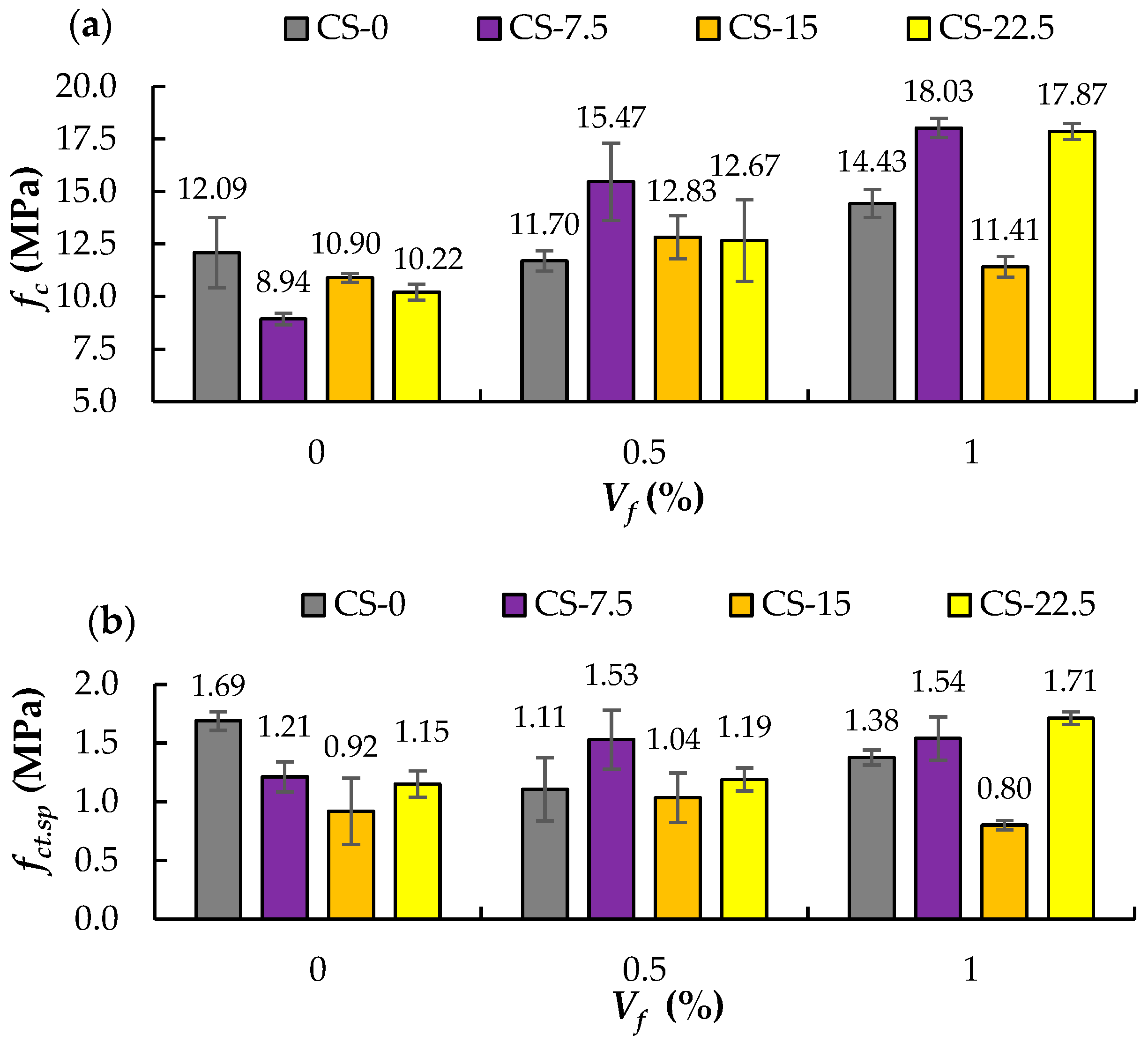
| 10.44 | 12.14 | 15.13 | 1.69 | 1.21 | 1.31 | |
| CS-0 | 13.80 | 11.18 | 14.36 | 1.77 | 1.31 | 1.44 |
| 12.02 | 11.77 | 13.80 | 1.61 | 0.80 | 1.38 | |
| 9.22 | 14.08 | 18.46 | 1.21 | 1.71 | 1.49 | |
| CS-7.5 | 8.66 | 14.79 | 17.56 | 1.09 | 1.63 | 1.39 |
| 8.94 | 17.55 | 18.07 | 1.34 | 1.24 | 1.74 | |
| 10.76 | 13.64 | 10.95 | 1.24 | 1.28 | 0.76 | |
| CS-15 | 10.81 | 11.66 | 11.93 | 0.80 | 0.93 | 0.83 |
| 11.13 | 13.17 | 11.35 | 0.71 | 0.90 | 0.82 | |
| 10.05 | 14.86 | 18.30 | 1.11 | 1.17 | 1.72 | |
| CS-22.5 | 10.66 | 11.20 | 17.76 | 1.28 | 1.30 | 1.65 |
| 9.96 | 11.95 | 17.56 | 1.07 | 1.11 | 1.76 | |

3.2. Post-Failure Surface Images and DIC-Based Strain Analysis

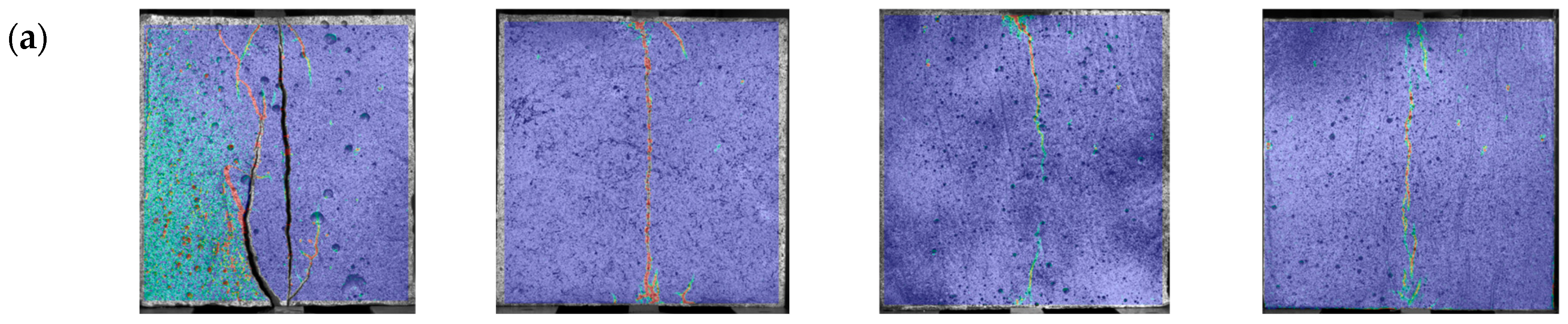


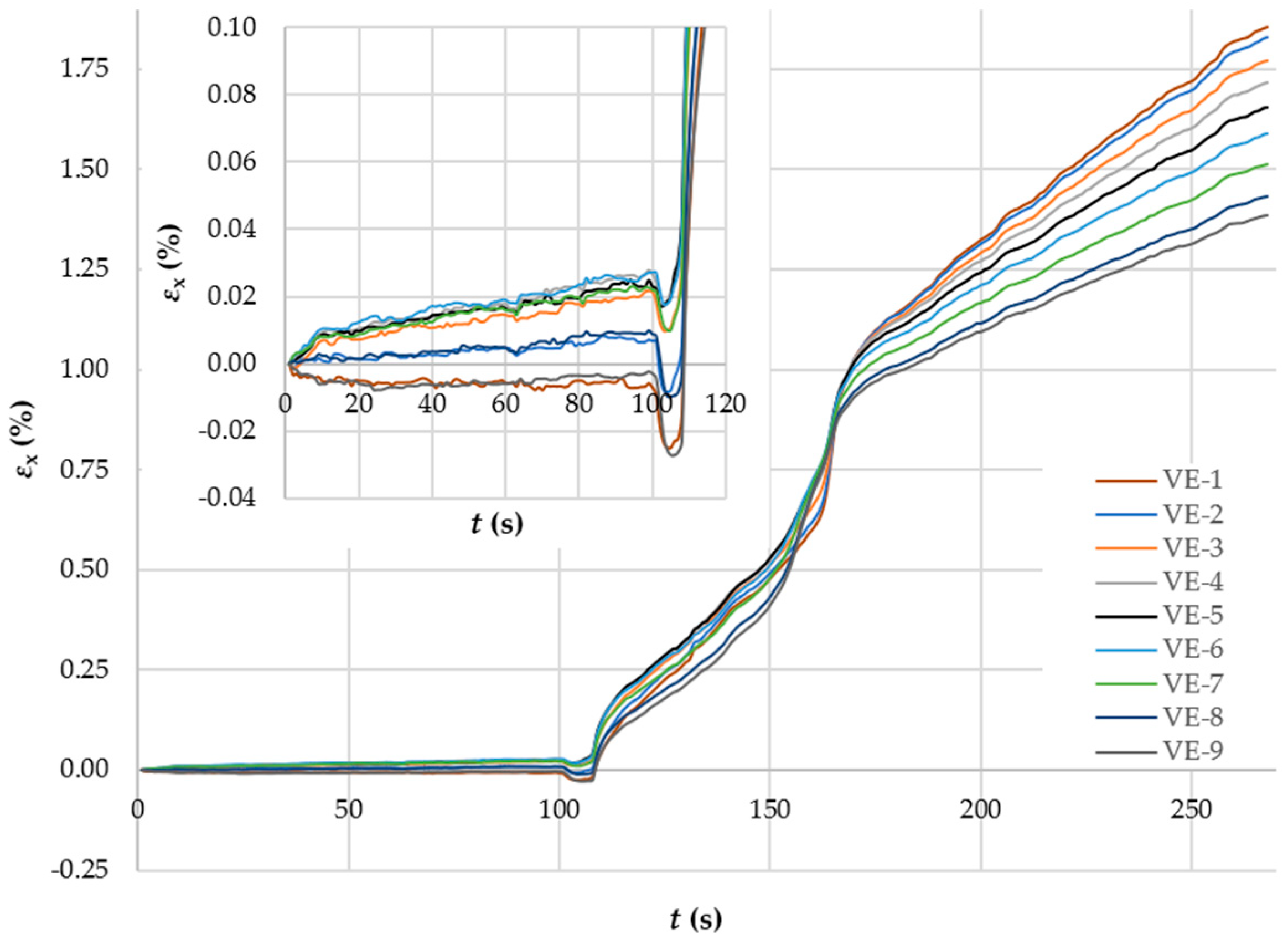
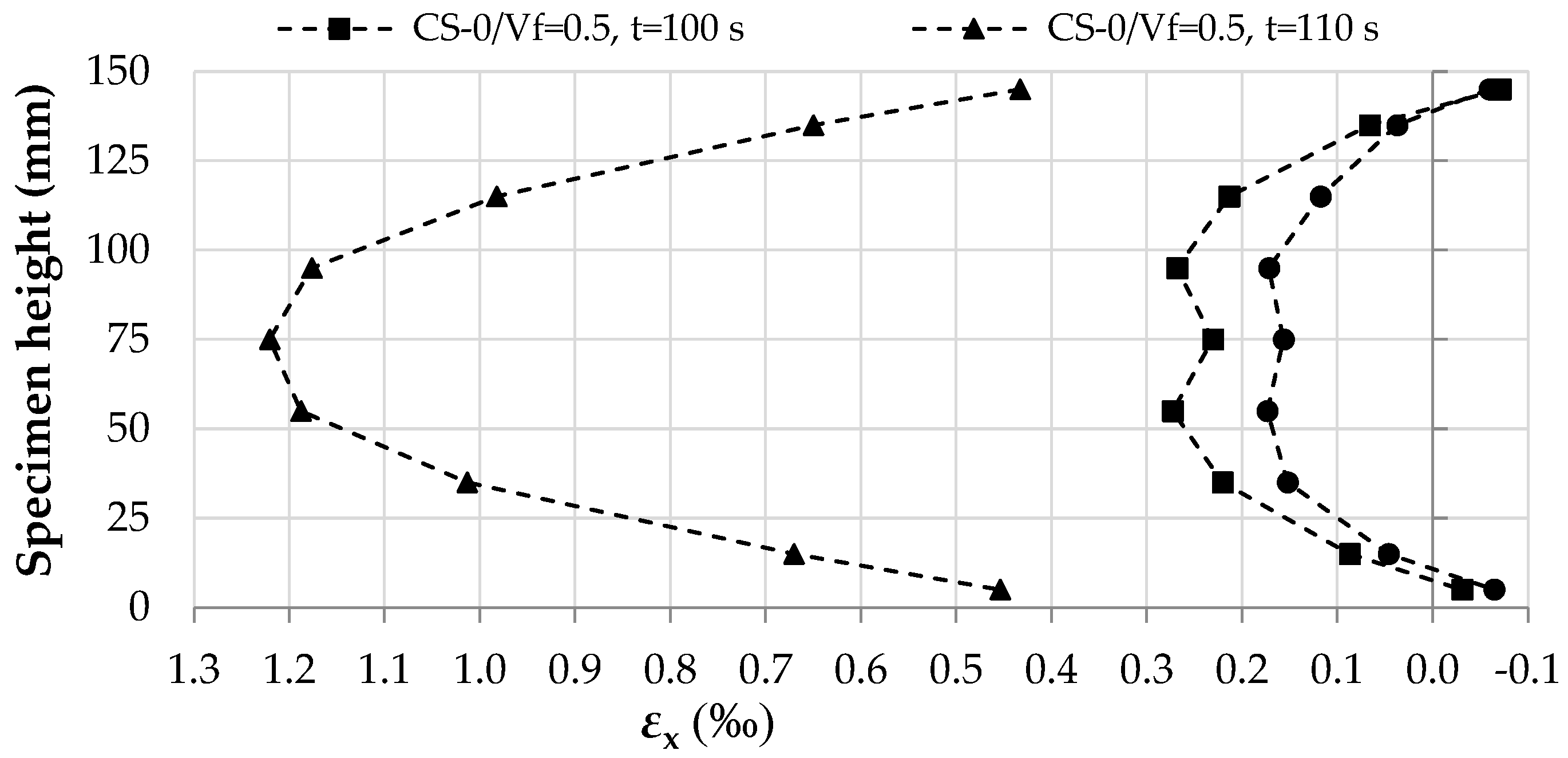
4. Conclusions
- -
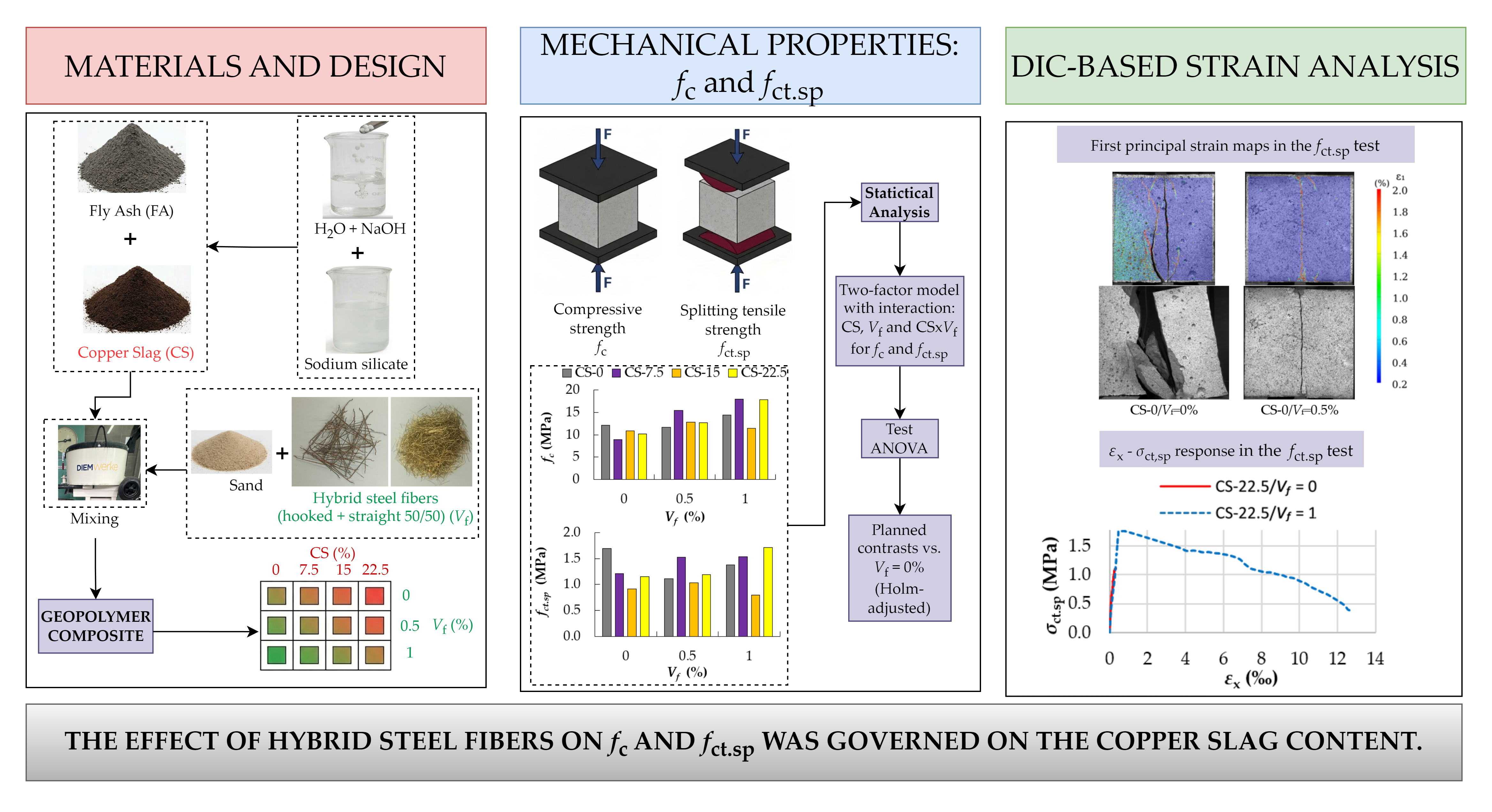
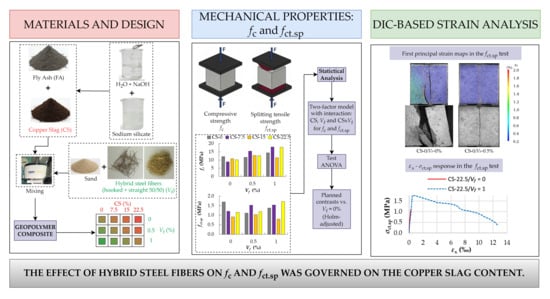
- The applied 4 × 3 factorial design (CS × Vf) revealed a significant CS × Vf interaction for both compressive strength fc and splitting tensile strength fct.sp. This means that the effect of steel fiber dosage depends on the content of copper slag (CS) in the fly ash–copper slag (FA–CS) precursor system.
- -
- For fc, the effects of CS, Vf, and CS × Vf were significant. The most clearly confirmed increases relative to Vf = 0, after Holm correction, were obtained for CS = 7.5%—+73% (Vf = 0.5%; Δ = +6.53 MPa) and +102% (Vf = 1.0%; Δ = +9.09 MPa)—and for CS = 22.5%—+75% (Vf = 1.0%; Δ = +7.65 MPa).
- -
- The use of steel fibers did not lead to an increase in fct.sp across the entire investigated CS range. The direction and magnitude of the changes depended on the CS level, as indicated by the CS × Vf interaction. After Holm correction, the statistically confirmed effects were limited to a 34% decrease for CS = 0% at Vf = 0.5% (Δ = −0.58 MPa) and a 49% increase for CS = 22.5% at Vf = 1.0% (Δ = +0.56 MPa).
- -
- Due to the significant CS × Vf interaction, the conclusions regarding the effect of fibers on the mechanical properties of the composite were formulated separately for each CS level, i.e., by comparing Vf levels relative to Vf = 0 at constant CS. This approach avoids generalizations that would disregard the dependence of the fiber effect on CS content.
- -
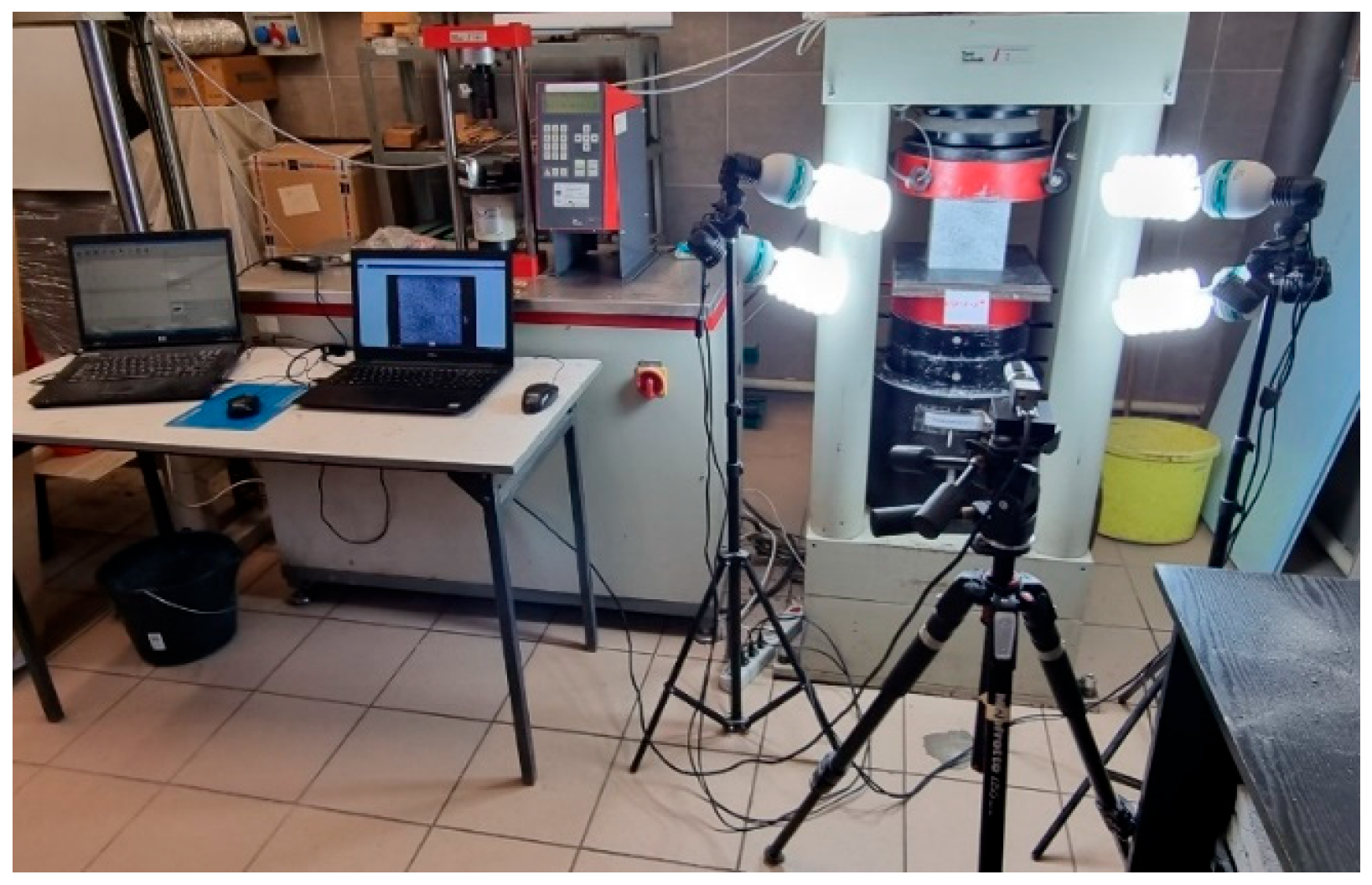
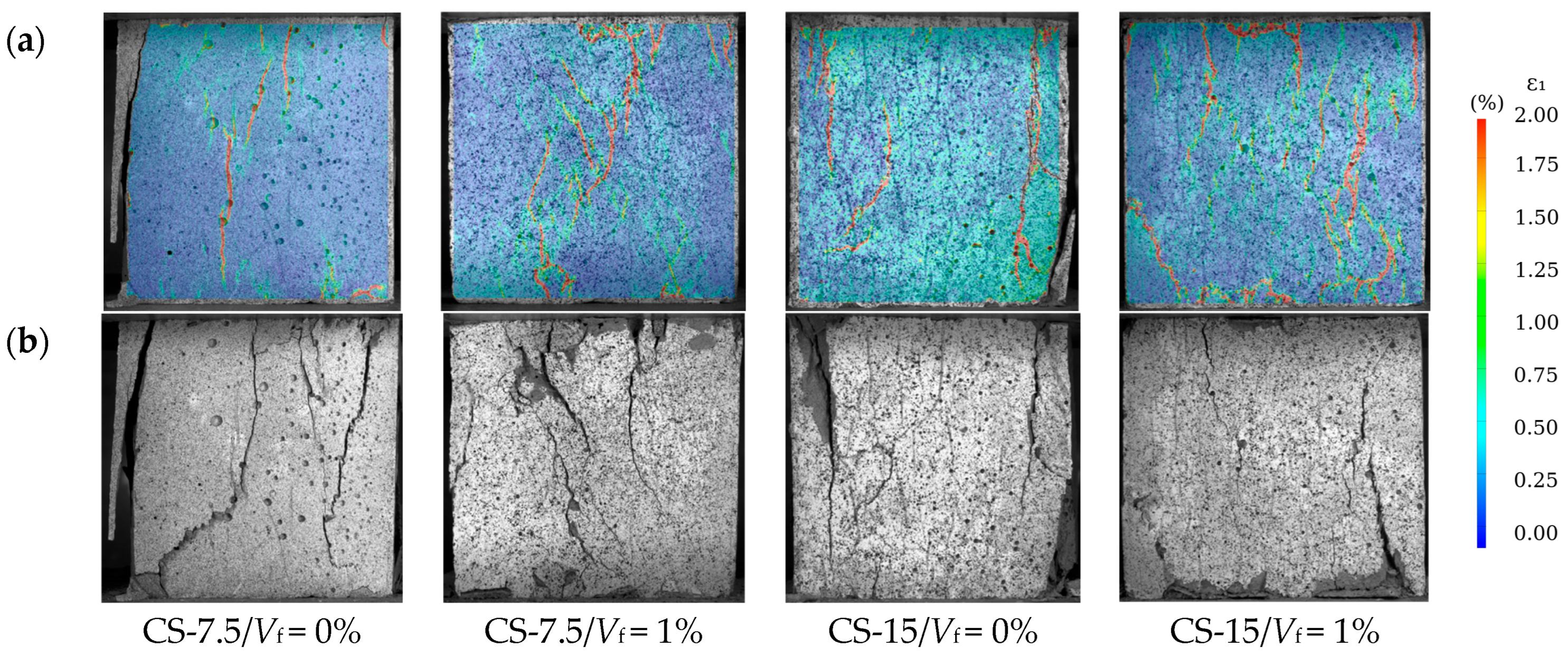
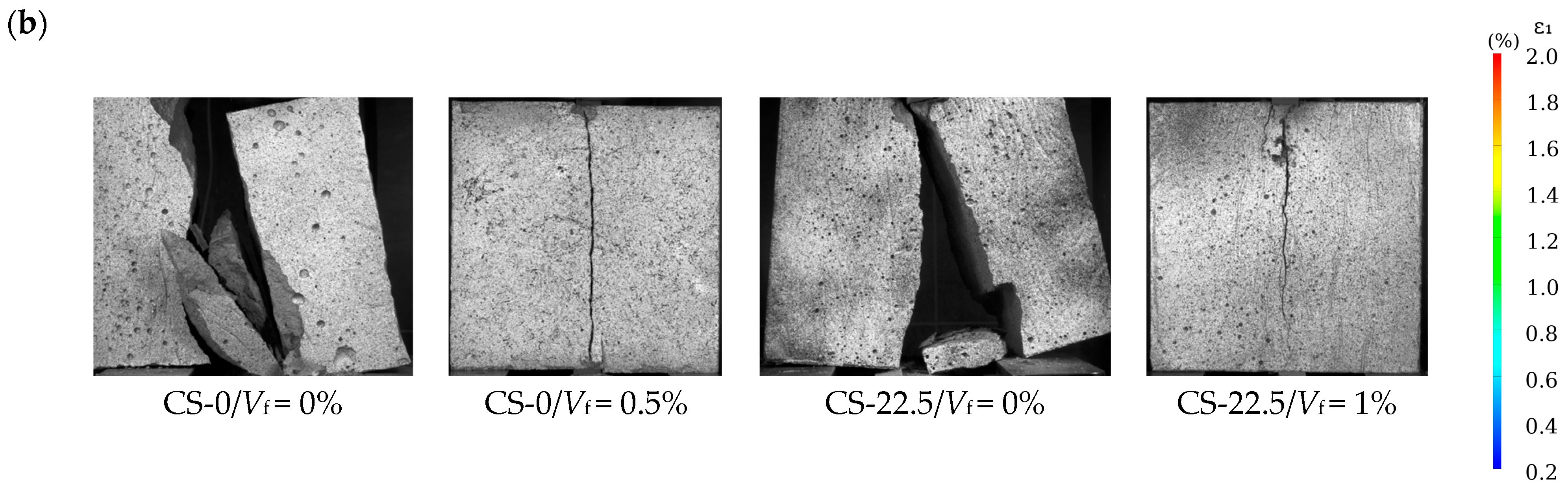
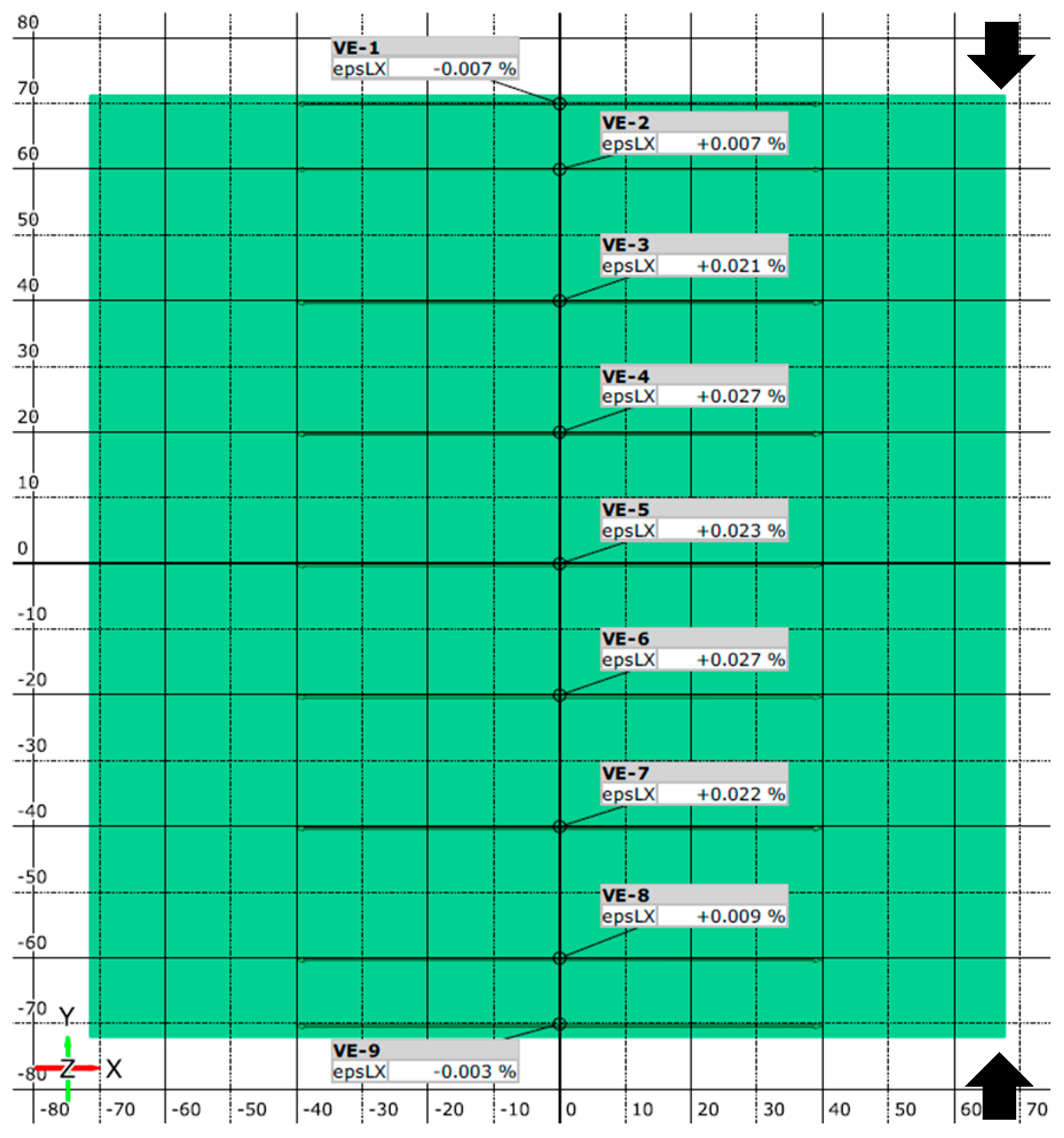
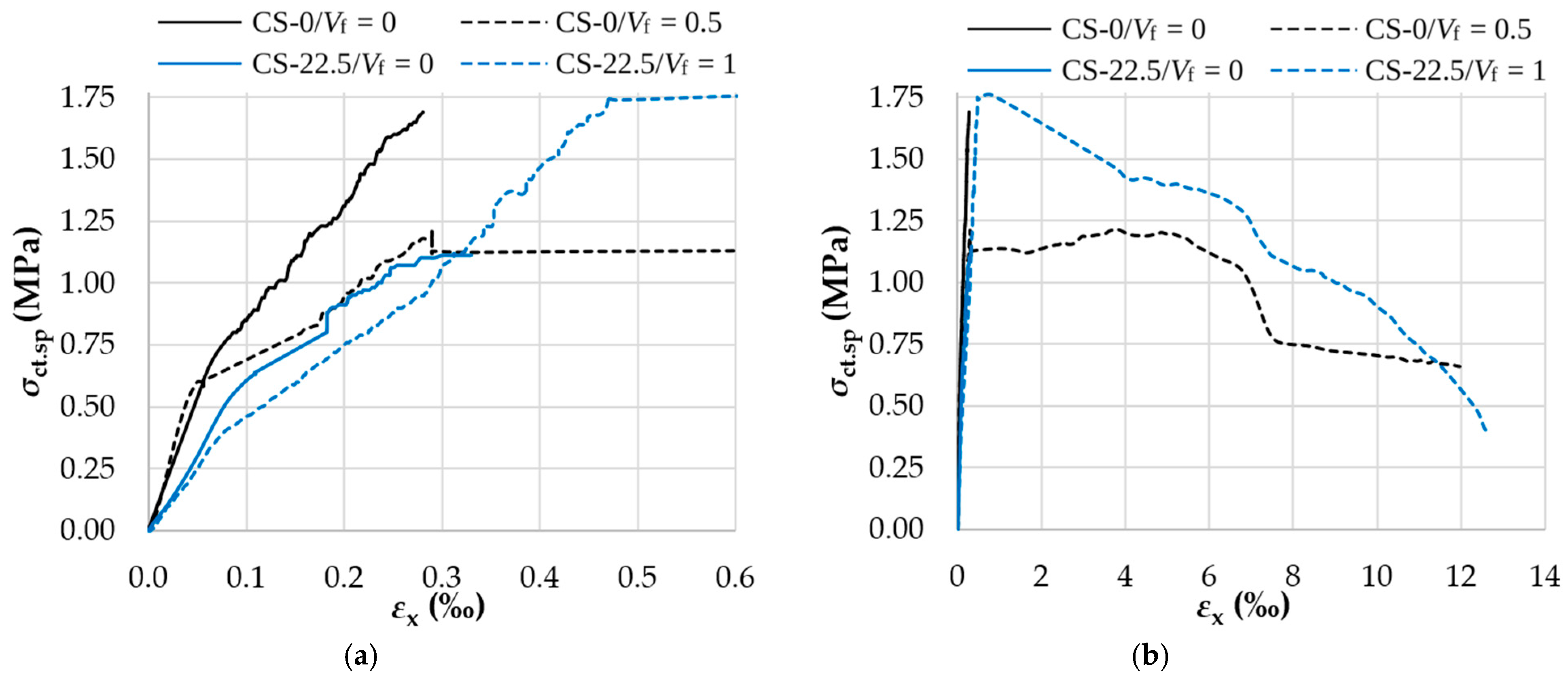
- The DIC analysis and post-failure images supplemented the interpretation of the mechanical results by providing a qualitative assessment of deformation/damage localization in selected specimens. The ε1 maps at Fmax indicated that, in compression, the fiber-reinforced specimens exhibited a more dispersed pattern of increased-strain bands, whereas in splitting, a narrow localization zone consistent with the course of the splitting line dominated. The εx analysis based on virtual extensometers showed variation in transverse strains along the specimen height, with positive values in the central part and strains of the opposite sign near the load application zones. The σct.sp–εx relationships for the central VE-5 gauge showed that the fiber-reinforced specimens maintained the ability to carry load at higher εx values after Fmax was reached, which was consistent with the greater specimen integrity visible in the post-failure images.
- -
- Within the investigated range of CS content relative to the mass of FA, alkali-activated composites with different mechanical responses in compression and splitting were obtained. The results define the mechanical effects of using CS in the FA–CS system, but they do not allow its contribution to the formation of reaction products to be unequivocally assessed. A full evaluation of the function of CS as a component of the precursor system requires further phase and microstructural studies, as well as analysis of the fiber–matrix interfacial zone. The obtained relationships, including the CS × Vf interaction, should also be interpreted with reference to the adopted specimen preparation and curing conditions, which comprised exposure at 80 °C for 24 h and testing after 14 days. Under different curing conditions or at a different testing age, the course of these relationships may differ; therefore, their generalization requires separate experimental verification.
Author Contributions
Funding
Data Availability Statement
Acknowledgments
Conflicts of Interest
Abbreviations
| Fmax | Maximum load |
| ANOVA | analysis of variance |
| CI90 | 90% confidence interval |
| CS | copper slag |
| DIC | digital image correlation |
| FA | fly ash |
| fc | compressive strength |
| fct.sp | splitting tensile strength |
| NaOH | sodium hydroxide |
| Na2SiO3 | sodium silicate (water glass) |
| OLS | ordinary least squares |
| Q–Q | quantile–quantile |
| RMSE | root mean square error |
| ROI | region of interest |
| VE | virtual extensometer |
| Vf | total fiber volume fraction |
| ε1 | maximum principal strain |
References
- Provis, J.L. Alkali-Activated Materials. Cem. Concr. Res. 2018, 114, 40–48. [Google Scholar] [CrossRef]
- Li, W.; Shumuye, E.D.; Tang, S.; Wang, Z.; Zerfu, K. Eco-Friendly Fibre Reinforced Geopolymer Concrete: A Critical Review on the Microstructure and Long-Term Durability Properties. Case Stud. Constr. Mater. 2022, 16, e00894. [Google Scholar] [CrossRef]
- Danish, A.; Ozbakkaloglu, T.; Mosaberpanah, M.A.; Salim, M.U.; Bayram, M.; Yeon, J.H.; Jafar, K. Sustainability Benefits and Commercialization Challenges and Strategies of Geopolymer Concrete: A Review. J. Build. Eng. 2022, 58, 105005. [Google Scholar] [CrossRef]
- Wang, T.; Fan, X.; Gao, C.; Qu, C.; Liu, J.; Yu, G. The Influence of Fiber on the Mechanical Properties of Geopolymer Concrete: A Review. Polymers 2023, 15, 827. [Google Scholar] [CrossRef] [PubMed]
- Adam, R.; Zuaiter, H.; ElMaoued, D.; Tamimi, A.; AlHamaydeh, M. Mechanical Properties Quantification of Steel Fiber-Reinforced Geopolymer Concrete with Slag and Fly Ash. Buildings 2025, 15, 3533. [Google Scholar] [CrossRef]
- Khan, Q.S.; Ahmad, R.H.; Qazi, A.U.; Kazmi, S.M.S.; Munir, M.J.; Javed, M.H. Integrated Mechanical and Eco-Economical Assessments of Fly Ash-Based Geopolymer Concrete. Buildings 2025, 15, 2555. [Google Scholar] [CrossRef]
- Luhar, I.; Luhar, S. A Comprehensive Review on Fly Ash-Based Geopolymer. J. Compos. Sci. 2022, 6, 219. [Google Scholar] [CrossRef]
- Myers, R.J.; Bernal, S.A.; Provis, J.L. Phase Diagrams for Alkali-Activated Slag Binders. Cem. Concr. Res. 2017, 95, 30–38. [Google Scholar] [CrossRef]
- Fu, Q.; Bu, M.; Zhang, Z.; Xu, W.; Yuan, Q.; Niu, D. Hydration Characteristics and Microstructure of Alkali-Activated Slag Concrete: A Review. Engineering 2023, 20, 162–179. [Google Scholar] [CrossRef]
- Furtos, G.; Prodan, D.; Sarosi, C.; Popa, D.; Moldovan, M.; Korniejenko, K. The Precursors Used for Developing Geopolymer Composites for Circular Economy—A Review. Materials 2024, 17, 1696. [Google Scholar] [CrossRef]
- Rajczyk, K.; Janus, G. Microstructure and Properties of Geopolymers Formed in the Alkali Activation Process of Fly Ash. Cem. Lime Concr. 2021, 26, 279–293. [Google Scholar] [CrossRef]
- Dehghani, A.; Aslani, F.; Panah, N.G. Effects of Initial SiO2/Al2O3 Molar Ratio and Slag on Fly Ash-Based Ambient Cured Geopolymer Properties. Constr. Build. Mater. 2021, 293, 123527. [Google Scholar] [CrossRef]
- Kuenzel, C.; Ranjbar, N. Dissolution Mechanism of Fly Ash to Quantify the Reactive Aluminosilicates in Geopolymerisation. Resour. Conserv. Recycl. 2019, 150, 104421. [Google Scholar] [CrossRef]
- Hajimohammadi, A.; van Deventer, J.S.J. Dissolution Behaviour of Source Materials for Synthesis of Geopolymer Binders: A Kinetic Approach. Int. J. Miner. Process. 2016, 153, 80–86. [Google Scholar] [CrossRef]
- Lee, N.K.; Lee, H.K. Setting and Mechanical Properties of Alkali-Activated Fly Ash/Slag Concrete Manufactured at Room Temperature. Constr. Build. Mater. 2013, 47, 1201–1209. [Google Scholar] [CrossRef]
- Fernández-Jiménez, A.; Palomo, A. Composition and Microstructure of Alkali Activated Fly Ash Binder: Effect of the Activator. Cem. Concr. Res. 2005, 35, 1984–1992. [Google Scholar] [CrossRef]
- Vikas, G.; Rao, T.D.G. Setting Time, Workability and Strength Properties of Alkali Activated Fly Ash and Slag Based Geopolymer Concrete Activated with High Silica Modulus Water Glass. Iran. J. Sci. Technol. Trans. Civ. Eng. 2021, 45, 1483–1492. [Google Scholar] [CrossRef]
- Li, Y.; Wang, S.; Ma, X.; Li, Y.; Jin, W. Effect of Water Glass on Compressive Strength and Pore Structure of Geopolymers. Non-Met. Mines 2017, 40, 46–49. (In Chinese) [Google Scholar]
- Nagalia, G.; Park, Y.; Abolmaali, A.; Aswath, P. Compressive Strength and Microstructural Properties of Fly Ash-Based Geopolymer Concrete. J. Mater. Civ. Eng. 2016, 28, 04016144. [Google Scholar] [CrossRef]
- Grzeszczyk, S. The Truth about the Geopolymers. Cem. Lime Concr. 2021, 26, 101–108. [Google Scholar] [CrossRef]
- Lu, C.; Zhang, Z.; Shi, C.; Li, N.; Jiao, D.; Yuan, Q. Rheology of Alkali-Activated Materials: A Review. Cem. Concr. Compos. 2021, 121, 104061. [Google Scholar] [CrossRef]
- Mahajan, D.S.; Meena, S.S.; Muhammad, S. Alkali-Activation of Copper Slag: Characterization and Mechanical Properties of Inorganic Polymer Binder. Chem. Eng. J. 2025, 515, 163615. [Google Scholar] [CrossRef]
- Nieświec, M.; Niewiadomski, P.; Sadowski, Ł.; Schroefl, C. Waste Copper Slag in Special Concrete: Current Research and Future Applications. Mater. Des. 2025, 253, 113970. [Google Scholar] [CrossRef]
- Rybak, J.; Kongar-Syuryun, C.; Tyulyaeva, Y.; Khayrutdinov, A.M. Creation of Backfill Materials Based on Industrial Waste. Minerals 2021, 11, 739. [Google Scholar] [CrossRef]
- Ayano, T.; Kuramoto, O.; Sakata, K. Concrete with Copper Slag Fine Aggregate. J. Soc. Mater. Sci. Jpn. 2000, 49, 1097–1102. [Google Scholar] [CrossRef]
- Al-Jabri, K.S.; Al-Saidy, A.H.; Taha, R. Effect of Copper Slag as a Fine Aggregate on the Properties of Cement Mortars and Concrete. Constr. Build. Mater. 2011, 25, 933–938. [Google Scholar] [CrossRef]
- Velumani, M.; Kumar, K.N. Effect of Copper Slag on Mechanical and Durability Aspects for Different Strength Concretes. Cem. Lime Concr. 2021, 26, 156–166. [Google Scholar] [CrossRef]
- Shi, C.; Meyer, C.; Behnood, A. Utilization of Copper Slag in Cement and Concrete. Resour. Conserv. Recycl. 2008, 52, 1115–1120. [Google Scholar] [CrossRef]
- Deep, A.; Sarkar, P. Enhancing Sustainability in Concrete Construction: Utilizing Copper Slag for Improved Properties of Geopolymer Concrete. Constr. Build. Mater. 2024, 453, 139044. [Google Scholar] [CrossRef]
- Li, M.; Fan, X.; Chang, S.; Wang, L.; Wang, J.; Li, L.; Cai, X.; Liu, S. Preparation of High-Strength and Rapid-Hardening Alkali-Activated Copper Slag-Fly Ash-Granulated Blast Furnace Slag Ternary Cementitious Material and Its Carbonation Resistance Performance. ACS Sustain. Chem. Eng. 2025, 13, 22124–22140. [Google Scholar] [CrossRef]
- Samal, S.; Blanco, I. An Application Review of Fiber-Reinforced Geopolymer Composite. Fibers 2021, 9, 23. [Google Scholar] [CrossRef]
- Ganesan, N.; Abraham, R.; Deepa Raj, S. Durability Characteristics of Steel Fibre Reinforced Geopolymer Concrete. Constr. Build. Mater. 2015, 93, 471–476. [Google Scholar] [CrossRef]
- Farhan, N.A.; Sheikh, M.N.; Hadi, M.N.S. Engineering Properties of Ambient Cured Alkali-Activated Fly Ash-Slag Concrete Reinforced with Different Types of Steel Fiber. J. Mater. Civ. Eng. 2018, 30, 04018142. [Google Scholar] [CrossRef]
- Rabiaa, E.; Mohamed, R.A.S.; Sofi, W.H.; Tawfik, T.A. Developing Geopolymer Concrete Properties by Using Nanomaterials and Steel Fibers. Adv. Mater. Sci. Eng. 2020, 2020, 5186091. [Google Scholar] [CrossRef]
- Bellum, R.R. Influence of Steel and PP Fibers on Mechanical and Microstructural Properties of Fly Ash-GGBFS Based Geopolymer Composites. Ceram. Int. 2022, 48, 6808–6818. [Google Scholar] [CrossRef]
- Kaźmierowski, M.; Jaskulski, R.; Drzazga, M.; Nalepka, M.; Kordasz, M. Effects of the Addition of Short Straight Steel Fibers on the Strength and Strains of High-Strength Concrete during Compression. Sci. Rep. 2024, 14, 6989. [Google Scholar] [CrossRef] [PubMed]
- Shaikh, F.U.A. Pullout Behavior of Hook End Steel Fibers in Geopolymers. J. Mater. Civ. Eng. 2019, 31, 04019068. [Google Scholar] [CrossRef]
- Gao, X.; Yu, Q.L.; Yu, R.; Brouwers, H.J.H. Evaluation of Hybrid Steel Fiber Reinforcement in High Performance Geopolymer Composites. Mater. Struct. 2017, 50, 165. [Google Scholar] [CrossRef]
- El-Hassan, H.; Elkholy, S. Enhancing the Performance of Alkali-Activated Slag-Fly Ash Blended Concrete through Hybrid Steel Fiber Reinforcement. Constr. Build. Mater. 2021, 311, 125313. [Google Scholar] [CrossRef]
- Al-Majidi, M.H.; Lampropoulos, A.; Cundy, A.B. Steel Fibre Reinforced Geopolymer Concrete (SFRGC) with Improved Microstructure and Enhanced Fibre-Matrix Interfacial Properties. Constr. Build. Mater. 2017, 139, 286–307. [Google Scholar] [CrossRef]
- Ranjbar, N.; Zhang, M. Fiber-Reinforced Geopolymer Composites: A Review. Cem. Concr. Compos. 2020, 107, 103498. [Google Scholar] [CrossRef]
- PN-EN 450-1:2012; Fly Ash for Concrete—Part 1: Definition, Specifications and Conformity Criteria. Polish Committee for Standardization (PKN): Warsaw, Poland, 2012.
- ISO 13320:2020; Particle Size Analysis—Laser Diffraction Methods. International Organization for Standardization: Geneva, Switzerland, 2020.
- Briki, Y.; Zajac, M.; Haha, M.B.; Scrivener, K. Factors Affecting the Reactivity of Slag at Early and Late Ages. Cem. Concr. Res. 2021, 150, 106604. [Google Scholar] [CrossRef]
- Zhang, Z.; Provis, J.L.; Zou, J.; Reid, A.; Wang, H. Toward an Indexing Approach to Evaluate Fly Ashes for Geopolymer Manufacture. Cem. Concr. Res. 2016, 85, 163–173. [Google Scholar] [CrossRef]
- Ambikakumari Sanalkumar, K.U.; Lahoti, M.; Yang, E.-H. Investigating the Potential Reactivity of Fly Ash for Geopolymerization. Constr. Build. Mater. 2019, 225, 283–291. [Google Scholar] [CrossRef]
- Nurruddin, M.F.; Sani, H.; Mohammed, B.S.; Shaaban, I. Methods of Curing Geopolymer Concrete: A Review. Int. J. Adv. Appl. Sci. 2018, 5, 31–36. [Google Scholar] [CrossRef]
- PN-EN 12390-3:2020; Testing Hardened Concrete—Part 3: Compressive Strength of Test Specimens. Polish Committee for Standardization (PKN): Warsaw, Poland, 2020.
- PN-EN 12390-6:2011; Testing Hardened Concrete—Part 6: Tensile Splitting Strength of Test Specimens. Polish Committee for Standardization (PKN): Warsaw, Poland, 2011.
- Borito, S.M.; Zhu, H.; Ibrahim, Y.E.; Haruna, S.I.; Bo, Z. Synergistic Use of Nanosilica and Basalt Fibers on Mechanical Properties of Internally Cured Concrete with SAP: An Experimental Analysis and Optimization via Response Surface Methodology. Fibers 2025, 13, 25. [Google Scholar] [CrossRef]
- Al-shawafi, A.; Zhu, H.; Haruna, S.I.; Ibrahim, Y.E.; Luqsum, S.A. Enhanced Impact Strength of Ultra-High-Performance Concrete Using Steel Fiber and Polyurethane Grout Materials: A Comparative Study. Fibers 2024, 12, 77. [Google Scholar] [CrossRef]
- Zhou, Y.; Xiao, Y.; Gu, A.; Lu, Z. Dispersion, Workability and Mechanical Properties of Different Steel-Microfiber-Reinforced Concretes with Low Fiber Content. Sustainability 2018, 10, 2335. [Google Scholar] [CrossRef]
- Ferrara, L.; Meda, A. Relationships between Fibre Distribution, Workability and the Mechanical Properties of SFRC Applied to Precast Roof Elements. Mater. Struct. 2006, 39, 411–420. [Google Scholar] [CrossRef]
- de la Rosa, Á.; Ruiz, G.; Poveda, E. Study of the Compression Behavior of Steel-Fiber Reinforced Concrete by Means of the Response Surface Methodology. Appl. Sci. 2019, 9, 5330. [Google Scholar] [CrossRef]
- Zhang, S.; Zhang, C.; Liao, L. Investigation on the Relationship between the Steel Fibre Distribution and the Post-Cracking Behaviour of SFRC. Constr. Build. Mater. 2019, 200, 539–550. [Google Scholar] [CrossRef]
- Lu, X.; Liu, B.; Zhang, Q.; Wang, S.; Liu, J.; Li, Q.; Fan, J.; Wei, S. Mechanical Properties and Hydration of Fly Ash-Based Geopolymers Modified by Copper Slag. Mater. Today Commun. 2024, 39, 108914. [Google Scholar] [CrossRef]
- Garcia-Lodeiro, I.; Palomo, A.; Fernández-Jiménez, A.; Macphee, D.E. Compatibility Studies between N-A-S-H and C-A-S-H Gels. Study in the Ternary Diagram Na2O-CaO-Al2O3-SiO2-H2O. Cem. Concr. Res. 2011, 41, 923–931. [Google Scholar] [CrossRef]
- Yip, C.K.; Lukey, G.C.; van Deventer, J.S.J. The Coexistence of Geopolymeric Gel and Calcium Silicate Hydrate at the Early Stage of Alkaline Activation. Cem. Concr. Res. 2005, 35, 1688–1697. [Google Scholar] [CrossRef]
- Walkley, B.; San Nicolas, R.; Sani, M.-A.; Rees, G.J.; Hanna, J.V.; van Deventer, J.S.J.; Provis, J.L. Phase Evolution of C-(N)-A-S-H/N-A-S-H Gel Blends Investigated via Alkali-Activation of Synthetic Calcium Aluminosilicate Precursors. Cem. Concr. Res. 2016, 89, 120–135. [Google Scholar] [CrossRef]
- Ponomar, V.; Yliniemi, J.; Adesanya, E.; Ohenoja, K.; Illikainen, M. An Overview of the Utilisation of Fe-Rich Residues in Alkali-Activated Binders: Mechanical Properties and State of Iron. J. Clean. Prod. 2022, 330, 129900. [Google Scholar] [CrossRef]
- Mehrpay, S.; Hu, X.; Zhu, Z.; Shumuye, E.D.; Wan-Wendner, R.; Zhu, M.; Wang, J.; Wei, Z.; Ueda, T. The Influence of Testing Conditions on Damage Zone of Concrete in Uniaxial Compression: Insights from Stereo-DIC and Computational Modeling. Mater. Des. 2025, 253, 113981. [Google Scholar] [CrossRef]
- Jianhong, Y.; Wu, F.Q.; Sun, J.Z. Estimation of the Tensile Elastic Modulus Using Brazilian Disc by Applying Diametrically Opposed Concentrated Loads. Int. J. Rock. Mech. Min. Sci. 2009, 46, 568–576. [Google Scholar] [CrossRef]


| SiO2 | Al2O3 | Fe2O3 | CaO | MgO | K2O | Na2O | TiO2 | P2O5 | SO3 | Cl | CuO | ZnO | PbO | ∑MO* | |
|---|---|---|---|---|---|---|---|---|---|---|---|---|---|---|---|
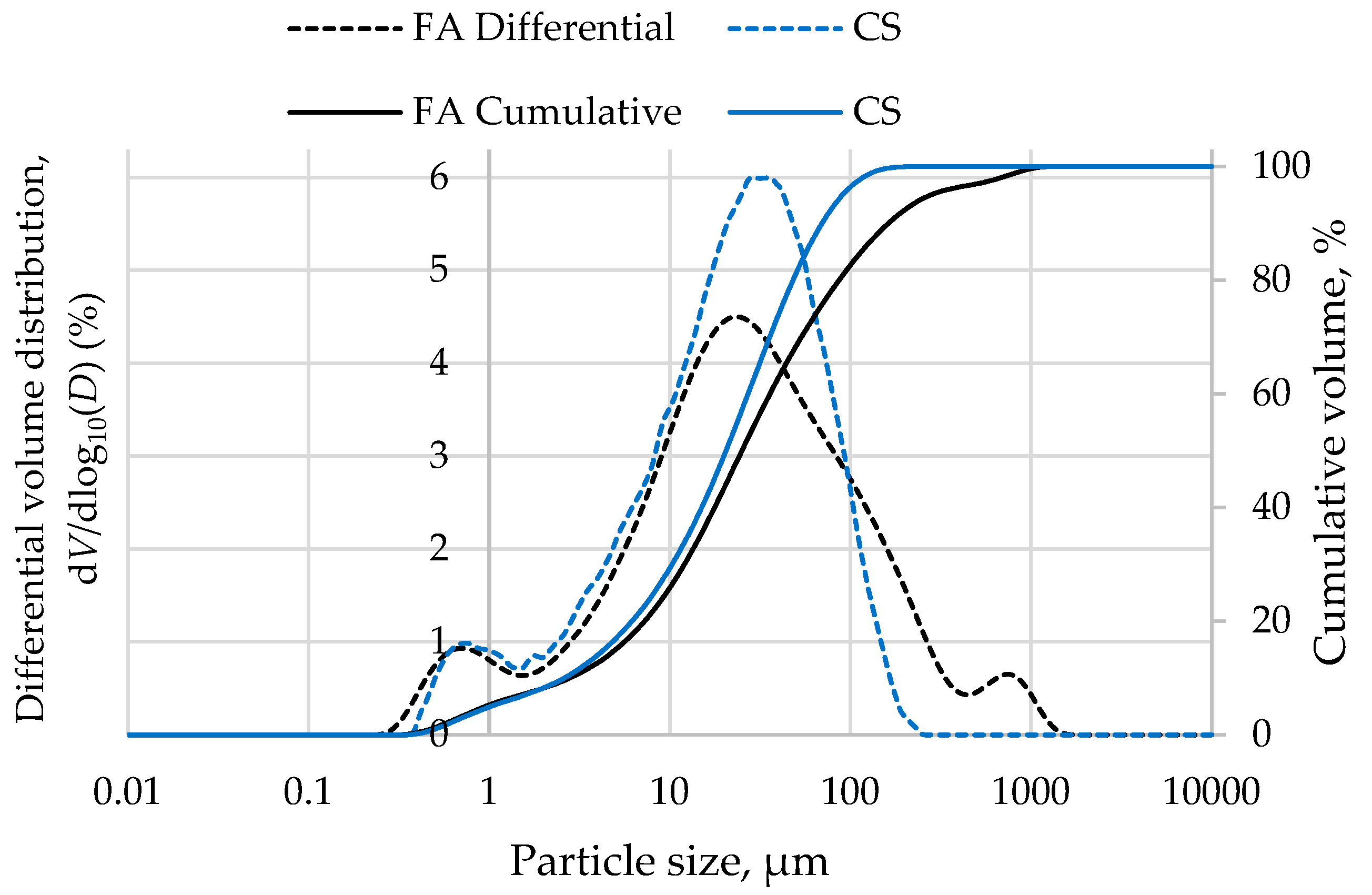
| FA | 50.54 | 27.80 | 8.34 | 2.98 | 1.98 | 4.09 | 0.94 | 1.47 | 0.58 | 0.38 | 0.008 | 0.03 | 0.04 | n.r. | 0.81 |
| CS | 28.77 | 9.18 | 24.32 | 23.34 | 4.15 | 3.32 | 0.34 | 0.70 | 0.15 | n.r. | 0.010 | 1.26 | 1.92 | 1.08 | 1.47 |
| fc | |||||
| Effect | df | SS | MS | F | p |
| CS | 3 | 30.47 | 10.16 | 9.73 | 2.20 × 10⁻⁴ |
| Vf | 2 | 144.22 | 72.11 | 69.05 | 1.11 × 10⁻¹⁰ |
| CS × Vf | 6 | 98.28 | 16.38 | 15.69 | 2.97 × 10⁻⁷ |
| Residual error | 24 | 25.06 | 1.04 | – | – |
| fct.sp | |||||
| CS | 3 | 1.523 | 0.51 | 17.6 | 3.0 × 10⁻⁶ |
| Vf | 2 | 0.135 | 0.07 | 2.35 | 0.117 |
| CS × Vf | 6 | 1.241 | 0.21 | 7.16 | 1.83 × 10⁻⁴ |
| Residual error | 24 | 0.693 | 0.03 | – | – |
| Response | R2 | R2adj | RMSE | Standardized Residuals (min-max) | Cook’s D |
|---|---|---|---|---|---|
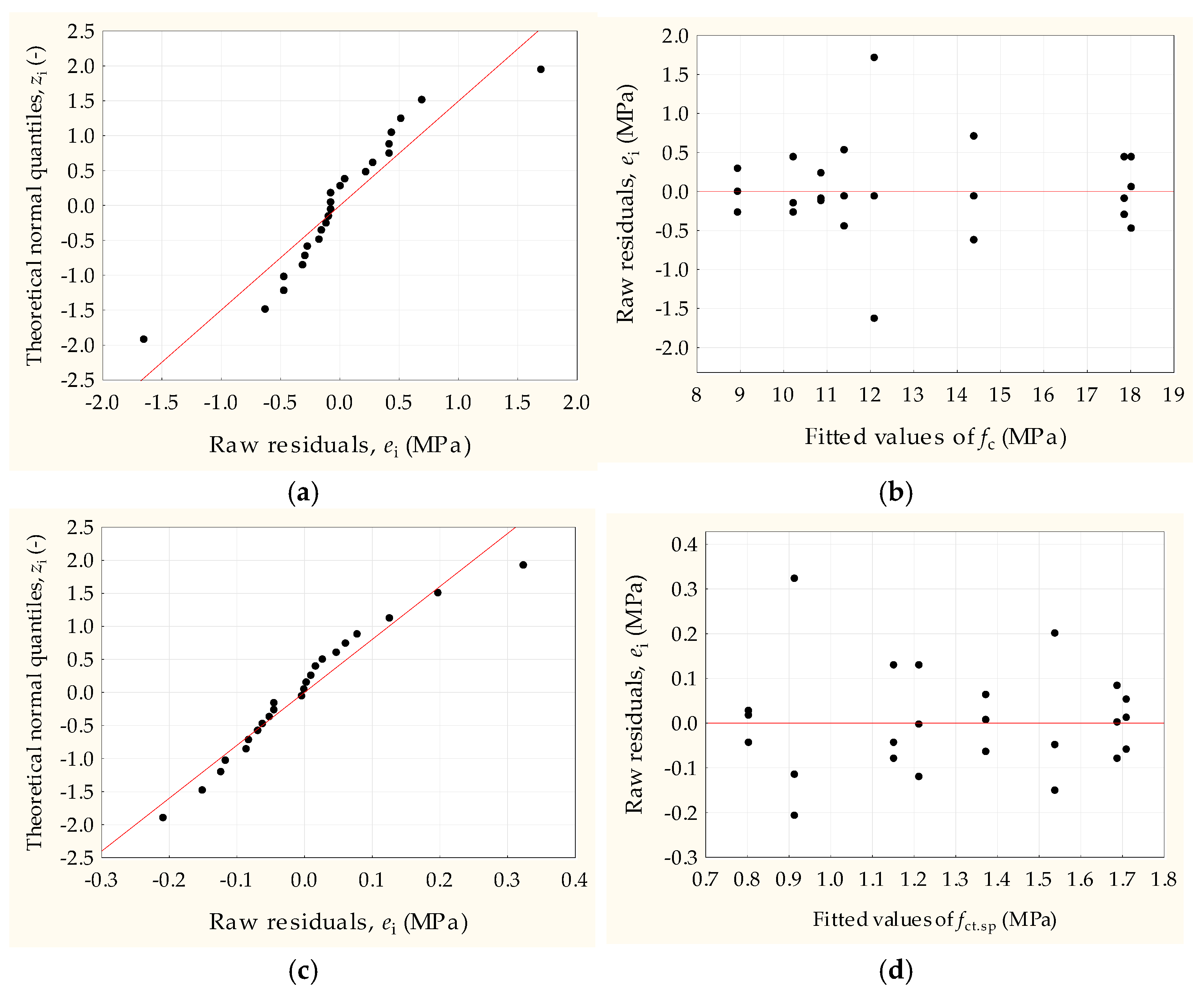
| fc | 0.92 | 0.88 | 1.022 | −1.97 to 2.62 | 0.287 |
| fct.sp | 0.81 | 0.72 | 0.17 | −2.21 to 2.33 | 0.226 |
| Response | CS | Contrast (vs. 0%) | Δ (MPa) | CI90 * (MPa) | pHolm |
|---|---|---|---|---|---|
| fc | CS-0 | 0.5–0 | −0.39 | [−2.11, 1.33] | 0.777 |
| CS-0 | 1–0 | 2.34 | [0.63, 4.06] | 0.151 | |
| CS-7.5 | 0.5–0 | 6.53 | [4.79, 8.28] | 0.002 | |
| CS-7.5 | 1–0 | 9.09 | [7.34, 10.84] | <0.001 | |
| CS-15 | 0.5–0 | 1.92 | [0.86, 2.99] | 0.064 | |
| CS-15 | 1–0 | 0.51 | [−0.56, 1.58] | 0.777 | |
| CS-22.5 | 0.5–0 | 2.45 | [0.61, 4.29] | 0.151 | |
| CS-22.5 | 1–0 | 7.65 | [5.81, 9.49] | 0.001 | |
| fct.sp | CS-0 | 0.5–0 | −0.58 | [−0.85, −0.32] | 0.037 |
| CS-0 | 1–0 | −0.31 | [−0.58, −0.05] | 0.368 | |
| CS-7.5 | 0.5–0 | 0.31 | [0.01, 0.62] | 0.416 | |
| CS-7.5 | 1–0 | 0.33 | [0.02, 0.63] | 0.416 | |
| CS-15 | 0.5–0 | 0.12 | [−0.21, 0.45] | 1 | |
| CS-15 | 1–0 | −0.11 | [−0.44, 0.21] | 1 | |
| CS-22.5 | 0.5–0 | 0.04 | [−0.10, 0.18] | 1 | |
| CS-22.5 | 1–0 | 0.56 | [0.41, 0.70] | 0.002 |
Disclaimer/Publisher’s Note: The statements, opinions and data contained in all publications are solely those of the individual author(s) and contributor(s) and not of MDPI and/or the editor(s). MDPI and/or the editor(s) disclaim responsibility for any injury to people or property resulting from any ideas, methods, instructions or products referred to in the content. |
© 2026 by the authors. Licensee MDPI, Basel, Switzerland. This article is an open access article distributed under the terms and conditions of the Creative Commons Attribution (CC BY) license.
Share and Cite
Kaźmierowski, M.; Sławiński, J.; Rybak, J.; Dąbrowska, J. Effect of Copper Slag Content and Hybrid Steel Fiber Addition on the Mechanical Response of an Alkali-Activated Geopolymer Composite. Fibers 2026, 14, 67. https://doi.org/10.3390/fib14060067
Kaźmierowski M, Sławiński J, Rybak J, Dąbrowska J. Effect of Copper Slag Content and Hybrid Steel Fiber Addition on the Mechanical Response of an Alkali-Activated Geopolymer Composite. Fibers. 2026; 14(6):67. https://doi.org/10.3390/fib14060067
Chicago/Turabian StyleKaźmierowski, Maciej, Jakub Sławiński, Jarosław Rybak, and Jolanta Dąbrowska. 2026. "Effect of Copper Slag Content and Hybrid Steel Fiber Addition on the Mechanical Response of an Alkali-Activated Geopolymer Composite" Fibers 14, no. 6: 67. https://doi.org/10.3390/fib14060067
APA StyleKaźmierowski, M., Sławiński, J., Rybak, J., & Dąbrowska, J. (2026). Effect of Copper Slag Content and Hybrid Steel Fiber Addition on the Mechanical Response of an Alkali-Activated Geopolymer Composite. Fibers, 14(6), 67. https://doi.org/10.3390/fib14060067