Article

Numerical Simulation of the Behavior of Reinforced UHPFRC Ties Considering Effects of Tension Stiffening and Shrinkage


by
Eduardo J. Mezquida-Alcaraz
,
Juan Navarro-Gregori
* and
Pedro Serna
Instituto de Ciencia y Tecnología del Hormigón (ICITECH), Universitat Politècnica de València, Camino de Vera s/n, 46022 València, Spain
*
Author to whom correspondence should be addressed.
Fibers 2026, 14(3), 30; https://doi.org/10.3390/fib14030030
Submission received: 31 December 2025 / Revised: 15 February 2026 / Accepted: 24 February 2026 / Published: 26 February 2026

Highlights

What are the main findings?
  • The developed non-linear finite element model (NLFEM) enables reliable prediction of shrinkage strain range in reinforced UHPFRC ties.
  • The NLFEM reliably reproduces the tension-stiffening behavior of reinforced UHPFRC ties using average parameters derived from a simplified four-point-inverse analysis (4P-IA) method.
What is the implication of the main findings?
  • This study aims to develop a reliable and direct design procedure for UHPFRC, ensuring consistency from material characterization to structural application.
  • Shrinkage effects are crucial and must be addressed in the design of reinforced UHPFRC elements under serviceability conditions.

Abstract

This study presents a reliable methodology for analyzing reinforced ultra-high-performance fiber-reinforced concrete (UHPFRC) elements by linking material behavior to structural performance. A non-linear finite element model (NLFEM) is proposed to simulate the tensile response of reinforced UHPFRC elements, with particular emphasis on shrinkage effects. The model operates in two phases: the first simulates shrinkage during specimen storage and the second simulates the mechanical tensile test, using the internal stresses from the first phase as initial conditions. The model was validated through an experimental program involving reinforced UHPFRC ties. The NLFEM accurately reproduced the load–displacement response using average UHPFRC tensile parameters obtained from a simplified Four-Point bending test Inverse Analysis method (4P-IA). It reliably predicted the shrinkage strain range and its impact on stiffness loss during microcrack initiation and stabilization, where tension-stiffening behavior is critical. Additionally, the simulation from the model captured the transition from microcracking to macrocrack formation and the role of fiber bridging in maintaining stiffness. The predicted shrinkage strain aligns with values reported in the literature and represents a conservative upper bound, neglecting the potential effects of creep and relaxation. Overall, the NLFEM effectively simulates the full tension-stiffening behavior of reinforced UHPFRC, including three-dimensional effects, and provides a reliable tool for structural analysis and design.

1. Introduction and Objectives

Ultra-high-performance fiber-reinforced concrete (UHPFRC) can be classified among special concretes. Since its introduction in the mid-1990s as an advanced construction material, UHPFRC has attracted significant attention, resulting in numerous scientific publications focused on its development from perspectives such as materials science, mechanical behavior, and analytical modeling—much of which has its foundation in conventional concrete (CC), reinforced concrete (RC), and fiber-reinforced concrete (FRC). These studies have led to the modeling and practical use of UHPFRC in structural elements like pavements and connectors [1,2,3,4], as well as its incorporation as a primary or strengthening material in various structural applications. Examples include composite, strengthened, or retrofitted elements [5,6,7,8,9]; reinforced full-scale beams [5,7,10,11,12]; shear walls [6,13]; columns [14,15,16]; slabs and plates [17,18,19,20,21]; and pedestrian bridges [22,23,24]. To promote broader structural use of UHPFRC, standards and guidelines—often adapted from conventional concrete and supported by empirical experience—have been developed worldwide [25,26,27,28,29,30,31]. However, applying UHPFRC technology to more complex structural elements with unique geometries and load conditions requires a deeper understanding of its mechanical benefits to optimize design and clarify its internal behavior. For these reasons, numerical modeling from the material to the structural scale has been pursued. Achieving this necessitates a thorough characterization of UHPFRC’s mechanical properties, understanding its interactions and compatibility with other materials, and ensuring accurate simulation of its structural response [32,33].
Due to its high binder content and low water-to-cement (w/c) ratio, UHPFRC tends to experience significant early-age shrinkage. In particular, it exhibits pronounced autogenous shrinkage and reduced drying shrinkage compared to conventional-strength concrete [34,35,36]. As a result, managing shrinkage in this type of concrete is essential since it can generate internal stresses, especially in situations with a high reinforcement ratio or specific boundary conditions. To leverage UHPFRC’s superior mechanical properties, designs often feature smaller cross-sections and more slender structural members. If high shrinkage is present, stresses near the reinforcement may approach the tensile strength of the concrete, thereby significantly impacting the structure’s load-bearing capacity.
Given these conditions, it is reasonable to consider a total shrinkage strain in the range of 0.60–0.90 mm/m for UHPFRC that has not undergone heat treatment and has a w/c ratio ≤0.25 [35,36,37,38]. The substantial variation in UHPFRC shrinkage strain reported in the literature can be attributed to differences in the material’s composition and definition. Similar to CC and RC, shrinkage is affected by familiar factors such as ambient temperature, humidity, curing method, reinforcement ratio, specimen size, demolding procedure, environmental exposure, cement type, and strength, among others. For FRC, shrinkage is also influenced by the fibers themselves, including their amount, orientation, distribution, and how the concrete is cast and poured. Additionally, UHPFRC’s high cement and additive content, used to achieve its exceptional strength and workability, further impacts shrinkage behavior. Consequently, predicting an exact shrinkage strain value for UHPFRC is complex, and it is more practical to calibrate models to fit observed shrinkage variations within this range.
These unique characteristics position UHPFRC as a competitive construction material, provided its production and properties are optimized and a robust modeling strategy is employed to support efficient structural design. Over the past two decades, most research on UHPFRC has focused on strain-hardening behavior (SH-UHPFRC), which leads to outstanding mechanical performance and durability, though it comes with high initial costs related to raw materials, placement methods, and, when required, curing and heat treatment. Conversely, less attention has been paid to UHPFRC with strain-softening behavior (SS-UHPFRC), which may allow for reduced raw material usage. The main goal of this research is to develop a complete methodology for numerically modeling UHPFRC from the material scale up to structural elements. This work aims to deepen the understanding of UHPFRC’s mechanical behavior and propose a numerical modeling approach that makes the material a viable option in the construction industry. The modeling methodology incorporates a directly defined, reliable procedure to characterize optimized UHPFRC material behavior, supporting both mechanical and economic efficiency in structural design. This raises the following question: Is it necessary to use SH-UHPFRC to achieve excellent performance, or can SS-UHPFRC, developed with lower initial costs, still provide competitive mechanical and durability properties for effective structural design? Developing low-strain-hardening and strain-softening UHPFRC may reduce certain mechanical properties, but through careful study and control, these can be optimized.
To accurately characterize the constitutive behavior of both SH and SS-UHPFRC and determine their tensile behavior via bending tests, inverse analysis techniques are required. The simplified Four-Point Inverse Analysis method (4P-IA), developed by the research group for SH-UHPFRC [39,40], was also calibrated and adapted for SS-UHPFRC in [41], resulting in an optimized constitutive model suitable for modeling and design applications [41,42]. This approach was successfully applied to flexural elements in [42,43].
As part of this study, and with the goal of developing a comprehensive numerical model to simulate the behavior of reinforced UHPFRC elements in both strain-hardening and strain-softening scenarios, this paper presents a detailed analysis of pure tensile elements. Two key properties—shrinkage and the mechanical response due to tension stiffening—were extensively studied, as they directly impact the timing and outcome of UHPFRC experimental testing. The primary aim of this paper is to define a nonlinear finite element model (NLFEM) capable of reliably simulating UHPFRC shrinkage and, by accounting for its effects, accurately predicting the mechanical response of structural UHPFRC tensile members. This enables simulated shrinkage strains to fall within an acceptable range for UHPFRC, reflecting their impact on the material’s mechanical behavior. The structure of this paper is as follows: Section 1 introduces the objectives and motivation; Section 2 describes the experimental program used to obtain the mechanical response of reinforced UHPFRC elements under tension; Section 3 presents the NLFEM, which incorporates shrinkage effects and simulates tensile behavior; Section 4 discusses the simulation results in comparison to experimental findings, the predicted shrinkage range, and its influence on the mechanical response; and Section 5 summarizes the main conclusions of this research.

2. Experimental Program

In order to foster innovative construction methods and move beyond the traditional approach of designing structures with CC and steel, UHPFRC has been implemented in truss structural elements, such as footbridges, where its tensile strength can be effectively utilized. To gain a better understanding of the behavior of tensile elements and the impact of shrinkage and mechanical response on the interaction between the longitudinal reinforcement and UHPFRC, this study considered an experimental program involving reinforced UHPFRC tensile specimens, as described in [44,45,46]. These specimens simulate tensile structural members (ties) under laboratory conditions and were used to calibrate the NLFEM developed in this research.

2.1. Reinforced Tensile Bar Mechanical Test

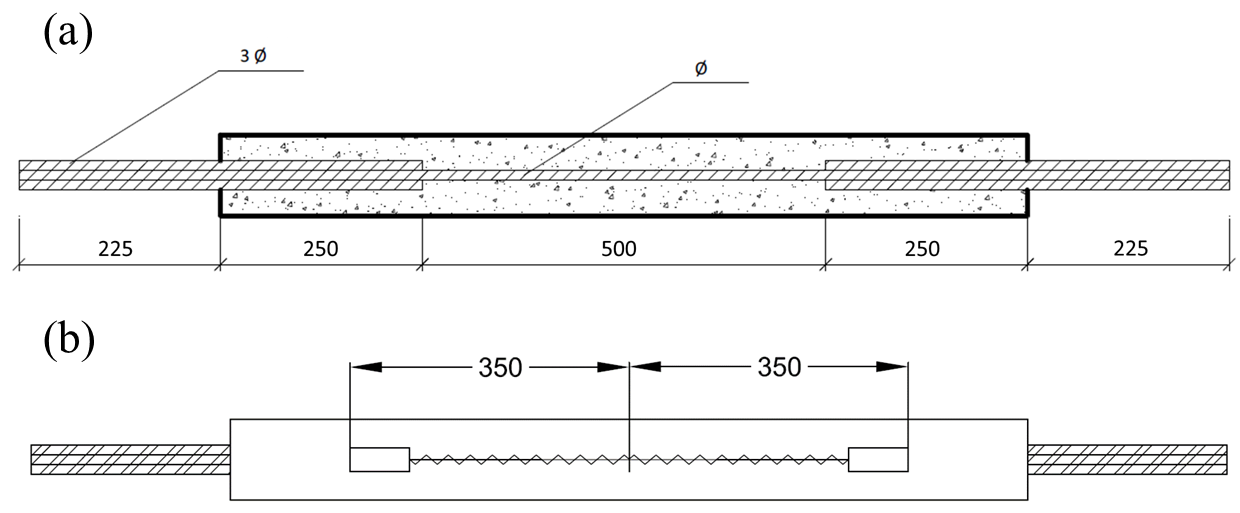
The tensile bars used in the experiment were designed with a prismatic shape and a square cross-section. Each specimen measured 1000 mm in length and featured a single steel rebar positioned centrally within the cross-section. The main steel rebar extended 1450 mm and was supplemented at both ends with two additional rebars, each 475 mm in length and matching the main rebar’s diameter, which were welded in place. As illustrated in Figure 1a, this configuration enabled the central 500 mm segment to be examined using only the primary reinforcement bar. This specific reinforcement detail was implemented to minimize end effects and prevent the main rebar from yielding outside the concrete section (the exposed steel portion) during mechanical testing. Figure 1b further displays the arrangement of displacement transducers installed on all four sides of the bar for the direct tensile mechanical tests conducted in this study.
The UHPFRC dosage used to cast tensile bars with 160 kg/m3 of smooth-straight (13/0.20) steel fibers in this work is specified in Table 1. B500SD steel rebars were used to define reinforcement.
The results from the tensile bar tests and the unreinforced four-point bending tests (4PBT) were used in this study to evaluate the tensile behavior of UHPFRC, following the mix proportions listed in Table 1. All reinforced concrete tensile bars and 4PBT samples were tested 30 days after being cast.
To assess the mechanical properties of the UHPFRC used, compression tests were performed on 100 mm cubes, while 500 mm × 100 mm × 100 mm specimens were prepared for the 4PBT, both cast simultaneously with the tensile specimens.
The tensile specimens were defined according to the geometry and arrangement shown in Figure 1, with square cross-sections of 60 mm × 60 mm, 80 mm × 80 mm, and 100 mm × 100 mm analyzed. Reinforcement bar diameters included ϕ10 mm, ϕ12 mm, and ϕ16 mm, as presented in Table 2.
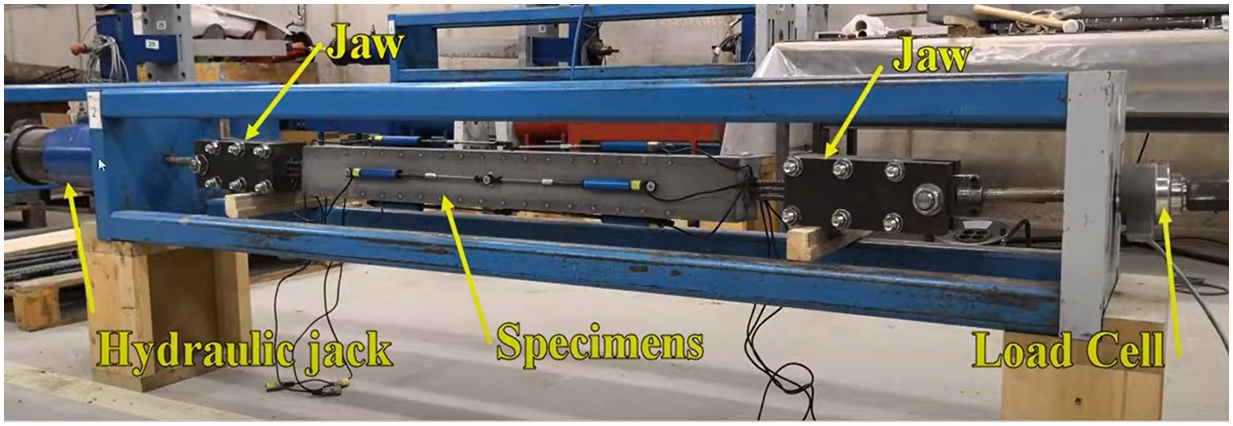
For the mechanical direct tensile test, each tensile bar was mounted in a frame that gripped the reinforcement at both ends. One end remained stationary, serving as the reaction side, while the opposite end, identified as the active side, was attached to a hydraulic jack that applied tensile force to the reinforcement (see Figure 2). The tensile load in the rebar was transferred to the UHPFRC through a bond mechanism. Displacement transducers were positioned on all four sides of the bar, as depicted in Figure 1b, to monitor any local rotations in the specimen.
Table 2 provides an overview of the geometry and quantity of tensile test specimens selected from the experimental program described in references [45,46]. These specimens were produced using UHPFRC and incorporated 160 kg/m3 of steel fibers.

2.2. Material Characterization

To evaluate the mechanical properties of the UHPFRC used in each mixture, a total of 24 cubic specimens (100 mm) were tested for compressive strength, along with nine unreinforced specimens (500 mm × 100 mm × 100 mm) subjected to four-point bending tests (4PBTs) from six different batches.
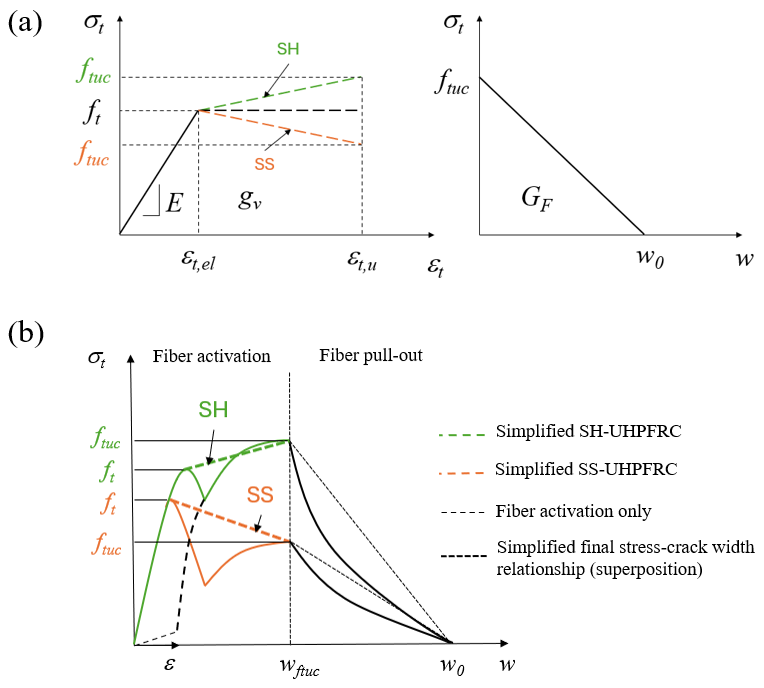
Following the 4P-IA methodology, specific key points from the experimental mid-span stress-displacement curve of the 4PBT are selected to define the assumed tensile behavior. These key points allow for a straightforward calculation and softening correction (ftuc), which helps determine the parameters for the simplified trilinear stress-strain/crack opening (σ-ε/w) tensile model illustrated in Figure 3a. This model, proposed for both SH- and SS-UHPFRC, streamlines the approach to modeling and design, consistent with the French standard [28,29,30]. In this framework, the transition from UHPFRC tensile strength (ft) to the corrected ultimate tensile strength (ftuc) is assumed to be linear (Figure 3a), disregarding the potential stress drop that might occur due to matrix softening after cracking and the subsequent engagement of steel fibers, as described in [37,47,48] and depicted in Figure 3b. The simplified approach illustrated in Figure 3a, which is employed for direct assessment of the tensile behavior of SH- and SS-UHPFRC in modeling and design applications, was calibrated and validated as described in references [41,42].
In this model, the ultimate tensile strain (εtu) is defined as the ratio of crack opening at ftuc (wftuc) to the material’s crack bandwidth or process zone (bw).
Table 3 presents the key tensile properties determined by applying the 4P-IA method and the softening correction (ftuc) to the characteristic 5% and 50% σ-δ experimental curves obtained from the 4PBT specimens. It also includes the compressive strength results from the cubic specimens. The results indicate that the UHPFRC used for manufacturing the tensile bars demonstrated strain-softening behavior.
The reinforcement bars made from B500SD steel were defined by a bilinear stress-strain relationship, including strain hardening. The key properties considered were a tensile strength (fst) of 500 MPa, an ultimate tensile strength (fstu) of 550 MPa, an elastic strain (εst,el) of 0.0025, an ultimate tensile strain (εst,u) of 0.05, and an elastic modulus (Es) of 200,000 MPa.

3. Numerical Model

In this study, the behavior of concrete was evaluated considering a short-term timeframe, corresponding to both the type and duration of load application. The load was applied gradually to observe the immediate response of the material. As a result, the loading rate did not influence the stress-strain response of the concrete, which depended solely on the magnitude of the applied load. Additionally, the concept of shrinkage strain addressed here refers to a general post-cracking shrinkage strain in UHPFRC at the crack edge, influenced by factors such as free shrinkage, creep, and relaxation, as described in [37].
A three-dimensional nonlinear finite element model (3D NLFEM) was developed to simulate reinforced UHPFRC specimens using DIANA FEA Finite Element software [49]. The modeling approach built upon the NLFEM framework previously established by the authors in [41,42,43,50], adapting its capabilities for reinforced concrete tensile elements.
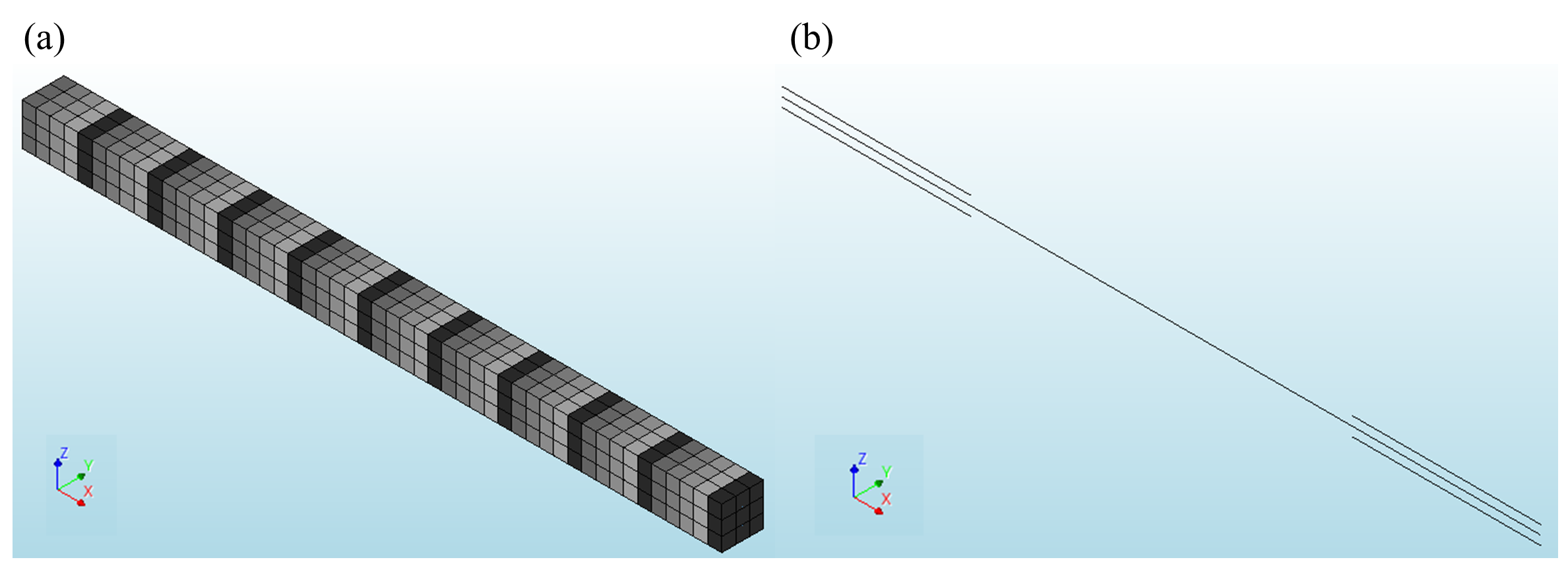
To model the tensile constitutive behavior of UHPFRC, a Discrete Cracking Approach was used. In this framework, the UHPFRC constitutive model is based on interface behavior represented by discrete cracking. The 3D-NLFEM-multicrack involved defining interface behavior between all vertically aligned 3D solid elements, as shown in Figure 4a. The solid elements themselves were modeled using the UHPFRC Smeared Cracking Approach, employing a fixed total strain crack model described by the crack opening curve, while the interface elements followed a stress–crack opening law. As such, the composite finite element consisted of a 3D solid element vertically bounded by two interface elements on each side, allowing for a faithful representation of the actual UHPFRC σ–ε/w constitutive law illustrated in Figure 3b.
The reinforcement was simulated using a Von Mises strain-hardening elasto-plastic model for steel, incorporating bond-slip behavior between the reinforcement and the UHPFRC matrix via the Dorr constitutive model [51] for the interface bond-slip elements.
Experimental results from UHPFRC characterization using 4P-IA with softening correction were implemented in the constitutive model of the NLFEM described above. Thus, the influence of fibers on the tensile constitutive behavior was accounted for with these parameters. Concrete shrinkage and its effects were incorporated as a material function when defining the UHPFRC model in the NLFEM, utilizing the total strain crack model. Consequently, the shrinkage function from EN 1992-1-1 Eurocode 2 [52] was adopted, considering the same parameters as for normal concrete, such as time, specimen perimeter, cement type, and humidity. The resulting values were then increased proportionally to adapt to the UHPFRC response. Specifically, the total shrinkage strain of UHPFRC (εcsUHPFRC) was defined according to Equation (1), where the value obtained on the test day using Eurocode 2 (εcs) was incremented by various percentages (shinc) to account for the shrinkage impact in UHPFRC. Thus, the shinc parameter functions as a numerical variable to be calibrated through a parametric study, as detailed in [42]. It is important to highlight that the shrinkage effect in the numerical model was treated according to [37] and implemented without considering potential stress relaxation in UHPFRC due to creep, that is, assuming free shrinkage. Therefore, a conservative simplification was adopted, treating post-cracking shrinkage as equivalent to free shrinkage [37].
ε c s U H P F R C = ε c s · ( 1 + s h i n c / 100 )
In the NLFEM continuum model, 20 mm three-dimensional quadratic isoparametric solid brick elements were utilized, as illustrated in Figure 4a. To represent macrocrack formation, quadratic 3D interface plane elements were positioned between these solid elements to simulate discrete cracking behavior. The reinforcement was separately modeled with truss elements featuring bond-slip characteristics, as shown in Figure 4b.
Once cast, the specimens intended for the mechanical tensile test were stored under isostatic support for 30 days before testing, with no mechanical loading applied during this period. However, shrinkage effects began immediately after casting, leading to the development of internal stresses due to the interaction between the UHPFRC and the embedded reinforcement bar. Because the reinforcement constrained the natural contraction of the UHPFRC, shrinkage generated tensile stresses in the UHPFRC near the reinforcement and compressive stresses within the steel bar. This pre-existing stress state, resulting solely from shrinkage during storage, was critical and needed to be included as the initial internal stress condition for the subsequent mechanical tensile test.
Accordingly, the numerical model was structured as a two-phase analysis. The first phase, termed the shrinkage phase, simulated the evolution of shrinkage-induced stresses during storage by employing a nonlinear, incremental-iterative time-step approach, incorporating the previously described material function for shrinkage, but with no external loads applied. Once this shrinkage simulation reached the 30-day mark (matching the experimental protocol), the analysis proceeded to the second phase: the tensile test phase. In this phase, load was gradually applied to one end of the reinforcement bar (to mimic the hydraulic jack), while the opposite end was fixed, thereby replicating the testing setup. The tensile phase was also performed using a nonlinear, incremental-iterative load-step procedure. Notably, long-term effects such as creep and relaxation were not considered in this analysis.
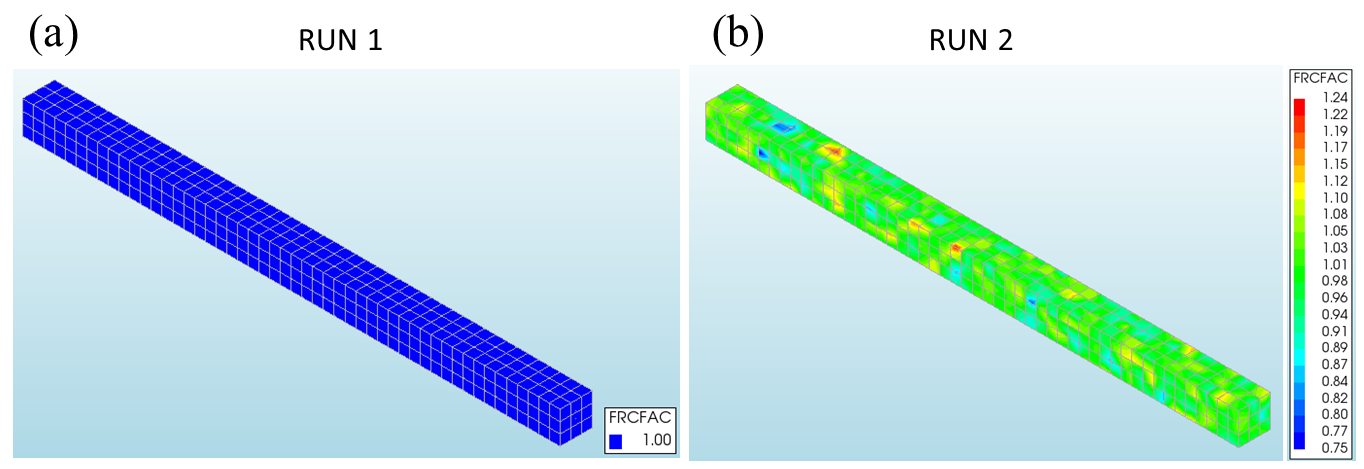
To more accurately reflect the heterogeneous nature of concrete, the 3D-NLFEM-multicrack model incorporated a random FRCFAC factor, which scaled the UHPFRC tensile stress values in the constitutive model. This randomness accounted for material variability by using a random field generated through Cholesky decomposition of the covariance matrix with a log-normal distribution. A 25% variability in the FRCFAC factor was assumed, as illustrated in Figure 5b, to simulate the observed strength variability in UHPFRC, allowing each simulation run to yield distinct material behavior, as previously suggested in [10].

4. Numerical Simulation and Discussion

This section presents the outcomes of the NLFEM simulations. First, it details how the experimental program was modeled using the NLFEM, specifically by incorporating shrinkage effects based on simulation results from an earlier stage, that is, without relying on direct measurements of shrinkage progression in the reinforced tensile test specimens. Subsequently, the mechanical tensile test was simulated and the results were compared with those from the experimental tests. The shrinkage evolution predicted by the model proved to be highly reliable, and the simulation of the mechanical test closely matched the experimental data. Finally, this section examines the impact of the tension stiffening effect on UHPFRC steel-reinforced tensile bars.

4.1. Tensile Test Phase Calibration

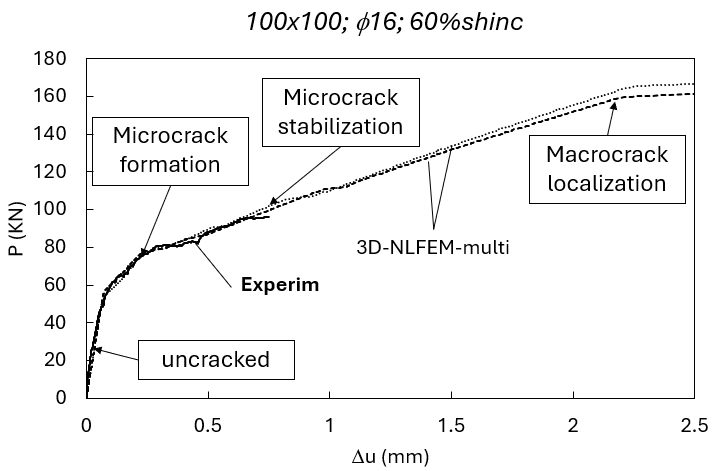
This section focuses on modeling the mechanical tensile test with the NLFEM approach. The simulation results from the tensile test program were directly compared to the responses predicted by the developed NLFEM model. Figure 6 shows the load–displacement (P–Δu) curves obtained from two separate runs using the random analysis parameters specified in Figure 5b, alongside the average experimental outcome (Experim) for the 100 mm × 100 mm, ϕ16 mm UHPFRC tensile bar. The similarity between the two simulation runs highlights that differences arose solely from the material variability captured by the random FRCFAC factor. Consistent with findings from flexural beam studies in [42,43], the direct tensile test of UHPFRC demonstrated distinct phases on the P–Δu curve in Figure 6: the initial uncracked phase, characterized by elastic behavior; a microcrack formation phase, where stiffness began to decline; a microcrack stabilization phase, marked by the emergence of tension stiffening in both UHPFRC and reinforcement; and the collapse phase, which occurred as the macrocrack formed and the reinforcement yielded.
While the experimental tensile test was limited to the microcrack stabilization phase—representing the service limit state due to experimental challenges—the 3D-NLFEM-multicrack model was able to simulate the response through to failure. As illustrated in Figure 6, the P–Δu curve exhibited a change in stiffness as the specimen transitioned from the uncracked phase into microcrack stabilization with the onset of microcracking. The development of a distributed microcrack pattern in UHPFRC led to a gradual transfer of tensile stresses from the concrete matrix to the reinforcement, driven by the tension stiffening effect. During the microcrack stabilization phase, stiffness remained relatively steady until macrocrack localization occurred. The formation of the macrocrack was attributed to the merging of microcracks from the previous phase.
Similar to the behavior observed in flexural UHPFRC beams [42,43], the tension stiffening effect in UHPFRC tensile bars is notable: the stiffness remains consistent throughout the microcrack stabilization phase, from initial microcrack formation to macrocrack localization. This consistency is due to the linear behavior of microcracked UHPFRC, which is reinforced by fibers that provide additional strength to the concrete matrix as microcracks develop. This fiber reinforcement allows for further microcrack formation without immediately transferring all the stress to the reinforcement. The added strength translates into extra crack energy during microcracking, resulting in a stable overall response and a relatively constant tension stiffening effect. Therefore, in this study, the tension stiffening phenomenon was implicitly captured in the tensile response, considering not only the tensile strength of the concrete placed between cracks but also the residual strength within the cracks themselves due to fiber reinforcement.
As shown in Figure 6, the 3D-NLFEM-multicrack model closely replicated the experimental results by implementing a 60% shrinkage increment (shinc), which, when applying Equation (1), produced a shrinkage strain of 0.53 mm/m at the end of the 30-day shrinkage phase. This level of shrinkage strain established the initial internal tensile stress state for the UHPFRC, which was essential to include in the model to accurately represent the mechanical tensile test phase.
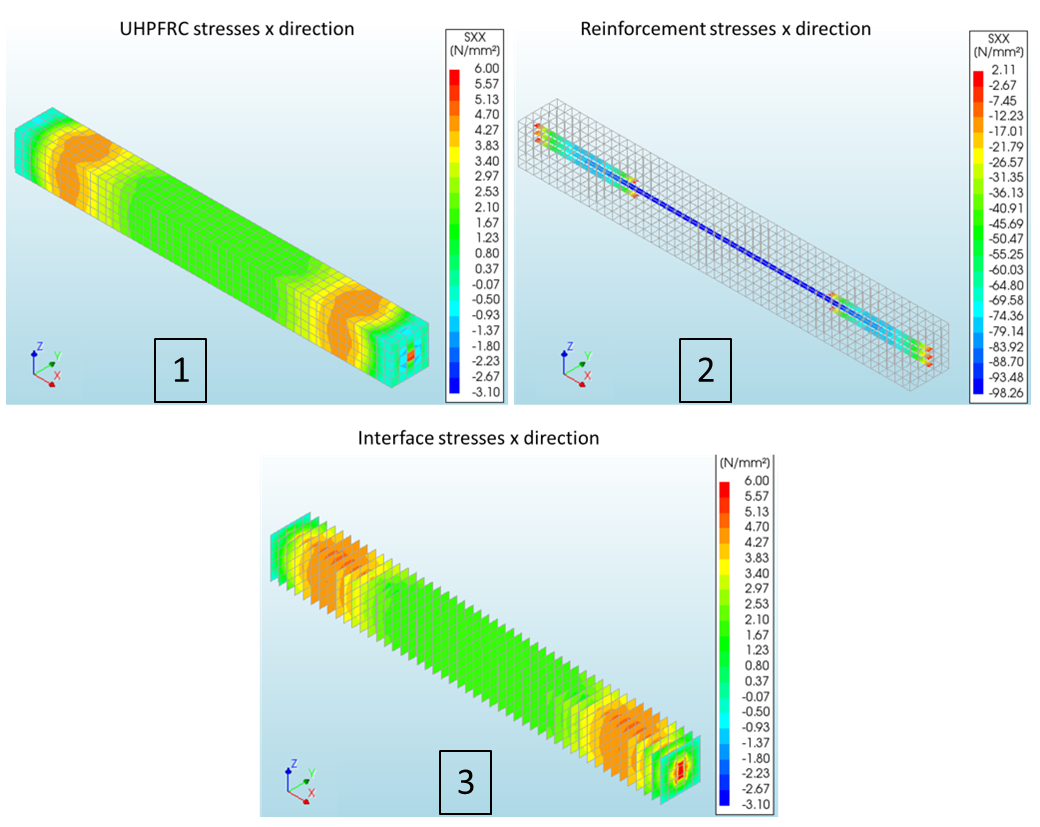
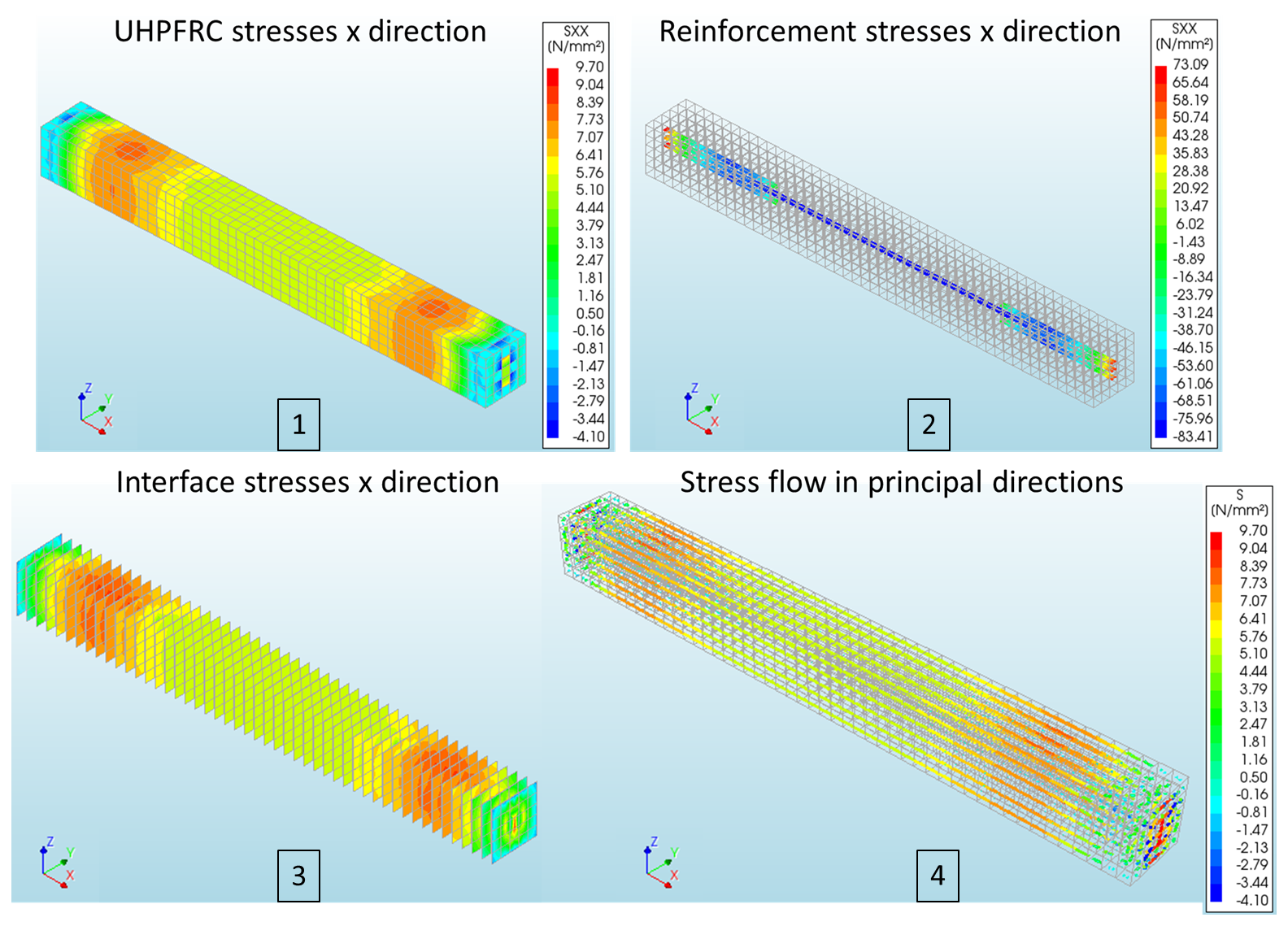
Figure 7 illustrates the stress distribution within the UHPFRC and the reinforcement after 30 days, just before initiating the tensile test. These stress patterns were the direct result of shrinkage at the 30-day mark. Notably, there was a significant concentration of stress in the concrete at the location where the reinforcement section transitions, which could have a substantial impact on the subsequent test response. As anticipated from their design, the shrinkage pattern observed in the solid UHPFRC elements was mirrored in the UHPFRC interface elements that make up the multicrack model between each vertical section of the structural solid elements (see Figure 7).
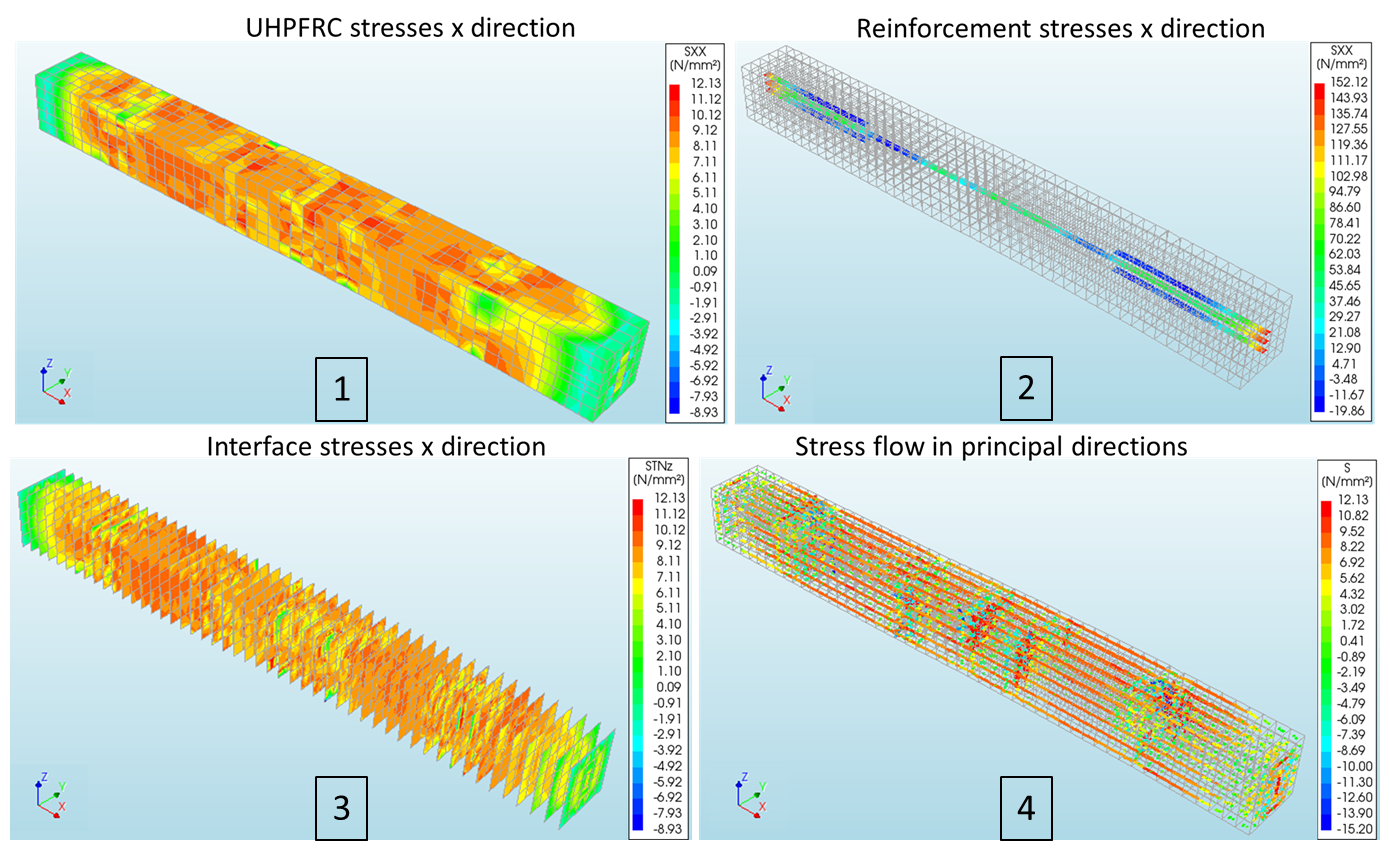
Figure 8 illustrates the stress distribution in both the UHPFRC and the reinforcement at a load of 40 kN during the elastic, uncracked phase (refer to Figure 6). The stress pattern observed in this stage closely resembles that of the shrinkage phase, but with an increased stress magnitude due to the applied tensile load and the influence of the earlier shrinkage effects. When the interface stresses are examined (Figure 8), the same distribution pattern is evident. Figure 8 provides a comprehensive overview of the stress profile along the length of the tensile bar, especially when compared to the UHPFRC stress depiction. A noticeable radial stress distribution is present within the profile across neighboring slices. Additionally, the central region of the bar remains largely uniform, facilitating a consistent transfer of stress between the reinforcement and the UHPFRC matrix, which ensures a stable tensile test response. The so-called instability zone—where the steel rebar transitions from three bars to one—becomes apparent when examining the principal direction stress flow in Figure 8, signaling the likely area where initial cracking will occur as the load increases. Conversely, in the central portion of the bar, as shown in Figure 8, this effect diminishes, leading to a more uniform stress distribution, which is the intended outcome for this type of tensile test.
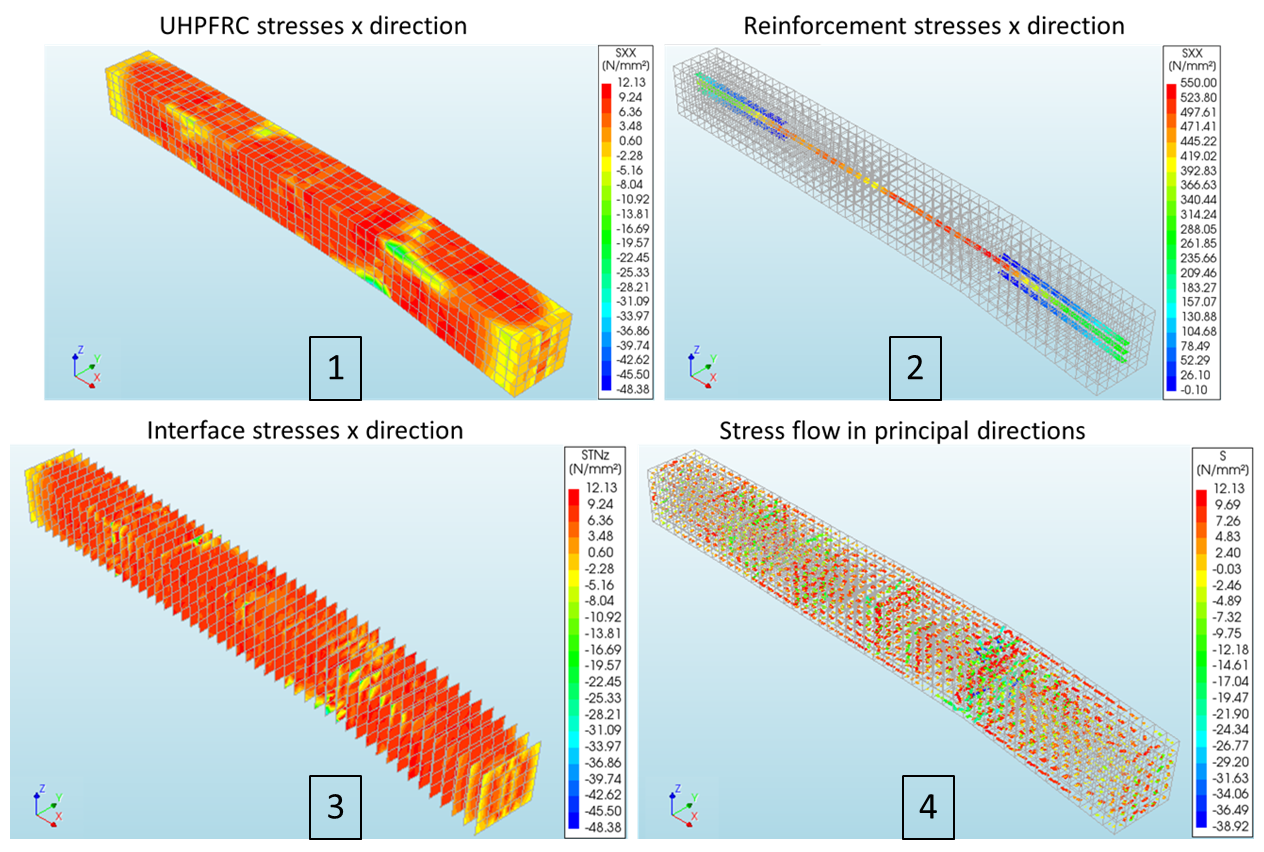
Figure 9 shows the stress distribution in both the UHPFRC and the reinforcement at a load of 90 kN, which corresponds to the microcrack stabilization phase (refer to Figure 6). At this stage, the entire central region of the bar—including the instability zone—had reached or was close to reaching its tensile strength, and some areas may have already entered the descending branch of the stress-strain curve, reflecting the SS-type tensile behavior of the UHPFRC used in these bars (see Table 3). The interface stresses are also illustrated in Figure 9, highlighting how the stresses in the UHPFRC were distributed across different sections of the bar. Notably, certain sections did not exhibit a uniform stress distribution, attributed to the SS-UHPFRC material properties. Additionally, Figure 9 depicts the UHPFRC stress flow, where it is evident that the stress flow was distorted in some sections, and this distortion could vary within the same section. These observations suggest that localized crack formation was occurring in those areas.
Figure 10 shows the distribution of stresses within the UHPFRC and reinforcement and at the interface in the x direction, along with the principal stress flow at the point of collapse at 167.88 kN (refer also to Figure 6). At this stage, the UHPFRC had either reached or was very close to reaching its tensile strength (ft), and in some areas, the ultimate tensile strength (ftu) may have been exceeded, leading to the formation of a macrocrack. The interface stresses in the x direction provided a detailed view across the specimen’s sections, revealing how stress levels varied through the depth of the section. Additionally, when examining the stresses in the reinforcement along the x direction, it is clear that the central reinforcing bar achieved its yield strength at several locations. These yield points aligned with regions of concentrated stress shown in the principal stress flow diagram for the UHPFRC in Figure 10.
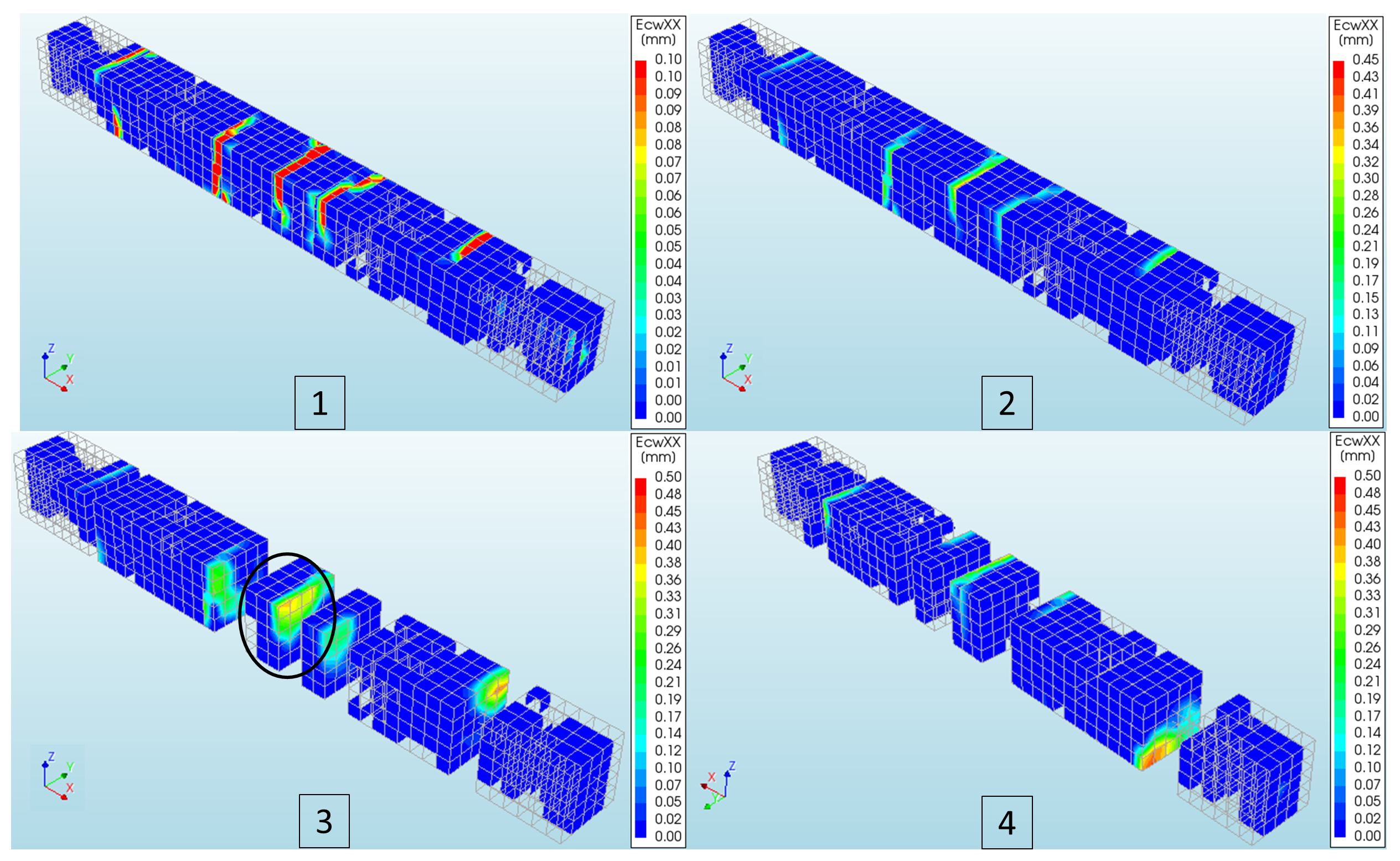
Furthermore, Figure 11 illustrates the crack openings along the x direction at the point of collapse, which occurred at 167.88 kN (refer also to Figure 6). In Figure 11(1), the crack openings are limited to 0.10 mm to highlight their locations. It can be seen that the cracks formed precisely at the spots where the central reinforcement bar reached its yield strength and where stress concentrations appeared in the UHPFRC stress flow, as shown in Figure 10. Figure 11(2) displays the largest crack opening (9.32 mm) and its corresponding position along the specimen, demonstrating the development of one of the cracks initially shown in Figure 11(1).
Figure 11(3),(4) show the progression of the cracks through various cross-sections, viewed from both directions along the x edge. These figures reveal that the macrocrack, with a maximum opening of 0.5 mm, extended widely throughout the sections, even reaching the reinforcement. As a result, the stress was transferred to the reinforcement, causing a stress peak where the steel attained its yield strength. This confirms that the 3D-NLFEM-multicrack model can realistically simulate the collapse moment, accurately depicting conditions that would be expected in an actual scenario.
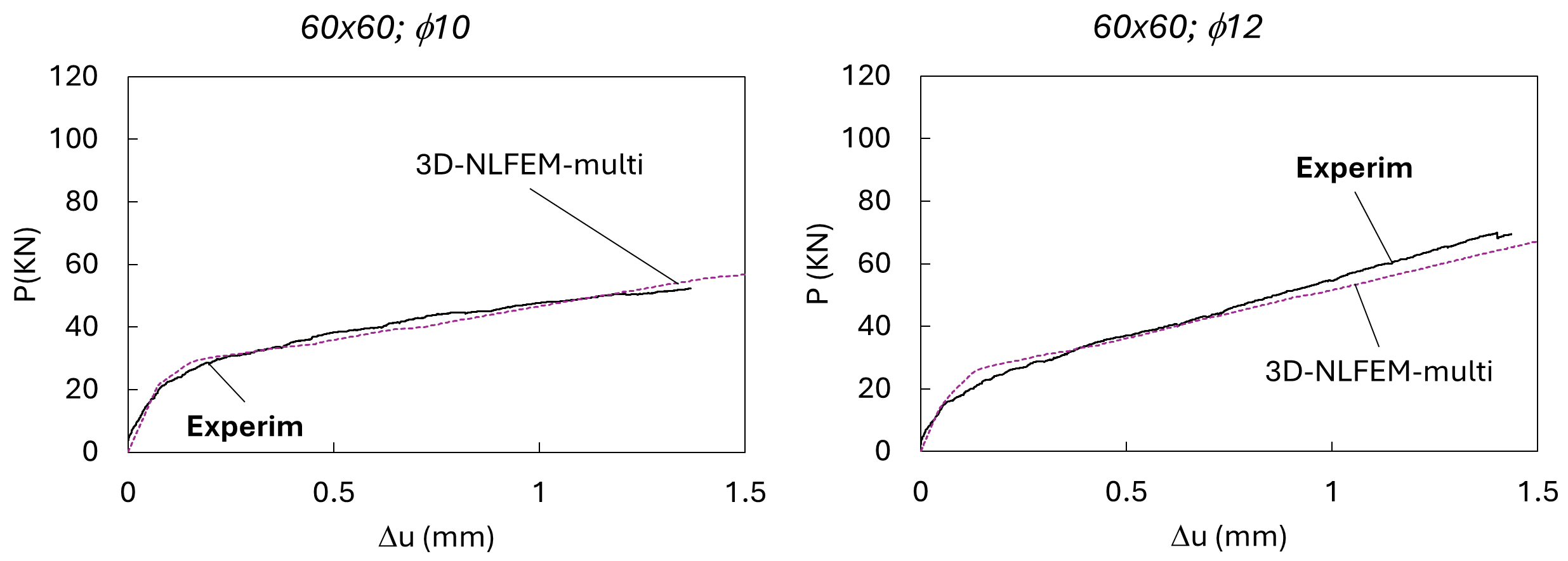
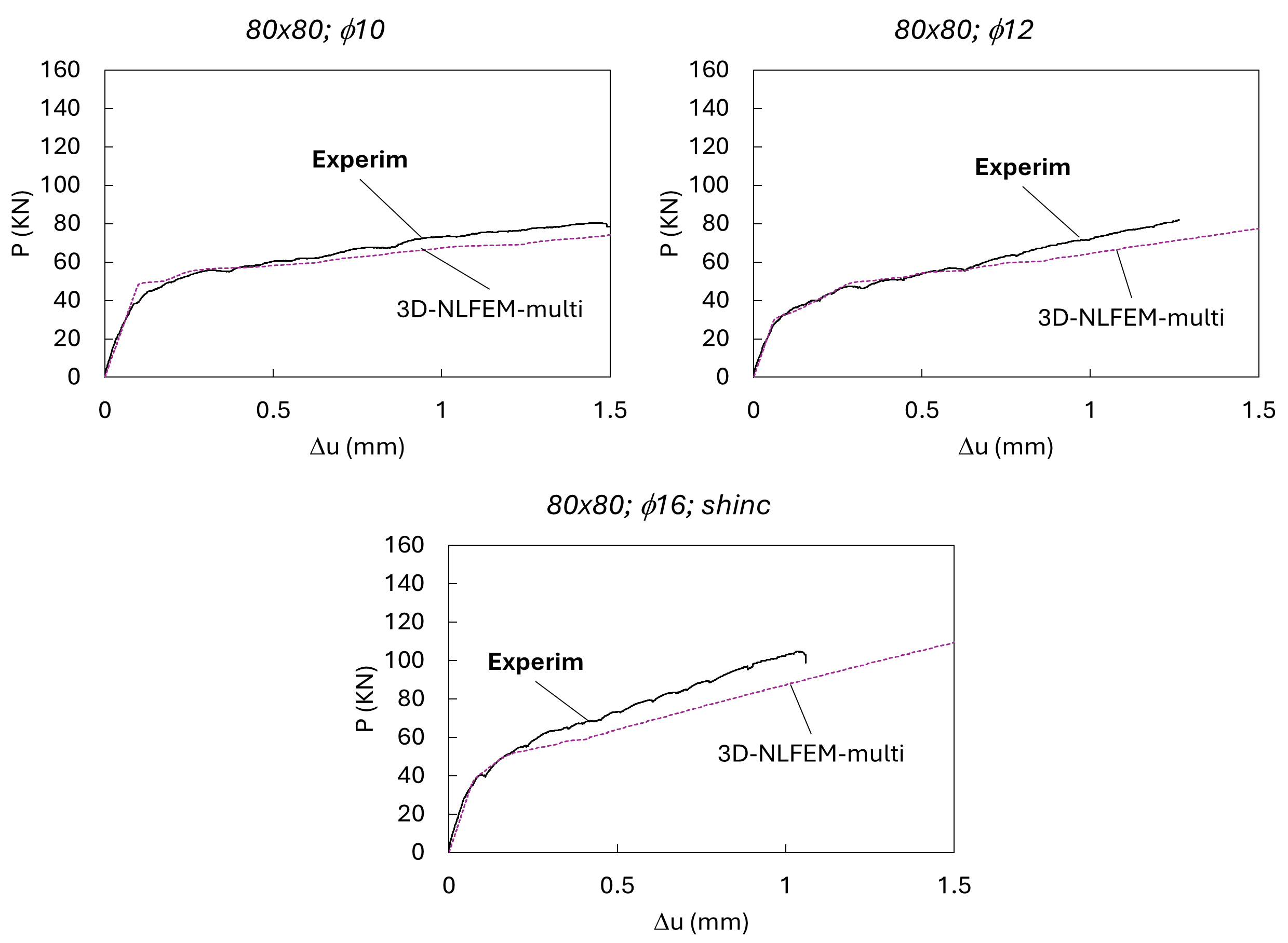
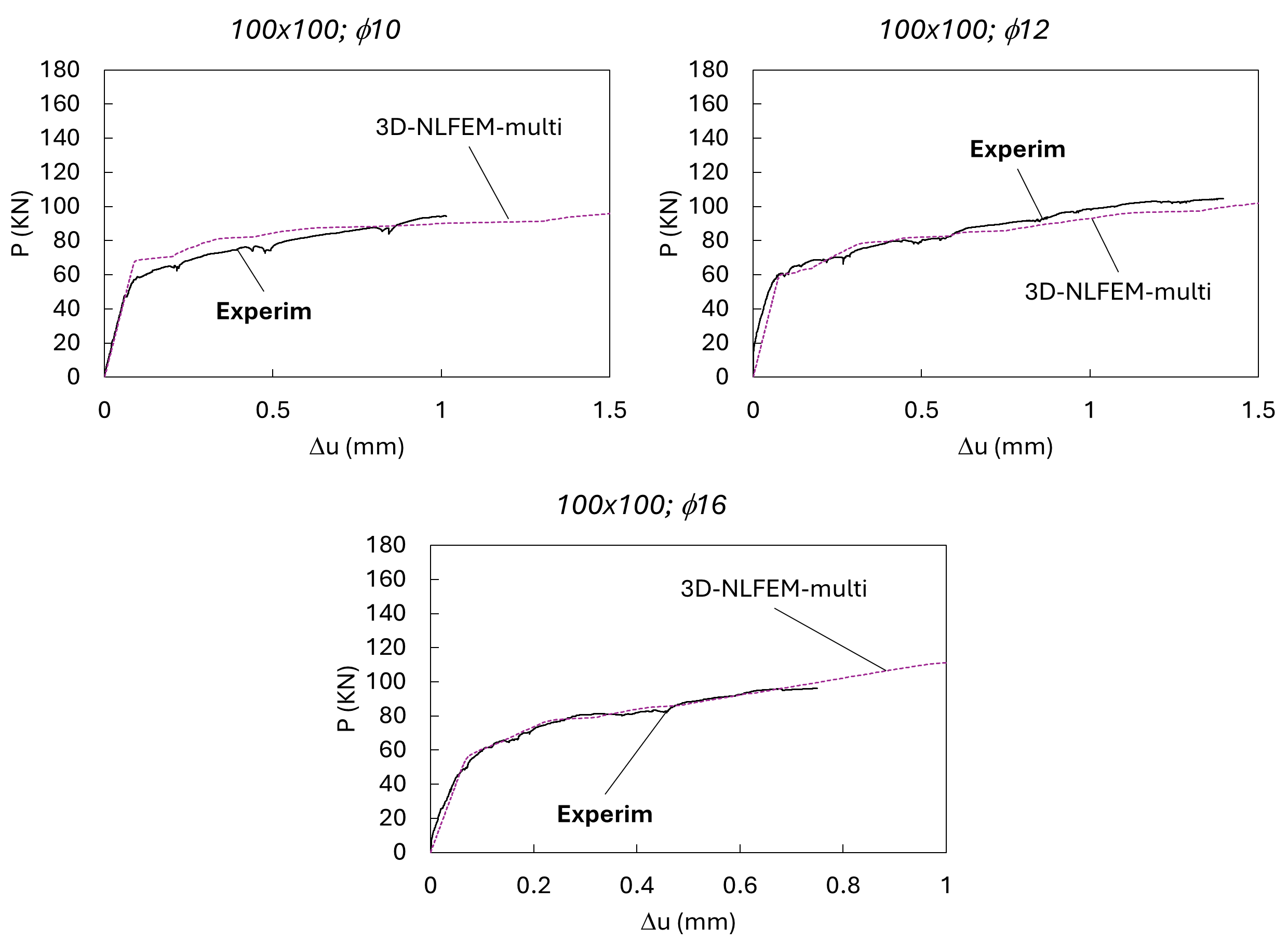
Accordingly, Figure 12, Figure 13 and Figure 14 present the curves calibrated using the shinc values required for the 3D-NLFEM-multicrack model, which incorporates a random distribution of FRCFAC for tensile strength, as applied to the experimental tensile bars. These figures demonstrate that the 3D model effectively replicates the mean experimental response (Experim) when the parameters listed in Table 3 are used to define the UHPFRC constitutive behavior within the 3D-NLFEM-multicrack model.
Using Equation (1), the strain resulting from shrinkage—which accounts for the internal tensile stress state in the UHPFRC after the shrinkage phase (30 days)—was determined. This strain (εcsUHPFRC) must be considered initially to ensure an accurate simulation of the tensile test phase in the 3D-NLFEM-multicrack. The specific values are provided in Table 4.
Table 4 indicates that when modeling the tensile test with the 3D-NLFEM-multicrack, the computed UHPFRC 3D shrinkage strain (εcsUHPFRC) ranged from 0.37 to 0.73 mm/m. This range is consistent with the experimental UHPFRC shrinkage strain values reported in the literature [35,36,37,38]. Furthermore, since it was conservatively assumed that the calculated post-cracking shrinkage equals the free shrinkage, the actual free shrinkage strain is likely somewhat lower than the calculated range due to the effects of creep and relaxation. Therefore, the numerically calculated UHPFRC 3D shrinkage strain range represents an upper bound. The effect of creep on this range is currently being investigated by the research group.

4.2. Tension Stiffening Analysis

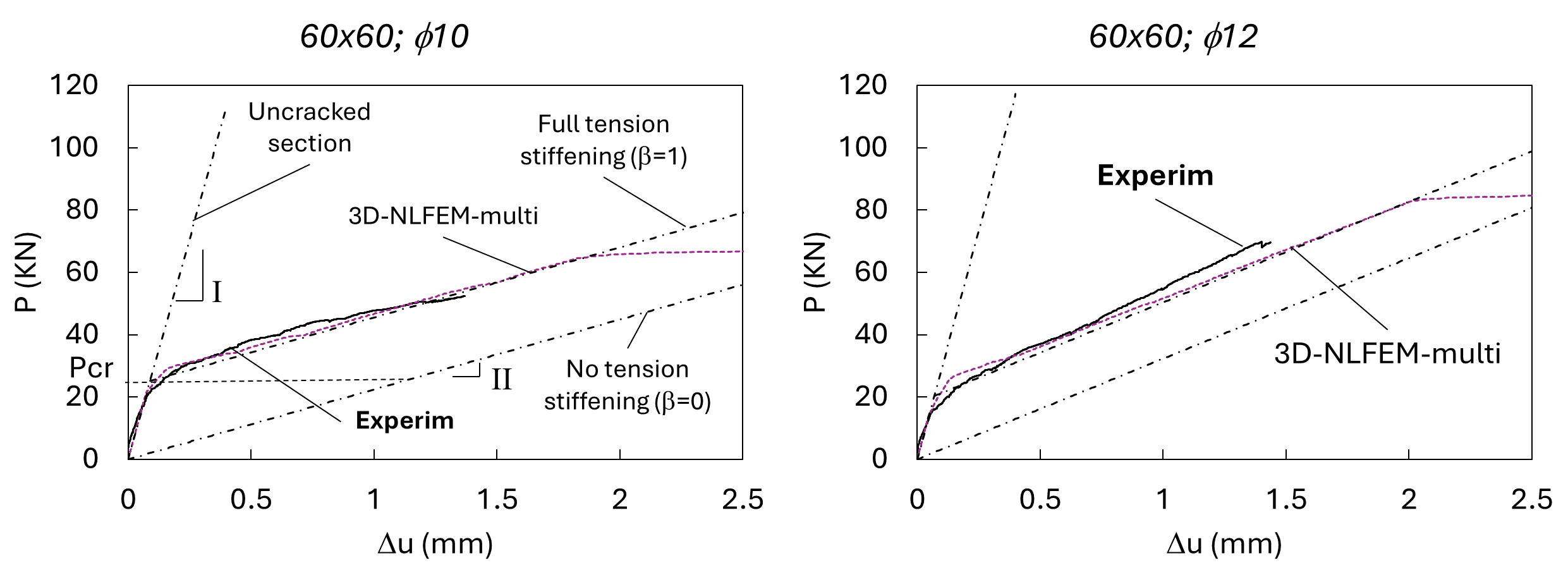
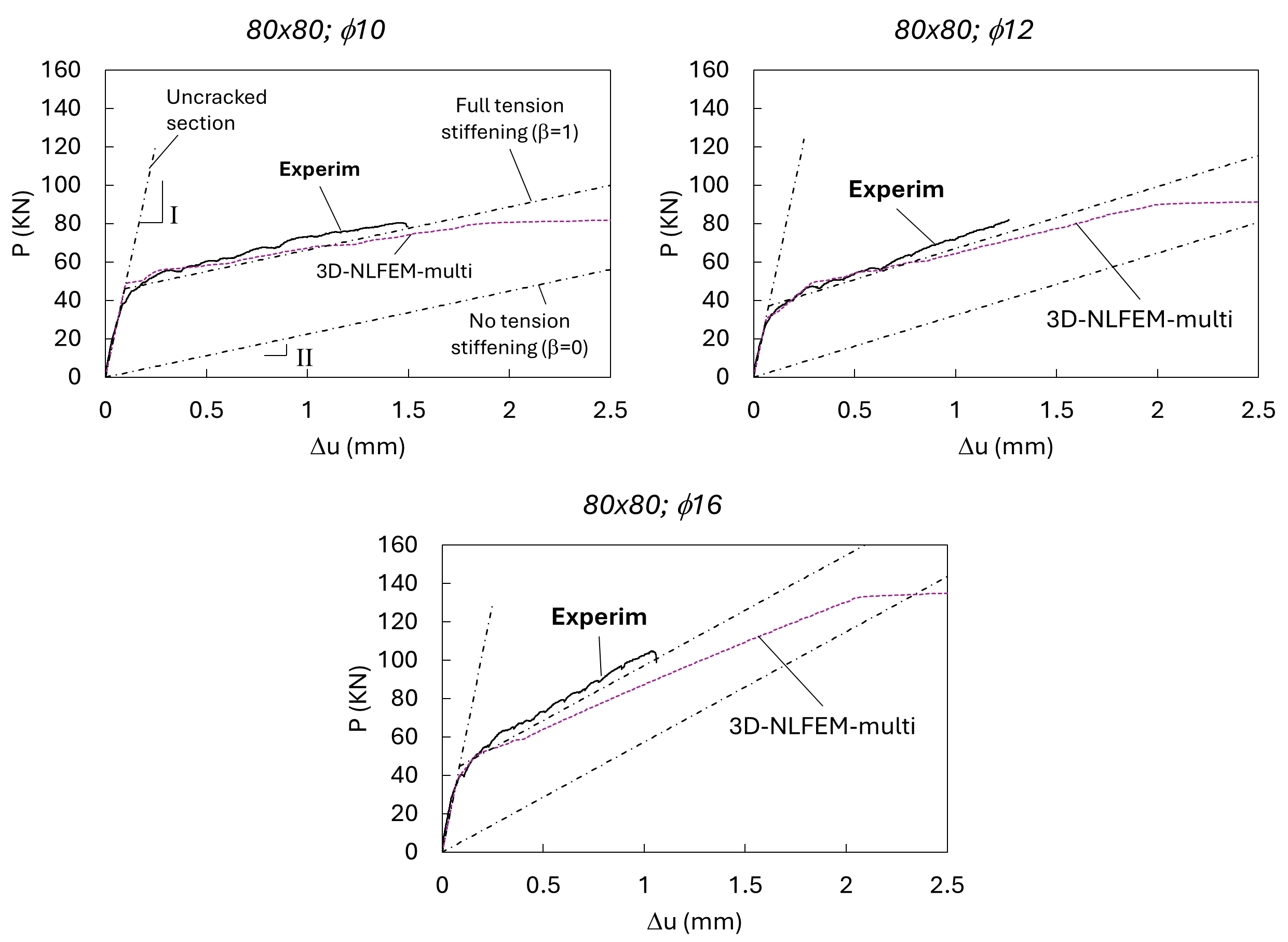
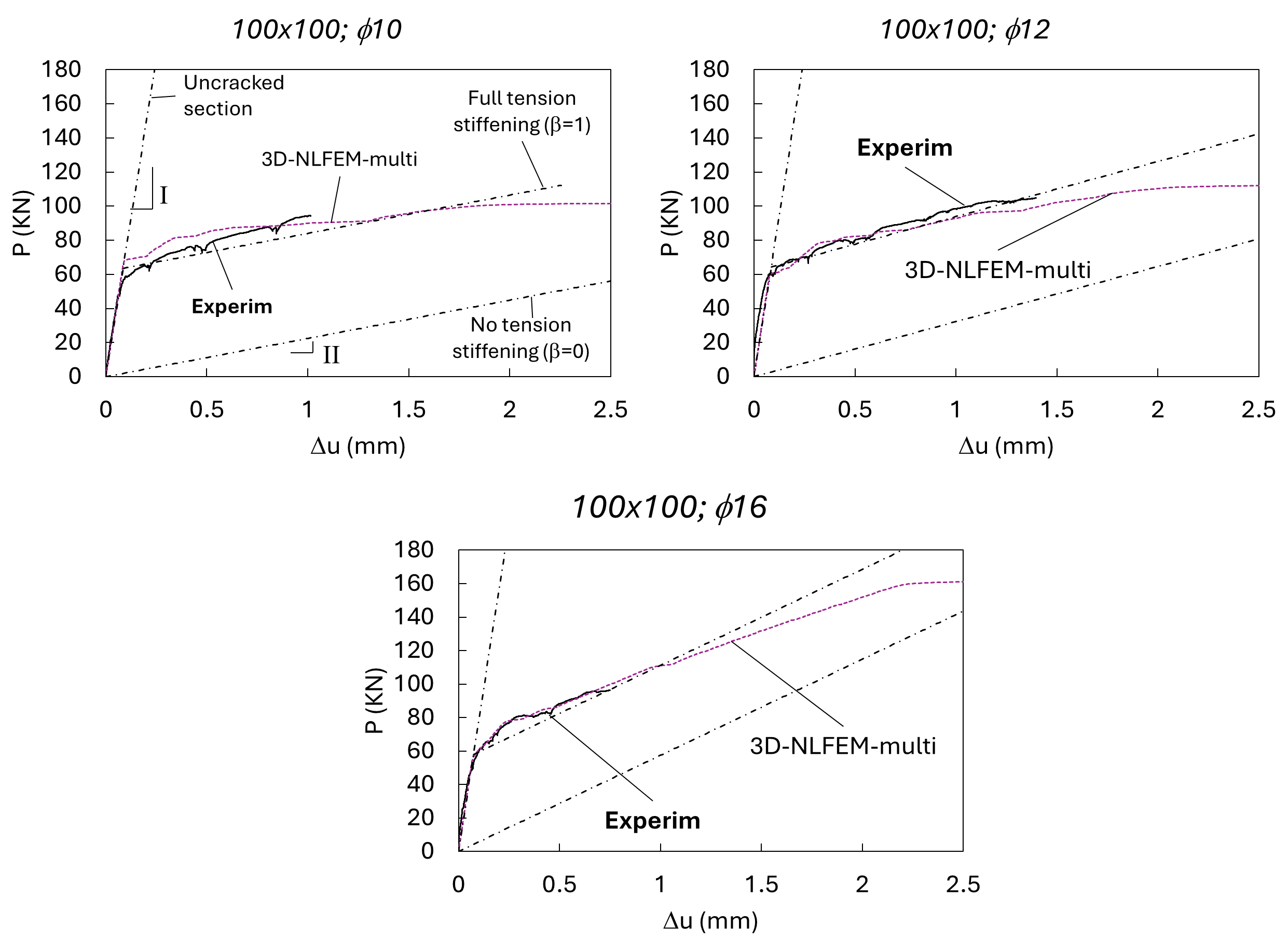
This section examines how the tension stiffening effect impacts UHPFRC steel-reinforced tensile bars. The P–Δu response was evaluated using two reference lines: one representing stiffness I, which models the elastic behavior of an uncracked UHPFRC steel-reinforced tensile bar, and another representing stiffness II, which corresponds to the stiffness of the bare steel reinforcement, assuming the UHPFRC has fully cracked and no longer contributes to the overall stiffness. Consistent with previous studies on flexural beams referenced in [42,43] and following Bischoff [53], a tension-stiffening factor (β) can be used to characterize the element’s response. When β is set to 1, the result is a bilinear response featuring the elastic uncracked stiffness and constant tension stiffening, where microcracks form once the Pcr load is reached, establishing an upper limit for member stiffness, referred to as the full tension stiffening scenario. Conversely, setting β to 0 yields a lower limit with no tension stiffening, essentially providing the II response that defines the absence of tension stiffening. This analysis was performed on the UHPFRC steel-reinforced bars listed in Table 2 and illustrated in Figure 15, Figure 16 and Figure 17. For all these specimens, the axial stiffnesses EAI/L and EAII/L were calculated according to Equations (2) and (3), respectively, and the full tension stiffening line (β = 1) was plotted parallel to the II line (β = 0), starting from the Pcr value obtained in the experimental P–Δu results for each tensile bar.
E A I L = E s · A s L · ( 1 + n ρ n ρ )
E A I I L = E s · A s L
Here, L refers to the initial length monitored by the displacement transducers shown in Figure 1b. As and Es are the cross-sectional area and modulus of elasticity of the steel rebar passing through the central 500 mm section of the tensile bar depicted in Figure 1a, while Ac and Ec denote the cross-sectional area and modulus of elasticity of the UHPFRC within the tensile bar.
Figure 15, Figure 16 and Figure 17 present the P–Δu response generated by the 3D-NLFEM-multicrack model, based on data from Figure 12, Figure 13 and Figure 14. This response utilizes the tensile UHPFRC characteristic parameters obtained from the 4P-IA tests and applies the softening adjustment corresponding to the 50% percentile as detailed in Table 3. These results are compared to both the experimental 50% percentile P–Δu response and the previously described reference lines, allowing for an evaluation of the model’s predictive accuracy with regard to stiffness.
As shown in Figure 15, Figure 16 and Figure 17, both the experimental P–Δu results and the outcomes from the model simulations closely align with the full tension stiffening behavior (β = 1) during the microcrack stabilization phase for nearly all UHPFRC tensile bars analyzed. However, in certain cases, such as the 80 × 80 ϕ16 tensile bar (refer to Figure 16), the 3D-NLFEM-multicrack model exhibited a noticeable reduction in stiffness during microcrack stabilization, resulting in a P–Δu response that fell between full tension stiffening and no tension stiffening, specifically, where 0 < β < 1. This discrepancy may be related to the random field applied in the nonlinear analysis, which can introduce variability in the 3D-NLFEM-multicrack model. Additionally, as indicated in Figure 1, it was important to account for the initial length monitored by the displacement transducers, as this segment includes the region with only one reinforcement bar (the central 500 mm), the transition zone where the number of bars changes from one to three (at 250 mm from the center on each side), and part of the three-bar segment (extending up to 350 mm from the center on each side). This transitional region could represent a weak zone where abrupt changes in stiffness, resulting from modifications in the steel rebar section and anchorage length, may lead to convergence and instability issues in the 3D model simulations. Such factors could also cause uncertainties and irregular readings from the displacement transducers during experimental testing, potentially explaining the observed differences between the experimental results and the 3D-NLFEM-multicrack simulation outcomes. The 3D model is particularly sensitive to three-dimensional effects, and the presence of these effects in the weak zone could significantly influence the overall simulation response.
Nevertheless, it can generally be concluded that, similar to the findings for reinforced flexural UHPFRC beams reported in previous studies [42,43], UHPFRC demonstrates full tension stiffening behavior under tensile loading. This characteristic is accurately captured by the comprehensive 3D-NLFEM-multicrack model, which effectively accounts for shrinkage variations and is responsive to three-dimensional effects, including those stemming from the weak zone created by changes in the steel reinforcement section.

5. Concluding Remarks

This study aimed to develop a reliable and direct design procedure for UHPFRC, ensuring consistency from material characterization to structural application. This objective was achieved through a robust non-linear finite element model (NLFEM) capable of accurately simulating the tensile behavior of reinforced UHPFRC elements, including shrinkage effects. The model operates in two phases: one simulating shrinkage during specimen storage and the other simulating the tensile test using the internal stresses generated in the first phase.
Based on this approach, the following conclusions were drawn:
  • The model showed strong agreement with experimental tensile test results. It reliably predicted shrinkage strain and its influence on stiffness loss during microcrack initiation and stabilization, where tension-stiffening behavior becomes significant.
  • The 3D-NLFEM-multicrack model reproduced the experimental load–displacement response when using the average UHPFRC tensile parameters from four-point bending tests, confirming both its accuracy and the consistency of the concrete characterization process.
  • Macrocracks resulted from the coalescence of microcracks. The model captured the tension-stiffening effect, which preserved stiffness during microcrack stabilization, considering both the tensile strength between cracks and the residual strength provided by fiber bridging.
  • The predicted UHPFRC shrinkage strain ranged from 0.37 to 0.73 mm/m, aligning with literature values (0.60–0.90 mm/m). As post-cracking shrinkage was conservatively assumed to be equal to free shrinkage, without accounting for creep and relaxation, the predicted strain value represents an upper bound.
  • The model successfully simulated the full tension-stiffening behavior of UHPFRC, including 3D effects and stress concentrations in the reinforcement transition zone compared to the experimental results, which are characteristic of this particular type of tensile test.
  • Based on the findings of this study, a comprehensive and robust methodology for numerically modeling UHPFRC—from the material scale up to structural elements—has been developed. This approach aims to bridge the gap between material characterization and structural performance, providing a reliable framework for design.

Author Contributions

Conceptualization, E.J.M.-A. and J.N.-G.; methodology, E.J.M.-A. and J.N.-G.; software, E.J.M.-A. and J.N.-G.; validation, E.J.M.-A., J.N.-G. and P.S.; formal analysis, E.J.M.-A. and J.N.-G.; investigation, E.J.M.-A. and J.N.-G.; resources, J.N.-G. and P.S.; data curation, E.J.M.-A. and J.N.-G.; writing—original draft preparation, E.J.M.-A.; writing—review and editing, J.N.-G. and E.J.M.-A.; visualization, E.J.M.-A. and J.N.-G.; supervision, E.J.M.-A., J.N.-G. and P.S.; project administration, J.N.-G. and P.S.; funding acquisition, J.N.-G. and P.S. All authors have read and agreed to the published version of the manuscript.

Funding

This work is part of Project PreULight “CIAICO/2022/045”, supported by the “Conselleria de Innovación, Universidades, Ciencia y Sociedad Digital, Generalitat Valenciana (ES)” and Project PID2023-149364OB-I00/AEI/10.13039/501100011033 funded by the Agencia Estatal de Investigación (State Research Agency) of Spain.

Data Availability Statement

The data presented in this study are contained within the article.

Conflicts of Interest

The authors declare no conflict of interest.

Nomenclature

List of abbreviations and acronyms
UHPCUltra-High-Performance Concrete
UHPFRCUltra-High-Performance Fiber-Reinforced Concrete
SHStrain-hardening
SSStrain-softening
SH-UHPFRCStrain-hardening Ultra-High-Performance Fiber-Reinforced Concrete
SS-UHPFRCStrain-softening Ultra-High-Performance Fiber-Reinforced Concrete
4PBTFour-point bending test
NLFEMNon-linear finite element model
CCConventional concrete
RCReinforced concrete
FRCFiber-reinforced concrete
4P-IASimplified four-point inverse analysis
FRCFACFactor that multiplies the values of the UHPFRC tension stress in the constitutive behavior of the NLFEM
List of symbols
nmodular ratio (Es/E)
ρreinforcement ratio (As/Ac)
Ascross-sectional area of reinforcement
Accross-sectional area of concrete
w/cwater/cement ratio
w/bwater/binder ratio
Pload
σ or σflequivalent bending stress
δdeflection
Lspecimen length and also the initial length covered by displacement transducers
bspecimen width
hspecimen height
ϕreinforcement bar diameter
E and EcUHPFRC elastic modulus
Eselastic modulus of reinforcement steel
fsttensile strength of reinforcement steel
fstuultimate tensile strength of reinforcement steel
fttensile strength
ftuultimate tensile strength obtained from the 4P-IA prior to the softening correction application
ftuccorrected ultimate tensile strength
γhardening ratio: the ultimate tensile strength (ftu) to tensile strength (ft) ratio
γccorrected hardening ratio: the corrected ultimate tensile strength (ftuc) to tensile strength (ft) ratio
εst,elelastic strain of reinforcement steel
εst,uultimate tensile strain of reinforcement steel
εtuultimate cracking strain
wftuccrack opening at the corrected ultimate tensile strength (ftuc)
w0crack opening at the intersection defining the initial slope to the w axis in the σ-w diagram
bwmaterial crack bandwidth or process zone
fccubic compression strength of UHPFRC
εcsUHPFRCtotal shrinkage strain of UHPFRC
εcsshrinkage strain obtained on the testing day using Eurocode 2
shincpercentage of increased UHPFRC shrinkage
EAIelastic stiffness for an uncracked UHPFRC steel-reinforced tensile bar
EAIIbare steel reinforcement bar stiffness
βtension-stiffening factor
Pcrload where microcracks appear

References

  1. Karmacharya, A.; Gamarra, J.; Chao, S.-H. Use of Ultra-High-Performance Fiber-Reinforced Concrete (UHP-FRC) for Fast and Sustainable Repair of Rigid Pavements. In Airfield and Highway Pavements 2019: Design, Construction, Condition Evaluation, and Management of Pavements; American Society of Civil Engineers: Reston, VA, USA, 2019; pp. 273–285. [Google Scholar]
  2. Jiang, X.; Yuan, Y.; Wu, C.; Luo, C. Fatigue Life Assessment of Orthotropic Steel Deck with UHPC Pavement. J. Eng. 2017, 2017, 8413607. [Google Scholar] [CrossRef]
  3. Mühlbauer, C.; Zilch, K. Glued Joints of Ultra High Performance Concrete Structures. In Proceedings of the 3rd fib International Congress, Washington, DC, USA, 29 May–2 June 2010; Volume 29. [Google Scholar]
  4. Wiese, S.; Schnell, J.; Kurz, W. Innovative Shear Connectors in Ultra High Performance Concrete. Beton-Und Stahlbetonbau 2011, 106, 694-U119. [Google Scholar] [CrossRef]
  5. Yin, H.; Shirai, K.; Teo, W. Numerical Model for Predicting the Structural Response of Composite UHPC–Concrete Members Considering the Bond Strength at the Interface. Compos. Struct. 2019, 215, 185–197. [Google Scholar] [CrossRef]
  6. Sakr, M.A.; El-khoriby, S.R.; Khalifa, T.M.; Nagib, M.T. Modeling of RC Shear Walls Strengthened with Ultra-High Performance Fiber Reinforced Concrete (UHPFRC) Jackets. Eng. Struct. 2019, 200, 109696. [Google Scholar] [CrossRef]
  7. Sadouki, H.; Denarié, E.; Brühwiler, E. Validation of a FEA Model of Structural Response of RC-Cantilever Beams Strengthened with a (R-) UHPFRC Layer. Constr. Build. Mater. 2017, 140, 100–108. [Google Scholar] [CrossRef]
  8. Lampropoulos, A.P.; Paschalis, S.A.; Tsioulou, O.T.; Dritsos, S.E. Strengthening of Reinforced Concrete Beams Using Ultra High Performance Fibre Reinforced Concrete (UHPFRC). Eng. Struct. 2016, 106, 370–384. [Google Scholar] [CrossRef]
  9. Zhu, Y.; Zhang, Y.; Hussein, H.H.; Chen, G. Numerical Modeling for Damaged Reinforced Concrete Slab Strengthened by Ultra-High Performance Concrete (UHPC) Layer. Eng. Struct. 2020, 209, 110031. [Google Scholar] [CrossRef]
  10. Rossi, P.; Daviau-Desnoyers, D.; Tailhan, J.-L. Probabilistic Numerical Model of Cracking in Ultra-High Performance Fibre Reinforced Concrete (UHPFRC) Beams Subjected to Shear Loading. Cem. Concr. Compos. 2018, 90, 119–125. [Google Scholar] [CrossRef]
  11. Yin, H.; Shirai, K.; Teo, W. Finite Element Modelling to Predict the Flexural Behaviour of Ultra-High Performance Concrete Members. Eng. Struct. 2019, 183, 741–755. [Google Scholar] [CrossRef]
  12. Singh, M.; Sheikh, A.H.; Mohamed Ali, M.S.; Visintin, P.; Griffith, M.C. Experimental and Numerical Study of the Flexural Behaviour of Ultra-High Performance Fibre Reinforced Concrete Beams. Constr. Build. Mater. 2017, 138, 12–25. [Google Scholar] [CrossRef]
  13. Hung, C.-C.; Li, H.; Chen, H.-C. High-Strength Steel Reinforced Squat UHPFRC Shear Walls: Cyclic Behavior and Design Implications. Eng. Struct. 2017, 141, 59–74. [Google Scholar] [CrossRef]
  14. Ali Dadvar, S.; Mostofinejad, D.; Bahmani, H. Strengthening of RC Columns by Ultra-High Performance Fiber Reinforced Concrete (UHPFRC) Jacketing. Constr. Build. Mater. 2020, 235, 117485. [Google Scholar] [CrossRef]
  15. Aoude, H.; Dagenais, F.P.; Burrell, R.P.; Saatcioglu, M. Behavior of Ultra-High Performance Fiber Reinforced Concrete Columns under Blast Loading. Int. J. Impact Eng. 2015, 80, 185–202. [Google Scholar] [CrossRef]
  16. Astarlioglu, S.; Krauthammer, T. Response of Normal-Strength and Ultra-High-Performance Fiber-Reinforced Concrete Columns to Idealized Blast Loads. Eng. Struct. 2014, 61, 1–12. [Google Scholar] [CrossRef]
  17. Li, J.; Wu, C.; Hao, H. An Experimental and Numerical Study of Reinforced Ultra-High Performance Concrete Slabs under Blast Loads. Mater. Des. 2015, 82, 64–76. [Google Scholar] [CrossRef]
  18. Li, J.; Wu, C.; Hao, H.; Wang, Z.; Su, Y. Experimental Investigation of Ultra-High Performance Concrete Slabs under Contact Explosions. Int. J. Impact Eng. 2016, 93, 62–75. [Google Scholar] [CrossRef]
  19. Xie, T.; Mohamed Ali, M.S.; Visintin, P. Behaviour and Analysis of Ultra High Performance Fibre Reinforced Concrete (UHPFRC) Skew Slabs. Eng. Struct. 2019, 199, 109588. [Google Scholar] [CrossRef]
  20. Bastien-Masse, M.; Brühwiler, E. Composite Model for Predicting the Punching Resistance of R-UHPFRC–RC Composite Slabs. Eng. Struct. 2016, 117, 603–616. [Google Scholar] [CrossRef]
  21. Wu, X.; Yu, S.; Xue, S.; Kang, T.H.-K.; Hwang, H.-J. Punching Shear Strength of UHPFRC-RC Composite Flat Plates. Eng. Struct. 2019, 184, 278–286. [Google Scholar] [CrossRef]
  22. Abellán-García, J.; Núñez-López, A.M.; Arango-Campo, S.E. Pedestrian Bridge over Las Vegas Avenue in Medellín. First Latin American Infrastructure in UHPFRC. In Proceedings of the RILEM-Fib International Symposium on Fibre Reinforced Concrete; Springer: Berlin/Heidelberg, Germany, 2020; pp. 864–872. [Google Scholar]
  23. Brühwiler, E. “Structural UHPFRC” to Enhance Bridges. In Proceedings of the 2nd International Conference on UHPC Materials and Structures UHPC 2018-China; RILEM Publications SARL: Champs-sur-Marne, France, 2018; Volume 129, pp. 140–158. [Google Scholar]
  24. Grunewald, S.; Kohne, H.; Nio, M.; Serafini, M.; Verdonk, A.; van Nalta, R.; Huijben, R.; Mechtcherine, V.; Dudziak, L.; Gielbert, L. Parkbridge: Optimization of a Slender Bridge in UHPFRC. In Proceedings of the International Symposium on Ultra-High Performance Fiber-Reinforced Concrete, Marseille, France, 1–3 October 2013; pp. 379–388. [Google Scholar]
  25. Gowripalan, N.; Gilbert, R.I. Design Guidelines for Ductal Prestressed Concrete Beams; The University of New South Wales: Sydney, Australia, 2000. [Google Scholar]
  26. Japan Society of Civil Engineers. Recomendations for Design and Construction of High Performance Fiber Reinforced Composites with Multiple Fine Cracks (HPFRCC). In Concrete Engineering Series 82; Japan Society of Civil Engineers: Tokyo, Japan, 2008. [Google Scholar]
  27. Russell, H.G.; Graybeal, B.A.; Russell, H.G. Ultra-High Performance Concrete: A State-of-the-Art Report for the Bridge Community; No. FHWA-H; United States; Federal Highway Administration: Washington, DC, USA, 2013; p. 163. [Google Scholar]
  28. NFP 18 470: 2016; Association Francaise de Normalisation Concrete-Ultra-High Performance Fibre-Reinforced Concrete-Specifications, Performance, Production and Conformity. Association Française de Normalisation: Saint-Denis, France, 2016.
  29. NFP 18 710: 2016; Association Francaise de Normalisation National Addition to Eurocode 2-Design of Concrete Structures: Specific Rules for Ultra-High Performance Fibre-Reinforced Concrete (UHPFRC). Association Française de Normalisation: Saint-Denis, France, 2016.
  30. AFGC. Bétons Fibrés à Ultra-Hautes Performances–Recommandations; AFGC: Paris, France, 2013. [Google Scholar]
  31. Eugen, B. Swiss Society of Engineers and Architects SIA Sia 2052. In Proceedings of the 4th International Symposium on Ultra-High Performance Concrete and High Performance Materials; Kassel University Press GmbH: Kassel, Germany, 2016; p. 48. [Google Scholar]
  32. Rahdar, H.; Ghalehnovi, M. Post-Cracking Behavior of UHPC on the Concrete Members Reinforced by Steel Rebar. Comput. Concr. 2016, 18, 139–154. [Google Scholar] [CrossRef]
  33. Yoo, D.-Y.; Banthia, N. Numerical Simulation on Structural Behavior of UHPFRC Beams with Steel and GFRP Bars. Comput. Concr. 2015, 16, 759–774. [Google Scholar] [CrossRef]
  34. Koh, K.; Ryu, G.; Kang, S.; Park, J.; Kim, S. Shrinkage Properties of Ultra-High Performance Concrete (UHPC). Adv. Sci. Lett. 2011, 4, 948–952. [Google Scholar] [CrossRef]
  35. Xie, T.; Fang, C.; Mohamad Ali, M.S.; Visintin, P. Characterizations of Autogenous and Drying Shrinkage of Ultra-High Performance Concrete (UHPC): An Experimental Study. Cem. Concr. Compos. 2018, 91, 156–173. [Google Scholar] [CrossRef]
  36. Fang, C.; Ali, M.; Xie, T.; Visintin, P.; Sheikh, A.H. The Influence of Steel Fibre Properties on the Shrinkage of Ultra-High Performance Fibre Reinforced Concrete. Constr. Build. Mater. 2020, 242, 117993. [Google Scholar] [CrossRef]
  37. Fehling, E.; Schmidt, M.; Walraven, J.; Leutbecher, T.; Fröhlich, S. Ultra-High Performance Concrete UHPC: Fundamentals, Design, Examples; John Wiley & Sons: Hoboken, NJ, USA, 2014; ISBN 3433604150. [Google Scholar]
  38. Yoo, D.-Y.; Banthia, N.; Yoon, Y.-S. Effectiveness of Shrinkage-Reducing Admixture in Reducing Autogenous Shrinkage Stress of Ultra-High-Performance Fiber-Reinforced Concrete. Cem. Concr. Compos. 2015, 64, 27–36. [Google Scholar] [CrossRef]
  39. López, J.Á. Characterisation of the Tensile Behaviour of UHPFRC by Means of Four-Point Bending Tests. Ph.D. Thesis, Universitat Politècnica de València, Valencia, Spain, 2017. [Google Scholar] [CrossRef][Green Version]
  40. López, J.A.; Serna, P.; Navarro-Gregori, J. Advances in the Development of the First UHPFRC Recommendations in Spain: Material Classification, Design and Characterization. In Proceedings of the UHPFRC 2017 Designing and Building with UHPFRC: New Large-Scale Implementations, Recent Technical Advances, Experience and Standards; Toutlemonde, F., Resplendino, J., Eds.; RILEM Publications SARL: Paris, France, 2017; pp. 565–574. [Google Scholar]
  41. Mezquida-Alcaraz, E.J.; Navarro-Gregori, J.; Serna-Ros, P. Direct Procedure to Characterize the Tensile Constitutive Behavior of Strain-Softening and Strain-Hardening UHPFRC. Cem. Concr. Compos. 2021, 115, 103854. [Google Scholar] [CrossRef]
  42. Mezquida-Alcaraz, E.J. Numerical Modelling of UHPFRC: From the Material to the Structural Element. Ph.D. Thesis, Universitat Politècnica de València, Valencia, Spain, 2021. [Google Scholar] [CrossRef]
  43. Mezquida-Alcaraz, E.J.; Navarro-Gregori, J.; Martí-Vargas, J.R.; Serna-Ros, P. Effects of Tension Stiffening and Shrinkage on the Flexural Behavior of Reinforced UHPFRC Beams. Case Stud. Constr. Mater. 2021, 15, e00746. [Google Scholar] [CrossRef]
  44. Navarro Laguarda, M.Á. Estudio Del Comportamiento de Tirantes Armados de Hormigón de Muy Alta Resistencia (HMAR). Aplicación al Diseño de Una Pasarela Sobre El Barranco de Las Ovejas de Alicante. Master’s Thesis, Universitat Politècnica de Valencia, 2018. [Google Scholar]
  45. Khorami, M.; Navarro-Gregori, J.; Serna, P.; Navarro-Laguarda, M.A. A Testing Method for Studying the Serviceability Behavior of Reinforced UHPFRC Tensile Ties. In Proceedings of the IOP Conference Series: Materials Science and Engineering; IOP Publishing: Bristol, UK, 2019; Volume 596, p. 12022. [Google Scholar]
  46. Khorami, M.; Navarro-Gregori, J.; Serna, P. Experimental Methodology on the Serviceability Behaviour of Reinforced Ultra-high Performance Fibre Reinforced Concrete Tensile Elements. Strain 2020, 56, e12361. [Google Scholar] [CrossRef]
  47. Leutbecher, T. Rissbildung und Zugtragverhalten von mit Stabstahl und Fasern Bewehrtem Ultrahochfesten Beton (UHPC); Kassel University Press GmbH: Kassel, Germany, 2008; ISBN 3899583744. [Google Scholar]
  48. Pfyl, T. Tragverhalten von Stahlfaserbeton; vdf Hochschulverlag AG: Zollikon, Switzerland, 2003; Volume 279, ISBN 3728128929. [Google Scholar]
  49. DIANA (Software) User’s Manual—Release 10.2. Available online: https://manuals.dianafea.com/d102/Diana.html (accessed on 23 February 2026).
  50. Mezquida-Alcaraz, E.J.; Navarro-Gregori, J.; López, J.A.; Serna-Ros, P. Validat ion of a Non-Linear Hinge Model for Tensile Behavior of UHPFRC Using a Finite Element Model. Comput. Concr. 2019, 23, 11–23. [Google Scholar] [CrossRef]
  51. Dorr, K. Ein Beitrag zur Berechung von Stahlbetonscheiben Unter Besonderer Berucksichtigung des Verbundverhaltens. Ph.D. Thesis, University of Darmstadt, Darmstadtt, Germany, 1980. [Google Scholar]
  52. 2004/18/EC EN 1992-1-1: Eurocode 2: Design of Concrete Structures; The European Union Per Regulation 305/2011; Directive 98/34/EC, D; EUROPEAN STANDARD. European Committee for Standardization: Brussels, Belgium, 2004.
  53. Bischoff, P.H. Discussion of “Tension Stiffening in Lightly Reinforced Concrete Slabs” by R. Ian Gilbert. J. Struct. Eng. 2008, 134, 1259–1260. [Google Scholar] [CrossRef]
Figure 1. (a) Reinforcement disposition and (b) displacement transducers distribution on all four faces of the bar (units in mm) [42].
Fibers 14 00030 g001
Figure 2. Tensile bar test setup [44].
Fibers 14 00030 g002
Figure 3. (a) Simplified tensile constitutive behavior for UHPFRC modeling and designs assumed in [39,41,42] and (b) the mechanical tensile behavior for FRC and UHPFRC in [37,47,48].
Fibers 14 00030 g003
Figure 4. 3D-NLFEM-multicrack: FEM mesh for (a) UHPFRC and (b) reinforcement [42].
Fibers 14 00030 g004
Figure 5. 3D-NLFEM-multicrack FRCFAC: (a) without random distribution of tensile strength and (b) one run of 25% variability [42].
Fibers 14 00030 g005
Figure 6. P–Δu response for the mean 100 mm × 100 mm, ϕ16 mm specimen compared to the 3D-NLFEM-multicrack [42].
Fibers 14 00030 g006
Figure 7. UHPFRC stresses in solid FE in x longitudinal direction (1), the reinforcement (2) and the interface FE at shrinkage phase (3) for the mean 100 mm × 100 mm, ϕ16 mm specimen [42].
Fibers 14 00030 g007
Figure 8. UHPFRC stresses in solid FE in x longitudinal direction (1), the reinforcement (2), and the interface FE (3) and stress flow in principal directions (4) at elastic uncracked phase (at 40 kN) for the mean 100 mm × 100 mm, ϕ16 mm specimen [42].
Fibers 14 00030 g008
Figure 9. UHPFRC stresses in solid FE in x longitudinal direction (1), the reinforcement (2), and the interface FE (3) and stress flow in principal directions (4) in the microcrack stabilization phase (at 90 kN) for the mean 100 mm × 100 mm, ϕ16 mm specimen [42].
Fibers 14 00030 g009
Figure 10. UHPFRC stresses in solid FE in x longitudinal direction (1), the reinforcement (2), and the interface FE (3) and stress flow in principal directions (4) at the collapse moment for the mean 100 mm × 100 mm, ϕ16 mm specimen [42].
Fibers 14 00030 g010
Figure 11. Cracking pattern in x longitudinal direction in the collapse moment: crack pattern at 0–0.10 mm (1), 0–0.45 mm (2), 0–0.50 mm cracked section detailed (3), and 0–0.50mm cracked section detailed 180º rotated (4) for the mean 100 mm × 100 mm, ϕ16 mm specimen [42].
Fibers 14 00030 g011
Figure 12. P–Δu comparison for the 60 mm × 60 mm tensile bar [42].
Fibers 14 00030 g012
Figure 13. P–Δu comparison for the 80 mm × 80 mm tensile bar [42].
Fibers 14 00030 g013
Figure 14. P–Δu comparison for the 100 mm × 100 mm tensile bar [42].
Fibers 14 00030 g014
Figure 15. Tension stiffening analysis for the 60 mm × 60 mm tensile bars [42].
Fibers 14 00030 g015
Figure 16. Tension stiffening analysis for the 80 mm × 80 mm tensile bars [42].
Fibers 14 00030 g016
Figure 17. Tension stiffening analysis for the 100 mm × 100 mm tensile bars [42].
Fibers 14 00030 g017
Table 1. UHPFRC mix design (kg/m3) [42].
Componentkg/m3
CEM I 42.5 R-SR800
Silica Fume175
Water160
w/c0.200
w/b0.164
Silica sand—0.8 mm565
Silica sand—0.4 mm302
Silica flour225
Short steel fibers (13/0.2)160
Plasticizer Sika 20 HE30
Table 2. Tensile test specimens from the experimental program in [45,46].
UHPFRC Section (mm)Rebars ϕ (mm)No. of Specimens
60 × 60105
123
80 × 80103
123
163
100 × 100101
123
163
Table 3. Mechanical characterization for the UHPFRC tensile bars [42].
160 kg/m3 of Steel Fibers
Charact. σ-δft (MPa)ftuc (MPa)εtu (‰)E (MPa)wo (mm)fc (MPa)
5%8.747.051.80514002.92148.86
50%9.628.443.31507003.24153.99
Table 4. Shrinkage values for the tensile bars from the NLFEM [42].
Tensile Bar3D-NLFEM-Multicrack
id.εcs (mm/m)shinc (%)εcsUHPFRC (mm/m)
60 × 60, ϕ100.34200.41
60 × 60, ϕ120.34400.48
80 × 80, ϕ100.34200.41
80 × 80, ϕ120.34900.65
80 × 80, ϕ160.34100.37
100 × 100, ϕ100.331200.73
100 × 100, ϕ120.331200.73
100 × 100, ϕ160.33600.53
Disclaimer/Publisher’s Note: The statements, opinions and data contained in all publications are solely those of the individual author(s) and contributor(s) and not of MDPI and/or the editor(s). MDPI and/or the editor(s) disclaim responsibility for any injury to people or property resulting from any ideas, methods, instructions or products referred to in the content.