1. Introduction
The surface appearance of textile fabrics changes over time due to wear from everyday use [
1], with surface changes such as pilling easily noticed by users [
2,
3,
4]. Pilling in textile fabrics refers to the entanglement of protruding fibers into clusters (pills) that are slightly raised above the fabric surface and dense enough to block light and cast a shadow [
5]. Pilling formation in textile fabrics is closely related to the fabric’s wear resistance, which is influenced by factors such as fiber type, yarn and fabric structure, and finishing treatments [
6]. Among these, fiber characteristics—particularly tensile properties, length, and fineness—are the primary factors affecting wear resistance. Fibers with high elongation, good elastic recovery, and high work of rupture have excellent ability to withstand repeated distortion, resulting in a high degree of wear resistance [
7]. However, these properties, especially higher tensile strength and good elasticity, often cause broken fibers to remain anchored in the fabric structure instead of being completely removed, which consequently increases the propensity for pilling.
At the same time, the mode of fiber failure involves the splitting and peeling of fiber surfaces when subjected to wear. This type of failure clearly results from contact forces. In practical applications, these forces include a normal load acting perpendicular to the surface and a frictional force acting tangentially, opposing relative motion. The direct effect of these forces is the development of transverse compressive stress and axial shear stress within the fiber near the surface. The macroscopic consequences of this failure mode in fibers can take various forms, such as wearing away material from the contact surface until tensile failure occurs over a reduced cross-section in a specific manner [
8].
Natural cellulose fibers, such as cotton, tend to exhibit moderate pilling in fabrics because their shorter length and lower strength make both pill formation and removal easy [
7,
9,
10]. Staple viscose is a man-made cellulose fiber whose wear resistance and fiber fibrillation strongly depend on cellulose purity (α-cellulose content), degree of polymerization, and degree of crystallinity [
11], indicating that the molecular structure and supramolecular arrangement are responsible for its lower mechanical properties [
12]. Viscose fibers typically have lower wear resistance than cotton and are prone to fibrillation, which leads to intensive pilling in fabrics and rapid fiber detachment [
7]. Natural wool fibers exhibit low pilling due to their surface structure, which consists of scales, and their characteristic crimp, making them resistant to entanglement [
13]. Synthetic fibers, such as polyamide and polyester, are highly susceptible to pilling. Their high tensile strength and wear resistance promote stable pill anchorage, causing pills to accumulate over time [
14,
15]. Acrylic fibers, particularly those with higher modulus, show a lower propensity for pilling than polyamide and polyester fibers. Although they tend to detach more readily from the fabric structure, their lower wear resistance does not support pill anchorage [
7,
16,
17].
The tendency of textile fabrics to pill is typically assessed using the standardized visual method EN ISO 12945-4:2020 [
5]. The fabric specimen surface is first subjected to wear under simulated laboratory conditions using one of the standard methods: EN ISO 12945-1:2020 (pilling box tester), EN ISO 12945-2:2020 (Martindale abrasion and pilling tester), or EN ISO 12945-3:2020 (random tumble pilling tester) [
18,
19,
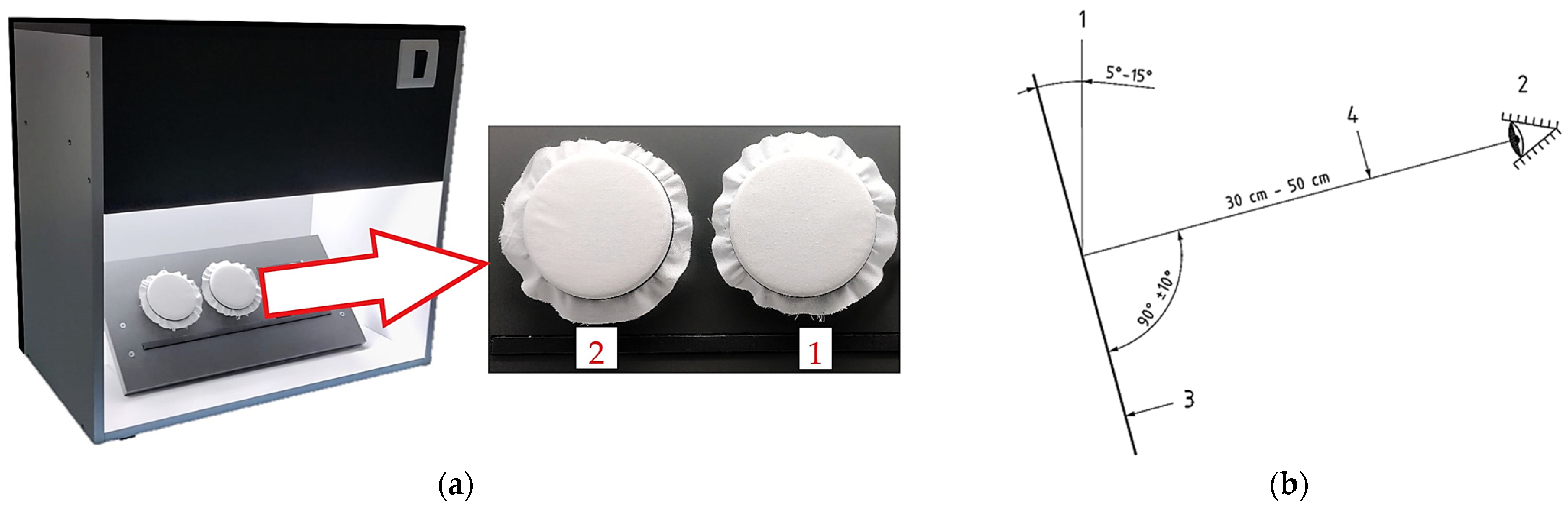
20]. Observers should perform the visual assessment from a defined distance of 30 to 50 cm, evaluating the surface of the fabric specimen at a 90° angle under artificial daylight D65, which illuminates the specimen surface at an angle between 5° and 15° [
5]. The assessment process is primarily carried out by observers, who compare the surfaces of specimens with a reference specimen and, if applicable, with photographic rating standards [
21,
22,
23,
24]. The result of the assessment is a numerical grade from 5 (no change) to 1 (severe pilling), indicating the intensity of the observed changes [
3]. According to Gocławski J. et al., the main shortcomings of the standardized visual method are the subjectivity and experience of the observer, as well as the inconsistency of standard photographs [
25]. Therefore, the assessment process in research is often conducted using instrumental methods that are permitted but not strictly defined by the standardized test method [
5]. The instrumental method generally involves a digital imaging process, in which a digital image of the fabric specimen’s surface is acquired, a software analysis process that determines quantitative values characteristic of the observed surface change, and a grading process based on these quantitative values [
26].
The digital imaging process is carried out by various imaging devices, such as cameras [
27,
28], scanners [
25,
29,
30], and microscopes [
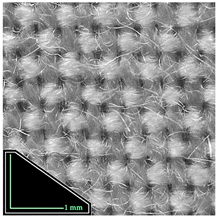
31]. The operating principles of these devices determine the size of the observed area and the position of the specimen during imaging, which usually differ from those of the standard visual method [
5] in terms of distance, angle, and light source. Additionally, devices such as scanners and microscopes require the specimen to be placed in a closed housing, isolated from ambient light, because, unlike conventional cameras, they use a laser or electron beam for imaging [
27,
32]. Apparatus with closed housings has also been used in several studies where regular cameras were used. This demonstrates the applicability of such setups, as they are often equipped with a specimen holder (static or movable), a light source, and a camera holder (static or movable) [
25,
28,
33,
34]. In the study by Luo, J. et al. [
28], pilling was analyzed on 30 × 30 mm specimens using an apparatus with a closed housing equipped with a high-resolution digital camera (Nikon D7200, Nikon Corporation, Tokyo, Japan), a macro lens (NIKKOR AF-S, Nikon Corporation, Tokyo, Japan), and eight LED light sources. This setup could capture images with a resolution of up to 6000 × 4000 pixels (24.2 megapixels). However, the images used for analysis had a much lower resolution of only 512 × 512 pixels. In the study by Sekulska-Nalewajko, J. et al. [
25], the pilling layer above fabric surfaces was analyzed using the Spark OCT-1300 system by Wasatch Photonics Inc., Morrisville, North Carolina, United States in a closed housing configuration, which emits an infrared laser beam centered at 1300 nm and can acquire volumetric images covering up to 0.5 × 0.5 × 0.4 cm with voxel dimensions of 5.1 × 4.8 × 5.4 µm in a 512 × 512 × 640 raster. However, the value of volumetric images and their information about pilling is limited because only a very small area of the specimen surface is analyzed. Therefore, it is clear that using different imaging devices prevents comparison of results obtained from the two methods due to variations in magnification and analyzed surface area [
29,
30,
31].
The software analysis process, in which digital images are analyzed, is performed by computer programs that differ in their operating methods. The most commonly used methods in research are the statistical method [
28,
29,
31], the shallow neural network method [
35], and the deep convolutional network method [
36,
37,
38]. In the statistical analysis method, the first step is to analyze an image of the fabric specimen’s surface. For textile fabrics, surface images show both induced surface pills and the characteristic features of the fabrics, which depend on fiber content [
3,
9,
31], structure (such as weave type, orientation, uniformity, or periodic repetition [
10,
16,
21]), color [
36], and surface finishes [
6,
39]. To ensure proper operation of the statistical method and reduce the influence of these characteristic features, various transformations are applied, including Fourier and wavelet transforms [
32,
35,
39]. After these transformations, the remaining information in the assessed image is analyzed and associated with features of induced surface pilling, which are then segmented and processed using morphological methods. The type and complexity of the transformations depend on the surface appearance of the fabric and its characteristic features. Therefore, the type of transformation, its settings, and further image preparation in a new system without previous data are unique to the fabric being analyzed and must be recalibrated for each type of fabric specimen [
28,
29,
33,
36,
39]. The assessment of fabric surface pilling features is then based on statistical analysis of the obtained numerical values. These features include the number of pills, their size (area), density, and the total area they cover, but not the total percentage of the fabric specimen surface area covered with pills [
28,
29]. In the shallow neural network method, the initial processing steps are similar to those in the statistical method. However, after image segmentation, the characteristic features used for grading are not defined by the observer but are automatically extracted by the algorithm itself, based on its architecture and training, and then processed. Generally, neural networks consist of an input layer, where features obtained from the segmented image are provided; an output layer, which contains the results; and hidden layers, where learning occurs through mathematical operations performed in each neuron [
40]. The number of layers and the number of neurons per layer are determined by the type and complexity of the problem. The accuracy of the shallow neural network method is lower than that of the deep convolutional neural network method [
28,
41]. This is due to the simple architecture of the shallow neural network, the limited number of learning layers, and the extraction of surface change features on textile fabrics in the input layer by the program instead of by human selection. The deep convolutional neural network method automatically learns pilling features through a series of mathematical operations known as convolutions, enabling significantly more accurate pilling assessment and assignment of the appropriate grade [
26,
34,
35]. Due to the greater number of layers in the learning network and the accompanying algorithms, the capability to recognize induced surface changes increases substantially [
30,
37]. It is important to note that each of these methods initially requires data input to create a database. Based on the database, the method later develops the ability to recognize resulting surface changes. The program’s recognition capability depends on the size and diversity of its database; however, the actual accuracy of the method depends on many additional factors present during the program’s learning process [
24,
42].
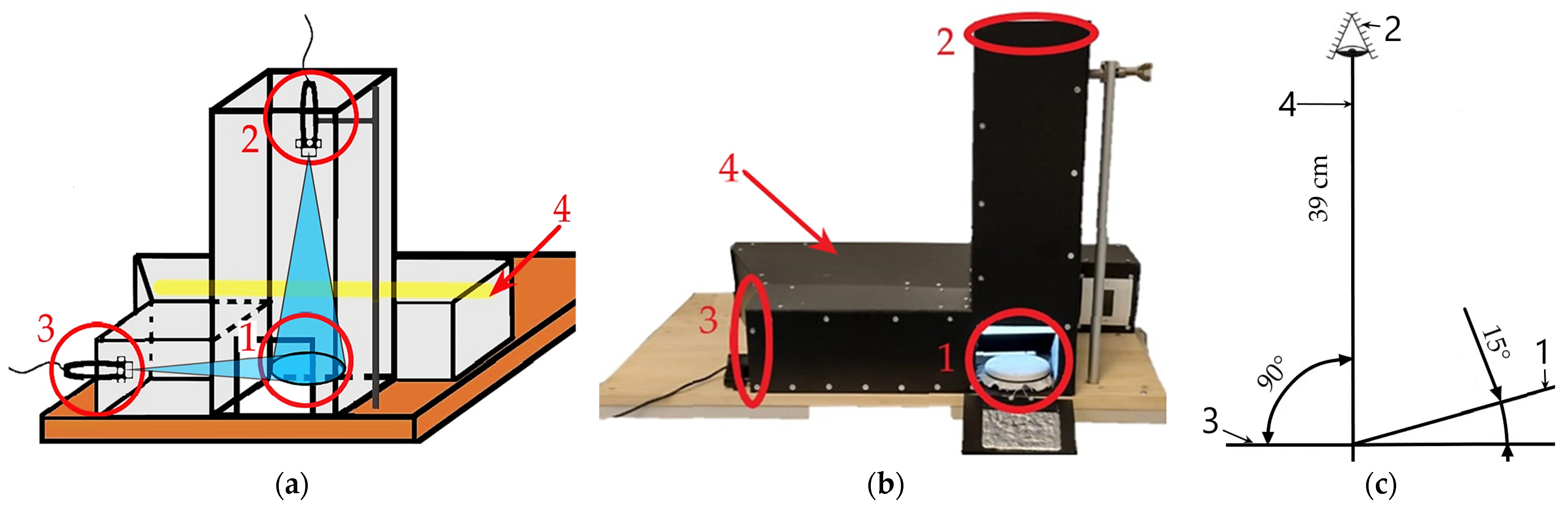
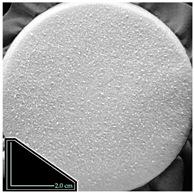
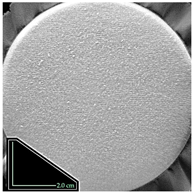
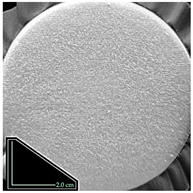
Based on the literature review, the need to improve the instrumental pilling assessment method and to develop a more uniform digital imaging process was identified, as digital images of the fabric specimen surfaces are the primary source of information. Therefore, in this research, an innovative approach was introduced. To ensure uniform digital imaging that complies with the standard visual assessment method [
5], an innovative apparatus was designed, constructed, and applied to single-component, plain weave woven fabrics made from 100% cotton, wool, viscose, polyamide 6.6, polyester, and acrylic fiber. Pilling in the fabric specimens was induced by rubbing with the Martindale pilling tester (EN ISO 12945-2:2020 [
19]) using two different abradant materials, through predefined pilling rubs ranging from 125 to 30,000. Pilling assessment was conducted using both the visual method and the improved instrumental method, following established grading classes based on the total percentage of the fabric specimen surface area covered with pills.
4. Conclusions
The aim of this research was to improve the standard pilling assessment method, EN ISO 12945-4:2020, specifically the instrumental assessment method, which is permitted but not strictly defined by the standard. Improvement was achieved by designing and constructing an innovative apparatus that enabled uniform digital imaging of the entire surface of the fabric specimen, in accordance with the assessment conditions for the visual assessment method described in detail in the standard. The applicability of the apparatus and the comparability of the digital images were confirmed by conducting the pilling induction process using the standard Martindale method (EN ISO 12945-2:2020) with two different abradant materials on six standard single-component plain weave woven fabrics with distinct structural properties, made of 100% cotton, wool, viscose, polyamide 6.6, polyester, and acrylic fibers, for an extended number of pilling rubs (from 125 to 30,000).
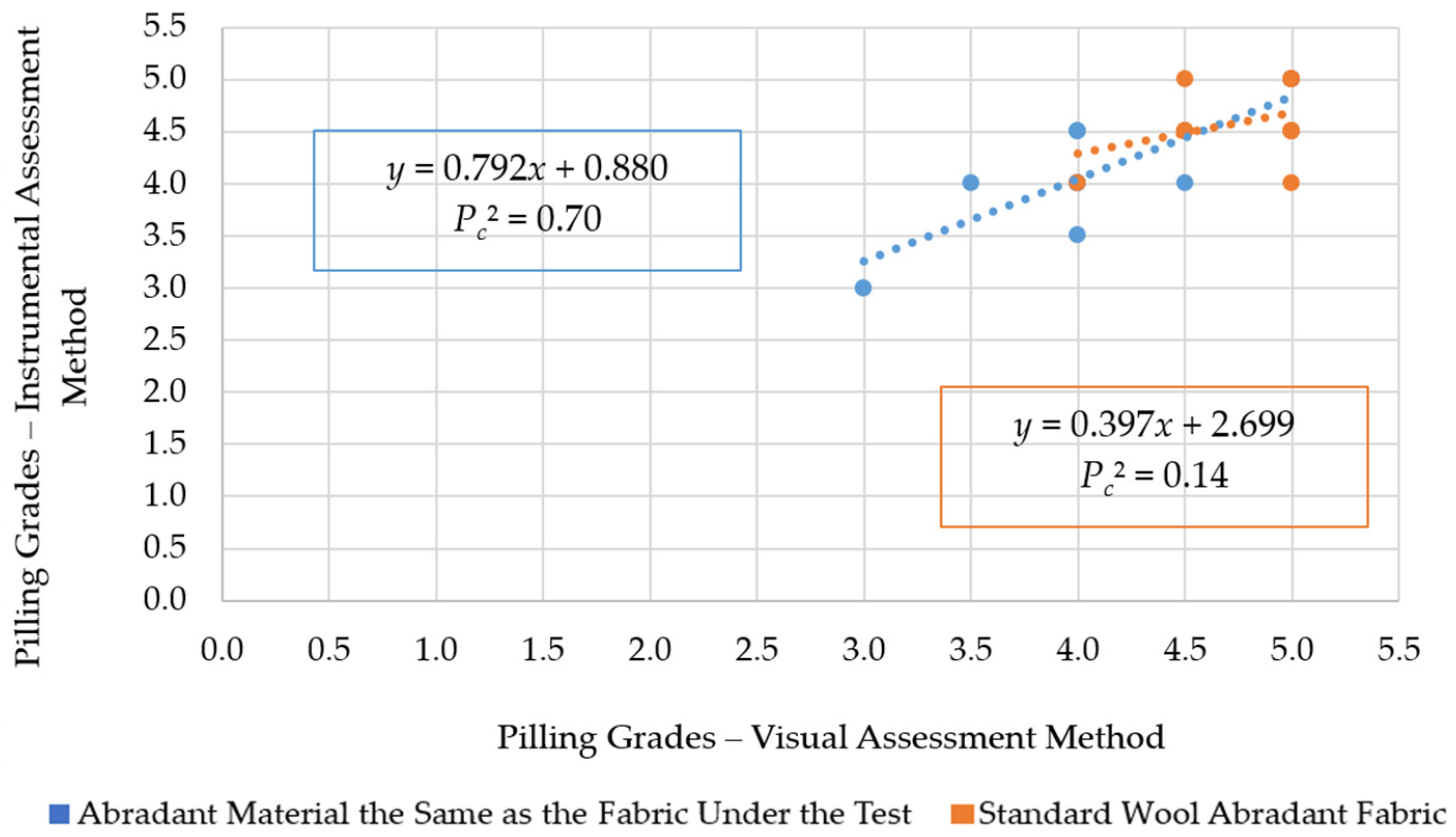
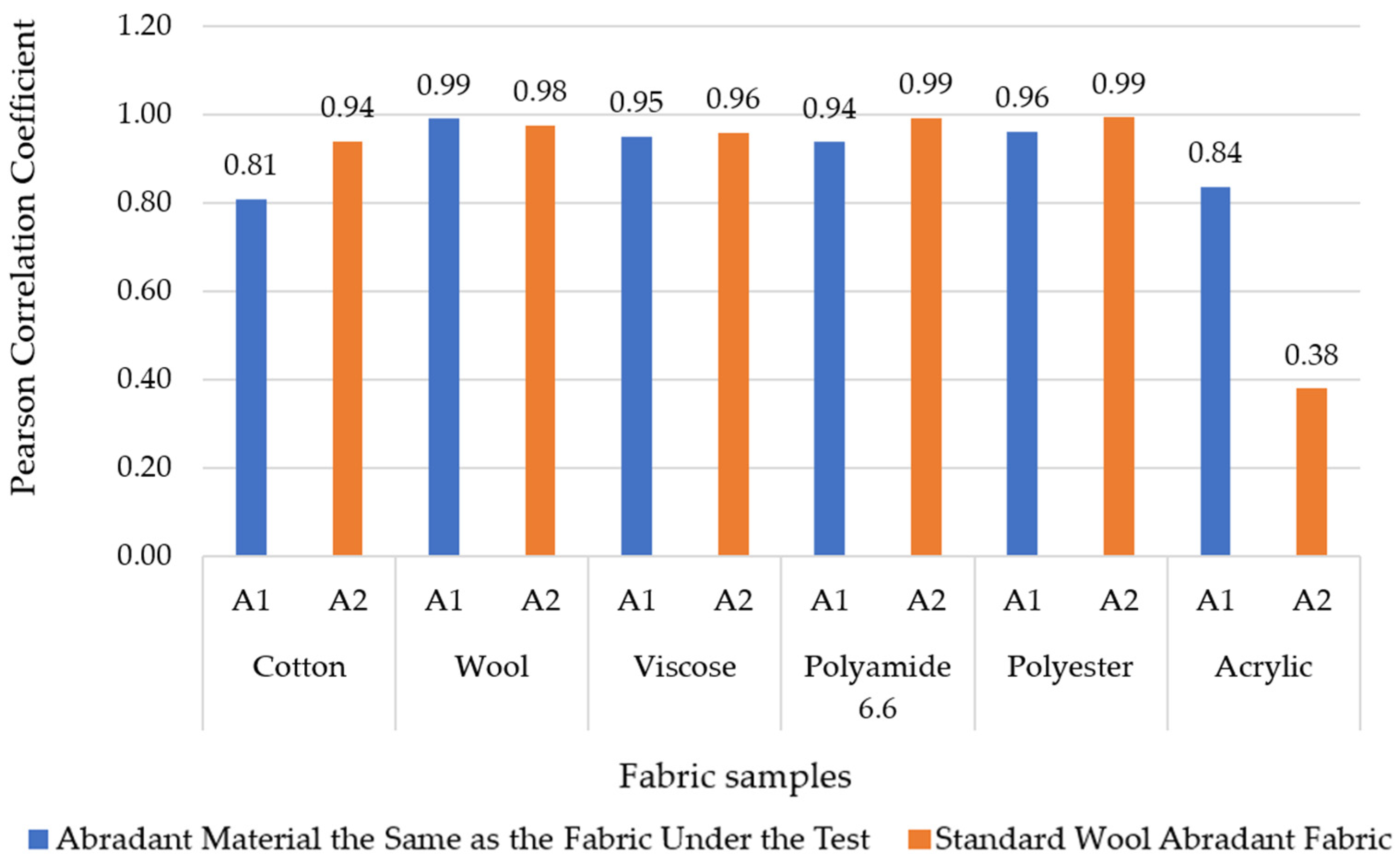
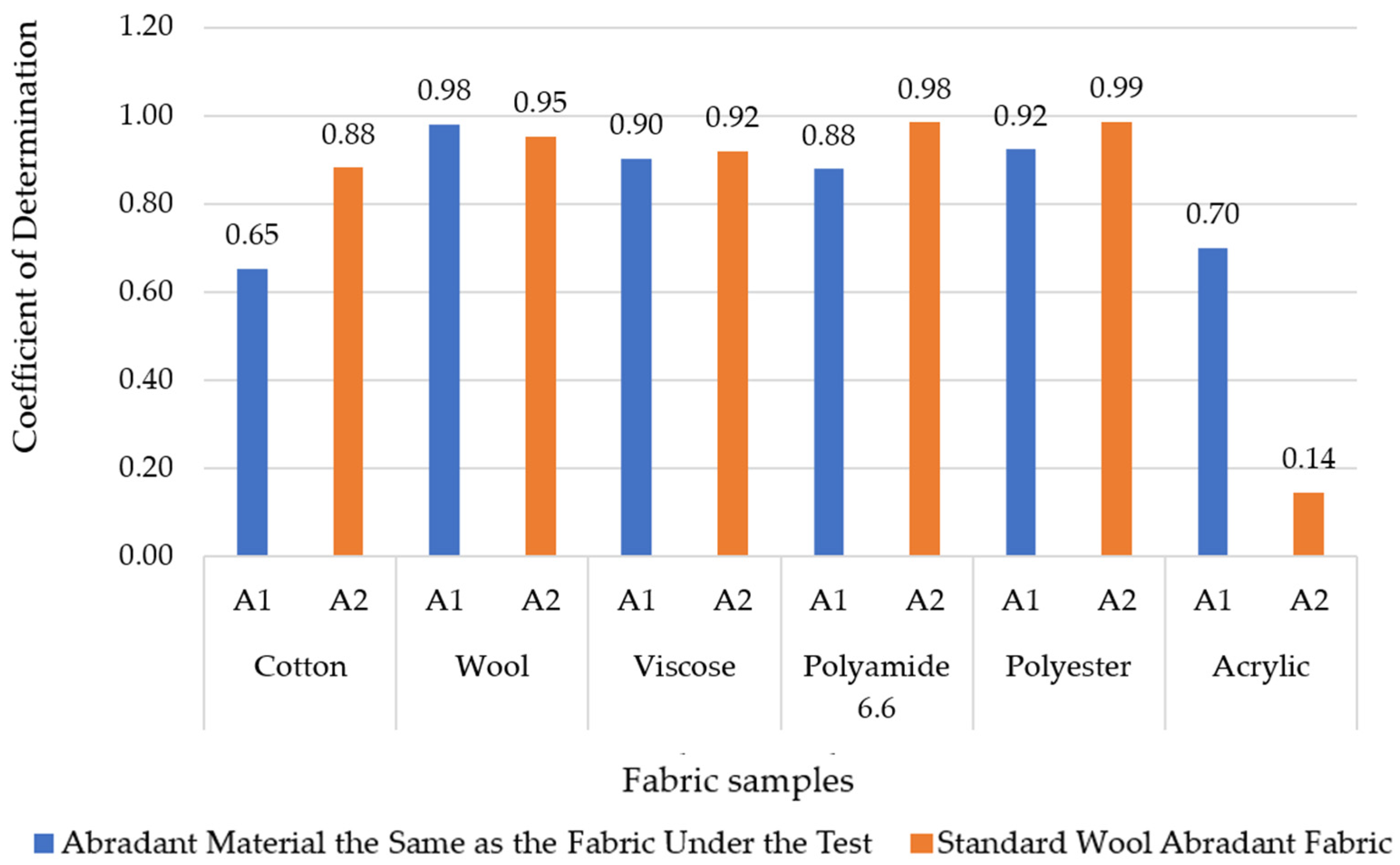
The selection of single-component plain-woven fabrics was intended not only to enable rigorous experimental control but also to provide fundamental insight into the pilling behavior of fabrics made from individual fiber types. This approach, combined with a higher number of pilling rubs (ranging from 125 to 30,000), allowed for the selection of an appropriate pilling parameter on which the grading of the instrumental assessment method was based. The results of this pilling induction process showed differences in pilling occurrence not only between the six tested fabrics but also between specimens of the same fabric rubbed with different abradant fabrics (the same fabric, A1; standard wool abradant fabric, A2). This was first detected by the visual assessment method and later confirmed by the quantitative values of pilling parameters (the number of individual pills, the average surface area of an individual pill, the pilling surface density, and the total percentage of the surface area covered with pills), as determined by the image analysis process. The parameter used to create nine grading classes (1.0, 1.5, 2.0, 2.5, 3.0, 3.5, 4.0, 4.5, and 5.0), which formed the basis for the pilling instrumental assessment method for each of the six tested fabrics—both for specimens rubbed with the same fabric (A1) and with the standard wool abradant fabric (A2)—is the total percentage of the fabric specimen surface area covered with pills. This parameter incorporates both the number of individual pills and the surface area of each pill, the two factors that most strongly influence observers’ visual perception of pilling. The applicability of this parameter was confirmed by the very strong Pearson correlation coefficients and very high coefficients of determination between the pilling grades assigned by the visual assessment method and the instrumental assessment method.
The findings of this research show that the designed apparatus enables uniform digital imaging of the entire surface area of fabric specimens under standard visual assessment conditions. Additionally, using grading classes based on the total percentage of the fabric specimen surface area covered with pills has demonstrated potential for practical implementation, as it enabled objective assessment and grading of previously untested fabric samples without a reference dataset. Therefore, a basis is established for further investigation of pilling behavior on fabric samples with varying texture, color, and surface finish, as well as for assessing fabrics exhibiting different types of surface changes, such as fuzzing.