1. Introduction
Asphalt pavement has become one of the most widely used pavement structures in global highway engineering due to its high evenness, driving comfort, convenient construction and low maintenance cost [
1]. With the rapid development of China’s transportation industry, overloading and over-limit transportation have become increasingly common, coupled with frequent extreme climates (high temperature and severe cold). Traditional base asphalt exhibits inherent defects such as strong temperature sensitivity, easy flow at high temperature and cracking at low temperature, which lead to early distresses such as rutting, cracking and spalling on asphalt pavement. These problems seriously shorten the service life of pavement and increase maintenance costs [
2,
3]. Therefore, improving the comprehensive pavement performance of asphalt, especially its high- and low-temperature rheological properties, has become a research hotspot and urgent demand in the field of highway engineering [
4].
Asphalt modification technology is an effective way to improve the performance of base asphalt. Among various modification methods, novel filler modification has gradually replaced traditional single modifier and become a development trend in asphalt modification owing to its low cost, remarkable modification effect and environmental friendliness [
5,
6]. There are many kinds of novel fillers, among which MMT, a layered silicate mineral, has the advantages of a large specific surface area, good dispersibility and excellent mechanical properties. It can form stable bonding with asphalt molecules through interlayer intercalation, effectively improving the high- and low-temperature performance and aging resistance of asphalt [
7,
8]. As an industrial solid waste, FA is widely available and low-cost. With fine particles and a porous surface, FA can fill the internal voids of asphalt and enhance the structural compactness, meanwhile realizing the resource utilization of solid waste, which conforms to the concept of green transportation development [
9,
10].
At present, scholars at home and abroad have conducted extensive studies on asphalt modified by a single novel filler. Studies show that the addition of nano-MMT can significantly improve the high-temperature rutting factor and low-temperature cracking resistance of asphalt and optimize the viscoelastic properties of asphalt [
8,
11]. Proper addition of FA can reduce the temperature sensitivity of asphalt and enhance the strength of an asphalt mixture [
12,
13]. However, single-filler modification has certain limitations. For example, excessive nano-MMT tends to agglomerate and weaken the modification effect [
14]; FA has low activity and limited interfacial bonding ability with asphalt [
15]. Therefore, composite modification with two or more novel fillers, which makes use of the synergistic effect of different fillers to achieve complementary advantages, has become an effective approach to improving the comprehensive performance of asphalt [
16,
17].
Rheological property is the core index to evaluate the pavement performance of modified asphalt. It directly reflects the deformation and failure resistance of asphalt under different temperatures and load conditions, and it determines the service performance and life of asphalt pavement [
18,
19]. Dynamic Shear Rheometer (DSR) and Bending Beam Rheometer (BBR) are commonly used instruments to evaluate the high- and low-temperature rheological properties of asphalt, which can accurately measure key parameters such as high-temperature rutting factor and low-temperature creep stiffness [
20,
21]. Meanwhile, the macroscopic rheological properties of modified asphalt are closely related to its microstructure and interaction mechanism. Only by clarifying the microscopic interaction between novel fillers and asphalt can we essentially explain the evolution law of macroscopic performance and provide theoretical support for performance optimization and engineering application of modified asphalt [
22,
23].
Although many studies have been carried out on novel filler modified asphalt, there are still obvious shortcomings. First, most studies focus on single-filler modification, and the research on the synergistic modification effect and optimal ratio of composite novel fillers is not systematic [
24,
25]. Second, the existing studies mostly focus on macroscopic rheological performance tests, while the theoretical analysis of microscopic modification mechanism is insufficient, and the internal correlation among interfacial interaction, intermolecular interaction and macroscopic rheological properties of fillers and asphalt is not clarified [
26,
27]. Third, there are few studies on nano-MMT and FA composite modified asphalt, and their synergistic modification mechanism remains unclear [
28].
To address the above research gaps, this study selects MMT and FA as composite novel fillers to prepare novel filler composite modified asphalt. The high- and low-temperature rheological properties are systematically investigated through DSR and BBR tests. The microscopic interaction mechanism between fillers and asphalt is revealed; combined with a theoretical analysis, the influence laws of composite ratio and total filler content on rheological properties are clarified, and the optimal modification parameters are determined. The research results can provide theoretical support and a technical reference for the engineering application of novel filler composite modified asphalt, and promote the resource utilization of industrial solid waste and the construction of green highways [
29,
30,
31].
3. Results and Discussion
3.1. Conventional Physical Performance Analysis
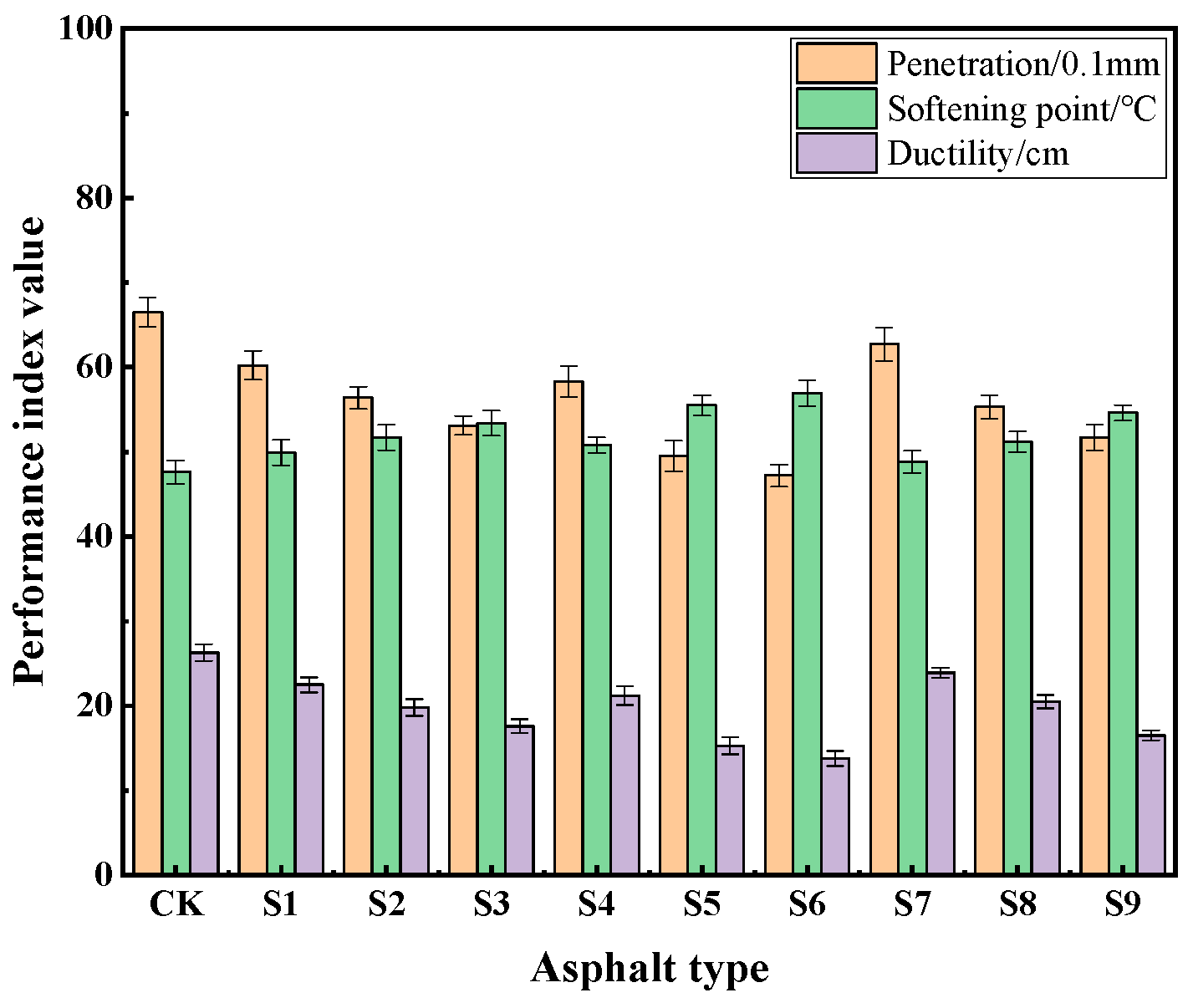
Penetration, softening point, and ductility are core conventional indicators characterizing the basic physical properties and temperature sensitivity of asphalt, which can directly reflect the influence of fillers on asphalt hardness, high-temperature stability, and low-temperature plasticity. In this study, physical performance tests were carried out on CK and composite modified asphalt, and the test results are shown in
Figure 1.
As shown in
Figure 1, compared with CK, all modified asphalts exhibit a consistent trend of decreased penetration, an increased softening point, and reduced ductility after the addition of MMT-FA inorganic composite filler. Penetration mainly reflects the hardness and colloidal consistency of asphalt at room temperature. A smaller penetration value indicates a denser asphalt structure and stronger resistance to plastic deformation at room temperature. MMT nanosheets feature a large specific surface area and high surface activity, which can restrict the movement of asphalt molecular chains through physical adsorption and interlayer confinement. Fine FA particles fill the internal voids of the asphalt colloid and provide physical skeleton support. Under the synergistic effect of the two fillers, free components in asphalt are reduced, and the system consistency is increased, leading to a significantly lower penetration than that of base asphalt. At the same total filler content, increasing the MMT ratio strengthens the interfacial adsorption and confinement, resulting in a more remarkable reduction in penetration. Under the same composite ratio, the penetration decreases further with the increase in the total filler content due to the superposition of particle filling and interfacial confinement effects.
The softening point is a key index to evaluate the high-temperature stability and temperature sensitivity of asphalt. A higher softening point represents better resistance to flow and creep deformation at high temperature. MMT-FA composite filler can form an organic–inorganic interpenetrating network structure inside asphalt, which effectively inhibits the thermal motion and viscous slip of asphalt molecular chains at high temperature, weakens the negative influence of temperature on rheological properties, and significantly improves the high-temperature stability of asphalt. Regarding the ratio law, a higher MMT ratio and larger filler content lead to a denser composite network, stronger suppression of asphalt flow at high temperatures, and a more significant increase in the softening point.
Ductility is used to characterize the medium–low-temperature plasticity and deformation compatibility of asphalt. A larger ductility means a stronger ability to resist low-temperature shrinkage deformation and delay micro-crack initiation. CK itself possesses good medium–low-temperature plasticity. After adding rigid inorganic fillers, light aromatic and saturated components in asphalt are adsorbed and fixed on the filler surface, reducing the proportion of small molecular components that act as lubricants and enable chain slippage. Meanwhile, the introduction of inorganic rigid particles increases the system rigidity and weakens the plastic deformation capacity of asphalt, so the ductility of all modified asphalts is lower than that of CK. On the whole, the ductility decreases gently and gradually with the ratio and content, showing no sudden deterioration. This indicates that the MMT-FA composite modification scheme adopted in this study significantly improves the room-temperature consistency and high-temperature stability of asphalt, while the negative impact on medium–low-temperature plasticity is reasonable and controllable, showing a good balance of pavement performance.
According to the overall influence of the filler ratio, the three indicators show a unified variation: at the same total content, the modification effect ranks as MMT:FA = 1:3 > 1:2 > 1:4. Under the same composite ratio, with the filler content increasing from 3% to 5% and 7%, the penetration keeps decreasing, the softening point gradually rises, and the ductility steadily drops. Among all samples, S5 and S6 have the deepest modification, the best room-temperature hardness and high-temperature stability, but relatively large medium–low-temperature plasticity loss. S7 and S1 show relatively mild modification, with conventional indexes closer to CK and better ductility retention.
3.2. High-Temperature Rheological Performance Analysis
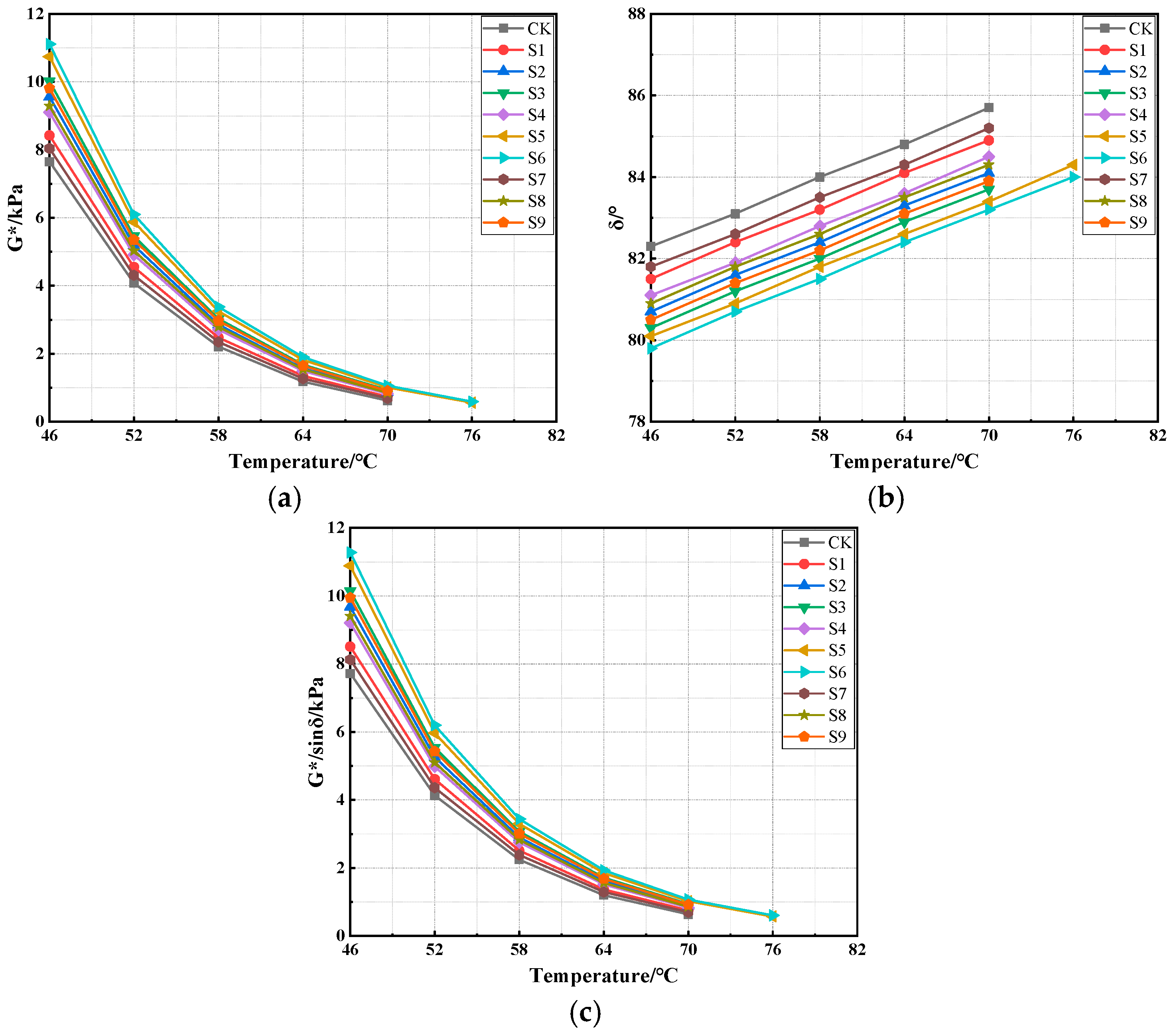
High-temperature rheological performance is a key indicator for evaluating the rutting resistance of asphalt pavement. In this study, temperature sweep tests were conducted on composite modified asphalt using a dynamic shear rheometer, and the results are shown in
Figure 2.
As shown in
Figure 2, with the increase in the test temperature, the internal molecular motion of asphalt intensifies and the thermal softening trend is significant. The G* and G*/sin δ of all specimens show a continuous downward trend, while δ increases slightly, indicating that asphalt gradually changes from elasticity-dominated to viscosity-dominated, which conforms to the typical temperature response law of viscoelastic materials. Compared with CK, the complex modulus and rutting factor of each modified specimen at the same temperature are significantly improved, and the phase angle is obviously reduced after adding MMT–FA composite filler. It shows that the composite filler can effectively adsorb polar components in asphalt, restrict the slippage of asphalt molecules, increase the elastic proportion and structural stiffness of the system, and thus significantly improve the high-temperature deformation resistance.
For the influence of composite ratio, under the same total filler content, the high-temperature rheological performance presents an obvious order of MMT:FA = 1:3 > 1:2 > 1:4. When the composite ratio is 1:3, the intercalation effect of nano-MMT and the particle filling effect of FA achieve the best synergy. MMT improves the structural stability and modulus of asphalt, while FA densifies internal voids and optimizes interfacial bonding. When the proportion of MMT is too high (1:2), nanoparticles tend to self-agglomerate, destroying the uniformity of an asphalt system and limiting performance improvement. When the proportion of FA is too high (1:4), the intercalation enhancement of MMT is insufficient, and physical filling alone cannot achieve significant modification.
For the influence of total filler content, under the same composite ratio, the high-temperature performance of asphalt increases most significantly when the content increases from 3% to 5%. When the content continues to increase to 7%, the growth slows down obviously, and some indexes even decrease slightly. This is because excessive filler cannot be fully wrapped by asphalt phase, which easily forms stress concentration points and reduces system stability, indicating that 5% is the optimal content considering the modification effect and economy.
In addition, CK shows the fastest stiffness attenuation in the high-temperature range, while the high-temperature stability range of modified asphalt is significantly broadened, especially for the S5 specimen. S5 maintains the highest complex modulus, the largest rutting factor and the smallest phase angle in the whole temperature range, with the best high-temperature rutting resistance. It fully proves that the filler is uniformly dispersed and the interfacial bonding is stable under this ratio, so that the synergistic modification effect can be maximized.
3.3. High-Temperature Permanent Deformation Resistance Analysis
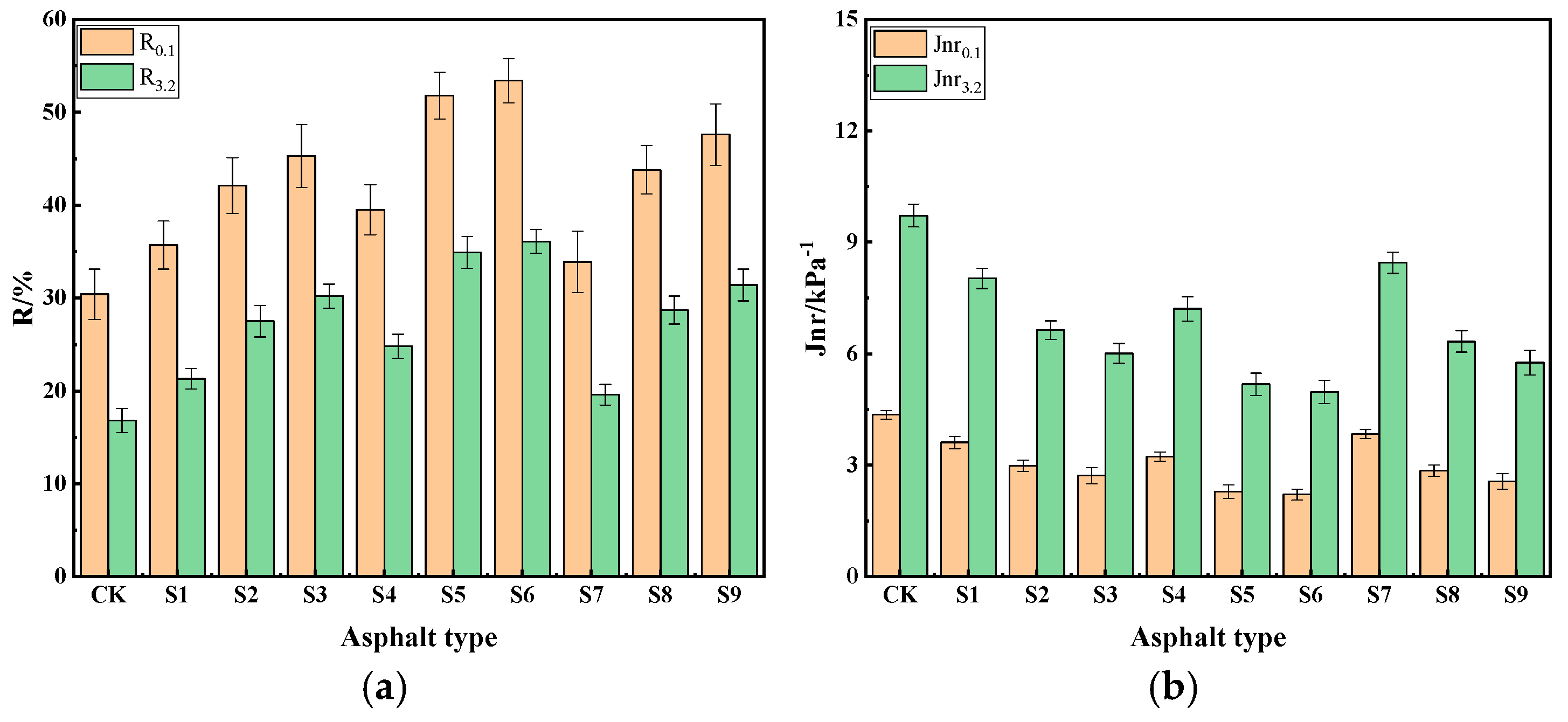
The MSCR test can truly reflect the permanent deformation resistance of asphalt under repeated loading, which is a key basis for evaluating the rutting resistance of asphalt pavement under heavy traffic. MSCR tests were carried out on base asphalt and the optimal composite modified asphalt, and the results are shown in
Figure 3.
As shown in
Figure 3, with the increase in the stress level from 0.1 kPa to 3.2 kPa, the R of all specimens decreases significantly, while the Jnr increases obviously. This is because high stress intensifies the irreversible slippage of asphalt molecules and accelerates the accumulation of plastic deformation. Compared with base asphalt CK, all composite modified asphalts show higher creep-recovery rate and lower non-recoverable creep compliance under both stress levels, indicating that MMT-FA composite filler can significantly enhance the elastic recovery ability of asphalt, effectively restrain the occurrence and development of permanent deformation, and play a remarkable role in improving the rutting resistance of pavement.
In terms of the composite ratio, the permanent deformation resistance of asphalt under the same content follows the order of MMT:FA = 1:3 > 1:2 > 1:4. When the ratio of MMT to FA is 1:3, the layered intercalation structure of nano-MMT effectively restricts asphalt molecules, and FA particles fill the gaps in asphalt to form physical barriers. The two fillers synergistically construct a stable spatial network structure, which greatly improves the elastic recovery and stress dispersion ability of the system. When the proportion of MMT is too high, nanosheets tend to agglomerate, causing local stress concentration and reducing the uniformity of the system. When the proportion of FA is too high, the intercalation enhancement of MMT is insufficient, and effective elastic support cannot be formed only by physical filling, so the modification effect is significantly weakened.
In terms of filler content, under the same composite ratio, the creep-recovery rate increases continuously and the non-recoverable creep compliance decreases steadily when the content increases from 3% to 5%, showing a significant improvement in the modification effect. When the content further increases to 7%, the performance growth slows down obviously, and only a slight improvement is observed in some indexes. This is because an appropriate amount of filler can disperse uniformly and form a strong interfacial bond with asphalt, while excessive filler cannot be fully wrapped by asphalt mastic, easily leading to interfacial defects and reducing structural stability. Therefore, 5% is determined as the optimal total content.
Overall, S5 still maintains the highest creep-recovery rate and the lowest non-recoverable creep compliance under a high-stress environment, presenting the best permanent deformation resistance, which is consistent with the conclusion of high-temperature rheological analysis. It demonstrates that, under this ratio, the filler is uniformly dispersed, the interfacial bonding is firm, and the synergistic effect is maximized, which can significantly improve the rutting resistance of asphalt under heavy-load and high-temperature conditions.
3.4. Fatigue Performance Analysis
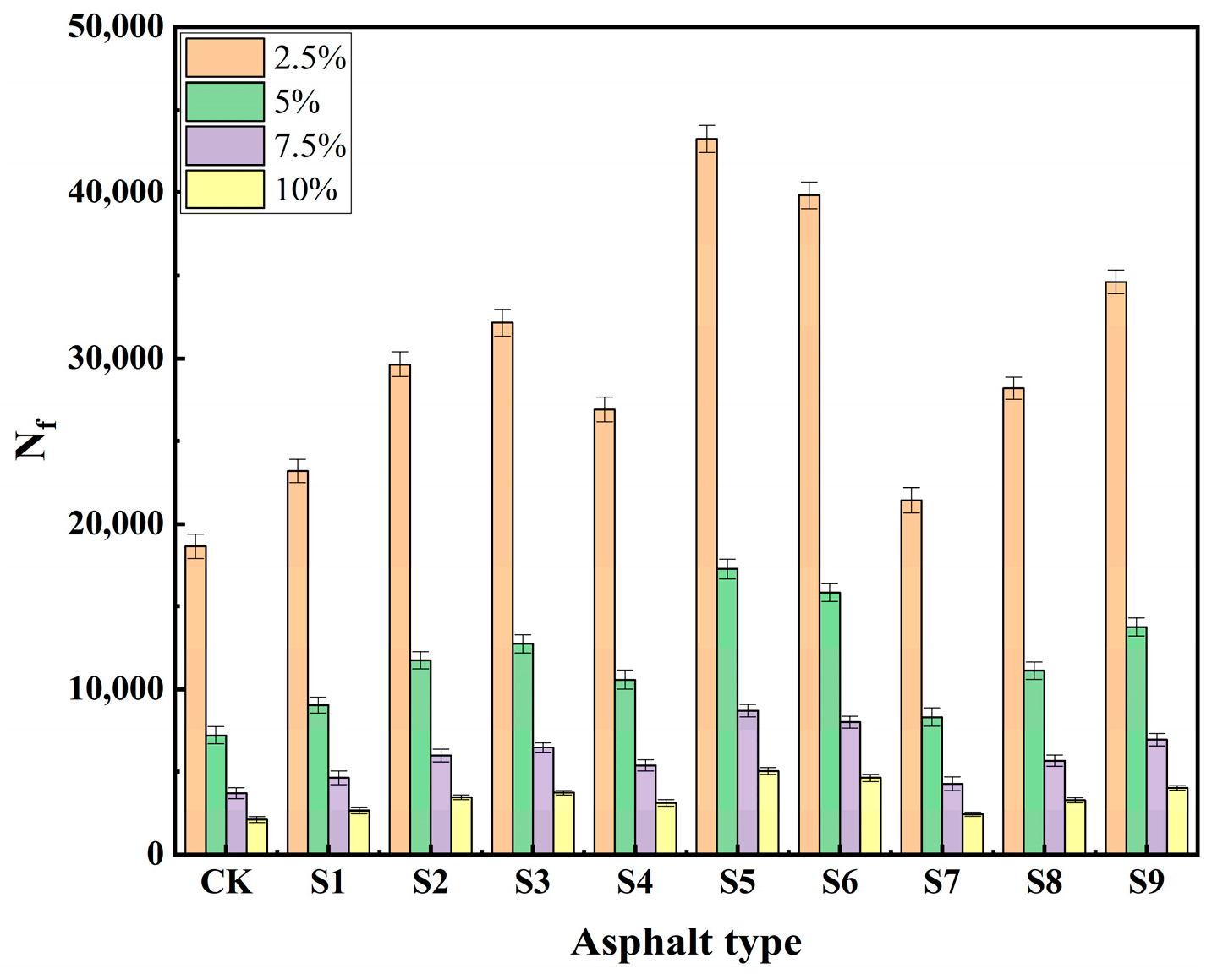
The fatigue damage evolution process of pavement under repeated traffic loads is simulated by applying linearly increasing strain, which can accurately reflect the fatigue cracking resistance of asphalt. The test was carried out at 25 °C. Based on the viscoelastic continuum damage theory, four strain levels (2.5%, 5.0%, 7.5%, and 10.0%) were used to fit the fatigue equation, and the N
f under different strains was finally obtained. The results are shown in
Figure 4.
As shown in
Figure 4, with the increase in the applied strain level, the N
f of all specimens decreases significantly, and the higher the strain, the faster the fatigue life declines. At low strain, the internal deformation of asphalt is mainly reversible viscoelastic deformation with slow damage accumulation. At high strain, irreversible tearing occurs inside the asphalt matrix, and microcracks initiate, propagate and coalesce rapidly, eventually leading to fatigue failure. This evolution pattern is fully consistent with the actual distress mechanism of asphalt pavement under heavy and overloaded traffic. Meanwhile, the damage coefficient k of modified asphalt is lower than that of base asphalt, indicating that the composite filler can effectively slow down the damage development rate and improve the fatigue damage resistance of asphalt.
Compared with CK, the Nf of asphalt is significantly improved at all strain levels after adding MMT–FA composite filler, especially at medium and low strain ranges, which are closest to the actual stress state of asphalt pavement. This indicates that the composite filler has remarkable engineering significance for improving the fatigue performance of pavement under real service conditions. The improvement comes from the synergistic interaction between fillers and asphalt: on one hand, MMT nanosheets provide strong stress relaxation ability, disperse concentrated stress caused by cyclic loading, and suppress the driving force at crack tips; on the other hand, uniformly dispersed FA particles block and bridge cracks, interrupting the continuous internal damage path. In addition, the adsorption of polar asphalt components by fillers optimizes the mastic structure and enhances the overall toughness.
For the composite ratio, at the same total filler content, the fatigue performance follows the order of MMT:FA = 1:3 > 1:2 > 1:4. At the ratio of 1:3, the nano-strengthening effect of MMT and the filling-toughening effect of FA reach the optimal balance, ensuring both strength/elasticity and satisfactory deformability/toughness. Excessive MMT (1:2) causes self-agglomeration of nanosheets, forming local stress concentration zones that become fatigue origins. Excessive FA (1:4) provides insufficient structural strengthening and stress relaxation, so physical filling alone cannot effectively suppress fatigue damage, resulting in a much weaker modification effect.
For total filler content, under the same composite ratio, Nf increases greatly when the content rises from 3% to 5%, but decreases slightly when further increased to 7%. Appropriate filler content disperses uniformly in asphalt and forms a stable and continuous reinforcing structure, giving full play to synergistic toughening. Excessive filler leads to too small particle spacing, insufficient wetting and wrapping by asphalt phase, and numerous weak interfaces. Under cyclic loading, interfacial debonding and internal cracks occur easily, reducing fatigue performance. Therefore, 5% is the optimal content balancing fatigue performance and structural stability.
Based on Nf, damage evolution and parameter variation at all strain levels, S5 exhibits the longest fatigue life and lowest damage rate, with the best fatigue performance. This conclusion is fully consistent with DSR high-temperature rheological analysis and MSCR permanent deformation resistance analysis. It fully demonstrates that, under this ratio, fillers disperse uniformly, interface bonding is firm, and the synergistic effect is maximized, which can comprehensively improve the comprehensive pavement performance of asphalt under high temperature, fatigue and repeated loading, providing a reliable guarantee for the long-term stable service of asphalt pavement.
3.5. Low-Temperature Rheological Performance Analysis
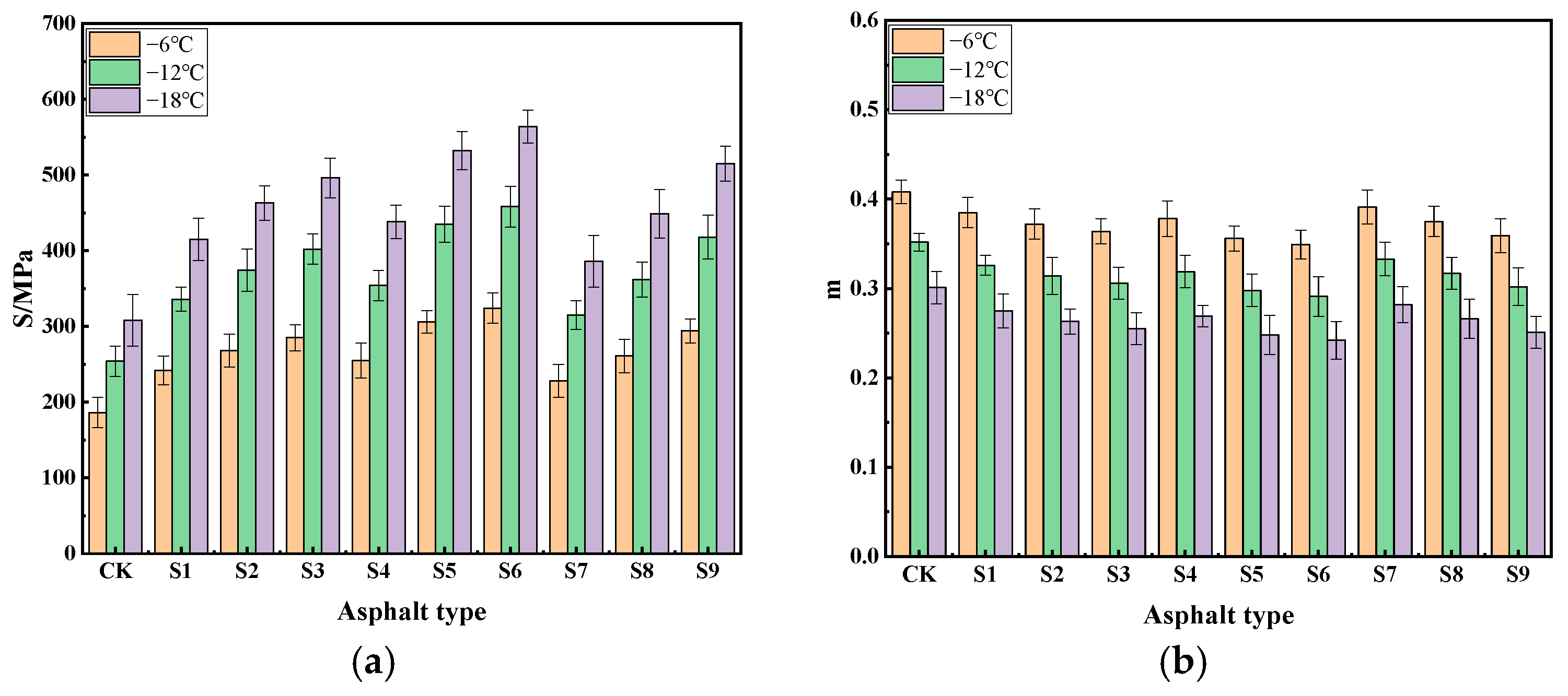
The BBR test is an important method to evaluate the low-temperature cracking resistance of asphalt, with S and m as core indicators. Larger S means higher low-temperature rigidity, poorer deformability and higher risk of thermal shrinkage cracking. A larger m represents stronger stress relaxation ability, which is more favorable for relieving thermal stress accumulation. In this study, three test temperatures were set to systematically characterize the low-temperature rheological properties of base asphalt and MMT-FA composite modified asphalt with different ratios. The test results are shown in
Figure 5.
As shown in
Figure 5, as the test temperature decreased from −6 °C to −18 °C, all asphalt specimens presented a consistent variation trend. Low temperature significantly inhibits the thermal motion of asphalt molecular chains and greatly weakens the abilities of chain slippage and relaxation. The material gradually transforms from a viscoelastic state to a glassy state, macroscopically manifested as a remarkable increase in S and a continuous decrease in m. The lower the temperature, the lower the deformation redundancy of asphalt. The internal stress generated by temperature shrinkage cannot be released in a timely way through viscoelastic creep, making microcracks more likely to initiate and propagate and greatly increasing the risk of low-temperature cracking. This evolutionary characteristic is completely consistent with the intrinsic low-temperature rheological mechanism of asphalt materials.
At the same temperature, after incorporating MMT-FA inorganic composite filler, the S of modified asphalt is significantly higher than that of the control group CK, and the gap further widens with the decrease in temperature; correspondingly, the m is obviously lower than that of CK. The S value of CK reaches 308 MPa at −18 °C, which is close to the specification threshold with a limited low-temperature crack resistance reserve. By contrast, all modified specimens exhibit much higher stiffness than the control group at the same temperature with an obvious gradient difference. As inorganic dispersed phases filled in the gaps of asphalt colloid, MMT and FA form a rigid skeleton support and greatly improve the overall modulus of the asphalt system. Meanwhile, the fillers possess strong surface adsorption capacity, which restricts the movement of light components and molecular chains of asphalt and limits the viscoelastic relaxation behavior at low temperature. Consequently, the low-temperature rigidity of asphalt increases significantly, the stress relaxation capacity decreases, and the low-temperature toughness and crack resistance are obviously weakened.
In terms of the influence of composite ratio, under the same total filler content, the low-temperature stiffness of asphalt generally increases with the rise of MMT proportion, following the order of 1:3 > 1:2 > 1:4. MMT has a large specific surface area and high surface activity. A high proportion of MMT can form strong interfacial adsorption with polar components of asphalt, impose a stronger constraint on molecular chains, and lead to a more prominent increase in low-temperature stiffness. FA mainly plays an inert physical filling role with a weak interfacial adsorption effect. Increasing the FA proportion can alleviate the growth of rigidity to a certain extent and achieve relatively better low-temperature rheological performance.
From the perspective of total filler content, under the same composite ratio, the S value of asphalt rises gradually, and the m value decreases continuously with the increase in filler content, accompanied by gradual deterioration of low-temperature performance. At low filler content, the fillers disperse well and cause limited disturbance to the original colloidal structure of asphalt. When the content increases to 5% and 7%, the particle spacing decreases and the probability of local accumulation increases. The superimposed interfacial constraint effect further enhances the system rigidity and weakens the low-temperature deformation and stress relaxation capacity.
Overall, MMT-FA composite fillers can significantly improve the high-temperature rheological properties, permanent deformation resistance and fatigue performance of asphalt, but they obviously increase the low-temperature stiffness and reduce the stress relaxation capacity, showing a typical trade-off characteristic between high-temperature and low-temperature performance. Among all modified specimens, S7 and S1 have relatively the lowest low-temperature stiffness, a smaller difference from base asphalt, and better low-temperature adaptability. In contrast, S5 and S6, with optimal high-temperature performance, present the largest increase in low-temperature stiffness; although their high-temperature modification effect is prominent, the loss of low-temperature crack resistance is also the most obvious.
3.6. Asphalt Chemical Component Analysis
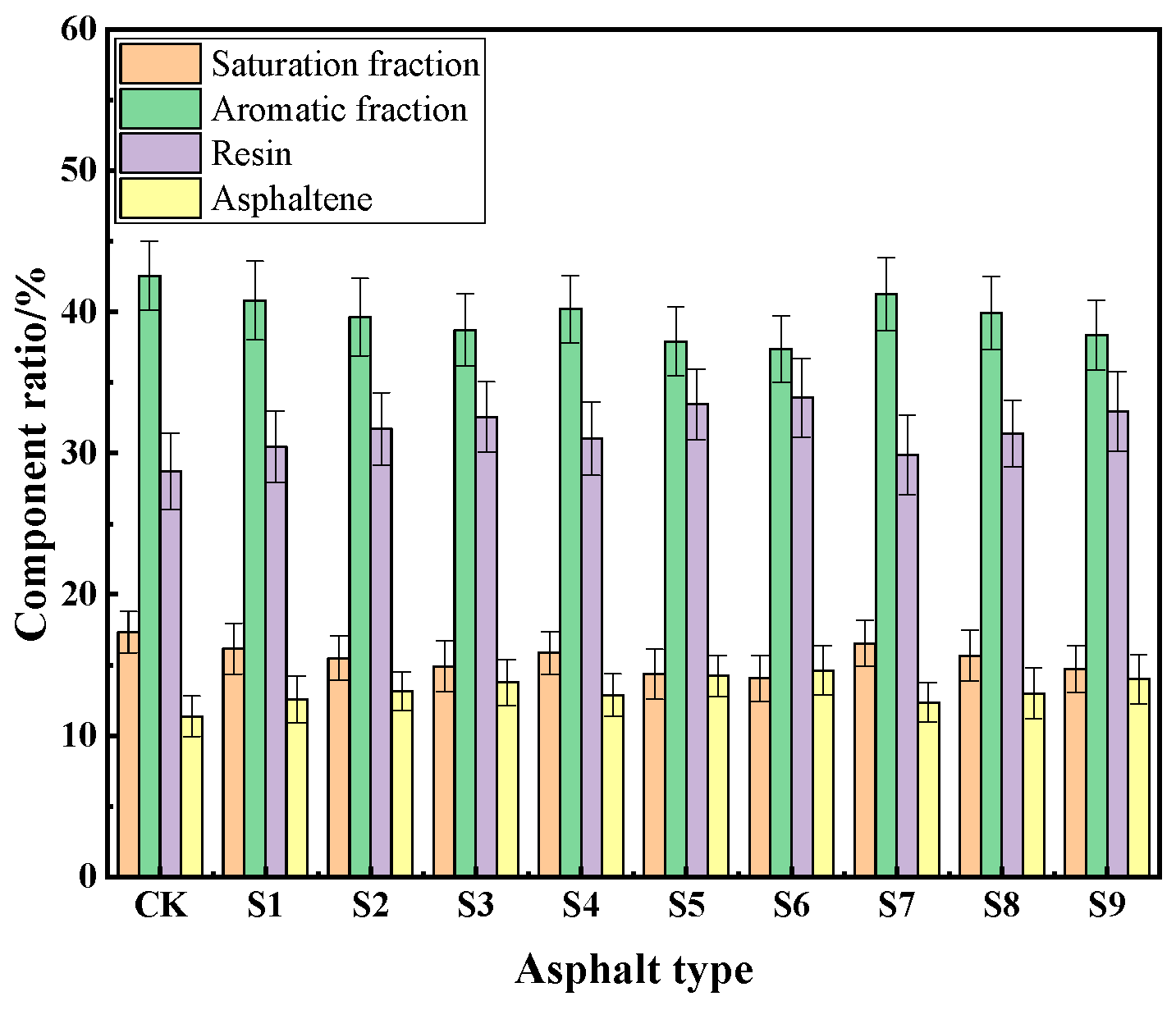
Asphalt is a complex colloidal system composed of saturates, aromatics, resins and asphaltenes. The relative content of each component directly determines the colloidal structural stability, rheological properties and pavement service performance of asphalt. TLC-FID test was adopted to quantitatively test four chemical components of CK and composite modified asphalt. The influence law of composite fillers on asphalt chemical component distribution and colloidal structure evolution was explored, and the test results are shown in
Figure 6.
As shown in
Figure 6, compared with CK, the contents of saturates and aromatics in the asphalt system decrease obviously after the addition of MMT-FA composite filler, while the contents of resins and asphaltenes increase significantly. The core mechanism lies in the nano-layered structure and ultra-large specific surface area of MMT, as well as the abundant microporous structure on FA particle surfaces. The two fillers jointly produce strong physical adsorption and interfacial confinement on light components in asphalt, immobilizing free light components on the filler surface and interlayer gaps. Meanwhile, with the consumption of light components, component redistribution occurs in the asphalt colloidal system. Resins gradually accumulate and wrap around asphaltene particles, increasing the relative proportions of resins and asphaltenes, and the overall colloidal structure gradually transforms from the sol type to the sol–gel type.
In terms of the composite ratio, under the same total filler content, the reductions in saturates and aromatics are further enlarged, and the increments of resins and asphaltenes keep rising with the increase in MMT proportion. The variation magnitude of four components follows the order of 1:3 > 1:2 > 1:4. MMT possesses abundant surface-active sites and much stronger adsorption capacity than inert FA. Increasing the MMT ratio strengthens the adsorption and immobilization of light components and accelerates component reconstruction of the system. By contrast, FA mainly functions as physical filling with a weak modification effect on chemical components. Increasing the FA proportion weakens the overall component evolution and makes the four-component ratio closer to that of base asphalt.
From the perspective of filler content, at the same composite ratio, the adsorption effect on light components is remarkably enhanced, and the proportion of heavy components rises steadily when the filler content increases from 3% to 5%. When the content further rises to 7%, the variation range of components tends to be gentle without abrupt changes. At a low content, fillers disperse uniformly with sufficient adsorption sites, and the capture capacity for light components increases continuously with dosage. Excessively high content easily causes particle agglomeration and stacking; partial internal adsorption sites are wrapped and invalidated, leading to a non-linear growth of adsorption efficiency and a gradual slowdown of component evolution. Compared with CK, the saturate and aromatic fractions of S5 decrease by 11.2% and 9.7%, respectively, while resin and asphaltene fractions increase by 8.5% and 12.4%. The quantitative change of chemical components verifies that MMT-FA composite filler effectively adsorbs light components in asphalt, transforms the colloidal structure from sol type to sol-gel type, and thus improves high-temperature rutting resistance and fatigue performance.
The stability of the asphalt colloidal structure can be characterized by the colloid index. The reduction in light components and increase in heavy components enhance the aggregation stability of asphaltene dispersed phase and improve the elastic characteristics and high-temperature structural strength of the system. Combined with the foregoing rheological test results, MMT-FA composite filler optimizes the colloidal composition by adsorbing light components and enriching heavy components, thereby effectively improving high-temperature rutting resistance, permanent deformation resistance and fatigue performance. Nevertheless, the reduction in light components weakens the lubrication and slippage capacity of asphalt molecular chains to a certain extent, indirectly increasing low-temperature creep stiffness and reducing stress relaxation capacity, which is completely consistent with the performance trade-off law presented in the BBR low-temperature rheological tests.
According to the four-component test results, specimens S5 and S6 show the most significant component evolution with the lowest proportion of light components and the highest proportion of heavy components, achieving the optimal modification effect of colloidal structure. This reveals the intrinsic mechanism of their excellent macroscopic high-temperature and fatigue performance from the microscopic component perspective. In comparison, specimens such as S7 and S1 present relatively gentle component changes and a colloidal structure closer to CK, resulting in less deterioration of low-temperature rheological performance.
3.7. Molecular Weight Distribution Analysis by GPC
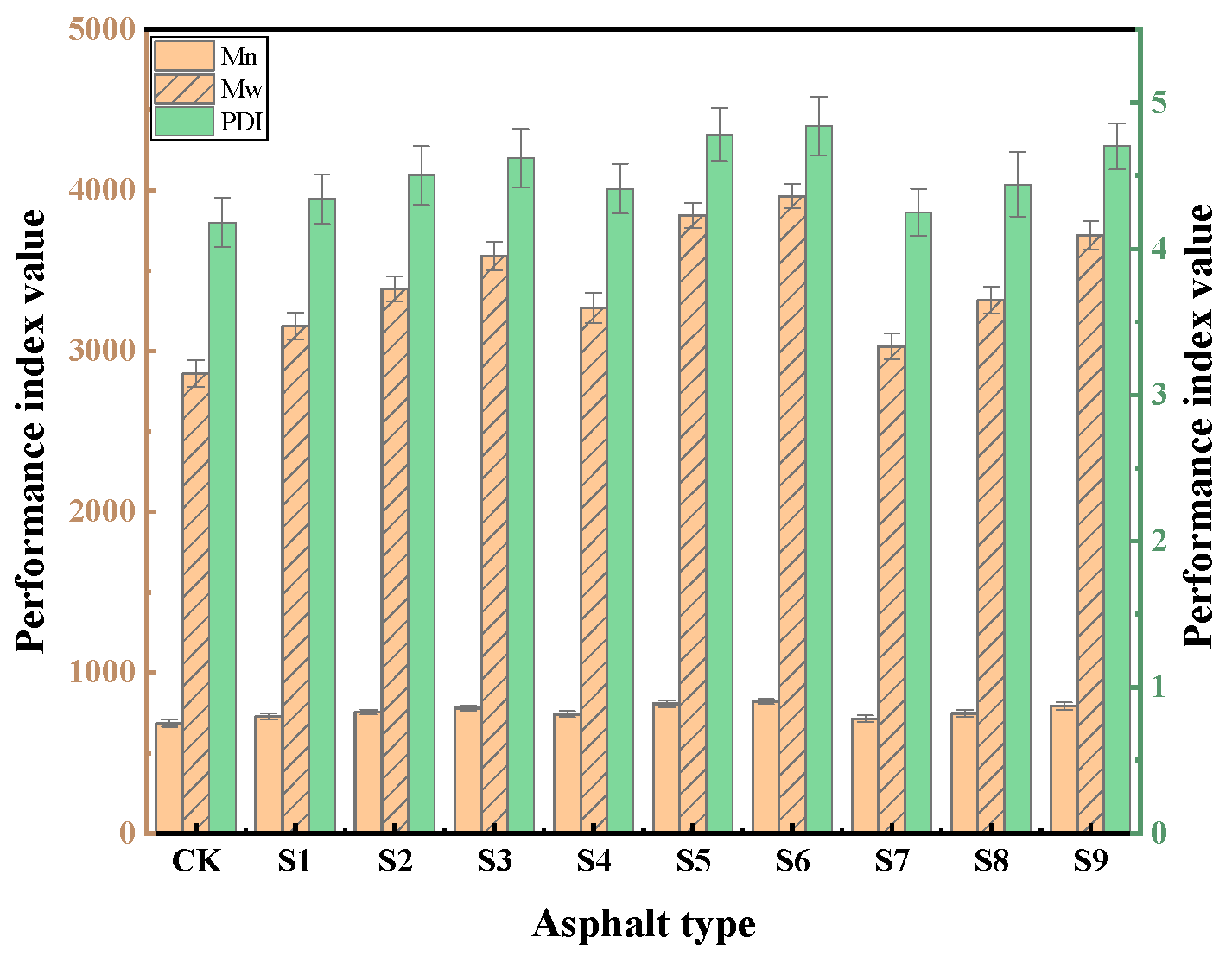
GPC can separate and characterize asphalt components with different molecular sizes according to the difference in molecular hydrodynamic volume, and quantitatively obtain key parameters such as Mn, Mw and PDI. It serves as an important method to reveal the modification mechanism of composite fillers on the microstructure and macroscopic pavement performance of asphalt at the molecular scale. In this study, the molecular weight distribution characteristics of CK and composite modified asphalt were analyzed via GPC tests, and the results are shown in
Figure 7.
As shown in
Figure 7, compared with CK, both the Mn and Mw of modified asphalt increase obviously after incorporating MMT-FA composite filler, accompanied by a synchronous rise in PDI. This variation indicates that the addition of composite fillers adsorbs and restricts small-molecule light components in the asphalt system, remarkably increases the proportion of macromolecular association structures, and makes the overall molecular system evolve toward larger molecular size and wider distribution. The nanosheets of MMT exhibit strong surface adsorption and interlayer confinement effects, which immobilize small asphalt molecules within interlayer gaps and inhibit their free migration. Meanwhile, porous FA particles physically adsorb and enrich small-molecule components, promoting the association and aggregation of asphalt molecules to form more macromolecular aggregates, which macroscopically manifests as an overall increase in the average molecular weight.
In terms of the influence of composite ratio, under the same total filler content, Mn, Mw and PDI generally follow the order of MMT:FA = 1:3 > 1:2 > 1:4. The interfacial interaction and adsorption effect of MMT nanosheets are far superior to those of inert FA. Increasing the MMT ratio enhances the capture and confinement of small molecules as well as the promotion of macromolecular association, leading to a more significant growth in molecular weight. By contrast, an excessively high FA proportion results in insufficient nano-interfacial adsorption sites, weakens molecular association and structural reconstruction, and thus limits the increment of molecular weight distribution parameters.
From the perspective of filler content, under the same composite ratio, the increases in Mn and PDI are prominent when the filler content rises from 3% to 5%. A further increase to 7% still causes a slight rise in molecular weight, but the growth rate slows down significantly. At a low dosage, fillers disperse uniformly in asphalt with fully exposed adsorption sites; the adsorption and enrichment of small molecules, as well as the promotion of a macromolecular association, are continuously enhanced with increasing content. When the dosage is excessive, filler particles tend to agglomerate and stack, shielding a large number of internal adsorption sites. Meanwhile, the spatial barrier effect of excessive inorganic particles on asphalt molecular chains gradually reaches saturation, so the variation of molecular weight distribution parameters tends to level off. For the optimal group S5, the number-average Mn and Mw increase by 16.8% and 21.5% compared with CK, and the PDI rises from 1.82 to 2.36. The increased molecular weight and broader molecular distribution form a stable multi-scale network, which is the intrinsic molecular mechanism for the enhanced fatigue resistance and deformation resistance of modified asphalt.
Molecular weight distribution characteristics are highly correlated with the macroscopic rheological and pavement performance of asphalt. A higher Mw corresponds to a denser macromolecular network structure in the asphalt system, which bestows a stronger resistance to shear deformation and accumulated permanent deformation at high temperatures. This is in good agreement with the previous DSR high-temperature rheology and MSCR test results that modified asphalt possesses higher modulus and better rutting resistance. An increased PDI indicates a broader span of molecular sizes and the formation of a multi-scale interwoven network inside the system, which effectively dissipates cyclic load energy and delays the initiation and propagation of fatigue cracks, corresponding to the significant improvement of fatigue life in LAS tests. At the same time, the increase in macromolecular proportion and the relative reduction in small-molecule lubricating components restrict the slippage and relaxation of asphalt molecular chains at low temperatures, resulting in higher creep stiffness and lower stress relaxation capacity in BBR tests. This confirms the trade-off mechanism between high- and low-temperature performance of modified asphalt from the molecular scale.
Based on the GPC results, specimens S5 and S5 exhibit the most obvious increase in PDI, the highest degree of molecular association, and the most stable micro-molecular network structure, which explains the intrinsic reason for their optimal macroscopic high-temperature and fatigue performance from the molecular perspective. In contrast, low-modification specimens such as S7 and S1 show mild changes in molecular weight and a molecular structure closer to base asphalt, leading to less deterioration of low-temperature rheological performance. The molecular weight distribution results are highly consistent with the TLC-FID chemical component analysis and macroscopic rheological tests, forming a closed-loop conclusion. The microscopic modification mechanism of MMT-FA composite filler on asphalt is further supplemented and perfected from the perspectives of molecular composition and size distribution.