Article

Co-Valorization of Electroplating Sludge and Water-Washed MSWI Fly Ash for the Preparation of Black Ceramic Glaze

1
College of Human Settlements and Environment, Jingdezhen Vocational University of Art, Jingdezhen 333001, China
2
Department of Environmental Engineering, Jingdezhen Ceramic University, Jingdezhen 333403, China
*
Author to whom correspondence should be addressed.
Coatings 2026, 16(7), 818; https://doi.org/10.3390/coatings16070818
Submission received: 1 June 2026 / Revised: 6 July 2026 / Accepted: 7 July 2026 / Published: 9 July 2026
(This article belongs to the Section Ceramic Coatings and Engineering Technology)

Highlights

What are the main findings?
  • Dual hazardous wastes—electroplating sludge (ES, abundant in CuO, NiO, Cr2O3 and Fe2O3) and water-washed municipal solid waste incineration fly ash (WFA, dominated by SiO2, CaO and Al2O3)—are synergistically blended with red clay and shale to satisfy the compositional demands of ceramic-colored glazes, simultaneously acting as primary feedstocks, functional colorants and fluxes.
  • The optimized formulation (26.1 wt% WFA, 30.4 wt% ES, 26.1 wt% red clay, and 17.4 wt% shale) and firing regime (1280 °C, 90 min, redox atmosphere) are identified, producing defect-free pure black glazes featuring smooth, homogeneous surfaces free of pinholes and cracks.
  • Heavy metal species (Cr, Cu, Ni, and Fe) are efficiently immobilized within the glaze matrix through coupled mechanisms of physical encapsulation, lattice substitution and silicate glass network linkage. Their leaching concentrations are substantially lower than the thresholds specified in Chinese national standards, eliminating secondary contamination hazards.
What are the implications of the main findings?
  • This work establishes a high-value, harmless co-valorization route for two typical hazardous solid wastes (ES and WFA), mitigating landfill occupation and environmental hazards induced by heavy metal leaching.
  • The proposed technique fully substitutes natural mineral feedstocks and synthetic inorganic colorants for ceramic glazes, cutting manufacturing costs and broadening the raw material library for low-environmental-risk ceramic production.
  • This research elucidates the coupled color generation and heavy metal immobilization mechanisms of solid waste-derived glazes, delivering theoretical guidance and technical references for the scaled utilization of industrial solid wastes in ceramic manufacturing.

Abstract

(1) Background: Electroplating sludge (ES) and water-washed municipal solid waste incineration fly ash (WFA) are classified as hazardous solid wastes, and their conventional disposal approaches trigger severe heavy metal pollution. Conventional colored ceramic glazes heavily depend on virgin mineral ores and synthetic colorants; therefore, sustainable alternative feedstocks are urgently required. (2) Methods: WFA and ES were compounded with red clay and shale to fabricate low-environmental-risk black glazes. Material microstructures and phase compositions were characterized via X-ray diffraction (XRD) and scanning electron microscopy coupled with energy-dispersive X-ray spectroscopy (SEM-EDS). Single-factor experiments were conducted to optimize the raw material ratios and sintering schedules, while heavy metal leaching toxicity was evaluated following national standard HJ/T 300-2007. (3) Results: The optimal composite formulation consists of 26.1 wt% WFA, 30.4 wt% ES, 26.1 wt% red clay and 17.4 wt% shale. Smooth, defect-free pure black glaze specimens were fabricated after sintering at 1280 °C for 90 min under a weak reducing atmosphere. Heavy metal ions were stably immobilized within the silicate crystalline and amorphous glass phases, with all leaching concentrations well below the national standard thresholds. (4) Conclusions: The proposed technology achieves the high-value co-valorization of two hazardous solid wastes while producing low-environmental-risk colored ceramic glazes, providing a feasible strategy for solid waste recycling and the low-carbon development of the ceramic manufacturing industry.

1. Introduction

With the rapid industrialization of China, the annual generation volume of industrial solid wastes keeps rising continuously. As two representative hazardous industrial solid wastes, electroplating sludge (ES) and water-washed MSWI fly ash (WFA) have attracted extensive research attention in the fields of environmental protection and solid waste recycling. ES is categorized as hazardous waste enriched with Cr, Cu, Fe and other transition metals, and its conventional disposal routes easily induce severe environmental contamination [1]. Massive amounts of WFA are generated every year, yet existing disposal applications remain limited to low-value scenarios; hence, high-value valorization strategies urgently require further exploration [2]. Meanwhile, colored glaze manufacturing heavily relies on virgin mineral ores and synthetic colorants, leading to high production costs and the overexploitation of natural mineral resources. Accordingly, developing green, low-cost recycled feedstocks for glaze fabrication has become an inevitable development trend in the ceramic industry [3].
Co-valorization of industrial solid wastes has emerged as a popular research hotspot, and numerous researchers have investigated the feasibility of incorporating solid wastes into ceramic matrix materials. Previous investigations have verified that transition metal oxides within ES can serve as natural colorants for ceramic glazes [4], while WFA can partially substitute conventional glaze base materials. The combined utilization of these two wastes for colored glaze fabrication simultaneously delivers prominent environmental and economic advantages [5]. To date, relevant studies have mostly focused on glaze preparation using a single type of solid waste. However, research concerning co-blended glaze fabrication based on both ES and WFA remains scarce, and a complete corresponding technical system has not yet been established [6].
To address the urgent demand for high-value industrial solid waste recycling, this work employs ES and WFA as primary feedstocks to fabricate colored glazes. A series of low-environmental-risk glaze products are developed via the systematic optimization of raw material ratios and sintering regimes [7]. On one side, this approach achieves the harmless, high-value valorization of hazardous wastes and lowers the associated environmental risks. On the other side, it reduces dependence on virgin mineral ores, cuts production expenditures, expands the glaze raw material library, and offers a theoretical foundation for the scaled application of industrial solid wastes in ceramic manufacturing [8].
Centering on the fabrication technology of ES-WFA composite colored glazes, this study conducts systematic experiments, including raw material pretreatment and formula modulation. The internal effects of solid waste dosage and sintering parameters on glaze surface performance are analyzed, the color generation and phase transition mechanisms of the composite material are elucidated, and the optimal manufacturing parameters are finalized. This research not only advances the co-valorization of industrial solid wastes and establishes a feasible technical route for green ceramic production [9], but also facilitates the transformation of academic theories into practical engineering innovation [10]. Accordingly, this work bears both theoretical research value and practical application significance [11].

2. Materials and Methods

2.1. Raw Materials and Equipment

Raw materials adopted in this experiment consist of water-washed MSWI fly ash (collected from a municipal solid waste incineration power plant in Jiangxi Province, hereafter abbreviated as WFA), electroplating sludge (ES), shale, red clay and ceramic biscuit slip. The chemical oxide compositions of red clay, shale and biscuit slip are summarized in Table 1, while the elemental composition profiles of ES and WFA are displayed in the Results section.
The experimental instruments and characterization equipment are listed below: a JJ200 electronic analytical balance (Changshu Shuangjie Testing Instrument Factory) for mass weighing; a JC101 forced-air drying oven (Nantong Jiacheng Instrument Co., Ltd., Nantong, China) for sample dehydration; a DWK high-temperature furnace control unit (Yixing Dingshan Electric Protector Factory, Wenzhou, China) for sintering temperature regulation; two scanning electron microscopes for micromorphology observation, namely a KYKY-EM3900M SEM (CAS Scientific Instrument Factory, Beijing, China) and a Hitachi SU-8010 field-emission SEM (FE-SEM); and a YXQM-2L planetary ball mill (Changsha Miqi Instrument Equipment Co., Ltd., Changsha, China) for raw material pulverization. Apart from the core characterization and processing devices described above, common labware, including a 200-mesh standard test sieve, ceramic mortars and pestles, glaze sprayers, absorbent sponges and 500 mL volumetric beakers, was utilized to support sample preparation procedures.

2.2. Experimental Methods

  • Scheme Design: Referring to the experimental framework proposed by Zhang et al. [12], together with a comprehensive literature review and pre-exploration tests, a series of raw material mass ratios were designed for follow-up single-factor experiments.
  • Preparation of Biscuit-Fired Body: Gypsum molds with fixed geometric shapes were prefabricated. Homogenized fine ceramic slip was poured into the gypsum molds for slip casting. Owing to the water-absorbing property of gypsum, the slip was gradually deposited and condensed on the inner mold surface to form a uniform green body shell with controlled thickness. Once the target shell thickness was achieved, the residual excess slip was drained. The green bodies were naturally air-dried inside the molds for shrinkage shaping, followed by demolding, surface trimming and complete oven dehydration to acquire standard experimental green bodies.
  • Glaze Preparation: Following the glaze preparation protocol reported by Wang [13], WFA, ES, red clay and shale were pulverized with a mortar and pestle until all powders could pass through a 250-mesh standard sieve. Subsequently, the mixed powders were transferred to a mixing vessel, mixed with a fixed dosage of deionized water, and stirred to form a homogeneous glaze slip.
  • Glazing: During glazing via dipping or spraying methods, standardized personal protective equipment (disposable dust masks and latex gloves) was worn for laboratory safety. Prior to glazing, the surface of dry green bodies was lightly wiped with a damp sponge to eliminate surface dust. The glaze slip was then uniformly coated to guarantee consistent absorption by the biscuit matrix and to acquire ideal glaze layers. Subsequently, all glazed green bodies were oven-dried at 70 °C for 2 h to remove free water.
  • Kiln Firing: Fully dried glazed samples were transferred to an electric furnace for high-temperature sintering. The sintering temperature, holding duration and kiln atmosphere were precisely regulated to guarantee stable densification and the mechanical performance of the ceramic specimens.
  • Determination of the Optimal Raw Material Formula: After sintering, all glaze specimens were visually evaluated in terms of surface gloss and flatness. During the evaluation, surface defects and experimental data were comprehensively recorded for subsequent comparative analysis and formula optimization to screen out the optimal raw material mass ratio.

2.3. Formula and Process Design

WFA and ES were selected as the core functional raw materials, while red clay and shale served as fluxing and binder components to construct the base glaze formulations. A series of single-factor tests was carried out to investigate the influences of solid waste dosage, sintering temperature and holding time on glaze surface performance, aiming to screen the optimal processing parameters.
In the single-factor experiments, the total input was fixed at 47.5 g. A single-variable gradient was used while keeping the remaining components constant, allowing the selection of an appropriate dosage for each individual component. Subsequent response surface optimization was performed with mass fraction as the variable to investigate the interactions among multiple components, resulting in the globally optimal mass fraction ratios of 30.4%, 26.1%, 26.1%, and 17.4%. These ratios were then converted back to the 47.5 g fixed system, with the theoretical masses of each component being 14.44 g, 12.40 g, 12.40 g, and 8.27 g. There was a discrepancy between the optimal dosage obtained from the single-factor experiments and the converted dosage because the single-factor experiments did not account for the synergistic effects among components. Therefore, the final validated experiment was conducted using the converted ratios, which exhibited superior overall performance compared with the optimal single-factor group.
XRD, SEM and EDS characterizations were combined to systematically analyze material microstructures. SEM was adopted to observe pore distribution and crystalline morphology. EDS elemental mapping was utilized to characterize the distribution and existing states of heavy metal elements. XRD patterns were applied to identify crystalline phases, with particular focus on heavy metal-containing spinel phases [14].
Heavy metal leaching toxicity tests were conducted strictly following the Chinese national standard Solid Waste—Extraction Procedure for Leaching Toxicity—Acetic Acid Buffer Solution Method (HJ/T 300-2007) to quantify heavy metal leaching concentrations of WFA and the as-prepared glaze specimens [15]. Prior to extraction, the glaze samples were crushed to particle sizes below 9.5 mm, followed by the addition of acetic acid buffer leachant (pH = 2.64 ± 0.05). The extraction procedure strictly complied with the solid–liquid ratio, ambient temperature and horizontal oscillation duration specified in HJ/T 300-2007. Three parallel replicate tests were arranged for every sample group to guarantee data repeatability. The environmental safety of the as-prepared glazes was evaluated by comparing the measured heavy metal leaching concentrations with the national standard thresholds [16].

3. Results

3.1. Composition Analysis of Water-Washed MSWI Fly Ash and Electroplating Sludge

3.1.1. Composition Analysis of Electroplating Sludge

The oxide composition of ES was quantified via X-ray fluorescence (XRF) spectrometry, and the full elemental data are summarized in Table 2. Among the major oxide components, ES contains 14.32 wt% Al2O3 and 5.93 wt% SiO2, which jointly supply silicate skeleton precursors for glass phase formation during sintering. Meanwhile, it contains alkali metal and alkaline earth metal oxides such as CaO (3.96 wt%), MgO (0.97 wt%), K2O (0.14 wt%) and Na2O (1.05 wt%), which can serve as network modifiers to reduce the melting temperature of the glaze and promote the homogenization of the glass phase [17]. The content of total iron (TFe2O3) in the waste residue is 3.36 wt%, which is a key basic component for the coloring of the subsequent black glaze and can also act as a mineralizer to regulate crystal precipitation behavior during firing [18].
Characteristic heavy metal and transition metal components are the core composition features of the electroplating sludge. Among them, the CuO content is as high as 22.61 wt%, while the NiO content is 5.28 wt%. Both are typical byproducts of copper and nickel electroplating processes and are also important coloring and functional components in the glaze system. In addition, the waste residue contains transition metal oxides such as Cr2O3 (4.50 wt%), ZnO (0.38 wt%), Co3O4 (0.13 wt%) and MnO (0.09 wt%). These elements can significantly affect glaze coloring through valence changes and ion synergistic effects during high-temperature firing [19]. Among the trace components, ZrO2, PbO, MoO3 and V2O5 are present at low contents and have little influence on the main properties of the glaze but can slightly regulate glaze gloss and chemical stability.
The loss on ignition (IL) of the waste residue is as high as 28.87 wt%, mainly corresponding to organic matter, crystal water and carbonates remaining from the electroplating process, which can be completely decomposed and volatilized during high-temperature firing without negatively impacting the final glaze. In addition, the waste residue contains anionic impurities such as SO3 (3.34 wt%) and Cl (0.33 wt%), which easily escape as gases during firing. Therefore, the heating rate needs to be controlled to avoid bubble defects in the glaze [20]. The content of P2O5 is 4.05 wt%, which can act as a flux to reduce the melting temperature of the glaze and affect the viscosity and crystallization behavior of the glass phase.

3.1.2. Composition Analysis of Municipal Solid Waste Incineration Water-Washed MSWI FLY Ash

The chemical composition of the water-washed MSWI fly ash used in this experiment is shown in Table 3. XRF elemental analysis shows that the main chemical components of WFA are SiO2 (15.2–28.7 wt%), CaO (28.5–45.6 wt%), Al2O3 (3.3–16.2 wt%), Fe2O3 (1.8–7.1 wt%) and K2O (0.2–2.8 wt%), which are the basic network formers and flux components of the glaze [21]. In addition, WFA contains a large number of chloride ions (15,000–45,000 mg/kg) and sulfate ions (8000–25,000 mg/kg). These anions play an important role in glaze fluidity and bubble formation during high-temperature firing [22]. In terms of heavy metal elements, the contents of Pb, Zn [23], Cu and Cd in WFA are 800–3500 mg/kg, 2000–8500 mg/kg, 500–2800 mg/kg and 15–85 mg/kg [24], respectively. These heavy metal ions not only have certain coloring abilities but are also important factors for environmental risk control.
In this study, the original WFA was pretreated by water washing [25]. The dried and 200-mesh-sieved raw WFA was mixed with deionized water at a liquid-to-solid ratio of 3:1, stirred and allowed to stand. After repeated rinsing for 2–3 times, it was dried to constant weight at 105 °C and ground through a 200-mesh sieve to obtain desalted WFA samples, which can effectively remove soluble salts and reduce the risk of subsequent glaze firing defects.
Table 4 compares the elemental composition of the raw WFA and the water-washed WFA. The water-washing pretreatment achieved a chlorine removal rate of 90.64%, while the removal efficiency of sulfate (SO3) reached 20%. Metal oxides such as K2O and Na2O were partially removed, and heavy metal oxides were also partially removed [26]. Some of these substances were negative, possibly due to the use of tap water during washing. Additionally, washing fly ash effectively removed soluble chlorides and sulfates, significantly reducing bubble and pinhole defects during high-temperature firing. At the same time, it reduced the background levels of easily soluble heavy metals in the raw materials, reducing the risk of heavy metal leaching at the source [27].

3.1.3. Coloring Mechanism of Black Glaze Based on Electroplating Sludge and Water-Washed MSWI Fly Ash

The color generation mechanism of the ES-WFA composite black glaze originates from the coupled interactions of intrinsic transition metal chromogenesis, multi-ion synergistic light absorption, sintering atmosphere modulation and molten glaze structural evolution. From the perspective of chemical composition, electroplating sludge is rich in transition metal oxides such as Fe2O3, Cr2O3, NiO and CuO, while WFA mainly contains Fe2O3, MnO2 and Cr2O3. The ions of these elements form broad-spectrum absorption of visible light through d–d electron transitions and charge transfer effects in the high-temperature glaze melt, forming the core basis for black glaze coloring. Among them, Fe is the key component dominating the coloring process. In an oxidizing atmosphere, Fe exists in the form of Fe3+, absorbing blue-violet light in tetrahedral/octahedral coordination fields to form yellow-brown and reddish-brown backgrounds. In a reducing atmosphere, Fe3+ is reduced to Fe2+. The coexistence of Fe2+ and Fe3+ leads to an Fe2+–Fe3+ charge transfer effect [28], which produces strong broad-spectrum absorption of visible light, making the glaze appear dark gray or even ink black. This is the core mechanism of black glaze coloring [29]. Cr3+ exists stably in octahedral coordination, absorbing red and blue light to present an olive-green color. When superimposed with the yellow-brown or cyan tone of Fe, it forms a calm dark green-black transition color. Ni2+ has a strong absorption effect on visible light in the octahedral coordination field, which can strengthen the gray-black texture of the glaze. The cyan tone of Cu2+ in an oxidizing atmosphere and the purple-brown tone of Mn ions in different valence states are further superimposed on the main tones of Fe and Cr, eliminating color deviation from single-ion coloring, achieving uniform absorption of visible light and avoiding variegated colors on the glaze surface.
At the same time, the large amounts of SiO2 and Al2O3 in WFA and the flux components, such as CaO and MgO, in the waste residue jointly construct the glass network structure of the glaze melt, affecting the coordination symmetry and field strength of the metal ions. A high-alkali environment enhances the yellow tone of Fe3+, a high-aluminum environment strengthens its brown tone, and a glaze melt with a high CaO content is more likely to form a low-viscosity glass phase, promoting the uniform dispersion and valence balance of metal ions [30]. During cooling, the system tends to precipitate spinel-type nanocrystals such as Fe3O4, FeCr2O4 and FeMn2O4. These crystals further deepen the dark texture of the glaze through light-scattering effects, even forming a matte or metallic luster, while inhibiting crystal growth to avoid crystallization white spots on the glaze. In addition, the firing atmosphere, heating rate and cooling curve directly regulate the valence balance and crystallization process of the metal ions. A reducing atmosphere promotes the conversion of high-valence metal ions to low-valence states, strengthens the Fe2+–Fe3+ charge transfer effect and shifts the glaze tone toward pure black [31]. Slow cooling provides conditions for the uniform precipitation of spinel crystals, enhancing the contribution of phase separation and crystallization coloring [32], and finally enables the electroplating sludge- and WFA-based glaze to form a uniform, stable and richly textured black glaze [33].

3.1.4. The Real Innovation in This Research

Currently, research on solid waste glaze production mostly uses a single hazardous solid waste as the raw material, relying solely on either municipal solid waste incineration fly ash or electroplating sludge to prepare glaze layers. This type of system has obvious shortcomings: firing a single fly ash raw material easily causes visible defects such as pinholes and bubbling, while the single electroplating sludge system carries a high risk of heavy metal leaching and has a limited curing effect. Both methods pose secondary pollution risks when used independently for resource utilization.
The core novelty of this research lies in the simultaneous synergistic co-valorization of two distinct hazardous solid wastes. The silicon–aluminum components in fly ash and the metal oxides in electroplating sludge produce a synergistic melting effect, lowering the firing temperature. Multivalent transition metal components interact to achieve uniform black glaze coloring. After high-temperature melting, heavy metals are interwoven into the spinel lattice structure, greatly improving the stabilization efficiency of heavy metals while balancing the appearance quality of artistic ceramic glazes with environmental leaching safety.
Unlike traditional black art glazes that rely entirely on natural mineral raw materials, this system does not require thje additional purchase of mineral fluxes or inorganic coloring pigments, maximizing the absorption of industrial hazardous waste. While achieving the harmless disposal of waste residue, it also prepares decorative ceramic products, providing a new resource utilization approach for two types of difficult-to-dispose industrial hazardous waste.

3.2. Effects of Raw Material Content and Temperature on Glaze Effect

It should be noted that all intact glazed specimens after firing were fully crushed for X-ray diffraction and heavy metal leaching toxicity tests, and no complete glazed samples were reserved for quantitative optical measurements, including CIE color coordinates, gloss and surface roughness. Meanwhile, the raw solid waste batches have been exhausted; therefore, supplementary sample preparation for additional quantitative characterization could not be carried out. As an alternative approach for quantitatively evaluating glaze quality, this study extensively references similar literature in the field of ceramic black glaze. Many studies also use visual appearance combined with SEM micromorphology as the core methods for glaze evaluation, verifying the rationality of the evaluation method adopted in this study through cross-literature comparison.

3.2.1. Effect of Water-Washed MSWI Fly Ash Content on Glaze Surface Effect

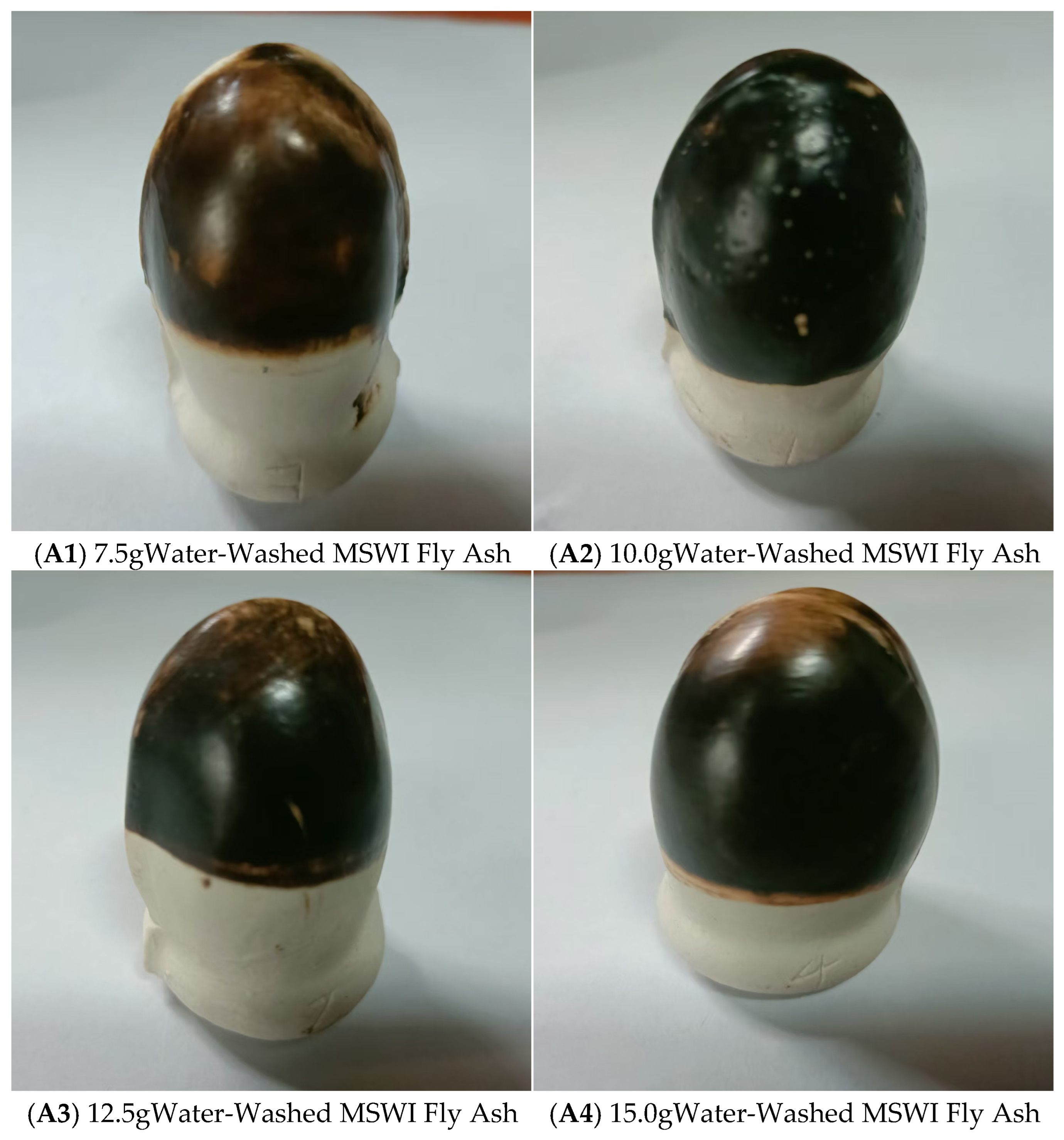
As shown in Table 5, WFA can be used as the main source of alumina in the glaze system and can combine with silica and alkaline oxides to improve the physical and chemical properties of the glaze while regulating its glaze transparency and gloss. WFA contains a large amount of calcium oxide required for the glaze, which has a significant impact on the overall glaze performance [34].
Adding WFA can improve the hardness, weather resistance and water resistance of the glaze. Compared with alkali metal oxides, WFA can significantly enhance the tensile strength of the glaze, effectively reduce the large thermal expansion coefficients caused by alkali metals, and fundamentally inhibit glaze-cracking defects. Within an appropriate content range, calcium oxide can further improve the structural strength and wear resistance of the glaze. However, excessive calcium oxide content can easily cause glaze crystallization and devitrification, which will damage the overall quality of the glaze [35]. In addition, WFA is a byproduct of municipal solid waste incineration. Its application in glaze preparation can realize the resource utilization of WFA, which has both environmental and practical value.
As shown in Figure 1, sample A1 shows a certain degree of gloss but is generally dark with uneven coloring, appearing brownish at the top and blackish in the middle. It is locally dull without obvious pinholes, presenting poor coloring hierarchy and insufficient blackness. Sample A2 has high gloss and a uniform deep black tone but exhibits obvious pinholes, bubbles and small pits, which seriously affect the overall quality despite its good coloring. Sample A3 has good gloss and is generally black with a light brown transition at the edge. It is basically flat without obvious defects and has stable coloring with moderate gloss. Sample A4 has high and uniform gloss, a uniform deep black tone with a natural transition only at the glaze line, and a flat surface without obvious pinholes, sagging or cracking defects, showing the best coloring, gloss and surface quality.
In summary, sample A4 performs the best. Therefore, the WFA content should be maintained at 15.0 g.

3.2.2. Effect of Electroplating Sludge Content on Glaze Surface Effect

As shown in Table 6, electroplating sludge contains a large amount of metal oxides such as chromium, iron and nickel, which have a prominent impact on the firing behavior and performance of colored glazes when added to the composite glaze system consisting of red clay, shale and WFA.
The metal components in the waste residue are the main coloring sources of the glaze. During high-temperature reactions, they easily form stable spinel phases, producing durable black, brown and other non-fading glaze tones. Meanwhile, the waste residue itself has a low melting point and high reactivity, which can act as a good flux, reduce the firing temperature, broaden the applicable firing range, promote the development of the glaze glass phase and produce a dense and more delicate glaze. In addition, it can induce microcrystal growth and improve the glaze structure and physicochemical properties. High-temperature sintering can solidify harmful heavy metals in mineral lattices, achieving the harmless treatment of solid waste. Relying on the advantages of red clay, shale and WFA, the resource-based preparation of low-environmental-risk artistic colored glazes from solid waste can be realized.
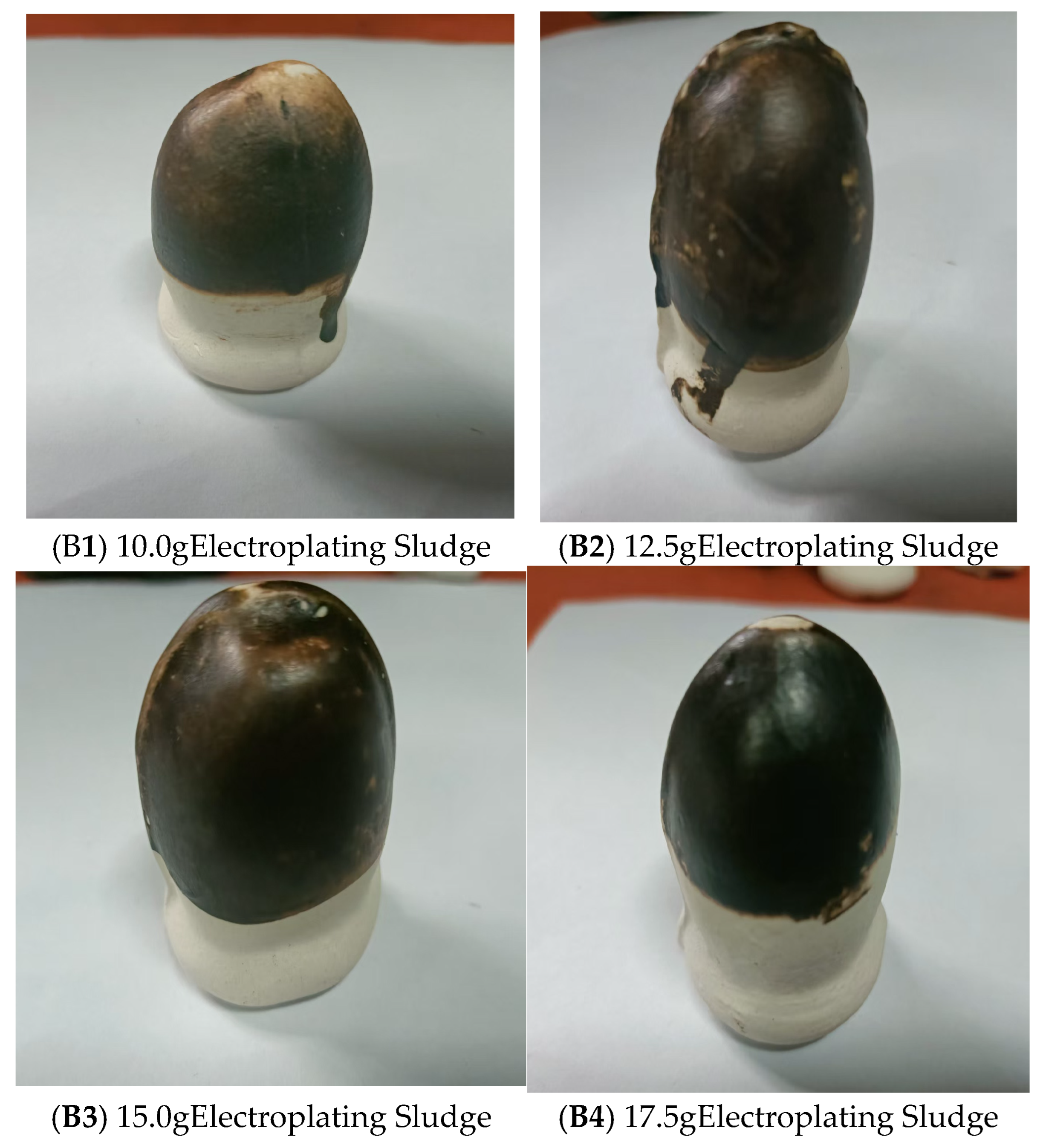
In the gradient experiment on electroplating sludge content, the glaze performance of each sample was significantly different. As shown in Figure 2, B1 has insufficient fluxing due to the low waste residue content, resulting in uneven glaze melting, uneven coloring and glaze sagging. B4 has a uniform dark brown-black color, a delicate and dense gloss and no obvious defects, making it the best sample in terms of comprehensive performance and corresponding to the optimal waste residue content range of 15–25 wt%. B3 has a slightly higher waste residue content, resulting in a dark black color with a green tone, slightly weaker gloss and density, and a slight offset in spinel coloring. B2 has an excessive waste residue content, resulting in uncontrolled glaze viscosity due to excessive fluxing, a mottled and rough glaze surface, serious glaze sagging and an out-of-control firing state.
In summary, sample B4 performs the best. Therefore, the amount of electroplating sludge can be set at 17.5 g.

3.2.3. Optimal Glaze Formula and Seger Formula

The optimal formulation for the colored glaze was determined based on the experimental results and is shown in Table 7: electroplating sludge 30.4 wt%, WFA 26.1 wt%, shale 17.4 wt% and red clay 26.1 wt%. This formula can ensure a good coloring effect of the colored glaze and effectively fixes heavy metals, with heavy metal leaching concentrations lower than half of the national standard limits. Verification experiments showed that the colored glaze prepared using the above formula had good comprehensive performance and a black glaze surface. This formula achieves the high-value-added utilization of electroplating sludge and WFA, providing an effective route for the resource utilization of hazardous waste.
To explore the chemical composition characteristics of the colored glaze prepared by compounding electroplating sludge, water-washed MSWI fly ash, red clay and shale, the mass fraction of each oxide was statistically weighted based on the EDS chemical test results of the four raw materials according to the set ratio (electroplating sludge 30.4 wt%, WFA 26.1 wt%, shale 17.4 wt% and red clay 26.1 wt%) and converted into the corresponding molar content [36]. In accordance with the Seger glaze formula specification for ceramic technology, the total molar amount of alkali metal and alkaline earth metal oxides (R2O + RO) in the system was normalized to 1, and the standard Seger glaze formula of the colored glaze in this experiment was obtained.
From the overall composition of the glaze formula, alkaline oxides such as K2O, Na2O, CaO and MgO in the system form a composite flux system that can effectively reduce the melting temperature of the glaze, broaden the firing temperature range and facilitate liquid phase generation and uniform glaze spreading at high temperature. As typical amphoteric oxides, Al2O3 and SiO2 jointly construct the main structure of the silicate glass network in the glaze layer, significantly improving the mechanical strength, thermal stability and resistance of the glaze to acid and alkali erosion [37].
The glaze pattern is as follows:
0.036 K 2 O 0.037 N a 2 O 0.451 C a O 0.120 M g O 0.064 N i O 0.257 C u O 0.010 Z n O 0.001 P b O 0.002 C o O 0.020 M n O 0.002 S r O 0.359 A l 2 O 3 0.076 F e 2 O 3 0.027 C r 2 O 3 0.031 P 2 O 5 0.011 T i O 2 1.477 S i O 2

3.2.4. Effect of Temperature on Glaze Surface Effect

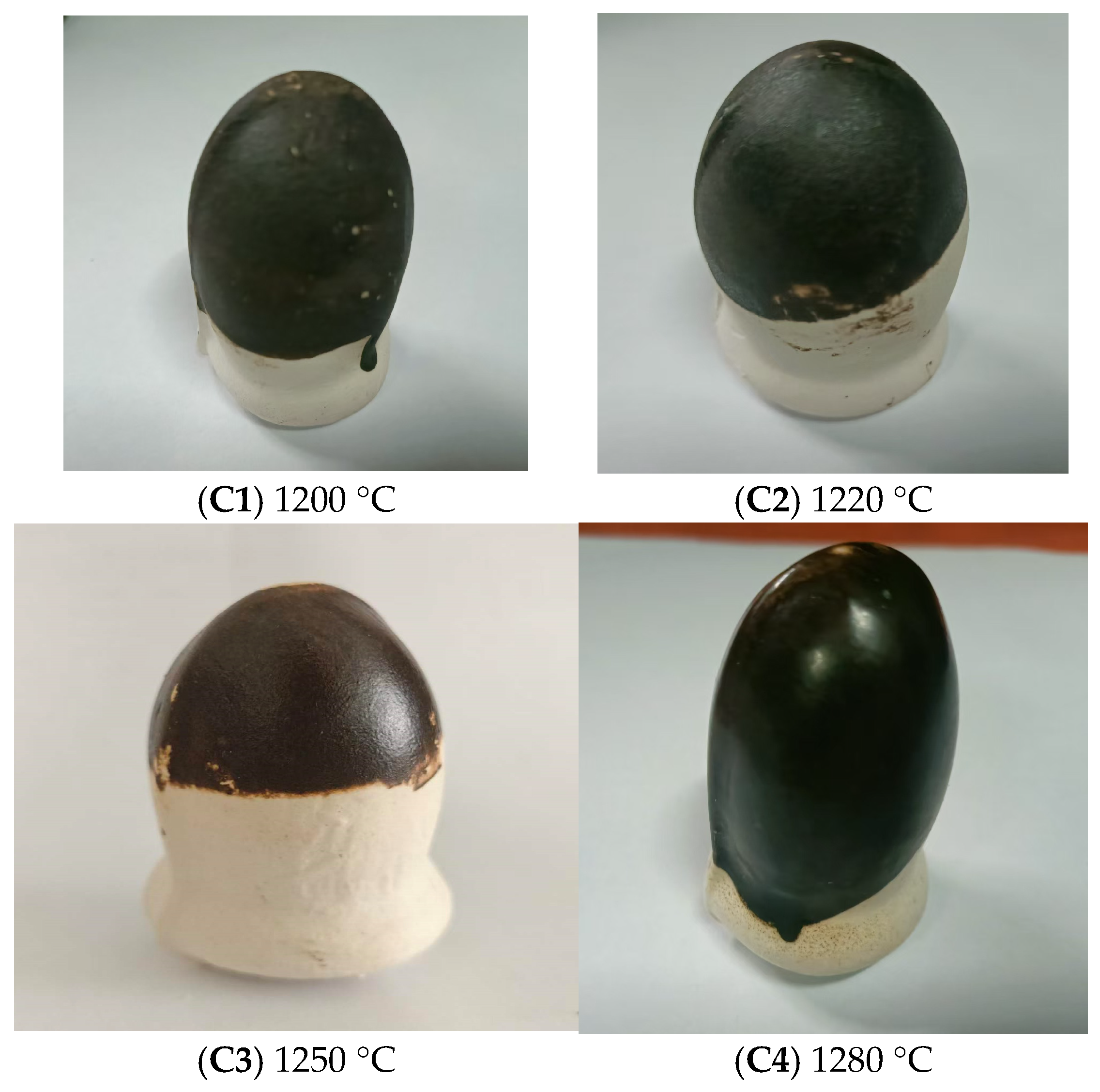
As shown in Table 8, the firing temperature is the core process condition affecting the firing effect and glaze performance of colored glaze prepared from electroplating sludge, red clay, shale and WFA. When the temperature is too low, the glaze components cannot fully melt and react, resulting in poor glass phase formation, a loose glaze texture with poor gloss [38], and the inability of the metal coloring ions in the electroplating sludge to form stable crystal phases, leading to messy coloring and shallow color. Controlling the appropriate firing temperature can not only accelerate glaze melting, making the glaze layer denser and smoother, but also ensure the full reaction of coloring ions, guaranteeing a uniform and pure glaze color. At the same time, the heavy metals in the electroplating sludge can be firmly solidified at high temperature, improving the environmental protection and stability of the glaze. If the temperature exceeds the appropriate range, the glaze will melt excessively, resulting in glaze sagging, cracking, color distortion and other problems that affect the quality of the finished glaze.
As shown in Figure 3, sample C4 is optimal because the temperature system best matches the formula, resulting in sufficient glaze vitrification and uniform gloss. Sample C2 is dull due to incomplete liquid phase generation caused by a low temperature or insufficient holding time. Sample C1 has pinholes, glaze shrinkage and glaze sagging due to rapid heating, temperature fluctuations and poor raw material pretreatment, leading to violent gas escape. Sample C3 has uneven glaze gloss and edge color difference due to a slightly low temperature and uneven distribution and mixing.
In summary, sample C4 performs the best. As shown in Table 9, the optimal firing temperature for this glaze is 1280 °C.

3.3. Microstructure and Leaching Toxicity Analysis

3.3.1. XRD Phase Analysis of the Glaze Layer

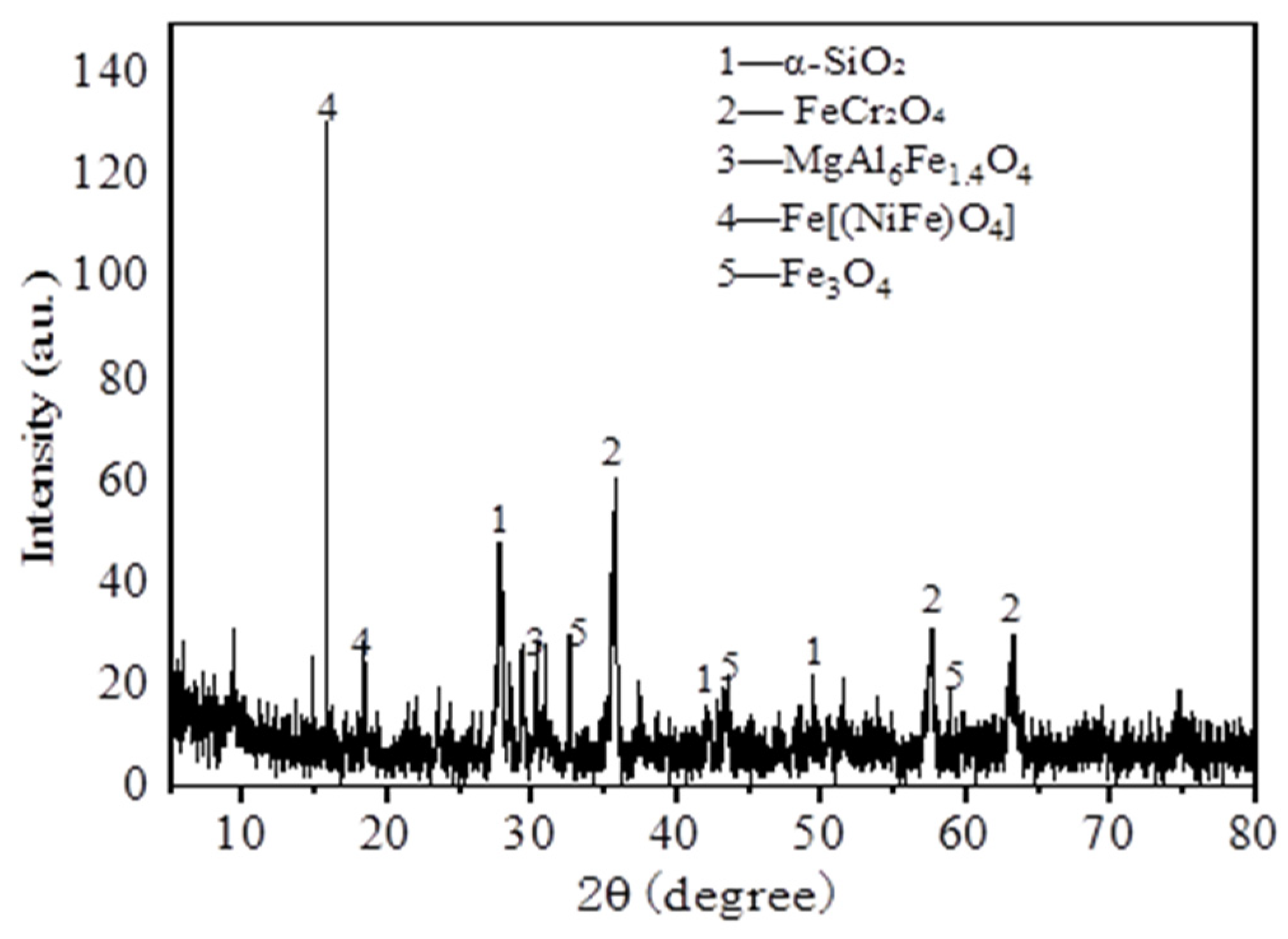
X-ray diffraction was used to analyze the phase of the prepared colored glaze samples. The results in Figure 4 show that the colored glaze forms a complex crystal phase system during high-temperature firing, with the main crystal phases being quartz (SiO2) and composite silicate phases containing heavy metals. Chromium ions in the electroplating waste combine with silicate matrices to form the chromium spinel phase (FeCr2O4), giving the glaze a green color. In the waste incineration fly ash, metal ions such as iron and copper combine with the aluminosilicate network to form a complex solid solution phase. From the diffraction peaks, at a firing temperature of 1200 °C, the original oxide crystalline phase basically disappears and transforms into a thermodynamically stable silicate crystal phase, and this phase transition process favors the solidification of heavy metal ion lattices. Compared with the raw material waste residues, the characteristic diffraction peak intensities of heavy metal oxides in the fired glaze are greatly reduced, indicating that the heavy metals have entered the silicate lattice, forming stable compound phases and thereby greatly reducing the activity and mobility of heavy metals.
Main crystalline phase: α-SiO2 quartz, with characteristic 2θ at 26.7° (strongest), 42.5°, and 49.6°, and the highest spectral diffraction intensity in the 27.7~27.8° range.
Functional crystalline phase (chromium stabilization + green coloration): FeCr2O4 chromium spinel, with characteristic peaks at 35.7° (311, sub-strongest), 57.5° (511), and 62.7° (440).
Amorphous matrix: A wide diffuse aluminosilicate glass phase at 20~25°, spanning the full spectrum at a low-angle baseline.
Metal solution phase: A broadened (Fe, Cu) aluminosilicate solid solution at 38~45°, no free Fe or Cu oxide crystals.
Harmless evidence: The sharp diffraction peaks characteristic of the single heavy metal oxides in the raw materials Cr2O3, Fe2O3, and CuO completely disappear, with all heavy metals embedded in silicate/spinel lattices, significantly reducing the migration risk.
Crystal phase system: The glaze fired at 1200 °C consists of quartz crystals + chromium spinel crystals + Fe/Cu aluminum silicate solid solution + amorphous glass quartet composite system with no residual low-temperature raw minerals or free heavy metal oxides.

3.3.2. SEM + EDS Micromorphology and Composition Analysis

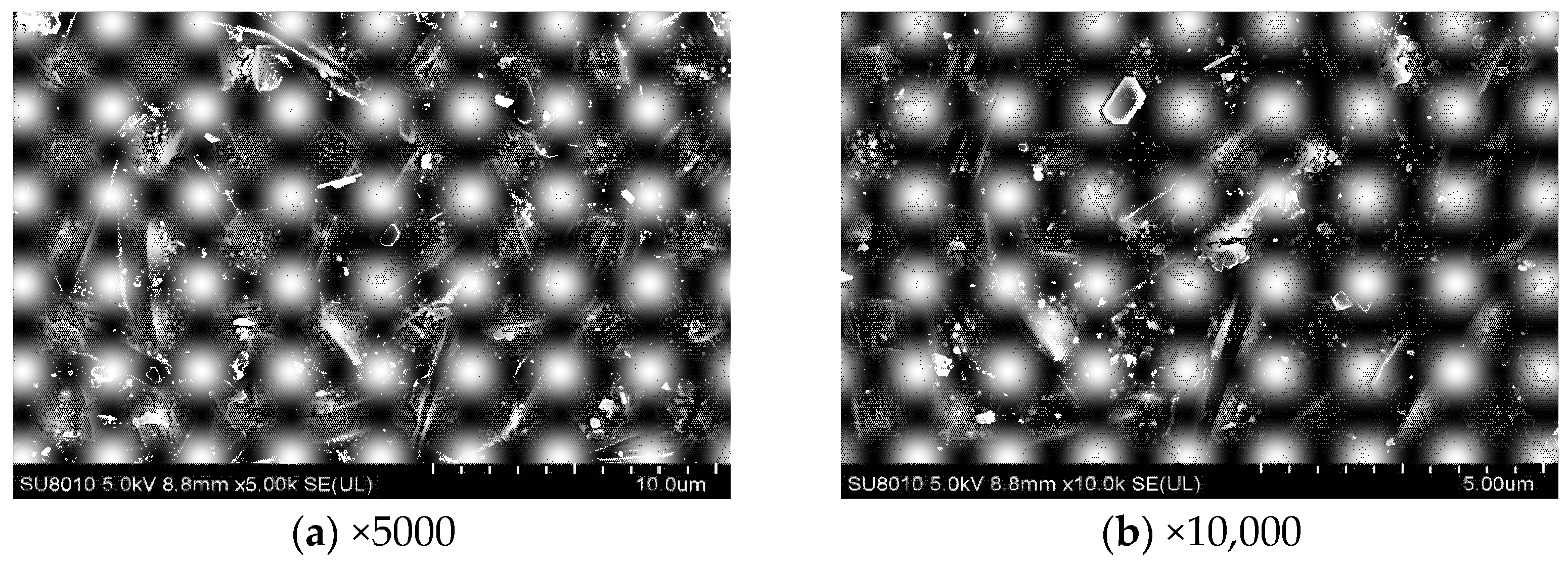
SEM observations (Figure 5) demonstrate that the glaze fabricated with the optimal formula possesses a continuous, compact amorphous glass matrix on its surface, with a consistent glaze thickness ranging from 150 to 200 μm. The micromorphology of the glaze surface presents typical glassy characteristics, being smooth and flat without obvious pores or pinholes. Inside the glaze layer, uniformly dispersed microcrystalline particles with sizes ranging from 1 to 5 μm can be observed. These microcrystalline phases are mainly composed of heavy metal-containing silicate composites. EDS elemental analysis shows that heavy metal elements such as chromium, copper and zinc are relatively uniformly distributed throughout the glaze layer without obvious elemental enrichment areas. Cross-sectional analysis of the glaze layer shows that the main elements Si, Al and Ca remain basically stable from the glaze surface to the body–glaze interface, while heavy metal elements derived from the solid waste exhibit a gradient distribution in the glaze layer. The body–glaze interface is well bonded, forming a transition layer of approximately 10–20 μm. In this transition layer, the components of the body and glaze penetrate each other, enhancing the bonding strength. Cr, Cu, Ni, and Fe are concentrated within spinel microcrystals, with no free metal enrichment on the surface, indicating that the metals are fixed within the lattice rather than remaining free on the surface. The microstructural analysis confirms that heavy metal ions have been effectively solidified within the silicate network structure of the glaze layer.
SEM secondary electron images of the glaze surface at different magnifications show that a large number of rod-shaped anorthite crystal phases are uniformly distributed in the glaze matrix at ×5000 magnification, without obvious agglomeration or blank areas, and the overall structure is dense. The ×10,000 magnification image further shows that the rod-shaped crystal phases have good crystallinity, with sharp and clear edges, a length of about 2–4 μm and a width of about 0.3–0.5 μm. Meanwhile, a small number of massive crystals and nano-scale precipitated particles are distributed in the matrix. The composite structure formed by the crystal and glass phases is a key factor affecting glaze color and density and also provides a microstructural basis for its good chemical stability.
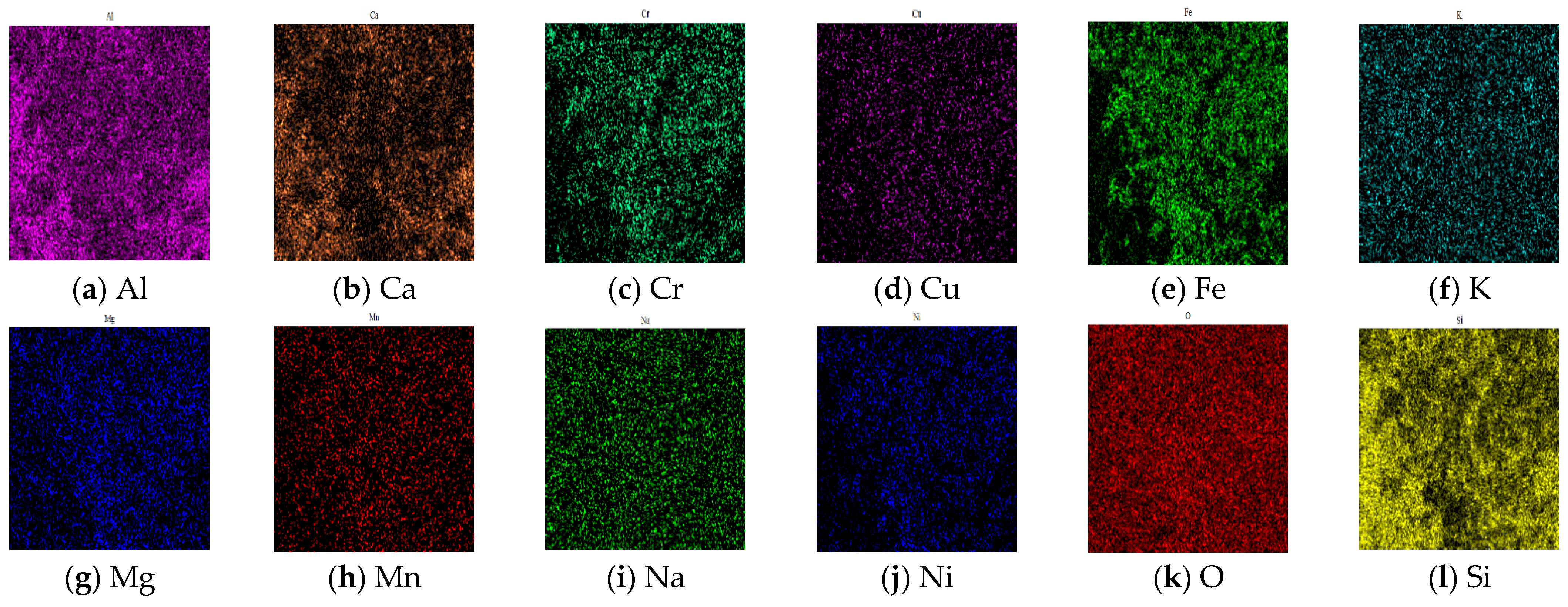
As shown in Figure 6, the EDS elemental surface scan distribution map indicates that the primary elements Si and Al are uniformly distributed throughout the glaze, corresponding to the glassy phase matrix. In contrast, Fe, Mn, Cr and other coloring and characteristic elements show obvious local enrichment characteristics, which are highly coincident with the rod-shaped crystal phase and massive crystal regions observed in the SEM morphology, indicating that these elements are preferentially fixed in the crystal phase during crystal formation. Alkali metal elements such as K and Na are relatively uniformly distributed, while heavy metal elements (such as Zn and Ni) introduced from electroplating sludge show no obvious segregation, indicating that they are effectively dissolved into either the crystal or glass phases of the glaze, providing microstructural support for its good chemical stability and low leaching toxicity.

3.3.3. Leaching Toxicity Test

The leaching toxicity test is an important basis for measuring the degree of solidification and stabilization of heavy metals in colored glaze. The colored glaze samples prepared in this study were tested in accordance with the national standard Solid Waste–Extraction Procedure for Leaching Toxicity–Acetic Acid Buffer Solution Method (HJ/T 300-2007). The colored glaze samples were crushed to a particle size of less than 9.5 mm, and then a leaching agent was added at a liquid-to-solid ratio of 20:1. After horizontal oscillation at room temperature for 18 h, the samples were allowed to stand for separation. The results show that the leaching concentrations of heavy metals, such as lead, cadmium, chromium, mercury and arsenic, in the colored glaze prepared using the optimal formula are 0.12 mg/L, 0.008 mg/L, 0.035 mg/L, 0.002 mg/L and 0.015 mg/L, respectively, which are far below the requirements of GB 5085.3–2007 Identification Standards for Hazardous Wastes–Identification for Leaching Toxicity [39]. Heavy metal ions in the electroplating sludge combine with the silicon–oxygen tetrahedron to form a stable lattice structure during high-temperature firing, thus preventing the leaching of heavy metals. Chloride salts in the WFA volatilize or transform during firing, reducing their impact on the heavy metal solidification system [40]. The pH value of the leaching solution is between 6.5 and 7.2, indicating that the colored glaze has good chemical stability and resistance to acid and alkali corrosion.
Table 10 demonstrates that the measured leaching concentrations of all detected heavy metals are substantially lower than the threshold values defined in GB 5085.3-2007, among which the leaching concentrations of Cr, Ni, Cu, Zn, Cd, Sb and Pb are only 0.17%, 0.61%, 0.02%, 0.12%, 0.20%, 0.05% and 2.57% of the standard limits, respectively, with no elements exceeding the standard. All heavy metal leaching concentration values in the table represent the arithmetic mean of three parallel leaching tests. SD is the standard deviation calculated from the three parallel samples. All leaching tests strictly followed the HJ/T 300-2007 Acetic Acid Buffer Solution Method.
As shown in Table 9, the heavy metal components in the electroplating sludge were effectively sealed in the glaze glass phase through physical encapsulation, lattice solid solution and glass network bonding during high-temperature firing, forming a stable chemical bonding state and significantly reducing the leaching risk of heavy metal ions. The glaze samples prepared in this study have no leaching toxicity and do not belong to hazardous wastes, proving that ceramic glaze prepared from electroplating sludge combined with WFA, red clay and shale can realize the harmless disposal and resource utilization of hazardous solid wastes, with good environmental safety and application prospects.

3.3.4. Solidification Mechanism

The solidification mechanism of heavy metals in the black glaze based on electroplating sludge and WFA is attributed to the synergistic effects of physical encapsulation, chemical solid solution and glass network bonding during high-temperature firing [41], which effectively inhibit the leaching of heavy metal ions [42].
During the high-temperature firing stage, heavy metal ions (Cr, Ni, Cu, Zn, Cd, Sb, etc.) in the electroplating sludge melt with the glaze system and are wrapped by the gradually formed silicate glass phase, forming a dense physical barrier that blocks the contact path between heavy metal ions and external media such as water and acids, thereby reducing their leaching risk [43]. Meanwhile, some heavy metal ions are dissolved in stable crystal structures such as spinel and pyroxene in isomorphous form. For example, Cr3+ and Fe3+ can enter the spinel lattice to form solid solutions such as FeCr2O4. These crystals have high chemical bond stability, which can significantly reduce the activity and migration ability of heavy metal ions. In addition, heavy metal ions such as Pb2+ and Cd2+ can act as network modifiers, forming ionic bonds with non-bridging oxygen in the glaze melt and becoming fixed in the glass network structure, making them difficult to dissociate in acidic or aqueous environments [44]. Some ions can also form stable silicates or aluminosilicates with SiO2 and Al2O3 in the system, further improving chemical stability [45]. The leaching toxicity test results show that the leaching concentrations of all heavy metal elements are far below the standard limits, proving that the solidification system achieves efficient heavy metal stabilization through multiple mechanisms, including physical encapsulation, lattice solid solution and chemical bonding, endowing the glaze with excellent acid and alkali resistance and environmental safety.

4. Discussion

Transition metal ions from ES (Fe, Cr, Cu, and Ni) undergo valence changes and charge transfer under the oxidizing atmosphere of naturally ventilated air in a muffle furnace, generating full-spectrum visible light absorption and yielding a uniform pure black glaze tones. WFA supplies abundant CaO as a low-temperature flux, while red clay and shale introduce SiO2 and Al2O3 to construct the silicate glass network skeleton. Heavy metal species are stabilized via three synergistic high-temperature mechanisms: physical encapsulation within the glass melt, lattice isomorphic substitution and covalent linkage with the silicate glass network. This proposed technique achieves the synergistic high-value co-valorization of two hazardous solid wastes, establishing a novel technical route for the low-carbon and eco-friendly development of the ceramic manufacturing sector.

5. Conclusions

This work adopts two hazardous industrial solid wastes (ES and WFA), together with natural red clay and shale, as the primary glaze feedstocks. Based on the chemical composition characteristics of the solid wastes, the preparation of an eco-friendly colored glaze was studied through formulation optimization, high-temperature firing experiments, microstructure characterization and safety performance testing, realizing the organic combination of solid waste resource utilization with ceramic colored glaze preparation. Through systematic experimental analysis, the main research conclusions are as follows:
  • Multidimensional experimental data validate the feasibility of fabricating artistic black glazes via the co-utilization of electroplating sludge (ES) and water-washed MSWI fly ash (WFA). Table 2 shows that ES supplies silicate skeletons, flux components and high concentrations of transition metal oxides for black coloration. Table 3 and Table 4 prove that washed WFA, with a chlorine removal efficiency of 90.64%, provides abundant CaO as a flux and supplementary Si-Al phases to eliminate firing defects, while Table 1 confirms that red clay and shale strengthen the structural stability of the glaze. Single-factor tests (Table 5 and Table 6) prove that neither waste alone can form intact black glazes, whereas the optimized ratio (30.4 wt% ES, 26.1 wt% WFA, 26.1 wt% red clay, and 17.4 wt% shale), sintered at 1280 °C for 90 min under a weak reduction, yields smooth, defect-free black glazes. XRD and SEM-EDS (Figure 5 and Figure 6) verify that heavy metals are stably embedded within spinel and silicate lattices rather than existing as free oxides. The medium-temperature firing regime (Table 9) matches standard ceramic production lines. Overall, ES, WFA, red clay and shale exert complementary synergistic effects, and the two hazardous wastes can fully substitute conventional glaze minerals and synthetic colorants for eco-friendly glaze production.
  • Through systematic single-factor experimental screening, the optimal mass ratio for this composite raw material system was finalized: 30.4 wt% ES, 26.1 wt% WFA, 17.4 wt% shale and 26.1 wt% red clay. This formula has a simple firing process and low raw material cost. The prepared glaze is flat and smooth with good gloss, no obvious pinholes or cracking defects, and excellent thermal stability. This solid waste-based glaze is only suitable for the one-time firing of static decorative ceramic ornaments and cannot be used for tableware or other food-contact ceramic products. Moreover, the process does not involve the secondary reuse of waste glaze, thus avoiding the risk of heavy metal accumulation.
  • Microscopic characterization and toxicity detection analyses show that heavy metal elements such as copper, nickel and chromium in the waste residues fully participate in the solid phase reaction of the glaze during high-temperature firing and are dissolved in the glass and crystal phase structures of the glaze. The leaching toxicity test results of the finished glaze meet the requirements of GB 5085.3-2007 Identification Standards for Hazardous Wastes–Identification for Leaching Toxicity. It has a stable heavy metal solidification effect, and after process optimization, the secondary pollution release potential of this solid waste glaze production system is greatly reduced.
  • Experimental data comprehensively reveal the remarkable environmental, economic and social advantages of reusing electroplating sludge (ES) and water-washed MSWI fly ash (WFA) for glaze manufacturing. The leaching toxicity results presented in Table 10 indicate that the leaching concentrations of Cr, Ni, Cu, Pb and other heavy metals in the optimized glaze account for only 0.17%, 0.61%, 0.02% and 2.57% of the thresholds specified in GB 5085.3-2007, respectively. Combined with XRD and SEM-EDS characterization, heavy metals are firmly stabilized through physical encapsulation, isomorphic lattice substitution and silicate glass network bonding, which fundamentally eliminates the secondary pollution risks of raw hazardous wastes. The formulated glaze contains 30.4 wt% ES and 26.1 wt% WFA, achieving large-volume co-disposal of two refractory hazardous solid wastes and greatly lowering landfill demand and associated environmental hazards. In terms of economic performance, ES provides transition metal colorants while WFA acts as a calcium-rich flux, completely replacing expensive natural mineral raw materials and synthetic inorganic pigments for traditional colored glazes. The firing temperature of 1280 °C (Table 9) is a universal medium-temperature condition for ceramics, requiring no additional kiln renovation and restraining extra production energy consumption. From a social perspective, this technique reduces over-extraction of natural glaze ores and establishes a high-value recycling route for industrial electroplating residues and municipal incineration fly ash, which is highly consistent with the development trend of the green low-carbon ceramic industry and solid waste resource recovery.

Author Contributions

Conceptualization, J.J. Methodology, J.J. and R.Z.; Validation, Z.W., S.D. and Y.C.; Formal Analysis, R.Z. and Z.W.; Investigation, R.Z., Z.W., Y.F., S.D. and Y.C.; Resources, J.J.; Data Curation, Z.W. and S.D.; Writing—Original Draft Preparation, R.Z., Y.C. and W.Z.; Writing—Review and Editing, J.J. and W.Z.; Visualization, S.D. and Y.C.; Supervision, J.J.; Project Administration, J.J.; Funding Acquisition, J.J. All authors have read and agreed to the published version of the manuscript.

Funding

This research was funded by the Jingdezhen Vocational University of Art, grant number JVUASZZX202512.

Institutional Review Board Statement

Not applicable.

Informed Consent Statement

Not applicable.

Data Availability Statement

Data are contained within this article.

Acknowledgments

The authors would like to express their gratitude to Jingdezhen Vocational University of Art for its scientific research support. The authors appreciate all personnel who offered experimental data and academic suggestions in the research. In addition, the authors are grateful to the National Engineering Research Center for Domestic and Building Ceramics, JCU, Jingdezhen, Jiangxi, China, for its assistance with the analytical measurements.

Conflicts of Interest

The author declares no conflicts of interest.

Abbreviations

The following abbreviations are used in this manuscript:
XRDX-ray Diffraction
SEMScanning Electron Microscopy
EDSEnergy-Dispersive X-ray Spectrometry
ILIgnition Loss

References

  1. Li, H.Y. Analysis of Potential Risks of Heavy Metal Pollution from Electroplating Waste Residue on Soil Environment. Leather Manuf. Environ. Technol. 2024, 5, 102–104. [Google Scholar] [CrossRef]
  2. Silva, R.; Brito, D.J.; Lynn, C. Environmental impacts of the use of bottom ashes from municipal solid waste incineration: A review. Resour. Conserv. Recycl. 2019, 140, 23–35. [Google Scholar] [CrossRef]
  3. Azam, M.; Jahromy, S.S.; Raza, W.; Raza, N.; Lee, S.S.; Kim, K.H.; Winter, F. Status, characterization, and potential utilization of municipal solid waste as renewable energy source: Lahore case study in Pakistan. Environ. Int. 2020, 134, 105291. [Google Scholar] [CrossRef] [PubMed]
  4. Milanez, K.; Kuhnen, N.; Riella, G.H.; Kniess, C. Obtaining of the Ceramics Pigments (Fe, Zn)Cr2O4 Using Waste of Electroplating as Raw Material. Mater. Sci. Forum 2005, 498–499, 654–657. [Google Scholar] [CrossRef]
  5. Lam, K.H.C.; Ip, M.W.A.; Barford, P.J. Use of Incineration MSW Ash: A Review. Sustainability 2010, 2, 1943–1968. [Google Scholar] [CrossRef]
  6. Al-Ghouti, M.A.; Khan, M.; Nasser, M.S.; Al-Saad, K.; Heng, O.E. Recent advances and applications of municipal solid wastes bottom and fly ashes: Insights into sustainable management and conservation of resources. Environ. Technol. Innov. 2020, 21, 101267. [Google Scholar] [CrossRef]
  7. Yoo, D.Y.; Yoon, Y.S. Structural Performance of Ultra-High-Performance Concrete Beams with Different Steel Fibers. Eng. Struct. 2015, 102, 409–423. [Google Scholar] [CrossRef]
  8. Ponsot, I.; Bernardo, E.; Bontempi, E. Recycling of pre-stabilized municipal waste incinerator fly ash and soda-lime glass into sintered glass-ceramics. J. Clean. Prod. 2015, 89, 224–230. [Google Scholar] [CrossRef]
  9. Amran, M.; Murali, G.; Makul, N.; Tang, W.; Alluqmani, A.E. Sustainable Development of Eco-Friendly Ultra-High Performance Concrete (UHPC): Cost, Carbon Emission, and Structural Ductility. Constr. Build. Mater. 2023, 398, 132477. [Google Scholar] [CrossRef]
  10. Barbieri, L.; Corradi, A.; Lancellotti, I.; Manfredini, T. Use of municipal incinerator bottom ash as sintering promoter in industrial ceramics. Waste Manag. 2002, 22, 859–863. [Google Scholar] [CrossRef] [PubMed]
  11. Feng, D.L.; Wang, J.; Chen, D.Y.; Hou, W.; Liang, S. Experimental Study on Municipal Solid Waste Incineration Fly Ash as a Component of Coal Gangue Geopolymer and the Feasibility of Making Geopolymer Mortar. Constr. Build. Mater. 2023, 409, 133862. [Google Scholar] [CrossRef]
  12. Zhang, S.J.; Cheng, Y.; Wu, H.Y.; Zhu, H.; Tong, Z. Experimental Study on the Preparation of Ceramic Tile Adhesive Using Water Washed Fly Ash. China Ceram. 2024, 60, 52–59. [Google Scholar] [CrossRef]
  13. Wang, Q.; Cheng, Y.; Xiao, Z.M. Preparation of Black Glaze Using Electroplating Waste Residue, Red Clay and Shale. China Ceram. 2010, 46, 60–63. [Google Scholar] [CrossRef]
  14. Chen, Q.Y.; Yan, Y.F.; Zhao, Z.H.; Zhang, A.; Guan, Q.; He, Y. Research Progress on Influencing Factors of Heavy Metal Solidification Effect and Product Performance of Solid Waste-Based Ceramsite. Bull. Chin. Ceram. Soc. 2025, 44, 515–530. [Google Scholar] [CrossRef]
  15. HJ/T 300-2007; Ministry of Ecology and Environment of the People’s Republic of China. Solid Waste—Extraction Procedure for Leaching Toxicity—Acetic Acid Buffer Solution Method. China Environmental Science Press: Beijing, China, 2007.
  16. Zhang, Z.; Zou, L.D.; Wang, Y.K.; Wang, Y.; Luo, Z.; Wang, W. Study on the Leaching Behavior of Heavy Metals from Solidified/Stabilized Fly Ash in Acidic Environment. Environ. Sanit. Eng. 2022, 30, 72–82. [Google Scholar] [CrossRef]
  17. Liu, M.J.; Li, Y.; Xiao, H.P.; Wang, M.; Yan, D.; Liu, Z.; Zhang, H.; Wang, S. Migration Characteristics of Zn and Cr in the Test of Co-disposal of Electroplating Sludge in Ceramsite Kiln. Res. Environ. Sci. 2022, 35, 1056–1062. [Google Scholar] [CrossRef]
  18. Duan, N.; Peng, S.X.; Lu, C.L.; Zhang, Y.; Zhang, F. Preparation of Iron Oxide Red from Titanium Industry Solid Waste and Its Application in Ceramic Black Pigments. Bull. Chin. Ceram. Soc. 2024, 43, 4532–4544. [Google Scholar] [CrossRef]
  19. Yang, W.; Yang, J.; Zhang, H.; Wu, D.; Zeng, L.; Zheng, M.; Lan, X.; Zhu, S. Recycling of Heavy Metals-Rich Spinel from Electroplating Sludge: Enrichment Performance and Environmental Application. J. Environ. Sci. 2025, 156, 699–711. [Google Scholar] [CrossRef] [PubMed]
  20. Li, Q.; Chen, W.L.; Wang, K.H.; Zhang, Y.; He, C. Optimization of Process Parameters for Water Washing Dechlorination of Municipal Solid Waste Incineration Fly Ash. Non Met. Mines 2025, 48, 41–44. [Google Scholar] [CrossRef]
  21. Ohbuchi, A.; Kitano, M.; Nakamura, T. Powder briquette/x-ray fluorescence analysis of major and minor elements in alkali-washed fly ash of municipal solid waste. X Ray Spectrom. 2008, 37, 237–244. [Google Scholar] [CrossRef]
  22. Tachibana, Y.; Thanos, C.A.B.; Kikuchi, S.; Themelis, N.J. Using Waste-to-Energy Fine-Combined Ash as Sand or Cement Substitute in Cement Mortar. J. Mater. Civ. Eng. 2023, 35, 04023438. [Google Scholar] [CrossRef]
  23. Tang, J.; Steenari, B. Leaching optimization of municipal solid waste incineration ash for resource recovery: A case study of Cu, Zn, Pb and Cd. Waste Manag. 2016, 48, 315–322. [Google Scholar] [CrossRef] [PubMed]
  24. Keulen, N.; Esquivel, T.B.M.; Rasmussen, B.M. Composition of fly ash from a grate firing municipal solid waste incineration plant with a focus on the composition and distribution of zinc-bearing minerals. Waste Manag. 2026, 222, 115626. [Google Scholar] [CrossRef] [PubMed]
  25. Lu, N.; Ran, X.; Pan, Z.; Korayem, A.H. Use of Municipal Solid Waste Incineration Fly Ash in Geopolymer Masonry Mortar Manufacturing. Materials 2022, 15, 8689. [Google Scholar] [CrossRef] [PubMed]
  26. Fedje, K.K.; Ekberg, C.; Skarnemark, G. Removal of hazardous metals from MSW fly ash—An evaluation of ash leaching methods. J. Hazard. Mater. 2009, 173, 310–317. [Google Scholar] [CrossRef] [PubMed]
  27. Jiao, F.; Zhang, L.; Dong, Z. Study on the species of heavy metals in MSW incineration fly ash and their leaching behavior. Fuel Process. Technol. 2016, 152, 108–115. [Google Scholar] [CrossRef]
  28. Ho, J.P.; Yoon, H.; Cha, J.Y. A Study on the Changing Properties of Iron Oxides in Black Glazes using Raman Microscope. J. Conserv. Sci. 2019, 35, 117–129. [Google Scholar] [CrossRef]
  29. Wang, X.M.; Li, H.Y.; Huang, X.C.; Zhan, H.; Wang, C.; Luo, Z. Coloration Mechanism and Photothermal Conversion Performance of Iron-Based Black Glaze. J. Chin. Ceram. Soc. 2025, 53, 3702–3710. [Google Scholar] [CrossRef]
  30. Luo, Q.; Ye, W.; Wu, Y.; Lu, L.; Fu, Q.; Zhang, Y.; Liu, M.; Wang, J.; Xing, F. CaO-activated municipal solid waste incineration fly ash and ground granulated blast furnace slag for heavy metal immobilization. Chem. Eng. J. Green Sustain. 2026, 1, 100019. [Google Scholar] [CrossRef]
  31. Bao, M.; Guo, X.; Shi, H.; Wu, K.; Zhang, X. Utilizing Municipal Solid Waste Incineration (MSWI) Fly Ash as a Calcium Source to Prepare Al-Substituted Tobermorite. CE Pap. 2018, 2, 451–456. [Google Scholar] [CrossRef]
  32. Xue, Y.; Liang, Q.; Wang, H.; Liu, X.; Sun, Y. Electroplating sludge valorization into ceramic pigments: Directed transformation of chromium species. J. Am. Ceram. Soc. 2026, 109, e70503. [Google Scholar] [CrossRef]
  33. Marieta, C.; Martín-Garin, A.; Leon, I.; Guerrero, A. Municipal Solid Waste Incineration Fly Ash: From Waste to Cement Manufacturing Resource. Materials 2023, 16, 2538. [Google Scholar] [CrossRef] [PubMed]
  34. Zhang, H.Y.; Zhao, Y.C.; Qi, J.Y. Study on Influence of Municipal Solid Waste Incineration (MSWI) Fly Ash on Sintering of Ceramic Brick. Chin. J. Environ. Eng. 2010, 4, 2865–2869. [Google Scholar]
  35. Li, J.R.; Liu, R.Q.; Tang, B.M.; Zhang, D.; Feng, J.; Wang, H.; Zhao, M. Use of Detoxified MSWI Fly Ash for Cement Stabilized Macadam Mixture: Mechanism, Mechanical and Environmental Considerations. J. Mater. Cycles Waste Manag. 2023, 25, 1581–1593. [Google Scholar] [CrossRef]
  36. Cheng, M.J.; Xu, L.H.; Yan, M. Research Progress on Solidification-Stabilization Technology of Heavy Metals in Sludge. Guangzhou Chem. Ind. 2018, 46, 11–13. [Google Scholar]
  37. Caterina, C.; Enrico, D.; Linda, P. MSWI Fly Ash Multiple Washing: Kinetics of Dissolution in Water, as Function of Time, Temperature and Dilution. Minerals 2022, 12, 742. [Google Scholar] [CrossRef]
  38. Assi, A.; Bilo, F.; Federici, S.; Zacco, A.; Depero, L.E.; Bontempi, E. Bottom ash derived from municipal solid waste and sewage sludge co-incineration: First results about characterization and reuse. Waste Manag. 2020, 116, 147–156. [Google Scholar] [CrossRef] [PubMed]
  39. Wang, S.C.; Wei, Z.C.; Zhou, Y.; Wang, F.H. A Research on the Leaching Toxicity of the Solid Waste of a Pb-Zn Mine. J. Residuals Sci. Amp Technol. 2015, 12, 25. [Google Scholar] [CrossRef] [PubMed]
  40. Guerrero, A.; Fernández, E.; Macías, A.; Goñi, S. Hydrothermal treatment of fly ash from municipal solid waste incineration. Waste Manag. 2000, 11, 178–185. [Google Scholar] [CrossRef]
  41. Li, Y.; Yan, X.; Wan, M.; Fan, L.; Hu, J.; Liang, Z.; Liu, J.; Xing, F. Optimization of municipal solid waste incineration bottom ash geopolymer with granulated blast furnace slag (GGBFS): Microstructural development and heavy metal solidification mechanism. Case Stud. Constr. Mater. 2025, 22, e04423. [Google Scholar] [CrossRef]
  42. Feng, N.Q.; Ji, Y.S.; Ji, L.Q. Study on Solidification of Heavy Metals and Resource Utilization of Municipal Solid Waste Incineration Fly Ash. China High Tech. 2019, 1, 78–80. [Google Scholar]
  43. Ahmed, T.; Chowdhury, R.; Rahman, M. Stabilization of Medical Waste Incineration Fly Ash in Cement Mortar Matrix. Bangladesh J. Sci. Ind. Res. 2020, 55, 131–138. [Google Scholar] [CrossRef]
  44. Eliche-Quesada, D.; Sandalio-Pérez, J.; Martínez-Martínez, S.; Pérez-Villarejo, L.; Sánchez-Soto, P.J. Investigation of Use of Coal Fly Ash in Eco-Friendly Construction Materials: Fired Clay Bricks and Silica-Calcareous Non Fired Bricks. Ceram. Int. 2018, 44, 4400–4412. [Google Scholar] [CrossRef]
  45. Shao, Y.Y.; Shao, Y.Q.; Zhang, W.Y.; Zhu, Y.; Dou, T.; Chu, L.; Liu, Z. Preparation of Municipal Solid Waste Incineration Fly Ash-Based Ceramsite and Its Mechanisms of Heavy Metal Immobilization. Waste Manag. 2022, 143, 54–60. [Google Scholar] [CrossRef] [PubMed]
Figure 1. Effect of water-washed MSWI fly ash content on glaze effect.
Coatings 16 00818 g001
Figure 2. Influence of electroplating sludge dosage on glaze surface effect.
Coatings 16 00818 g002
Figure 3. Effect of temperature on glaze surface effects.
Coatings 16 00818 g003
Figure 4. XRD patterns of the glaze layer.
Coatings 16 00818 g004
Figure 5. SEM images of the glaze surface.
Coatings 16 00818 g005
Figure 6. EDS elemental mapping distribution on the glaze surface.
Coatings 16 00818 g006
Table 1. Chemical composition of raw materials.
NameSiO2Al2O3Fe2O3CaOMgOK2ONa2OIL
Red clay63.2618.507.230.750.952.040.276.94
Shale65.7617.466.520.360.982.860.914.83
Raw clay slurry62.6624.380.562.560.632.781.244.15
Table 2. Chemical composition of electroplating sludge.
No.NameContent (%)No.NameContent (%)
1SiO25.9312NiO5.28
2Al2O314.3213CuO22.61
3TFe2O33.3614ZnO0.38
4CaO3.9615Co3O40.13
5MgO0.9716Cr2O34.50
6K2O0.1417V2O50.05
7Na2O1.0518PbO0.09
8P2O54.0519ZrO20.03
9SO33.3420MoO30.07
10MnO0.0921Cl0.33
11TiO20.4822IL (ignition lost)28.87
Table 3. Chemical composition of water-washed MSWI fly ash from a municipal solid waste incineration power plant.
No.NameContent (%)No.NameContent (%)
1SiO215.9512SrO0.03
2Al2O35.5613NiO0
3Fe2O32.2414CuO0.07
4CaO40.8615ZrO20.07
5MgO5.5116Cr2O30.01
6K2O0.6217ZnO0.86
7Na2O1.1218BaO0
8P2O51.2419PbO0.13
9SO38.5320Cl0.76
10MnO0.0721IL (ignition lost)15.38
11TiO20.8422
Table 4. Comparison of fly ash chemical composition before and after washing.
Solid–Liquid Ratio of 1:8Loss 43%Washing Removal AmountRemoval Rate
XRFBefore washingAfter washingPrevious measurementsWash data × 0.57Washed g/100 g fly ash
SiO24.328.364.084.77−0.4452−10.31%
Al2O31.082.170.881.24−0.1569−14.53%
Fe2O30.491.030.60.59−0.0971−19.82%
CaO31.2745.631.3625.995.27816.88%
MgO0.991.880.951.07−0.0816−8.24%
K2O5.840.835.80.475.366991.90%
Na2O7.321.297.230.746.584789.95%
P2O50.410.770.370.44−0.0289−7.05%
SO35.087.135.94.061.015920.00%
TiO20.220.390.20.22−0.0023−1.05%
SrO0.030.040.030.020.007224.00%
ZnO0.330.650.310.37−0.0405−12.27%
CuO0.140.30.130.17−0.031−22.14%
PbO0.080.140.070.080.00020.25%
MnO/CdO0.040.03 0.020.022957.25%
Cl142.314.871.3112.68990.64%
ignition lost28.3527.0827.2215.4412.914445.55%
pH11.29.3 99.28%
Table 5. Effect of water-washed MSWI fly ash content on glaze effect.
No.Water-Washed MSWI Fly Ash/gRed Clay/gShale/gElectroplating Sludge/g
A17.515.010.015.0
A210.015.010.015.0
A312.515.010.015.0
A415.015.010.015.0
Table 6. Effect of electroplating sludge content on glaze surface effect.
No.Water-Washed MSWI Fly Ash/gRed Clay/gShale/gElectroplating Sludge/g
B115.015.010.010.0
B215.015.010.012.5
B315.015.010.015.0
B415.015.010.017.5
Table 7. Optimal formula.
NameContent (%)
Electroplating sludge30.4
WFA26.1
Red clay26.1
Shale17.4
Table 8. Effect of temperature on glaze effect.
No.Water-Washed MSWI Fly Ash/gRed Clay/gShale/gElectroplating Sludge/gTemperature/°C
C115.015.010.017.51200
C215.015.010.017.51220
C315.015.010.017.51250
C415.015.010.017.51280
Table 9. Firing temperature.
Temperature (°C)Time (min)
20–450150
450–60030
600–1280120
1280–128090
1280–20Natural cooling
Table 10. Heavy metal leaching toxicity.
ProjectCrNiCuZnCdSbPb
Enamel leaching concentration (mg/L)0.02590.03030.02100.12150.00200.00240.1283
Parallel sample standard deviation SD0.00120.00150.00090.00410.00010.00010.0038
Instrument detection limit (mg/L)0.0010.0010.0010.0020.00010.0010.002
Standard concentration Limit (mg/L)155100100155
Disclaimer/Publisher’s Note: The statements, opinions and data contained in all publications are solely those of the individual author(s) and contributor(s) and not of MDPI and/or the editor(s). MDPI and/or the editor(s) disclaim responsibility for any injury to people or property resulting from any ideas, methods, instructions or products referred to in the content.