Article

A CF/MXene/FeS Composite Anode for Enhanced Power Generation and Charge Storage in Microbial Fuel Cells

1
College of Light Industry, Harbin University of Commerce, Harbin 150028, China
2
Faculty of Automation and Computing, Technical University of Varna, 1000 Varna, Bulgaria
*
Author to whom correspondence should be addressed.
Coatings 2026, 16(6), 677; https://doi.org/10.3390/coatings16060677
Submission received: 26 April 2026 / Revised: 31 May 2026 / Accepted: 1 June 2026 / Published: 4 June 2026

Abstract

Microbial fuel cells (MFCs) are promising bioelectrochemical systems for simultaneous wastewater treatment and energy recovery. However, their practical application is still limited by insufficient power output and weak transient energy-supply capability under fluctuating operational conditions. Herein, a bifunctional CF/MXene/FeS composite anode was fabricated through a one-step hydrothermal strategy to simultaneously enhance electricity generation and capacitive charge storage in MFCs. Unlike conventional bioanode modifications that primarily target conductivity enhancement alone, the constructed hierarchical composite integrates conductive MXene nanosheets and electroactive FeS phases to synergistically improve extracellular electron transfer and interfacial charge-storage behavior. The modified electrode exhibited enhanced surface roughness, abundant electroactive sites, and improved biofilm-supporting interfaces. Benefiting from the integrated conductive and electroactive composite framework, the CF/MXene/FeS anode achieved a maximum power density of 1.69 W/m2, which was 70.7% higher than that of pristine CF, together with an increased open-circuit voltage of 0.711 V. In addition, the composite electrode delivered a high total charge density of 13,192.09 C/m2 under the C900/D900 condition. Microbial community analysis further revealed substantial enrichment of electroactive bacteria, with the relative abundance of Geobacter increasing from 0.0058% to 22.84%. This work provides a promising strategy for integrating electricity generation and transient energy storage in bioelectrochemical systems, offering potential applications for energy-buffered MFCs under fluctuating power-demand conditions.

1. Introduction

Microbial fuel cells (MFCs) are bioelectrochemical systems that convert the chemical energy stored in organic substrates into electricity through microbial metabolism. By coupling pollutant removal with simultaneous energy recovery, MFCs have garnered sustained interest in the fields of wastewater treatment, energy harvesting, and environmental remediation [1,2,3,4,5,6,7,8,9,10,11,12]. Their practical application, however, is still limited by relatively low power output, low energy density, and poor transient power delivery, which restrict reliable operation under variable loads.
The anode is the key interface for microbial attachment, biofilm development, and extracellular electron transfer (EET) in MFCs. Its physicochemical properties directly affect start-up behavior, interfacial electron-transfer efficiency, and overall reactor performance. An effective anode should provide high electrical conductivity, sufficient accessible surface area, appropriate surface roughness, and good biocompatibility. Although conventional carbon materials such as carbon felt (CF), carbon cloth, and graphite brush are widely used because of their low cost and structural stability, their limited active sites and weak interfacial regulation often lead to unsatisfactory microbial colonization and sluggish electron transfer [4,8,13,14,15,16,17,18,19,20,21,22,23,24,25,26,27].
A range of surface-engineering strategies has therefore been explored to improve anode performance. Aelterman et al. [13] reported a maximum power density of 386 W/m3 using carbon felt as the anode. Xie et al. [19] increased the maximum power density to 515.4 mW/m2 through nitric-acid pretreatment and melamine-assisted carbonization, while Poureshghi et al. [20] obtained a threefold increase in power output by electrochemical activation of carbon felt. While these approaches can indeed improve surface functionality and interfacial electron transfer, they fail to fully resolve the intrinsic mismatch between microbial electricity generation and transient power demands.
To address this limitation, increasing attention has been paid to capacitive MFCs, in which the anode functions not only as a biocatalytic interface but also as an internal charge-storage unit. Under open-circuit or low-load conditions, electrons can accumulate on the anode and then be released rapidly when the external demand increases, thereby improving transient power output through double-layer and/or faradaic processes [8,10,22].
Among emerging electrode materials, MXene has shown considerable promise for energy-storage and electrocatalytic applications because of its high electrical conductivity, hydrophilic surface, and abundant terminal functional groups [28,29]. In MFC anodes, MXene can help establish continuous electron-transport pathways and strengthen interfacial contact between microorganisms and the electrode. For example, Tahir et al. [30] prepared an MXene-coated bioelectrode with reduced charge-transfer resistance and increased specific surface area, and Kolubah et al. [31] reported enhanced MFC performance using a W2N-MXene composite anode catalyst. However, MXenes are inherently prone to nanosheet restacking and surface oxidation, which inevitably diminish the accessible surface area, hinder ion transport, and compromise long-term stability [32]. Accordingly, MXene alone is often insufficient to fully exploit its structural and electrochemical advantages in bioelectrochemical systems.
Transition metal sulfides are also attractive electrode modifiers because they generally offer higher conductivity than many metal oxides, rich redox chemistry, and abundant electroactive sites [33,34,35]. In supercapacitor research, these features have made them effective pseudocapacitive materials, and similar advantages are relevant to bioanode design. Cui et al. [36] showed that biosynthesized iron sulfide nanoparticles enhanced extracellular electron transfer and increased the maximum power density of MFCs to 519.00 mW/m2.
Combining MXene with transition metal sulfides therefore represents a rational route to bifunctional bioanodes. The sulfide phase can act as a spacer that suppresses MXene restacking while simultaneously providing additional redox-active sites and pseudocapacitive contribution. Conversely, the conductive MXene framework can facilitate charge transport and partially compensate for the relatively sluggish conductivity and structural instability of sulfides during charge–discharge operation. Despite these advantages, reports that integrate MXene and metal sulfides into a single MFC anode and systematically discuss their coupled electricity-generation and charge-storage behavior remain limited.
Previous work on MXene/sulfide composites has mainly focused on conventional energy-storage systems. For instance, Huang et al. [37] fabricated a MoS2/MXene composite with excellent capacitance retention, and Wang et al. [38] constructed MXene/transition metal sulfide aerogels with a porous framework and strong interfacial coupling. These studies suggest that MXene-sulfide heterostructures are structurally suitable for enhancing both conductivity and redox activity, but their potential as capacitive bioanodes in MFCs has not been sufficiently clarified.
To address the above limitations, a bifunctional CF/MXene/FeS composite bioanode was constructed through a one-step hydrothermal strategy in this work. Unlike conventional electrode modifications that mainly focus on conductivity enhancement or surface roughening alone, the present design integrates conductive MXene nanosheets and electroactive FeS phases onto a three-dimensional carbon felt framework to simultaneously regulate extracellular electron transfer and capacitive charge-storage behavior. In this composite system, MXene provides continuous electron-transport pathways and improved interfacial conductivity, while FeS contributes abundant redox-active sites and pseudocapacitive characteristics. Their synergistic coupling not only facilitates microbial adhesion and biofilm formation but also enables rapid charge storage/release during electricity generation. Meanwhile, the presence of conductive MXene and redox-active FeS also promotes both direct and mediated extracellular electron transfer (EET) processes. Electrons generated by electroactive microorganisms can be efficiently transferred either through conductive pili and outer-membrane cytochromes (direct EET) or via redox-active intermediates (mediated EET). As a result, the constructed CF/MXene/FeS anode achieves enhanced power generation together with superior transient energy-output capability, providing a promising strategy for developing energy-buffered microbial fuel cell systems under fluctuating power demands.

2. Materials and Methods

2.1. Preparation of MXene

Few-layer MXene nanosheets were prepared using a modified hydrofluoric acid etching method. Briefly, 1.0 g of Ti3AlC2 MAX phase powder (≥98%, ≤100 μm, Leyan Chemical, Shanghai, China) was slowly introduced into 10 mL of an HF solution (40 wt%, Aladdin, Hong Kong, China) under continuous magnetic stirring, and allowed to react at room temperature for 20 h to selectively etch the Al layer.
After etching, the suspension was centrifuged at 3500 rpm for 5 min, and the supernatant was discarded. The sediment was repeatedly washed with deionized water until the supernatant reached near-neutral pH (about 6–7). The resulting precipitate was then redispersed in deionized water and ultrasonicated for 1 h to promote delamination, followed by centrifugation to remove unexfoliated particles. The supernatant containing few-layer MXene nanosheets was collected for subsequent use.
The collected dispersion was vacuum-filtered to form a film, dried in a vacuum oven at 60 °C for 12 h, and finally ground into powder.

2.2. Preparation of CF/MXene/FeS Composite Anode

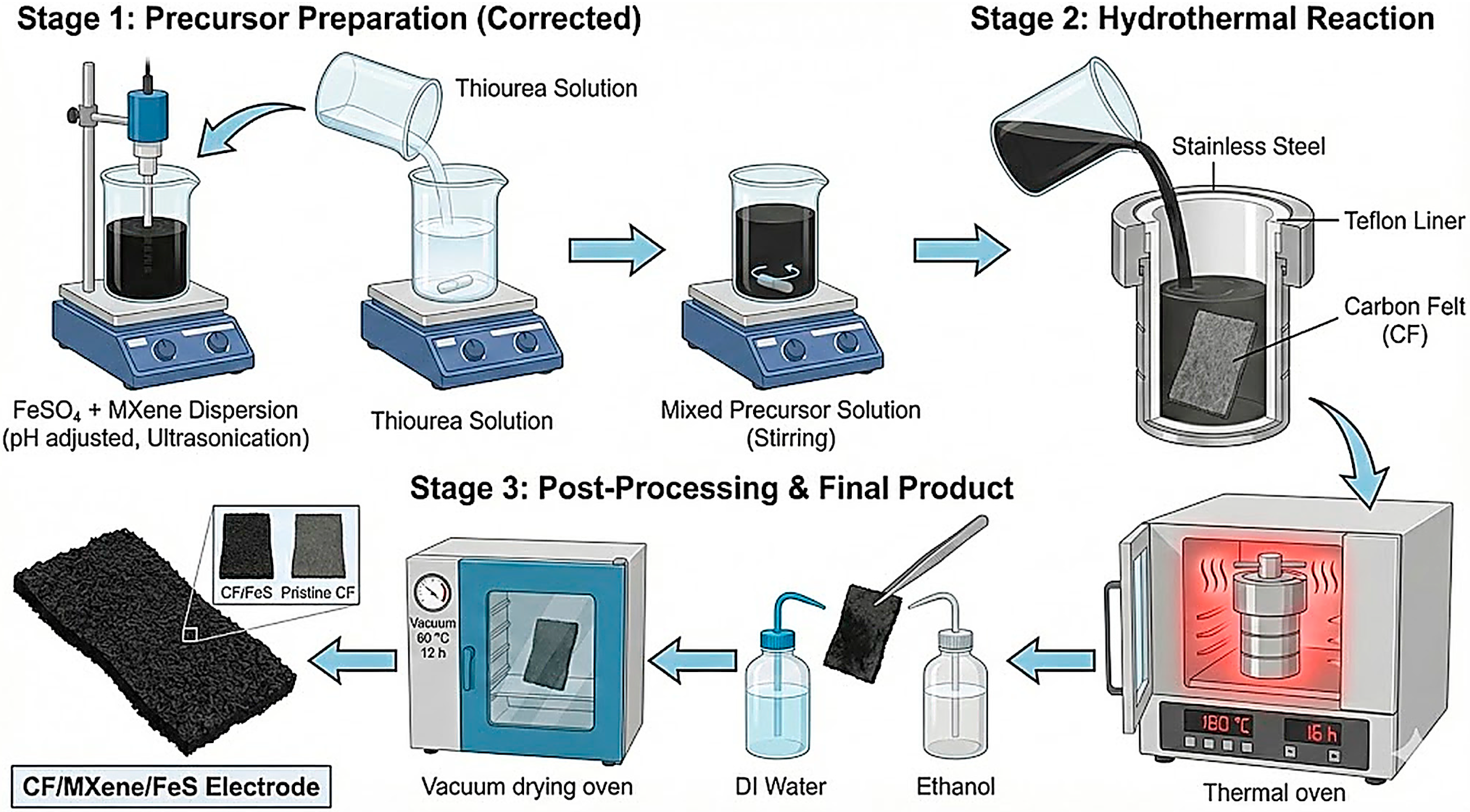
Figure 1 shows the schematic illustration of the hydrothermal synthesis process for the CF/MXene/FeS composite electrode. The CF/MXene/FeS composite anode was fabricated by a one-step hydrothermal method. Briefly, 2.471 g of FeSO4·7H2O (≥90%, Yuanye, Shanghai, China) and 0.1 g of the as-prepared MXene powder were dispersed in 30 mL of deionized water. A small amount of concentrated H2SO4 was then added to adjust the acidity of the suspension, followed by ultrasonication for 30 min to improve MXene dispersion and suppress Fe2+ oxidation. Separately, 2.432 g of thiourea was dissolved in 30 mL of deionized water. After complete dissolution, the two solutions were mixed thoroughly and transferred into a 100 mL Teflon-lined stainless-steel autoclave.
Pretreated carbon felt was cut into 2 cm × 2 cm pieces and immersed in the reaction solution. The hydrothermal reaction was carried out at 180 °C for 16 h. After natural cooling to room temperature, the electrode was removed, alternately washed with deionized water and ethanol to eliminate residual species, and dried in a vacuum oven at 60 °C for 12 h. The resulting sample was denoted as CF/MXene/FeS. For comparison, a CF/FeS electrode was prepared under the same conditions without MXene addition, while untreated carbon felt was denoted as CF.

2.3. Construction and Operation of MFC

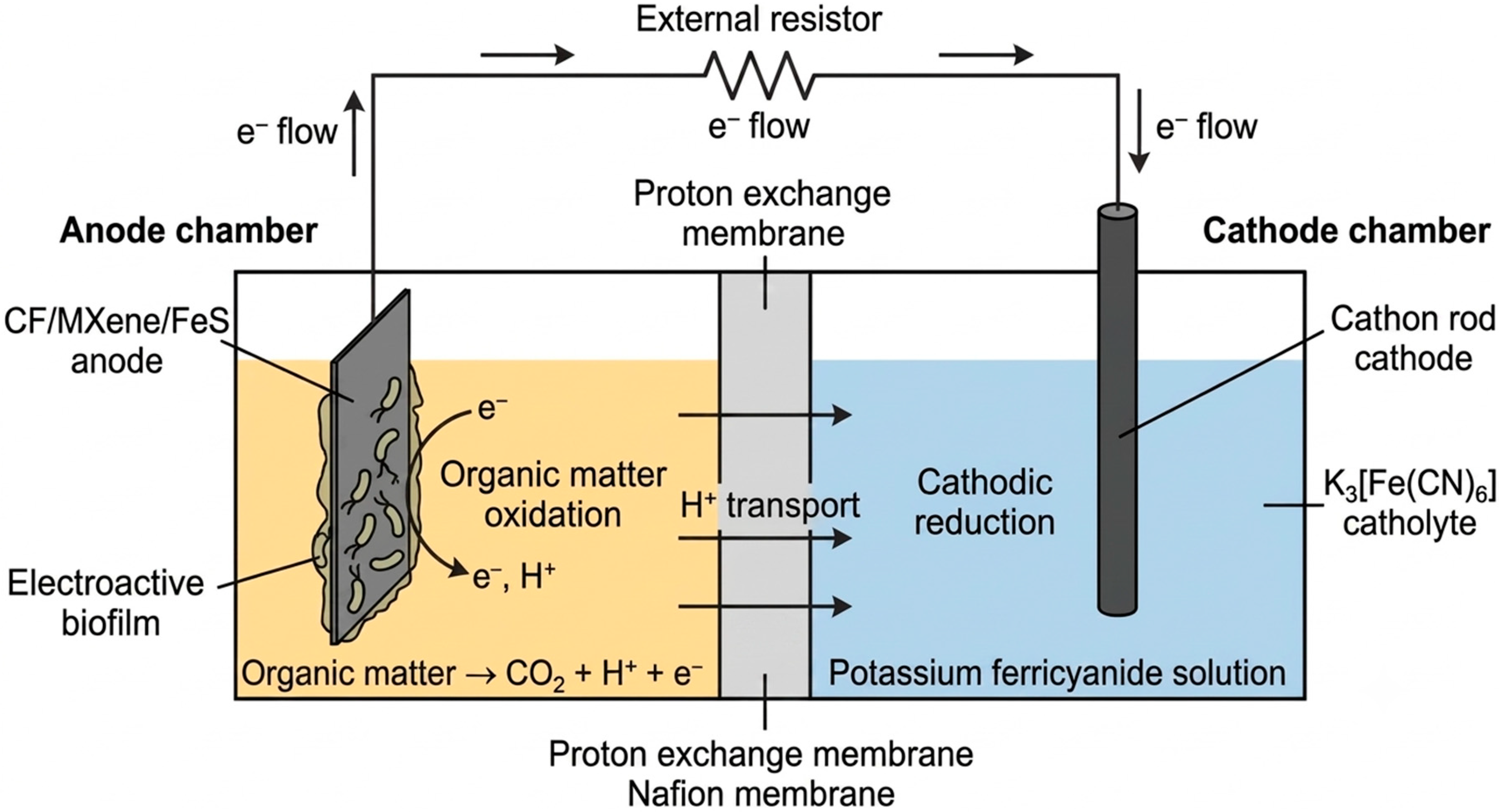
Figure 2 illustrates the schematic configuration of the dual-chamber microbial fuel cell (MFC) used in this study. The effective volumes of the anode and cathode chambers were both 300 mL, and the two chambers were separated by a Nafion 117 proton-exchange membrane. CF/MXene/FeS, CF/FeS, and pristine CF were used as anodes. The anolyte contained sodium acetate (1.0 g/L) as the carbon source together with phosphate-buffered solution, vitamin solution, and mineral solution to sustain microbial growth and electricity generation. A carbon rod served as the cathode, and the catholyte consisted of 10 g/L potassium ferricyanide solution containing 50 mM phosphate-buffered solution (PBS) [4,8,12].
During MFC operation, electroactive microorganisms oxidized acetate at the anode and released electrons and protons. The generated electrons were transferred from the biofilm to the conductive anode surface and subsequently flowed through the external circuit to the cathode. Meanwhile, protons migrated across the Nafion 117 membrane to maintain electrochemical charge balance between the two chambers.
The anodic and cathodic reactions can be simplified as follows:
Anode:
C H 3 C O O + 2 H 2 O 2 C O 2 + 7 H + + 8 e
Cathode:
F e ( C N ) 6 3 + e F e ( C N ) 6 4
A membrane-separated configuration was employed in this study to minimize substrate and oxidant crossover between the two chambers and to maintain the stability of the ferricyanide cathodic reaction. Although membrane-less MFCs may reduce membrane-associated resistance, they may also increase ion diffusion and catholyte contamination, particularly in ferricyanide-based systems.

2.4. Material Characterization and Electrochemical Measurements

The surface morphology and elemental composition of the electrodes were characterized by scanning electron microscopy (SEM, FEI Inspect S50, Hillsboro, OR, USA) equipped with energy-dispersive X-ray spectroscopy (EDS). Phase structures were analyzed by X-ray diffraction (XRD, X’Pert Pro, PANalytical, Almelo, The Netherlands), and diffraction features were interpreted with reference to standard patterns.
Electrochemical measurements were conducted in a three-electrode configuration. The modified anode served as the working electrode, a carbon rod immersed in the ferricyanide catholyte was used as the counter electrode, and a saturated calomel electrode (SCE) was used as the reference electrode.
Electrochemical measurements were performed using a CHI760 electrochemical workstation (Shanghai Chenhua, Shanghai, China) in a three-electrode configuration. The modified bioanode served as the working electrode, a saturated calomel electrode (SCE) was used as the reference electrode, and a carbon rod immersed in the potassium ferricyanide catholyte acted as the counter electrode. Electrochemical impedance spectroscopy (EIS) measurements were conducted over a frequency range from 100 kHz to 10 mHz with a sinusoidal perturbation amplitude of 5 mV. Since the investigated electrodes exhibit capacitive bioanode characteristics with charge-storage capability, chronoamperometric measurements were further carried out to evaluate charge accumulation and storage behavior. During the tests, a constant potential of −0.1 V was applied to the anode, and the current response as a function of time was continuously recorded to obtain the chronoamperometric curves, from which the generated and stored charge densities were calculated [8,10,22].
Polarization curves were recorded under steady-state discharge conditions by connecting the MFC to an external variable resistance. The resistance was decreased stepwise from 9000 to 30 Ω, and the output voltage at each resistance was recorded only after remaining stable for at least 60 s. Pristine CF was used as the control throughout the electrochemical tests [4,8].

2.5. Microbial Community Analysis

Microbial community analysis was performed using high-throughput 16S rRNA gene sequencing by Shanghai Sangon Biotech Co., Ltd., (Shanghai, China). Paired-end reads were first merged according to overlap relationships. After sample demultiplexing, quality filtering, OTU clustering or ASV denoising, and taxonomic annotation were carried out using the standard analysis workflow.
Based on the operational taxonomic unit (OTU) and amplicon sequence variant (ASV) results, alpha-diversity indices and sequencing depth were used to evaluate microbial richness and diversity, while taxonomic annotation was used to characterize community composition at different taxonomic levels. Beta-diversity analysis, group comparison, differential significance testing, environmental factor association, correlation analysis, model prediction, and functional prediction were further performed to obtain an integrated view of community structure and phylogenetic characteristics.

3. Results and Discussion

3.1. Morphology and Structural Characteristics

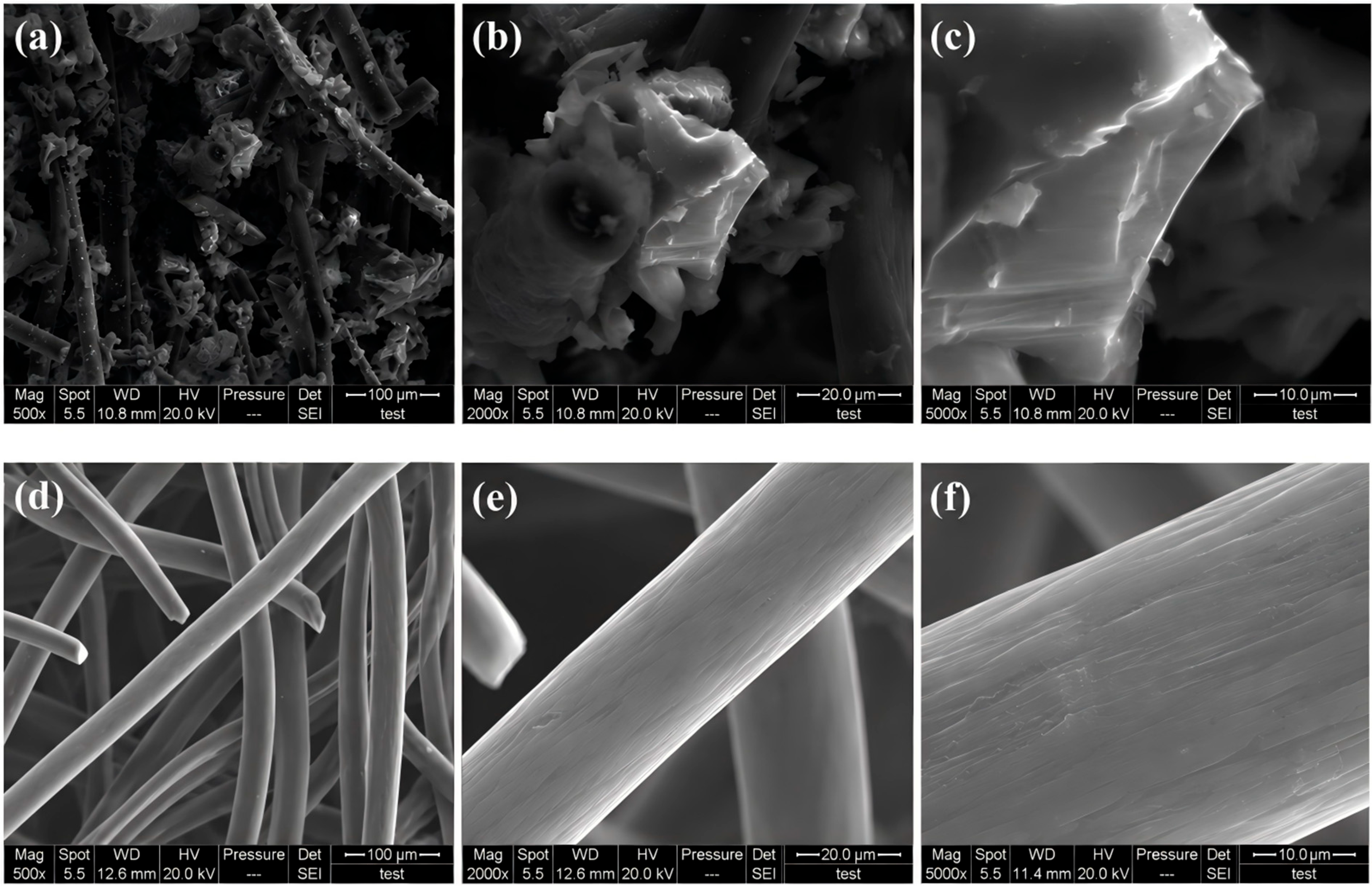
Figure 3 and Figure 4 show the SEM morphology and EDS characterization of the CF/MXene/FeS composite electrode. As shown in Figure 3a–c, the carbon felt fibers are uniformly covered by abundant nanoscale structures after in situ synthesis, producing a rough hierarchical interface. At low magnification, the active layer extends continuously along the carbon-fiber framework, whereas at higher magnification, sheet-like and block-like structures can be distinguished and are tightly anchored to the fiber surface. These features indicate successful loading of MXene and FeS on the conductive carbon scaffold. By contrast, pristine CF (Figure 3d–f) exhibits relatively smooth cylindrical fibers with limited surface features, indicating a lack of exposed electroactive sites. This pronounced morphological contrast indicates that the composite modification substantially increases surface roughness and structural complexity, thereby facilitating the exposure of active reaction sites and expanding the effective interfacial area.
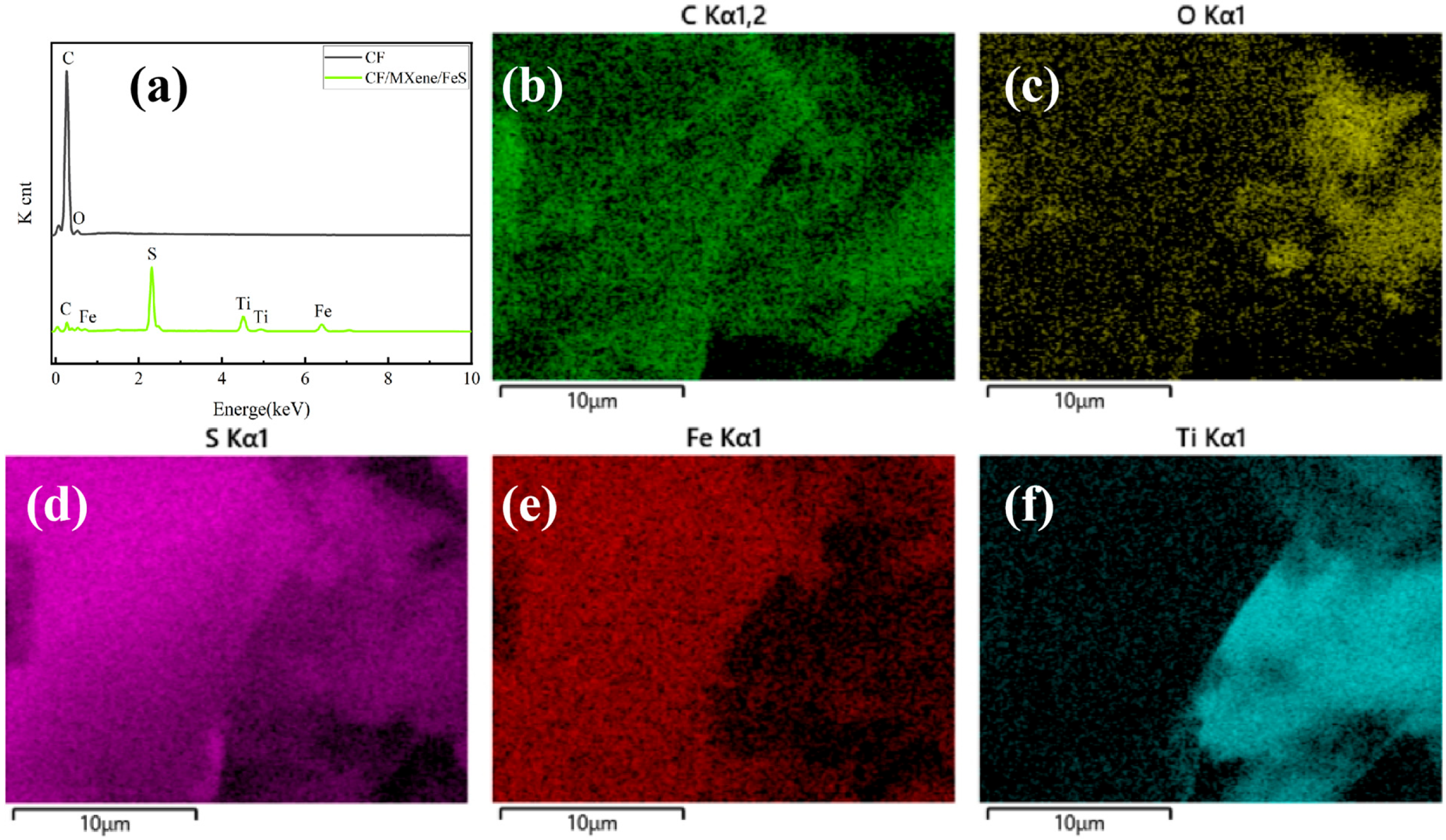
EDS analysis was further used to verify elemental composition and spatial distribution. As shown in Figure 4a, the spectrum contains signals from C, O, S, Ti, and Fe, confirming the coexistence of the carbon substrate, MXene, and FeS components. The corresponding elemental mapping images in Figure 4b–f show that C, O, S, Fe, and Ti are distributed uniformly over the selected region without obvious aggregation, indicating homogeneous integration of MXene and FeS on the carbon felt surface. Quantitative EDS results show weight fractions of approximately 50.02% C, 10.03% O, 19.45% S, 10.86% Ti, and 9.64% Fe. However, it should be noted that the Fe/S atomic ratio derived from EDS analysis deviates from the ideal stoichiometric ratio of standard FeS. This discrepancy can be attributed to multiple factors: the semi-quantitative inherent limitation of EDS characterization, signal interference from the carbon felt substrate, surface roughness of the composite coating, and partial surface oxidation of sulfur species during post-hydrothermal exposure to ambient air. Accordingly, the EDS results are mainly regarded as evidence confirming the coexistence and spatial distribution of relevant elements, rather than an accurate determination of the stoichiometry of FeS phases. To further identify the chemical valence states of the as-prepared samples, XRD and XPS characterizations were subsequently performed.

3.2. Physicochemical Characterization of the CF/MXene/FeS Electrode

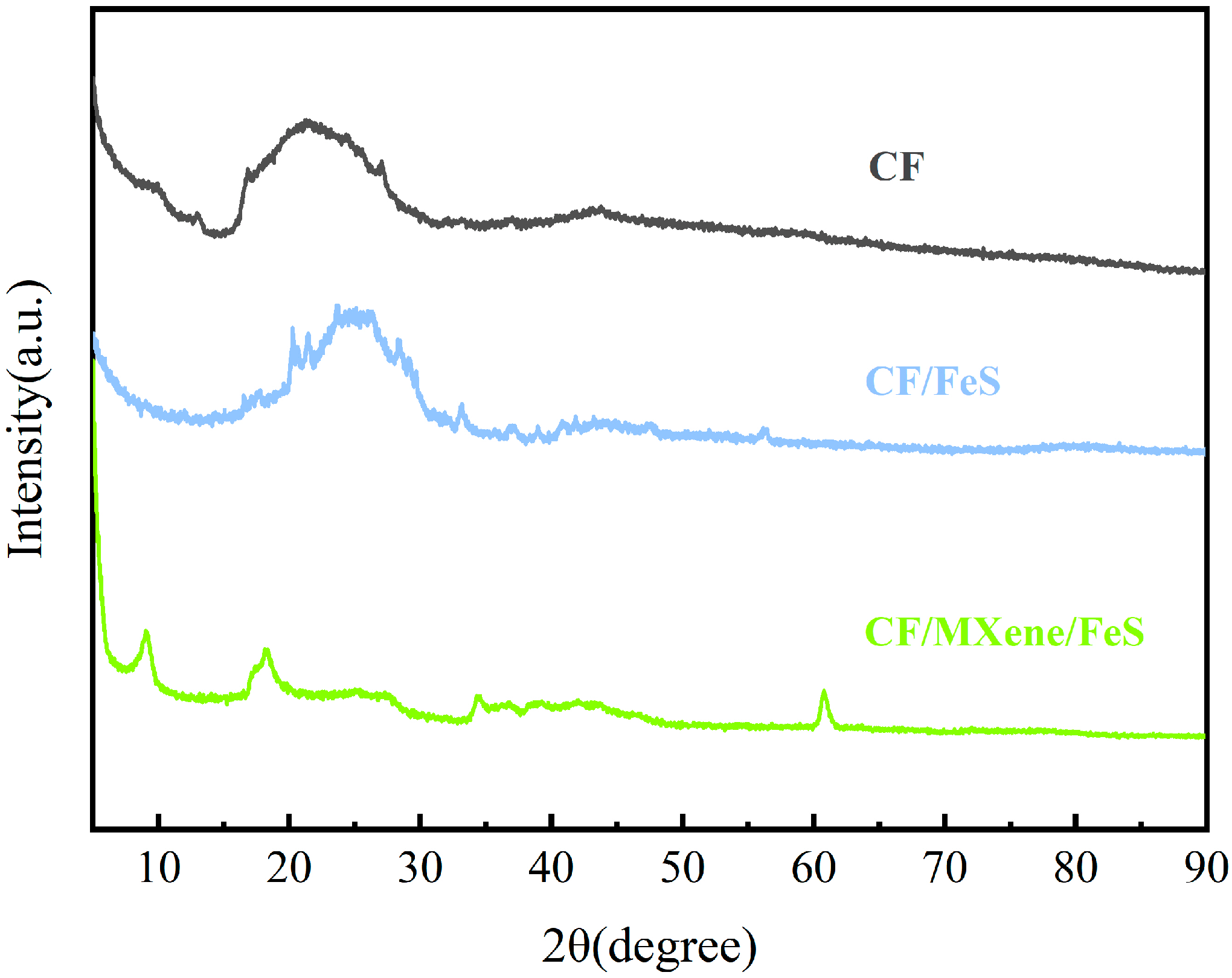
As shown in Figure 5, pristine CF exhibited a broad diffraction peak centered at approximately 24–26°, corresponding to the C(002) plane of amorphous carbon, indicating the low graphitization degree of the carbon felt substrate. After hydrothermal treatment, several additional diffraction peaks appeared in the modified electrodes, confirming the successful introduction of FeS and MXene-related active phases.
For the CF/FeS electrode, characteristic diffraction peaks located around 34°, 42°, and 60° were assigned to FeS-related crystalline phases, indicating the successful formation of iron sulfide during the hydrothermal process. No obvious diffraction peaks of iron oxide impurities were observed, suggesting relatively high phase purity of the obtained FeS.
Compared with CF/FeS, the CF/MXene/FeS electrode exhibited an additional low-angle diffraction peak at approximately 9.03°, corresponding to the (002) plane of Ti3C2Tx; MXene, indicating enlarged interlayer spacing after etching and exfoliation. Meanwhile, diffraction peaks at 18.13°, 34.28°, 42.02°, and 60.80° further confirmed the coexistence of MXene and FeS phases in the composite electrode. In addition, the broad carbon diffraction peak became relatively weakened after composite loading, indicating that the carbon fiber surface was effectively covered by MXene nanosheets and FeS nanoparticles. These results collectively demonstrate the successful fabrication of the CF/MXene/FeS composite electrode [32].
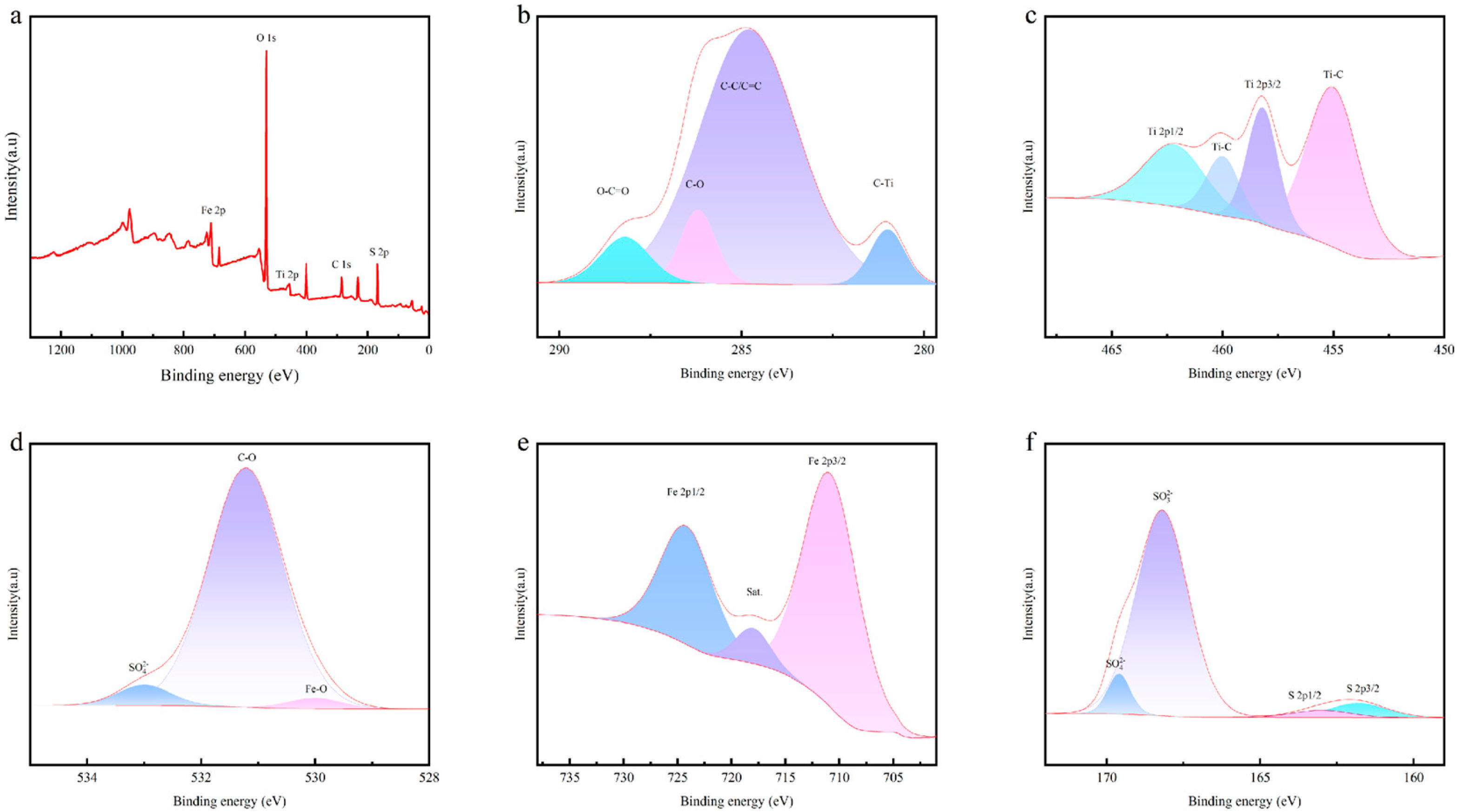
Figure 6 shows the XPS survey spectrum and the corresponding high-resolution spectra of the CF/MXene/FeS composite electrode. As shown in Figure 6a, the presence of C, O, Ti, Fe, and S without obvious impurity signals confirms successful incorporation of MXene nanosheets and FeS onto the carbon felt substrate. In the C 1s spectrum (Figure 6b), the main peak at 284.8 eV is assigned to C-C/C=C bonds from the carbon felt matrix and surface carbon species. The feature at about 281–282 eV corresponds to C-Ti bonding, indicating preservation of the Ti3C2Tx framework after composite formation. Additional contributions near 286 and 288–289 eV can be assigned to C-O and O-C=O species, respectively, indicating the presence of oxygen-containing surface groups. In the Ti 2p spectrum (Figure 6c), the doublet at around 454–455 and 460–461 eV is attributed to Ti-C bonding, while the component near 458 eV is associated with Ti-O/Ti-OH species, reflecting typical surface terminations of MXene.
The O 1s spectrum (Figure 6d) can be resolved into several contributions, including a component near 530 eV associated with lattice oxygen such as Ti-O or Fe-O, a peak around 531.2 eV related to surface hydroxyl groups, defect oxygen, or metal-coordinated oxygen, and a higher-binding-energy contribution near 533 eV assigned to adsorbed water. In the Fe 2p spectrum (Figure 6e), characteristic peaks around 711 and 724 eV together with a satellite near 718 eV indicate the presence of Fe2+/Fe3+ species. The S 2p spectrum (Figure 6f) shows a doublet in the range of about 161–162 eV, characteristic of sulfide sulfur in metal sulfides, while the signal near 168–169 eV can be assigned to oxidized sulfur species formed by slight surface oxidation during air exposure.
Overall, the XPS results confirm successful construction of the CF/MXene/FeS composite in terms of both elemental composition and surface chemical states. The C-Ti/Ti-C and Ti-O/Ti-OH features indicate that the MXene framework remains chemically identifiable after composite formation [39,40]. The Fe 2p and S 2p signals verify the presence of iron sulfide-related species on the electrode surface [31,41]. The coexistence of oxygen-containing surface groups is also expected to improve wettability and interfacial electrochemical activity, as reported for MXene-based MFC electrodes [40,42].

3.3. Electrochemical Performance

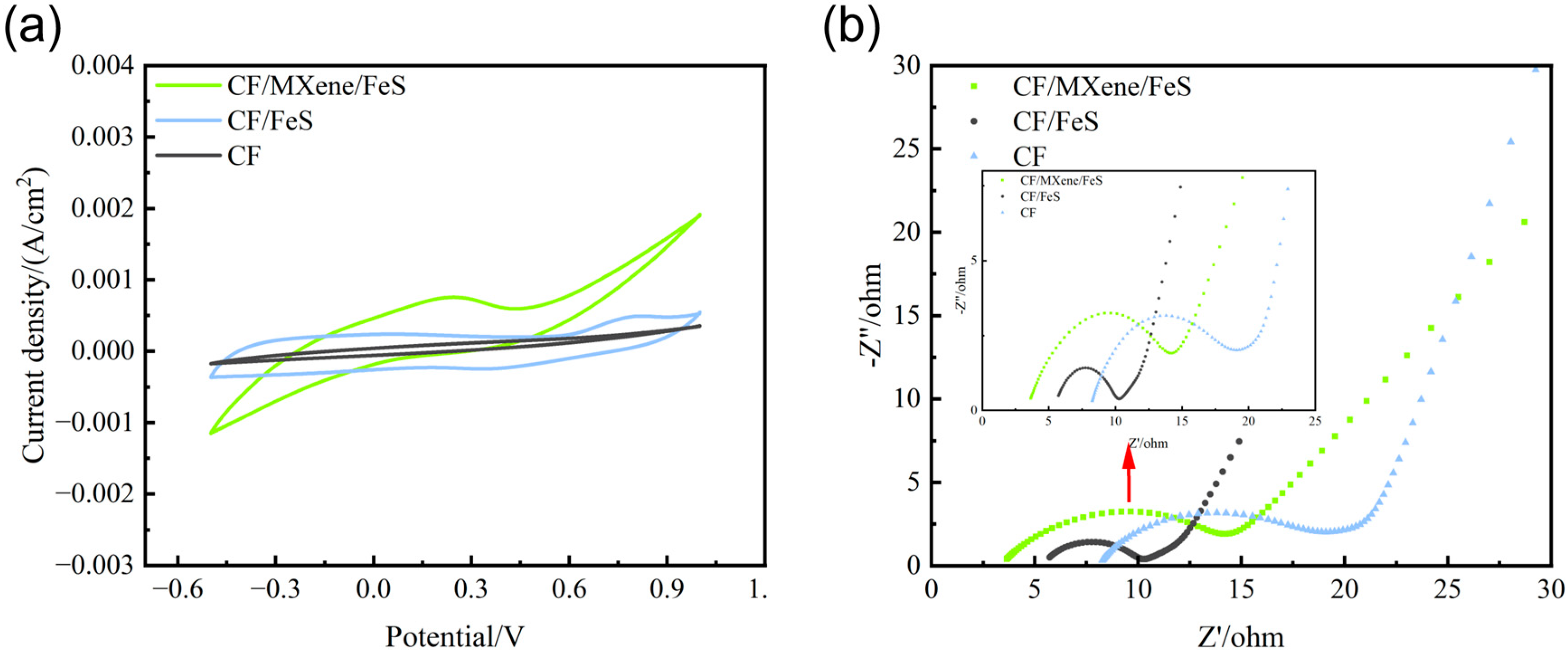
Figure 7a presents the cyclic voltammetry and electrochemical impedance spectroscopy results of MFCs equipped with CF and CF/MXene/FeS anodes. The CV curves show that CF/MXene/FeS exhibits a much stronger electrochemical response than pristine CF. After area normalization, the forward maximum current density of CF/MXene/FeS reaches 1.92 × 10⁻³ A/cm2, markedly higher than the 0.35 × 10⁻³ A/cm2 of CF. Likewise, the backward minimum current density increases in magnitude from −0.18 × 10⁻³ A/cm2 for CF to −1.15 × 10⁻³ A/cm2 for CF/MXene/FeS. The current-density window correspondingly expands from 0.53 × 10⁻³ to 3.06 × 10⁻³ A/cm2, indicating a substantially enhanced redox response during both forward and reverse scans. The larger enclosed CV area of CF/MXene/FeS also suggests a greater electrochemically active surface area and a higher density of accessible redox-active sites, as commonly observed for conductive nanomaterial-modified MFC anodes [17,31,43]. MXene can provide continuous electron-transport pathways [40], whereas iron sulfide can introduce additional electroactive sites and promote interfacial redox reactions [41].
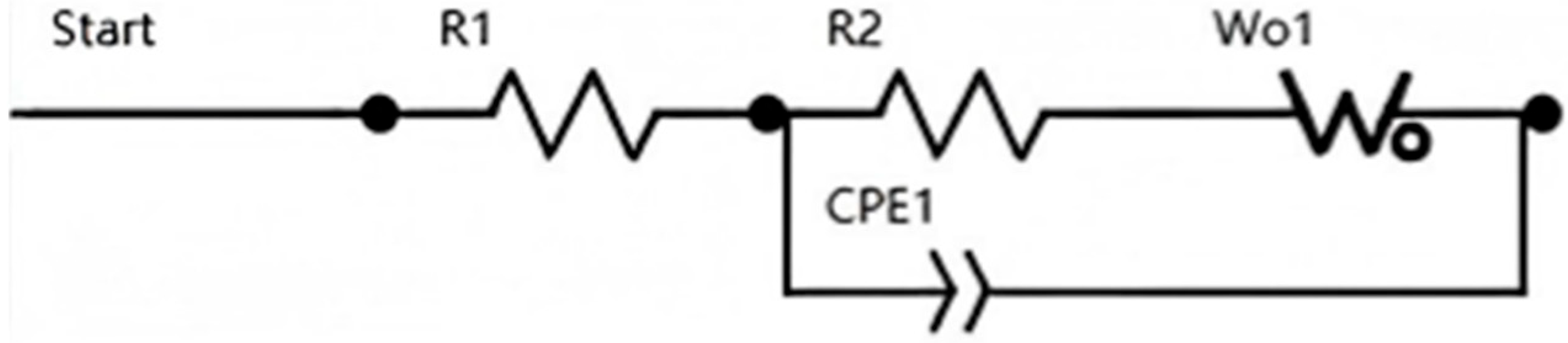
As shown in Figure 7b, all electrodes exhibited typical Nyquist characteristics consisting of a high-frequency semicircle and a low-frequency diffusion tail, indicating that the overall impedance was jointly governed by ohmic resistance, charge-transfer resistance, and diffusion resistance. The EIS spectra were fitted using the equivalent circuit shown in Figure 8. The CF/MXene/FeS electrode exhibited the lowest ohmic resistance (R1, 3.36 Ω·cm2), which was significantly lower than those of CF/FeS (5.39 Ω·cm2) and CF (8.07 Ω·cm2), indicating that the introduction of MXene effectively improved the electrical conductivity and reduced energy loss during electron transfer. This can be attributed to the excellent conductivity and two-dimensional layered structure of MXene, which provided efficient electron transport pathways. Furthermore, the CF/MXene/FeS electrode exhibited a more pronounced interfacial response in the middle- and low-frequency regions, indicative of enhanced interfacial electron-transfer kinetics and superior electrochemical activity. In contrast, the bare CF electrode showed the highest ohmic resistance, indicating relatively poor electron transport ability. Overall, the integrated coupling of MXene and FeS effectively improved the electrical conductivity, interfacial electron-transfer kinetics, and electrochemical activity of the CF/MXene/FeS electrode [17,41].
The structural and spectroscopic results discussed above confirm that MXene and FeS were successfully integrated onto the carbon felt framework, thereby creating a rough, chemically active, and electrically favorable interface. This reconstructed interface provides the structural basis for the improved electrochemical performance discussed below.

3.4. Enhanced MFC Output Performance by the CF/MXene/FeS Anode

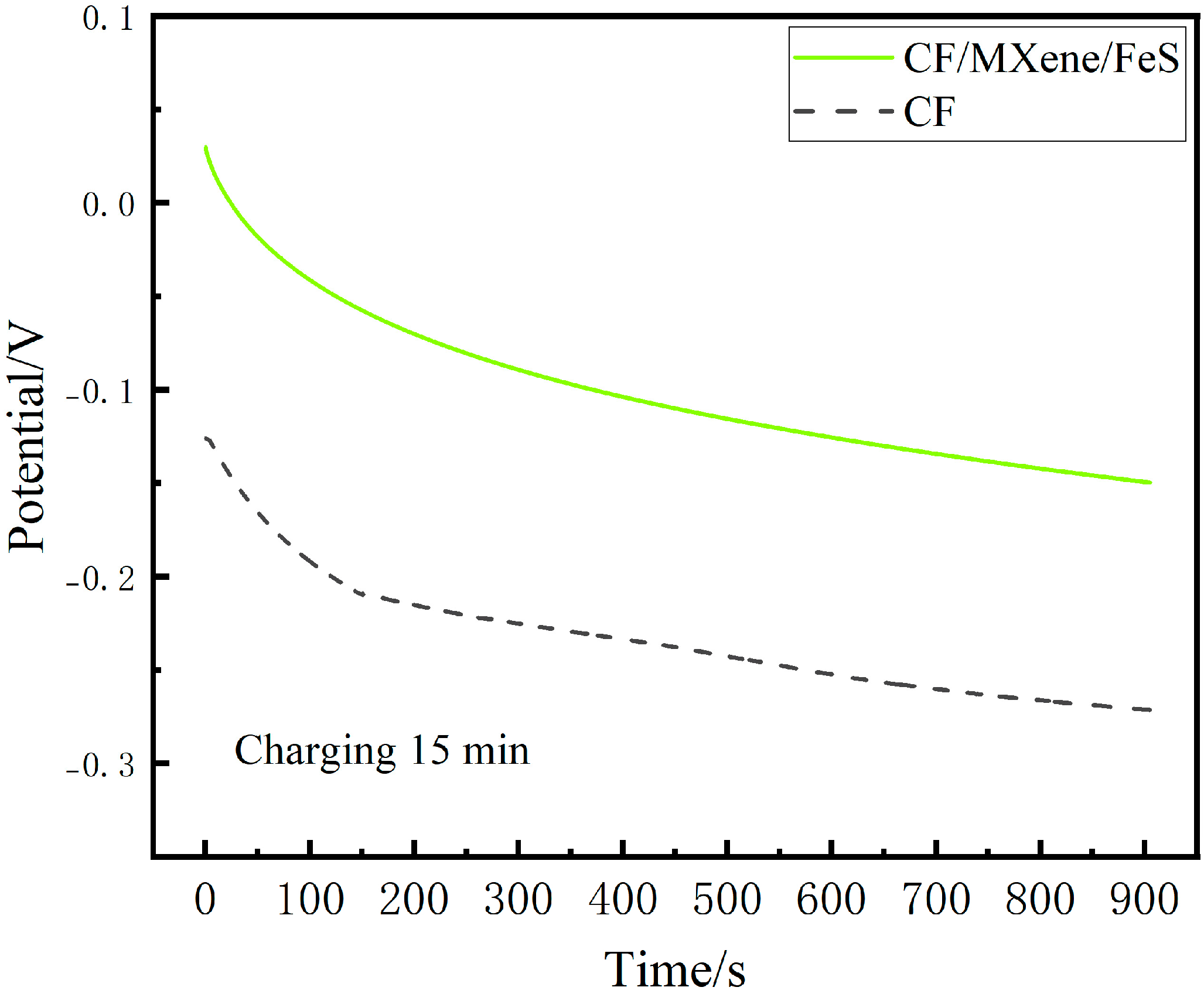
As shown in Figure 9, the open-circuit potentials of both electrodes gradually shifted to more negative values with time, indicating progressive establishment of a stable anodic interfacial state. Compared with pristine CF, the CF/MXene/FeS electrode maintained a consistently less negative potential during the test, with an initial value of about 0.029 V, a stabilized value near −0.150 V, and an average potential of approximately −0.100 V. By contrast, the pristine CF electrode changed from about −0.126 V to −0.271 V, with an average value of −0.233 V. A less negative and more stable anode potential generally reflects a more favorable interfacial electron-transfer environment [17,40]. The shift observed here is also consistent with the improved bioanode kinetics reported for MXene-modified MFC systems [31].
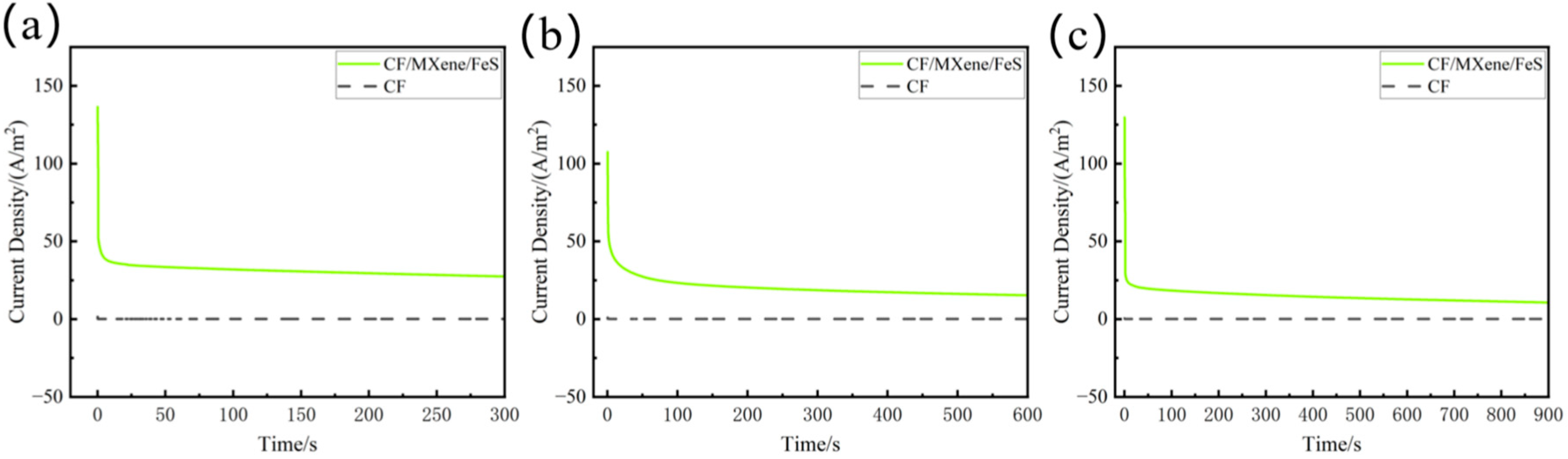
As shown in Figure 10, the chronoamperometric curves of MFCs equipped with different anodes display a rapid current decay followed by gradual stabilization, indicating transition from initial double-layer discharge to a quasi-steady regime governed by interfacial reactions and mass transfer. Compared with pristine CF, the CF/MXene/FeS anode delivers higher initial current density (ih), steady-state current density (is), steady-state charge density (Qs), and total charge density (Qt) at all tested durations (Table 1), demonstrating stronger transient response, sustained output, and charge-storage capability. Under the charging/discharging 900 s (C900/D900) condition, CF/MXene/FeS reaches ih, is, Qs, and Qt values of 129.73 A/m2, 11.706 A/m2, 3511.68 C/m2, and 13,192.09 C/m2, respectively, far exceeding those of CF at 0.559 A/m2, 0.116 A/m2, 34.82 C/m2, and 106.36 C/m2. Similar trends are observed under the C300/D300 and C600/D600 conditions, indicating that the performance advantage of the composite anode is maintained over different charging/discharging durations. The rapid-decay-then-stabilization current profile is characteristic of capacitive bioanodes during discharge [8,22]. The superior charge accumulation and release of CF/MXene/FeS further indicate that the composite promotes reversible charge storage at the biofilm/anode interface [22].
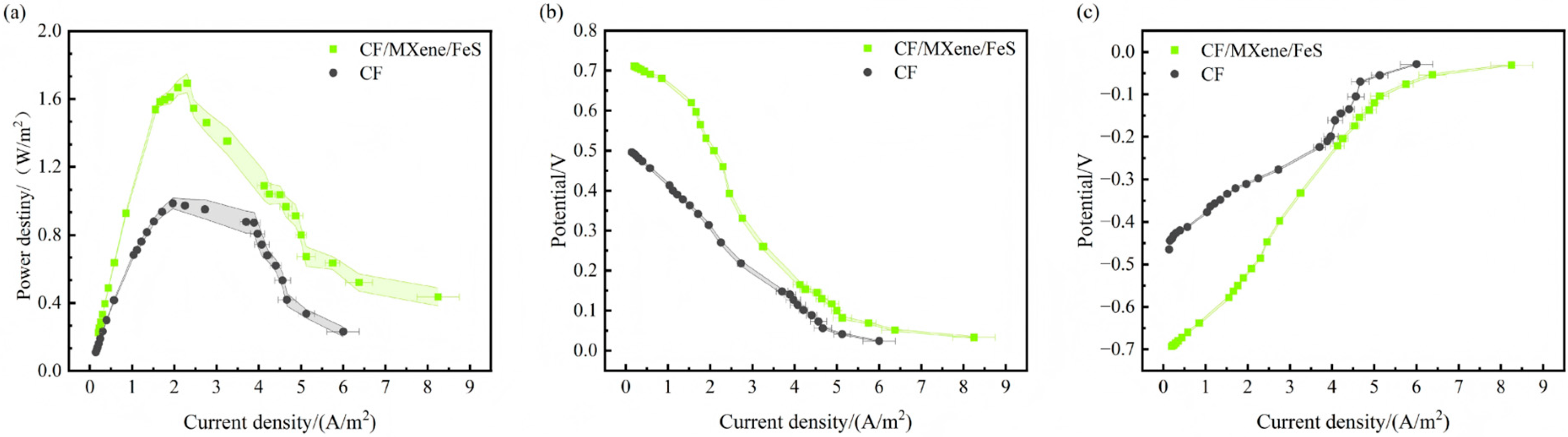
Figure 11 presents the power-density curves, cell-polarization curves, and anodic-polarization curves of MFCs equipped with CF and CF/MXene/FeS anodes under steady-state conditions. As shown in Figure 10b, the cell voltage of both systems decreases continuously with increasing current density, which is typical of MFC polarization behavior and reflects the combined effects of activation loss, ohmic loss, and mass-transfer limitation [15,17]. Across the whole current-density range, the MFC equipped with the CF/MXene/FeS anode maintains a consistently higher cell voltage than the system using pristine CF, indicating more efficient electron transport and improved interfacial electrochemical kinetics, which is consistent with previous reports on advanced nanostructured MFC anodes [20,44]. The open-circuit voltage also increases from 0.496 V for the CF-based MFC to 0.711 V for the CF/MXene/FeS-based MFC, corresponding to an increase of 43.3%.
The power-density curves in Figure 10a show the expected rise-then-fall trend with increasing current density. The maximum power density of the CF-based MFC is 0.99 W/m2 at 1.96 A/m2, whereas the CF/MXene/FeS-based MFC achieves 1.69 W/m2 at 2.30 A/m2, representing an increase of 70.7%. The peak power density also shifts to a higher current density after modification, indicating that the composite anode can sustain efficient energy output under stronger current loading. At approximately 2.0 A/m2, the power density increases from 0.98 W/m3 for CF to 1.64 W/m2 for CF/MXene/FeS. Even at 3.0 A/m2, the composite anode still delivers 1.41 W/m2, which remains substantially higher than the 0.93 W/m3 obtained with pristine CF. These results demonstrate that the composite anode maintains superior power output over a broad operating range.
Further insight into the anodic reaction behavior is provided by the anodic-polarization curves in Figure 10c. For both electrodes, the anodic potential gradually increases with increasing current density, indicating progressively aggravated anodic polarization during current extraction. At the same current density, however, CF/MXene/FeS consistently exhibits a lower anodic potential than pristine CF. For example, at 1.0 A/m2, the anodic potentials are −0.379 V for CF and −0.625 V for CF/MXene/FeS; when the current density increases to 2.0 A/m2, the corresponding values are −0.309 V and −0.520 V, respectively. The lower anodic potential at a given current output indicates smaller polarization loss and a lower energetic requirement for anodic oxidation. Conversely, when the anodic potential is close to −0.30 V, the CF/MXene/FeS anode delivers a current density of about 3.50 A/m2, substantially higher than the 2.21 A/m2 of CF, further confirming its enhanced extracellular electron-transfer capability and faster interfacial charge-transfer kinetics.
The superior output performance of CF/MXene/FeS can therefore be attributed to the synergistic effects of MXene and FeS. MXene establishes a continuous conductive network on the carbon-felt substrate, which facilitates rapid electron transport and lowers internal resistance [40]. FeS introduces abundant electrochemically active sites that promote interfacial redox reactions [41]. In addition, the rough hierarchical architecture formed by the composite coating likely increases the accessible reaction area and provides favorable sites for microbial adhesion and biofilm development, as frequently observed for modified high-performance MFC anodes [17,44]. As a result, the composite anode effectively suppresses anodic polarization and improves overall MFC power output.
Overall, the CF/MXene/FeS composite anode outperforms bare CF in potential retention, current output, charge-storage capacity, and power density. These improvements arise from simultaneous optimization of the conductive pathway, active-site density, and biofilm/electrode interfacial environment.

3.5. Microbial Community Structure on Electrode Surfaces

To investigate the effect of electrode material on anodic biofilms, high-throughput 16S rRNA gene sequencing was performed for biofilms developed on CF and CF/MXene/FeS electrodes. The sequencing generated high-quality datasets for both samples, yielding 128,215 valid sequences for CF and 110,967 valid sequences for CF/MXene/FeS. The average read length was approximately 420 bp in both groups, which provides an adequate basis for subsequent community analysis.
The alpha-diversity indices (Table 2) indicate that the microbial community on the CF/MXene/FeS electrode is significantly more diverse than that on pristine CF. The CF sample shows 138 OTUs, a Shannon index of 0.97, a Simpson index of 0.59, and a Shannon evenness of 0.20. By comparison, CF/MXene/FeS presents 197 OTUs, a Shannon index of 2.11, a Simpson index of 0.17, and a Shannon evenness of 0.40. The higher Shannon index together with the lower Simpson index indicates a richer and more even microbial community on the composite anode. These results suggest that pristine CF is dominated by a limited number of taxa, whereas CF/MXene/FeS supports a more diverse and balanced biofilm.
This difference indicates that the CF/MXene/FeS composite electrode provides a more favorable interface for microbial attachment and growth. Combined with the material-characterization results, the observation can be related to the larger effective surface area, increased surface roughness, and improved interfacial physicochemical properties of the composite electrode, all of which facilitate the coexistence of different microbial populations on the anode surface.
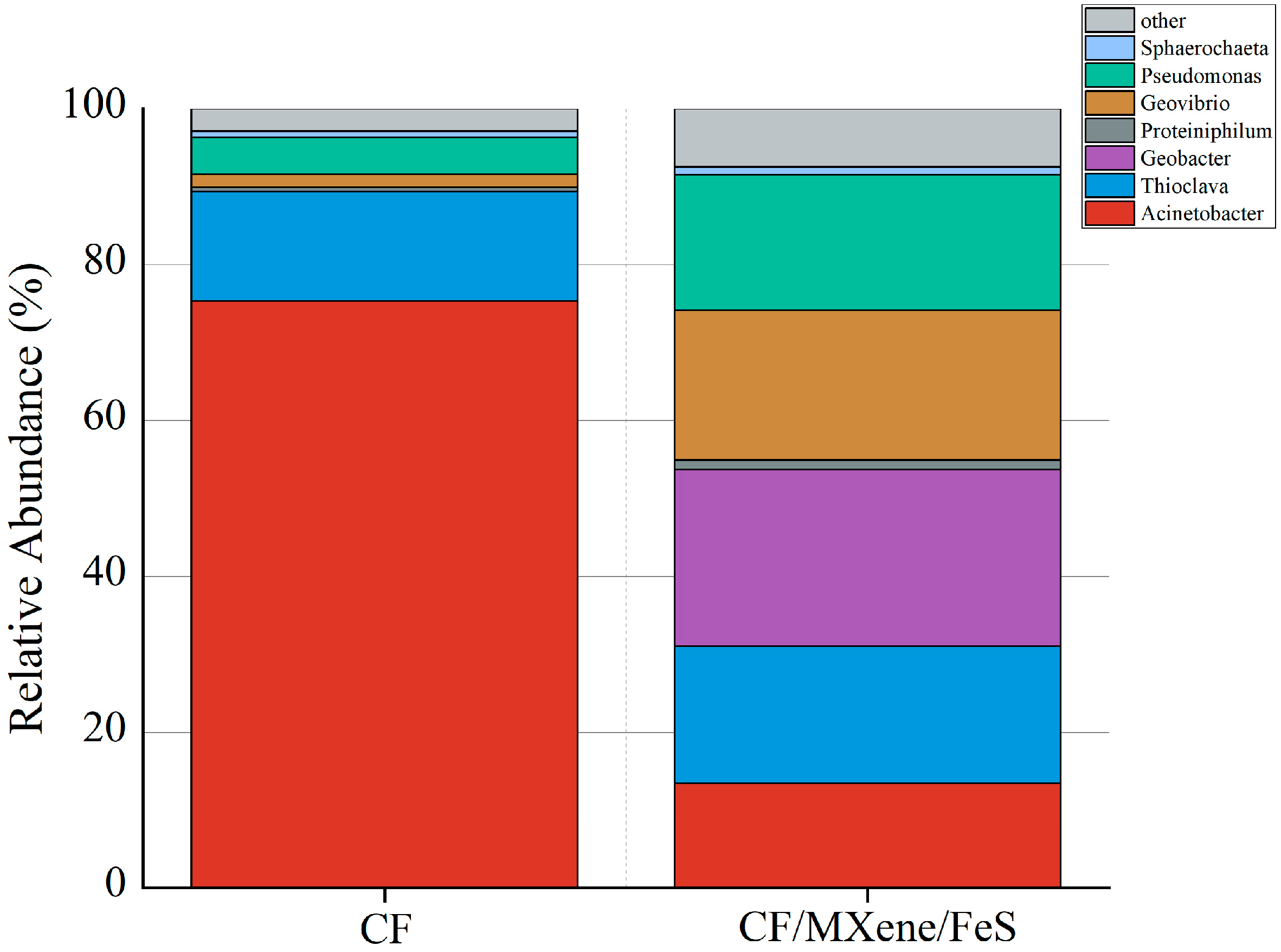
As shown in Figure 12, the anodic biofilm on pristine CF is overwhelmingly dominated by Acinetobacter (75.41%), followed by Thioclava (14.00%) and Pseudomonas (4.77%), whereas the relative abundance of the typical exoelectrogen Geobacter is only 0.0058% [21]. By contrast, the CF/MXene/FeS electrode exhibits a markedly different community structure, with Geobacter increasing to 22.84% and becoming one of the dominant genera, while Pseudomonas also increases to 17.49% and Acinetobacter decreases to 13.58%. The increased abundance of other potentially electroactive genera, such as Geovibrio, further suggests that the composite electrode favors establishment of a more electroactive biofilm. This community shift can be attributed to the improved conductivity, greater surface roughness, and more favorable interfacial physicochemical environment of CF/MXene/FeS, which together facilitate microbial adhesion and extracellular electron transfer [41]. Combined with the alpha-diversity results, these findings indicate that the composite anode promotes enrichment of electroactive microorganisms and formation of a more diverse and stable anodic biofilm, in agreement with its superior electrochemical performance.

4. Conclusions

A CF/MXene/FeS composite anode was successfully fabricated by a one-step hydrothermal method and applied in a dual-chamber microbial fuel cell. The modified electrode exhibited a rough hierarchical surface, enriched active sites, and improved interfacial properties, providing a favorable platform for microbial colonization and electron transfer.
Compared with pristine CF, the CF/MXene/FeS anode delivered a maximum power density of 1.69 W/m3 and an open-circuit voltage of 0.711 V, corresponding to increases of 70.7% and 43.3%, respectively. The composite anode also showed markedly enhanced charge-storage behavior, reaching a total charge density of 13,192.09 C/m2 together with reduced ohmic and charge-transfer resistances.
Microbial community analysis showed substantial enrichment of electroactive bacteria, especially Geobacter, on the composite anode. The overall performance enhancement is thus attributed to the synergistic coupling of MXene and FeS, which concurrently improves electrical conductivity, proliferates redox-active sites, and facilitates the development of a highly electroactive biofilm. These results demonstrate an effective strategy for integrating electricity generation and charge storage in MFC bioanodes.

Author Contributions

W.X.: Conceptualization, Writing—Original Draft, Writing—Review and Editing. Z.C.: Methodology, Experiment Performance, Resources. G.D.: Data Curation, Statistical analysis, Supervision, Software. Y.W.: Conceptualization, Project Administration, H.N.: Writing—Review and Editing. All authors have read and agreed to the published version of the manuscript.

Funding

The project was supported by the Cultivation Project of the Joint Fund of the Provincial Natural Science Foundation in 2025 (No. PL2025B006) and the Key Project of the Outstanding Young Teachers’ Basic Research Support Program of Heilongjiang Province in 2024 (No. YQJH2024087).

Institutional Review Board Statement

Not applicable.

Informed Consent Statement

Not applicable.

Data Availability Statement

The data presented in this study are available on request from the corresponding author.

Conflicts of Interest

The authors declare no conflict of interest.

References

  1. Potter, M.C. Electrical effects accompanying the decomposition of organic compounds. Proc. R. Soc. B 1911, 84, 260–276. [Google Scholar] [CrossRef]
  2. Chaudhuri, S.K.; Lovley, D.R. Electricity generation by direct oxidation of glucose in mediatorless microbial fuel cells. Nat. Biotechnol. 2003, 21, 1229–1232. [Google Scholar] [CrossRef]
  3. Rabaey, K.; Verstraete, W. Microbial fuel cells: Novel biotechnology for energy generation. Trends Biotechnol. 2005, 23, 291–298. [Google Scholar] [CrossRef]
  4. Logan, B.E.; Hamelers, B.; Rozendal, R.A.; Schröder, U.; Keller, J.; Freguia, S.; Aelterman, P.; Verstraete, W.; Rabaey, K. Microbial fuel cells: Methodology and technology. Environ. Sci. Technol. 2006, 40, 5181–5192. [Google Scholar] [CrossRef]
  5. Du, Z.W.; Li, H.; Gu, T. A state of the art review on microbial fuel cells: A promising technology for wastewater treatment and bioenergy. Biotechnol. Adv. 2007, 25, 464–482. [Google Scholar] [CrossRef] [PubMed]
  6. Pant, D.; Van Bogaert, G.; Diels, L.; Vanbroekhoven, K. A review of the substrates used in microbial fuel cells (MFCs) for sustainable energy production. Bioresour. Technol. 2010, 101, 1533–1543. [Google Scholar] [CrossRef] [PubMed]
  7. Logan, B.E.; Rabaey, K. Conversion of wastes into bioelectricity and chemicals by using microbial electrochemical technologies. Science 2012, 337, 686–690. [Google Scholar] [CrossRef] [PubMed]
  8. Santoro, C.; Arbizzani, C.; Erable, B.; Ieropoulos, I. Microbial fuel cells: From fundamentals to applications. A review. J. Power Sources 2017, 356, 225–244. [Google Scholar] [CrossRef] [PubMed]
  9. Abdallah, M.; Feroz, S.; Alani, S.; Sayed, E.T.; Shanableh, A. Continuous and scalable applications of microbial fuel cells: A critical review. Rev. Environ. Sci. Biotechnol. 2019, 18, 543–578. [Google Scholar] [CrossRef]
  10. Tan, W.H.; Chong, S.; Fang, H.-W.; Pan, K.-L.; Mohamad, M.; Lim, J.W.; Tiong, T.J.; Chan, Y.J.; Huang, C.-M.; Yang, T.C.-K. Microbial Fuel Cell Technology—A Critical Review on Scale-Up Issues. Processes 2021, 9, 985. [Google Scholar] [CrossRef]
  11. Kamali, M.; Guo, Y.; Aminabhavi, T.M.; Abbassi, R.; Dewil, R.; Appels, L. Pathway towards the commercialization of sustainable microbial fuel cell-based wastewater treatment technologies. Renew. Sustain. Energy Rev. 2023, 173, 113095. [Google Scholar] [CrossRef]
  12. Li, W.W.; Yu, H.Q.; He, Z. Towards sustainable wastewater treatment by using microbial fuel cells-centered technologies. Energy Environ. Sci. 2014, 7, 911–924. [Google Scholar] [CrossRef]
  13. Aelterman, P.; Versichele, M.; Marzorati, M.; Boon, N.; Verstraete, W. Loading rate and external resistance control the electricity generation of microbial fuel cells with different three-dimensional anodes. Bioresour. Technol. 2008, 99, 8895–8902. [Google Scholar] [CrossRef] [PubMed]
  14. Yaqoob, A.A.; Mohamad Ibrahim, M.N.; Rafatullah, M.; Chua, Y.S.; Ahmad, A.; Umar, K. Recent Advances in Anodes for Microbial Fuel Cells: An Overview. Materials 2020, 13, 2078. [Google Scholar] [CrossRef] [PubMed]
  15. Bian, B.; Shi, D.; Cai, X.; Hu, M.; Guo, Q.; Zhang, C.; Wang, Q.; Sun, A.X.; Yang, J. 3D printed porous carbon anode for enhanced power generation in microbial fuel cell. Nano Energy 2018, 44, 174–180. [Google Scholar] [CrossRef]
  16. Bi, L.L.; Ci, S.Q.; Cai, P.W.; Li, H.; Wen, Z. One-step pyrolysis route to three dimensional nitrogen-doped porous carbon as anode materials for microbial fuel cells. Appl. Surf. Sci. 2018, 427, 10–16. [Google Scholar] [CrossRef]
  17. Li, Y.; Liu, J.; Chen, X.; Yuan, X.; Li, N.; He, W.; Feng, Y. Enhanced electricity generation and extracellular electron transfer by polydopamine-reduced graphene oxide (PDA-rGO) modification for high-performance anode in microbial fuel cell. Chem. Eng. J. 2020, 387, 123408. [Google Scholar] [CrossRef]
  18. Xing, X.; Liu, Z.; Chen, W.; Lou, X.; Li, Y.; Liao, Q. Self-Nitrogen-Doped Carbon Nanosheets Modification of Anodes for Improving Microbial Fuel Cells’ Performance. Catalysts 2020, 10, 381. [Google Scholar] [CrossRef]
  19. Xie, Y.E.; Ma, Z.; Song, H.; Stoll, Z.A.; Xu, P. Melamine modified carbon felts anode with enhanced electrogenesis capacity toward microbial fuel cells. J. Energy Chem. 2017, 26, 81–86. [Google Scholar] [CrossRef]
  20. Poureshghi, F.; Calay, R.K.; Das, S. Enhanced performance of microbial fuel cells using electrochemically treated carbon felt anode. Results Chem. 2023, 6, 101203. [Google Scholar] [CrossRef]
  21. Kumar, A.; Hsu, L.H.; Kavanagh, P.; Barrière, F.; Lens, P.N.; Lapinsonnière, L.; Lienhard, J.H., V; Schröder, U.; Jiang, X.; Leech, D. The ins and outs of microorganism-electrode electron transfer reactions. Nat. Rev. Chem. 2017, 1, 0024. [Google Scholar] [CrossRef]
  22. Deeke, A.; Sleutels, T.H.; Hamelers, H.V.; Buisman, C.J. Capacitive bioanodes enable renewable energy storage in microbial fuel cells. Environ. Sci. Technol. 2012, 46, 3554–3560. [Google Scholar] [CrossRef]
  23. Wei, J.; Liang, P.; Huang, X. Recent Progress in Electrodes for Microbial Fuel Cells. Bioresour. Technol. 2011, 102, 9335–9344. [Google Scholar] [CrossRef]
  24. Zhou, M.; Chi, M.; Luo, J.; He, H.; Jin, T. An Overview of Electrode Materials in Microbial Fuel Cells. J. Power Sources 2011, 196, 4427–4435. [Google Scholar] [CrossRef]
  25. Zhang, Y.; Mo, G.; Li, X.; Zhang, W.; Zhang, J.; Ye, J.; Huang, X.; Yu, C. A graphene modified anode to improve the performance of microbial fuel cells. J. Power Sources 2011, 196, 5402–5407. [Google Scholar] [CrossRef]
  26. Rozendal, R.H.; Wijffels, R.H.; Schoonen, M.A.A. Bioelectrochemical Systems for Sustainable Wastewater Treatment. Trends Biotechnol. 2008, 26, 450–459. [Google Scholar] [CrossRef] [PubMed]
  27. Gude, V.G. Wastewater treatment in microbial fuel cells-an overview. J. Clean. Prod. 2016, 122, 287–307. [Google Scholar] [CrossRef]
  28. Naguib, M.; Kurtoglu, M.; Presser, V.; Lu, J.; Niu, J.; Heon, M.; Hultman, L.; Gogotsi, Y.; Barsoum, M.W. Two-Dimensional Nanocrystals Produced by Exfoliation of Ti3AlC2. Adv. Mater. 2011, 23, 4248–4253. [Google Scholar] [CrossRef]
  29. Anasori, B.; Lukatskaya, M.R.; Gogotsi, Y. 2D Metal Carbides and Nitrides (MXenes) for Energy Storage. Nat. Rev. Mater. 2017, 2, 16098. [Google Scholar] [CrossRef]
  30. Tahir, K.; Miran, W.; Jang, J.; Shahzad, A.; Moztahida, M.; Kim, B.; Lee, D.S. A Novel MXene-Coated Biocathode for Enhanced Microbial Electrosynthesis Performance. Chem. Eng. J. 2020, 381, 122687. [Google Scholar] [CrossRef]
  31. Kolubah, P.D.; Mohamed, H.O.; Ayach, M.; Hari, A.R.; Alshareef, H.N.; Saikaly, P.; Chae, K.-J.; Castaño, P. W2N-MXene Composite Anode Catalyst for Efficient Microbial Fuel Cells Using Domestic Wastewater. Chem. Eng. J. 2023, 461, 141821. [Google Scholar] [CrossRef]
  32. Kamali, S.; Esfandyari, M. Application of MXenes in Microbial Fuel Cells: A Review. Sustain. Chem. Clim. Action 2025, 7, 100142. [Google Scholar] [CrossRef]
  33. Liu, Y.; Ren, T.; Su, Z.; Li, C. Nanoflower-like MoS2 Anchored on Electrospun Carbon Nanofiber-Interpenetrated Reduced Graphene Oxide as a Microbial Fuel Cell Anode Achieving High Power Density. J. Mater. Chem. A 2023, 11, 12163–12172. [Google Scholar] [CrossRef]
  34. Ieropoulos, I.A.; Stinchcombe, A.; Gajda, I.; Forbes, S.; Merino-Jimenez, I.; Pasternak, G.; Sanchez-Herranz, D.; Greenman, J. Pee Power Urina-Microbial Fuel Cell Technology Field Trials in the Context of Sanitation. Environ. Sci. Water Res. Technol. 2016, 2, 336–343. [Google Scholar] [CrossRef]
  35. Zhu, M.; Wang, D.; Ge, Z.; Pan, L.; Chen, Y.; Wang, W.; Mitsuzaki, N.; Jia, S.; Chen, Z. Recent Advances in Transition Metal Sulfide-Based Electrode Materials for Supercapacitors. Chem. Commun. 2025, 61, 8314–8326. [Google Scholar] [CrossRef]
  36. Cui, Y.; Chen, X.; Pan, Z.; Wang, Y.; Xu, Q.; Bai, J.; Jia, H.; Zhou, J.; Yong, X.; Wu, X. Biosynthesized Iron Sulfide Nanoparticles by Mixed Consortia for Enhanced Extracellular Electron Transfer in a Microbial Fuel Cell. Bioresour. Technol. 2020, 318, 124095. [Google Scholar] [CrossRef]
  37. Huang, J.-J.; Wang, Y.-W.; Lin, Y.-J.; Zhang, Y.-X. Hydrothermal Synthesis of MoS2/MXene Composites for High-Performance Supercapacitors. Mater. Today Commun. 2025, 44, 111864. [Google Scholar] [CrossRef]
  38. Wang, B.; Huang, F.; Zhang, P.; Li, S.; Zhang, H. Interfacial [Ti-O-M] Bonds Reinforced Dielectric Responses in MXene/Transition Metal Sulfide Aerogels for Efficient Electromagnetic Wave Attenuation. Chem. Eng. J. 2025, 503, 158253. [Google Scholar] [CrossRef]
  39. Mashtalir, O.; Naguib, M.; Mochalin, V.N.; Dall'Agnese, Y.; Heon, M.; Barsoum, M.W.; Gogotsi, Y. Intercalation and delamination of layered carbides and carbonitrides. Nat. Commun. 2013, 4, 1716. [Google Scholar] [CrossRef] [PubMed]
  40. Liu, D.; Wang, R.; Chang, W.; Zhang, L.; Peng, B.; Li, H.; Liu, S.; Yan, M.; Guo, C. Ti3C2 MXene as an Excellent Anode Material for High-Performance Microbial Fuel Cells. J. Mater. Chem. A 2018, 6, 20887–20895. [Google Scholar] [CrossRef]
  41. Guo, Q.; Ma, J.; Lu, W.; Zhang, L.; Wu, H.; Hu, T.; Wang, Y.; Jia, J.; Luo, E.; Xiao, H. Ternary transition metal Co-Fe-Ni sulfide as a high-performance anode in microbial fuel cells. RSC Adv. 2026, 16, 2205–2212. [Google Scholar] [CrossRef]
  42. Li, W.; Wang, X.; Pei, K.; Li, S.; Chen, T.; Fu, Y.; Feng, X. High Power Density and Quick Start-Up of Microbial Fuel Cell with 3D Fold MXene Film@Nickel Foam Composite Anode. J. Power Sources 2025, 632, 236405. [Google Scholar] [CrossRef]
  43. Nishio, Y.; Nakamoto, T.; Taguchi, K. Urethane-Based Electrode Material for Microbial Fuel Cells. Energy Rep. 2023, 9, 66–73. [Google Scholar] [CrossRef]
  44. Chouhan, R.S.; Gandhi, S.; Verma, S.K.; Jerman, I.; Baker, S.; Štrok, M. Recent Advancements in the Development of Two-Dimensional Nanostructured Based Anode Materials for Stable Power Density in Microbial Fuel Cells. Renew. Sustain. Energy Rev. 2023, 188, 113813. [Google Scholar] [CrossRef]
Figure 1. Schematic illustration of the hydrothermal synthesis process for the CF/MXene/FeS composite electrode.
Coatings 16 00677 g001
Figure 2. Schematic diagram of the dual-chamber microbial fuel cell used in this study.
Coatings 16 00677 g002
Figure 3. SEM images of the CF/MXene/FeS composite electrode and pristine CF: (ac) SEM images of CF/MXene/FeS at different magnifications; (df) SEM images of pristine CF.
Coatings 16 00677 g003
Figure 4. EDS characterization of the CF/MXene/FeS composite electrode: (a) EDS survey spectrum; (bf) elemental mapping images of C, O, S, Fe, and Ti.
Coatings 16 00677 g004
Figure 5. XRD spectra of the two electrodes recorded over a 2θ range of 5–90°.
Coatings 16 00677 g005
Figure 6. XPS spectra of the CF/MXene/FeS composite electrode: (a) survey spectrum; (b) C 1s; (c) Ti 2p; (d) O 1s; (e) Fe 2p; and (f) S 2p.
Coatings 16 00677 g006
Figure 7. (a) Cyclic voltammetry curves and (b) Nyquist impedance plots of microbial fuel cells using CF and CF/MXene/FeS as anodes.
Coatings 16 00677 g007
Figure 8. Equivalent circuit diagram of the electrode.
Coatings 16 00677 g008
Figure 9. Open-circuit potential curves of two different electrodes (OCV: 15 min).
Coatings 16 00677 g009
Figure 10. Chronoamperometric curves of MFCs equipped with CF and CF/MXene/FeS anodes under different charging/discharging durations: (a) 300 s; (b) 600 s; and (c) 900 s.
Coatings 16 00677 g010
Figure 11. Power-density curves, cell-polarization curves, and anodic-polarization curves of MFCs equipped with CF and CF/MXene/FeS anodes under steady-state conditions: (a) power-density curves; (b) polarization curves; and (c) anodic-polarization curves.
Coatings 16 00677 g011
Figure 12. Genus-level microbial composition of CF and CF/MXene/FeS anodes.
Coatings 16 00677 g012
Table 1. Chronoamperometric parameters of MFCs equipped with different anodes under different charging/discharging durations.
AnodeParameterC300/D300C600/D600C900/D900
CFih(A/m2)1.5531.080750.559
is(A/m2)0.1250.1187470.116
Qs(C/m2)1.8771.248334.82
Qt(C/m2)39.1574.5440106.36
CF/MXene/FeSih(A/m2)136.55107.425129.73
is(A/m2)27.7415.393811.706
Qs(C/m2)1055.159236.273511.68
Qt(C/m2)9375.5612,15213,192.09
Table 2. Alpha diversity indices of microbial communities on different anodes.
SampleOTUsShannonSimpsonShannon Evenness
CF138.00.970.590.20
CF/MXene/FeS197.02.110.170.40
Disclaimer/Publisher’s Note: The statements, opinions and data contained in all publications are solely those of the individual author(s) and contributor(s) and not of MDPI and/or the editor(s). MDPI and/or the editor(s) disclaim responsibility for any injury to people or property resulting from any ideas, methods, instructions or products referred to in the content.