3.1. Chemical Bonding State
XPS analysis is performed for HfC
x/a-C:H coatings deposited under different C
2H
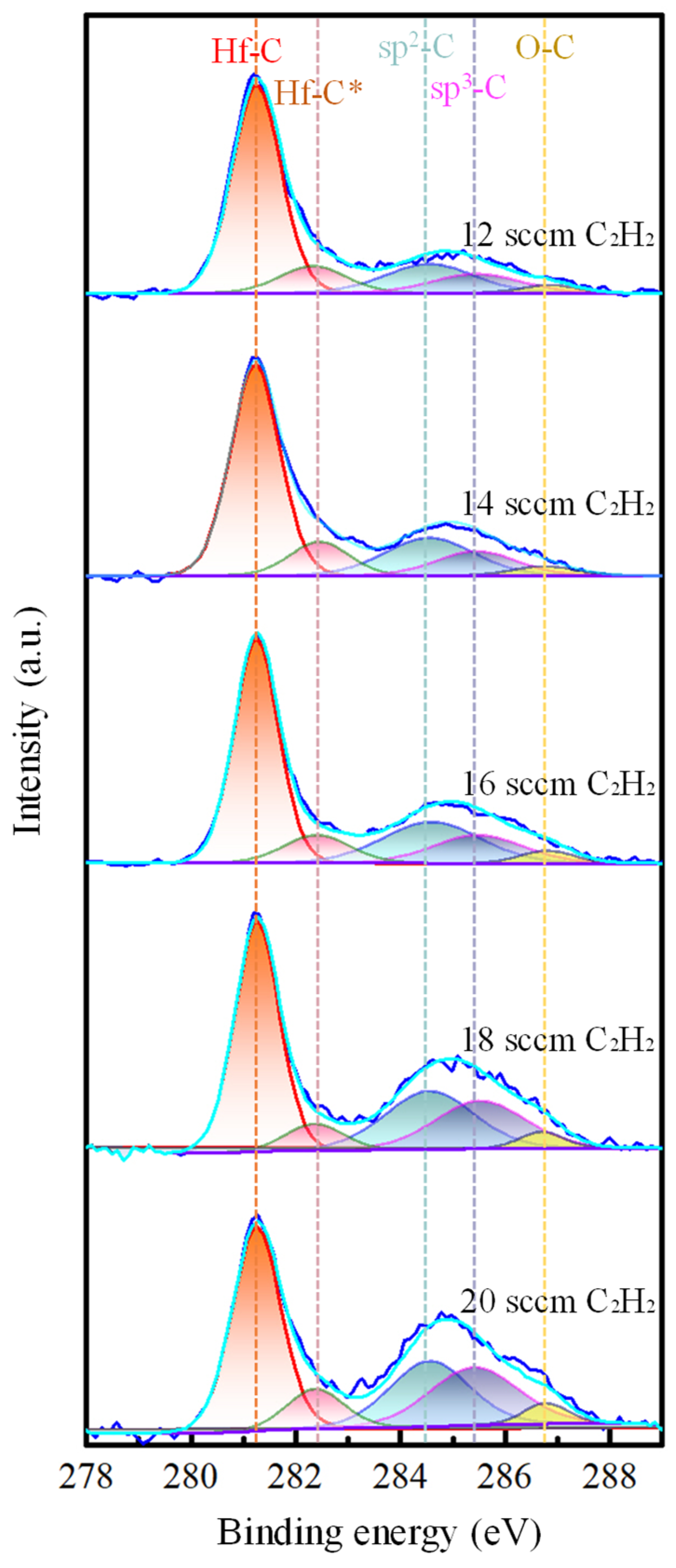
2 flow rates to determine their chemical bonding states. The charge calibration is performed by setting the binding energy of the C 1 s photoelectron peak to 285 eV. The high-resolution C 1 s spectra and the related fitting components are shown in
Figure 2.
For all HfC
x/a-C:H coatings, the C 1 s spectra are deconvoluted into two low binding energy peaks associated with the Hf-C bonds and three high binding energy peaks corresponding to the amorphous carbon bonds and the C-O bond. They are Hf-C bond (281.2 eV), Hf-C* bond (282.5 eV), sp
2-C (284.5 eV), sp
3-C (285.4 eV), and C-O bond (286.8 eV), respectively. The presence of Hf-C* bond here originates from the core electrons at the interface between the carbide crystalline phase and the amorphous carbon phase, which has been reported multiple times in published works [
17,
18,
19]. The appearance of the C-O bond mainly stems from the surface adsorption caused by long-term exposure to air. Its content is very low, and its impact on the main structure of the coating can be negligible. Therefore, from the chemical environment in which Hf-C, HfC*, and C-C (sp
2 and sp
3) coexist, it can be determined that the coating exhibits a two-phase composite structure consisting of a crystalline HfC phase and an a-C:H phase. In addition, the relative fractions of the different chemical bonds in the HfC
x/a-C:H coatings are quantitatively evaluated from the high-resolution C 1 s XPS spectra. The contribution of each chemical bond is calculated by integrating the corresponding fitted peak area and normalizing it to the total C 1 s envelope, as summarized in
Table 1. This quantitative analysis enables a direct comparison of the evolution of carbide-related bonds and a-C:H-related bonds as a function of C
2H
2 flow rate.
Table 1 shows that the chemical bonding state of the HfC
x/a-C:H coating undergoes a systematic evolution with increasing C
2H
2 flow rate. As the C
2H
2 flow rate increases from 12 sccm to 20 sccm, the total atomic concentration of Hf decreases from 53.8 to 40.9 at.%, while the C content continuously increases from 46.2 to 59.1 at.%. This results in a decrease in the relative fractions of Hf-C and Hf-C* bonds from 60.4 at.% and 12.5 at.% to 40.2 at.% and 10.1 at.%, respectively. Meanwhile, the proportion of the a-C:H phase increases progressively, with sp
2-C and sp
3-C components increasing by 71% and 110%, respectively. This evolution is closely associated with the reduced fraction of Hf species in the plasma and the enhanced carbon chemical potential under high C
2H
2 supply, the latter intrinsically favoring the formation of carbon-rich amorphous networks [
20].
In addition, the growth rate of sp
3-C in a-C:H matrix is higher than that of sp
2-C, which is caused by stronger energetic bombardment of coating-forming particles provided by the higher flow rate of C
2H
2 [
21]. It is noteworthy that, despite the pronounced increase in the a-C:H fraction and the overall reduction in Hf-C bonding content, a portion of carbon atoms is still incorporated into the crystalline HfC phase. This is evidenced by the increased substoichiometric value
x of HfC
x from 0.64 at 12 sccm C
2H
2 to 0.75 at 20 sccm C
2H
2. It indicates that within the investigated C
2H
2 flow rate window of 12–20 sccm, the flux of Hf atoms arriving at the substrate surface remains consistently sufficient. Moreover, the kinetic conditions allow carbon atoms to be effectively captured by Hf sites and accommodated within the carbide lattice. Consequently, the incorporation of C in the HfC
x is enhanced. Simultaneously, the carbon supply is also abundant and monotonically increasing. Thus, in addition to the lattice-incorporated carbon, other carbon atoms enter the amorphous matrix, leading to an increase in sp
2- and sp
3-C.
3.2. Microstructure and Morphology
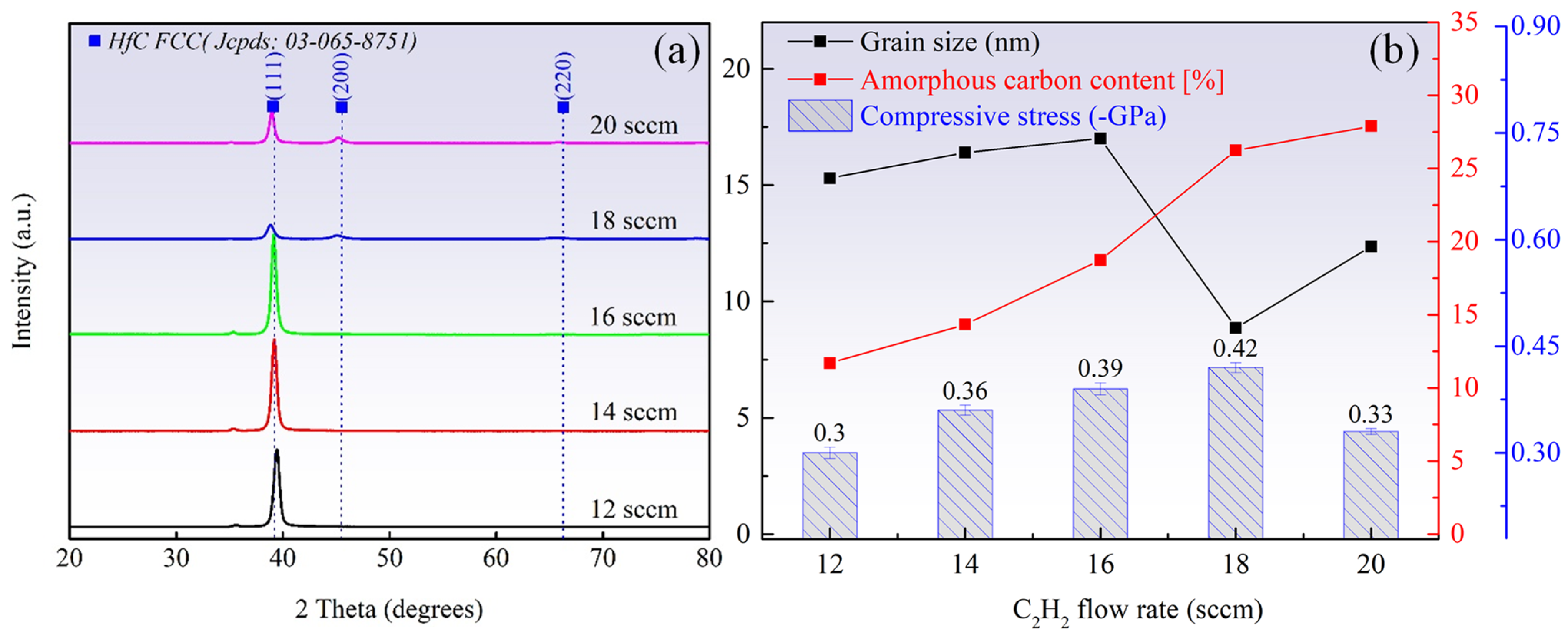
Figure 3a shows the XRD patterns of the HfC
x/a-C:H coatings deposited under different C
2H
2 flow rates.
Figure 3b presents the evolution trends of grain size, a-C:H content (obtained based on XRD and XPS results) and coating compressive stress. Three diffraction peaks can be observed at 39.2
, 45.5
and 66.4
, corresponding to the (111), (200), and (220) crystal planes of the face-centered cubic HfC (JCPDS: 03-065-8751), respectively. In the C
2H
2 flow rate range of 12 to 16 sccm, the HfC phase exhibits a distinct (111) preferred orientation, accompanied by a slight increase in peak intensity. The quantitative analysis of the FWHM of the (111) peak (
Figure 3b) reveals that the HfC nanocrystals exhibit a slight coarsening, with the average grain size increasing from 15.3 nm to 17.0 nm. The (111) preferred orientation is attributed to the surface-energy-dominated growth mechanism of the coating within this C
2H
2 flow rate range. In this case, the system tends to minimize its total free energy by favoring the development of (111)-oriented grains, thereby enhancing the (111) texture [
22]. In addition, in the range of 12–16 sccm, the carbon supply flux in plasma increases nearly linearly, whereas the flux of sputtered Hf species remains essentially constant. The increasing carbon supply flux promotes the increase in a-C:H content. However, its content may not yet reach the threshold required to inhibit the aggregation and growth of HfC grains. Therefore, the grain size increases slightly [
23].
As C
2H
2 flow rate further increases to 18 sccm, the crystalline phase transitions to a random orientation composed of (111), (200) and (220) planes. The overall diffraction peak intensity decreases markedly, demonstrating a sudden refinement of the HfC grains (to 8.8 nm). Moreover, the content of the a-C:H phase significantly increases at this C
2H
2 flow rate (
Figure 3b). The refined HfC grain and increased a-C:H content result in an increase in the proportion of the two-phase interface (between HfC and a-C:H). Under such conditions, the inherent surface free energy difference between different HfC crystal planes no longer dominates the total energy of the coating system. Instead, the interfacial energy between HfC and the isotropic a-C:H matrix takes over gradually. Meanwhile, the residual stress measurement (the bar chart in
Figure 3b) demonstrates a monotonic increase trend within the C
2H
2 flow rate range of 12–18 sccm. The above two points indicate that the surface energy is no longer the primary driving force determining crystal orientation, while the roles of interfacial energy and strain energy are becoming significant [
24]. Therefore, the crystal nucleation and growth behavior are governed by the combined effects of strain energy, interfacial energy, and kinetic constraints, giving rise to the observed random orientation of the HfC phase. In addition, the higher a-C:H content at the 18 sccm C
2H
2 flow rate more effectively encapsulates the HfC grains, thereby impeding the necessary adatom diffusion required for grain coalescence and growth. This consequently led to a sharp reduction in the HfC grain size.
After further increasing the flow rate of C
2H
2 to 20 sccm, the HfC phase still maintains its randomly oriented character. However, the intensity of the (111) peak slightly recovers, corresponding to a moderate increase in grain size to 12.4 nm. This behavior is attributed to the partial relaxation of compressive stress and the slowdown of the increase rate of a-C:H content [
25,
26]. The partial relaxation of compressive stress allows the intrinsically lower surface free energy of the (111) crystal plane to re-engage in the competition for crystal orientation, thus resuming the growth of the (111) peak. The slowdown of the increase rate of a-C:H content weakens its inhibitory effect on HfC grain growth, leading to a renewed increase in grain size. In addition, it is noted that from 12 to 20 sccm, the diffraction peaks shift towards lower angles. This is attributed to the continuous lattice expansion caused by the stoichiometric changes in HfC
x grains and the accumulative compressive stress inside the HfC
x/a-C:H coating.
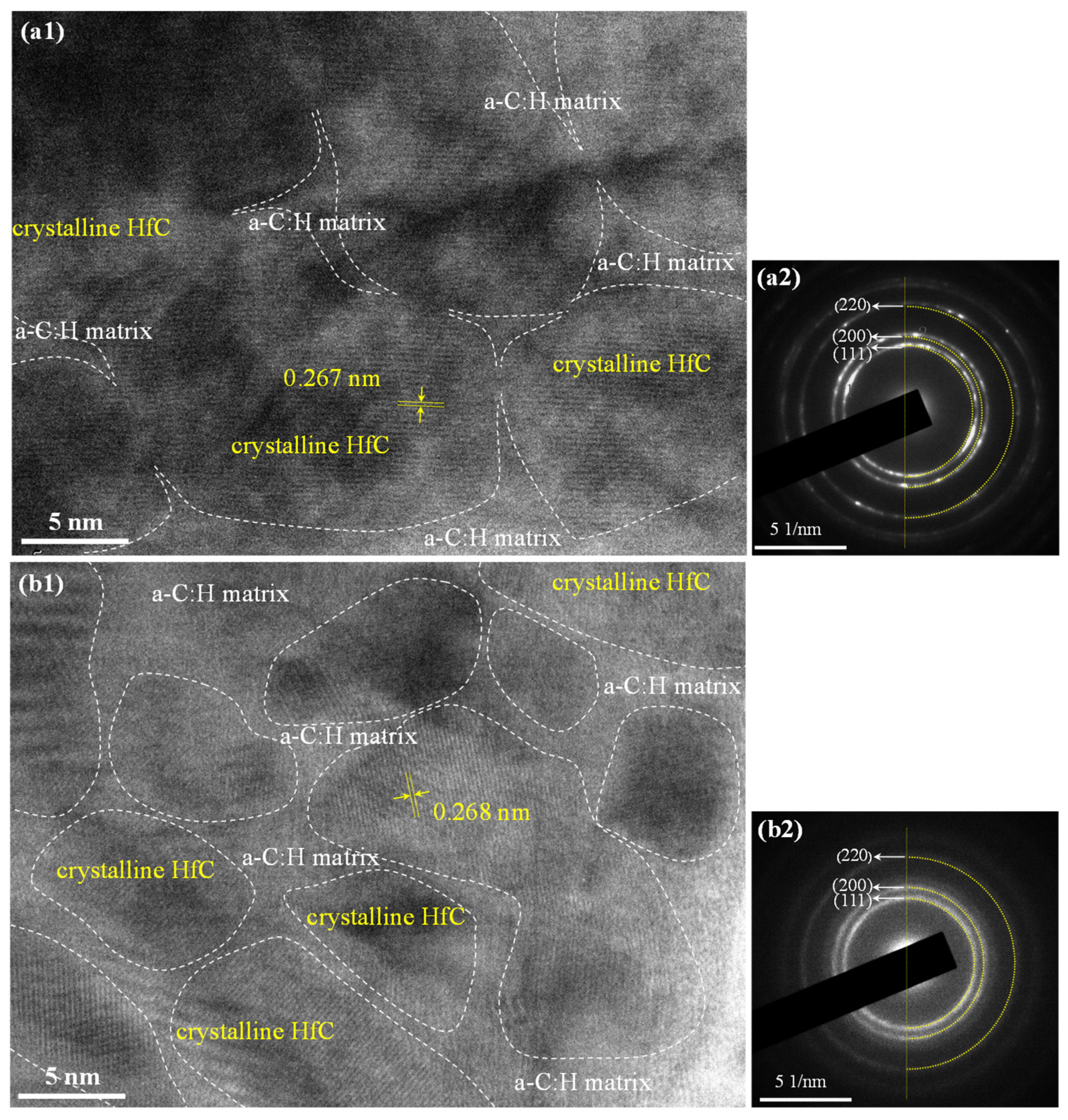
To further elucidate the detailed composite structure of the HfC
x/a-C:H coatings, high-resolution TEM together with the selected area electron diffraction (SAED) analyses were conducted for the coatings deposited at the C
2H
2 flow rates of 14 sccm and 18 sccm, as shown in
Figure 4. For the HfC
x/a-C:H coating deposited at 14 sccm, the cross-sectional HRTEM (
Figure 4a1) image reveals the coexistence of well-defined lattice fringe regions and atomically disordered regions. These regions are attributed to well-crystallised HfC grains and an a-C:H matrix lacking long-range order, respectively. It can be observed that a-C:H does not form a continuous network structure. Instead, it is located at the triple junctions of HfC grain boundaries. Correspondingly, the SAED pattern consists of several distinct diffraction rings with non-uniform intensity distribution along the ring circumference, which is attributed to the crystallized HfC phase [
27]. The weak diffuse scattering is also observed. This indicates a limited content of a-C:H matrix. As a result, it is demonstrated that the coating deposited at 14 sccm C
2H
2 exhibits a nanocomposite structure. It is mainly composed of the crystalline phase HfC and a small amount of a-C:H distributed at triple junctions of HfC
x grain boundaries. For the coating deposited at 18 sccm C
2H
2, shown in
Figure 4b1, the large-scale lattice fringes disappear, and the proportion of atomically disordered regions increases. Meanwhile, the disordered region evolves into a continuous matrix that separates the crystalline regions. The corresponding SAED pattern is characterized by continuous, broadened diffraction rings with slightly diffuse boundaries. Moreover, the discrete diffraction spots are scarcely observable on the diffraction rings. These features indicate a refinement of HfC grains and an increased a-C:H volume fraction. Therefore, through HETEM and SEAD, it is determined that the HfC
x/a-C:H coating deposited at 18 sccm possesses a typical nanocomposite structure, which consists of a continuous a-C:H matrix and HfC grains dispersed within it.
Overall, combining the results of XPS, XRD, and TEM, it can be inferred that within the carbon supply window investigated in the present work, all HfCx/a-C:H coatings possess a two-phase composite structure consisting of HfCx nanocrystals and a-C:H matrix. The microstructure evolution of the HfCx/a-C:H coatings is governed by the competitive growth between HfCx grains and a-C:H matrix. In the carbon supply range of 12–16 sccm C2H2, both the size of HfCx nanocrystals and the content of a-C:H matrix increase in the coatings. The a-C:H phase is located at HfCx grain-boundary triple junctions. When the C2H2 flow rate reaches 18 sccm, the formation rate of the a-C:H phase exceeds the growth rate of HfCx grains, causing the amorphous network to encapsulate the HfCx grain boundaries. Consequently, a reduction in HfCx grain size is observed. It thus results in a typical nanocomposite structure in which HfCx grains are embedded in a continuous a-C:H matrix. As the C2H2 flow rate further increases to 20 sccm, the growth rate of the a-C:H matrix slows down, while the HfCx grains exhibit a slight coarsening. It suggests that the nanocomposite structure still exists, accompanied by a variation in the average grain separation.
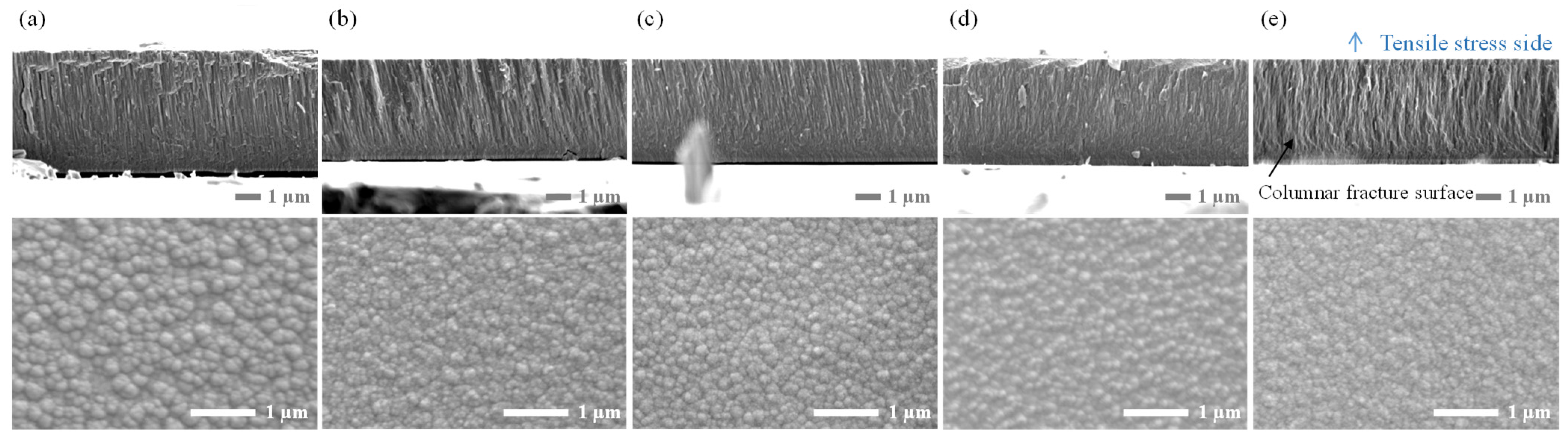
Figure 5 presents the SEM micrographs of the HfC
x/a-C:H coatings deposited at different C
2H
2 flow rates. The upper and lower rows correspond to the brittle fracture cross-sectional morphologies and the surface morphologies, respectively. All HfC
x/a-C:H coatings exhibit a typical columnar morphology growing along the deposition direction. With increasing C
2H
2 flow rate, the columnar structure undergoes progressive densification, characterized by narrowed intercolumnar gaps and diminished contrast of column boundaries. Meanwhile, the surface morphology evolves from relatively coarse granular features to finer and more uniform particles, indicating a gradual reduction in surface roughness. This morphological evolution is closely associated with the progressive enrichment of the a-C:H fraction. At low C
2H
2 flow rates (12 and 14 sccm), the a-C:H content is limited and the growth of the crystalline phase dominates, resulting in well-developed columnar morphology with clearly defined boundaries. As the C
2H
2 flow rate increases from 16 to 20 sccm, the a-C:H phase not only segregates to grain boundaries, but also tends to concentrate in the intercolumnar regions [
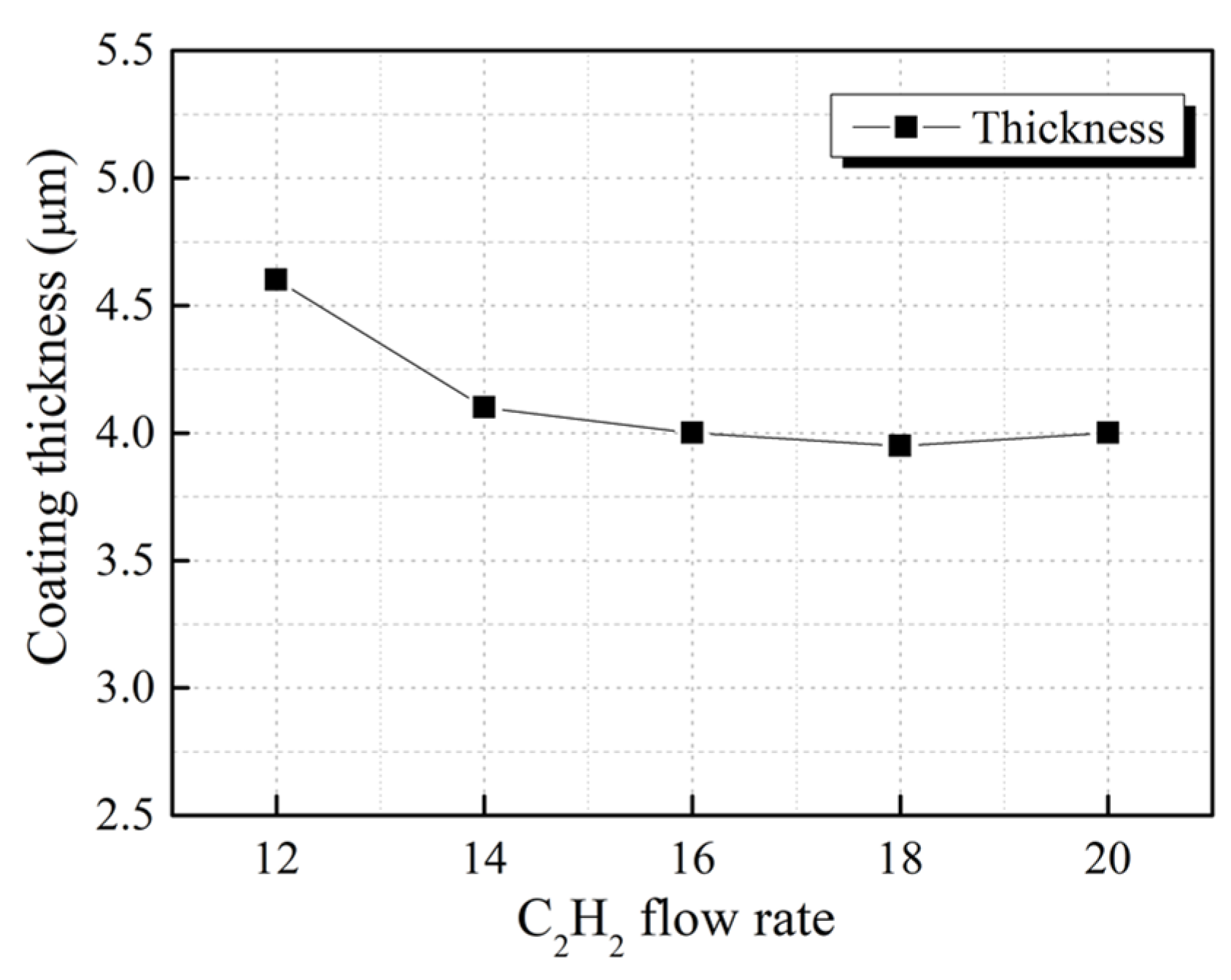
28], thereby filling structural voids and weakening the contrast of columnar structures. Consequently, the columnar structure becomes more compact. In addition, the coating thickness is obtained by measuring the brittle cross-section using SEM. The evolution trend of coating thickness with C
2H
2 flow rate is shown in
Figure 6. It can be seen that at the C
2H
2 flow rate of 12 sccm, the coating thickness is approximately 4.6 μm. As the C
2H
2 flow rate increases from 14 sccm to 20 sccm, the coating thickness remains around 4.0 μm, without a significant decreasing trend.
3.3. Mechanical Properties
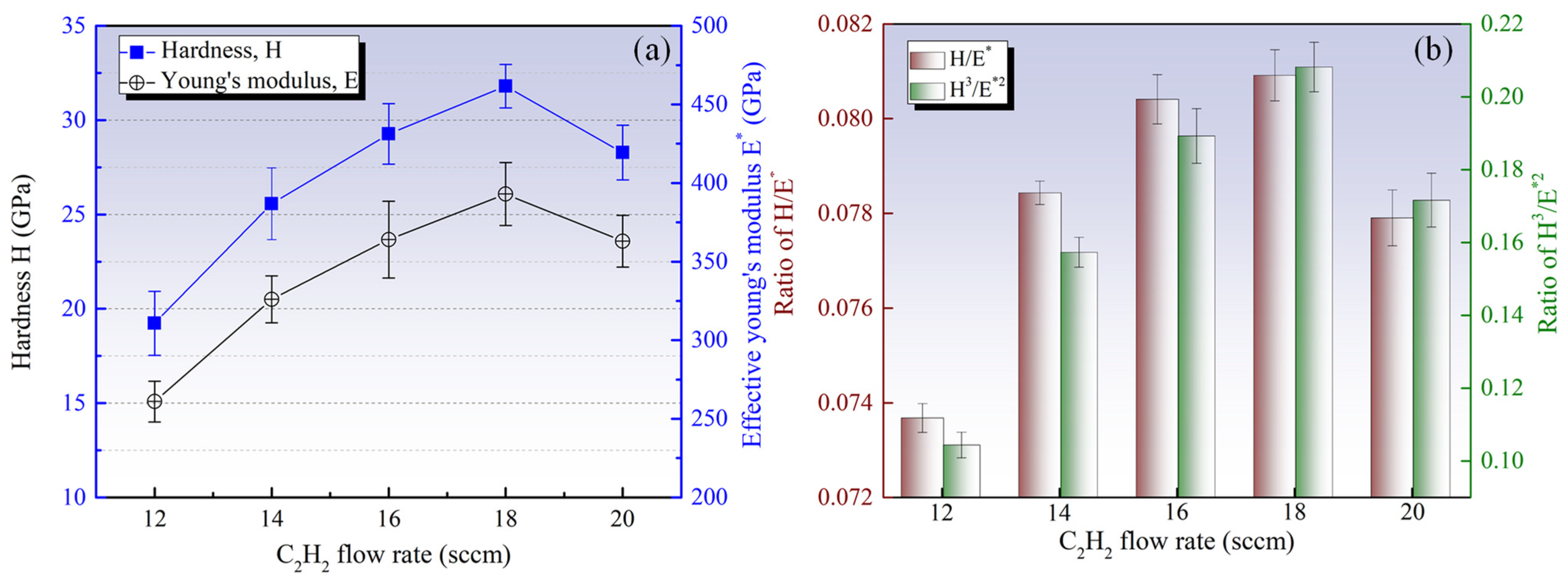
Figure 7a shows the hardness (H) and effective Young’s modulus (E*) of the HfC
x/a-C:H coatings with different C
2H
2 flow rates. It can be observed that H and E* exhibit the same evolutionary trend. From 12 to 20 sccm C
2H
2, the H and E* increase first and then decrease; the maximum values of both are obtained at 18 sccm C
2H
2. The H from 16.3 to 31.3 GPa and then decreases to 28.2 GPa, while E* increases from 242.9 to 392.3 GPa and then decreases to 362.7 GPa.
From 12 to 16 sccm, the grain size of the coating exhibits slight coarsening, accompanied by a nearly linear increase in a-C:H content. The increasing amount of a-C:H leads to a reduction in the direct contact between adjacent HfC
x grains. Consequently, the plastic deformation must traverse a greater number of interfaces, including both grain boundaries and phase boundaries, promoting a transition from dislocation-dominated to interface-controlled deformation. This transition effectively enhances the resistance to plastic flow. At the 18 sccm C
2H
2 flow rate, the coating develops a typical nanocomposite structure in which refined HfC
x (~8 nm) nanocrystallites are dispersed within the a-C:H matrix. Under this structural configuration, the number of dislocation sources and dislocation movement within individual HfC
x nanocrystals are significantly restricted. Furthermore, the plastic deformation needs to be coordinated among multiple isolated HfC
x nanocrystals, which maximizes the interface-mediated strengthening effect. These two factors jointly contribute to the HfC
x/a-C:H coating achieving its highest hardness. Meanwhile, from 12 to 18 sccm, the hardness enhancement is also contributed to by the increased ratio of sp
3/sp
2-C in a-C:H matrix [
29], the increased stoichiometric ratio of HfC
x nanograins [
30], and the rise in residual compressive stress (
Table 1). The substoichiometric hardening mechanism reported in [
31] indicates that non-metal deficiencies are the primary origin of sub-stoichiometry, and the induced vacancies serve as pinning centers, thereby improving coating hardness. When the C
2H
2 flow rate further increases to 20 sccm, the grain size coarsening of HfC
x promotes the recovery of dislocation motion space. Moreover, the continued growth of the a-C:H phase alters the structural balance between nanocrystalline and amorphous regions. The enhanced continuity of the a-C:H phase may facilitate localized shear deformation [
32], leading to a reduction in hardness. The decrease in compressive stress at 20 sccm also contributes to the hardness decline. In addition, although the sp
3/sp
2-C ratio continues to increase, together with enhanced densification of the columnar morphology at 20 sccm C
2H
2 flow rate, these changes do not lead to a corresponding increase in hardness.
Based on the evolution trends of H and E*, the semi-empirical wear-resistance indicators H/E* and H
3/E*
2 of the HfC
x/a-C:H coatings as a function of C
2H
2 flow rate are presented in
Figure 7b. With increasing C
2H
2 flow rate, both H/E* and H
3/E*
2 exhibit a non-monotonic evolution characterized by an initial increase followed by a subsequent decrease, reaching their maximum values at 18 sccm. Such behavior reflects the changes in the elastoplastic response induced by the evolution of the nanocomposite structure of the HfC
x/a-C:H coatings [
33].
3.4. Tribological Behavior
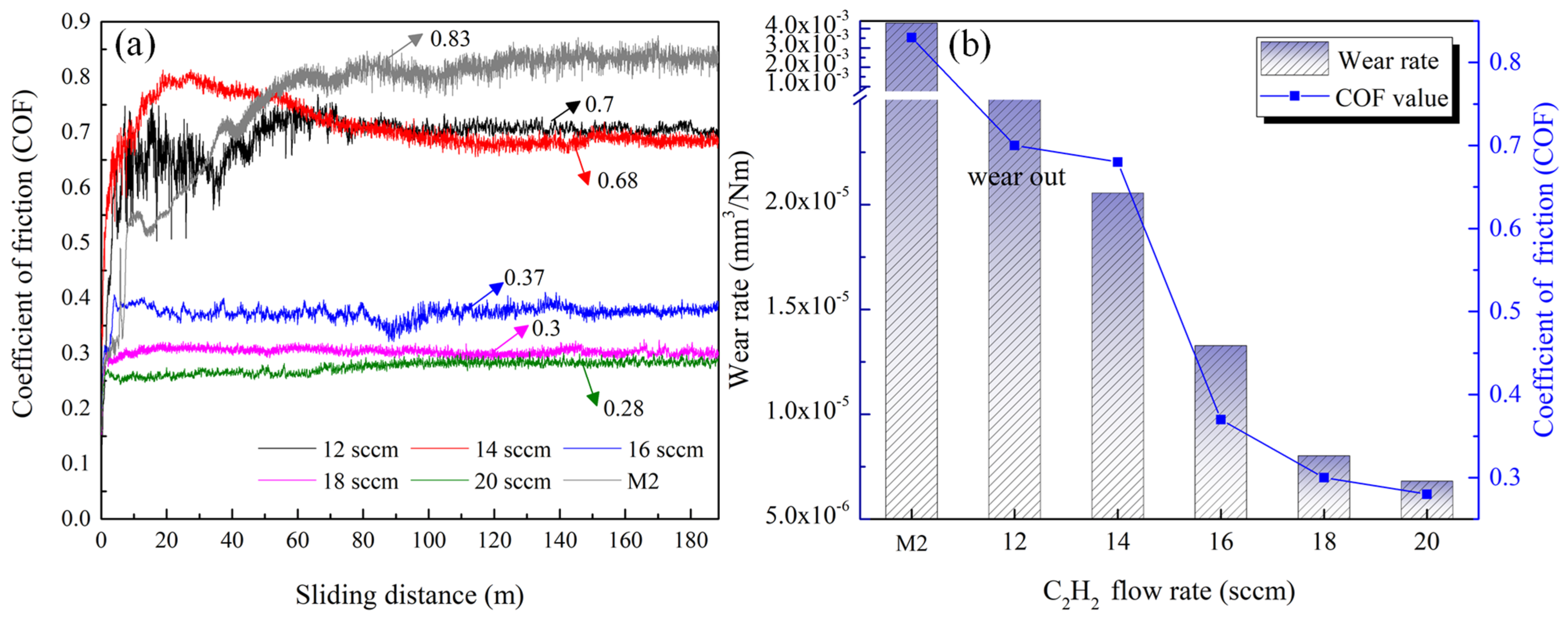
Figure 8a shows the dynamic friction curves of the HfC
x/a-C:H coatings deposited at different C
2H
2 flow rates during the sliding tests. The specific values of steady-state friction coefficient and wear rate of the HfC
x/a-C:H coatings are summarized in
Figure 8b. To highlight the low friction and wear resistance of the HfC
x/a-C:H coating, the results of friction tests on the uncoated M2 substrate are also presented in
Figure 8 for comparison. It can be observed that the application of the HfC
x/a-C:H coating significantly reduces the coefficient of friction and wear rate.
For HfC
x/a-C:H coatings, as the C
2H
2 flow rate increases from 12 to 20 sccm, the dynamic friction curves exhibit three distinct evolution features. It includes (i) a significant shortening of the initial running-in stage, (ii) a monotonic decrease in the steady-state COF value (from 0.70, 0.68, 0.37, 0.30, to 0.28), and (iii) a gradual reduction in the amplitude of friction fluctuations. Such evolution is associated with the increase in sp
2-C content (from 14.9 to 25.6 at.%) and the enhanced mechanical properties. These promote the formation of an easily sheared tribolayer (acting as the solid lubricant) and enhance resistance to plastic deformation [
34], respectively.
After tribological testing, the coating deposited at 12 sccm C2H2 was completely worn. For other coatings, it can be observed that as the C2H2 flow rate increases, the wear rate gradually decreases in the range of , consistent with the development of the friction coefficient. However, the hardness, H/E*, and H3/E*2 ratios all exhibit a decreasing trend when the C2H2 flow rate exceeds 18 sccm, indicating that the improvement in wear resistance cannot be solely attributed to the enhanced resistance to indentation and crack propagation of the coatings. Instead, it is governed by the synergistic interplay between mechanical properties and tribochemical processes.
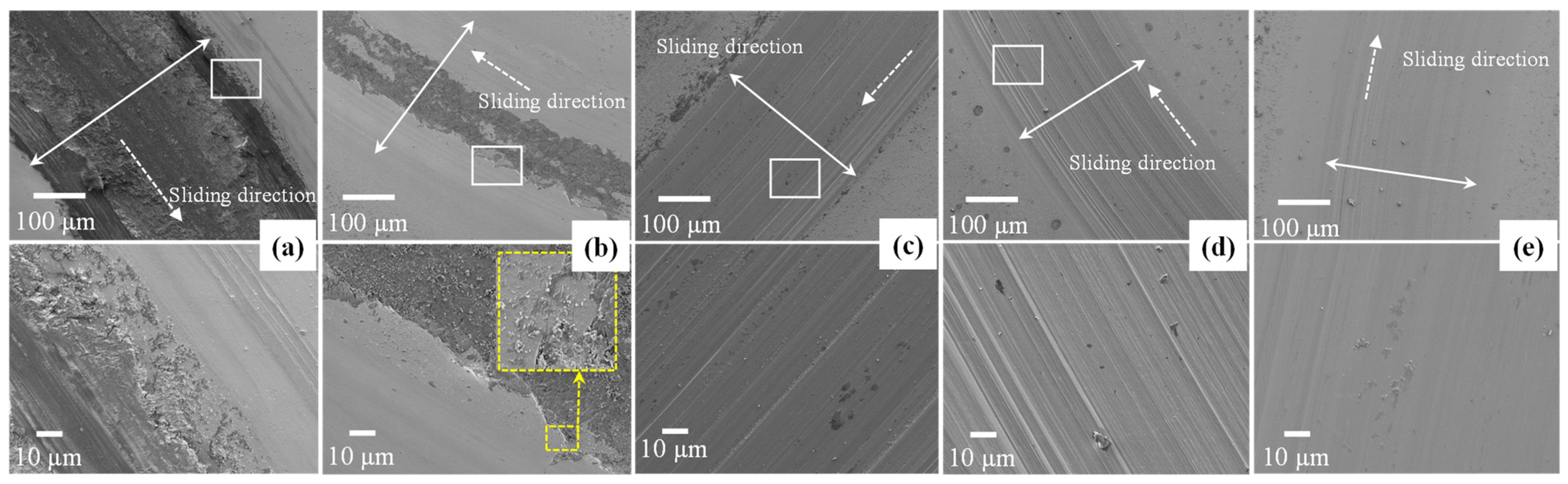
By combining SEM wear track morphologies, the wear mechanism of HfC
x/a-C:H coating is further analyzed. As shown in
Figure 9, with the increase in C
2H
2 flow rate from 12 to 20 sccm, the wear tracks transition from complete failure to a smooth and intact state. The surface of the wear track becomes narrower and shallower, accompanied by fewer furrows. At 12 sccm C
2H
2 flow rate, the wear track is severely damaged and characterized by extensive flake-like delamination, through-thickness cracks, and deep ploughing grooves. These features indicate that material removal is dominated by severe abrasive wear [
35], primarily attributed to the insufficient a-C:H content and poor mechanical properties. The limited hardness and toughness facilitate the generation of large wear debris during the running-in stage, which subsequently act as third-body abrasives and accelerate material removal. Meanwhile, under cyclic contact loading, the elevated interfacial shear stress, coupled with the low crack resistance, promotes the nucleation and propagation of subsurface cracks. The progressive coalescence of these cracks eventually leads to large-scale delamination and premature coating failure. When the C
2H
2 flow rate increases to 14 sccm, the extent of delamination is significantly reduced and is mainly confined to the central region of the wear track. Meanwhile, the ploughing grooves become noticeably shallower. The magnified image of the region marked by the yellow dashed line (
Figure 9b) reveals multiple microcracks perpendicular to the sliding direction along the fracture edges. These observations suggest that the dominant failure mechanism shifts to localized brittle fracture coupled with abrasive wear, while large-scale delamination is effectively suppressed. This improvement in wear resistance is attributed to the increase in a-C:H fraction and sp
2-C content, as well as the increased hardness.
With the C
2H
2 flow rate increasing to 16 and 18 sccm, the wear tracks evolve into shallow and continuous ploughing grooves. No cracks or delamination are observed. The dominant wear mechanism transitions to mild abrasive wear [
36]. This improvement originates from the combined effects of the excellent mechanical properties (H, E*, H/E* and H
3/E*
2) and a sufficient amount of sp
2-C. On the one hand, the superior mechanical properties enhance the coating’s ability to resist plastic deformation. On the other hand, the higher sp
2-C content facilitates the formation of a stable lubricious tribolayer at the sliding interface. This tribolayer effectively reduces the shear stress and minimizes the accumulation of plastic shear during repeated sliding, thereby further inhibiting the wear of the coating. When the C
2H
2 flow rate further increases to 20 sccm, the wear track surface becomes smoother and is accompanied by very shallow grooves. This observation suggests that material removal is mainly controlled by interfacial shear sliding [
37], rather than severe plastic deformation. Therefore, the wear behavior at this stage is more consistent with shear-dominated mild abrasive wear. Moreover, a higher C
2H
2 flow rate promotes the formation of a more continuous a-C:H matrix, accompanied by a higher fraction of sp
2-C bonding states. Although the hardness, H/E*, and H
3/E*
2 ratios slightly decrease at 20 sccm C
2H
2 flow rate, the sp
2-C-rich phase continuously reduces the interfacial shear resistance, while facilitating the formation of a more stable low-shear tribo-layer. This tribochemical effect compensates for the slight reduction in mechanical properties, leading to a further decrease in wear rate. In addition, the thickness of the coating has a beneficial effect on the wear failure behavior generally, especially in terms of the coating’s ability to resist wear-through failure. A thicker coating can provide a longer wear path and delay substrate exposure during the wear process. Under the same friction test conditions, the coating prepared at 12 sccm C
2H
2 flow rate, although exhibiting the largest thickness (4.6 μm), showed complete wear-through in the wear track. In contrast, the coating prepared at 14 sccm, despite having a lower thickness, only showed localized damage in the center of the wear track, demonstrating significantly better wear resistance. Furthermore, as the C
2H
2 flow rate was further increased to 20 sccm, the coating thickness was consistently lower than that of the coating deposited at 12 sccm, but the wear resistance continued to improve. These results indicate that for the HfC
x/a-C:H coating, the thickness is not the determining factor for tribological durability and wear failure behaviour.
Overall, with increasing C2H2 flow rate, the tribological behavior of the HfCx/a-C:H coatings gradually evolves from severe abrasive wear dominated by high shear stress and brittle spallation to mild abrasive wear regulated by a sp2-induced tribolayer. This transition is mainly driven by the combined effects of the increased sp2-C content and the improved mechanical properties, which systematically optimize the interfacial shear stress and load-bearing capacity, thereby enabling the simultaneous reduction in the friction coefficient and wear rate. Looking back at the discussion of the ratios H/E* and H3/E*2, it is inferred that these ratios cannot fully predict the wear performance of HfCx/a-C:H coatings since they do not account for the regulation of interfacial shear behavior by tribochemical reactions.
3.5. Oxidation Resistance
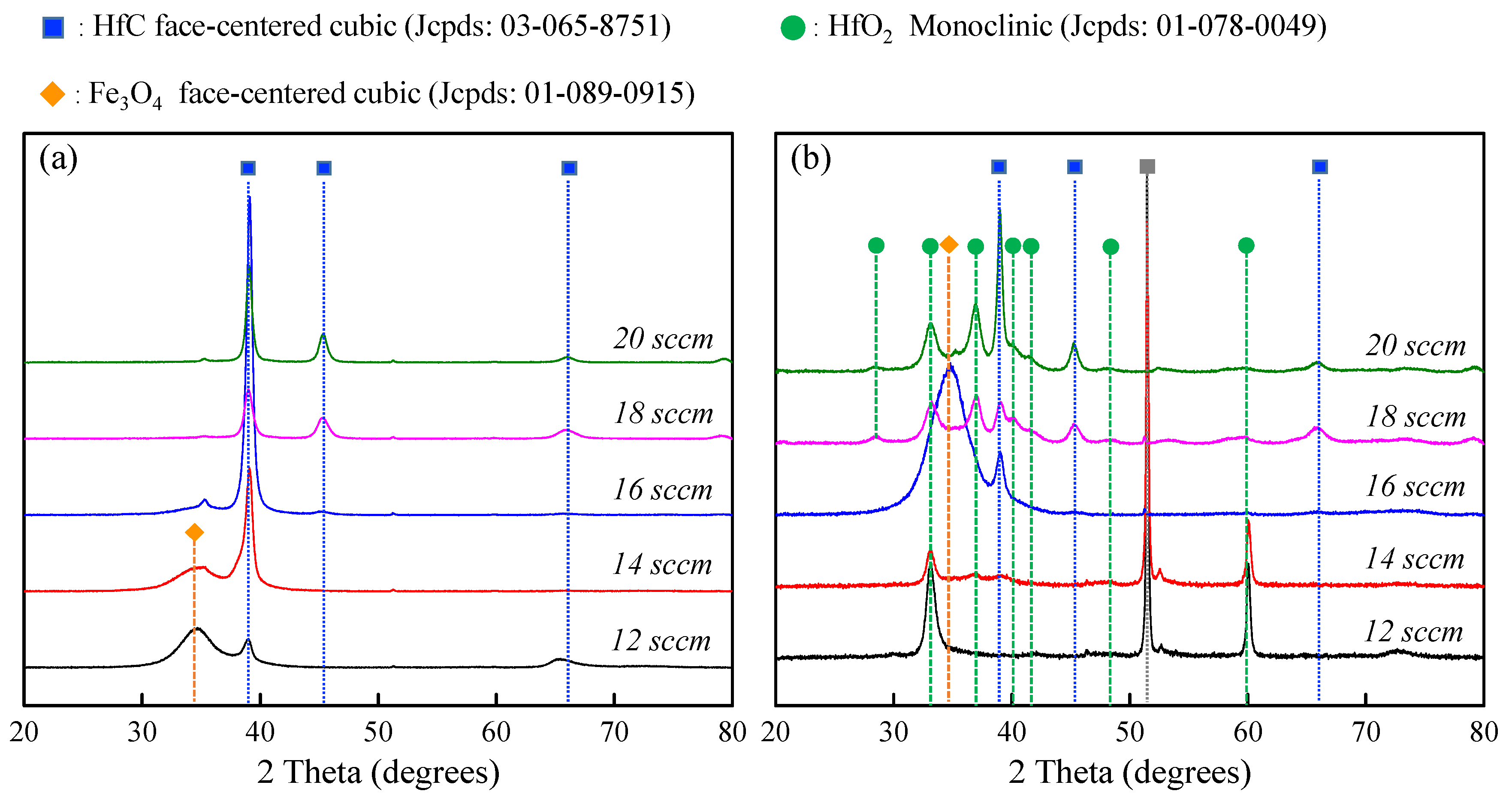
Figure 10 presents the XRD patterns of the HfC
x/a-C:H coatings after annealing at 500 °C and 600 °C, respectively. When the annealing temperature is below 400 °C, no oxidation-related peaks are detected in the coatings deposited at each C
2H
2 flow rate. After 500 °C annealing, a weak anomalous peak located at 2θ ≈ 34.67° appears in the coatings deposited at low C
2H
2 flow rates (12 and 14 sccm), while no Hf-related oxide peaks are observed. When the annealing temperature increases to 600 °C, all coatings exhibit a mixture of HfO
2 and HfC phases, indicating that the oxidation of the HfC
x/a-C:H coating begins to be activated.
After annealing at 500 °C, the anomalous peak observed at 2θ ≈ 34.67° is assigned to the (220) plane of the Fe
3O
4 phase. This peak is detected in the coatings deposited at 12 and 14 sccm and coexists with the HfC peaks. Moreover, the lower the C
2H
2 flow rate, the higher the intensity of the Fe
3O
4 phase. It is worth noting that no signs of peeling were observed in the coating where the Fe
3O
4 peak appeared, indicating that the Fe
3O
4 does not originate from the coating peeling off and the subsequent oxidation of the exposed M2 layer. Based on this, it is inferred that the coexistence of Fe
3O
4 and HfC phases is caused by the outward diffusion of Fe atoms from the substrate into the coating. According to the morphology analysis in
Figure 5, the coatings deposited at low C
2H
2 flow rates (12, 14, and 16 sccm) exhibit a relatively loose columnar structure with pronounced intercolumnar gaps. Furthermore, a higher density of interconnected HfC grain boundaries, as confirmed by TEM, is present in these coatings due to their larger grain size and lower a-C:H content. Both of these may provide a rapid diffusion pathway for the outward diffusion of Fe atoms [
38]. Therefore, during the annealing process, Fe atoms diffuse from the M2 substrate into the HfC
x/a-C:H coatings through the loose intercolumnar gaps and interconnected grain boundaries. Then, the oxygen preferentially reacts with Fe, resulting in the formation of Fe
3O
4. Additionally, the Fe
3O
4 peak is notably broad, corresponding to fine grain size. This is because the Fe atoms are dispersed in the grain boundaries and intercolumnar gap regions rather than concentrated in localized areas. As a result, the growing Fe
3O
4 grains are difficult to aggregate and connect with adjacent grains, and thus cannot coarsen. For coatings deposited at 18 and 20 sccm C
2H
2 flow rates, no diffraction peaks are detected except for the HfC phase after annealing at 500 °C. This suggests that the outward diffusion of Fe atoms is significantly suppressed and HfC
x/a-C:H coating itself remains unoxidized, which is attributed to the denser microstructure and reduced grain boundary connectivity.
After annealing at 600 °C, the oxidation resistance of the HfC
x/a-C:H coatings is observed to increase with increasing C
2H
2 flow rate. The coatings deposited at 12 and 14 sccm are completely delaminated from the M2 substrate. Their XRD patterns exhibit a strong Fe peak corresponding to the M2 substrate (located at 2θ ≈ 52°, marked by grey squares) and five weaker HfO
2 peaks. The HfO
2 peaks originate from the oxidation of the pure Hf buffer layer after the detachment of HfC
x/a-C:H coating. The HfC
x/a-C:H coating deposited at 16 sccm C
2H
2 flow rate remains intact, with Fe
3O
4, HfO
2, and HfC phases coexisting in its XRD pattern, indicating partial oxidation of the coating. It is inferred that the Fe
3O
4 phase, HfO
2 phase, and HfC phase represent the oxidized Fe atoms (diffused from the substrate), the partially oxidized HfC
x/a-C:H coating, and the stable HfC
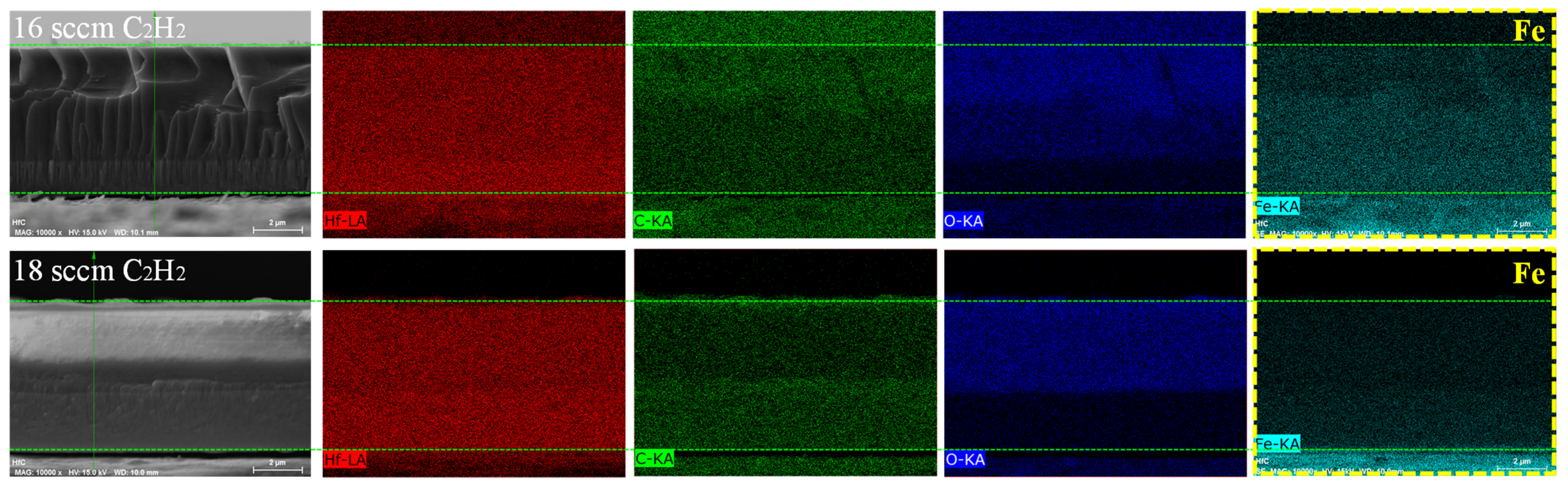
x/a-C:H coating underneath, respectively. To verify this phase composition suggested by XRD,
Figure 11 shows the EDS mapping spectrogram of the cross-sections of the HfC
x/a-C:H coatings deposited at 16 sccm after 600 °C annealing. For comparison, the cross-sectional EDS of the coating deposited at 18 sccm under the same annealed condition is also included in
Figure 11. By comparing the Fe elemental maps (highlighted by yellow dashed boxes), a pronounced outward diffusion of Fe atoms is observed in the coating deposited at 16 sccm. This confirms that the Fe
3O
4 phase is formed by the outward diffusion and subsequent oxidation of the Fe atoms. Furthermore, it is noted that the intensity and shape of the Fe
3O
4 peak appearing here (16 sccm,600 °C annealing) are very similar to those observed in the coatings deposited at 12 and 14 sccm C
2H
2 after 500 °C annealing. This similarity further supports the previous inference that the Fe
3O
4 phase is formed through the outward diffusion and preferential oxidation of Fe atoms. For the coatings deposited at 18 and 20 sccm, the coexistence of HfC and HfO
2 phases is clearly observed, with the relative intensity of the HfC phase being higher than that of HfO
2 phase. This indicates that the oxidation resistance of the coating is further enhanced at higher C
2H
2 flow rates. In addition, no Fe
3O
4-related peaks are detected, suggesting that the diffusion of Fe atoms is effectively suppressed. This behavior is attributed to the denser morphology and fewer grain boundary interconnections of HfC grains. Moreover, the coating deposited at 20 sccm exhibits a higher relative intensity of the HfC phase than that deposited at 18 sccm, indicating superior oxidation resistance. To further quantify the oxidation degree of the HfC
x/a-C:H coatings deposited at each C
2H
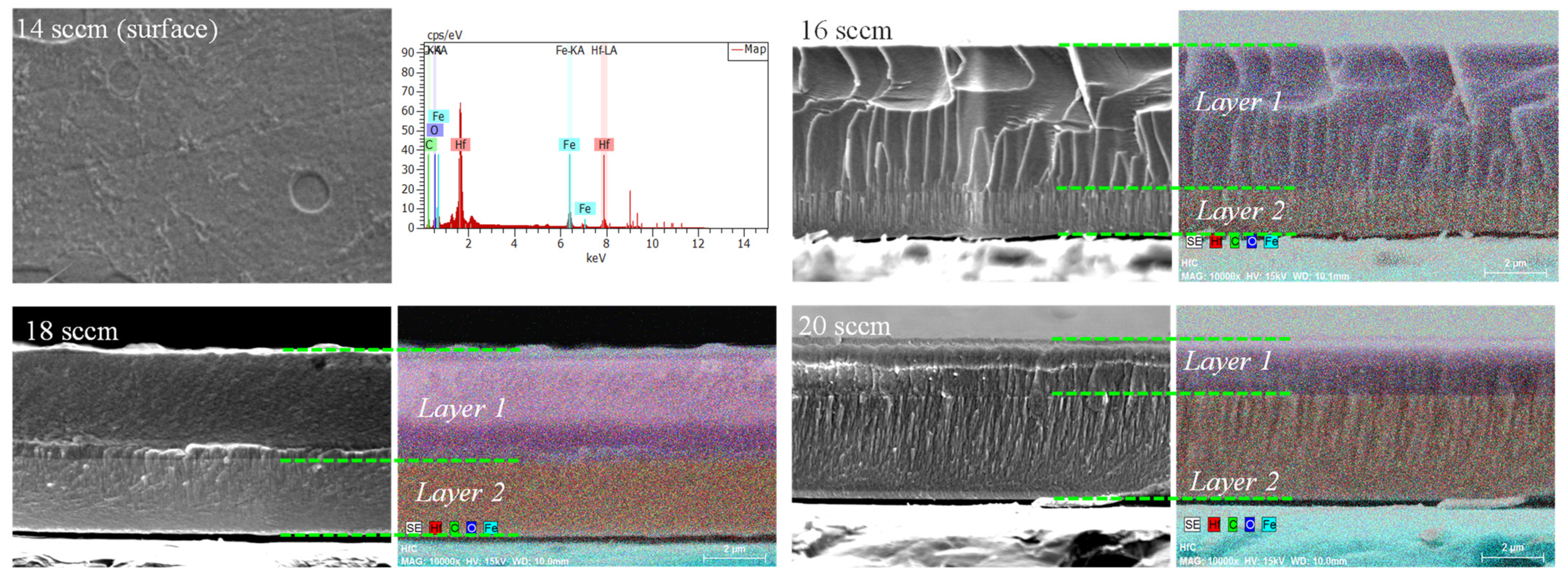
2 flow rate, the cross-sectional morphologies after 600 °C oxidation are systematically analyzed and compared using SEM and EDS.
Figure 12 presents the cross-sectional SEM and EDS scans of the HfC
x/a-C:H coatings deposited at C
2H
2 flow rates of 14, 16, 18, and 20 sccm. It is observed that the oxidation resistance of HfC
x/a-C:H coating gradually improves with increasing C
2H
2 flow rate, achieving the best oxidation resistance at 20 sccm. This is consistent with the evolution trend indicated by XRD. For the coatings deposited at 12 and 14 sccm C
2H
2, they are completely oxidized and peeled off from the substrate after annealing at 600 °C. Only the top-view morphology and EDS analysis of the coating deposited at 14 sccm are presented, as representative samples. Based on the concentrations of Hf, O, C, and Fe in the EDS spectra, the observed surface is identified as the oxidation product of the pure Hf buffer layer remaining after the complete oxidation and spallation of the HfC
x/a-C:H coating. This observation is consistent with the characteristics given by XRD, which show weak HfO
2 peaks together with a very strong M2 substrate peak. For the coatings deposited at 16, 18, and 20 sccm C
2H
2 flow rates, the thickness of “layer 1” in the EDS images confirms that approximately 76%, 54%, and 29% of the coatings are oxidized, respectively.
For the HfC
x/a-C:H coatings in the present work, the oxidation resistance is primarily governed by the diffusion pathways and oxidation kinetics caused by the microstructure. The diffusion pathways are mainly determined by two key factors: the compactness of the growth morphology and the nature and density of the interfaces provided by the nanocomposite structure [
39]. For low-carbon-content HfC
x/a-C:H coatings, the larger intercolumnar gaps and a higher fraction of interconnected and relatively straight grain boundaries (which originate from the nanocomposite structure formed by large HfC grains and a small amount of a-C:H) are observed. Such a structure facilitates rapid diffusion of Fe atoms from the M2 substrate and oxygen from the environment. The subsequent rapid oxidation reactions between these species then lead to severe degradation of coating stability and oxidation resistance. Meanwhile, the reaction between oxygen and HfC
x/a-C:H coating is accompanied by the release of CO/CO
2 gas. This process results in a loose and porous oxide scale that lacks effective barrier properties. Therefore, the loose morphology and straighter grain boundaries are the fundamental reasons for the weaker oxidation resistance of coatings deposited at low C
2H
2 flow rates.
In contrast, high carbon content HfC
x/a-C:H coatings exhibit a dense nanocomposite structure consisting of refined HfC nanograins embedded in a continuous a-C:H matrix. Although the a-C:H phase is thermodynamically unstable at elevated temperatures [
40], it plays a critical role in regulating oxidation kinetics. On one hand, during the initial stage of oxidation, the continuous a-C:H network introduces a more tortuous diffusion pathway and a higher density of interfaces, which effectively block the diffusion of both O and Fe atoms. On the other hand, the a-C:H matrix acts as a sacrificial phase that preferentially reacts with oxygen, thereby consuming local oxygen and reducing the effective oxygen flux penetrating the coating. It is important to note that under this diffusion-limited condition, the gradual consumption of the nanoscale-thick a-C:H phase located between grains does not lead to the formation of interconnected microscopic porosity. Instead, it effectively delays the oxidation progression during the critical early stage, thereby reducing the oxidation rate of HfC grains. This kinetic deceleration effect improves the overall oxidation resistance of the coating. To sum up, the superior oxidation resistance of high carbon content HfC
x/a-C:H coatings stems from the continuous a-C:H matrix and the increased density and tortuosity of the interface it provides. These features act as a sacrificial phase and diffusion barrier, thereby reducing the oxidation rate.