Article

UV-Triggered Coumarin-PDMS Dimerization for Robust and Easy-Cleaning Polyurethane Coatings

1
School of Chemistry and Chemical Engineering, Qinghai Normal University, Xining 810016, China
2
College of Life Science, Qinghai Normal University, Xining 810016, China
3
Department of Respiratory Therapy, West China Hospital, Sichuan University, Chengdu 610065, China
4
National Engineering Laboratory for Clean Technology of Leather Manufacture, College of Biomass Science and Engineering, Sichuan University, Chengdu 610065, China
*
Authors to whom correspondence should be addressed.
Coatings 2026, 16(6), 669; https://doi.org/10.3390/coatings16060669
Submission received: 23 April 2026 / Revised: 20 May 2026 / Accepted: 30 May 2026 / Published: 2 June 2026
(This article belongs to the Section Composite Coatings)

Abstract

Conventional strategies to enhance the hydrophobicity of polyurethane (PU) coatings typically rely on fragile micro/nanostructures or irradiation-induced crosslinking, both of which suffer from poor controllability and often compromise mechanical robustness. Herein, we report a UV-triggered crosslinking strategy based on coumarin chemistry that enables precise, controllable network formation, thereby simultaneously enhancing the hydrophobicity, adhesion strength, and thermal stability of polydimethylsiloxane (PDMS)-based PU coatings. A series of coumarin-functionalized PDMS-PU coatings (HNP-PDMS-PUx) was prepared by blending coumarin-grafted PDMS (HNP) with PDMS-PU elastomers. Upon 365 nm UV irradiation, the coumarin moieties dimerize, forming a dense, chemically crosslinked “brush-like” structure on the coating surface. The optimal coating (HNP-PDMS-PU3/1) exhibited a significant increase in water contact angle from 108° to 129° on average, reaching a maximum of 134°. The UV-treated coating also showed enhanced adhesion strength (a 45% increase) and improved thermal stability, while maintaining good flexibility (F7 rating) and abrasion resistance (contact angle remained at 126° after 30 cycles). Moreover, the coating demonstrated excellent easy-cleaning performance against both liquid and solid contaminants. This work provides a photochemical strategy that replaces uncontrollable or irreversible crosslinking methods with a controllable UV-triggered approach, enabling synergistic enhancement of multiple properties.

1. Introduction

Surface fouling, including dirt, oil stains, and microorganisms, not only affects the aesthetics of engineering materials and outdoor facilities but also reduces their performance and service life [1,2,3]. Self-cleaning coatings offer an effective solution by reducing contaminant adhesion and cleaning costs, with broad applications in architectural glass, photovoltaic modules, and marine engineering [4,5,6]. An ideal protective coating requires not only excellent hydrophobicity but also high adhesion strength, thermal stability, flexibility, and abrasion resistance [7,8]. However, these performance indicators often conflict with one another, and achieving their synergistic enhancement within a single coating system remains a core challenge in this field.
Polydimethylsiloxane (PDMS) possesses low surface energy, excellent elasticity, and chemical inertness, making it an attractive candidate for enhancing coating hydrophobicity [9,10,11]. Incorporating PDMS as a soft segment into polyurethane (PU) elastomers is an effective strategy to obtain coatings with enhanced flexibility, thermal stability, and tunable surface properties [12,13,14,15]. However, conventional PDMS-PU coatings still suffer from limited hydrophobicity, with static water contact angles typically around 110°, which fail to meet the demanding requirements of long-term and harsh service environments [16,17,18]. More importantly, the inherent trade-off between hydrophobicity and mechanical robustness has not yet been effectively resolved. Inspired by the micro-nanoscale morphology of natural lotus leaves, constructing micro-nano roughness on coating surfaces has become a mainstream strategy to enhance the hydrophobicity of materials. Numerous studies have demonstrated that the introduction of micro/nanostructures can significantly increase the static water contact angle of coating surfaces, even achieving superhydrophobicity with contact angles exceeding 150°. For example, a superhydrophobic SiO2/PDMS coating was fabricated on various substrates via spraying, achieving a water contact angle exceeding 150° [2]. On this basis, a robust, translucent, superhydrophobic PDMS/PMMA film with a contact angle of 157.5° was reported using a one-step spray method [17]. However, such physical micro/nanostructures face a fundamental challenge in practical applications: their architecture is rather fragile and highly susceptible to mechanical abrasion, scratching, or environmental damage [6,19]. Once the surface micro/nanostructures are compromised, the hydrophobic performance of the coating deteriorates sharply, leading to the loss of its protective functions [20,21]. Therefore, improving the hydrophobicity of coatings while overcoming the vulnerability of conventional micro/nanostructures to abrasion has become a key scientific issue in this field.
To address the vulnerability of micro/nanostructures to abrasion, researchers have developed alternative strategies including plasma treatment, surface chemical grafting, and irradiation-induced crosslinking. For instance, plasma treatment enables rapid PDMS deposition within 15 s at room temperature [22]; in addition, surface chemical grafting can create transparent, scratch-resistant non-stick coatings with a water contact angle exceeding 110° [23]; meanwhile, irradiation-induced crosslinking enables the fabrication of ultra-thin self-healing hydrophobic coatings with thicknesses down to the nanometer scale [24]. However, these methods generally suffer from poor controllability, lack of reversibility, or complicated processes, making it difficult to achieve dynamic and precise regulation of surface properties [25,26]. Against this background, photochemical methods, particularly those employing photo-reversible moieties, have attracted considerable attention due to their advantages, including spatiotemporal control, mild reaction conditions, and the ability to dynamically tune network architectures [27,28]. Coumarin and its derivatives are typical photo-reversible groups that undergo [2+2] cycloaddition to form dimers under 365 nm UV irradiation [29]. Our previous work demonstrated that introducing coumarin dimer mechanophores into PU elastomers significantly enhances the tensile strength, elongation at break, and toughness upon 365 nm irradiation [30]. This finding reveals the great potential of coumarin photochemical crosslinking in enhancing the mechanical properties of polymers. Inspired by this work and drawing on the design concept of dual-crosslinking strategies, we propose herein a novel strategy, independent of conventional physical micro/nanostructures: UV-induced crosslinking of coumarin moieties to form a stable, chemically crosslinked “brush-like” surface structure on PDMS-PU coatings. Different from fragile physical micro/nanostructures, this chemically crosslinked brush-like structure is covalently connected to the polymer network, exhibiting better structural stability and abrasion resistance.
Based on the above strategy, a coumarin-functionalized PDMS (denoted as HNP, i.e., the reaction product of HN with amino-terminated PDMS) was synthesized; the synthesis of HN follows the previous method [31]. The obtained HNP was then blended with PDMS-PU elastomers containing varying ratios of a coumarin-based chain extender (denoted as HNA, synthesized according to our previous work [32]) to construct the HNP-PDMS-PUx coating system. In which PDMS serves as the low-surface-energy component, imparting intrinsic hydrophobicity, flexibility, and thermal stability to the coating; coumarin functions as the photo-responsive crosslinking unit, enabling UV-triggered dimerization that creates additional crosslinking points within the coating network. The chemical structure, thermal properties, adhesion, flexibility, and hydrophobicity of the coatings were systematically investigated, and the effects of UV irradiation on the surface structure and performance were comprehensively evaluated. Our results demonstrate that after 365 nm UV irradiation, the optimal coating (HNP-PDMS-PU3/1) exhibits significantly improved hydrophobicity, greatly enhanced adhesion strength, and improved thermal stability without sacrificing flexibility. Furthermore, the excellent easy-cleaning performance against both liquid and solid contaminants is demonstrated.

2. Materials and Methods

2.1. Materials

Amino-terminated polydimethylsiloxane (NH2-PDMS-NH2, average Mn 4000), octamethylcyclotetrasiloxane (D4, 96%), 1,3-bis(3-aminopropyl)-1,1,3,3-tetramethyldisiloxane (TDPA, 97%), and hexamethyldisiloxane (MM, 99%) were purchased from Macklin (Shanghai, China). 1,4-Butanediol (BDO, AR), KOH (AR), and anhydrous trichloromethane (AR) were obtained from Chengdu Jinshan Chemical Reagent Co., Ltd. (Chengdu, China). The syntheses of HN and HNA were based on previously published work [33].

2.2. Synthesis of Coumarin-Based PDMS (HNP)

First, 47.68 g (160.75 mmol) of D4 and 0.03 g (0.50 mmol) of KOH were placed in a 500 mL flask and stirred at 145 °C for 1.5 h to obtain a colorless, transparent viscous PDMS liquid. Subsequently, 7.44 g (30.0 mmol) of TDPA and 4.88 g (30.0 mmol) of MM were added to the PDMS liquid, and the reaction was continued for 48 h. The resulting mixture was washed with deionized water and centrifuged 4–5 times, then dried under vacuum at 140 °C for 5 h to yield 59.12 g of mono-amino-terminated PDMS [34].
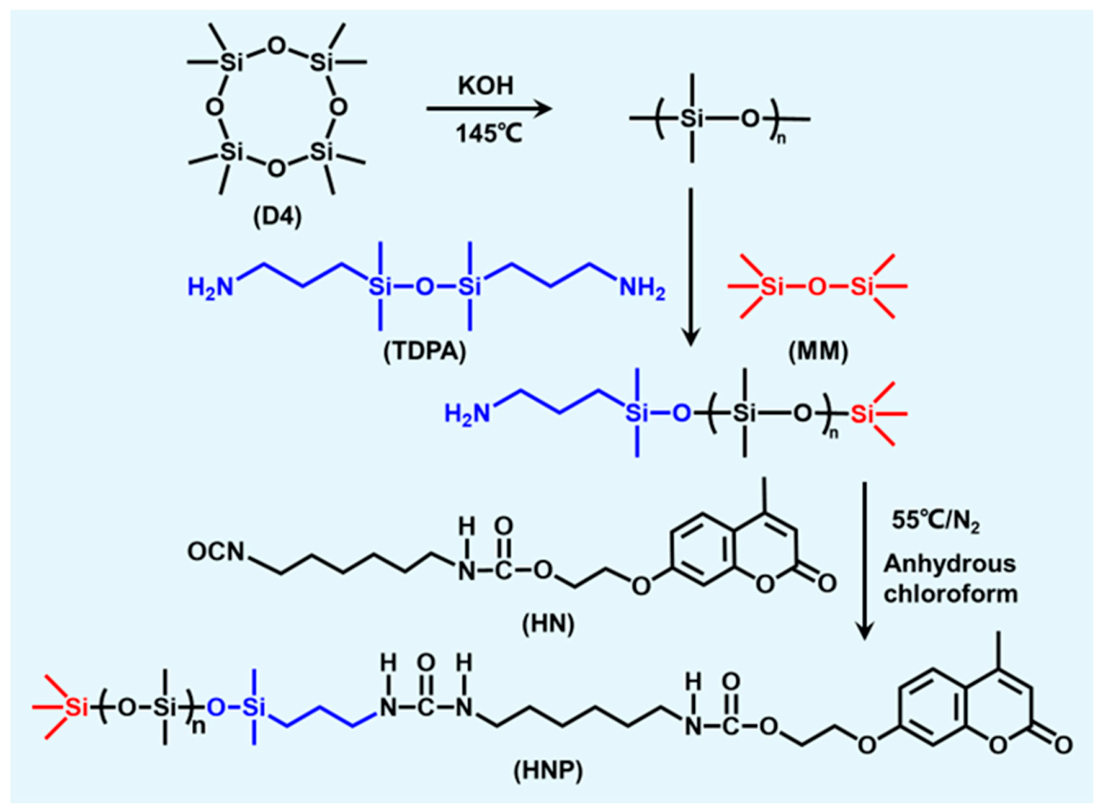
Separately, 19.42 g (30.0 mmol) of HN was dissolved in 20 mL of anhydrous trichloromethane. Under a N2 atmosphere, 59.12 g (29.6 mmol) of the mono-amino-terminated PDMS was slowly added to the HN solution. The mixture was stirred at 55 °C for 6 h, then transferred to a vacuum oven at 50 °C and dried for 5 h to obtain the liquid coumarin-based PDMS, designated as HNP in Figure 1.

2.3. Synthesis of PDMS-PUx

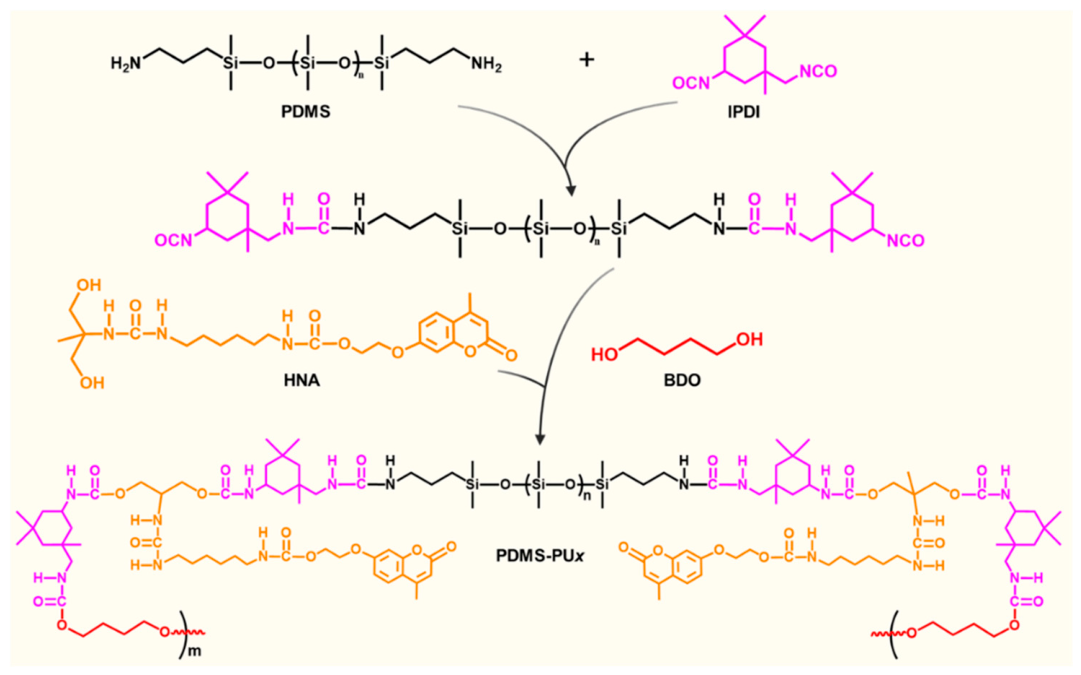
The synthesis procedure for PDMS-PUx via the prepolymer method is illustrated in Figure 2. Five different PDMS-PUx samples were synthesized according to the addition ratios of BDO and HNA (Table S1), where “x” in PDMS-PUx represents the molar ratio of the chain extender HNA to BDO. The synthesis of PDMS-PU3/1 is described as a representative example. First, 20 g (5 mmol) of NH2-PDMS-NH2 was placed in a reaction flask and dried under vacuum at 120 °C for 2 h to remove residual moisture. The temperature was then reduced to 55 °C, and under a N2 atmosphere, 2.24 g (10 mmol) of IPDI was added. The mixture was stirred for 4 h to obtain a viscous prepolymer. Separately, 1.86 g (3.75 mmol) of HNA and 0.12 g (1.25 mmol) of BDO were dissolved in 25 mL of anhydrous CHCl3. Under N2 protection, this solution was added to the prepolymer, followed by the addition of 50 μL of DBTDL. The reaction was continued for 12 h to obtain a transparent PDMS-PU3/1 solution, in which the PDMS-PU3/1 content was 40 wt%.

2.4. Preparation of HNP-PDMS-PUx Coatings

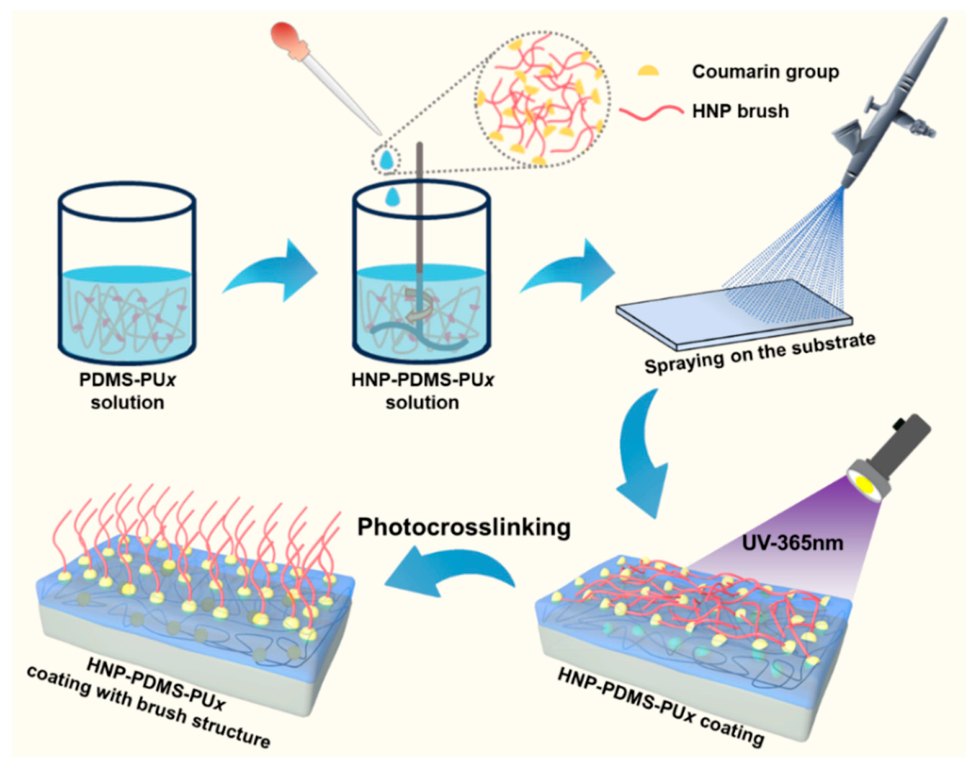
HNP was added to the PDMS-PUx solution to achieve a content of 5 wt% HNP in the mixed solution. After thorough mixing, the resulting HNP-PDMS-PUx solution was obtained. The HNP-PDMS-PUx solution was applied to substrates, such as glass, by spray coating and allowed to dry naturally. Subsequently, the coated substrates were irradiated with a 365 nm UV lamp for 120 min to obtain the HNP-PDMS-PUx coatings (Figure 3). The preparation mechanism of the coating is shown in Figure S1.

2.5. Characterization

The chemical structures of the synthesized materials were characterized by 1H NMR and FTIR spectroscopy. Thermal properties were evaluated by TGA and DSC. Surface hydrophobicity was assessed by static water contact angle measurements (4 µL droplets, n = 5). Adhesion strength was measured using a servo tensile testing machine. Abrasion resistance was evaluated using 400-grit sandpaper under a 500 g load. Flexibility was tested by the mandrel bend test according to ASTM D522 [35]. Self-cleaning performance was evaluated using liquid (ink, tea, milk) and solid (dyes, dust) contaminants. Detailed experimental parameters, instrument models, and raw data are provided in the Supporting Information.

3. Results and Discussion

3.1. Chemical Structure Characterization of HNP

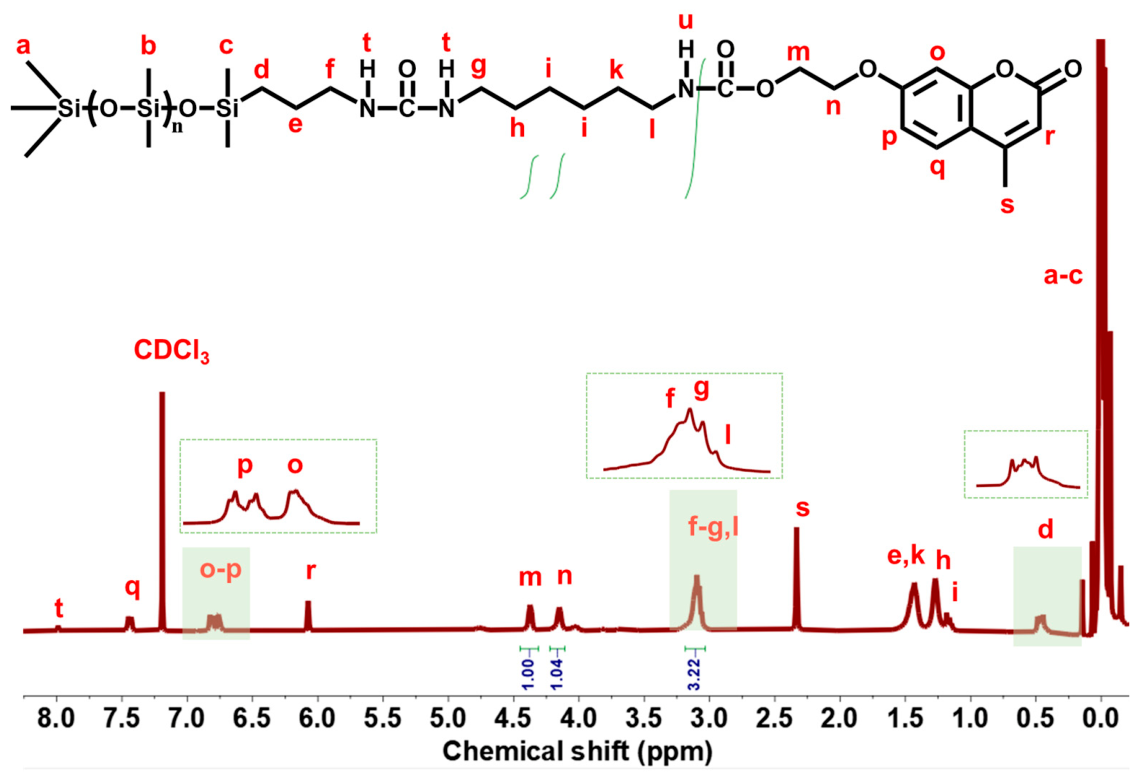
The HNP monomer was prepared via a two-step reaction, and its chemical structure was characterized by proton nuclear magnetic resonance (1H NMR) spectroscopy. The 1H NMR spectrum of HNP is shown in Figure 4. In the spectrum, the characteristic signals between 0.12 and 0.25 ppm (peaks a–c) correspond to the protons of the -CH3 groups in PDMS, appearing as a multiplet due to the complex coupling environment [31]. The signal at 0.46 ppm (peak d, t, 2H), 1.42 ppm (peak e, m, 2H), and 3.08 ppm (peak f, t, 2H) are attributed to the -CH2- protons in PDMS. The peaks between 1.14 and 3.10 ppm (peaks g–l) arise from the -CH2- protons of the grafted HDI unit, displaying overlapping multiplets [36]. The signals at 4.10–4.41 ppm (peaks m–n, m, 4H) belong to the -CH2- protons adjacent to the benzopyran ring. The signal at 6.06 ppm (peak r, s, 1H) is assigned to the olefinic proton adjacent to the -CH3 group on the benzopyran ring [37]. The signals at 6.71–7.98 ppm (peaks o–q) are attributed to the olefinic protons on the benzopyran ring, showing characteristic aromatic splitting patterns [4]. The signal at 2.34 ppm (peak s, s, 3H) corresponds to the -CH3 protons on the benzopyran ring. The signal at 8.00 ppm (peak t, s, 1H) is attributed to the proton of the urea group. The proton of the urethane group (-NHCOO-) is exchangeable and was not observed in the 1H NMR spectrum due to its active hydrogen nature. The 1H NMR spectrum of HNP was further analyzed by integrating characteristic peaks. The integrated area of m and n (-CH2-O-, adjacent to the coumarin ring) is 1, and the integrated area of f–l (-CH2- of the HDI unit) is 3.2. For the desired mono-amino-terminated product, the theoretical ratio of f–l to m and n is 3:1:1. The measured ratio (3.2:1:1) is very close to the theoretical value, confirming that the majority of the product is the desired mono-amino-terminated species. The slight excess of 0.2 is attributed to the presence of minor amounts of di-amino-terminated or non-functional PDMS species, which do not interfere with the structural assignments.

3.2. Structure Characterization of PDMS-PUx

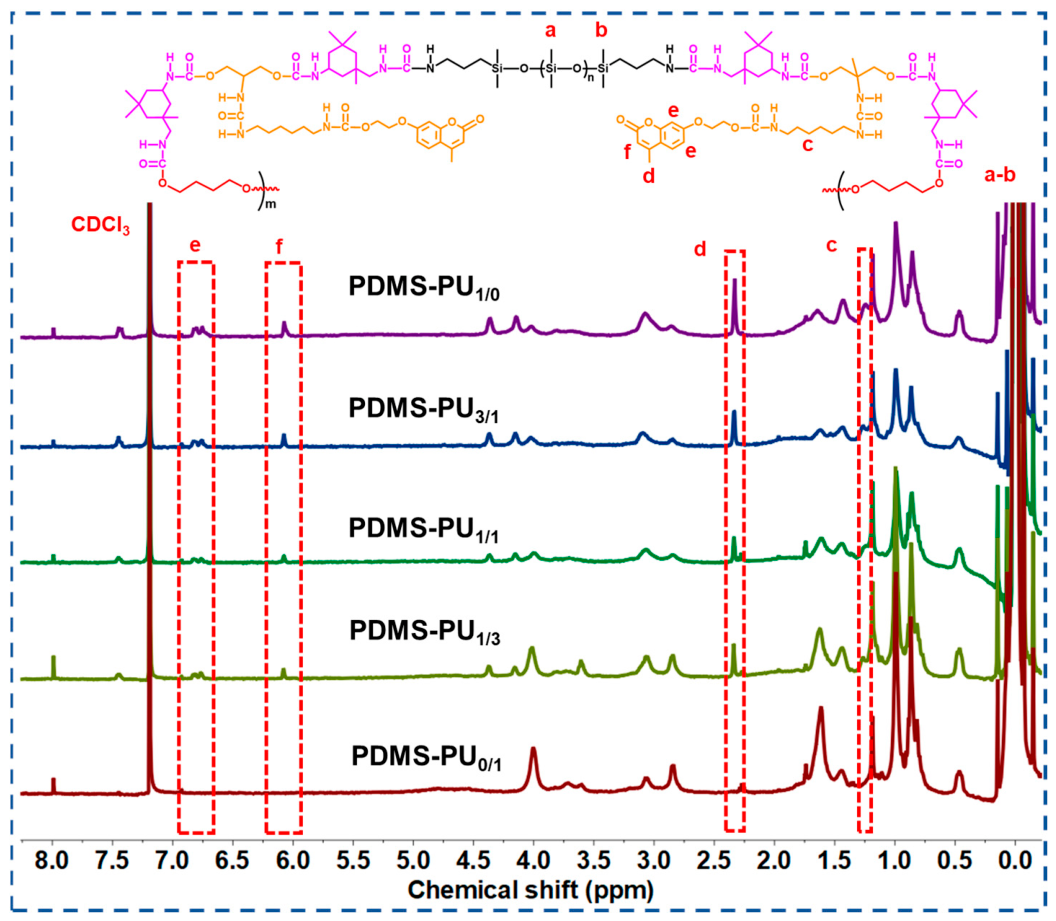
The PDMS-PUx samples were prepared via a two-step reaction, and their chemical structures were characterized by 1H NMR and FTIR spectroscopy. As shown in Figure 5, the absorption peaks observed between 0.10 and 0.23 ppm (a–b) are attributed to the protons of the -CH3 groups in PDMS. The characteristic peaks at 1.25 ppm (c) and 2.35 ppm (d) correspond to the protons of the -CH3 and -CH2- groups in HNA, respectively. Since PDMS-PU0/1 was synthesized using BDO exclusively as the chain extender without HNA, no absorption peaks were detected at c and d in its 1H NMR spectrum. In contrast, distinct peaks appeared at these positions for PDMS-PU1/0, PDMS-PU3/1, PDMS-PU1/1, and PDMS-PU1/3, indicating that HNA had been successfully incorporated into the polymer backbone. Furthermore, the absorption peaks at 6.0–6.9 ppm (e and f) are assigned to the protons of the benzopyran ring in HNA. Consistent with the previous observation, PDMS-PU0/1 showed no peak in this region, while the other four samples exhibited clear absorption signals, further confirming the successful introduction of HNA. Collectively, these 1H NMR results demonstrate that the PDMS-PUx samples with varying HNA-to-BDO ratios were successfully synthesized.
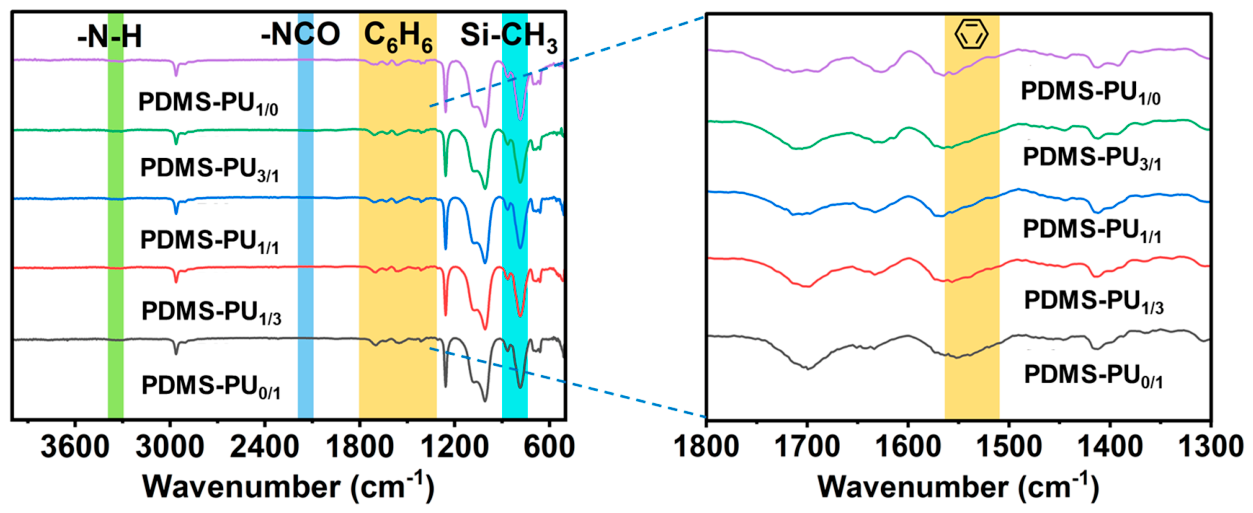
The structures of PDMS-PUx were further characterized by Fourier transform infrared (FTIR) spectroscopy, and the spectra are presented in Figure 6. All samples, including PDMS-PU1/0, PDMS-PU3/1, PDMS-PU1/1, PDMS-PU1/3, and PDMS-PU0/1, exhibited a distinct absorption band near 860 cm−1, which is attributed to the stretching vibration of -Si-CH3 [13]. This result indicates that PDMS was successfully incorporated into the PDMS-PUx coatings. In the region of 1500–1550 cm−1, absorption peaks arising from the skeletal vibration of the benzene ring were observed for PDMS-PU1/3, PDMS-PU1/1, PDMS-PU3/1, and PDMS-PU1/0, whereas no obvious absorption was detected for PDMS-PU0/1 [38]. These findings confirm that HNA, which contains a benzene ring structure, was successfully introduced into the corresponding coatings. Furthermore, no characteristic -NCO absorption peak was observed at 2250 cm−1 for any of the samples, while a distinct -N-H stretching peak corresponding to the urethane group appeared at 3321 cm−1 [36,39]. These results demonstrate that the isocyanate groups completely reacted with the amino groups in PDMS, confirming the successful synthesis of PDMS-PUx.

3.3. Thermal Stability of HNP-PDMS-PU3/1 Coating

The glass transition temperature (Tg) and melting temperature (Tm) of the coating were determined by differential scanning calorimetry (DSC). Tg critically influences the mechanical properties of hydrophobic coatings and largely determines their performance in practical applications. A low Tm may cause the coating to soften or deform when the ambient temperature approaches this value, thereby compromising its hydrophobicity and service life.
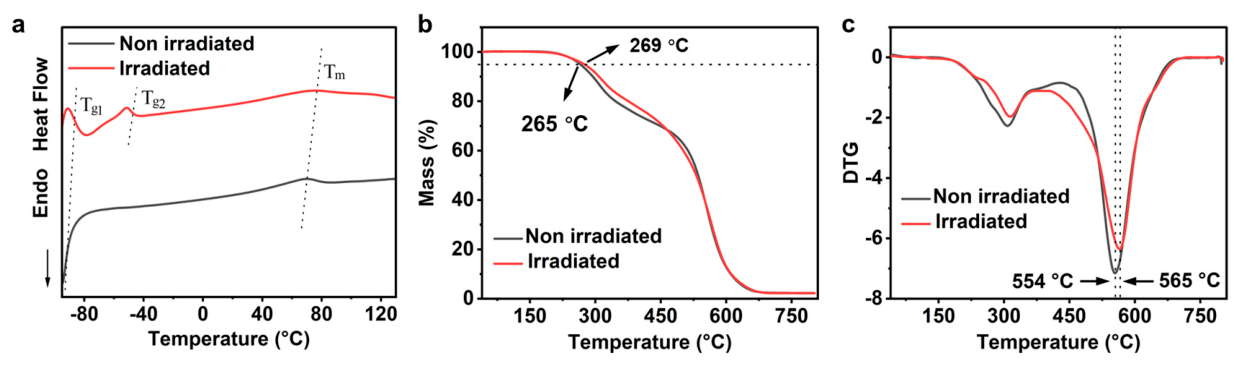
As shown in Figure 7a, before UV irradiation, the coating did not show a distinct glass transition temperature. After UV exposure, two distinct Tg values appeared at −85 °C and −46 °C. This change is attributed to UV-induced coumarin dimerization. The newly formed coumarin dimers act as crosslinks between polymer chains, restricting segmental mobility and thereby raising the Tg to −46 °C [40]. However, the dimerization reaction is not complete; the remaining non-crosslinked chains retain their initial linear state, showing a Tg g of −85 °C, which is close to the original value (around −90 °C). Furthermore, UV irradiation also increased the melting temperature (Tm) of the coating by 5 °C (to 77 °C), indicating enhanced thermal resistance.
The thermal stability of the HNP-PDMS-PU3/1 coating was evaluated by thermogravimetric analysis (TGA). As shown in Figure 7b, the thermal degradation of the coating proceeded through four distinct stages. The profiles for samples with and without UV irradiation followed similar trends. Stage I (35–260 °C): Negligible mass loss occurs, demonstrating good thermal stability in this range. Stage II (260–460 °C): A rapid mass loss is observed, primarily due to the thermal cleavage of urethane bonds, marking the onset of decomposition. Stage III (460–670 °C): The mass loss rate accelerates further, corresponding to the degradation of thermally stable components, such as PDMS and IPDI.
Stage IV (670–800 °C): The degradation slows down and reaches a plateau, indicating that the sample has been almost completely decomposed.
A quantitative comparison of the thermal performance (Table S2) shows that UV irradiation improves coating stability. Specifically, the temperature for 5% mass loss (T5%) increases from 265.1 °C to 269.6 °C after UV treatment. The modest improvement in thermal stability (T5% increases by only 4.5 °C) can be attributed to two factors. First, as evidenced by the DSC results (Figure 7a), UV-induced crosslinking occurs only in localized domains where coumarin dimerization takes place, while other regions remain non-crosslinked. Second, the coumarin moieties are grafted onto PDMS soft segments, so crosslinking occurs primarily in the soft segments rather than directly reinforcing the hard segments (urethane bonds) that dominate thermal decomposition in the 260–460 °C range. Furthermore, as shown in Figure 7c, the temperatures of the maximum decomposition rate for the two degradation stages (Tmax1 and Tmax2) also increased slightly upon UV irradiation, rising from 307.1 °C and 553.6 °C to 314.5 °C and 565.6 °C, respectively. These marginal increases (approximately 2%) suggest that UV-induced crosslinking has a limited effect on the thermal decomposition behavior of the coating.
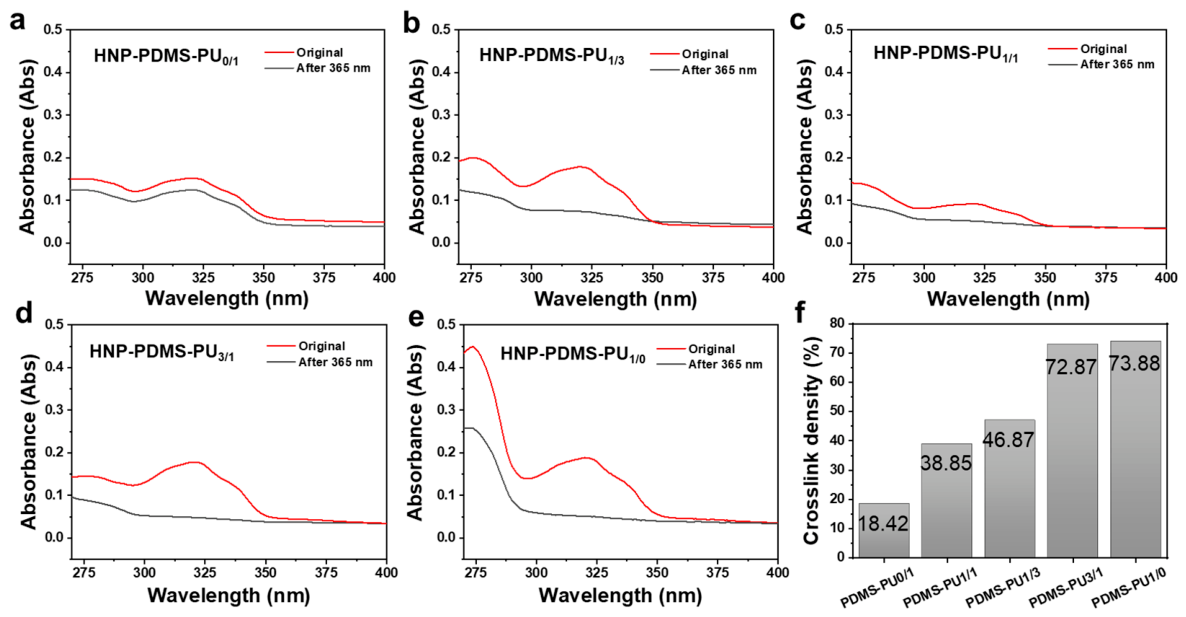
To provide direct spectroscopic evidence for UV-induced coumarin dimerization, UV-Vis absorption spectra of the HNP-PDMS-PUx coating were recorded before and after 365 nm UV irradiation for 120 min. As shown in Figure 8a–e, the coatings exhibit a characteristic absorption peak at approximately 320 nm before UV irradiation, which is attributed to the π → π* transition of the coumarin C=C bond in the pyranone ring [31]. After 120 min of 365 nm UV irradiation, the intensity of this peak decreases significantly, indicating the consumption of coumarin C=C bonds due to [2+2] cycloaddition dimerization [36]. The dimerization conversion rate (DCR) was calculated using the following equation: DCR = (1 − A120/A0) × 100%. Where A0 and A120 are the absorbance intensities at 320 nm before and after 120 min of UV irradiation, respectively. The DCR was calculated to be approximately 18%–73% in Figure 8f, confirming that a substantial degree of coumarin dimerization has been achieved upon UV exposure. This spectroscopic result provides direct evidence that UV irradiation effectively triggers coumarin crosslinking in the coating network.

3.4. Adhesion Performance and Flexibility

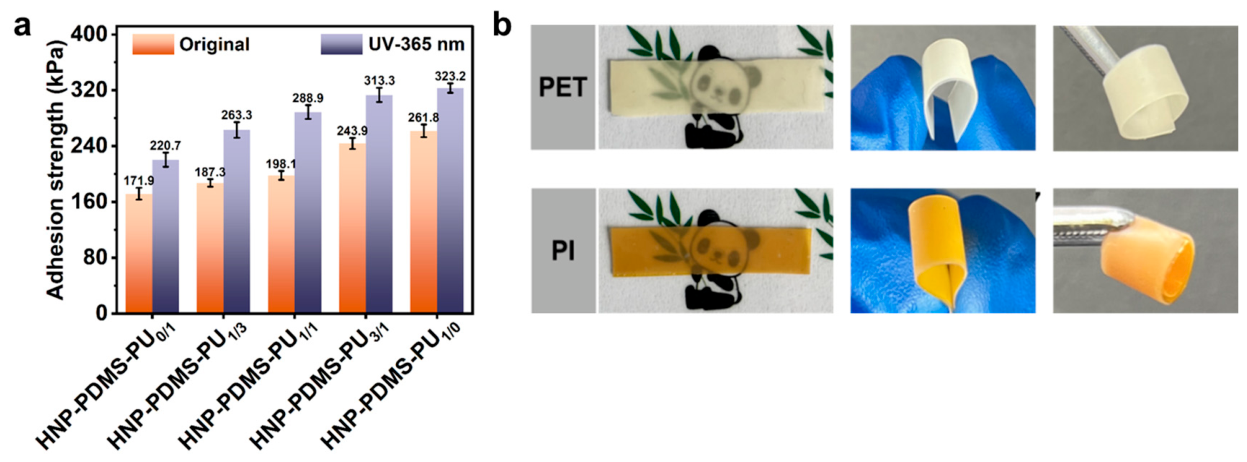
The adhesion performance of hydrophobic coatings is critical for their reliable operation. Only when a coating firmly adheres to the substrate surface can it ensure long-term stable hydrophobicity. The adhesion performance of HNP-PDMS-PUx coatings on glass is shown in Figure 9a. Regardless of UV irradiation, the adhesion strength of all coatings increased with increasing HNA content. This can be attributed to two factors. First, the incorporation of HNA introduces additional urethane and urea groups into the polymer network after reaction with isocyanate. These polar groups can form hydrogen bonds with the hydroxyl groups on the glass surface, enhancing interfacial adhesion. Second, a higher HNA content increases the hard segment content and crosslinking density of the coating, thereby improving its cohesive strength. After UV irradiation, the adhesion strengths of HNP-PDMS-PU0/1, HNP-PDMS-PU1/3, HNP-PDMS-PU1/1, HNP-PDMS-PU3/1, and HNP-PDMS-PU1/0 all increased, reaching 220.7 kPa, 263.3 kPa, 288.9 kPa, 313.3 kPa, and 323.2 kPa, respectively. Two main reasons account for this enhancement. On the one hand, UV irradiation induces the dimerization of coumarin groups, forming covalent crosslinks between polymer chains. This crosslinking increases the cohesive strength of the coating, thereby improving its adhesion to the glass substrate [40]. On the other hand, the higher crosslinking density restricts chain mobility, which enhances the mechanical integrity of the coating and further contributes to the adhesion improvement [41]. The hydrogen bonds present in the coating (from urethane and urea groups) remain intact and continue to contribute to interfacial adhesion, but the primary driver of the increased adhesion upon UV irradiation is the formation of the covalent crosslinking network. Overall, the adhesion strength of HNP-PDMS-PUx increased by 23.5% to 45.8% after UV irradiation. Taking HNP-PDMS-PU3/1 as an example, its flexibility was evaluated using a mandrel bend test. The coating achieved a flexibility rating of F7. Moreover, HNP-PDMS-PU3/1 could also firmly adhere to flexible substrates such as PET and PI, exhibiting good flexibility and adhesion under bending and curling conditions (Figure 9b).

3.5. Hydrophobic Performance

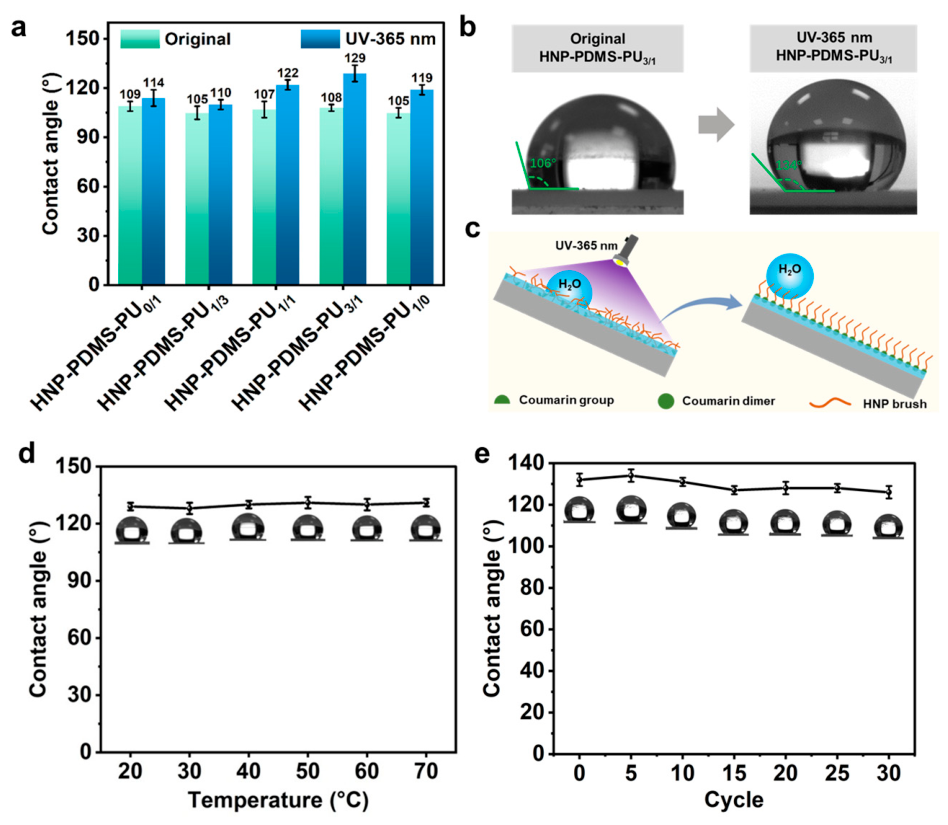
The contact angle provides direct insight into the wetting behavior of a liquid on a solid surface. When the contact angle is below 90°, the liquid can spread across the solid surface, achieving wetting; a smaller contact angle indicates better wettability. In contrast, when the contact angle exceeds 90°, the liquid cannot effectively spread on the solid surface, resulting in poor wettability, and a larger contact angle corresponds to more pronounced hydrophobicity. Figure 10a presents the changes in contact angles of HNP-PDMS-PUx coatings before and after UV irradiation. Prior to UV exposure, the contact angles of HNP-PDMS-PU0/1, HNP-PDMS-PU1/3, HNP-PDMS-PU1/1, HNP-PDMS-PU3/1, and HNP-PDMS-PU1/0 were 109°, 105°, 107°, 108°, and 105°, respectively. After UV irradiation, the contact angles of all coatings increased, reaching 114°, 110°, 122°, 129°, and 119°, respectively, with an average increase of approximately 12°. Notably, the maximum contact angle of HNP-PDMS-PU3/1 reached 134° (Figure 10b). It should be noted that the maximum water contact angle achieved in this work is 134°, which does not reach the superhydrophobic range (typically >150°). Nevertheless, this value represents a significant improvement compared to the unmodified coating (106°).
Figure 10c presents a schematic illustration of the surface structural changes of the HNP-PDMS-PU3/1 coating before and after UV irradiation. Prior to UV exposure, the PDMS component in HNP, owing to its low surface energy, gradually migrated toward the coating surface but did not form a well-ordered brush-like structure. Upon UV irradiation, the coumarin groups in HNP underwent dimerization with those in the coating, forming coumarin dimers and generating a large number of regular and dense brush-like structures on the coating surface. When a water droplet falls onto the coated surface, it is supported by these bristles. Meanwhile, air pockets are trapped in the gaps between the bristles and the water droplet, reducing the actual contact area between the droplet and the coating surface. This hinders droplet spreading, increases the contact angle, and thereby enhances the hydrophobicity of the coating. These results indicate that UV irradiation can modulate the surface structure of the HNP-PDMS-PU3/1 coating and improve its hydrophobic performance. Static contact angle measurements demonstrated that the HNP-PDMS-PU3/1 coating exhibited the best hydrophobic effect after UV irradiation, while also achieving an adhesion strength exceeding 300 kPa. Therefore, this coating was selected for subsequent experiments.
Monitoring the change in contact angle as a function of temperature allows evaluation of the hydrophobic performance of the coating under different thermal conditions, providing insights into its service life and temperature adaptability. Figure 10d shows the contact angles of the HNP-PDMS-PU3/1 coating at various temperatures. The coating was allowed to equilibrate at each target temperature for 1 h, after which a fresh water droplet was deposited, and the contact angle was measured immediately to minimize evaporation effects. At 20 °C, 30 °C, 40 °C, 50 °C, 60 °C, and 70 °C, the contact angles were 129°, 128°, 130°, 131°, 130°, and 131°, respectively. The contact angles remained around 130° across the temperature range of 20–70 °C, with a slight increase as the temperature rose. These results indicate that the HNP-PDMS-PU3/1 coating maintains excellent hydrophobic performance over a wide temperature range.
In practical applications, abrasion resistance is a critical performance indicator for coatings on objects that are long-term exposed to outdoor environments and subject to frequent friction, such as steel structures and bridges. Abrasion resistance helps determine the effective protection duration of a coating in natural environments, ensuring timely healing or recoating before coating failure to maintain hydrophobicity and extend service life. Figure 10e presents the contact angles of the HNP-PDMS-PU3/1 coating after different numbers of abrasion cycles. After 0, 5, 10, 15, 20, 25, and 30 cycles, the contact angles were 132°, 134°, 131°, 127°, 128°, 128°, and 126°, respectively. Notably, a small number of abrasion cycles did not reduce the contact angle but instead led to a slight increase. This slight increase may be attributed to the removal of surface contaminants or loosely bound PDMS oligomers during the initial abrasion cycles, exposing a cleaner hydrophobic surface. Alternatively, mild abrasion may promote further surface migration of PDMS chains due to their low surface energy. Even after 30 cycles, the contact angle remained at 126°, showing no significant decline. These results demonstrate that the HNP-PDMS-PU3/1 coating possesses good abrasion resistance and retains its hydrophobic performance even after repeated friction.
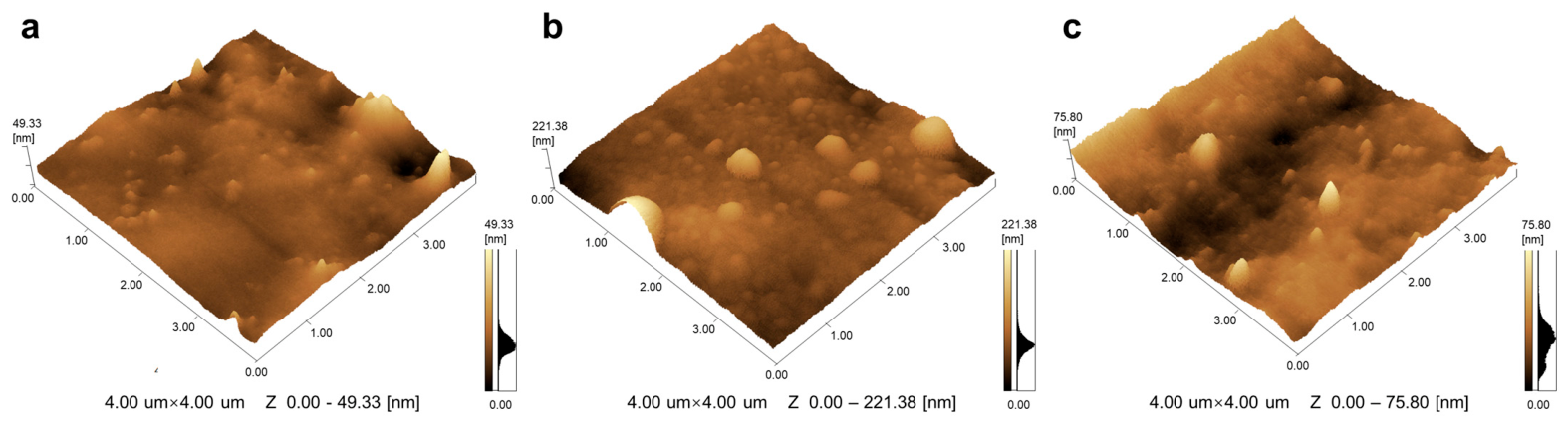
To gain insight into the micro-mechanism behind the abrasion resistance, AFM was used to characterize the surface morphology of the HNP-PDMS-PU3/1 coating before and after UV irradiation, as well as after abrasion cycles (Figure 11). The 3D height images reveal a notable evolution. The pristine coating (before UV) exhibited a relatively smooth surface (Sa = 2.82 nm). Upon UV irradiation, the surface became moderately rougher (Sa = 13.78 nm), which is associated with the formation of the crosslinked coumarin-PDMS brush network. Strikingly, even after 30 abrasion cycles, the coating still displayed a well-defined and intact topography, with no evidence of deep scratches or material peeling. Although the roughness decreased to Sa = 7.55 nm due to the gentle wear of the outermost brush tips, the overall network structure remained completely preserved. This direct morphological evidence confirms that the in situ-generated crosslinked network is not only hydrophobic but also highly durable and well-anchored to the substrate, which aligns with the excellent retention of the water contact angle (126°) observed after abrasion.
To better understand the role of each component, a systematic comparison was made among pure PU (literature values), PU-PDMS (without coumarin), and PU-coumarin-PDMS (with coumarin). As summarized in Table S3, pure PU exhibits limited hydrophobicity (water contact angle 70–80°) and undergoes photodegradation upon UV exposure, leading to significant adhesion loss [42]. The introduction of PDMS increases the contact angle to 109° and, due to its UV stability and surface enrichment, prevents UV-induced degradation, but no crosslinking occurs. Only when coumarin is present does UV irradiation induce crosslinking via coumarin dimerization, resulting in enhanced contact angle (134°), adhesion (improved 45%), and the appearance of two Tg values in DSC. Thus, coumarin is the essential photo-responsive component for UV-triggered network crosslinking and property enhancement, while PDMS provides intrinsic hydrophobicity and UV protection.
The above results establish a clear structure-property correlation in this system. UV-Vis spectroscopy confirms the occurrence of coumarin photodimerization upon 365 nm UV irradiation (Figure 8). This crosslinking reaction directly enhances the mechanical strength of the coating. As shown in Figure 8f, the dimerization conversion rate (DCR) increases with increasing HNA content, and the adhesion strength follows the same order, with HNP-PDMS-PU1/0 (the highest DCR) reaching 323 kPa. Notably, HNP-PDMS-PU3/1 shows the largest increase in adhesion strength after UV irradiation (45%), indicating efficient crosslinking in this formulation.
The crosslinking also modifies the surface chemistry and topography. AFM characterization (Figure 11) reveals that UV irradiation increases the surface roughness (Sa from 2.82 nm to 13.78 nm) due to the formation of a crosslinked PDMS brush network. This nanoscale roughness, combined with the low surface energy of PDMS, creates a Cassie-Baxter state where air pockets reduce the solid–liquid contact area. Consequently, the water contact angle increases from 108° to 134° (Figure 10a). Thus, UV-induced coumarin crosslinking simultaneously enhances adhesion (via increased cohesive strength) and surface hydrophobicity (via brush-induced roughness and low surface energy), leading to the overall performance improvement.

3.6. Easy-Cleaning Performance

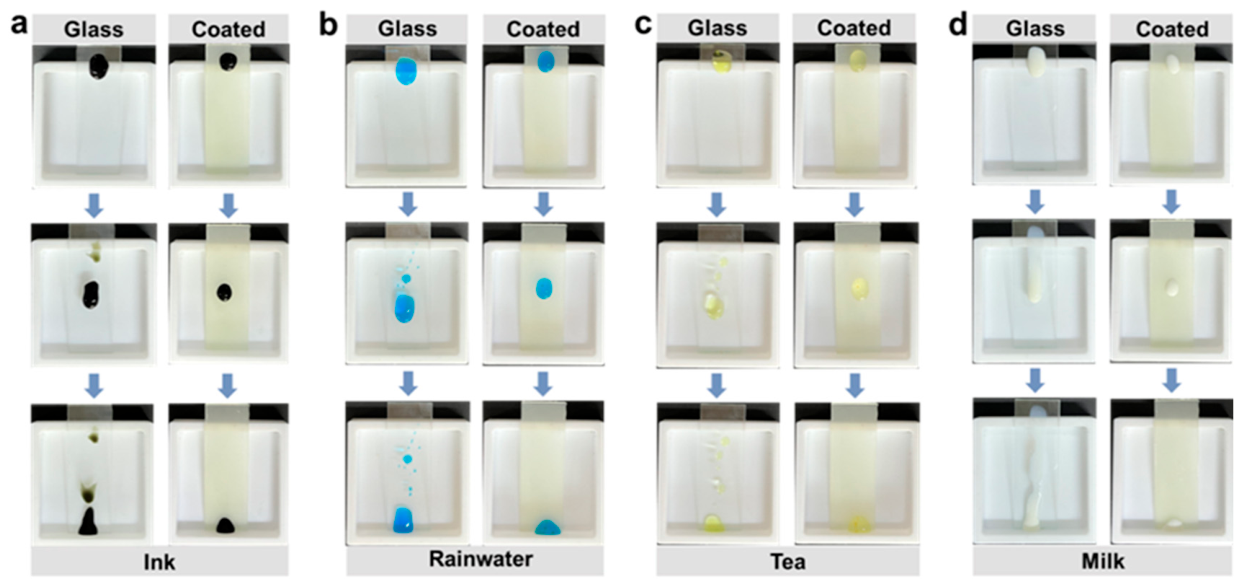
Rainwater, tea, ink, and milk were used to simulate common liquid contaminants in daily life. Using ordinary glass as a reference, the easy-cleaning performance of the HNP-PDMS-PU3/1 coating against these liquid contaminants was evaluated.
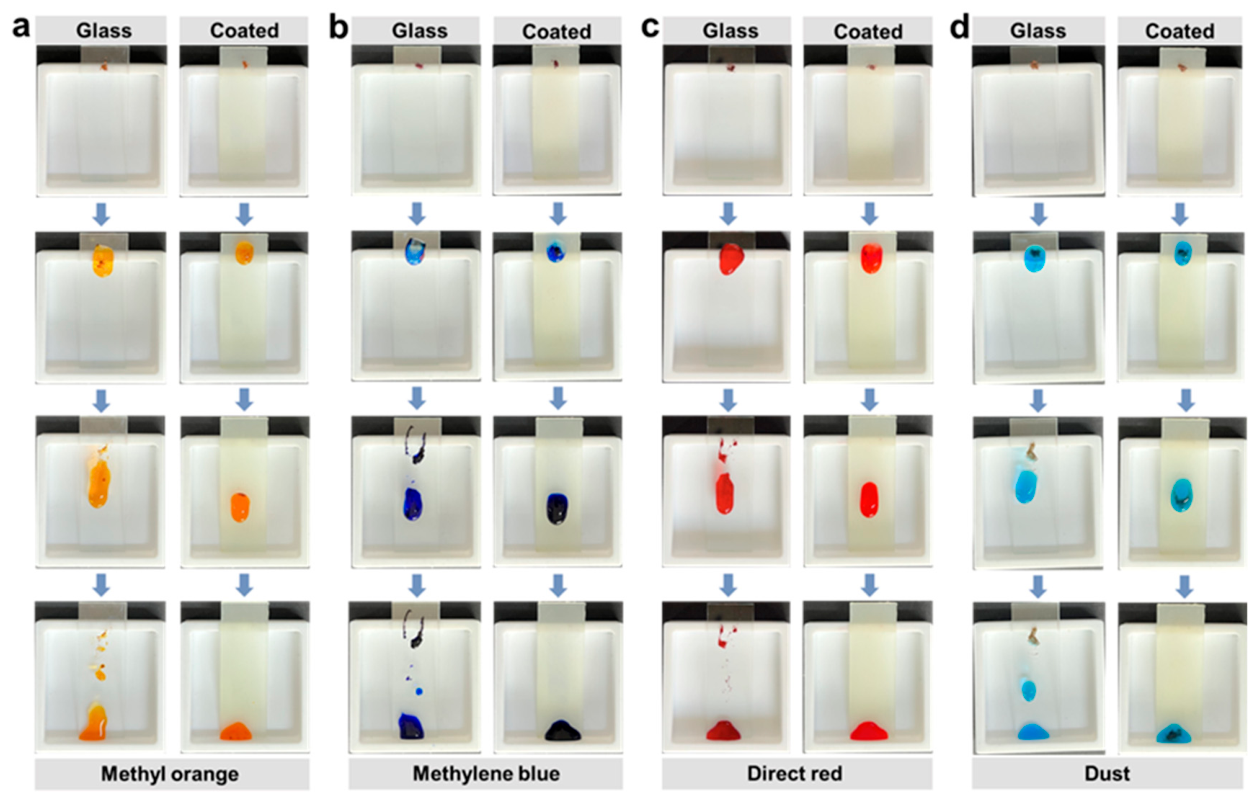
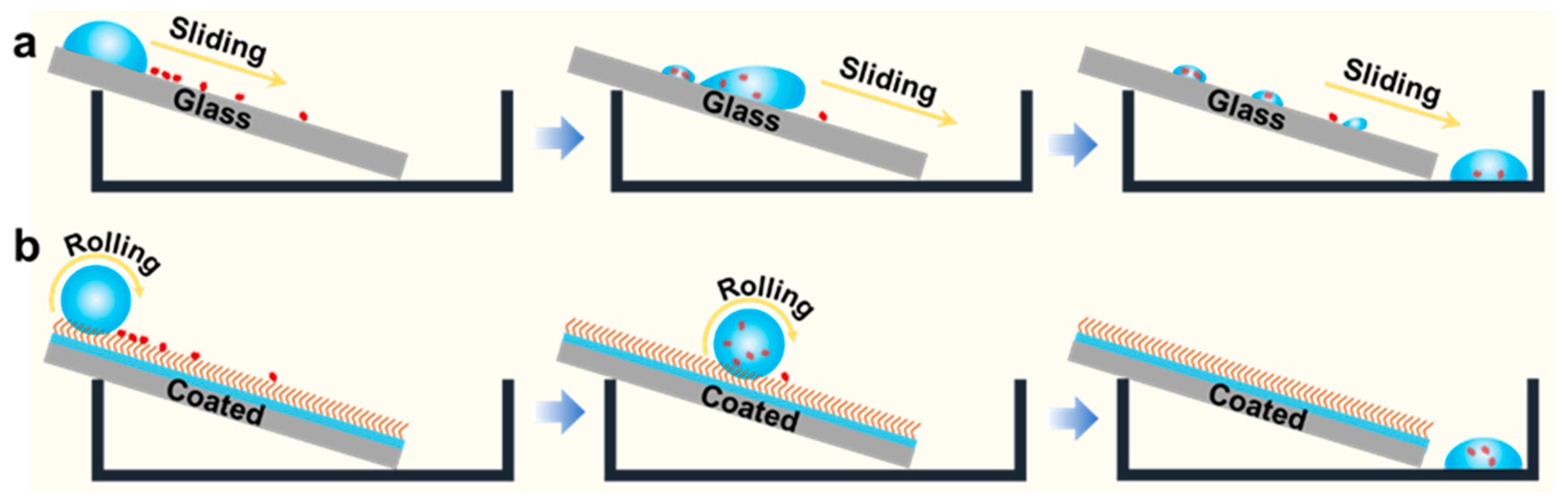
As shown in Figure 12, on the surface of ordinary glass, ink, rainwater, tea, and milk could not roll off quickly, leaving obvious traces during sliding. In contrast, after coating the glass surface with HNP-PDMS-PU3/1, all these liquids rolled off within 10 s without leaving any residue, indicating that the coating effectively repels these common liquids and exhibits excellent easy-cleaning performance against liquid contaminants. For comparison, the self-cleaning performance of the coating without UV irradiation was also evaluated. As shown in Figure S2, liquid contaminants (ink, rainwater, tea, and milk) required 30–40 s to slide off the unirradiated coating surface, compared to <10 s for the UV-irradiated coating. Moreover, visible ink traces remained on the unirradiated surface after droplet sliding, whereas no residue was observed on the UV-irradiated coating. These results confirm that UV-induced coumarin crosslinking significantly enhances the self-cleaning performance. Direct Red, methyl orange, methylene blue, and dust were used to simulate common solid contaminants in daily life, again using ordinary glass as a reference. As shown in Figure 13, on ordinary glass, soluble dyes such as methylene blue, methyl orange, and Direct Red partially dissolved in water droplets and slowly slid off the glass surface, but left obvious traces. The remaining undissolved dye and insoluble dust continued to adhere to the glass surface and could not be removed by the sliding droplets. On the HNP-PDMS-PU3/1-coated surface, methylene blue, methyl orange, and Direct Red also partially dissolved in water droplets, while the undissolved portions and insoluble dust were wrapped by the droplets and carried away as the droplets rolled off. Moreover, owing to the excellent hydrophobicity of the coating, the wettability of water droplets on its surface is extremely poor, so no traces were left during droplet rolling. Thus, the coating not only removes surface contaminants but also maintains a clean surface, demonstrating outstanding easy-cleaning performance. Quantitative analysis of self-cleaning efficiency was performed using a gravimetric method (see Supporting Information for details). As summarized in Table S4, the residual carbon black powder after water rinsing was only 0.6 mg, corresponding to a self-cleaning efficiency of 97% (η = 97%). This result confirms the excellent self-cleaning performance of the HNP-PDMS-PU3/1 coating.
Contaminants such as dust are firmly adsorbed onto glass surfaces through electrostatic interactions, and water molecules readily form hydrogen bonds with the glass surface, resulting in strong hydrophilicity. Consequently, under natural conditions, dust and other contaminants on glass surfaces are not only difficult to remove by rolling water droplets but also leave obvious water stains (Figure 14a). When the glass surface is coated with HNP-PDMS-PU3/1, the situation changes significantly. On the one hand, the coating surface is densely covered with HNP-formed “bristles”, whose main component is PDMS. PDMS has low surface energy and contains few polar groups, leading to weak hydrogen bonding or electrostatic interactions with water droplets or contaminants such as dust, thereby endowing the coating with good hydrophobicity. On the other hand, the dense arrangement of the HNP “bristles” creates a rough surface resembling the “lotus leaf model”, further enhancing the hydrophobicity of the coating. Because the interactions between dust or other contaminants and water droplets are stronger than those between the contaminants and the coating, the contaminants are adsorbed by the water droplets and carried away as the droplets roll off the coating surface, achieving easy cleaning (Figure 14b).
The easy-cleaning performance of the HNP-PDMS-PU3/1 coating holds significant practical importance. When applied to glass surfaces, it maintains a clean and glossy appearance, reducing the frequency and cost of manual cleaning. When applied to instrument surfaces, it reduces the residence time of corrosive substances (e.g., acid rain components, salt spray) on the surface, thereby lowering the risk of corrosion and extending the service life of the equipment. In summary, the excellent easy-cleaning performance of the HNP-PDMS-PU3/1 coating greatly expands its potential applications.


4. Conclusions

In this work, a series of coumarin-based PDMS-PU coatings (HNP-PDMS-PUx) were successfully synthesized via UV-triggered dimerization of coumarin-grafted PDMS. After 365 nm UV irradiation, the optimal coating (HNP-PDMS-PU3/1) exhibited a maximum water contact angle of 134°, representing a significant improvement in surface hydrophobicity. The UV-treated coating also showed enhanced thermal stability, with increased decomposition temperature (T5% from 265.1 °C to 269.6 °C), as well as improved adhesion strength (from 215 kPa to 313 kPa, a 45% increase). Moreover, the coating maintained good hydrophobicity over a wide temperature range (20 °C to 70 °C, contact angle ~130°) and under repeated abrasion cycles (30 cycles, contact angle remained at 126°). More importantly, the HNP-PDMS-PU3/1 coating demonstrated excellent easy-cleaning performance against both liquid and solid contaminants, leaving no visible residues or water stains after cleaning. This work provides a facile UV-irradiation strategy to significantly enhance the hydrophobicity and easy-cleaning performance of PDMS-based PU coatings, offering new insights for the development of high-performance protective and self-cleaning materials.

Supplementary Materials

The following supporting information can be downloaded at https://www.mdpi.com/article/10.3390/coatings16060669/s1, Figure S1: The preparation mechanism of the PDMS-PUx coating; Figure S2: Easy-cleaning performance of HNP-PDMS-PU3/1 for liquid pollutants (original); Table S1: Formula and proportion of PDMS-PUx; Table S2: Thermal performance data of HNP-PDMS-PU3/1; Table S3: Comparison of contact angle (CA) and adhesion strength; Table S4: Gravimetric analysis of self-cleaning efficiency.

Author Contributions

Conceptualization, methodology, writing—original draft preparation, J.X. and X.J.; formal analysis, investigation, data curation, M.W. and L.Y.; writing—review and editing, visualization, validation, H.X.; supervision, project administration, funding acquisition, B.Y. All authors have read and agreed to the published version of the manuscript.

Funding

This research was funded by the Joint Funds of the National Natural Science Foundation of China (grant number: U23B2087).

Institutional Review Board Statement

Not applicable.

Informed Consent Statement

Not applicable.

Data Availability Statement

Data are contained within the article and the Supplementary Materials.

Conflicts of Interest

The authors declare no conflicts of interest.

References

  1. Leslie, D.C.; Waterhouse, A.; Berthet, J.B.; Valentin, T.M.; Watters, A.L.; Jain, A. A bioinspired omniphobic surface coating on medical devices prevents thrombosis and biofouling. Nat. Biotechnol. 2014, 32, 1134–1140. [Google Scholar] [CrossRef] [PubMed]
  2. He, S.; Chen, J.; Lu, Y.; Huang, S.; Feng, K. Enhanced waterproof performance of superhydrophobic SiO2/PDMS coating. Prog. Org. Coat. 2024, 197, 108845. [Google Scholar] [CrossRef]
  3. Shi, C.Y.; Zhang, Q.; Yu, C.Y.; Rao, S.J.; Yang, S.; Tian, H.; Qu, D.H. An Ultrastrong and Highly Stretchable Polyurethane Elastomer Enabled by a Zipper-like Ring-Sliding Effect. Adv. Mater. 2020, 32, 2000345. [Google Scholar] [CrossRef]
  4. Fathi, F.; Nazarlou, Z.; Aydemir, U.; Olad, A. Anti-icing and antibacterial super-hydrophobic poly(dimethyl siloxane) coatings modified with silica, TiO2, Ag3PO4, and CuO nanoparticles. Mater. Chem. Phys. 2025, 333, 130333. [Google Scholar] [CrossRef]
  5. Zhong, X.; Hu, H.; Yang, L.; Sheng, J.; Fu, H. Robust Hyperbranched Polyester-Based Anti-Smudge Coatings for Self-Cleaning, Anti-Graffiti, and Chemical Shielding. ACS Appl. Mater. Interfaces 2019, 11, 14305–14312. [Google Scholar] [CrossRef]
  6. Graur, V.; Mukherjee, A.; Sebakhy, K.O.; Bose, R.K. Initiated Chemical Vapor Deposition (iCVD) of Bio-Based Poly(tulipalin A) Coatings: Structure and Material Properties. Polymers 2022, 14, 3993. [Google Scholar]
  7. Wang, D.; Sun, Q.; Hokkanen, M.J.; Zhang, C.; Lin, F.Y.; Wang, Z.; Ras, R.H.A.; Deng, X. Design of robust superhydrophobic surfaces. Nature 2020, 582, 55–59. [Google Scholar] [CrossRef]
  8. Eduok, U.; Faye, O.; Szpunar, J. Recent developments and applications of protective silicone coatings: A review of PDMS functional materials. Prog. Org. Coat. 2017, 111, 124–163. [Google Scholar] [CrossRef]
  9. Ma, J.; Porath, L.E.; Haque, M.F.; Sett, S.; Rabbi, K.F.; Nam, S.; Miljkovic, N.; Evans, C.M. Ultra-thin self-healing vitrimer coatings for durable hydrophobicity. Nat. Commun. 2021, 12, 5210. [Google Scholar] [CrossRef]
  10. Wolf, M.P.; Salieb-Beugelaar, G.B.; Hunziker, P. PDMS with designer functionalities-Properties, modifications strategies, and applications. Prog. Polym. Sci. 2018, 83, 97–134. [Google Scholar]
  11. Shabanian, S.; Khatir, B.; Nisar, A.; Golovin, K. Rational design of perfluorocarbon-free oleophobic textiles. Nat. Sustain. 2020, 3, 1059–1066. [Google Scholar] [CrossRef]
  12. Rabnawaz, M.; Liu, G.; Hu, H. Fluorine-Free Anti-Smudge Polyurethane Coatings. Angew. Chem. Int. Ed. 2015, 54, 12722–12727. [Google Scholar] [CrossRef]
  13. Luo, H.; Wei, H.; Wang, L.; Gao, Q.; Chen, Y.; Xiang, J.; Fan, H. Anti-smudge and self-cleaning characteristics of waterborne polyurethane coating and its construction. J. Colloid Interface Sci. 2022, 628, 1070–1081. [Google Scholar] [CrossRef]
  14. Zhao, S.; Wu, L.; Zhou, S. Transparent and Durable Antismudge Polyurethane Coatings with Octadecyl Chlorosilane-Enhanced Bihydroxypropyl PDMS Polymer Brushes. ACS Appl. Polym. Mater. 2024, 6, 2349–2358. [Google Scholar] [CrossRef]
  15. Xiong, W.; Chen, B.; Peng, J.; Luo, X.; Pan, X.; Xiao, Z.; Gong, W.; Huang, Z.; Chu, Z.; Zhang, X.; et al. A dual-crosslinking strategy for waterborne polyurethane coatings to achieve outstanding anti-smudge and anti-corrosion properties. Chem. Eng. J. 2024, 490, 151509. [Google Scholar] [CrossRef]
  16. Syafiq, A.; Vengadaesvaran, B.; Rahim, N.A.; Pandey, A.K.; Bushroa, A.R.; Ramesh, K.; Ramesh, S. Transparent self-cleaning coating of modified polydimethylsiloxane (PDMS) for real outdoor application. Prog. Org. Coat. 2019, 131, 232–239. [Google Scholar] [CrossRef]
  17. Liu, H.; Huang, J.; Chen, Z.; Chen, G.; Zhang, K.Q.; Al-Deyab, S.S.; Lai, Y. Robust translucent superhydrophobic PDMS/PMMA film by facile one-step spray for self-cleaning and efficient emulsion separation. Chem. Eng. J. 2017, 330, 26–35. [Google Scholar] [CrossRef]
  18. Wang, Q.; Sun, G.; Tong, Q.; Yang, W.; Hao, W. Fluorine-free superhydrophobic coatings from polydimethylsiloxane for sustainable chemical engineering: Preparation methods and applications. Chem. Eng. J. 2021, 426, 130829. [Google Scholar] [CrossRef]
  19. Elshewy, A.; El Hariri El Nokab, M.; Es Sayed, J.; Alassmy, Y.A.; Abduljawad, M.M.; D’hooge, D.R.; Van Steenberge, P.H.M.; Habib, M.H.; Sebakhy, K.O. Surfactant-Free Peroxidase-Mediated Enzymatic Polymerization of a Biorenewable Butyrolactone Monomer via a Green Approach: Synthesis of Sustainable Biobased Latexes. ACS Appl. Polym. Mater. 2023, 6, 115–125. [Google Scholar] [CrossRef]
  20. Verho, T.; Bower, C.; Andrew, P.; Franssila, S.; Ikkala, O.; Ras, R.H.A. Mechanically Durable Superhydrophobic Surfaces. Adv. Mater. 2010, 23, 673–678. [Google Scholar] [CrossRef] [PubMed]
  21. Zhang, C.; Liang, F.; Zhang, W.; Liu, H.; Ge, M.; Zhang, Y.; Dai, J.; Wang, H.; Xing, G.; Lai, Y.; et al. Constructing Mechanochemical Durable and Self-Healing Superhydrophobic Surfaces. ACS Omega 2020, 5, 986–994. [Google Scholar] [CrossRef]
  22. Peng, C.; Chen, Z.; Tiwari, M.K. All-organic superhydrophobic coatings with mechanochemical robustness and liquid impalement resistance. Nat. Mater. 2018, 17, 355–360. [Google Scholar] [CrossRef]
  23. Li, Y.; Luo, Z.; Li, G.; Belwal, T.; Lin, X. Solvent-free, ultrafast and ultrathin PDMS coating triggered by plasma for molecule separation and release. Green. Chem. 2021, 23, 4181–4190. [Google Scholar] [CrossRef]
  24. Teisala, H.; Baumli, P.; Weber, S.A.L.; Vollmer, D.; Butt, H.J. Grafting Silicone at Room Temperature-a Transparent, Scratch-resistant Nonstick Molecular Coating. Langmuir 2020, 36, 4416–4431. [Google Scholar] [CrossRef]
  25. Krumpfer, J.W.; McCarthy, T.J. Rediscovering Silicones: “Unreactive” Silicones React with Inorganic Surfaces. Langmuir 2011, 27, 11514–11519. [Google Scholar] [CrossRef] [PubMed]
  26. Bodas, D.; Khan-Malek, C. Hydrophilization and hydrophobic recovery of PDMS by oxygen plasma and chemical treatment-An SEM investigation. Sens. Actuat. B-Chem. 2007, 123, 368–373. [Google Scholar] [CrossRef]
  27. Tian, K.; Chen, C.; Xiong, L.; Chen, X.; Fu, Q.; Deng, H. Fast-Crosslinking Enabled Self-Roughed Polydimethylsiloxane Transparent Superhydrophobic Coating and Its Application in Anti-Liquid-Interference Electrothermal Device. Small 2023, 20, 2308051. [Google Scholar] [CrossRef] [PubMed]
  28. Blasco, E.; Wegener, M.; Barner-Kowollik, C. Photochemically Driven Polymeric Network Formation: Synthesis and Applications. Adv. Mater. 2017, 29, 1604005. [Google Scholar] [CrossRef]
  29. Xu, F.; Feringa, B.L. Photoresponsive Supramolecular Polymers: From Light-Controlled Small Molecules to Smart Materials. Adv. Mater. 2023, 35, 2204413. [Google Scholar] [CrossRef]
  30. Zheng, C.; Liu, G.; Hu, H. UV-Curable Antismudge Coatings. ACS Appl. Mater. Interfaces 2017, 9, 25623–25630. [Google Scholar] [CrossRef]
  31. Tan, J.; Mao, X.; Hu, W.; Zeng, H. Facile fabrication of non-fluorine polymer brush/loop surfaces for oil/water separation and self-cleaning applications. Sep. Purif. Technol. 2024, 331, 125565. [Google Scholar] [CrossRef]
  32. Yuan, L.; Yang, X.; Chen, S.; Yang, Q.; Fu, R.; Gu, Y.; Han, L.; Yan, B. Constructing strong and tough polymer elastomers via photoreversible coumarin dimer mechanophores. ACS Appl. Mater. Interfaces 2025, 17, 2339–2348. [Google Scholar] [CrossRef] [PubMed]
  33. Masa, L.; Ghorai, A.; Chung, H. Soft-Segment Containing Lignin-Based Polyhydroxyurethanes: Controllable Flexibility Through PDMS Integration. Macromol. Rapid Commun. 2025, 46, 2500070. [Google Scholar] [CrossRef] [PubMed]
  34. Beniah, G.; Chen, X.; Uno, B.E.; Liu, K.; Leitsch, E.K.; Jeon, J.; Heath, W.H.; Scheidt, K.A.; Torkelson, J.M. Combined Effects of Carbonate and Soft-Segment Molecular Structures on the Nanophase Separation and Properties of Segmented Polyhydroxyurethane. Macromolecules 2017, 50, 3193–3203. [Google Scholar] [CrossRef]
  35. ASTM D522/D522M-17(2021); Standard Test Methods for Mandrel Bend Test of Attached Organic Coatings. ASTM International: West Conshohocken, PA, USA, 2021.
  36. Huang, Z.; Wang, M.; Yuan, L.; Wang, N.; Han, L.; Lu, X.; Yan, B. Photo-enhanced Dual-Functional Polyurethane: Balancing Flame Retardancy with Improved Mechanical and Self-Healing Properties. ACS Appl. Polym. Mater. 2026, 8, 5820–5830. [Google Scholar] [CrossRef]
  37. Tian, W.; Xu, H.; Guo, Z.; Yu, H.; Shang, Y.; Tian, L. Polyurethane coatings modified by OH-PDMS for anti-cavitation, antifouling and anticorrosion applications. Prog. Org. Coat. 2023, 179, 107515. [Google Scholar] [CrossRef]
  38. Salgado, C.; Arrieta, M.P.; Peponi, L.; López, D.; Fernández-García, M. Photo-crosslinkable polyurethanes reinforced with coumarin modified silica nanoparticles for photo-responsive coatings. Prog. Org. Coat. 2018, 123, 63–74. [Google Scholar] [CrossRef]
  39. Yang, G.; Zhang, Z.; Li, C.; Hu, J. A facile approach to fabricate omniphobic and robust polyurethane coatings for anti-smudge, anti-ink. Prog. Org. Coat. 2023, 179, 107488. [Google Scholar] [CrossRef]
  40. Germán-Ayuso, L.; Cuevas, J.M.; Seoane-Rivero, R.; Navarro, R.; Marcos-Fernández, A.; Vilas-Vilela, J.L. Improving the performance of biobased polyurethane dispersion by the incorporation of photo-crosslinkable coumarin. J. Coat. Technol. Res. 2023, 20, 1677–1690. [Google Scholar] [CrossRef]
  41. Seoane Rivero, R.; Navarro, R.; Bilbao Solaguren, P.; Gondra Zubieta, K.; Cuevas, J.M.; Marcos-Fernández, A. Synthesis and characterization of photo-crosslinkable linear segmented polyurethanes based on coumarin. Eur. Polym. J. 2017, 92, 263–274. [Google Scholar] [CrossRef]
  42. Yang, X.F.; Li, J.; Croll, S.G.; Tallman, D.E.; Bierwagen, G.P. Degradation of low gloss polyurethane aircraft coatings under UV and prohesion alternating exposures. Polym. Degrad. Stab. 2003, 80, 51–58. [Google Scholar] [CrossRef]
Figure 1. Preparation process of coumarin-based PDMS (HNP).
Coatings 16 00669 g001
Figure 2. Preparation process of PDMS-PUx.
Coatings 16 00669 g002
Figure 3. Preparation process of HNP-PDMS-PUx flexible coating.
Coatings 16 00669 g003
Figure 4. 1H NMR spectrum of HNP.
Coatings 16 00669 g004
Figure 5. 1H NMR spectra of PDMS-PUx.
Coatings 16 00669 g005
Figure 6. FTIR spectra of PDMS-PUx.
Coatings 16 00669 g006
Figure 7. DSC curves (a), TG curves (b), and DTG curves (c) of HNP-PDMS-PU3/1.
Coatings 16 00669 g007
Figure 8. UV-Vis absorption spectra (ae) of PDMS-PUx coatings before and after 365 nm UV irradiation for 120 min; (f) comparison of the dimerization conversion rates calculated from the absorbance change at 320 nm.
Coatings 16 00669 g008
Figure 9. Adhesion properties of HNP-PDMS-PUx (a), bending photos of HNP-PDMS-PU3/1 coating adhering to PET and PI (b).
Coatings 16 00669 g009
Figure 10. Contact angle of HNP-PDMS-PUx (a), schematic diagram of contact angle (b), and surface structure (c) of HNP-PDMS-PU3/1 coating before and after UV-365 nm. Variation in the contact angle of HNP-PDMS-PU3/1 with temperature (d) and friction cycles (e).
Coatings 16 00669 g010
Figure 11. AFM 3D height images (4 µm × 4 µm) and corresponding average roughness (Sa) of the HNP-PDMS-PU3/1 coating surface: (a) before UV irradiation; (b) after UV irradiation; and (c) after 30 abrasion cycles.
Coatings 16 00669 g011
Figure 12. Easy-cleaning performance of HNP-PDMS-PU3/1 for liquid pollutants. (a) ink; (b) rainwater; (c) tea; (d) milk.
Coatings 16 00669 g012
Figure 13. Easy-cleaning performance of HNP-PDMS-PU3/1 for solid pollutants. (a) methyl orange; (b) methylene blue; (c) direct red; (d) dust milk.
Coatings 16 00669 g013
Figure 14. Easy-cleaning mechanism of HNP-PDMS-PU3/1 for liquid/solid pollutants. (a) original; (b) UV-365 nm.
Coatings 16 00669 g014
Disclaimer/Publisher’s Note: The statements, opinions and data contained in all publications are solely those of the individual author(s) and contributor(s) and not of MDPI and/or the editor(s). MDPI and/or the editor(s) disclaim responsibility for any injury to people or property resulting from any ideas, methods, instructions or products referred to in the content.