


Abstract
Nickel–aluminum bronze (NAB) propellers can be severely damaged by the synergistic action of chloride corrosion and solid–liquid erosion in marine environments. However, the direct application of micro-arc oxidation (MAO) to NAB is fundamentally hindered because NAB is a non-valve metal. Herein, this limitation is circumvented via a novel hybrid strategy integrating friction stir welding (FSW) and MAO. A defect-free aluminum transition layer is first fabricated onto NAB by FSW and thinned to ~30 μm for MAO. An Al2O3-based composite ceramic coating is synthesized, exhibiting a duplex structure with α/γ-Al2O3 and an amorphous Si-O network. The coating demonstrates a nano-hardness of 16.2 ± 2.0 GPa and an elastic modulus of 251.3 ± 31.1 GPa, underpinned by a robust interfacial tensile strength of 72.7 MPa. In 3.5 wt.% NaCl, the corrosion current density is suppressed to 1.335 ± 0.151 × 10⁻⁷ A/cm2, while the charge transfer resistance reaches 3.072 × 10⁵ Ω·cm2. Mass loss after 30-day immersion is reduced to ~1/11 of NAB, and erosion loss at 400 rpm is ~1/8 of that of the substrate. Electrochemical results indicate that the Al transition layer provides an initial beneficial contribution, while the MAO ceramic coating further delivers the dominant barrier protection, together leading to the best overall corrosion resistance of the hybrid-treated sample.
1. Introduction
Nickel–aluminum bronze (NAB) is extensively employed in marine propellers and underwater components due to its balanced mechanical strength, seawater corrosion resistance, and cavitation erosion tolerance [1,2,3]. However, in aggressive coastal and offshore environments, NAB surfaces are continuously subjected to chloride-induced electrochemical corrosion coupled with solid–liquid two-phase erosion from suspended sand and silt particles [4,5,6]. This synergy leads to selective phase corrosion, accelerated mass loss, and premature failure, which significantly compromises the operational safety and service life of marine propulsion systems [7,8]. Consequently, there exists a pressing industrial demand for robust surface modification solutions that can mitigate such damage without altering the desirable bulk properties of the substrate [9,10,11].
Despite the effectiveness of surface engineering techniques such as thermal spraying [12,13,14], laser cladding [15,16,17], and physical vapor deposition [18,19,20] in enhancing wear and corrosion resistance, their application on NAB is often limited by interfacial bonding weaknesses, thermal stress-induced cracking, or insufficient compatibility with the copper-rich substrate [21]. In particular, micro-arc oxidation (MAO), an established method for generating dense, well-adhered ceramic coatings on light alloys, has been fundamentally restricted to non-valve metals like NAB [22,23]. The absence of a stable, spontaneously formed passive oxide layer prevents the initiation of plasma discharge during conventional MAO processes, making direct in situ ceramic growth unattainable [24,25,26]. Previous attempts to deposit pre-coatings or employ alternative electrolytic systems have struggled to achieve consistent, pore-free layers with strong metallurgical bonding [24,27,28,29], highlighting a persistent technological gap for high-performance ceramic coatings on NAB.
To address this limitation, a novel two-step hybrid strategy is proposed, integrating friction stir welding (FSW) pre-deposition followed by micro-arc oxidation (MAO). In this approach, a defect-free, fine-grained Al transition layer is first fabricated onto the NAB substrate via optimized FSW parameters, forming a continuous, thin intermetallic compound (IMC) interface that ensures robust metallurgical bonding. Subsequently, the aluminum-enriched surface is mechanically precision-thinned to a uniform thickness of approximately 30 μm to standardize the initial state for electrochemical treatment. This prepared surface is then subjected to a controlled MAO process in a composite electrolyte system, where plasma discharge reactions are successfully initiated, enabling the in situ synthesis of an Al2O3-based composite ceramic layer. This study focuses on characterizing the microstructure, mechanical properties, and marine environmental performance of this composite coating, specifically evaluating its resistance to static chloride corrosion and dynamic solid–liquid erosion to validate its potential for marine propeller applications.
2. Materials and Methods
2.1. Materials and Technical Routes
A cast NAB alloy with a nominal composition of Cu-9.33Al-4.55Fe-4.51Ni-1.33Mn (wt.%) (Shanghai Kaixin Metal Materials Co., Ltd., Shanghai, China)was used as the substrate. A commercial pure aluminum plate (AA1060, Shenzhen Yuanlvxing Metal Co., Ltd., Shenzhen, Cihina) with a thickness of approximately 5 mm was employed as the consumable material for the deposition layer. Both materials were sectioned into rectangular blanks and subjected to standard degreasing and abrasive cleaning before processing to ensure a contaminant-free surface.
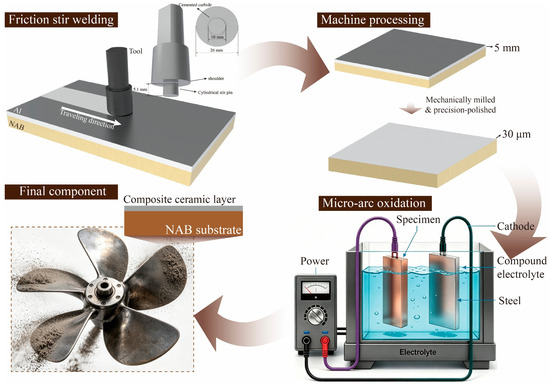
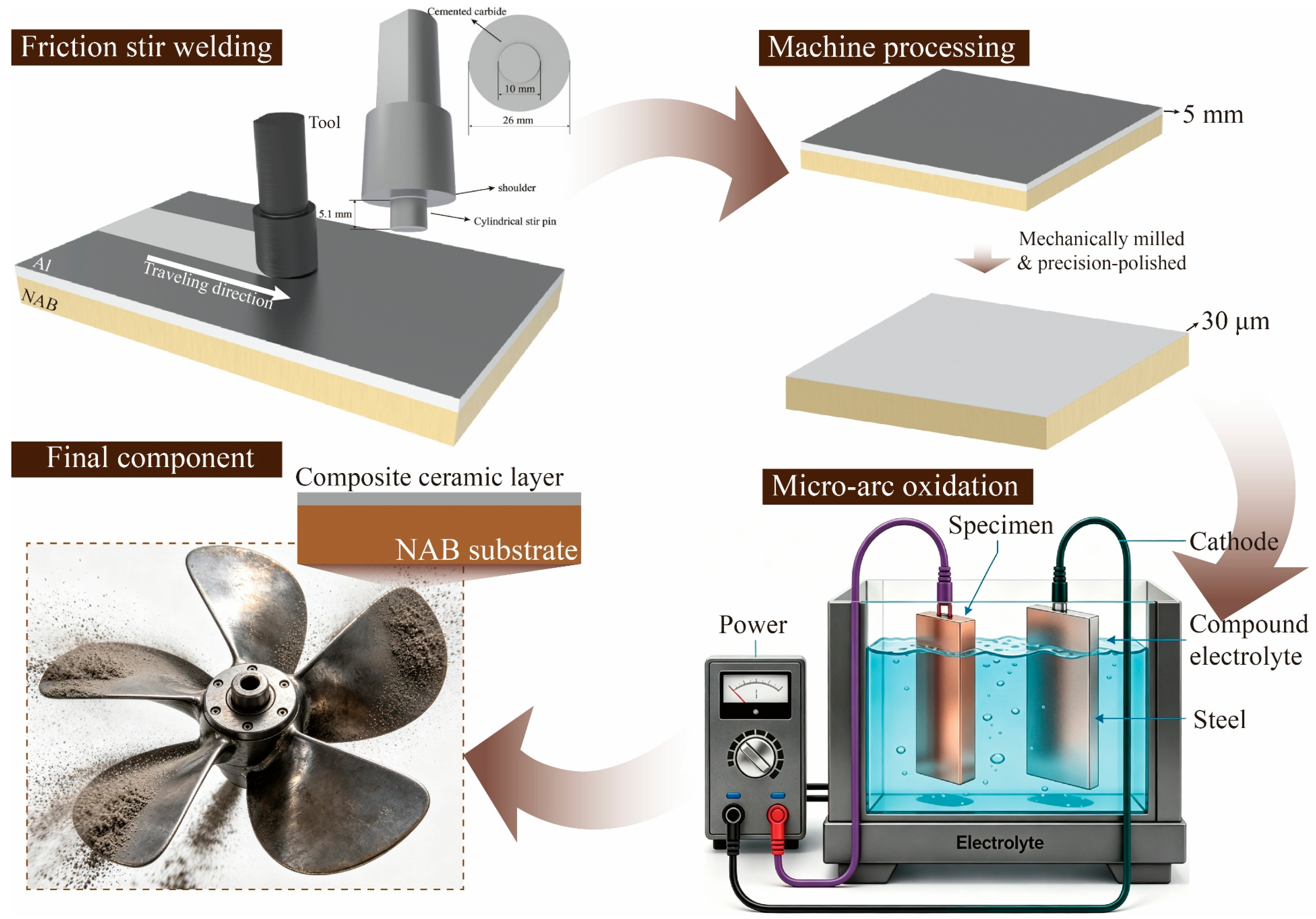
The fabrication route for the composite ceramic coating is schematically illustrated in Figure 1. The FSW was first utilized to achieve Al deposition. A cylindrical cemented carbide tool was employed, which comprised a concave shoulder with a diameter of 28 mm and a concentric pin with a length of 9.6 mm. Before the final fabrication of the Al transition layer used for subsequent MAO treatment, the FSW travel velocity was optimized with a rotation velocity of 600 rpm. Travel velocities of 100, 200, and 300 mm/min were compared with the morphology and interface of the transition layer. During the FSW process, the aluminum alloy was thermo-plasticized and metallurgically bonded onto the NAB substrate, forming a continuous, defect-free transition layer. Subsequently, the deposited aluminum surface was mechanically milled and precision-polished to achieve a uniform and standardized thickness of approximately 30 µm. This step was critical for eliminating macro-scale irregularities and providing a consistent aluminum-enriched surface for the subsequent electrochemical treatment. Finally, the prepared specimen was subjected to the MAO process. The MAO process was conducted in an electrolytic bath containing a compound electrolyte solution of 15 g/L Na2SiO3 + 5 g/L NaOH + 3 g/L NaF + 3 g/L NaAlO2. A pulsed DC power supply was utilized, with the specimen connected as the anode and a stainless-steel plate serving as the cathode. The pulse frequency and duty cycle were set at 1000 Hz and 40%, respectively. In the present work, only a positive pulse was applied: the positive pulse occupied 40% of the cycle, while the remaining 60% corresponded to a zero-current interval, i.e., no negative pulse was used. Before MAO treatment, the electrolyte was stirred for 5 h to ensure complete dissolution and homogenization. During MAO, a recirculating cooling system was used to maintain the electrolyte temperature at 30 ± 5 °C. The process was performed under a constant-voltage mode of 400 V. Under this route, the oxidation time was 1500 s (25 min). The actually exposed specimen area during MAO was 10 mm × 10 mm. After MAO treatment, all samples were ultrasonically cleaned in deionized water for 5 min to remove residual electrolyte and loose surface products, dried with compressed air, and stored for subsequent characterization.
Figure 1.
Schematic of the hybrid FSW-MAO process.
2.2. Microstructural and Mechanical Characterization
The surface and cross-sectional morphologies were examined using a scanning electron microscope (SEM, JEOL JSM-7001F, JEOL Ltd., Tokyo 196-8558, Japan). Cross-sectional specimens were cold-mounted in epoxy resin, ground with SiC abrasive papers up to 2500 grit, and polished with diamond suspensions down to 0.05 µm. Backscattered electron (BSE) imaging was performed at an acceleration voltage of 20 kV to reveal interfacial contrasts. Elemental distribution across the Al/NAB interface was analyzed using energy-dispersive X-ray spectroscopy (EDS, Oxford Instruments AZtec X-Max 80) in both mapping and line-scan modes, using the AZtec software suite (version 4.4). Electron backscatter diffraction (EBSD) analysis was conducted on the aluminum transition layer using a NordlysNano detector. Data were collected with the specimen tilted at 70° and a step size of 0.06 µm. Inverse pole figure (IPF), kernel average misorientation (KAM), and grain orientation spread (GOS) maps were generated using Channel 5 software to evaluate grain size, recrystallization degree, and local strain. The phase composition of the MAO coating and corrosion products was determined by X-ray diffraction (XRD, Bruker D8 Advance, Bruker Corporation, Billerica, MA, USA) with Cu-Kα radiation (λ = 0.15406 nm) operating at 40 kV and 150 mA, scanned over a 2θ range of 20–90°. The surface chemical bonding states were analyzed by X-ray photoelectron spectroscopy (XPS, Thermo Fisher ESCALAB Xi+, Thermo Fisher Scientific Inc., Waltham, MA, USA) with a monochromatic Al-Kα source. Charge correction was applied by referencing the C 1s peak to 284.8 eV, and high-resolution spectra for Al 2p, O 1s, and Si 2p were deconvoluted using Gaussian–Lorentzian functions. The hardness and elastic modulus of the coating and substrate were measured by nanoindentation (Agilent G200, Agilent Technologies Inc., Santa Clara, CA, USA) using a Berkovich diamond indenter (Guangzhou Zhicheng Technology Co., Ltd., Guangzhou, China). Tests were performed in the continuous stiffness measurement (CSM) mode with a maximum load of 50 mN, a strain rate of 0.05 s−1, and a Poisson’s ratio of 0.25 assumed for the calculation. The reported hardness and modulus values are averaged over five measurements (n = 5). Data were processed according to the Oliver–Pharr method, and measurements with penetration depths less than 10 nm were excluded to eliminate the influence of surface roughness [30]. The interfacial tensile strength of the FSW-bonded Al/NAB joint was evaluated via micro-tensile testing. Miniaturized flat bone specimens with a gauge length of 24 mm and a width of 4 mm were machined perpendicularly across the interface. Uniaxial tension was applied at a constant crosshead speed of 0.001 mm/s until fracture, and SEM subsequently examined the fracture surfaces.
2.3. Application-Oriented Evaluation Methods
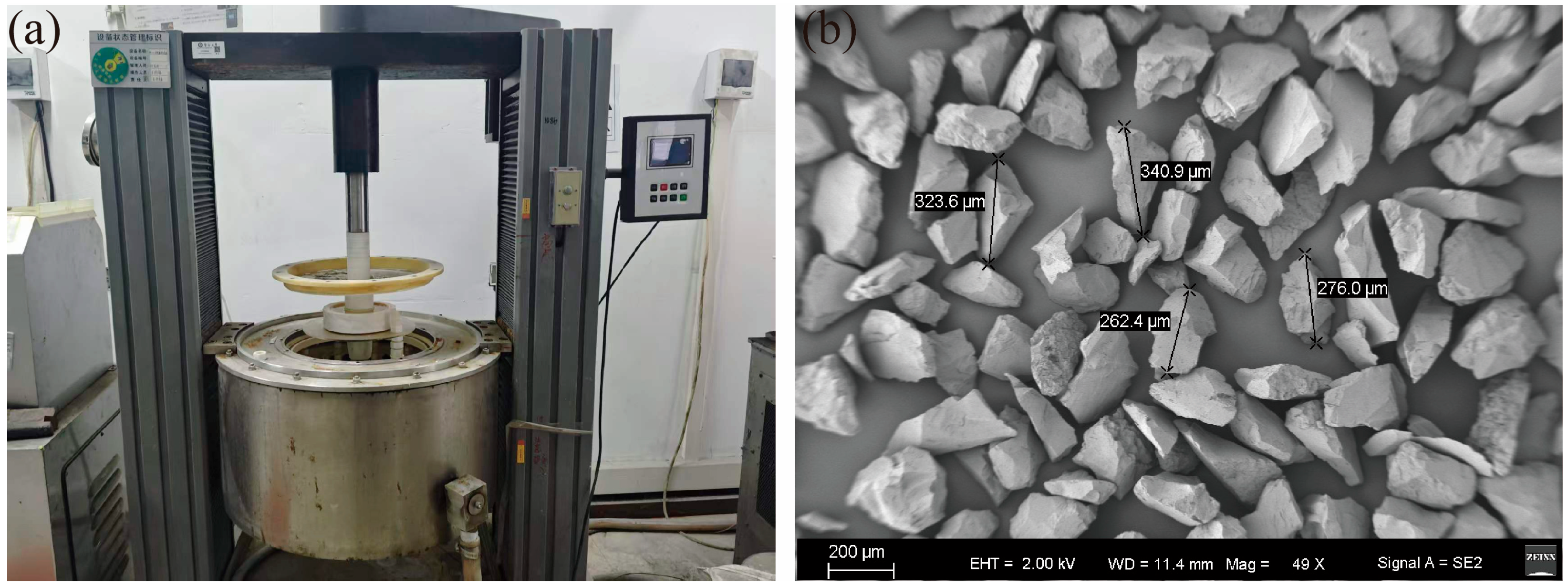
Electrochemical impedance spectroscopy (EIS) and potentiodynamic polarization tests were conducted in a conventional three-electrode electrochemical cell containing a 3.5 wt.% NaCl aqueous solution at room temperature. A platinum plate was employed as the counter electrode, a saturated calomel electrode (SCE) served as the reference electrode, and the working electrode was the specimen with an exposed area of 1 cm2. Before each measurement, the open circuit potential (OCP) was monitored until stabilization. EIS measurements were performed over a frequency range of 10−2 to 105 Hz with a sinusoidal perturbation amplitude of 10 mV. Potentiodynamic polarization curves were subsequently recorded by scanning the potential from −0.2 V to +0.2 V versus the stabilized OCP at a sweep rate of 1 mV/s. The corrosion current density (Icorr) and charge transfer resistance (Rct) were derived from the polarization curves and Nyquist plots, respectively. The long-term corrosion behavior was assessed via static immersion in 3.5 wt.% NaCl solution. Specimens were fully immersed in the electrolyte maintained at 50 ± 2 °C for a duration of 30 days, in accordance with standard practices for copper alloys [31]. The solution was refreshed every 168 h to minimize the depletion of corrosive species. Following the exposure period, the specimens were removed, ultrasonically cleaned in deionized water to remove loose corrosion products, and thoroughly dried. The mass loss of each specimen was precisely measured using an analytical balance with a resolution of 0.01 mg. Post-exposure surface morphologies and the composition of corrosion products were examined using SEM and XRD. The erosion resistance was evaluated using a rotating disk apparatus designed for slurry impingement, as shown in Figure 2. The erosion medium consisted of a 3.5 wt.% NaCl solution containing 1 wt.% angular SiO2 sand particles (average particle size ~300 µm, Mohs hardness ~7). The slurry was maintained at room temperature and continuously agitated to prevent particle sedimentation. Specimens were mounted on the disk at a fixed impact angle of 45° and subjected to rotational speeds of 100, 200, and 400 r/min for 6 days. Upon completion of each test, specimens were cleaned, dried, and weighed to determine the cumulative mass loss. The erosion rates were calculated, and the damaged surfaces were characterized by SEM to identify the prevailing material removal mechanisms.
Figure 2.
Erosion test: (a) MF-20 erosion testing machine, (b) silica sand.
3. Results
3.1. Characterization of Composite Coating and Interface
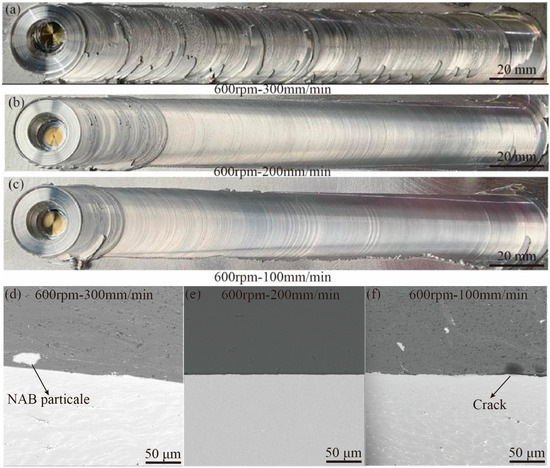
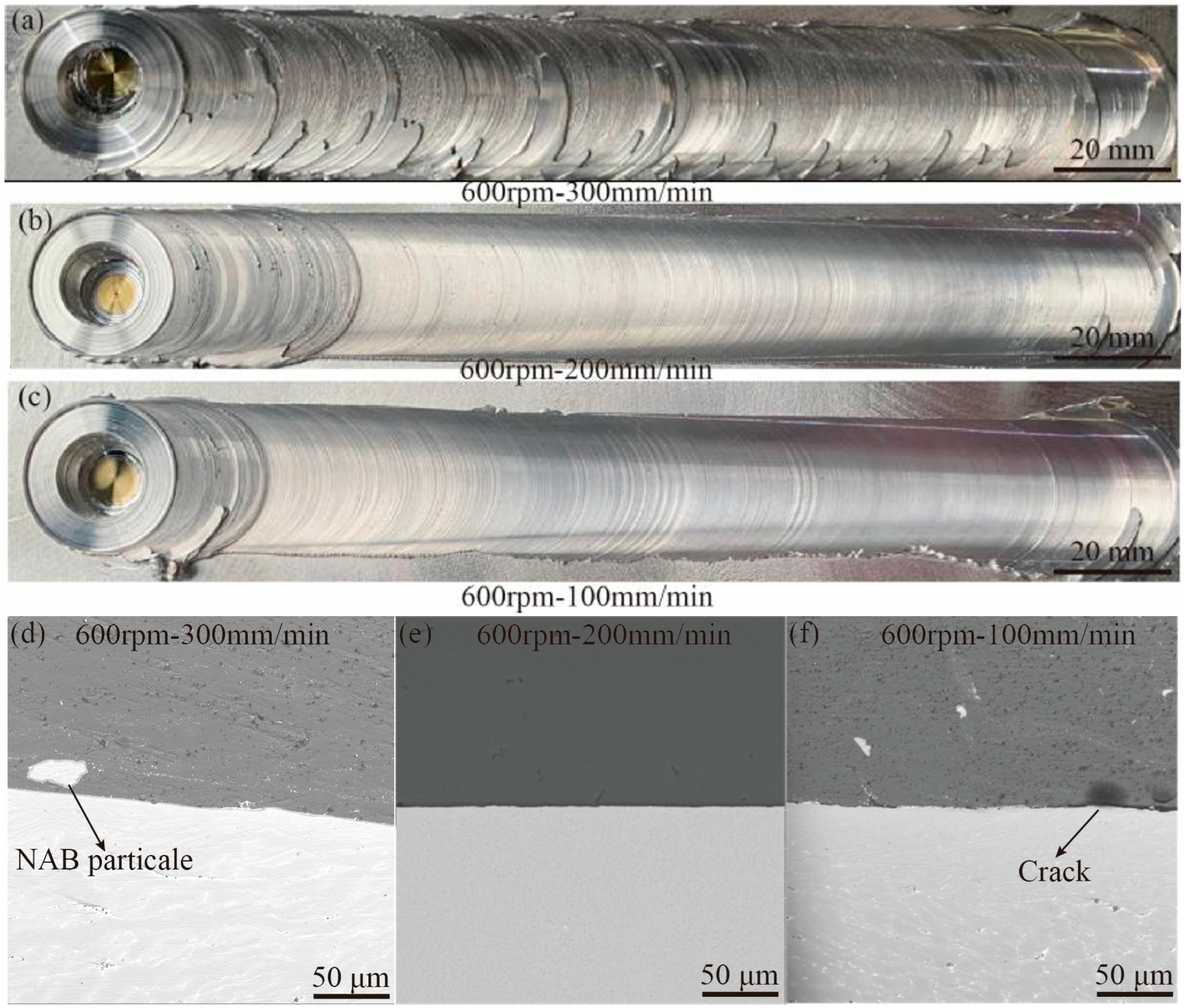
To clarify the FSW optimization procedure, the travel velocity was screened while the rotation velocity was kept constant at 600 rpm. Three travel velocities (100, 200, and 300 mm/min) were compared to determine the most suitable condition for fabricating the Al transition layer before MAO. The optimization procedure is shown in Figure 3. At 100 mm/min, particles of the NAB substrate in the upper Al layer were observed, indicating that the stirring action was excessive. During the subsequent MAO process, the Cu-rich regions in the entrained layer could interfere with stable and uniform oxidation, thereby increasing the cracking tendency of the coating. In contrast, the specimen fabricated at 300 mm/min exhibited visible cracks in the deposited layer. Among the tested conditions, the specimen processed at 200 mm/min showed the most favorable morphology, with a relatively uniform and intact Al transition layer, while avoiding both the severe NAB over-entrainment observed at 100 mm/min and the cracking found at 300 mm/min. Therefore, 200 mm/min was selected as the optimized travel velocity for preparing the Al transition layer used in all subsequent MAO and performance evaluations.
Figure 3.
Al transition layer fabricated on NAB at different parameters: (a–c) formations; (d–f) SEM images of the cross-sections.
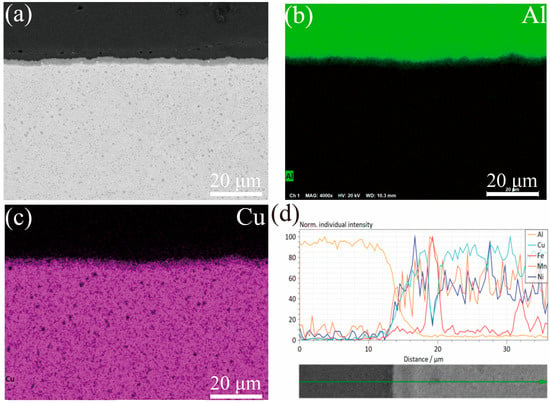
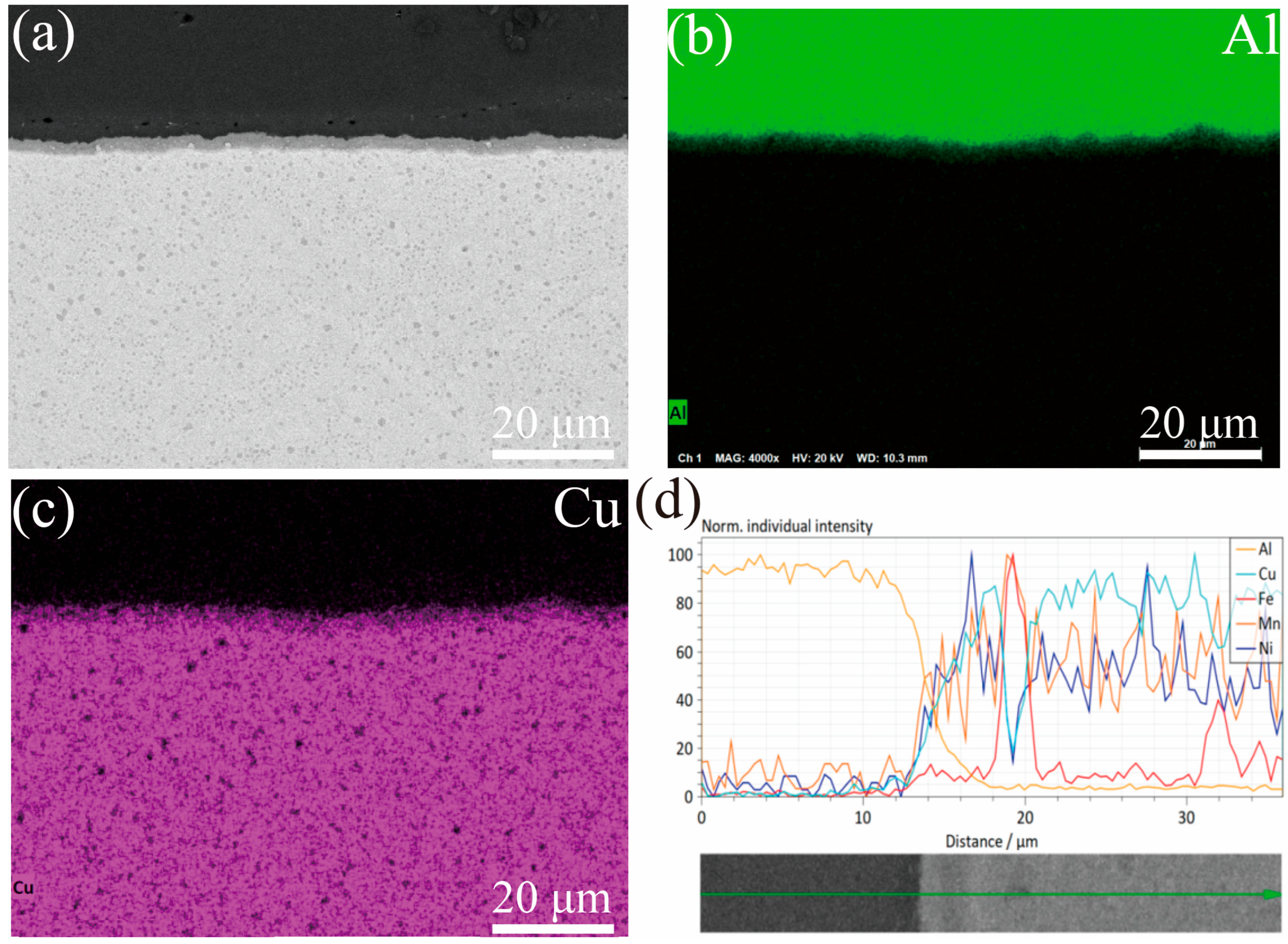
Further details of the interfacial microstructure are provided in Figure 4. The BSE image in Figure 4a reveals the interfacial microstructure, wherein a continuous interfacial transition layer with distinct contrast is distinguished between the deposited aluminum and the NAB substrate. The thickness of this IMC layer is approximately 1.2 µm. The corresponding elemental distributions are revealed by EDS mapping in Figure 4b,c. A sharp yet continuous interfacial boundary is discerned in both maps, confirming atomic interdiffusion. The line-scan profile across this interface is shown in Figure 4d. The width of the diffusion zone was approximately 6 µm. Simultaneously, signals of Fe, Ni, and Mn originating from the NAB are detected within this zone, indicating that the micro-alloy elements were solid-solved in the IMC layer. During FSW, the pin induces severe plastic deformation and high strain rates at the interface [32,33], which generates a high density of crystal defects (e.g., dislocations and vacancies) [34,35]. These defects provide short-circuit diffusion paths for atomic interdiffusion, thereby promoting metallurgical bonding and facilitating the formation of an IMC layer at the interface [36,37]. This metallurgically bonded interface is fundamental for providing the requisite aluminum deposition, thereby enabling the subsequent MAO process on the non-valve NAB substrate.
Figure 4.
Cross-sectional characterization of the interface: (a) BSE image of the interface, (b) EDS map of Al, (c) EDS map of Cu, and (d) EDS line-scan profiles across the interface.
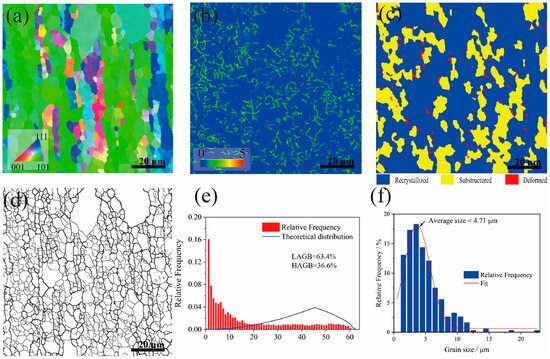
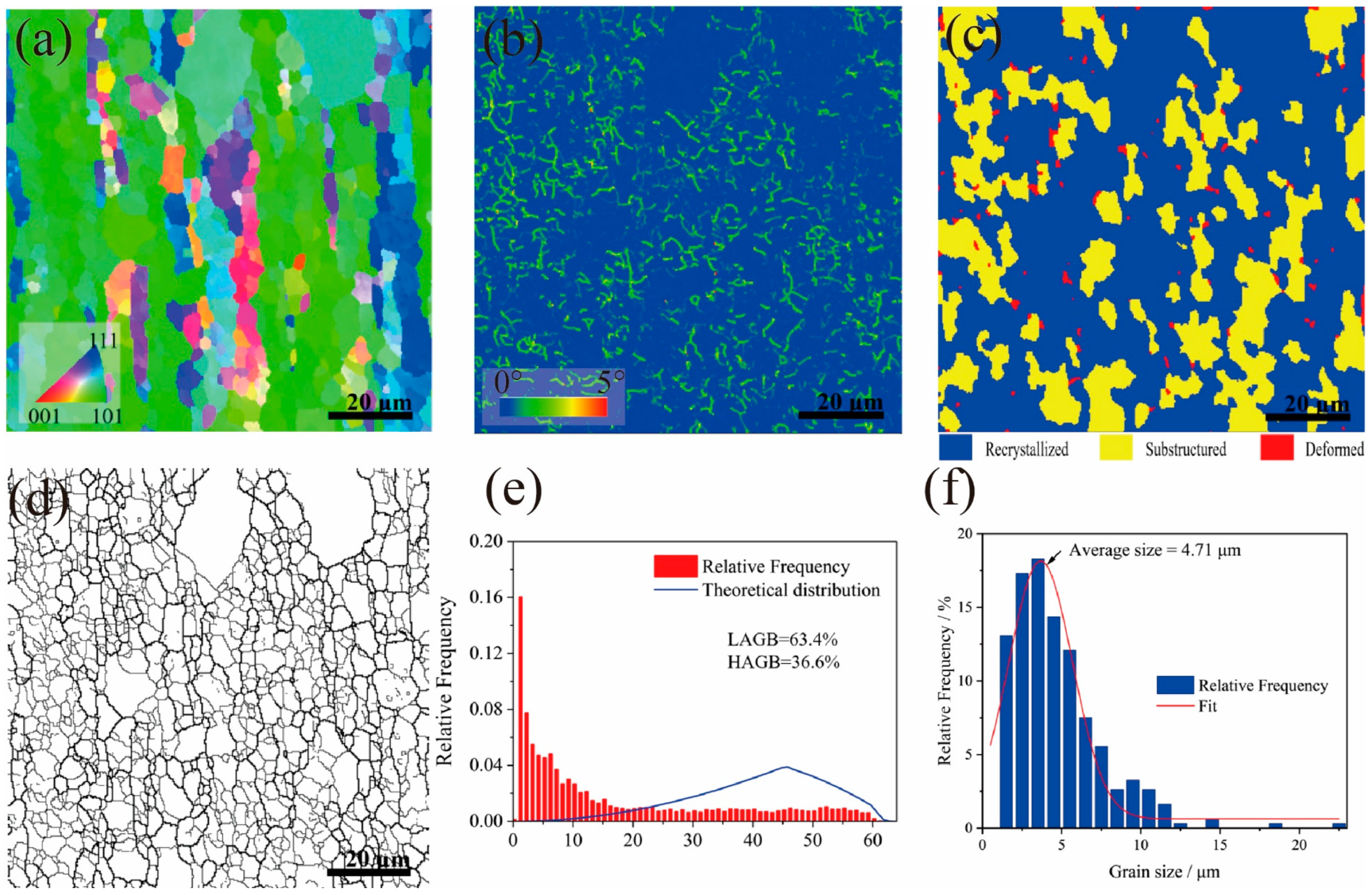
The EBSD analysis of the aluminum transition layer fabricated at a travel velocity of 200 mm/min is presented in Figure 5. The IPF map shown in Figure 5a presents an equiaxed grain microstructure, indicating complete dynamic recrystallization induced by the thermo-mechanical coupling action of FSW. A relatively low magnitude of local misorientation is generally maintained, suggesting that the residual strain stored within the refined grains is limited, as shown in Figure 5b. The GOS map in Figure 5c is utilized to quantify the recrystallization fraction; here, recrystallized, sub-structured, and deformed regions are statistically distinguished, with a high proportion of the area being occupied by recrystallized grains. The grain boundary was composed of high-angle grain boundaries, as shown in Figure 5d, which is supported by the grain boundary misorientation distribution plotted in Figure 5e. Finally, the grain size distribution is quantified in Figure 5f, from which an average grain size of approximately 4.71 ± 1.31 μm is derived. This refined, recrystallized grain structure, characterized by a high density of high-angle boundaries, is fundamental for ensuring a uniform and electrochemically active surface [38,39], thereby promoting the formation of a consistent and adherent Al2O3-based composite ceramic layer during the subsequent MAO process.
Figure 5.
EBSD analysis results: (a) IPF map, (b) KAM map, (c) GOS map, (d) grain boundary map, (e) grain boundary distribution, and (f) grain size distribution.
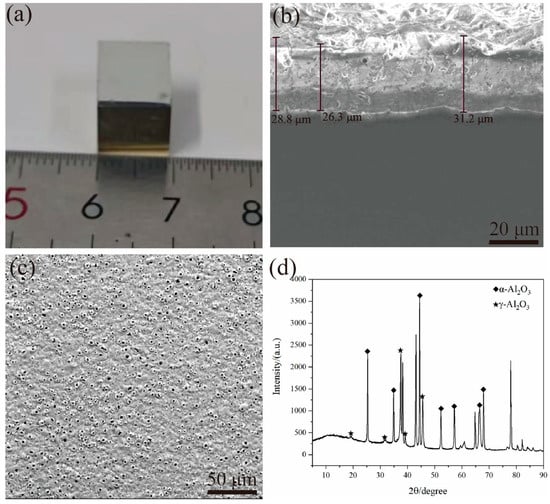
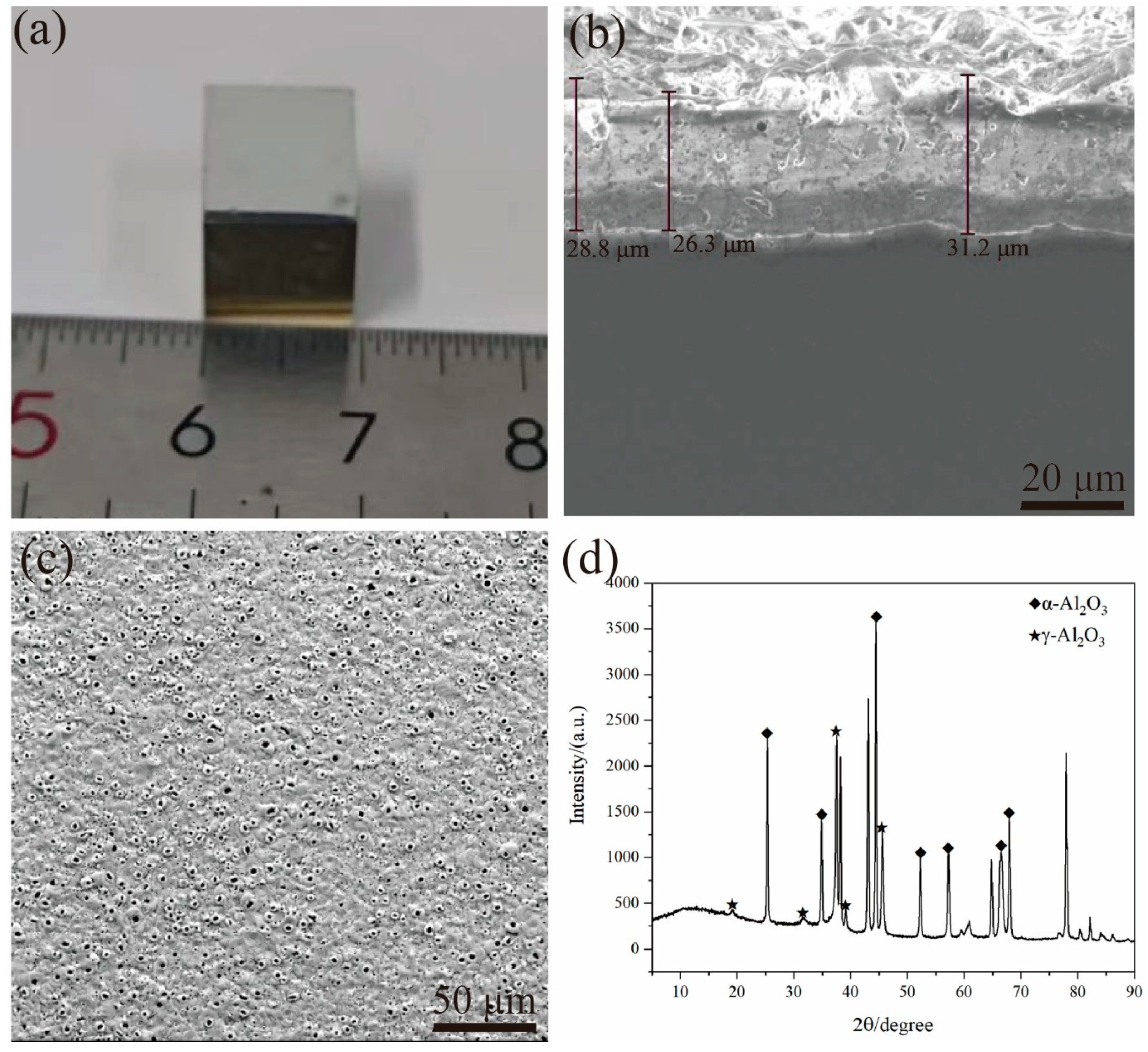
Following the FSW process, the aluminum-clad specimen was mechanically precision-thinned to standardize the surface condition and subsequently subjected to MAO, with the resultant composite ceramic coating as shown in Figure 6a. The cross-sectional SEM image in Figure 6b reveals the typical bilayer structure of the MAO coating, comprising a porous outer region and a dense inner layer adjacent to the substrate; the total coating thickness is approximately 30 µm. Some micro-pores are uniformly distributed at the coating surface with a porosity of approximately 4%, as shown in Figure 6c. The XRD pattern is dominated by the characteristic peaks of α-Al2O3 and γ-Al2O3, indicating that the coating is primarily composed of crystalline alumina phases, as shown in Figure 6d. This composite structure, featuring a porous top layer and a dense inner barrier, is regarded as essential for enhancing adhesion [40], while the dense layer beneath serves as the primary barrier against corrosive media. The in situ formation of the composite ceramic coating proves the efficacy of the hybrid FSW-MAO strategy in synthesizing a robust protective coating on the otherwise non-valve NAB substrate.
Figure 6.
Macro-morphology, microstructure, and phase composition of the composite ceramic coating via the FSW-MAO hybrid process: (a) macro-morphology, (b) cross-sectional microstructure, (c) surface microstructure, and (d) XRD result.
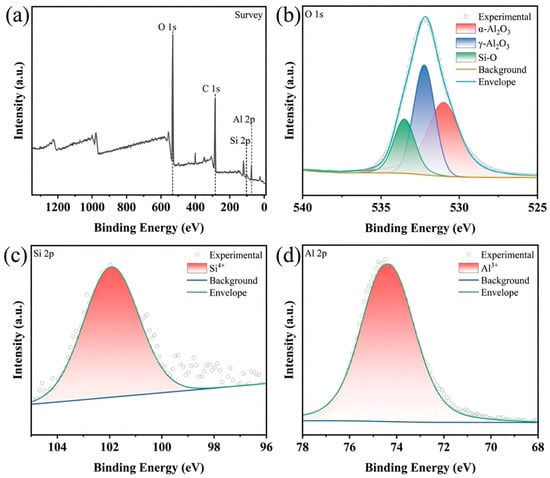
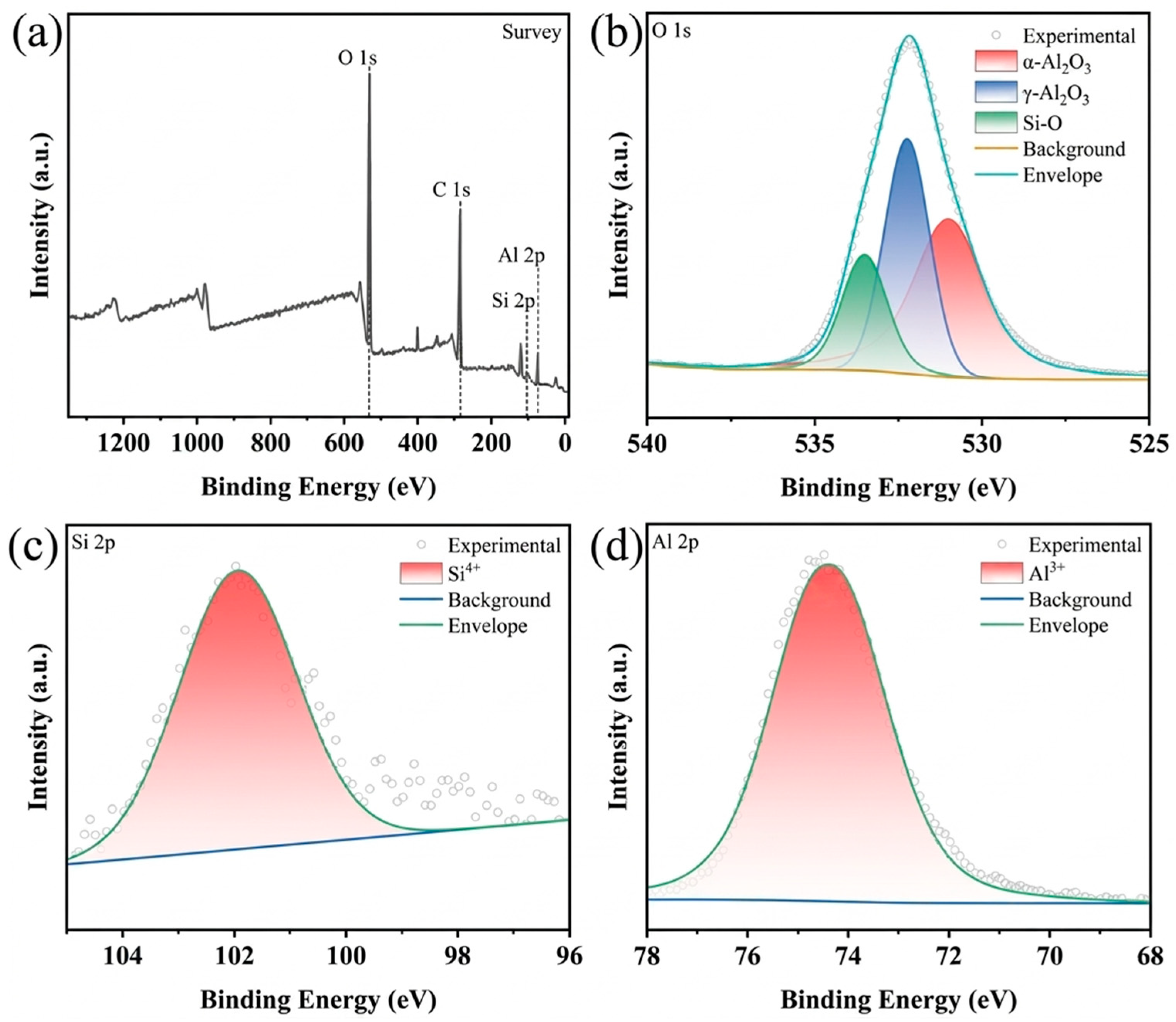
Figure 7 presents the XPS analysis conducted to determine the surface chemical composition and bonding states of the composite ceramic coating. The characteristic photoelectron peaks corresponding to O 1s, C 1s, Al 2p, and Si 2p are distinctly detected, confirming the primary elemental constituents of the coating, as shown in Figure 7a. The O 1s spectrum is deconvoluted to reveal the presence of multiple chemical states associated with metal-oxygen bonds and hydroxyl groups, as shown in Figure 7b. The Si 2p spectrum is fitted, with a dominant peak centered at a binding energy of approximately 103.5 eV, as shown in Figure 7c. This peak is assigned to Si-O bonds within an amorphous silicate network, providing direct evidence for the incorporation of silicon species into the alumina matrix during the MAO process. Furthermore, the Al 2p spectrum shows that aluminum exists predominantly in its oxidized state, consistent with the formation of Al2O3, as shown in Figure 7d. The amorphous Si-O network was considered to be embedded within the crystalline alumina framework, which substantiates the “composite” nature of the ceramic layer. This unique chemical structure likely enhances the coating’s stability and corrosion resistance by forming a continuous, glass-like phase that fills defects and modifies the electrochemical activity at the coating/electrolyte interface.
Figure 7.
XPS results of the MAO composite ceramic layer: (a) survey scan, (b) O 1s spectrum, (c) Si 2p spectrum, (d) Al 2p spectrum.
3.2. Interface Combination and Mechanical Properties
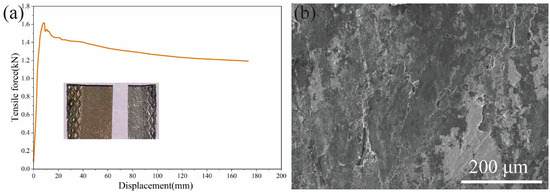
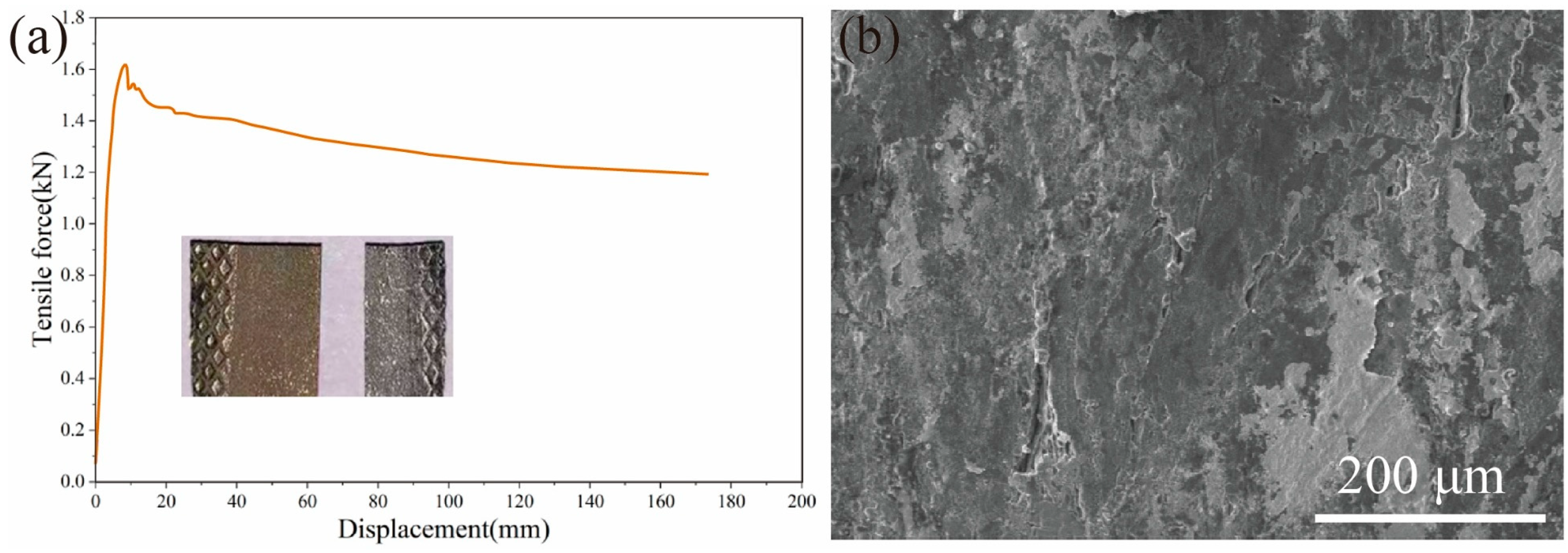
Figure 8 shows the micro-tensile test results evaluating the interfacial bonding strength of the deposited aluminum layer. The tensile force versus displacement curves are presented in Figure 8a, with a photo of the fractured specimen. The tensile strength of the specimen reached 72.7 MPa and fractured at the interface. The micromorphology of the fracture is displayed in Figure 8b. A dimpled rupture pattern is observed, and no signs of brittle cleavage or interfacial decohesion are detected. This ductile fracture mode, combined with the measured tensile strength of 72.7 MPa, confirms that a sound metallurgical bond with good mechanical integrity has been achieved at the Al/NAB interface. The formation of this defect-free, sound-bonded transition layer ensures interfacial stability and provides a robust substrate for the subsequent growth of the MAO ceramic coating.
Figure 8.
Interfacial bonding strength: (a) tensile force-displacement curve, (b) fracture morphology.
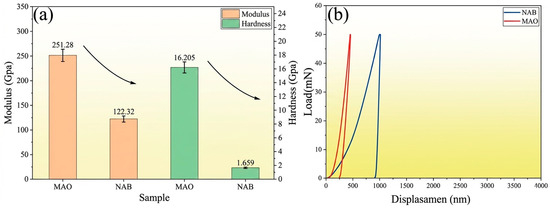
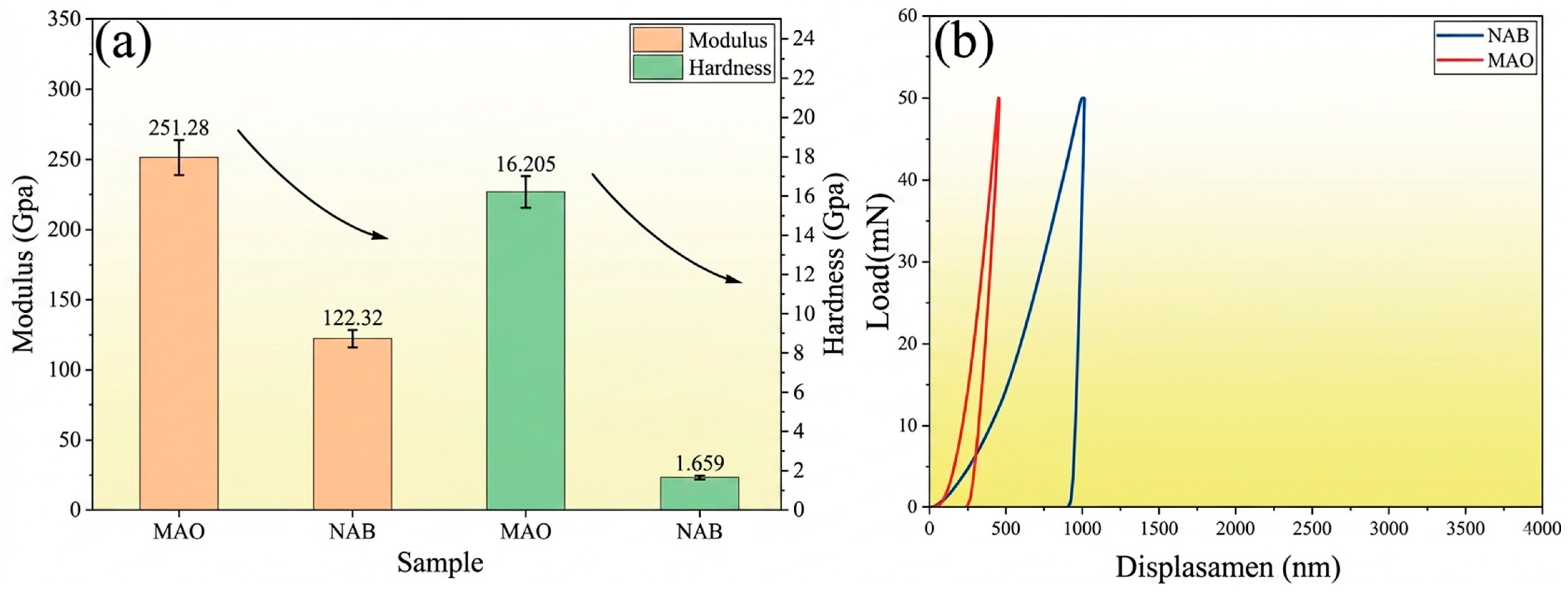
Figure 9 presents the mechanical properties of the composite ceramic coating as evaluated by nanoindentation. The elastic modulus and hardness of both the MAO coating and the NAB substrate are compared in Figure 9a. The coating elastic modulus is measured to be 251.3 ± 31.1 GPa, which is more than twice that of the substrate (122.3 ± 12.8 GPa) and the aluminum (~70 GPa [41]). The coating nanohardness reaches 16.2 ± 2.0 GPa, which is approximately 9.8 times that of the substrate (1.7 ± 0.2 GPa). The load–displacement curves obtained from the nanoindentation tests are shown in Figure 9b. The maximum indentation displacement of the MAO-coated sample at the peak load of 50 mN was about 500 nm. Considering that the thickness of the MAO ceramic coating was approximately 30 μm, the corresponding indentation depth-to-coating thickness ratio was only about 1.67%. Since this value is very small relative to the coating thickness, the substrate influence on the nanoindentation response is limited. Therefore, the hardness and elastic modulus predominantly represent the MAO ceramic layer. The nanoindentation load–displacement curves (Figure 8b) show that the MAO coating (red curve) exhibits a much smaller maximum depth under the same load compared to the NAB substrate (blue curve), indicating its superior resistance to plastic deformation. The coating also displays greater elastic recovery upon unloading, indicating enhanced elasticity. This significant improvement in both hardness and elastic modulus originates from the crystalline Al2O3-based composite layer. This layer fundamentally alters the near-surface mechanical response, providing the essential load-bearing capacity needed for erosion protection in marine environments.
Figure 9.
Comparison of mechanical properties between the MAO and NAB: (a) modulus and hardness, (b) load–displacement curves.
3.3. Static Corrosion and Dynamic Erosion Behavior
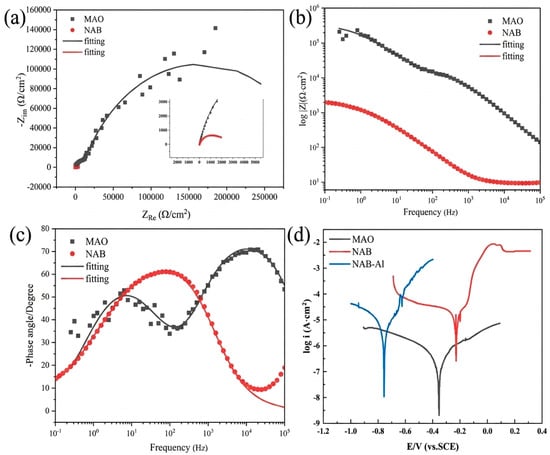
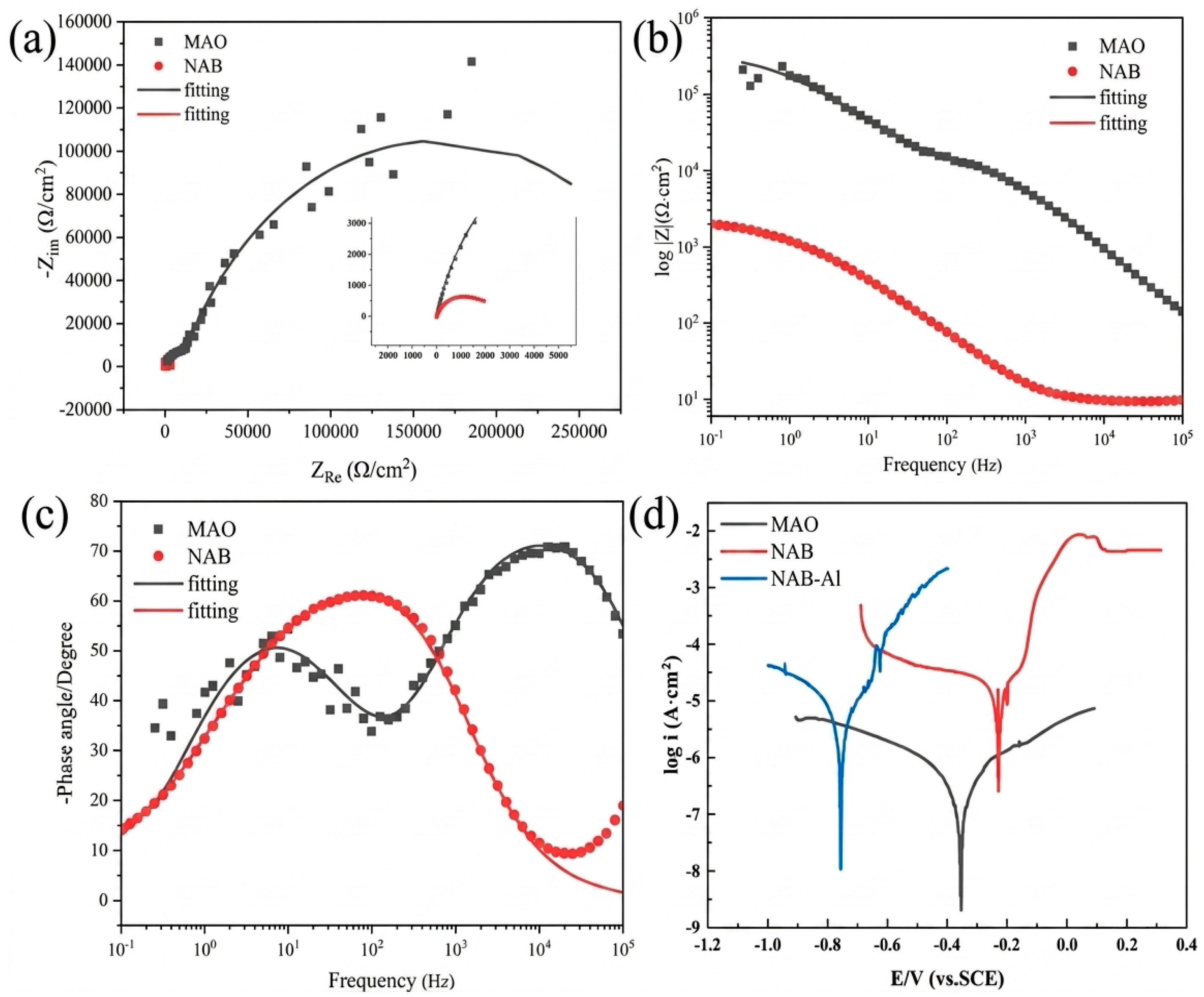
Figure 10 presents the EIS and potentiodynamic polarization results for evaluating the corrosion resistance of the composite coating in a 3.5 wt.% NaCl solution. The Nyquist plot is characterized by two distinct capacitive loops, which are typically associated with the porous outer layer and the dense inner barrier layer of the MAO coating, as shown in Figure 10a. The corresponding Bode magnitude plot (Figure 10b) represents a high impedance modulus at low frequencies. The Bode phase angle plot (Figure 10c) displays two time constants, further confirming the duplex-layer structure of the coating. To further distinguish the respective roles of the Al transition layer and the MAO ceramic layer in corrosion protection, the intermediate NAB-Al control state was additionally introduced into the polarization analysis, with the FSW-deposited/thinned Al layer but without subsequent MAO treatment. As shown in Figure 10d and Table 1, the corrosion current density of bare NAB is 1.174 ± 0.128 × 10⁻⁵ A·cm−2, whereas that of the NAB-Al sample decreases to 4.498 ± 0.362 × 10⁻⁶ A·cm−2, indicating that the Al transition layer already contributes to a certain reduction in the corrosion rate. The FSW-fabricated Al-rich surface is not only a prerequisite layer for subsequent MAO treatment, but also provides an initial electrochemical protection effect. The corrosion potential of NAB-Al (−0.762 ± 0.069 V) is more negative than that of bare NAB (−0.230 ± 0.011 V), indicating that the Al-containing transition layer is electrochemically more active. However, despite this more negative corrosion potential, the lower corrosion current density of NAB-Al still demonstrates that the actual corrosion kinetics are alleviated compared with bare NAB. This means that the introduction of the continuous Al transition layer does not make the surface thermodynamically nobler, but rather kinetically suppresses the corrosion process. After MAO treatment, the corrosion current density further decreases dramatically to 1.335 ± 0.151 × 10⁻⁷ A·cm−2, much lower than that of both bare NAB and NAB-Al. Therefore, the final enhancement in corrosion resistance cannot be simply attributed to a single processing step alone. A more reasonable interpretation is that the FSW-induced Al transition layer provides an initial beneficial contribution and enables MAO treatment on the non-valve NAB substrate, whereas the subsequently formed MAO ceramic coating, especially its dense inner barrier layer, is mainly responsible for the further substantial improvement in overall corrosion resistance.
Figure 10.
Electrochemical spectra of NAB and MAO composite ceramic coating: (a) Nyquist plot, (b) Bode modulus plot, (c) Bode phase angle plot, (d) polarization curve.
Table 1.
Fitting results of polarization curves.
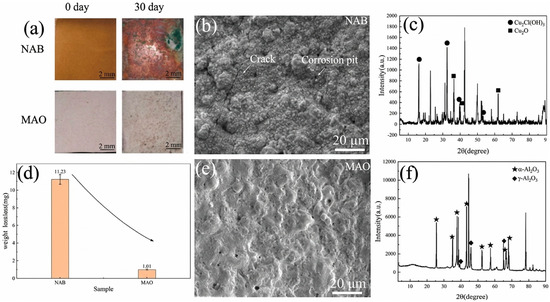
Figure 11 presents the comparative results of the 30-day static immersion test in 3.5 wt.% NaCl solution, evaluating the long-term corrosion protection performance of the composite coating. The macro-morphologies of the samples before and after immersion are displayed in Figure 11a. Formation of green and reddish-brown products is observed on the bare NAB substrate, and the MAO sample maintains a relatively intact and clean surface. The cracked corrosion product layer, along with underlying corrosion pits, was observed at the surface of the corroded NAB substrate, as shown in Figure 11b. The corrosion products are identified by XRD in Figure 11c, with the main constituents of Cu2Cl(OH)3 (atacamite) and Cu2O (cuprite), which are typical corrosion products of copper alloys in chloride-containing environments [42]. The mass loss data is shown in Figure 11d. After 30 days of immersion, a mass loss of merely 1.01 mg is recorded for the MAO specimen, which is only about 1/11 of that of the NAB substrate (11.23 mg). Only sparse, shallow micro-pits, with no signs of spallation or severe attack, were observed on the MAO specimen surface, as shown in Figure 11e. The diffraction peaks remain consistent with those of α-Al2O3 and γ-Al2O3, and no peaks corresponding to copper-based corrosion products are detected as shown in Figure 11f, indicating that the dense inner layer of the composite coating successfully acts as an effective barrier, preventing the electrolyte from reaching the underlying NAB substrate and thereby fundamentally inhibiting the galvanic corrosion process.
Figure 11.
Analysis of corrosion behavior after 30-day immersion in 3.5 wt.% NaCl solution: (a) surface macro-morphologies, (b) SEM image of the NAB, (c) XRD pattern of the corrosion products on NAB, (d) weight loss, (e) SEM image of the MAO, and (f) XRD pattern of the corrosion products on MAO.
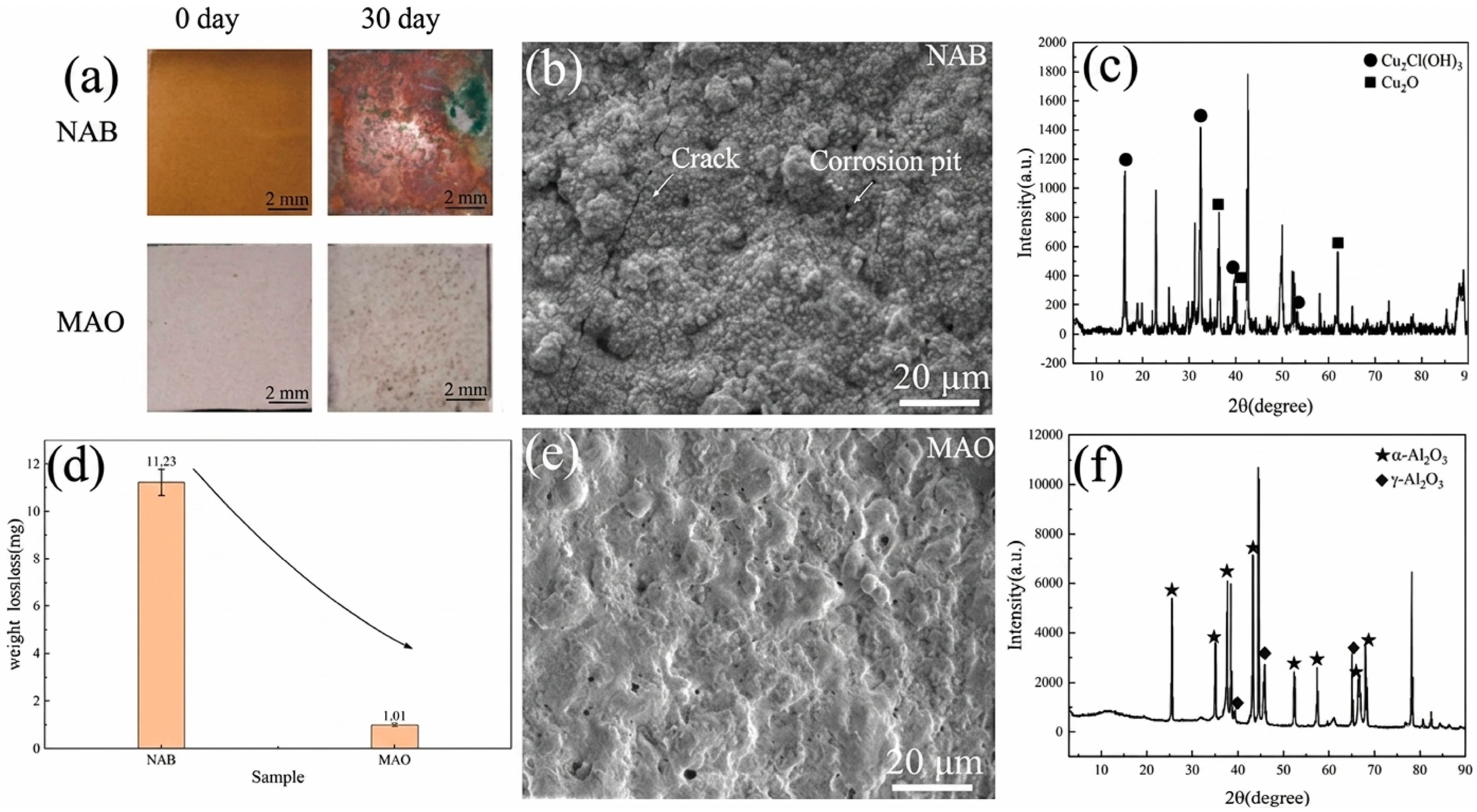
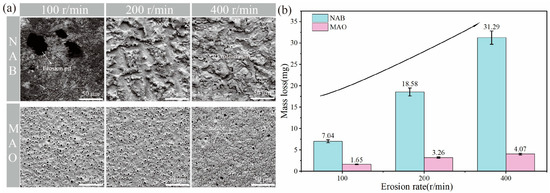
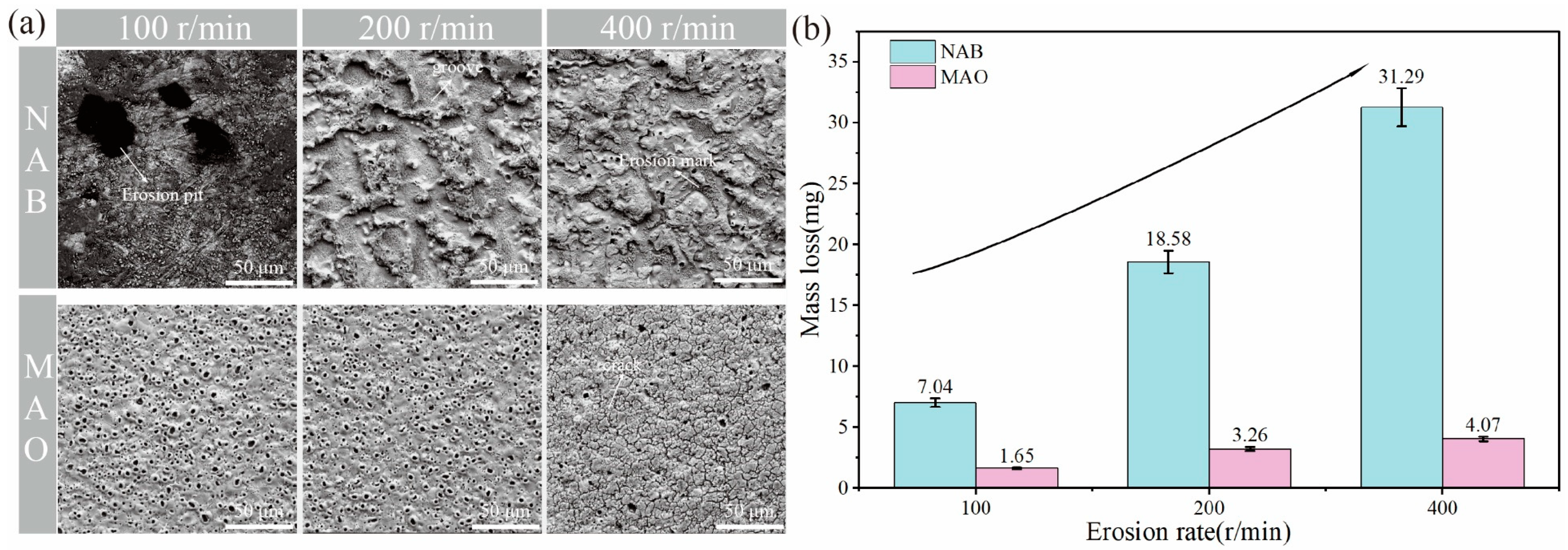
The surface damage and cumulative mass loss of the bare NAB substrate and the MAO-coated sample after solid–liquid slurry erosion at different rotational velocities were compared in Figure 12. At 100 rpm, the NAB surface shows plastic deformation, embedded particles, and ploughing grooves, indicating material removal by micro-cutting, as shown in Figure 12a. In contrast, the MAO coating maintains its porous structure with only slight wear. At 200 rpm, damage on NAB intensifies with enlarged pits and flaking, while the MAO coating exhibits blunted pores and initial micro-cracks. At 400 rpm, the NAB surface suffers severe material removal and plastic flow. The MAO coating develops a network of micro-cracks and localized pore collapse, yet its overall damage remains much less severe than that of the substrate. The quantitative erosion resistance is summarized in Figure 12b. The mass loss of the NAB substrate reaches 31.29 mg at 400 rpm, which is approximately 7.8 times higher than that of the MAO coating (4.07 mg). Even considering the density difference, the volumetric loss of the substrate is still more than three times greater. The significantly reduced mass loss, together with the distinctly less damaged surface morphology, conclusively demonstrates the exceptional erosion protection provided by the in situ grown Al2O3-based composite coating. The dense inner layer acts as a barrier, while the porous outer layer helps to dissipate impact energy. This synergistic effect critically enhances the erosion–corrosion resistance, which is vital for marine propeller applications.
Figure 12.
Erosion characteristics of the NAB and the MAO coating under solid–liquid slurry impingement at different rotational velocities: (a) surface morphologies, and (b) mass loss.
Table 2 provides a direct, quantitative comparison of corrosion resistance between the present MAO + FSW strategy and other surface engineering techniques for bronze alloys. Conventional thermal spray coatings (e.g., HVOF) often exhibit compromised long-term barrier performance [43]. In contrast, advanced methods like laser cladding and cathodic arc deposition significantly improve protection, reducing corrosion current density (Icorr) by an order of magnitude or to levels as low as 0.14 µA/cm2, respectively [44,45]. Against this background, the present FSW-MAO route should be understood not simply as another coating process, but as a hybrid strategy that combines a metallurgically bonded Al transition layer with an in situ formed Al2O3-dominated ceramic barrier. In the present work, this strategy yields a nanohardness of 16.2 ± 2.0 GPa, suppresses the corrosion current density by two orders of magnitude, reduces the 30-day immersion mass loss to about 1/11 of the substrate, lowers the erosion mass loss at 400 rpm to about 1/8 of NAB, and doubles the critical failure velocity from 200 rpm to 400 rpm. Therefore, its main advantage lies in simultaneously providing interface reliability, ceramic-scale hardening, strong electrochemical barrier protection, and enhanced erosion–corrosion resistance.
Table 2.
Quantitative comparison of various surface engineering techniques.
4. Conclusions
This work develops a hybrid surface engineering strategy to enable MAO conducted on non-valve NAB, aiming to improve its marine erosion–corrosion resistance. The strategy involves the sequential application of FSW to fabricate an aluminum transition layer, followed by MAO treatment. The main conclusions are summarized below:
- A metallurgically bonded, defect-free aluminum transition layer was fabricated on the NAB substrate via FSW. By mechanically thinning this layer to a uniform thickness, a standardized aluminum surface was established, which effectively enabled stable plasma discharge during the subsequent MAO treatment. This methodology successfully overcame the limitations associated with the non-valve NAB, permitting the in situ growth of a robust ceramic coating.
- FSW resulted in a metallurgically bonded interface with a continuous intermetallic layer (~1.2 μm) and an interdiffusion zone (~6 μm), along with a refined aluminum transition layer (~4.71 μm grains). Subsequent MAO on this layer led to the formation of a ~30 μm thick composite Al2O3 coating, which exhibited a characteristic duplex structure comprising a porous outer region and a dense inner barrier. The composite coating was composed of the coexistence of crystalline α-/γ-Al2O3 phases and an incorporated amorphous Si-O network.
- The composite coating showed significantly improved surface mechanical properties, with a nanohardness of 16.2 ± 2.0 GPa and an elastic modulus of 251.3 ± 31.1 GPa. The interfacial bonding, assessed by micro-tensile testing, yielded a strength of 72.7 MPa, and fractography indicated a ductile failure mode. This robust mechanical profile contributes to the load-bearing capacity required in erosive environments.
- Superior protective functionality was demonstrated in 3.5 wt.% NaCl solution. The charge transfer resistance (Rct) was elevated to 3.072 × 10⁵ Ω·cm2, while the corrosion current density (Icorr) was suppressed to 1.335 ± 0.151 × 10⁻⁷ A/cm2, two orders of magnitude lower than that of bare NAB. After 30 days of static immersion, a mass loss of merely 1.01 mg was recorded for the coated specimen, approximately 1/11 of the substrate loss. Under solid–liquid slurry erosion, the coating mass loss at 400 rpm was reduced to about 1/8 of the uncoated material. The dense inner layer acts as an effective barrier against chloride penetration, while the composite structure attenuates impact energy. This synergy results in exceptional erosion–corrosion resistance.
Author Contributions
Conceptualization, X.G.; Methodology, Y.H.; Software, X.Z.; Validation, X.G.; Formal Analysis, L.Z.; Investigation, Y.H.; Resources, L.Z.; Data Curation, X.G.; Writing—Original Draft Preparation, X.G.; Writing—Review and Editing, Y.H.; Visualization, X.Z.; Supervision, L.Z.; Project Administration, X.G. All authors have read and agreed to the published version of the manuscript.
Funding
This research was funded by the National Natural Science Foundation of China (No. 52171081).
Institutional Review Board Statement
Not applicable.
Informed Consent Statement
Not applicable.
Data Availability Statement
The data presented in this study are available on request from the corresponding author due to an ongoing study.
Conflicts of Interest
The authors declare no conflicts of interest.
References
- Jain, A.; Chandra, R.; Mulik, R.S. Erosion-corrosion wear of Cr2N/Ni3N multi-layer coating deposited on nickel aluminium bronze (NAB) using the DC magnetron sputtering system. Ceram. Int. 2026, 52, 9972–9984. [Google Scholar] [CrossRef] [Scilit]
- Dharmendra, C.; Shakerin, S.; Ram, G.D.J.; Mohammadi, M. Wire-arc additive manufacturing of nickel aluminum bronze/stainless steel hybrid parts—Interfacial characterization, prospects, and problems. Materialia 2020, 13, 100834. [Google Scholar] [CrossRef] [Scilit]
- Wang, L.; Liu, K.; Li, J.; Geng, S. A Review on Corrosion Behavior and Surface Modification Technology of Nickel Aluminum Bronze Alloys: Current Research and Prospects. Adv. Eng. Mater. 2025, 27, 2401779. [Google Scholar] [CrossRef] [Scilit]
- Wang, J.; Peng, W.; Liu, T.; Wang, Q.; Shi, Z.; Yu, G. Fatigue failure analysis for marine propeller used titanium alloy under salty-water environment with the effect of corrosion durations. Eng. Fail. Anal. 2025, 179, 109805. [Google Scholar] [CrossRef] [Scilit]
- Carve, M.; Scardino, A.; Shimeta, J. Effects of surface texture and interrelated properties on marine biofouling: A systematic review. Biofouling 2019, 35, 597–617. [Google Scholar] [CrossRef] [Scilit]
- Lu, W.; Zhai, W.; Zhang, P.; Zhou, M.; Liu, X.; Zhou, L.J.W. Effect of different levels of free water in oil on the fretting wear of nickel-aluminum bronze based composites. Wear 2017, 390–391, 376–384. [Google Scholar] [CrossRef] [Scilit]
- Wood, R.J.K.; Wharton, J.A.J.W. Erosion-corrosion performance of nickel-aluminium bronze alloys in marine environments: Recent developments. Wear 2026, 593, 206611. [Google Scholar] [CrossRef] [Scilit]
- Lv, Y.; Ding, Y.; Cui, H.; Liu, G.; Wang, B.; Cao, L.; Li, L.; Qin, Z.; Lu, W. Investigation of microscopic residual stress and its effects on stress corrosion behavior of NiAl bronze alloy using in situ neutron diffraction/EBSD/tensile corrosion experiment. Mater. Charact. 2020, 164, 110351. [Google Scholar] [CrossRef] [Scilit]
- Xiong, J.; Lai, X.; Li, H.; Wang, H.; Su, X.; Zeng, X. Significant enhancement of the tracking resistance of silicone rubber via promoting ceramization by platinum anchored on rutile TiO2 with oxygen vacancies. Appl. Surf. Sci. 2026, 731, 166299. [Google Scholar] [CrossRef] [Scilit]
- Ji, M.; Hu, C.; Yan, M.; Li, J.; Pang, S.; Tang, S. Novel strategy of in-situ ceramization with SiO for preparing gradient ceramic coatings on low-density C/CA composites for non-ablative thermal protection. Carbon 2025, 244, 120707. [Google Scholar] [CrossRef] [Scilit]
- Yan, M.; Hu, C.; Li, J.; Zhao, R.; Pang, S.; Liang, B.; Tang, S.; Liu, G.; Cheng, H.M. An unusual carbon–ceramic composite with gradients in composition and porosity delivering outstanding thermal protection performance up to 1900 °C. Adv. Funct. Mater. 2022, 32, 2204133. [Google Scholar] [CrossRef] [Scilit]
- Morales, A.; Piamba, O.; Olaya, J. The corrosion resistance of aluminum–bronze coatings as a function of gas pressure used in the thermal spraying process. Coatings 2019, 9, 507. [Google Scholar] [CrossRef] [Scilit]
- Shi, Z.; Xu, L.; Deng, C.; Liu, M.; Liao, H.; Darut, G.; Planche, M.-P. Effects of frequency on the fretting wear behavior of aluminum bronze coatings. Surf. Coat. Technol. 2023, 457, 129306. [Google Scholar] [CrossRef] [Scilit]
- Sonia; Walia, R.S.; Suri, N.M.; Chaudhary, S.; Tyagi, A. Potential applications of thermal spray coating for I.C. engine tribology: A Review. J. Phys. Conf. Ser. 2021, 1950, 012041. [Google Scholar] [CrossRef] [Scilit]
- Pi, Z.; Du, K.; Chen, X.; Zheng, Z.; Wang, C. Laser cladding remanufacturing of propeller ZCuAl8Mn13Fe3Ni2 alloy. Sci. Rep. 2025, 15, 12381. [Google Scholar]
- Liu, Y.; Ding, Y.; Yang, L.; Sun, R.; Zhang, T.; Yang, X. Research and progress of laser cladding on engineering alloys: A review. J. Manuf. Process. 2021, 66, 341–363. [Google Scholar] [CrossRef] [Scilit]
- Pal, S.; Finšgar, M.; Bončina, T.; Lojen, G.; Brajlih, T.; Drstvenšek, I. Effect of surface powder particles and morphologies on corrosion of Ti-6Al-4V fabricated with different energy densities in selective laser melting. Mater. Des. 2021, 211, 110184. [Google Scholar] [CrossRef] [Scilit]
- Zhang, L.; Xiong, Q.; Jian, Q.; Qiu, X.; Li, C. Effect of laser interface pretreatment on the microstructure, adhesion strength, and corrosion resistance of PVD-AlTiN coatings on Mg alloy substrates. Surf. Coat. Technol. 2025, 516, 132671. [Google Scholar] [CrossRef] [Scilit]
- Zhao, H.; Zeng, Z.; Zhang, X.; Lv, B.; Deng, Z.; Mao, J.; Zhang, L. Towards enhanced corrosion resistance of PS-PVD TBCs in marine environments by structural design. Surf. Coat. Technol. 2024, 494, 131391. [Google Scholar] [CrossRef] [Scilit]
- Kang, J.; Huo, K.; Wu, H.; Liu, W.; Xu, J.; Hua, Y.; Dai, F. CMAS corrosion resistance of EB-PVD Gd2Zr2O7/YSZ double-layer ceramic coatings by laser surface modification. Ceram. Int. 2025, 51, 38548–38562. [Google Scholar] [CrossRef] [Scilit]
- Tan, Q.; Liu, K.; Li, J.; Geng, S.; Sun, L.; Skuratov, V. A review on cracking mechanism and suppression strategy of nickel-based superalloys during laser cladding. J. Alloys Compd. 2024, 1001, 175164. [Google Scholar] [CrossRef] [Scilit]
- Zhu, Z.; Li, S.; Xue, Z.; Liu, Z.; Tu, N.; Lu, H. Performance evaluation of scanning micro-arc oxidation ceramic coating on aluminum alloy under different current working modes. Mater. Chem. Phys. 2025, 336, 130538. [Google Scholar] [CrossRef] [Scilit]
- Clyne, T.W.; Troughton, S.C. A review of recent work on discharge characteristics during plasma electrolytic oxidation of various metals. Int. Mater. Rev. 2019, 64, 127–162. [Google Scholar] [CrossRef] [Scilit]
- Nie, X.; Cai, R.; Zhao, C.; Sun, J.; Zhang, J.; Matthews, D.T.A. Advancement of plasma electrolytic oxidation towards non-valve metals. Surf. Coat. Technol. 2022, 442, 128403. [Google Scholar] [CrossRef] [Scilit]
- Cheng, Y.; Cheng, Y. Advances in plasma electrolytic oxidation on non-valve metals. Surf. Technol. 2023, 52, 24–40. [Google Scholar]
- Cheng, Y.; Wei, B.; Liu, Y.; Cheng, Y. Plasma electrolytic oxidation of copper in an aluminate-based electrolyte with the respective additives of Na3PO4, NaH2PO4, and NaH2PO2. Appl. Surf. Sci. 2021, 565, 150477. [Google Scholar] [CrossRef] [Scilit]
- Li, Z.; Cheng, Y.; Kang, S.-h.; Tu, W.; Cheng, Y. A re-understanding of the breakdown theory from the study of the plasma electrolytic oxidation of a carbon steel—A non-valve metal. Electrochim. Acta 2018, 284, 681–695. [Google Scholar] [CrossRef] [Scilit]
- Karpushenkov, S.A.; Shchukin, G.L.; Belanovich, A.L.; Savenko, V.P.; Kulak, A.I. Plasma electrolytic ceramic-like aluminum oxide coatings on iron. J. Appl. Electrochem. 2010, 40, 365–374. [Google Scholar] [CrossRef] [Scilit]
- Kim, G.W.; Kim, Y.S.; Yang, H.W.; Ko, Y.G.; Shin, D.H. Influence of ZrO2 incorporation into coating layer on electrochemical response of low-carbon steel processed by electrochemical plasma coating. Surf. Coat. Technol. 2015, 269, 314–318. [Google Scholar] [CrossRef] [Scilit]
- Oliver, W.C.; Pharr, G.M. An improved technique for determining hardness and elastic modulus using load and displacement sensing indentation experiments. J. Mater. Res. 1992, 7, 1564–1583. [Google Scholar] [CrossRef] [Scilit]
- ASTM G31-21; Standard Guide for Laboratory Immersion Corrosion Testing of Metals. ASTM International: West Conshohocken, PA, USA, 2021.
- Trueba, L.; Heredia, G.; Rybicki, D.; Johannes, L.B. Effect of tool shoulder features on defects and tensile properties of friction stir welded aluminum 6061-T6. J. Mater. Process. Technol. 2015, 219, 271–277. [Google Scholar] [CrossRef] [Scilit]
- Iqbal, M.P.; Jain, R.; Pal, S.K.; Mandal, P. Numerical modelling of friction stir welding of pipes: Effect of tool shoulder on mechanical property and metallurgical characterization. J. Manuf. Process. 2022, 79, 326–339. [Google Scholar] [CrossRef] [Scilit]
- Zhang, Q.-z.; Gong, W.-b.; Liu, W. Microstructure and mechanical properties of dissimilar Al–Cu joints by friction stir welding. Trans. Nonferrous Met. Soc. China 2015, 25, 1779–1786. [Google Scholar] [CrossRef] [Scilit]
- Shu, X.; Liang, X.; Liu, J.; Wen, Q.; Wan, L. Severe plastic deformation-induced rapid diffusion behavior at the Al/steel interface. Mater. Lett. 2024, 354, 135328. [Google Scholar] [CrossRef] [Scilit]
- Hou, W.; Hu, Y.; Qiang, F.; Shen, Z.; Chen, J.; Li, J.; Huda, N.; Shah, L.; Shen, Y. Strength-ductility synergy in dissimilar friction stir welded Al-Cu joints via introducing pin eccentricity. Mater. Today Commun. 2025, 44, 111949. [Google Scholar] [CrossRef] [Scilit]
- Zuo, L.; Han, Y.; Shao, W.; Zhang, X.; Zuo, D. Revealing microstructure evolution and mechanical properties of Al/Cu joints during high-speed friction stir welding. J. Mater. Res. Technol. 2024, 33, 9276–9288. [Google Scholar] [CrossRef] [Scilit]
- Rifai, M.; Yuasa, M.; Miyamoto, H. Effect of deformation structure and annealing temperature on corrosion of ultrafine-grain Fe-Cr alloy prepared by equal channel angular pressing. Int. J. Corros. 2018, 2018, 4853175. [Google Scholar] [CrossRef] [Scilit]
- Miyamoto, H. Revealing what enhances the corrosion resistance besides grain size in ultrafine grained materials by severe plastic deformation: Stainless steels case. J. Jpn. Inst. Met. Mater. 2025, 89, 32–41. [Google Scholar] [CrossRef] [Scilit]
- Hussein, R.O.; Nie, X.; Northwood, D.O. An investigation of ceramic coating growth mechanisms in plasma electrolytic oxidation (PEO) processing. Electrochim. Acta 2013, 112, 111–119. [Google Scholar] [CrossRef] [Scilit]
- Mao, H.; Kong, Y.; Cai, D.; Yang, M.; Peng, Y.; Zeng, Y.; Zhang, G.; Shuai, X.; Huang, Q.; Li, K.; et al. β″ needle-shape precipitate formation in Al-Mg-Si alloy: Phase field simulation and experimental verification. Comput. Mater. Sci. 2020, 184, 109878. [Google Scholar] [CrossRef] [Scilit]
- Leygraf, C.; Graedel, T. Atmospheric Corrosion; John Wiley & Sons: Hoboken, NJ, USA, 2016; pp. i–xvi. [Google Scholar]
- Park, K.-S.; Kim, S. Corrosion and corrosion fatigue characteristics of cast nab coated with nab by HVOF thermal spray. J. Electrochem. Soc. 2011, 158, C335–C340. [Google Scholar] [CrossRef] [Scilit]
- Zhao, Y.; Miao, Y.; Liu, J.; Gao, Z.; Deng, Q.; Wu, Y.; Wu, B. Enhanced wear and corrosion resistance via laser cladding of a NiAl–CoCrFeW high-entropy alloy coating on NAB substrate. Surf. Coat. Technol. 2026, 526, 133337. [Google Scholar] [CrossRef] [Scilit]
- Mousavi, S.E.; Naghshehkesh, N.; Amirnejad, M.; Shammakhi, H.; Sonboli, A. Corrosion performance and tribological behavior of diamond-like carbon-based coating applied on Ni−Al−bronze alloy. Trans. Nonferrous Met. Soc. China 2021, 31, 499–511. [Google Scholar] [CrossRef] [Scilit]

Disclaimer/Publisher’s Note: The statements, opinions and data contained in all publications are solely those of the individual author(s) and contributor(s) and not of MDPI and/or the editor(s). MDPI and/or the editor(s) disclaim responsibility for any injury to people or property resulting from any ideas, methods, instructions or products referred to in the content. |
© 2026 by the authors. Licensee MDPI, Basel, Switzerland. This article is an open access article distributed under the terms and conditions of the Creative Commons Attribution (CC BY) license.