Article

Friction Performance and Condition Adaptability of Sinusoidal Gradient-Textured Solid Lubrication Composite Coatings

1
School of Intelligent Manufacturing and Control Engineering, Shandong Institute of Petroleum and Chemical Technology, Dongying 257061, China
2
College of Mechanical and Electronic Engineering, China University of Petroleum, Qingdao 266580, China
*
Author to whom correspondence should be addressed.
Coatings 2026, 16(6), 637; https://doi.org/10.3390/coatings16060637
Submission received: 25 April 2026 / Revised: 16 May 2026 / Accepted: 20 May 2026 / Published: 25 May 2026

Highlights

What are the main findings?
  • A composite coating with interface texture–coating–surface texture structure was prepared.
  • The sinusoidal texture exhibits the optimal friction and wear reduction effect.
  • The gradient-textured composite easily suffers from wear failure at high loads and high speeds.
  • The physical properties of the current coating need to be further improved.
What are the implications of the main findings?
  • The findings support the design and tribological applications of textured composite coatings.
  • Sinusoidal texture can be used to alleviate abrasive wear, adhesive wear, and fatigue spalling.
  • This work provides methodological references for relevant tribological research.

Abstract

Combining surface texturing and solid lubricant coating is an effective approach to improve tribological performance and service life in surface engineering. However, few studies have systematically compared texture types and their adaptability to varying working conditions. In this work, a textured composite coating with a three-level gradient structure (interface texture–coating–surface texture) was prepared via plasma spraying and laser texturing. Reciprocating dry friction tests were carried out to compare the tribological properties of dimple, linear, and sinusoidal textures. The effects of normal load and sliding speed on friction and wear behavior were investigated. Results demonstrate that the average friction coefficients follow the order: non-textured coating > dimple-textured coating > linear-textured coating > sinusoidal-textured coating. The sinusoidal texture provides the lowest friction coefficient and superior debris capture and storage capacity, which effectively mitigate abrasive wear, adhesive wear, and fatigue spalling, leading to optimal friction reduction. Increasing the load moderately reduces the friction coefficient, but the coating fails rapidly due to severe plastic flow and adhesive tearing when the load exceeds 100 N. The textured composite coating presents favorable velocity adaptability with a friction coefficient reduced by 23.8%–41.3% relative to the non-textured coating. Yet the texture fails rapidly when the sliding speed exceeds 100 mm/s because of intensified adhesive wear and plastic deformation.

1. Introduction

Friction and wear are the primary causes of failure in critical components of mechanical equipment, which are widely encountered in aerospace, rail transit, energy equipment, and other industrial fields. Statistics show that approximately one-third of the world’s primary energy is consumed by friction and wear, and more than 60% of mechanical component failures are directly or indirectly induced by these phenomena [1,2]. Therefore, improving the surface wear resistance of materials has long been a research focus.
At present, three mainstream approaches are adopted to enhance the tribological properties of material surfaces: optimizing the structure of friction pairs, selecting suitable materials, and implementing surface modification. Among these, bioinspired surface texturing has been proven effective in improving tribological performance through debris trapping, hydrodynamic pressure enhancement, and secondary lubrication. This technology shows outstanding application potential in tribology and provides a technical solution for reducing friction and wear on mechanical component surfaces [3,4]. However, most studies on surface texturing are conducted under a single condition, such as dry friction, boundary lubrication, or hydrodynamic lubrication, leading to strong condition dependence in practical applications. Furthermore, the development of high-end equipment toward multi-environment, variable operating conditions and extreme working conditions poses severe challenges to surface texturing. Relying solely on surface texturing technology can no longer meet the wear resistance requirements of mechanical components under complex service conditions [5].
Surface coating technology is another effective method for enhancing surface tribological properties. For instance, ceramic coatings, diamond-like carbon (DLC) coatings, and solid lubricant coatings can significantly improve surface hardness and wear resistance, thereby alleviating friction and wear under poor lubrication conditions [6,7]. Consequently, researchers have attempted to combine surface texturing with coating technology to achieve superior synergistic friction-reducing and wear-resistant effects [8,9]. Cho [10], Zhang [11], and Cao [12] filled solid lubricants into surface textures and conducted dry friction tests. They found that the storage effect of textures provides a continuous, solid lubricating film to the contact interface, effectively reducing friction and wear. Meng [13] and Qin [14] fabricated solid lubricant layers on textured surfaces to enhance dry tribological performance. They found that the synergistic effect of debris trapping by textures and solid lubricants considerably improved wear resistance compared with single modification techniques. Textures can capture wear debris to reduce damage to the lubricating film and strengthen the adhesion of the solid lubricating film. DLC coatings exhibit unique advantages in tribology due to high hardness, low friction coefficient, and excellent chemical stability, maintaining stable friction reduction and wear resistance in both dry and humid environments [15]. Xing [7] combined dimple texturing and DLC coatings on Si3N4/TiC ceramic surfaces, confirming that the synergistic effect lowers the friction coefficient and reduces wear via lubricating film formation, wear debris trapping, and contact area reduction. Zhang [16] investigated the synergistic effect of DLC coatings and bioinspired microtextures on the tribological properties of SUS304 steel. Results showed that the hybrid surface exhibited significantly improved tribological performance compared with untextured and uncoated surfaces. The DLC coating maintained micro-texture integrity by enhancing surface hardness and graphitized itself to form a transfer film for friction reduction. Meanwhile, surface texturing effectively improves the interfacial bonding strength of coatings, resolving the insufficient adhesion between coating and substrate caused by stress concentration [17].
Although the combination of surface texturing and coating technology delivers better friction-reducing and wear-resistant performance than using either technique alone, the tribological regulation function of surface textures will inevitably be weakened to varying degrees when textures are partially or fully covered by coatings. To address this issue, researchers have investigated the synergistic effects of surface texturing combined with coatings on the tribological properties of materials. Results indicate that textured coatings effectively reduce the friction coefficient and wear rate through multiple coupled effects, including enhanced interfacial bonding, lubricant and debris retention, optimized stress distribution, and sustained release of lubricating components. Accordingly, the service life and operational adaptability of the coatings are effectively improved [18,19]. Our group has also conducted exploratory research on this topic [20,21,22]. A parameterized bioinspired sinusoidal texture was designed. A Ni-based MoS2 solid lubricant coating was deposited on the sinusoidal-textured substrate via plasma spraying, and secondary sinusoidal texturing was fabricated on the coating surface. This process yielded a gradient structured composite surface with an interface texture–coating–surface texture three-level structure. Adhesive and tribological performances were investigated. Results indicated that the sinusoidal texture outperforms sandblasting in enhancing coating adhesion, and textured surfaces with edge bulges facilitate reliable coating attachment. The optimized texture increases bonding strength by over 21% compared with conventional sandblasting. Introducing sinusoidal textures significantly reduces the friction coefficient, with a maximum reduction of 41.3% relative to untextured coatings.
The above studies confirm that the combination of surface texturing and coating technology can effectively improve the tribological properties of materials. However, the superior friction-reducing performance of the biomimetic sinusoidal textures and the adaptability of gradient-textured solid lubricant composite coatings to various working conditions remain unclear. Accordingly, this work compares the effects of biomimetic sinusoidal textures and typical surface textures on the tribological properties of composite surfaces, and investigates the tribological behavior of the composite surfaces under different normal loads and sliding speeds.

2. Materials and Methods

2.1. Materials Preparation

40Cr, a commonly used material for mechanical components, was selected as the substrate, whose chemical composition is presented in Table 1. The 40Cr steel was cut into rectangular specimens with dimensions of 20 mm × 25 mm × 3 mm. Subsequently, the specimens were sequentially ground with 400-grit, 600-grit, 800-grit, 1000-grit, and 1500-grit water sandpapers from coarse to fine. After grinding, the specimens were polished to a mirror finish using W1.5 diamond paste for subsequent experiments.
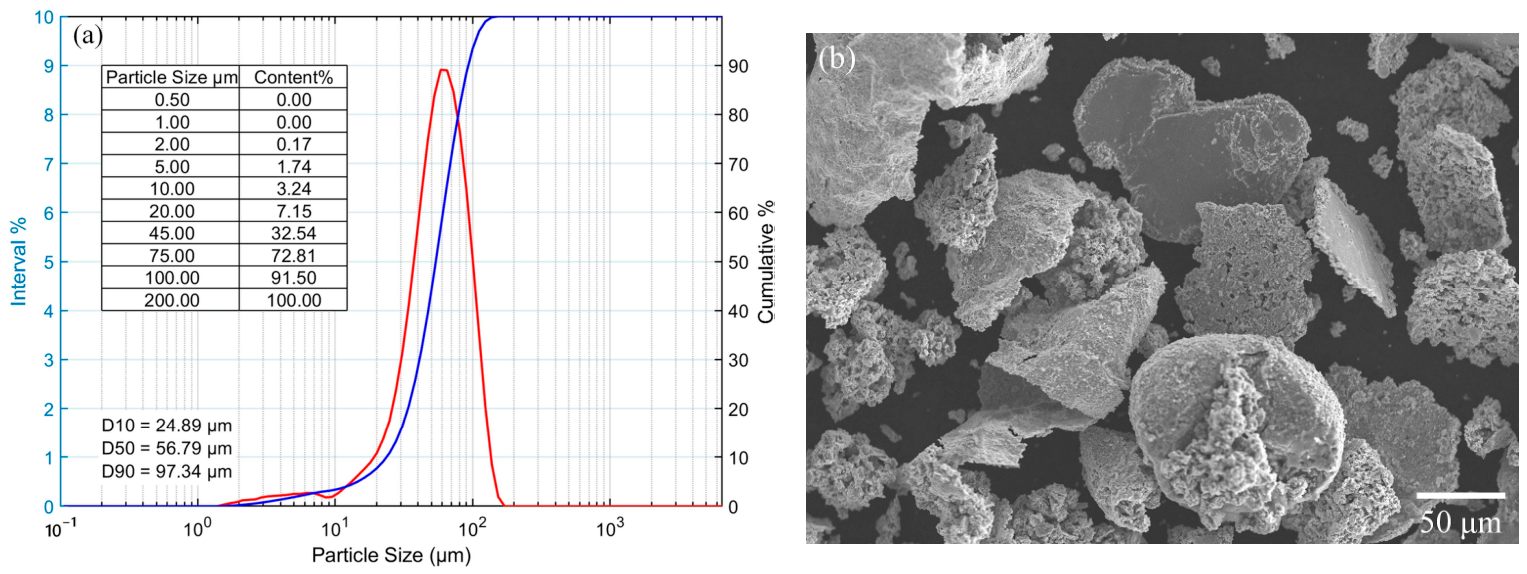
In this study, MoS2 was employed as a typical solid lubricant. Owing to weak van der Waals forces between its molecular layers, MoS2 enables easy interlayer sliding under low shear stress, thereby yielding a low friction coefficient (Equation (1)) [22]. This property makes MoS2 a widely used solid lubricant. To suppress the oxidation and decomposition of MoS2 during high-temperature plasma spraying, a Ni-coated MoS2 composite powder (75 wt.% Ni, 25 wt.% MoS2) was used as the feedstock. The powder was obtained from United Coatings Technologies Co., Ltd., Beijing, China. The particle size distribution and microstructure of the selected spray powder are shown in Figure 1:
μ = τ b A r F N
where τb is the shear strength of the material, MPa; Ar is the real contact area of the friction interface, m2; FN is the normal load, N.

2.2. Preparation of Surface Textures and Composite Coatings

In this work, a biomimetic sinusoidal texture (ST) was selected as the research object, and its geometric profile is expressed by Equation (2). The detailed design method of the biomimetic sinusoidal texture was presented in our previous work [23] and is not elaborated here:
y = A m sin ( ω x )
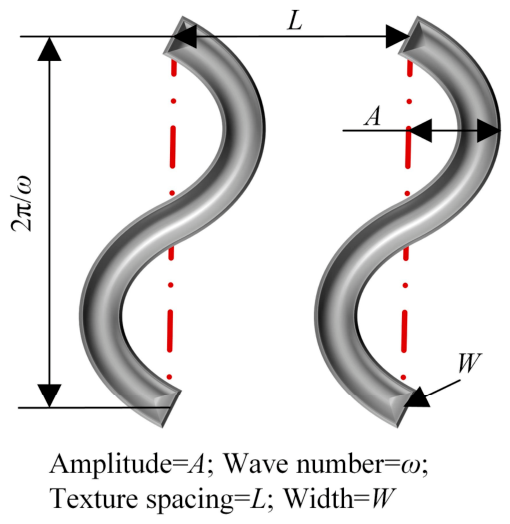
where Am is the amplitude of the sinusoidal texture, mm; ω is the wave number, rad/mm, which is used to control the period of the sinusoidal texture. The schematic of the sinusoidal texture is displayed in Figure 2.
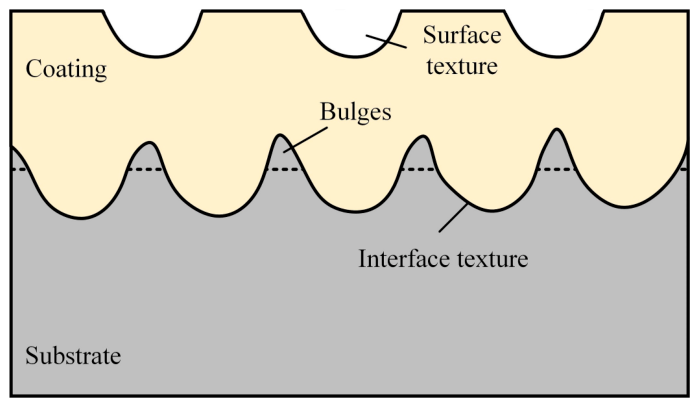
To fully exploit the functional advantages of surface texturing, textures for different functions were separately prepared in this work, forming a gradient-textured solid lubricant composite coating with a three-level structure (interface texture–coating–surface texture), as shown in Figure 3. Both interface and surface textures were prepared using a YLP-MP20 nanosecond fiber laser (Han’s Laser, Shenzhen, China), with key parameters listed in Table 2.
The interface sinusoidal texture was fabricated following the function y = 0.1sin(10x) with the laser parameters below: laser power of 16 W, pulse duration of 200 ns, pulse repetition rate of 25 kHz, scanning speed of 400 mm/s, and scanning repetitions of 5 times. The as-prepared interface sinusoidal texture yields an average width of 54.2 μm and an average depth of 25.8 μm. To guarantee favorable coating bonding performance, the area ratio of the interface texture was set to 75%. The texture area ratio (R) reflects the distribution density of textures, and it is defined as the ratio of the textured region to the total sprayed surface area, as given in Equation (3). A higher value of R corresponds to greater texture density:
R = Area   of   the   textured   region Area   of   the   sprayed   surface = W L
where W is the width of the sinusoidal texture, μm; L is the center distance between adjacent textures, μm.
After interface texturing, a Ni-based MoS2 coating was deposited using a Model 7M plasma spraying system (AVIC Manufacturing Technology Institute, Beijing, China) equipped with a 7M-B torch. During the experiment, key parameters, including arc current, arc voltage, powder feed rate, spraying distance, and gas flow rate, were adjusted to ensure reliable coating adhesion, reduce oxidation, and obtain a sound internal morphology; the optimized spraying parameters are listed in Table 3. The specimens were sprayed at room temperature with a deposition efficiency of 50%. The single-pass coating thickness was controlled at approximately 8–12 μm, and the total coating thickness reached about 350 μm.
After coating deposition, the top surface was sequentially ground with 600-grit, 800-grit, 1000-grit, 1200-grit, and 1500-grit abrasive papers. The ground samples were then polished with W1.5 diamond polishing paste, ultrasonically cleaned in anhydrous ethanol for 20 min, and dried for further use. Secondary surface texturing was then conducted using the same nanosecond laser, forming a solid lubricant composite surface with a three-level structure of interface texture–plasma sprayed coating–surface texture (abbreviated as IST-PSC-SST). Unless otherwise stated, the sinusoidal texture followed the expression y = 0.1sin(10x), with corresponding laser parameters: laser power of 14 W, pulse duration of 200 ns, pulse repetition rate of 25 kHz, scanning speed of 400 mm/s, and 5 repeated scanning cycles. The prepared surface texture exhibited an average width of 57.9 μm and an average depth of 32.3 μm. In addition, texture edge bulges formed during texturing usually aggravate the friction and wear of the friction pair [24]. To eliminate such adverse effects, the textured coating was gently polished before tribological tests to remove edge bulges.

2.3. Tribological Tests and Characterization

Tribological properties of the as-prepared composite surfaces were investigated under dry sliding conditions. Tribological tests were carried out on a UMT-3 tribometer (BRUKER, Billerica, MA, USA) using a pin-on-flat reciprocating configuration. The counterpart was a GCr15 cylindrical pin with a size of 6.3 mm in diameter and 20.1 mm in length.
After the friction tests, the worn morphologies were observed using a JSM-7200F scanning electron microscope (SEM, JEOL, Tokyo, Japan) equipped with an X-Max50 energy dispersive X-ray spectrometer (EDS, Oxford Instruments, Abingdon, UK) for elemental analysis. The phase composition of the coatings was identified by a D8 Discover X-ray diffractometer (XRD, Bruker AXS, Karlsruhe, Germany). Wear mass loss was measured using an electronic balance with a measurement accuracy of 0.01 mg. Prior to weighing, all samples were ultrasonically cleaned to remove loose wear debris.

3. Results and Discussion

3.1. Coating Characterization

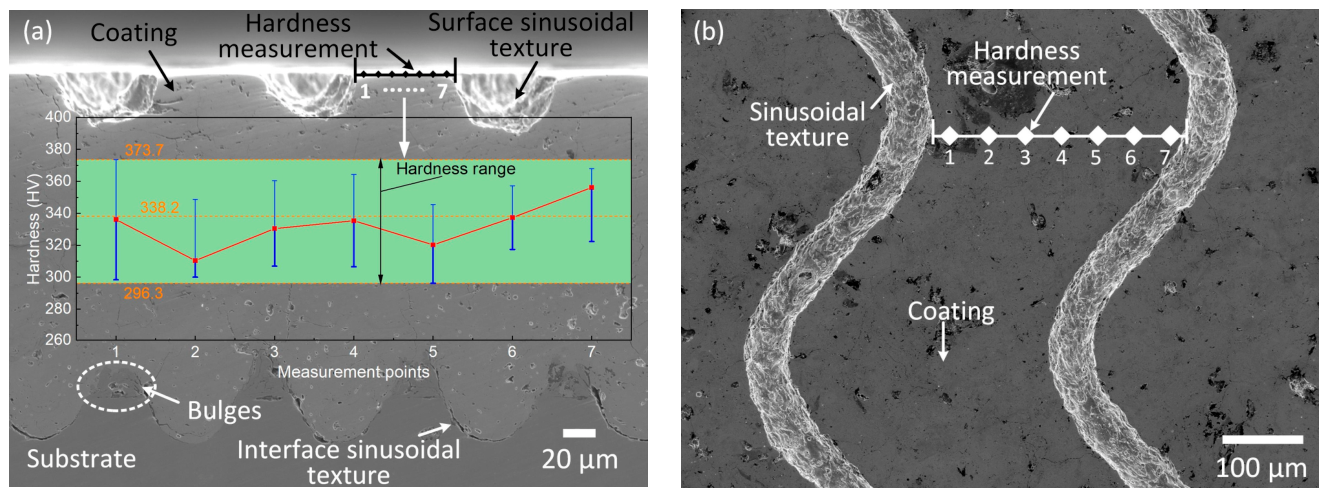
The cross-sectional and surface morphologies of the polished IST-PSC-SST composite coating are presented in Figure 4. The inset in Figure 4a shows the hardness distribution of the coating between two adjacent sinusoidal textures. Seven test points were uniformly selected within each measurement interval. The substrate exhibits a regular cross-sectional morphology, and the coating presents sound interfacial bonding with the substrate. A small quantity of pores and microcracks can be observed, which are typical inherent features of plasma-sprayed coatings and are generally unavoidable. The average hardness of the coating between laser-textured regions is approximately 338.2 HV. The hardness variation within the test interval can be attributed to the non-uniform distribution of MoS2 inside the coating.
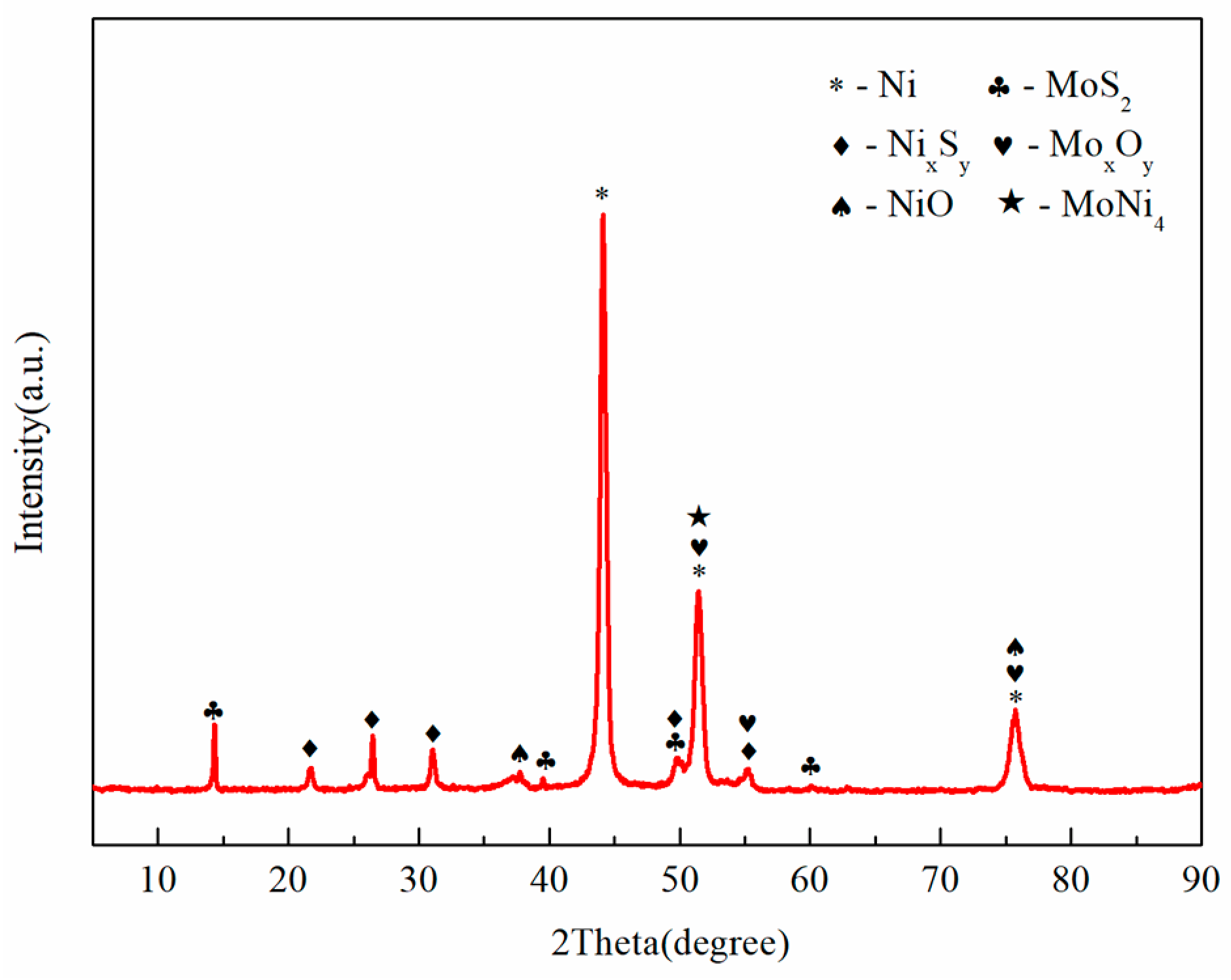
To identify the presence of the MoS2 solid lubricant phase in the as-prepared coating, phase composition analysis was performed on the coating surface, and the corresponding XRD pattern is presented in Figure 5. The results reveal the formation of NixSy compounds (e.g., Ni3S4 and Ni3S2) in the coating, indicating chemical reactions between Ni and MoS2 under the high temperature of plasma spraying. In addition, Ni oxide (NiO) and Mo oxides (MoxOy, such as MoO3 and Mo4O11) are detected, demonstrating partial oxidation of Ni and MoS2 during the spraying process. Relevant studies have confirmed that oxides, including NiO, MoO3, and Mo4O11, can also act as solid lubricants at elevated temperatures [25]. Despite the oxidation and decomposition of MoS2 during plasma spraying, distinct MoS2 diffraction peaks are observed in the XRD pattern, verifying the retention of the MoS2 phase in the coating. This preservation is attributed to the protective effect of the Ni shell in the composite powder.

3.2. Validation of the Effectiveness of Sinusoidal Textures

To verify the effect of sinusoidal textures on the tribological properties of the composite coating, two typical textures, namely dimple texture (DT) and linear groove texture (LT), were selected for comparison, along with an untextured coating (NT). Under the aforementioned laser-processing parameters, the average diameter and depth of the prepared dimple textures were approximately 91.6 μm and 47.7 μm, respectively. The linear groove textures exhibited an average width of 58.3 μm and an average depth of 30.8 μm. Based on our previous studies on the optimization of texture parameters for tribological performance, as well as relevant findings reported in the literature, surface textures present optimal friction and wear reduction performance when the texture area ratio ranges from 5% to 20% [23,26]. Therefore, a texture area ratio of 9% was adopted in this section.
Reciprocating friction tests were performed with a stroke of 5 mm, a frequency of 2 Hz, and a duration of 30 min. A normal load of 10 N was applied, and the relative reciprocating speed between the specimen and the GCr15 counterpart pin was controlled at 20 mm/s. The sliding direction was arranged perpendicular to the sinusoidal and linear groove textures. Each group of tribological tests was repeated three times, and the average value of the friction coefficient was taken as the final result.

3.2.1. Effect of Texture Morphology on Tribological Properties

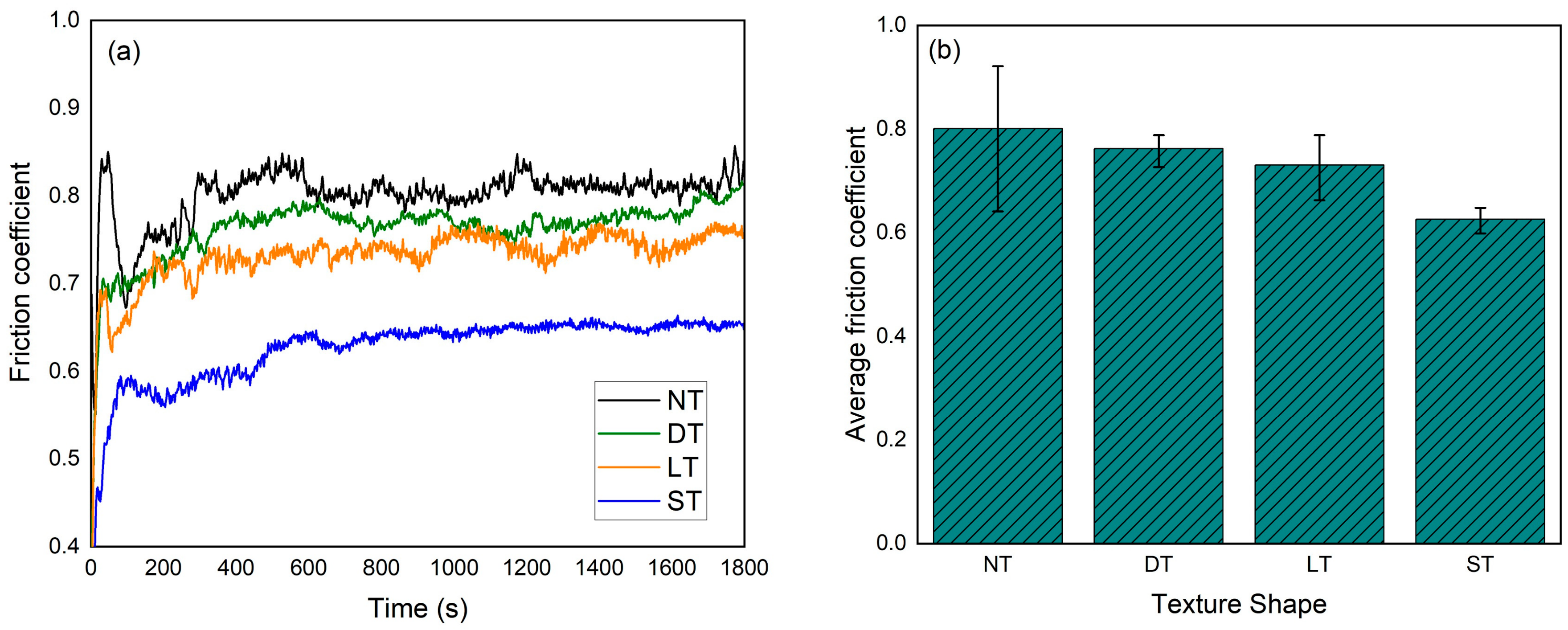
Figure 6 presents the friction coefficient variation in samples with different texture morphologies under identical testing conditions. The friction coefficient of each group initially increases and then gradually stabilizes. Obvious friction coefficient fluctuations appear within the initial 300 s, which is attributed to the running-in process between the friction pairs at the initial contact stage. As reported by Grützmacher [27], the friction coefficient variation during running-in can differ significantly even under the same working conditions, so this transition stage is not analyzed in detail in this paper.
In the stable friction stage, the average friction coefficient follows the order: NT > DT > LT > ST. The untextured coating displays a higher friction coefficient than all textured coatings, confirming the friction reduction effect of surface texturing. Among the three texture types, the DT sample exhibits the highest friction coefficient, ranging from 0.73 to 0.79, which is slightly lower than that of the smooth surface and nearly equal to that of the untextured coating after 1600 s. The friction coefficient of the LT sample remains stable between 0.66 and 0.79, lower than those of NT and DT but distinctly higher than that of ST. The ST sample presents the lowest friction coefficient of 0.60 to 0.65 with the narrowest fluctuation range, demonstrating that the sinusoidal texture achieves the optimal friction reduction performance.
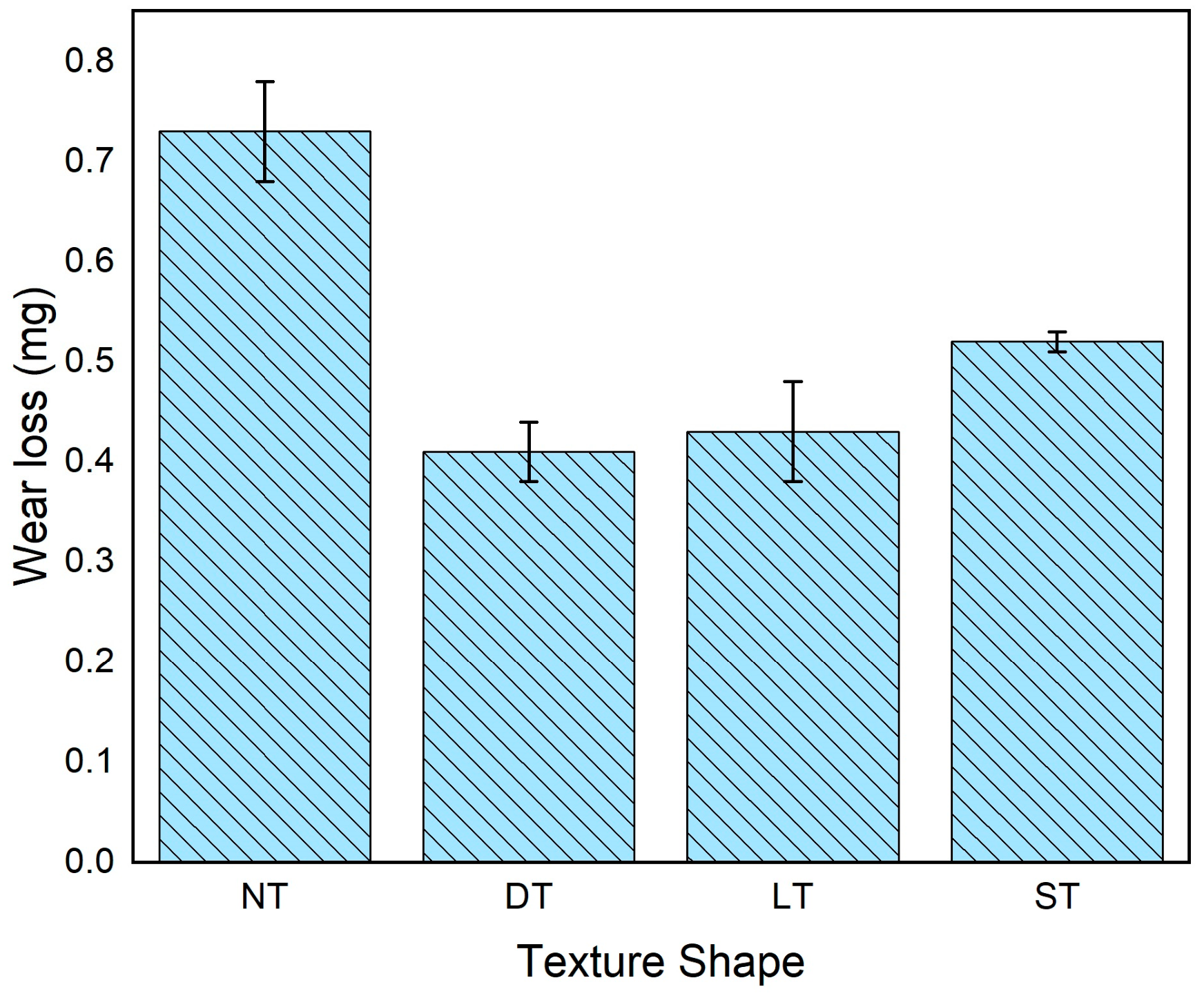
Figure 7 illustrates the wear loss of surfaces with different texture types. The results indicate that the untextured coating exhibits the highest wear loss, confirming that surface texturing effectively reduces wear. However, the wear loss sequence of differently textured surfaces is inconsistent with that of the friction coefficient. This discrepancy can be attributed to the differences in wear debris trapping capacity and wear mechanisms among various texture morphologies.
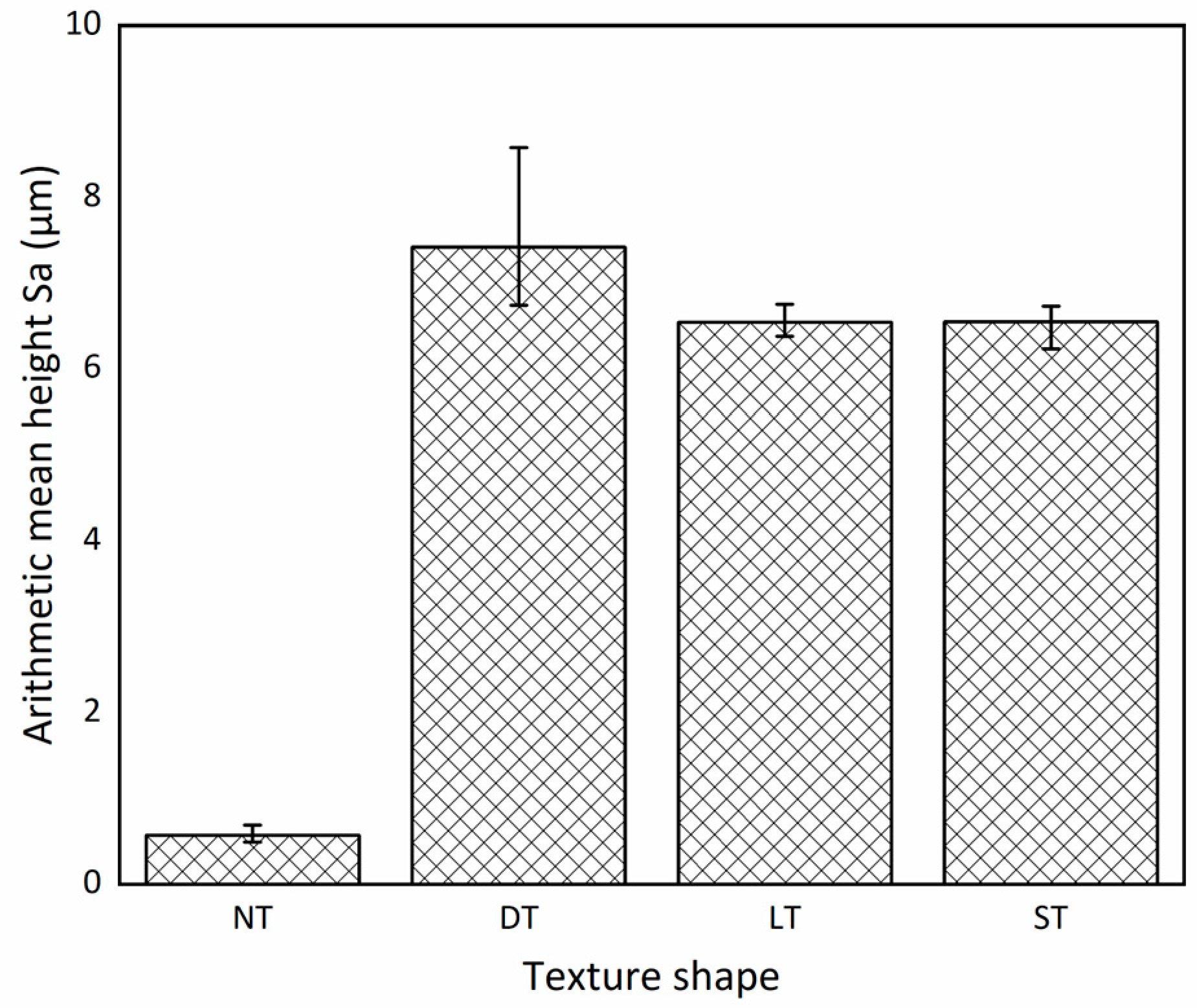
Under dry friction conditions, surface textures primarily reduce friction and wear by capturing wear debris and reducing the real contact area. Furthermore, analysis from Figure 8 reveals that texturing significantly increases the surface roughness of the coating, which generally exerts a negative effect on friction reduction. Accordingly, the improved tribological performance induced by surface textures can be ascribed to the synergistic effect among contact area reduction, wear debris trapping, and surface roughness variation [28]. The friction coefficient can be qualitatively expressed as:
μ = μ a + μ p + μ r
where μa is the adhesive friction coefficient related to the real contact area of the friction pair; μp is the friction coefficient associated with plastic deformation caused by plowing and fracture; and μr is the friction coefficient dependent on surface roughness.
Surface textures contribute to reduced real contact area and effective wear debris trapping. Consequently, the adhesive friction component μa and plastic deformation component μp of textured coatings are both lower than those of the untextured coating, while the increased surface roughness raises the roughness-related component μr. The friction results confirm that texturing effectively reduces the friction coefficient compared with the untextured surface. It can therefore be inferred that, within a reasonable design range, the positive effects of contact area reduction and debris trapping outweigh the negative effect of increased surface roughness. In addition, since all textured surfaces share the same area ratio and the diameter of the mating pin is much larger than the texture width or diameter, the real contact area can be regarded as identical among different textured samples. Thus, the contribution of the adhesive component μa to the friction coefficient difference can be neglected in this study. Qualitatively, the friction discrepancy among various textures mainly depends on μp and μr.
DT features a semi-enclosed structure and lose its friction-reducing function once fully filled with wear debris. In contrast, wear debris inside LT and ST can spread along the texture direction under shear stress, endowing LT and ST with stronger debris-trapping ability and lower μp than DT. Meanwhile, DT exhibits considerably higher surface roughness than LT and ST, which theoretically increases its μr value. The synergistic effects of these two factors result in a higher friction coefficient for DT than for LT and ST. No significant roughness difference is observed between LT and ST. The lower friction coefficient of ST relative to LT can be explained as follows: at the same contact area, ST provides a longer effective contact length, which further enhances debris retention. Moreover, LT suffers more severe stress concentration at texture edges than ST [29,30,31]. However, these assumptions warrant systematic investigation and verification in future work.

3.2.2. Wear Morphology Analysis

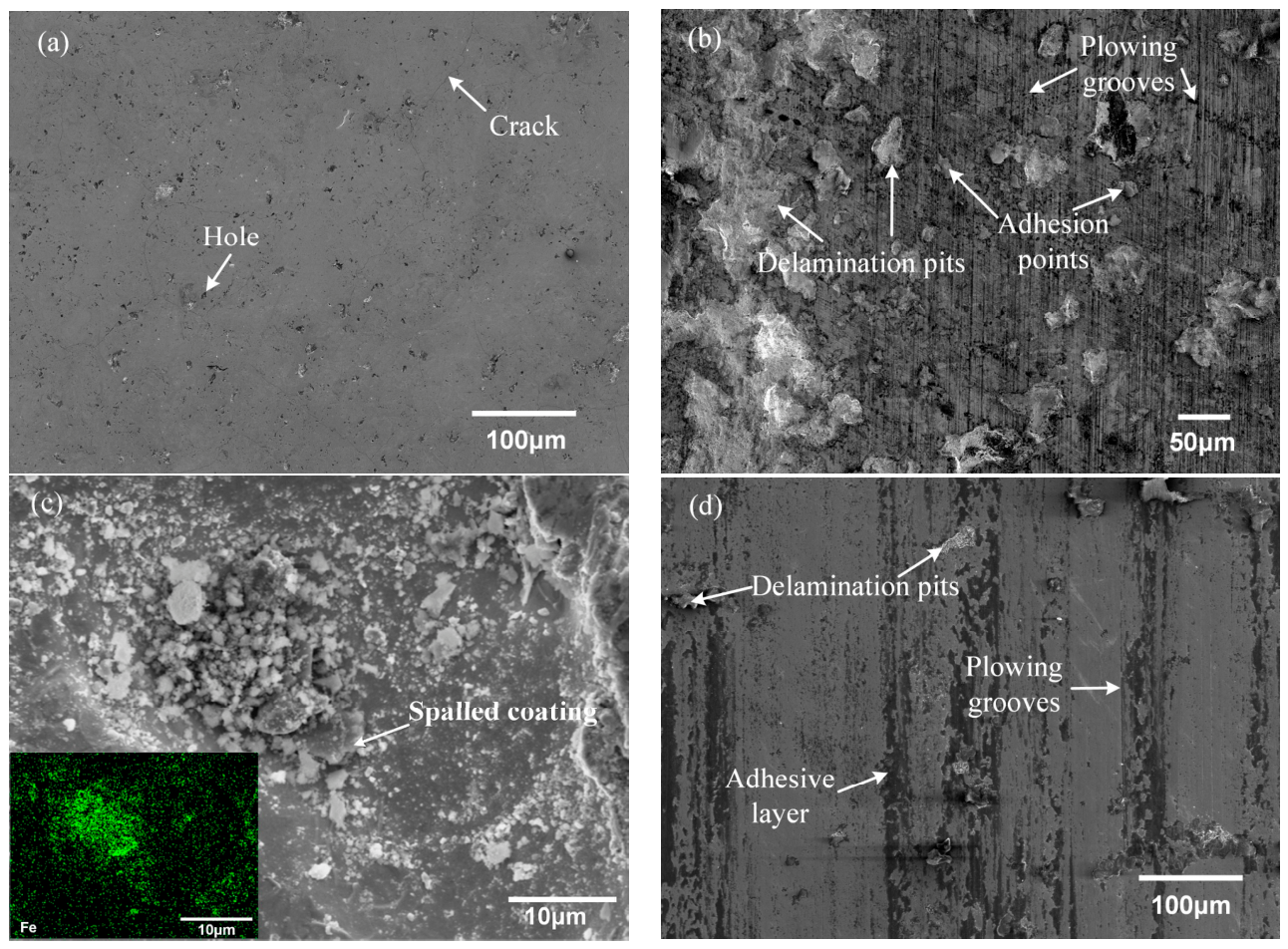
Figure 9 displays the surface morphologies of the NT before and after the friction test. Due to the inherent deposition characteristics of plasma spraying, the coating inevitably contains inherent defects such as pores and microcracks. After the friction test, the original voids on the worn surface are barely visible, as they are most likely filled and covered by wear debris generated during sliding. Meanwhile, severe plowing grooves, adhesion points, and delamination pits are widely distributed on the coating surface, as shown in Figure 9a,b. Local debris accumulated on the worn track consists of flake-like fragments with large size and flat tops, as presented in Figure 9c, verifying the occurrence of coating spalling during friction. Accordingly, the NT suffers from significant abrasive wear, adhesive wear, and fatigue wear. Elemental analysis of the wear debris reveals a strong signal of Fe, which is not present in the original coating. This indicates that part of the wear debris is transferred from the counterpart pin, which accounts for the distinct plowing grooves observed on the counterpart surface in Figure 9d. Black adhesive layers are also present on the counterpart, which are tribofilms formed by material transfer from the coating to the contact interface. The mild wear surrounding these tribofilms confirms their beneficial effect on reducing friction and wear, which is consistent with the results reported in Reference [32].
Figure 10 presents the worn morphologies of textured coatings. Compared with the NT, delamination and plowing grooves on the textured surfaces are greatly alleviated. According to the adhesive friction theory proposed by Bowden and Tabor, we have:
F = A r τ b
where F is the friction force, N; Ar is the real contact area of the friction pair, m2; and τb is the shear strength, MPa.
Surface textures can reduce the real contact area. As reflected by Equation (5), textured surfaces obtain lower friction force than untextured ones. The reduction in friction force mitigates the fatigue wear effect, thereby weakening the delamination on the surfaces of the textured coatings.
The untextured surface is unable to trap wear particles, which act as micro-cutting agents on the smooth surface during sliding and lead to severe plowing grooves. In contrast, surface textures can effectively capture wear debris. The reduced amount of abrasive particles between contact interfaces significantly alleviates plowing along the wear track. Once surface textures are fully filled with debris, the trapped wear debris become compacted and even undergo plastic deformation under shear stress, resulting in visible debris residues after ultrasonic cleaning. The amount of residual debris inevitably affects the measured wear loss, which is the main reason for the irregular variation in wear volume among different texture morphologies. In addition, discrete black flake-like adhesive layers are distributed on the worn surfaces, indicating the formation of protective tribofilms during friction that partially reduce friction and wear. For coatings containing solid lubricant phases, the actual friction force Fa equals the sum of the shear resistance of the solid lubricant film and the coating, as expressed in Equation (6) [33,34,35]. Combining Equations (1) and (5) yields the friction coefficient of the solid lubricant coating, as shown in Equation (7). Clearly, the formation of tribofilms via the transfer of solid lubricant materials reduces friction and wear:
F a = τ f η A r + τ a 1 η A r
μ = η μ f + 1 η μ a
where η is the coverage ratio of the solid lubricant film; τf is the shear strength of the solid lubricant film, MPa; τa is the shear strength of the coating matrix, MPa; and μf is the friction coefficient of the solid lubricant film.
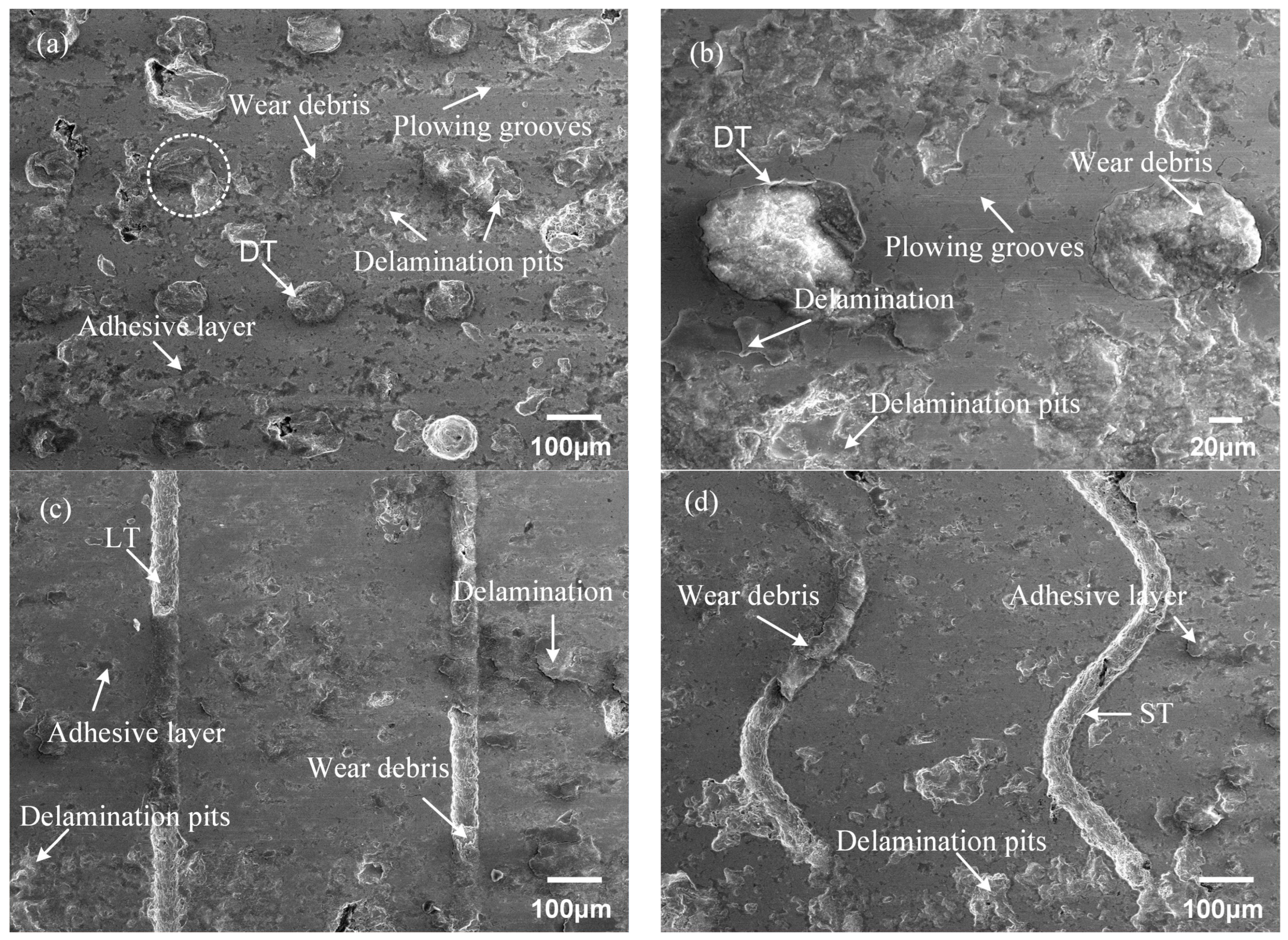
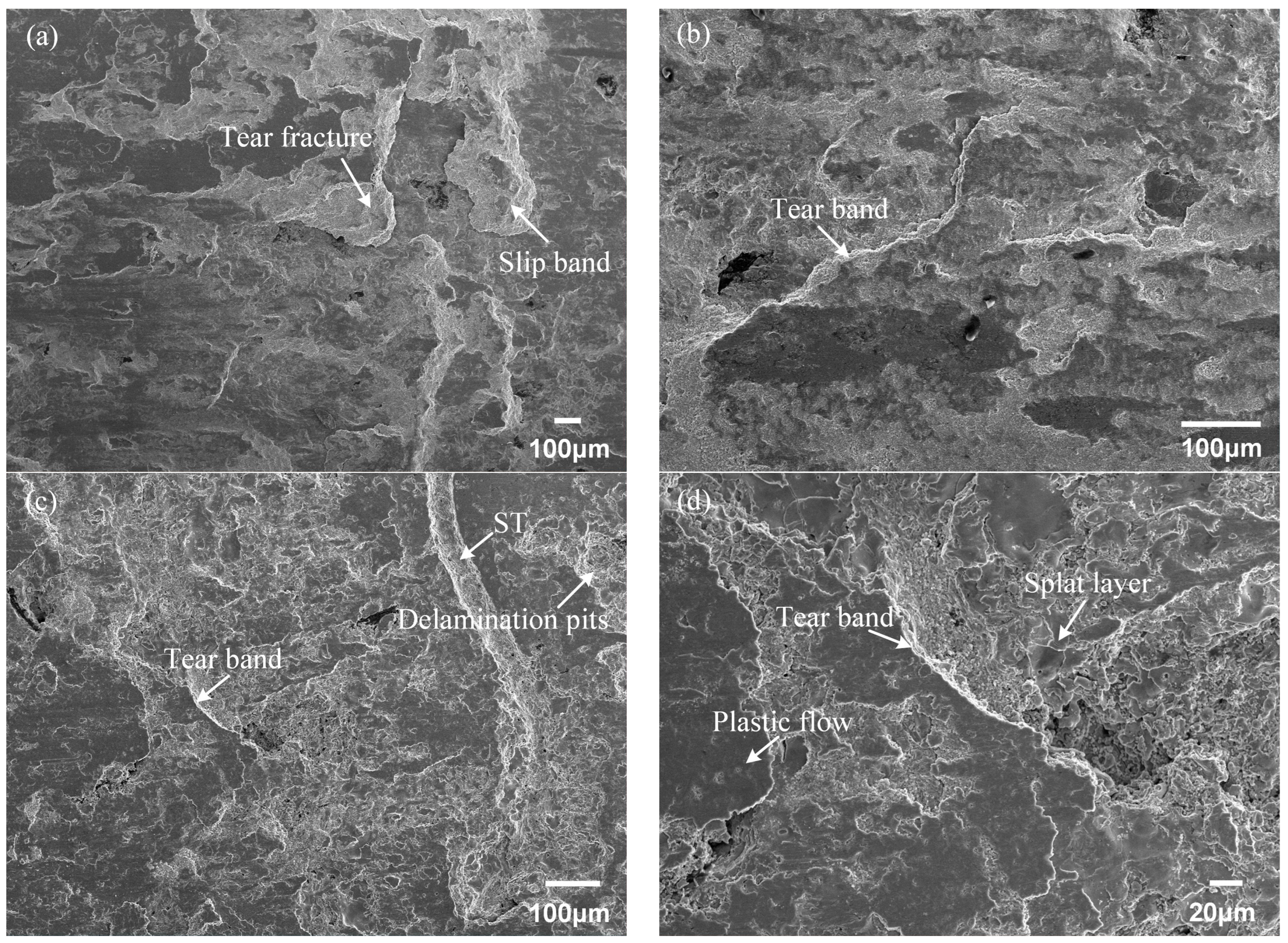
The comparison of wear morphologies among different texture types reveals that DT samples possess more severe plowing grooves and delamination pits than other textured specimens, as shown in Figure 10a,b, which reflects intensified abrasive wear, adhesive wear, and fatigue wear. It can also be observed that most dimples are fully filled with wear debris, as marked by region A in the dashed line. This phenomenon indicates that the debris storage capacity of DT is relatively weak, owing to its semi-enclosed structure. When dimples are fully filled with debris, the real contact area between sliding interfaces increases, resulting in higher friction force and more abrasive particles between contact surfaces, which further intensifies abrasive and fatigue wear. Both LT and ST also present signs of fatigue wear and adhesive wear, yet only partial inner areas of their textures are filled with debris. Meanwhile, the quantity and depth of plowing grooves on LT and ST surfaces are notably reduced compared with DT, demonstrating a lower degree of abrasive wear, as presented in Figure 10c,d. This can be attributed to the continuous and open structure of LT and ST, which provides a longer effective contact length with the counterpart at any instant. Moreover, debris trapped inside these textures can spread along the texture direction, endowing LT and ST with stronger debris-trapping ability than DT and thus mitigating abrasive wear. Under the same contact width of a single texture unit, sinusoidal textures feature longer contact length and larger effective debris storage space than linear textures. This accounts for the slighter adhesive wear and surface delamination of ST compared with LT. According to the above analysis, the sinusoidal textured coating exhibits superior tribological performance to DT and LT coatings, confirming that the ST is advantageous for improving tribological properties.

3.3. Effect of Load on the Tribological Properties of IST-PSC-SST Coatings

To investigate the adaptability of the prepared IST-PSC-SST composite coating under different normal loads, its friction and wear behaviors at various load levels were systematically evaluated. Based on the previous parametric optimization of sinusoidal textures, the texture profile was defined by the function y = 0.1sin(6x), with an area ratio of 9.5%. The normal load was varied from 20 N, 40 N, 60 N, 80 N, and 100 N to 120 N. All other tribological testing parameters remained identical to those described in the preceding sections.
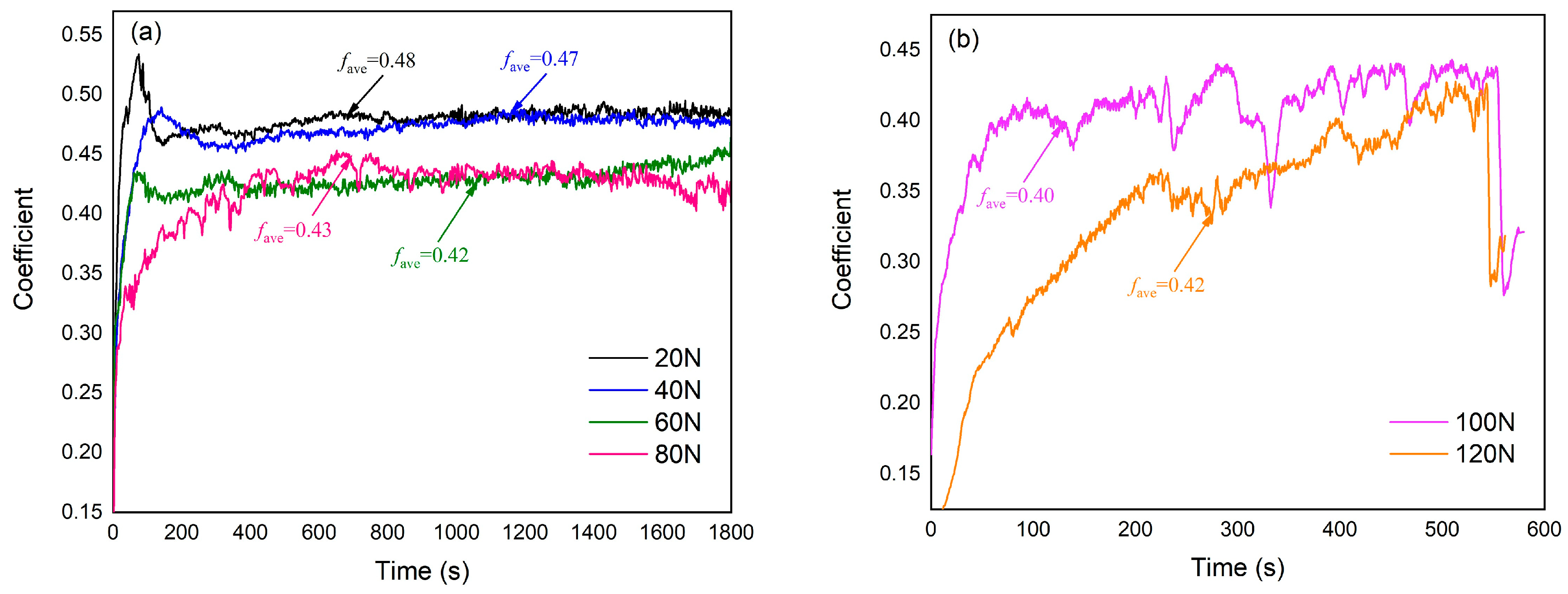
Figure 11 shows the evolution of the friction coefficient of the IST-PSC-SST composite coating with applied load. It can be observed that the friction coefficient of the textured surface presents a downward trend as the load rises. As the load ranges from 20 N to 40 N, the average friction coefficient remains stable at 0.47–0.48, and the friction coefficient curve shows good stability, as shown in Figure 11a. When the load increases to 60 N, the friction coefficient further drops to 0.42, decreasing by roughly 10.6%–12.5% compared with the values under 20–40 N. With a further increase to 80 N, the average friction coefficient is close to that at 60 N, while its fluctuation range rises noticeably, indicating degraded stability. Under loads of 100 N and 120 N, severe vibration of the counterpart occurs near 540 s, leading to sudden sliding of the upper specimen and an abrupt drop in the friction coefficient, which terminates the test prematurely. Such unstable behavior appears earlier under higher loads, suggesting that the IST-PSC-SST composite coating suffers from severe wear failure under such conditions. Therefore, further tests under higher loads are considered unnecessary. In summary, according to the friction coefficient results, the prepared coating is suitable for low-to-medium load conditions below 100 N.
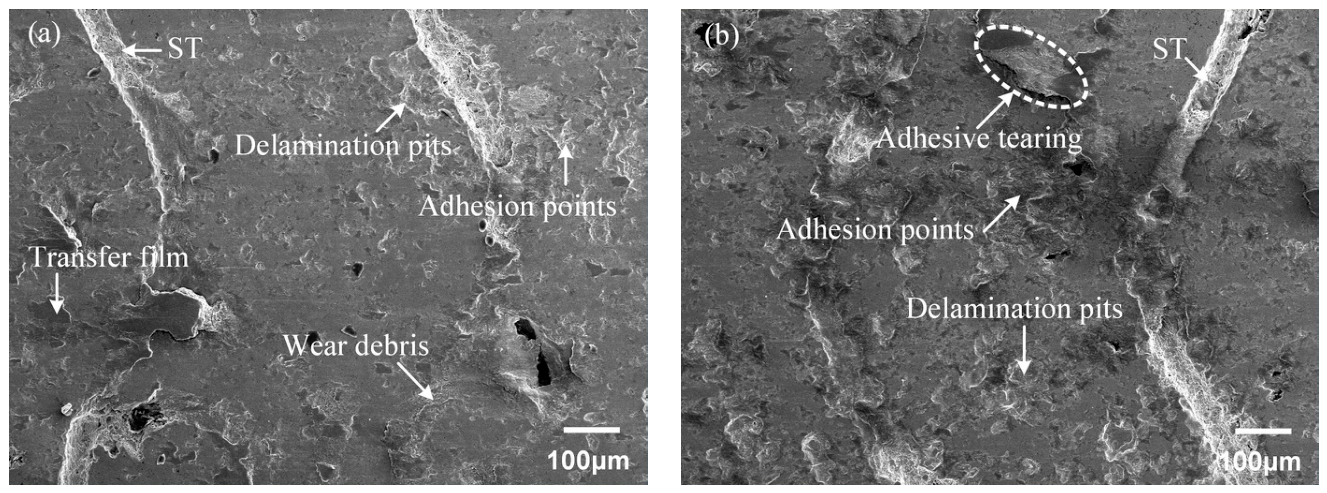
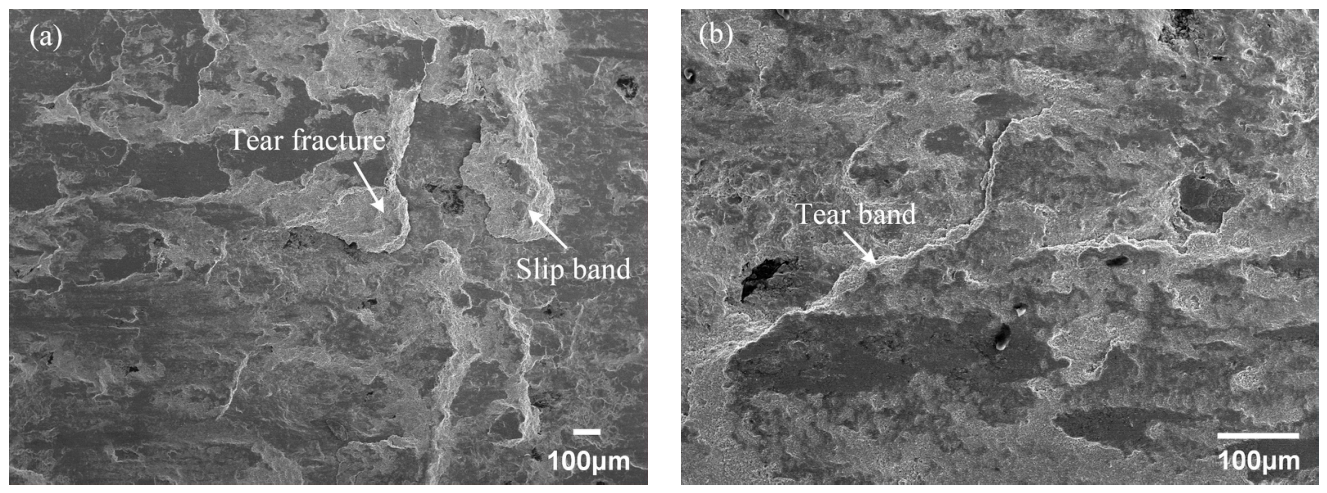
Wear morphology analysis of the IST-PSC-SST composite coating under loads of 20 N, 40 N, 60 N, and 80 N shows that at 20 N, the coating surface undergoes adhesive wear and fatigue wear, accompanied by slight abrasive wear, as presented in Figure 12a. With the increase in load, adhesive wear and fatigue delamination become more pronounced, and local adhesive tearing can be observed in the dashed line marked area in Figure 12b. At 60 N, fatigue delamination and adhesion intensify further. Most surface textures are covered by wear debris, adhesion layers, and plastic flow, with only a few intact textures visible locally (Figure 12c). When the load increases to 80 N, severe fatigue delamination and extensive plastic flow dominate the worn surface. Surface textures are almost entirely obscured, and the textured interface is covered by large-scale plastic flow and adhesive films (Figure 12d). This phenomenon is mainly due to the frictional heat generated during sliding. As indicated by Equations (8)–(11), higher loads induce greater frictional heating, which promotes plastic deformation near the coating surface [36,37,38]. Sufficiently high plastic compression and thermal effects collectively lead to plastic flow and adhesive tearing of the surface layer. To further improve the load-bearing capacity of the coating, it can be achieved by increasing the coating hardness, such as adding hard reinforcing phases (e.g., Al2O3, TiN) to the coating, replacing pure Ni with Ni-based alloys, and optimizing the spraying process to improve the coating density:
T b T 0 = μ F N v A n 1 k 1 / l 1 b + k 2 / l 2 b
where Tb is the average surface temperature, K; T0 is the ambient temperature, K; v is the relative sliding velocity, m/s; An is the nominal contact area, m2; k1 and k2 are the thermal conductivities of the two contacting surfaces, W/m·K; l1b and l2b are the equivalent heat diffusion distances corresponding to Tb, m:
T f T 0 = μ F N v A r 1 k 1 / l 1 f + k 2 / l 2 f
where Tf is the average flash temperature at the real contact interface, which is generally higher than Tb, K; T 0 is the effective flash temperature dissipated into the environment, obtainable from Equations (10) and (11), K; Ar is the real contact area, m2; l1f and l2f are the equivalent heat diffusion distances corresponding to Tf, m:
T 0 = T b F N F s T b T 0
F s = H 0 A n 1 + 12 μ 2
where Fs is the normal load that causes the nominal contact area An to equal the real contact area Ar, N; H0 is the hardness of the softer surface in the friction pair, N/m2.
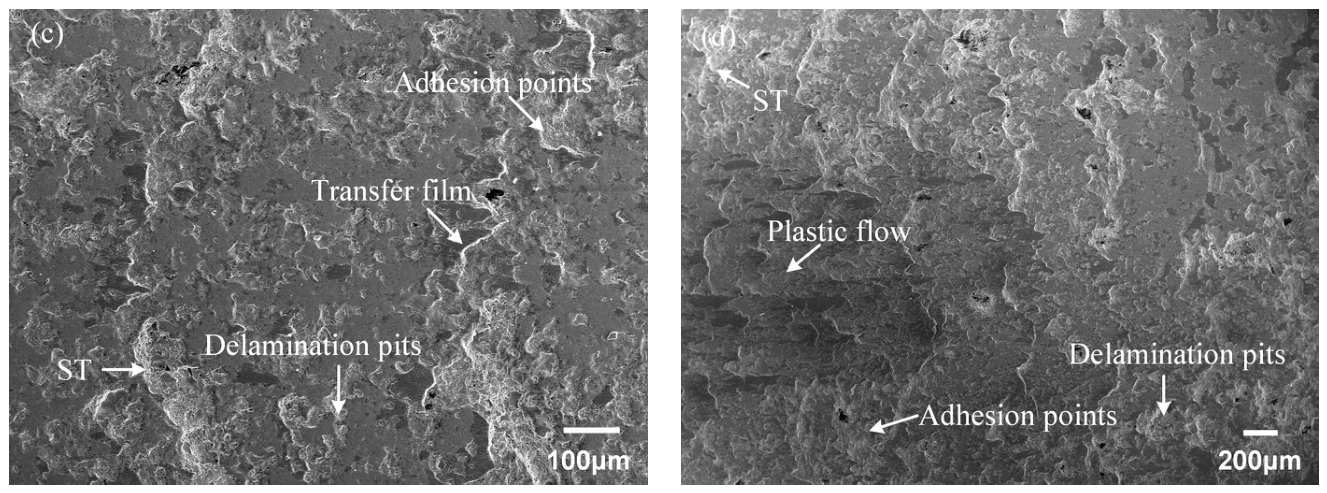
Wear morphology analysis of the IST-PSC-SST composite coating under 100 N and 120 N reveals that when the load exceeds 100 N, no tribofilm forms on the worn surface. Instead, large-scale severe sliding tearing occurs rapidly, resulting in significant wear failure of the contact surface, as shown in Figure 13. From the fracture morphologies and the flatness at the bottom of the sliding layers in Figure 13a,b, such damage is attributed to severe plastic flow. Multiple plastic flow layers form within a short duration, and most textures on the coating are either obscured or removed by plastic deformation. At 120 N, in addition to extensive plastic flow and sliding tearing, smooth flake-like stacked morphologies are observed at some fracture sites. This indicates that severe plastic sliding and adhesive tearing under a heavy load can directly induce delamination of the coating surface, leading to more severe failure, as shown in Figure 13c,d. It can be inferred that the abrupt drop in friction coefficient and the sudden vibration or sliding of the counterpart during testing are caused by the sudden tearing of the plastic flow layer or the coating itself. The wear behavior confirms that the as-prepared coating is unsuitable for operating loads exceeding 100 N. To extend the load-bearing range of the IST-PSC-SST composite coating, further optimization of its physical properties (e.g., hardness and microstructure) is required.

3.4. Effect of Sliding Velocity on the Tribological Properties of IST-PSC-SST Coatings

The influence of sliding velocity on the IST-PSC-SST composite coating was investigated over the range of 20 mm/s, 40 mm/s, 60 mm/s, 80 mm/s, 100 mm/s, and 120 mm/s. A normal load of 20 N was applied, and all other testing parameters were consistent with those described in Section 3.3. The results can provide support for the design of coating physical properties and the study of high-speed adaptability of composite coatings.
Analysis of the friction coefficient variation with sliding velocity in Figure 14 reveals that increasing velocity tends to reduce the friction coefficient, with the lowest average value of 0.37 obtained at 40 mm/s. Compared with the friction coefficient at 20 mm/s, the reduction ranges from 8.3% to 22.9% at other velocities. However, the friction coefficient fluctuates without a clear linear correlation with velocity; both low and high speeds yield relatively high values, and the fluctuation amplitude increases with rising sliding velocity. In addition, compared with the untextured coating in Figure 6, the friction coefficient of the textured coating is reduced by 23.8%–41.3% at all tested velocities. Overall, the IST-PSC-SST composite coating exhibits favorable adaptability over a wide range of sliding velocities in terms of friction reduction.
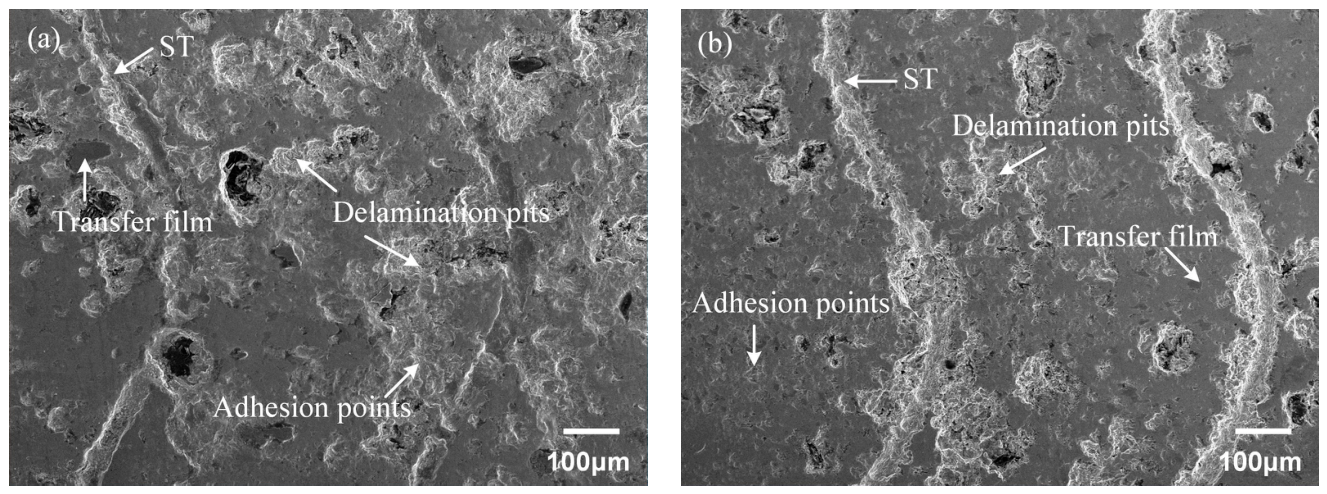
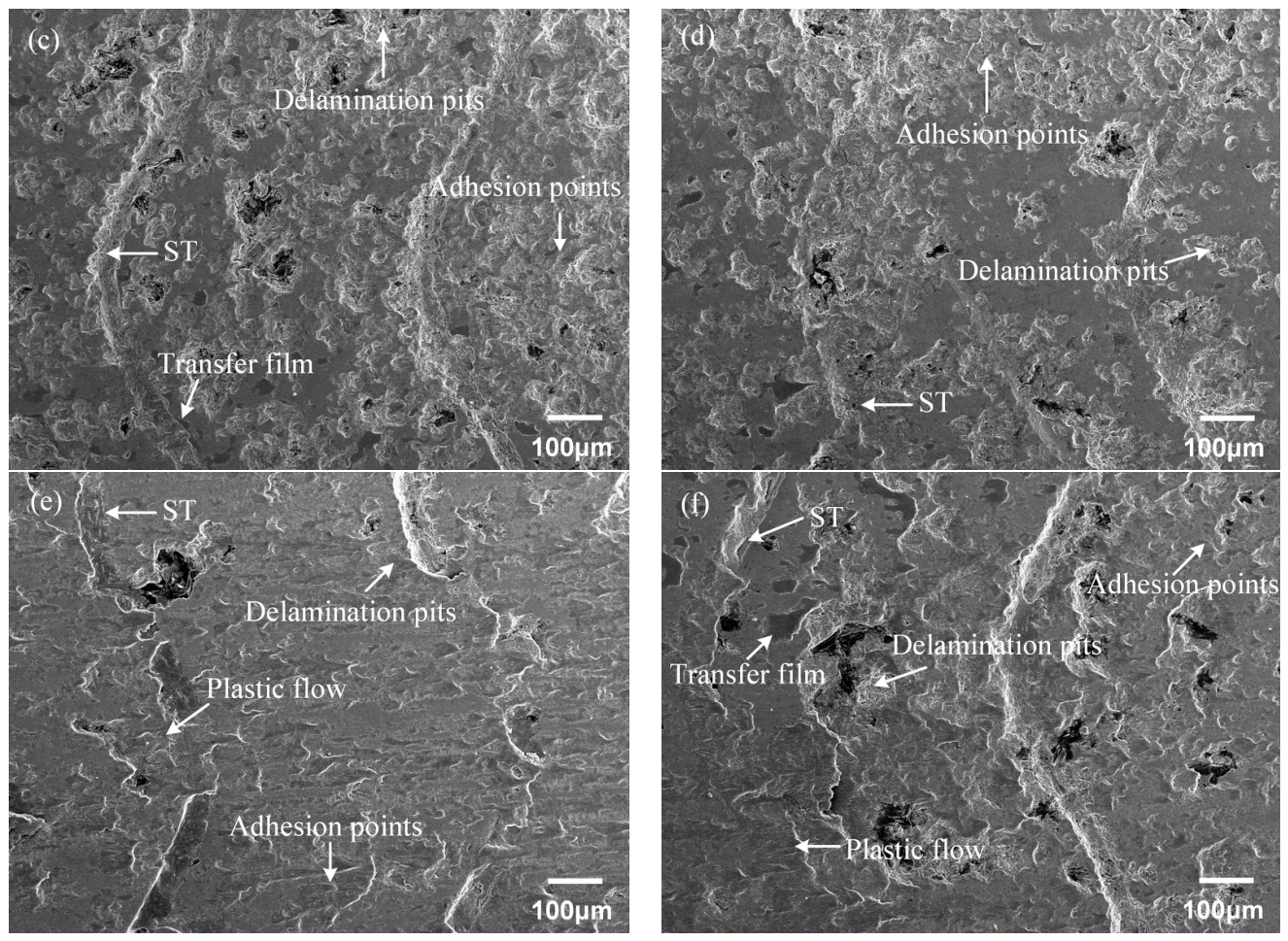
The wear morphologies at different sliding velocities are further analyzed in Figure 15. The result at 20 mm/s is identical to that tested under 20 N in Section 3.3 and thus will not be discussed separately. At 40–60 mm/s, the coating exhibits pronounced fatigue wear compared with 20 mm/s. Fatigue delamination pits are significantly enlarged and concentrated mainly at texture edges and cavity boundaries, indicating that increased velocity accelerates the initiation and propagation of surface cracks. As the velocity rises to 80–100 mm/s, severe large-area adhesive wear appears alongside fatigue wear. The fatigue delamination pits become smaller, and the surface textures gradually blur. According to Equations (8)–(11), a higher sliding velocity generates more frictional heat per unit time, leading to a higher local temperature on the friction surface. The increased temperature softens the coating, promoting plastic deformation and adhesion. Such softening, adhesion, and plastic flow close the textures and delamination pits, resulting in smaller pits and obscured features. When the velocity is further increased to 120 mm/s, more intense frictional heat rapidly softens the coating. The worn surface is dominated by severe adhesive wear accompanied by obvious plastic flow. Most textures are sealed and disabled by the flow layer, and fatigue wear is greatly weakened. The original coating surface is severely damaged, with only small regions covered by stable transfer films remaining intact. In summary, excessively high sliding velocity degrades the stability and increases the magnitude of the friction coefficient due to aggravated fatigue and adhesive wear. Meanwhile, it causes rapid failure of surface textures, leading to poor adaptability of the prepared coating to sliding speeds exceeding 100 mm/s.

4. Conclusions

In this work, the feasibility of improving the tribological performance of coatings using sinusoidal textures was investigated via friction tests. On this basis, the adaptability of IST-PSC-SST coatings to applied loads and sliding velocities was systematically studied. The main conclusions are summarized as follows:
(1)
Reciprocating dry friction tests were conducted to compare the effects of dimple, linear, and sinusoidal textures on tribological behavior. Results show that the friction coefficient in the stable stage follows the order: NT > DT > LT > ST. The sinusoidal texture exhibits the lowest friction coefficient, the smallest wear rate, and the best stability. The sinusoidal texture provides stronger debris capture and storage capacity, which can effectively reduce abrasive, adhesive, and fatigue delamination wear. This confirms the superiority of sinusoidal textures in reducing friction and wear.
(2)
Investigation of the effect of load shows that increasing the normal load can reduce the friction coefficient to a certain extent, but also increases the fluctuation of the friction coefficient and aggravates adhesive and fatigue wear. Under low-to-medium loads (20–80 N), the coating forms a stable tribofilm and maintains good tribological performance. When the load exceeds 100 N, excessive frictional heat induces severe plastic flow, adhesive tearing, and surface delamination, leading to rapid coating failure and poor adaptability.
(3)
Investigation on the effect of sliding velocity shows that the textured composite coating exhibits acceptable adaptability over a wide range of velocities. Compared with the untextured coating, its average friction coefficient is reduced by 23.8%–41.3%. Within the sliding velocity range of 20–80 mm/s, the coating is dominated by fatigue wear, delamination, and adhesive wear. Higher sliding velocity elevates interfacial temperature, which intensifies adhesive wear and plastic flow. When the velocity exceeds 100 mm/s, severe adhesive wear and extensive plastic flow will occur, the surface texture will be covered and lose its function, and the friction coefficient will fluctuate sharply, resulting in poor adaptability of the coating to high-speed sliding.
(4)
Limited by the insufficient physical properties of the current solid lubricant coating, the gradient-textured composite still fails easily under heavy load and high-speed conditions due to plastic flow and adhesive tearing, resulting in unsatisfactory service adaptability. Future research may focus on improving the hardness and other physical properties of the coating by adding hard phases such as Al2O3 and TiN, replacing the pure Ni matrix with Ni-based alloys, and optimizing spraying parameters, so as to further broaden the applicable tribological range of the IST-PSC-SST coating.

Author Contributions

Conceptualization, X.Z., C.F. and P.Y.; methodology, X.Z. and C.F.; software, X.Z. and C.F.; validation, X.Z., C.F. and W.F.; formal analysis, X.Z.; investigation, X.Z., C.F. and W.F.; resources, P.Y. and Y.L.; data curation, X.Z.; writing—original draft preparation, X.Z.; writing—review and editing, P.Y. and C.F.; visualization, X.Z.; supervision, Y.L.; project administration, X.Z. and P.Y.; funding acquisition, X.Z. All authors have read and agreed to the published version of the manuscript.

Funding

This research was funded by the Shandong Provincial Natural Science Foundation, grant number ZR2023QE139; the Science Development Fund of Dongying, grant number DJB2022014; and the Science and Technology Development Guidance Plan of Dongying, grant number 2022ZD54.

Data Availability Statement

All data are available within the article.

Conflicts of Interest

The authors declare no conflicts of interest.

Abbreviations

The following abbreviations are used in this manuscript:
DLCDiamond-like carbon
IST-PSC-SSTA three-level structure of interface texture–plasma sprayed coating–surface texture
STSinusoidal texture
DTDimple texture
LTlinear groove texture
NTUntextured coating

Nomenclature

The following nomenclature are used in this manuscript:
μFriction coefficient
τbShear strength of the material, MPa
ArReal contact area of the friction interface, m2
FNNormal load, N
AmAmplitude of the sinusoidal texture, mm
ωUntextured coating
RTexture area ratio
WWidth of the sinusoidal texture, μm
LCenter distance between adjacent textures, μm
μaAdhesive friction coefficient related to the real contact area
μpFriction coefficient associated with plastic deformation
μrFriction coefficient dependent on surface roughness
FFriction force, N
FaActual friction force, N
ηCoverage ratio of the solid lubricant film
τfShear strength of the solid lubricant film, MPa
τaShear strength of the coating, MPa
μfFriction coefficient of the solid lubricant film
TbAverage surface temperature, K
T0Ambient temperature, K
vRelative sliding velocity, m/s
AnNominal contact area, m2
k1, k2The thermal conductivities of the two contacting surfaces, W/m·K
l1b, l2bThe equivalent heat diffusion distances corresponding to Tb, m
TfAverage flash temperature at the real contact interface, K
T 0 The effective flash temperature dissipated into the environment, K
Arthe real contact area, m2
l1f, l2fThe equivalent heat diffusion distances corresponding to Tf, m
FsThe normal load that causes the nominal contact area An to equal the real contact area Ar, N
H0The hardness of the softer surface in the friction pair, N/m2

References

  1. Chen, K.Y.; Yang, X.F.; Zhang, Y.F.; Yang, H.; Lv, G.J.; Gao, Y.L. Research progress of improving surface friction properties by surface texture technology. Int. J. Adv. Manuf. Technol. 2021, 116, 2797–2821. [Google Scholar] [CrossRef]
  2. Zhang, C.; Zhu, C.; Meng, B.; Li, S. Challenges and solutions for high-Speed Aviation Piston pumps: A Review. Aerospace 2021, 8, 392. [Google Scholar] [CrossRef]
  3. Mawignon, F.J.; Qin, L.; Hussain, M.; Yang, H.; Huang, X.; Makanda, I.L.D.; Rafique, F.; Zhang, H. Laser surface texturing under transformer oil conditions for improved process quality and tribological behaviors. Mater. Chem. Phys. 2023, 295, 127095. [Google Scholar] [CrossRef]
  4. Zhao, J.; Fu, Y.; Ma, J.; Fu, J.; Chao, Q.; Wang, Y. Review of cylinder block/valve plate interface in axial piston pumps: Theoretical models, experimental investigations, and optimal design. Chin. J. Aeronaut. 2021, 34, 111–134. [Google Scholar] [CrossRef]
  5. Zhai, W.; Bai, L.; Zhou, R.; Fan, X.; Kang, G.; Liu, Y.; Zhou, K. Recent progress on wear-resistant materials: Designs, properties, and applications. Adv. Sci. 2021, 8, 2003739. [Google Scholar] [CrossRef]
  6. Huang, B.; Liu, L.T.; Han, S.; Du, H.M.; Zhou, Q.; Zhang, E.G. Effect of deposition temperature on the microstructure and tribological properties of Si-DLC coatings prepared by PECVD. Diam. Relat. Mater. 2022, 129, 109345. [Google Scholar] [CrossRef]
  7. Xing, Y.; Wang, X.; Du, Z.; Zhu, Z.; Wu, Z.; Liu, L. Synergistic effect of surface textures and DLC coatings for enhancing friction and wear performances of Si3N4/TiC ceramic. Ceram. Int. 2022, 48, 514–524. [Google Scholar] [CrossRef]
  8. Huang, Q.; Shi, X.; Xue, Y.; Zhang, K.; Wu, C. Recent progress on surface texturing and solid lubricants in tribology: Designs, properties, and mechanisms. Mater. Today Commun. 2023, 35, 105854. [Google Scholar] [CrossRef]
  9. Liang, Y.; Wang, W.; Zhang, Z.; Xing, H.; Wang, C.; Zhang, Z.; Guan, T.; Gao, D. Effect of Material Selection and Surface Texture on Tribological Properties of Key Friction Pairs in Water Hydraulic Axial Piston Pumps: A Review. Lubricants 2023, 11, 324. [Google Scholar] [CrossRef]
  10. Cho, M. Friction and wear of a hybrid surface texturing of polyphenylene sulfide-filled micropores. Wear 2016, 346–347, 158–167. [Google Scholar] [CrossRef]
  11. Zhao, L.Z.; Wenzhuang, H.Y.; Yafeng, H. Research on optimal laser texture parameters about antifriction characteristics of cemented carbide surface. Int. J. Refract. Met. Hard Mater. 2019, 82, 287–296. [Google Scholar] [CrossRef]
  12. Cao, W.; Hu, T.; Fan, H.; Hu, L. Laser surface texturing and tribological behaviour under solid lubrication on titanium and titanium alloy surfaces. Int. J. Surf. Sci. Eng. 2021, 15, 50–66. [Google Scholar] [CrossRef]
  13. Meng, R.; Deng, J.; Liu, Y.; Duan, R.; Zhang, G. Improving tribological performance of cemented carbides by combining laser surface texturing and W-S-C solid lubricant coating. Int. J. Refract. Met. Hard Mater. 2018, 72, 163–171. [Google Scholar] [CrossRef]
  14. He, D.; He, C.; Li, W.; Shang, L.; Wang, L.; Zhang, G. Tribological behaviors of in-situ textured DLC films under dry and lubricated conditions. Appl. Surf. Sci. 2020, 525, 146581. [Google Scholar] [CrossRef]
  15. Chen, Z.; He, X.; Xiao, C.; Kim, S.H. Effect of Humidity on Friction and Wear—A Critical Review. Lubricants 2018, 6, 74. [Google Scholar] [CrossRef]
  16. Zhang, X.; Yang, H.; Li, J. Mechanisms of synergistic regulation on friction and wear performance of SUS304 stainless steel by DLC coatings and laser-textured dimple morphologies. Surf. Coat. Technol. 2025, 516, 132718. [Google Scholar] [CrossRef]
  17. Bashandeh, K.; Marchert, A.; Takayuki, U.; Polycarpou, A.A.; Meyer, J.; Lan, P. The effect of surface texturing on thin film reversible adhesive bond strength. Int. J. Adhes. Adhes. 2021, 107, 102829. [Google Scholar] [CrossRef]
  18. Pimenov, S.M.; Jaeggi, B.; Neuenschwander, B.; Zavedeev, E.V.; Zilova, O.S.; Shupegin, M.L. Femtosecond laser surface texturing of diamond-like nanocomposite films to improve tribological properties in lubricated sliding. Diam. Relat. Mater. 2019, 93, 42–49. [Google Scholar] [CrossRef]
  19. Sun, X.; Jiang, J.; Guo, F.; Li, X.; Wang, D. Recent advances in laser surface texturing for improving tribological properties of materials (2020–2025). Int. J. Adv. Manuf. Technol. 2025, 141, 3557–3598. [Google Scholar] [CrossRef]
  20. Zhan, X.; Yi, P.; Liu, Y.; Jiang, Y.; Jin, Y.; Dong, G.; Zhang, Y. Effects of texture spacing and bulges of bionic sinusoidal texture on the adhesion properties and fracture mechanism of plasma-sprayed coatings. Surf. Coat. Technol. 2020, 393, 125772. [Google Scholar] [CrossRef]
  21. Zhan, X.; Liu, Y.; Yi, P.; Feng, W.; Feng, Z.; Jin, Y. Effect of Substrate Surface Texture Shapes on the Adhesion of Plasma-Sprayed Ni-Based Coatings. J. Therm. Spray Technol. 2021, 30, 270–284. [Google Scholar] [CrossRef]
  22. Lyashenko, I.A.; Pham, T.H.; Popov, V.L. Controlling the Friction Coefficient and Adhesive Properties of a Contact by Varying the Indenter Geometry. Processes 2024, 12, 1209. [Google Scholar] [CrossRef]
  23. Zhan, X.; Liu, Y.; Yi, P.; Yin, X.; Fan, C.; Ma, J. Parameter-dependent tribological properties of sinusoidal-textured plasma-sprayed coatings. Tribol. Int. 2022, 174, 107738. [Google Scholar] [CrossRef]
  24. Li, W.X.; Duan, H.T.; Zhan, S.P.; Zhou, Y.W.; Luo, X.S.; Cheng, B.X.; Jia, D. Influence of Laser Processing Surface Texture Bulges on the Tribological Behavior of Polytetrafluoroethylene Materials. J. Mater. Eng. Perform. 2026, 35, 369–383. [Google Scholar] [CrossRef]
  25. Liu, F.; Wang, X.; Ren, J.; Cao, W.; Guo, R.; Zhao, W.; Jia, J. Microstructure and tribological properties evolution of ni–mo–SrSO4 composites as a function of mo contents at different temperatures. J. Mater. Res. Technol. 2023, 24, 9834–9849. [Google Scholar] [CrossRef]
  26. Ma, J.; Liu, Y.; Yi, P.; Jia, H.; Zhang, N.; Sun, J. Anti-friction Mechanism of Sinusoidal Texture with Various Intervals: The Synergistic Effect of Dynamic Pressure and Tribofilm. Tribol. Int. 2022, 173, 107635. [Google Scholar] [CrossRef]
  27. Grützmacher, P.G.; Rosenkranz, A.; Szurdak, A.; Gachot, C.; Hirt, G.; Mücklich, F. Effects of multi-scale patterning on the run-in behavior of steel-alumina pairings under lubricated conditions. Adv. Eng. Mater. 2018, 20, 1700521. [Google Scholar] [CrossRef]
  28. Wang, Z.; Zhao, Q.; Wang, C.; Zhang, Y. Modulation of dry tribological property of stainless steel by femtosecond laser surface texturing. Appl. Phys. A 2015, 119, 1155–1163. [Google Scholar] [CrossRef]
  29. Babu, P.V.; Ismail, S.; Ben, B.S. Experimental and numerical studies of positive texture effect on friction reduction of sliding contact under mixed lubrication. Proc. Inst. Mech. Eng. Part J J. Eng. Tribol. 2021, 235, 360–375. [Google Scholar] [CrossRef]
  30. Zhao, T.; Wang, Y.; He, Y.; Zhu, Y.; Li, M. Numerical Simulation and Experimental Investigation on Tribological Properties of Gear Alloy Surface Biomimetic Texture. Tribol. Trans. 2023, 66, 610–622. [Google Scholar] [CrossRef]
  31. Hu, T.; Xie, L.; Chen, J.; Huang, Z.; Wang, J. Numerical study on tribology properties of textured surfaces based on a new contact model. Mater. Today Commun. 2024, 40, 109969. [Google Scholar] [CrossRef]
  32. Quan, X.; Hu, M.; Gao, X.; Fu, Y.; Weng, L.; Wang, D.; Jiang, D.; Sun, J. Friction and wear performance of dual lubrication systems combining WS2–MoS2 composite film and low volatility oils under vacuum condition. Tribol. Int. 2016, 99, 57–66. [Google Scholar] [CrossRef]
  33. Blau, P.J.; Yust, C.S. Microfriction studies of model self-lubricating surfaces. Surf. Coat. Technol. 1993, 62, 380–387. [Google Scholar] [CrossRef]
  34. Pudjoprawoto, R.; Dougherty, P.; Higgs, C.F., III. A volumetric fractional coverage model to predict frictional behavior for in situ transfer film lubrication. Wear 2013, 304, 173–182. [Google Scholar] [CrossRef]
  35. Xiao, J.; Wu, Y.; Zhang, W.; Chen, J.; Zhang, C. Friction of metal-matrix self-lubricating composites: Relationships among lubricant content, lubricating film coverage, and friction coefficient. Friction 2020, 8, 517–530. [Google Scholar] [CrossRef]
  36. Kong, H.S.; Ashby, M.F. Friction-heating maps and their applications. MRS Bull. 1991, 16, 41–48. [Google Scholar] [CrossRef]
  37. Li, X.Y. Wear Behaviour and Microstructural Characterization of Worn Surfaces and Wear Debris of a High Purity Al and an Al-Si Alloy and an Al-Si/SiCp Composite Sliding Against an M2 Steel. Ph.D. Thesis, The University of Manitoba, Winnipeg, MB, Canada, 1999. Available online: http://hdl.handle.net/1993/1556 (accessed on 1 May 1999).
  38. Chey, S.K.; Tian, P.Y.; Tian, Y. Estimation of real contact area during sliding friction from interface temperature. AIP Adv. 2016, 6, 065227. [Google Scholar] [CrossRef]
Figure 1. Particle size distribution and microstructure of the sprayed powder: (a) particle size distribution curve, where the red line represents the interval percentage and the blue line represents the cumulative percentage; (b) microstructure.
Coatings 16 00637 g001
Figure 2. Schematic of sinusoidal texture.
Coatings 16 00637 g002
Figure 3. Schematic of gradient-textured coating.
Coatings 16 00637 g003
Figure 4. Morphology of the composite surface: (a) Cross-sectional morphology and hardness distribution; (b) surface morphology. Reproduced with permission from [23]. Copyright 2022 Elsevier.
Coatings 16 00637 g004
Figure 5. XRD pattern of the solid lubricant coating. Reproduced with permission from [23]. Copyright 2022 Elsevier.
Coatings 16 00637 g005
Figure 6. Friction coefficient of surfaces with different texture morphologies: (a) Friction coefficient; (b) average friction coefficient.
Coatings 16 00637 g006
Figure 7. Wear loss of textured surfaces with different morphologies.
Coatings 16 00637 g007
Figure 8. Surface roughness of different specimens.
Coatings 16 00637 g008
Figure 9. SEM morphologies of the NT: (a) Surface morphology before friction test; (b) surface morphology after friction test; (c) magnified view of wear debris; and (d) surface morphology of the counterpart.
Coatings 16 00637 g009
Figure 10. Wear morphologies of textured surfaces: (a) DT; (b) Magnified view of DT; (c) LT; and (d) ST.
Coatings 16 00637 g010
Figure 11. Friction coefficient under different loads: (a) 20 N, 40 N, 60 N, and 80 N; (b) 100 N and 120 N.
Coatings 16 00637 g011
Figure 12. Wear morphologies under loads of 20 N, 40 N, 60 N, and 80 N: (a) 20 N; (b) 40 N; (c) 60 N; and (d) 80 N.
Coatings 16 00637 g012aCoatings 16 00637 g012b
Figure 13. Wear morphologies under loads of 100 N and 120 N: (a) 100 N; (b) 100 N; (c) 120 N; and (d) 120 N.
Coatings 16 00637 g013
Figure 14. Friction coefficient of textured surfaces at different sliding velocities: (a) Transient friction coefficient; (b) average friction coefficient.
Coatings 16 00637 g014
Figure 15. Wear morphologies of textured surfaces at different sliding velocities: (a) 40 mm/s; (b) 60 mm/s; (c) 80 mm/s; (d) 100 mm/s; (e) 120 mm/s; and (f) 120 mm/s.
Coatings 16 00637 g015aCoatings 16 00637 g015b
Table 1. Chemical composition of 40Cr steel (wt.%). Reproduced with permission from [23]. Copyright 2022 Elsevier.
ElementCSiMnCrNiPSCuFe
Content0.410.350.751.10.020.030.030.02Balance
Table 2. Parameters of the YLP-MP20 nanosecond laser.
Maximum Output Power (W)Laser Wavelength (nm)Pulse Duration (ns)Pulse Repetition Rate (kHz)Scanning Speed (mm/s)
2010642001–10001–7000
Table 3. Plasma spraying parameters.
Spraying ParameterValue
Arc current (A)500
Arc voltage (V)60
Ar flow rate (L/min)80
H2 flow rate (L/min)10
Powder feed rate (g/min)28
Spraying distance (mm)100
Disclaimer/Publisher’s Note: The statements, opinions and data contained in all publications are solely those of the individual author(s) and contributor(s) and not of MDPI and/or the editor(s). MDPI and/or the editor(s) disclaim responsibility for any injury to people or property resulting from any ideas, methods, instructions or products referred to in the content.