Article

Improvement in Acetic Acid Corrosion Resistance of Tunnel Oxide Passivated Contact Solar Cells Using the Lead-Free Front Metallization Paste


1
School of Mechanical and Electrical Engineering, Guangdong University of Science and Technology, Dongguan 523083, China
2
School of Energy Science and Engineering, Central South University, Changsha 410083, China
3
Department of Electrical and Computer Engineering, University of Macau, Macau 999078, China
*
Authors to whom correspondence should be addressed.
Coatings 2026, 16(5), 626; https://doi.org/10.3390/coatings16050626
Submission received: 22 April 2026 / Revised: 17 May 2026 / Accepted: 18 May 2026 / Published: 21 May 2026

Highlights

  • The front side of silicon solar cell dominates acetic acid resistance performance.
  • The lead-free paste exhibited far less efficiency degradation than the lead-containing paste.
  • The lead-free paste generated less silver acetate particles after acetic acid exposure.
  • There are reactions between acetic acid and silver/glass components within the paste.

Abstract

The acetic acid corrosion resistance of silver electrodes is critical for ensuring photovoltaic (PV) module reliability. Ethylene-vinyl acetate (EVA) is the most widely used encapsulant material in photovoltaic modules. Under exposure to light, heat, and moisture, EVA decomposes to generate acetic acid, which corrodes the silver electrodes, leading to energy conversion efficiency degradation of the module. To address this problem, the lead-free paste was formulated and evaluated in this paper to improve the anti-acetic acid performance. The contact resistivity of the front and the rear side of the solar cells have been measured before and after acetic acid exposure, and greater degradation is shown in the front electrode than in the rear side. Furthermore, the lead-free paste demonstrates lower efficiency degradation compared to the lead-containing paste after acetic acid exposure. In addition, top-view and cross-sectional scanning electron microscopy was performed to analyze the mechanism of the acetic acid corrosion resistance, in which the silver acetate particles were observed. Our experimental results demonstrate that the lead-free paste exhibits superior acetic acid corrosion resistance, which is due to its higher glass acidity and the absence of lead oxide that causes enhanced chemical reactivity with acetic acid. Based on these findings, the acetic acid corrosion model is proposed to attribute the conversion efficiency degradation of reactions between acetic acid and silver, as well as the glass of the silver electrodes.

1. Introduction

The tunnel oxide passivated contact (TOPCon) solar cell dominates the market with around a 60 percent share in 2024 according to the International Technology Roadmap for Photovoltaics (ITRPV) released by Advancing Europe’s Machinery Industry (ADMA). The reliability and durability of PV modules are of extreme importance to the reliable operation of the entire PV system. The Ag/Al metallization paste was originally adopted for industrial TOPCon cells and is susceptible to acetic acid corrosion due to the high activity of Al. Specifically, Ag metallization paste has been used to replace Ag/Al paste following the application of Laser Enhanced Contact Optimization (LECO); however, the reliability of the TOPCon cell still requires great attention [1,2,3,4]. The TOPCon modules are mostly encapsulated using double glass—the glass-back sheet module shows more power degradation, owing to the higher penetration of water—which limits its application scenarios. Therefore, it is imperative to improve the reliability.
Excellent acetic acid corrosion resistance is a critical indicator of reliability for the TOPCon module. As a common solar cell encapsulation material, EVA provides electrical isolation and mechanical stability, while protecting the cells from environmental exposure [5,6,7]. Moreover, EVA is expected to remain a common encapsulation material due to its relatively low-cost and high optical transparency [8,9]. However, unfortunately, EVA releases acetic acid when it is exposed to ultraviolet radiation, and moisture diffuses through the breathable module edge [10,11]. This acetic acid can cause power loss of the module, because it corrodes finger lines and busbars, leading to increased contact resistance and even the complete detachment of the cell electrodes. The mechanism primarily involves reactions between acetic acid and silver/glass components in the metallization silver paste [12]. Acetic acid reacts with silver and lead oxide in glass to form silver acetate and lead acetate respectively [8,13]. Notably, the reaction between the acetic acid and the lead oxide is considered to be the root cause of the degradation.
Both the front and rear metallization pastes conventionally employ lead-containing glass systems, and the front paste particularly utilizes high-lead glass that exhibits poor acetic acid resistance. To this end, this study develops lead-free glass as a replacement for lead-containing glass for TOPCon front-side pastes to enhance acetic acid resistance. In our previous work, we investigated firing behavior of PbO-TeO2-Bi2O3-SiO2 lead-containing paste and TeO2-Bi2O3-ZnO-Li2O lead-free paste. During the cell firing process, Ag crystallites are formed at the interface of silver paste and silicon substrate via the reaction of the Ag ions in the glass and silicon nitride (SiNx). The lead-free paste, in turn, forms a thicker glass layer and larger Ag crystallites owing to its low flowability and high silver solubility [14]. In the current work, we fine-tune the compositions of the lead-free glass and optimize the anti-acetic-acid performance of TOPCon front electrodes, using industrial lead-containing pastes as the control group. We also analyze the disparities in acetic acid corrosion resistance between the lead-containing and lead-free pastes as well as the underlying mechanism of such differences.

2. Experimental Section

2.1. Experimental Method

The glasses were synthesized using the conventional melt-quenching method with the lead-free and the lead-containing glass denoted as GLF and GLC respectively. Reagent-grade TeO2, Bi2O3, PbO, ZnO, MgO, SiO2, CuO, WO3 and Li2CO3 were utilized, which were all purchased from Aladdin (Shanghai, China) with purity ≥ 99.8%. For each glass formulation, three independent batches were prepared and tested. The variation in key properties like glass transition temperature and acidity parameter α between batches was less than 2%, confirming good reproducibility. The oxides were weighed and mixed in accurate proportion as shown in Table 1. The mixtures were transferred into the aluminum crucible and then heated at 1000 °C for 20 min in the electric furnace. The melt was water-quenched and followed by crushing and grinding. The D50 particle size of glass frits was controlled under 1.0 μm. The glass frits were then mixed with silver powder (4-8F/Dowa, Tokyo, Japan) and the organic vehicle. The organic vehicle consists of ethyl cellulose resin, butyl carbitol (C8H18O3), Texanol (C12H24O3) and thixotropic agent. The ratio of silver powder/glass frit/organic vehicle was 89.5/1.5/9 (wt.%). The mixtures were three-roller milled to form a uniformly fine paste denoted as PLF and PLC for the lead-free and the lead-containing pastes respectively. The fineness of the paste was less than 5 μm.

2.2. Fabrication Process of TOPCon Solar Cells

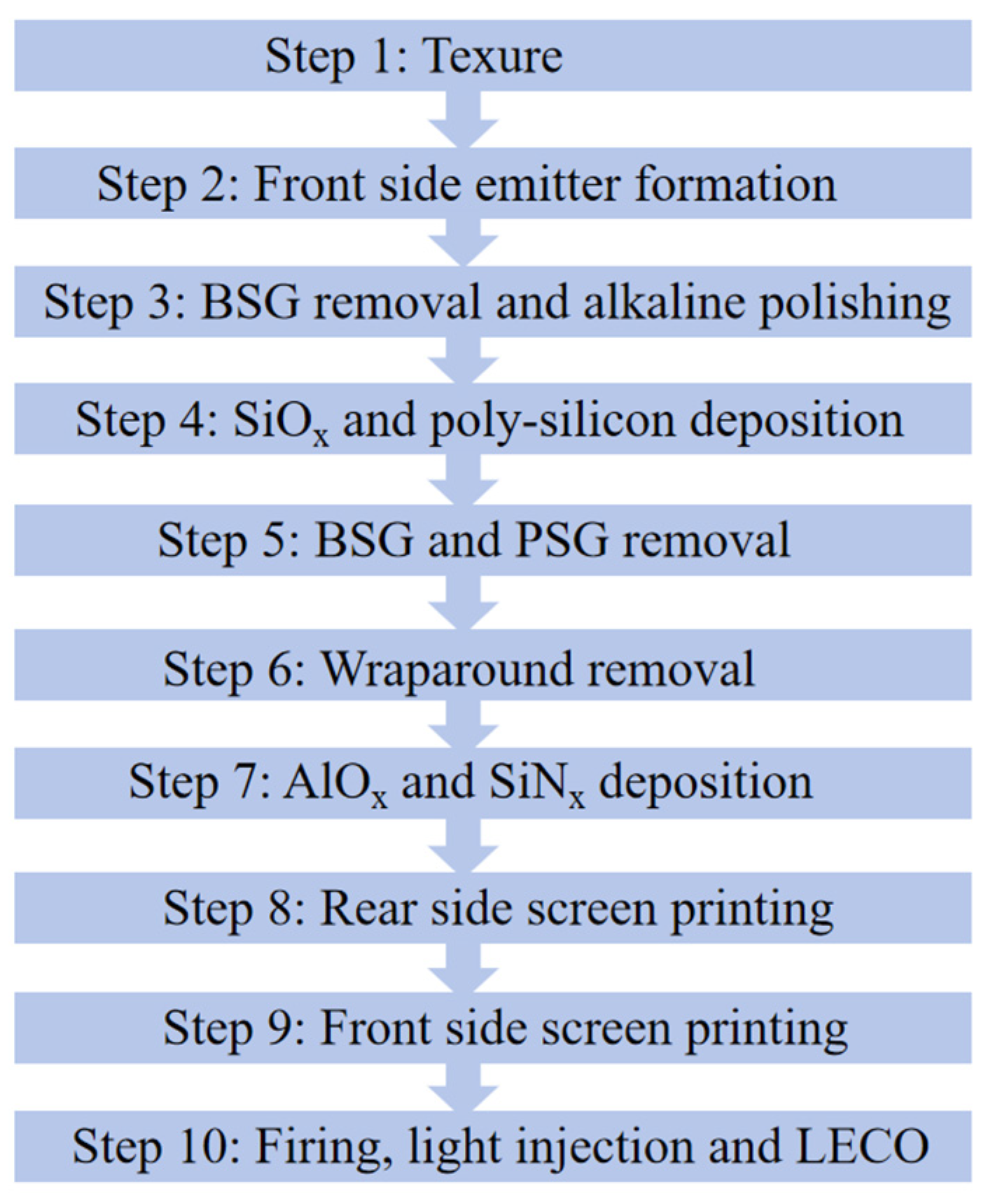
The solar cells were manufactured from commercially 182 mm × 182 mm n-type c–Si wafers with resistivity of 1.2–2.1 Ω/cm and thicknesses of 130 μm, the process is shown in Figure 1. The wafers were first textured in an alkaline solution potassium hydroxide (KOH) and subsequently cleaned. The front boron emitters were formed, and then borosilicate glass (BSG) was removed by HF solution. After alkaline polishing of the rear side, the wafers were deposited on tunnel silicon oxides (SiO2) and poly-silicon by plasma enhanced chemical vapor deposition (PECVD), which was followed by annealed in order to crystallize the poly-silicon. In the next borosilicate glass/phosphorosilicate glass (PSG) removal step, the poly-Si wraparound side was etched in in-line treatment with hydrofluoric acid (HF) and KOH/polished additive solutions to remove the SiOx/n+-poly-Si layer diffused around the front side. The aluminum oxide (AlOx) was deposited on the front side and then the SiNx was deposited on both sides. The busbar pastes and the rear side silver paste were screen printed and dried, and then the as-printed wafers were divided into two groups randomly. The as-prepared PLF and PLC pastes were screen printed on the front side of these wafers. The firing, light injection and LECO process were followed. Firing and light injection process were carried out in the Maxwell IR belt furnace. The manufactured cells were then tested and classified.

2.3. Characterization

I–V properties were measured by Halm (Frankfurt, Germany) tester before and after anti-acetic acid experiments, and the photoelectric conversion efficiency is denoted as PCEbefore and PCEafter, respectively. The degradation rate η is thus calculated by the equation η = (PCEafter − PCEbefore)/PCEbefore. The electrical power loss of the cells is caused by the corrosion of acetic acid to the electrode. Normally the full cell is used to perform the acetic acid test, which reflects the combined effect of acetic acid on the front and rear side of the cell. To separately evaluate the effect of acetic acid on the front and the rear side electrodes, the cells were cut into stripes with 8 mm of width perpendicularly to the finger line. The stripes were exposed in the acetic acid solution with 0.5% concentration for 30 min and 60 min respectively. The acetic acid immersion conditions were selected based on benchmarks in the literature and preliminary experiments. Under typical damp-heat aging (85 °C/85% RH) of EVA-encapsulated modules, the concentration of acetic acid accumulated in condensed water has been used industrially for many years, which has been proven to be highly reliable.
The contact resistivity was measured after each period of exposure. The stripes or cells must be soaked in an air-tight container loaded with acetic acid solution to avoid the leakage of the acetic acid evaporation. The exposure temperature is set at 80 °C. Samples that show performance losses after 60 min of acid acetic test were selected for further materials characterization. The cross-section of the interface of the cells was observed using a Scanning Electron Microscope (Zeiss Sigma 300, Zeiss, Oberkochen, Germany) equipped with energy-dispersive spectroscopy (EDS, High Wycombe, UK). The acceleration voltage and the working distance of SEM are 10 kV and 7.5 mm respectively. EDS analysis was performed using an acceleration voltage of 20 kV and a working distance of 13 mm.

3. Results and Discussion

3.1. The Contact Resistivity Changes After Acetic Acid Exposure

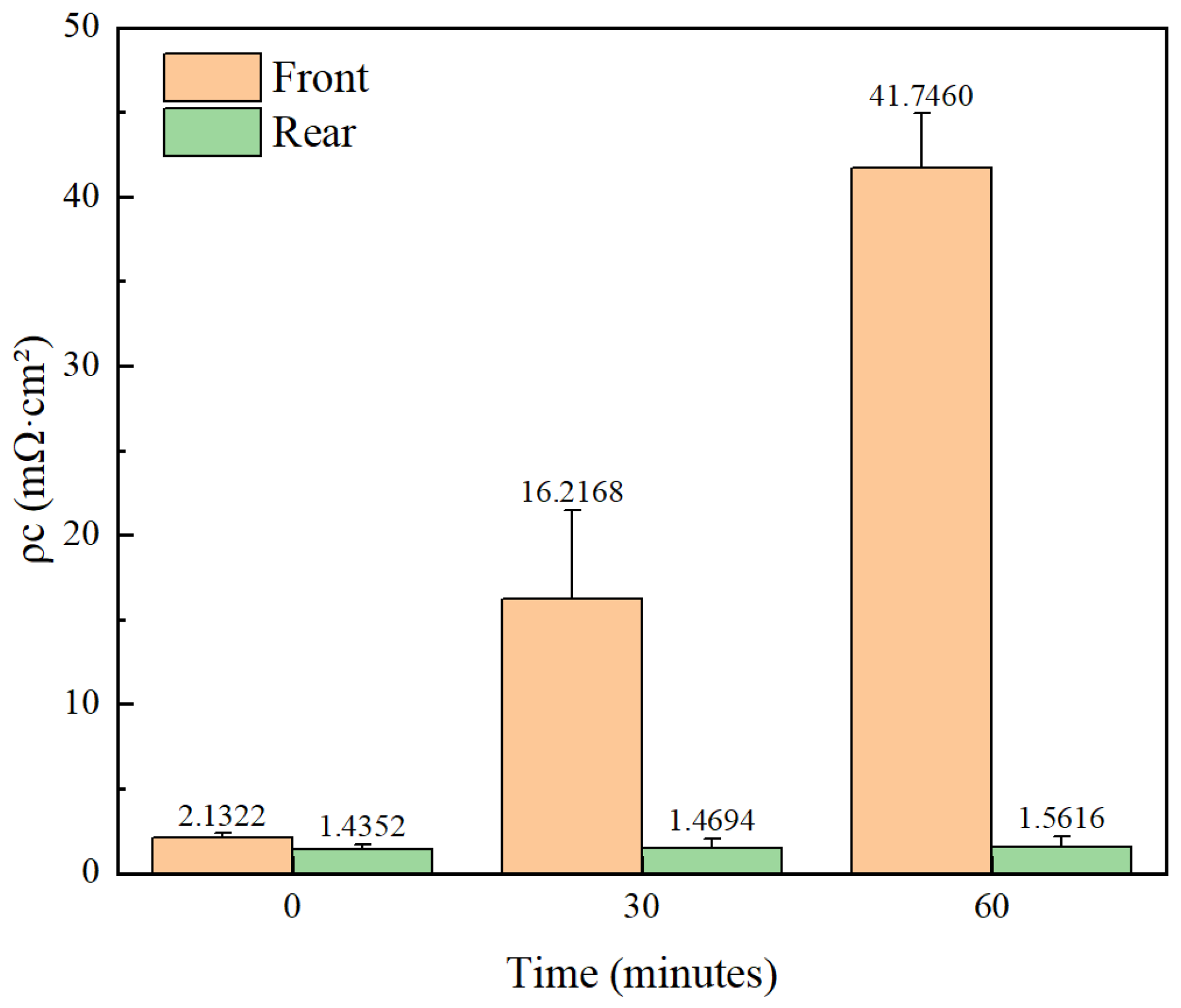
In order to pinpoint whether the front-side or the rear side causes the electrical power loss of the industrially manufactured TOPCon cells, TLM tests of both sides of the PLC-made cell stripes were conducted respectively after 30 min and 60 min of anti-acetic acid testing. The contact resistivity before and after anti-acetic acid was shown in Figure 2. It can be seen that the contact resistivity of the rear side only has a slight increase, while that of the front side dramatically increased after 30 min and 60 min of anti-acetic acid testing. This pattern of changes is consistent with the previous report [15], in which the front contacts of the TOPCon cells were degraded to the point that some of the fingers did not have any electrical connections, and the back contacts show only a minor increase in contact resistivity. These results indicate that the front side determines the anti-acetic acid performance of the solar cell. The difference in the anti-acetic acid performance between the front side and the rear side was mainly caused by the composition of the metallization paste, specifically by the chemistry of the glass. The rear side glass is composed of TeO2, PbO, Bi2O3, SiO2, Li2O, while the front side paste contains a high amount of PbO, which is active to the acetic acid and easily react with it.
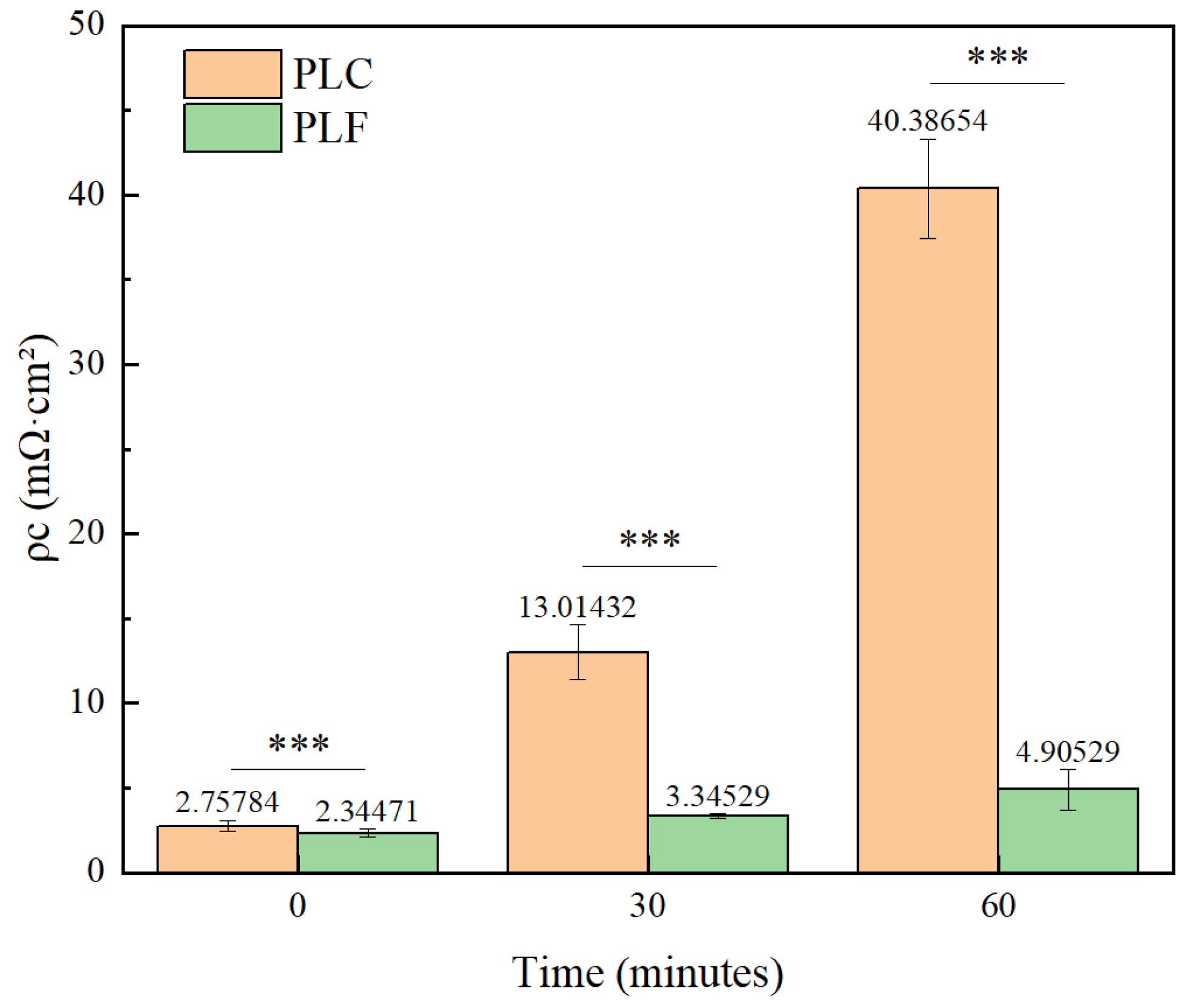
To enhance the anti-acetic acid performance, the PLF paste was utilized to prepare the TOPCon cells. The contact resistivity of the cells was measured before and after 30 min and 60 min of anti-acetic acid test, respectively. The results were shown in Figure 3 with the PLC as the comparison group. From the plot data, we can see that the contact resistivity of PLC dramatically increases after 30 min and 60 min of anti-acetic acid test, which is consistent with the results above in Figure 2. On the other hand, the contact resistivity of PLF was slightly increased. The results indicate that the lead-free paste exhibits superior resistance to acetic acid compared to the lead-containing paste.

3.2. Degradation of Electrical Properties After Acetic Acid Exposure

To comprehensively evaluate the anti-acetic acid performance of the lead-free paste, five full cells of each batch were used to conduct the anti-acetic acid test with the lead-containing paste as comparison.
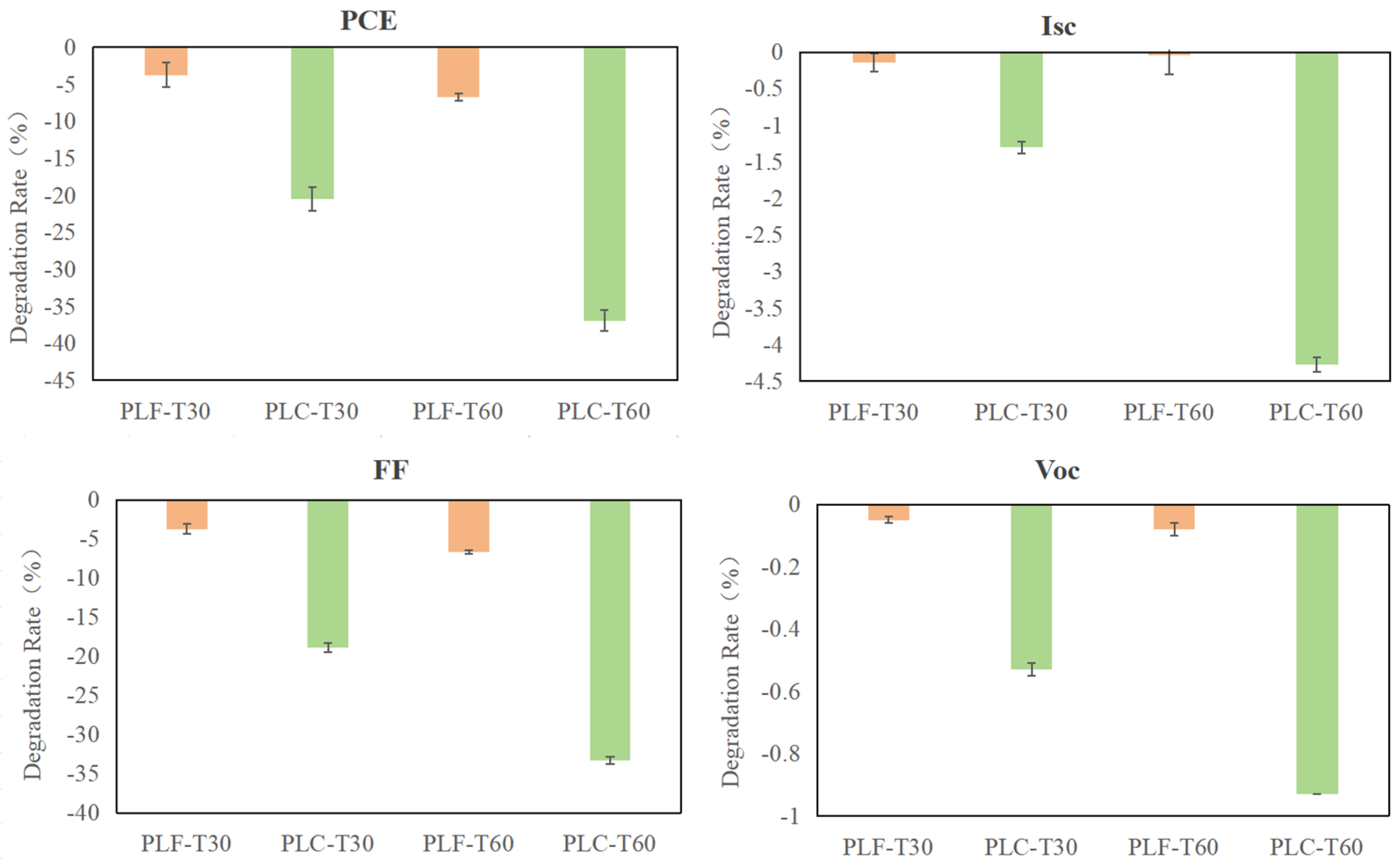
Figure 4 shows the change in electrical properties after anti-acetic acid test. The PCE of the lead-containing paste dropped greatly due to the decrease in fill factor. The conversion efficiency degrades 35% after 60 min of testing. While the PCE of the lead-free paste decreases approximately 5%. It can be seen that the open-circuit voltage (Voc) almost has no change for both pastes. Short circuit current (Isc) has no change for lead-free paste yet exhibits a slight drop down for the lead-containing paste. For both lead-containing and lead-free pastes, the power loss of solar cells is mainly caused by the FF decrease, which is consistent with the contact resistance test above. However, the lead-containing paste also shows a slight reduction in Isc, primarily because current collection was influenced due to the poor contact. The test results demonstrate that the lead-free paste exhibits superior acid resistance compared to the lead-containing paste.

3.3. SEM Micrographs of Electrodes After Acetic Acid Exposure

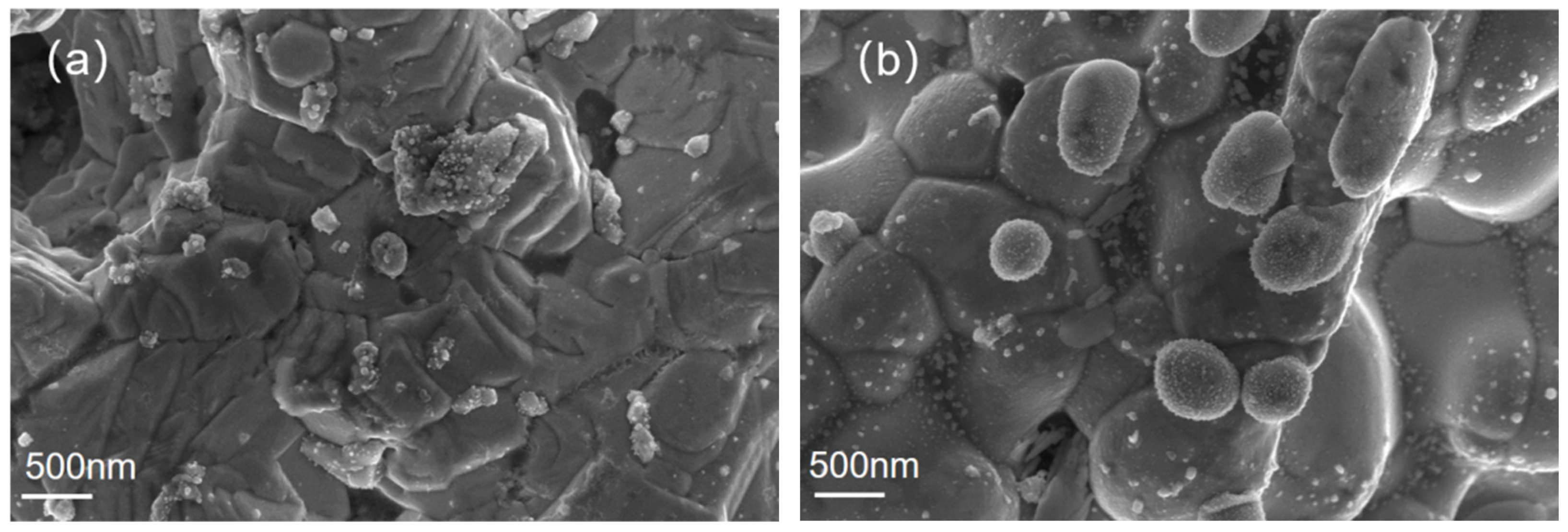
To investigate the root cause of the electrical degradation and find out the reason for the improvement of the lead-free paste, the micrographs of the finger lines of PLF and PLC after 60 min of acetic acid exposure were observed via scanning electron microscopy (SEM) as shown in Figure 5.
The morphology of the finger line is distinctive in terms of sintering silver particles and silver acetate. Silver particles exhibit a smooth surface after sintering for the lead-containing paste. Whereas there are terraces formed along the silver particles for the lead-free paste. Silver surfaces break up into a complex arrangement of crystalline planes exhibiting terrace profiles, which is called the faceting effect [16]. Adsorption of oxygen on the silver surface can reduce the free energy of the facet structure and promote the growth of the facets [17]. The oxygen is released when [TeO4] transforms to [TeO3] for the lead-free paste during sintering, which favors the formation of the facets [18]. On the other hand, silver acetate is formed on the surface of finger line for both lead-containing and lead-free silver electrodes. The size of silver acetate on the lead-containing silver electrode is clearly bigger than that on the lead-free electrode. EDS was carried out to qualitatively identify the composition of the finger surface as shown in Table 2. The lead-free electrode possessed small ratio of silver to carbon, which indicates less silver acetate formed on the lead-free electrode.
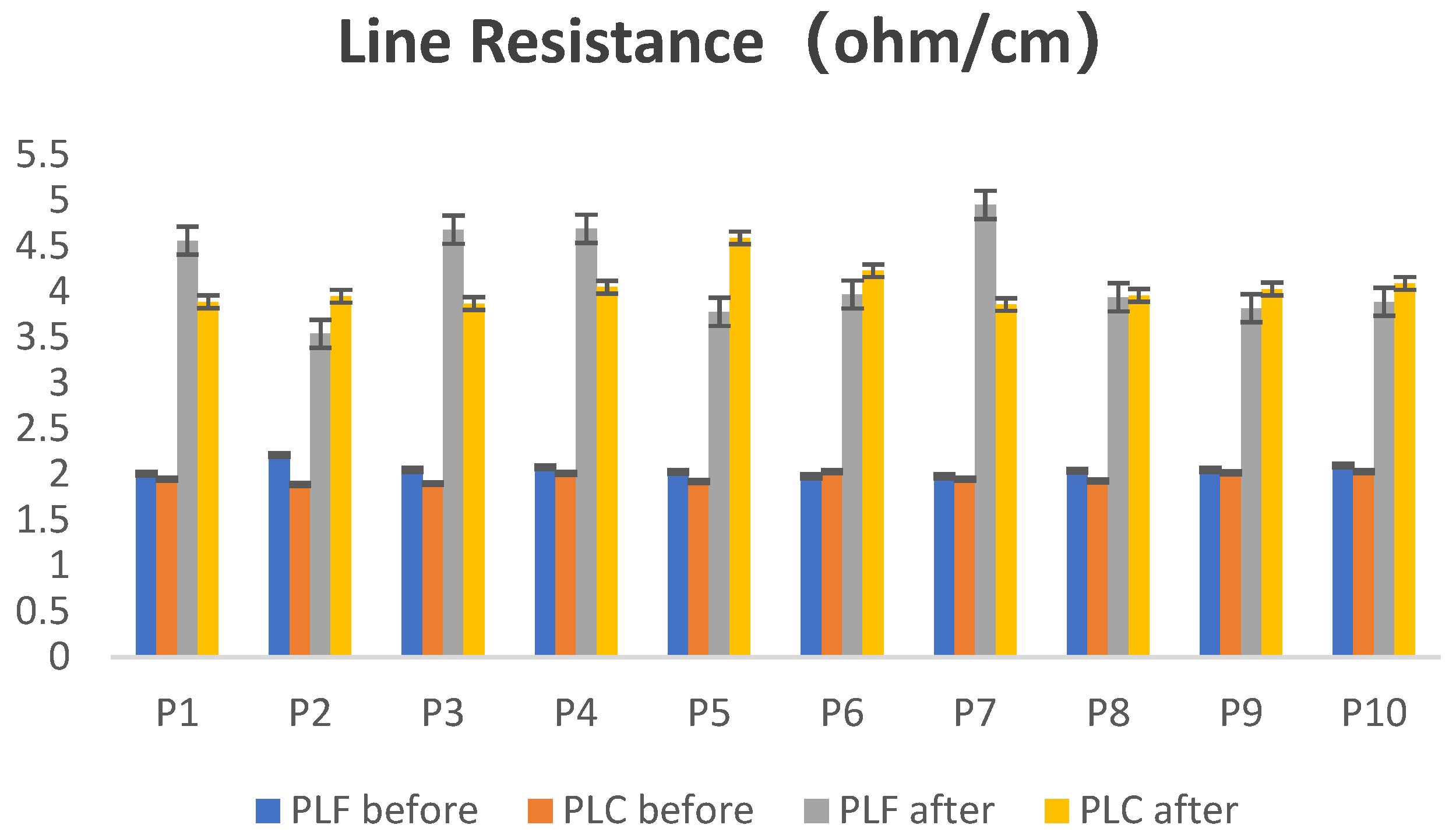
The surface morphology reflects different anti-acetic acid properties between the lead-containing and the lead-free paste primarily due to the sintering density of their silver powders. During the sintering process of the lead-free paste, the decomposition of tellurium oxide glass releases oxygen via the equation 2TeO2 → Te2O3 + 1/2 O2(g)↑ resulting in higher porosity in the sintered silver powder. This leads to slightly inferior electrode compactness, making the electrode layer more susceptible to acetic acid erosion. Consequently, the electrical conductivity of the electrode is slightly reduced. The line-resistance was measured on the same finger lines examined by SEM, both before and after acetic acid exposure. Ten independent finger lines were measured for each paste type (PLF and PLC) using a four-point probe method as shown in Figure 6.
The line resistance of PLF (2.053 Ω/cm) is only about 4.6% higher than that of PLC (1.963 Ω/cm). The difference is statistically insignificant (p = 0.14). This small difference is consistent with the slightly higher porosity of PLF but does not lead to any meaningful increase in finger conductivity. Both PLF and PLC show an increase in line resistance of 4.18 and 4.05 Ω/cm, respectively after 60 min of acetic acid exposure, which is expected due to some degree of acetic acid attack on the silver fingers. However, the line resistance values after exposure remain very similar between the two pastes (p = 0.39). The relative difference is less than 3.2%, and the absolute difference 0.13 Ω/cm is negligible. Compared to the attenuation of line resistance, the degradation of contact resistance plays a dominant role. The much larger degradation in PLC paste is manifested in contact resistivity as shown in Figure 3, not in line resistance. Therefore, the lead-free electrodes present a significantly smaller series resistance decrease compared to the lead-containing electrodes.
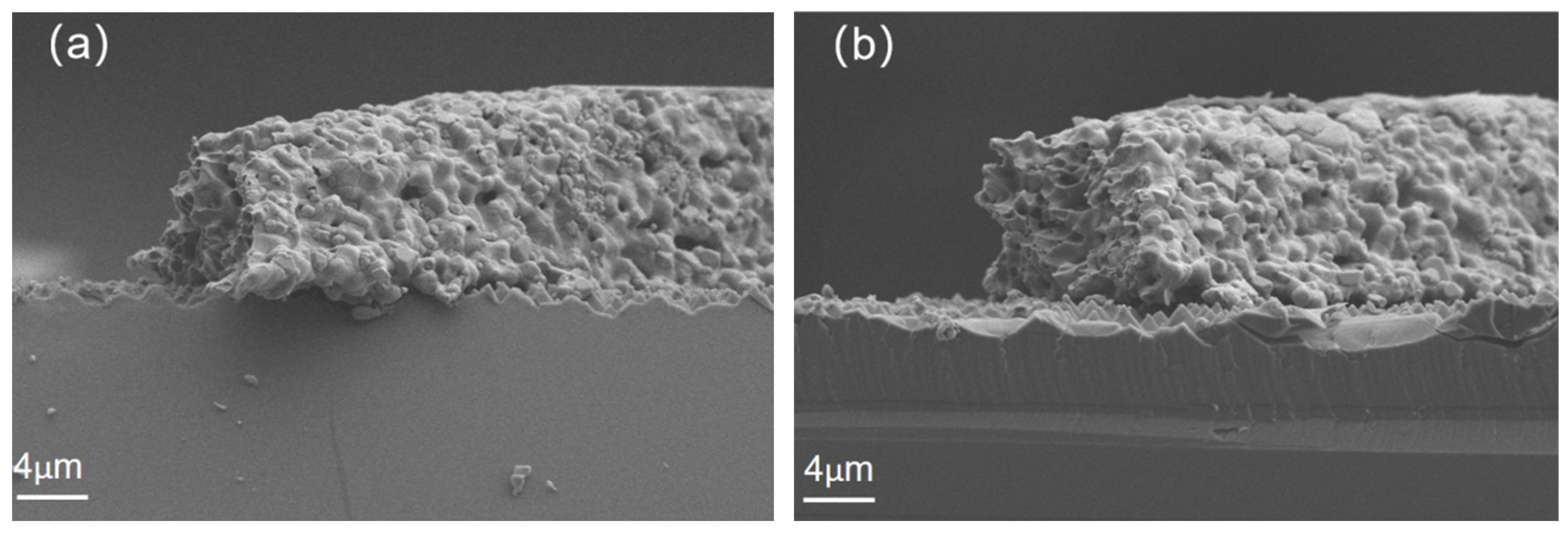
To further explore the effect of acetic acid on the finger line, the lateral morphology was observed using SEM. As seen in Figure 7, the gap between the lead-containing silver electrode and silicon wafer appears, which would absolutely lead to an increase in contact resistivity. The lead-free silver electrode remains in close contact with the silicon wafer. Meanwhile, it can be seen that more pores can be seen for the lead-free electrodes, which validates the analysis above about the higher porosity for the lead-free electrode. During the firing process, the glass in the paste melts and flows onto the silicon substrate as the temperature increases. Ag atoms dissolve in molten glass to form Ag ions. These Ag ions react with SiNx to open the passivation layer and deposit Ag crystallites on the emitter surface upon cooling down [14]. The glass also flows to the edge of the finger line. When the cell is exposed to the acetic acid solution, it will react with the glass on the edge. As the exposure continues, the reaction will proceed into the internal finger line, leading to failure of the contact between the silver electrode and the silicon.
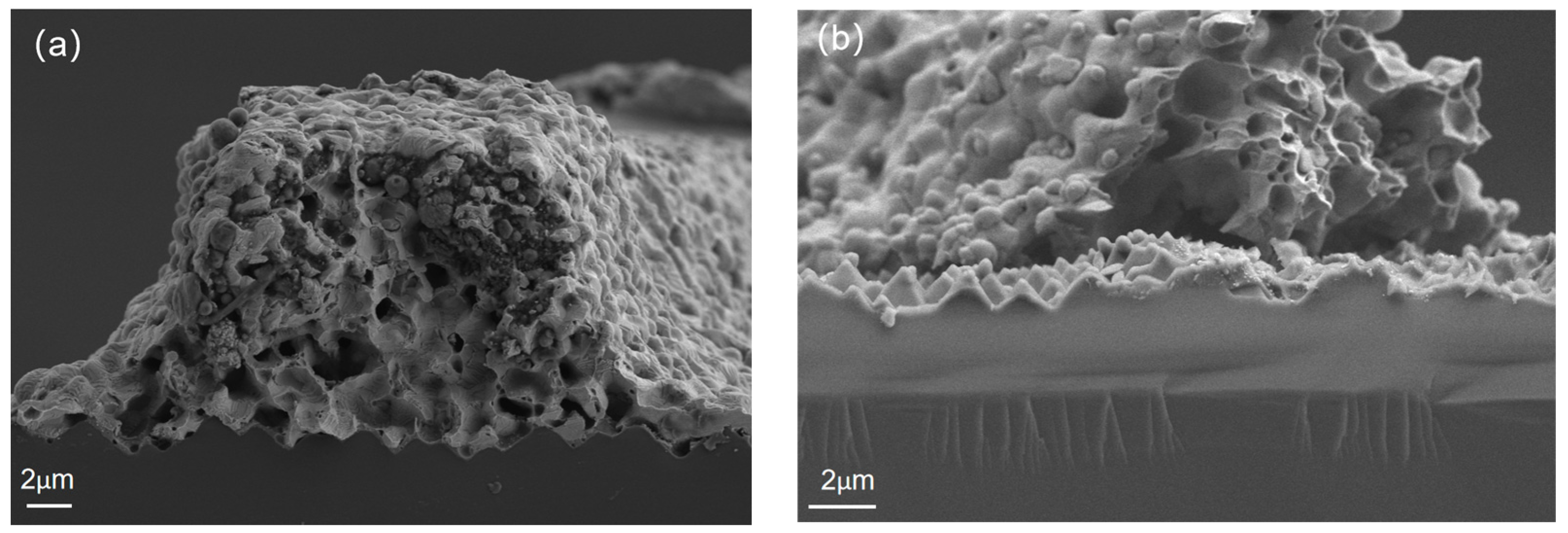
The cross-sectional SEM picture after acetic acid exposure is presented in Figure 8. The finger line of the PLC is severely detached from the silicon substrate. The contact resistivity can be expectedly high. The corrosion route of the acetic acid to the finger line can be deduced. The acetic acid attacks the edge of the finger line and reacts with glass. Lead acetate was produced due to the high content of lead oxide in the glass. As the acetic acid exposure continues, the corrosion will proceed towards the interior of the finger line. Finally, the finger line will fall off the silicon substrate in the worst case. Whereas the lead-free silver electrode remains in close contact with the silicon wafer, which is consistent with the observation in Figure 7.

3.4. Reactions During the Acetic Acid Corrosion Process

Acetic acid is generated when EVA decomposition occurs in conditions with humidity and ultraviolet radiation. Acetic acid reacts with the finger line via the following Equation (1) [19,20]:
Ag + CH3COOH + H2O → H3O+ + CH3COO + Ag+ + 1e → AgCH3COO + H3O+
The Gibbs free energy change ΔG° of this equation is −43.2 kJ·mol−1. The negative ΔG° indicates that the reaction is spontaneous under standard conditions. The equilibrium constant is K = exp(–ΔG°/RT) ≈ 3.7 × 10⁷, showing a strong thermodynamic driving force. Acetic acid reacts with glass at the edge of the finger line through an exchange of alkaline ions in the glass with hydrogen ions, as shown in Equation (2) [21], due to the presence of alkaline ions in the glass:
- Si - O - M glass + H + solution     - Si - OH glass   + M + solution
Therefore, a higher content of alkaline ions in the glass favors the forward reaction. The amount of alkaline ions in the glass can be assessed through the acidity of the glass, which can be calculated using Equation (3) [22]:
α = | i = 1 p ( C i a c i d A i a c i d ) j = 1 q ( C j a l k A j a l k ) |
In this context, where C i a c i d and A i a c i d are the molar content and acidity constant of each acidic oxide, C j a l k and A j a l k are those of each alkaline oxide, and p and q are the numbers of acidic and alkaline oxides, respectively. The absolute value ensures a positive α.
By referencing the acidity values of oxides in the glass, the acidity of the glass can be calculated. A lower glass acidity corresponds to a stronger reaction capability with acetic acid. Notably, lead oxide and bismuth oxide, being amphoteric oxides, are excluded from the calculation. Table 3 lists the acidity values of individual oxides and the calculated glass acidity [23]. The results demonstrate that the lead-free glass exhibits higher acidity than the lead-containing glass, resulting in a relatively weaker reaction capability with acetic acid.
Additionally, lead oxide in the glass readily reacts with acetic acid to form lead acetate, as shown in Equation (4) [24,25]:
PbO + 2CH3COOH → (CH3COO)2Pb + H2O
The ΔG° of this equation is equal −67.8 kJ·mol−1. Compared to Ag acetate, the more negative ΔG° confirms that PbO reacts even more readily with acetic acid, consistent with the severe attack observed on the lead-containing glass. As shown in Equation (4), the higher acetic acid concentration leads to the greater formation of lead acetate. At lower acetic acid concentrations, prolonged exposure time achieves a similar effect. Consequently, longer service life of the module results in more severe corrosion of the solar cell. From a thermodynamic perspective, the Gibbs free energy change (ΔG) for the reaction in Equation (5) is calculated as −156.102 kJ, confirming that the reaction proceeds spontaneously in the forward direction [26].
≡Si-Pb-O-Si≡ + 2H+ → 2(≡Si-O-H) + Pb2+
A higher lead oxide content in the glass correlates with poorer resistance to acetic acid erosion [27]. This conversely explains why the lead-free pastes achieve superior acetic acid resistance. Therefore, the lead-free pastes exhibit better resistance to acetic acid compared to the lead-containing pastes due to both the glass acidity and the reaction between the lead oxide and acetic acid.
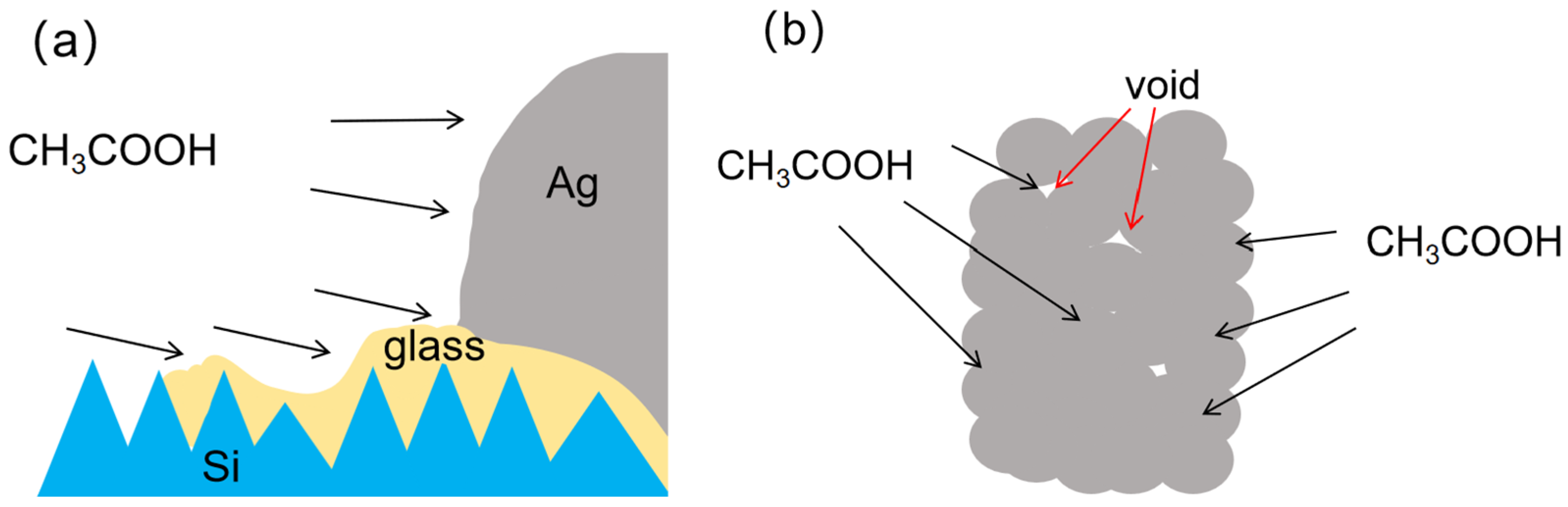
According to the analysis above, the mechanism of the acetic acid corrosion can be deduced. Figure 9 illustrates the schematic of the acetic acid corrosion to the finger line. The corrosion of solar cells occurs through two primary paths. On one hand, during paste sintering, the glass viscosity rapidly decreases over elevated high temperatures, leading to fast flow toward the electrode edges. The flowing glass will spread laterally across the silicon surface toward the edges of the electrodes. Acetic acid initially reacts with the glass at these edges shown in Figure 9a, progressively corroding the glass layer at the Ag-Si interface. This weakens the adhesion between the silver electrode and the glass layer, resulting in an increase in contact resistance. For the lead-free glass, its higher acidity enhances acetic acid resistance, effectively delaying inward acid penetration. Meanwhile, for the lead-containing glass, PbO reacts readily with acetic acid, significantly reducing corrosion resistance. On the other hand, acetic acid reacts with silver, eroding the electrode surface as shown in Figure 9b. Higher porosity in the silver electrode caused by oxygen release during tellurium oxide glass decomposition in the lead-free pastes accelerates this process. However, for the lead-free paste, the impact of porosity on acetic acid resistance is far less significant than the degradation of contact resistance. Overall, the lead-free pastes demonstrate superior acetic acid resistance compared to the lead-containing pastes, attributable to both their glass acidity properties and reduced reactivity with acetic acid.

4. Conclusions

To address the poor acetic acid resistance of TOPCon cells, this study develops a front-side lead-free metallization paste. After acetic acid exposure, the lead-free paste exhibited an efficiency degradation of 5%, significantly lower than the 35% degradation observed for the lead-containing paste. The experimental results show that the contact resistance degradation of the lead-free paste is significantly low compared to its lead-containing counterpart. Specifically, the lead-free paste generated fewer and smaller silver acetate particles after acetic acid exposure, whereas the lead-containing paste produces larger and more numerous particles. In addition, the lead-free paste maintained strong adhesion to the silicon substrate after acetic acid exposure, while the lead-containing paste suffered from interfacial delamination, leading to a sharp increase in contact resistance.
Moreover, a corrosion model was established, which attributes electrode degradation to reactions between acetic acid and silver, as well as glass components within the paste. On the one hand, silver acetate is formed on the surface of finger line for both lead-containing and lead-free silver electrodes, with a smaller size of silver acetate for the lead-free electrode. On the other hand, acetic acid reacts with glass at the edge of the finger line. The absence of lead oxide in the lead-free paste minimizes its reactivity with acetic acid, thereby enhancing its overall resistance to acetic acid corrosion. In addition, the lead-free glass exhibits higher acidity than the lead-containing glass, resulting in a relatively weaker reaction capability with acetic acid.

Author Contributions

Conceptualization, L.H. and J.Z. (Jicheng Zhou); Methodology, J.Z. (Jinling Zhang) and J.Z. (Jicheng Zhou); Validation, X.Z.; Formal analysis, J.Z. (Jinling Zhang), X.Z. and H.L.; Investigation, L.H. and J.Z. (Jinling Zhang); Resources, L.H.; Data curation, J.Z. (Jianyong Zhan) and H.L.; Writing—original draft, J.Z. (Jinling Zhang); Writing—review & editing, J.Z. (Jianyong Zhan) and J.Z. (Jicheng Zhou); Supervision, J.Z. (Jicheng Zhou); Project administration, J.Z. (Jicheng Zhou); Funding acquisition, J.Z. (Jicheng Zhou). All authors have read and agreed to the published version of the manuscript.

Funding

This research was funded by Dongguan Science and Technology of Social Development Program (Grant No. 20231800940252) and Natural Science Project of Guangdong University of Science and Technology (Grant No. GKY-2024KYZDK-4).

Institutional Review Board Statement

Not applicable.

Informed Consent Statement

Not applicable.

Data Availability Statement

Data are contained within the article.

Acknowledgments

The authors acknowledge fruitful discussions with Baoxing Zhao and Shezhao Yuan from SANY Silicon Energy (Zhuzhou) Co. Ltd.

Conflicts of Interest

The authors declare no conflict of interest.

References

  1. Semba, T. New corrosion mechanism observed at Ag/Al metallization of n-type bifacial solar cells. In 2020 47th IEEE Photovoltaic Specialists Conference (PVSC), Calgary, AB, Canada, 15 June–21 August 2020; IEEE: Piscataway, NJ, USA, 2020; pp. 0850–0853. [Google Scholar]
  2. Iqbal, N.; Colvin, D.J.; Schneller, E.J.; Sakthivel, T.S.; Ristau, R.; Huey, B.D.; Yu, B.X.J.; Jaubert, J.N.; Curran, A.J.; Wang, M.; et al. Characterization of front contact degradation in monocrystalline and multicrystalline silicon photovoltaic modules following damp heat exposure. Sol. Energy Mater. Sol. Cells 2022, 235, 111468. [Google Scholar] [CrossRef]
  3. Wu, X.Y.; Wang, X.T.; Yang, W.G.; Nie, J.J.; Yuan, J.; Khan, M.U.; Ciesla, A.; Sen, C.; Qiao, Z.; Hoex, B. Enhancing the reliability of TOPCon technology by laser-enhanced contact firing. Sol. Energy Mater. Sol. Cells 2024, 271, 11846. [Google Scholar] [CrossRef]
  4. Wang, S.Q.; Liu, H.D.; Ao, Y.W.; Okamoto, K.; Di, J.T. Strengthening TOPCon solar cell reliability via Al/Ga/Fe-added glass frits in LECO-compatible silver pastes against acid corrosion. Sol. Energy Mater. Sol. Cells 2025, 292, 113776. [Google Scholar] [CrossRef]
  5. Jiang, S.; Wang, K.M.; Zhang, H.W.; Ding, Y.H.; Yu, Q. Encapsulation of PV modules using ethylene vinyl acetatecopolymer as the encapsulant. Macromol. React. Eng. 2015, 9, 522–529. [Google Scholar] [CrossRef]
  6. Kempe, M.D.; Jorgensen, G.J.; Terwilliger, K.M.; McMahon, T.J.; Kennedy, C.E.; Borek, T.T. Acetic acid production and glass transition concerns with ethylene-vinyl acetate used in photovoltaic devices. Sol. Energy Mater. Sol. Cells 2007, 91, 315–329. [Google Scholar] [CrossRef]
  7. Spinelli, P.; Lenzmann, F.; Weeber, A.; Polman, A. Effect of EVA encapsulation on antireflection properties of mie nanoscatterers for c-Si solar cells. IEEE J. Photovolt. 2015, 5, 559–564. [Google Scholar] [CrossRef]
  8. Jeffries, A.M.; Bertoni, M.I. Reactive silver ink as a novel low-temperature metallization: Monitoring corrosion. In 2018 IEEE 7th World Conference on Photovoltaic Energy Conversion (WCPEC) (A Joint Conference of 45th IEEE PVSC, 28th PVSEC & 34th EU PVSEC), Waikoloa, HI, USA, 10–15 June 2018; IEEE: Piscataway, NJ, USA, 2018; pp. 1013–1017. [Google Scholar]
  9. Saw, M.H.; Dong, P.; Singh, J.P.; Liang, T.S.; Chai, J.; Wei, Y.; Wang, Y.; Khoo, Y.S. Potential of white EVA as PV encapsulant: Performance and reliability study. In 2018 IEEE 7th World Conference on Photovoltaic Energy Conversion (WCPEC) (A Joint Conference of 45th IEEE PVSC, 28th PVSEC & 34th EU PVSEC), Waikoloa, HI, USA, 10–15 June 2018; IEEE: Piscataway, NJ, USA, 2018; pp. 2832–2837. [Google Scholar]
  10. Aghaei, M.; Fairbrother, A.; Gok, A.; Ahmad, S.; Kazim, S.; Lobato, K.; Oreski, G.; Reinders, A.; Schmit-z, J.; Theelen, M.; et al. Review of degradation and failure phenomena in photovoltaic modules. Renew. Sustain. Energy Rev. 2022, 159, 112160. [Google Scholar] [CrossRef]
  11. Oreski, G.; Mihaljevic, A.; Voronko, Y.; Eder, G.C. Acetic acid permeation through photovoltaic backsheets: Influence of the composition on the permeation rate. Polym. Test. 2017, 60, 374–380. [Google Scholar] [CrossRef]
  12. Tung, C.M.; Li, Y.T.; Yang, W.L.; Wu, H.S.; Yu, P.C. Investigation of degradation of single-cell PV module by pressure cooker test and damp heat test. In 2016 IEEE 43rd Photovoltaic Specialists Conference (PVSC), Portland, OR, USA, 5–10 June 2016; IEEE: Piscataway, NJ, USA, 2016; pp. 0935–0937. [Google Scholar]
  13. Jeffries, A.M.; Nietzold, T.; Schelhas, L.T.; Bertoni, M.I. Corrosion of novel reactive silver ink and commercial silver-based metallizations in diluted acetic acid. Sol. Energy Mater. Sol. Cells 2021, 223, 110900. [Google Scholar] [CrossRef]
  14. Zhou, J.C.; Zhang, J.L.; Lv, B. Firing behavior of lead-containing and lead-free metallization silver paste for monocrystalline silicon solar cells. Sol. Energy Mater. Sol. Cells 2023, 259, 112439. [Google Scholar] [CrossRef]
  15. Iqbal, N.; Li, M.J.; Sakthivel, T.S.; Mikeska, K.; Lu, M.J.; Nandakumar, N.; Duttagupta, S.; Dhamrin, M.; Tsuji, K.; Bowden, S.; et al. Impact of acetic acid exposure on metal contact degradation of different crystalline silicon solar cell technologies. Sol. Energy Mater. Sol. Cells 2023, 250, 112089. [Google Scholar] [CrossRef]
  16. Shen, M.; Liu, D.J.; Jenks, C.J.; Thiel, P.A.; Evans, J.W. Accelerated coarsening of Ag adatom islands on Ag (111) due to trace amounts of S: Mass-transport mediated by Ag–S complexes. J. Chem. Phys. 2009, 130, 094701. [Google Scholar] [CrossRef] [PubMed]
  17. Zhou, R.; Li, Y.S.; Tan, W.C.; Lin, Y.; Pan, F. Insight of effect of silver powders on silver–silicon contacts of crystalline silicon solar cells through analysis of glass structural decay. Sol. RRL 2024, 8, 2400299. [Google Scholar] [CrossRef]
  18. Iqbal, N.; Li, M.J.; Mikeska, K.; Lu, M.J.; Sakthivel, T.S.; Seal, S.; Davis, K.O. Impact of acetic acid exposure on the screen-printed tellurite-based silver contacts. In 2021 IEEE 48th Photovoltaic Specialists Conference (PVSC), Fort Lauderdale, FL, USA, 20–25 June 2021; IEEE: Piscataway, NJ, USA, 2021; pp. 0382–0386. [Google Scholar]
  19. Sommeling, P.M.; Liu, J.; Kroon, J.M. Corrosion effects in bifacial crystalline silicon PV modules; interactions between metallization and encapsulation. Sol. Energy Mater. Sol. Cells 2023, 156, 112321. [Google Scholar] [CrossRef]
  20. Aydoğan, S.; Motasim, M.; Ali, B. The novelty of silver extraction by leaching in acetic acid with hydrogen peroxide as an organic alternative lixiviant for cyanide. Heliyon 2024, 2, e24784. [Google Scholar] [CrossRef]
  21. Hsu, S.M.; Ren, F.; Che, Z.; Kim, M.; Fares, C.; Clark, A.E.; Neal, D.; Esquivel-Upshaw, J.F. Novel coating to minimize corrosion of glass-ceramics for dental applications. Materials 2020, 13, 1215. [Google Scholar] [CrossRef]
  22. Rahimi, R.A.; Sadrnezhaad, S.K.; Raisali, G. Chemical durability of lead silicate glass in HNO3, HCl and H2SO4 aqueous acid solutions. J. Non-Cryst. Solids 2009, 355, 169–174. [Google Scholar] [CrossRef]
  23. Smith, D.W. An acidity scale for binary oxides. J. Chem. Educ. 1987, 64, 480–482. [Google Scholar] [CrossRef]
  24. Zhang, Z.; Xie, F.; Wang, W.; Bai, Y.L. A novel quantitative analysis method for lead components in waste lead paste. Metals 2023, 13, 1517. [Google Scholar] [CrossRef]
  25. Kraft, A.; Labusch, L.; Ensslen, T.; Dürr, I.; Bartsch, J.; Glatthaar, M.; Glunz, S.; Reinecke, H. Investigation of acetic acid corrosion impact on printed solar cell contacts. IEEE J. Photovolt. 2015, 5, 736–743. [Google Scholar] [CrossRef]
  26. Semba, T. Corrosion mechanism analysis of the front-side metallization of a crystalline silicon PV module by a high-temperature and high-humidity test. Jpn. J. Appl. Phys. 2020, 59, 054001. [Google Scholar] [CrossRef]
  27. Click, N.; Adcock, R.; Chen, T.; Tao, M. Lead leaching and electrowinning in acetic acid for solar module recycling. Sol. Energy Mater. Sol. Cells 2023, 254, 112260. [Google Scholar] [CrossRef]
Figure 1. Preparation process of TOPCon solar cell samples.
Coatings 16 00626 g001
Figure 2. The contact resistivity of each side of PLC-made cell stripes after 0, 30 and 60 min of acetic acid exposure. Data represent mean ± SD, n = 50.
Coatings 16 00626 g002
Figure 3. The contact resistivity of PLC and PLF cells after 0, 30 and 60 min of acetic acid exposure. Data represent mean ± SD, n = 50. *** indicates p < 0.001.
Coatings 16 00626 g003
Figure 4. The change in electrical properties after anti-acetic acid test for PLC and PLF after 30 and 60 min of acetic acid exposure. Data represent mean ± SD, n = 5.
Coatings 16 00626 g004
Figure 5. SEM micrographs of finger lines after 60 min of acetic acid exposure: (a) PLF, (b) PLC.
Coatings 16 00626 g005
Figure 6. Line resistance of PLF and PLC before and after acetic acid exposure.
Coatings 16 00626 g006
Figure 7. SEM pictures of the lateral morphology of finger lines after 60 min of acetic acid exposure: (a) PLF, (b) PLC.
Coatings 16 00626 g007
Figure 8. The cross-sectional SEM picture after acetic acid exposure: (a) PLF, (b) PLC.
Coatings 16 00626 g008
Figure 9. The schematic of the acetic acid corrosion to the finger line. (a) The edge of the finger line; (b) the top of the finger line.
Coatings 16 00626 g009
Table 1. The composition of glasses (mol %).
GlassPbOSiO2TeO2Bi2O3Li2CO3ZnOWO3CuO
GLF00558156.587.5
GLC20202598666
Table 2. EDS results of the composition of finger lines (at. %).
ElementPLFPLC
C8.078.63
N8.349.05
O10.327.26
Si60.1251.27
Ag13.1523.79
Total100100
Table 3. Acidity of the oxides and glasses.
ItemsSiO2TeO2Li2CO3ZnOWO3CuOGLFGLC
Acidity0.83.8−9.2−3.23.7−2.51.921.24
Disclaimer/Publisher’s Note: The statements, opinions and data contained in all publications are solely those of the individual author(s) and contributor(s) and not of MDPI and/or the editor(s). MDPI and/or the editor(s) disclaim responsibility for any injury to people or property resulting from any ideas, methods, instructions or products referred to in the content.