Article

Effect of Pulsed Laser Remelting Power on Wear Resistance and Corrosion Resistance of Biomedical Ti6Al4V Micro-Arc Oxidation Coating

1
Clinical Medical College, Jiamusi University, Jiamusi 154007, China
2
School of Materials Science and Engineering, Jiamusi University, Jiamusi 154007, China
*
Author to whom correspondence should be addressed.
Coatings 2026, 16(5), 619; https://doi.org/10.3390/coatings16050619
Submission received: 9 April 2026 / Revised: 14 May 2026 / Accepted: 16 May 2026 / Published: 20 May 2026
(This article belongs to the Section Surface Coatings for Biomedicine and Bioengineering)

Abstract

The objective of this study was to further improve the wear and corrosion resistance of biomedical Ti6Al4V alloy micro-arc oxidation coating, so as to improve its comprehensive service performance. In this study, the effects of pulsed laser power (20–100 W) on the structure, composition, tribological properties and corrosion resistance of the composite coating were systematically studied by using pulsed laser remelting pretreatment technology. The results show that when the power is 100 W, the microwave stripe and fine grain structure formed by pulsed laser remelting can improve the discharge uniformity during the micro-arc oxidation process. The porosity of the composite coating decreases from 21.32% to 10.94%, and the thickness increases from 8.14 μm to 19.49 μm, which is beneficial to improve the compactness and uniformity of the micro-arc oxidation coating. In addition, the pulse laser remelting pretreatment increased the surface hardness of the composite coating to 745.5 HV, and the friction coefficient decreased from 0.76 to 0.51, thereby improving the wear resistance of the composite coating. The electrochemical test results show that the corrosion current density of the composite coating is reduced from 7.28 × 10⁻⁸ A·cm−2 to 1.91 × 10⁻⁸ A·cm−2 due to the optimization of the composite coating structure, and the corrosion resistance is significantly enhanced. This study provides an effective pretreatment strategy for the construction of high-performance MAO composite coatings.

1. Introduction

Titanium and titanium alloys have the advantages of high specific strength, good chemical stability and good biocompatibility. They can be used to prepare in vivo implants with large loads such as knee joints and hip joints, and have a wide range of applications in the biomedical field [1]. However, the low surface hardness and corrosion resistance of titanium alloys make the implants produce wear debris and release toxic ions during service, induce tissue inflammation and produce neurotoxicity, resulting in implant failure [2]. As a consequence, surface modification is essential to mitigate this deterioration progress and prolong the service life of titanium alloy implants.
At present, traditional surface modification technologies such as anodic oxidation, physical vapor deposition, micro-arc oxidation (MAO) technology, etc., can form a functional protective film on the surface of titanium alloy, which has been widely used to improve the surface properties of titanium alloy implants. Among them, MAO technology forms a ceramic coating containing light metal oxides and electrolyte components in situ through local high-temperature and high-voltage micro-discharge on the substrate, which significantly improves the wear resistance, corrosion resistance and biocompatibility of the implant [3]. However, due to the uneven discharge during the MAO process, the porosity of the coating is high, accompanied by defects such as through-holes and cracks, which limits the further development of the MAO technology [4].
The development of composite surface modification technology based on MAO technology is a common method to improve the quality and performance of MAO coating, which usually includes pretreatment, process and after-treatment technology [5]. In the pretreatment stage, ultrasonic rolling, shot peening, ultrasonic cold forging and laser surface treatment are often used to improve the microstructure, surface morphology, composition and residual stress state of the substrate, so as to improve the comprehensive performance of the MAO film. Luo et al. [6] prepared a fine-grained strengthening layer with high-density dislocations on the surface of Ti6Al4V by laser shock peening (LSP) technology, and introduced a certain depth of residual compressive stress. The results show that the thickness of LSP-MAO composite coating increases, the porosity decreases, and the wear resistance and corrosion resistance are significantly improved. Secondly, in the MAO process, the quality and performance of the MAO coating can be significantly improved by optimizing the basic process parameters such as power supply and electrolyte composition, as well as introducing appropriate auxiliary energy field and functional material doping [7]. By introducing laser irradiation into the MAO process, Wang et al. [8] reduced the breakdown voltage and operating voltage of the MAO process, generated more discharge channels and promoted the uniform distribution of energy. The uniformity, density, thickness and bonding strength of the coating were improved. The post-treatment technology mainly focuses on the sealing treatment or functional surface modification of the porous structure on the surface of MAO coating. This treatment can not only greatly improve the long-term corrosion resistance of the coating by filling the surface pores of the coating, but also actively endow the coating with self-healing, antibacterial and even excellent biocompatibility by loading functional substances (such as slow-release agents, antibacterial nanoparticles, and bioactive molecules), thereby obtaining a multifunctional composite MAO coating.
Laser remelting (LR)-based pretreatment technology has shown excellent potential in fully retaining the surface properties of MAO coatings and improving the performance of coatings [9]. LR can induce α → α′/α″ martensitic transformation and grain refinement in the remelted layer by non-contact rapid heating and cooling without changing the composition of the titanium alloy, providing good matrix properties for the MAO process. Wang [10] et al. prepared a composite coating on the surface of titanium alloy by laser surface remelting combined with the MAO process. The results show that LSR pretreatment can reduce the initial surface roughness of the substrate and refine the surface structure, and improve the uniformity and compactness of the MAO coating. In addition, the dense and fine matrix structure formed by laser melting contains defects such as dislocations, twins and grain boundaries, which increase the discharge channel during the MAO process, thereby reducing the breakdown voltage of the MAO film. The composite film has better corrosion resistance [11]. Pulsed laser remelting (PLR) has higher energy density and a faster cooling rate than fiber laser, and can form a periodic ‘micro-nano’ ripple structure [12]. This is beneficial to improve the uniformity of discharge during the MAO process and form a denser and more uniform coating. In addition, the periodic ripple structure on the surface can form orderly discharge guidance, which helps to fill the pores between the ripples, form a mechanical interlocking structure, and significantly improve the bonding strength between the ceramic coating and the substrate.
LR has been used as a pretreatment technique to improve the quality of MAO coatings. However, the effect of PLR technology on the quality of MAO coating has not been reported. In particular, the effect of a PLR-induced surface micro-nano structure and sub-surface fine-grained structure on the growth characteristics of MAO coatings is still uncertain. In this paper, the effects of different PLR pretreatment powers on the porosity, microstructure, composition, thickness and roughness of MAO coating were discussed. In addition, the effects of PLR pretreatment on the wear and corrosion properties of the coating were studied, and the wear and corrosion behavior and mechanism of the composite coating were explained.

2. Materials and Methods

2.1. Preparation of Composite Coatings

A widely used commercial Ti6Al4V alloy (Neelcon Steel Industries, Mumbai, India; alloy composition shown in Table 1) was selected as the substrate and cut into Ø15 mm and thickness of 2 mm disks using an electric discharge wire-cutting machine. The surfaces were ground and polished using 600 # and 1200 # SiC wet and dry sandpaper. The disks were then ultrasonically cleaned in anhydrous ethanol for 5 min to remove surface contaminants and allowed to air dry.
Pulsed laser surface remelting (PLSR) of Ti6Al4V alloy was carried out using a long pulsed laser with a wavelength of 1.064 μm and a working medium of Nd: YAG (JHM-1GX/Y-600, Chutian Laser, Wuhan, China). The PLSR process employed a serpentine machining path with a remelting interval of 0.6 mm. The laser parameters were as follows: spot diameter of 1 mm, frequency of 10 Hz, pulse duration of 2 ms, and machining speed of 200 mm/min. The pulse input powers were 20 W, 40 W, 60 W, 80 W, and 100 W, respectively. Therefore, the average surface energy densities of each group of samples are 10 J/mm2, 20 J/mm2, 30 J/mm2, 40 J/mm2, and 50 J/mm2, respectively. The samples after pulsed laser remelting were treated using an ultrasonic micro-arc oxidation (MAO) system. During the MAO process, the titanium alloy samples served as the anode and the stainless steel tank as the cathode. A constant-voltage mode was employed with a voltage of 380 V, a frequency of 500 Hz, and an oxidation time of 5 min. The electrolyte composition consisted of Na3PO4·12H2O (15 g/L), KOH (5 g/L), KF (6 g/L), and Na2SiO3·9H2O (5 g/L), respectively. After MAO, the samples corresponding to the different pulse powers were labeled as W0, W1, W2, W3, W4, and W5, respectively.

2.2. Characterization of Composite Coatings

The surface and cross-section morphology and chemical composition of the composite coatings were characterized by field emission scanning electron microscopy (SEM, JSM-7800F, JEOL LTD., Tokyo, Japan) equipped with an energy dispersive spectrometer (EDS). Due to the pulsed laser remelting pretreatment of the entire sample surface, a uniform composite coating can be formed. After that, the coatings grown in the vertical and remelting trajectory directions were observed. The porosity and pore size distribution of the composite coating surface were calculated using Image J 2.0 software. The phase composition of the composite coating surface was characterized by X-ray diffractometer (XRD, D8 ADVANCE, Bruker, Karlsruhe, Germany). Among them, Cu Kα (1.5406 Å) was tested at 40 kV and 200 mA, with a measurement range of 20~90° and a scanning speed of 2°/min. Finally, the phase content of all samples was calculated by Rietveld full spectrum fitting method. Among them, the residual variance factor Rwp of the weighted graph is less than 8%, and the goodness of fit GOF is 1.2~1.8.
The roughness of the composite coating surface was tested using a roughness tester (TR200, Junda Instruments, Jinan, China). The test length was 2 mm, and different positions of the sample were tested three times and the average value was calculated. The microhardness of the composite coating was tested using a microhardness tester (HMV-2T, Kyoto, Japan), applying a load of 3 N and holding it for 5 s. Ten random points on the surface of the composite coating were tested, and the average value was calculated. The wettability of the composite coating was tested using a contact angle measuring instrument (FCA2000A3E, Shanghai Aifeisi Precision Instrument Co., Ltd., Shanghai, China). At room temperature, 2 μL of deionized water was added to the surface of the composite coating and allowed to stand for 5 s. After that, three measurements were carried out at different positions on the surface of the sample and the average value was calculated. In order to identify the wear resistance more intuitively, a pin-on-disk friction and wear tester (SFT-2M, Lanzhou, China) was used to test the dry wear performance of the composite coating with a GCr15 steel ball with a diameter of 4 mm as the friction pair. The friction test parameters are: load 2 N, rotation radius 3 mm, rotation speed 200 r/min, test time 10 min.
The corrosion resistance of the composite coating was measured using an electrochemical workstation (CHI600F, Shanghai Chenhua Instrument Co., Ltd., Shanghai, China). The standard three-electrode system was used in the electrochemical test. The platinum electrode was used as the counter electrode, the saturated calomel electrode was used as the reference electrode, and the sample was used as the working electrode. The test area was 1 cm2, 0.9% NaCl solution was used as the electrolyte, and the test temperature was 25 °C. Firstly, the electrochemical impedance spectroscopy (EIS) of the composite coating in the range of 10−2–105 Hz was tested when the AC disturbance amplitude was 10 mV, and the test data were fitted by an equivalent circuit. Then, under the condition of scanning speed of 1 mV/s, in the range of -0.5 V–0.95 V, the Tafel curve of the sample was tested by potentiodynamic polarization method. The curves were fitted to obtain the corrosion current density (icorr) and corrosion potential (Ecorr), and the polarization resistance (Rp) of the specimens was calculated using Equation (1).
R p = β α   ×   β c 2.303   ×   ( β α + β c )   ×   i corr
where βa is the slope of the anode region and βc is the slope of the cathode region.

3. Result and Discussion

3.1. SEM Analysis of Composite Coatings

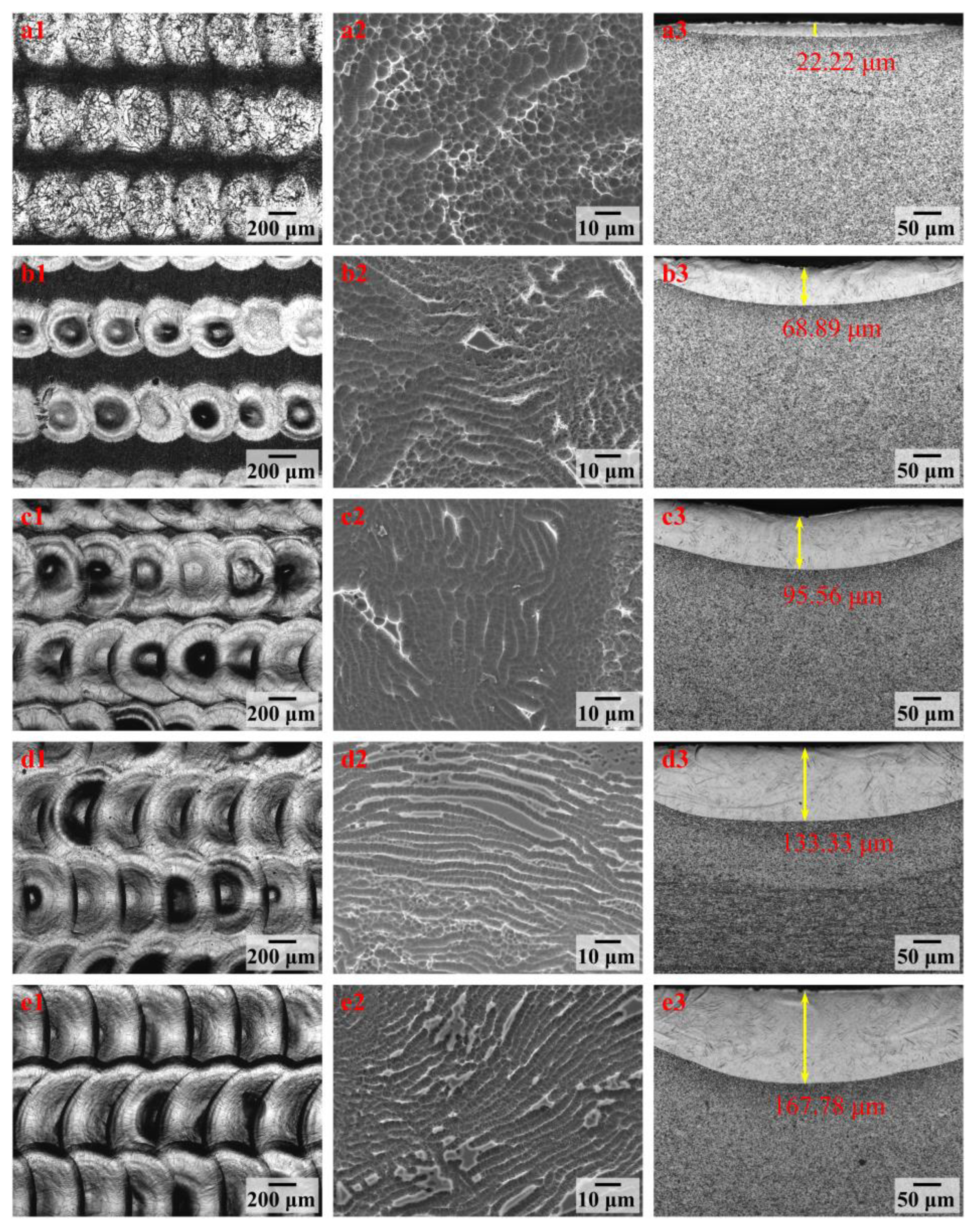
Figure 1 shows the surface and cross-sectional morphologies of titanium alloys remelted by laser pulses of varying powers. As shown in Figure 1(a1–e1), the size of the remelted spots increases with increasing pulse power. This is because the increased laser power delivers more energy to the material surface per unit time, enabling the formation of deeper and wider remelted regions, which in turn leads to an increase in the size of the molten pool. Furthermore, as the pulse power increases, the overlap rate between remelting spots increases, resulting in remelting across the entire surface. Figure 1(a2–e2) shows the microstructures of the surface after remelting at different power levels. At lower remelting powers, honeycomb-like pits appear on the surface. As the remelting power increases to 40 W, as shown in Figure 1(b2), the honeycomb-like surface structure diminishes, and microgrooves with widths ranging from 2 to 5 μm appear. As the power continues to increase, microgrooves form on the remelted surface. Figure 1(a3–e3) shows the cross-sectional morphologies after remelting at different powers. Due to the rapid heating and cooling of the laser, the titanium alloy is melted, forming a remelted zone and a heat-affected zone. At a laser power of 20 W, the remelting depth is 22.22 μm due to the lower energy input. As the laser power increases, the remelting depth further increases. At a laser power of 40 W, the maximum remelting depth in the remelted zone increases to 68.89 μm. Furthermore, as shown in the cross-sectional microstructure in Figure 1(b3), the Ti6Al4V matrix phase consists of α + β phases, where Al is an element that promotes the formation of the α phase, and V is an element that promotes the formation of the β phase [13]. At the same time, due to the high temperatures in the molten pool during the remelting process and rapid cooling, heat diffuses uniformly into the base material, promoting grain refinement and forming a heat-affected zone of a certain depth [14]. As the laser power increases, the excessive energy input diffuses into the matrix via thermal conduction, causing the HAZ width to increase. When the laser power was increased to 60 W and 80 W, the remelted zone depths were 95.56 μm and 133.33 μm, respectively. When the pulsed laser power was increased to 100 W, the remelted zone exhibited the greatest depth, approximately 167.78 μm. At this point, as shown in Figure 1(e3), the microstructure of the remelted zone exhibits significant differences from that of the Ti6Al4V matrix. This is attributed to the rapid heating and cooling process induced by the pulsed laser, which triggers a martensitic transformation in the remelted zone—specifically a β → α + α’ transformation, where the β phase in the matrix undergoes a non-diffusive phase transformation to form a needle-like martensitic structure [15]. Compared to the Ti6Al4V matrix, the remelted martensitic microstructure exhibits higher hardness and wear resistance, making it an effective pretreatment technique for surface modification of titanium alloys [16].
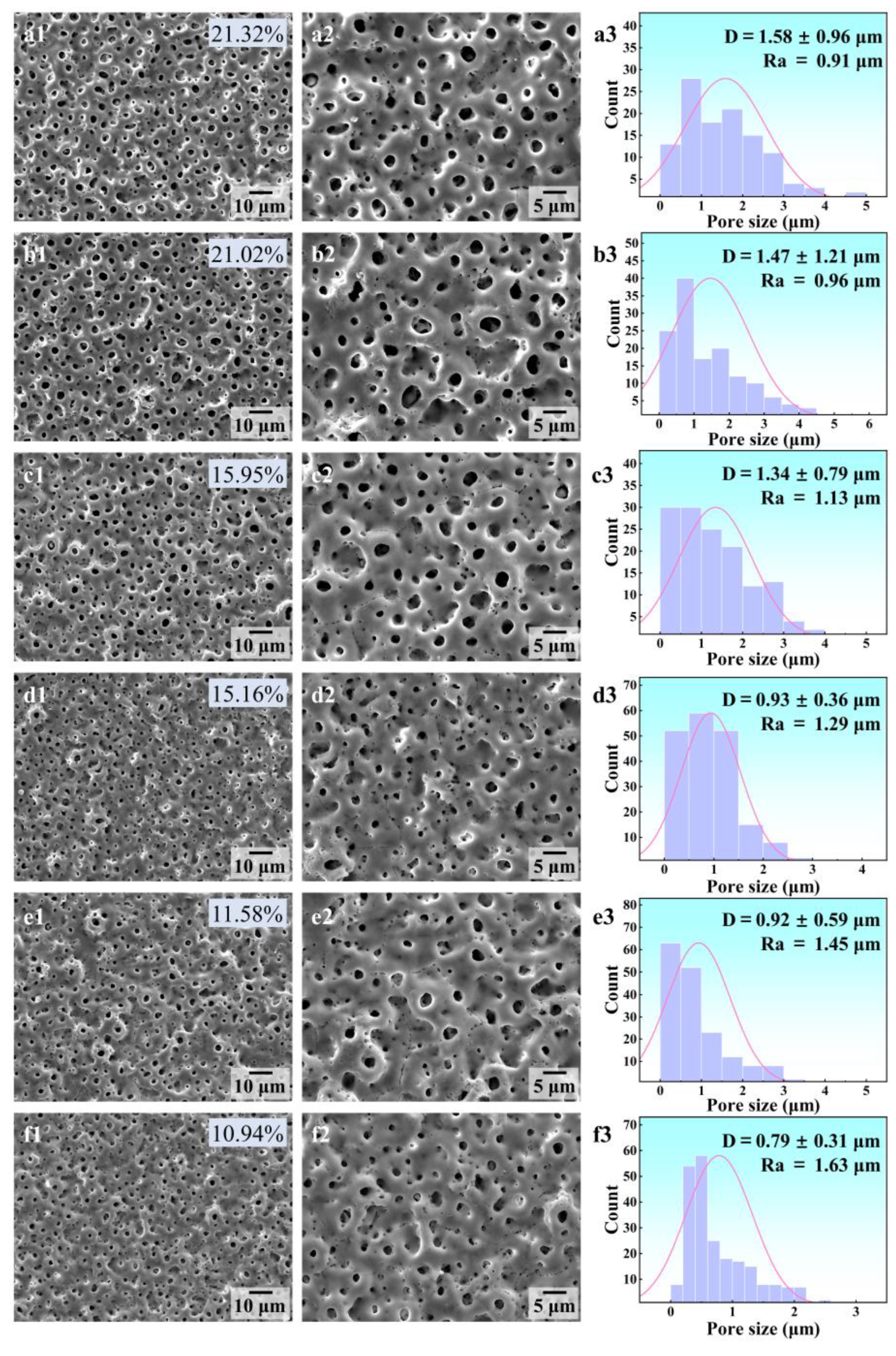
To further elucidate the effects of pulsed laser remelting pretreatment on MAO composite coatings, Figure 2 shows the morphology and pore size distribution histogram of MAO coatings after remelting at different pulsed laser powers. For the Ti6Al4V substrate, due to the intense electrical discharge phenomena accompanying the MAO process, numerous micron-scale discharge channels form on the coating surface after cooling, resulting in the formation of micropores or through-holes. Figure 2(a1–a3) shows the morphology of the MAO coating on the Ti6Al4V substrate; the coating exhibits a high porosity (21.32%) and a large average pore size (1.58 μm). When the pulsed laser remelting power was 20 W, as shown in Figure 2(b1–b3), the surface morphology of the composite coating did not change significantly, and the surface porosity was approximately 21.02%, and the surface roughness was 0.96 μm. As the pulsed laser power continued to increase, as shown in Figure 2(c1,c2,d1,d2), the microporous area of the W2 and W3 composite coatings decreased, and the porosity dropped to 15.95% and 15.16%, respectively. As shown in Figure 2(c3,d3), the average pore size of the composite coating decreases and the surface roughness increases. When the pulsed laser power was increased to 80 W, as shown in Figure 2(e1–e3), the porosity of the composite coating decreased to 11.58%, and the average pore diameter decreased to 0.92 μm. When the laser power was increased to 100 W, as shown in Figure 2(f1–f3), the composite coating exhibited the lowest porosity (10.94%) and the smallest average pore diameter (0.79 μm). At the time, the surface roughness of the composite coating increased to a maximum of 1.63 μm. It can thus be concluded that pulsed laser remelting pretreatment can significantly reduce the porosity and microporous size of the MAO coating. As the pulsed laser power increases, the pulsed laser-induced micro-ripples and the size of the remelted zone increase significantly, and the surface roughness of the substrate increases, which is more conducive to providing more discharge tips and channels for the MAO process. This promotes the generation of more and more uniform micro-arc discharges, thereby significantly reducing defects in the composite coating and improving the coating’s density.
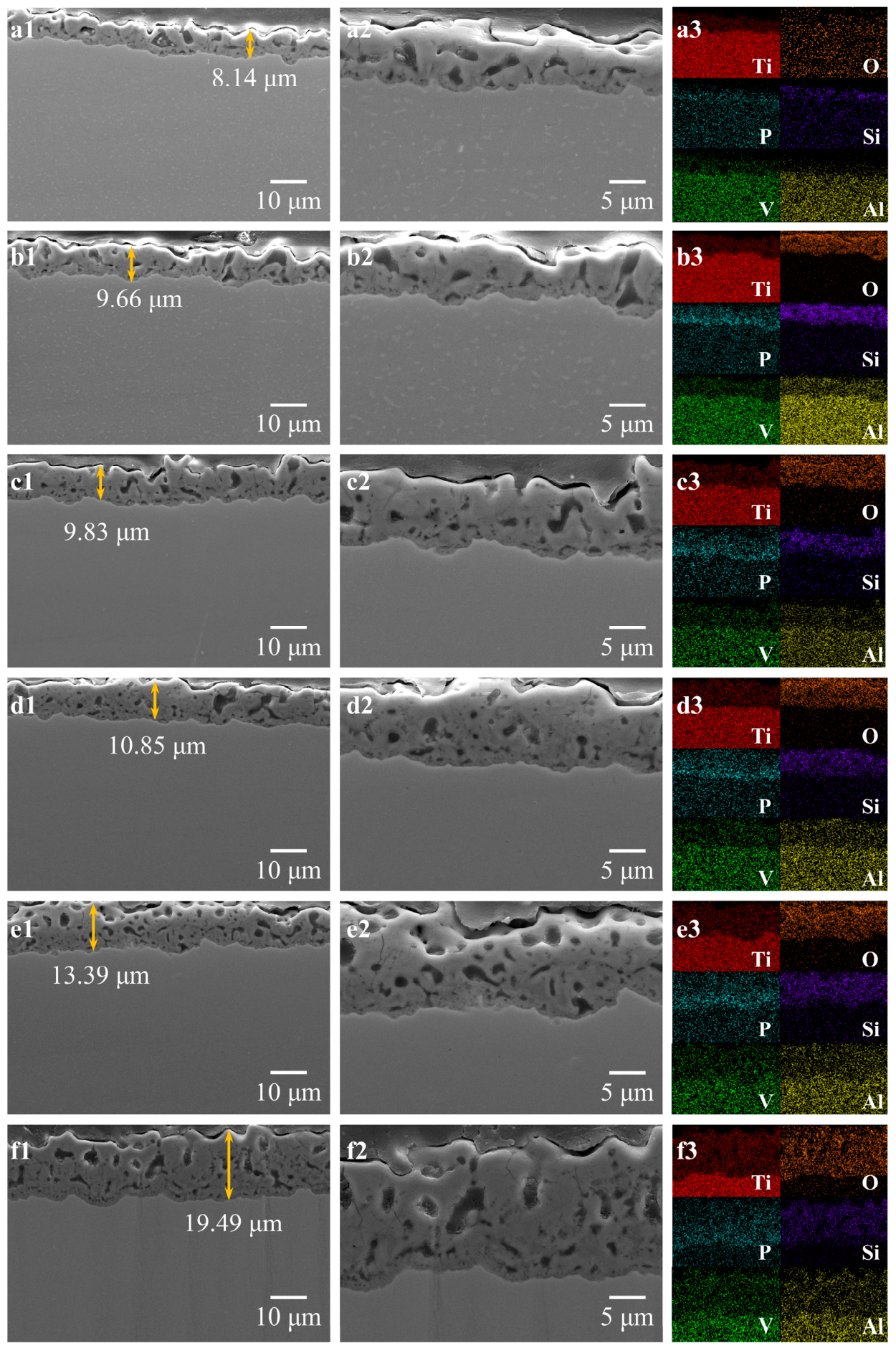
Figure 3 shows the cross-sectional morphology and elemental distribution of MAO composite coatings remelted by pulsed lasers of different powers. For all specimens, as shown in Figure 3(a3–f3), a continuous ceramic coating containing Ti, O, Si, P, Al, and V was formed on the titanium alloy surface. Among them, Ti, Al, and V elements are mainly derived from the dissolution and in situ oxidation of Ti6Al4V alloy matrix. During the micro-arc discharge process, the negatively charged phosphate and silicate in the electrolyte move to the surface of the titanium alloy under the action of an applied electric field, and enter the coating through the discharge channel to form a composite oxide containing P and Si. Subsequently, the melt is rapidly cooled and solidified by the electrolyte, so that P and Si are stably dissolved or combined in the coating. As shown in Figure 3(a1,a2), the MAO coating on the substrate has the thinnest film thickness and dense layer thickness, approximately 8.14 μm, and contains a relatively high number of defects such as microporosity and cracks. When the pulsed laser power is 20 W, as shown in Figure 3(b1,b2), the thickness of the composite coating increases to 9.66 μm, with no significant change in coating density. As the pulsed laser power increased, the thickness of the composite coating showed an increasing trend, as shown in Figure 3(c1,c2,d1,d2,e1,e2), with the coating thicknesses of W2, W3, and W4 being 9.83 μm, 10.85 μm, and 13.39 μm, respectively. When the power reached a maximum of 100 W, the roughness and waviness of the remelted surface increased, which increased the specific surface area during the MAO process and raised the surface free energy of the substrate; the coating thickness of W4 increased to 19.49 μm. In addition, as shown in Figure 3(f2), the interface between the MAO coating and the substrate is tightly bonded without obvious defects such as pores and cracks, and a loose outer layer and a dense inner layer are formed. The increase in the thickness of the dense layer helps to improve the corrosion resistance of the composite coating [17].

3.2. XRD Analysis of Composite Coatings

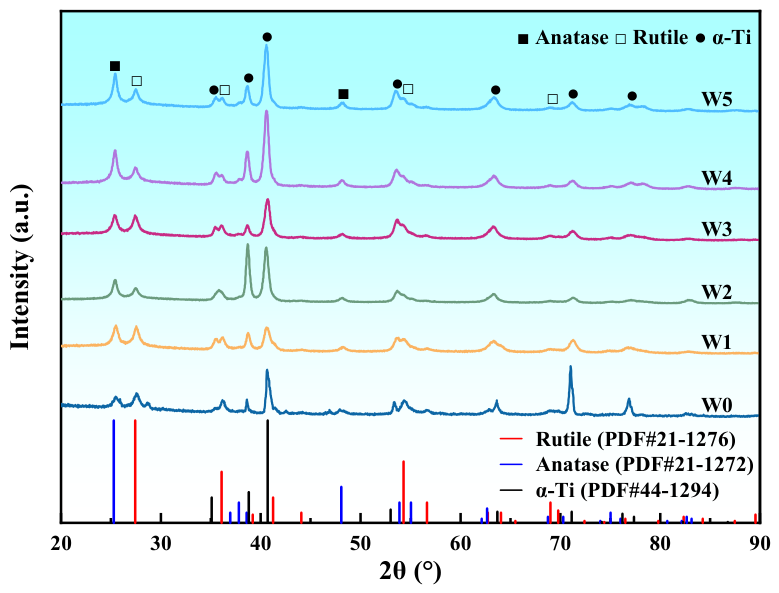
The X-ray diffraction patterns of MAO composite coatings remelted at different power levels are shown in Figure 4. The MAO coating consists primarily of rutile-type TiO2 and anatase-type TiO2. The MAO coating on all samples exhibits the same phase composition, indicating that pulsed laser remelting pretreatment at different power levels did not alter the phase composition of the composite coating. However, as the pulse power increased, the diffraction peak intensities of the different phases in the composite coating underwent significant changes. Table 2 shows the content of different phases in the composite coating. When the substrate was pretreated by pulsed laser remelting, the content of TiO2 in the composite coating increased and the content of α-Ti decreased. When the pulsed laser power is 100 W, as shown in Figure 3(f1,f2), the composite coating has the highest thickness and the highest oxide content. On the one hand, remelting the substrate influenced the discharge process during MAO, promoting discharge uniformity and thereby forming a more highly crystallized oxide layer, resulting in increased diffraction intensity of the TiO2 peak. On the other hand, as the pulse power increased, it induced the MAO process to form a thicker oxide layer, increasing the density of the composite coating and weakening the diffraction peak of the Ti substrate.

3.3. Wetting Properties

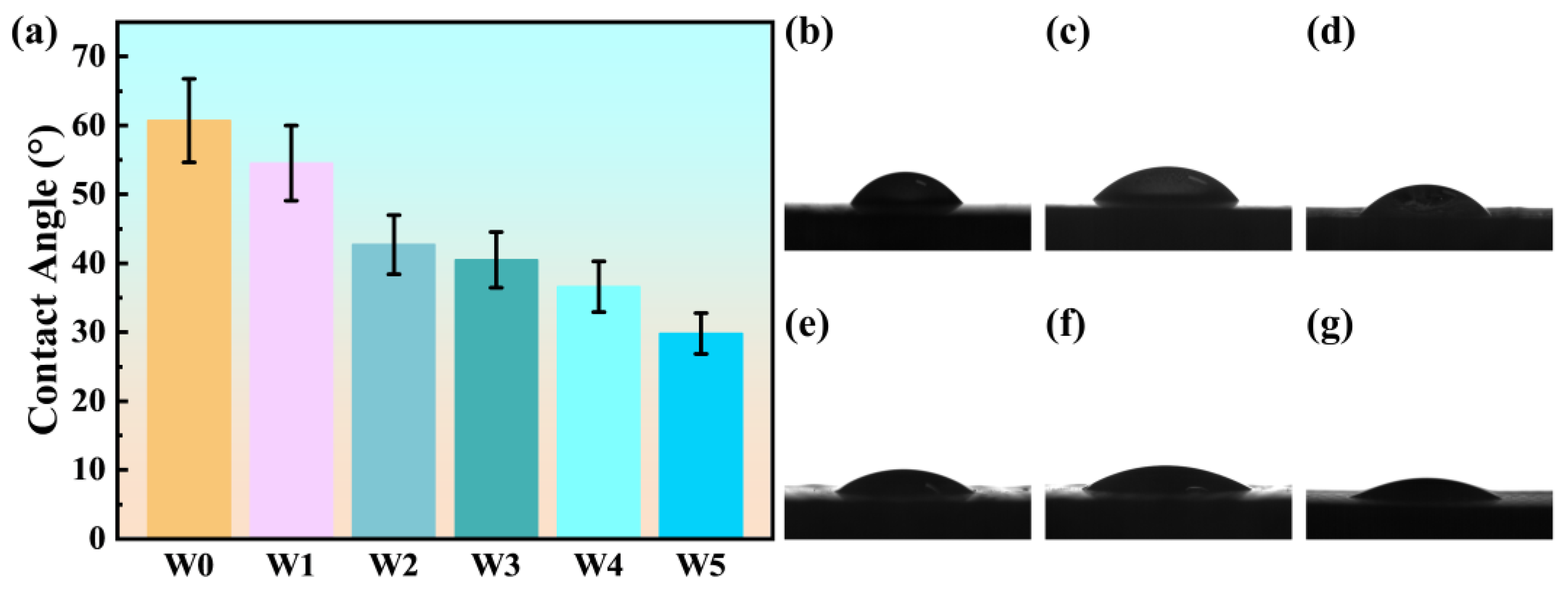
Figure 5a shows the wetting angles and image of the MAO composite coating on samples remelted by pulsed lasers of different powers. As the pulse power increases, the water contact angle of the composite coating exhibits a decreasing trend. When the samples were not subjected to pulsed laser remelting, the water contact angle of the MAO coating was 60.7° (Figure 5b), indicating poor wetting performance. When the pulsed laser power was 20 W, as shown in Figure 5c, the water contact angle of the composite coating was 54.5°. As the pulse laser power increased to 40 W, the water droplets shown in Figure 5d is further spread out, and the water contact angle of the composite coating further decreased to 42.7°. This is attributed to the ripples formed on the surface by the pulse laser remelting, which reduce the surface energy of the composite coating and promote the spreading of water droplets on the surface. When the pulsed laser power was increased to 60 W, 80 W, and 100 W, as shown in Figure 5e–g, the wetting angles of the composite coating were 40.5°, 36.6°, and 29.8°, respectively. In addition, according to the Wenzel wetting model, the wetting angle is inversely proportional to the surface roughness when the wetting angle is less than 90°. It can be seen from Figure 2 that as the pulsed laser power increases, the surface roughness of the composite coating increases, thereby accelerating the wetting of the liquid on the surface. Therefore, pretreatment via pulsed laser remelting can significantly improve the hydrophilicity of the composite coating.

3.4. Microhardness

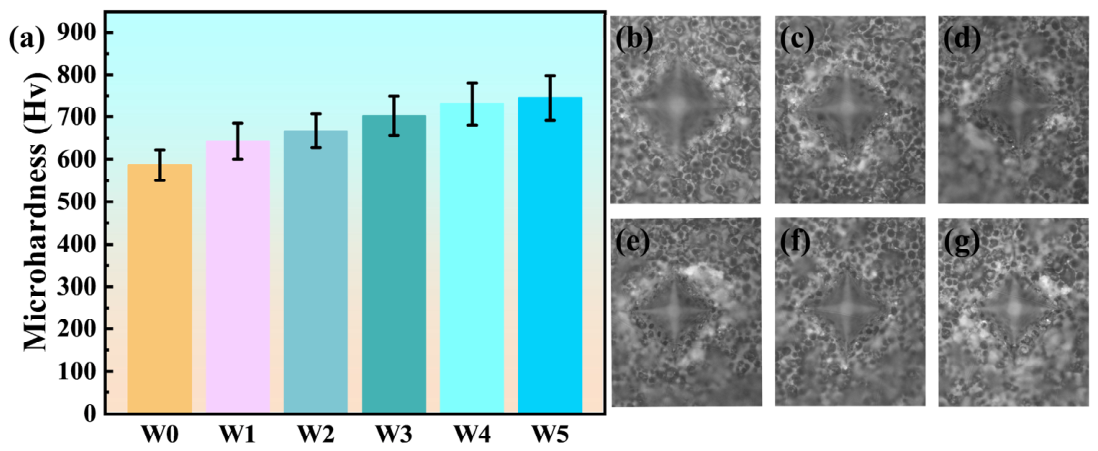
Figure 6 shows the microhardness and image of MAO composite coatings pretreated by pulsed laser remelting at different power levels. For the MAO coating on the substrate, due to its higher porosity and thinner film thickness, as shown in Figure 6b, the coating has a large indentation. As shown in Figure 6a, W0 exhibits a lower microhardness of about 587.3 HV [18]. When the substrate was subjected to pulsed laser remelting pretreatment, the hardness of the W1 coating increased to 642.9 HV. As the power of the laser remelting pretreatment increased, the microhardness of the composite coatings showed an upward trend, with the W2, W3, and W4 composite coatings exhibiting microhardness values of 667.5 HV, 702.5 HV, and 731.1 HV, respectively. It can be seen from the microhardness morphology shown in Figure 6c–f that as the pulse laser power increases, the microhardness indentation size decreases, further indicating that the microhardness of the composite coating increases. When the laser power was increased to 100 W, the W5 composite coating exhibited the highest microhardness and the indentation size is the smallest (Figure 6g), approximately 745.4 HV. Studies have shown that the hardness of MAO coatings is influenced by microporous structure and thickness; high porosity and low film thickness often result in low surface hardness [19]. When the substrate undergoes pulsed laser remelting pretreatment, the rippled structure and fine-grained microstructure formed by the pulsed laser improve the discharge process during the MAO process, thereby forming a composite film with low porosity and greater thickness. This increases the degree of densification of the coating, suppresses the initiation and propagation of cracks within the coating, and consequently enhances the load-bearing capacity of the composite coating [20].

3.5. Wear Resistance

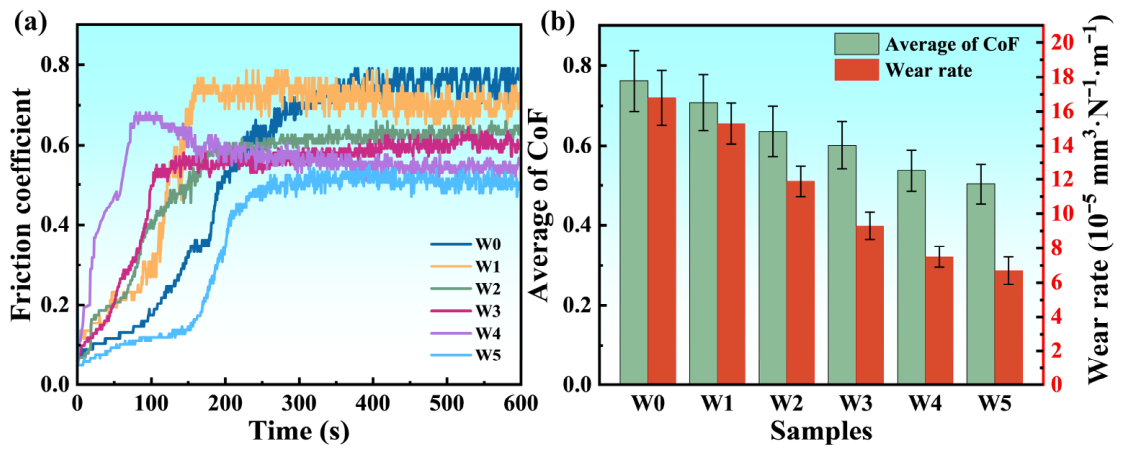
Figure 7 shows the friction coefficients and wear rate of different composite coatings after rotational friction. As shown in Figure 7a, the friction coefficients of all coatings exhibit an upward trend during the initial stage of wear. This is because the loose layer of the MAO coating first comes into contact with the friction partner and undergoes wear; the relatively fragile loose layer is prone to damage and fragmentation during the early stages of wear, leading to a rapid rise and significant fluctuations in the friction coefficient [21]. Compared to MAO surfaces that have not undergone pulsed laser remelting pretreatment, pulsed laser remelting forms a periodic surface structure and micro-ripples, thereby increasing surface roughness. Consequently, the friction coefficient changes more rapidly, and it takes a shorter time to reach the stable stage. As the wear process progresses, the friction enters a stable wear stage. As shown in Figure 7b, the MAO coating on the substrate exhibits a higher friction coefficient and wear rate, with an average value of about 0.76 and a wear rate of about 17.6 × 10⁻⁵ mm3·N−1·m−1. This is because the coating is thin and contains numerous defects (Figure 3(a1,a2)), rendering it unable to provide effective protection. When the specimens undergo pulsed laser remelting pretreatment, the coefficient of friction of the composite coating shows a decreasing trend. At a pulse laser power of 20 W, the friction coefficient of the composite coating on the W1 specimen was 0.71, showing no significant change compared to the substrate’s MAO coating. This is because, at lower powers, the microstructure generated by the pulse laser has no significant effect on the MAO discharge process. As the pulse laser power increased to 40 W, the friction coefficient of the W2 composite coating further decreased to 0.64. When the pulse power was increased to 100 W, the composite coating exhibited the lowest coefficient of friction, approximately 0.51, representing a 32.9% reduction compared to the substrate’s MAO coating. At this time, the composite coating has the lowest wear rate of about 6.7 × 10⁻⁵ mm3·N−1·m−1. On the one hand, pulsed laser remelting refines the microstructure, providing discharge pathways during the MAO process, enhancing the substrate’s hardness, and improving the load-bearing capacity of both the substrate and the coating. Consequently, the coating’s microhardness increases, resulting in superior load-bearing performance. Furthermore, the microscopic ripples formed by pulsed laser remelting increase the effective reaction area between the specimen and the electrolyte. The “peaks” of these ripples better induce the generation of electric sparks, thereby promoting the discharge reaction during the MAO process. This improves the density and thickness of the coating, so that the composite coating has better bearing capacity.
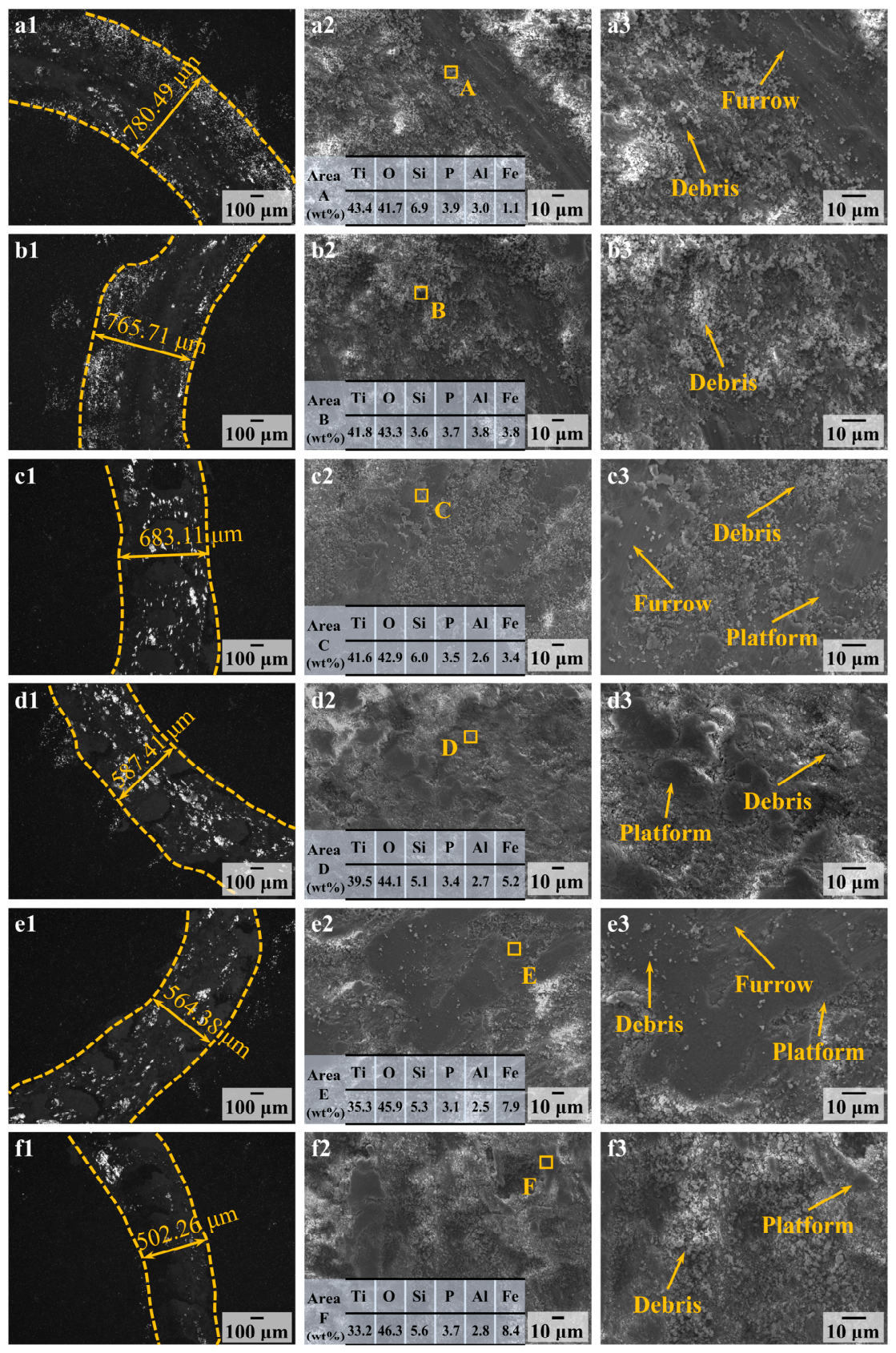
To further elucidate the effect of pulsed laser remelting pretreatment on the wear resistance of the coating, Figure 8 shows the wear morphology and EDS weight percentage analysis of MAO composite layers subjected to pulsed laser remelting at different power levels. As shown in Figure 8(a1), the MAO coating on the Ti6Al4V substrate exhibits the widest wear scar (780.49 μm) and the most severe wear. Further examination of the wear morphology, as shown in Figure 8(a2,a3), reveals that during the coating-on-coating wear process, the softer, porous outer layer undergoes brittle fracture and spalling under the combined action of shear forces and compressive stress. This generates oxide wear debris that acts as abrasive particles, scraping and grinding the friction interface and creating plow marks; the primary wear mechanism is abrasive wear [22]. In addition, it can be seen from the EDS test results that the wear area has a higher Ti content and a lower O content, indicating that the coating has failed and exposed the substrate. When Ti6Al4V was subjected to pulsed laser remelting pretreatment, the wear width of the composite coating decreased significantly. At a pulsed laser power of 20 W, as shown in Figure 8(b1–b3), the wear scar width of the composite coating was 765.71 μm, and the wear mechanism remained predominantly abrasive wear. As the pulsed laser power increased to 40 W, the wear scar width of the composite coating decreased to 683.11 μm (Figure 8(c1)). In addition, it can be seen from Figure 8(c2,c3) that the Fe content in the coating did not change significantly after wear, and the wear mechanism was still dominated by abrasive wear. As the pulsed laser power was further increased, as shown in Figure 8(d1,e1), the wear scar widths of the W3 and W4 composite coatings were 587.41 μm and 564.38 μm, respectively. The eds test results shown in Figure 8(d2,d3) show that the content of Fe element in the coating increases. Since pulsed laser remelting pretreatment promotes the formation of a thicker and harder wear-resistant ceramic layer during the MAO process, it effectively hinders the intrusion of the friction pair, thereby significantly reducing the wear scar width. Furthermore, as shown in the wear morphology in Figure 8(e2,e3), the increased pulsed laser remelting power significantly enhances the surface ripples, which come into contact with the friction pair first and are worn down, forming a “platform” where abrasive wear occurs in the composite coating [23]. When the pulsed laser remelting power was 100 W, the composite coating exhibited the highest microhardness and coating thickness, with a minimum wear scar width of 502.26 μm (Figure 8(f1)), demonstrating the best wear resistance. It can be seen from Figure 8(f2,f3) that the wear interface contains the highest Fe content, and a Fe-rich transfer layer is formed on the surface of the friction pair. Therefore, pulsed laser remelting pretreatment can significantly improve the wear resistance of MAO coatings. On the one hand, this pretreatment refines the matrix grains and forms microscopic ripples on the surface, which increase the discharge channels during the MAO process and induce micro-arc discharge, leading to the in situ formation of a thicker hard ceramic film that helps resist material peeling and loss during wear [24]. On the other hand, as the substrate hardness increases after remelting, the hardness gradient between the substrate and the coating decreases, and the degree of stress concentration at the interface is reduced, making the coating less prone to cracking and peeling, thereby further improving the load-bearing capacity of the composite coating.

3.6. Corrosion Resistance

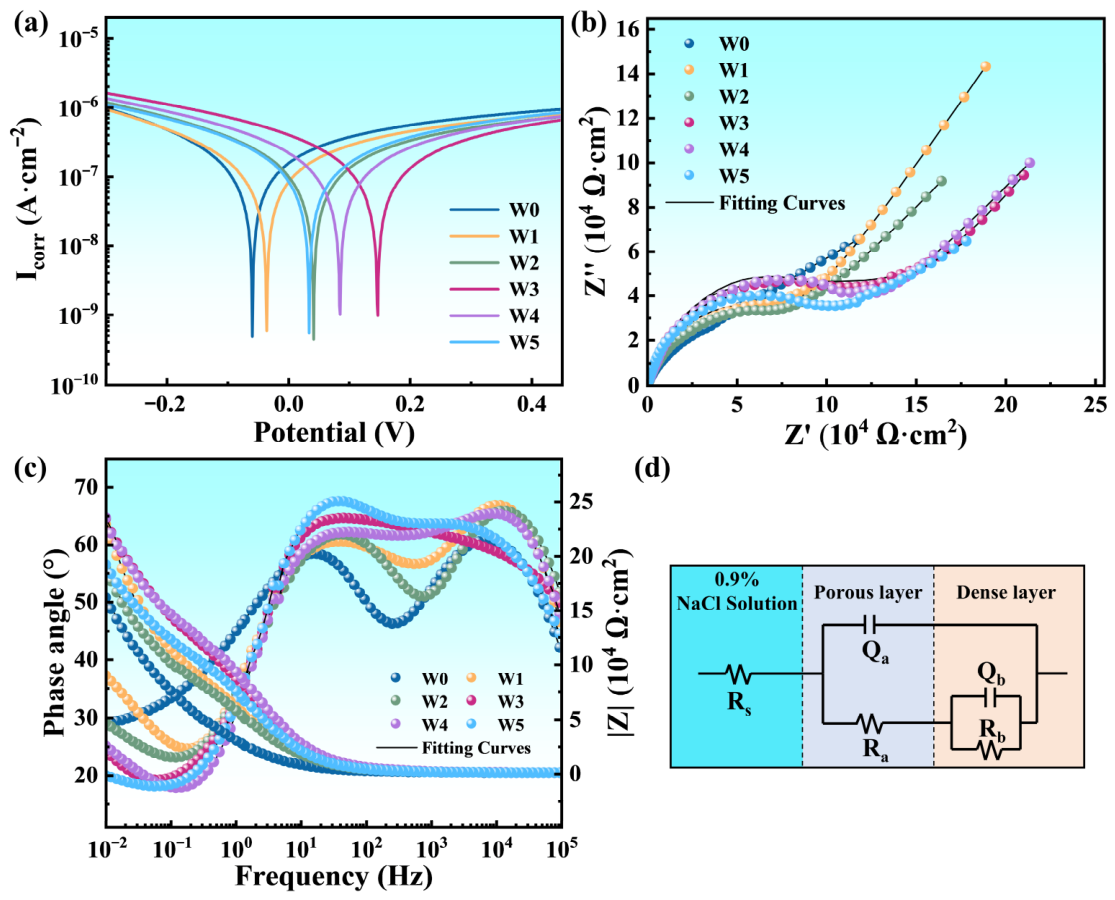
To further characterize the corrosion resistance of the coatings, Figure 9 shows the electrochemical test results for different composite coatings. Figure 9a presents the Tafel curves of different composite coatings in a 0.9% NaCl solution, with Ecorr and icorr obtained by extrapolation. Additionally, the polarization resistance of the composite coatings was calculated using Equation (1), and the results are shown in Table 3. For the MAO specimen, Ecorr and icorr were −0.0495 V and 7.28 × 10⁻⁸ A·cm−2, respectively. Due to the coating’s high porosity (Figure 2(a1)) and low film thickness (Figure 3(a1)), it was unable to effectively prevent the electrolyte from corroding the substrate [25]. Therefore, the MAO coating on the Ti6Al4V substrate exhibits poor corrosion resistance. When Ti6Al4V undergoes pulsed laser remelting pretreatment, the reduced porosity and increased thickness of the composite coating effectively prevent the corrosive solution from penetrating and corroding the substrate. When the pulsed laser power was 20 W, the remelting pretreatment did not significantly improve the corrosion resistance of the MAO coating, and the icorr of the composite coating was 5.71 × 10⁻⁸ A·cm−2. As the pulsed laser power increases, a continuous remelted layer forms on the substrate surface and induces a rippled structure, which improves the discharge uniformity of the MAO process and creates more discharge channels. Consequently, the porosity and density of the MAO coating are improved, with icorr values of 3.76 × 10⁻⁸ A·cm−2 and 5.44 × 10⁻⁸ A·cm−2 for W2 and W3, respectively. When the pulsed laser power was 80 W, the composite coating exhibited the lowest icorr and the highest Rp, at 1.91 × 10⁻⁸ A·cm−2 and 80.84 × 10⁶ Ω·cm2, respectively, demonstrating excellent corrosion resistance. However, when the pulsed laser power was increased to 100 W, the icorr of the composite coating increased to 3.19 × 10⁻⁸ A·cm−2, which was attributed to the fact that, as the pulsed laser power increased, the ripples formed by remelting significantly increased the roughness of the substrate, thereby increasing the contact area between the coating and the corrosive solution, leading to an increase in icorr.
Figure 9b–d shows the Nyquist plots, Bode plots, and equivalent circuit diagrams of the composite coating. As shown in Figure 9b, the MAO coating pretreated by pulsed laser remelting exhibits a larger capacitive arc diameter, indicating higher polarization resistance and better corrosion resistance [26]. Furthermore, as shown by the impedance modulus in Figure 9c, the composite coating exhibits a higher impedance modulus value than the base MAO coating at low frequencies, indicating that the composite coating has better corrosion resistance. On the other hand, as shown in the Bode-phase plot in Figure 9c, the MAO coating curves all exhibit two time constants, which is determined by the bilayer structure of the MAO coating consisting of a porous outer layer and a dense inner layer; the composite coating exhibits a complex film structure. In the high-frequency region (>104 Hz), the behavior is primarily dominated by the electrolyte resistance (Rs) and the external porous layer. In contrast, the low-frequency region (<102 Hz) reflects the performance of the dense inner layer of the micro-arc oxidation film. The fitting results of the equivalent circuit diagram shown in Figure 9d are presented in Table 4. Both Ra and Rb of the composite coating exhibit higher resistance values than those of the base MAO coating, indicating that the composite coating possesses superior corrosion resistance. Both CPEa and CPEb of the composite coating show a decreasing trend, indicating reduced capacitance and increased density of the composite coating. Therefore, pulse laser remelting pretreatment can effectively improve the corrosion resistance of MAO coatings and reduce the corrosion rate, thereby significantly enhancing the corrosion resistance of the coating.

4. Conclusions

In this study, a MAO composite coating was prepared by subjecting a Ti6Al4V alloy to pulsed laser remelting pretreatment. Some important conclusions are summarized as follows.
(1) Pulsed laser remelting pretreatment significantly optimized the microstructure of the Ti6Al4V alloy micro-arc oxidation coating. Compared with the MAO coating without pulsed laser remelting pretreatment, when the laser power was 100 W, the porosity decreased from 21.32% to 10.94%, and the thickness increased from 8.14 μm to 19.49 μm. The laser-induced ripple and fine-grained structure improve the uniformity of the discharge during the MAO process, thereby obtaining a denser and more uniform composite coating.
(2) The pulse laser remelting pretreatment effectively improves the wear resistance of the composite coating. Due to the increase in the density and thickness of the composite coating and the increase in the hardness of the substrate, the bearing capacity and abrasive wear resistance of the coating are enhanced. When the laser power was 100 W, the surface hardness of the composite coating increased to 745.5 HV, the friction coefficient decreased from 0.76 to 0.51, the wear rate decreased from 17.6 × 10⁻⁵ mm3·N−1·m−1 to 6.7 × 10⁻⁵ mm3·N−1·m−1, and the wear width decreased significantly. The increase in the density and thickness of the coating, combined with the increase in the hardness of the substrate, enhances the bearing capacity and abrasive wear resistance of the coating.
(3) Pulsed laser remelting pretreatment can reduce the porosity and thicken the dense layer of MAO composite coating to a certain extent, and enhance the corrosion resistance of the composite coating. Electrochemical test results indicate that, following pulsed laser pretreatment, the corrosion current density of the composite coating decreased from 7.28 × 10⁻⁸ A·cm−2 to 1.91 × 10⁻⁸ A·cm−2, while the polarization resistance increased. The decrease in coating porosity and the thickening of the dense layer effectively hinder the penetration of corrosive medium and reduce the possibility of crevice corrosion, thus improving the corrosion resistance.

Author Contributions

C.Z.: Writing—original, Methodology, Formal analysis, Visualization. S.L.: Resources, Software, Data curation. Y.L.: Visualization, Investigation. M.Z.: Resources, Software. Z.M.: Software, Conceptualization, Supervision. All authors have read and agreed to the published version of the manuscript.

Funding

The research was financially supported by the Heilongjiang province college students’ innovation and entrepreneurship training program project (S202410222035).

Data Availability Statement

The original contributions presented in this study are included in the article. Further inquiries can be directed to the corresponding author.

Conflicts of Interest

All authors declare that they have no known competing financial interests or personal relationships that could influence the work reported in this paper.

References

  1. Li, G.; Ma, F.; Liu, P.; Qi, S.; Li, W.; Zhang, K.; Chen, X. Review of micro-arc oxidation of titanium alloys: Mechanism, properties and applications. J. Alloys Compd. 2023, 948, 169773. [Google Scholar] [CrossRef]
  2. Zhang, R.; Lv, K.; Du, Z.; Chen, W.; Ji, P.; Wang, M. Effects of Graphene on the Wear and Corrosion Resistance of Micro-Arc Oxidation Coating on a Titanium Alloy. Metals 2021, 12, 70. [Google Scholar] [CrossRef]
  3. Wang, Y.; Shen, J.; Wu, G.; Yao, J. Growth characteristics of scanning micro-arc oxidation coating on Ti6Al4V alloy. Surf. Eng. 2023, 39, 218–228. [Google Scholar] [CrossRef]
  4. Wang, Y.; Hu, Z.; Wu, G.; Zhang, X.; Yin, Y.; Li, L.; Yao, J. Effect of laser power on the microstructure and wear resistance of TiO2-SiO2 ceramic coating by laser-assisted micro-arc oxidation on Ti6Al4V alloy. Surf. Coat. Technol. 2025, 497, 131764. [Google Scholar] [CrossRef]
  5. Sun, S.; Shang, J. Improvement of corrosion resistance of AZ31 magnesium alloy by laser remelting/microarc oxidation/LDH composite layer. Mater. Lett. 2024, 356, 135531. [Google Scholar] [CrossRef]
  6. Luo, J.; Tang, W.; Cui, S. The effect of laser shock peening on the microstructure and wear resistance of micro-arc oxidation coatings on TC4 alloy. J. Mater. Res. Technol. 2023, 26, 5851–5859. [Google Scholar] [CrossRef]
  7. Zhao, X.; Song, J.; Lin, J.; Wang, G.; Zhao, G. Enhancing Tribological Performance of Micro-Arc Oxidation Coatings on 6061 Aluminum Alloy with h-BN Incorporation. Coatings 2024, 14, 771. [Google Scholar] [CrossRef]
  8. Wang, Y.; Peng, Q.; Wu, G.; Yao, J.; Yin, Y.; Li, L.; Zheng, Y.; Wen, C. Effect of auxiliary laser irradiation on characteristics and properties of micro-arc oxidation coating on Ti6Al4V alloy. Ceram. Int. 2024, 50, 19412–19423. [Google Scholar] [CrossRef]
  9. Meng, Y.; Liu, P.; Chen, X. Laser remelting combined with micro-arc oxidation coating to improve the biocompatibility of titanium implants. Mater. Lett. 2024, 370, 136867. [Google Scholar] [CrossRef]
  10. Wang, Y.; Lu, D.; Wu, G.; Chen, K.; Wu, H.; Zhang, Q.; Yao, J. Effect of laser surface remelting pretreatment with different energy density on MAO bioceramic coating. Surf. Coat. Technol. 2020, 393, 125815. [Google Scholar] [CrossRef]
  11. Zhu, B.; Wang, L.; Wu, Y.; Yue, W.; Liang, J.; Cao, B. Improving corrosion resistance and biocompatibility of AZ31 magnesium alloy by ultrasonic cold forging and micro-arc oxidation. J. Biomater. Appl. 2022, 36, 1664–1675. [Google Scholar] [CrossRef]
  12. Yan, Y.; Mu, L.; Liu, Y.; Li, Q.; Liu, Y.; Ma, Z.; Xu, J.; Di, K. Enhanced wear resistance, corrosion resistance and biocompatibility on micro-texture Ti6Al4V surfaces by pulse laser remelted. Surf. Coat. Technol. 2025, 513, 132528. [Google Scholar] [CrossRef]
  13. Pfleging, W.; Kumari, R.; Besser, H.; Scharnweber, T.; Majumdar, J.D. Laser surface textured titanium alloy (Ti-6Al-4V): Part 1—Surface characterization. Appl. Surf. Sci. 2015, 355, 104–111. [Google Scholar] [CrossRef]
  14. Dai, J.J.; Wang, T.; Chai, L.; Hu, X.; Zhang, L.; Guo, N. Characterization and correlation of microstructure and hardness of Ti-6Al-4V sheet surface-treated by pulsed laser. J. Alloys Compd. 2020, 826, 154243. [Google Scholar] [CrossRef]
  15. Hu, K.; Gao, W.; Wang, S.; Jiang, X.; Yu, H.; Sun, D. The relationship between an input energy density and the microstructure evolution of the Ti-6Al-4V alloy via laser remelting. Mater. Charact. 2024. [Google Scholar] [CrossRef]
  16. Dai, J.; Xia, J.; Chai, L.; Murty, K.L.; Guo, N.; Daymond, M.R. Correlation of microstructural, textural characteristics and hardness of Ti-6Al-4V sheet β-cooled at different rates. J. Mater. Sci. 2020, 55, 8346–8362. [Google Scholar] [CrossRef]
  17. Hu, Y.; Wang, H.; Wang, D.; Li, B.; Liang, C. High-performance bioceramic coatings of 3D printed titanium alloys via FS-auxiliary micro-arc oxidation manufacturing. J. Manuf. Process. 2024, 119, 337–347. [Google Scholar] [CrossRef]
  18. Toulabifard, A.; Rahmati, M.; Raeissi, K.; Hakimizad, A.; Santamaria, M. The Effect of Electrolytic Solution Composition on the Structure, Corrosion, and Wear Resistance of PEO Coatings on AZ31 Magnesium Alloy. Coatings 2020, 10, 937. [Google Scholar] [CrossRef]
  19. Kamal Jayaraj, R.; Malarvizhi, S.; Balasubramanian, V. Optimizing the micro-arc oxidation (MAO) parameters to attain coatings with minimum porosity and maximum hardness on the friction stir welded AA6061 aluminium alloy welds. Def. Technol. 2017, 13, 111–117. [Google Scholar] [CrossRef]
  20. Ma, X.; Shi, Q.; Huang, Y.; Liu, Y.; Yue, X. Microstructure and properties of TC4 titanium alloy micro-arc oxide composite coating based on laser surface texturing. Sci. Rep. 2025, 15, 9621. [Google Scholar] [CrossRef] [PubMed]
  21. Asgari, M.; Aliofkhazraei, M.; Darband, G.B.; Rouhaghdam, A.S. Evaluation of alumina nanoparticles concentration and stirring rate on wear and corrosion behavior of nanocomposite PEO coating on AZ31 magnesium alloy. Surf. Coat. Technol. 2017, 309, 124–135. [Google Scholar] [CrossRef]
  22. Zhao, X.; Chen, Y.; Ji, R.; Xu, M.; Ye, Z.; Shao, W.; Wang, S.; Zou, Y.; Wang, Y.; Ouyang, J.; et al. TiO2-hBN nanocomposite coating with excellent wear and corrosion resistance on Ti6Al4V alloy prepared by plasma electrolytic oxidation. Surf. Coat. Technol. 2024, 494, 131471. [Google Scholar] [CrossRef]
  23. Wu, G.; Yin, Y.; Zhang, S.; Wang, Y.; Xiang, Y.; Li, L.; Yao, J. Effect of laser texturing on the antiwear properties of micro-arc oxidation coating formed on Ti-6Al-4V. Surf. Coat. Technol. 2023, 453, 129114. [Google Scholar] [CrossRef]
  24. Wang, H.; Zhai, D.; Feng, K. Effect of the Microstructure of a Titanium Alloy Fabricated Using Selective Laser Melting on Microarc Oxidation Film. Metall. Mater. Trans. A 2021, 52, 4691–4702. [Google Scholar] [CrossRef]
  25. Yan, Y.; Mu, L.; Yang, H.; Zhan, L.; Yuan, S.; Ma, Z.; Xu, J.; Di, K.; Huang, Z. Simultaneous enhancement of tribological and corrosion resistance in Ti6Al4V by pulse laser remelting combined with MAO coating doped with hydroxylated nano h-BN. Ceram. Int. 2026, 52, 4039–4052. [Google Scholar] [CrossRef]
  26. Li, J.; Du, C.; Liu, Z.; Li, X. Electrochemical studies of microbiologically influenced corrosion of X80 steel by nitrate-reducing Bacillus licheniformis under anaerobic conditions. J. Mater. Sci. Technol. 2022, 118, 208–217. [Google Scholar] [CrossRef]
Figure 1. Surface and cross-sectional morphologies of titanium alloys remelted by pulsed lasers of different powers: (a1a3) W1; (b1b3) W2; (c1c3) W3; (d1d3) W4; (e1e3) W5.
Coatings 16 00619 g001
Figure 2. Morphology, surface roughness, and pore size of MAO composite coatings on titanium alloys remelted at different laser powers: (a1a3) W0; (b1b3) W1; (c1c3) W2; (d1d3) W3; (e1e3) W4; (f1f3) W5.
Coatings 16 00619 g002
Figure 3. Cross-sectional morphology and elemental distribution of MAO composite coatings remelted by pulsed lasers of different powers: (a1a3) W0; (b1b3) W1; (c1c3) W2; (d1d3) W3; (e1e3) W4; (f1f3) W5.
Coatings 16 00619 g003
Figure 4. XRD patterns of MAO composite coatings remelted at different powers.
Coatings 16 00619 g004
Figure 5. Wetting angle and image of MAO composite coating remelted by different power pulse lasers: (a) Wetting angle; (b) W0; (c) W1; (d) W2; (e) W3; (f) W4; (g) W5.
Coatings 16 00619 g005
Figure 6. Microhardness and indentation morphology of MAO composite coatings pretreated by pulse laser remelting at different powers: (a) Microhardness; (b) W0; (c) W1; (d) W2; (e) W3; (f) W4; (g) W5.
Coatings 16 00619 g006
Figure 7. Friction coefficients of different composite coatings: (a) Friction coefficient; (b) Average friction coefficient and wear rate.
Coatings 16 00619 g007
Figure 8. Wear morphology and EDS analysis of composite coating: (a1a3) W0; (b1b3) W1; (c1c3) W2; (d1d3) W3; (e1e3) W4; (f1f3) W5.
Coatings 16 00619 g008
Figure 9. Electrochemical test of composite coatings: (a) Tafel plot; (b) Nyquist plot; (c) Bode plot; (d) simulated equivalent circuit.
Coatings 16 00619 g009
Table 1. Ti6Al4V alloy composition (wt%).
TiAlVCFeO
88.91 ± 0.866.42 ± 0.303.8 ± 0.550.04 ± 0.040.25 ± 0.130.11 ± 0.03
Table 2. Different phase contents in composite coatings (wt%).
SamplesW0W1W2W3W4W5
Anatase (wt%)50.1 ± 1.246.8 ± 0.845.3 ± 1.944.9 ± 1.545.5 ± 1.447.3 ± 0.6
Rutile (wt%)38.2 ± 0.942.4 ± 1.644.5 ± 1.345.4 ± 0.645.6 ± 0.846.5 ± 1.2
α-Ti (wt%)11.7 ± 0.910.8 ± 0.710.2 ± 1.19.7 ± 0.58.9 ± 1.26.2 ± 0.4
Table 3. Ecorr, icorr, and Rp of the samples.
SamplesEcorr/VSCE (V)icorr/(×10−8 A·cm−2)Rp/(106 Ω·cm2)
W0−0.0495 ± 0.00757.28 ± 0.8317.79 ± 3.12
W1−0.0297 ± 0.00865.71 ± 0.2624.61 ± 4.36
W20.0455 ± 0.00933.76 ± 0.4555.52 ± 4.92
W30.1532 ± 0.01295.44 ± 0.3628.59 ± 3.83
W40.0357 ± 0.00821.91 ± 0.2380.84 ± 5.23
W50.0036 ± 0.00093.19 ± 0.4347.12 ± 5.62
Table 4. Results of EIS fitting by the simulated equivalent circuit.
SamplesRs
(Ω·cm2)
CPEa
−1·sn·cm−2)
naRa
(Ω·cm2)
CPEb
−1·sn·cm−2)
nbRb
(Ω·cm2)
W016.625.934 × 10−60.621.29 × 1055.314 × 10−50.843.82 × 105
W116.042.294 × 10−60.696.86 × 1052.533 × 10−50.671.11 × 106
W213.532.783 × 10−70.675.91 × 1053.823 × 10−50.792.29 × 105
W39.151.971 × 10−60.727.25 × 1052.489 × 10−50.822.62 × 106
W423.651.626 × 10−60.738.72 × 1052.935 × 10−50.724.62 × 106
W511.951.657 × 10−60.759.36 × 1051.384 × 10−50.786.24 × 106
Disclaimer/Publisher’s Note: The statements, opinions and data contained in all publications are solely those of the individual author(s) and contributor(s) and not of MDPI and/or the editor(s). MDPI and/or the editor(s) disclaim responsibility for any injury to people or property resulting from any ideas, methods, instructions or products referred to in the content.