Article

Effects of Reactive Pressure on Hot-Filament Chemical Vapor Deposition Diamond Films’ Growth on Surfaces of Polycrystalline Diamond Substrates


1
School of Information Engineering, Jiangsu Open University, Nanjing 210036, China
2
School of Mechanical and Electrical Engineering, Henan Institute of Science and Technology, Xinxiang 453003, China
3
Institute of Super-Hard Cutting Tool Materials, China University of Mining and Technology, Beijing 100083, China
*
Author to whom correspondence should be addressed.
Coatings 2026, 16(4), 455; https://doi.org/10.3390/coatings16040455
Submission received: 20 March 2026 / Revised: 7 April 2026 / Accepted: 9 April 2026 / Published: 10 April 2026
(This article belongs to the Section Diamond and Related Coatings)

Highlights

What are the main findings?
  • Reactive pressure (2–5 kPa) modulates HFCVD diamond film growth on PCD; growth rate peaks at 5.366 μm/h at 3 kPa.
  • Grain size and fractal dimension exhibit a trend of decreasing first and then increasing with rising pressure, reaching their minimum values (15.8 nm, 1.20402) at 3 kPa.
  • Film adhesion strength is maximal at 3 kPa, whereas severe peeling or cracking occurs at other pressure levels.
What are the implications of the main findings?
  • The optimal reactive pressure for industrial-scale HFCVD diamond film deposition on PCD substrates is identified as 3 kPa.
  • Adopting the optimized pressure enables the fabrication of diamond films with high growth rate and excellent adhesion, which effectively reduces superhard tool production costs.
  • Precise control of reactive pressure mitigates film porosity and delamination, thereby significantly improving the performance and durability of PCD-based cutting tools.

Abstract

Hot-filament chemical vapor deposition (HFCVD) facilitates the realization of industrial mass production owing to its simple synthesis device, facile control of process conditions, and low preparation cost. Reactive pressure is one of the deposition parameters that exert a profound influence on the growth of HFCVD diamond films on polycrystalline diamond (PCD) substrates, primarily affecting the growth rate and grain size of the deposited diamond coating. A univariate experimental approach was employed to investigate the effects of reactive pressure (2 kPa, 3 kPa, 4 kPa, 5 kPa) on the properties of as-deposited diamond films. The results show that with the increase in reactive pressure, the growth rate increased first and then decreased, peaking at 5.366 μm/h at 3 kPa. The fractal dimension and grain size follow a similar variation trend, both decreasing first and then increasing. The grain size drops to 15.8 nm when the reactive pressure is 3 kPa, at which point the adhesive strength of the film is maximized. This phenomenon can be attributed to the fact that excessively low reactive pressure extends the mean free path of particles and active species, endowing them with higher kinetic energy and reducing collision-induced energy loss. This in turn significantly promotes diamond nucleation, secondary nucleation and grain refinement, thus facilitating the growth of nanocrystalline diamond. In contrast, an excessively high pressure yields the opposite effect, inhibiting nucleation and promoting grain coarsening.

1. Introduction

Chemical vapor deposition (CVD) diamond films possess exceptional properties, most notably ultra-high hardness, excellent wear resistance, and a low friction coefficient comparable to that of natural single-crystal diamonds, which render them widely applicable in the manufacturing of cutting tools [1,2]. However, CVD diamond is limited by synthesis conditions and has small thickness. In addition, insufficient interfacial bonding between the coating and the substrate often leads to coating delamination during service [3,4]. Conventional diamond thick-film cutting tools suffer from long synthesis cycles, low yields, and high production costs [5]. Therefore, the development of a rapid, efficient, and low-cost method for growing diamond thick films has become an urgent challenge for the superhard tool industry.
Various techniques are available for depositing diamond coatings, such as the HFCVD method [6,7], microwave plasma chemical vapor deposition method [8,9], direct current plasma jet method [10], combustion flame method [11] and so on. Among them, the HFCVD method, which was first developed in the 1970s, boasts distinct advantages, such as simple synthesis equipment, feasibility for industrial mass production, easy control of process conditions, and low preparation costs [12,13,14]. Polycrystalline diamond composite (PDC) is a superhard composite material made by sintering diamond micropowder and cemented carbide substrate under ultra-high pressure and high temperature. It consists of a surface PCD layer and a lower cemented carbide layer, and combines the high hardness and wear resistance of diamond with the high strength and impact resistance of cemented carbide. It is the core material for manufacturing wear-resistant tools such as drilling bits and cutting tools. To address the challenges associated with preparing diamond thick films, we propose a novel preparation process for CVD diamond thick-film cutting tools: polycrystalline diamond compact (PDC) is selected as the substrate material for diamond thick-film deposition, an environmentally friendly and efficient electrolytic cobalt removal pretreatment is performed, and a diamond thin film is deposited on the surface of the decobaltized PCD layer. The total thickness of the deposited thin film layer and the decobaltized layer of PDC can reach 300 μm, which qualifies the product as a CVD diamond thick-film material. Numerous factors influence the deposition process. The material and carbonization of the filament, the temperature of the substrate, and the type of carbon source all have great impacts on the structure and performance of the deposited diamond coating [15,16,17,18,19]. However, the optimal ranges of these parameters remain unclear, and only rough adjustments within an appropriate process parameter range can be made based on a large number of CVD diamond coating experiments. In this article, the reactive pressure is selected as the research object to study the influence of changes in process parameters on the structure and performance of deposited diamond coatings. It is hoped that the optimal parameters for CVD diamond coatings deposited on PCD substrates will be obtained [20,21,22,23,24,25].

2. Experimental

2.1. Materials and Pretreatment of Substrate

The substrates used in the experiment were 1304-type polycrystalline diamond compacts (PDCs) of the same batch produced by Hebei Shangcheng Superhard Materials Co., Ltd., Qianan, China, with a dimension of Φ13.4 mm × 4 mm. The PDC substrates were fabricated by sintering diamond micropowder and a cemented carbide matrix under high temperature and high pressure. Prior to acid-etching, the samples were immersed in an acetone solution and subjected to ultrasonic cleaning for 10 min to remove surface contaminants. Then they were placed in a self-designed acid-etching container. The acid-etching reagents and corresponding process parameters are listed in Table 1.

2.2. Filament Carbonization and Nucleation Process

After pretreatment, the PCD substrates were ultrasonically cleaned sequentially with deionized water, acetone, and ethanol to eliminate impurities that might interfere with the subsequent deposition process. Subsequently, the substrates were placed into a home-made HFCVD diamond deposition system for diamond coating growth. The system utilized a tungsten filament with a diameter of Φ1.0 mm, with acetone as the carbon source and hydrogen as the auxiliary gas. Prior to deposition, vacuum treatment and filament carbonization were essential steps, with the initial vacuum degree required to be less than 4 Pa. Detailed process parameters for filament carbonization and nucleation are presented in Table 2.

2.3. Diamond Coating Deposition Experiment

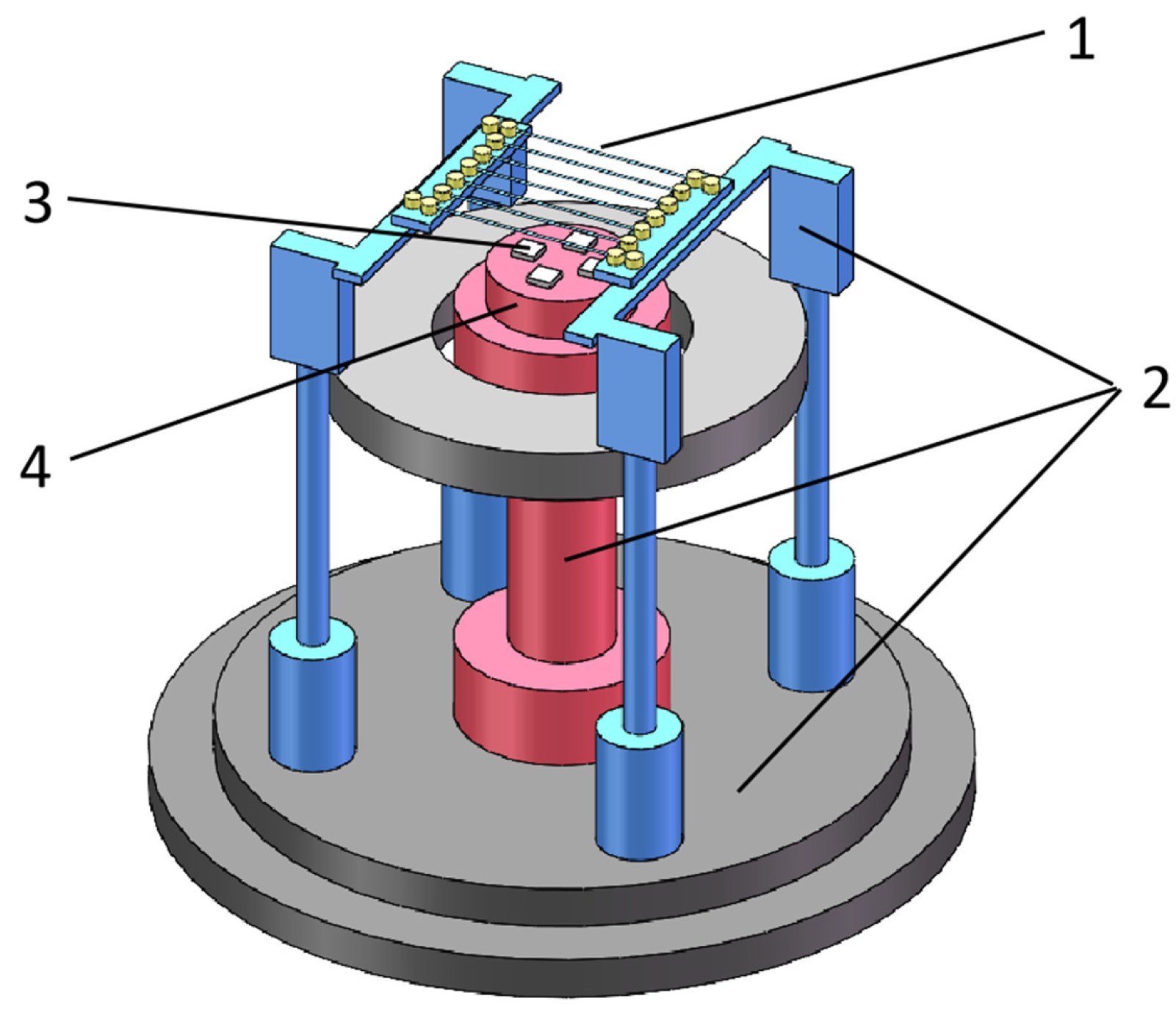
Following filament carbonization and nucleation, the diamond coating deposition experiment was conducted. Based on the research team’s extensive experience in depositing diamond coatings on cemented carbide substrates, the key process parameters for deposition were pre-determined. This study focuses on the effect of reactive pressure on the coating properties, and thus four different reactive pressure levels were selected for investigation (Table 3). The gas flow rate was fixed at 1000 mL/min, and the deposition time was 4 h for all samples. Each deposition parameter was tested in triplicate, and one representative sample from each group was selected for subsequent characterization and testing. A schematic diagram of the HFCVD workbench is shown in Figure 1.

2.4. Characterization Methods and Tests

A Smart Lab 9 kW X-ray polycrystalline diffractometer was used to characterize the phase composition and crystal structure of the diamond coatings. The average crystallite size was calculated using the Scherrer equation, D = Kλ/βcosθ, where D is the crystallite size, K is the shape factor, λ is the X-ray wavelength, β is the full width at half maximum (FWHM) of the diffraction peak, and θ is the Bragg diffraction angle [26]. An S-3400 scanning electron microscope (SEM) was employed to observe the surface and cross-sectional morphologies of the deposited diamond coatings; the film growth rate was calculated based on five cross-sectional SEM images for each sample to ensure accuracy. ImageJ2x software (v2.1.4.7, Fiji) was used to characterize and analyze the morphological features and complexity of surface pores on the coatings based on SEM micrographs (five images per sample); the perimeter, area, porosity, and radial distribution of the pores were statistically analyzed, and the fractal dimension of the surface pores was determined for each sample. A TH903 digital display Brinell hardness tester was used to perform indentation tests on the PCD substrates with deposited diamond coatings. The tester uses a square pyramid diamond indenter with a face angle of 136°, which is pressed into the sample surface under a specified load, held for a set duration, and then unloaded. Coating adhesion was evaluated by comparing the indentation morphologies of different samples; samples with cracks or delamination at the indentation site were deemed to have low coating adhesion. Each sample was tested five times to ensure the reliability of the results.

3. Results and Discussion

3.1. Analysis of Morphology of Films

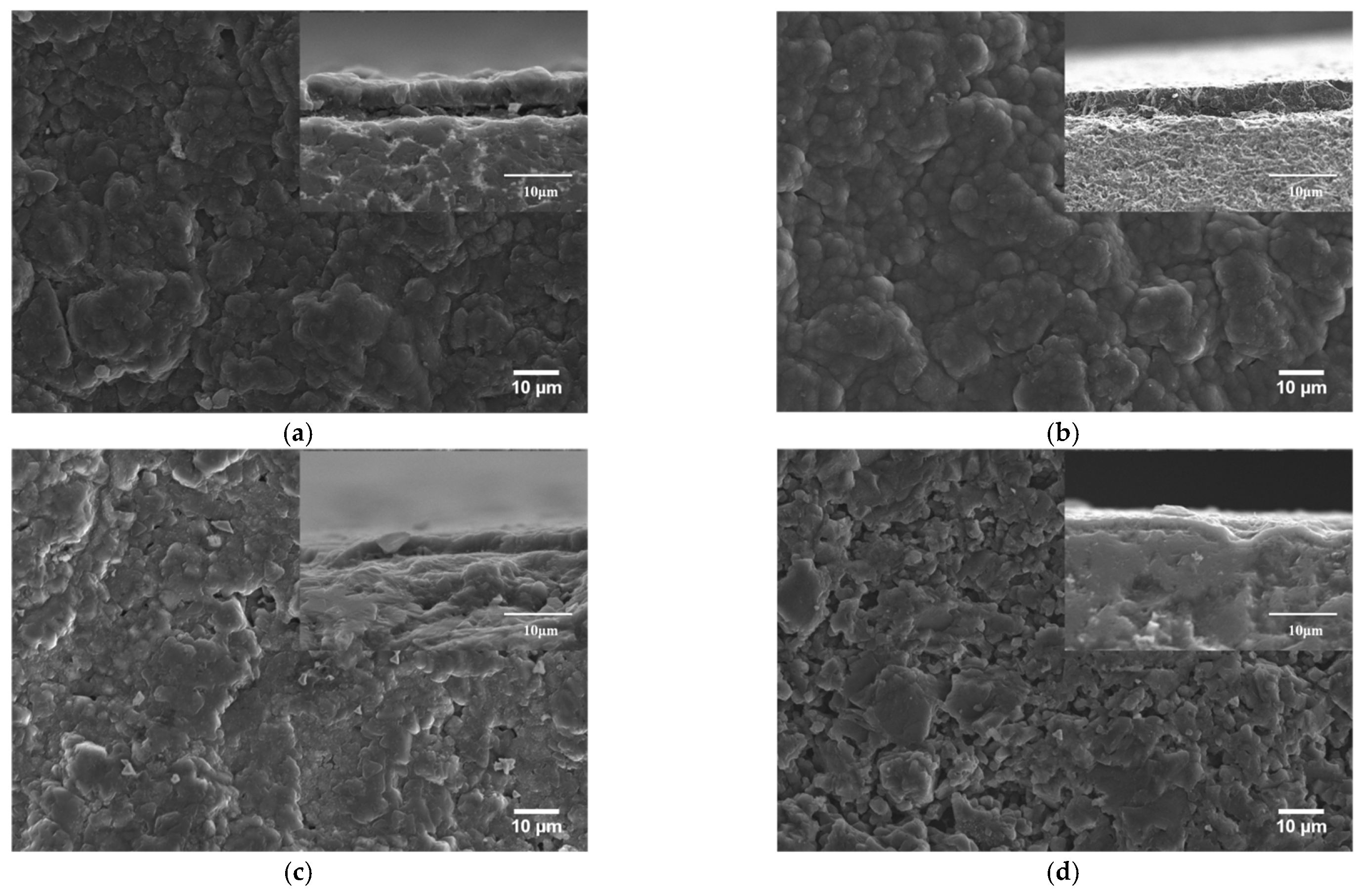
In the experiment, the reactive pressure was precisely controlled using a pressure fine-tuning valve in the vacuum chamber. Reactive pressure is a key parameter that primarily affects the growth rate and grain size of the deposited diamond coating [27,28]. The surface and cross-sectional SEM images of samples 1#–4# are presented in Figure 2, and the corresponding film growth rates are listed in Table 4. Sample 2# (3 kPa) exhibits the fewest surface pores and the densest coating structure. The deposited diamond crystals of samples 1#, 2#, and 3# exhibit agglomeration with rounded edges. In contrast, sample 4# (5 kPa) presents a large number of surface pores, high surface roughness, and an undefined diamond crystal morphology.
A reduced reactive pressure extends the mean free path of reactive species, allowing more active particles to reach the substrate surface with fewer collisions and minimal energy loss. These high-energy active species effectively promote surface atomic aggregation and rearrangement, thereby facilitating secondary nucleation. Consequently, the initial nucleation seeds are encapsulated by nanoscale secondary nuclei, evolving into spherical nanocrystalline diamond (NCD) crystallites. Conversely, an elevated reactive pressure shortens the mean free path of active species, causing frequent collisions and significant energy dissipation during their migration to the substrate surface. This ultimately results in a lower density of reactive and nucleation-favorable species adsorbed on the substrate surface. As the reactive pressure decreases, the mean free path of methyl and hydrogen atoms increases; fewer collisions occur during their transport to the substrate surface, which is more conducive to diamond nucleation and growth. This may be attributed to the formation of higher-order carbon molecules under low pressure, which tend to promote diamond film growth, along with a higher transport rate of active groups to the substrate surface.

3.2. Analysis of XRD of Films

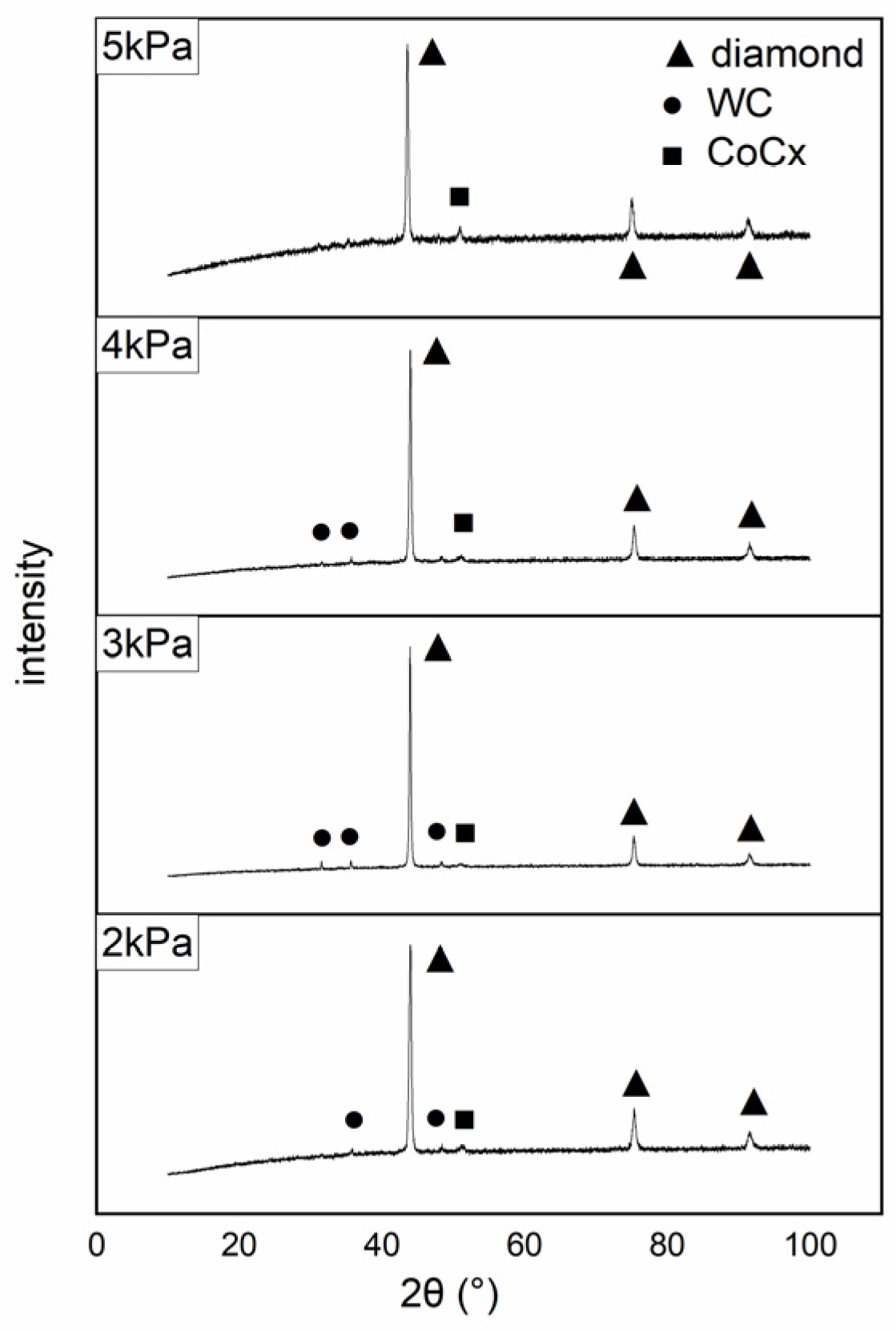
Figure 3 shows the XRD patterns of the deposited diamond coatings at different reactive pressures. Characteristic diffraction peaks of diamond are observed at 2θ = 43.9°, 75.3°, and 91.5°, corresponding to the (111), (220), and (311) crystal planes, respectively; no graphite diffraction peaks are detected, indicating a high purity of the deposited diamond coatings. The diffraction peak intensity of the (111) crystal plane is significantly higher than those of the (220) and (311) planes, demonstrating that the diamond coatings exhibit a preferential growth orientation along the (111) crystal plane. With the increase in reactive pressure, the diffraction peak intensity of the (111) crystal plane increases first and then decreases, reaching its maximum at 3 kPa. The grain sizes calculated using the Scherrer equation show a similar trend: decreasing from 18.1 nm at 2 kPa to a minimum of 15.8 nm at 3 kPa, and then increasing to 18.6 nm and 37.1 nm at 4 kPa and 5 kPa, respectively.
This variation in grain size can be explained as follows: An excessively low reactive pressure extends the mean free path of active carbon-containing groups and hydrogen atoms excited by the filament, reducing the number of collisions during their transport to the substrate surface and thus preserving their high kinetic energy. This greatly promotes diamond nucleation, which occurs prior to significant grain growth, resulting in a smaller grain size. In contrast, an excessively high reactive pressure shortens the mean free path of active species, causing more collisions and energy loss before they reach the substrate surface. This leads to a lower nucleation rate, making grain growth the dominant process and thus resulting in larger grain sizes.
In addition, trace amounts of WC and Co phases are detected in the XRD patterns of the deposited diamond coatings. The WC phase is likely formed by the carbonization of the tungsten filament at high temperatures during the early stage of deposition, and partial WC evaporates and deposits on the substrate surface during the deposition process. The Co phase is attributed to the high deposition temperature, which induces the diffusion of residual Co from the inner part of the PDC substrate to the surface, despite the low Co content on the substrate surface after decobaltization pretreatment.

3.3. Analysis of Fractal Dimension of Films

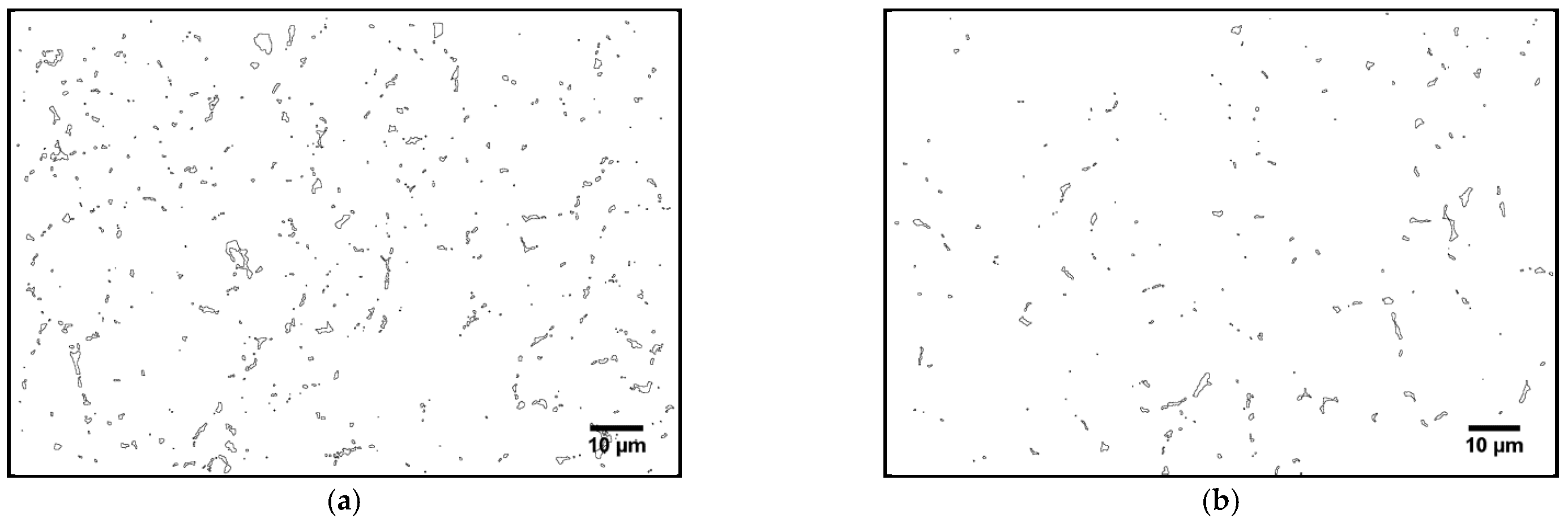
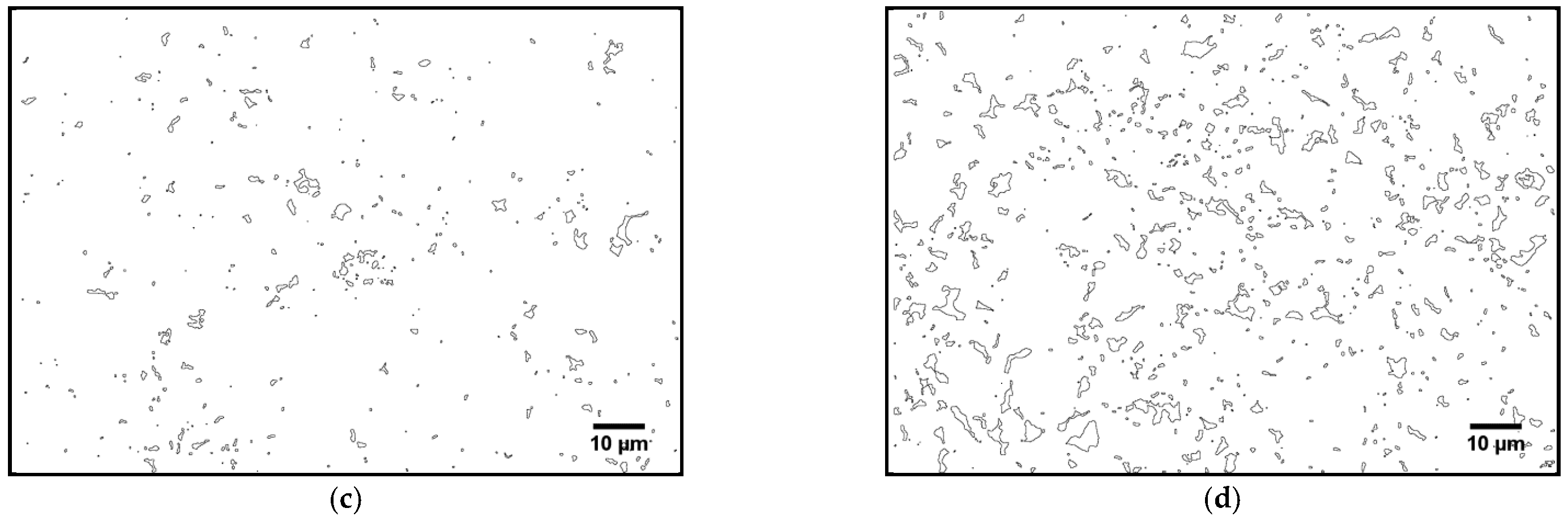
ImageJ2x software was used to extract pore information from the SEM images of the samples. The analysis process was as follows: first, the image threshold was optimized to maximize the contrast between the pores and the coating surface, ensuring accurate characterization of the pore distribution; second, the thresholded SEM images were converted into black-and-white binary images, where black pixels represent the pore areas on the coating surface; finally, particle analysis was performed on the binary images to extract pore features and generate pore contour maps [29]. Figure 4 shows the pore contour maps of the diamond coatings deposited at different reactive pressures, and the corresponding fractal dimensions and area fractions are listed in Table 5. The area fraction is defined as the ratio of the total pore area to the total coating surface area, which can be quantitatively calculated using ImageJ software. A lower area fraction indicates better coating continuity, higher coating quality, and a smoother surface.
It can be seen from Figure 4 that sample 2# (3 kPa) has the fewest surface pores, whereas either excessively low or high reactive pressure impairs the compactness of the diamond coating. Sample 4# (5 kPa) exhibits the largest number of surface pores, indicating that high reactive pressure has a more significant adverse effect on the continuity of the deposited diamond coating. The data in Table 5 show that the fractal dimensions of the four samples vary slightly, with sample 2# exhibiting the lowest fractal dimension (1.20402). This indicates that the diamond coating deposited at 3 kPa has the simplest surface morphology, the lowest area fraction (1.0%), and thus the highest coating quality and the smoothest surface. These results are consistent with the SEM morphological analysis in Section 3.1.

3.4. Analysis of Adhesive Strength of Films

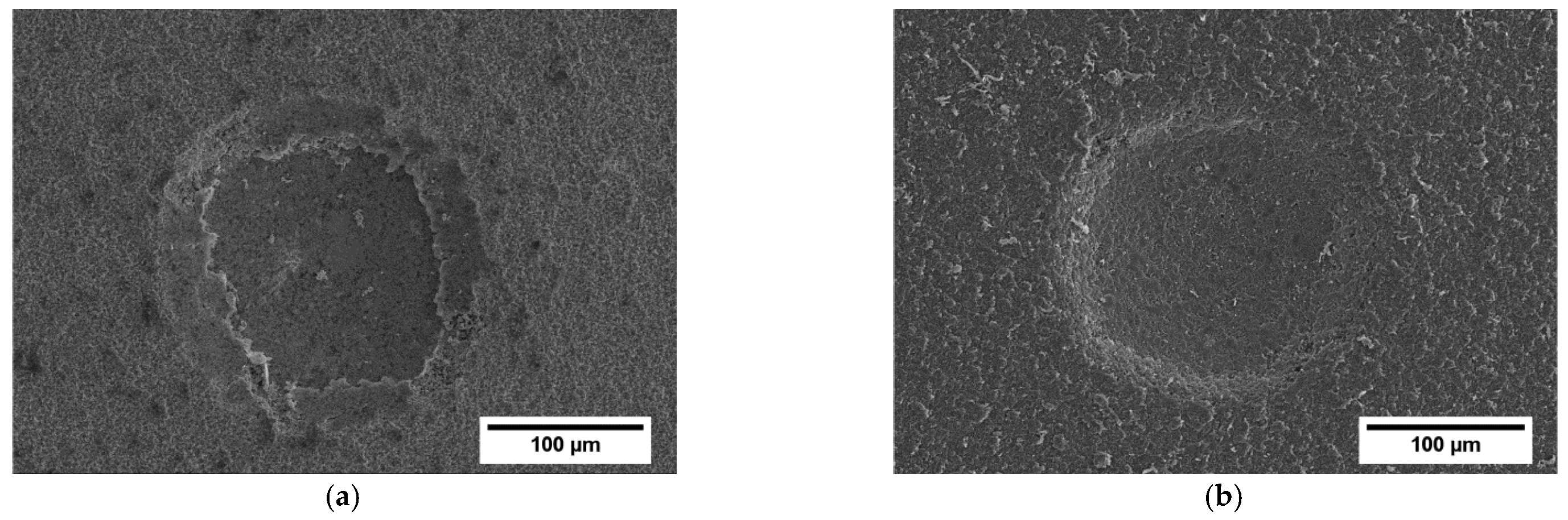
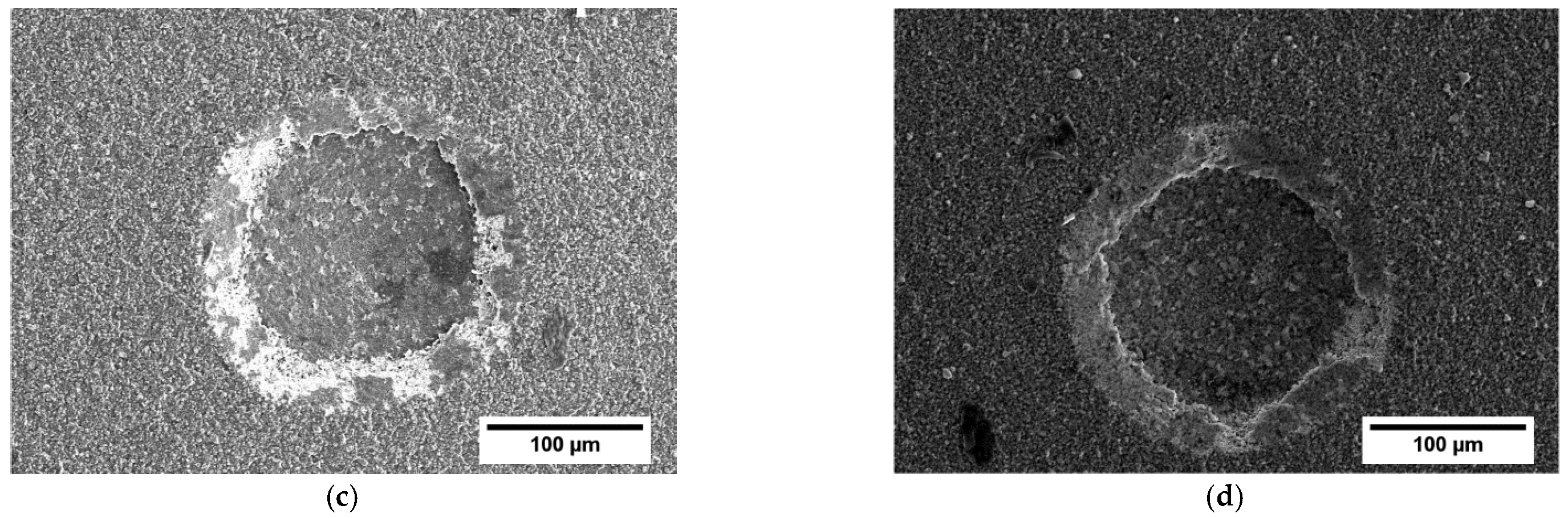
Figure 5 shows the indentation morphologies of samples 1#–4# after the hardness test. It is evident that the coating adhesion exhibits a trend of increasing first and then decreasing with rising reactive pressure, reaching its maximum at 3 kPa, as indicated by the most intact indentation morphology with no obvious cracks or delamination. In contrast, the coatings deposited at 4 kPa and 5 kPa show severe peeling at the indentation site, indicating low adhesive strength between the coating and the substrate, which makes them unsuitable for cutting tool fabrication. Although no peeling is observed for the coating deposited at 2 kPa, obvious cracking occurs around the indentation, also indicating poor coating adhesion. Accordingly, the CVD diamond coating tool material prepared at 2 kPa would exhibit inferior performance in practical applications.

3.5. Mechanical Properties of Tool Materials

Table 6 presents the hardness values of different tool materials. The CVD diamond coating on the PCD substrate exhibits a significantly higher hardness than the bare PCD substrate. This is because the decobaltization pretreatment of PCD substrates cannot completely remove cobalt, and the residual trace cobalt slightly reduces the hardness of the bare PCD substrate. The CVD diamond coating on the PCD substrate prepared in this study possesses high hardness and excellent wear resistance, demonstrating its great potential for practical industrial applications.

4. Conclusions

When using the HFCVD method (self-developed HFCVD system) to deposit diamond film on PCD substrate (acquired from a domestic company), the surface morphology, growth rate, grain size, fractal dimension and adhesive strength of the film change with the reactive pressure. When the reactive pressure is 3 kPa, the surface of the film is smoother and has good continuity. The growth rate of the coating reaches the maximum value of 5.366 μm/h, and the grain size reaches the minimum value of 15.8 nm. At this time, the area fraction of the film is the lowest and the morphology of the surface is the simplest. The adhesion between the film and the substrate is the highest, and the adhesive strength between the film and the substrate is the highest.

Author Contributions

Conceptualization, C.H. and F.D.; Methodology, C.H. and Z.G.; Formal analysis, C.H. and F.D.; Investigation, Z.G. and G.L.; Resources, Z.G. and G.L.; Data curation, G.L.; Writing—original draft, C.H.; Writing—review & editing, C.H.; Funding acquisition, Z.G. All authors have read and agreed to the published version of the manuscript.

Funding

This research was funded by the Science and Technology Department of Henan Province (No. 252102231003), Key Scientific Research Projects of Higher Education Institutions in Henan Province (No. 25B460007).

Institutional Review Board Statement

Not applicable .

Informed Consent Statement

Not applicable.

Data Availability Statement

Data are contained within the article.

Conflicts of Interest

The authors declare no conflict of interest.

References

  1. Akhtar, A.; Ruan, H. Review on thin film coatings for precision glass molding. Surf. Interfaces 2022, 30, 101903. [Google Scholar]
  2. Feng, L. Research progress of superhard materials. New Ind. 2016, 6, 28–52. [Google Scholar]
  3. Fan, S.; Kuang, T.; Xu, W.; Zhang, Y.; Su, Y.; Lin, S.; Wang, D.; Yang, H.; Zhou, K.; Dai, M.; et al. Effect of pretreatment strategy on the microstructure, mechanical properties and cutting performance of diamond coated hardmetal tools using HFCVD method. Int. J. Refract. Met. Hard Mater. 2021, 9, 105687. [Google Scholar]
  4. Wheeler, D.; Wood, R.; Harrison, D.; Smith, E. Application of diamond to enhance choke valve life in erosive duties. Wear 2006, 261, 1087−1094. [Google Scholar] [CrossRef]
  5. Deng, F.; Hao, C.; Guo, Z.; Wang, S.; Bo, X.; Zhao, Z. Effects of Carbonization of Filaments on CVD Diamond Thick Films Prepared by HFCVD Method. J. Superhard Mater. 2020, 42, 340–347. [Google Scholar] [CrossRef]
  6. An, K.; Liu, P.; Shao, S.; Li, H.; Yang, Z.; Zhang, S.; Li, S.; Huang, Y.; Liu, J.; Chen, L.; et al. Exploring three-point-bending fracture toughness of thick diamond films from different directions. Surf. Coat. Technol. 2022, 448, 12888. [Google Scholar] [CrossRef]
  7. Fan, S.; Lv, X.; Xu, H.; Wang, Q. The growth behavior and surface performance enhancement of diamond film deposited on polycrystalline diamond compact. Diam. Relat. Mater. 2021, 120, 108682. [Google Scholar] [CrossRef]
  8. Ding, Y.; Xu, L.; Wang, Q.; Liang, R.; Peng, Y.; Wang, X.; Dai, J.; Chen, M. Heat dissipation enhancement of high-power deep-ultraviolet LEDs through plated copper on thick film diamond substrates. IEEE Electron Device Lett. 2024, 45, 1634–1637. [Google Scholar] [CrossRef]
  9. Sedov, V.; Martyanov, A.; Khomich, A.; Savin, S.; Zavedeev, E.; Ralchenko, V. Deposition of diamond films on Si by microwave plasma CVD in varied CH4-H2 mixtures: Reverse nanocrystalline-to-microcrystalline structure transition at very high methane concentrations. Diam. Relat. Mater. 2020, 109, 108072. [Google Scholar]
  10. Li, W.; Xiang, B.; Qing, Z.; Zuo, D.; Meng, Z. Research on the Preparation of Carbon Nitride Coatings by Direct Current Plasma Jet Method. Tool Technol. 2013, 5. [Google Scholar] [CrossRef]
  11. Liang, X.; Wang, L.; Zhu, H.; Yang, D. Effect of pressure on nanocrystalline diamond films deposition by hot filament CVD technique from CH4/H2 gas mixture. Surf. Coat. Technol. 2007, 202, 261–267. [Google Scholar] [CrossRef]
  12. Liu, W.; Man, W.; Cao, Y. Research progress of high-speed diamond growth by HFCVD. Vac. Cryog. 2016, 22, 70–74+80. [Google Scholar]
  13. Jian, X.; Zhu, Z.; Lei, Q. New progress in the research on the bonding strength of hot wire CVD diamond coating film-substrate interface. Diam. Abras. Eng. 2016, 36, 11–16. [Google Scholar]
  14. Brannan, F.; May, P.W.; Halliwell, S.C.; Payne, L. Deposition of CVD diamond onto Zirconium. MRS Proc. 2014, 1734, 13–19. [Google Scholar] [CrossRef]
  15. Jian, X.; Huang, Z. Research on the process of depositing diamond coating on impregnated diamond cemented carbide substrate. Diam. Abras. Eng. 2018, 38, 28–31. [Google Scholar]
  16. Xu, C.; Xie, Y.; Deng, F.; Chen, L.; Lei, Q. Optimization of deposition process parameters for micro/nano CVD diamond coatings. J. Synth. Cryst. 2017, 46, 890–896. [Google Scholar]
  17. Hu, H.; Xu, F.; Zuo, D.; Zhao, Y. Research on the deposition process of diamond coating on cemented carbide substrate. Mach. Manuf. Autom. 2013, 42, 44–47. [Google Scholar]
  18. Zhao, Y. The Effect of Deposition Conditions of Diamond Coating on Cemented Carbide Substrate on Its Bonding Properties. Master’s Thesis, Nanjing University of Aeronautics and Astronautics, Nanjing, China, 2011. [Google Scholar]
  19. Ying, R. Preparation of Nano-Diamond Films by Hot-Wire Chemical Vapor Deposition Method. Master’s Thesis, Dalian University of Technology, Dailan, China, 2009. [Google Scholar]
  20. Qiao, Y.; Nie, S.; Liu, E.; Wang, X. An investigation into low-temperature HFCVD and derivative techniques for the enhancement of diamond-coated cemented carbide tool performance. Surf. Coat. Technol. 2024, 479, 130553. [Google Scholar] [CrossRef]
  21. Wang, X.; Wu, X.; Lu, K.; Ye, J. Influence of cemented carbide substrate microstructure on CVD diamond coating characteristics. Diam. Relat. Mater. 2025, 152, 111886. [Google Scholar] [CrossRef]
  22. Peng, J.; Zeng, J.; Xiao, Y.; Li, W. Novel conversion annealing pretreatment for improved deposition of diamond coatings onto WC-Co cemented carbide. J. Alloys Compd. 2022, 893, 162325. [Google Scholar] [CrossRef]
  23. Guo, Z.; Guo, B.; Zhang, J.; Wu, G.; Zhao, H.; Jia, J.; Meng, Q.; Zhao, Q. CVD diamond processing tools: A review. J. Adv. Res. 2024, 74, 333–358. [Google Scholar] [CrossRef]
  24. Kumar, V.; Sharma, R.; Roy, M. Superlubricant behaviour of HF-CVD grown nanocrystalline diamond film. Surf. Eng. 2025, 41, 502–510. [Google Scholar] [CrossRef]
  25. Liu, H.; Yan, Y.; Cui, J.; Geng, Y.; Sun, T.; Luo, X.; Zong, W. Recent advances in design and preparation of micro diamond cutting tools. Int. J. Extrem. Manuf. 2024, 6, 062008. [Google Scholar] [CrossRef]
  26. Yan, X.; Wei, J.; An, K.; Liu, J.; Chen, L.; Zheng, Y.; Zhang, X.; Li, C. High temperature surface graphitization of CVD diamond films and analysis of the kinetics mechanism. Diam. Relat. Mater. 2021, 120, 108647. [Google Scholar] [CrossRef]
  27. Salgueiredo, E.; Amaral, M.; Neto, M.; Fernandes, A.; Oliveira, F.; Silva, R. HFCVD diamond deposition parameters optimized by a Taguchi Matrix. Vacuum 2010, 85, 701–704. [Google Scholar] [CrossRef]
  28. Wang, X.-C.; Lin, Z.-C.; Shen, B.; Sun, F.H. Effects of deposition parameters on HFCVD diamond films growth on inner hole surfaces of WC–Co substrates. Trans. Nonferrous Met. Soc. China 2015, 25, 791–802. [Google Scholar] [CrossRef]
  29. Cen, H.; Fu-Ming, D.; Zheng-Hai, G.; Xiang, B.; Shuang, W.; Xin, Z. Fractal dimension of decobalt surface on PDC with different acid corrosion reagents at room temperature. Diam. Relat. Mater. 2020, 105, 107699. [Google Scholar] [CrossRef]
Figure 1. Workbench schematic diagram. 1. hot filament; 2. cooling tube; 3. PDC substrate; 4. workbench.
Coatings 16 00455 g001
Figure 2. SEM image of deposited diamond at different reactive pressures: (a) 2 kPa (1#); (b) 3 kPa (2#); (c) 4 kPa (3#); (d) 5 kPa (4#).
Coatings 16 00455 g002
Figure 3. XRD spectra of deposited diamond at different reactive pressures.
Coatings 16 00455 g003
Figure 4. Outline of holes surface at different reactive pressures: (a) 2 kPa (1#); (b) 3 kPa (2#); (c) 4 kPa (3#); (d) 5 kPa (4#).
Coatings 16 00455 g004aCoatings 16 00455 g004b
Figure 5. SEM images of diamond indentation at different reactive pressures: (a) 2 kPa (1#); (b) 3 kPa (2#); (c) 4 kPa (3#); (d) 5 kPa (4#).
Coatings 16 00455 g005aCoatings 16 00455 g005b
Table 1. Pretreatment parameters of PCD substrate.
Acid ReagentsConcentration RatioTemperature/°CTime/h
H2SO4VH2SO4(AR):VH2O2(30%) = 1:52548
Table 2. Parameters of filament carbonization and nucleation.
SubjectFilament CarbonizationNucleation
gas flow/(mL/min)10001000
carbon concentration/%42
temperature of filament/°C2100 ± 100-
distance between filament and substrate/mm-9
filament power/kW34
reactive pressure/kPa64
time/min12030
Table 3. Parameters of deposition.
SampleDistance Between Filament and Substrate/mmCarbon Concentration/%Reactive Pressure/kPa
1#922
2#923
3#924
4#925
Table 4. Diamond growth rate at different reactive pressures.
Reactive Pressure/kPaGrowth Rate/(μm·h−1)
22.359 ± 0.02
35.366 ± 0.03
43.114 ± 0.02
52.534 ± 0.01
Table 5. Fractal dimension and area fraction at different reactive pressures.
Reactive Pressure/kPaFractal DimensionArea Fraction/%
21.260741.9
31.204021.0
41.236581.5
51.247946.5
Table 6. Hardness of different tool materials.
Tool MaterialHardness/HV
PCD5231
CVD diamond coating based on PCD substrate7963
Disclaimer/Publisher’s Note: The statements, opinions and data contained in all publications are solely those of the individual author(s) and contributor(s) and not of MDPI and/or the editor(s). MDPI and/or the editor(s) disclaim responsibility for any injury to people or property resulting from any ideas, methods, instructions or products referred to in the content.