Article

Effect of Ta on Microstructure, Mechanical Properties, and Soft Magnetic Performance of Fe-Based Amorphous Coatings Prepared by High-Speed Laser Cladding

1
School of Mechanical and Electrical Engineering, Xinjiang Institute of Engineering, Urumqi 830023, China
2
Xinjiang Coal Mine Electromechanical Engineering Technology Research Center, Xinjiang Institute of Engineering, Urumqi 830023, China
3
School of Mechanical Engineering, Xinjiang University, Urumqi 830047, China
4
School of Electromechanical Engineering, Xinjiang Agricultural University, Urumqi 830052, China
*
Authors to whom correspondence should be addressed.
Coatings 2026, 16(4), 442; https://doi.org/10.3390/coatings16040442
Submission received: 2 March 2026 / Revised: 26 March 2026 / Accepted: 29 March 2026 / Published: 7 April 2026
(This article belongs to the Special Issue Laser Coatings and Surface Engineering)

Abstract

High-speed laser cladding (HLC) technology can provide high cooling rates and low dilution rates for the preparation of metastable Fe-based amorphous phases. In this work, the effects of Ta content on the microstructure, mechanical properties, and soft magnetic performance of Fe-based amorphous alloys were systematically investigated. The results indicated that Ta remained uniformly dispersed within the FeSiB amorphous powder, and no new phases were formed after mechanical ball milling. The higher mixing enthalpy of Ta and its atomic radius difference from other elements (such as Fe, Si, B) were beneficial in improving glass-forming ability (GFA), and with an increase in Ta element content from 0% to 2%, 4% and 6%, the amorphous phase content was 48.6%, 51.5%, 60.4% and 54.8%, respectively. The average microhardness of the coating with a Ta content of 4% was 1310 HV0.2, which was 50HV0.2 higher than before; in addition, the wear rate reduced from 2.21 × 10⁻⁴ mg·N−1·m−1 to 2.06 × 10⁻⁴ mg·N−1·m−1. Also, corrosion tests showed that the coating with a Ta content of 4% displayed superior corrosion resistance compared to that before the Ta addition. However, because the element Ta could alter the local electronic environment and enhance the local magnetic anisotropy of FeSiB, the saturation magnetic flux density (Ms) decreased from 1.64 T to 1.56 T, and the coercivity (Hc) increased from 0.9 A/m to 1.3 A/m, which caused degradation of the soft magnetic properties.

1. Introduction

In virtue of their excellent wear resistance, corrosion resistance and soft magnetic properties, Fe-based amorphous alloys have been widely used in mining, marine, power supply, and electronics applications [1,2]. Nevertheless, conventional preparation methods such as copper mold casting and single-roller melt spinning can only produce low-dimensional Fe-based amorphous alloys (e.g., fine wires, thin ribbons, powders), which have a significantly limited performance in practical applications [3,4]. HLC offers advantages such as a low dilution rate, a small heat-affected zone, and metallurgical bonding with the substrate. Meanwhile, the solidification cooling rate of the molten pool can exceed 104 K/s, creating favorable conditions for the formation of metastable Fe-based amorphous coatings. In this way, the limitations of Fe-based amorphous alloys in terms of their fabrication dimensions are effectively addressed. Additionally, the scanning speed in HLC can reach 15–150 m/min by optimization of the position of coupling of the laser beam and the alloy powder, thereby overcoming the low processing efficiency of traditional laser cladding. Therefore, HLC is a highly promising technology for coating preparation [5,6,7,8].
Based on the confusion principle [9] and the three rules of thumb [10,11], a variety of multi-component Fe-based amorphous alloys have been proposed. Examples are Fe84Nb7B9 [12], Fe40Ni40P14B6 [13], Fe48Cr15Mo14Y2C15B [14], and Fe74Mo4P10C7.5B2.5Si2 [15]. It has been concluded that the GFA of amorphous alloys can be effectively enhanced by introducing specific elements. Consequently, great efforts have been devoted to the elemental regulation of Fe-based amorphous alloys. For instance, Carvalho et al. [16] investigated the effects of Co on the morphology of Fe-based amorphous alloy coatings. The results showed that the presence of Co led to a decreased dilution rate of the coatings, with sub-micrometer penetration depths into the substrate. This can be attributed to the fact that Co can increase the viscosity and reduce the thermal conductivity of Fe-based amorphous alloys. Wang et al. [17] explored the influence of Si content on the performance of Fe-Co-Ni-B-Si-Nb amorphous alloys. The results indicated that at a Si content of 2%, grain growth in the coating could be effectively suppressed, causing the fracture strength and microhardness to increase to 2800 MPa and 930 HV, respectively. Also, the thermal stability of the alloy coating was improved. Ma et al. [18] investigated the substitution of Fe with Al in Fe-Cr-Mo-Er-C-B amorphous alloys and found that as the Al content increased from 2% to 5%, the critical forming diameter of Fe-based amorphous alloys decreased from 8 to 6 mm. At an Al content of 7%, crystalline phases such as Fe3C and (Cr, Fe)7C3 were present. However, the presence of Al led to slightly increased fracture strength (from 3.4 to 3.7 GPa). Zhang et al. [19] explored the influences of Nb on the crystallization of Fe-Ni-B-Si amorphous alloys. The results demonstrated that the presence of Nb led to increased negative mixing enthalpy and improved formability of the amorphous alloy. Single-stage crystallization was observed when the Nb content was <4%, while two-stage crystallization was observed when the Nb content was ≥4%. Shi et al. [20] explored the substitution of P with B in Fe-P-C amorphous alloys and found that both the soft magnetic and mechanical properties of the Fe-based amorphous alloys were significantly improved. When the B content was 2%, the maximum critical glass-forming diameter was 2 mm, which was 0.5 mm higher than that in the absence of B. Shen et al. [21] reported that the critical forming size of Fe-P-C-B-Si amorphous alloys increased from 1 to 5 mm after introducing 2.0 at.% Mo. At a Mo content of 1.5 at.%, the fracture strength of the amorphous alloy was maximized (3.1 GPa). Additionally, the addition of Mo led to enhanced soft magnetic properties of the amorphous alloy. Particularly, Hc and Bs of Fe-based amorphous alloys were 1.45 A/m and 1.41 T, respectively, at a Mo content of 0.5 at.%. Li et al. [22] investigated the effects of Tb content on the performance of Fe-B-Si-Nb amorphous alloys. The results showed that at a Tb content of 4%, the glass transition temperature (Tg) of these alloys increased from 46 to 100 K. At Tb contents of 4% and 5%, the critical forming size of these alloys was 3.5 mm. Nevertheless, Hc of the Fe-based amorphous alloys increased from 2.5 to 75.8 A/m, and Bs of the Fe-based amorphous alloys decreased from 1.14 to 0.52 T as the Tb content increased from 1% to 7%. Wang et al. [23] added trace amounts of Nb to Fe-Cr-Mo-Co-C-B amorphous alloy and prepared Fe-based amorphous coatings using laser cladding. The results showed that Nb led to improved bonding strength between coating and substrate, while excessive Nb led to the formation of Nb-Mo phases, resulting in macro-segregation and reduced coating plasticity. Additionally, the hardness and corrosion resistance of the coating were optimized at a Nb content of 4%. Zhang et al. [24] explored the substitution of Mo with W in Fe-Cr-Mo-C-B-Y amorphous alloys and found that as the W content increased from 0% to 18%, the GFA gradually decreased, and the critical forming diameter decreased from 5 to 1 mm. Nevertheless, W favored the formation of amorphous structures through M23C6 clusters, so that Tg and Tx of the amorphous alloy increased to 923 and 972 K, respectively. Also, W facilitated the formation of WO3 and MoO2 in passive films, thereby enhancing the corrosion resistance of Fe-based amorphous alloys. Song et al. [25] prepared Fe-based amorphous coatings containing 2% high-entropy alloy using laser cladding. The results indicated that the presence of a high-entropy alloy promoted the formation of a Fe3Ni soft phase, thus reducing the size and quantity of cracks in the Fe-based amorphous coatings. Furthermore, the presence of a high-entropy alloy led to increased (14.14%) mixing entropy of the components and decreased (45.8%) wear volume, thereby effectively improving the wear resistance of the coatings. Jin et al. [26] added 2 wt% carbon nanotubes (CNTs) to Fe-based amorphous powders and prepared coatings by laser cladding. The result showed that the main phase compositions of Fe-based amorphous/CNTs coatings are CrFe phase, α-Fe phase, carbide hard phase (M3C2), and C phase. Meanwhile, CNTs could reduce crack and pore dimensions, and also improve corrosion resistance of the coating by changing the direction of Cl corrosion.
In summary, elemental regulation can effectively enhance the GFA of Fe-based amorphous alloys, thereby improving their microstructural and mechanical properties. Owing to its large atomic size effect, grain boundary segregation behavior, and passivation characteristics, the Ta element offers significant advantages in stabilizing the amorphous structure, refining the microstructure, and enhancing corrosion resistance. Furthermore, it plays an irreplaceable role in biocompatibility and chemical catalysis applications; however, the influence of Ta on the mechanical properties of FeSiB amorphous coatings remains unclear. Therefore, in this study, Fe-based amorphous coatings with Ta contents of 2%, 4% and 6% were prepared using HLC. The mechanism by which Ta affects the microstructural and mechanical properties of Fe-based amorphous alloys was investigated based on analyses of their mechanical and soft magnetic properties.

2. Materials and Methods

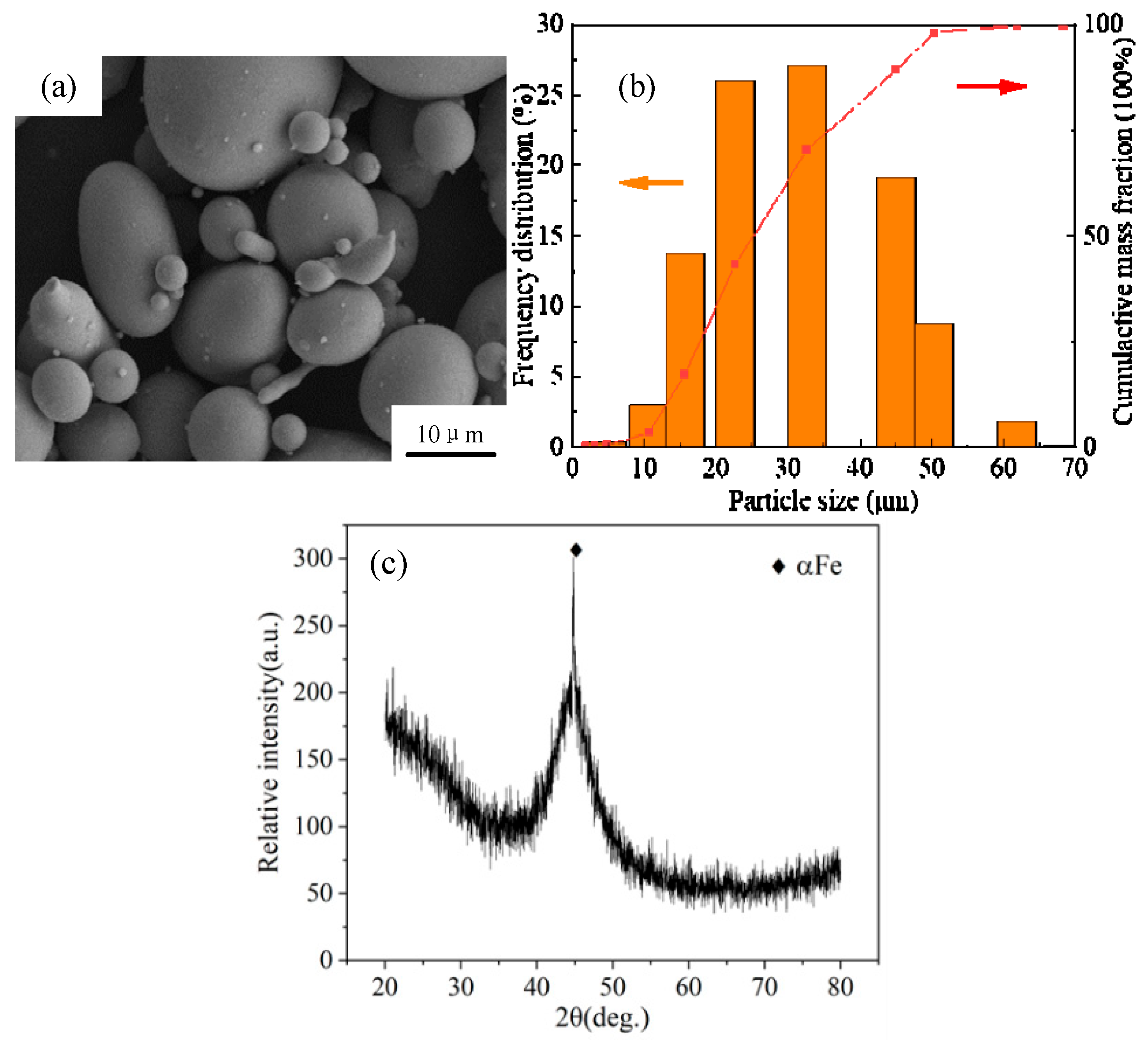
The 45 steel was selected as the substrate material and cut into standard specimens with the dimensions of 100 mm × 80 mm × 10 mm, and the chemical composition is shown in Table 1. The SEM image of FeSiB amorphous powders is shown in Figure 1a, which was purchased from Chengdu Ketailong Alloy Co. (Chengdu, China). The particle size distribution of the powders ranging from 15 to 53 μm was shown in Figure 1b, and their chemical composition was listed in Table 2. The X-ray diffraction (XRD, TD-3500X, Dandong, China) patterns of FeSiB powders are shown in Figure 1c. It could be found that the diffuse scattering peaks correspond to the amorphous structure and appear in the range of 2θ = 30–45°, and no sharp diffraction peaks correspond to the crystal phases, which indicates that all alloys are in a fully amorphous state. The mass fractions of 0, 2, 4 and 6% Ta powder with the purity of 99.99% was added to the FeSiB amorphous powder before the experiment, respectively, then the mixed powders were stirred evenly using the planetary ball miller (QM-QX4, Shanghai, China), with the speed of 350 r/min, ball diameter of 5 mm, time of 90 min, and temperature of 25 °C. In the experiment, the laser cladding process parameters are shown in Table 3.
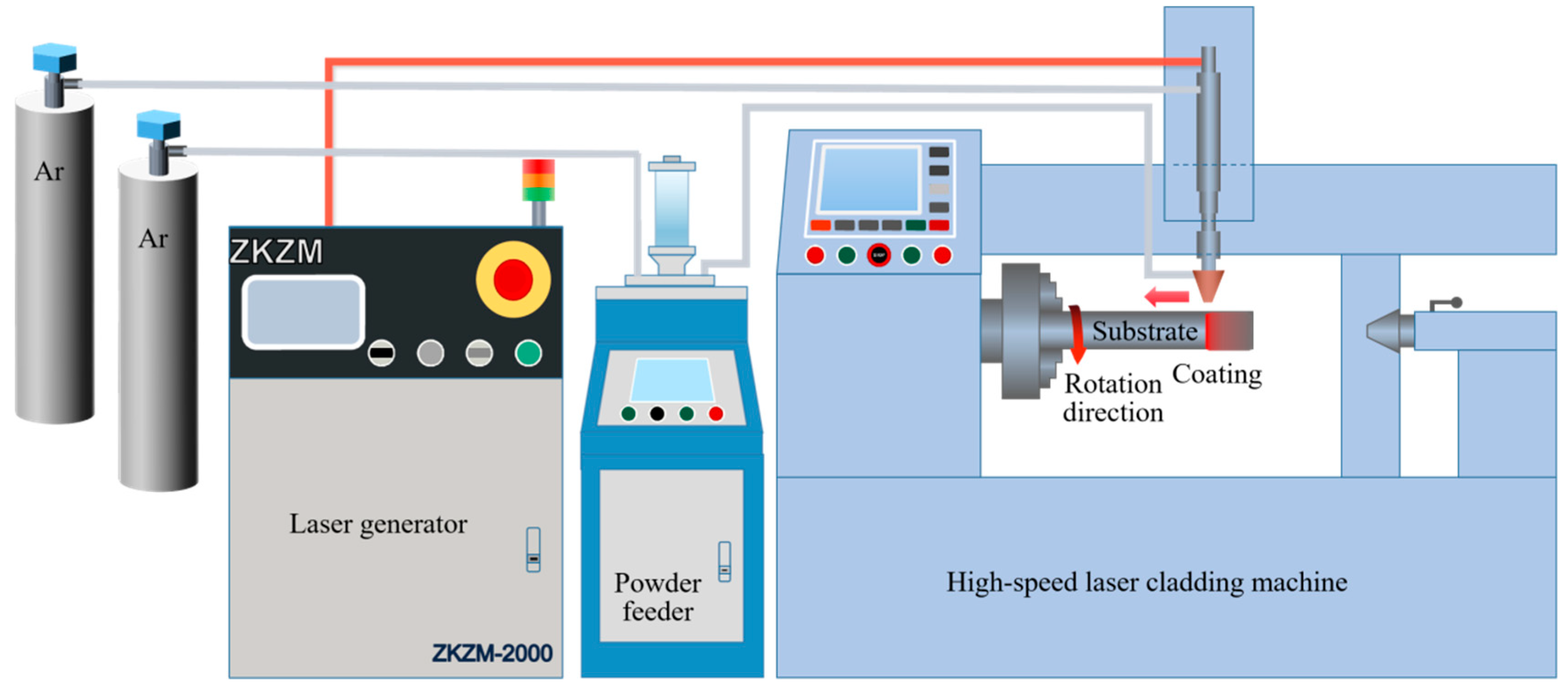
The high-speed laser cladding system included a fiber laser (ZKZM-2000, Xi’an, China), a four-axis machine (ZKZM6012, Xi’an, China), a powder feeder (DPSF-2, Suzhou, China), and a chiller (CWFL-1500, Guangzhou, China). The Ar gas was employed to transport the powder to the laser head and protect the molten pool from oxidation. The parts rotated rapidly with the chuck, and the laser head moved linearly while HLC was working. The schematic diagram of HLC is shown in Figure 2.
After laser cladding, the sample was cut into test blocks with a length of 8 mm × 8 mm × 8 mm by wire cutting technology, and then the sample was polished with abrasive paper numbered 400, 600, 800, 1000 and 1500 by a metal sample polishing machine. Finally, the sample was polished with diamond spray polishing agent with particle size of 2.5 μm, and etched with Aqua regia (a mixture of 75 vol% HCl and 25 vol% HNO3) for 5 s. The microstructure and morphology of the coating were analyzed using a transmission electron microscope (TEM, JEM-F200, Tokyo Metropolis, Japan) and a scanning electron microscope (SEM, LEO1430VP, Oberkochen, Germany) equipped with energy dispersive spectroscopy (EDS). The phase of coatings was analyzed by XRD at a scanning of 0.5°/s, ranging from 20° to 90°. The magnetic properties of Fe-based amorphous coatings were analyzed by a vibrating sample magnetometer (VSM, DSMC-8200SD, Loudi, China).
To obtain the microhardness of the coating, a Vickers hardness tester was used at a load of 200 g for 15 s (HV-1000, Ningbo, China). The wear resistance was studied through wear tester (M-2000, Jinan, China) with a speed of 180 r/min for 60 min, and the quenched 45 steel was selected as friction pair with the size of 31 mm × 7 mm × 8 mm; afterwards, the specimens were weighed using a balance (PR124ZH, New Jersey, USA) with an accuracy of 0.001 g, and the mass change was recorded every 30 min. In addition, the corrosion resistance of the overlay coating was tested using an electrochemical workstation (CHI660E, Shanghai, China) in the 3.5 wt.% NaCl solution, and the scanning velocity of 2 mV/s and the scanning range from −1.2 V to +1.2 V were employed. Finally, the self-corrosion potential (Ecorr) and the self-corrosion current density (Icorr) were extracted through the Tafel extrapolation method by electrochemical software (CorrView3.10). X-ray photoelectron spectroscopy (XPS; ESCALAB 250Xi, Wisconsin, USA) with an Al Kα X-ray source (hν = 1486.6 eV) was used to analyze the composition of the passive film formed on the surface of the samples, and the resulting spectra were calibrated using the binding energy of C1s (284.8 eV). An electrochemical impedance spectroscopy (EIS) test was performed over a broad frequency range from 100 kHz to 0.01 Hz at an amplitude of 5 mV using the software Zview, 3.10 (note that the samples were immersed in NaCl solution for 30 min prior to the tests).

3. Results and Discussion

3.1. Phase Compositions of Fe-Based Amorphous Coatings

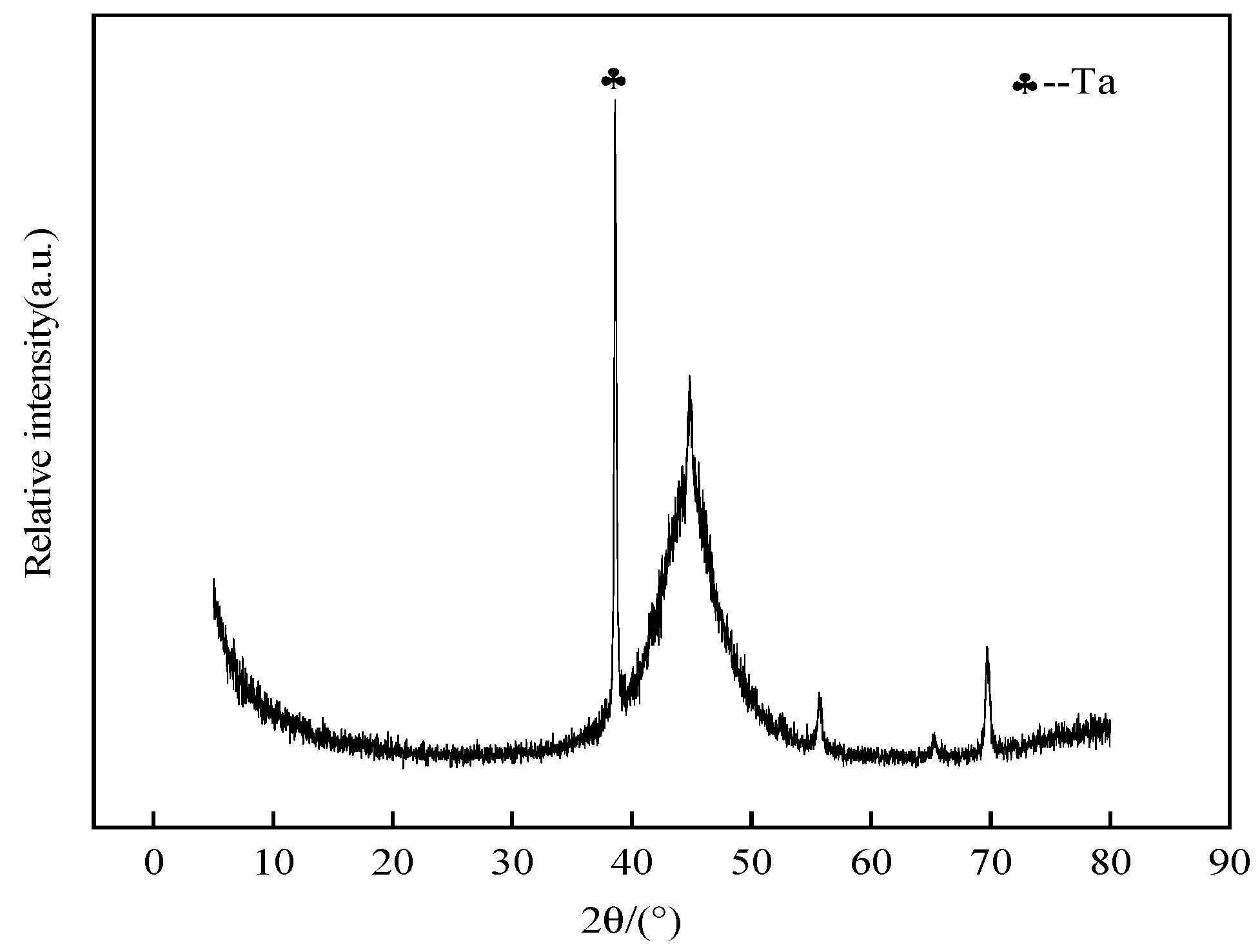
Figure 3 shows the XRD patterns of Fe-based amorphous powders with the mass fractions of 6%Ta powder. The amorphous halo between 2θ = 40° and 50° was found along with the sharp diffraction peaks of added Ta elements, which indicated that the Ta element was uniformly distributed in the FeSiB amorphous powder without the formation of any new phases after mechanical ball milling.
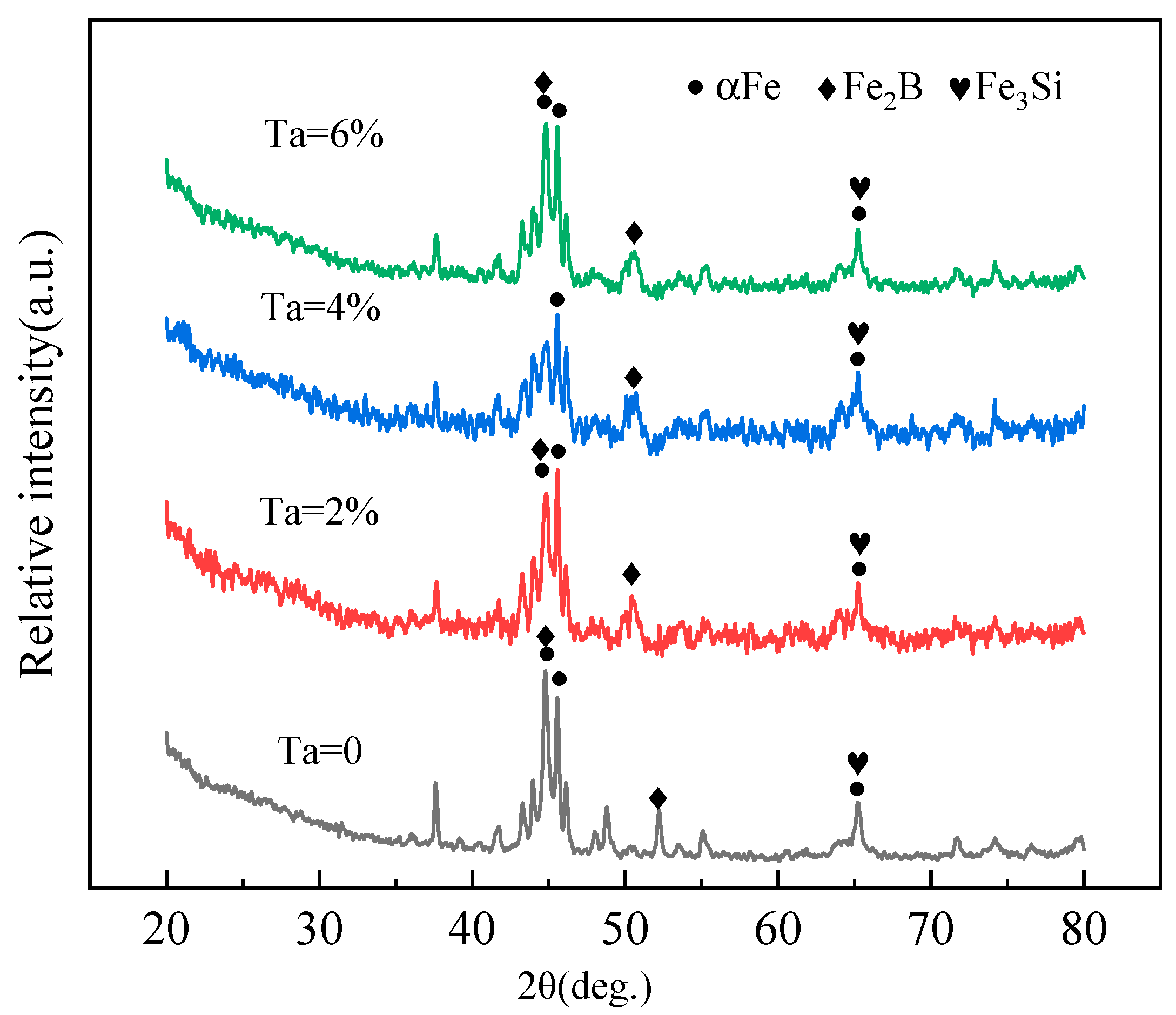
Figure 4 shows the XRD patterns of the coatings formed by Fe-based amorphous powders with different Ta element mass fractions (0%, 2%, 4%, 6%) through the experimental process parameters in Table 3. The results showed that all coatings exhibited sharp diffraction peaks, which indicated that the crystallization of amorphous phases could not be eliminated by the Ta element completely, and the microstructure of crystallization was α-Fe, Fe2B and Fe3Si. The Verdon method [27] was used to calculate the amorphous phase content in the coating by integrating the diffraction peak area, and the detailed procedure was as follows: The amorphous diffuse scattering halo and sharp crystalline diffraction peaks in the XRD pattern were separated, fitted, and integrated by calculating the fraction of the amorphous peak area, and thereby the relative content of the amorphous phase in the coating was obtained. The amorphous phase content in the Fe-based amorphous coating without the Ta element was 48.6%. However, when the Ta element mass content reached 2% in the Fe-based amorphous powders, the XRD half-width of the coatings was wider than before and the amorphous phase content increased to 51.5%; also, with the Ta element mass content adding to 4%, the sharp diffraction peak intensity of crystals was decreasing and the amorphous phase content in the coatings reached 60.4%. While the XRD diffraction peak intensity near 45° was increasing when the Ta element content was 6%, which indicated that the amorphous phase content in the coating was reducing with the Ta element addition, the amorphous phase content decreased to 54.8%.
Therefore, the inhibitory effect on coating crystallization is optimal at a Ta content of 4%. On the one hand, the larger atomic radius of Ta (1.46Å, 1Å = 100 pm) created a significant difference compared to the atomic radii in the FeSiB amorphous powder (RFe = 1.24Å, RB = 0.84Å, RSi = 1.11Å), causing the effect of lattice distortion to increase the difficulty of long-range ordered atomic arrangement, and inhibiting grain nucleation and growth during solidification process; on the other hand, the addition of Ta element increased the types of constituent elements in amorphous alloys; and compared with Fe, Si and B elements, Ta had large negative enthalpy in Table 4, which was beneficial for improving the amorphous forming ability based on three rules of thumb [10,11].
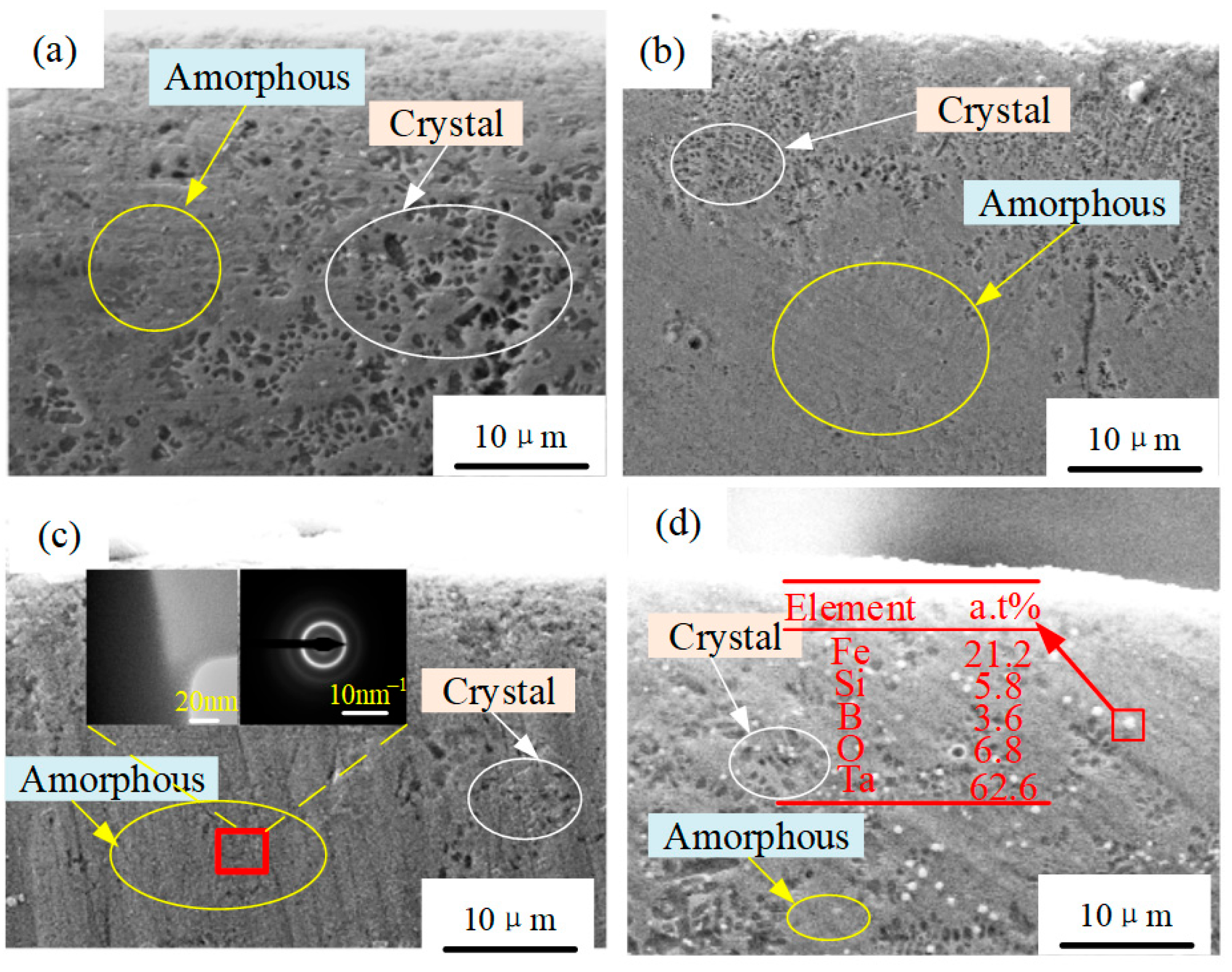
Figure 5 shows the microstructure of Fe-based amorphous coatings with different Ta element mass contents (0%, 2%, 4%, 6%). It was found that all microstructures of coating layers had a small amount of fine-grained structure and a large area of unorganized feature region. Further microstructure details were obtained via TEM, and the dispersed phase structures were observed in the coating. The selected area electron diffraction (SAED) pattern showed that a Fe-based amorphous microstructure was formed. These results were consistent with the XRD results in Figure 4. In addition, white spherical particles were distributed in the coatings with the Ta element, adding to 6% in Figure 5d, and the EDS point result showed that the particle was the Ta element. Because Ta has a high melting point of about 3000 °C, with more additions of Ta, it is difficult to melt Ta elements completely during laser cladding processing; therefore, the Ta element was solidified in the coating in a granular form.
Compered with FeSiB amorphous coating without Ta element (Figure 5a), with the addition of Ta element to 2% and 4% (Figure 5b,c), the proportion of amorphous phase structure was increasing, the grain size of the crystallized phase was decreasing and the crystallization was suppressed at the top of the coating, which indicated that Ta element had an important effect on grain refinement and crystallization inhibition in Fe-based amorphous coating. It was mainly because the solid–liquid ratio and surface energy were changed, and the surface of the crystal nucleus was diffused by adding Ta element during the solidification process of the melt pool, which could reduce the diffusion ability of atoms, and suppressed the formation and growth of crystal nuclei effectively. At the same time, the Ta element could combine with the oxygen element, and the coating’s oxidation resistance and amorphous forming ability were enhanced, which promoted the generation of the amorphous phase. However, when the Ta content increased to 6% (Figure 5d), the inhibitory effect on grain growth decreased because of the excessive addition of Ta, which caused the segregation and enrichment, which reduced its optimizing effect, and promoted the nucleation and growth of crystalline structures as well.
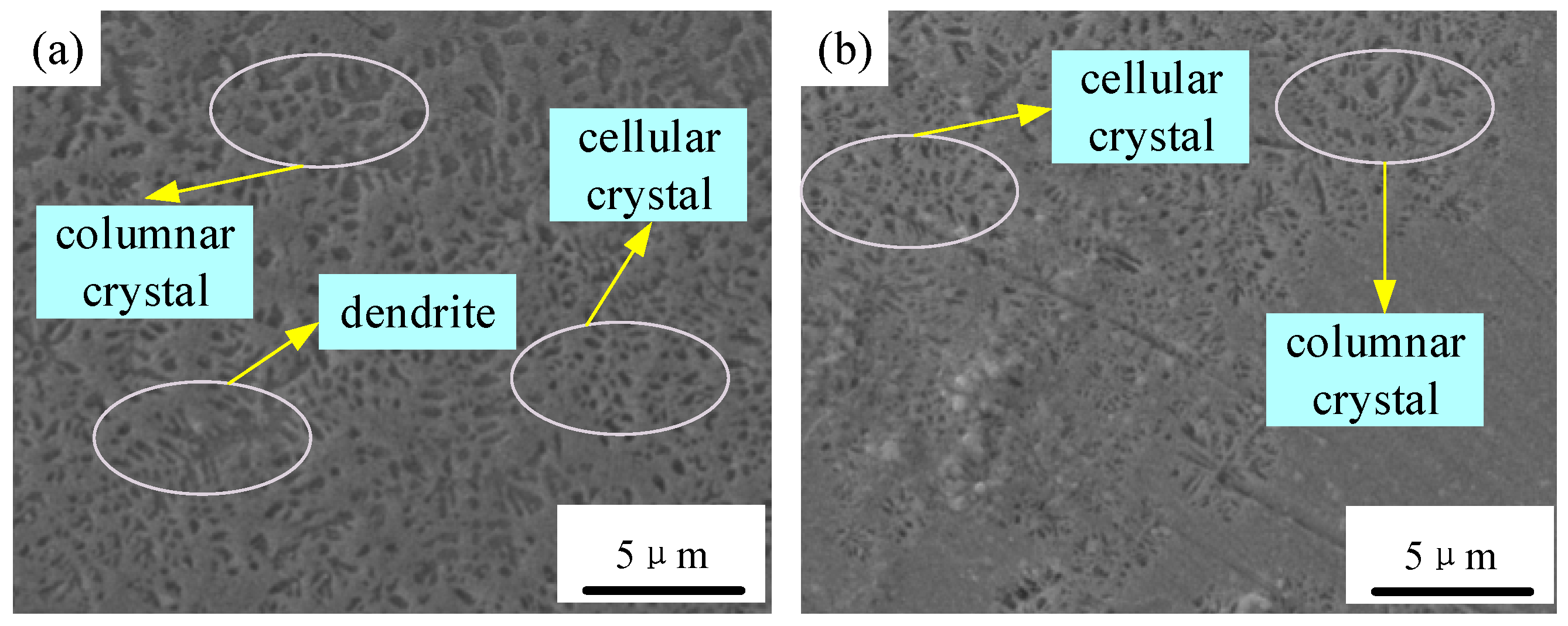
In addition, the crystallized microstructures of the coatings with 0% and 4% Ta were analyzed, and the results were presented in Figure 6. There was a mount of dendrites, columnar crystals, and cellular crystals in the coating without Ta addition, while with the Ta addition, the content of 4%, the microstructure was composed of columnar crystals and cellular crystals. Also, in Figure 6a, it was found that the grain size distribution was 0.5–2.2 μm in the coating without Ta, while it was 0.2–1.6 μm in the coating with 4% Ta in Figure 6b, showing a decreasing trend. The result indicated that the addition of Ta was beneficial for suppressing grain growth.
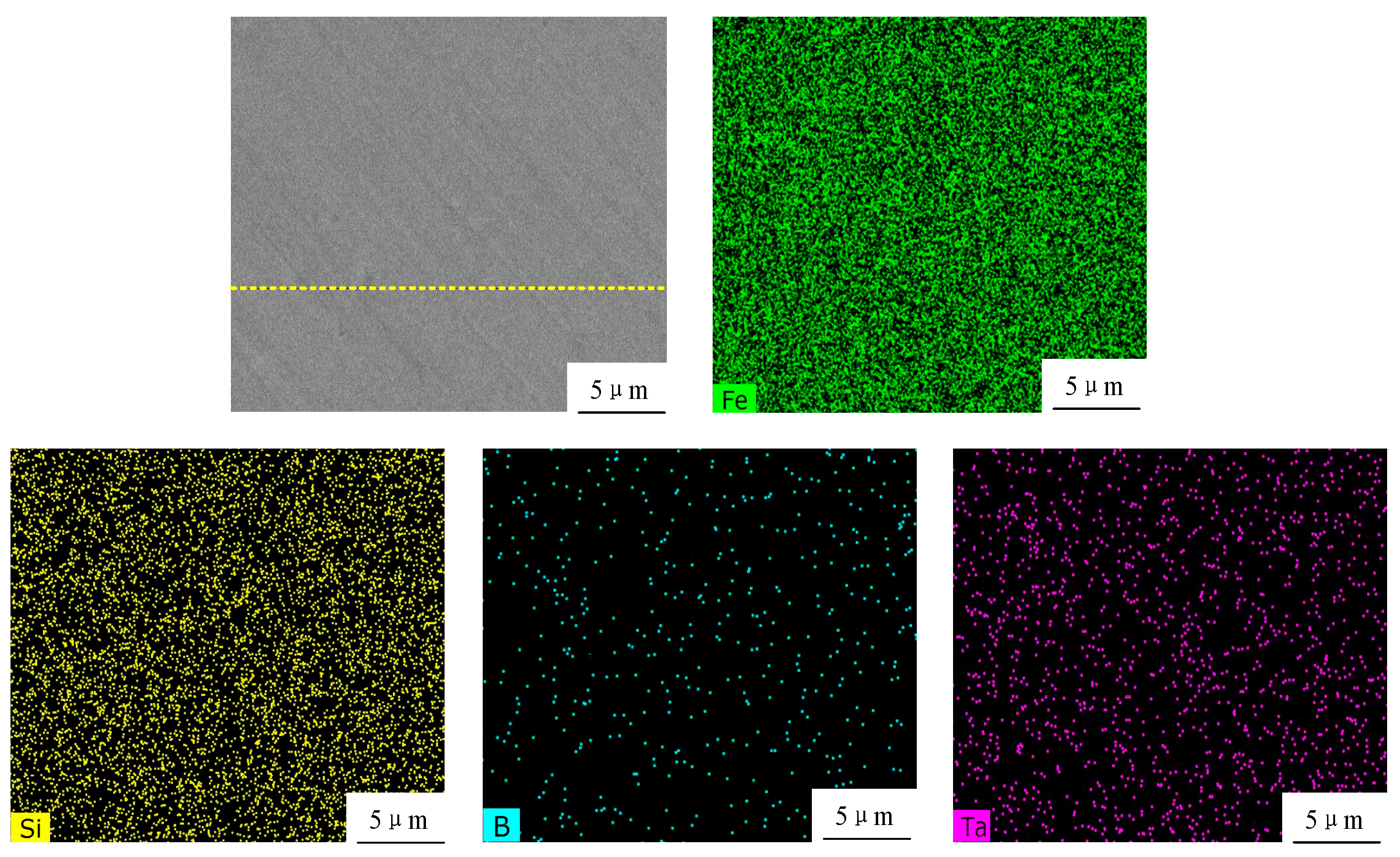
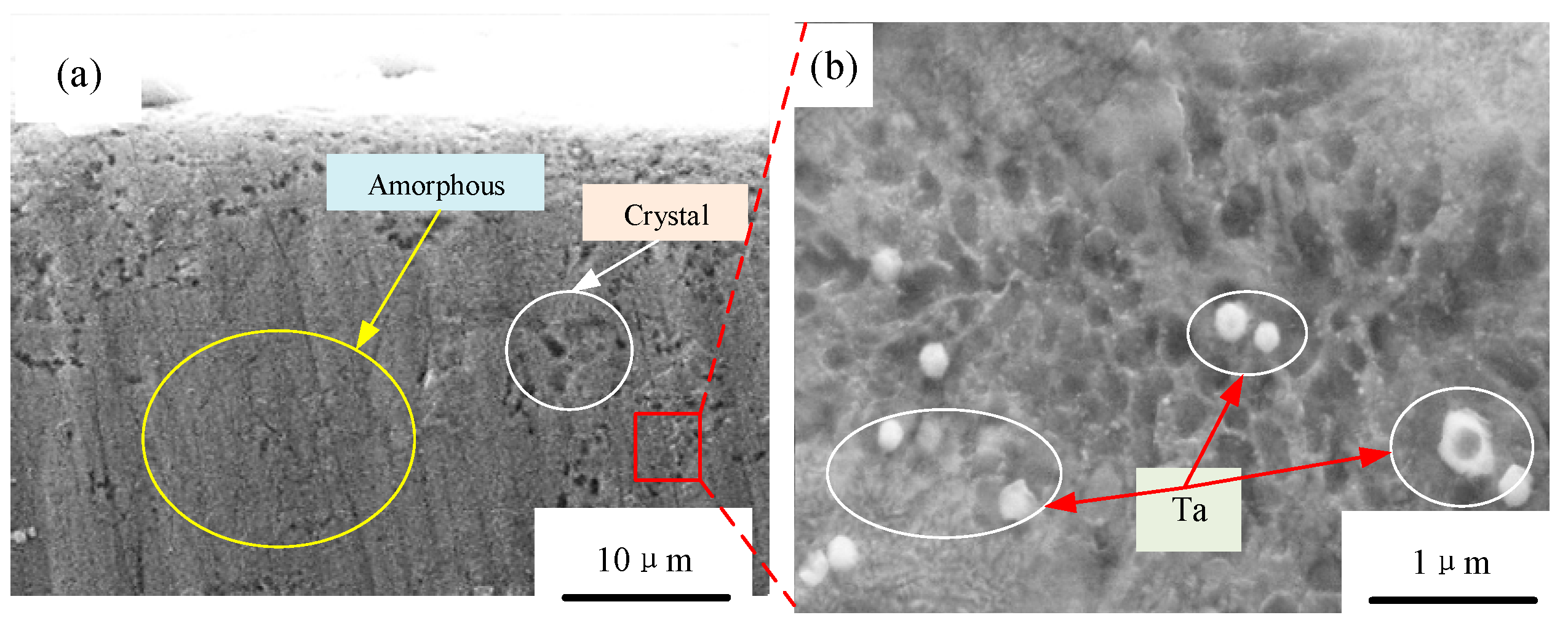
Figure 7 shows the distribution of elements in the middle of the Fe-based amorphous coating with the addition of the Ta element to 4% by EDS scanning. It was found that the Fe element had the highest proportion in the coating, followed by Si and B elements. The distribution of each element showed no segregation phenomenon, and the nominal amorphous composition was well preserved. The Ta element is distributed evenly in the region without agglomeration behavior, which could suppress the ordered arrangement of atoms and the growth of crystalline structure effectively; therefore, the formability of the amorphous phase was improved, and a large area of amorphous phase was formed in the coating. In addition, to reveal the distribution characteristics of Ta in the crystalline regions, the crystalline region in Figure 8a was magnified, and the result is shown in Figure 8b. It was clearly observed that Ta existed as granular particles in the crystalline phase of the coating [28,29,30].

3.2. Corrosion Resistance of the Coatings

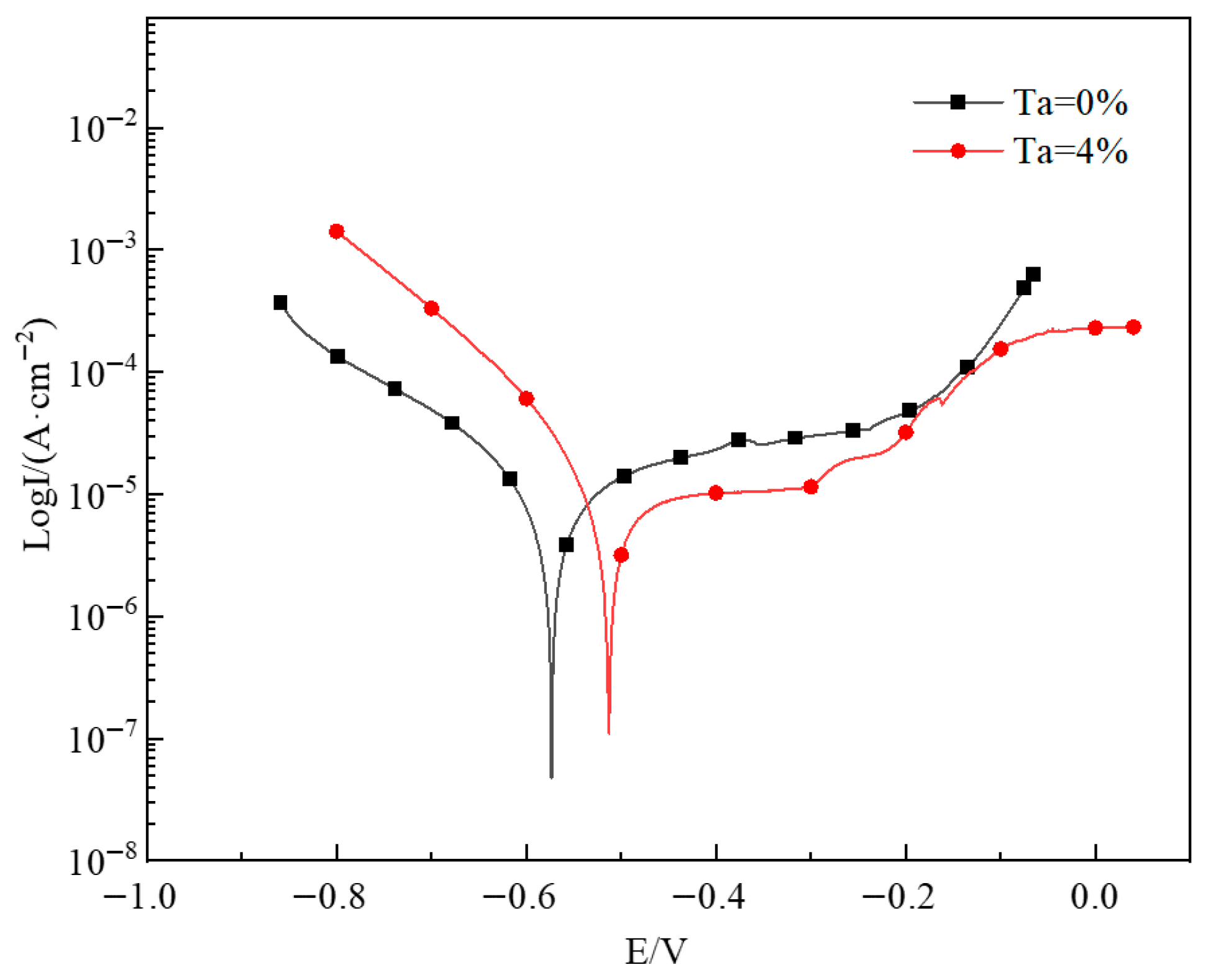
Potentiodynamic polarization measurements in a 3.5% NaCl solution were carried out to analyze the effect of Ta on the corrosion resistance of FeSiB coatings. Figure 9 displayed the result of the Tafel curves of coatings with Ta element content of 0% and 4%. It can be seen that the two kinds of coatings enter a wider passive region after spontaneous passivation, and, with the increase in applied potential, the passivation film breaks and local pitting occurs. The results of Ecorr and Icorr were shown in Table 5. The Ecorr of Fe-based amorphous coating with the addition of Ta element to 4% is −0.51 V, which is 0.07 V higher than before, and the Icoor is 6.98 μA∙cm−2, which is 1.49 μA∙cm−2 lower than before. In general, the lower the Icoor denotes, the lower the corrosion rate is, and the higher the Ecorr represents, the lower the corrosion thermodynamic tendency is.
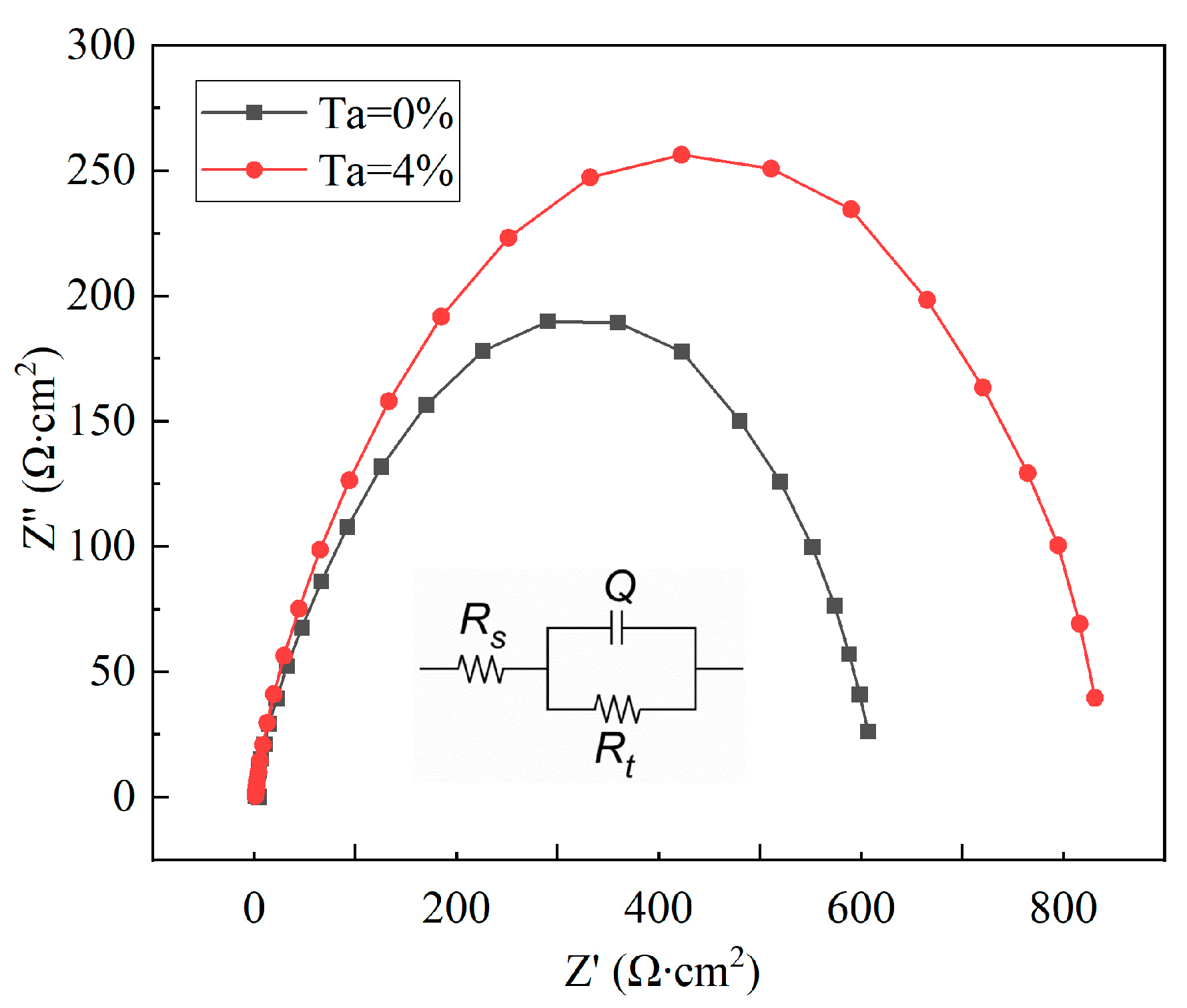
To further evaluate the stability and compactness of the passive film, EIS measurements were conducted, and the result was presented in Figure 10. Both coatings exhibit a single semi-circle arc centered off the real axis, indicating non-ideal, rough surfaces with capacitive behavior. A larger semi-circle arc corresponds to better corrosion resistance of the formed passive film. Accordingly, the coating with 4% Ta shows a higher charge transfer resistance than one without Ta. Also, EIS data were analyzed using an equivalent circuit model, where Rs is the solution resistance, Rt is the transfer resistance, and Q is the capacitance, and the values of Rs and Rt were listed in Table 5. The dispersion coefficient n of the samples is also listed in Table 5; the value of n is very close to 1 for the two samples, indicating that the surface oxide layer can be regarded as an ideal capacitor. A high Rt implies that the passive film can effectively prevent the corrosive solution from seeping into the alloy matrix. In this work, the coating with Ta content 4% has a higher Rt than that of the coating without Ta, indicating its superior corrosion resistance. These EIS results are consistent with those of the potentiodynamic polarization tests. Thus, the result proved that the Ta element improved the corrosion resistance of the Fe-based amorphous coating effectively.
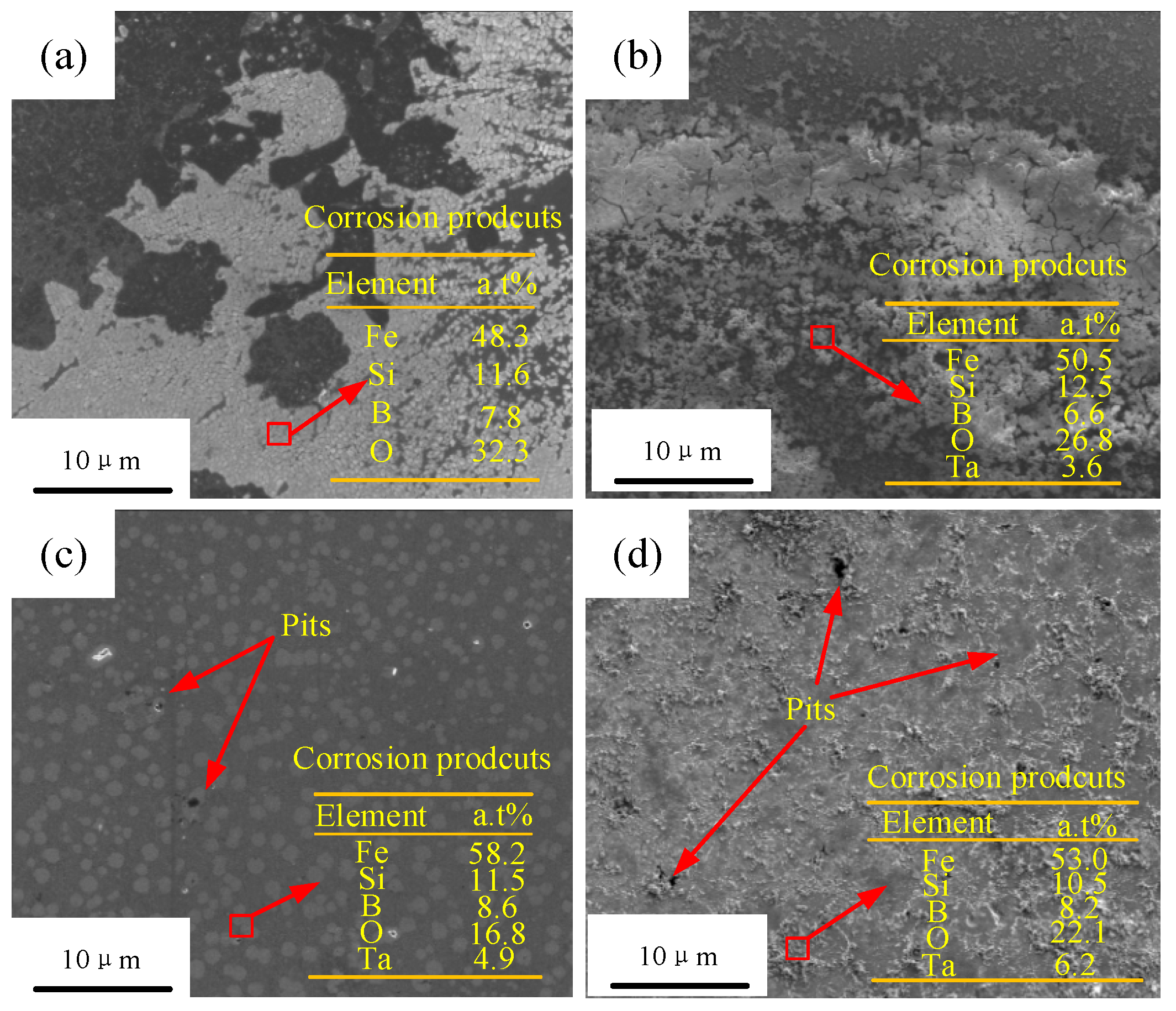
FeSiB coatings with Ta contents of 0%, 2%, 4%, and 6% were immersed in 3.5 wt% NaCl solution for 168 h, and their surface SEM images are presented in Figure 11. In Figure 11a, a large area of corrosion products was observed. EDS analysis revealed that high O content (atomic%: 32.3) in these products, indicating substantial oxide formation and severe corrosion of the coating. Compared with Figure 11a, Figure 11b exhibited fewer corrosion products, and the reduced O content (atomic%: 26.8) implied enhanced corrosion resistance of the coating. Figure 11c showed low O content (atomic%: 16.8), confirming limited oxide formation and high corrosion resistance. Figure 11d displayed more corrosion products than Figure 11c, along with an elevated O content (atomic%: 22.1), indicating a gradual deterioration in the corrosion resistance of the coating. The results indicated that the addition of Ta could effectively enhance the corrosion resistance of FeSiB coatings, and the coating with 4% Ta exhibited superior corrosion resistance compared to those with Ta content of 2% and 6%. These observations are consistent with the results of potentiodynamic polarization and EIS analyses.
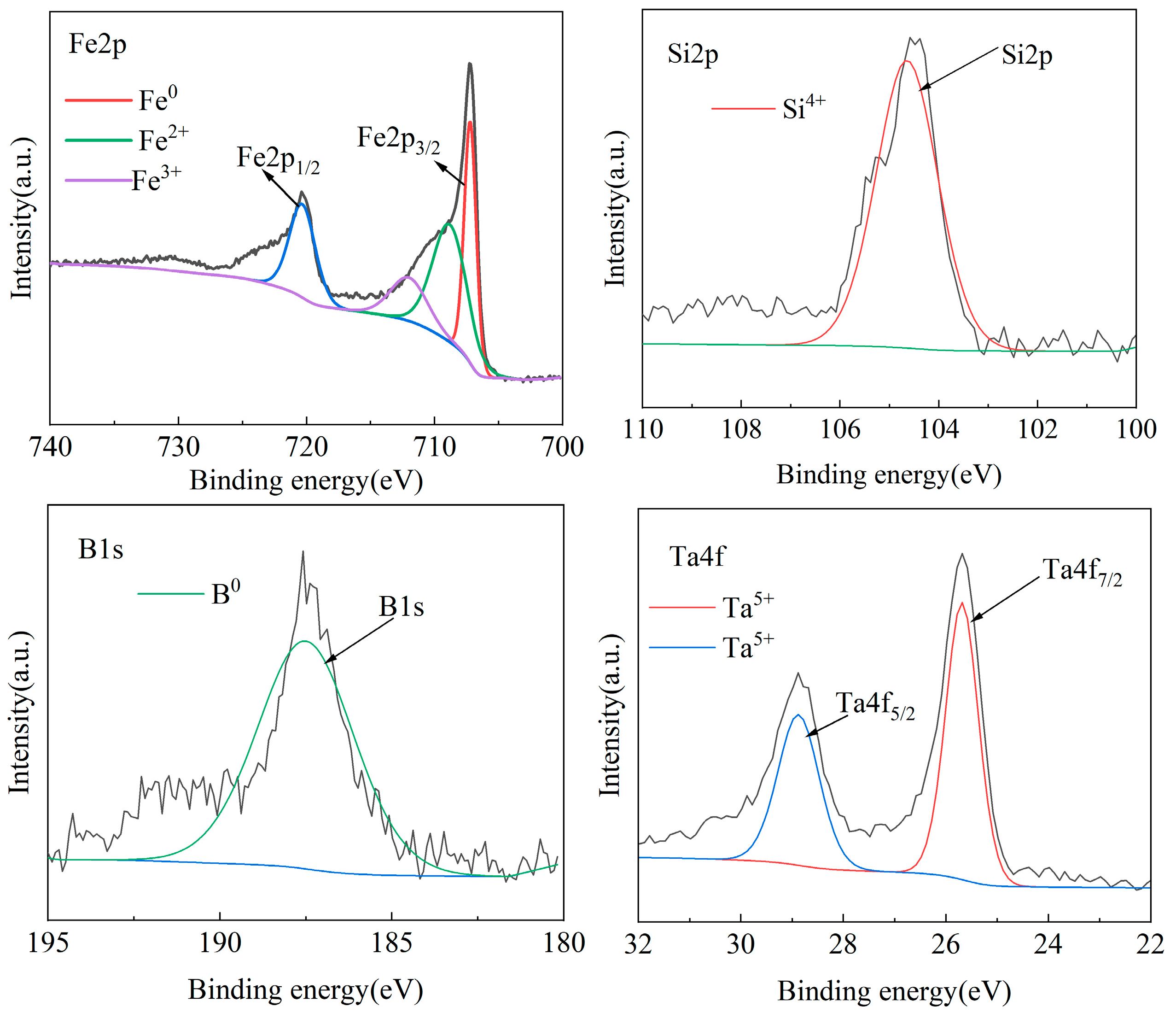
The XPS spectra were obtained after polarizing the samples at 0.6 V with respect to an SCE for 100 min in 3.5 wt.% NaCl solution, without Ar ion sputtering. Figure 12 shows the Fe2p, Si2p, B1s, and Ta4f XPS spectra of FeSiB coatings with a Ta content of 4%. The Fe2p spectra of the coating exhibited peaks corresponding to 2p1/2 and 2p3/2, which can be attributed to the Fe0, Fe2+, and Fe3+ states of Fe. The Si2p spectra were attributed to the Si4+ states of Si. The B1s spectra were attributed to the B0 states of B. The Ta4f spectra exhibited peaks corresponding to 4f7/2 and 4f5/2, which can be attributed to the Ta5+ states of Ta, and the result showed that Ta2O5 was formed in the coating; in addition, oxides of low-valence cations, such as Fe2+ (e.g., FeO) and Ta5+ (e.g., Ta2O5), are key to the formation of a stable passive film [28,31].
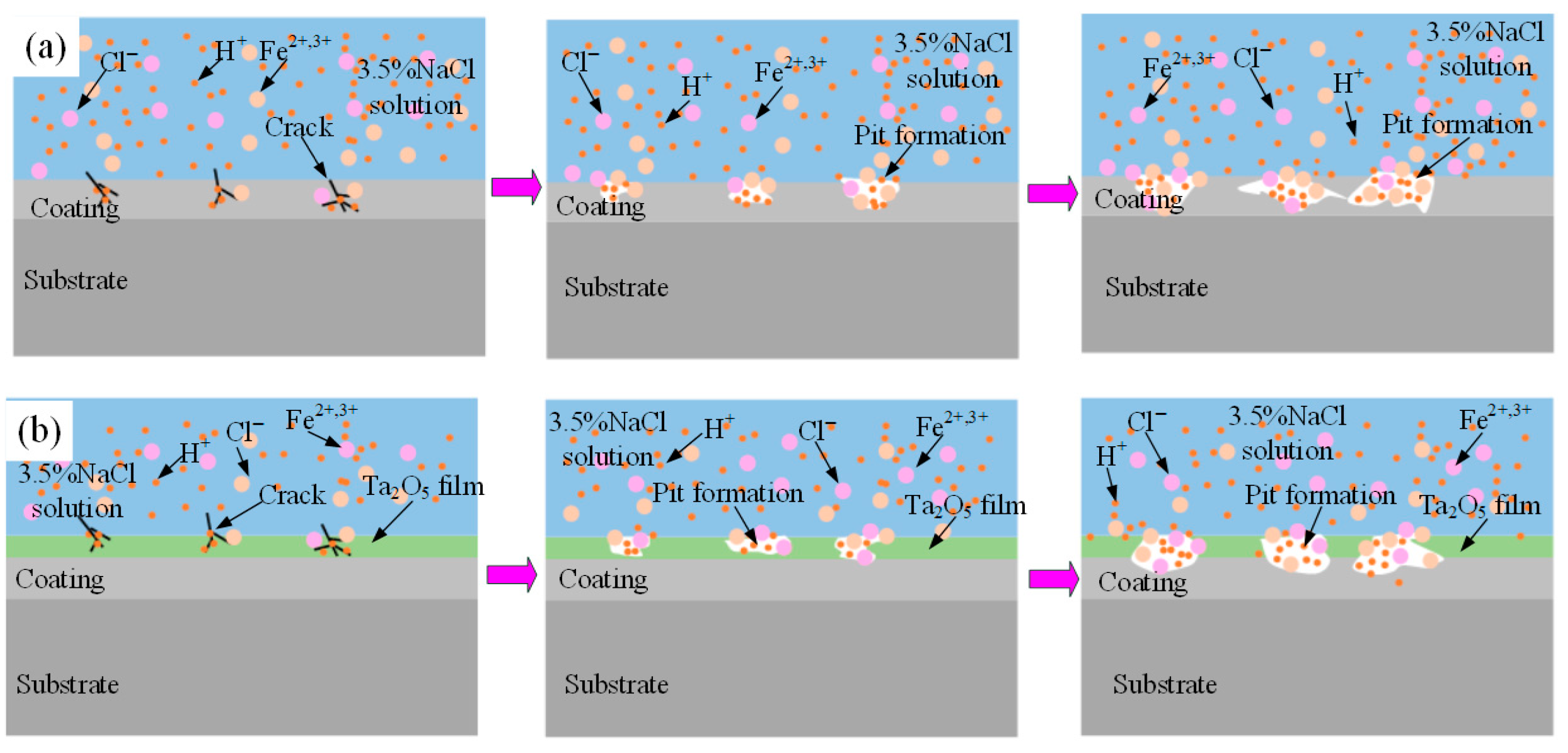
In order to clarify the corrosion process and the role of Ta in Fe-based amorphous coatings, Figure 13 compares the electrochemical corrosion model of Fe-based amorphous coatings with Ta element content of 0% and 4% in 3.5 wt.% NaCl solution. As shown in Figure 13a of the corrosion model, the main causes of degradation of Fe-based amorphous coatings were as follows: H+ and Cl in NaCl solution diffused and corroded the micro-cracks on the surface of the coating, pitting defects were formed and expanded to other areas of coatings continuously, which resulted in the damage of coating morphology in the end. With the addition of Ta in FeSiB powders improving the corrosion resistance of the coating, the dense Ta2O5 film was formed during the anodic polarization and oxidation process (in Figure 13b), which inhibited the migration of H+ and Cl in the solution; therefore, a passive protection effect on the coating was formed, and the corrosion resistance was enhanced. However, excessive addition of Ta could reduce the content of the amorphous phase, which leads to the damage of the FeSi solid solution structure, and causes a decrease in corrosion resistance performance of the coating.

3.3. Microhardness and Wear Resistance of Coatings

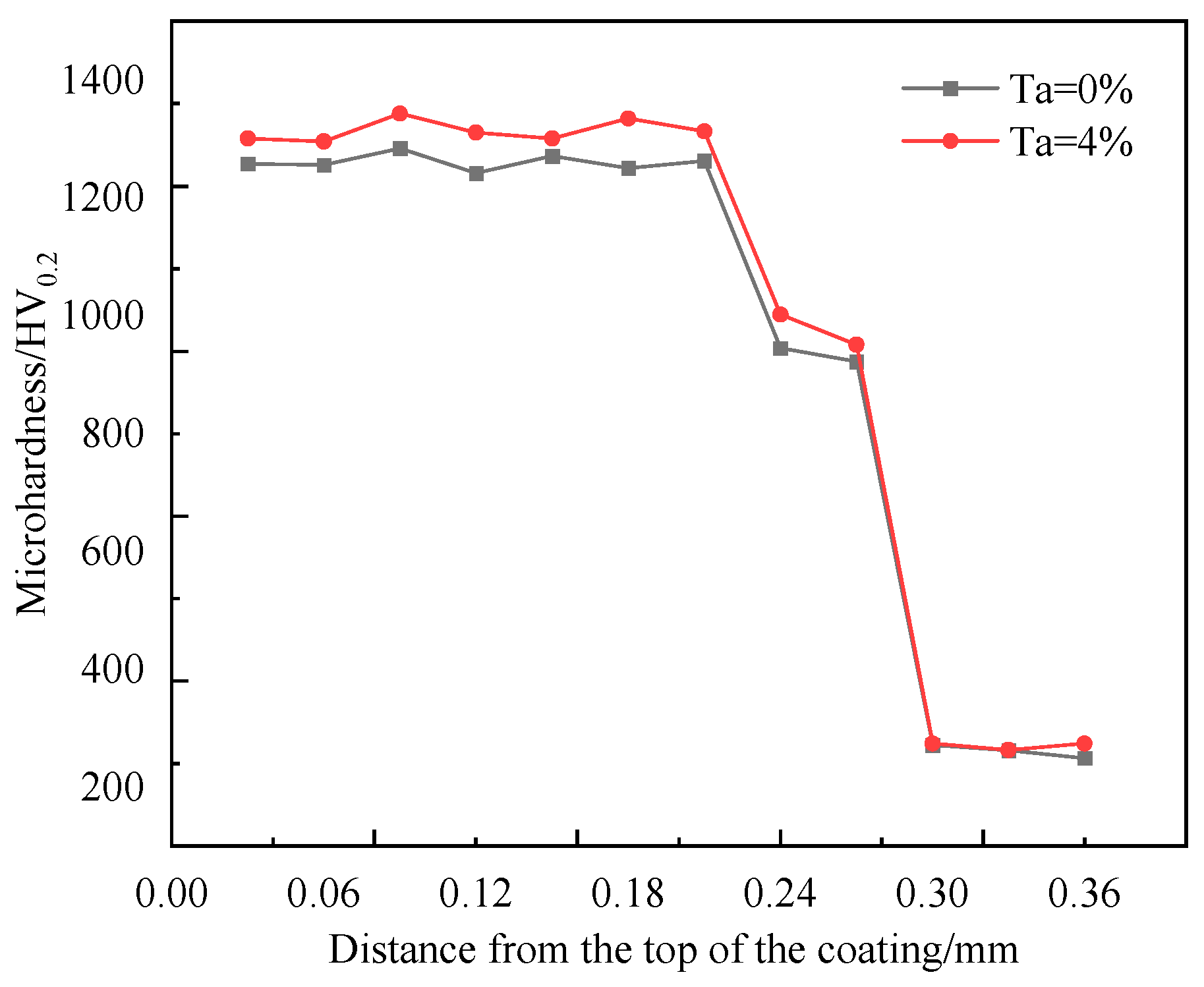
Figure 14 presents the average of microhardness measured on the cross-sectional plane perpendicular to the layer surface coated with and without Ta addition. It could be seen that the average hardness of the coatings without Ta is about 1260 HV, because the amorphous phase in the coating had high hardness. Meanwhile, the hard borides and silicides were generated after the crystallization transformation in the coating. However, the hardness of the coating was higher than 50 HV after adding the Ta element, which was because the Ta atoms enhanced the strength of the interatomic chemical bonds, refined the grain structure, and increased the solubility of the solid solution in the coating, which was beneficial to improve the hardness of the coating.
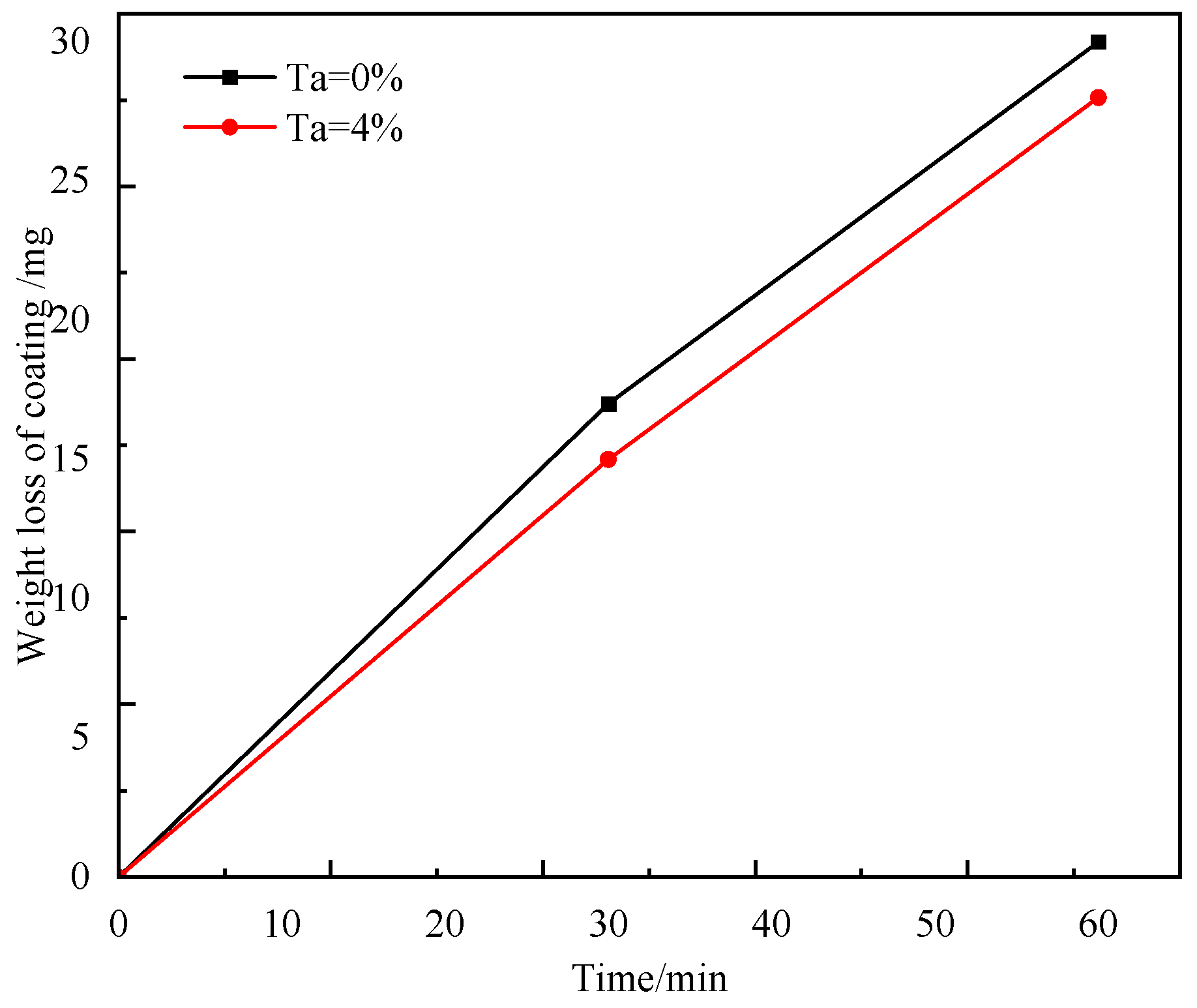
Figure 15 shows the average wear loss from three measurements for the coatings with and without Ta addition. After 60 min of wear testing, it was observed that the wear losses were 37 mg and 29 mg, respectively. Also, it was observed that there was significant coating weight loss during the initial running-in stage, which was mainly because severe abrasive wear was exhibited between the rough coating surface and the friction pair. With the wear process progressing, the two change from point contact to smooth surface contact gradually, entering the stable wear stage, and the amount of wear decreases. The wear rate can be calculated using the following Equation (1).
K = M / ( S · F )
where K is the wear rate of material, M is the wear mass (mg), F is the load of friction (N), and S is the total sliding distance (m). The wear rate of the substrate was calculated through Equation (1). Fe-based amorphous coatings with and without Ta addition were 2.06 × 10⁻⁴ mg·N−1·m−1 and 2.21 × 10⁻⁴ mg·N−1·m−1, respectively. The lower wear rate indicated superior wear resistance; consequently, the addition of Ta was beneficial for enhancing the coating’s wear performance, primarily because it could refine the microstructure and increase the hardness.
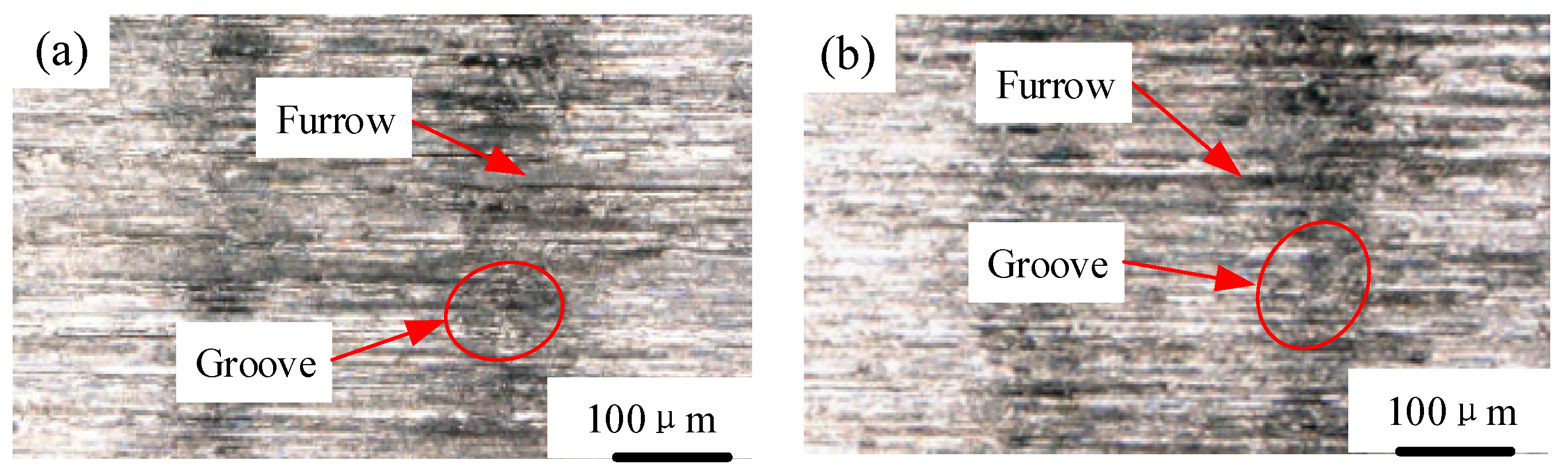
Figure 16 shows the wear morphology of the coating. It can be found that there are obvious peeling, grooves, and furrow characteristic scratches on the surface of the coating, revealing that the wear mechanism is abrasive wear primarily. However, with the increase in Ta content from 0% to 4%, the peeling and plow groove depth of the coating were improved significantly. This was primarily because the addition of Ta could increase the content of the amorphous phase in the coating, refine the grain structure of the coating, optimize the distribution of the Fe2B hard phase, and thereby enhance the wear resistance of the coating.
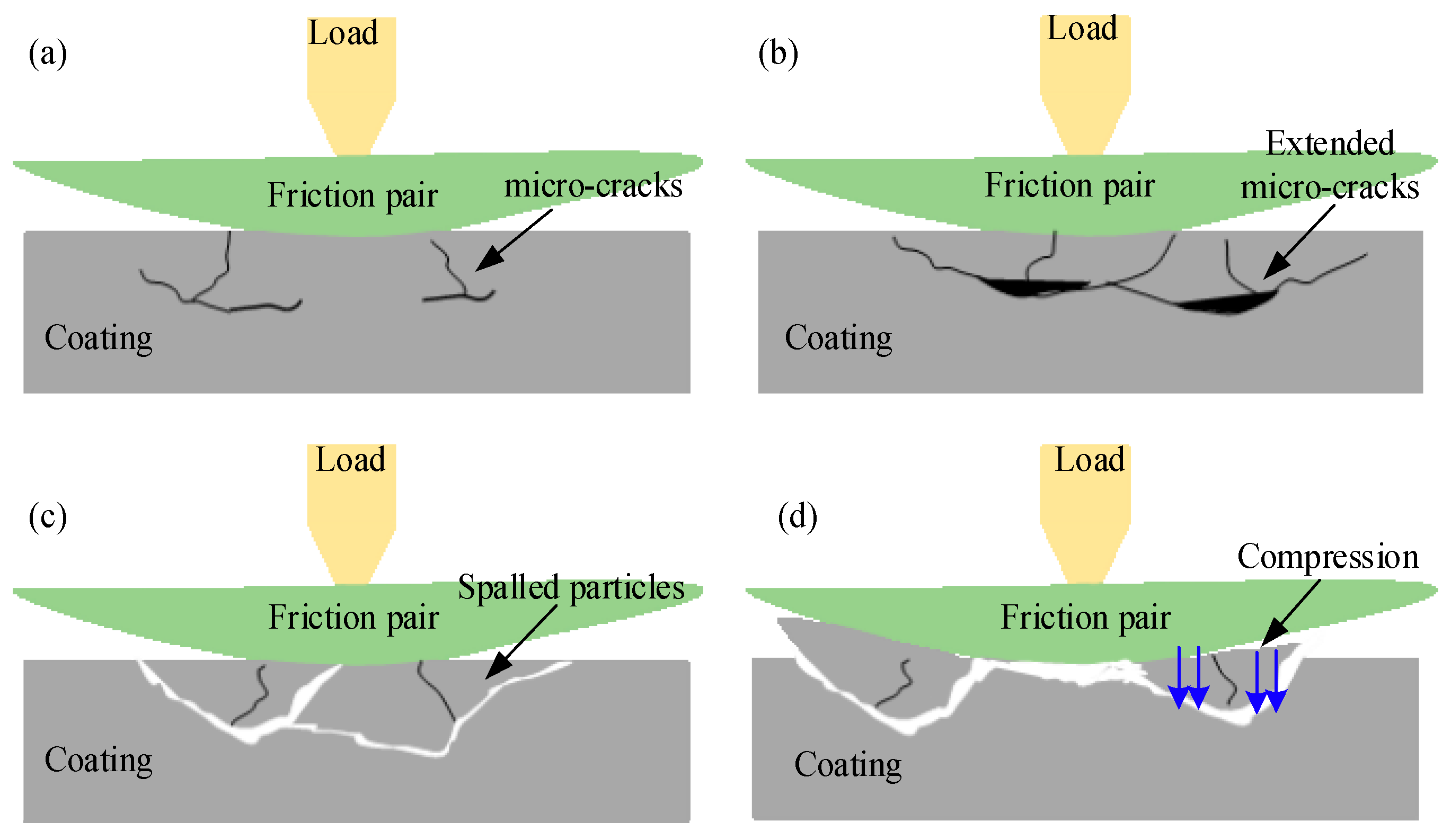
Figure 17 shows the wear mechanism of the coating. Under the action of load, the surface of the coating was affected by shear and contact stress, leading to the formation of micro-cracks in the stress concentration area of the coating (Figure 17a). Then, these micro-cracks gradually extend and penetrate under cyclic loading (Figure 17b), causing the peeling of the coating (Figure 17c). Lastly, the coating was worn by the spalled particles under the compression of the friction pair repeatedly, and grooves and furrows were generated on the coating surface (Figure 17d).

3.4. Soft Magnetic Properties of Coatings

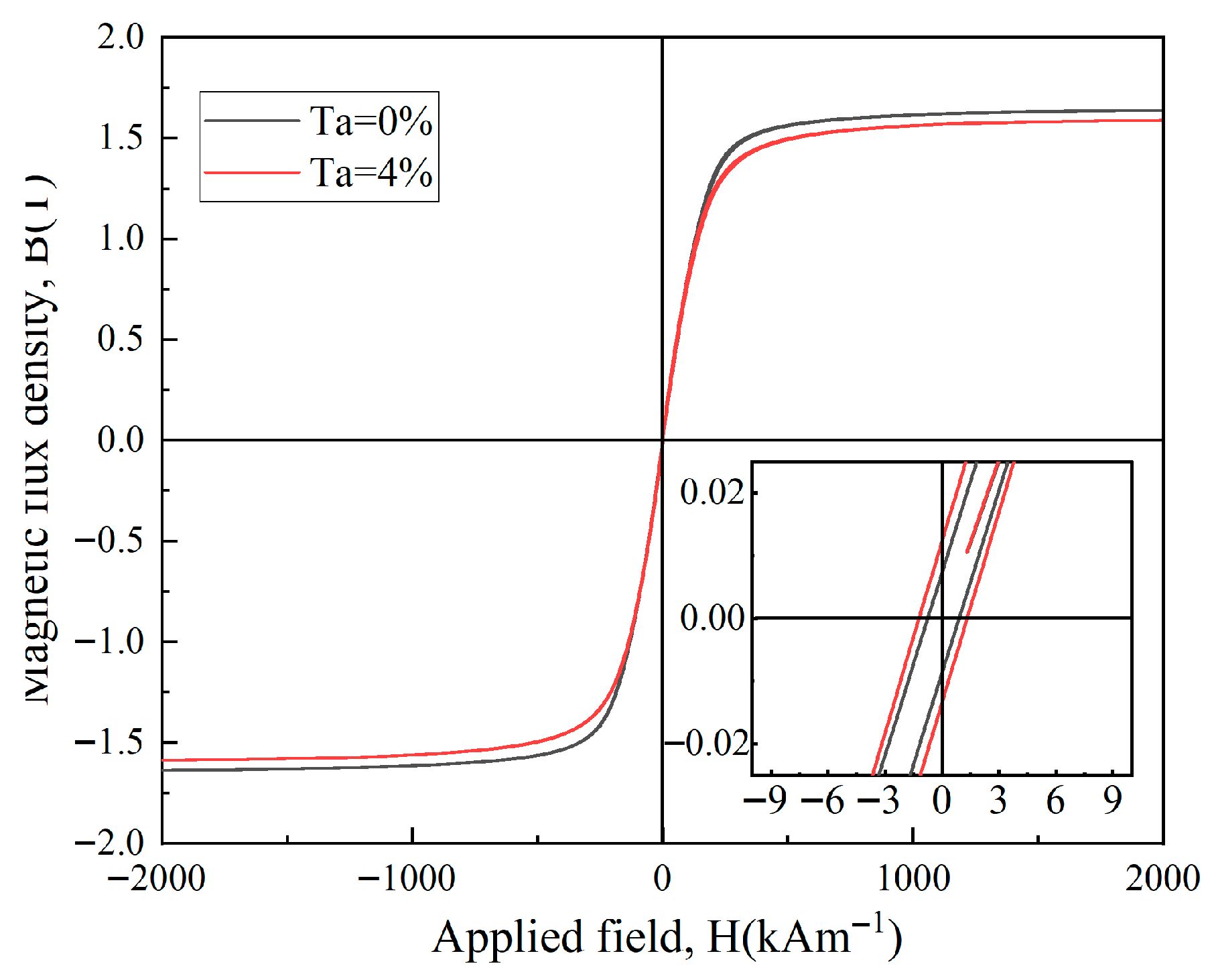
Figure 18 shows that the Ms and Hc of the Fe amorphous coating layer with and without Ta were obtained according to the measured hysteresis B-H loops. The results indicated that both of the two coatings could reach magnetic saturation quickly under an applied magnetic field and were demagnetized easily, demonstrating good soft magnetic properties. With the addition of Ta content from 0 to 4%, Hc increased from 0.9 A/m to 1.3 A/m, while Ms decreased from 1.64 T to 1.56 T, leading to the degradation of the soft magnetic properties. This was because Ta was a non-magnetic element in the FeSiB amorphous alloy. On one hand, the addition of Ta modified the local electronic environment and atomic structure around Fe atoms, and because of the low solid solubility of non-magnetic Ta in Fe (the maximum solubility of Ta in α-Fe is 0.69 at.% at 950 °C) [32], the formation of hard magnetic phases was promoted, which led to antiferromagnetic coupling with the magnetic moments of Fe. Meanwhile, the addition of Ta could facilitate the formation of an amorphous phase and reduce the concentration of the ferromagnetic α-Fe phase, thereby resulting in a decrease in Ms. On the other hand, Ta enhanced the local magnetic anisotropy within the material and increased the interatomic distance between Fe and other principal alloying elements, thereby weakening the Fe–Fe exchange interaction. Moreover, Ta significantly refined the grains, leading to an increase in grain boundaries and interfaces. These structural changes effectively impeded domain wall motion and enhanced the magnetic anisotropy of stochastic domains, ultimately causing the increase in Hc [20,33,34].

4. Conclusions

In this work, Fe-based amorphous alloy coatings with Ta contents of 0%, 2%, 4%, and 6% were fabricated on the surface of 45 steel using the HLC technique. The microstructure and properties were investigated in detail, and the main conclusions are as follows:
The microstructure of Fe-based amorphous coatings with and without Ta both consisted of an amorphous phase and grain structure, and the main microstructure of crystallization was α-Fe, Fe2B and Fe3Si. With the Ta addition to 4% in FeSiB powder, the amorphous phase content reached a maximum value of 60.4% in the coating.
The grain size distribution was 0.5–2.2 μm in the coating without Ta, while it was 0.2–1.6 μm in the coating with 4% Ta, which indicated that the proper addition of Ta was beneficial for suppressing grain growth. The EIS result showed the coating with Ta content 4% has a higher Rt than that of the coating without Ta, indicating its superior corrosion resistance, and through the XPS tests, Ta5+ was found in the coating with Ta content 4%, which verified the formation of Ta2O5.
The proper addition of Ta in FeSiB powders could improve the corrosion resistance of the coating through the formation of the dense Ta2O5 film, and the Ecoor and Icoor of Fe-based amorphous coating with the addition of Ta element to 4% was −0.51 V and 6.98 μA∙cm−2, which showed superior corrosion resistance than the coating without Ta.
Due to the high hardness of the amorphous phase and the grain-refining effect of Ta, the microhardness of the coating could reach up to 1310 HV0.2, and its wear mechanism was primarily abrasive wear, which demonstrates superior mechanical properties with Ta addition. However, the soft magnetic properties of the coating were degraded because Ta altered the local electronic environment and enhanced the local magnetic anisotropy.

Author Contributions

H.H.: Investigation, Methodology, Data Curation, and Writing—Original Draft. X.Y.: Methodology, Data Curation, and Writing—Review and Editing. J.Y.: Methodology and Writing—Review and Editing. Y.H.: Validation and Writing—Review and Editing. J.L.: Methodology and Resources. X.W.: Methodology and Resources. All authors have read and agreed to the published version of the manuscript.

Funding

This research was funded by the Doctoral Scientific Startup Fund (No. 2024XGYBQJ06) and the Tianchi Talents Introduction Plan (No. 2024XGYTCYC09).

Institutional Review Board Statement

Not applicable.

Informed Consent Statement

Not applicable.

Data Availability Statement

The original contributions presented in this study are included in the article. Further inquiries can be directed to the corresponding authors.

Conflicts of Interest

The authors declare that they have no known competing financial interests or personal relationships that could have appeared to influence the work reported in this paper.

References

  1. Nong, X.D.; Zhou, X.L.; Ren, Y.X. Fabrication and characterization of Fe-based metallic glasses by selective laser melting. Opt. Laser Technol. 2019, 109, 20–26. [Google Scholar] [CrossRef]
  2. Li, H.X.; Lu, Z.C.; Wang, S.L.; Wu, Y.; Lu, Z.P. Fe-based bulk metallic glasses: Glass formation, fabrication, properties and applications. Prog. Mater. Sci. 2019, 103, 235–318. [Google Scholar] [CrossRef]
  3. Ponnambalam, V.; Poon, S.J.; Shiflet, G.J. Fe-Mn-Cr-Mo-(Y, Ln)-C-B (Ln = Lanthanides) Bulk Metallic Glasses as Formable Amorphous Steel Alloys. J. Mater. Res. 2004, 19, 3046–3052. [Google Scholar] [CrossRef]
  4. Chang, C.; Kubota, T.; Makino, A.; Inoue, A. Synthesis of ferromagnetic Fe-based bulk glassy alloys in the Fe–Si–B–P–C system. J. Alloys Compd. 2009, 473, 368–372. [Google Scholar] [CrossRef]
  5. Martelo, D.; Abedi Esfahani, E.; Kale, N.; Maccio, T.; Paul, S. Investigation of Scaling and Materials’ Performance of EHLA-Fabricated Cladding in Simulated Geothermal Brine. Coatings 2025, 15, 1366. [Google Scholar] [CrossRef]
  6. Yan, M.J.; Li, R.F.; Bi, X.L.; Qiao, L.; Ye, P.L.; Cheng, J.B.; Zhang, Z.B. Microstructure and corrosive wear behavior of Fe-based amorphous coatings prepared by extreme high-speed laser cladding. J. Mater. Res. Technol. 2025, 39, 4882–4897. [Google Scholar] [CrossRef]
  7. Hong, F.; Wei, T. Optimization of Multi-Objective Process Parameters and Performance Analysis of High-Speed Laser Cladding of TC4/AISI431 Composite Coatings. Coatings 2025, 15, 911. [Google Scholar] [CrossRef]
  8. Wang, T.; Li, Q.; Huo, F.; Chen, H.; Xu, T. Comparison of Microstructure and Properties of CoCrMo Coatings Prepared by High-Speed and Conventional Laser Cladding. Coatings 2025, 15, 1200. [Google Scholar] [CrossRef]
  9. Greer, L.A. Confusion by design. Nature 1993, 366, 303–304. [Google Scholar] [CrossRef]
  10. Inoue, A.; Gook, J.S. Fe-based ferromagnetic glassy alloys with wide supercooled liquid region. Mater. Trans. 1995, 36, 1180–1183. [Google Scholar] [CrossRef]
  11. Inoue, A.; Takeuchi, A. Recent development and application products of bulk glassy alloys. Acta Mater. 2011, 59, 2243–2267. [Google Scholar] [CrossRef]
  12. Noorbakhsh, R.Z.; Ostovan, F.; Toozandehjani, M. Fe-based amorphous alloy coatings: A review. Adv. Eng. Mater. 2024, 26, 2302184. [Google Scholar] [CrossRef]
  13. Lu, Y.Z.; Huang, Y.J.; Lu, X.; Qin, Z.X.; Shen, J. Specific heat capacities of Fe–Co–Cr–Mo–C–B–Y bulk metallic glasses and their correlation with glass-forming ability. Mater. Lett. 2015, 143, 191–193. [Google Scholar] [CrossRef]
  14. Gulyaev, I.P.; Kovalev, O.B.; Grachev, G.N.; Smirnov, A.L. Optical study of the effects arising from the interaction of a CO2-laser with the powder in a coaxial nozzle for laser cladding. Opt. Laser Technol. 2023, 162, 107434. [Google Scholar] [CrossRef]
  15. Zou, Y.M.; Wu, Y.S.; Li, K.F.; Tan, C.L.; Qiu, Z.G.; Zeng, D.C. Selective laser melting of crack-free Fe-based bulk metallic glass via chessboard scanning strategy. Mater. Lett. 2020, 272, 127824. [Google Scholar] [CrossRef]
  16. Fernandes, M.; Gargarella, P.; Kiminami, C.S.; Afonso, C.R.M. Laser Cladding of Fe-based Bulk Metallic Glasses. In Proceedings of the 23rd ABCM International Congress of Mechanical Engineering, Rio de Janeiro, Brazil, 6–11 December 2015. [Google Scholar] [CrossRef]
  17. Wang, Q.Q.; Bai, X.D.; Sun, B.; Liu, J.; Cai, Z.H.; Liang, X.B.; Shen, B.L. Influence of Si on tribological behavior of laser cladded Fe-based amorphous/crystalline composite coatings. Surf. Coat. Technol. 2021, 405, 126570. [Google Scholar] [CrossRef]
  18. Ma, R.D.; Zhang, H.F.; Yu, H.S.; Hu, Z.Q. The effect of Al substitution on thermal and mechanical properties of Fe-based bulk metallic glass. J. Alloys Compd. 2008, 454, 370–373. [Google Scholar] [CrossRef]
  19. Zhang, P.L.; Lu, Y.L.; Yan, H.; Ma, K.; Xu, P.Q.; Yu, Z.S.; Chen, Y.Y.; Ding, M. Effect of Nb addition on Fe-Ni-B-Si amorphous and crystalline composite coatings by laser processing. Surf. Coat. Technol. 2013, 236, 84–90. [Google Scholar] [CrossRef]
  20. Shi, M.; Liu, Z.; Zhang, T. Effects of Metalloid B Addition on the Glass Formation, Magnetic and Mechanical Properties of FePCB Bulk Metallic Glasses. J. Mater. Sci. Technol. 2015, 31, 493–497. [Google Scholar] [CrossRef]
  21. Shen, N.N.; Li, Y.L.; Dou, Z.X.; Lv, K.; Duan, M.N.; Li, F.S.; Wu, Y.D.; Wang, Y.L.; Hui, X.D. Improved glass forming ability and soft magnetic properties by minor Mo alloying in Fe–P–C–B–Si bulk metallic glasses. Intermetallics 2021, 139, 107375. [Google Scholar] [CrossRef]
  22. Park, J.M.; Park, J.S.; Na, J.H.; Kim, D.H.; Kim, D.H. Effect of Y Addition on Thermal Stability and the Glass Forming Ability in Fe-Nb-B-Si Bulk Glassy Alloy. Mater. Sci. Eng. A 2006, 435–436, 425–428. [Google Scholar] [CrossRef]
  23. Wang, H.Z.; Cheng, Y.H.; Yang, J.Y.; Yang, J.Y.; Wang, Q.Q. Microstructure and properties of laser clad Fe-based amorphous alloy coatings containing Nb powder. J. Non-Cryst. Solids 2020, 550, 120351. [Google Scholar] [CrossRef]
  24. Zhang, X.P.; Lai, L.M.; Xiao, S.M.; Zhang, H.J.; Zhang, F.F.; Li, N.; Guo, S.F. Effect of W on the thermal stability, mechanical properties and corrosion resistance of Fe-based bulk metallic glass. Intermetallics 2022, 143, 107485. [Google Scholar] [CrossRef]
  25. Song, H.L.; Guo, C.H.; Jiang, F.C.; Xiao, M.Y.; Diao, M.X.; Chen, Z.B.; Zhang, H.X. Adding high entropy alloys to improve microstructure and properties of laser cladding Fe-based amorphous coatings. J. Non-Cryst. Solids 2023, 619, 122559. [Google Scholar] [CrossRef]
  26. Jin, H.T.; Luo, F.Y.; Chen, Z.H.; Luo, Y.Z.; Shi, W.Q.; Huang, J. Mechanical properties and corrosion resistance analysis of Fe-based amorphous −2 % CNTs coatings with low crack prepared by laser cladding. Diam. Relat. Mater. 2025, 1551, 12288. [Google Scholar] [CrossRef]
  27. Verdon, C.; Karimi, A.; Martin, J.L. A study of high velocity oxy-fuel thermally sprayed tungsten carbide based coatings. Part 1: Microstructures. Mater. Sci. Eng. A 1998, 246, 11–24. [Google Scholar] [CrossRef]
  28. Liu, P.Y.; Li, H.; Zhang, R.H.; Xiao, M.Z.; Wei, X.H.; Yin, Y.; Qu, Y.B.; Cheng, G.; Ren, G.H.; Lu, C. Effect of Ta addition on microstructure and properties of TiC particle reinforced iron-based gradient coating by laser cladding. Surf. Coat. Technol. 2025, 512, 132345. [Google Scholar] [CrossRef]
  29. Cui, T.L.; Xie, X.F.; Yu, W.G.; Tang, C.; Qu, J.L.; Du, J.H. Effect of Ta addition on microstructure characteristic and tensile property of hard-to-deform Ni-based superalloys. J. Alloys Compd. 2026, 1056, 186655. [Google Scholar] [CrossRef]
  30. Yu, T.; Deng, Q.L.; Dong, G.; Yang, J.G. Effects of Ta on microstructure and microhardness of Ni based laser clad coating. Appl. Surf. Sci. 2011, 257, 5098–5103. [Google Scholar] [CrossRef]
  31. Keddam, M.; Mattos, O.R.; Takenouti, H. Mechanism of anodic dissolution of ironchromium alloys investigated by electrode impedances—I. Experimental results andreaction model. Electrochim. Acta 1986, 31, 1147–1158. [Google Scholar] [CrossRef]
  32. Swartzendruber, L.J.; Paul, E. The Fe−Ta (Iron-Tantalum) system. Bull. Alloy Phase Diagr. 1986, 7, 254–259. [Google Scholar] [CrossRef]
  33. Sheftel, E.N.; Harin, E.V.; Bobrovskii, S.Y.; Rozanov, K.N.; Tedzhetov, V.A.; Bannykh, I.O.; Kiryukhantsev-Korneev, P.V. FeTiB nanocrystalline films: Static and dynamic magnetic properties in accordance with phase composition and magnetic structure. J. Alloys Compd. 2023, 968, 171981. [Google Scholar] [CrossRef]
  34. Ramazanov, S.; Sobola, D.; Ţălu, Ş; Orudzev, F.; Arman, A.; Kaspar, P.; Dallaev, R.; Ramazanov, G. Multiferroic behavior of the functionalized surface of a flexible substrate by deposition of Bi2O3 and Fe2O3. Microsc. Res. Tech. 2022, 85, 1300–1310. [Google Scholar] [CrossRef]
Figure 1. Characteristics of FeSiB amorphous powders. (a) SEM of FeSiB amorphous powders. (b) Particle size distribution of the powders. (c) X-ray diffraction patterns of FeSiB amorphous powders.
Coatings 16 00442 g001
Figure 2. The schematic diagram of high-speed laser cladding system.
Coatings 16 00442 g002
Figure 3. X-ray diffraction patterns of Fe-based amorphous powders with Ta.
Coatings 16 00442 g003
Figure 4. XRD of the coatings with different Ta element mass fractions (0%, 2%, 4%, 6%) in Fe-based amorphous powders.
Coatings 16 00442 g004
Figure 5. The microstructure of Fe-based amorphous coatings with different Ta content ((a) 0%, (b) 2%, (c) 4%, (d) 6%).
Coatings 16 00442 g005
Figure 6. Microstructure distribution of the crystalline zone ((a) Ta = 0%, (b) Ta = 4%).
Coatings 16 00442 g006
Figure 7. Elements distribution in the middle of Fe-based amorphous coating with Ta content of 4%.
Coatings 16 00442 g007
Figure 8. Ta element distribution in the crystalline part of the coating with Ta content of 4% ((a) microstructure and morphology, (b) crystalline region).
Coatings 16 00442 g008
Figure 9. Tafel curves of coatings with Ta content of 0% and 4%.
Coatings 16 00442 g009
Figure 10. Electrochemical impedance plots and equivalent circuit of the coating with Ta content of 0% and 4%.
Coatings 16 00442 g010
Figure 11. SEM images on the corroded surface of the coatings with different content of Ta after 168 h of immersion in 3.5 wt% NaCl solution ((a) Ta = 0%, (b) Ta = 2%, (c) Ta = 4%, (d) Ta = 6%).
Coatings 16 00442 g011
Figure 12. XPS spectra of Fe2p(Fe0, Fe2+, Fe3+), Si2p(Si4+), B1s(B0) and Ta4f(Ta5+) in the passive films formed on the surface of the coating with Ta content of 4%.
Coatings 16 00442 g012
Figure 13. Corrosion mechanism of Fe-based amorphous coatings ((a) Ta = 0%, (b) Ta = 4%).
Coatings 16 00442 g013
Figure 14. Microhardness of Fe amorphous coating layer with Ta content of 0% and 4%.
Coatings 16 00442 g014
Figure 15. The weight loss of coating with Ta content of 0% and 4%.
Coatings 16 00442 g015
Figure 16. The wear morphology of the coating ((a) Ta = 0%, (b) Ta = 4%).
Coatings 16 00442 g016
Figure 17. The wear mechanism of Fe-based amorphous coating ((a) formation of micro-cracks, (b) extension and penetration of micro-cracks, (c) coating peeling, (d) formation of grooves and furrows).
Coatings 16 00442 g017
Figure 18. B–H hysteresis loops of the coating with Ta content of 0% and 4%.
Coatings 16 00442 g018
Table 1. Chemical compositions of the 45 steel (wt/%).
ElementCCrMnNiCuSiFe
Content0.5<0.10.6<0.10.10.2Bal
Table 2. Chemical compositions of Fe-based amorphous alloy powder (wt/%).
ElementSiBOFe
Content10–13.59–11≤0.1Bal
Table 3. The laser cladding process parameters.
Laser Power/WScanning Speed/(mm/s)Powder Feed Rate/(g/s)Overlap Rate/%Wavelength of the Laser/nmLaser Beam Diameter/mm
50040205010602
Table 4. The enthalpy of mixing elements.
Atomic TypeΔH mix (kJ/mol)
Fe-B−26
Fe-Si−35
Si-B−14
Ta-B−54
Ta-Si−56
Table 5. Electrochemical parameters and parameters of the EIS equivalent circuit of the coating with Ta content of 0% and 4% obtained from the polarization curves and EIS spectra.
Ta Element Content/%Ecoor/VIcoor/(μA∙cm−2)Rs (Ω∙cm2)Rt (Ω∙cm2)n
0−0.588.477.8154060.932
4−0.516.988.172580.926
Disclaimer/Publisher’s Note: The statements, opinions and data contained in all publications are solely those of the individual author(s) and contributor(s) and not of MDPI and/or the editor(s). MDPI and/or the editor(s) disclaim responsibility for any injury to people or property resulting from any ideas, methods, instructions or products referred to in the content.