Article

Analysis of Cutting Equation for Micro-Groove Tool and Its Impact on Shear Angle and Cutting Force in Tuning AISI201

1
State Key Laboratory of Advanced Design and Manufacture for Vehicle Body, Hunan University, Lushan South Road, Yuelu District, Changsha 410082, China
2
Guizhou Aerospace Cloud Network Technology Co., Ltd., No. 1-6, 17th Floor, Unit 2, Building A5, Telford Center, No. 357 Qianlingshan Road, Guiyang National Hi-Tech Industrial Development Zone, Guiyang 550000, China
3
Department of Automation, Tsinghua University, Haidian District, Beijing 100083, China
4
School of Physics and Mechatronic Engineering, Guizhou Minzu University, Guiyang 550025, China
5
Guiyang Xianfeng Machine Tool Co., Ltd., Guiyang 550601, China
6
School of Mechanical Engineering, Guizhou University, Guiyang 550025, China
*
Authors to whom correspondence should be addressed.
Coatings 2026, 16(4), 427; https://doi.org/10.3390/coatings16040427
Submission received: 27 January 2026 / Revised: 27 March 2026 / Accepted: 30 March 2026 / Published: 3 April 2026

Abstract

The face of cutting tools serves as the critical interface for chip–tool interaction and wear initiation, significantly influencing tool performance and service life. By implementing micro-groove structures on the face to reduce the chip–tool contact area, the cutting mechanics of the tool are altered. Theoretical analysis indicates that the cutting equations of the grooved tool have changed, with the modified tool exhibiting a larger shear angle compared to the original design. Finite element simulations and experiments demonstrate that grooved tool exhibit optimized cutting mechanics, characterized by a larger shear angle and improved edge sharpness. The shear angle of grooved tool is increased by about 3 degrees and the chip thickness is reduced by about 0.05 mm. Cutting tests confirm that the grooved tool reduces the main cutting force by more than 18%, with a smaller wear area on the face and improved wear conditions near the cutting edge. Due to materials such as stainless steel and titanium alloy, which have similar difficult-to-machine properties. The present results are based on AISI 201 and the specific groove geometry used in this study, and further work is required before generalizing to other difficult-to-cut materials and groove designs. In summary, based on the experimental data, the micro-groove cutting tool outperforms the original tool in terms of shear angle, cutting force, and durability. Specifically, the shear angle of the micro-groove cutting tool is larger, the cutting force is reduced, and the wear on the face is decreased.

1. Introduction

In modern manufacturing, machining is one of the core processes for producing precision components [1,2], and cutting tools, as the key tools in the machining process, directly determine machining efficiency, surface quality, and production costs [3,4,5]. The optimized design of cutting tools has become a significant research topic for researchers. Traditional tool design has typically relied on material selection and geometric optimization [6,7,8]. However, as machining materials evolve toward higher strength and hardness (such as titanium alloys, composites, and metamaterials), traditional tools face greater challenges during the machining process, including high cutting forces, rapid tool wear, and difficulty in chip control [9,10]. The face of the tool is the primary interface where chips interact with the tool [11,12], not only responsible for chip formation but also the initial area of tool wear [13,14]. To address these challenges, researchers have begun exploring the introduction of microstructure design on the face to improve cutting performance. Therefore, the optimization of face design is of critical importance for enhancing the overall performance and service life of cutting tools [15,16].
Many researchers have prepared microstructures with arrayed shapes and patterns, such as recessed structures or grooves, on the face of cutting tools to improve their cutting performance [17,18]. Li et al. [19] proposed a grinding method using a diamond grinding wheel to process micro-groove textures on the face of cutting tools. Through comparative experiments, it was found that compared to tools processed by laser machining and other grinding processes, the cutting force of diamond grinding wheel micro-groove tools was significantly reduced. Zhang et al. [20] prepared three different geometric patterns of groove textures on the surface of cemented carbide tools and conducted experiments on the friction and wear performance of titanium alloy balls against cemented carbide. The results showed that under dry friction conditions, the friction coefficient was lowest on the linear groove texture surface; under fluid lubrication conditions, the friction coefficient was lowest on the sinusoidal groove texture surface [21], and the experimental results were consistent with the numerical simulation results.
T. Sugihara et al. [22,23] prepared microtextures of different shapes on the face of cutting tools, including micro-groove array structures and dimple-like structures. Through comparative analysis, it was found that tools with microtextures exhibited superior overall cutting performance. Ahmed et al. [24] designed textures with parallel and perpendicular cutting edges, as well as hybrid textures, on the face of cutting tools. Through experiments cutting AISI 304, it was found that using hybrid texture tools could reduce cutting force, feed force, and friction coefficient by 58%, 100%, and 24%, respectively. Additionally, compared to non-textured tools, hybrid textured tools exhibit thinner and more stable built-up edge (BUE) layers, significantly reducing tooth surface wear and improving the surface finish of the workpiece. Furthermore, workpieces processed using hybrid textured tools exhibit lower heat-affected zone thickness and hardness values.
Dalin et al. [25] used laser processing to create micro-groove textures on the rake and back cutting surfaces of twist drills. They found that the texture on the rake cutting surface significantly improved chip curling, while the texture on the back cutting surface effectively enhanced the tool’s internal cooling capacity and reduced cutting temperature. Liu et al. [26] improved the sharp edges of micro-grooves through three-dimensional finite element simulation and compared the cutting performance of the improved micro-groove tool with that of a conventional tool. Through cutting experiments, the improved micro-groove cutting tool demonstrated better performance in terms of cutting force control, optimization of chip formation, and suppression of tool wear.
The tool used in this article is the same as that in paper [27]. In paper [27], the wear characteristics and cutting mechanical properties of the tool were analyzed in depth. This paper presents a reanalysis of previously published data, focusing on the measurement of chip thickness to investigate the variation in shear angles and chip morphology of micro-grooved tools, thereby studying the changes in their cutting performance.

2. Cutting Experiment Research

2.1. Experimental Study on the Cutting Equation of Cutting Tools

The tool studied in this article is a specialized tool provided by Zhuzhou Huairui Hard Alloy Co., Ltd. in Zhuzhou, China. The main body material of the tools is M30, and they have a coating. This coating is a high-aluminum-content AlTiN coating with 67% aluminum content and a thickness of 5 microns. It significantly enhances the surface hardness of cutting tools, reduces friction and heat during machining, lowers cutting forces, improves machining accuracy and surface finish, and maintains tool stability during high-speed cutting. The surface of the coating is smooth, with a low friction coefficient, which enables smooth chip removal and high wear resistance. They also have good toughness under medium and high-speed processing conditions. During the cutting process, the workpiece being processed is AISI (American Iron and Steel Institute, Washington, DC, USA) 201 workpiece.
The material model employed in DEFORM cutting simulation is the Johnson–Cook model (A = 277 MPa, B = 560 MPa, n = 0.794, C = 0.0096, m = 0.95), using the Usui wear model, as expressed by the equation
w = a p V e b / T d t
where a = 10−5, P = interface pressure; V = sliding velocity; T = interface temperature; b = 855. The element type utilizes the Lagrangian method with a mesh that deforms with the material; mesh size is determined by balancing simulation accuracy and computational efficiency. The grid size is variable. The adopted 3D tool model; the tool is set as a rigid body capable of convection with the external environment, with an initial temperature of 20 °C and a friction coefficient of 0.4. The convective coefficient is 20 N/sec/mm/C, and the heat transfer coefficient is 2000 n/sec/mm/C.
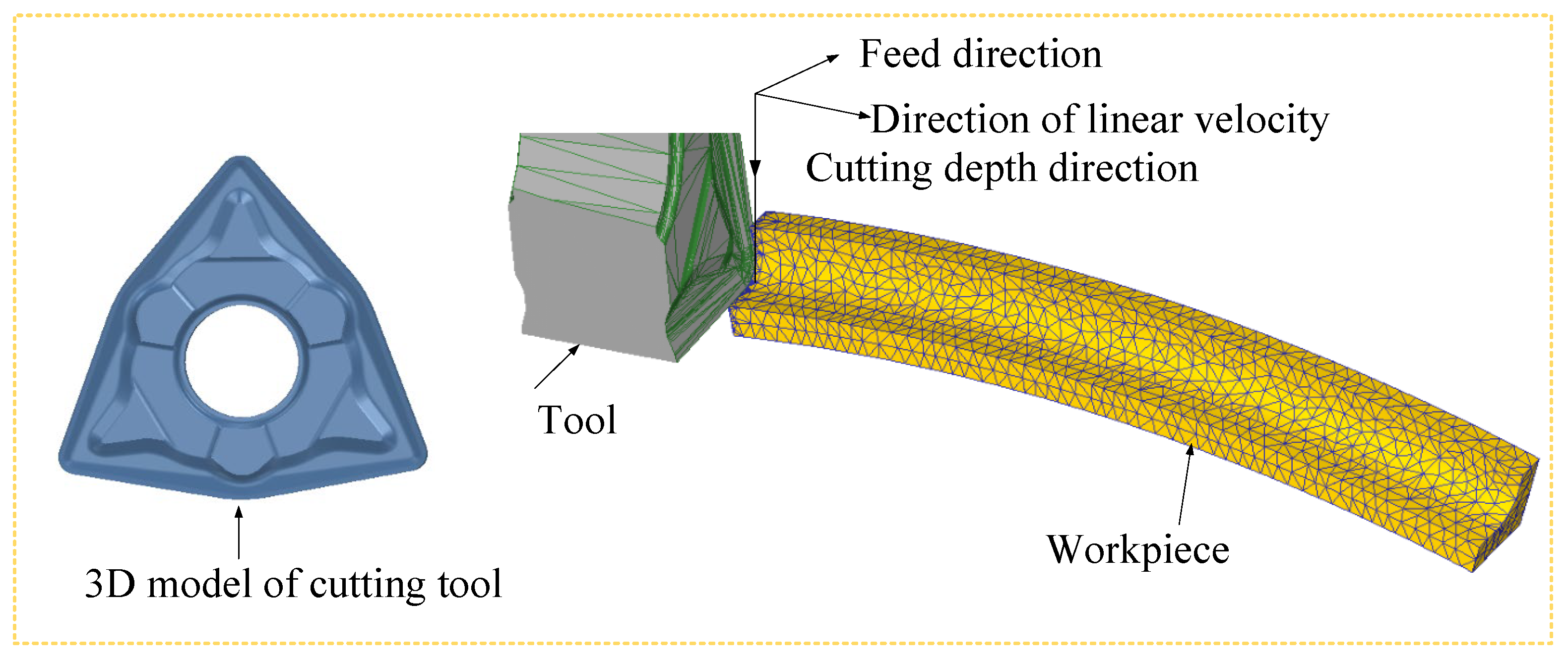
In the DEFORM V11.0 software simulation process, by setting convergence criteria with a displacement convergence tolerance of 1 × 10⁻⁴ and using adaptive time steps, the time step can be automatically adjusted to ensure the stability and reliability of the simulation results. The simulation model of the tool is shown in Figure 1. The cutting simulation model mainly utilizes the following force fields: the cutting force field and the temperature field.
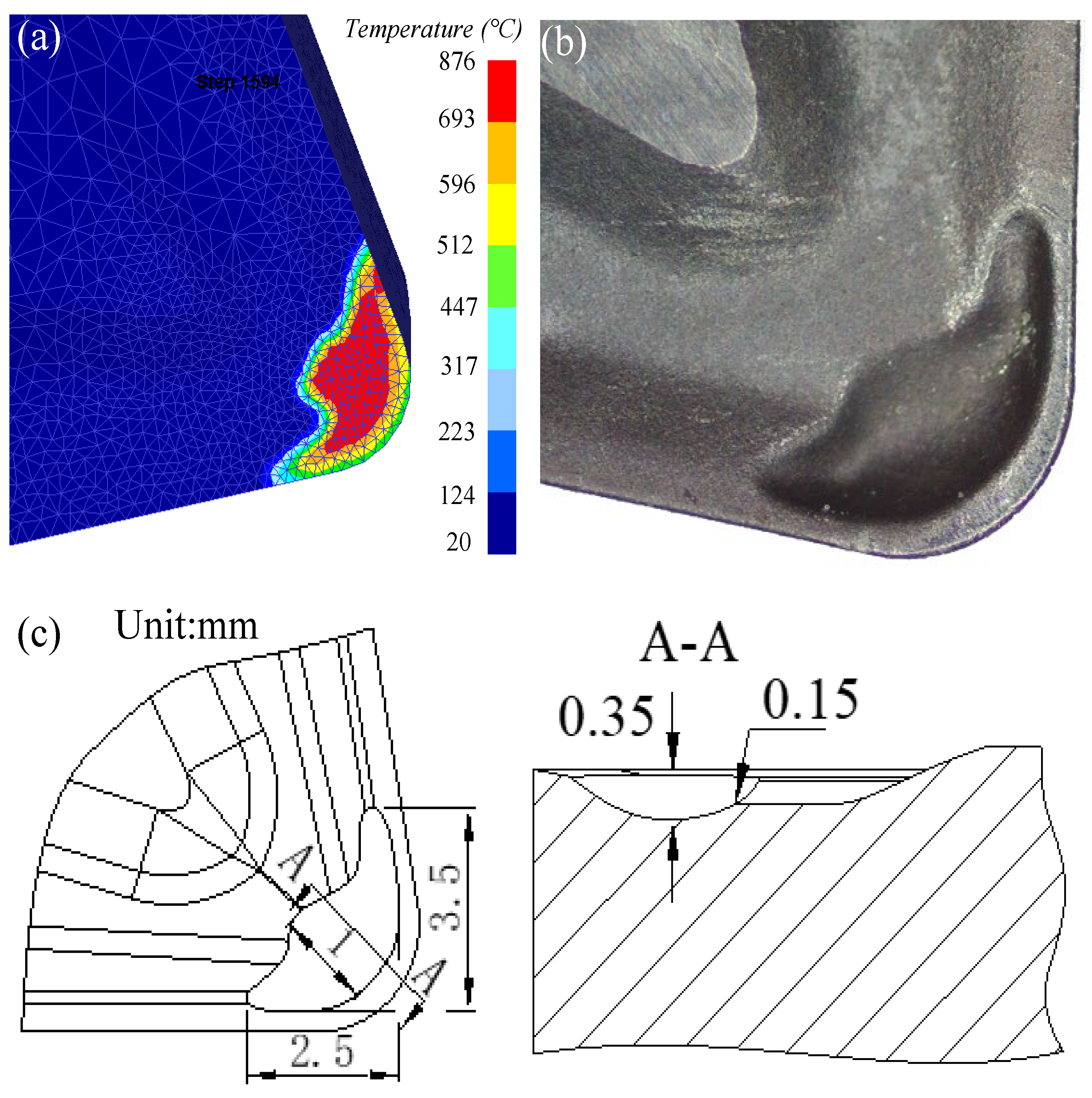
After the simulation of tool cutting, the temperature distribution on the face is shown in Figure 2a. The high-temperature areas are mainly concentrated in the near-field of the cutting edge close to the tool tip. At the same time, the micro-slot structure of the tool was determined by combining the wear patterns from the tool cutting experiments, as shown in Figure 2b. Finally, the shape of the tool is shown in Figure 2c. In the following text, we abbreviate the micro-slot tool as tool M, and the original tool as tool O.
The cutting experiments were conducted on the C2-6136HK CNC (numerical control machine) lathe. The physical parameters of the cutting tools and the workpiece materials, as well as the specific parameters of the tool angles, are shown in Table 1 and Table 2 [27].
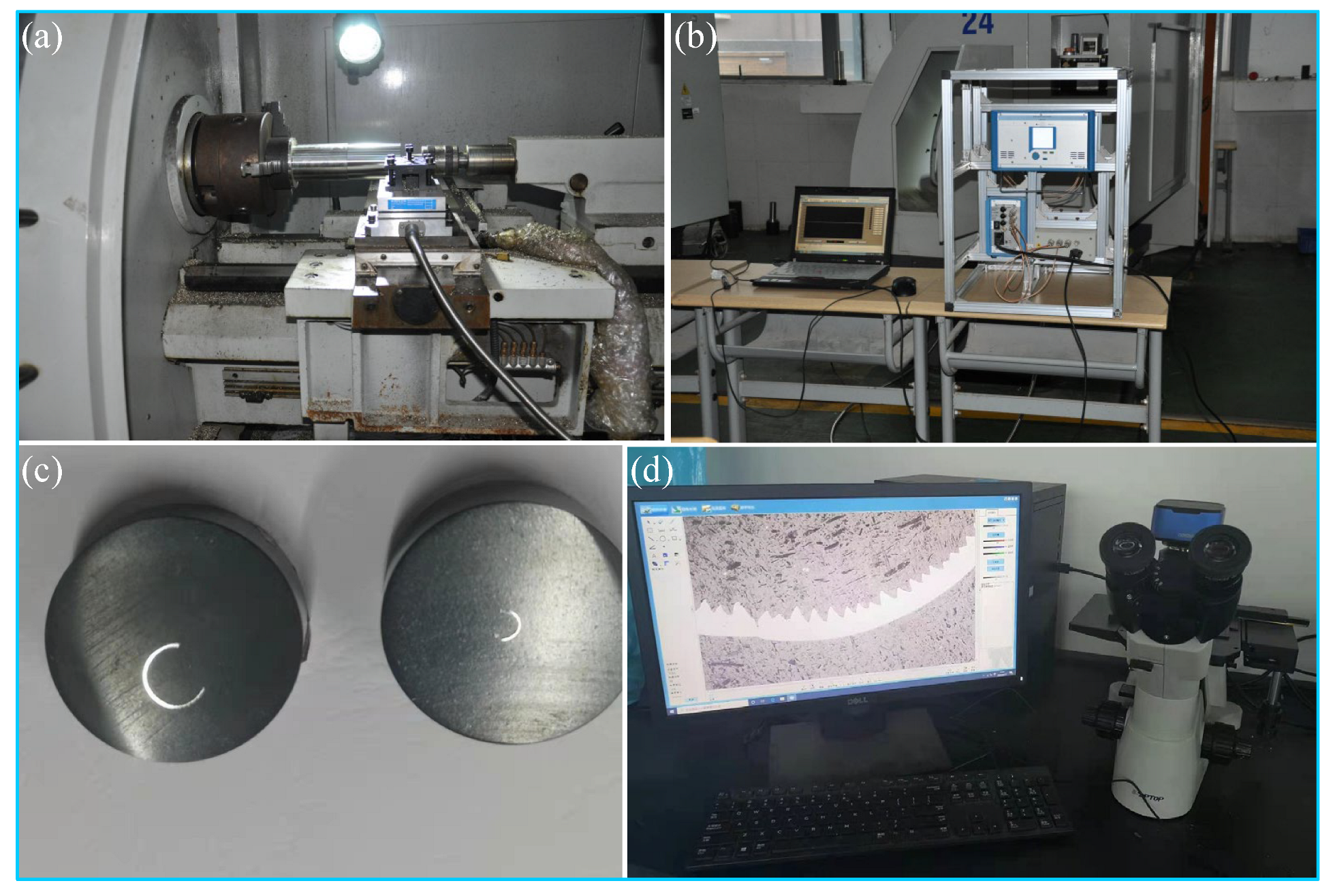
The experimental process and equipment used are shown in Figure 3. During each experiment, the chips were collected and embedded samples were made. The chip thickness was observed and measured using an electron microscope. The workpiece was an AISI 201 cylindrical bar with a diameter of 80 mm and a length of 200 mm.
The experimental plan is shown in Table 3. During the experiment, the chips were measured three times and the average value was taken as the chip thickness. The experimental data are presented in Table 3.
In this paper, the chip formed after each cutting operation is measured three times, and the average value is taken. Three chips are selected as examples, and the standard deviation of the chips is calculated, as shown in Table 4.
Based on the relationship between the total chip thickness ac and the shear angle ϕ, and combining the calculation formula for the friction angle β, we can derive the following: after measuring the three-dimensional cutting forces through machining experiments, the tangent of the friction angle β is determined by the ratio of the frictional force Ff to the normal force Fn.
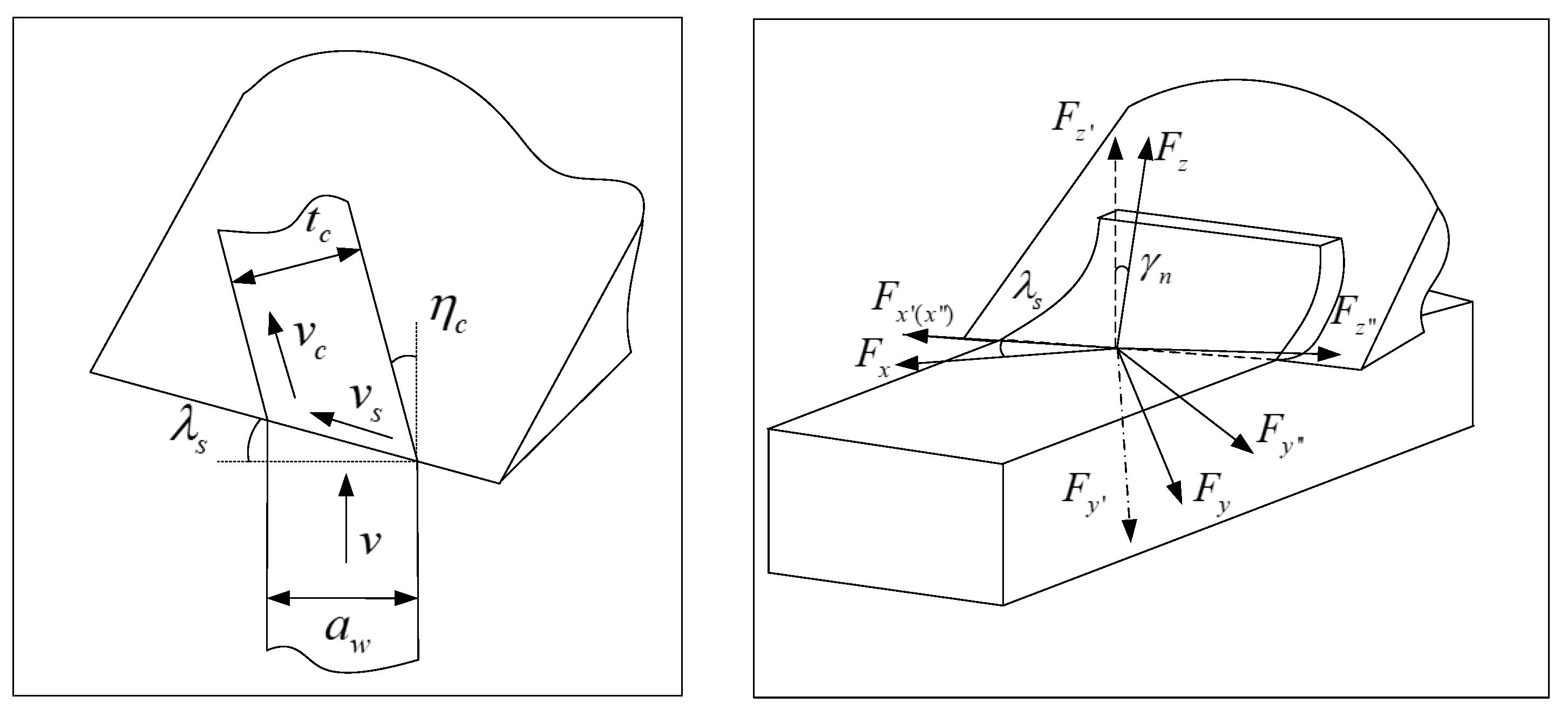
For three-dimensional and orthogonal cutting models, the two can be equivalently transformed through angular conversion. To obtain the force in the three-dimensional coordinate system, the (Fx, Fy, Fz) can be rotated by an angle γn around the axis x’ first, followed by another rotation by an angle λs around the axis Z. Where γn represents the normal rake angle; λs represents the inclination angle of the cutting edge.
As shown in Figure 4,
F x F y F z = 1 0 0 0 cos γ n sin γ n 0 sin γ n cos γ n cos λ s sin λ s 0 sin λ s cos λ s 0 0 0 1 F x F y F z
The frictional force and normal force on the rake face of the tool are, respectively,
F f = F x 2 + F z 2 = ( ( F x cos λ s F y sin λ s ) 2 + ( F x sin λ s sin γ n F y cos λ s sin γ n + F z cos γ n ) )
F n = F x sin λ s cos γ n + F y sin γ n + F z cos λ s cos γ n
As expressed in the Oxley–Welsh cutting equation (Equation (18)). Through data computation and function graph processing, the fitting cutting equations for tool O and tool M were obtained [28,29].
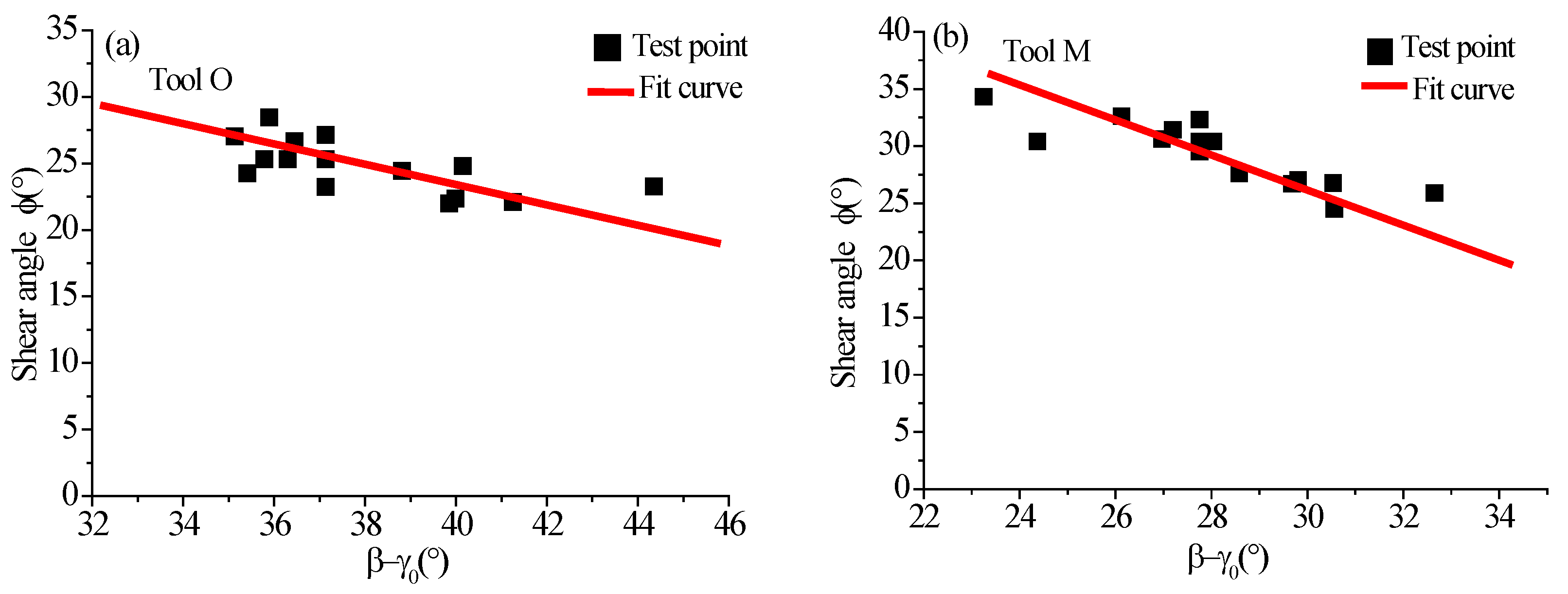
The data points in Figure 5 were fitted to obtain the cutting equations for tool O and M as follows:
ϕ = 55.4267 0.8083 ( β γ 0 ) ,
ϕ = 37.4276 0.2530 ( β γ 0 ) ,
The regression coefficient for tool O is −0.8083, and the regression coefficient for tool M is −0.2530. Combining the images and equations, the friction angle β of tool M is smaller than that of tool O under each set of parameters, while the shear angle ϕ is larger than that of tool O. The tool M makes the tool sharper, reduces the chip deformation, and increases the shear angle in the shear zone (Table 5).
Due to the greater instability in cutting force variation over time during tool O’s machining process, tool O exhibits a larger C2 value (−0.8083), indicating heightened sensitivity of the shear angle φ to changes in (β − γ0). Simply put, even slight variations in the friction angle or angle result in more pronounced changes in the shear angle. This may be attributed to tool O’s edge design or material properties, leading to more unstable friction behavior during cutting.
Tool M exhibits a gentler slope (−0.2530), suggesting that the micro-groove structure may alter the friction behavior at the tool–chip interface. This makes the shear angle less sensitive to variations in (β − γ0), resulting in a more stable cutting process.
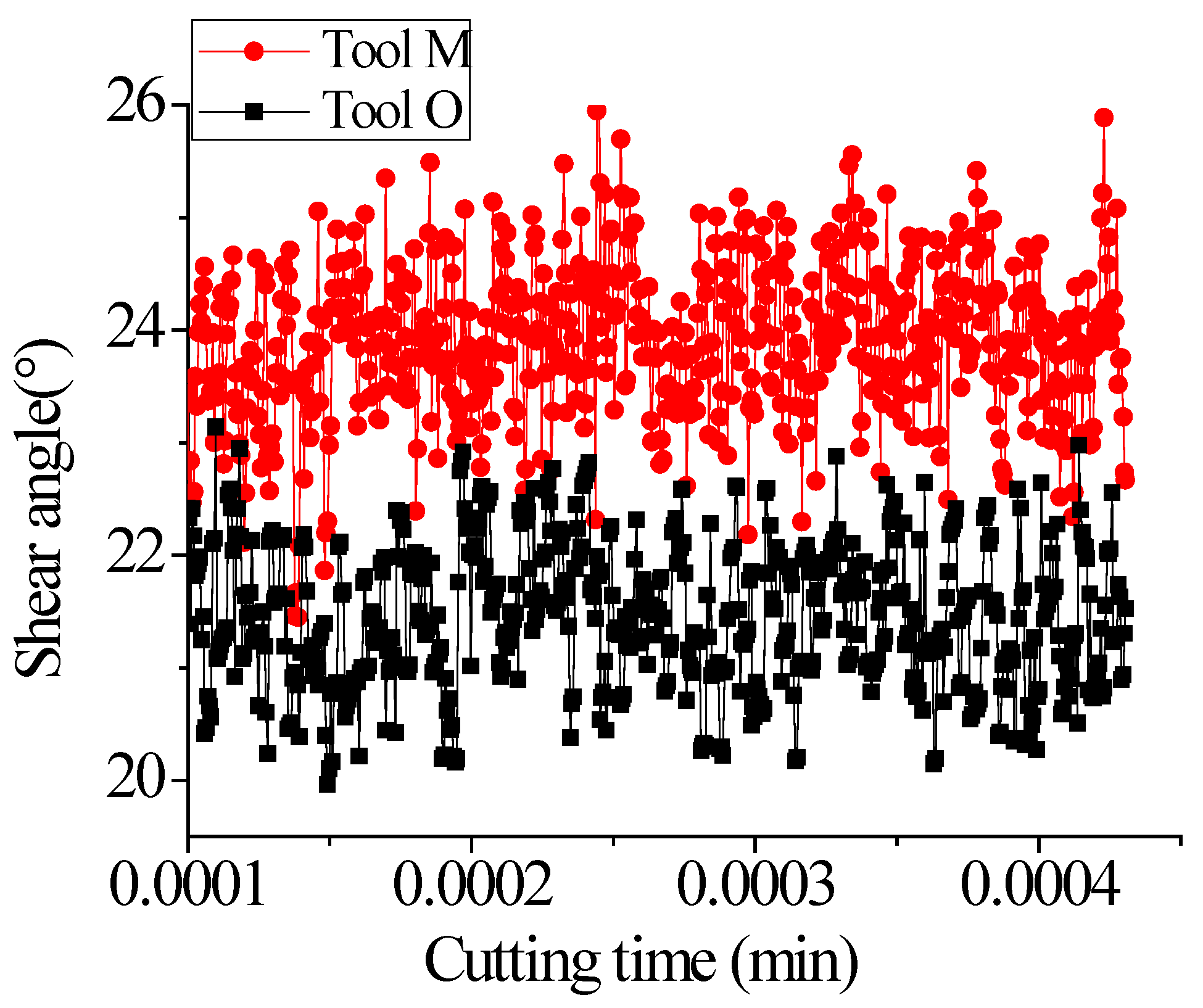
In Figure 6, the variation in the shear angle with cutting time during the simulation of cutting with cutting speed Vc = 120 m/min, f = 0.15 mm, and ap = 1.5 mm is plotted. The shear angles of tool O and M in the figure have smaller errors compared to the calculated values from the cutting equation. The average shear angle of tool M is 24.3°, while that of tool O is 21.2°. The shear angle of tool M is larger than that of tool O, and the simulation values have a good correspondence with the calculated values. Under the same cutting conditions, the cutting simulation model tool M has a shear angle that is 3.10 degrees larger than that of tool O, while the calculation model shows a difference of 2.98 degrees. The two variations show a good degree of consistency.

2.2. Tool Cutting Durability Test

The cutting durability experiments in this paper were conducted according to Reference [27]. The tool and workpiece materials, cutting parameter settings, number of experimental groups, and cutting forces were identical to those in Reference [27]. Unlike Reference [27], this study demonstrated the superior cutting performance of tool M during the experiments by collecting chips, observing their morphology, and measuring chip thickness.
Under the same cutting conditions, cutting equations differ between tool M and tool O. Due to the micro-groove design on the face, tool M has a larger equivalent angle and shear angle, resulting in a sharper cutting edge, which makes the cutting process smoother. To verify the differences in cutting performance between tool M and tool O, the paper conducted a cutting durability test on both tools under the following conditions: cutting speed vc = 120 m/min, feed rate f = 0.15 mm, and cutting depth ap = 1.5 mm.
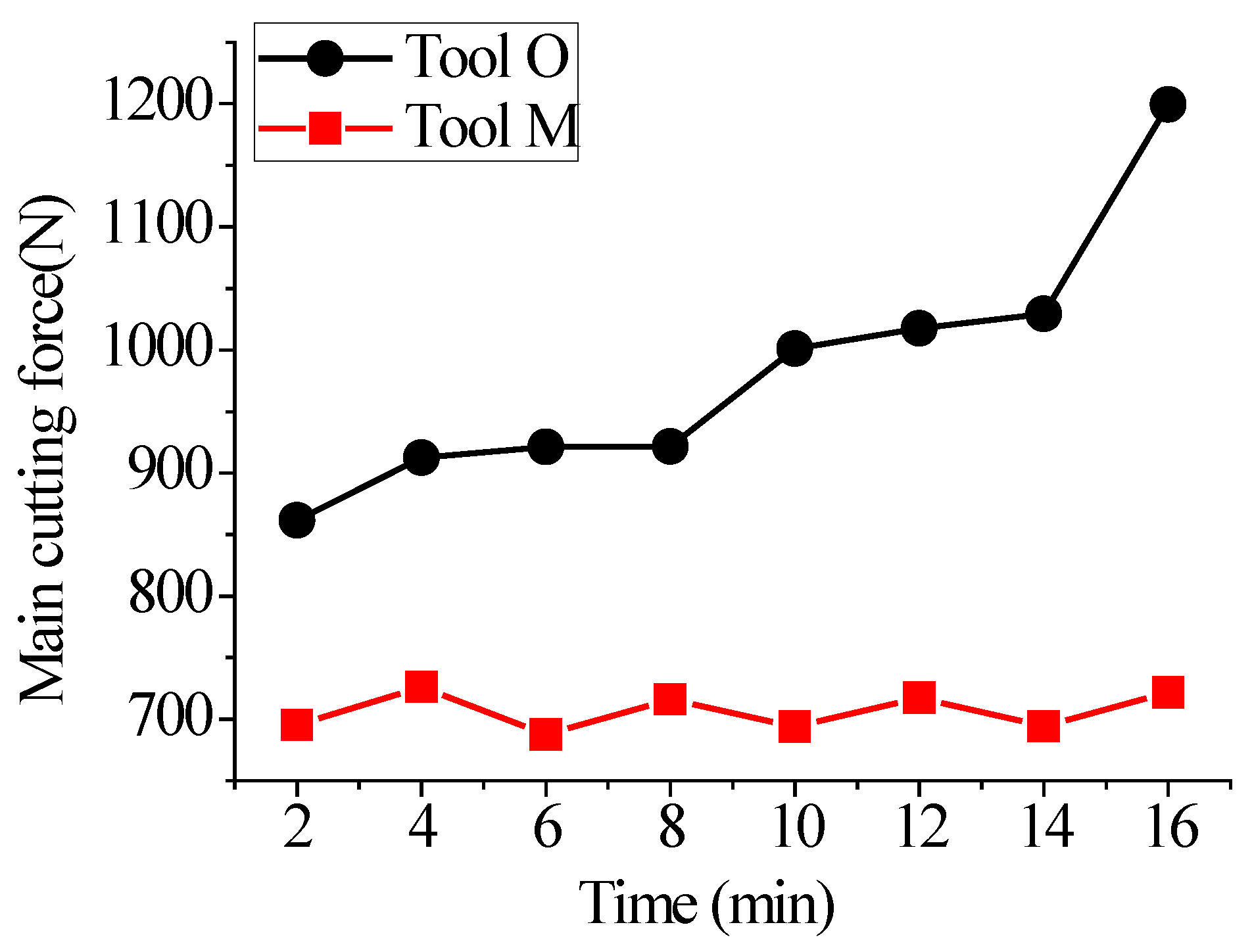
Through the cutting experiments, the cutting forces of the two tools were first compared. Since the primary cutting force has the greatest influence on the cutting process among the three cutting forces, the primary cutting force was used as the comparison criterion. As shown in Figure 7, the primary cutting force of tool M is smaller than that of tool O, with the minimum reduction being 18%. Tool M reduces friction between the tool and the chip due to its micro-groove structure, shortening the length of internal friction, thereby reducing the primary cutting force of tool M. From the trend of changes, the main cutting force of tool O increased sharply after 14 min, while tool M remained in a stable state.
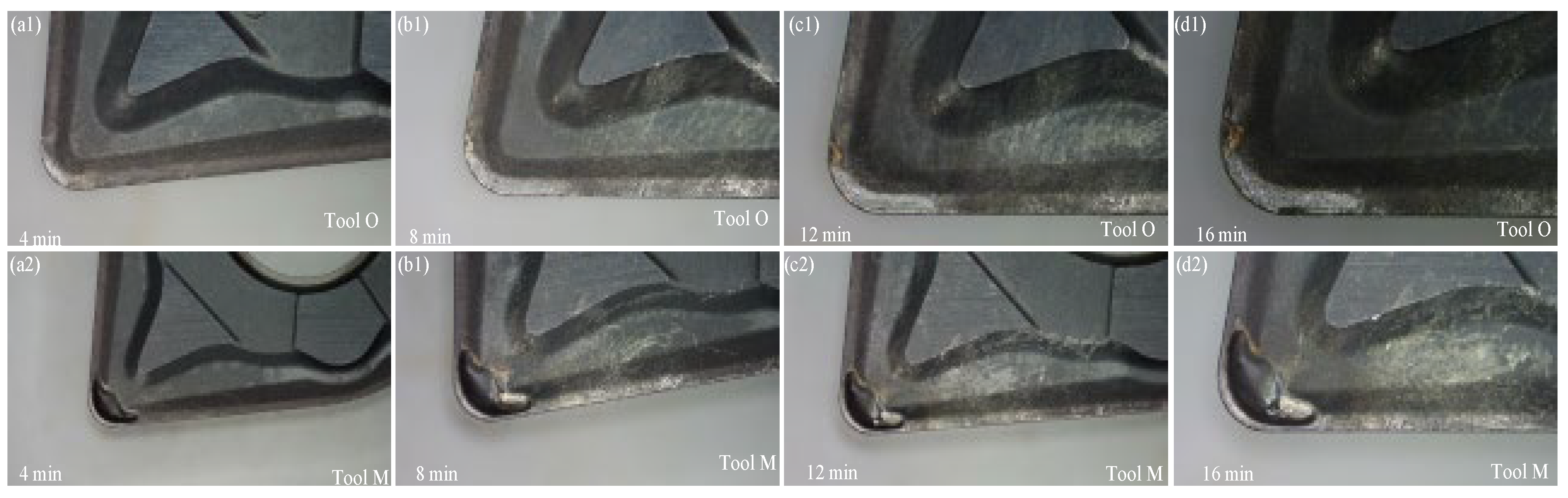
To visually compare the cutting performance of tools O and M, the paper compares the wear morphology of the tool’s face and the chip morphology. As shown in Figure 8, by observing the wear morphology of the tool’s face every 4 min, tool O exhibited significant micro-pitting wear on the secondary cutting edge around the 8 min mark, while the face morphology of tool M remained unchanged at this point. The wear was only observed in the recessed area to the left of the micro-groove, which had no significant impact on the cutting process. When machining reached 16 min, tool O exhibited chipping on the main cutting edge, and the area of pitting wear on the secondary cutting edge increased further. Measurement of the wear width on the rear face revealed that the tool had reached the dullness standard, with an estimated tool life of approximately 16 min. At this point, observation of tool M revealed that the cutting edge and secondary edge were intact. The left side of the micro-groove had been worn to a shiny finish but had not extended to the cutting edge, and thus had no significant impact on the cutting process.
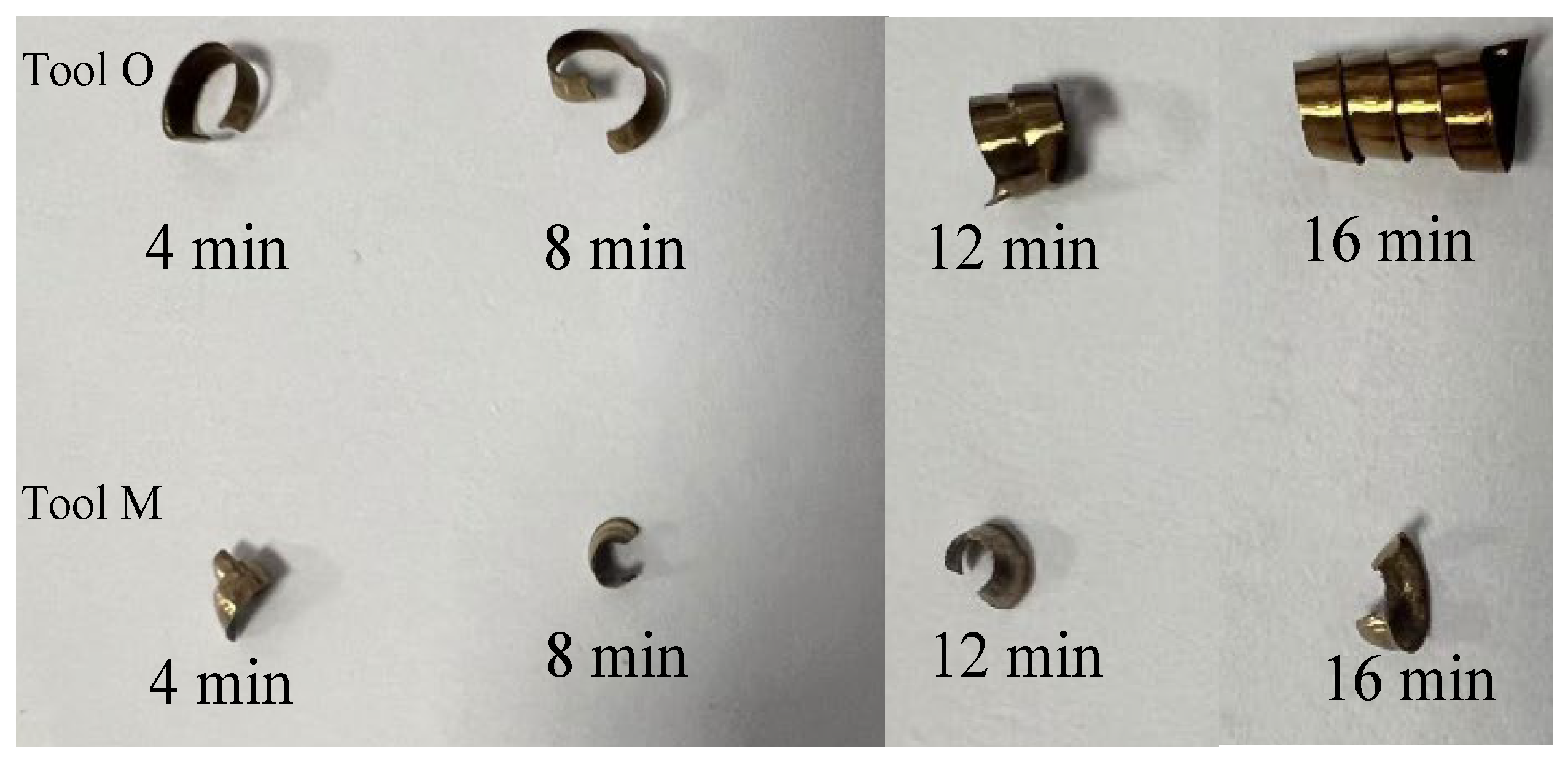
As can be seen from Figure 9, the chip curling performance of tool O is worse than that of tool M at the 4 min mark of cutting. When cutting reaches 12 min, the chip breaking capability of tool O deteriorates, with the overall chip length significantly longer than that of tool M. At the 16 min mark, tool O struggles to break chips effectively, at which point the tool experiences considerable wear, becomes blunt, and results in significantly increased cutting forces and high chip temperature, leading to improved plasticity of the chips. Throughout the cutting process, the chip curling and breaking performance of tool M is significantly better than that of tool O.

3. Results and Discussion

3.1. Characteristics of the Shear Slip Zone in Metal Cutting Deformation

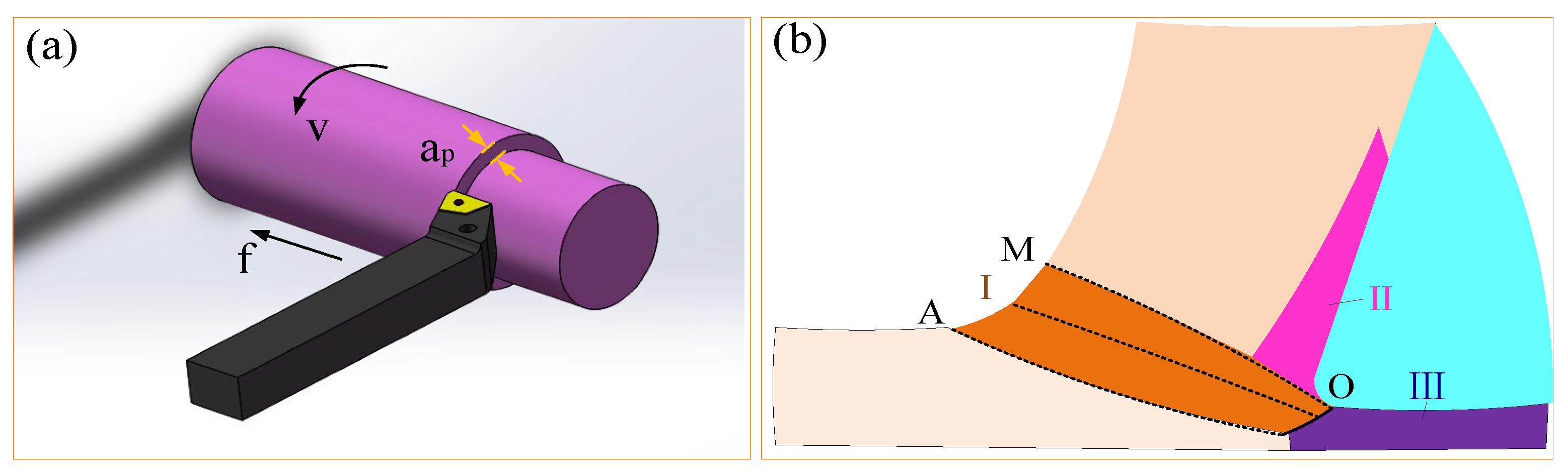
During metal cutting, due to the intense compression of the metal layer by the tool, the shear stress and shear strain within the workpiece gradually increase. When the stress reaches the yield strength of the metal, the workpiece material undergoes plastic deformation and slippage. As the stress and strain continue to increase and reach the fracture strength of the workpiece metal, the metal material flows out along the rake face of the tool to form chips. Figure 10a illustrates the cutting model.
As shown in Figure 10b, the deformation of the workpiece during the cutting process is typically divided into three zones. The first deformation zone, also known as the shear deformation zone, is where the majority of plastic deformation occurs during metal cutting. It is generally located between the cutting edge of the tool and the machined surface and is one of the most critical zones in the cutting process. During metal cutting, the cutting action of the cutting edge on the metal material generates friction heat, leading to an increase in temperature within the first deformation zone. Especially under high-speed cutting conditions, due to the high cutting speed, the temperature in the first deformation zone is relatively high. High temperatures can affect the mechanical properties and surface quality of the metal material. Therefore, understanding the characteristics of the first deformation zone is of great significance for optimizing the metal cutting process, improving processing efficiency, and enhancing processing quality. The second deformation zone in the cutting area is the friction zone between the chip and the rake face. When the chip is ejected, its bottom will experience intense friction with the rake face. The deformation in this zone is the primary cause of rake face wear and the formation of built-up edges. The third deformation zone is the contact and compression zone between the workpiece and the rounded edge of the tool blade and the rear face. This deformation zone is the region where work hardening of the machined surface and residual stresses occur.

3.2. Theoretical Research on the Cutting Equation of Tool

Plastic deformation during cutting was once believed to occur only on a shear plane with zero width. However, S. Atlati [30] and others found that plastic deformation occurs in a shear zone with a certain width, which is wider at low cutting speeds and narrows as the cutting speed increases.
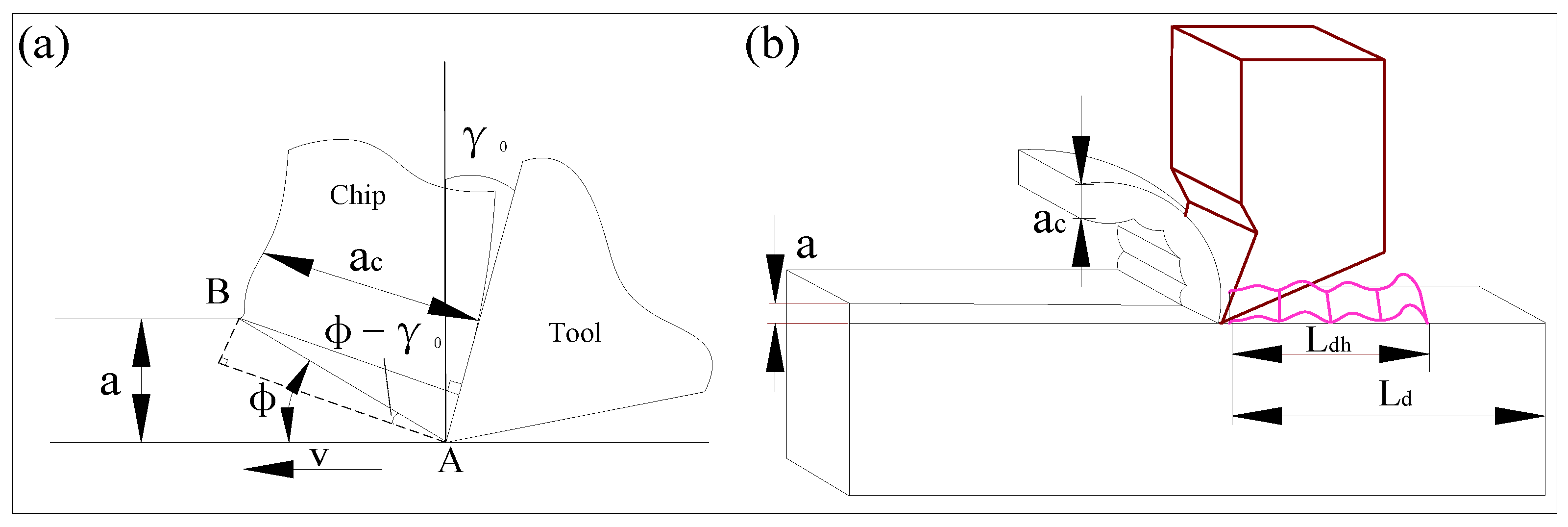
The shear angle is the angle between the shear plane and the cutting speed. From the geometric relationship between the shear angle, cutting thickness, and chip thickness shown in Figure 11, the following formula can be derived:
ξ = a c a = A B c o s ( ϕ γ 0 ) A B s i n ϕ c o s ( β γ 0 ) = c o s ( ϕ γ 0 ) sin ϕ c o s ( β γ 0 ) ,
In the formula, ac is the chip thickness; a is the cutting thickness; γ0 is the tool angle. In the equation, ξ represents the deformation coefficient, which is obtained from the assumption that the material undergoes large plastic deformation and is incompressible. Under plane strain conditions, it can be obtained from the continuity condition:
ξ = a c a = L d L d h ,
As shown in Figure 11, Ld is the cutting length and Ldh is the chip length. It is very difficult to measure ϕ during the cutting process, so the shear angle ϕ can be calculated using Equation (7) by measuring the chip thickness ac value. Generally, as the rake angle γ0 increases, the shear angle ϕ also increases.
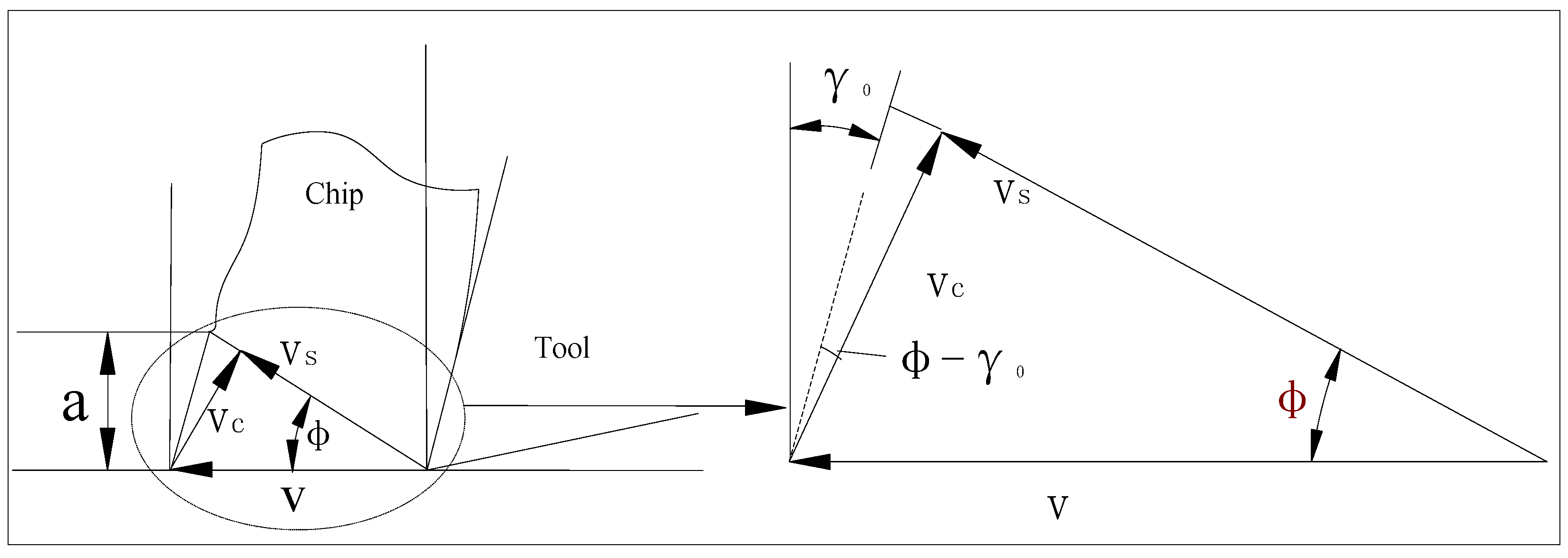
In continuous cutting, as shown in Figure 12, the cutting speed, chip speed, and shear speed form a closed triangle. During continuous cutting, there is a geometric relationship between the cutting speed, chip speed, and shear speed, with these three forming a closed speed triangle.
During the exploration of the cutting model for tools, Merchant proposed the cutting equation, which is Equation (8). However, many scholars have found that the data obtained from many cutting experiments do not fully match this equation. The functional relationship between β and ϕ does not conform to the theory.
2 ϕ = C β + γ 0 ,
Some other researchers, in combination with the slip line field theory, took into account the situation where the tool tip forms chip carbons, and proposed a cutting model:
ϕ = π / 4 + θ β + γ 0 ,
However, neither of the above two cutting models fully takes into account the material’s work hardening.
Oxley–Welsh proposed a variable flow theory [31]. Under the following assumptions, the relationship between the shear angle and the tool’s angle as well as the friction angle was presented:
  • The material is isotropic and a rigid-plastic body. Its flow stress is related to work hardening and the shear strain rate;
  • The chip is a continuous band-like structure and does not form a chip bulge;
  • The chip begins to form from the shear zone, and two parallel planes enclose the shear zone.
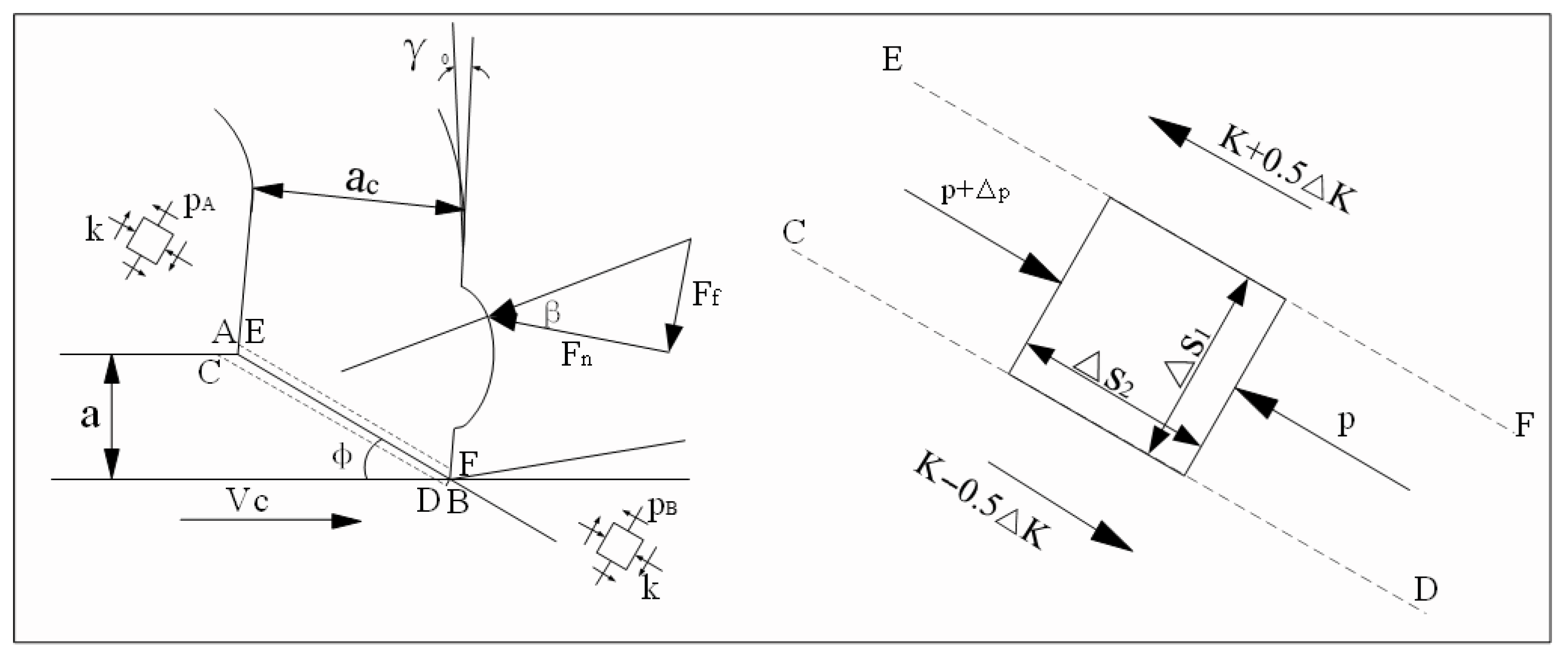
As shown in Figure 13, AB, CD and EF represent the shear lines, which are the directions of maximum shear strain and shear strain rate. Oxley–Welsh’s research results under low-speed experimental conditions show that the average aspect ratio ψ of the shear zone is in the range of 6 to 12. The shear stress on AB is composed of the shear flow stress k and the static hydrostatic stress p. When the material passes through the shear zone, due to factors such as temperature and work hardening, the shear flow stress must change. Assuming that the shear flow stress along CD and EF is k − 0.5△k and k + 0.5△k, respectively, then the change in force along the AB direction is:
Figure 13. Oxley–Welsh shear zone model.
Coatings 16 00427 g013
Δ p = Δ k Δ s 1 Δ s 2 ,
In this formula, Δp, Δk, Δs1, and Δs2 represent the change in static hydrostatic pressure, the total change in shear flow stress, the width of the shear zone, and the length of the shear zone respectively. For the workpiece material, the shear flow stress changes during cutting, and the static hydrostatic stress along the AB line changes. Through analysis, we can obtain:
p A p B = Δ k Δ s 1 a sin ϕ ,
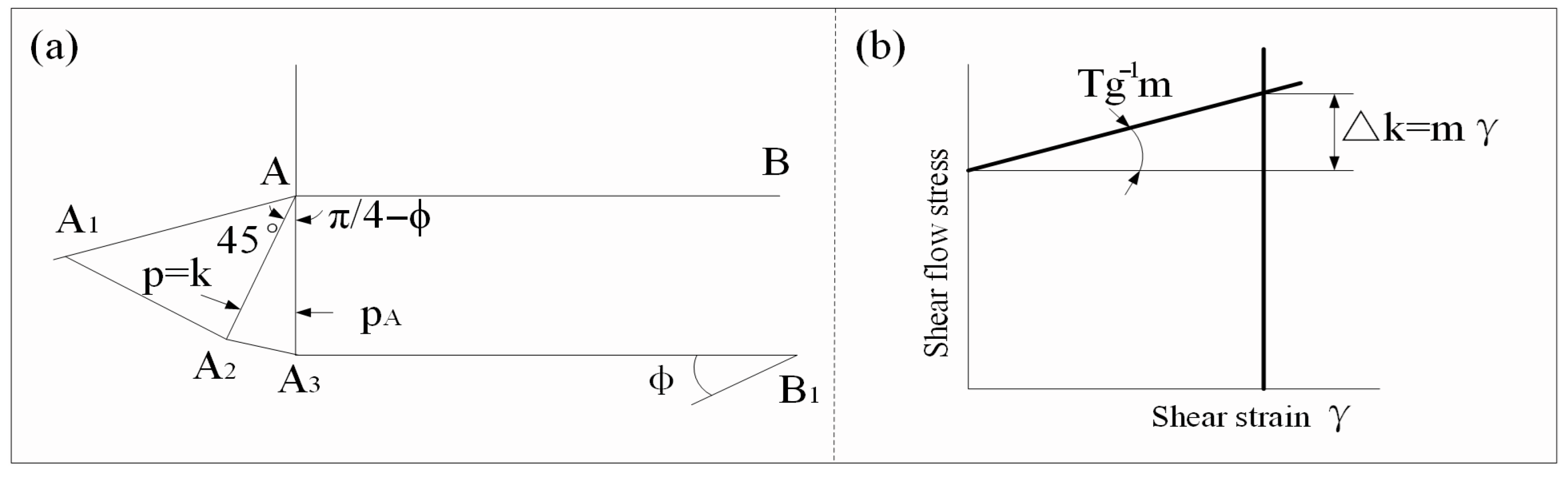
In this formula, pA and pB represent the static hydrostatic pressure at points A and B respectively. To make the analysis easier and more reliable, draw a shear line A1A2A3B1 adjacent to AB, as shown in Figure 14. A1A2A3B1 is the maximum shear stress line with the largest shear stress angle to the free surface AA1, and the shear flow stress is equal to the triangular area AA2A3. Considering the balance of AA2A3, we have:
p A = k [ 1 + 2 ( π 4 ϕ ) ] ,
The shear flow stress–strain curve can be simplified as follows:
Δ k = m γ ,
Here, m represents the slope of the stress–strain curve, and γ represents the shear strain of the EF line.
k = k 0 + Δ k 2 ,
γ = cos γ 0 s i n ϕ c o s ( ϕ γ 0 ) ,
p a = p A + p B 2 ,
Under moderate cutting conditions (such as cutting speeds of 100–500 m/min and moderate shear strain rates), the deformation behavior of the material may approach linear hardening, and the reasonable range of Δk/k0 is usually between 0.3 and 0.7. The setting of 0.5k0 is derived from empirical values in similar studies, such as those used in classic literature by Oxley and Welsh.
In the formula, k0 represents the initial shear flow stress, and pa represents the average hydrostatic stress in the shear zone.
Based on the above analysis and the theory of Oxley–Welsh [31]:
  • Cutting speed range: At moderate cutting speeds (such as 100–500 m/min), the relationship between cutting force and speed is close to linear, and the nonlinear term can be ignored.
  • Shear strain level: When the shear strain rate is at a moderate level (such as 104–105 s−1), the deformation behavior of the material can be approximated as linear hardening.
  • The magnitude of Δk/k: If Δk/k (chip thickness change rate) is small (such as <10%), the influence of nonlinear terms on the results can be ignored.
The cutting equation is:
ϕ = t g 1 [ 1 + 2 ( π 4 ϕ ) 5 Δ k k ] β + γ 0 ,
A large number of experimental studies have shown that if the cutting conditions are restricted within a certain range, the Oxley–Welsh cutting equation can be expressed in a linear form as follows:
ϕ = C 1 C 2 ( β γ 0 ) ,
According to the cutting experiments in Section 2.2, under identical conditions, the cutting equation of the tool indicates that the shear angle of the micro-grooved tool is larger than that of the original tool. This increased shear angle results in a smoother cutting process. The micro-groove design enhances the sharpness of the cutting edge during machining, leading to reduced cutting forces. Durability tests reveal that over the 16 min cutting period, the micro-grooved tool exhibits significantly less wear on the face and minimal cutting edge wear. Additionally, it demonstrates superior chip breaking and curling performance.
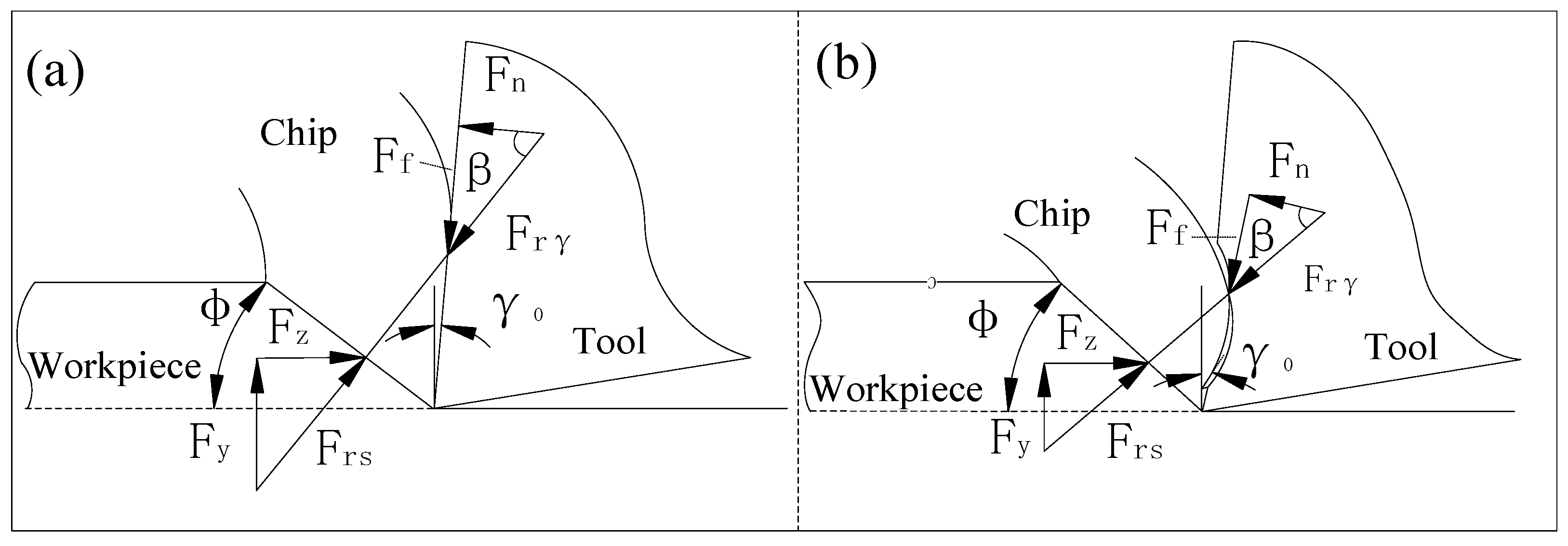
As illustrated in Figure 15, the micro-grooves alter the contact and friction behavior between the tool and the chip on the face. This modification shifts the force equilibrium system, establishing a new balance of forces.
Overall, micro-groove cutting tools have significant effects in improving cutting performance, mainly reflected in lower cutting forces and less wear [32]. Figure 14 demonstrates that the resultant force line of the micro-grooved tool–chip system rotates clockwise. This rotation alters the direction of normal pressure between the chip and the face, while the friction force also undergoes a slight clockwise directional shift. The diagram indicates that the tool’s equivalent angle γ0 increases, resulting in a larger shear angle ϕ and a reduced friction angle β [31].
In summary, the paper mainly discusses the shear angle variation law of hard alloy cutting tools when cutting stainless steel materials, and its conclusions have strong applicability under the same material system and tool geometry parameters. However, due to the specific cutting speed, feed rate, and back cutting range used in the experiment, caution should be exercised when extrapolating to other types of materials and extreme machining conditions.

4. Conclusions

  • Cutting experiments confirm that under identical conditions, tool M exhibits a larger shear angle than the original tool O. This increase in shear angle modifies the force relationship between the tool and chip, enhancing cutting sharpness and reducing cutting resistance.
  • During durability testing, tool M’s main cutting force is lower than tool O’s by at least 18%. Tool M also shows significantly less wear on the face, particularly near the primary and secondary cutting edges.
  • Under the same cutting parameters, tool M produces thinner chips than tool O. Throughout the durability test, tool M demonstrates superior chip curling and breaking performance compared to tool O.

Author Contributions

Conceptualization, W.Y. and L.Y.; methodology, W.Y. and J.W.; software, J.L. validation, W.Y., L.Y. and J.W.; formal analysis, W.Y. and L.Y.; investigation, W.Y. and L.Y.; resources, J.W., W.Y. and L.Y.; data curation, W.Y. and L.Y.; writing—original draft preparation, W.Y. and L.Y.; writing—review and editing, W.Y. and L.Y.; visualization, J.W.; supervision, J.W.; project administration, J.W.; funding acquisition, J.W. All authors have read and agreed to the published version of the manuscript.

Funding

This study was supported by the Natural Science Foundation of Guizhou Minzu University (Grant No: GZMUZK [2022] YB01); Doctoral Student Training Fund Project of Guizhou Minzu University (Grant No: GZMUZK [2024] QD72); Guizhou Provincial Science and Technology Project (Grant Nos: KJZY [2025] 082; KJZY [2025] 080).

Institutional Review Board Statement

Not applicable.

Informed Consent Statement

Not applicable.

Data Availability Statement

The original contributions presented in the study are included in the article; further inquiries can be directed to the corresponding author.

Conflicts of Interest

Author Wenfeng Yang is employed by the Guizhou Aerospace Cloud Network Technology Co., Ltd.; Author Jinxing Wu is employed by the Guiyang Xianfeng Machine Tool Co., Ltd. The remaining authors declare that the research was conducted in the absence of any commercial or financial relationships that could be construed as a potential conflict of interest.

References

  1. Imad, M.; Hopkins, C.; Hosseini, A.; Yussefian, N.Z.; Kishawy, H.A. Intelligent machining: A review of trends, achievements and current progress. Int. J. Comput. Integr. Manuf. 2022, 35, 359–387. [Google Scholar] [CrossRef]
  2. Abdelaoui, F.Z.E.; Jabri, A.; Barkany, A.E. Optimization techniques for energy efficiency in machining processes—A review. Int. J. Adv. Manuf. Technol. 2023, 125, 2967–3001. [Google Scholar] [CrossRef]
  3. Kuntoğlu, M.; Salur, E.; Gupta, M.K.; Sarıkaya, M.; Pimenov, D.Y. A state-of-the-art review on sensors and signal processing systems in mechanical machining processes. Int. J. Adv. Manuf. Technol. 2021, 116, 2711–2735. [Google Scholar] [CrossRef]
  4. Vavruska, P.; Bartos, F.; Stejskal, M.; Pesice, M.; Zeman, P.; Heinrich, P. Increasing tool life and machining performance by dynamic spindle speed control along toolpaths for milling complex shape parts. J. Manuf. Process. 2023, 99, 283–297. [Google Scholar] [CrossRef]
  5. Sristi, N.A.; Zaman, P.B. A review of textured cutting tools’ impact on machining performance from a tribological perspective. Int. J. Adv. Manuf. Technol. 2024, 133, 4023–4057. [Google Scholar] [CrossRef]
  6. Etxebeste, M.; Ortiz-de-Zarate, G.; Arrieta, I.M.; Arrazola, P.J. A virtual design methodology to improve the dynamics and productivity of large milling tools. J. Manuf. Process. 2025, 134, 1096–1113. [Google Scholar] [CrossRef]
  7. Zhou, X.; He, L.; Zhou, T.; Yuan, S.; Tian, P.; Zou, Z. A comprehensive review of tool surface texturing in the cutting process. Int. J. Adv. Manuf. Technol. 2022, 123, 2427–2467. [Google Scholar] [CrossRef]
  8. Jiang, Y.M.; Huang, W.; Tian, Y.; Yang, M.Y.; Xu, W.W.; An, Y.J.; Zhou, M. Research on cutting tool edge geometry design based on SVR-PSO. Int. J. Adv. Manuf. Technol. 2024, 131, 5047–5059. [Google Scholar] [CrossRef]
  9. Hodgyai, N.; Máté, M.; Oancea, G.; Dragoi, M.V. Gear Hobs—Cutting Tools and Manufacturing Technologies for Spur Gears: The State of the Art. Materials 2024, 17, 3219. [Google Scholar] [CrossRef] [PubMed]
  10. Rahman, H.A.; Ghani, J.A.; Rasani, M.R.M.; Mahmood, W.M.F.W.; Yaaqob, S.; Abd Aziz, M.S. Application of finite element analysis and computational fluid dynamics in machining AISI 4340 steel. Tribol. Int. 2025, 207, 110616. [Google Scholar] [CrossRef]
  11. Pérez-Salinas, C.; de Lacalle, L.N.L.; del Olmo, A.; Kumar, C.S. The relationship between the cutting-edge, tool wear, and chip formation during Inconel 718 dry cutting. Int. J. Adv. Manuf. Technol. 2024, 132, 6001–6017. [Google Scholar] [CrossRef]
  12. Saraf, G.; Nirala, C.K. Experimental investigation of micro-pillar textured WC inserts during turning of Ti6Al4V under various cutting fluid strategies. J. Manuf. Process. 2024, 113, 61–75. [Google Scholar] [CrossRef]
  13. Zhang, X.; Li, M.; Soo, S.L.; Yang, X. Effects of chip breaker groove and tool nose radius on progressive tool wear and behavior when turning GH3536 nickel-based superalloys. Tribol. Int. 2024, 197, 109806. [Google Scholar] [CrossRef]
  14. Afzal, M.Z.; Khan, S.A.; Raza, S.F.; Naveed, R.; Anwar, S.; Farooq, M.U. Exploring novel PVD coated wiper inserts’ chip breaker designs and feed rates on tool wear and in-depth hole integrity of Ti-6Al-4V alloy when drilling in a dry environment. J. Manuf. Process. 2024, 131, 1667–1685. [Google Scholar] [CrossRef]
  15. Liu, S.; Li, H.; Xia, K.; An, L.; Peng, M.; Li, Z.; Chen, Y.L. Frictional dynamics of tool-chip interactions in ultra-precision cutting of titanium alloy utilizing a PFPE-coated diamond tool. J. Manuf. Process. 2025, 149, 1032–1045. [Google Scholar] [CrossRef]
  16. Alammari, Y.; Weng, J.; Saelzer, J.; Biermann, D. Transient Temperature at Tool–Chip Interface during Initial Period of Chip Formation in Orthogonal Cutting of Inconel 718. Materials 2024, 17, 2232. [Google Scholar] [CrossRef]
  17. Yang, S.; Sun, J.; Gou, Y.; Zheng, M.; Su, S.; Wang, X. Wear life prediction of cemented carbide microtextured surface. Mater. Sci. Eng. B 2020, 262, 114685. [Google Scholar] [CrossRef]
  18. Guimarães, B.; Fernandes, C.M.; Figueiredo, D.; Carvalho, O.; Silva, F.S.; Miranda, G. Effect of laser surface texturing on the wettability of WC-Co cutting tools. Int. J. Adv. Manuf. Technol. 2020, 111, 1991–1999. [Google Scholar] [CrossRef]
  19. Li, C.; Qiu, X.; Yu, Z.; Li, S.; Li, P.; Niu, Q.; Ko, T.J. Novel environmentally friendly manufacturing method for micro-textured cutting tools. Int. J. Precis. Eng. Manuf.-Green Technol. 2021, 8, 193–204. [Google Scholar] [CrossRef]
  20. Zhang, N.; Yang, F.; Jiang, F.; Zhang, Y.; Liu, G. Investigation of tribological performance of micro-groove textured cemented carbide surfaces. Surf. Eng. 2020, 36, 1190–1199. [Google Scholar] [CrossRef]
  21. Orra, K.; Choudhury, S.K. Tribological aspects of various geometrically shaped micro-textures on cutting insert to improve tool life in hard turning process. J. Manuf. Process. 2018, 31, 502–513. [Google Scholar] [CrossRef]
  22. Sugihara, T.; Enomoto, T. Performance of cutting tools with dimple textured surfaces: A comparative study of different texture patterns. Precis. Eng. 2017, 49, 52–60. [Google Scholar] [CrossRef]
  23. Sugihara, T.; Enomoto, T. Crater and flank wear resistance of cutting tools having micro textured surfaces. Precis. Eng. 2013, 37, 888–896. [Google Scholar] [CrossRef]
  24. Ahmed, Y.S.; Paiva, J.M.; Arif, A.F.M.; Amorim, F.L.; Torres, R.D.; Veldhuis, S.C. The effect of laser micro-scale textured tools on the tool-chip interface performance and surface integrity during austenitic stainless-steel turning. Appl. Surf. Sci. 2020, 510, 145455. [Google Scholar] [CrossRef]
  25. Guo, D.; Guo, X.; Zhang, K.; Chen, Y.; Zhou, C.; Gai, L. Improving cutting performance of carbide twist drill combined internal cooling and micro-groove textures in high-speed drilling Ti6Al4V. Int. J. Adv. Manuf. Technol. 2019, 100, 381–389. [Google Scholar] [CrossRef]
  26. Liu, G.; Huang, C.; Su, R.; Özel, T.; Liu, Y.; Xu, L. 3D FEM simulation of the turning process of stainless steel 17-4PH with differently texturized cutting tools. Int. J. Mech. Sci. 2019, 155, 417–429. [Google Scholar] [CrossRef]
  27. Wu, J.; He, L.; Wu, Y.; Zhou, C.; Zou, Z.; Zhan, G.; Zhang, X. Enhancing wear resistance and cutting performance of a long-life micro-groove tool in turning AISI 201. Coatings 2021, 11, 1515. [Google Scholar] [CrossRef]
  28. Kazemi, F.; Song, C.; Clare, A.T.; Jin, X. A New Cutting Mechanics Model for Improved Shear Angle Prediction in Orthogonal Cutting Process. J. Manuf. Sci. Eng. 2025, 147, 041003. [Google Scholar] [CrossRef]
  29. Lalwani, D.I.; Mehta, N.K.; Jain, P.K. Extension of Oxley’s predictive machining theory for Johnson and Cook flow stress model. J. Mater. Process. Technol. 2009, 209, 5305–5312. [Google Scholar] [CrossRef]
  30. Atlati, S.; Moufki, A.; Nouari, M.; Haddag, B. Interaction between the local tribological conditions at the tool–chip interface and the thermomechanical process in the primary shear zone when dry machining the aluminum alloy AA2024–T351. Tribol. Int. 2017, 105, 326–333. [Google Scholar] [CrossRef]
  31. Jiang, H.; Ren, Z.; Zou, Z.; Yuan, S.; Yi, Y. Reinforcement effect of cutting process on machined surface quality and performance of aviation aluminum alloy 7075 based on Oxley-Welsh theory. J. Manuf. Process. 2023, 95, 38–52. [Google Scholar] [CrossRef]
  32. Zou, Z.; He, L.; Jiang, H.; Zhan, G.; Wu, J. Development and analysis of a low-wear micro-groove tool for turning Inconel 718. Wear 2019, 420, 163–175. [Google Scholar] [CrossRef]
Figure 1. Simulation model of tool cutting.
Coatings 16 00427 g001
Figure 2. (a) Tool temperature distribution; (b) tool wear diagram after cutting experiment; (c) dimensions of micro-groove cutting tools.
Coatings 16 00427 g002
Figure 3. (a) CNC machine tool; (b) Dynamometer; (c) Chip sampling; (d) Chip observation.
Coatings 16 00427 g003
Figure 4. Diagonal Cutting Model.
Coatings 16 00427 g004
Figure 5. (a) Cutting equation of tool O; (b) cutting equation of tool M.
Coatings 16 00427 g005
Figure 6. Comparison of cutting angles for tools O and M.
Coatings 16 00427 g006
Figure 7. Comparison of main cutting force for tools O and M.
Coatings 16 00427 g007
Figure 8. Comparison of tools wear morphology. (a1) Tool O morphology after cutting for 4 min; (b1) Tool O morphology after cutting for 8 min; (c1) Tool O morphology after cutting for 12 min; (d1) Tool O morphology after cutting for 16 min. (a2) Tool M morphology after cutting for 4 min; (b2) Tool M morphology after cutting for 8 min; (c2) Tool M morphology after cutting for 12 min; (d2) Tool M morphology after cutting for 16 min.
Coatings 16 00427 g008
Figure 9. Comparison of chip morphology during the cutting process of tools O and M.
Coatings 16 00427 g009
Figure 10. (a) Cutting model; (b) three deformation zones in the shear zone.
Coatings 16 00427 g010
Figure 11. (a) Geometric relationship between shear angle and cutting thickness; (b) schematic diagram of chips and cutting thickness.
Coatings 16 00427 g011
Figure 12. Cutting speed vector diagram.
Coatings 16 00427 g012
Figure 14. (a) Free surface elements; (b) stress–strain simplified curve.
Coatings 16 00427 g014
Figure 15. (a) Force equilibrium in chip formation with the original tool; (b) force equilibrium in chip formation with the micro-grooved tool.
Coatings 16 00427 g015
Table 1. The materials and physical parameters of the cutting tools and the workpieces.
Performance Parametersρ
(g/cm3)
Tensile StrengthBending Strength (GPa)HardnessPoisson’s
Ratio
Elastic Modulus (GPa)
Tool (M30)14.64.7 GPa1.491 HRA0.23630–640
Workpiece-AISI2017.93543 MPa/274.56 HV0.249201
Table 2. Geometric angle of cutting tool.
Geometric
Angle
Tool
Angle

Angle
Clearance
Angle
Main Cutting Edge AngleEnd Cutting Edge AngleInclination Angle
Value (°)808595−57
Table 3. Cutting experiment design and chip thickness.
Sequencev (m/min)f (mm/r)ap (mm)Tool O-ac (mm)Tool M-ac (mm)
A1800.151.50.2950.253
A21000.151.50.3170.264
A31200.151.50.3350.274
A41400.151.50.3480.312
A51600.151.50.3890.347
B11200.111.50.2570.175
B21200.151.50.3350.274
B31200.191.50.3940.324
B41200.231.50.4830.386
B51200.271.50.5520.451
C11200.151.10.3120.272
C21200.151.50.3350.274
C31200.151.90.3670.283
C41200.152.30.3820.305
C51200.152.70.3870.316
Table 4. Numerical processing of chip measurement values.
Experiment NumberMeasured Value (mm)Mean (mm)Standard Deviation (mm)Sample Size
10.292; 0.297; 0.2960.2950.00263
20.315; 0.318; 0.3180.3170.00173
30.332; 0.337; 0.3360.3350.00263
Table 5. Regression analysis of cutting equations.
Regression analysis of ϕ = 55.4267 0.8083 ( β γ 0 )
VariableCoefficient estimateStandard errorp-value95% confidence interval
C155.42672.10340.0001(50.6123, 60.2411)
C2−0.80830.11270.0012(−1.0654, −0.5512)
R20.9376
Regression analysis of ϕ = 37.4276 0.2530 ( β γ 0 ) ,
VariableCoefficient estimateStandard errorp-value95% confidence interval
C137.42761.87320.0001(33.1021, 41.7513)
C2−0.25300.09870.0342(−0.4789, −0.0271)
R20.9124
Disclaimer/Publisher’s Note: The statements, opinions and data contained in all publications are solely those of the individual author(s) and contributor(s) and not of MDPI and/or the editor(s). MDPI and/or the editor(s) disclaim responsibility for any injury to people or property resulting from any ideas, methods, instructions or products referred to in the content.