Performance Assessment of Acrylate Metal Complex (AMC) and Conventional Consolidants for Fragile Bone Artefacts


Highlights
- AMC forms an organic-inorganic hybrid reinforcement network via coordination with Ca2+ in bone matrix.
- AMC exhibits superior penetration, mechanical enhancement, and aging resistance compared to B72 and Remmers 300.
- AMC demonstrates excellent compatibility and stability in real archaeological bone artifacts.
- Theoretical significance: This study breaks through the traditional “surface film-forming” reinforcement model and proposes a strategy of constructing an internal reinforcement network through organic-inorganic synergy, providing a new theoretical path for the deep reinforcement of porous bone artifacts.
- Methodological significance: This study established a simulated sample model based on structure matching and applied it to real unearthed bone artifacts for verification. This formed a systematic research path from mechanism research and performance evaluation to practical application, providing a research paradigm that can be promoted for the scientific evaluation and technical verification of cultural relic protection materials.
- Application significance: AMC exhibits comprehensive advantages in mechanical reinforcement, aging resistance, and appearance compatibility, providing a new solution for the long-term stable preservation of fragile bone artifacts.
Abstract
1. Introduction
2. Materials and Methods
2.1. Materials and Preparation
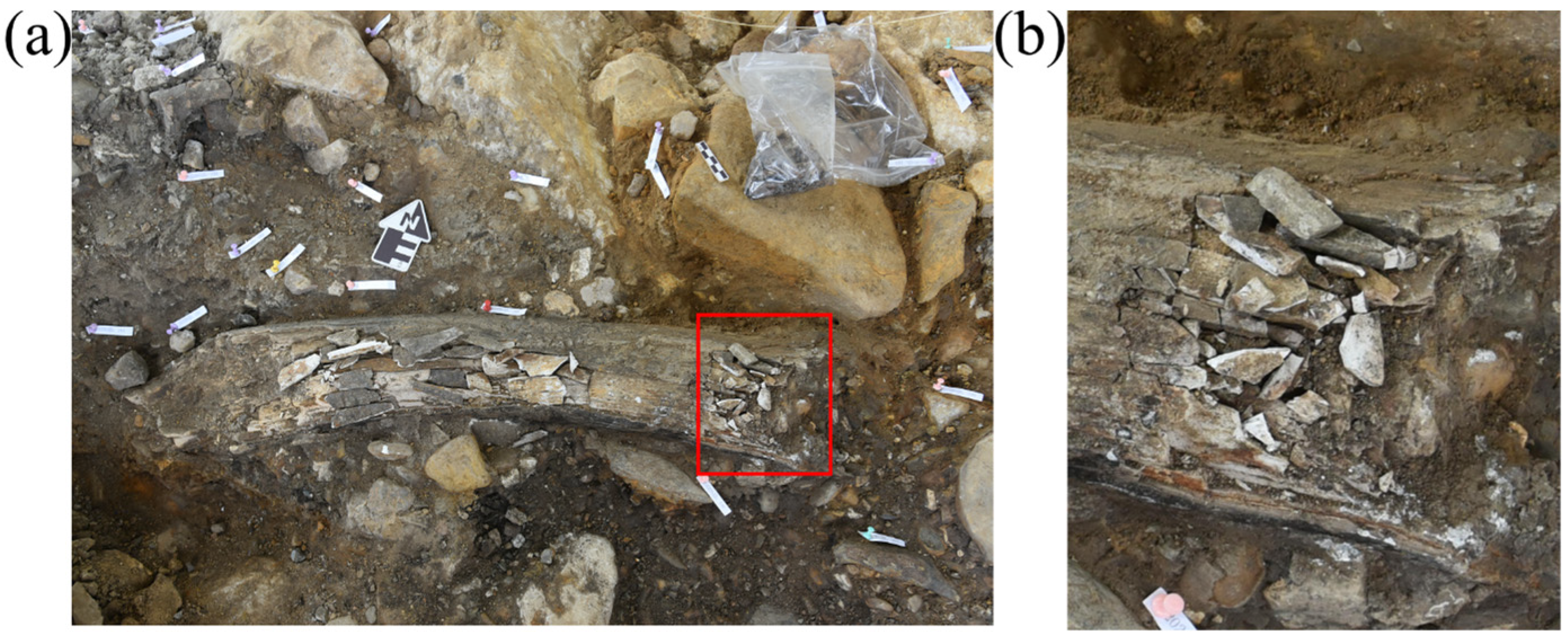
2.1.1. Bone Artifact Materials
2.1.2. Preparation of Reinforcing Agents
2.2. Performance Evaluation
2.2.1. Experimental Equipment
2.2.2. Characterization Methods
- Surface color:
- Penetration performance:
- Morphological analysis:
- Elemental and phase analysis:
- Compactness:
- Structural and mechanical property tests:
- Durability and stability evaluation:
2.2.3. Statistical Analysis
2.3. Preparation of Simulated Powdered Bone Samples
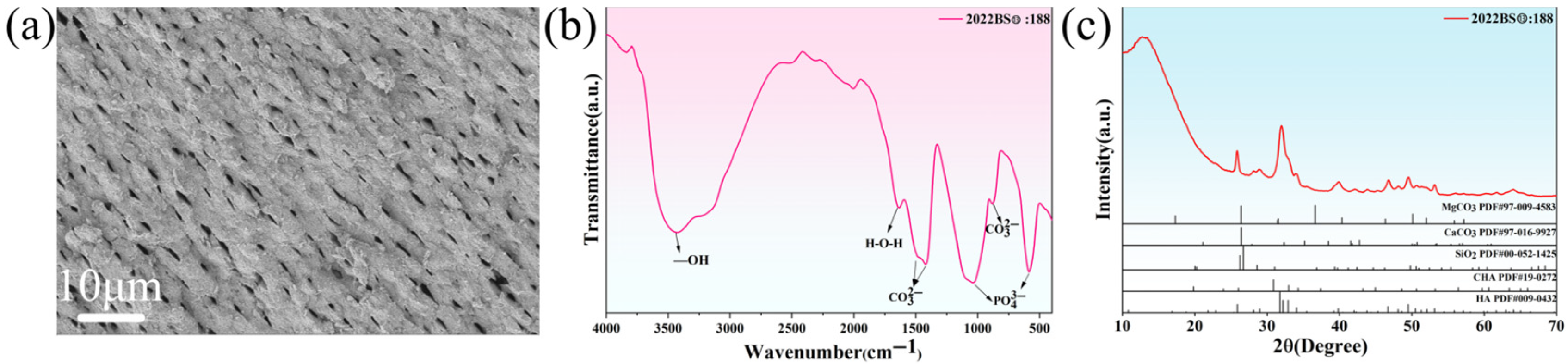
2.3.1. Composition and Microstructure of Excavated Archaeological Bone Artifacts
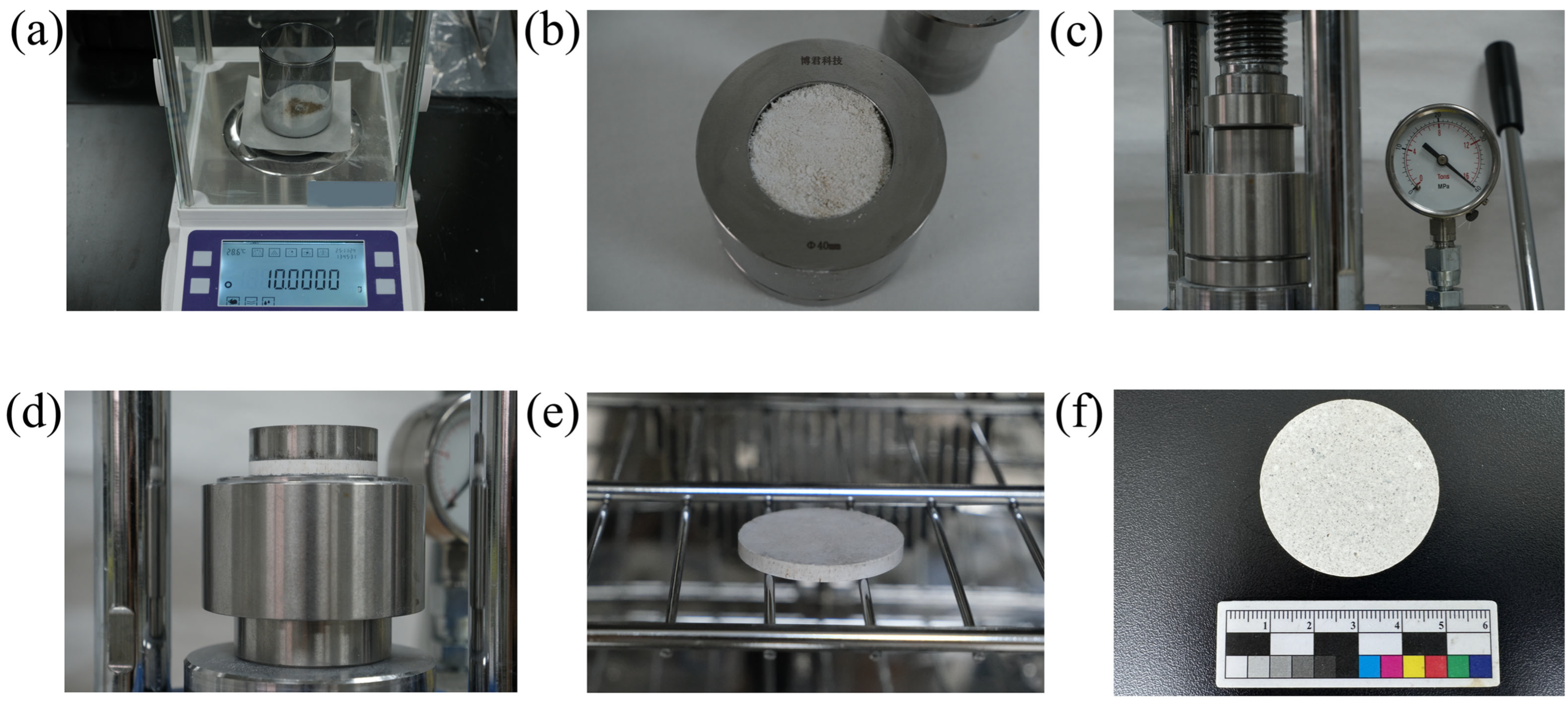
2.3.2. Preparation of Simulated Samples
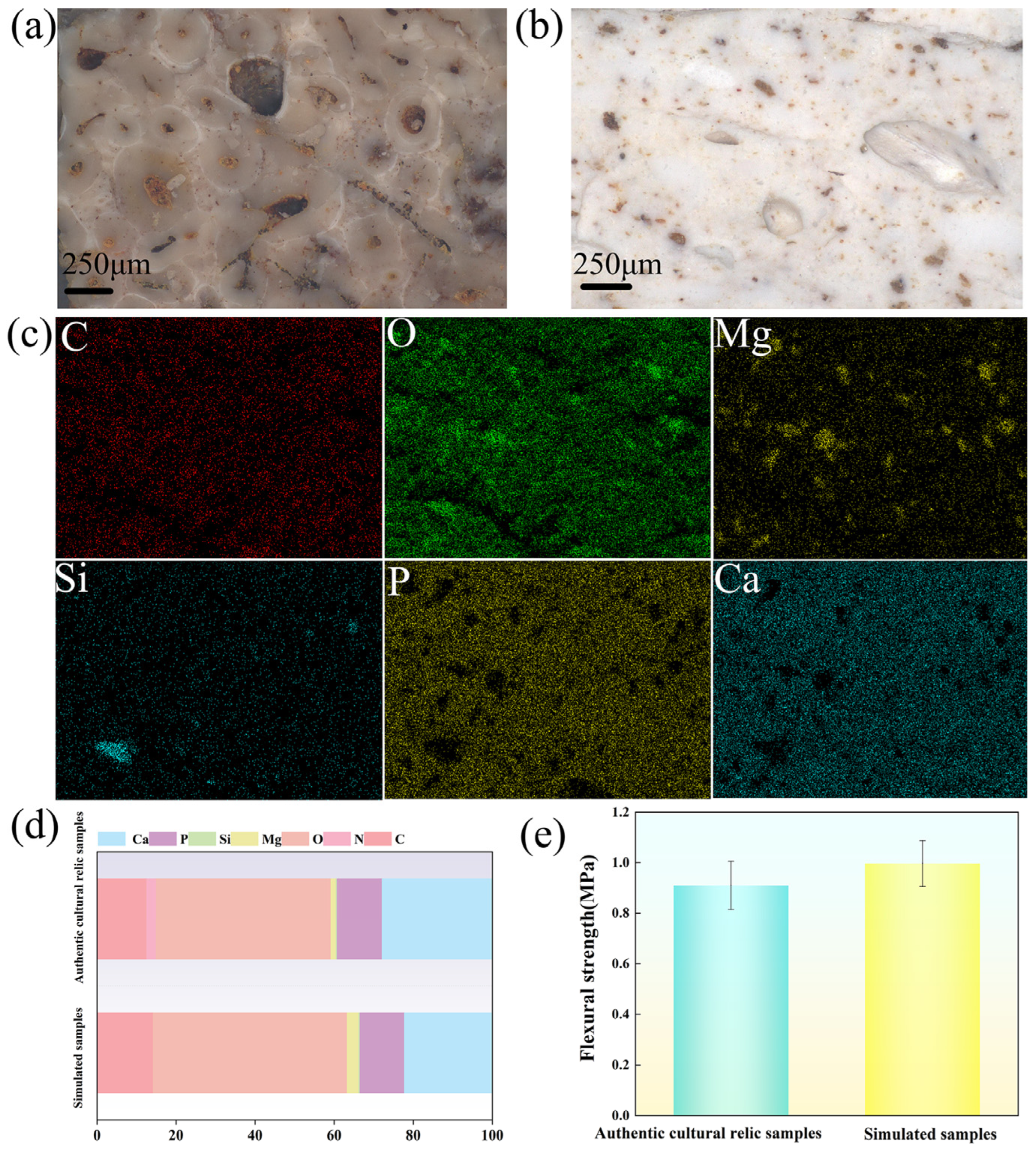
2.3.3. Comparative Analysis of Simulated Samples and Samples
2.4. Reinforcement Process
3. Results
3.1. Surface Color Variation
3.2. Penetration Performance
3.3. Morphological Analysis
3.4. Elemental and Phase Composition Analysis
3.5. Compactness Evaluation
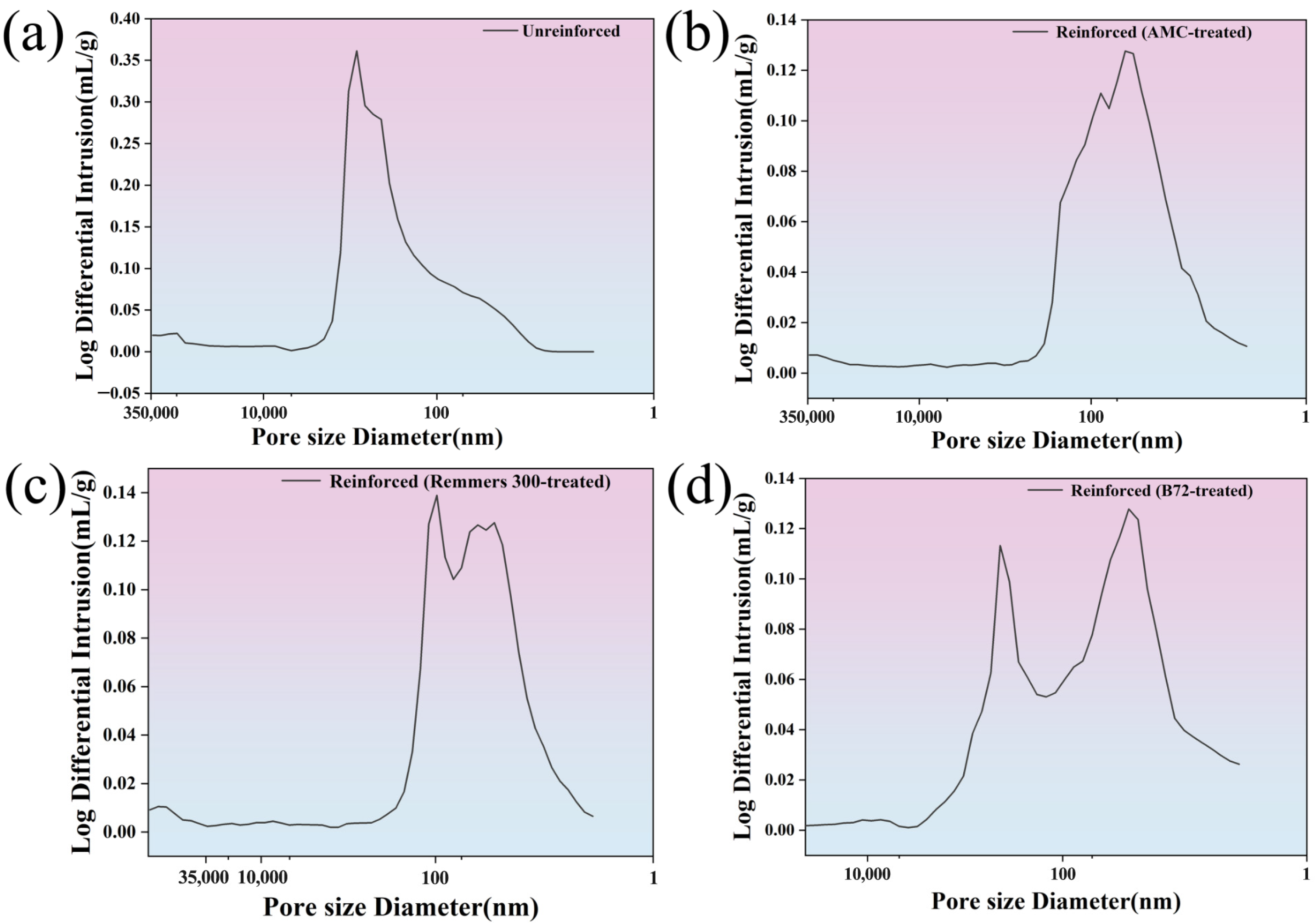
3.6. Porosity Characteristics
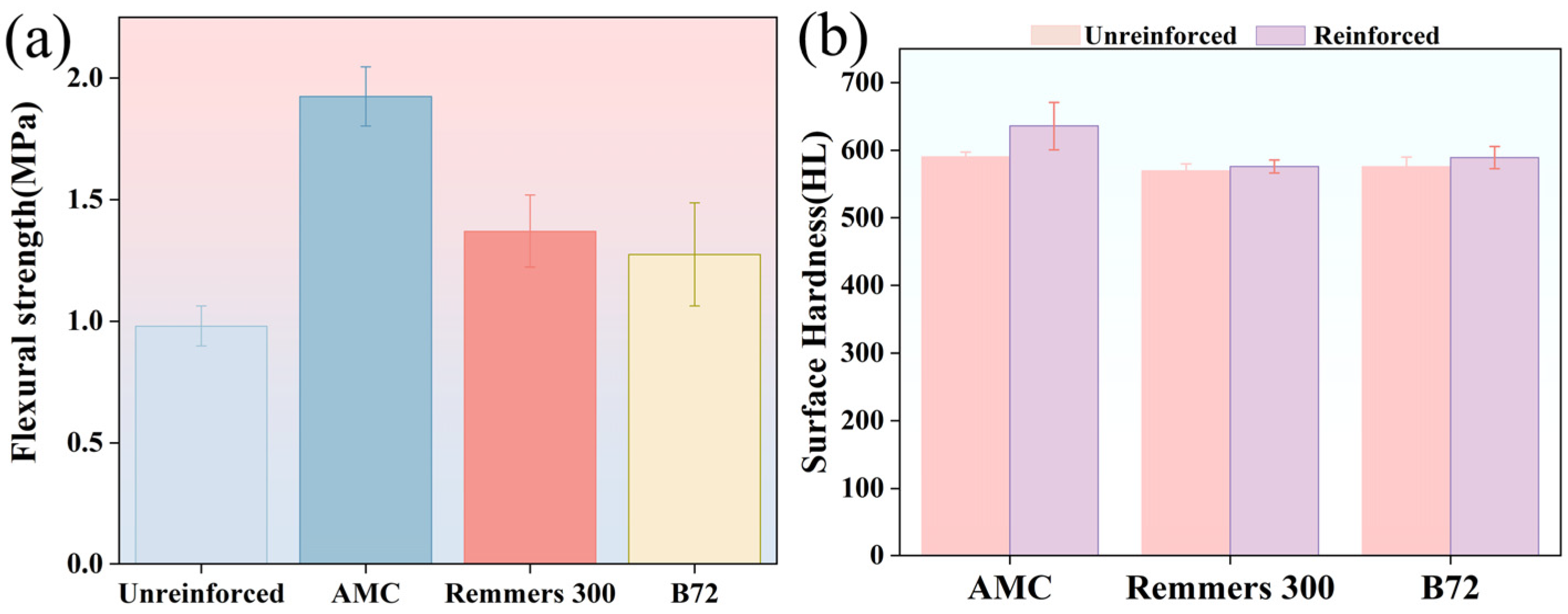
3.7. Flexural Strength and Surface Hardness
3.7.1. Flexural Strength
3.7.2. Surface Hardness
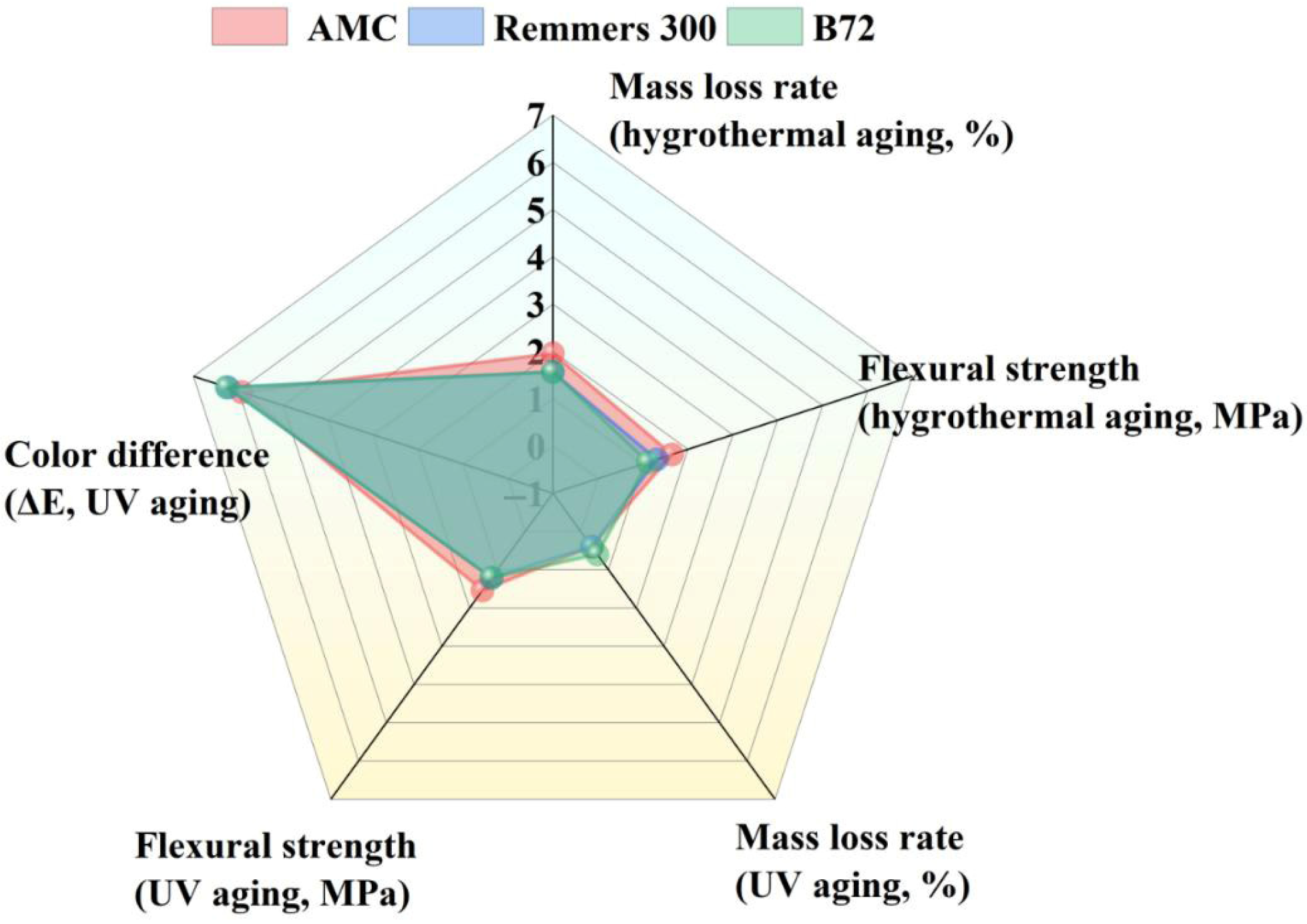
3.8. Durability and Stability Evaluation
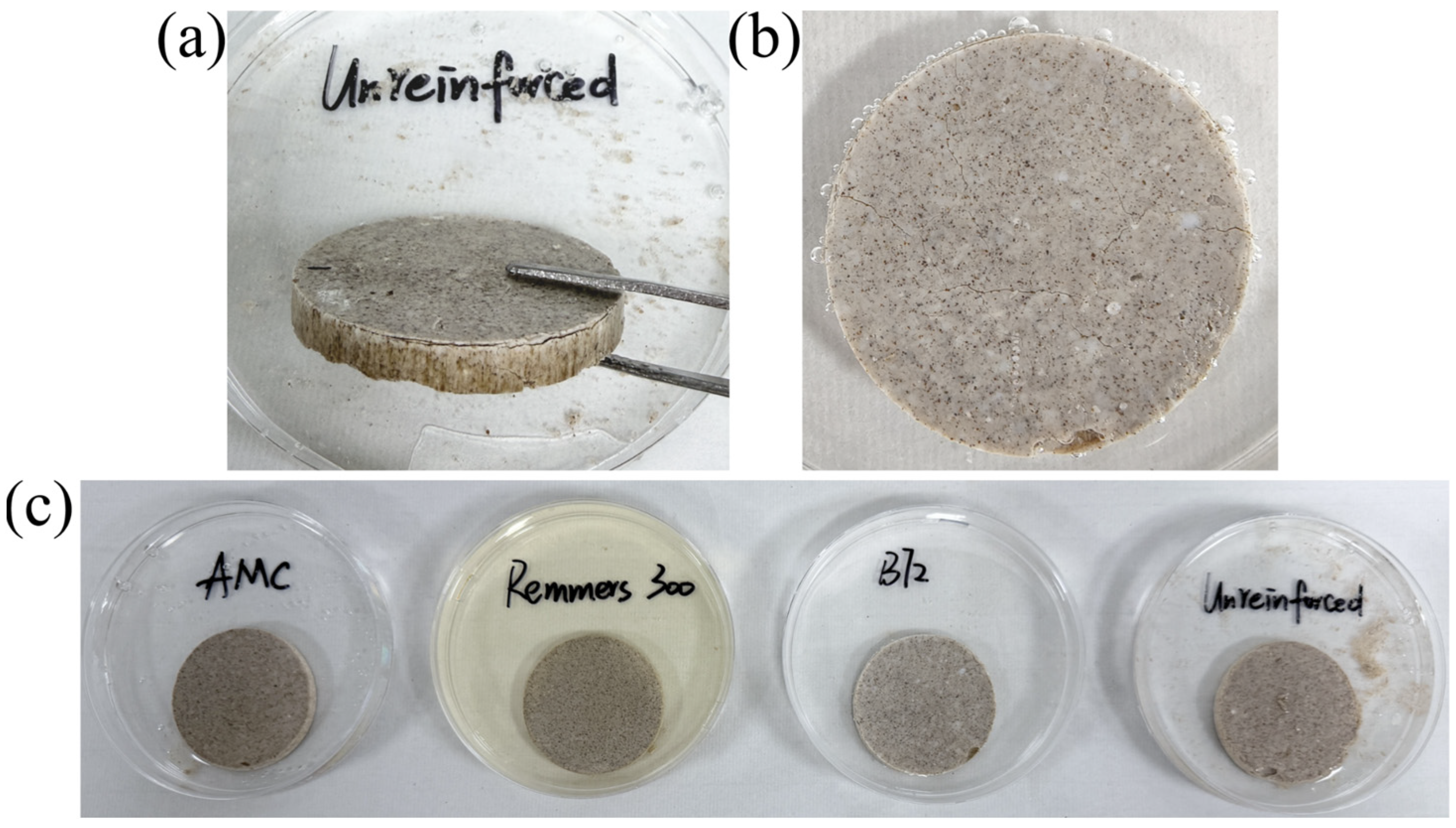
3.8.1. Dry–Wet Cycling and Ultraviolet Aging
3.8.2. Salt Resistance
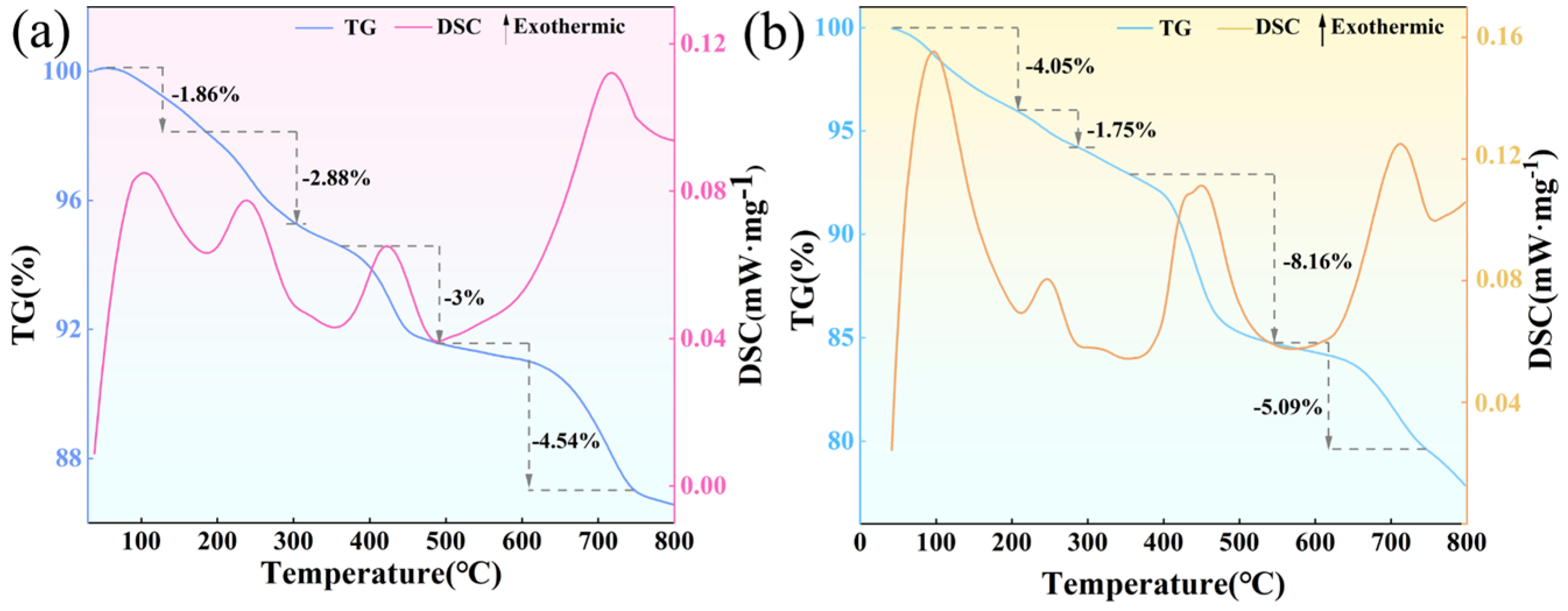
3.8.3. Thermal Stability
3.9. Reinforcement Mechanism Discussion
3.10. Bone Artifact Reinforcement Experiment
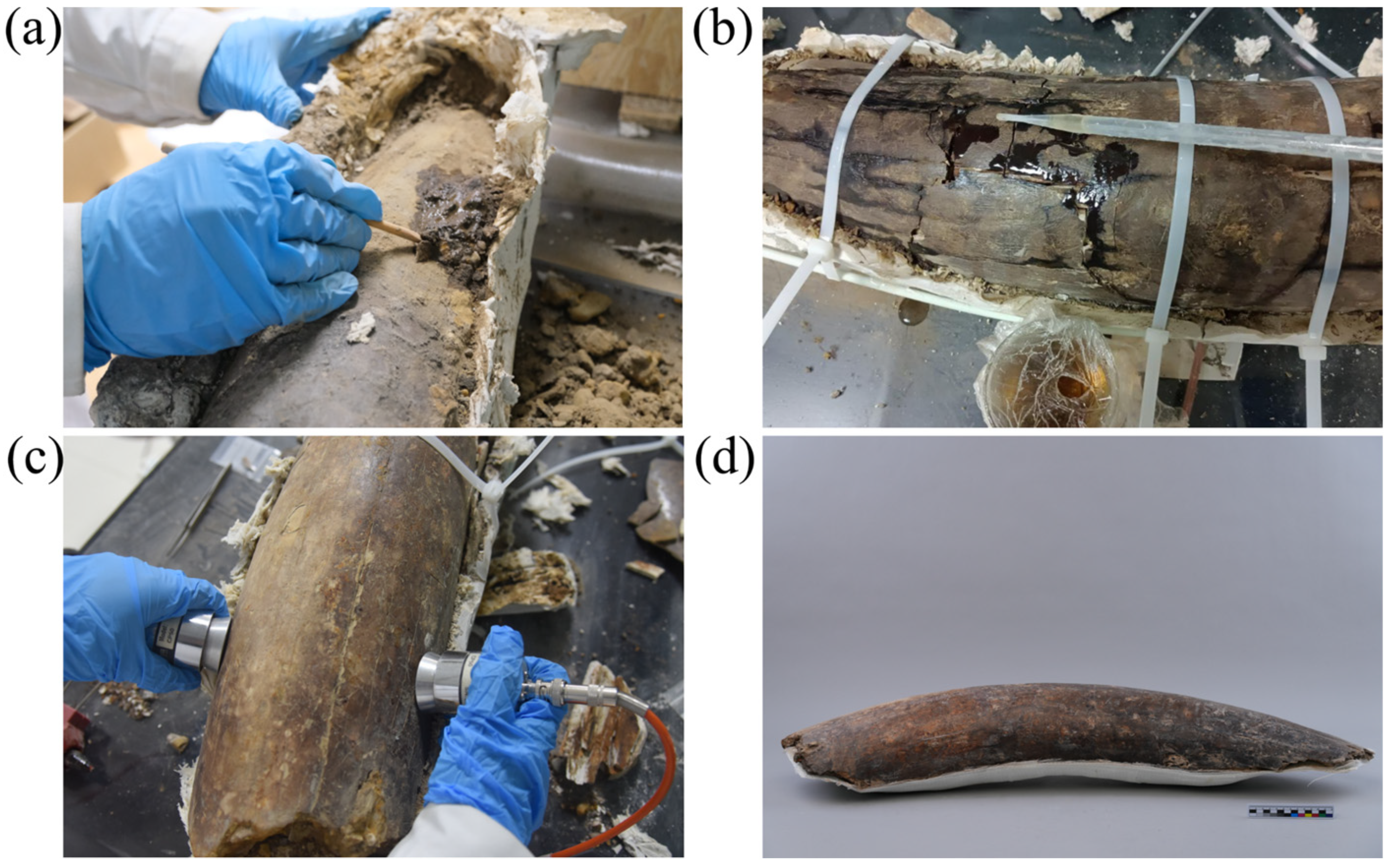
3.10.1. Pre-Treatment of Bone Artifacts
3.10.2. Reinforcement Method
3.10.3. Characterization of Reinforcement Effects
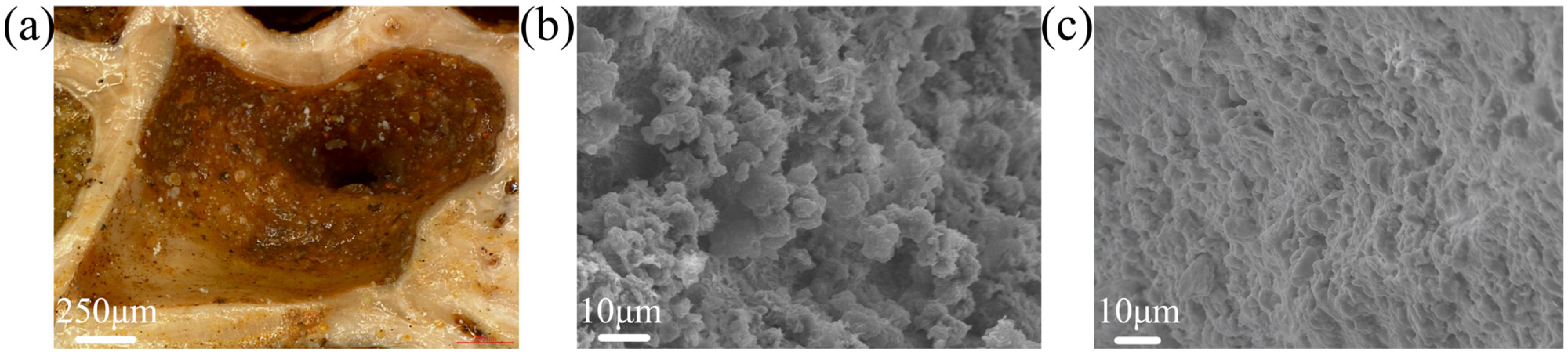
- Morphological structure
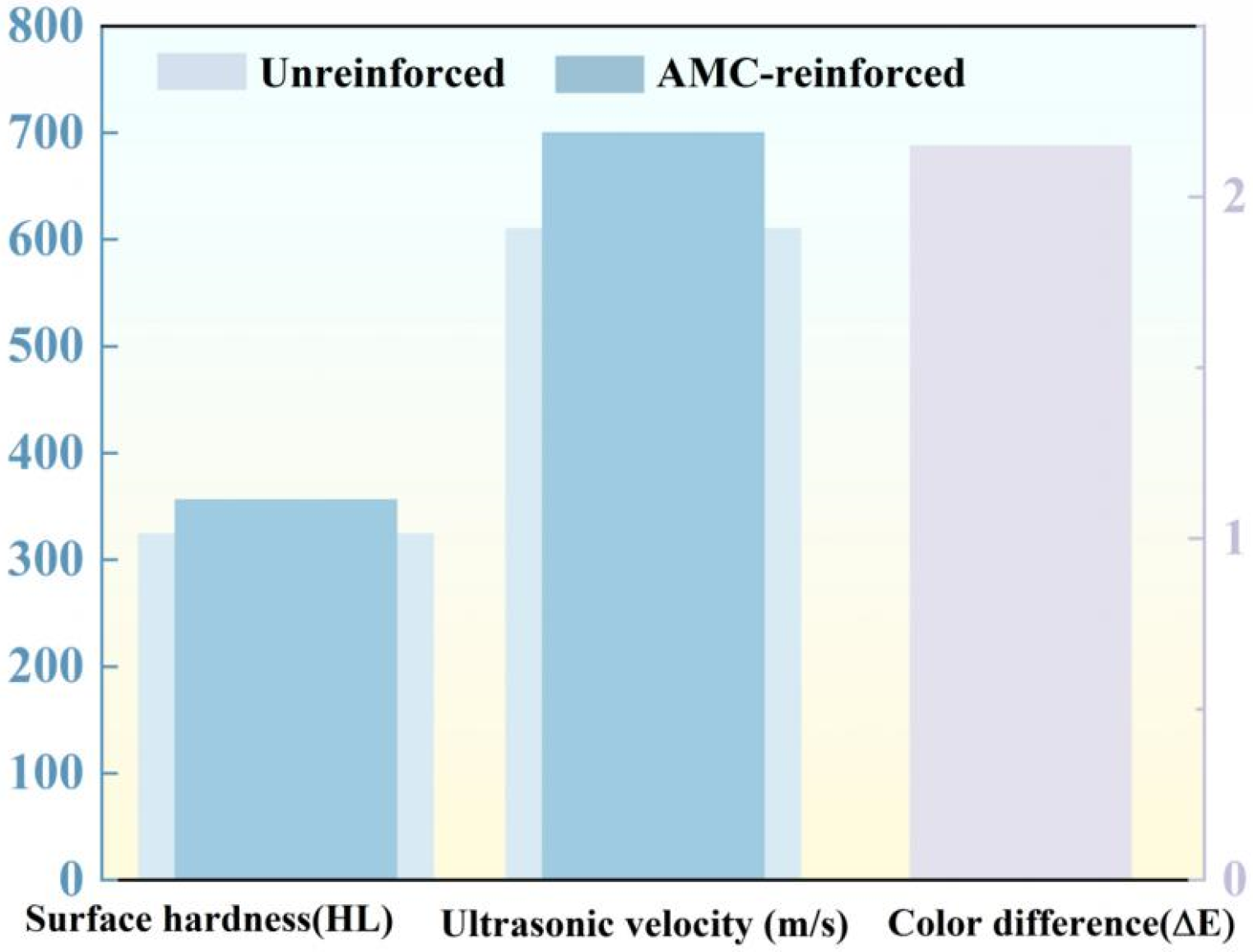
- Characterization of reinforcement effects
3.10.4. The Reinforcement Effect of the Archaeological Bone
4. Conclusions
Supplementary Materials
Author Contributions
Funding
Institutional Review Board Statement
Informed Consent Statement
Data Availability Statement
Conflicts of Interest
References
- Li, Y.L.; Ling, X.; Yang, L.P.; Zhao, X.C.; Sun, M.L. Application of Modern Chemical Materials in the Conservation of Archaeological Osseous Remains. Polym. Mater. Sci. Eng. 2021, 37, 168–175. [Google Scholar] [CrossRef]
- Liu, Y.; Wang, S.T.; Wang, X.M.; Ma, W.T.; Li, T.; Chen, W.T.; Yang, H.A. Review on the Application of Conservation Materials in Bone Relics. West China Archaeol. 2023, 17, 201–212. [Google Scholar]
- Wang, C.; Qi, Y.; Liu, L.X.; Yang, J.C.; Zhou, W.Q.; Dang, X.J. Status of research on the conservation of bone and antler relics. Sci. Conserv. Archaeol. 2026, 28, 118–125. [Google Scholar] [CrossRef]
- Chen, H.; Li, Q.A.; Cao, M.C.; Liu, X.G.; Lei, Q.; Chen, L.X.; Jiang, S.; Yang, L.X.; Yuan, J.X. Study on the reinforcement of waterlogged ivory unearthed from the Sanxingdui site using nano-SiO2-Remmers 300 composite material. Jianghan Archaeol. 2024, 45, 237–241. [Google Scholar]
- Xiao, L.; Wang, N.; Jiang, L.M.; Chen, J.C.; Sun, J.; Tong, L.X.; Hong, J.; Jiang, L.; Xiang, S.L.; Zhu, L.P.; et al. Preliminary research on the multi-hierarchy structure and water loss process of excavated ivories at Sanxingdui. Sci. Conserv. Archaeol. 2024, 36, 1–12. [Google Scholar] [CrossRef]
- Gong, W.; Yang, S.; Zheng, L.; Xiao, H.; Zheng, J.; Wu, B.; Zhou, Z.R. Consolidating effect of hydroxyapatite on the ancient ivories from Jinsha ruins site: Surface morphology and mechanical properties study. J. Cult. Herit. 2019, 35, 116–122. [Google Scholar] [CrossRef]
- Liu, Y.S.; Xu, Q.M.; Li, S.F.; Xie, Z.B.; Li, Q.; Luo, H.J.; Ji, S.D. Novel formulated alumina-silica hybrid sol for the entire consolidation of waterlogged decayed ivory from Sanxingdui ruin site. Herit Sci. 2024, 12, 90. [Google Scholar] [CrossRef]
- Lv, H.Y.; Liang, Q.Q.; He, Y.; Liang, H.; Xiang, S.L.; Yuan, W.T.; Li, S.F.; Hong, J.; Wu, J.R.; Zhao, L.J.; et al. A transparent, moisturizing, antibacterial and mechanically flexible hydrogel for emergency conservation of unearthed bone relics. Eur. Polym. J. 2024, 222, 113590. [Google Scholar] [CrossRef]
- Yang, F.W.; He, D.C.; Liu, Y.; Li, N.M.; Wang, Z.; Ma, Q.; Dong, G.Q. Conservation of bone relics using hydroxyapatite as protective material. Appl. Phys. 2016, 122, 476. [Google Scholar] [CrossRef]
- Abdel-Maksoud, G.; Fahim, A.M.; Sobh, R.A. Preliminary evaluation of green terpolymer of nano poly (methyl methacrylate/dimethylaminoethyl methacrylate/acrylamide) for the consolidation of bone artifacts. J. Cult. Herit. 2025, 73, 139–149. [Google Scholar] [CrossRef]
- Keel, B.C. Conservation and Preservation of Archaeological and Ethnological Specimens. South. Indian Stud. 1963, 15, 5–65. Available online: https://core.tdar.org/document/165636/conservation-and-preservation-of-archaeological-and-ethnological-specimens (accessed on 18 March 2026).
- Li, D.; Xu, F.G. Conservation of Tortoise Shell Using Hydroxyapatite/Collagen as a Consolidation Material. Stud. Conserv. 2023, 68, 318–325. [Google Scholar] [CrossRef]
- Jiang, L. Research on Strengthening and Aging of Excavated Decayed Ivory by Nano-Hydroxyapatite/Polysiloxane; Sichuan Normal University: Chengdu, China, 2025. [Google Scholar] [CrossRef]
- Li, Y.L. Application of Hydroxyapatite Instrengthening Fragile Bone Remains—Taking Human Bones at Yangguanzhai Sit. Master’s Thesis, Northwest University, Xi’an, China, 2021. Available online: https://d.wanfangdata.com.cn/thesis/Ch1UaGVzaXNOZXdTb2xyOVMyMDI2MDExNzA4NTkxNhIJRDAyNTYxMjE5Ggg2Ym52Z2k0cA%3D%3D (accessed on 18 March 2026).
- Cheng, X.L.; Yuan, S.X. Research on the reinforcement and protection of Zhouyuan oracle bones. China Cult. Herit. 2002, 21, 81–87. [Google Scholar]
- Luo, X.Y.; Chen, J.; Lu, Y.H.; Wu, L.M.; Fang, S.Y.; Zhang, W.Q.; Xu, W.J.; Gong, Y.W. Emergency preservation of ivory artifacts unearthed from Fuquan Hill. Sci. Conserv. Archaeol. 2012, 24, 33–40. [Google Scholar] [CrossRef]
- Xiao, L.; Sun, J. Study on temporary protection of ivories, buckteeth and antlers unearthed from Jinsha site. Sci. Conserv. Archaeol. 2002, 14, 26–30. [Google Scholar] [CrossRef]
- Chen, H.; Li, Q.A.; Cao, M.C.; Chen, S.H.; Lei, Q.; Chen, L.X.; Wei, Z.C.; Yuan, J.X.; Yang, L.X. A Study on the Reinforcement and Protection of Water-Saturated Ivory Artifacts Unearthed from the Sanxingdui Site. J. Gems Gemmol. 2024, 26, 1–9. [Google Scholar] [CrossRef]
- Lama, G.C.; Lavorgna, M.; Verdolotti, L.; Recupido, F.; Buonocore, G.G.; Bhushan, B. Functional surface engineering for cultural heritage protection: The role of superhydrophobic and superoleophobic coatings—A comprehensive review. Beilstein J. Nanotechnol. 2026, 17, 63–96. [Google Scholar] [CrossRef]
- Chen, J.C.; Chai, D.L.; Zhou, J.E.; Huang, X.; He, X.D.; Bai, Y.L. Reinforcement Effect of Complex Compound Sol on Wet Ancient Ivory Excavated from Jinsha Site. Mater. Rep. 2010, 24, 62–65. [Google Scholar]
- Chen, J.C.; Huang, X.; Liu, H.W.; Zhu, R.S. Effect of reinforcement of Acrylate complex hydrosol on archaeological pottery. Hum. Cult. Herit. Preserv. 2015, 7, 38–42. [Google Scholar]
- Chen, J.C.; Chai, D.L.; Zhou, J.E.; Huang, X.; Liu, H.W.; Zhu, R.S.; Yang, Y. Effect of Consolidation of Acrylate sol Solution on Ancient EarthenSites in Moisture and High Salt Circumstances. Hum. Cult. Herit. Preserv. 2011, 4, 81–85. [Google Scholar]
- Mai, Y. Stabilizing Effect of Acrylate Metal Complexes on Powdery Rust of Bronze Artifacts. Master’s Thesis, Zhengzhou University, Zhengzhou, China, 2021. Available online: https://d.wanfangdata.com.cn/thesis/Ch1UaGVzaXNOZXdTb2xyOVMyMDI2MDExNzA4NTkxNhIIWTM4NDI4NTkaCGV1NDMydWhs (accessed on 18 March 2026).
- Mao, Y.Z. Analysis of the Weathering Causes of Red Sandstone in Xumishan Grottoes and Research on Reinforcement Protection. Master’s Thesis, Zhengzhou University, Zhengzhou, China, 2024. Available online: https://d.wanfangdata.com.cn/thesis/Y4348188 (accessed on 18 March 2026).
- Chen, L.W. Study on the Mineralization Mechanism of Archaeological Bronze Cultural Relics and the Application Evaluation Method of Reinforcement Materials. Master’s Thesis, Zhengzhou University, Zhengzhou, China, 2023. Available online: https://d.wanfangdata.com.cn/thesis/Ch1UaGVzaXNOZXdTb2xyOVMyMDI2MDExNzA4NTkxNhIIWTQxNjM2MzQaCDM3NXNseXNj (accessed on 18 March 2026).
- Nan, P.H.; Tian, J.M.; Wang, J.Y. In situ conservation and block lifting of archaeological pig skeletons from Gongcun site, Pingyao. Sci. Conserv. Archaeol. 2011, 23, 52–57. [Google Scholar] [CrossRef]
- Zhou, H.; Li, Y.L.; Gao, F.; Sun, Y.Z.; Guo, B.X.; Wang, C.S. Evaluation of Consolidation of the Brick Materials by Mobile Single-Side NMR. J. Build. Mater. 2013, 16, 1097–1102. [Google Scholar]
- Li, X.J.; Wang, C.; Zhang, Y.; Su, W.; Li, S.F.; Xiao, Q.; Su, W. Fourier-transformed infrared spectroscopy study of the ancient ivory tusks from the Sanxingdui site. Front. Earth Sci. 2023, 10, 1008139. [Google Scholar] [CrossRef]
- Jantou-Morris, V.; Horton, M.A.; McComb, D.W. The nano-morphological relationships between apatite crystals and collagen fibrils in ivory dentine. Biomaterials 2010, 31, 5275–5286. [Google Scholar] [CrossRef]
- Sun, X.R.; Lin, Z.D.; Zhang, J.Y.; Lin, Z.X.; Jing, Q.C.; Guo, S.Q. Experimental study on color difference discrimination by Chinese eyes. Acta Psychol. Sin. 1996, 29, 9–15. [Google Scholar]



| Reinforcement Materials | Strength | Weakness | Penetration | Optimal Substrate |
|---|---|---|---|---|
| Acrylate Metal Complex (AMC) | Hybrid organic–inorganic network; enhanced mechanical strength; good aging resistance | New material; limited long-term field data | Deep | Highly porous and severely degraded cultural heritage materials, particularly fragile bone artefacts |
| Remmers 300 | Strong penetration | Increased brittleness | Deep | Porous materials with moderate to slight deterioration |
| Paraloid B72 | Excellent reversibility | Surface film formation | Moderate to shallow | Slightly degraded porous materials; also suitable for surface protection or sealing after consolidation |
| Reinforcement Materials | Main Components | Solvent | Manufacturer |
|---|---|---|---|
| AMC | Metal acrylate complex | Deionized water | Self-developed by the research group |
| Remmers 300 | Tetraethyl silicate | Ethanol | Remmers GmbH (Löningen, Germany) |
| Paraloid B72 | 34% Ethyl methacrylate 66% Methyl acrylate | Acetone | Dow Chemical Company (Midland, MI, USA) |
| No. | Phase Name | Chemical Formula | Content (%) | Source Description |
|---|---|---|---|---|
| 1 | Hydroxyapatite (HA) | Ca10(PO4)6(OH)2 | 74.8 | Major inorganic component of bone |
| 2 | Carbonated hydroxyapatite (CHA) | Ca10(PO4)3(CO3)3(OH)2 | Formed through partial carbonate substitution during burial | |
| 3 | Calcium carbonate | CaCO3 | 8.2 | Carbonate deposits formed by the reaction of external Ca2+ and Mg2+ with CO32− |
| 4 | Magnesium carbonate | MgCO3 | 9.0 | Carbonate deposits derived from the burial environment |
| 5 | Silicon dioxide | SiO2 | 8.0 | Introduced by soil or groundwater infiltration during burial |
| Item | Unreinforced | AMC | Remmers 300 | B72 |
|---|---|---|---|---|
| Porosity (%) | 37.3434 | 26.7837 | 27.7483 | 29.4995 |
| Average pore diameter (nm) | 123.24 | 27.29 | 24.86 | 24.24 |
Disclaimer/Publisher’s Note: The statements, opinions and data contained in all publications are solely those of the individual author(s) and contributor(s) and not of MDPI and/or the editor(s). MDPI and/or the editor(s) disclaim responsibility for any injury to people or property resulting from any ideas, methods, instructions or products referred to in the content. |
© 2026 by the authors. Licensee MDPI, Basel, Switzerland. This article is an open access article distributed under the terms and conditions of the Creative Commons Attribution (CC BY) license.
Share and Cite
Chen, D.; Zhang, L.; Mao, Y.; Song, W.; Chen, J. Performance Assessment of Acrylate Metal Complex (AMC) and Conventional Consolidants for Fragile Bone Artefacts. Coatings 2026, 16, 387. https://doi.org/10.3390/coatings16030387
Chen D, Zhang L, Mao Y, Song W, Chen J. Performance Assessment of Acrylate Metal Complex (AMC) and Conventional Consolidants for Fragile Bone Artefacts. Coatings. 2026; 16(3):387. https://doi.org/10.3390/coatings16030387
Chicago/Turabian StyleChen, Di, Liangshuai Zhang, Yuanzhe Mao, Wanling Song, and Jiachang Chen. 2026. "Performance Assessment of Acrylate Metal Complex (AMC) and Conventional Consolidants for Fragile Bone Artefacts" Coatings 16, no. 3: 387. https://doi.org/10.3390/coatings16030387
APA StyleChen, D., Zhang, L., Mao, Y., Song, W., & Chen, J. (2026). Performance Assessment of Acrylate Metal Complex (AMC) and Conventional Consolidants for Fragile Bone Artefacts. Coatings, 16(3), 387. https://doi.org/10.3390/coatings16030387