Preparation and Performance Study of Sand-Containing Hollow Concrete with Alkali-Activated Recycled Concrete Powder Based on Target Porosity

 ,
,
Highlights
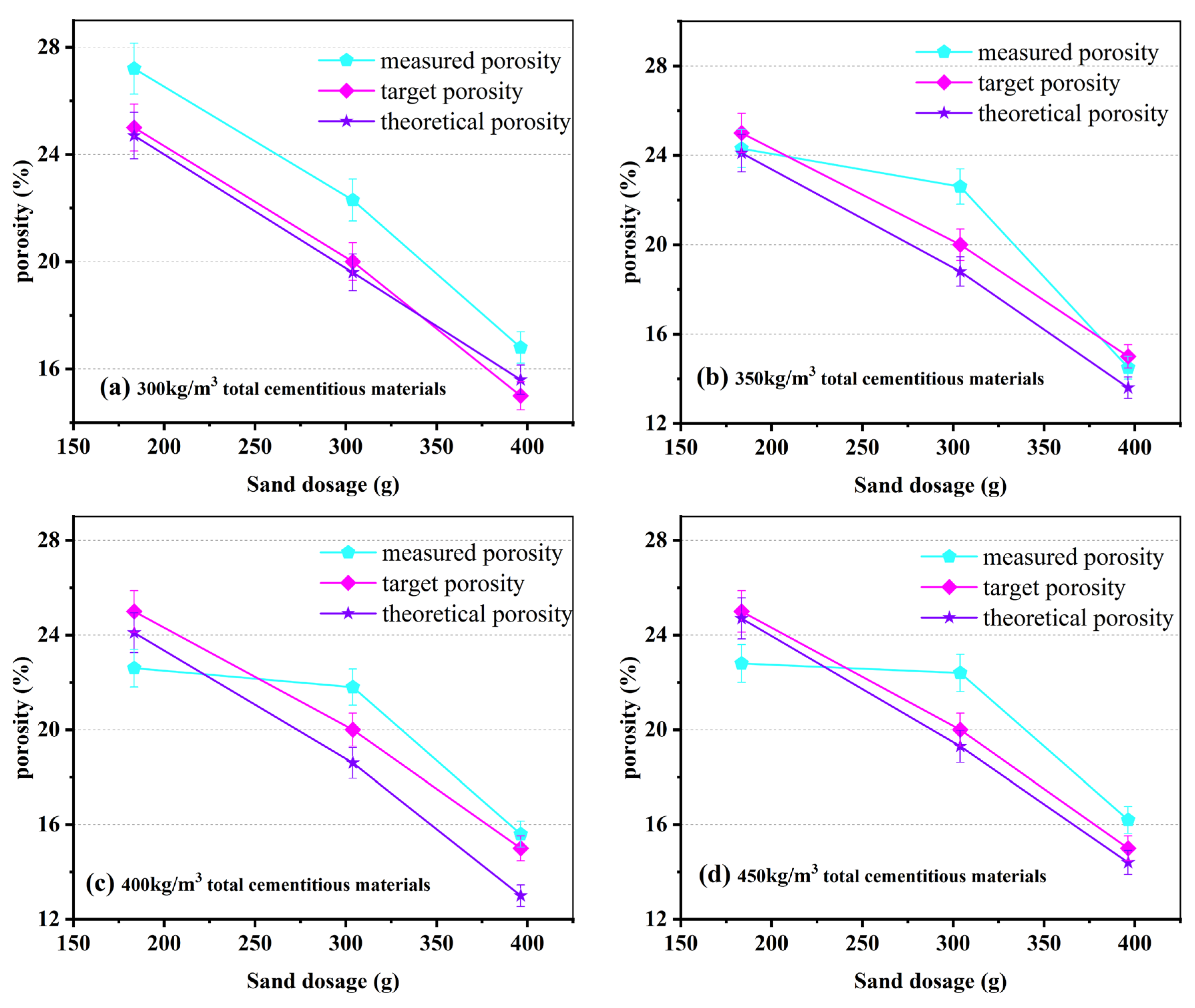
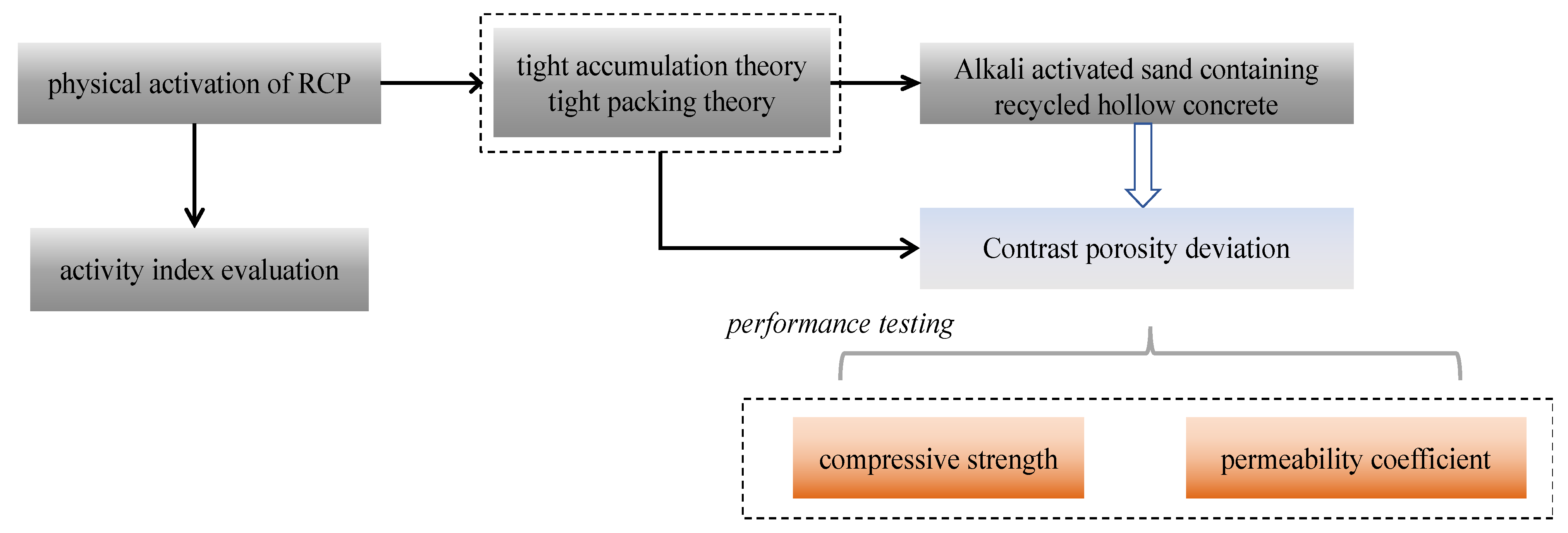
- Recycled powder activity indices at various grinding times were compared. Calculated and theoretical porosities of al-kali-activated sand-containing macroporous concrete were quantified.
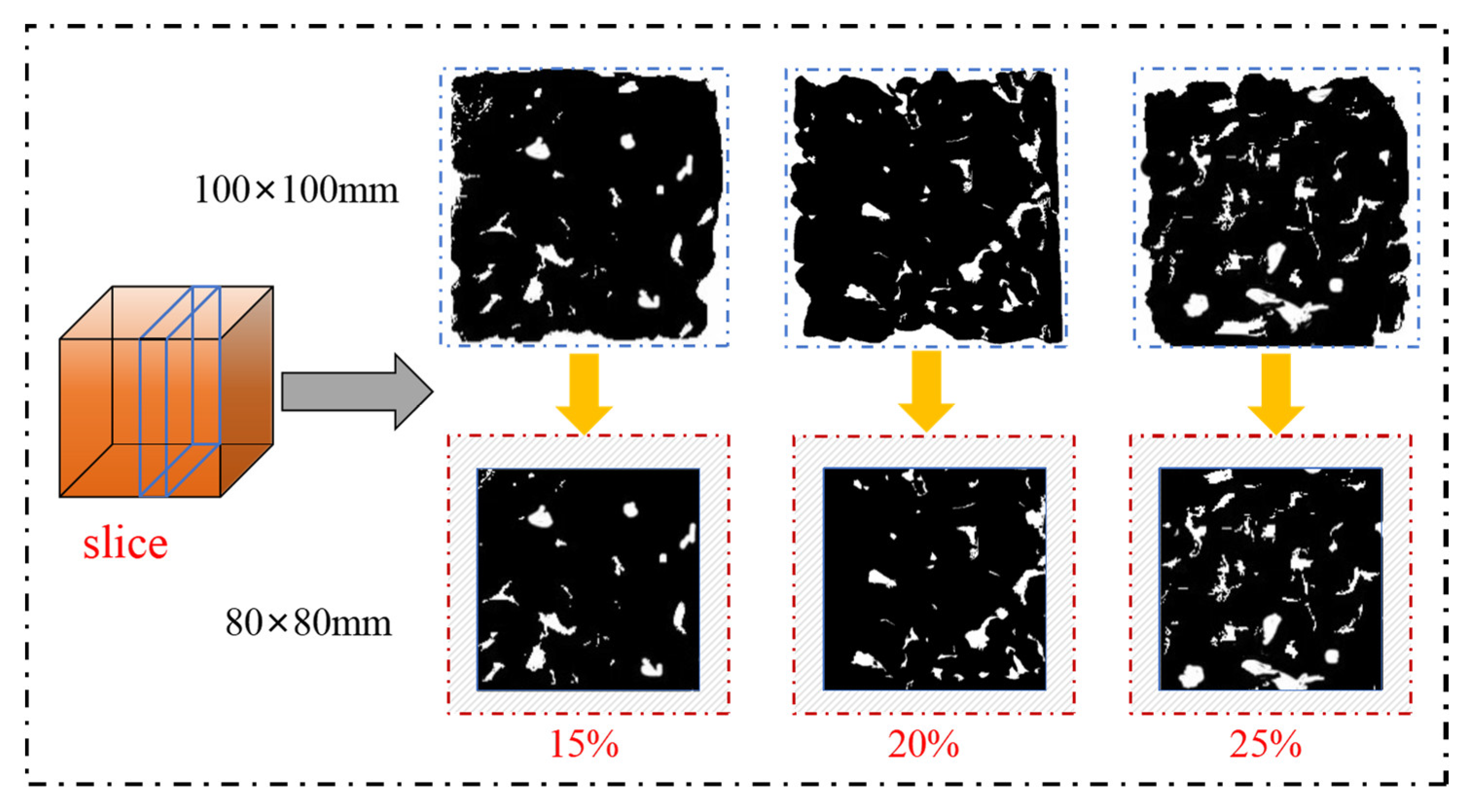
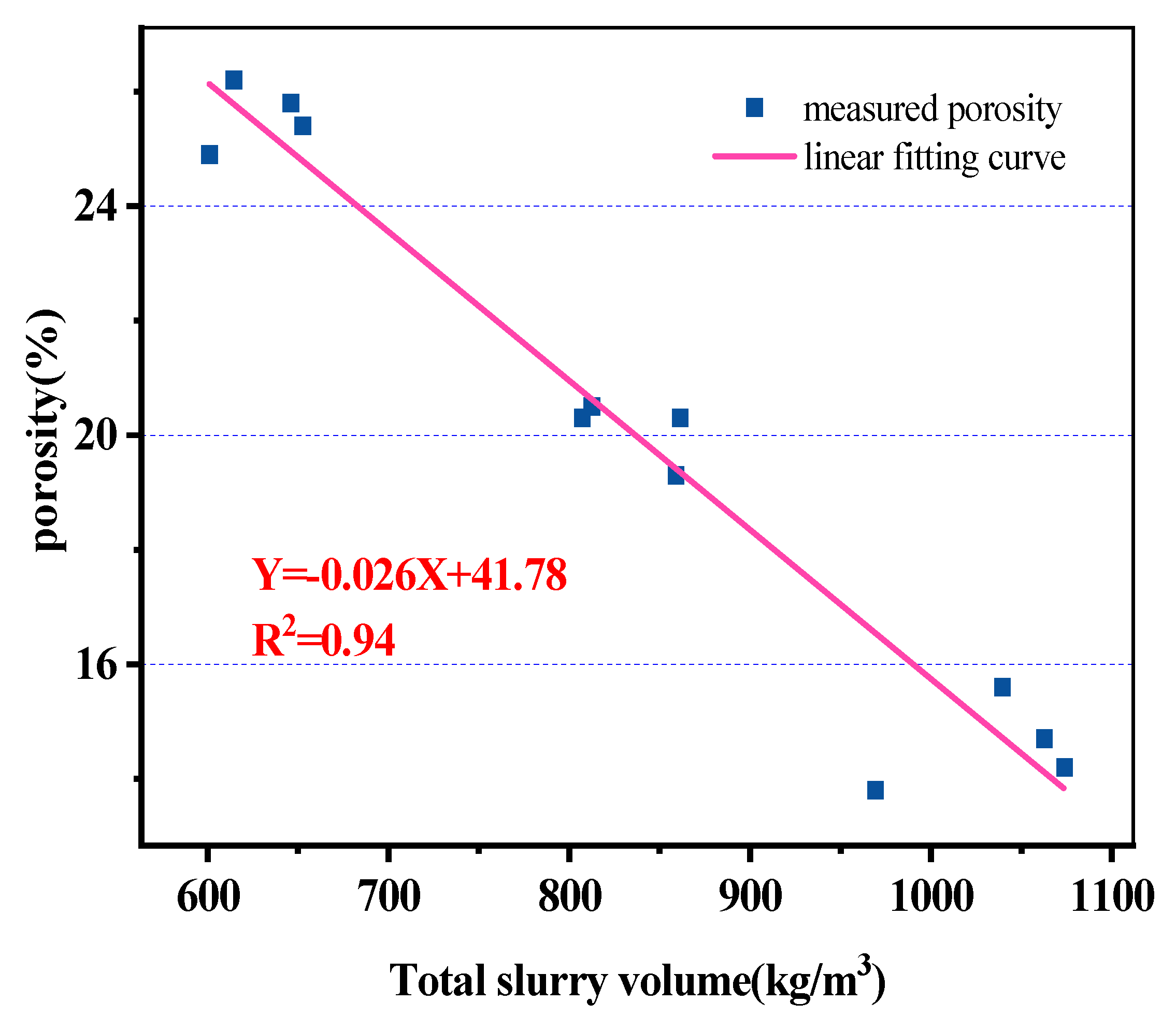
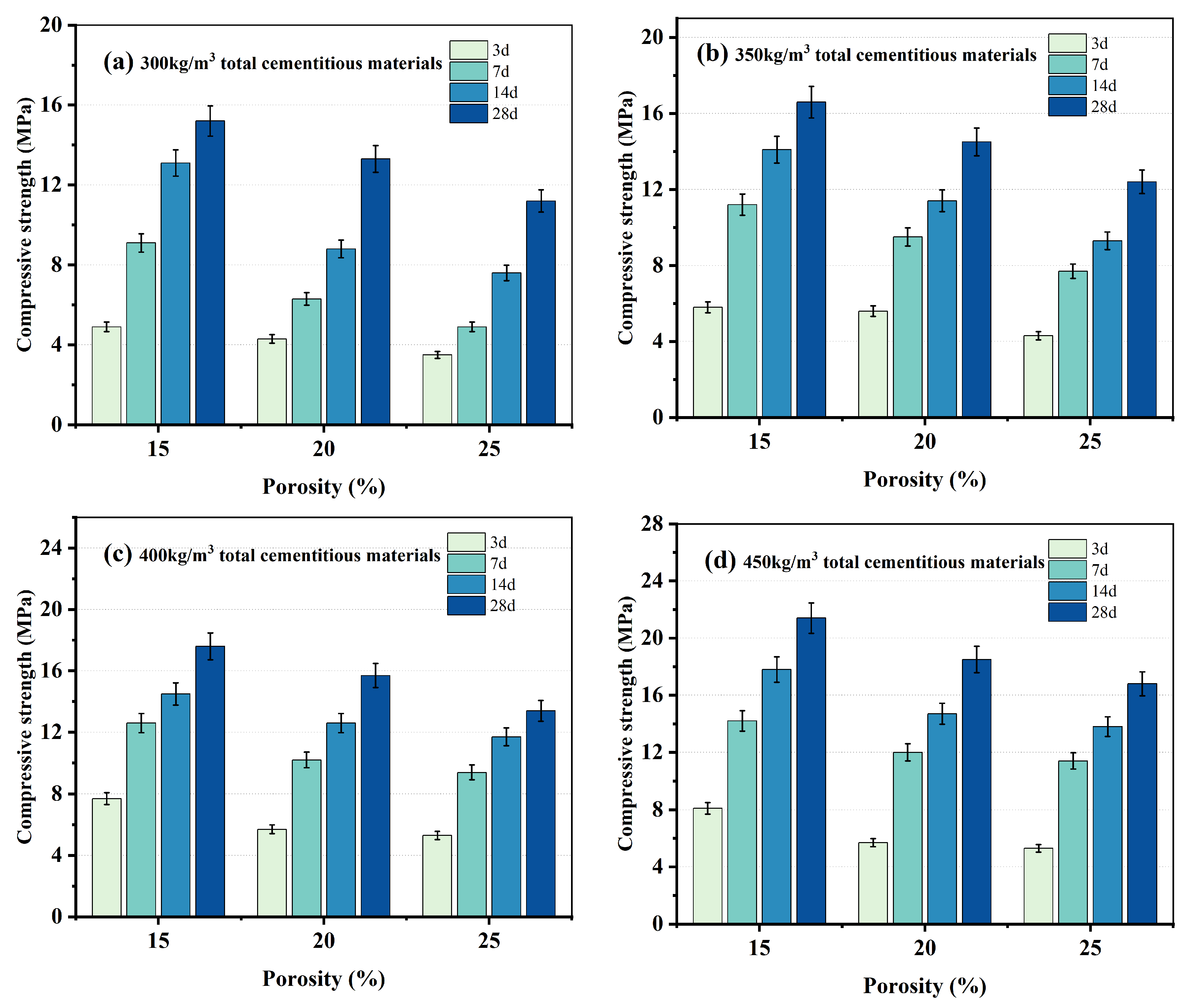
- Image binarization uncovered the porosity deviation mechanism. Binder content and pore volume govern concrete me-chanical and permeability properties.
- Verified porosity calculation supports mix design optimization of alkali-activated porous concrete.
- Mechanical-permeability regulation enables precise performance design for engineering applications.
Abstract
1. Introduction
2. Experimental Design
2.1. Materials
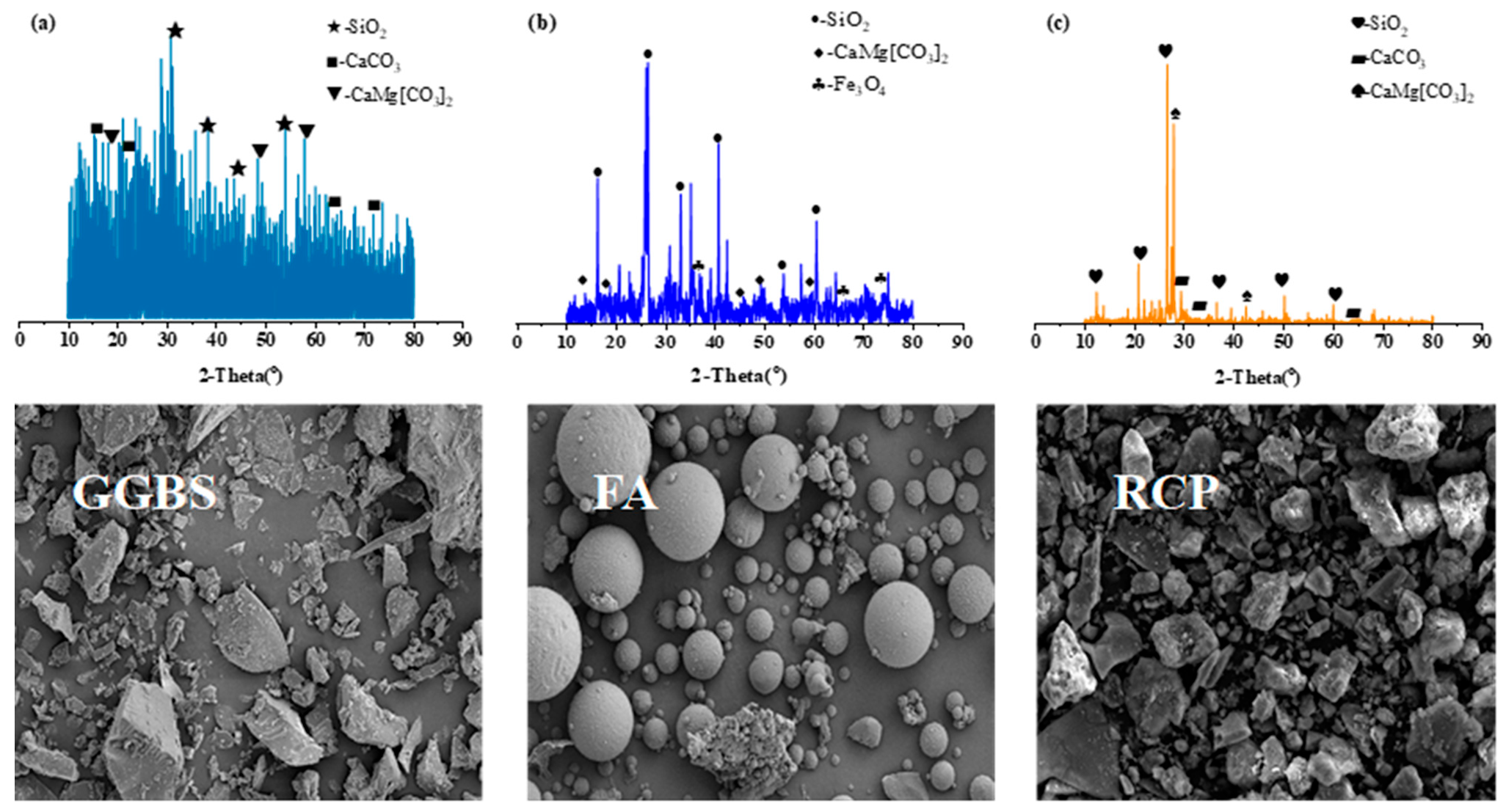
2.1.1. Binding Materials
2.1.2. Recycled Aggregates
2.2. Mix Design
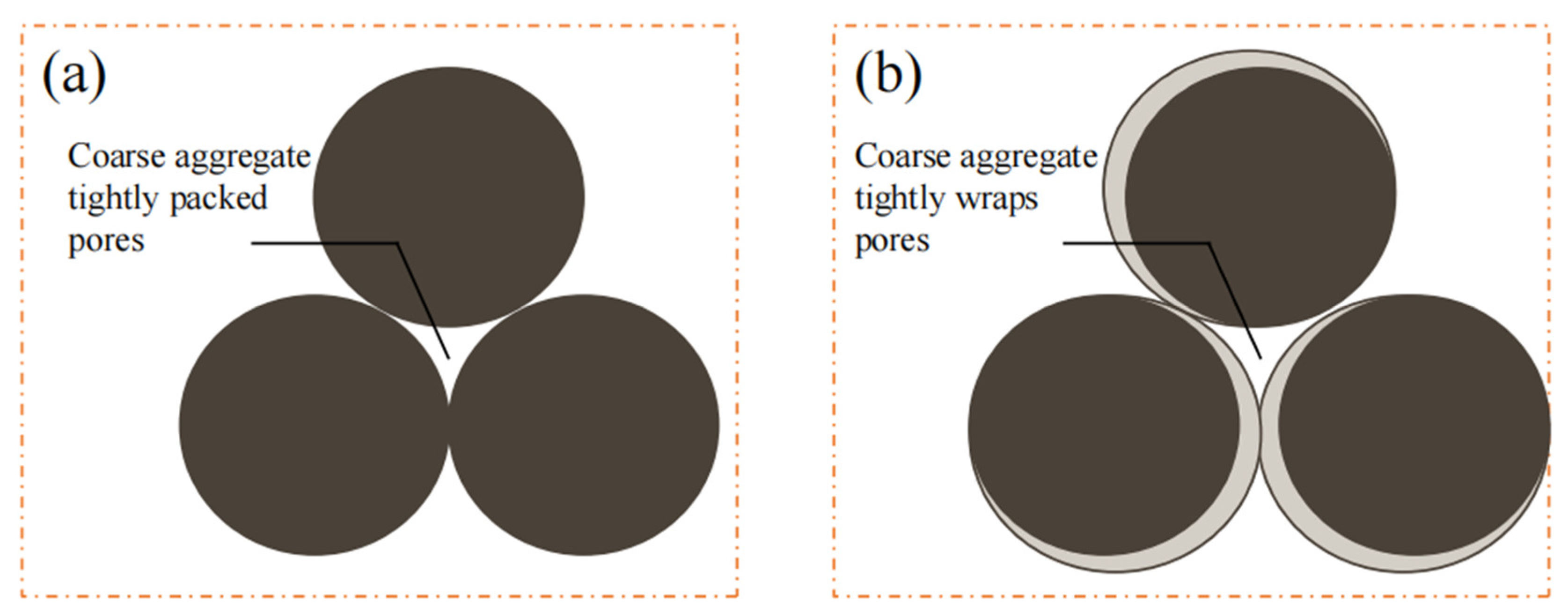
2.2.1. “Coarse Aggregate Tight Accumulation Theory”
2.2.2. “Coarse Aggregate Close Packing Theory”
2.3. Sample Preparation and Methods
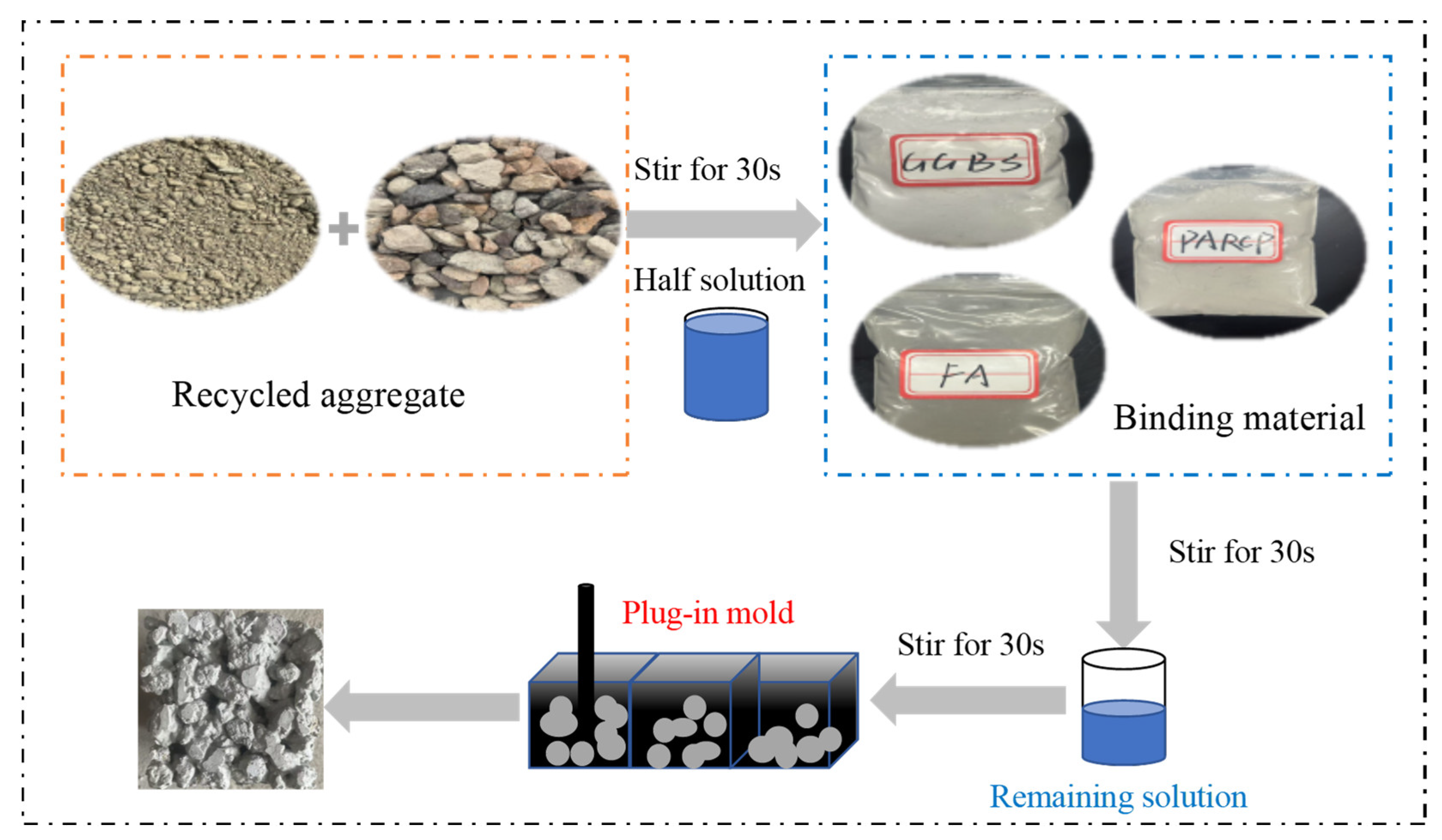
2.3.1. Pre-Treatment of RCP
2.3.2. Preparation of AARCPS-HC
2.4. Test Methods
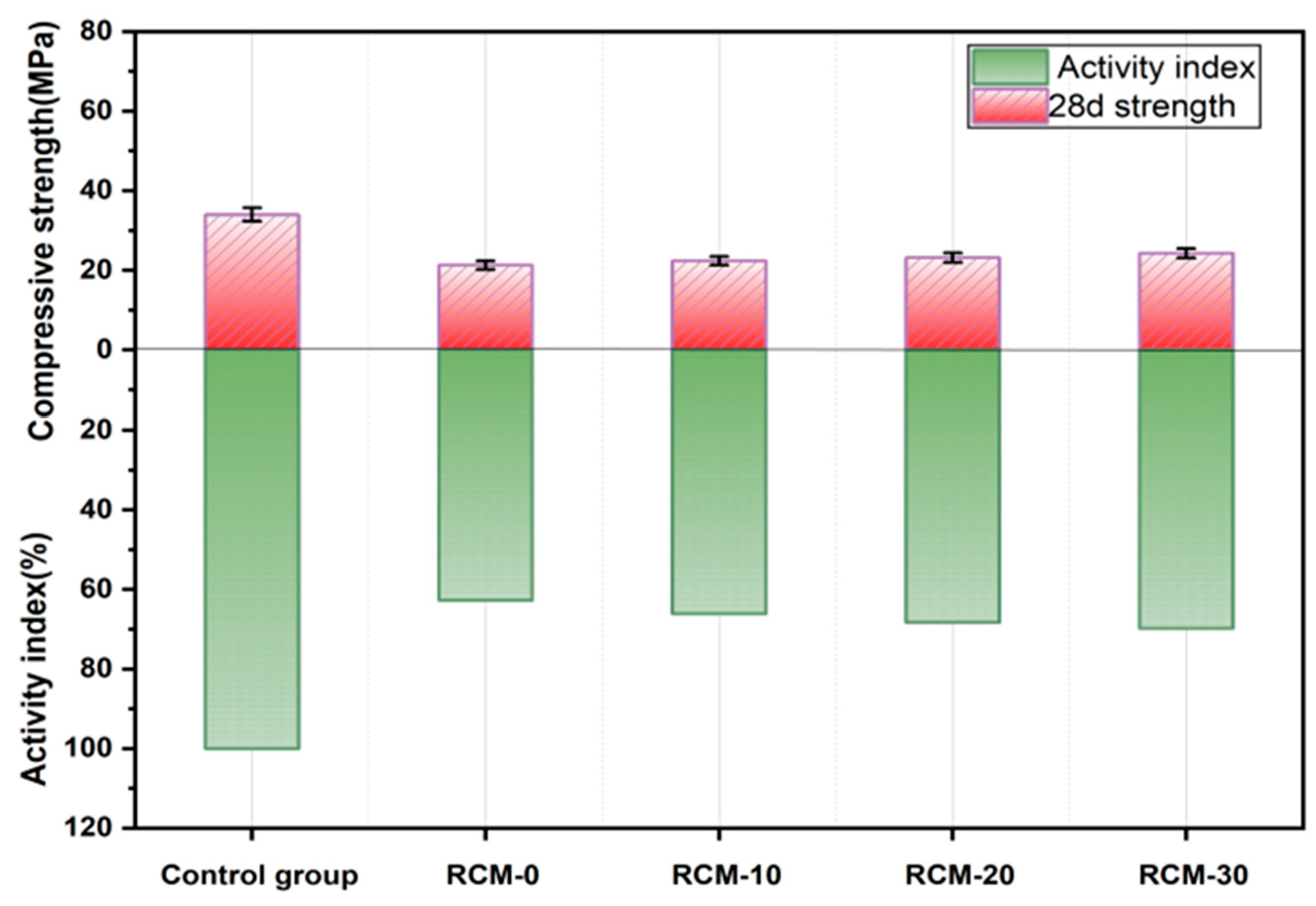
2.4.1. Activity Index Test
2.4.2. Porosity Test
2.4.3. Compressive Strength Test
2.4.4. Freeze–Thaw Resistance Evaluation
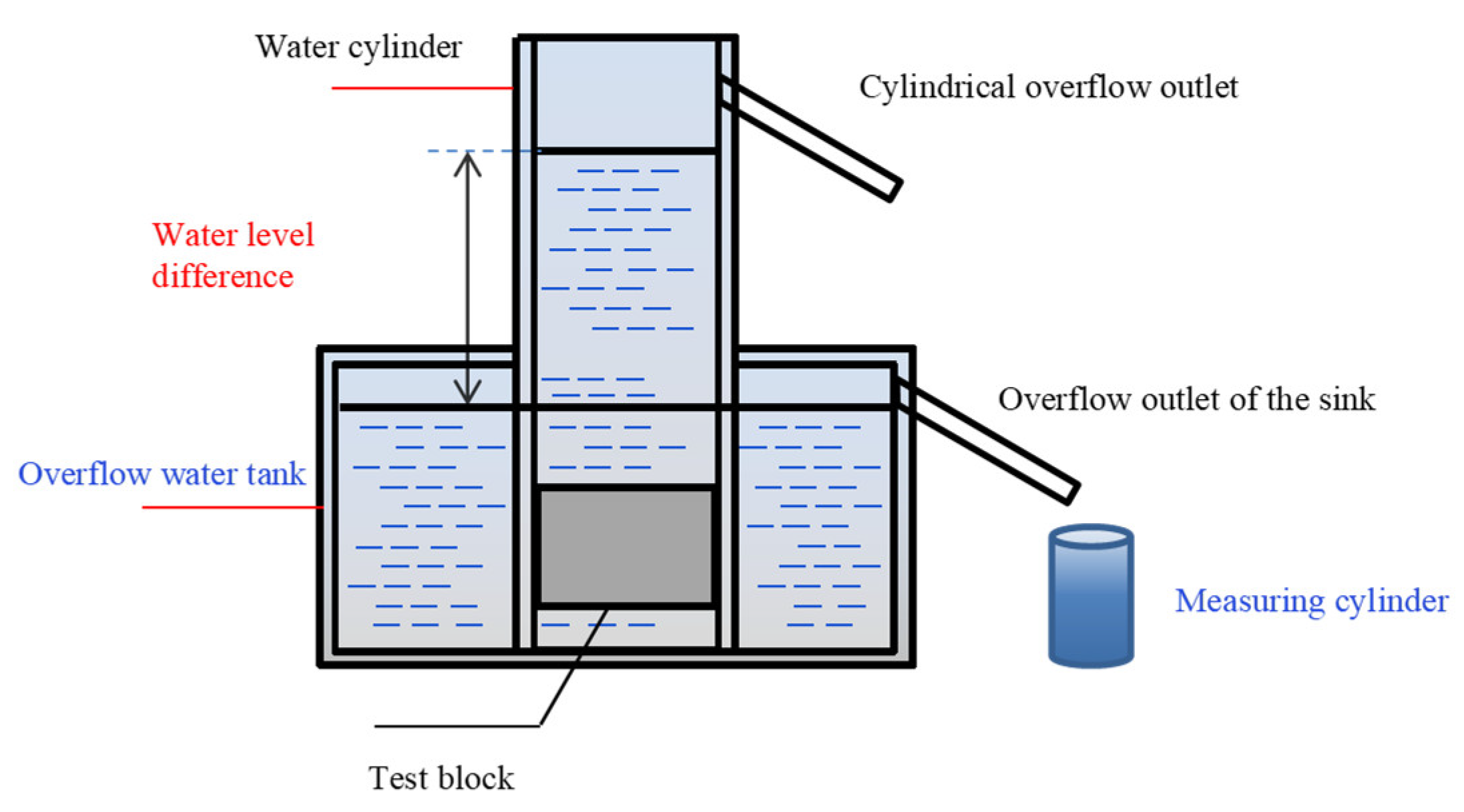
2.4.5. Permeability Coefficient Test
2.4.6. Microstructure and XRD Analysis
3. Results and Discussion
3.1. PARCP Activity Index Analysis
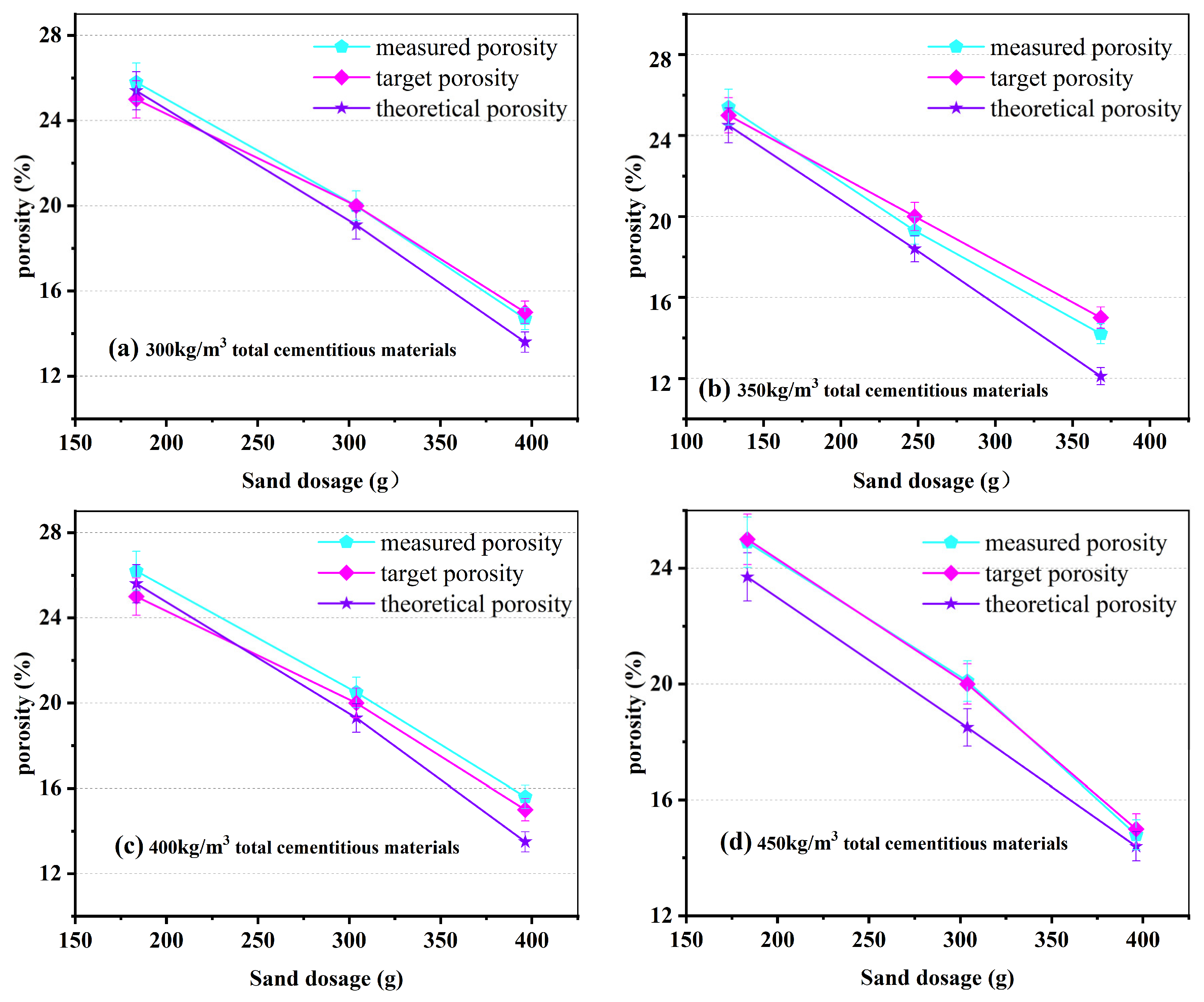
3.2. AARCPS-HC Pore Volume Deviation Analysis
3.2.1. ACRHC Pore Volume Analysis Based on the “Coarse Aggregate Tight Accumulation Theory”
3.2.2. Porosity Analysis Based on the “Coarse Aggregate Close Packing Theory”
3.2.3. Effect of Total Slurry Volume on Porosity
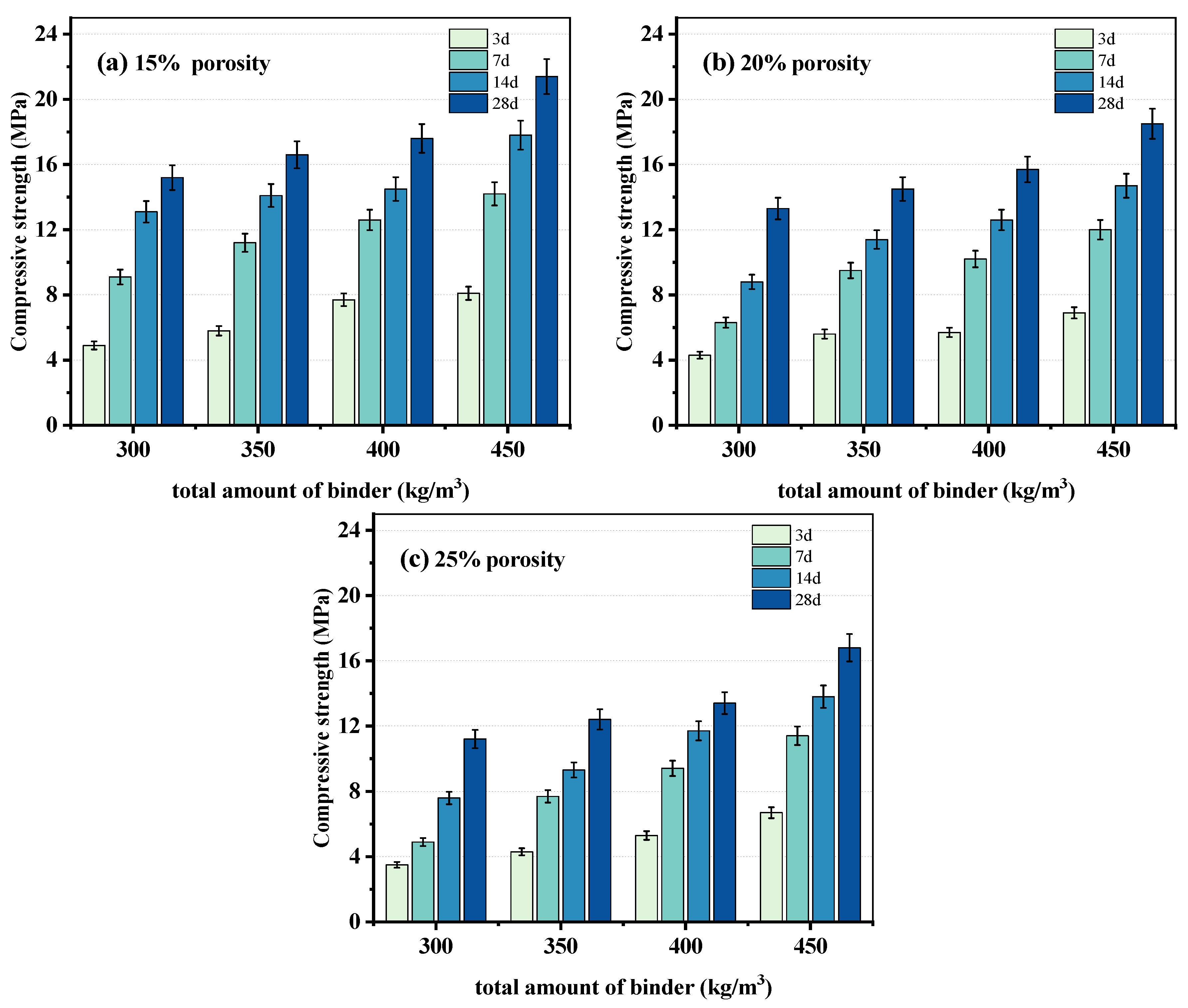
3.3. Mechanical Performance Analysis of PCRHC
3.3.1. Effect of Porosity on Mechanical Performance
3.3.2. Influence of Binder Material Quantity on Mechanical Properties
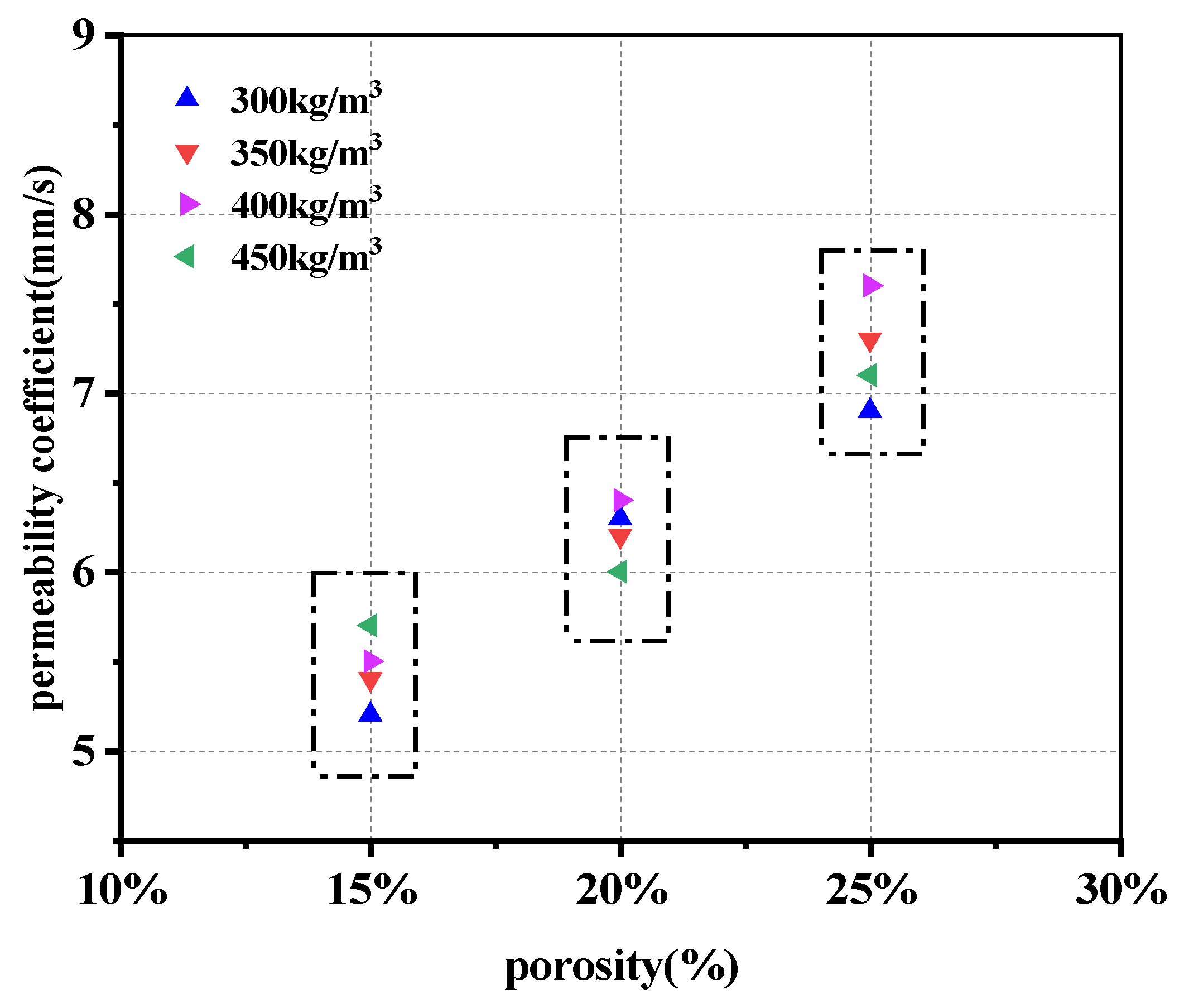
3.4. Permeability Coefficient Analysis of PCRHC
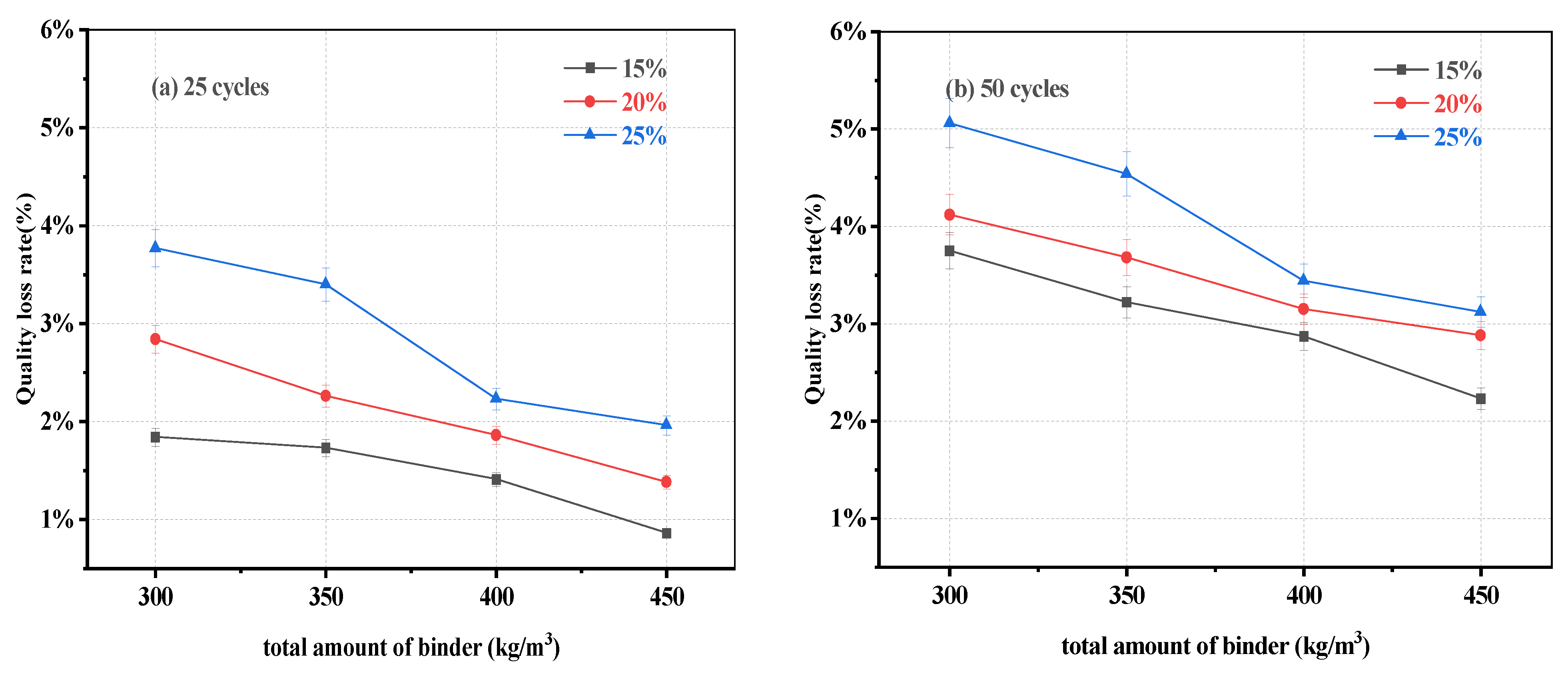
3.5. AASCRHC Freeze Resistance Performance Evaluation
Effect of Binder Content and Porosity on Freeze–Thaw Resistance
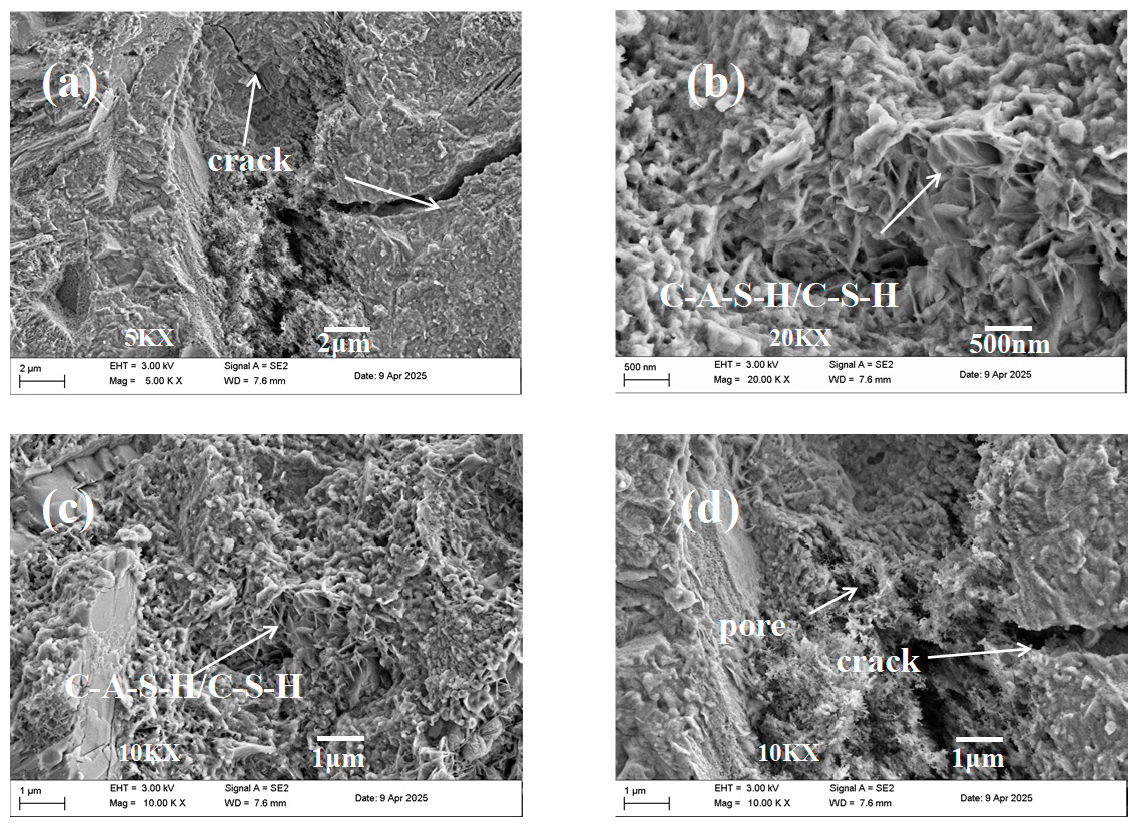
3.6. PCRHC Microstructural Analysis
3.6.1. SEM Analysis
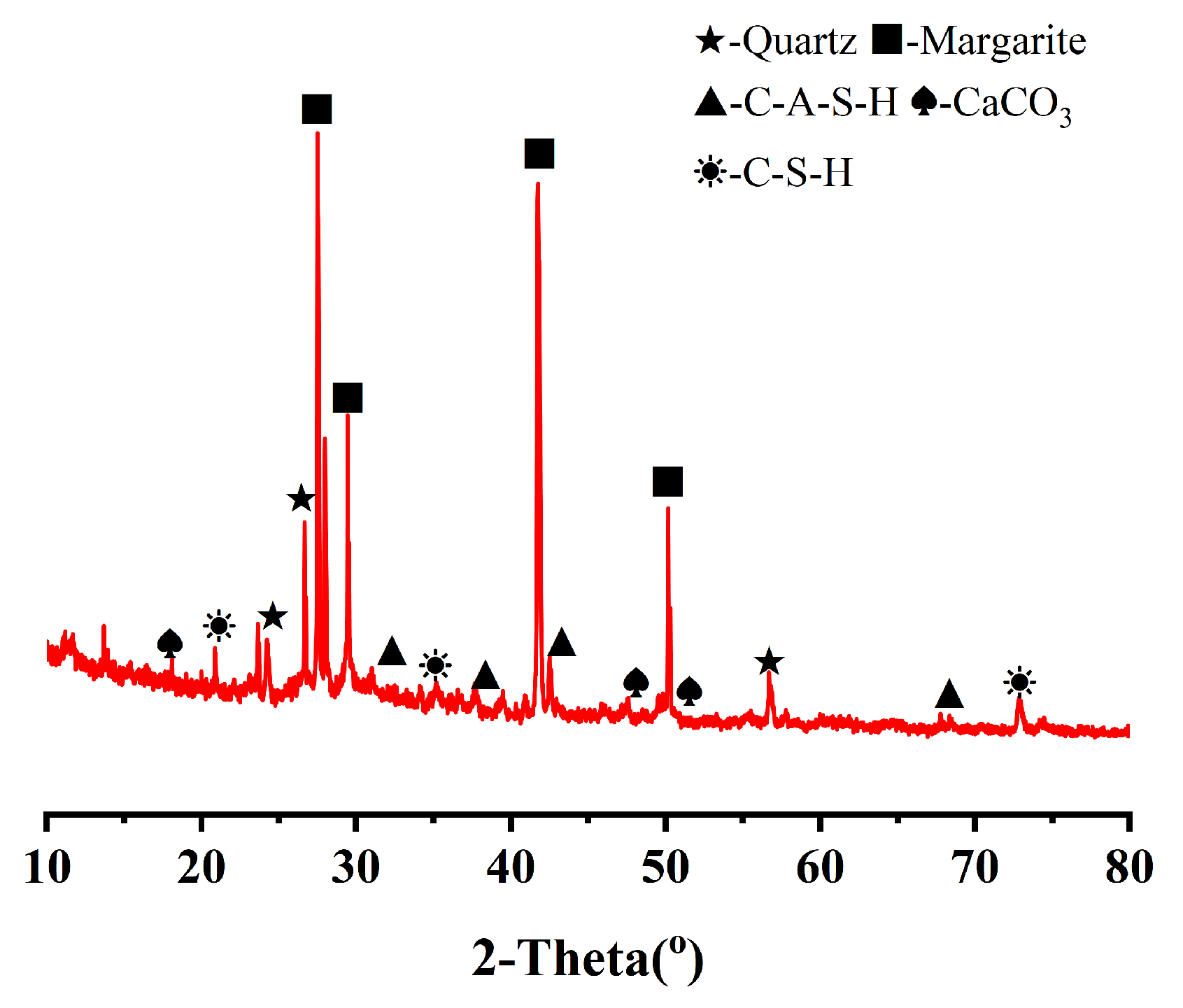
3.6.2. XRD Analysis
3.7. Discussion
4. Conclusions
Author Contributions
Funding
Data Availability Statement
Conflicts of Interest
References
- Wu, H.; Weng, X.; Chen, R.; Du, L.; Li, Y.; Liu, W.; Liu, S.; Yu, B.; Bao, Z. Generation characteristics and disposal paths of construction waste in public building project, A case study. Clean. Waste Syst. 2025, 10, 100211. [Google Scholar] [CrossRef] [Scilit]
- Gao, Q.; Li, X.G.; Jiang, S.Q.; Lyu, X.J.; Gao, X.; Zhu, X.N.; Zhang, Y.Q. Review on zero waste strategy for urban construction and demolition waste, Full component resource utilization approach for sustainable and low-carbon. Constr. Build. Mater. 2023, 395, 132354. [Google Scholar] [CrossRef] [Scilit]
- Hou, H.; Su, L.; Guo, D.; Xu, H. Resource utilization of solid waste for the collaborative reduction of pollution and carbon emissions, Case study of fly ash. J. Clean. Prod. 2023, 383, 135449. [Google Scholar] [CrossRef] [Scilit]
- Sagan, J.; Mach, A. Construction waste management, Impact on society and strategies for reduction. J. Clean. Prod. 2025, 486, 144363. [Google Scholar] [CrossRef] [Scilit]
- Ma, X.; Hu, H.; Luo, Y.; Yao, W.; Wei, Y. A carbon footprint assessment for usage of recycled aggregate and supplementary cementitious materials for sustainable concrete, A life-cycle perspective in China. J. Clean. Prod. 2025, 490, 144772. [Google Scholar] [CrossRef] [Scilit]
- Zhao, G.; Guan, H.; Yan, H.; Ruan, Y.; Han, Y.; Pan, X.; Tian, J.; Liu, B. An innovative sustainable solution, Recycling shield-discharge waste soil as fine aggregate to produce eco-friendly geopolymer-based flowable backfill materials. Environ. Technol. Innov. 2024, 36, 103857. [Google Scholar] [CrossRef] [Scilit]
- Wu, L.; Majid, A.; Tang, Q.; Sun, Z.; Cao, Y. Effect of calcium phosphate modification on the interfacial transition zone of recycled aggregate and concrete. Cem. Concr. Compos. 2025, 157, 105872. [Google Scholar] [CrossRef] [Scilit]
- Liu, Q.; Cheng, X.; Sun, C.; Jin, C.; Tam, V.W. Impact of carbonization and aggregate properties on modeled recycled concrete, Mechanical characteristics, stress concentration and damage evolution. Constr. Build. Mater. 2025, 467, 140327. [Google Scholar] [CrossRef] [Scilit]
- Abbas, N.S.; Qureshi, I.M. Influence on the durability properties of concrete after incorporating different types of recycled aggregates, A review. Prog. Eng. Sci. 2024, 1, 100026. [Google Scholar] [CrossRef] [Scilit]
- Brasileiro, K.P.T.V.; de Oliveira Nahime, B.; Lima, E.C.; Alves, M.M.; Ferreira, W.P.; dos Santos, I.S.; Filho, C.P.B.; dos Reis, I.C. Influence of recycled aggregates and silica fume on the performance of pervious concrete. J. Build. Eng. 2024, 82, 108347. [Google Scholar] [CrossRef] [Scilit]
- Ma, Y.; You, Q.; Li, J.; Lu, C.; Yin, J.; Li, H.; Meng, W.; Liu, Z.; Wang, Y.; Gao, X.; et al. Study on the use of CO2 to strengthen recycled aggregates and pervious concrete. Constr. Build. Mater. 2024, 418, 135372. [Google Scholar] [CrossRef] [Scilit]
- Chen, Z.; Zhang, J.; Cao, C.S.; Song, Y.; Chen, Z. Surface reinforcement of recycled aggregates (RAs) by geopolymer and quantifying its morphological characteristics by machine learning. J. Build. Eng. 2024, 91, 109731. [Google Scholar] [CrossRef] [Scilit]
- Ren, X.; Yang, J.; Chen, W.; Huang, Y.; Wang, G.; Niu, J.; Wu, J. Effect of recycled concrete powder-cement composite coating modification on the properties of recycled concrete aggregate and its concrete. Constr. Build. Mater. 2024, 444, 137860. [Google Scholar] [CrossRef] [Scilit]
- Paramveer, S.; Kanish, K. Developing geopolymer concrete using fine recycled concrete powder and recycled aggregates. Mag. Concr. Res. 2024, 76, 1091–1105. [Google Scholar] [CrossRef] [Scilit]
- Fatiha, A.; Karim, E.; Mhamed, A.; Abed, F. Enhancing performance of recycled aggregate concrete with supplementary cementitious materials. Clean. Mater. 2025, 15, 100298. [Google Scholar] [CrossRef] [Scilit]
- Yao, T.; Tian, Q.; Zhang, M.; Qi, S.; Wang, C.; Ruan, M. Laboratory investigation of foamed concrete prepared by recycled waste concrete powder and ground granulated blast furnace slag. J. Clean. Prod. 2023, 426, 139095. [Google Scholar] [CrossRef] [Scilit]
- Wang, D.; Lu, C.; Zhu, Z.; Zhang, Z.; Liu, S.; Ji, Y.; Xing, Z. Mechanical performance of recycled aggregate concrete in green civil engineering, Review. Case Stud. Constr. Mater. 2023, 19, e02384. [Google Scholar] [CrossRef] [Scilit]
- Soni, N.; Shukla, K.D. Analytical study on mechanical properties of concrete containing crushed recycled coarse aggregate as an alternative of natural sand. Constr. Build. Mater. 2021, 266, 120595. [Google Scholar] [CrossRef] [Scilit]
- Wang, Y.; Zhu, Z.; Cao, R.; Xu, L.; Huang, B. Insights into the properties of pervious concrete modified with polymers and fine aggregate. Case Stud. Constr. Mater. 2025, 22, e04627. [Google Scholar] [CrossRef] [Scilit]
- Li, J.; Zha, W.; Lv, W.; Xu, T.; Wang, B.; Wang, B. Mechanical properties and sulfate resistance of basalt fiber-reinforced alkali-activated fly ash-slag-based coal gangue pervious concrete. Case Stud. Constr. Mater. 2024, 21, e03961. [Google Scholar] [CrossRef] [Scilit]
- Singh, A.; Bhadauria, S.S.; Thakare, A.A.; Kumar, A.; Mudgal, M.; Chaudhary, S. Durability assessment of mechanochemically activated geopolymer concrete with a low molarity alkali solution. Case Stud. Constr. Mater. 2024, 20, e02715. [Google Scholar] [CrossRef] [Scilit]
- Sun, Z.; Lin, X.; Vollpracht, A. Pervious concrete made of alkali activated slag and geopolymers. Constr. Build. Mater. 2018, 189, 797–803. [Google Scholar] [CrossRef] [Scilit]
- Li, B.; Qin, Z.; Song, N.; Li, Y.; Zhang, J.; Wang, S. Coupling effect of silica fume and steel fiber on the mechanical properties and microstructures of alkali-activated slag recycled aggregate concrete. J. Build. Eng. 2025, 103, 112099. [Google Scholar] [CrossRef] [Scilit]
- Tan, Y.; He, Y.; Cui, X.; Liu, L. Design and performance optimization of alkali-activated waste coal bottom ash/slag porous concrete. Constr. Build. Mater. 2022, 359, 129413. [Google Scholar] [CrossRef] [Scilit]
- Zheng, X.; Pan, J.; Easa, S.; Fu, T.; Liu, H.; Liu, W.; Qiu, R. Utilization of copper slag waste in alkali-activated metakaolin pervious concrete. J. Build. Eng. 2023, 76, 107246. [Google Scholar] [CrossRef] [Scilit]
- Kong, X.; Yao, Y.; Kai, M.; Guan, Y.; Ding, X.; Gu, Z.; Liu, J. The assessment of the mechanical and durability properties of mortar prepared with carbon dioxide-treated recycled concrete-brick powder. Constr. Build. Mater. 2025, 466, 140305. [Google Scholar] [CrossRef] [Scilit]
- Deng, Y.; Wu, L. Effect of recycled concrete fine powder after calcination on the properties of autoclaved aerated concrete. Case Stud. Constr. Mater. 2024, 20, e02961. [Google Scholar] [CrossRef] [Scilit]
- Zhang, D.; Zhang, S.; Huang, B.; Yang, Q.; Li, J. Comparison of mechanical, chemical, and thermal activation methods on the utilisation of recycled concrete powder from construction and demolition waste. J. Build. Eng. 2022, 61, 105295. [Google Scholar] [CrossRef] [Scilit]
- Ma, Z.; Jiang, Y.; He, J.; Shen, P.; Qin, Q.; Gu, Z.; Li, J.; Poon, C.S. Revealing the connection between carbonation regimes and early pozzolanic reactivity of recycled concrete powder, Impact of composition and microstructure. Cem. Concr. Res. 2024, 186, 107697. [Google Scholar] [CrossRef] [Scilit]
- Xu, C.; Li, Q.; Wang, P.; Fan, Q.; Kong, Z.; Wang, L.; Yue, G.; Zheng, S.; Shao, C.; Guo, Y. Theoretical porosity design, mechanical properties, and durability of large-pore sandy recycled concrete. Case Stud. Constr. Mater. 2024, 21, e03655. [Google Scholar] [CrossRef] [Scilit]
- JG/T 573-2020; Recycled Fine Powder Used in Concrete and Mortar. China Quality Standard Press: Beijing, China, 2020.
- GB/T 50081-2002; Standard for Test Method of Mechanical Properties on Ordinary Concrete. National Standard of the People’s Republic of China: Beijing, China, 2003.
- GB/T 50082-2009; Standard for Test Methods of Long-Term Performance and Durability of Ordinary Concrete. Ministry of Housing and Urban-Rural Development of the People’s Republic of China: Beijing, China, 2009.
- CJJ/T 135-2009; Technical Specification for Permeable Brick Pavement. Ministry of Housing and Urban-Rural Develop-ment of the People’s Republic of China: Beijing, China, 2009.
- JC/T 2558-2020; Pervious Concrete. Ministry of Industry and Information Technology of the People’s Republic of China: Beijing, China, 2020.
- Du, J.; Zhang, T.; Chen, P.; Guo, Y.; Zhan, B.; Wei, J.; Yu, Q. Phase separation of recycled concrete powder during grinding and consequent influences on its hydration behaviors in cement paste. Cem. Concr. Compos. 2023, 142, 105203. [Google Scholar] [CrossRef] [Scilit]
- Ma, Z.; Hu, R.; Yao, P.; Wang, C. Utilizing heat-mechanical synergistic treatment for separating concrete waste into high-quality recycled aggregate, active recycled powder and new concrete. J. Build. Eng. 2023, 68, 106161. [Google Scholar] [CrossRef] [Scilit]
- Xiong, B.; Li, Y.; Chen, B.; Lu, X.; Gao, H.; Jia, S. Influence of distribution of paste coating thickness on performance of pervious concrete. Constr. Build. Mater. 2025, 458, 139602. [Google Scholar] [CrossRef] [Scilit]
- Li, L.G.; Feng, J.J.; Lu, Z.C.; Xie, H.Z.; Xiao, B.F.; Kwan, A.K.; Jiao, C.J. Effects of aggregate bulking and film thicknesses on water permeability and strength of pervious concrete. Powder Technol. 2022, 396, 743–753. [Google Scholar] [CrossRef] [Scilit]
- Aminzadeh, M.; Kurfess, T. Automatic thresholding for defect detection by background histogram mode extents. J. Manuf. Syst. 2015, 37, 83–92. [Google Scholar] [CrossRef] [Scilit]
- Soundrapandiyan, R.; Mouli, C.P. Adaptive Pedestrian Detection in Infrared Images Using Background Subtraction and Local Thresholding. Procedia Comput. Sci. 2015, 58, 706–713. [Google Scholar] [CrossRef] [Scilit]
- Xie, F.; Bao, L.; Zheng, Y.; Chen, L.; Wang, R.; Li, G.; Cui, J. The mechanical properties, shrinkage mitigation, and bond performance of recycled powder based alkali-activated paste for surface enhancement of recycled concrete aggregate. Constr. Build. Mater. 2025, 486, 141993. [Google Scholar] [CrossRef] [Scilit]
- Torres, A.; Hu, J.; Ramos, A. The effect of the cementitious paste thickness on the performance of pervious concrete. Constr. Build. Mater. 2015, 95, 850–859. [Google Scholar] [CrossRef] [Scilit]
- Gomes, C.D.S.; Nguyen, D.Q.; Li, W. Shrinkage and carbonation of alkali-activated calcined clay-ground granulated blast furnace slag (GGBFS) concrete. Cem. Concr. Res. 2025, 194, 107899. [Google Scholar] [CrossRef] [Scilit]
- Sha, F.; Zhang, S.M.; Sun, X.C.; Fan, G.X.; Diao, Y.; Duan, X.F.; Wang, H. Mechanical performance and pore characteristics of pervious concrete. Case Stud. Constr. Mater. 2024, 21, e03674. [Google Scholar] [CrossRef] [Scilit]
- Yang, J.; Guo, Y.; Tam, V.W.; Tan, J.; Shen, A.; Zhang, J.; Zhang, C.; Lyu, Z. Research on pore-clogging behavior and mechanism in pervious concrete prepared with recycled aggregate. Constr. Build. Mater. 2023, 384, 131420. [Google Scholar] [CrossRef] [Scilit]
- Wang, X.; Liu, Z.; Liu, C.; Wang, L.; Chen, M.; Yue, G. Study of mix design and performance of alkali-activated concrete with recycled concrete aggregate. Constr. Build. Mater. 2023, 400, 132882. [Google Scholar] [CrossRef] [Scilit]
- Tejas, S.; Pasla, D. Approach to design sustainable alkali-activated slag recycled aggregate concrete, Mechanical and microstructural characterization. Case Stud. Constr. Mater. 2024, 21, e03886. [Google Scholar] [CrossRef] [Scilit]
- Yap, P.S.; Chen, C.Z.P.; Goh, Y.; Ibrahim, H.A.; Mo, K.H.; Yuen, C.W. Characterization of pervious concrete with blended natural aggregate and recycled concrete aggregates. J. Clean. Prod. 2018, 181, 155–165. [Google Scholar] [CrossRef] [Scilit]
- Song, H.; Fan, S.; Wan, K.; Yao, J.; Yin, W.; Lee, Y. Balancing mechanical and permeability properties of pervious concrete through inter-aggregate pore structure optimization. J. Build. Eng. 2025, 106, 112537. [Google Scholar] [CrossRef] [Scilit]
- Sánchez-Mendieta, C.; Galán-Díaz, J.J.; Martinez-Lage, I. Relationships between density, porosity, compressive strength and permeability in porous concretes, Optimization of properties through control of the water-cement ratio and aggregate type. J. Build. Eng. 2024, 97, 110858. [Google Scholar] [CrossRef] [Scilit]
- Shan, J.; Zhang, Y.; Wu, S.; Lin, Z.; Li, L.; Wu, Q. Pore characteristics of pervious concrete and their influence on permeability attributes. Constr. Build. Mater. 2022, 327, 126874. [Google Scholar] [CrossRef] [Scilit]
- Yu, F.; Sun, D.; Hu, M.; Wang, J. Study on the pores characteristics and permeability simulation of pervious concrete based on 2D/3D CT images. Constr. Build. Mater. 2019, 200, 687–702. [Google Scholar] [CrossRef] [Scilit]
- Gao, Q.; Li, X.G.; Shi, X.D.; Li, X.L.; Lyu, X.J.; Zhu, X.N.; Ren, Y.G. Clean and high-value recycling approach for waste concrete powder, Mechano-chemical activation of pozzolanic activity. Powder Technol. 2025, 458, 120988. [Google Scholar] [CrossRef] [Scilit]
- Zhou, Z.; Yang, Z.; Cheng, S.; Yang, L. Effect of recycled concrete powder on the performance of alkali-activated slag. Case Stud. Constr. Mater. 2025, 22, e04811. [Google Scholar] [CrossRef] [Scilit]
- Taha, A.; Alnahhal, W. Synergistic effects of recycled concrete powder, GGBFS, and basalt fibers on mechanical and durability performance of recycled aggregate concrete. Structures 2025, 71, 108058. [Google Scholar] [CrossRef] [Scilit]
- Su, C.; Zhang, J.; Ding, Y. Research on reactivity evaluation and micro-mechanism of various solid waste powders for alkali-activated cementitious materials. Constr. Build. Mater. 2024, 411, 1134374. [Google Scholar] [CrossRef] [Scilit]





| Material | SiO2 | Al2O3 | CaO | Fe2O3 | Na2O | MgO | Other |
|---|---|---|---|---|---|---|---|
| GGBS | 25.9 | 13.0 | 51.5 | 0.3 | 0.4 | 4.1 | 4.8 |
| FA | 44.3 | 28.6 | 8.6 | 9.1 | 0.8 | 0.6 | 7.9 |
| RCP | 59.6 | 17.4 | 5.8 | 4.9 | 3.1 | 2.4 | 6.8 |
| Material | Fluidity (mm) | 2 h Fluidity Change (mm) | Water Demand Ratio (%) | Activity Index (%) |
|---|---|---|---|---|
| RCP | 212 | 29.8 | 118 | 62.7 |
| Materials | Particle Size (mm) | Apparent Density (kg/m3) | Bulk Density (%) | Water Absorption Rate (%) |
|---|---|---|---|---|
| RCA | 5–16 | 2590 | 14.5 | 4.62 |
| RFA | <4.75 | 2408 | 13.4 | 2.32 |
| Group | RAC (kg/m3) | RFA (kg/m3) | GGBS (kg/m3) | FA (kg/m3) | RCP (kg/m3) | Aqueous Alkali (kg/m3) | Target Porosity |
|---|---|---|---|---|---|---|---|
| ACRHC-1 | 1114 | 232.4 | 168 | 72 | 60 | 123.1 | 25% |
| ACRHC-2 | 1114 | 432.5 | 168 | 72 | 60 | 138.4 | 20% |
| ACRHC-3 | 1114 | 619.5 | 168 | 72 | 60 | 152.7 | 15% |
| ACRHC-4 | 1114 | 181.4 | 196 | 84 | 70 | 132.3 | 25% |
| ACRHC-5 | 1114 | 368.5 | 196 | 84 | 70 | 151.6 | 20% |
| ACRHC-6 | 1114 | 560.7 | 196 | 84 | 70 | 174.2 | 15% |
| ACRHC-7 | 1114 | 104.0 | 224 | 96 | 80 | 123.2 | 25% |
| ACRHC-8 | 1114 | 272.3 | 224 | 96 | 80 | 152.9 | 20% |
| ACRHC-9 | 1114 | 481.3 | 224 | 96 | 80 | 170.9 | 15% |
| ACRHC-10 | 1114 | 24.5 | 252 | 108 | 90 | 140.7 | 25% |
| ACRHC-11 | 1114 | 231.4 | 252 | 108 | 90 | 139.9 | 20% |
| ACRHC-12 | 1114 | 356.4 | 252 | 108 | 90 | 177.0 | 15% |
| PCRHC-1 | 1114 | 232.4 | 168 | 72 | 60 | 123.1 | 25% |
| PCRHC-2 | 1114 | 432.5 | 168 | 72 | 60 | 138.4 | 20% |
| PCRHC-3 | 1114 | 619.5 | 168 | 72 | 60 | 152.7 | 15% |
| PCRHC-4 | 1114 | 181.4 | 196 | 84 | 70 | 132.3 | 25% |
| PCRHC-5 | 1114 | 368.5 | 196 | 84 | 70 | 151.6 | 20% |
| PCRHC-6 | 1114 | 560.7 | 196 | 84 | 70 | 174.2 | 15% |
| PCRHC-7 | 1114 | 104.0 | 224 | 96 | 80 | 123.2 | 25% |
| PCRHC-8 | 1114 | 272.3 | 224 | 96 | 80 | 152.9 | 20% |
| PCRHC-9 | 1114 | 481.3 | 224 | 96 | 80 | 170.9 | 15% |
| PCRHC-10 | 1114 | 24.5 | 252 | 108 | 90 | 140.7 | 25% |
| PCRHC-11 | 1114 | 231.4 | 252 | 108 | 90 | 139.9 | 20% |
| PCRHC-12 | 1114 | 356.4 | 252 | 108 | 90 | 177.0 | 15% |
Disclaimer/Publisher’s Note: The statements, opinions and data contained in all publications are solely those of the individual author(s) and contributor(s) and not of MDPI and/or the editor(s). MDPI and/or the editor(s) disclaim responsibility for any injury to people or property resulting from any ideas, methods, instructions or products referred to in the content. |
© 2026 by the authors. Licensee MDPI, Basel, Switzerland. This article is an open access article distributed under the terms and conditions of the Creative Commons Attribution (CC BY) license.
Share and Cite
Guo, Y.; Li, W.; Zhang, Z.; Yue, G.; Xu, X.; Li, Q.; Shao, C.; Chen, M. Preparation and Performance Study of Sand-Containing Hollow Concrete with Alkali-Activated Recycled Concrete Powder Based on Target Porosity. Coatings 2026, 16, 313. https://doi.org/10.3390/coatings16030313
Guo Y, Li W, Zhang Z, Yue G, Xu X, Li Q, Shao C, Chen M. Preparation and Performance Study of Sand-Containing Hollow Concrete with Alkali-Activated Recycled Concrete Powder Based on Target Porosity. Coatings. 2026; 16(3):313. https://doi.org/10.3390/coatings16030313
Chicago/Turabian StyleGuo, Yuanxin, Wenna Li, Zhizhu Zhang, Gongbing Yue, Xingang Xu, Qiuyi Li, Changhai Shao, and Mingxu Chen. 2026. "Preparation and Performance Study of Sand-Containing Hollow Concrete with Alkali-Activated Recycled Concrete Powder Based on Target Porosity" Coatings 16, no. 3: 313. https://doi.org/10.3390/coatings16030313
APA StyleGuo, Y., Li, W., Zhang, Z., Yue, G., Xu, X., Li, Q., Shao, C., & Chen, M. (2026). Preparation and Performance Study of Sand-Containing Hollow Concrete with Alkali-Activated Recycled Concrete Powder Based on Target Porosity. Coatings, 16(3), 313. https://doi.org/10.3390/coatings16030313