Computational Insights into the Use of Polymer Cement Mortar for Negative Moment Strengthening in RC T-Beams

 ,
,  , , and
Abstract
1. Introduction
2. Summary of the Experimental Campaign
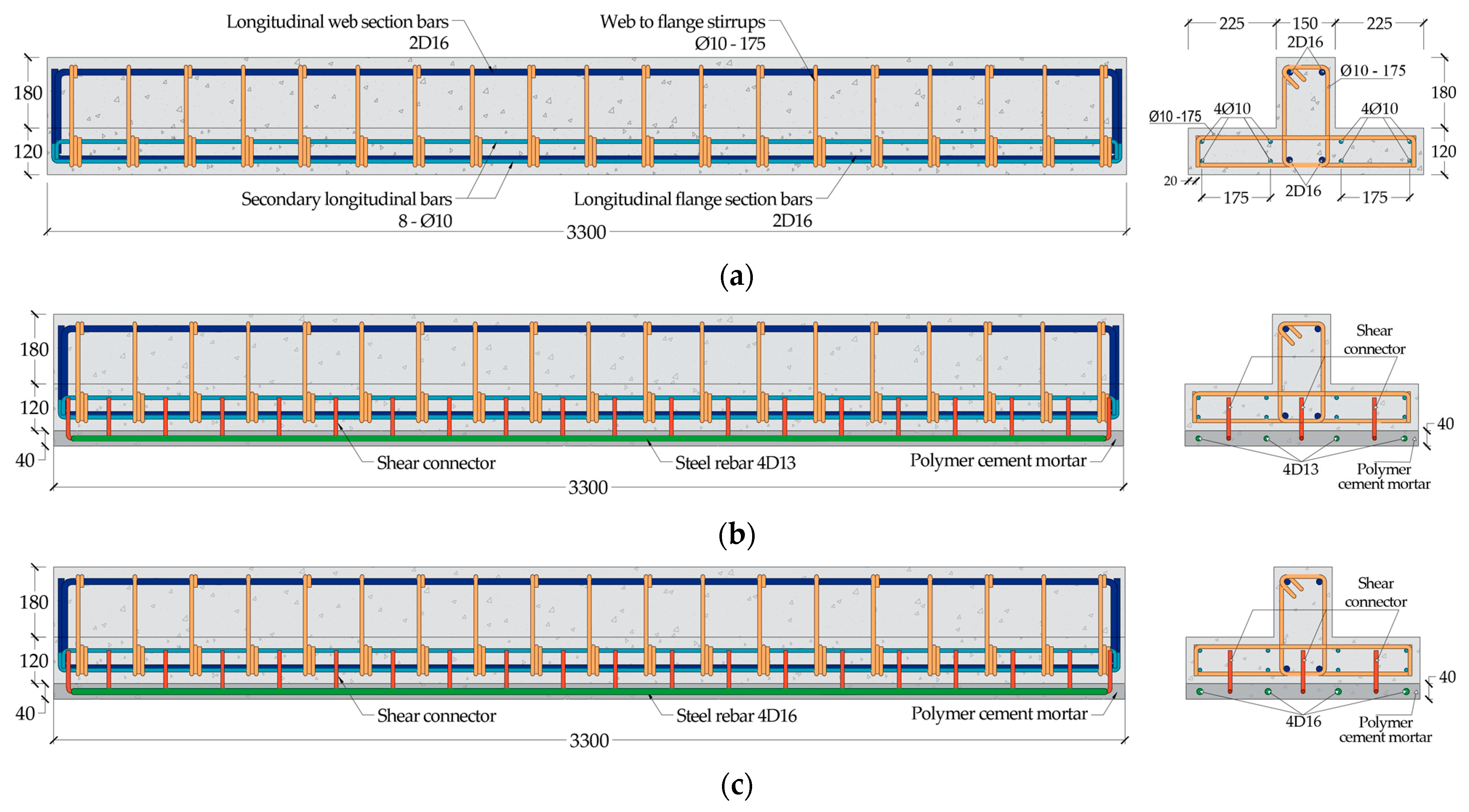
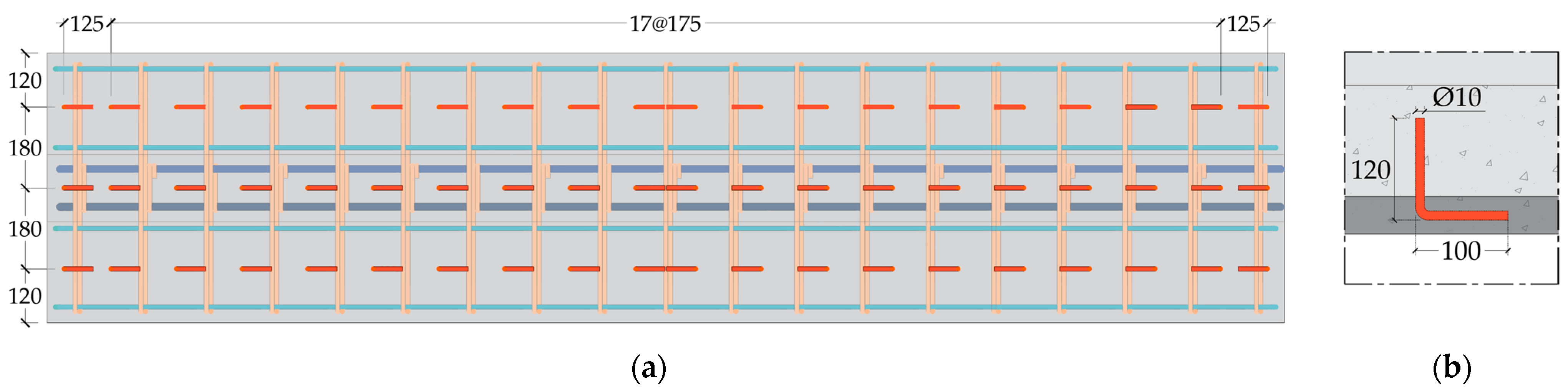
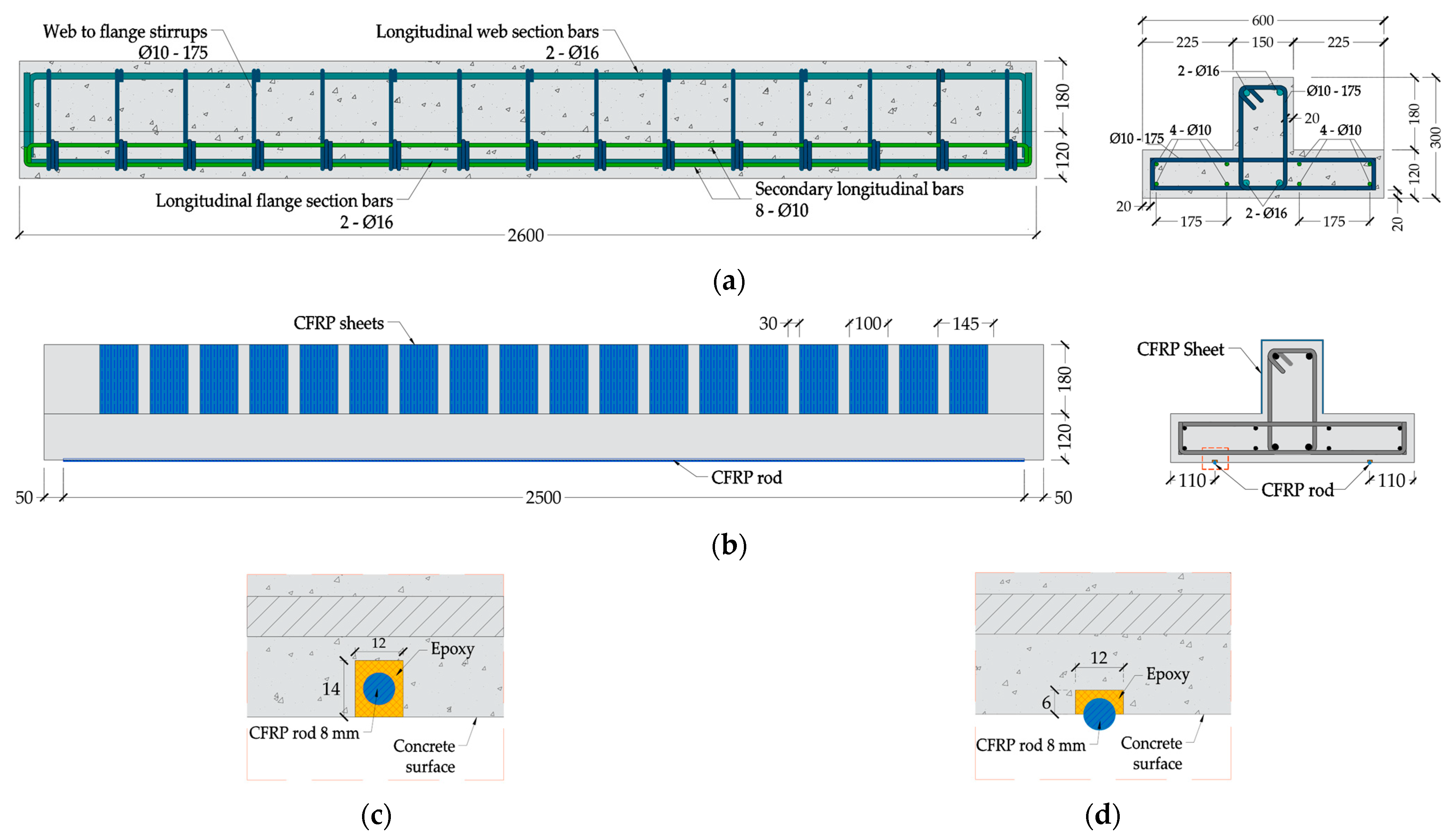
2.1. Configuration of Test Specimens
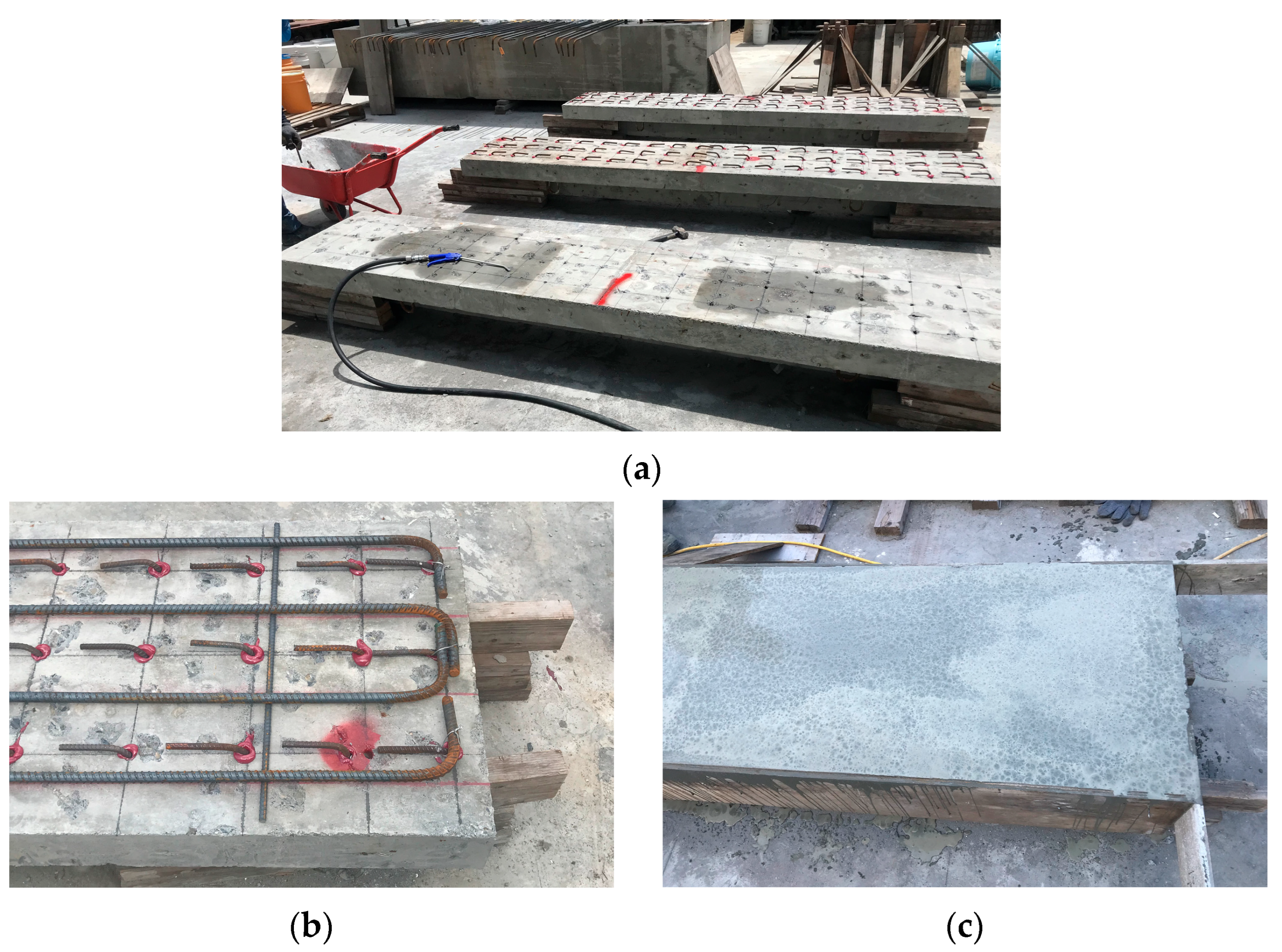
2.2. Specimen Fabrication Process
2.3. Experimental Setup and Instrumentation Scheme
3. FE Modeling Framework
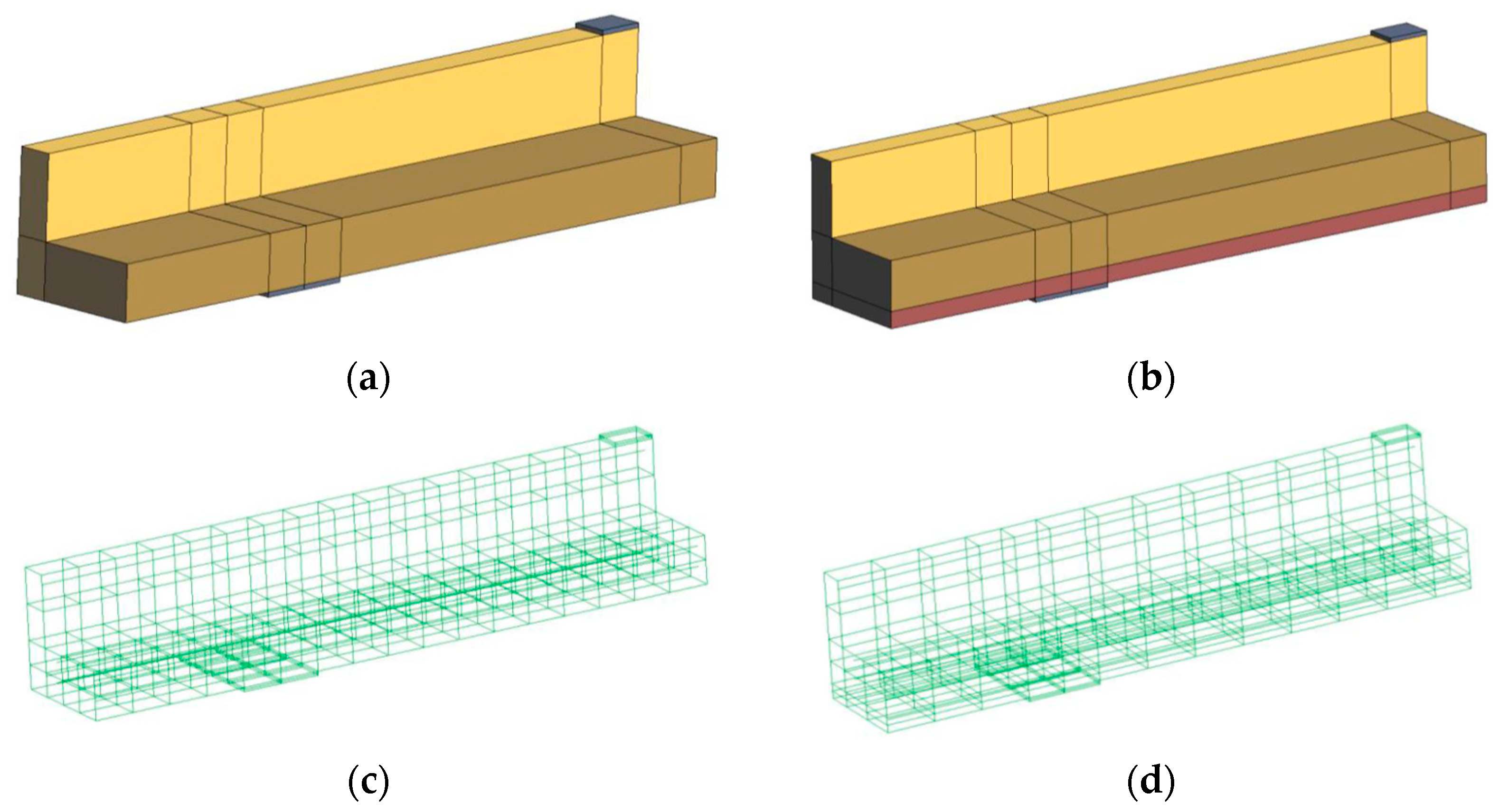
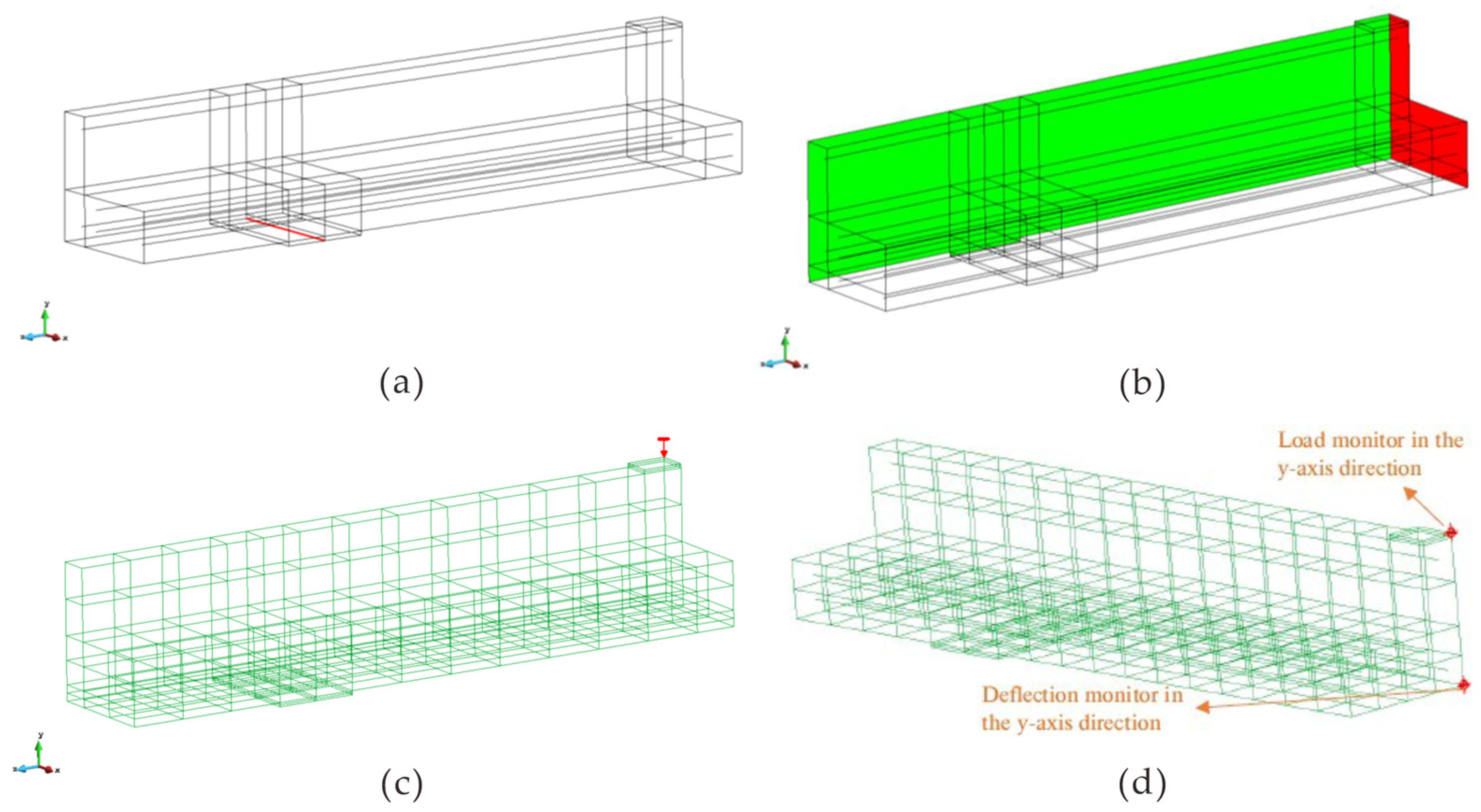
3.1. Definition of Model Geometry
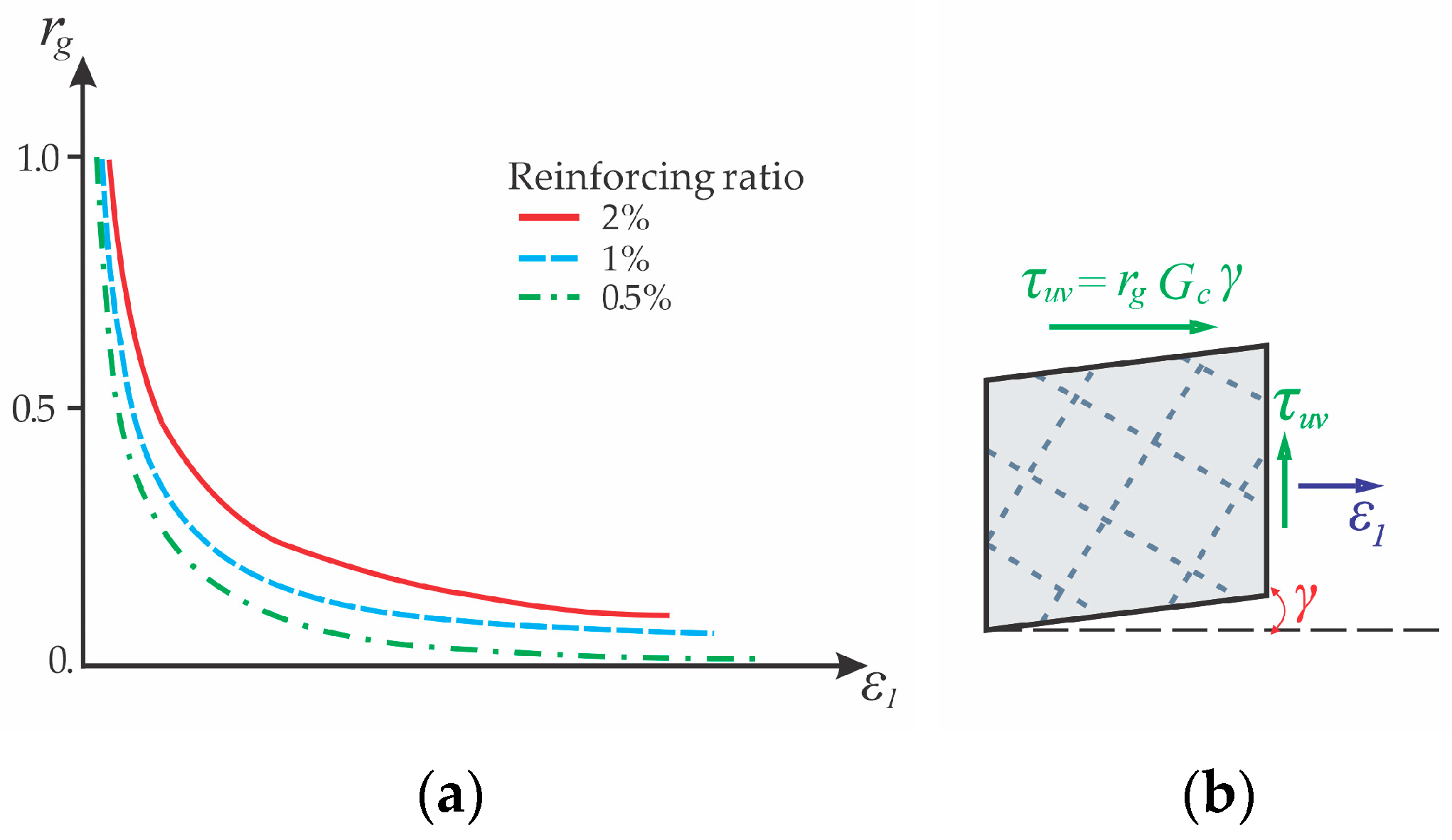
3.2. Constitutive Material Modeling
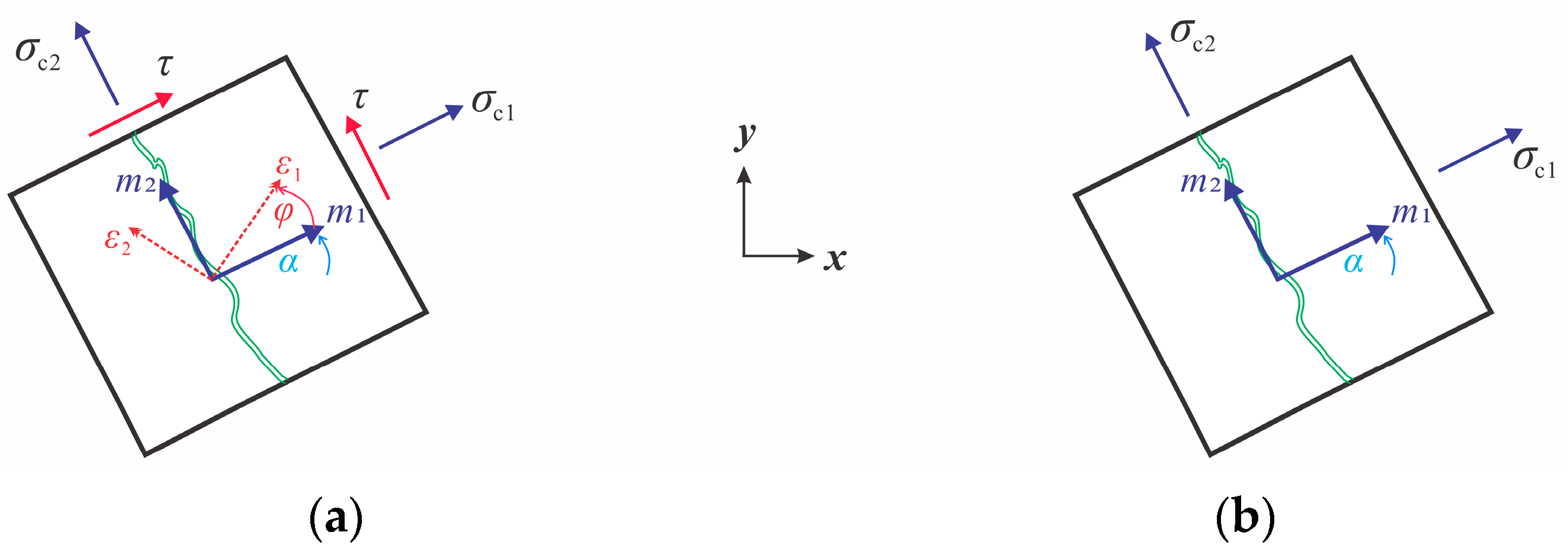
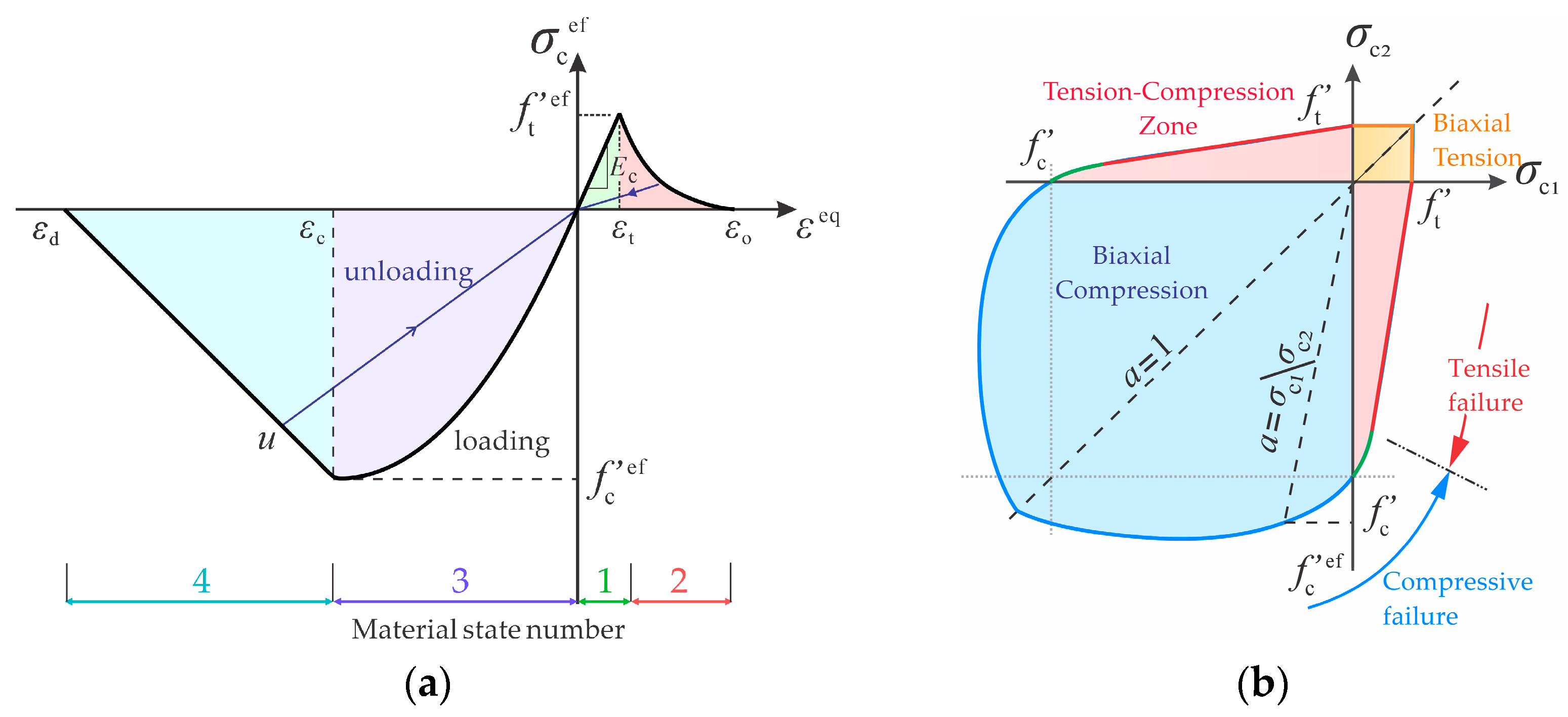
3.2.1. Concrete Behavior Representation
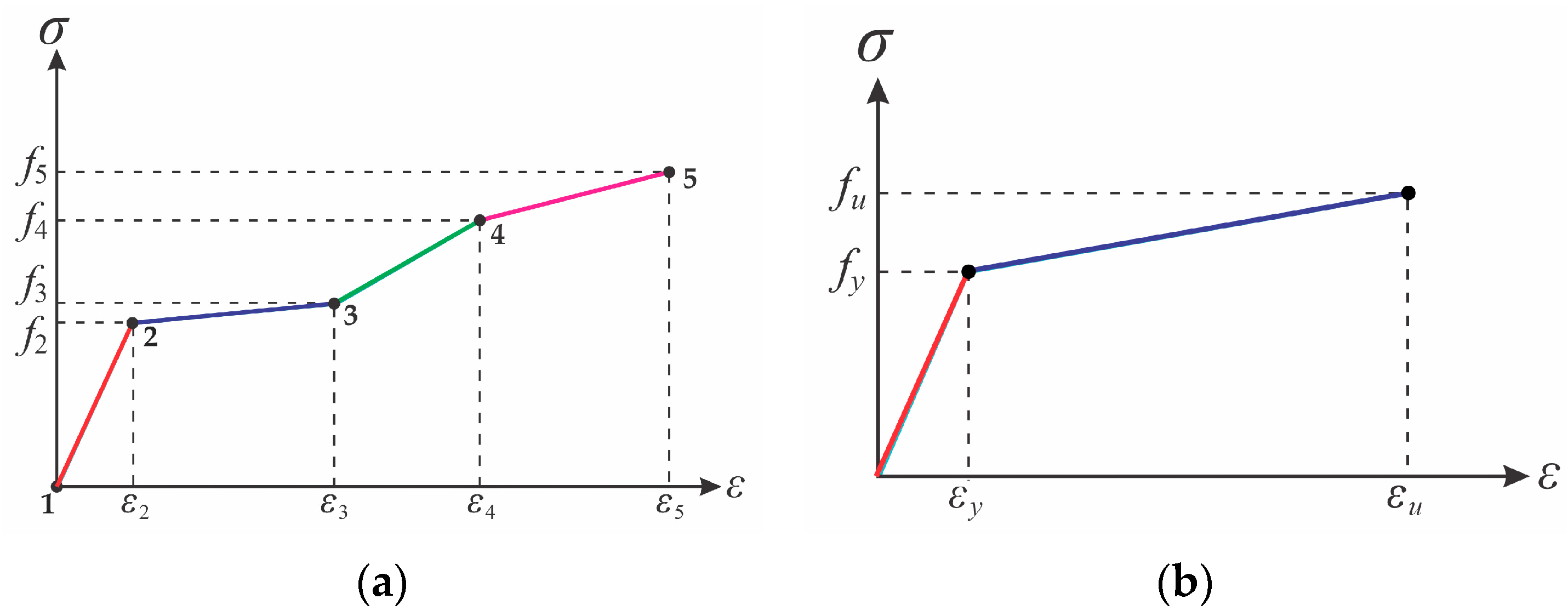
3.2.2. Modeling of Steel Reinforcement
3.3. Boundary Conditions and Response Monitoring
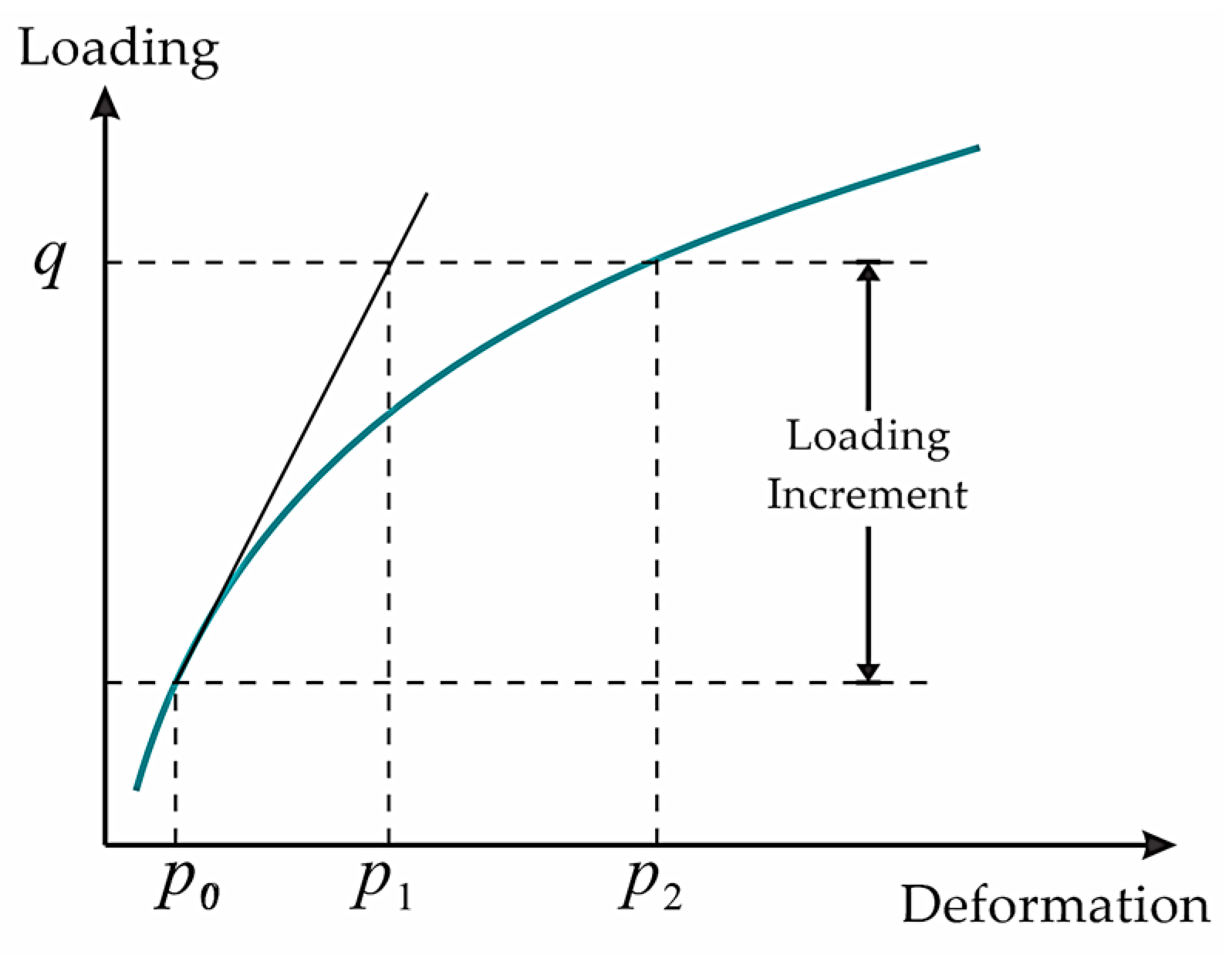
3.4. Solution Strategy
4. Results and Discussion
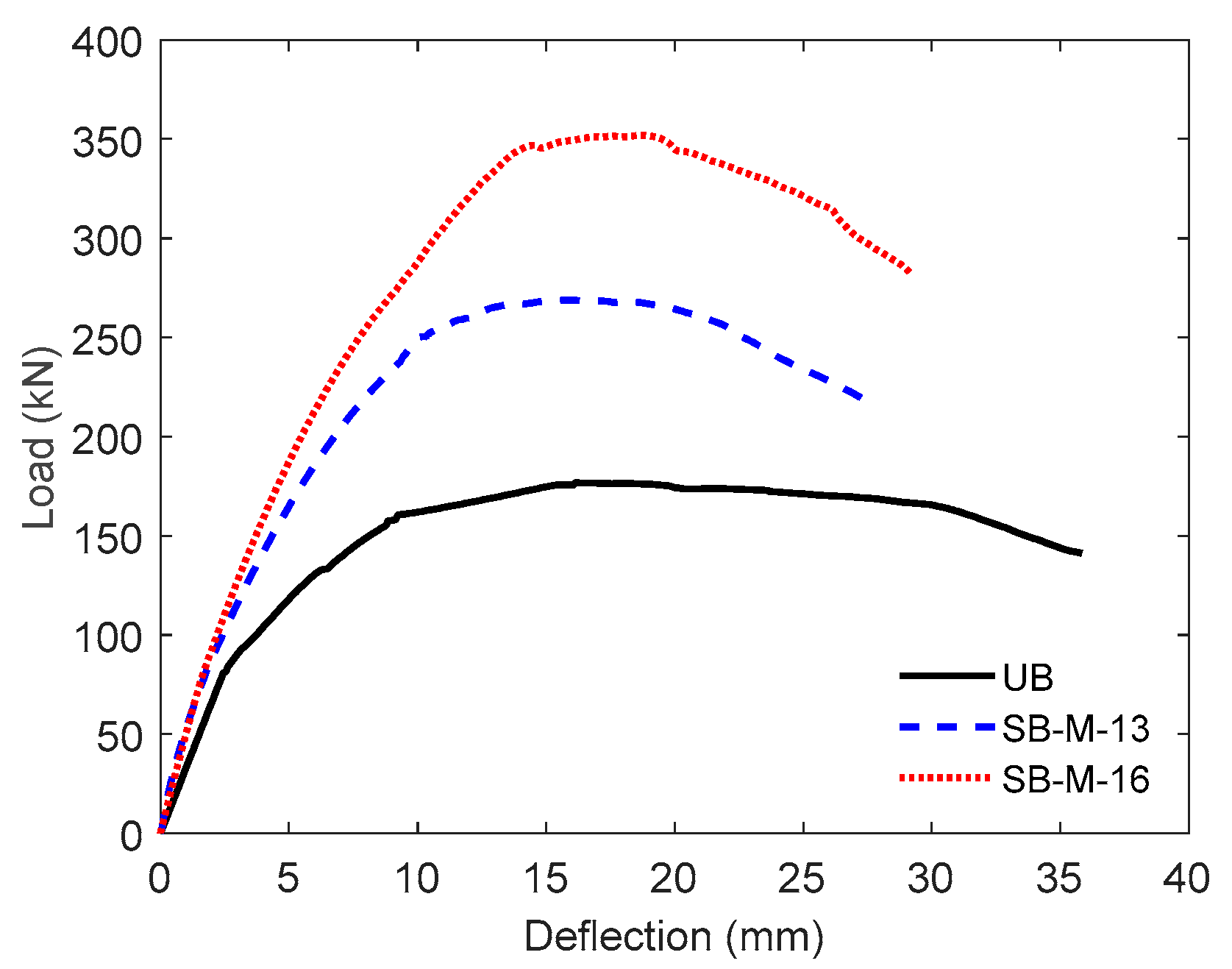
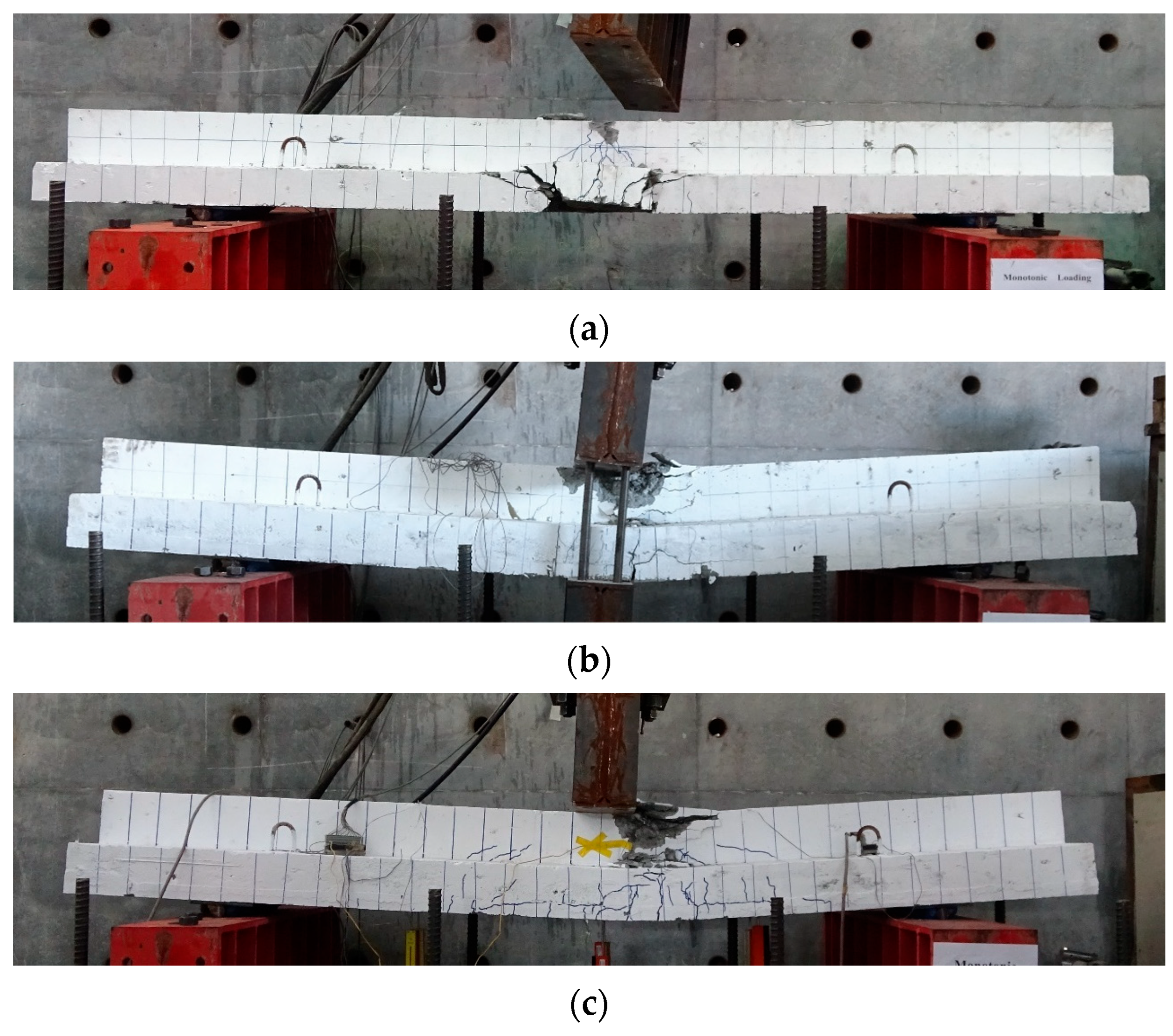
4.1. Summary of Experimental Findings
4.2. Validation Model
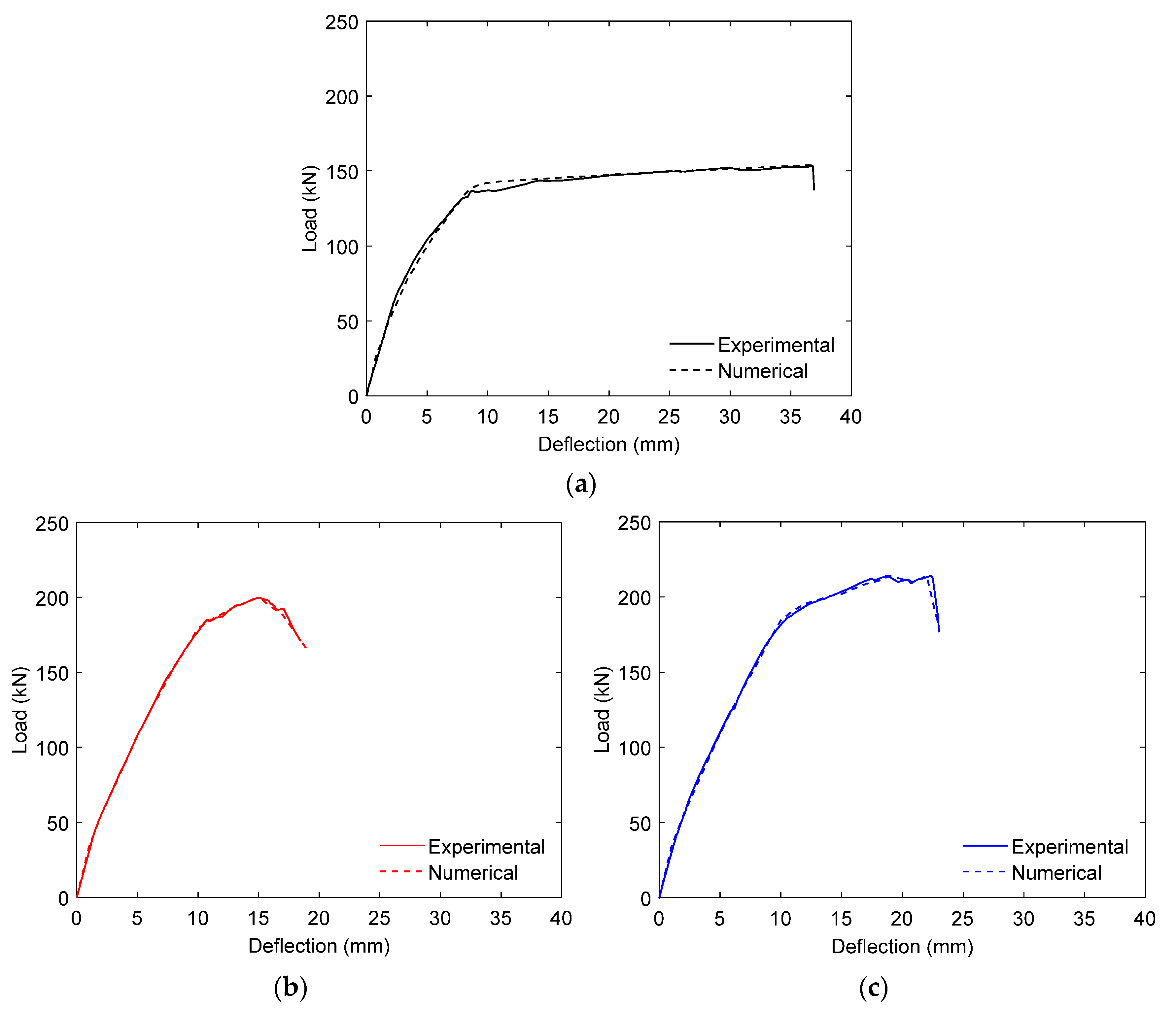
4.2.1. CFRP-Strengthened RC T-Beams Reported by Haryanto et al. [29,35,75]
4.2.2. PCM-Strengthened RC T-Beams Reported by Haryanto et al. [76]
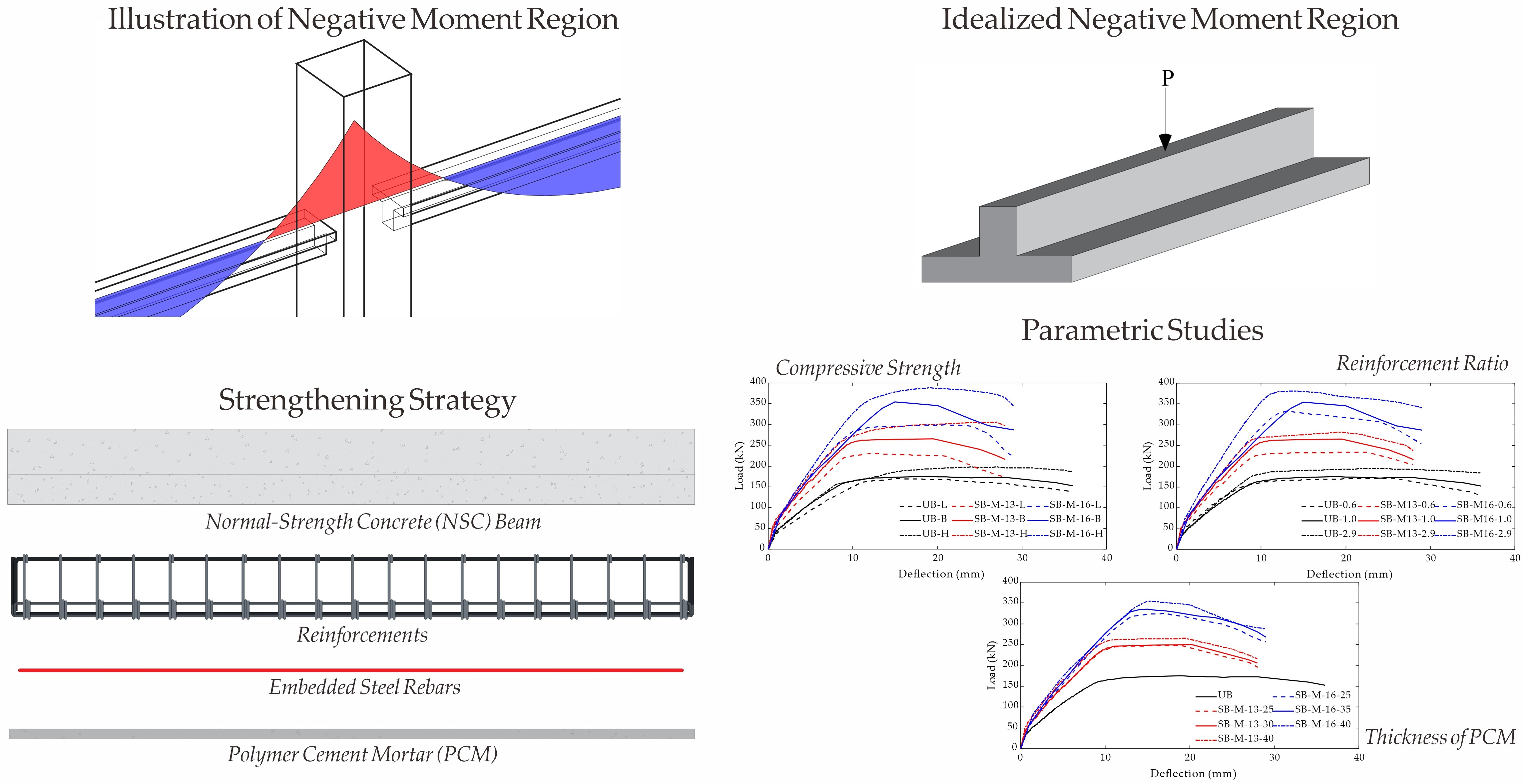
4.3. Parametric Study
4.3.1. Influence of Concrete Compressive Strength
4.3.2. Influence of PCM Overlay Thickness
4.3.3. Influence of Steel Reinforcement Ratio
5. Broader Contributions and Design-Oriented Implications
6. Conclusions
- •
- The experimental results demonstrated that applying a 40 mm PCM overlay reinforced with deformed steel bars substantially improved the load capacity, initial and effective stiffness, and energy absorption compared to unstrengthened beams. Despite a slight reduction in ductility due to the increased reinforcement ratios, the strengthened beams exhibited enhanced overall energy absorption.
- •
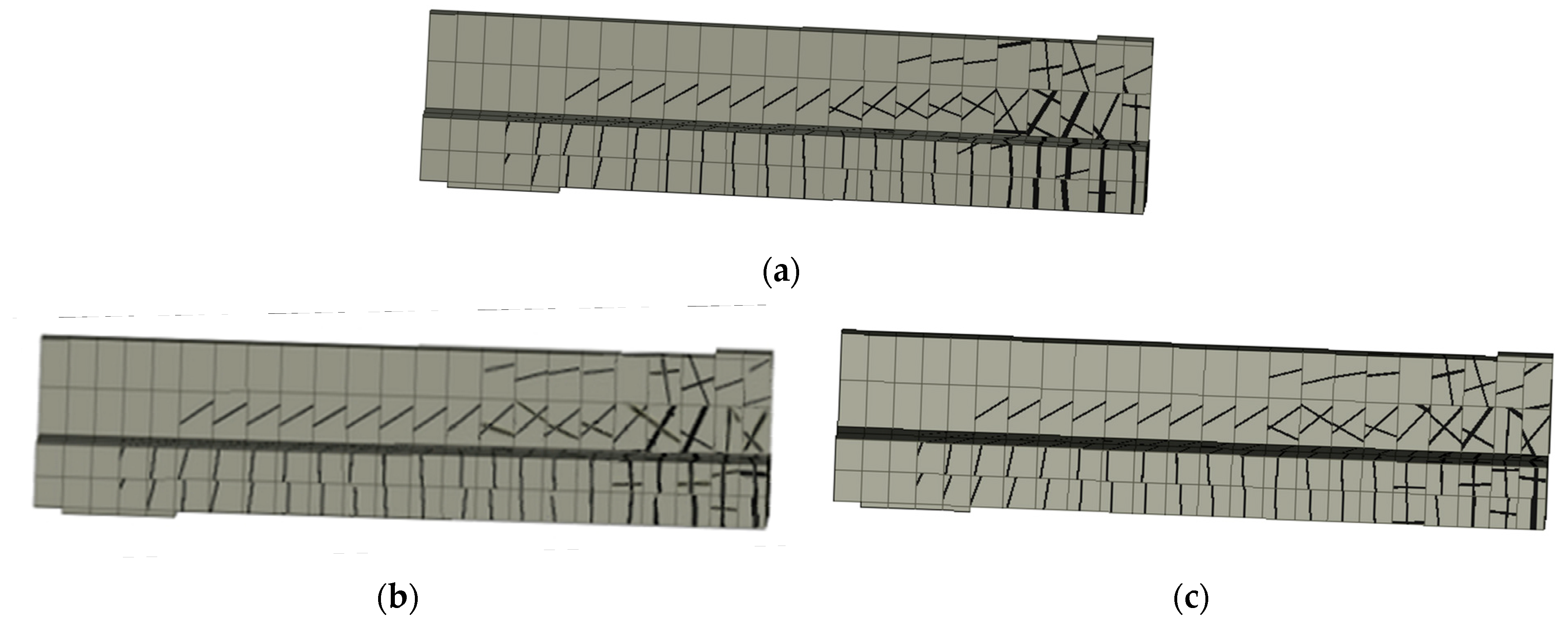
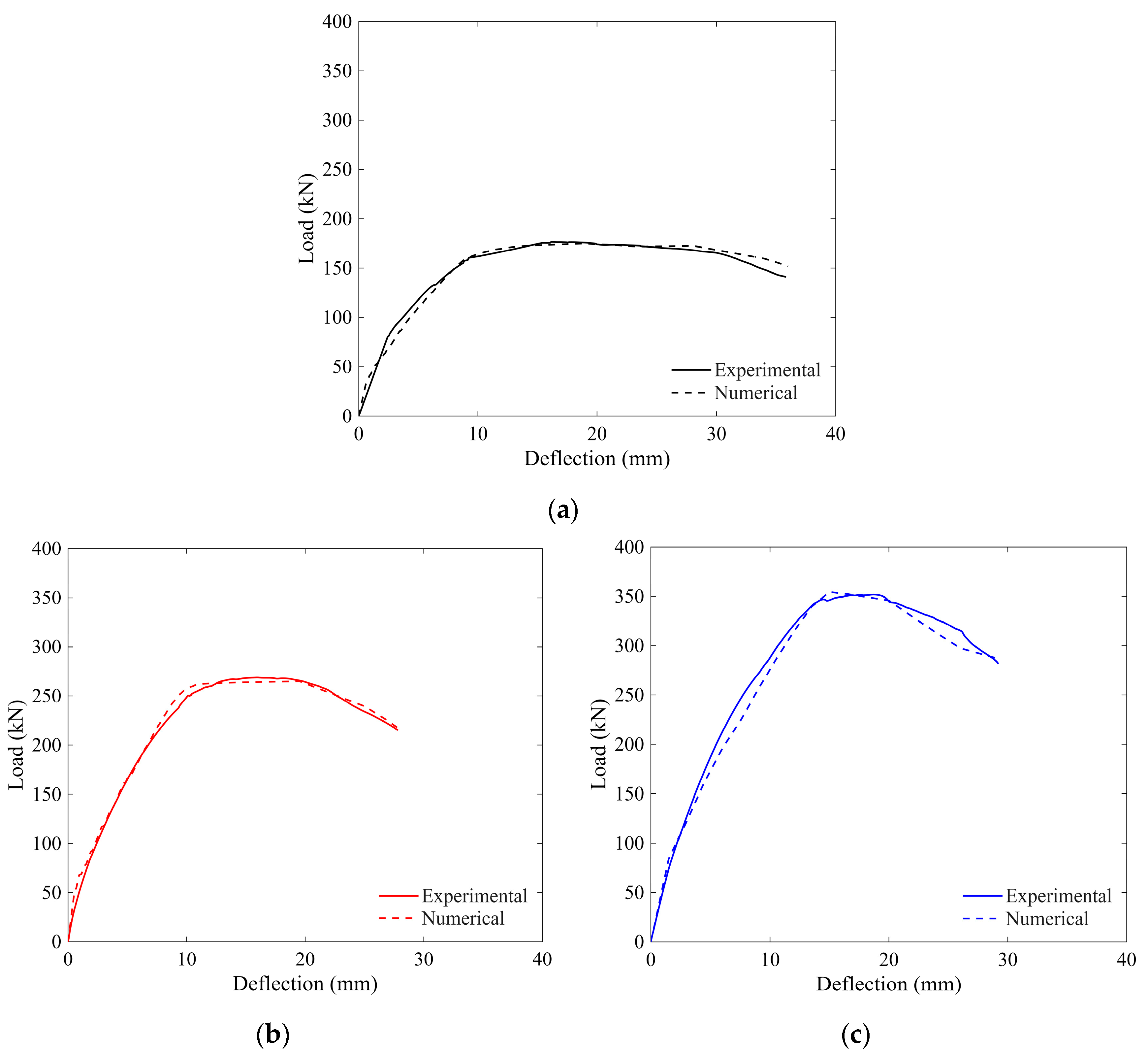
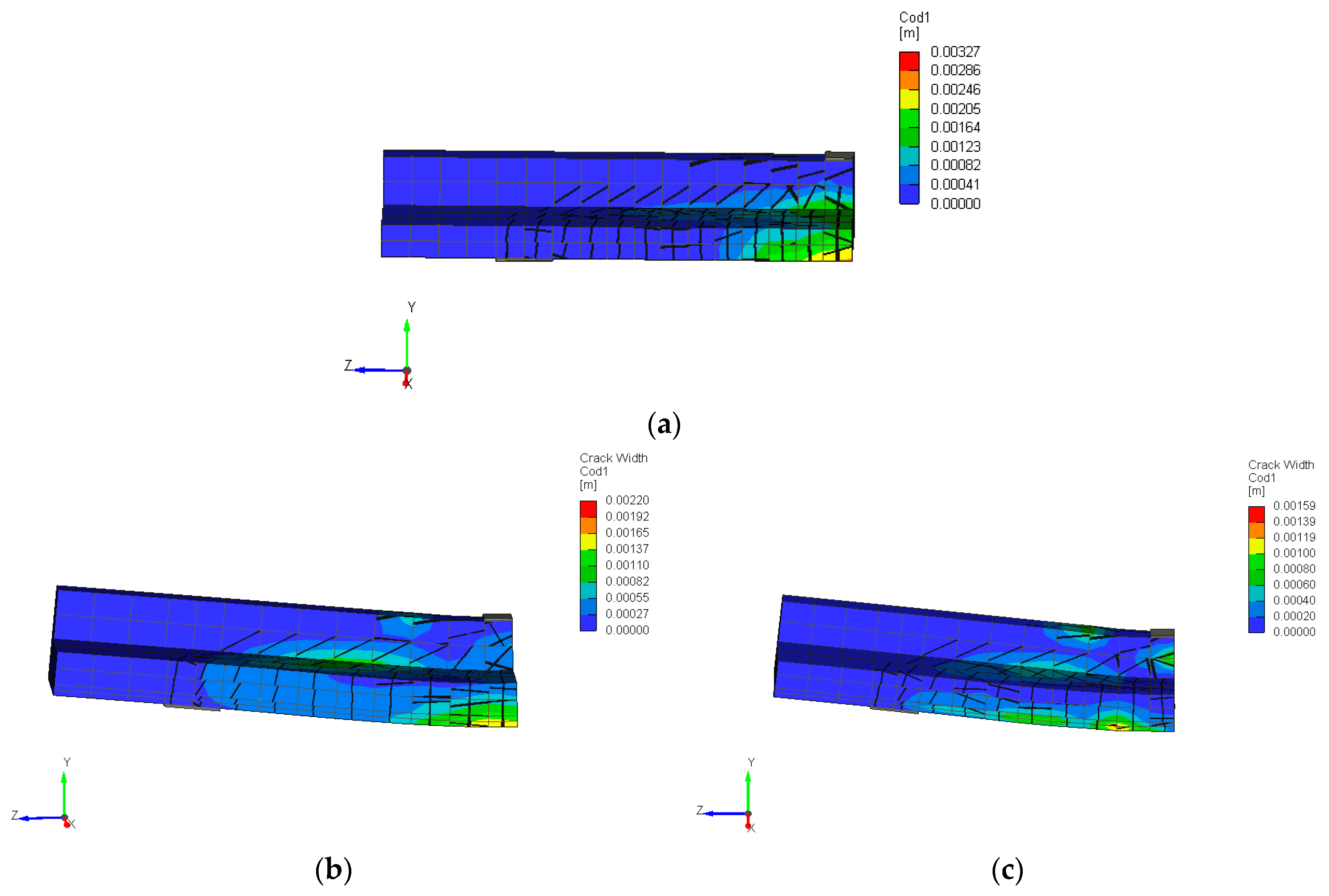
- The developed FE model was successfully validated against two independent experimental datasets involving CFRP- and PCM-strengthened RC T-beams, showing close agreement with experimental load–deflection responses, ultimate load capacities, and overall cracking trends, with peak load ratios close to unity and low NMSE values. These results confirm the model’s capability to capture the dominant structural response under negative moment conditions.
- •
- The predictive accuracy of the numerical model should be interpreted in light of the adopted modeling assumptions, including perfect bond at material interfaces, a smeared-crack formulation for concrete, and the use of geometric symmetry. While these simplifications enable efficient and stable simulations suitable for design-oriented parametric studies, they may limit the direct representation of localized cracking, interface behavior, and asymmetric damage patterns.
- •
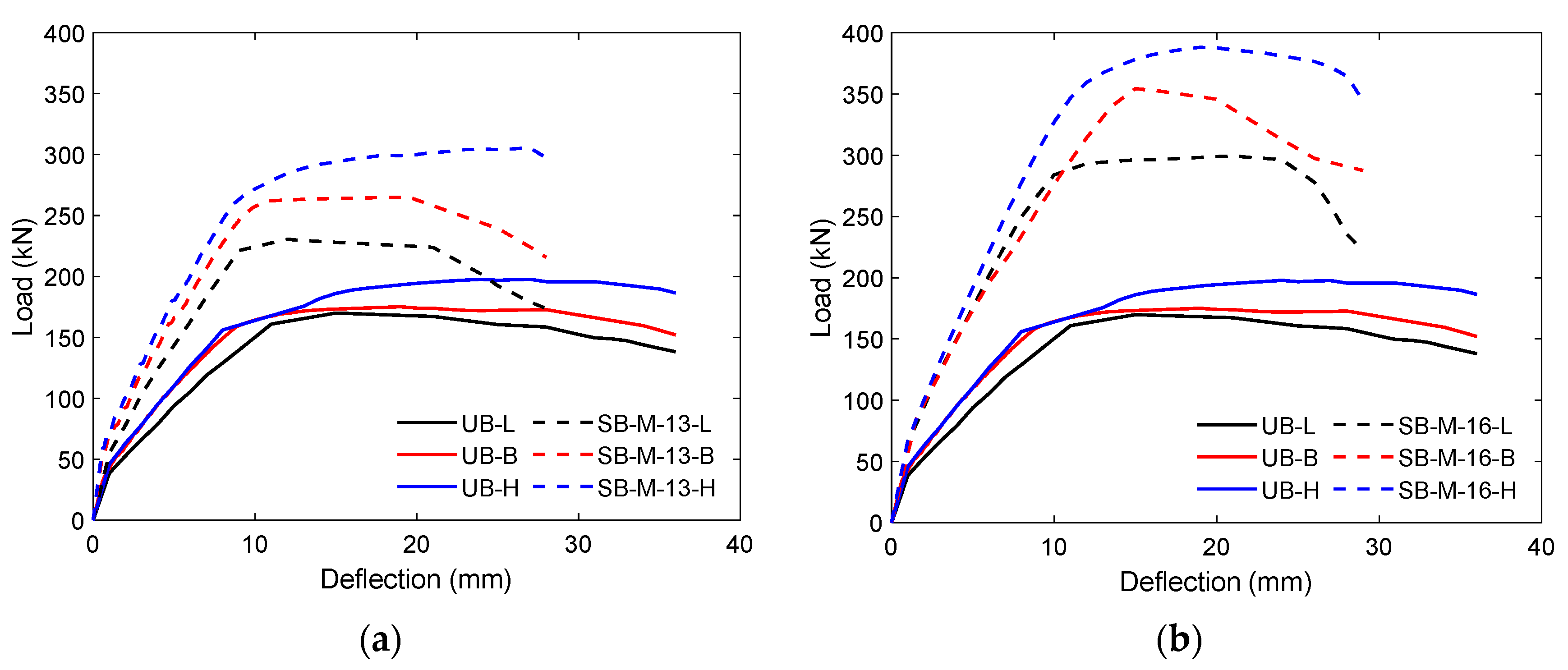
- Increasing the compressive strength of the concrete significantly enhanced the flexural performance of both the control and strengthened beams. The load-carrying capacity increased by up to 12.5%, while the stiffness improvements reached 15.8%, reflecting the beneficial effect of the higher modulus and cracking resistance of stronger concrete mixes.
- •
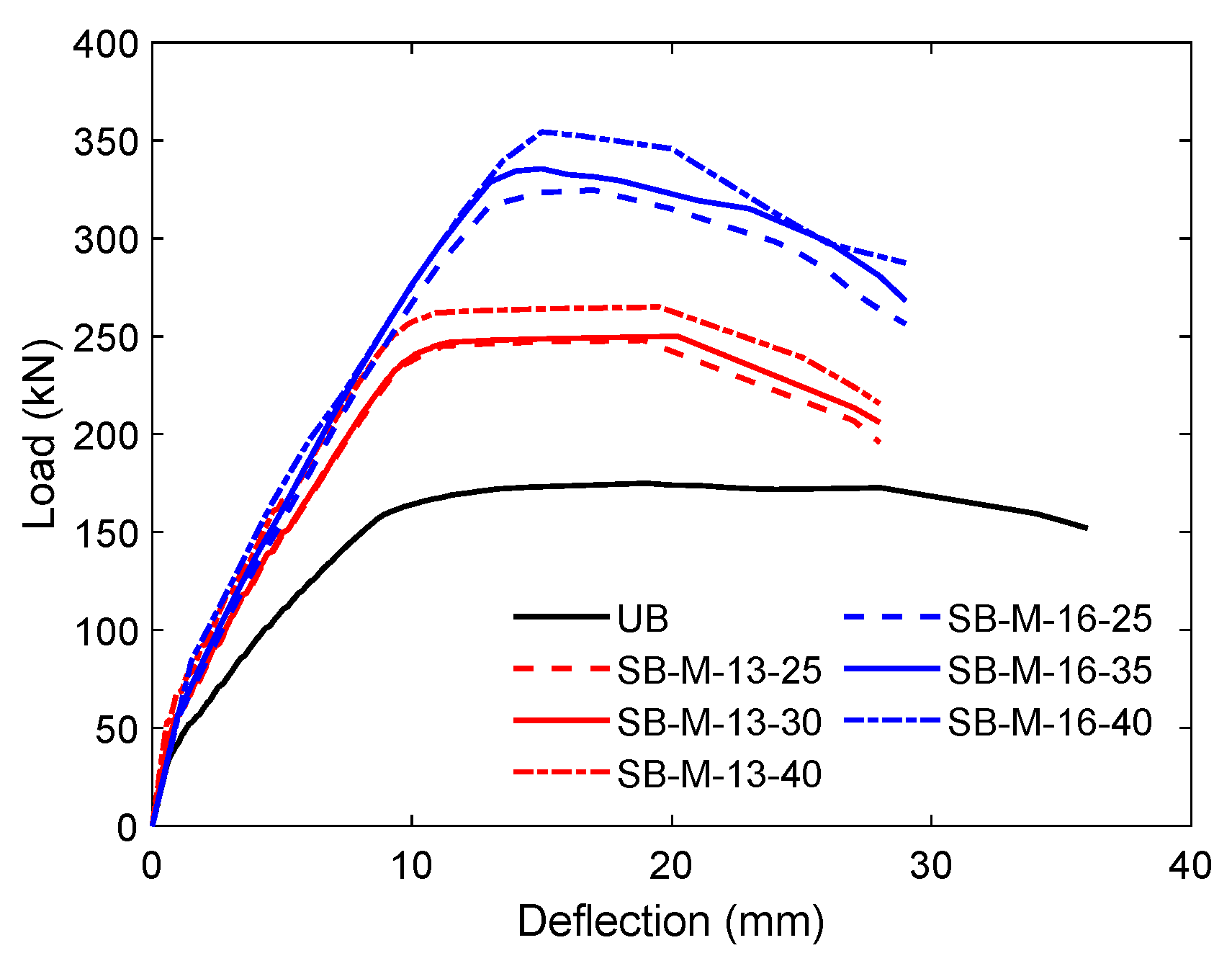
- The PCM overlay thickness had a marked impact on flexural performance, with the ultimate load increasing by up to 15.4%, the stiffness improving by a factor of up to 1.50, and energy absorption rising by as much as 43% compared to the control beam.
- •
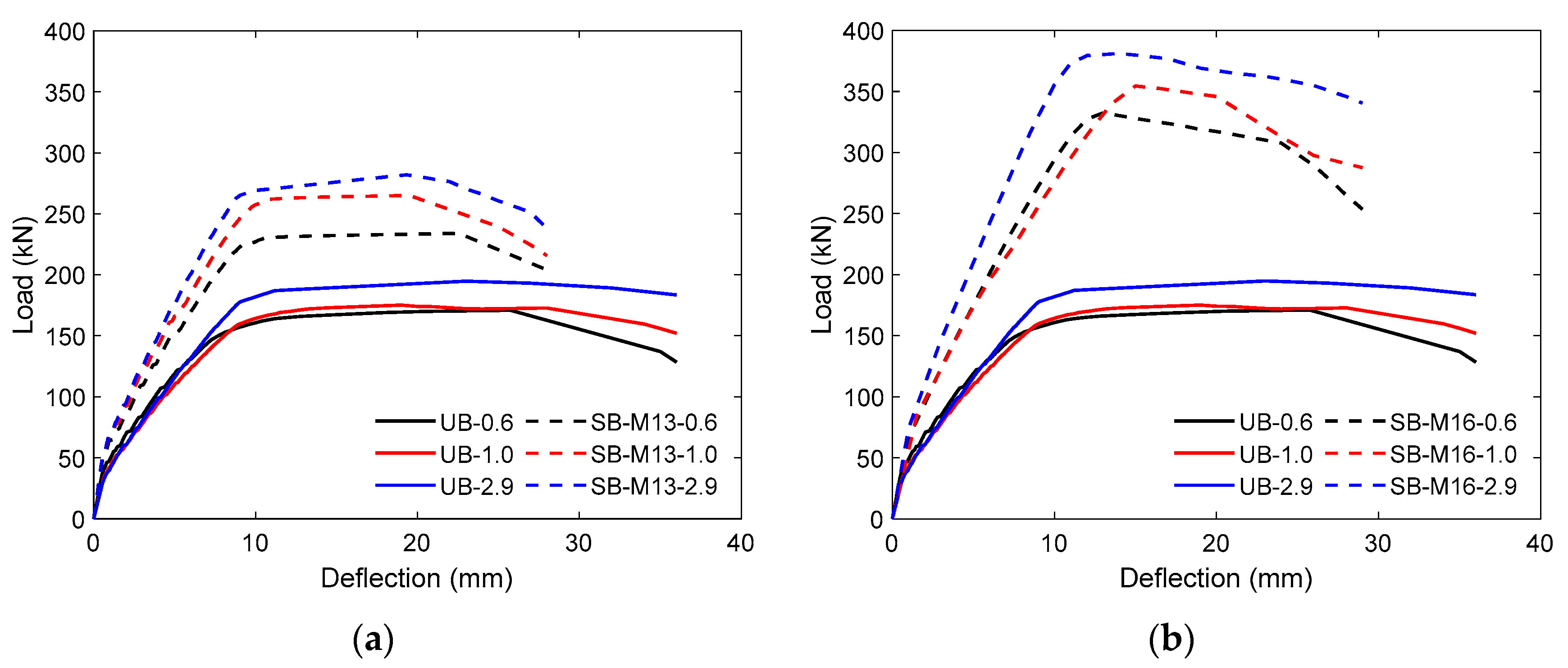
- Varying the longitudinal reinforcement ratio influenced the structural response significantly. Higher ratios resulted in greater load capacity and stiffness, with the ultimate load reaching up to 2.02 times the value for the control beam and the energy absorption improving by as much as 49%. These results highlight the effective synergy between embedded steel bars and the PCM overlay in terms of enhancing flexural resistance.
- •
- The observed improvements in strength and stiffness were consistently accompanied by reductions in ductility, indicating a trade-off between load-carrying capacity and deformation capability that must be carefully considered in seismic strengthening applications.
- •
- While the results demonstrate the effectiveness of PCM overlays in improving the negative moment performance of RC T-beams under monotonic loading, experimental validation is limited to a subset of the investigated parameter ranges. Trends within this validated domain may therefore be considered reliable, whereas predictions outside it should be interpreted as indicative numerical extrapolations. Further studies incorporating material-level characterization, durability, bond–slip behavior, and cyclic and seismic loading are suggested to support broader application in practice.
Author Contributions
Funding
Institutional Review Board Statement
Informed Consent Statement
Data Availability Statement
Acknowledgments
Conflicts of Interest
Abbreviations
| RC | Reinforced concrete |
| ATENA | Advanced Tool for Engineering Nonlinear Analysis |
| PCM | Polymer cement mortar |
| FE | Finite element |
| NMSE | Normalized mean square error |
| FRCMs | Fabric-reinforced cementitious matrices |
| UHPC | Ultra-high-performance concrete |
| FRP | Riber-reinforced polymer |
| NSM | Near-surface mounted |
| NSC | Normal-strength concrete |
| LVDTs | Linear variable differential transformers |
| CoV | Coefficient of Variation |
| CFRP | Carbon-fiber-reinforced polymer |
References
- Li, W.; Huang, X.; Liu, X.; Wen, T.; Jing, C.; Li, L. Flexural performance of reinforced concrete beams strengthened with a novel high-strength and high-toughness epoxy mortar thin layer. Appl. Sci. 2024, 14, 3999. [Google Scholar] [CrossRef]
- Hsiao, F.-P.; Lin, C.-C.; Weng, P.-W.; Haryanto, Y.; Llano, S.P.; Hu, H.-T.; Nugroho, L.; Calad, A.S.; Hidayat, B.A. Seismic performance of a hybrid structural steel–reinforced concrete coupled wall building: Preliminary response estimates from an NCREE–QuakeCoRE joint study. Buildings 2026, 16, 246. [Google Scholar] [CrossRef]
- Wang, Y.; Liu, Z.; Zhang, X.; Qu, S.; Xu, T. Fire resistance of reinforced concrete columns: State of the art, analysis and prediction. J. Build. Eng. 2024, 96, 110690. [Google Scholar] [CrossRef]
- Suwondo, R.; Keintjem, M.; Suangga, M.; Cunningham, L. Assessing embodied carbon and financial implications in concrete T-girder bridge design for cost-effective sustainability. Innov. Infrastruct. Solut. 2024, 9, 136. [Google Scholar] [CrossRef]
- Hobbs, D.W. Concrete deterioration: Causes, diagnosis, and minimising risk. Int. Mater. Rev. 2001, 46, 117–144. [Google Scholar] [CrossRef]
- Yang, B.; Hu, X.; Li, A.; Zhao, T.; Sun, Y.Q.; Fu, H. Degradation mechanism of cast-in-situ concrete under long-term sulfate saline soil attack. Constr. Build. Mater. 2025, 478, 141401. [Google Scholar] [CrossRef]
- Wang, J.-H.; Cai, G.; Wu, Q. Basic mechanical behaviours and deterioration mechanism of RC beams under chloride-sulphate environment. Constr. Build. Mater. 2018, 160, 450–461. [Google Scholar] [CrossRef]
- Li, J.; Lan, L.; Zhang, Y.; Pan, B.; Shi, W.; Gu, Z.; Zhang, Y.; Yan, Y.; Wang, J.; Zhou, J.; et al. Advancements in basalt fiber-reinforced composites: A critical review. Coatings 2025, 15, 1441. [Google Scholar] [CrossRef]
- Li, Z.; Liu, A.; Gao, D.; Wu, C.; Liu, X.; Zhai, H. Mechanical performance and strengthening mechanism of polymer concretes reinforced with carbon nanofiber and epoxy resin. Coatings 2023, 13, 1964. [Google Scholar] [CrossRef]
- Zheng, H.; Hu, Y.; Gong, Z.; He, H. Study on the Flexural capacity of reinforced concrete beams strengthened with UHPC thin layers considering interface slip. Buildings 2026, 16, 562. [Google Scholar] [CrossRef]
- Hsiao, F.-P.; Lin, C.-C.; Weng, P.-W.; Haryanto, Y.; Nugroho, L.; Huang, C.-H. Alternative strengthening strategies to improve the seismic resilience of RC frame structures. J. Build. Eng. 2026, 119, 115078. [Google Scholar] [CrossRef]
- Zaiter, A.; Lau, T.L. Review on strengthening reinforced concrete columns using reinforced concrete jackets. IOP Conf. Ser. Earth. Environ. Sci. 2020, 614, 012063. [Google Scholar] [CrossRef]
- Sengottian, K.; Jagadeesan, K. Retrofitting of column with RC jacketting an experimental behavior. J. Theor. Appl. Inf. Technol. 2013, 56, 349–354. [Google Scholar]
- Thermou, G.E.; Pantazopoulou, S.J.; Elnashai, A.S. Flexural behavior of brittle RC members rehabilitated with concrete jacketing. J. Struct. Eng. 2007, 133, 1373–1384. [Google Scholar] [CrossRef]
- Villar-Salinas, S.; Guzmán, A.; Carrillo, J. Performance evaluation of structures with reinforced concrete columns retrofitted with steel jacketing. J. Build. Eng. 2021, 33, 101510. [Google Scholar] [CrossRef]
- Hsiao, F.-P.; Weng, P.-W.; Li, Y.A.; Kawamoto, T.; Lin, Y.-C.; Haryanto, Y. Study on retrofitting of existing reinforced concrete buildings with the exoskeleton design-U-frame method. Compos. Struct. 2023, 324, 117562. [Google Scholar] [CrossRef]
- Prota, A.; Tartaglia, R.; Di Lorenzo, G.; Landolfo, R. Seismic strengthening of isolated RC framed structures through orthogonal steel exoskeleton: Bidirectional non-linear analyses. Eng. Struct. 2024, 302, 117496. [Google Scholar] [CrossRef]
- Kim, S.Y.; Yang, K.H.; Byun, H.Y.; Ashour, A.F. Tests of reinforced concrete beams strengthened with wire rope units. Eng. Struct. 2007, 29, 2711–2722. [Google Scholar] [CrossRef]
- Schranz, B.; Michels, J.; Czaderski, C.; Motavalli, M.; Vogel, T.; Shahverdi, M. Strengthening and prestressing of bridge decks with ribbed iron-based shape memory alloy bars. Eng. Struct. 2021, 241, 112467. [Google Scholar] [CrossRef]
- Haryanto, Y.; Hsiao, F.-P.; Hu, H.-T.; Han, A.L.; Hidayat, B.A.; Nugroho, L. Validating an analytical method to predict flexural behavior of RC T-beams retrofitted with bonded steel wire ropes in the negative moment region. AIP. Conf. Proc. 2023, 2482, 030001. [Google Scholar]
- Haryanto, Y.; Sudibyo, G.H.; Nugroho, L.; Hu, H.-T.; Han, A.L.; Hsiao, F.-P.; Widyaningrum, A.; Susetyo, Y. Flexural performance of negative moment region bonded SWR-strengthened RC T-beams at different prestressing levels. Adv. Struct. Eng. 2024, 27, 2338–2358. [Google Scholar]
- Koutas, L.N.; Tetta, Z.; Bournas, D.A.; Triantafillou, T.C. Strengthening of concrete structures with textile reinforced mortars: State-of-the-art review. J. Compos. Constr. 2019, 23, 03118001. [Google Scholar] [CrossRef]
- Huangz, W.; Yen, C.-H.; Hung, C.-C. Flexural and shear strengthening of lightly reinforced concrete beams using CFRP bars and UHPC overlays. Case Stud. Constr. Mater. 2025, 22, e04666. [Google Scholar] [CrossRef]
- Hung, C.-C.; Lin, C.-C.; Do, T.D.D. Seismic rehabilitation of RC frames with innovative precast U-shaped UHPC jackets: Experimental evaluation and computational simulation. Eng. Struct. 2024, 318, 118746. [Google Scholar] [CrossRef]
- Hung, C.-C.; Agrawal, S.; Hsiao, H.-J. Rehabilitation of seismically-damaged RC beam–column joints with UHPC and high-strength steel mesh reinforcement. J. Build. Eng. 2024, 84, 108667. [Google Scholar] [CrossRef]
- Nugroho, L.; Haryanto, Y.; Hsiao, F.-P.; Hu, H.-T.; Weng, P.-W.; Lin, C.-C.; Kristiawan, S.A.; Sangadji, S. Effectiveness of UHPC reinforced with steel rebars for flexural strengthening of RC T-beams in an idealized negative moment region. Structures 2025, 10, 109728. [Google Scholar] [CrossRef]
- De Lorenzis, L.; Tepfers, R. Comparative study of models on confinement of concrete cylinders with fiber-reinforced polymer composites. J. Compos. Constr. 2003, 7, 219–237. [Google Scholar] [CrossRef]
- Zapris, A.G.; Kytinou, V.K.; Chalioris, C.E. Innovative fiber-reinforced polymer rope-based closed-form retrofitting methods applied in reinforced concrete T-shaped beams under torsion. Polymers 2024, 16, 2634. [Google Scholar]
- Haryanto, Y.; Hsiao, F.-P.; Hu, H.-T.; Han, A.L.; Chua, A.W.; Salim, F.; Nugroho, L. Structural behavior of negative moment region NSM-CFRP strengthened RC T-beams with various embedment depth under monotonic and cyclic loading. Compos. Struct. 2022, 301, 116214. [Google Scholar]
- Kodur, V.; Rayala, T.; Kim, H.S. Rational approach for evaluating fire resistance of prestressed concrete beams strengthened with fiber-reinforced polymers. Polymers 2025, 17, 2773. [Google Scholar] [CrossRef]
- Sakar, G.; Celik, H.K. Easy prestressing of FRP for strengthening RC beams: Experimental study with an analytical approach. Polymers 2025, 17, 1628. [Google Scholar] [CrossRef]
- Niu, P.; Chen, Z.; Jin, C.; Hui, Y.; Shi, F.; Ma, R. Flexural Behavior and Capacity Modeling of Damaged RC Beams Strengthened with CFRP Grid. Buildings 2026, 16, 205. [Google Scholar] [CrossRef]
- Nugroho, L.; Haryanto, Y.; Hu, H.-T.; Han, A.L.; Hsiao, F.-P.; Lin, C.-C.; Weng, P.-W.; Widiastuti, E.P. NSM-CFRP rods with varied embedment depths for strengthening RC T-beams in the negative moment region: Investigation on high cyclic response. Compos. Struct. 2024, 331, 117891. [Google Scholar]
- Nugroho, L.; Haryanto, Y.; Hu, H.-T.; Hsiao, F.-P.; Pamudji, G.; Setiadji, B.H.; Hsu, C.-N.; Weng, P.-W.; Lin, C.-C. Prestressed concrete T-beams strengthened with near-surface mounted carbon-fiber-reinforced polymer rods under monotonic loading: A finite element analysis. Eng 2025, 6, 36. [Google Scholar] [CrossRef]
- Haryanto, Y.; Wariyatno, N.G.; Hsiao, F.-P.; Hu, H.-T.; Han, A.L.; Nugroho, L.; Hartono, H. RC T-beams with flexural strengthening in the negative moment region under different configurations of NSM CFRP rods. Eng. Fail. Anal. 2025, 173, 109458. [Google Scholar] [CrossRef]
- Siddika, A.; Al Mamun, M.A.; Ferdous, W.; Alyousef, R. Performances, challenges and opportunities in strengthening reinforced concrete structures by using FRPs—A state-of-the-art review. Eng. Fail. Anal. 2020, 111, 104480. [Google Scholar] [CrossRef]
- Afifi, M.Z.; Mohamed, H.M.; Benmokrane, B. Theoretical stress–strain model for circular concrete columns confined by GFRP spirals and hoops. Eng. Struct. 2015, 102, 202–213. [Google Scholar] [CrossRef]
- Liao, J.; Zeng, J.-J.; Zhuge, Y.; Ma, G.; Zhang, L. FRP-confined concrete columns with a stress reduction-recovery behavior: A state-of-the-art review, design recommendations and model assessments. Compos. Struct. 2023, 321, 117313. [Google Scholar] [CrossRef]
- Amran, Y.H.M.; Alyousef, A.; Rashid, R.S.M.; Hisham, A.; Hung, C.-C. Properties and applications of FRP in strengthening RC structures: A review. Structures 2018, 16, 208–238. [Google Scholar] [CrossRef]
- Mizan, M.H.; Matsumoto, K. Polymer cement mortar strengthened RC beams with/without silica fume as repair material. Constr. Build. Mater. 2023, 409, 134046. [Google Scholar] [CrossRef]
- Xie, X.; Guo, Z.; Basha, S.H.; Huang, Q. A Novel shear strengthening of existing RC shear walls using steel wire mesh and polymer mortar. Buildings 2022, 12, 219. [Google Scholar] [CrossRef]
- Al-Zahrani, M.M.; Maslehuddin, M.; Al-Dulaijan, S.U.; Ibrahim, M. Mechanical properties and durability characteristics of polymer and cement-based repair materials. Cem. Concr. Compos. 2003, 25, 527–537. [Google Scholar] [CrossRef]
- Chung, D.D.L. Use of polymers for cement-based structural materials. J. Mater. Sci. 2004, 39, 2973–2978. [Google Scholar] [CrossRef]
- Yang, Z.X.; Shi, X.M.; Creighton, A.T.; Peterson, M.M. Effect of styrene-butadiene rubber latex on the chloride permeability and microstructure of Portland cement mortar. Constr. Build. Mater. 2009, 23, 2283–2290. [Google Scholar] [CrossRef]
- Park, D.C.; Ahn, J.C.; Oh, S.G.; Song, H.C.; Noguchi, T. Drying effect of polymer-modified cement for patch-repaired mortar on constraint stress. Constr. Build. Mater. 2009, 23, 434–447. [Google Scholar] [CrossRef]
- Wang, R.; Wang, P.M. Function of styrene-acrylic ester copolymer latex in cement mortar. Mater. Struct. 2010, 43, 443–451. [Google Scholar] [CrossRef]
- Khan, K.A.; Ahmad, I.; Alam, M. Effect of ethylene vinyl acetate (EVA) on the setting time of cement at different temperatures as well as on the mechanical strength of concrete. Arab. J. Sci. Eng. 2019, 44, 4075–4084. [Google Scholar] [CrossRef]
- Liu, J.; Wang, D. Influence of steel slag–silica fume composite mineral admixture on the properties of concrete. Powder Technol. 2017, 320, 230–238. [Google Scholar] [CrossRef]
- Choi, S.J.; Bae, S.H.; Lee, J.I.; Bang, E.J.; Ko, H.M. Strength, carbonation resistance, and chloride-ion penetrability of cement mortars containing catechol-functionalized chitosan polymer. Materials 2021, 14, 6395. [Google Scholar] [CrossRef]
- Jo, B.W.; Park, S.K.; Park, J.C. Mechanical properties of polymer concrete made with recycled PET and recycled concrete aggregates. Constr. Build. Mater. 2015, 195, 2191–2198. [Google Scholar] [CrossRef]
- Jafari, K.; Tabatabaeian, M.; Joshaghani, A.; Ozbakkaloglu, T. Optimizing the mixture design of polymer concrete: An experimental investigation. Constr. Build. Mater. 2018, 167, 185–196. [Google Scholar] [CrossRef]
- Ferdous, W.; Manalo, A.; Wong, H.S.; Abousnina, R.; AlAjarmeh, O.S.; Zhuge, Y.; Schubel, P. Optimal design for epoxy polymer concrete based on mechanical properties and durability aspects. Constr. Build. Mater. 2020, 232, 117229. [Google Scholar] [CrossRef]
- Choi, S.-J.; Bae, S.-H.; Lee, J.-I.; Bang, E.J.; Choi, H.Y.; Ko, H.M. Effect of bio-inspired polymer types on engineering characteristics of cement composites. Polymers 2022, 14, 1808. [Google Scholar] [CrossRef]
- Warzer, S.; Kawan, G.; Ahmed, M. Regression analysis and Vipulanandan model to quantify the effect of polymers on the plastic and hardened properties with the tensile bonding strength of the cement mortar. Results Mater. 2019, 1, 100011. [Google Scholar] [CrossRef]
- Ahmed, S.M.; Wael, M.; Warzer, S.Q.; Kawan, G.; Rawaz, K. Microstructure tests, flow, and mechanical behavior of polymerized cement mortar. Ain Shams Eng. J. 2023, 14, 101922. [Google Scholar]
- Ahmed, S.; Serwan, R.; Wael, M.; Kawan, G.; Warzer, S. Various simulation techniques to predict the compressive strength of cement-based mortar modified with micro-sand at different water-to-cement ratios and curing ages. Arab. J. Geosci. 2021, 14, 411. [Google Scholar]
- Rashid, K.; Wang, Y.; Ueda, T. Influence of continuous and cyclic temperature durations on the performance of polymer cement mortar and its composite with concrete. Compos. Struct. 2019, 215, 214–225. [Google Scholar] [CrossRef]
- Lanzoni, L.; Soragni, M.; Tarantino, A.M.; Viviani, M. Concrete beams stiffened by polymer-based mortar layers: Experimental investigation and modeling. Constr. Build. Mater. 2016, 105, 321–335. [Google Scholar] [CrossRef]
- Zhou, J.; Wang, X.; Liu, X.; Tao, J.; Wu, Z. Investigation on the shear behavior of RC beams strengthened with BFRP grids and PCM. Eng. Struct. 2025, 322, 119173. [Google Scholar] [CrossRef]
- Yang, S.; Zhao, L.; Qiao, Q.; Liu, H.; Cao, W. In-plane seismic retrofitting of damaged masonry walls using steel components and polymer modified cement mortar strips. Constr. Build. Mater. 2025, 487, 142022. [Google Scholar] [CrossRef]
- Hassan, K.E.; Robery, P.C.; Al-Alawi, L. Effect of hot-dry curing environment on the intrinsic properties of repair materials. Cem. Concr. Compos. 2000, 22, 453–458. [Google Scholar] [CrossRef]
- Hassan, K.E.; Brooks, J.J.; Al-Alawi, L. Compatibility of repair mortars with concrete in hot-dry environment. Cem. Concr. Compos. 2001, 23, 93–101. [Google Scholar] [CrossRef]
- Satoh, K.; Hizukuri, M.; Hida, K.; Hikichi, K. Strengthening effect of strengthened RC slab of highway bridge using polymer cement mortar shot bottom side thickening method. Proc. Jpn. Concr. Inst. 2000, 22, 517–522. [Google Scholar]
- Mirza, J.; Mirza, M.S.; Lapointe, R. Laboratory and field performance of polymer-modified cement-based repair mortars in cold climates. Constr. Build. Mater. 2002, 16, 365–374. [Google Scholar] [CrossRef]
- Espeche, A.D.; Leon, J. Estimation of bond strength envelopes for old-to-new concrete interfaces based on a cylinder splitting test. Constr. Build. Mater. 2011, 25, 1222–1235. [Google Scholar] [CrossRef]
- Zhang, D.; Ueda, T.; Furuuchi, H. Concrete cover separation failure of overlay-strengthened reinforced concrete beams. Constr. Build. Mater. 2012, 26, 735–745. [Google Scholar] [CrossRef]
- Benjeddou, O.; Ouezdou, M.B.; Bedday, A. Damaged RC beams repaired by bonding of CFRP laminates. Constr. Build. Mater. 2007, 21, 1301–1310. [Google Scholar] [CrossRef]
- Li, H.; Zhang, Y.; Guo, H. Numerical simulation of the effect of freeze–thaw cycles on the durability of concrete in a salt frost environment. Coatings 2021, 11, 1198. [Google Scholar] [CrossRef]
- Dong, J.; Shen, C.; Ma, H.; Liu, Y.; Cong, X. Nonlinear numerical analysis and restoring force model of composite joints with steel reinforced recycled concrete columns and steel beams. Coatings 2022, 12, 1606. [Google Scholar] [CrossRef]
- Golias, E.; Touratzidis, P.; Karayannis, C.G. Seismic Response of RC beam-column joints strengthened with FRP ropes, using 3D finite element: Verification with real scale tests. CivilEng 2024, 5, 395–419. [Google Scholar] [CrossRef]
- Haryanto, Y.; Hu, H.-T.; Atmajayanti, A.T.; Hsiao, F.-P.; Nugroho, L.; Wariyatno, N.G. Simulation-based study on the performance of NSM-CFRP strengthening in prestressed concrete T-beams under seismic loading. Materials 2025, 18, 4386. [Google Scholar] [CrossRef]
- Lei, D.; Liu, L.; Ma, X.; Luo, M.; Gong, Y. Experimental and numerical investigation of fatigue performance in reinforced concrete beams strengthened with engineered cementitious composite layers and steel plates. Coatings 2025, 15, 54. [Google Scholar] [CrossRef]
- Haryanto, Y.; Hsiao, F.-P.; Nugroho, L.; Hu, H.-T.; Sudibyo, G.H.; Wariyatno, N.G.; Hidayat, B.A.; Pamudji, G. Enhancing the negative moment flexural capacity of RC T-beams with bonded steel wire ropes—A parametric study. Eng. Fail. Anal. 2025, 180, 109883. [Google Scholar]
- Cervenka, V.; Cervenka, J.; Janda, Z.; Pryl, D. ATENA Program Documentation Part 8: User’s Manual for ATENA-GID Interface; Cervenka Consulting: Prague, Czech Republic, 2021. [Google Scholar]
- Haryanto, Y.; Sudibyo, G.H.; Hu, H.-T.; Hsiao, F.-P.; Nugroho, L.; Saputro, D.N.; Suryanto, H.R.; Haryanto, A.E.C. Parametric study of the physical responses of NSM CFRP-strengthened RC T-beams in the negative moment region. CivilEng 2025, 6, 56. [Google Scholar] [CrossRef]
- Haryanto, Y.; Hsiao, F.-P.; Hu, H.-T.; Nugroho, L.; Lin, C.-C.; Weng, P.-W.; Cheng, Y.-Y.; Hidayat, B.A. Strengthening strategy for RC T-beams in the negative moment region using steel-reinforced polymer cement mortar. Buildings 2025, 15, 4011. [Google Scholar]
- Jumaat, M.Z.; Rahman, M.M.; Alam, M.A. Flexural Strengthening of RC Continuous T Beam Using CFRP Laminate: A review. Int. J. Phys. Sci. 2010, 5, 619–625. [Google Scholar]
- ACI Committee 318. Building Code Requirements for Structural Concrete and Commentary (ACI 318-19); American Concrete Institute: Farmington Hills, MI, USA, 2019. [Google Scholar]
- Zhu, Y.; Zhang, Y.; Hussein, H.H.; Chen, G. Flexural strengthening of reinforced concrete beams or slabs using ultra-high performance concrete (UHPC): A state-of-the-art review. Eng. Struct. 2020, 205, 110035. [Google Scholar]
- Paschalis, S.A.; Lampropoulos, A.P.; Tsioulou, O.T. Experimental and numerical study of the performance of ultra-high performance fiber reinforced concrete for the flexural strengthening of full-scale reinforced concrete members. Constr. Build. Mater. 2018, 186, 351–366. [Google Scholar] [CrossRef]
- Zhang, Y.; Zhu, Y.; Yeseta, M.; Meng, D.; Shao, X.; Dang, Q.; Chen, G. Flexural behaviors and capacity prediction on damaged reinforced concrete (RC) bridge deck strengthened by ultra-high performance concrete (UHPC) layer. Constr. Build. Mater. 2019, 215, 347–359. [Google Scholar] [CrossRef]
- Tanarslan, H.M.; Alver, N.; Jahangiri, R.; Yalçınkaya, Ç.; Yazıcı, H. Flexural strengthening of RC beams using UHPFRC laminates: Bonding techniques and rebar addition. Constr. Build. Mater. 2017, 155, 45–55. [Google Scholar] [CrossRef]
- Habel, K.; Denarié, E.; Brühwiler, E. Experimental investigation of composite ultra-high-performance fiber-reinforced concrete and conventional concrete members. ACI Struct. J. 2007, 104, 93–101. [Google Scholar]
- Brühwiler, E.; Bastien-Masse, M.; Mühlberg, H.; Houriet, B.; Fleury, B.; Cuennet, S.; Schär, P.; Boudry, F.; Maurer, M. Strengthening the Chillon viaducts deck slabs with reinforced UHPFRC. In Proceedings of the IABSE Conference, Structural Engineering: Providing Solutions to Global Challenges, Geneva, Switzerland, 23–25 September 2015; pp. 1171–1178. [Google Scholar]
- Zhang, Y.; Chai, Y.H. Numerical analysis of bridge deck rehabilitation by ultra-high-performance concrete (UHPC) overlay. Structures 2021, 33, 4791–4802. [Google Scholar] [CrossRef]
- Yin, H.; Teo, W.; Shirai, K. Experimental investigation on the behaviour of reinforced concrete slabs strengthened with ultra-high performance concrete. Constr. Build. Mater. 2017, 155, 463–474. [Google Scholar] [CrossRef]
- AASHTO. AASHTO LRFD Bridge Design Specifications; American Association of State Highway and Transportation Officials: Washington, DC, USA, 2012. [Google Scholar]
- Wang, J.Y.; Guo, J.-Y.; Jia, L.-J.; Chen, S.-M.; Dong, Y. Push-out tests of demountable headed stud shear connectors in steel-UHPC composite structures. Compos. Struct. 2017, 170, 69–79. [Google Scholar] [CrossRef]
- Yuan, P.; Zhang, B.; Yang, Y.; Jiang, T.; Li, J.; Qiu, J.; He, H. Application of polymer cement repair mortar in underground engineering: A review. Case Stud. Constr. Mater. 2023, 19, e02555. [Google Scholar] [CrossRef]
- Kakihara, T.; Kawamoto, T.; Inai, E.; Minami, K. Seismic retrofit for existing low-strength concrete buildings using framed steel brace system concentrically jointed with post-installed anchors. Concr. J. 2013, 51, 883–889. (In Japanese) [Google Scholar] [CrossRef]
- Alwash, D.; Kalfat, R.; Al-Mahaidi, R. Numerical modelling of RC beams strengthened in shear using NSM FRP and cement based adhesives. Structures 2023, 57, 105217. [Google Scholar] [CrossRef]
- Palomo, I.R.I.; Frappa, G.; de Almeida, L.C.; Trautwein, L.M.; Pauletta, M. Analytical and numerical models to determine the strength of RC exterior beam–column joints retrofitted with UHPFRC. Eng. Struct. 2024, 312, 118244. [Google Scholar] [CrossRef]
- Sudibyo, G.H.; Haryanto, Y.; Hsiao, F.-P.; Hu, H.-T.; Nugroho, L.; Pamudji, G.; Widyaningrum, A.; Nugroho, P.S. Three-dimensional finite element analysis of externally strengthened RC beams in flexure with SWR. Lect. Notes Civ. Eng. 2025, 625, 267–275. [Google Scholar]
- Zheng, Y.-Z.; Wang, W.-W.; Mosalam, K.M.; Fang, Q.; Chen, L.; Zhu, Z.-F. Experimental investigation and numerical analysis of RC beams shear strengthened with FRP/ECC composite layer. Compos. Struct. 2020, 246, 112436. [Google Scholar] [CrossRef]
- Cervenka, V. Constitutive model for cracked reinforced concrete. J. Proc. 1985, 82, 877–882. [Google Scholar]
- Vecchio, F.J.; Collins, M.P. The modified compression-field theory for reinforced-concrete elements subjected to shear. J. Proc. 1986, 83, 219–231. [Google Scholar]
- Comité Euro-International du Béton. CEB-FIP Model Code 1990: Design Code; Thomas Telford Publishing: London, UK, 1993. [Google Scholar]
- Kupfer, H.; Hilsdorf, H.K.; Rüsch, H. Behavior of concrete under biaxial stresses. J. Proc. 1969, 66, 656–666. [Google Scholar] [CrossRef]
- Scotta, R.; Vitaliani, R.; Saetta, A.; Oñate, E.; Hanganu, A. A scalar damage model with a shear retention factor for the analysis of reinforced concrete structures: Theory and validation. Comput. Struct. 2001, 79, 737–755. [Google Scholar] [CrossRef]
- Vos, E. Influence of Loading Rate and Radial Pressure of Bond in Reinforced Concrete. Ph.D. Thesis, Delft University, Delft, The Netherlands, 1983. [Google Scholar]
- ASTM C39/C39M-21; ASTM Committee C09, Standard Test Method for Compressive Strength of Cylindrical Concrete Specimens. ASTM International: West Conshohocken, PA, USA, 2021.
- ASTM A370-18; ASTM Committee A01, Standard Test Methods and Definitions For Mechanical Testing of Steel Products. ASTM International: West Conshohocken, PA, USA, 2018.
- Kim, D.; Kim, M.O. Toward Reliable Interfacial Bond Characterization Between Polymeric Cementitious Composites (PCCs) and Concrete: Testing Standards, Methodologies, and Advanced NDT–AI Hybrid Approaches. Buildings 2025, 15, 4008. [Google Scholar] [CrossRef]
- Yu, L.; Fan, Q.; Meng, D.; Meng, X.; Xu, B. Application and Mechanism Study on Optimal Design of Cement-Based Building Materials Based on Polymer Binder. Buildings 2025, 15, 3192. [Google Scholar] [CrossRef]
- Atmajayanti, A.T.; Haryanto, Y.; Hsiao, F.-P.; Hu, H.-T.; Nugroho, L. Effective Flexural Strengthening of Reinforced Concrete T-Beams Using Bonded Fiber-Core Steel Wire Ropes. Fibers 2025, 13, 53. [Google Scholar] [CrossRef]
- Poli, A.A.; Cirillo, M.C. On the use of the normalized mean square error in evaluating dispersion model performance. Atmos. Environ. Part A 1993, 27, 2427–2434. [Google Scholar] [CrossRef]
- Kumar, A.; Luo, J.; Bennett, G.F. Statistical evaluation of lower flammability distance (LFD) using four hazardous release models. Process. Saf. Prog. 1993, 12, 1–11. [Google Scholar] [CrossRef]
- Alabdulhady, M.Y.; Ojaimi, M.F.; Chkheiwer, A.H. The efficiency of CFRP strengthening and repair system on the flexural behavior of RC beams constructed with different concrete compressive strength. Results Eng. 2022, 16, 100763. [Google Scholar] [CrossRef]
- Ashour, S.A. Effect of compressive strength and tensile reinforcement ratio on flexural behavior of high-strength concrete beams. Eng Struc. 2000, 22, 413–423. [Google Scholar]





| Property | Formula | Value |
|---|---|---|
| Poisson’s ratio [74] | N/A | 0.2 |
| Critical compressive displacement [74] (m) | N/A | −0.0005 |
| Shear retention factor | N/A | Variable |
| NSC | ||
| Compressive strength [76] (MPa) | Test result | 28.69 |
| Elastic modulus [74](MPa) | 24,679.83 | |
| Tensile strength [74] (MPa) | 2.67 | |
| Specific fracture energy [74](N/m) | 66.94 | |
| PCM | ||
| Compressive strength [76] (MPa) | Test result | 60.57 |
| Elastic modulus [74](MPa) | 32,710.73 | |
| Tensile strength [74] (MPa) | 3.88 | |
| Specific fracture energy [74](N/m) | 97.17 | |
| Bar Size | Tensile Strength (MPa) | Yield Strength (MPa) |
|---|---|---|
| 10 | 445.92 | 311.82 |
| 13 | 532.45 | 430.25 |
| 16 | 658.53 | 464.49 |
| Specimen | Ultimate Load (kN) | Ratio | NMSE | |
|---|---|---|---|---|
| Experimental [29,35,75] | Numerical | |||
| CB | 153.14 | 150.00 | 1.01 | 0.0003 |
| SH | 199.80 | 200.12 | 1.00 | 0.0001 |
| SF | 214.13 | 214.14 | 1.00 | 0.0001 |
| Average | 1.00 | |||
| Standard deviation | 0.01 | |||
| Coefficient of variation (%) | 0.58 | |||
| Specimen | Ultimate Load (kN) | Ratio | NMSE | |
|---|---|---|---|---|
| Experimental [26,76] | Numerical | |||
| UB | 176.66 | 175.12 | 0.99 | 0.0022 |
| SB-M-13 | 268.91 | 265.00 | 0.99 | 0.0015 |
| SB-M-16 | 351.81 | 354.41 | 1.01 | 0.0018 |
| Average | 0.99 | |||
| Standard deviation | 0.01 | |||
| Coefficient of variation (%) | 1.14 | |||
| Beam Model | Concrete Compressive Strength (MPa) | Structural Performance Parameters | |||||||
|---|---|---|---|---|---|---|---|---|---|
| Ultimate Load (kN) | Stiffness (kN/mm) | Ductility Index | Energy Absorption (kN·mm) | ||||||
| Value | Ratio | Value | Ratio | Value | Ratio | Value | Ratio | ||
| UB-L | 17.50 | 169.90 | - | 16.24 | - | 3.44 | - | 5048.37 | - |
| UB-B | 28.68 | 175.12 | - | 19.93 | - | 4.10 | - | 5455.52 | - |
| UB-H | 50.00 | 197.81 | - | 19.80 | - | 3.60 | - | 6003.54 | - |
| SB-M-13-L | 17.50 | 230.48 | 1.36 | 26.67 | 1.64 | 3.24 | 0.94 | 5268.52 | 1.04 |
| SB-M-13-B | 28.68 | 265.00 | 1.51 | 29.99 | 1.50 | 3.17 | 0.77 | 6163.41 | 1.13 |
| SB-M-13-H | 50.00 | 305.56 | 1.54 | 31.72 | 1.60 | 2.91 | 0.81 | 7063.51 | 1.18 |
| SB-M-16-L | 17.50 | 299.44 | 1.76 | 32.51 | 2.00 | 3.15 | 0.92 | 7125.83 | 1.41 |
| SB-M-16-B | 28.68 | 354.42 | 2.02 | 29.53 | 1.48 | 2.42 | 0.59 | 7800.24 | 1.43 |
| SB-M-16-H | 50.00 | 388.13 | 1.96 | 34.20 | 1.73 | 2.56 | 0.71 | 8988.45 | 1.50 |
| Beam Model | PCM Overlay Thickness (mm) | Structural Performance Parameters | |||||||
|---|---|---|---|---|---|---|---|---|---|
| Ultimate Load (kN) | Stiffness (kN/mm) | Ductility Index | Energy Absorption (kN·mm) | ||||||
| Value | Ratio | Value | Ratio | Value | Ratio | Value | Ratio | ||
| UB | - | 175.12 | - | 19.93 | - | 4.10 | - | 5455.52 | - |
| SB-M-13-25 | 25 | 248.00 | 1.42 | 26.77 | 1.34 | 3.02 | 0.74 | 5660.89 | 1.04 |
| SB-M-13-30 | 30 | 250.00 | 1.43 | 26.94 | 1.35 | 3.02 | 0.74 | 5756.86 | 1.06 |
| SB-M-13-40 | 40 | 265.00 | 1.51 | 29.99 | 1.50 | 3.17 | 0.77 | 6163.41 | 1.13 |
| SB-M-16-25 | 25 | 324.70 | 1.85 | 27.47 | 1.38 | 2.45 | 0.60 | 7265.53 | 1.33 |
| SB-M-16-30 | 30 | 335.64 | 1.92 | 28.47 | 1.43 | 2.46 | 0.60 | 7533.84 | 1.38 |
| SB-M-16-40 | 40 | 354.42 | 2.02 | 29.53 | 1.48 | 2.42 | 0.59 | 7800.24 | 1.43 |
| Beam Model | Steel Reinforcement Ratio (%) | Structural Performance Parameters | |||||||
|---|---|---|---|---|---|---|---|---|---|
| Ultimate Load (kN) | Stiffness (kN/mm) | Ductility Index | Energy Absorption (kN·mm) | ||||||
| Value | Ratio | Value | Ratio | Value | Ratio | Value | Ratio | ||
| UB-0.6 | 0.6 | 171.00 | - | 22.34 | - | 4.70 | - | 5302.59 | - |
| UB-1.0 | 1.0 | 175.12 | - | 19.93 | - | 4.10 | - | 5455.52 | - |
| UB-2.9 | 2.9 | 194.75 | - | 23.84 | - | 3.95 | - | 6065.94 | - |
| SB-M-13-0.6 | 0.6 | 234.00 | 1.37 | 27.89 | 1.25 | 3.34 | 0.71 | 5562.45 | 1.05 |
| SB-M-13-1.0 | 1.0 | 265.00 | 1.51 | 29.99 | 1.50 | 3.17 | 0.77 | 6163.41 | 1.13 |
| SB-M-13-2.9 | 2.9 | 282.00 | 1.45 | 34.46 | 1.45 | 3.27 | 0.83 | 6578.04 | 1.08 |
| SB-M-16-0.6 | 0.6 | 332.41 | 1.94 | 31.23 | 1.40 | 2.72 | 0.58 | 7592.27 | 1.43 |
| SB-M-16-1.0 | 1.0 | 354.42 | 2.02 | 29.53 | 1.48 | 2.42 | 0.59 | 7800.24 | 1.43 |
| SB-M-16-2.9 | 2.9 | 381.08 | 1.96 | 38.39 | 1.61 | 2.92 | 0.74 | 9008.35 | 1.49 |
Disclaimer/Publisher’s Note: The statements, opinions and data contained in all publications are solely those of the individual author(s) and contributor(s) and not of MDPI and/or the editor(s). MDPI and/or the editor(s) disclaim responsibility for any injury to people or property resulting from any ideas, methods, instructions or products referred to in the content. |
© 2026 by the authors. Licensee MDPI, Basel, Switzerland. This article is an open access article distributed under the terms and conditions of the Creative Commons Attribution (CC BY) license.
Share and Cite
Sudibyo, G.H.; Wariyatno, N.G.; Mulyono, B.; Haryanto, Y.; Hu, H.-T.; Hsiao, F.-P.; Nugroho, L.; Hidayat, B.A.; Sari, S.T. Computational Insights into the Use of Polymer Cement Mortar for Negative Moment Strengthening in RC T-Beams. Coatings 2026, 16, 303. https://doi.org/10.3390/coatings16030303
Sudibyo GH, Wariyatno NG, Mulyono B, Haryanto Y, Hu H-T, Hsiao F-P, Nugroho L, Hidayat BA, Sari ST. Computational Insights into the Use of Polymer Cement Mortar for Negative Moment Strengthening in RC T-Beams. Coatings. 2026; 16(3):303. https://doi.org/10.3390/coatings16030303
Chicago/Turabian StyleSudibyo, Gathot Heri, Nanang Gunawan Wariyatno, Bagyo Mulyono, Yanuar Haryanto, Hsuan-Teh Hu, Fu-Pei Hsiao, Laurencius Nugroho, Banu Ardi Hidayat, and Silvia Tiara Sari. 2026. "Computational Insights into the Use of Polymer Cement Mortar for Negative Moment Strengthening in RC T-Beams" Coatings 16, no. 3: 303. https://doi.org/10.3390/coatings16030303
APA StyleSudibyo, G. H., Wariyatno, N. G., Mulyono, B., Haryanto, Y., Hu, H.-T., Hsiao, F.-P., Nugroho, L., Hidayat, B. A., & Sari, S. T. (2026). Computational Insights into the Use of Polymer Cement Mortar for Negative Moment Strengthening in RC T-Beams. Coatings, 16(3), 303. https://doi.org/10.3390/coatings16030303