1. Introduction
1.1. Thermo-Physiological Comfort in Automotive Seating
Thermo-physiological comfort is a key component of overall seating comfort in automotive interiors and is strongly influenced by the heat and moisture exchange occurring at the interface between the occupant and the seat. During prolonged driving, metabolic heat production and perspiration lead to the accumulation of heat and moisture in the seat–body microclimate, which may result in thermal discomfort, excessive sweating, and reduced sitting comfort. Several studies have shown that such discomfort can negatively affect driver concentration, perceived comfort, and overall driving performance, particularly during long-duration journey [
1,
2].
The capacity of seat materials to control heat dissipation and moisture transport determines the microclimate that develops between the occupant and the seat. The intrinsic qualities of the seat materials and their layered construction play a major role in thermo-physiological comfort in traditional passive automobile seats, which lack active ventilation or cooling systems. Particularly in contact areas like the back and seat cushion, inadequate heat and moisture transfer can raise local skin temperature and humidity, creating an uncomfortable feeling of warmth and dampness [
3,
4].
Multilayer textile systems, such as a face fabric, a padding or interlining layer, and a support layer, are commonly used to make automobile seat coverings. Therefore, the combined action of all the layers involved determines the seat’s thermo-physiological behavior rather than just the surface fabric. Thermal resistance (
Rct), water vapor resistance (
Ret), and moisture buffering capacity are important metrics for evaluating the climate comfort performance of car seating materials, according to earlier studies [
1,
3].
When it comes to automobile upholstery, textile-based seat covers often have better moisture transfer qualities than leather and synthetic leather substitutes. It has been noted that woven and knitted textile constructions improve water vapor permeability and lessen heat buildup in the seat microclimate, especially when paired with breathable interlining layers. Under actual driving circumstances, these characteristics greatly enhance thermo-physiological comfort [
3,
5].
The potential of sophisticated textile structures, including three-dimensional spacer textiles, to enhance seat breathability and sitting comfort has been further demonstrated by recent studies. Spacer fabrics reduce local humidity and improve heat perception during extended sitting because of its open structure and internal air space, which promote improved airflow and moisture transport [
1,
6].
1.2. Influence of Textile Structure on Thermal and Moisture Comfort
The structural characteristics of the textile materials employed have a significant impact on the thermo-physiological comfort performance of car seat covers. Heat and moisture transmission through the seat system is mostly determined by factors other than fiber composition, including fabric thickness, mass per unit area, porosity, weave structure, and the number of layers. These factors have a direct impact on water vapor permeability, thermal resistance, and air permeability-all of which are essential for preventing perspiration buildup and preserving thermal equilibrium during extended sitting [
7].
A woven or knitted face fabric is usually laminated to a middle padding layer made of nonwoven materials, polyurethane (PU) foam, or three-dimensional (3D) spacer fabric in automotive seat covers. Because the intermediate layer controls porosity, moisture transport channels, and air circulation within the seat structure, prior research has shown that it has a major impact on the overall thermo-physiological performance of the seat [
8].
Internal air volume and fabric thickness are two of the most important factors influencing thermal resistance. The amount of trapped stagnant air inside the structure increases with fabric thickness, which raises thermal resistance and decreases heat dissipation. Excessive thermal resistance can prevent heat flow away from the body, resulting in thermal discomfort during warm driving conditions, even though increasing thickness may improve insulation [
7].
Fabric porosity and weave architecture are directly related to air and water vapor permeability. Research has demonstrated that, in comparison to basic weave structures, materials having longer yarn floats, like twill or basket weaves, typically show better air permeability. In vehicle seating applications, increased air permeability enhances thermo-physiological comfort by accelerating moisture evaporation and promoting convective heat transfer [
7].
The middle layer in multilayer seat systems is very important for the movement of liquid moisture. Because of their open, interconnected pore structure, spacer textiles typically offer better moisture transfer and air permeability, according to comparative studies of PU foam, nonwoven padding, and 3D spacer fabrics. PU foam, on the other hand, frequently shows greater resistance to water vapor, which could restrict moisture evaporation in practical settings.
These results demonstrate that a balanced design strategy that considers fabric structural factors, material selection, and layer structure is necessary to maximize thermo-physiological comfort in car seats. To accomplish appropriate heat and moisture management in car seating systems, the combined effect of the complete textile sandwich structure must be assessed rather than depending only on fiber type or surface fabric qualities [
8].
1.3. Warp-Knitted, Spacer Fabrics, and the Role of Lamination
In contrast to woven textiles, warp-knitted and spacer fabrics have gained increasing attention for automotive because of their improved porosity and three-dimensional architecture. When compared to traditional woven constructions, functional warp-knitted polyester spacer textiles exhibit better heat regulation, reduced evaporative resistance, and increased air permeability [
9] These materials interconnecting pores and vertical pile layers facilitate effective airflow and water vapor transport [
10].
The thermo-physiological behavior of seat-cover materials is also significantly influenced by lamination. Although polyurethane foam laminations are frequently used to improve durability and cushioning, they also frequently increase thermal and evaporative resistance while limiting moisture transport [
11]. Although nonwoven laminations typically improve vapor transfer, they nonetheless alter the surface textile’s inherent comfort qualities.
By enhancing thermal conductivity and moisture management, optimized laminate designs can partially overcome these restrictions, according to recent research on laminated knitted seat-cover fabrics [
12,
13].
1.4. Research Gap and Objectives of the Present Study
A system-level approach, which considers seat cover materials, cushioning systems, and dynamic loading conditions collectively, has become more prevalent in recent studies on vehicle seating comfort as opposed to assessing individual textile layers. This change represents the realization that mechanical interaction, vibration transmission, long-term ergonomic response, and thermo-physiological characteristics all influence how comfortable a driver feels in actual driving situations [
6,
11,
14].
Conventional car seat designs usually use multilayer systems made up of polyurethane (PU) foam cushions, laminated interlinings, and a surface textile. Although PU foam offers vibration dampening and structural support, numerous studies have shown that it severely limits the passage of water vapor and air, especially when used in conjunction with lamination procedures. Because of this, the least permeable layer in the assembly rather than just the surface fabric-often controls the seat’s thermal and moisture comfort [
11].
Recent advancements have investigated alternative textile structures, such as designed multilayer textile systems and three-dimensional (3D) spacer textiles, to get around these restrictions. Because of their open, interconnected pore structure, spacer fabrics offer significantly higher air permeability and reduced water vapor resistance, according to experimental assessments comparing woven, knitted, leather, and 3D spacer materials. These characteristics enable more effective moisture dissipation and improved convective heat transfer, especially when sitting for extended periods of time [
11,
14,
15].
Beyond thermo-physiological parameters, dynamic elements like vibration exposure and foam mechanical qualities have a significant impact on chair comfort. Dynamic comfort tests conducted in laboratories have shown that vibration transmissibility and resonance frequency are directly impacted by seat cushion stiffness, hysteresis behavior, and thickness. Higher subjective comfort ratings under simulated driving conditions and less exposure to whole-body vibration (WBV) have been linked to softer foam compositions with lower resonance frequencies [
14].
The impact of lamination processes on thermo-physiological behavior under realistic sitting situations has not been adequately clarified, despite much study on car seat comfort. The combined effects of textile architecture, lamination type, and mechanical compression on heat and moisture transfer are still poorly understood; many current studies concentrate on isolated textile layers or static material properties [
16].
Therefore, the current study focuses on assessing the effects of different lamination techniques and textile structures on the dynamic seat-body microclimate as well as objective comfort measures. This work attempts to give a more accurate and thorough evaluation of vehicle seat-cover comfort by combining time-resolved temperature and humidity data under seated loading with standardized thermo-physiological testing. However most previous studies have primarily focused on either isolated textile layers or steady-state laboratory measurements. Limited attention has been given to the combined influence of textile architecture, lamination, and mechanical compression on dynamic microclimate behavior during prolonged seated conditions. This gap highlights the need for an integrated evaluation approach.
2. Materials and Methods
This study analyzed six commercially available automotive seat-cover materials (M1–M6), representing three distinct construction types: woven polyester fabrics (M1–M2), brushed multi-layer warp-knitted fabrics (M3–M4), and double-layer warp-knitted composites (M5–M6). The materials varied in aspects such as yarn thickness, fabric density, and the type of lamination applied (either foam or nonwoven). Thickness was measured using an SDL M034A thickness tester (SDL Atlas, Rock Hill, SC, USA). The structural and compositional characteristics of the investigated materials are summarized in
Table 1.
2.1. Air Permeability Measurement
The ability of air to move through each seat cover’s surface fabric was evaluated by conducting air permeability tests. This feature affects how efficiently heat and moisture are released from the seating area, influencing overall comfort. Air permeability ISO 9237 was measured using an FX 3300 instrument (TEXTEST AG, Zürich, Switzerland) [
17]. The air permeability values of the investigated materials are presented in
Table 2.
2.2. Water Vapor Transmission Rate (WVTR)
Water vapor transmission rate (WVTR) was assessed following the JIS L 1099:2012 standard, utilizing the FX 3180 Cup Master instrument (TEXTEST AG, Zürich, Switzerland) [
18]. This method measures the rate at which water vapor passes through textile samples, affecting both cooling by evaporation and perceived comfort in humid conditions. The use of a sealed cup setup ensures a stable vapor-pressure difference for precise comparison of laminated and unlaminated fabrics. The water vapor transmission rate (WVTR) values for the investigated seat-cover materials are presented in
Table 3.
2.3. Thermal Resistance (Rct) Measurement
Thermal resistance (
Rct) indicates a material’s ability to block heat movement from the occupant to the seat. Testing was completed with the sweating guarded hotplate (Measurement Technology Northwest, Seattle, WA, USA; Serial No. 509-XX) in a dry setting, in accordance with ISO 11092 guidelines [
19]. Various applied weights replicated human body pressure, and heat transfer was monitored across eight separate regions to reveal differences at the seat-body contact points. The thermal resistance (
Rct) device setup values are summarized in
Table 4.
2.4. Evaporative Resistance (Ret) Measurement
Evaporative resistance (
Ret) describes how much a material restricts water vapor movement. This factor plays an important role in assessing how moisture accumulates and how quickly a seat can dry when used for long periods.
Ret values were obtained with the same manikin, now operated in Wet mode with the sweating guarded hotplate ISO 11092 (Measurement Technology Northwest, Seattle, WA, USA; Serial No. 509-XX) to mimic sweating [
19]. Varying weights, specific body regions, and stable humidity conditions helped provide a realistic evaluation of comfort in terms of evaporation. The evaporative resistance (
Ret) setup parameters are summarized in
Table 5.
2.5. Heat Flux (H-Test) Measurement
The investigated car seat-cover materials’ first thermal sensation upon first contact with a warm surface was described using the heat flux (H-test). To determine how quickly heat is transferred away from the body at the start of contact, the test measures the transient heat transfer rate (W/m
2) between a temperature-controlled heating plate and the textile surface. While materials with lower heat-flux values show a cooler initial thermal sensation, those with greater heat-flux values warm more quickly and are consequently linked to a quicker impression of warmth. The used methodology is consistent with the thermo-physiological comfort testing approach that is frequently employed at the Technical University of Liberec’s Faculty of Textile Engineering. To evaluate textile comfort performance, transient heat transfer behavior is assessed in conjunction with steady-state thermal resistance and microclimate measurements developed similar heat-transfer-based comfort rating ideas for car seat materials, emphasizing the importance of initial heat flow in predicting perceived thermal response during sitting [
11]. Each material was tested three times to ensure repeatability, and mean values together with standard deviations were calculated. The H-test complements standardized steady-state measurements such as thermal resistance (
Rct) by capturing short-term heat-transfer behavior that is particularly relevant for the initial phase of seat contact and perceived comfort.
2.6. Subjective Microclimate Measurement
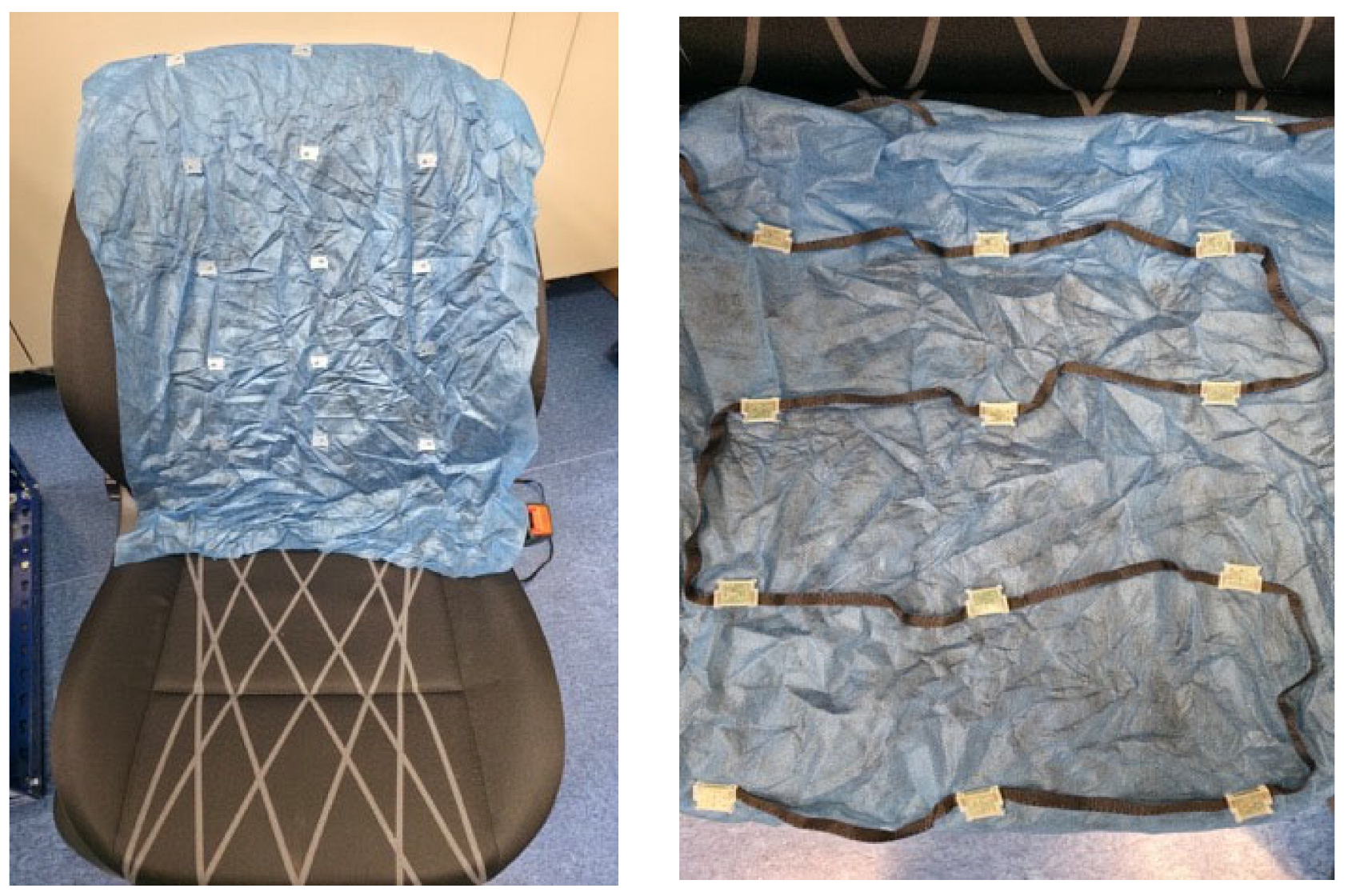
Representative photos of the subjective microclimate test setup are shown in
Figure 1. The pictures show how the seat was prepared for testing, the textile layer that held the sensors, the general arrangement of the sensing components on the seat surface, and close-ups that demonstrate how each sensor was attached to the textile layer. The purpose of these photos is to offer a visual record of the experimental setup utilized for the seated measurements.
Thermo-physiological comfort was evaluated by tracking temperature and humidity at the seat-body contact points throughout a 30-min sitting session, using an array of 19 sensors. Eighteen of these sensors measured microclimate variations at the back, lumbar, buttock, and thigh, while one monitored the ambient environment to keep test conditions consistent for every material. The resulting data provided trends in heat and moisture build-up, stabilization over time, and regional differences shaped by fabric structure and the presence of lamination.
The measurement parameters for the subjective microclimate experiment are summarized in
Table 6.
All measuring devices were calibrated according to manufacturer specifications prior to testing. Each measurement was performed at least three times and mean values were calculated to ensure repeatability. Laboratory environmental conditions were monitored throughout all experiments.
2.7. Sample Preparation and Specimen Dimensions
For air permeability. WVTR and heat flux measurements, specimens of approximately 18 × 18 cm were prepared to fully cover the effective measurement areas of the used instruments. For thermal resistance and evaporative resistance testing using the STAN device, larger specimens of approximately 30 × 30 cm were used to ensure complete coverage of the heated plate surface. All the samples were conditioned for 24 h under the standard laboratory conditions (20 ± 2 °C; 65 ± 4% RH) prior to testing. For seat-assembly and fabric-only Rct and Ret measurements, standard deviation was calculated across eight anatomical seat–body contact regions for each material and load condition (n = 8).
3. Results
3.1. Air Permeability
Air permeability is a key factor in evaluating comfort, as it reflects how well a seat-cover fabric allows air to move in and out, helping to remove trapped heat from under the user. Fabrics with higher permeability usually provide improved thermal comfort by supporting airflow and aiding heat loss, while low-permeability materials restrict ventilation and promote heat accumulation. Among the six tested fabrics, permeability varied widely from 7 to 18 mm/s. M4 and M3 stood out for their high permeability, suggesting they have open or less obstructed surfaces, whereas M2 and M5 showed low values, matching their dense or laminated constructions. The graph clearly illustrates the difference between breathable and less breathable fabrics, complementing the data in the table. This airflow pattern gives early insight into each fabric’s ability to manage heat during use and aligns with the microclimate temperature trends observed later. The evaporative resistance (
Ret) setup parameters are summarized in
Table 7.
Among the investigated materials, warp knitted structures (M3 and M4) exhibited higher air permeability than woven and densely laminated materials, reflecting the influence of open textile architecture and reduced flow resistance. In contrast, materials such as M2 and M5 showed restricted airflow. This behavior cannot be attributed solely to the presence of the foam, since M3 and M6 also incorporate foam layers. Rather, the combined effect of surface density, lamination configuration and potential pore obstruction appears to guide the airflow resistance through the seat surface.
3.2. Water Vapor Transmission Performance
Water vapor transmission rate (WVTR) measures how easily a fabric lets moisture pass through and evaporate under standardized test conditions. This property is important for managing sweat, affecting how quickly a seat cover dries and how much humidity builds up during long periods of sitting. Among the tested materials. WVTR values ranged from 2438 to 3139 g/m
2·day. Material M4 had the highest rate, indicating a structure that lets vapor through more effectively, while M6 had the lowest, which matches its laminated, less breathable design. The accompanying graph makes this difference clear by visually separating M4’s high performance from M6’s more limited vapor transport. However, it is important to note that WVTR is measured without any applied pressure or heat. So it does not fully reflect how materials behave in real-life conditions. Later results from subjective humidity measurements show that vapor movement during sitting is influenced by multiple factors, including how well the fabric sheds heat, the available airflow channels, and changes in structure under pressure. The measured water vapor transmission rate (WVTR) values for the investigated seat-cover materials are summarized in
Table 8.
Although WVTR values for all materials fell within a relatively narrow range, measurable differences were still observed. Materials with more open structures and nonwoven laminations, particularly M4, allowed higher vapor transmission, while foam-laminated systems such as M6 exhibited reduced WVTR. These findings indicate that even under standardized, pressure-free conditions, textile structure and lamination influence moisture transport capability.
3.3. Heat Flux (H-Test)
The heat flux test provides insight into the initial thermal sensation by measuring how quickly heat transfers through the textile upon contact with a warm surface. Materials with high heat flux warm rapidly and therefore tend to produce a quicker rise in microclimate temperature, while materials with lower heat flux retain a cooler surface feel for longer periods. The results showed a wide variation among the tested samples, with M4 exhibiting the highest heat flux and M2 the lowest. This means that M4 warms rapidly, reinforcing its character as an insulating material, whereas M2 responds more slowly to applied heat. The graph complements the numerical table by illustrating the contrast between fast- and slow-warming materials. These initial heat-transfer tendencies align closely with the early-phase behaviors of the subjective temperature curves, where M4 demonstrates a rapid temperature increase. The measured heat flux (H-Test) values and corresponding standard deviations for the investigated seat-cover materials are summarized in
Table 9.
The heat flux results revealed notable differences in initial heat transfer behavior among the materials. Higher heat flux values observed for M4 and M5 indicate faster heat uptake at first contact, while lower values for M2 and M6 suggest slower thermal response. These variations highlight the role of fabric thickness, density, and lamination in shaping the initial thermal sensation at the seat–body interface
3.4. Thermal Resistance (Rct) of Seat-Cover Assemblies
Thermal resistance (
Rct) measurements were carried out on the complete seat-cover assemblies, meaning the surface fabric together with all underlying lamination and backing layers. Thermal resistance (
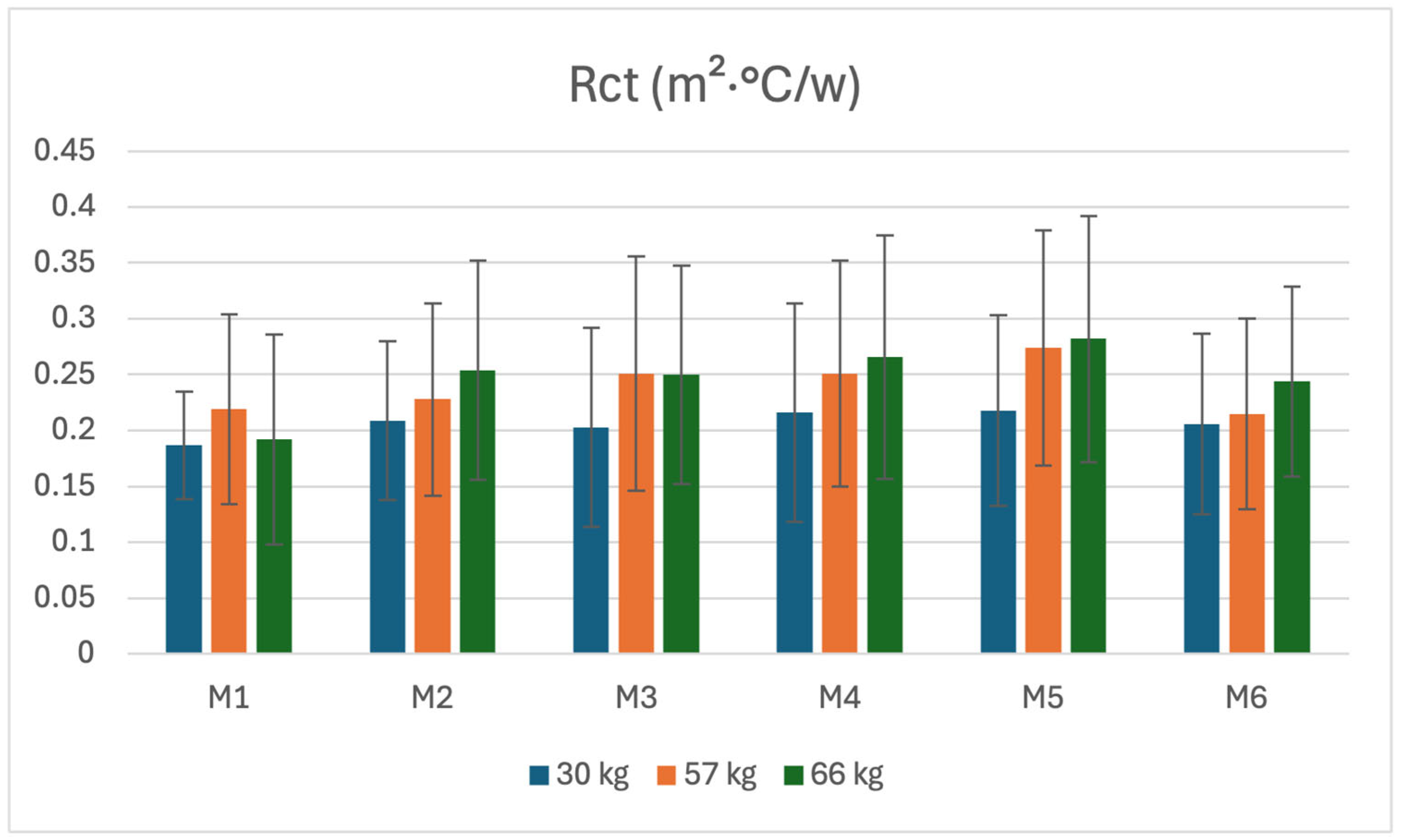
Rct) values for the complete seat-cover assemblies were determined under three applied loads (30, 57, and 66 kg). Zone specific results for eight body parts contact regions are presented in
Table 10.
The average
Rct values for each material and load are shown in the
Table 11 based on all measured body zones.
Table 11 meant for material ranking rather than local study, offers a condensed overall comparison of seat-cover insulation performance.
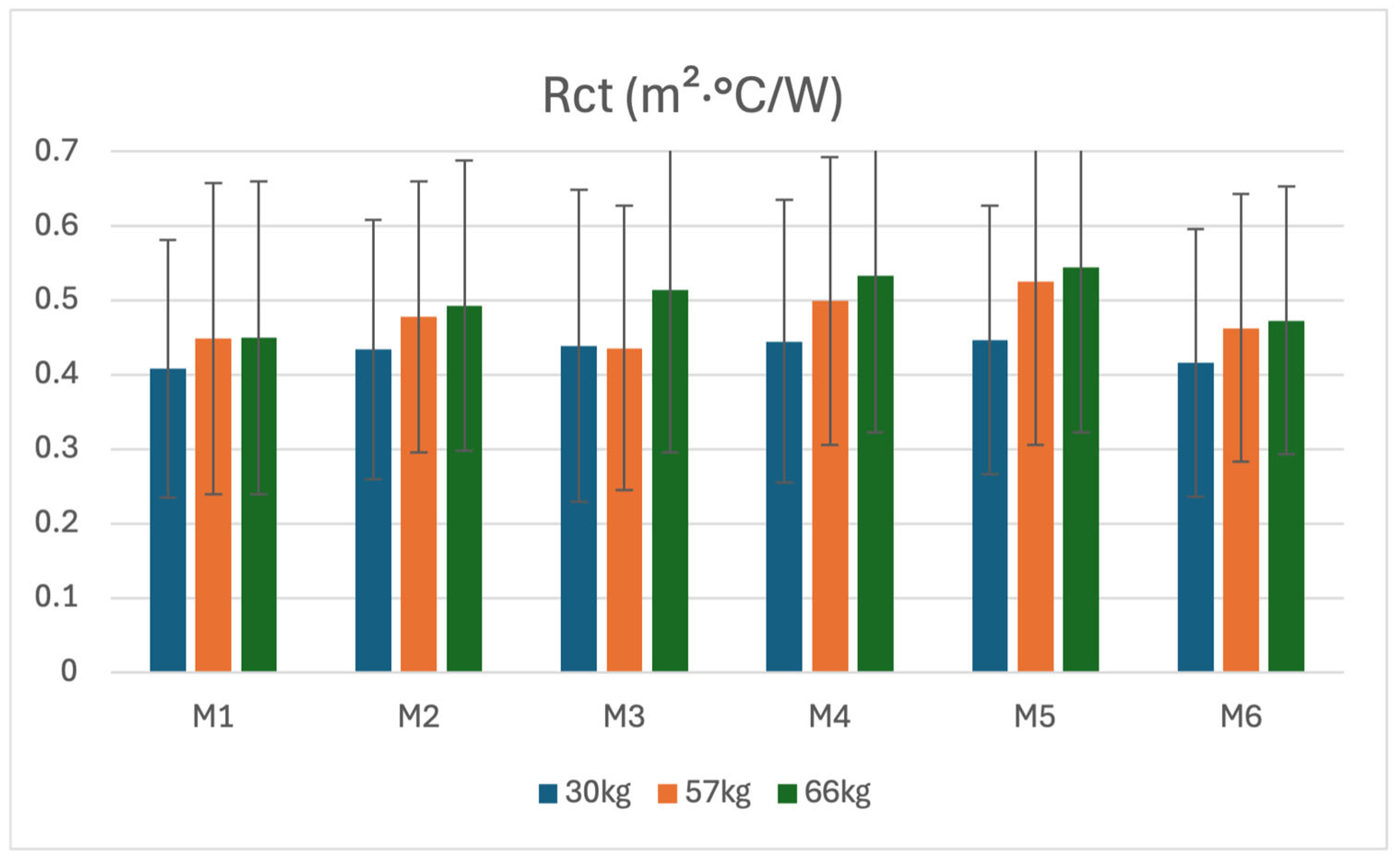
The average
Rct values for materials M1–M6 at each load are shown in
Figure 2. A direct visual comparison of insulation behavior is made possible by the
x-axis, which depicts material type, and the
y-axis, which displays thermal resistance (m
2·°C/W).
Error bar represents the standard deviation calculated across the eight measured body-contact zones for each material and load. The observed variability reflects local differences in compression and heat transfer behavior across body parts contact regions.
Thermal resistance measurements of the complete seat-cover assemblies demonstrated a consistent increase in Rct with increasing applied load across all materials, confirming the effect of compression on thermal insulation. Materials incorporating thicker laminates and foam layers, particularly M4 and M5, showed higher average Rct values, indicating greater resistance to heat transfer. In contrast, M1 and M6 exhibited lower Rct values, suggesting improved heat dissipation under seated conditions.
3.5. Evaporative Resistance (Ret) of Seat-Cover Assemblies
The entire seat assemblies were subjected to evaporative resistance (
Ret) testing utilizing the STAN device in wet mode, which replicates sweating conditions. The same manikin loads (30, 57, and 66 kg) were applied while the measuring surface was evenly moistened and kept at 35 °C and zone-specific results for eight body regions are presented in
Table 12.
The average
Ret values for each material and load across all body zones are summarized in the
Table 13. The overall moisture-management performance of the entire seat system is clearly ranked in this chart.
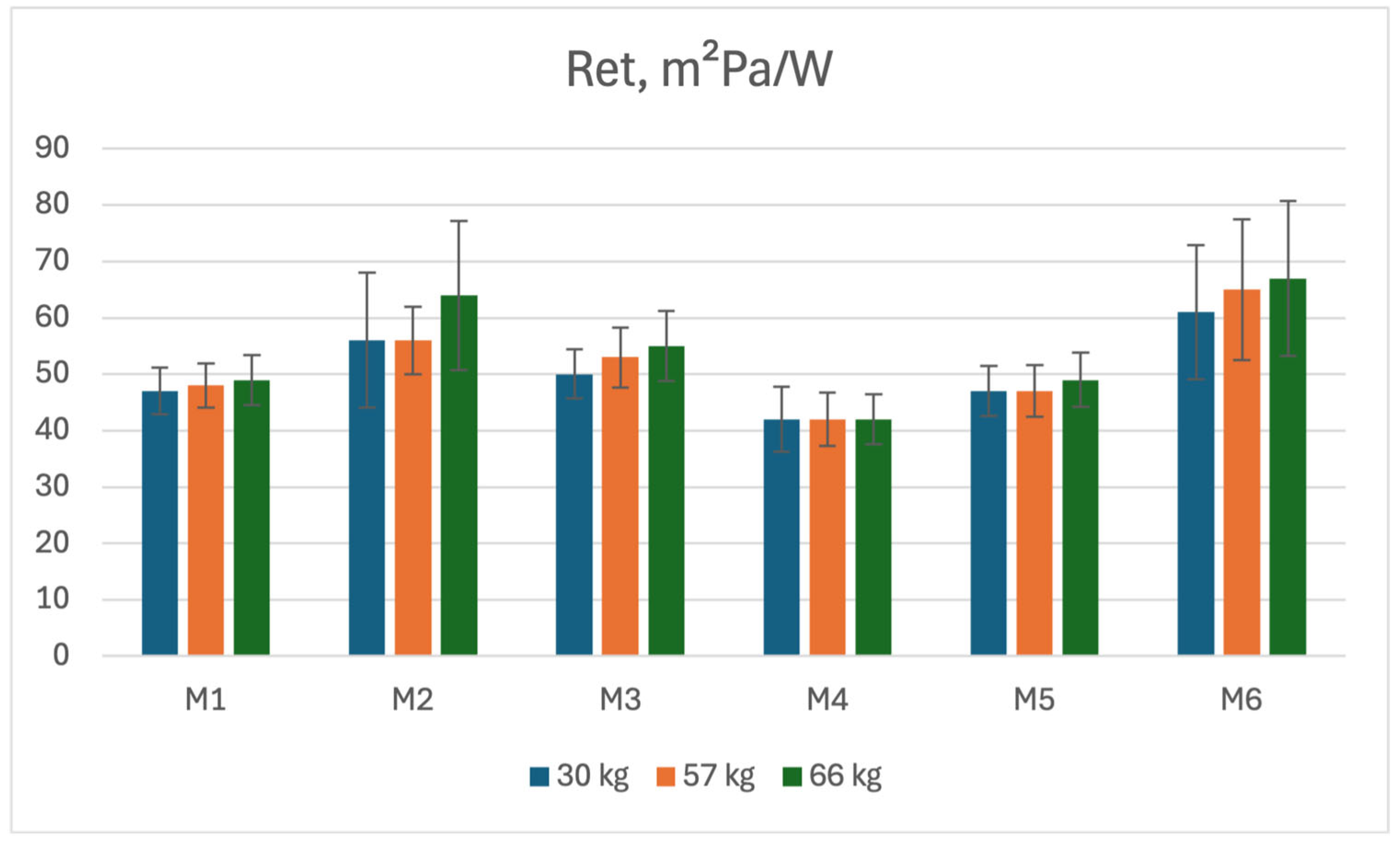
The average
Ret trends for all materials under increasing load are shown in
Figure 3. Evaporative resistance is shown on the
y-axis, and material type is shown on the
x-axis.
Evaporative resistance results showed that moisture transport was strongly affected by both lamination type and applied load. Foam-laminated materials, especially M2 and M6, consistently exhibited higher Ret values, indicating restricted vapor transport under compression. Conversely, M4 demonstrated lower Ret values across all loads, suggesting that its textile and lamination configuration allowed more efficient moisture evaporation even under seated pressure. From the error bar larger deviations observed for M2 and M6 reflect strong regional differences in moisture transport, particularly in buttocks areas under compression.
3.6. Thermal Resistance (Rct) of Fabrics Without Seat
Using the same STAN test circumstances and applied loads as in the seat-assembly testing.
Rct measurements were repeated without any seat backing or cushioning layers in order to isolate the inherent thermal behavior of the textile layers. Zone-specific intrinsic
Rct values for the fabric samples alone are shown in this
Table 14. Absolute
Rct values are lower when compared to seat-assembly results, indicating that seat backing layers significantly contribute to insulation. Due to variations in contact geometry, the lumbar and upper back zones continue to exhibit higher
Rct than the buttock portions. Zone-specific intrinsic
Rct values for the fabric samples alone are shown in this
Table 14.
The average intrinsic
Rct values for each fabric under various loads are shown in the little
Table 15. Regardless of the design of the seat, these figures show the actual insulating capacity of the textile material.
Figure 4 illustrates the structural variations between woven, warp-knitted, and laminated fabrics by comparing average fabric-only
Rct values across all materials and loads.
When tested without seat backing layers, intrinsic thermal resistance values were significantly lower for all materials, confirming the substantial contribution of seat construction to overall insulation. Nevertheless, structural differences between textiles remained evident, with double-layer warp-knitted materials (M4 and M5) exhibiting higher intrinsic Rct than woven fabrics. This indicates that textile architecture alone contributes meaningfully to heat retention, independent of seat padding. Standard deviation bars illustrate variability between different anatomical regions even at fabric level. Compared to seat-assembly measurements, lower deviations confirm the significant contribution of backing and cushioning layers to overall insulation variability.
3.7. Evaporative Resistance (Ret) of Fabrics Without Seat
To assess basic moisture-vapor transport characteristics, intrinsic evaporative resistance was tested just on the textile fabrics without any seat-support layers. The seat-assembly
Ret measurements and the testing conditions were the same. The intrinsic evaporative resistance (
Ret) values measured for the investigated seat-cover fabrics without seat-support layers are presented in
Table 16.
The main measure of fabric-level moisture-management performance is this
Table 17, which summarizes average intrinsic
Ret values across all body zones.
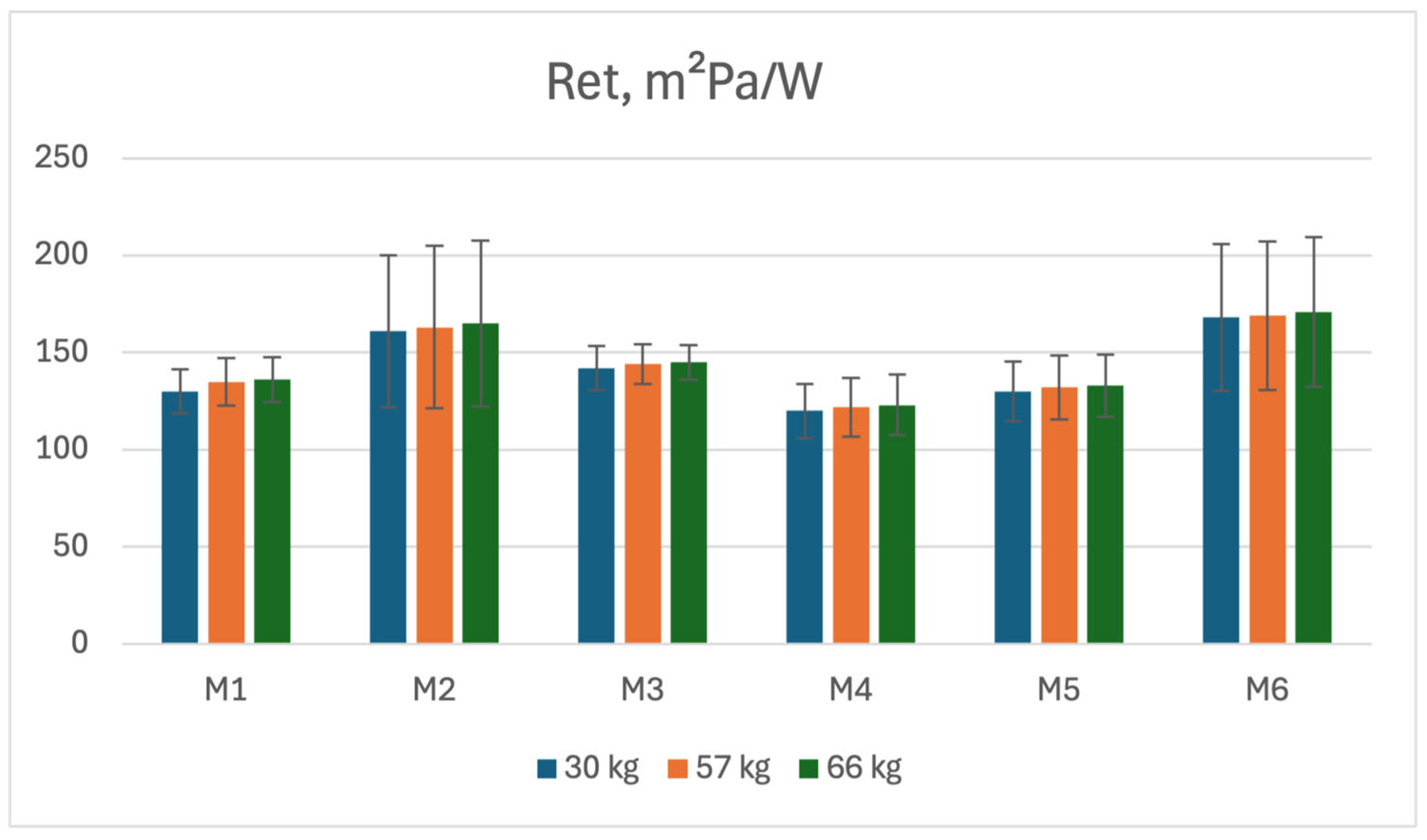
The average inherent
Ret trends for all materials under increasing load are shown in
Figure 5. The
x-axis represents material type (M1–M6), while the
y-axis shows evaporative resistance (
Ret, m
2Pa/W).
Intrinsic evaporative resistance measurements revealed clear differences in moisture-vapor transport between textile structures. Material M4 consistently showed the lowest Ret values across all applied loads, confirming superior inherent vapor permeability. In contrast, M6 exhibited the highest intrinsic Ret values, indicating limited moisture transport capability at the fabric level, which was further amplified when combined with seat laminates also from the error bar M4 confirms stable vapor transport performance across the contact regions, while higher deviations in M6 indicate region-dependent moisture resistance.
3.8. Subjective Microclimate Response
Principles of Sensor Configuration and Measurement [
11].
To capture the actual temperature and moisture conditions at the interface between the person and the seat during sitting, subjective microclimate measurements were carried out. For every measurement session, a total of 19 sensors were employed. To continually monitor the ambient room temperature and relative humidity, eighteen sensors were installed at predetermined body-seat contact sites (upper back, mid-back, lumbar region, buttock, and thigh zones). One additional sensor (Sensor 19) was placed outside the seat. To confirm that the environmental conditions were constant and unchanged during all material testing, the ambient sensor was used as a reference [
2].
Over the course of a 30-min sitting period (≈1800 s), each sensor recorded temperature (°C) and relative humidity (%RH) at regular intervals. To guarantee that variations in the measured microclimate were solely due to the seat-cover materials, the participant, attire, posture, applied load, and room conditions were kept constant.
Summary curve explanation.
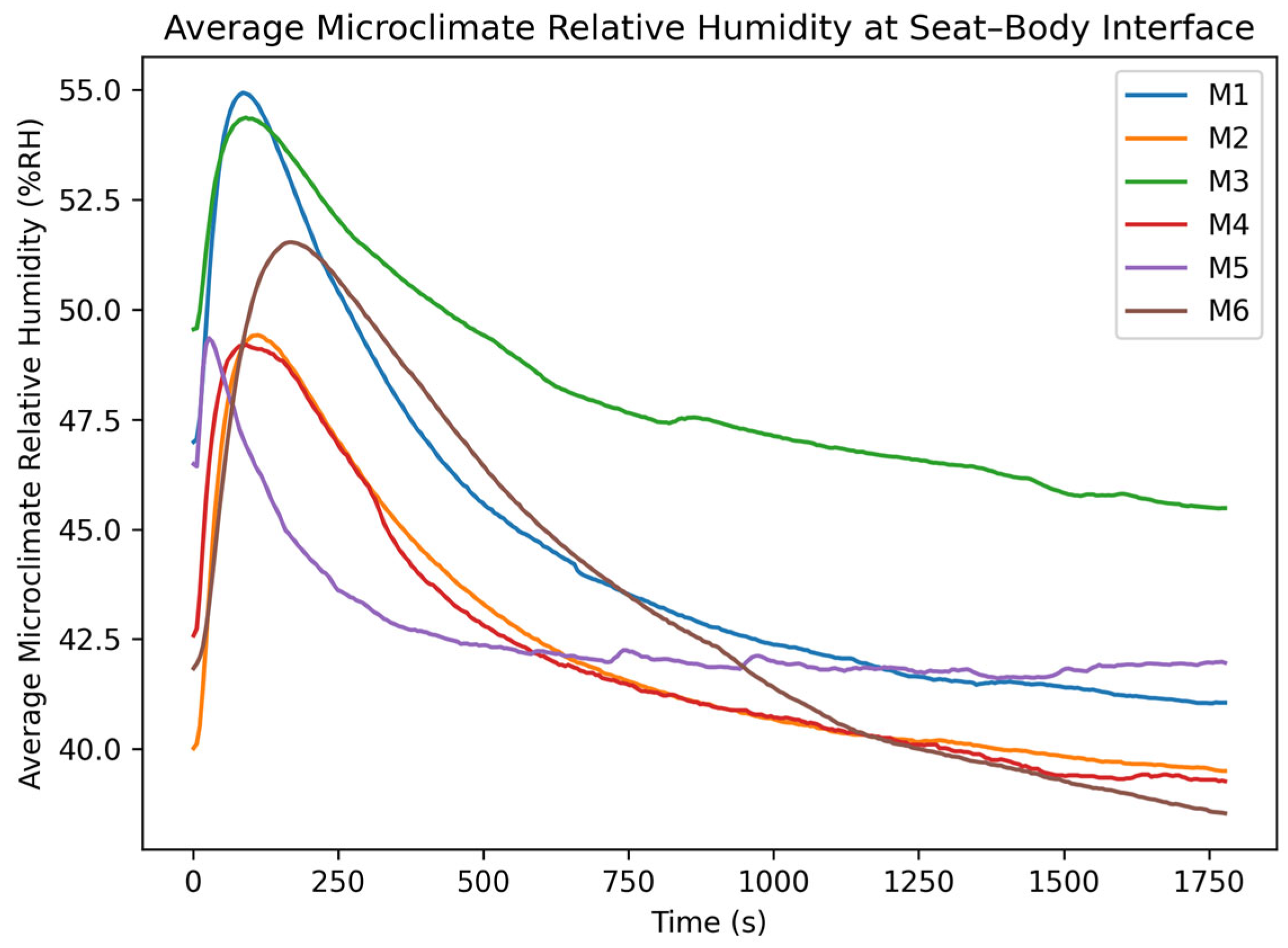
The microclimate results are displayed as averaged curves to minimize visual redundancy and enable direct material-level comparison. The
y-axis in
Figure 6 and
Figure 7 shows the mean microclimate temperature (°C) or relative humidity (%RH) at the seat–body interface, while the
x-axis shows time (s) for the entire sitting duration (≈1800 s). Each curve shows the average of all body-contact sensor positions (upper back, mid-back, lumbar, buttocks, and thighs) and corresponds to a single seat-cover material (M1–M6). Therefore, rather than reflecting local spatial variations, discrepancies between curves represent material-dependent heat and moisture transfer performance.
3.8.1. Average Microclimate Temperature Response
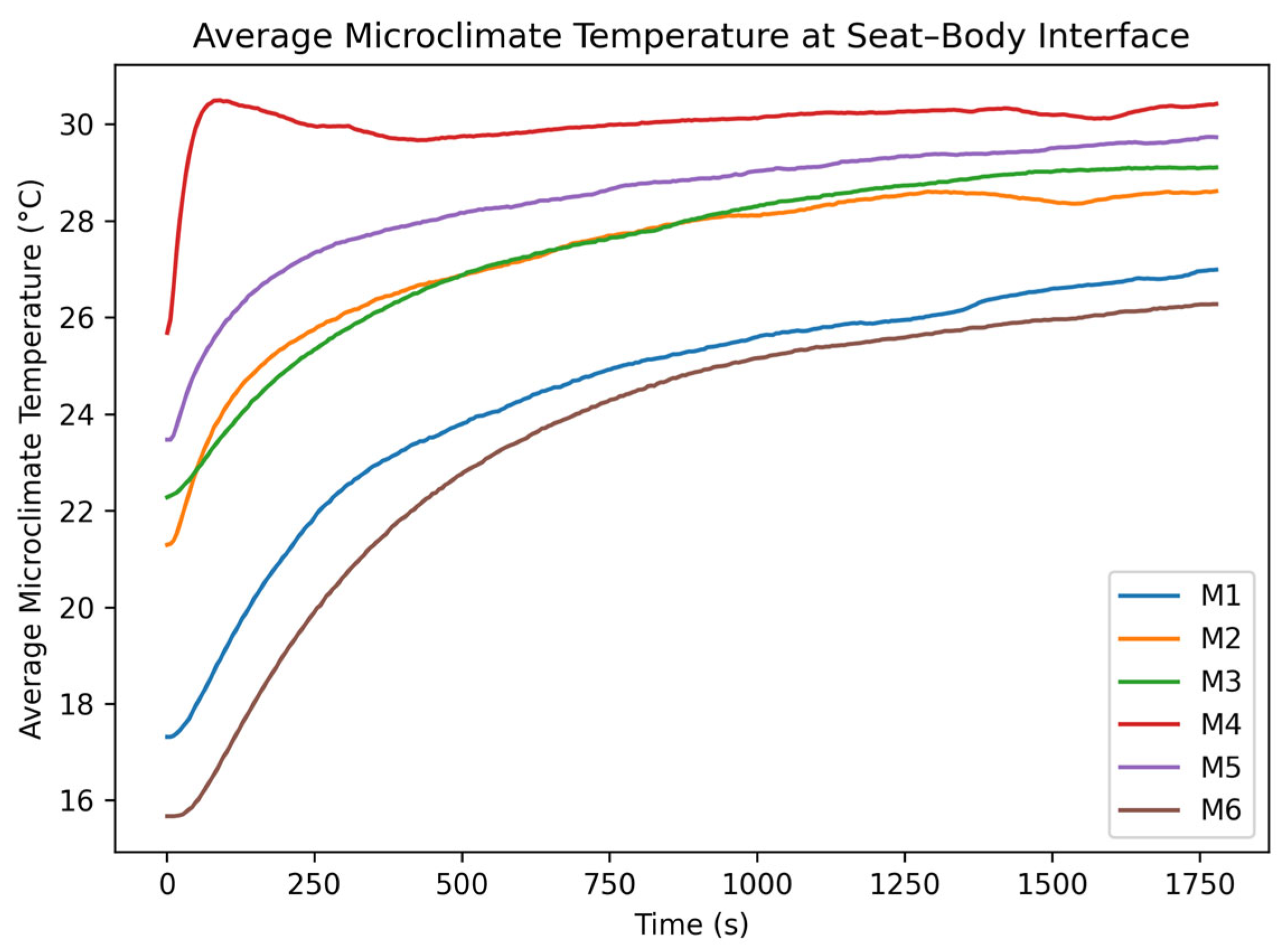
Overall temperature response phases:
During the sitting phase, all materials exhibit a typical three-stage temperature response:
Initial contact heating (≈0–200/300 s): as the heated body makes touch with the seat surface, the temperature rises quickly, and a near-surface microclimate develops.
During the transition phase (about 300 to 900 s), heat transmission channels stabilize under compression, causing the temperature to rise more slowly.
Long-term stabilization (≈>900 s): curves get closer to a quasi-steady state where heat dissipation through the textile and underlying layers balances the heat produced at the body–seat interface.
Material separation and thermal ranking (heat accumulation).
Based on the amount of heat that builds up at the interface.
Figure 6 clearly divides the materials into performance groups:
M6 and M1 have the lowest temperature rise and the best thermal comfort. Over time, these materials maintain the lowest average contact temperatures, suggesting improved heat dissipation and decreased heat accumulation during extended sitting.
M2 and M3 are the intermediate temperature levels. These substances stable at temperatures that are mild. Their thermal performance points to a balance between heat release under pressure and insulation.
Highest temperature accumulation (poor thermal comfort): M5 and particularly M4 show the fastest temperature rise and stay the warmest throughout the test, suggesting better insulation and less heat removal at the interface. In comparison to M1/M6. M5 also has a higher stabilized temperature, indicating more heat retention.
The evolution of seat–body interface temperature over time is presented in
Figure 6.
Comfort implications and interpretation. A higher stabilized temperature suggests that the material system (surface textile + lamination/backing) restricts heat movement away from the body, creating a warmer microclimate and raising the likelihood of discomfort in warm weather. On the other hand, a lower stable temperature indicates better heat regulation and increased comfort when sitting for extended periods of time. The observed patterns lend credence to the idea that, under realistic seated loads, lamination density and compression-driven pore closure have a significant impact on thermal comfort.
3.8.2. Average Microclimate Relative Humidity Response
Every material exhibits a typical moisture response made up of:
Rapid humidity rise (≈0–100/150 s): sweating and limited early evaporation in the newly created microclimate cause moisture to rise rapidly when sitting starts.
Peak moisture accumulation (≈150–400 s): When moisture momentarily builds up at the interface. RH reaches its maximum.
RH steadily drops throughout the drying/decay phase (≈>400 s) as evaporation and vapor transport take place throughout the material system.
Moisture ranking and material separation (drying efficiency).
The materials are distinguished by peak level and drying speed in
Figure 7:
Strongest RH decrease and best long-term dryness: M6, M2, and M4. These materials show more effective moisture removal from the interface under the studied conditions, as seen by their somewhat higher RH decay and lower stable humidity towards the conclusion of the sitting duration.
M1 and M5 exhibit intermediate behavior. These materials stabilize at intermediate RH levels and exhibit moderate drying behavior and RH peaks.
Highest retained humidity (least favorable moisture comfort): M3 exhibits the slowest overall reduction and stays at the highest RH level for most of the test, suggesting either increased moisture retention or less effective moisture removal in the tested configuration.
Comfort implications and interpretation:
Better vapor transfer and evaporation away from the interface are implied by lower stable RH and faster decay, creating a drier microclimate and lessening the clammy feeling during extended sitting. Sustained elevated relative humidity, on the other hand, is associated with slower moisture evaporation and a higher likelihood of reported dampness. In addition to intrinsic fabric permeability, other factors that affect the humidity response include compression effects, accessible air channels, and the way surface textiles interact with lamination/backing layers.
As depicted in
Figure 7, materials with higher air permeability show faster humidity decay and lower stabilized RH values.
3.8.3. Combined Temperature–Humidity Interpretation (Overall Subjective Comfort)
The most comfort-relevant interpretation considers both
Figure 6 (heat build-up) and
Figure 7 (moisture build-up) because thermal and moisture comfort are coupled:
Best overall microclimate performance: M6 produces the most advantageous overall thermo-physiological microclimate behavior during extended sitting by combining high humidity reduction with minimal temperature build-up.
Worst thermal comfort: Although its humidity curve may show noticeable RH decline at later times. M4 has the highest temperature accumulation (warmest interface) and hence poses the greatest danger of thermal discomfort in warm settings.
Most moisture-retentive behavior: Despite not having the greatest temperature. M3 retains the highest relative humidity (RH) during the test, indicating less favorable moisture comfort.
Overall behavior that is moderate or intermediate: M1, M2, and M5 With M1 exhibiting a comparatively favorable heat response and M2 exhibiting a comparatively advantageous drying behavior, these materials are in the middle of the best and worst performers. M5 tends to have a mild moisture response and a warmer interface temperature.
Summary of averaged microclimate curves:
The seat-cover structure and lamination have a significant impact on the time-dependent heat and moisture environment at the seat–body interface, as confirmed by the averaged microclimate curves. While materials that trap heat and/or hold moisture produce a warmer and more humid microclimate linked to discomfort, materials that maintain lower interface temperature and/or lower stable humidity offer better subjective comfort during extended sitting.
4. Discussion
The aim of this study was to determine if the genuine comfort behavior of car seat-cover materials under realistic sitting situations can be well described by commonly used thermo-physiological comfort metrics. Although air permeability, water vapor permeability, thermal resistance (Rct), and evaporative resistance (Ret) for individual textile systems have been widely documented in prior research, there are still few direct comparisons between woven, warp-knitted, and laminated automotive seat materials under the same test conditions. This integrated approach allows to provide results to be interpreted not only in terms of isolated material properties, but also, in relation to real life use seating conditions that are often not captured in conventional laboratory studies.
Heat and moisture transmission are greatly influenced by textile structure and lamination, according to objective laboratory studies. While laminated systems demonstrated stronger resistance to both heat and moisture transfer, materials with larger porosity and less restrictive structures demonstrated greater air and vapor permeability. The validity of the used test methodologies is confirmed by these patterns, which are in line with previous findings published for spacer fabrics and car upholstery. To clearly rank materials in terms of subjective comfort, however, the variations found in standardized metrics alone were often minor and, in some cases, insufficient. When the materials were assessed using subjective microclimate measures while seated, this limitation became clear. To facilitate direct comparison and avoid visual redundancy, the microclimate results were summarized using averaged temperature and relative humidity curves across all seats–body contact sensor locations. This approach highlights the dominant material-level thermal and moisture behavior under seated conditions, while preserving the key temporal trends observed across individual sensor responses. The fabrics showed noticeably differing temperature and humidity changes at the seat–body interface over time, despite having similar Rct and Ret values.
The microclimate results demonstrated that laminated structures tended to retain both heat and humidity, while materials with more open textile architectures promoted slower temperature rise and more efficient moisture dissipation. These effects became increasingly pronounced with time and applied load. This behavior can be attributed to compression-induced pore closure and restricted airflow within dense laminated structures, which reduce convective and evaporative heat loss during prolonged sitting. This work offers a more accurate assessment of seat comfort performance by integrating time-resolved microclimate analysis with standardized thermo-physiological measurements. The findings show that to prevent drawing incorrect assumptions regarding comfort behavior, objective laboratory measurements should be interpreted in conjunction with dynamic sitting tests. This comprehensive approach provides a useful framework for the research and selection of vehicle seat-cover materials with enhanced thermo-physiological comfort, filling a glaring gap in the literature. From a practical standpoint, selecting materials such as M6, which combine relatively low thermal resistance with efficient moisture management, may enhance long-term seating comfort. In contrast, materials incorporating dense laminates or thick foam layers, such as M4, may benefit from additional ventilation strategies or structural optimization.
Such insights are particularly relevant for modern vehicle interiors, where extended sitting durations and limited active ventilation place increasing demands on passive thermo-physiological comfort. While present study was conducted under controlled laboratory conditions with a single participant, the integrated methodology provides a reproducible framework for comparative evaluation. Future studies involving multiple subjects and varying environmental conditions would further develop wholesome results.
5. Conclusions
By combining dynamic, time-resolved microclimate analysis under realistic sitting conditions with standardized laboratory testing, this study provides a thorough assessment of the thermo-physiological comfort of car seat-cover materials. Using air permeability, water vapor permeability, thermal resistance (Rct), evaporative resistance (Ret), and subjective microclimate measurements of temperature and relative humidity, six commercially relevant seat-cover materials representing woven, warp-knitted, and laminated polyester constructions were methodically evaluated.
The objective fabric tests verified that lamination and textile structure have a major impact on heat and moisture transfer, with more open constructions often showing lower resistance values and increased air and vapor permeability. The findings, however, also demonstrated that variations in standardized criteria by themselves were rather small and, in some situations, insufficient to discern material performance in terms of reported seated comfort. Deeper understanding of actual comfort behavior was made possible by the subjective microclimate measures. The materials showed noticeably differing temperature and humidity changes at the seat–body contact while sitting, despite similar laboratory-measured Rct and Ret values. While laminated systems demonstrated more heat and humidity accumulation, especially under increased mechanical loads, open textile architectures encouraged slower temperature rise and more efficient moisture dissipation. These results show that actual seated comfort is mostly determined by compression-induced changes in airflow and interior structure, which static fabric tests are unable to fully capture. This work’s main contribution is to show that, to obtain a meaningful assessment of vehicle seat comfort, dynamic microclimate evaluation must be included to established thermo-physiological measures. This study fills a significant research vacuum and offers a more trustworthy framework for assessing and comparing seat-cover materials by fusing objective material characterization with time-dependent microclimate data. The results of this work emphasize the significance of textile structure, lamination approach, and performance under load, providing useful recommendations for the design and selection of vehicle upholstery materials. To improve predictive models of automotive seating comfort. Future studies should extend this approach to longer sitting durations, varying ambient conditions, and larger subject groups to further enhance predictive models of automotive seating comfort.
Based on the combined objective and subjective results, material M6 exhibited the most favorable overall thermo-physiological comfort performance, characterized by low temperature build-up and efficient moisture dissipation during seated conditions Materials M1 and M2 showed moderate comfort behavior, while laminated warp-knitted material M4 demonstrated the least favorable performance due to pronounced heat accumulation at the seat–body interface.