Article

Optimization of Process Parameters for Manufacturing SS316L Parts by LPBF Using a Laser-Adapted Powder Deposition System


by
Marian Ferreira Baptista da Silva
1,
Laila Ribeiro de Andrade Acevedo Jimenez
2,
Rogério de Moraes Oliveira
2 and
Aline Gonçalves Capella
1,*
1
Laboratório ProLaser, Universidade Federal de São Paulo, Rua Talim 330, São José dos Campos 12231280, SP, Brazil
2
Laboratório Associado de Plasma, Instituto Nacional de Pesquisas Espaciais, Av. dos Astronautas 1758, São José dos Campos 12227010, SP, Brazil
*
Author to whom correspondence should be addressed.
Coatings 2026, 16(2), 167; https://doi.org/10.3390/coatings16020167
Submission received: 27 August 2025 / Revised: 19 September 2025 / Accepted: 26 September 2025 / Published: 30 January 2026

Abstract

This study aims to optimize the process parameters for manufacturing stainless steel AISI 316L (SS316L) components using Laser Powder Bed Fusion (LPBF) with a Laser-Adapted Powder Deposition System. The influence of volumetric energy density (VED), laser intensity, and interaction time on the topography, defect formation, and hardness of the manufactured parts was investigated. The LPBF process parameters were systematically varied, including laser power (50–250 W) and scanning speed (15–250 mm/s). This resulted in VED values ranging from 55.6 to 647.5 J/mm3. The optimization process revealed ideal process conditions at VED values of 170.9, 256.4, and 641.0 J/mm3, with a minimum laser intensity of 11.8 kW/mm2 and interaction times ranging from 0.36 to 2.70 ms. Microstructural analysis revealed a predominantly austenitic phase with residual stresses associated with the LPBF process’s high cooling rates. Mechanical testing showed that parts manufactured under optimized conditions exhibited superior hardness (234–244 HV) compared to conventionally processed SS316L (170–220 HV). It was demonstrated that the laser-adapted powder deposition system can effectively fabricate high-precision components by understanding the interdependencies of parameters in LPBF. This approach contributes to optimizing manufacturing strategies for SS316L components.

1. Introduction

In the biomedical sector, additive manufacturing of metallic materials has become popular for producing customized components with complex structures due to its versatility and ability to build three-dimensional components with high precision using a layer-by-layer deposition process. Laser Powder Bed Fusion (LPBF), also known as Selective Laser Melting (SLM), is likely the most widely used technique for manufacturing metal parts. It uses a laser beam to selectively melt particles that are deposited layer-by-layer in an enclosed chamber [1]. LPBF has been used to produce stainless steel 316L parts, and significant progress has been made in correlating process parameters, microstructure, and final properties. Li et al. [2] demonstrated the importance of post-processing treatment for LPBF-processed 316L stainless steel, improving ductility while maintaining the samples’ high strength. Barode et al. [3] investigated LPBF-fabricated 316L stainless steel and reported its microstructural heterogeneity and thermal stability due to the complex relationship between rapid solidification and defect formation.
Although this technique has advantages over traditional subtractive manufacturing approaches, which hinder the production of complex parts, the quality of an LPBF part is strongly influenced by a large number of process parameters. Previous studies [4,5] indicated that at least a hundred parameters must be controlled to ensure parts have adequate mechanical properties, are defect-free, and have minimal residual stress and distortion. Among these parameters, laser power, scan speed, hatching spacing, powder layer thickness, volumetric energy density (VED) scanning strategy, protective atmosphere, and powder bed temperature are considered to have a significant impact on melt pool morphology because they influence heat input during material processing.
Several studies [6,7,8,9,10,11,12] have shown that volumetric energy density (VED), a parameter associated with beam power (P), scanning speed (v), hatch spacing (h), and powder layer thickness (l), defined as VED = P/vhl, can be optimized to obtain high-density parts without porosity [6,7,8,9,10].
Yakout et al. [6] correlated the volumetric energy density (VED) with the fractography behavior of SS316L specimens, showing that a lower VED value (62.5 J/mm3) produced a brittle fracture due to void formation. Conversely, a higher VED value (156.3 J/mm3) resulted in vaporization of the alloying elements, altering the material’s chemical composition. The authors identified a stable melting range of 62.5–104.2 J/mm3 with ductile fracture in SS316L specimens. Tusho et al. [7] demonstrated the correlation of VED with the porosity and hardness of SS316L parts. Their study obtained volumetric energy densities (99.8%) between 50 and 80 J/mm3 with an exponential decrease in porosity and a linear increase in hardness values. Cherry et al. [8] used the selective laser melting (SLM) process to evaluate the effect of VED on SS316L properties. The authors observed that total porosity strongly depends on this parameter, finding a minimum amount of porosity at 104.52 J/mm3 and high porosity at both lower and higher VED values. Under these conditions, the study produced cube parts with a density of 99.62%. Liverani et al. [9] established a correlation between SLM process parameters and the microstructural and mechanical properties of SLM SS316L specimens. They showed that a density greater than 98% could be achieved when producing with VED up to 100 J/mm3, in the range of 90–150 W laser beam power, and with a scanning speed between 500 and 900 mm/s. Bang et al. [10] evaluated the effects of VED on the microstructural, mechanical, and chemical properties of SS316L parts fabricated by SLM. They concluded that parts produced with VED values between 9.34 and 23.98 J/mm3 exhibited high strength and elongation.
Other literature has highlighted the difficulties and deficiencies in establishing VED as a unique parameter in the LPBF method for manufacturing metallic parts with adequate density, microstructural characteristics, and mechanical properties. Greco et al. [13] observed that variations in laser parameters at a constant energy density resulted in significant differences in part density, microhardness, and roughness. The study concluded that VED should not be used as an isolated parameter for fabricating parts using the SLM method. Prashanth et al. [14] also concluded that VED provides an approximate estimation for optimizing the SLM process; hatch spacing and material properties are important characteristics for obtaining quality parts. Bertoli et al. [15] attributed the limitations of using the VED parameter to describe the LPBF process to its inability to predict physical behaviors such as Marangoni flow, hydrodynamic instabilities, and recoil pressure of the melt pool during material processing.
Furthermore, other studies have shown that maintaining a constant energy density by adjusting the scanning speed does not produce consistent results. This is because variations in laser power, layer thickness, and hatch spacing can significantly alter the melt pool dynamics, porosity, and hardness of the part. Greco et al. [13] demonstrated that higher laser power improves the relative density and hardness of the material, while excessive layer thickness reduces penetration depth due to limited energy transfer. Another study [16] showed that increasing laser power broadens the range of scanning speeds at which high-density parts can be produced and achieves relative densities above 99%. This study also revealed that, at higher powers, density remained stable over a broader range of scanning speeds, providing greater flexibility in process optimization. In contrast, small deviations in scanning speed had a more pronounced impact on density at lower powers, making parameter selection more challenging. Peng and Chen [17] concluded that, of the process parameters, laser power was the most influential factor affecting porosity, followed by layer thickness, scan speed, and hatch spacing. Higher laser power combined with high scanning speeds facilitates energy delivery to thicker layers while maintaining a stable melt pool. This results in parts with higher density. Conversely, excessively low or high energy densities disrupted melt pool stability, leading to significant porosity issues. Metelkova et al. [18] emphasized the role of laser defocusing in enhancing productivity. The authors observed that, while defocused beams increased melt pool width, they also potentially increased porosity due to keyhole instability.
In summary, while several authors have offered guidance, identifying the critical process parameters necessary for producing high-quality LPBF specimens depends on the unique characteristics of each experimental setup. More recent studies have confirmed the importance of understanding process parameter control in LPBF. For example, Pfaff et al. [19] demonstrated that functionally graded steel microstructures can be generated by carefully manipulating laser parameters. Nabavi et al. [20] presented advancements in predictive models for selecting optimal process windows to improve the mechanical characteristics of fabricated parts using LPBF. Aguilar et al. [21] provided a detailed microstructural and mechanical characterization of AISI 4340 steel produced by LPBF, which highlights the importance of selecting parameters to ensure reliable performance of structural alloys. Davidson et al. [22] achieved localized control of phase formation in high-carbon, low-alloy steel through laser parameter optimization. Lopes et al. [23] conducted a comprehensive evaluation of process parameters, showing their influence on mechanical properties, macrostructure, and printability of 316L stainless steel components. Recently, comparative studies of Ti-6Al-4V alloys fabricated by laser powder bed fusion (LPBF) and wrought processes have shown that careful parameter selection in the LPBF process can refine the martensitic microstructure. This improves hardness and affects electrochemical stability and tribological behavior under simulated body conditions. However, the advantage of the LPBF process decreases due to more intense wear-accelerated corrosion induced by stressed martensite [24].
The present study aims to employ a Laser-Adapted Powder Deposition System to produce SS316L parts manufactured by LPBF. The study seeks to elucidate the interdependencies among process parameters and specimens produced with high density and without defects. The interrelationship between process parameters and their effects on the topography, hardness, and presence of defects in the manufactured parts was analyzed.

2. Materials and Methods

2.1. Material

A stainless steel AISI 316L (SS316L) particulate system, donated by the Universidade de São Carlos (UFSCar—São Carlos, Brazil), was used to fabricate parts using Laser Powder Bed Fusion (LPBF). The mean particle size and distribution were determined using laser diffraction (Cilas 1190) with a distilled water and sodium polyacrylate solution as the dispersion medium. Scanning electron microscopy (SEM) (Tescan, Brno, Czech Republic, Mira3) was used to evaluate the particle morphology. Additionally, phases and compounds were identified through X-ray diffraction (XRD) (Rigaku Ultima IV, Tokyo, Japan) with an angle (2θ) ranging from 20° to 100° in 0.02° increments at a speed of 10° per minute. Prior to laser processing, the particulate system was maintained in an oven at 60 °C for 24 h. Stainless steel AISI 304 sheets measuring 25 mm × 25 mm with a thickness of 3 mm were used as the substrate. To prepare the substrate surface to receive the powder layer, it was sanded with #220 sandpaper, cleaned with ethanol, and dried in an oven at 60 °C.

2.2. Laser-Adapted Powder Deposition System

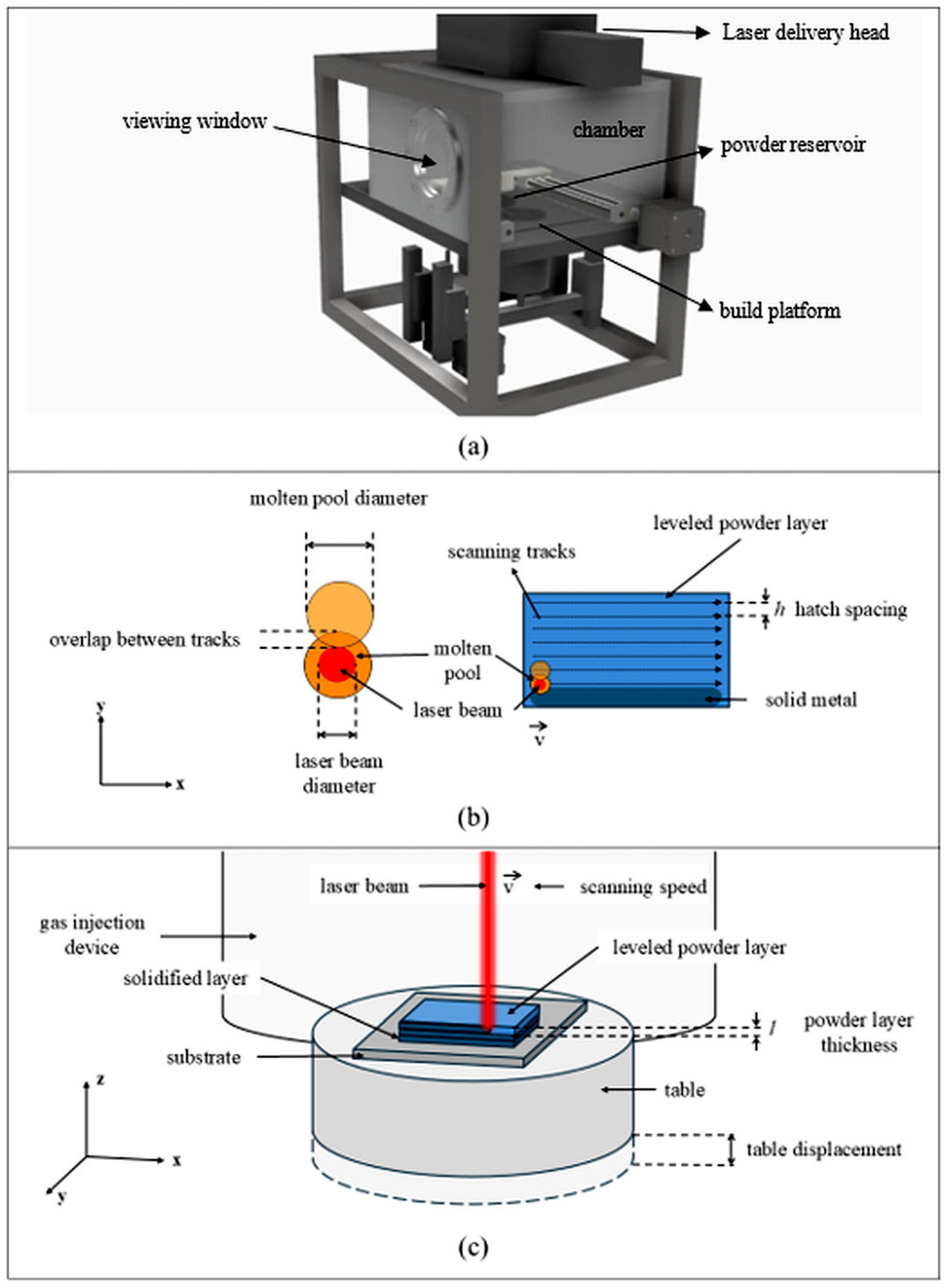
LPBF processing was performed using a Laser-Adapted Powder Deposition System (Figure 1a). A general description of the LPBF additive manufacturing system and its main components is presented below:
  • Yb:fiber laser (IPG, model YLR-500-MM-AC-Y14), which has a maximum power of 500 W, an emission wavelength of 1070 nm, a focal diameter of 0.09 mm, and an M2 of 4.5.
  • Laser beam movement system consisting of a CNC XYZ table with a work area of 300 mm × 300 mm (XY axes) and a beam focusing head fixed on the Z-axis with 100 mm of linear travel.
  • Powder feeding system containing two cylindrical reservoirs: one guided by a spindle and stepper motor to serve as the powder reservoir and the other to collect the powder bed previously deposited on the substrate with thickness control; a flexible compaction blade to drag the powder between the reservoirs and level the powder bed with each layer deposited before beam irradiation; and a reservoir to recover additional powder not used in laser processing the part.
The laser beam was tracked unidirectionally across the SS316L powder bed with a constant hatch spacing of 0.0585 mm and 65% overlap (Figure 1b). The laser processing was conducted on the powder bed under argon gas, with the substrate previously heated to 120 °C. LPBF experiments were conducted to optimize the process parameters by varying the laser power and scanning speed. Samples with dimensions of 6 mm × 7 mm were manufactured using four 0.05 mm-thick layers of powder (total built height ≈ 0.2 mm). Figure 1c illustrates the main process parameters considered in this study. Then, the optimized process parameters were selected and parts were manufactured for microstructural and mechanical characterizations. Table 1 summarizes the process parameters used to manufacture parts and the calculated VED, laser intensity, and interaction time parameters, considering a fixed 0.09 mm diameter laser. A wide range of process parameters were tested. Laser power was varied from 50 W to 250 W and scanning speed from 15 mm/s to 250 mm/s. Consequently, the VED ranged from 55.6 J/mm3 to 647.5 J/mm3.
After laser processing, the samples were cleaned with ethanol in an ultrasonic cleaner for approximately 4 min, followed by drying in an oven at 60 °C.

2.3. Characterization of the SS316L Parts Manufactured by LPBF

To determine the optimized process parameters, the first criterion adopted was the top observation of the part using scanning electron microscopy (SEM—FEI, Hillsboro, OR, USA, model Inspect S50 and SEM-FEG, Tescan, model Mira3). The obtained images were analyzed, and the specimens were classified as either “approved” “approved,” which indicates complete powder fusion and good surface homogeneity; or “rejected,” which indicates surface heterogeneity (topographic gaps), lack of fusion, or presence of sintered particles.
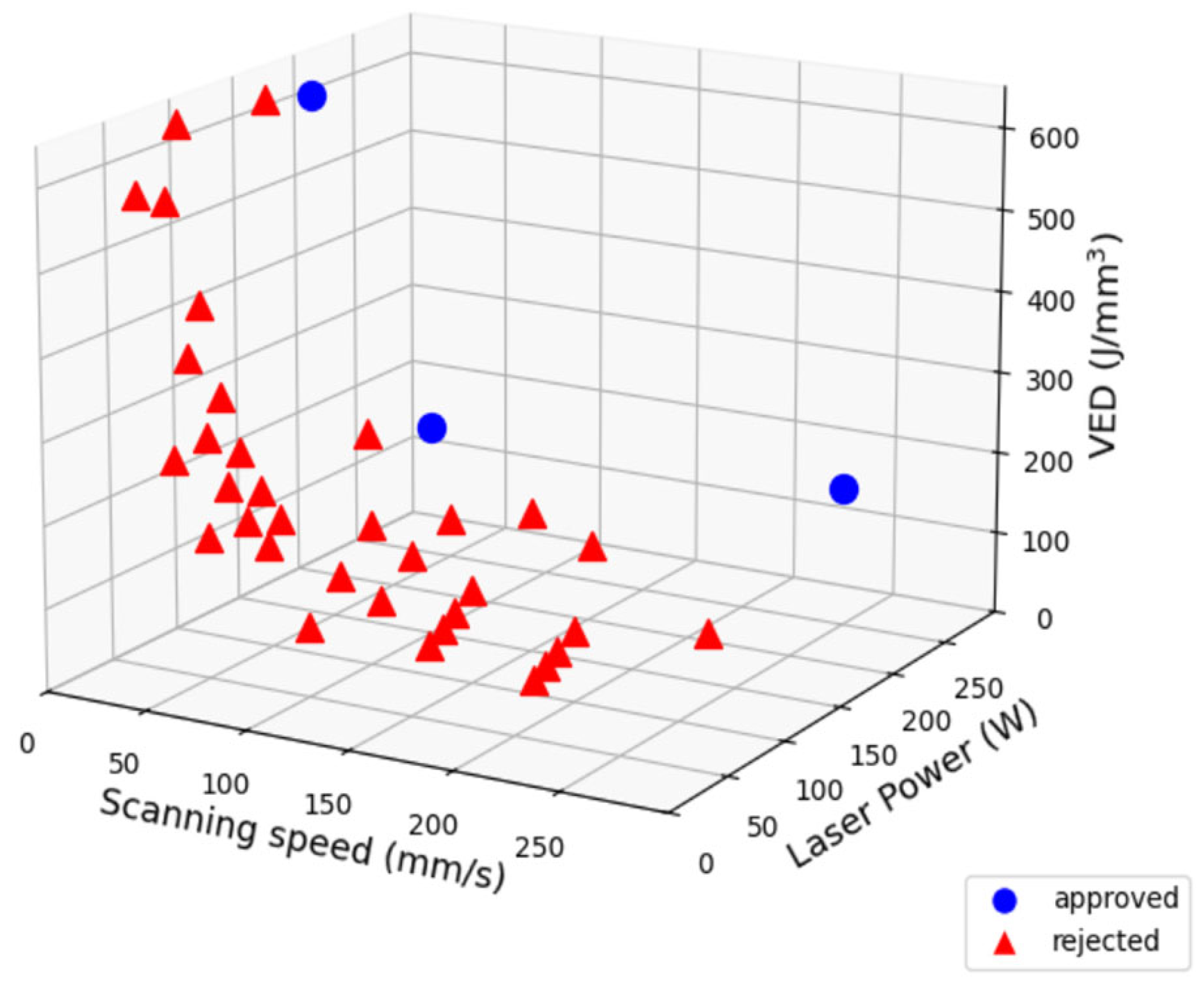
Based on the classification criteria, a three-dimensional (3D) dispersion analysis was performed using Visual Python (v7.6.4, 2024) in Power BI (v2.128.997.0, 2024), generating a Python script with ChatGPT’s assistance (GPT-4 Turbo, OpenAI, 2024). This analysis considered three parameters: laser power (P), scanning speed (V), and volumetric energy density (VED).
After selecting the optimized process parameters, the microstructure and mechanics of the SS316L parts manufactured by LPBF were characterized. To examine the morphological features of the parts, their cross-sections were ground, polished, and etched via electrochemical etching with 10% oxalic acid at a voltage of 4 V for one minute. The specimens’ microstructure was characterized using optical microscopy (Leica, Wetzlar, Germany, model DM1750M) and SEM coupled with energy dispersive X-ray spectroscopy (EDX). The average height of the parts was measured by optical microscopy at a minimum of five different positions for each specimen.
XRD (Rigaku, Tokyo, Japan, model Ultima IV) measurements were conducted using Cu-Kα radiation (λ = 1.5418 Å) and a scanning rate of 5°/min over the range of 20° to 100° (2θ). The Vickers microhardness test (FM-700, Future-Tech Corp., Tokyo, Japan) was performed with a 50 kgf load for 10 s. Indentations were carried out in different regions of each sample with a minimum spacing of at least three times the diagonal length of each indentation, as recommended by ASTM E384 [25]. Average hardness values were calculated from all measurements performed on each sample, and the errors correspond to the standard deviation of these measurements.

3. Results and Discussion

The following sections present the results and discussion regarding the search for optimized LPBF process parameters for SS316L parts, based on development of the steps proposed in the methodology.

3.1. Powder Characterization

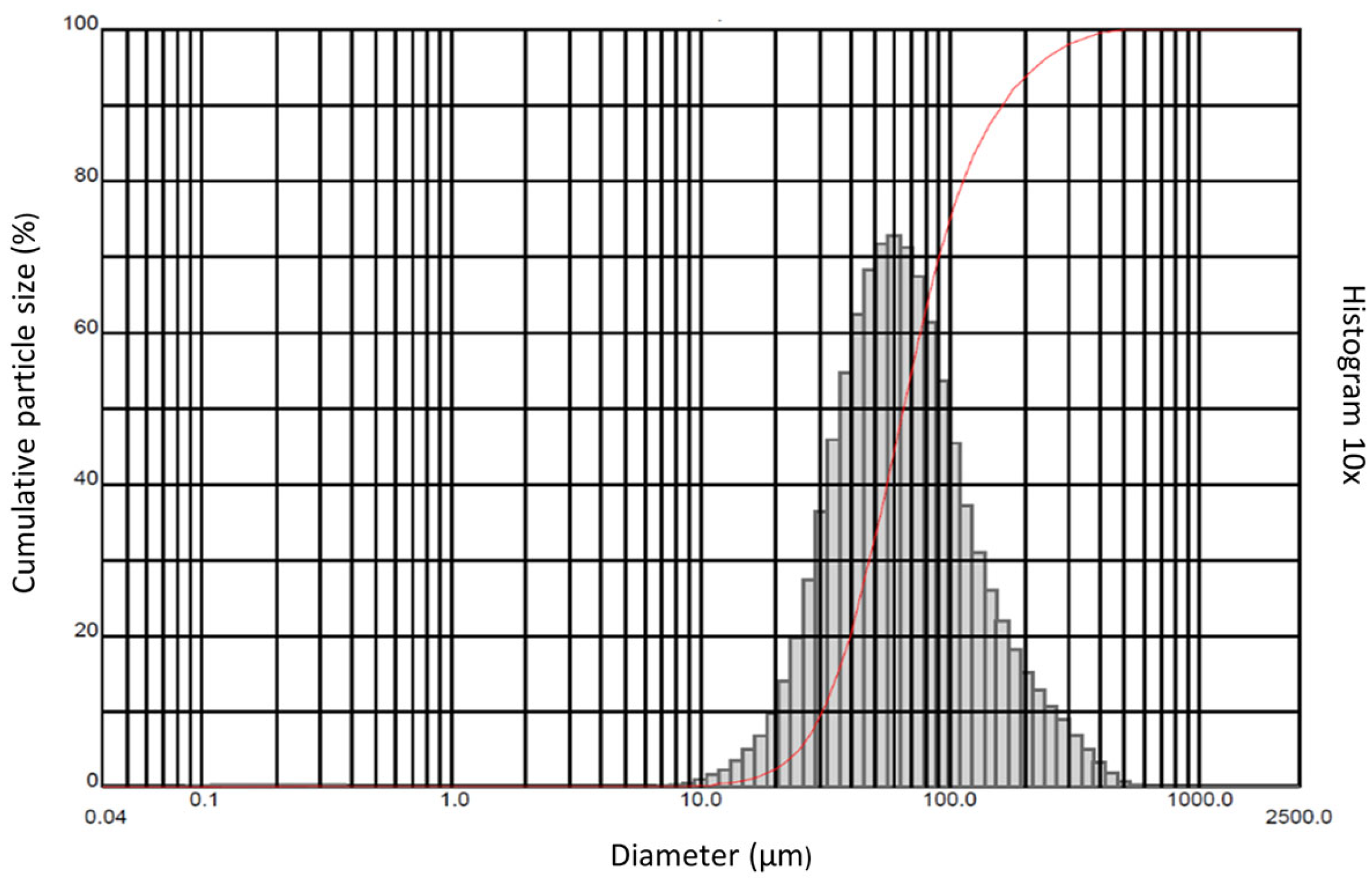
Table 2 shows the average dimensional distribution results for the SS316L powder system. Figure 2 shows that the cumulative distribution function indicates 90% of the particles (D90) are less than 161.24 ± 4.29 μm. In Laser Powder Bed Fusion (LPBF), the size of the powder particles can affect the processability of metallic alloys, as well as the densification, defect formation, mechanical properties, and dimensional accuracy of the manufactured parts [26].
Chu et al. [27] investigated the effects of different particle size distributions (D50 ranging from 16 to 76 μm) on processability, showing that coarser powders required higher laser power to avoid defects such as lack of fusion. Conversely, finer powders had better flowability but a higher tendency toward oxidation. Balbaa et al. [28] compared the processability of AlSi10Mg alloy using fine (D50 = 9 μm) and coarse (D50 = 40 μm) powders. The authors concluded that fine powders had poor flowability and lower packing density. These factors led to higher oxidation and more defects, as well as lower density and rougher surfaces, compared to the use of coarse powders. Parts made with coarse powders had better appearance.
In the present study, coarse powder with a D50 of about 65 μm was used for all experiments. Similar results regarding a lack of fusion were observed at low energy densities, as will be shown later.
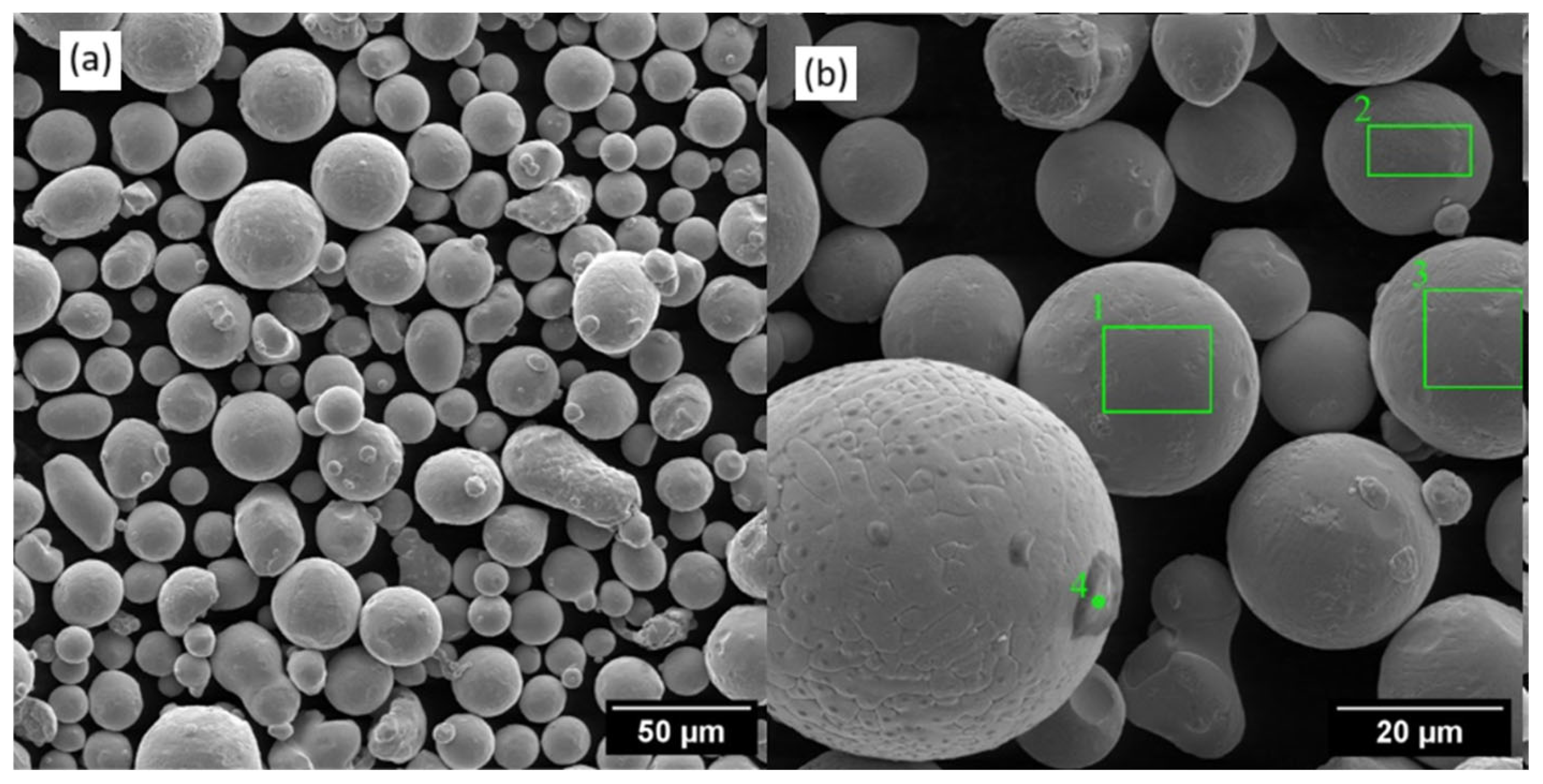
Figure 3 shows the results of the morphological analysis based on SEM images. The particles are mostly spherical with a few irregular particles and no significant agglomerates, which is characteristic of an atomized particulate system. Table 3 presents the EDS results for the identified chemical elements, considering the green-marked areas in Figure 3. As expected, the results (areas 1, 2 and 3) confirm the presence of the main alloy elements of SS316L: iron (Fe), chromium (Cr), nickel (Ni), and molybdenum (Mo) [29]. Additionally, spot analysis of a particle in the darker region (point 4 in Figure 3b) revealed the presence of impurities commonly found in metallurgical processing. These impurities include sulfur (S), silicon (Si), manganese (Mn), oxygen (O), iron (Fe), and nickel (Ni). Molybdenum (Mo) was not detected.
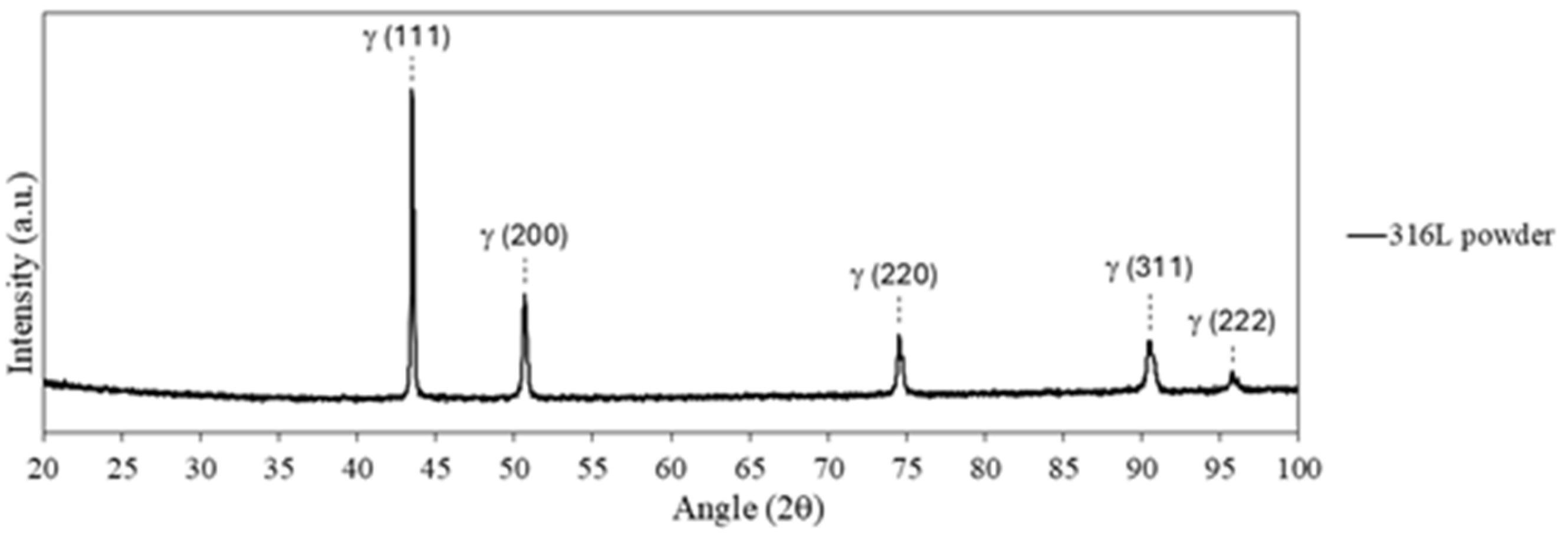
Figure 4 presents the diffractogram of the SS316L particles. As expected, the result shows the presence of the austenite phase (Fe-γ, PDF# 00-031-0619) with characteristic planes (111), (200), (220), (311), and (222) of the FCC crystal structure.

3.2. Optimization of the LPBF Process Based on the VED Parameter

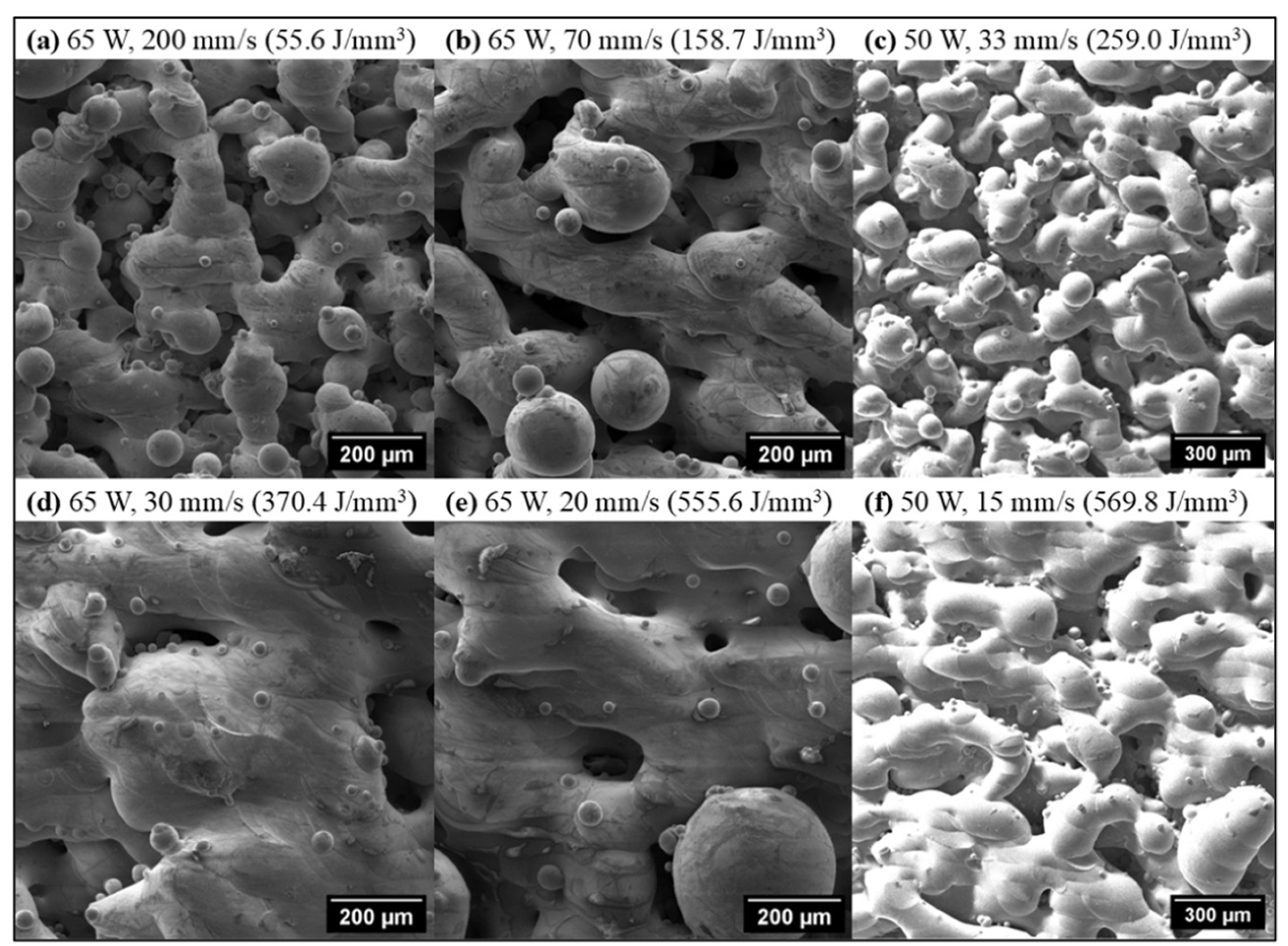
To determine the optimal process parameters, parts were fabricated using LPBF under various manufacturing settings. Each processing condition was evaluated based on the criteria of “approved” or “rejected”, as described in Section 2.3. Figure 5 presents SEM images of the top surface of the manufactured specimens, considering different VED values.
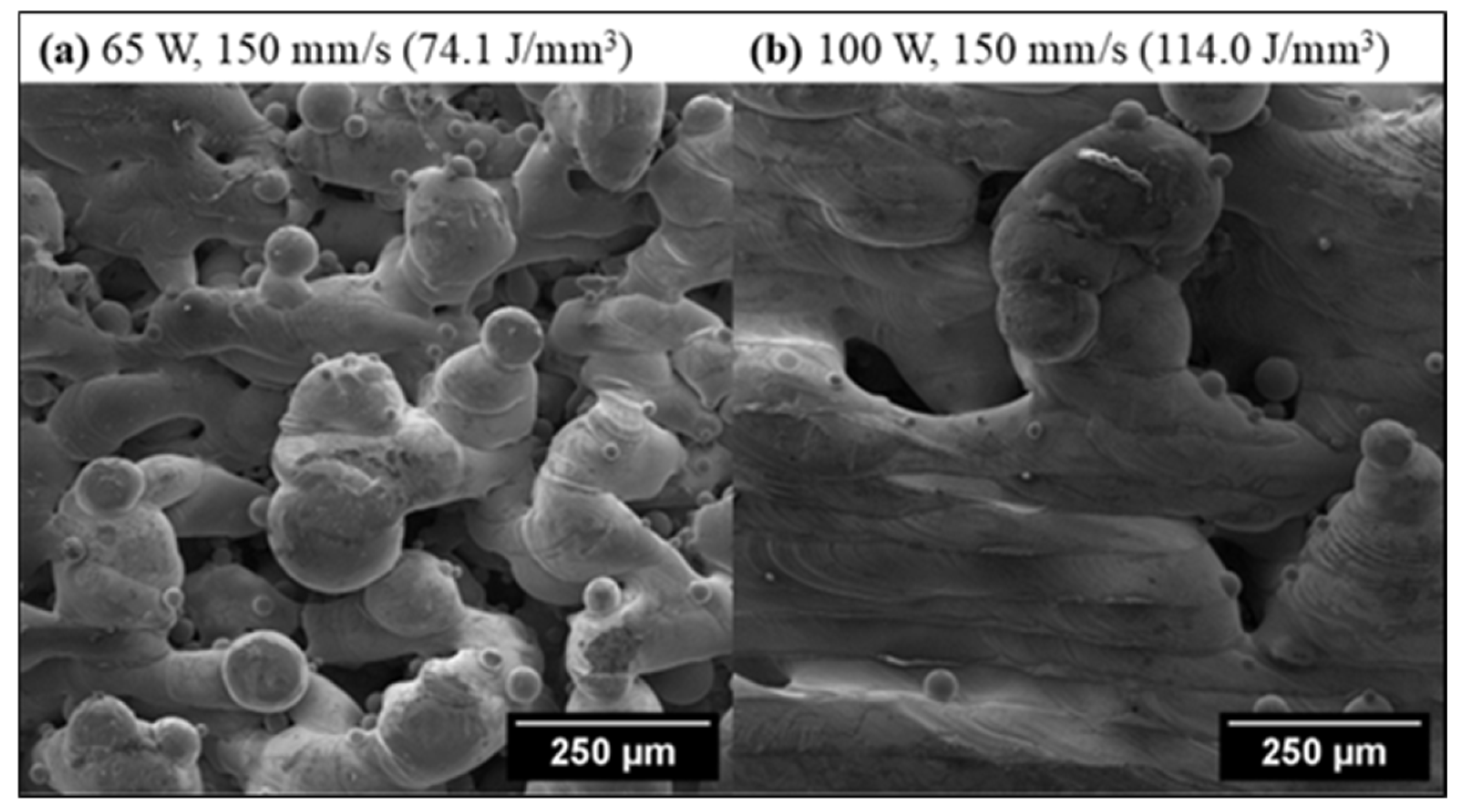
When considering only the variation in laser power and scanning speed, VED becomes inversely proportional to these parameters [30]. As described by Zhang et al. [31], the temperature of the powder bed increases with VED during processing, assuming that all energy is absorbed by the powder. Figure 5 shows that increasing VED from 55.6 J/mm3 to 555.6 J/mm3 (Figure 5a and Figure 5e, respectively) results in better fusion of the powder particles. However, voids are still present under these conditions, indicating that the temperature reached during laser powder bed fusion (LPBF) with lower laser power—up to 65 W—was below the material’s melting point of approximately 1395 °C for SS316L. Increasing the laser power slightly (from 65 W to 100 W) while maintaining a scanning speed of 150 mm/s yields low VED values (74 and 114 J/mm3, respectively; see Figure 6). This results in heterogeneous layers with voids in the top layer. This discontinuous surface has been associated with the balling phenomenon, an undesirable defect in additive manufacturing technologies that negatively impacts part quality, especially when the balls are ellipsoidal with dimensions of approximately 500 μm [32]. According to the adopted criteria, the aforementioned defects resulted in “rejected” conditions.
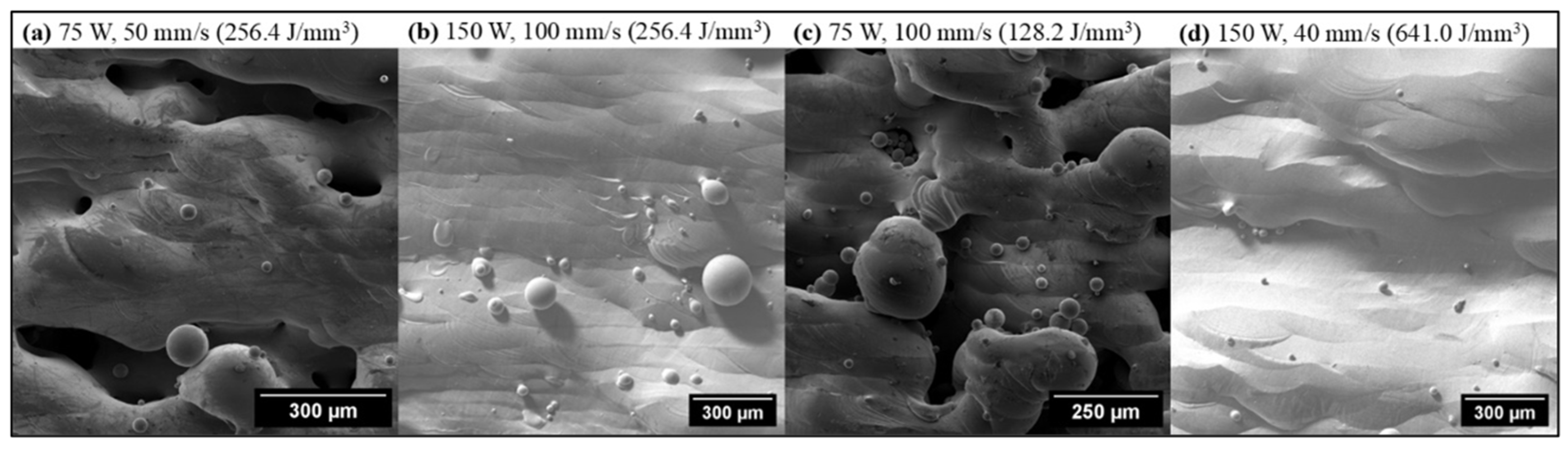
Figure 7 shows that increasing the laser power from 75 W to 150 W with lower and higher scanning speeds promoted conditions that met the “approved” criteria, including surface homogeneity and complete fusion of the powder bed in the top layer. The best results among these tested conditions were achieved when a higher laser power (150 W) was combined with a low scanning speed of 40 mm/s, resulting in a higher VED of 640 J/mm3. This is depicted in Figure 7d.
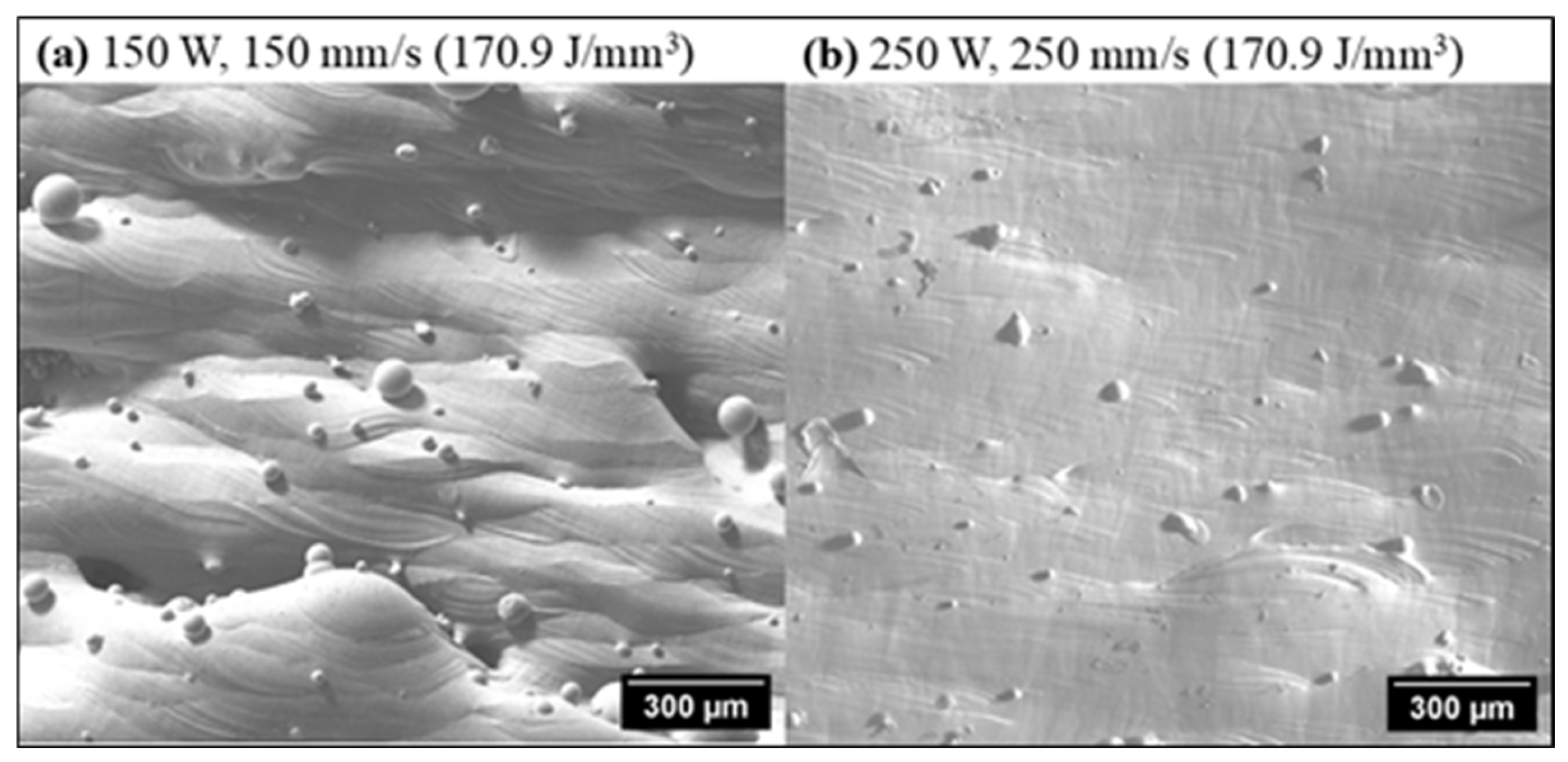
Figure 8 shows that similar results were obtained with a lower VED (171 J/mm3, as shown in Figure 6) when the laser power was increased to 150–250 W and the scanning speed was increased to 150–250 mm/s. However, using a laser power of 250 W with a lower scanning speed (e.g., 150 mm/s) caused excessive molten pool splashing. This can be attributed to vaporized gases originating from elements with low boiling points. These gases are generated by the rapid increase in molten pool temperature due to the high VED (approximately 342 J/mm3). This destabilizes the flow and causes the reported splashes [33].
In summary, an increase in volumetric energy density (VED) cannot be used as a single parameter to predict optimized LPBF parameters. Figure 9 presents a 3D dispersion graph based on the classification criteria and considering variations in laser power (P), scanning speed (V), and volumetric energy density (VED). The results demonstrate that VED can serve as an indicator of optimized processing in LPBF when variations in laser power and scanning speed are considered individually or in combination. Three of the experimental conditions tested in this study were classified as approved, confirming that stable process windows can be achieved within specific VED ranges. As reported in the literature [13,15], this limitation arises because VED is an indirect parameter that does not fully capture the complex physics of the molten pool and its effects on final layer morphology.

3.3. Optimization of the LPBF Process Based on Laser Intensity and Interaction Time Parameters

In general, analysis of the top surface obtained by SEM (see Section 3.2) revealed that combinations of laser power and scanning speed produced continuous layers, a stable melting track, and an absence of the balling effect. These two process parameters influence each other and affect the topographic quality of the part. Li et al. [32] reported similar results, associating an increase in scanning speed with discontinuous tracks featuring agglomerates or spheres due to the balling effect for a laser power range of 150–190 W. Conversely, the authors noted that high laser line energy density (i.e., high laser power and low scanning speed) produced a continuous molten track, free from the balling phenomenon, due to its excellent wetting characteristics.
In this context, the present study considers two parameters for the optimization process: laser intensity, defined as the ratio of laser power to beam focusing area, and interaction time, defined as the ratio of beam diameter to scanning speed. According to Zhang et al., a minimum laser intensity of 8.9 kW/mm2 is necessary to reach the melting point of SS316L powder in the selective laser melting process. Figure 5 shows that for laser powers between 50 and 65 W and laser intensities between 7.9 and 10.2 kW/mm2, a lack of fusion or partial fusion was observed on the top surface of the parts even at VED values up to approximately 555 J/mm3 (Table 1).
The results suggest that a minimum laser intensity of 11.8 kW/mm2 is necessary to fully melt the SS316L powder bed under the tested conditions. Additionally, it was observed that a laser intensity ranging between 19.6 and 39.3 kW/mm2 produces better topographic homogeneity in the parts. When selecting the interaction time, therefore, this range of laser intensity values must be considered. Table 4 summarizes the optimized process parameters based on the “approved” classification criteria. Within the optimized intensity range, an increase in laser intensity was found to enable a reduction in interaction time, and vice versa.

3.4. Microstructural and Mechanical Characterizations of the SS316L Manufactured by LPBF

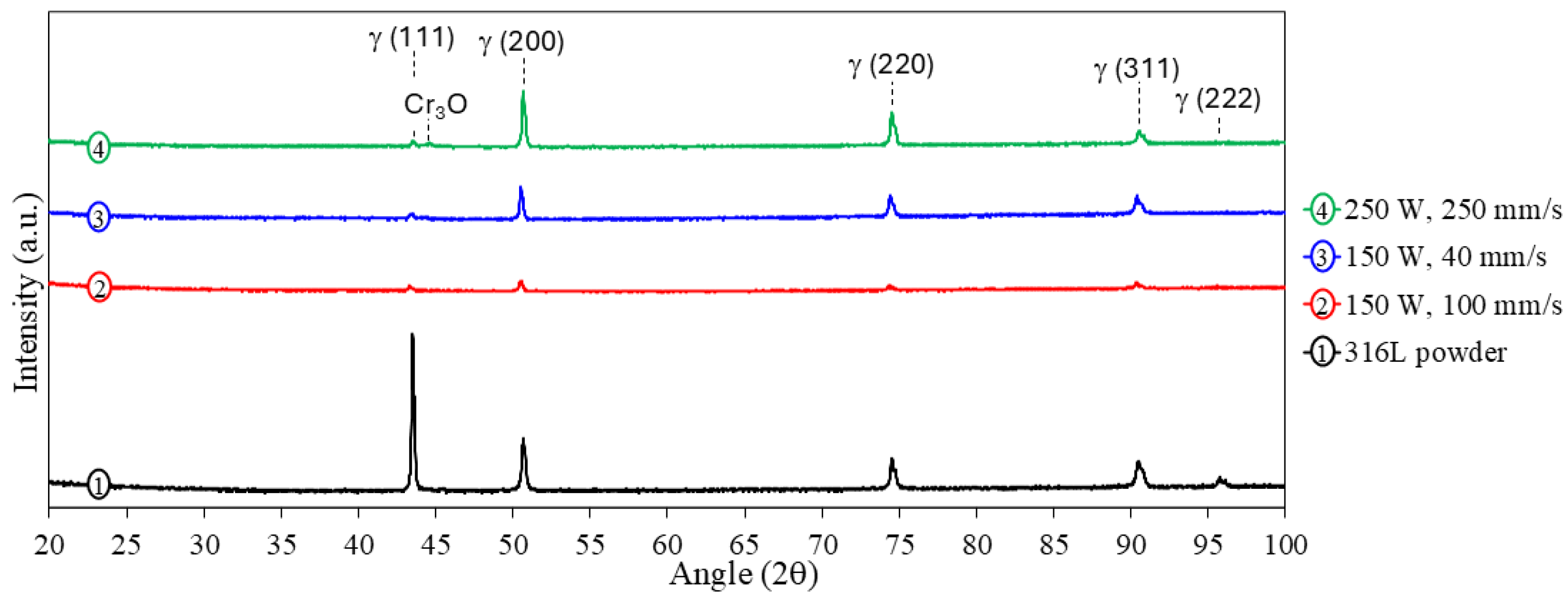
Figure 10 shows the diffractograms of parts manufactured by LPBF with optimized process parameters. No phase transformations were observed compared to the results obtained for the SS316L powder, which showed the presence of the austenitic phase (Fe-γ, PDF #00-031-0619). Since the temperature gradient and cooling rate are controlled by laser power and scanning speed [31], the absence of other phases after laser processing indicates that the process parameters were suitable for maintaining the primary phase. However, at the highest laser power setting (250 W and 250 mm/s), the diffractogram shows a diffracted spectrum at 44.606° (2θ) that is identified as chromium oxide (Cr3O, PDF #01-072-0528). This can be attributed to the thicker passive layer present on the surface of the part due to the use of a higher laser power setting compared to the other analyzed conditions. Comparing the XRD results of the AISI 316L powder before and after LPBF processing revealed variations in relative diffraction peak intensities that can be attributed to microstructural factors [34]. As DebRoy et al. [35] have highlighted, rapid solidification during LPBF induces a strong crystallographic texture due to the directional growth of columnar grains along thermal gradients. Depending on the alignment of the dominant grain orientations with the diffraction geometry, this preferred orientation can enhance or suppress certain diffraction peaks. Moreover, the laser scanning strategy, such as hatch orientation, can promote microstructural anisotropy by altering relative peak intensities without changing the phase constitution of the material.
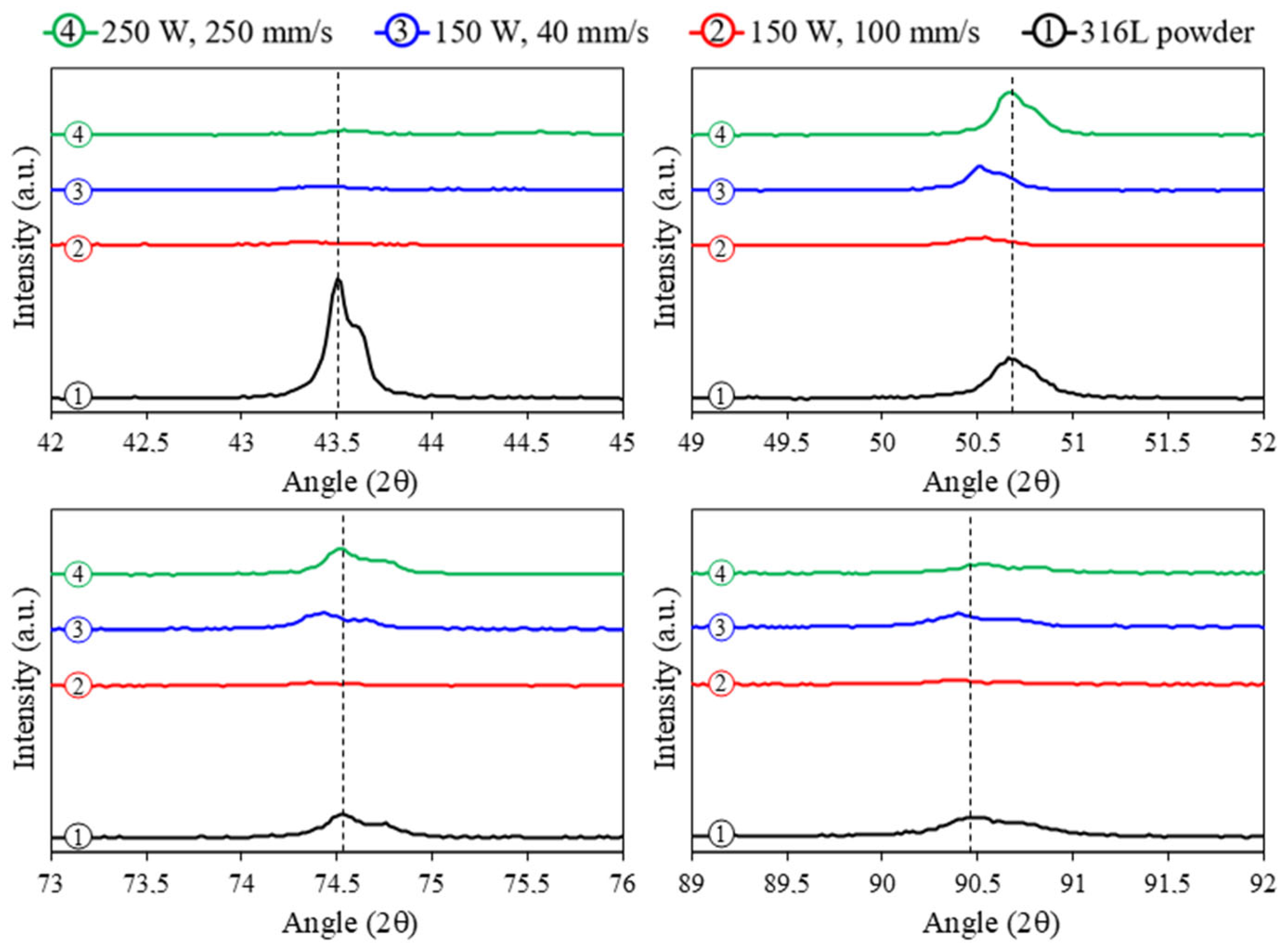
Furthermore, additional analysis of the diffractograms of the manufactured parts (Figure 11) revealed a 2θ angle displacement relative to the SS316L powder diffraction planes. The observed leftward shift, according to Bragg’s law [34], suggests the presence of uniform tensile forces within the microstructure, a common aspect in processing with high cooling rates.
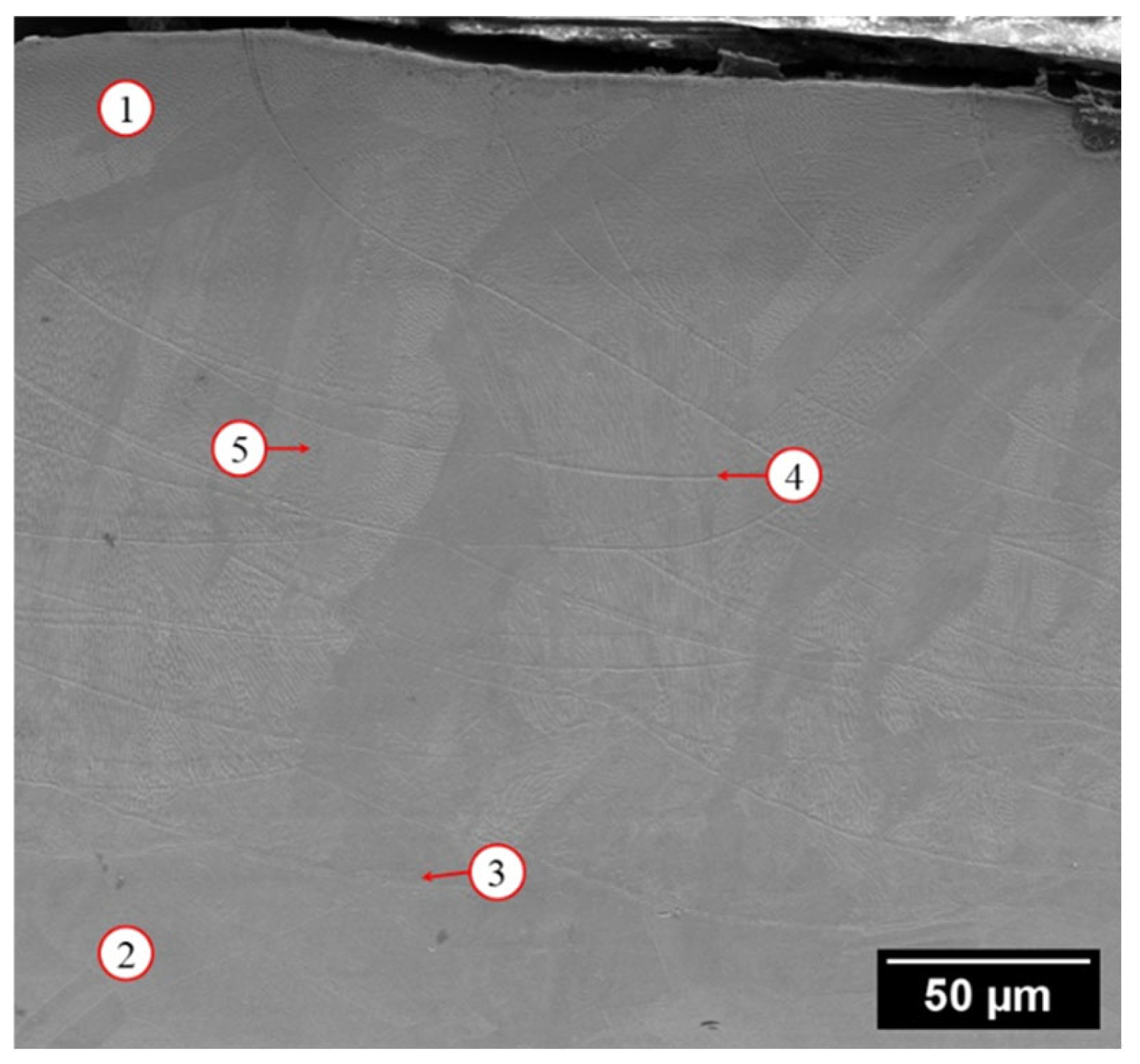
As shown in Figure 12, cross-sectional views of the manufactured parts revealed homogeneity and good metallurgical bonding between the layers without any voids or unmelted particles present. The microstructure of the part generally consists of grains with crystallographic orientations that are aligned with the solidification direction of the melt pool and epitaxial growth from the substrate. This indicates a strong metallurgical bond between the grains, which could enhance the part’s mechanical properties.
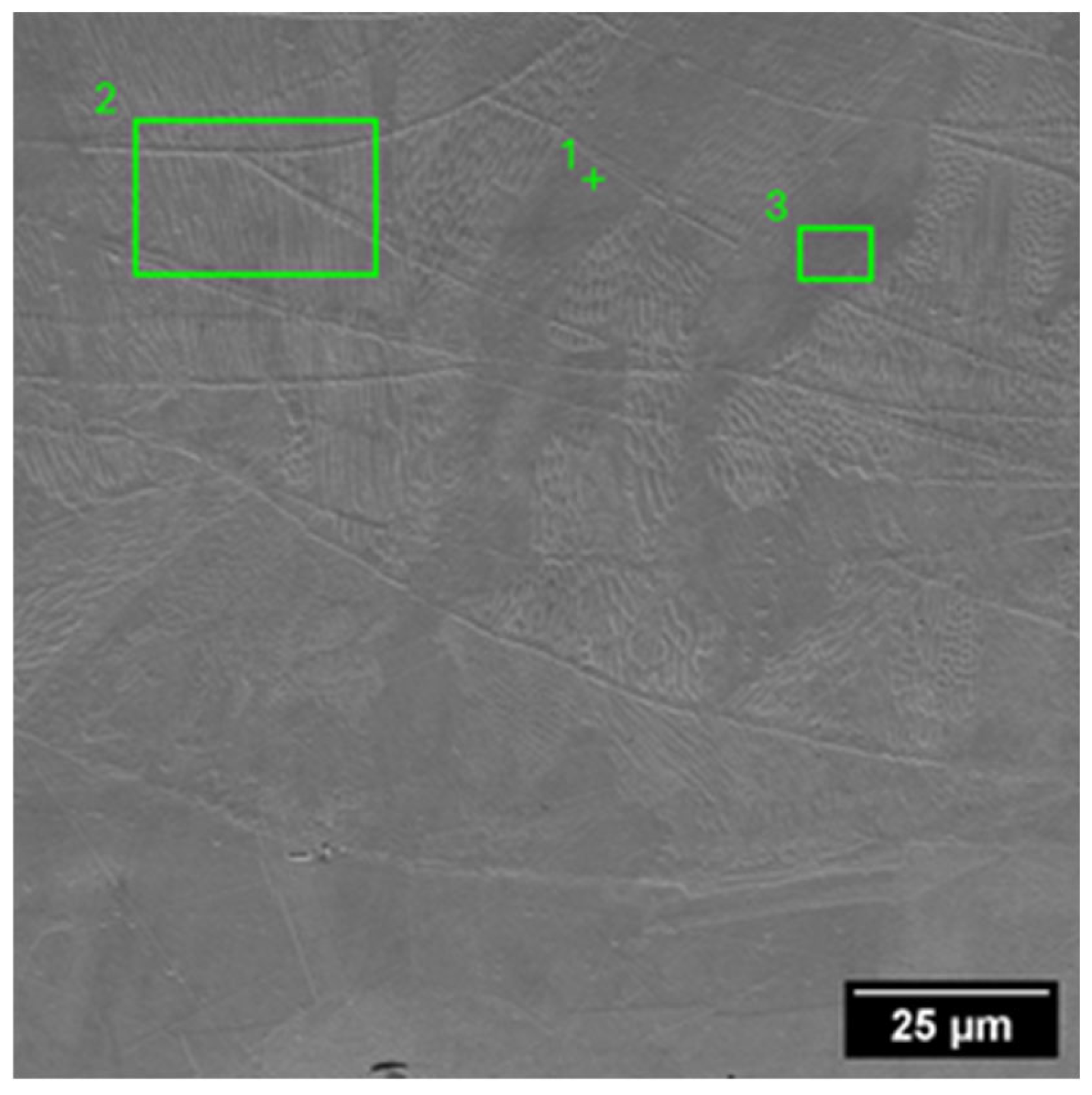
EDS analysis of three regions of a cross-section of a manufactured part, as illustrated in Figure 13, revealed elemental weight percentages similar to the powder’s chemical composition, as shown in Table 5. Additionally, good homogeneity can be inferred. Notably, impurities such as oxygen were not incorporated during the LPBF processing of the material.
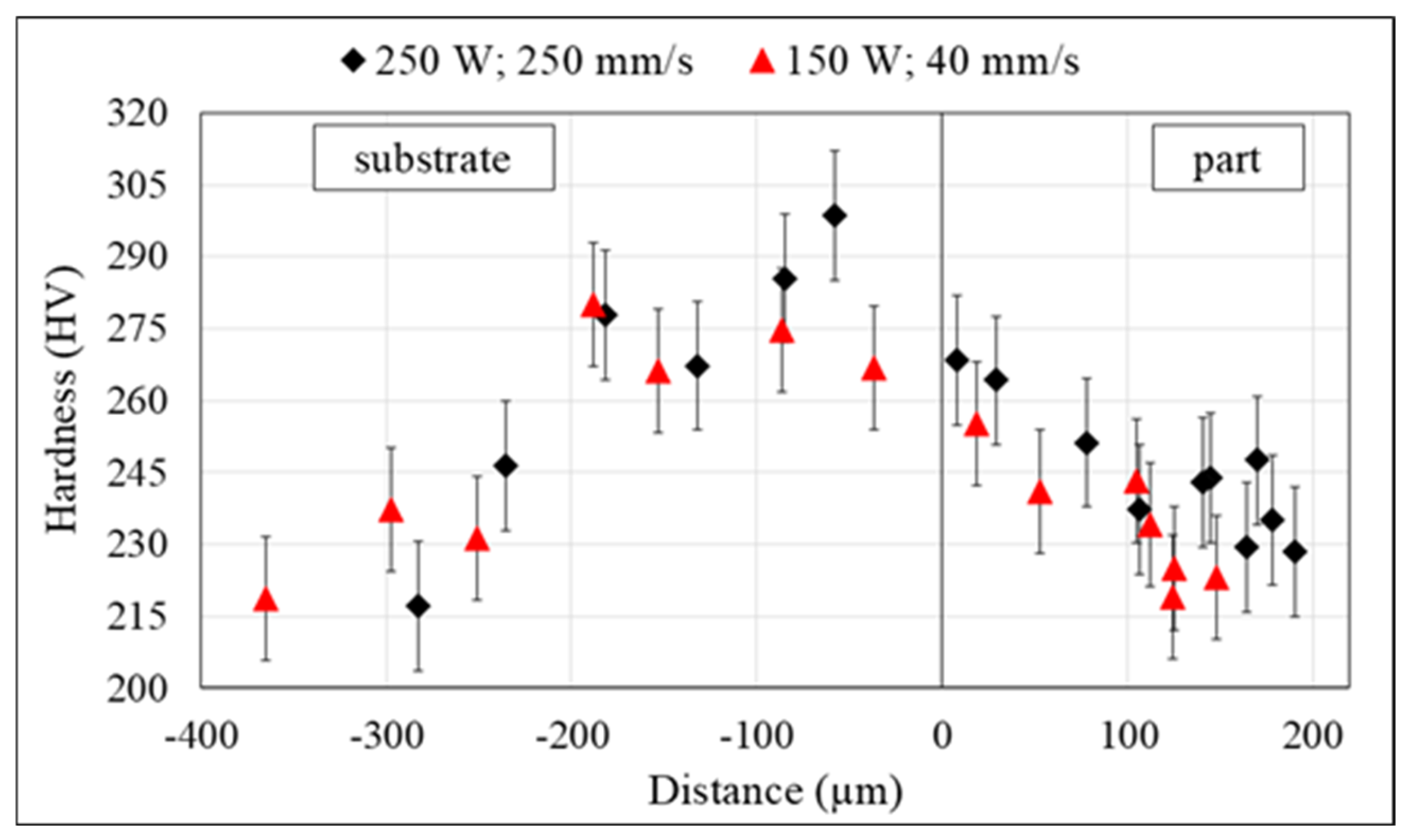
Figure 14 shows hardness measured from the outermost layer of the part surface towards the substrate under two sets of laser power and scanning speed conditions: (250 W—250 mm/s) and (150 W—40 mm/s). The resulting hardness values were 244.8 ± 13.5 HV and 234.4 ± 12.9 HV, respectively. Compared to SS316L produced by conventional methods, which typically ranges from 170 to 220 HV, the parts processed by LPBF exhibited significantly higher hardness [31]. The effect of laser process parameters on microhardness was also evaluated. The results showed that the part processed with the highest laser power and scanning speed (250 W and 250 mm/s), exhibited the highest hardness value, 244.8 ± 13.5 HV. Conversely, the sample produced with lower power and speed (150 W and 40 mm/s) exhibited slightly reduced hardness, measuring 234.4 ± 12.9 HV. However, this difference is not statistically significant, behavior also reported by Zhang et al. [31]. This limited variation is explained by the fact that both processing conditions yielded nearly full densification with similar grain refinement and thermal cycles. This led to comparable microstructural features and similar hardness values. Thus, within the tested parameter range, laser power and scanning speed only minorly affect the material’s overall hardness.
Finally, another identified characteristic was that the initial layers were harder than the outermost surface layer. This behavior is associated with the thermal history of additive manufacturing, which includes steep temperature gradients and complex reheating cycles between sequentially deposited layers [9,36]. In particular, the initial layers experience repeated reheating from the deposition of subsequent tracks, which can promote grain refinement and its hardening. In contrast, the outermost surface layer undergoes only one heating cycle and does not experience additional thermal treatment from overlying material. Consequently, the reduced reheating and slower cooling rate near the free surface favor grain coarsening, which explains the lower hardness measured in this region [9,36,37].

4. Conclusions

The study demonstrated the feasibility of using the laser-adapted powder deposition system to fabricate high-precision SS316L parts via laser powder bed fusion (LPBF) by optimizing the process through the integration of multiple parameters, such as volumetric energy density (VED), laser intensity, and interaction time. The following aspects are particularly noteworthy:
  • Volumetric energy density (VED) is not a universal metric for LPBF optimization because extreme VED values (too high or too low) lead to defects such as lack of fusion, porosity, and melt pool instability. Optimal VED values of 170.9, 256.4, and 641.0 J/mm3 depended on combinations of laser power and scanning speed.
  • A minimum laser intensity of 11.8 kW/mm2 was required to ensure complete fusion of the powder bed in LPBF. A combination of laser intensities (19.6–39.3 kW/mm2) and adjusted interaction times (0.36–2.70 ms) was observed to promote continuous layers and reduce the balling effect.
  • The microstructural characteristics of the processed parts exhibited an austenitic phase with epitaxial grain growth and no secondary phases. X-ray diffraction results indicated the presence of compressive and tensile residual stresses associated with the thermal gradient and the LPBF process’s high cooling rate.
Parts processed under optimized conditions exhibited superior hardness (234–244 HV), compared to conventionally fabricated SS316L (170–220 HV). This difference is attributed to microstructural refinement, which is a result of the LPBF process’s high cooling rates.

Author Contributions

Conceptualization, A.G.C.; Methodology, M.F.B.d.S. and L.R.d.A.A.J.; Validation, R.d.M.O. and A.G.C.; Formal analysis, A.G.C.; Investigation, M.F.B.d.S. and L.R.d.A.A.J.; Data curation, R.d.M.O. and A.G.C.; Writing—original draft, A.G.C.; Writing—review & editing, M.F.B.d.S., L.R.d.A.A.J., R.d.M.O. and A.G.C.; Supervision, A.G.C.; Project administration, A.G.C. All authors have read and agreed to the published version of the manuscript.

Funding

The authors acknowledge the research grant from FAPESP (process No. 2019/08476-0) and the PhD scholarship from CAPES (process No. 88887.678272/2022-00).

Data Availability Statement

The original contributions presented in this study are included in the article. Further inquiries can be directed to the corresponding author.

Conflicts of Interest

The authors declare no conflict of interest.

References

  1. ISO/ASTM 52900:2021; Additive Manufacturing—General Principles—Fundamentals and Vocabulary. International Organization for Standardization: Geneva, Switzerland, 2021; ISBN 978-0-539-20472-8.
  2. Li, W.; Meng, L.; Niu, X.; Zhou, W. Microstructure, mechanical properties, and deformation behaviour of LPBF 316L via post-heat treatment. Virtual Phys. Prototyp. 2024, 19, e2405623. [Google Scholar] [CrossRef]
  3. Barode, J.; Brander, M.; Yu, T.; Nadimpalli, V.K.; Jensen, D.J.; Wang, X. Cell Structure in LPBF 316L—Microstructural Heterogeneity, Thermal Stability, and Mechanical Properties. Materials 2025, 18, 475. [Google Scholar] [CrossRef] [PubMed]
  4. Yadroitsev, I.; Smurov, I. Selective laser melting technology: From the single laser-melted track stability to 3D parts of complex shape. Phys. Procedia 2010, 5, 551–560. [Google Scholar] [CrossRef]
  5. Rehme, O. Cellular Design for Laser Freeform Fabrication; Cuvillier Verlag: Göttingen, Germany, 2010; ISBN 978-3-86955-614-0. [Google Scholar]
  6. Yakout, M.; Elbestawi, M.A.; Veldhuis, S.C. Density and mechanical properties in selective laser melting of Invar 36 and stainless steel 316L. J. Mater. Process. Technol. 2019, 266, 397–420. [Google Scholar] [CrossRef]
  7. Tucho, W.M.; Lysne, V.H.; Austbø, H.; Sjolyst-Kverneland, A.; Hansen, V. Investigation of effects of process parameters on microstructure and hardness of SLM manufactured SS316L. J. Alloys Compd. 2018, 740, 910–925. [Google Scholar] [CrossRef]
  8. Cherry, J.A.; Davies, H.M.; Mehmood, S.; Lavery, N.P.; Brown, S.G.R.; Sienz, J. Investigation into the effect of process parameters on microstructural and physical properties of 316L stainless steel parts by selective laser melting. Int. J. Adv. Manuf. Technol. 2014, 76, 869–879. [Google Scholar] [CrossRef]
  9. Liverani, E.; Toschi, S.; Ceschini, L.; Fortunato, A. Effect of selective laser melting (SLM) process parameters on microstructure and mechanical properties of 316L austenitic stainless steel. J. Mater. Process. Technol. 2017, 249, 255–263. [Google Scholar] [CrossRef]
  10. Bang, G.B.; Kim, W.R.; Kim, H.K.; Park, H.K.; Kim, G.H.; Hyun, S.K.; Kwon, O.; Kim, H.G. Effect of process parameters for selective laser melting with SUS316L on mechanical and microstructural properties with variation in chemical composition. Mater. Des. 2021, 197, 109221. [Google Scholar] [CrossRef]
  11. Ciurana, J.; Hernandez, L.; Delgado, J. Energy density analysis on single tracks formed by selective laser melting with CoCrMo powder material. Int. J. Adv. Manuf. Technol. 2013, 68, 1103–1110. [Google Scholar] [CrossRef]
  12. Gunenthiram, V.; Peyre, P.; Schneider, M.; Dal, M.; Coste, F.; Koutiri, I.; Fabbro, R. Experimental analysis of spatter generation and melt-pool behavior during the powder bed laser beam melting process. J. Mater. Process. Technol. 2018, 251, 376–386. [Google Scholar] [CrossRef]
  13. Greco, S.; Gutzeit, K.; Hotz, H.; Kirsch, B.; Aurich, J.C. Selective laser melting (SLM) of AISI 316L—Impact of laser power, layer thickness, and hatch spacing on roughness, density, and microhardness at constant input energy density. Int. J. Adv. Manuf. Technol. 2020, 108, 1551–1562. [Google Scholar] [CrossRef]
  14. Prashanth, K.G.; Scudino, S.; Maity, T.; Das, J.; Eckert, J. Is the energy density a reliable parameter for materials synthesis by selective laser melting? Mater. Res. Lett. 2017, 5, 386–390. [Google Scholar] [CrossRef]
  15. Bertoli, U.S.; Wolfer, A.J.; Matthews, M.J.; Delplanque, J.-P.R.; Schoenung, J.M. On the limitations of volumetric energy density as a design parameter for selective laser melting. Mater. Des. 2017, 113, 331–340. [Google Scholar] [CrossRef]
  16. Kamath, C.; El-dasher, B.; Gallegos, G.F.; King, W.E.; Sisto, A. Density of additively-manufactured 316L SS parts using laser powder-bed fusion at powers up to 400 W. Int. J. Adv. Manuf. Technol. 2014, 74, 65–78. [Google Scholar] [CrossRef]
  17. Peng, T.; Chen, C. Influence of energy density on energy demand and porosity of 316L stainless steel fabricated by selective laser melting. Int. J. Precis. Eng. Manuf.-Green Tech. 2018, 5, 55–62. [Google Scholar] [CrossRef]
  18. Metelkova, J.; Kinds, Y.; Kempen, K.; Formanoir, C.; Witvrouw, A.; Van Hooreweder, B. On the influence of laser defocusing in selective laser melting of 316L. Addit. Manuf. 2018, 23, 161–169. [Google Scholar] [CrossRef]
  19. Pfaff, A.; Linnenberg, M.; Hoschke, K.; Balle, F. Generating functionally graded steel microstructures by laser powder bed fusion. J. Mater. Sci. 2023, 58, 17383–17404. [Google Scholar] [CrossRef]
  20. Nabavi, S.F.; Farshidianfar, A.; Dalir, H. Comprehensive review: Advancements in modeling geometrical and mechanical characteristics of laser powder bed fusion process. Opt. Laser Technol. 2025, 180, 111480. [Google Scholar] [CrossRef]
  21. Aguilar, F.; Huynh, T.; Kljestan, N.; Knezevic, M.; Sohn, Y. Microstructure and Mechanical Characterization of AISI 4340 Steel Additively Manufactured by Laser Powder Bed Fusion. Metals 2025, 15, 412. [Google Scholar] [CrossRef]
  22. Davidson, K.P.; Le, T.P.; Nguyen, L.L.; Fronda, J.E.P.; Liu, R.; Meng, T.L.; Tay, Y.Y.; Seita, M. Localised control of phase formation in a high-carbon low alloy steel by laser powder bed fusion. npj Adv. Manuf. 2025, 2, 11. [Google Scholar] [CrossRef]
  23. Lopes, P.; Zafar, F.; Costa, C.; Castro, J.; Matos, J.R.; Nogueira, P.; Magrinho, J.P.; de Deus, A.M.; Vaz, M.F.; Beatriz Silva, M.; et al. A comprehensive study of LPBF parameter influence in 316L stainless steel mechanical properties, macrostructure, and printability. Proc. Inst. Mech. Eng. Part L J. Mater. Des. Appl. 2024, 239, 828–847. [Google Scholar] [CrossRef]
  24. Lekatou, A.G.; Efremenko, B.V.; Haoui, V.; Efremenko, V.G.; Emmanouilidou, S.; Zurnadzhy, V.I.; Petryshynets, I.; Chabak, Y.G.; Sili, I.I. Microstructure, electrochemical, wear and corrosive wear performance of laser-based powder bed fusion and wrought biomedical Ti−6Al−4V alloys. Trans. Nonferrous Met. Soc. China 2025, 35, 2612–2631. [Google Scholar] [CrossRef]
  25. ASTM E384-23; Standard Test Method for Microindentation Hardness of Materials. ASTM International: West Conshohocken, PA, USA, 2023. [CrossRef]
  26. Stegman, B.T.; Lopez, J.; Jarosinski, W.; Wang, H.; Zhang, X. The influence of powder particle size distributions on mechanical properties of Alloy 718 by laser powder bed fusion. Metals 2023, 13, 1384. [Google Scholar] [CrossRef]
  27. Chu, F.; Li, E.; Shen, H.; Chen, Z.; Li, Y.; Liu, H.; Min, S.; Tian, X.; Zhang, K.; Zhou, Z.; et al. Influence of powder size on defect generation in laser powder bed fusion of AlSi10Mg alloy. J. Manuf. Process. 2023, 94, 183–195. [Google Scholar] [CrossRef]
  28. Balbaa, M.A.; Ghasemi, A.; Fereiduni, E.; Elbestawi, M.A.; Jadhav, S.D.; Kruth, J.-P. Role of powder particle size on laser powder bed fusion processability of AlSi10Mg alloy. Addit. Manuf. 2021, 37, 101630. [Google Scholar] [CrossRef]
  29. ASM International. Properties and Selection: Irons, Steels, and High-Performance Alloys, 10th ed.; Metals Handbook; ASM International: Materials Park, OH, USA, 1993; Volume 1, ISBN 978-0871703774. [Google Scholar]
  30. Kannatey-Asibu, E. Principles of Laser Materials Processing; John Wiley & Sons: Hoboken, NJ, USA, 2009; ISBN 978-0-470-17798-3. [Google Scholar]
  31. Zhang, X.; Chen, L.; Zhou, J.; Ren, N. Simulation and experimental studies on process parameters, microstructure and mechanical properties of selective laser melting of stainless steel 316L. J. Braz. Soc. Mech. Sci. Eng. 2020, 42, 402. [Google Scholar] [CrossRef]
  32. Li, R.; Liu, J.; Shi, Y.; Wang, L.; Jiang, W. Balling behavior of stainless steel and nickel powder during selective laser melting process. Int. J. Adv. Manuf. Technol. 2012, 59, 1025–1035. [Google Scholar] [CrossRef]
  33. Chowdhury, S.; Yadaiah, N.; Prakash, C.; Ramakrishna, S.; Dixit, S.; Gupta, L.R.; Buddhi, D. Laser powder bed fusion: A state-of-the-art review of the technology, materials, properties & defects, and numerical modelling. J. Mater. Res. Technol. 2022, 20, 2109–2172. [Google Scholar] [CrossRef]
  34. Cullity, B.D.; Stock, S.R. Elements of X-Ray Diffraction, 3rd ed.; Pearson Education: London, UK, 2013; ISBN 978-1-292-04054-7. [Google Scholar]
  35. DebRoy, T.; Wei, H.L.; Zuback, J.S.; Mukherjee, T.; Elmer, J.W.; Milewski, J.O.; Beese, A.M.; Wilson-Heid, A.D.; De, A.; Zhang, W. Additive manufacturing of metallic components—Process, structure and properties. Prog. Mater. Sci. 2018, 92, 112–224. [Google Scholar] [CrossRef]
  36. Callister, W.D., Jr. Ciência e Engenharia de Materiais: Uma Introdução, 10th ed.; LTC: Rio de Janeiro, Brazil, 2020; ISBN 978-85-2163-732-5. [Google Scholar]
  37. Efremenko, B.; Chabak, Y.; Petryshynets, I.; Efremenko, V.; Wu, K.; Arshad, S.; Kromka, F. Microstructure Evolution, Tensile/Nanoindentation Response, and Work-Hardening Behaviour of Prestrained and Subsequently Annealed LPBF 316L Stainless Steel. Materials 2025, 18, 1102. [Google Scholar] [CrossRef]
Figure 1. Schematic representation of the LPBF process. (a) The Laser-Adapted Powder Deposition System illustrates the laser source, optics, powder delivery nozzle, and build platform. (b) A representation of the laser beam scanning strategy highlighting the hatch spacing and overlap between adjacent tracks. (c) The main process parameters considered in this study.
Coatings 16 00167 g001
Figure 2. Particle size distribution of the SS316L powder. The histogram represents the frequency distribution of particle diameters, while the red line corresponds to the cumulative particle size percentage.
Coatings 16 00167 g002
Figure 3. Morphology of the SS316L particles obtained via SEM with magnification of (a) 1000×, and (b) 5000×.
Coatings 16 00167 g003
Figure 4. X-ray diffractometry of the SS316L powder.
Coatings 16 00167 g004
Figure 5. SEM image of top surface of specimens manufactured by LPBF under different VED values.
Coatings 16 00167 g005
Figure 6. SEM image of top surface of specimens manufactured by LPBF under scanning speed of 150 mm/s.
Coatings 16 00167 g006
Figure 7. SEM of top surface of specimens manufactured by LPBF under laser powder of 75 W (a,c) and (b,d) 150 W.
Coatings 16 00167 g007
Figure 8. SEM of top surface of specimens manufactured by LPBF under VED of 170.9 J/mm3.
Coatings 16 00167 g008
Figure 9. 3D dispersion graph for optimized parameter in LPBF.
Coatings 16 00167 g009
Figure 10. X-ray diffractometry of the SS316L processed by LPBF under optimized conditions.
Coatings 16 00167 g010
Figure 11. X-ray diffractograms of the SS 316L processed by LPBF evidencing the displacement of the diffracted planes in relation to the particulate system.
Coatings 16 00167 g011
Figure 12. SEM image of cross-section of manufactured part (250 W/250 mm/s) evidencing microstructural features indicated at the points (1) substrate, (2) substrate, (3) metallurgical bond between part and substrate, (4) solidification line, and (5) epitaxial grain.
Coatings 16 00167 g012
Figure 13. SEM image of cross-section of part (250 W/250 mm/s) with highlighted regions analyzed by EDS (Table 5).
Coatings 16 00167 g013
Figure 14. Hardness of SS316L parts processed by LPBP.
Coatings 16 00167 g014
Table 1. Specimens manufactured via LPBF under different process parameters.
Laser Power (W)Scanning Speed
(mm/s)
VED *
(J/mm3)
Laser Intensity (kW/mm2)Interaction Time (ms)
6520055.610.20.45
7520064.111.80.45
8520072.613.40.45
6515074.110.20.60
7515085.511.80.60
10020085.515.70.45
5010085.57.90.90
12525085.519.60.36
8515096.913.40.60
75120106.811.80.75
100150114.015.70.60
75100128.211.80.90
100120142.515.70.75
150180142.523.60.50
6570158.710.21.30
100100170.915.70.90
5050170.97.91.80
125125170.919.60.72
150150170.923.60.60
250250170.939.30.36
7570183.211.81.30
6560185.210.21.50
7560213.711.81.50
6550222.210.21.80
7550256.411.81.50
150100256.423.60.90
12583257.419.61.10
5033259.07.92.70
6540277.810.22.25
7540320.511.82.25
250150341.939.30.60
6530370.410.23.00
7530427.411.83.00
6520555.610.24.50
5015569.87.96.00
7520641.011.84.50
15040641.023.62.25
12533647.519.62.70
* Volumetric energy density.
Table 2. Dimensional distribution of the AISI 316L stainless steel powder.
DistributionSamples of the Particulate System (μm)Average Size
(μm)
1234
D1030.5831.0630.7530.8030.79 ± 0.20
D5068.2265.0662.1365.0165.10 ± 2.78
D90167.18157.60158.67161.52161.24 ± 4.29
Table 3. EDS results of the chemical elements (%wt) of the SS316L powder.
Chemical
Element
Area on the Particle *
1234
% wt
FeBalance
Cr17.918.217.424.8
Ni15.414.817.32.2
Mo2.32.22.3-
Si0.50.70.610.8
Mn---35.8
O---11.8
S---0.1
* Green marked area at Figure 3b.
Table 4. Experimental conditions for LPBF process optimization.
Process Parameters
Volumetric Energy Density (J/mm3)170.9256.4641.0
Laser Intensity (kW/mm2)39.323.623.6
Interaction time (ms)0.360.902.20
Table 5. EDS analysis of the chemical elements from the cross-section of part manufactured via LPBF.
Part
(Condition)
Chemical Element (% wt)
FeCrNiMoSiO
250 W
250 mm/s
1 *Balance17.0 ± 0.513.6 ± 0.21.9 ± 0.20.7 ± 0.10.6 ± 0.1
2Balance16.7 ± 0.513.8 ± 0.22.0 ± 0.20.9 ± 0.10.7 ± 0.1
3Balance17.0 ± 0.513.6 ± 0.22.1 ± 0.20.8 ± 0.10.6 ± 0.1
* Punctual analysis.
Disclaimer/Publisher’s Note: The statements, opinions and data contained in all publications are solely those of the individual author(s) and contributor(s) and not of MDPI and/or the editor(s). MDPI and/or the editor(s) disclaim responsibility for any injury to people or property resulting from any ideas, methods, instructions or products referred to in the content.