Review

Next-Generation Biomaterials: Advanced Coatings and Smart Interfaces for Implant Technology: A Narrative Review


1
Feinberg School of Medicine, Northwestern University, Chicago, IL 60611, USA
2
Department of Orthopaedic Surgery, School of Medicine, Duke University, Durham, NC 27710, USA
*
Author to whom correspondence should be addressed.
Coatings 2026, 16(1), 87; https://doi.org/10.3390/coatings16010087
Submission received: 15 November 2025 / Revised: 6 January 2026 / Accepted: 8 January 2026 / Published: 10 January 2026
(This article belongs to the Special Issue Advanced Coatings and Materials for Biomedical Applications)

Abstract

Contemporary advances in bioengineering and materials science have substantially improved the viability of medical implants. The demand for optimized implant technologies has led to the development of advanced coatings that enhance biocompatibility, antimicrobial activity, and durability. Implant manufacturers and surgeons must anticipate both biological and mechanical challenges when implementing devices for patient use. Key areas of concern include infection, corrosion, wear, immune response, and implant rejection; regulatory and economic considerations must also be addressed. Materials science developments are optimizing the integration of established materials such as biometrics, composites, and nanomaterials, while also advancing fabrication-based innovations including plasma functionalization, anodization, and self-assembled monolayers. Emerging smart and stimuli-responsive surface technologies enable controlled drug delivery and real-time implant status communication. These innovations enhance osseointegration, antimicrobial performance, and overall device functionality across orthopedic, dental, and cardiovascular applications. As implant design continues to shift toward personalized, responsive systems, advanced coating technologies are poised to deliver significantly improved long-term clinical outcomes for patients.

1. Introduction

When a medical implant or prosthetic enters the body, its surface immediately becomes the setting for a biological reaction, a response that is entirely dependent on the compositions and nanotextures of the material’s coating. The unavoidability of this fate has stimulated the development of a plethora of innovative materials and coatings since the mid-twentieth century. The first generation of biomaterials focused simply on the quality of “inertness,” ensuring that their utility within the body would not produce a bodily reaction. Now, biodegradable polymers, bioactive glasses (BGs), and bioceramics are just a few examples of the de novo material derivatives which have impacted the field of medical prosthetics [1]. Innovation is not limited to materials, as there have been major developments in the manufacturing process to provide coatings for implants. Techniques such as physical vapor deposition (PVD) have benefitted from these developments with improved osseointegration, lowered wear and friction, and increased corrosion resistance, among other advantages [2]. Beyond biocompatibility, demand has pushed for coatings with many functions. In addition to changing the base materials, the patterning, texture, and porosity can be manipulated to modulate cell-mechanical interactions at the micro- and even the nano-level.
Medical implants face complex environmental challenges, with bacterial colonization remaining a key issue. Simply put, the majority of implants have been reported to favor bacterial growth [3]. Within single-function coatings, a paradox exists: antifouling surfaces cannot kill bacteria once removed, and antibiotic surfaces cannot remove bacteria once killed. A foundational discovery for multifunctional coatings was that polyethylene glycol (PEG), which prevents microbial adhesion, could be chemically linked to antibiotics, such as penicillin, vancomycin, etc. This technology has evolved to use hyperbranched polymers linked to antibiotics, such as gentamycin-PEG constructs, which have shown promise in animal models [4]. However, to date, not one surface has been clinically reported to attain 100% prevention of microbial infections. Strides have been made by developing methods to improve the protein resistance of these PEG coatings, and the use of self-assembled monolayers (SAMs) is one such effective technique [5]. Studies have shown up to 98% reduction in biofilms while using these techniques [6]. An additional problem with antibiotics is that uncontrolled release can be just as harmful to the body as the pathogens being defended against, so finding ways to control the release of antibiotics has been at the forefront of coatings research [3].
When addressing mechanical stress of hard tissue implants, a number of key challenges still remain, such as controlling metal ion release, corrosion, and material toughness [7]. Currently, the dominant orthopedic materials remain stainless steel, cobalt- and titanium-based. Concerning toughness, these materials have a higher Young’s modulus than bone, which is a quantification of the tensile and compression rigidity of a material. While this ensures that the prosthetic is able to bear nearly all of the load, it can also lead to bone atrophy around the implant site, called the “stress-shielding effect” [8]. Lowering the Young’s modulus of materials will compromise fatigue resistance; thus, novel ideas such as the development of porous implants that encourage bone integration are at the forefront of the field [9].
In recent years, many new coatings technologies have emerged. Nanotechnologies have been extensively incorporated into functional coatings, imparting unique chemical, mechanical, thermal, and photophysical properties [10]. They have been used in multifunctional coatings for both targeted and controlled-release drug delivery, improving imaging and disease detection, and as an antibacterial coating [11]. 3D printing offers customized implants, on-demand production, and potential cost reductions, being used in tissue engineering, implants, drug transport, and early diagnostic instruments [12]. Significant research effort has been directed toward additive manufacturing (AM), which is a process that allows for increased customization and personalization of coating materials [13]. Powder bed fusion, which is a leading AM technique for producing metallic bone implants, enables the creation of highly complex geometries and patient-specific designs, significantly enhancing the fit, functionality, and overall performance of implants [14]. This technique can use many different materials, such as stainless steel, titanium and titanium alloys, and biodegradable metals (magnesium, iron, zinc). Even the sterilization process is being further optimized. Hydrothermal sterilization of titanium coatings produces super-hydrophilicity on the sandpaper-polished Ti surface, which has shown an improved initial osteoblast response compared with autoclaving [15]. In many ways, every step of the coating process is experiencing innovation.
Advanced coatings can have a large impact on both clinical outcomes and practical applications. Osseointegration has been a major challenge in the past due to gaps at the prosthesis-bone interface, poor bone in-growth on implants, and poor bone deposition on the implant surface. Advanced coatings integrating biologically extracted extracellular matrix (ECM), engineered with porous surfaces at the micro- and nano-scale, and the usage of BG coatings have shown improved in vivo host acceptance and enhanced osseointegration [9,16,17]. Advanced coatings have also been effective at changing the landscape for antibacterial function, from the usage of polymer brushes or titania nanotube coatings to inhibit adhesion, to chitosan (CS), a sugar that comes from the outer skeleton of shellfish, which has been proven to be an effective antibiotic drug carrier in coatings.
The goal of this article is to summarize the latest developments in materials and coatings for biomedical applications, highlighting novel fabrication strategies and multifunctional coatings designed to address these challenges. Despite remarkable progress, current materials still face the challenges of biocompatibility, durability, and susceptibility to infection. Because of this, we will also showcase some emerging trends that will shape future biomedical development and clinical care.

2. Types of Advanced Coatings

Titanium alloys, stainless steel, and cobalt-chromium alloys are commonly used for orthopedic implants because of their mechanical strength and load-bearing capacity [18]. However, these materials have limitations when used without surface modification. Stainless steel has an elastic modulus of approximately 200 GPa, titanium alloys range from 101–113 GPa, and cobalt-chromium alloys range from 200–300 GPa, all of which are significantly higher than cortical bone (10–30 GPa) [18,19]. This elastic modulus mismatch results in stress shielding and can lead to bone resorption over time [18]. Corrosion in the body leads to release of metal ions that may have cytotoxic effects, and bare metal surfaces do not integrate well with surrounding bone tissue [18]. Applying coatings to the implant surface addresses these issues without altering the bulk mechanical properties of the metal [18]. Coating adhesion to metallic substrate is a critical determinant of quality and long-term device performance, as suboptimal bonding can result in corrosion, degradation, and decreased osseointegration in the presence of biomechanical and chemical stressors. Different types of coatings have been developed to improve osseointegration, resist wear and corrosion, prevent infection, and improve adhesion.

2.1. Bioceramic Coatings

Bioceramic coatings on orthopedic implants serve to improve osseointegration through the use of bioactive ceramic compounds such as hydroxyapatite (HA), tricalcium phosphate (TCP), and zirconia [20,21]. One approach to improving these coatings is to modify their chemical composition to better match natural bone. For example, carbonated hydroxyapatite (CHA) with 12 wt% carbonate content has been shown to outperform pure HA in terms of cell adhesion and proliferation [22]. This improvement is the result of both the biomimetic carbonate content as well as the formation of hierarchical micro- and nano-rod structures with 100–200 nm spacing, which creates better conditions for cell attachment [22]. An added benefit of CHA coatings is their ability to promote not just bone formation, but also nutrient delivery through blood vessel formation by way of increased secretion of vascular endothelial growth factor-A (VEGF-A) [22].
In addition to traditional HA coatings, partial alloy substitutions can facilitate increased osteogenesis, decreased cytotoxicity, and increased biomechanical stability in coated implants. Calcium phosphate and strontium-based substitutions are shown to increase adhesion, corrosion resistance, and long-term stability [23,24]. Co-doped systems, such as HA nanotubes incorporating strontium, silicon, and silver, demonstrate an average adhesion strength approximately 1.9 MPa higher than the International Organization for Standardization requirements. In addition, these coatings exhibit improved corrosion resistance, inhibited bacterial activity, and enhanced osteogenic differentiation [25]. Additional ionic substances such as silver, copper, zinc, magnesium, and iron have also been incorporated into bioceramic coatings, enhancing bioactivity and antibacterial performance when used individually or in combination [26,27,28,29,30,31]. Silicon substitution into commonly used bioceramics has been shown to promote biological assimilation of surface material by increasing electronegativity and producing a finer microstructure, effects that are particularly beneficial in bone and cartilage systems [32]. Fluorine substitution in HA has been shown to enhance antibacterial activity against common pathogens, including S. aureus, E. coli, and C. albicans, while also improving biocompatibility with human fetal osteoblastic cells [33]. Overall, substitutions in bioceramic coatings enable modulation of biomechanical and chemical properties, improving implant performance and longevity.
Beyond chemical composition, the physical structure of bioceramic coatings can be engineered to enhance their performance. Porous coatings created using laser cladding with a 2.5 wt% pore-forming agent have shown the best results for osteoblast differentiation, with higher alkaline phosphatase (ALP) activity at 6 days and increased hydroxyproline (HYP) content compared to other formulations [34]. Laser cladding has an advantage over other coating methods because it creates a strong metallurgical bond between the coating and the metal substrate, and it can produce coatings with multiple beneficial phases, including HA, β-TCP, and titanium dioxide (TiO2) [34]. Laser cladding enhances coating adhesion, with the intent to decrease incidence of delamination and exfoliation, improving coating stability under physiological conditions [34]. Another fabrication technique, plasma electrolytic oxidation (PEO), can be used to create HA-based coatings on zirconium substrates in a single step, with the best performance seen at a current density of 0.370 A/cm2 [35]. Testing in simulated body fluid (SBF) for 28 days showed that these PEO coatings have good bioactivity, and they also have antimicrobial properties since bacterial adhesion decreases as the current density increases [35].
The research on bioceramic coatings shows that improvements can come from multiple angles, whether through changing the chemical makeup, engineering the structure at different size scales, or using different fabrication methods. However, despite these advances, bioceramic coatings still face challenges related to brittleness, inconsistent degradation over time, and difficulties with scaling up production for widespread use [21]. These limitations have led researchers to explore other types of coatings as well.

2.2. Polymeric Coatings

Polymer coatings address challenges distinct from those targeted by bioceramics, including mechanical mismatch with surrounding tissue, infection prevention, and localized drug delivery [18,36]. The range of available polymers allows for selection based on specific implant requirements. Rigid polymers can provide wear resistance for load-bearing applications, while flexible polymers can better accommodate soft tissue interfaces [36,37]. This diversity in material properties enables polymer coatings to complement the osseointegration benefits provided by bioceramic systems.
Polyether ether ketone (PEEK) has been widely studied for orthopedic applications due to its mechanical strength and wear resistance [18]. One benefit of PEEK coatings is their ability to reduce stress shielding, which occurs when the stiffness mismatch between a metal implant and bone results in insufficient load transfer and subsequent bone resorption [18]. PEEK coatings deposited on Ti-13Nb-13Zr alloy demonstrated wear resistance 200 times greater than uncoated alloy [18]. When combined with bioactive materials, PEEK coatings can provide additional functionality. PEEK composites with BG showed over 70% improvement in wear resistance compared to pure PEEK and exhibited better adhesion to titanium substrates [18]. Combining PEEK with HA is particularly relevant for stress shielding reduction, as this composite more closely matches bone stiffness [18]. Improved coating adhesion is essential for polymer-based enhancements, as stressors in physiological aqueous environments can interfere with longevity through delamination [18]. Thermal spraying and electrophoretic deposition (EPD) are common methods for applying PEEK-based coatings [18].
Infection represents a major cause of implant failure, and polymer coatings have been developed to prevent bacterial colonization [38]. Bacteria on implant surfaces can form biofilms, which are aggregates embedded in a self-produced ECM that confers substantial resistance to antibiotics [38]. To address this issue, biodegradable polymers such as CS, poly-lactic-co-glycolic acid (PLGA), and polycaprolactone (PCL) have been used as carriers for antimicrobial peptides and antibiotics [36,38]. PLGA coatings loaded with antimicrobial peptides maintained effective release for 14–15 days, and PCL-based coatings showed good biocompatibility with sustained antibacterial activity in animal studies [38]. CS is used frequently due to its inherent antibacterial properties and ability to form composites with materials like BG, which enhances both cell attachment and antimicrobial function [36]. Hydrogel coatings offer another option, with their porous structure resembling the ECM and their compliance reducing inflammation from mechanical mismatch [26]. Hydrogels can also serve as delivery platforms for drugs or growth factors when tissue integration is a priority [37].

2.3. Metallic & Composite Coatings

TiO2 coatings have been investigated for their ability to promote apatite formation on metallic surfaces, which improves osseointegration [18]. These coatings also have photocatalytic antibacterial properties because TiO2 can generate reactive oxygen species when exposed to light. Adding silver to TiO2 enhances the antimicrobial performance. Studies have reported that Ag-doped TiO2 composites with a silver-to-TiO2 weight ratio of 1:100 achieved greater than 99.99% bacterial inactivation against E. coli and showed antiviral activity against influenza H1N1 [18]. Metal nitride and carbide coatings are used to address tribological problems and prevent ion release from the underlying metal. Titanium nitride (TiN) is one of the most studied coatings in this category. It has high hardness and low friction, and hemolysis tests with TiN have shown near-zero values [18]. However, TiN coatings can experience interfacial plastic deformation due to the hardness difference between the coating and substrate. This mechanical mismatch can in turn reduce coating adhesion, increasing risk of biomechanical compromise, delamination, and device failure [18]. Chromium nitride (CrN) and chromium carbonitride (CrCN) have higher toughness than TiN and work more effectively as diffusion barriers to prevent toxic ions from leaching out [18]. Ternary and quaternary systems such as TiZrN, TiAlCN, and TiCrCN have been developed by combining multiple elements. These more complex coatings generally show better corrosion resistance, reduced bacterial adhesion, and improved mechanical properties compared to binary systems [18].
Another approach involves incorporating metal nanoparticles into polymer or carbon matrices to create composite coatings. The idea is that the two components provide synergistic effects that neither material achieves on its own [39,40]. In polymer-based systems, silver, copper, or zinc oxide nanoparticles can be dispersed in materials like CS or other biodegradable polymers [40]. These polymer-metal composites have shown significant antimicrobial activity, with some formulations achieving pathogen reduction exceeding 99% against bacteria and viruses. However, there are concerns about nanoparticle cytotoxicity and whether the particles might accumulate in the environment over time [40]. Carbon-based composites offer different advantages. Diamond-like carbon (DLC) coatings are known for their hardness and wear resistance, which makes them attractive for applications where implants experience mechanical stress [39]. Adding metals like silver, copper, or gold to DLC enhances both the mechanical and antimicrobial properties. The metal reinforces the bonding at the interface, improves electrical conductivity through the coating, and provides direct antibacterial effects by disrupting bacterial membranes [39]. Studies have evaluated these carbon-metal composites for use in implants, artificial joints, and bone scaffolds. Graphene and carbon nanotubes represent other carbon materials that can be combined with metals, though it should be noted that some carbon nanotube types have been associated with inflammatory responses in biological testing [39].

2.4. Surface Functionalization

Silane chemistry offers a different method by modifying implant surfaces at the molecular scale. These coatings form thin films through crosslinking reactions and can protect against corrosion while also affecting how proteins adsorb to the surface, how well cells attach, and whether bacteria can colonize the implant [41]. Researchers have combined silanes with materials such as epoxy resins, lanthanide nanoparticles, and quaternary ammonium compounds in efforts to improve the durability and add specific biological functions to the coatings [41]. A major concern with silane coatings is their stability over time. Studies have found that these coatings can degrade within 12–14 days when immersed in SBF, and there are questions about whether results from laboratory tests accurately predict how the coatings will perform in the body [41]. More work is needed to understand the long-term behavior and biocompatibility of these coating systems in actual physiological conditions before they can be widely adopted in clinical practice.
Table 1 provides a concise summary of various coating materials that are commonly utilized in orthopedic implants. Each coating technique provides unique benefits that can be selected and tailored to best accommodate each individual patients’ needs.

3. Surface Functionalization Techniques

3.1. Overview

Surface functionalization has become integral in the design of advanced biomedical implants. By tailoring surface chemistry, topography, and surface energy without changing bulk mechanics, engineers and researchers can have fine control over key parameters, including protein adsorption, cell adhesion, corrosion, and inflammatory response. Control over these properties is particularly important for metallic and polymeric materials that have prolonged contact with body fluids at their interface.
Recent advances emphasize dry, reagent-free, and bioinstructive methods that avoid solvent residues and enable scalable and uniform modification of complex geometries [42]. However, plasma-based functionalization, electrochemical anodization, molecular self-assembly, and hybrid deposition have collectively formed a diverse and versatile toolkit of approaches to transform inert surfaces into active biointerfaces that can instruct cellular behavior rather than merely tolerating it.
Active biointerfaces, including stimuli-responsive temperature- and pH-sensitive coatings, can facilitate reversible transitions in response to environmental cues. Such functionalization efforts enable precise control of hydrophilicity and conformation, which allows modulation of protein adsorption, cell adhesion, and drug release in implant technologies [43,44]. Adjustable surface properties highlight the versatile capabilities of modern functionalization approaches, emphasizing the importance of precise fabrication to achieve consistent performance.

3.2. Plasma-Based Functionalization

Plasma modification is a solvent-free, low temperature mechanism to engineer surfaces with ionized gases containing reactive ions, radicals, and electrons. These reactive species introduce functional groups, such as hydroxyl, carboxyl, and amine groups. These additions enhance surface energy and enable covalent immobilization of biomolecules while preserving the underlying structure. Zhianmanesh et al. reviewed the evolution of plasma surface functionalization toward bioinstructive and reagent-free coatings [42]. They emphasized that plasma exposure generates surface radicals that can directly immobilize proteins or peptides, thereby guiding cell adhesion and differentiation without cytotoxic byproducts. Experiments have built on this principle by demonstrating that plasma activation at atmospheric pressure of polymeric substrates like polyethylene and polytetrafluoroethylene (PTFE) can promote reagent-free covalent attachment of biomolecules [45]. This approach eliminates the need for linkers or toxic reagents, providing a scalable and environmentally safe pathway for biomedical coatings.
The technique has also been extended to ECM protein coatings. Atmospheric plasma deposition of collagen and laminin generates surfaces with higher hydrophilicity, nanoscale roughness, and durability compared to traditional adsorption. Stem cells on these coatings show enhanced adhesion, proliferation, and differentiation supported by upregulation of osteogenic and neurogenic markers [46]. A related development in dielectric barrier discharge (DBD) plasma in ambient air allows reagent-free biocloaking by covalently immobilizing tropoelastic on PTFE. X-ray photoelectron spectroscopy confirms persistent nitrogen incorporation even after rigorous sodium dodecyl sulfate washing, demonstrating stable covalent bonding. Endothelial cells on these treated surfaces show markedly improved adhesion and proliferation, emphasizing that atmospheric plasma can produce long-term bioactive interfaces without solvents or chemical linkers [47].
In orthopedics, plasma activation enhances corrosion resistance and hydrophilicity as osteoblastic attachment is improved and inflammation is mitigated [48]. Similar benefits are observed in cardiovascular systems in which plasma modified polymeric grafts, including Dacron and expanded PTFE, and metallic stents or valves demonstrate optimized surface chemistry, wettability, and roughness. These modifications facilitate covalent biomolecular binding to promote endothelialization and enhanced blood compatibility, although metallic substrates still require robust interfacial adhesion layers to maintain stability under physiological shear [49]. Plasma processing ultimately provides a highly adaptable platform for generating covalent functionalized bioinstructive coatings across both polymeric and metallic implants.

3.3. Electrochemical Anodization and Nanostructuring

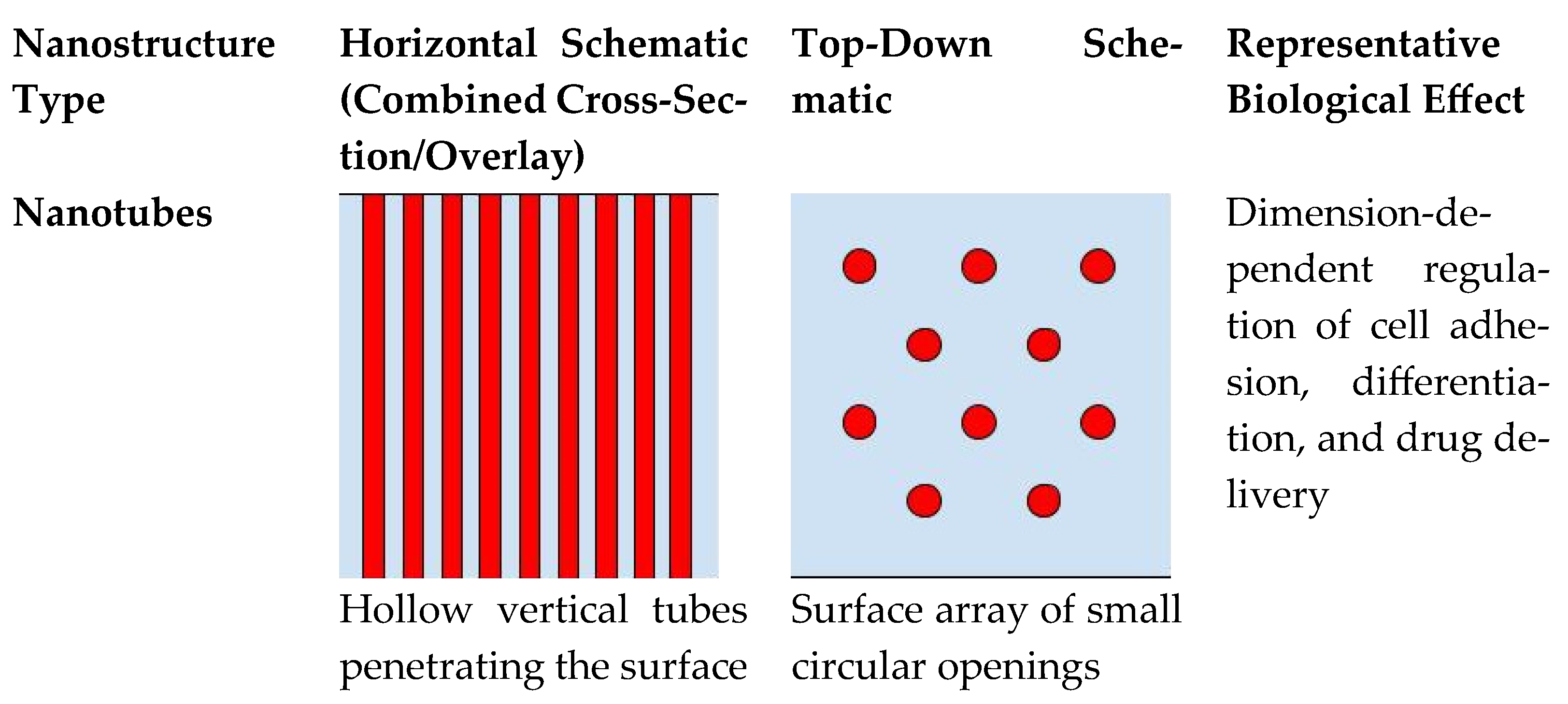
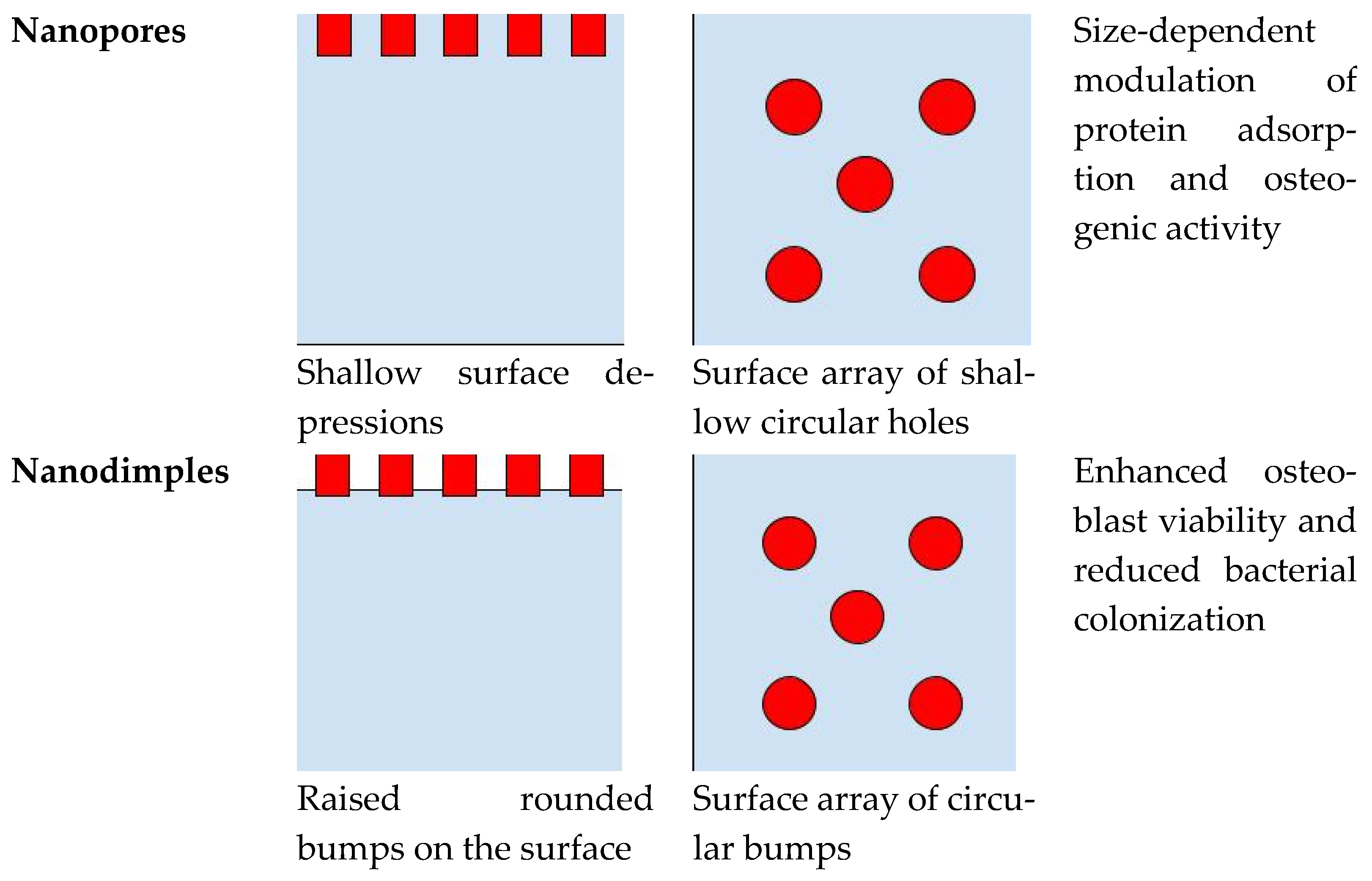
Electrochemical anodization enables precise control of oxide morphology and chemistry through applied potential and electrolyte composition. This process generates nanotubes, nanopores, or nanodomes that regulate protein adsorption, cell attachment, and bacterial colonization. Nanostructured surfaces induced through anodization, such as nanotubes and nanopores, demonstrate diameter- and dimension-dependent biological responses [50]. In a TiO2 surface structure study, nanotubes sized at 30 nm diameters promoted adhesion, while those sized at 70–100 nm promoted differentiation into osteoblastic cells; recent findings support TiO2’s clinical applicability through enhanced biocompatibility and corrosion resistance [51,52]. Additionally, pore size selection in aluminum implants has been shown to influence osteogenic differentiation, with pores in the 65–89 nm diameter range promoting higher ALP activity and calcium deposition compared to smaller pores of 16–30 nm [53]. Nanodimple arrays formed on 316 L stainless steel, for example, have been shown to increase osteoblast viability by roughly 68% while reducing S. aureus and P. aeruginosa colonization by 71% and 58%, respectively [54]. These effects have been attributed to higher surface energy that favors bone-cell attachment while resisting biofilm formation. Moreover, titanium anodization yields TiO2 nanotube arrays whose dimensions can be finely tuned to enhance osseointegration, promote cell differentiation, and serve as drug delivery reservoirs to merge mechanical anchorage with localized therapy [55]. Anodization thereby converts otherwise inert metals into osteoconductive, corrosion-resistant, and antifouling surfaces. The discussed nanostructures and their representative biological effects are summarized schematically in Figure 1 below [56,57,58,59].

3.4. Self-Assembled Monolayers and Chemical Linkers

SAMs provide molecular precision by organizing amphiphilic molecules into ordered films with defined terminal groups. The resulting changes in charge, wettability, and ligand presentation directly influence protein adsorption and cell response. SAMs ending with amino, carboxyl, or phosphono groups effectively regulate protein adsorption, cell adhesion, and antibacterial performance on titanium alloys, while hydrophilic functionalities also help resist non-specific protein and bacterial attachment [60]. Peptide-based SAMs extend this strategy. Short bioactive sequences self-assemble through thiol, silane, or phosphonate anchoring chemistries to couple antifouling behavior with biochemical cues for cell adhesion and mineralization [61]. Phosphonate SAMs particularly offer exceptional stability on metal oxides, making them especially suitable for dental and orthopedic implants that undergo aqueous and mechanical stress. SAM technology therefore enables molecular precision and durable control over interfacial bioactivity.

3.5. Combined and Advanced Deposition Techniques

No single surface treatment can optimize every property, but recent research has increasingly combined multiple physical and chemical approaches to generate multifunctional coatings. EPD has emerged as a scalable method for forming composite coatings, such as HA titanium carbon nanotube films that simultaneously improve corrosion resistance and bioactivity [62]. Chemical vapor deposition (CVD) can create hierarchical, multilayer coatings with superior adhesion, corrosion protection, and cell compatibility when used alone or when combined with thermal spraying, ion implantation, EPD, and plasma treatments [63]. These hybrid architectures unite mechanical durability with precisely controlled biological performance to boost the long-term functionality of implantable devices.

3.6. Sol–Gel Coating Methods

Sol–gel is an advanced fabrication technique that converts molecular precursors into a malleable gel network, facilitating controlled HA and BG integration into implant coatings. Sol–gel offers high purity and homogeneity, improving corrosion resistance, adhesion, and osseointegration through precise distribution and shape control [64,65]. Sol–gel powders can be utilized in conjunction with EPD to construct multifunctional composite layers that enhance Young’s modulus, hardness, and corrosion resistance measures [66]. As an affordable, low-temperature approach, sol–gel complements the multifaceted advanced deposition methods discussed in Section 3.5, providing an additional option for manufacturers to develop high-quality coatings for advanced medical devices.

3.7. Summary

Surface engineering strategies have evolved from promoting simple biocompatibility to enabling active and bioinstructive control of host-implant interactions. Plasma processing offers a reagent-free, covalent, and scalable approach to biological activation, while anodization generates nanoscale structures that encourage osteogenesis and resist infection. SAMs provide chemical and long-term stability, while hybrid deposition methods can integrate many of these strengths to produce corrosion-resistant, mechanically robust, and biologically responsive coatings. These technologies collectively form the foundation of modern biomaterial design by creating surfaces that not only integrate seamlessly but also orchestrate desired biological responses.
Table 2 allows manufacturers to assess the viability of advanced coating techniques. Equipping manufacturers with this knowledge can help facilitate the efficient development of contemporary implant technologies that can meet rising patient and provider standards in biointegration and durability.

4. Applications in Biomedical Devices

The integration of advanced coating techniques into biomedical devices facilitates improvements in performance, durability, and biocompatibility. Coating technologies are applied in multiple biomedical settings, including medical implants, prosthetic devices, drug delivery systems, and tissue engineering scaffolds. Current coating practices and future advances in materials and application methods address challenges in corrosion, wear, bacterial colonization, and immune responses in regard to biomedical devices.

4.1. Medical Implants

Bioceramic coatings are used extensively across a variety of medical implants, including orthopedic, dental, and cardiovascular devices. An important benefit that can be incurred through the application of CHA implant coatings is increased osseointegration. Li et al. examine the biomechanical properties of CHA and specific applications in orthopedic and dental implants. They found that the 12 wt% CHA bioceramic coating, an emerging surface material construction, provides significant increases in wettability, protein adsorption, and biocompatibility compared to traditional pure HA-coated materials. While many conventional implants are primarily composed of titanium, a material with relatively low biocompatibility, CHA modifications allow for titanium’s low cost and high durability paired with CHA’s increased bioresponse and overall improved clinical outcomes [22]. Materials scientists have analyzed the viability of coating material and surface modifications in dental implants, finding the selection of different coating techniques improved cell adhesion, osteogenic stimulation, and antimicrobial properties. HA and bone morphogenic protein (BMP) coatings improve osseointegration, vascular endothelial growth factor (VEGF) and BMP coatings improve angiogenesis and osteoinduction, and tetracycline and bisphosphonate coatings facilitate microbial resistance. The different materials studied have specific utility, allowing for healthcare providers and manufacturers to cooperate to optimize clinical outcomes [67].
Another implant type where coating modifications should be considered is cardiovascular stents. Implant rejection challenges are problematic in traditional stents, which are commonly used treatments for cardiovascular disease. As seen with dental implants, bioactive coatings can ameliorate immunologic side effects such as inflammation, restenosis, and thrombosis. Additionally, polymeric coatings that incorporate VEGF, rapamycin, and paclitaxel can be designed to deliver bioactive compounds with high precision, further described in Section 4.3 [68]. Polymeric coatings can be harnessed for stent deployment, which facilitate improved biocompatibility and precise drug delivery. Organic polylactic acid (PLA)-based coatings are shown to optimize biocompatibility, inorganic titanium- and magnesium-based metal coatings enhance corrosion resistance and durability, and inorganic graphene oxide coatings reduce immune response and promote reendothelialization [69].
Orthopedic implant manufacturers have also adopted coating modification techniques; similar improvements in biocompatibility, functionality, and durability are seen to dental and cardiovascular implants. Electrodeposited CS-coated implants can increase antimicrobial activity, while BG can improve apatite formation, durability, and wettability. Titanium-based coatings are shown to upgrade corrosion resistance and osteoblastic integration [36]. Slota et al. explore the viability of craniofacial orthopedic implant polymeric and composite HA substrates, testing parameters such as conductance properties, degradation rate, hardness, modulus of elasticity, and deformation. Properties were assessed in artificial biological fluids that mimicked potential environmental exposures; the fluids were SBF, artificial saliva, Ringer’s fluid, and water. The study found that coatings greatly enhance stability and targeted therapeutic delivery precision, while mechanical properties are primarily determined by the substrate the coating is applied to [70]. Coating technologies possess a valuable range of clinical applications, strengthening indications for its usage in clinical implant procedures.

4.2. Functionality in Prosthetic Devices

Advanced coating strategies play an integral role in the success of prosthetics that serve to mitigate bone damage. The functionality of HA-coated and non-coated titanium-based bone implants has been analyzed in a rat-based study to assess the osseointegration capabilities and inflammatory responses for each treatment. Using removal torque as a proxy for osseointegration, coated implants were found to require 6.4 Ncm more torque for removal; additionally, TNF-α levels were found to be 6.72 ng/L lower on average in the coated implant group, signaling that less inflammatory markers were present. These findings strongly support the notion that coating strategies significantly improve functional outcomes in prosthetics [71]. Coating technologies hold potential additional roles, such as facilitating nanomaterial integration for increased prosthetic functionality, control, and lifespan. Nanocomposite coatings, such as nanotube-reinforced polymers, provide improved functional outcomes through increased durability and decreased wear. Financial costs remain high for these cutting-edge technologies, indicating a need for exploration in cost-efficiency improvements; functional benefits are directly correlated to clinical outcomes [72].

4.3. Drug Delivery Systems

Coatings provide a unique interface for surgeons and manufacturers to deliver pharmaceuticals with a high level of precision. In Section 4.1, the utility of advanced coatings technologies for stent functionalization is introduced. In addition to increasing biocompatibility and durability, the process of coating implants offers cardiothoracic surgeons an opportunity to mitigate infections and inflammation using biodegradable polymeric coating materials. While challenges remain in timing and dosing due to each patient’s unique individual physiology, drug-eluting coatings allow for sustained release of anticoagulants and anti-inflammatories, potentially reducing the risk of restenosis [68]. In addition to directly interfacing drugs with implants, coatings can also provide sustained release if administered independently from prosthetics. By utilizing biopolymer-based nanocomposite coating materials, including temperature-, pH-, and light-responsive systems, researchers have discovered benefits in increased blood circulation, target site accumulation, tissue penetration, and stimuli response compared to traditional drug delivery methods such as liposomes and protein-based carriers. Biopolymers studied for their efficacy in endogenous and exogenous stimuli responsiveness included CS, hyaluronic acid, gelatin, and collagen; each provides predictable, distinct degradation patterns that allow for differential drug release [73]. These concepts can be applied to supplement specific implants, such as stents, to decrease restenosis and complication risks.
Further assessing independent drug delivery methods, polymeric-coated nanoparticles and hydrogels provide additional options to physicians desiring precise delivery. The use of polymeric nanomaterial-based coatings such as PLGA and CS are shown to act synergistically with hydrogels. Different materials can be leveraged to elute drugs temporally based on the target environment. Specific settings studied included ocular, epidermic, and vaginal administration, presenting non-systemic routes that various coatings can be leveraged to target based on pH variation [43]. Thermoresponsive polymers harness the lower critical solution temperature (LCST) transition, which facilitates a reversible phase change that alters hydrophilicity and polymer conformation. This property enables controlled, temperature-triggered drug release from coatings in biomedical applications, allowing precise control of release dosage and location [43]. Manufacturers are able to use these insights to develop coatings specific to their unique implant or drug placement conditions. Coatings have been assessed in the context of nanoparticle-hydrogel hybrid systems, presenting options for passive, stimuli-responsive, and site-specific drug release, along with a less-studied benefit, detoxification. Researchers found that PLGA-coated nanoparticles encased in hydrogels were shown to passively release methylprednisone for 8 days; nanoparticles comprised of melanin in PLGA hydrogels were responsive to light and thermal stimuli; hydrogel network modifications allow for site-specific delivery to the GI tract and blood vessels. Additionally, coating polymeric nanoparticles with intact red blood cell membranes creates nanosponges that can detoxify environments with sustained viral and bacterial infections [74].
Infection control is an important consideration in the implementation of biomedical implants; customized polymeric coatings used in conjunction with antimicrobial peptides can help mitigate microbial contamination. Negut et al. examine the integration of antimicrobial peptides into polymeric coatings; categories included those with antifouling properties, contact-killing properties, and those that incorporate and release antibiotics. Contact-killing systems showed resistance against S. aureus, S. epidermidis, and E. coli; antifouling systems provided resistance against S. aureus, S. epidermidis, and P. aeruginosa; release systems showed resistance against Fusobacterium nucleatum and P. gingivalis [38]. The varying antimicrobial properties can be harnessed in future implant coating processes. The implementation of bioadhesive hydrogels has been assessed, including coatings integrated with ciprofloxacin, penicillin, and polymersomes for short- and long-term bacterial resistance. The added benefit of tissue regeneration is noted, with ZnO nanoparticle-based scaffolds showing decreased degradation of bioactive drug delivery systems [75].

4.4. Tissue Engineering Scaffolds

Surface modifications can also be leveraged in the design of bioactive composite scaffolds to facilitate tissue healing and regeneration. The development of metallic and polymer scaffolds can further augment biocompatibility, corrosion resistance, and antibacterial properties of coated metallic implants. PLA fibrous scaffolds can offer precise control of dipyridamole release, shown in murine models. Additionally, nanocomposite scaffolds that incorporate TiO2 demonstrate superior antimicrobial properties in regard to S. aureus colonization compared to uncoated substrates [36]. Turnbull et al. assess the utility of coated scaffolds in bone grafts. Increased early osteogenesis was found in PCL-coated TCP scaffolds compared to uncoated grafts. Additionally, coating scaffolds in gelatin and human MSCs demonstrated the most overall bone growth. Silk-coated scaffolds were also shown to improve compressive strength, elastic modulus, and bioactivity without decreases in porosity or interconnectivity compared to uncoated scaffolds [76].
Emerging, feedback-responsive techniques in modern orthopedic implants are being increasingly utilized. In order to further develop the utility of scaffolds, smart scaffolds were constructed with the ability to respond to bioresponsive feedback and synchronize to host tissue mechanics to optimize osseointegration. Therapeutic and functional benefits of scaffold placement can be seen in vivo [77]. Scaffold engineering research has led to the development of a novel polymeric foil-coated smart design. The design’s outer surface utilizes nanostructures to destroy pathogens without causing mammalian cell damage, while the inner surface maps the biomechanical properties of the implant, providing continuous feedback for optimization. The implementation of the smart-coating foil produced >99% bacterial clearance in vitro and in vivo, provided feedback on early stage bone fusion, and detected implant loosening successfully [78]. Recent developments in coating technologies paired with scaffold designs provide physicians and implant manufacturers with another tool to optimize patient outcomes.
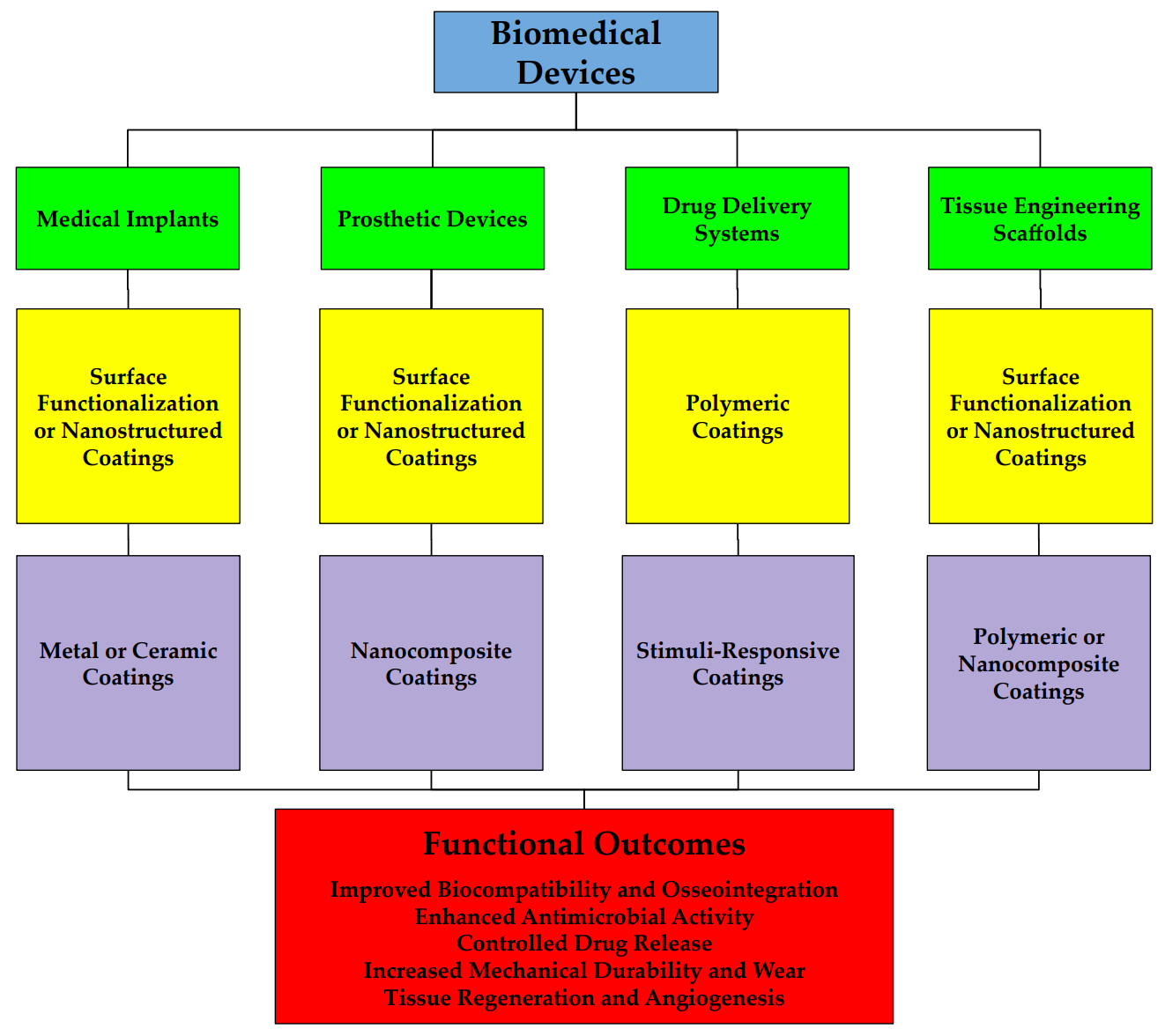
Surface modification technologies are commonly implemented into contemporary biomedical implants, including medical implants, prosthetic devices, drug delivery systems, and tissue engineering scaffolds. Table 3 provides readers with specific examples of coatings and their impacts on the functional applications. Figure 2 provides a high-level visual overview of these device categories, coating strategies, and their representative functional outcomes. A thorough knowledge of current technologies can be harnessed by materials scientists in the development of future coating-based advancements.

5. Challenges and Limitations

Advanced coatings offer transformative benefits to the implants to which they are applied, but their implementation might be hindered by challenges ranging from implant-specific ones, such as mechanical and biological constraints, to industry-wide ones, such as concerns regarding cost and unclear regulations.

5.1. Duration, Wear Resistance, and Long-Term Performance

Durability is crucial to the success of any manufactured implant, and any limitation in this property can result in impaired performance. Biomedical devices and their coatings attached to bone experience wear on account of their relative movement against this surface under cyclic loading, producing wear debris with the potential to induce inflammation that hinders the efficacy of the implant [79]. This risk is greater in extreme environments such as high temperature and, as may be seen in orthopedic implants, high load systems [80]. Furthermore, corrosion can produce unsuitable metallic ions, which may further induce an inflammatory or allergic response by the body, limiting the service life of the device and increasing failure risk [79]. The absence of strong resistance can serve as a primary challenge in the successful utilization of an implant material and must continue to be evaluated across future coating and material developments.

5.2. Biological Response and Compatibility

Limitations of an implant’s performance may extend past mechanical ones into biologic ones. For example, the addition of an implant, a foreign body, to a patient can result in an immune-mediated response against the product, resulting in inflammation and impaired osseointegration [81]. This impaired integration is a result of layers of fibrous scar tissues forming between the implant and its surrounding soft tissue, ultimately impairing the process by which the implant might fixate to the bone [18]. The absence of this process can limit the success rate of an implant. An ideal implant and coating ought to have a relative biological inertness towards surrounding fluids and tissues in its ultimate position so as to minimize these adverse events [82]. Limited biocompatibility is a major pitfall which newly developed coatings and implants might face, and as such, this variable is one which ought to be considered in future innovations.

5.3. Scalability and Cost Constraints

When considering recent advances in coatings, it is imperative to weigh the scalability of their manufacturing processes against their clinical merit. For example, PVD processes require vacuum chambers and precise deposition environments, limiting the scalability of the process for high-volume implants and requiring a sizable initial capital investment to create the systems necessary for this manufacturing process [80]. Both PVD and CVD additionally require high levels of energy, posing further issues with regard to cost and ecofriendliness [80]. Thermal spray techniques tend to be more preferable for high-throughput operations on account of their low energy requirements, use of cheaper precursor materials, and implementation in standard conditions, making them more desirable from a financial perspective. The spray equipment itself, however, can still pose a high initial cost, though this cost is often justifiable. There is a trade-off between scalability and implant properties that is present across all of these processes which manufacturers must consider [83]. Manufacturers seeking to spur innovations in the field through the development of new coatings may also be put off by the high R&D cost for creating one. While it is important to carefully consider the clinical performance of different types of coatings and implants, one cannot do so without remaining pragmatic and considering that the development of such materials must be financially viable for manufacturers in order for them to attain widespread viability.

5.4. Regulatory and Manufacturing Challenges

Manufacturing of implants and coatings must meet both domestic and international regulations, informing the process by which these systems are created. However, a key issue is that these regulations may be unclear and nonstandardized across different countries. For example, the FDA released the framework “Technical Considerations for Additive Manufactured Medical Devices” to guide manufacturers using AM, but these recommendations are vague and allow manufacturers to independently determine which considerations are and are not applicable in any given case [84,85]. In the EU, the Medical Device Regulation (MDR), published in 2017, has experienced criticism for its relative lack of detail on AM recommendations and the resultant ambiguity which manufacturers are forced to manage—while ISO/ASTM standards exist for AM, they have not yet been harmonized with the MDR [84,86,87]. This uncertainty extends to the employees at these firms, with one study suggesting that 39% of Irish Orthopaedic medical device sector workers were “Not so familiar” with the EU’s requirements on AM while 19.5% were “Not at all familiar” [84]. Furthermore, as these guidelines do not necessarily align with those of the FDA, manufacturers may struggle with inconsistencies in testing and documentation, resulting in delays and excessive costs [84]. This uncertainty is not unique to AM and poses challenges to manufacturers seeking to utilize the latest advances of technologies and distribute their products across borders. As such, it is a necessity that regulatory agencies remain up-to-date on the field’s newest technologies so as to distribute clear, standardized recommendations to manufacturers of implants, and their failure to do so would limit the speed with which the field adapts to research breakthroughs.

6. Future Directions

Biomedical materials and coatings are rapidly evolving toward next-generation innovations. The challenges that modern implants face are fueling innovation in fabrication, material choice, and multifunctional designs. Key future directions include adaptive coatings, emergent materials & frameworks, and innovations in manufacturing. This section highlights key breakthrough technologies in advanced biomedical coatings, such as advanced geometric constructions, stimuli-responsive coatings, and novel fabrication techniques, which collectively enhance implant longevity, accessibility, and performance.

6.1. Adaptive Coatings

Modern coatings research has been particularly centered on adaptive coatings, focusing on creating materials that can adjust in real time to clinical stimuli and offer dynamic adaptations to the physiological environment. Antibiotic coatings are one such example, and their history shows clear challenges faced by these coatings. Over the course of their development, the major issue faced by antibiotic coatings is the balance of strength and duration. Toxicity is a serious issue with coatings, especially those that utilize silver, so being able to adjust the release and interaction of antibiotics with the external environment would be paramount to the success of future implants. These adaptations include the ability to detect infection and deliver drugs on demand, an ability that would tackle these issues.
For example, poly(methacrylic acid) coatings exhibit distinct temperature-responsive properties, including wettability and thickness changes. The resultant increased hydrophobicity improved fibroblast growth and biocompatibility, an outcome that can be harnessed by implant manufacturers [88]. Similarly, hydroxyl-containing poly(pentaerythritol monomethacrylate) (PPM) coatings demonstrate thermoresponsive behavior with temperature-controlled protein adsorption in the context of postpolymerization modifications. Pyromellitic acid chloride-modified PPM coatings exhibited higher protein adsorption at 30 °C than at 10 °C, whereas unmodified PPM coatings and glass substrates showed minimal temperature-dependent changes [89]. In addition to individual protein and cell interactions, smart coatings are shown to have utility in cell sheet engineering platforms. Thermoresponsive poly(4-vinylpyridine) brushes, particularly when combined with copper nanoparticles, enable temperature-triggered detachment of intact retinal cell sheets while preserving cell viability and providing enhanced antibacterial activity, with dynamic thermoresponsive behavior reflected by a water contact angle change from 30° at 4 °C to 85° at 37 °C [90]. Temperature-responsive polymer sandwich coatings using nanogels attached to poly(oligo(ethylene glycol) methyl ether methacrylate)-based grafted brushes offer precise regulation of cell morphology and fibroblast detachment, providing an alternative option to enhance biocompatibility and functional control [91].
Advanced coatings can be sensitive to changes in light, temperature, electrical fields, magnetic fields, ultrasounds, pH, ions, redox, water, glucose, and enzymes [56]. They can be either single function or multifunctional, with interdependent or individual functions. In addition to drug-delivery systems, these sensing coatings can be used for multifunctional hydrogels, novel photo-switchable smart polymers for gene and anticancer drug delivery, and e-skin [92]. AI-directed reactions to stimuli, which were once a distant future, are now a central goal for these innovations.
Coatings can also be biomimetic, enhancing bodily reactions by mimicking the stimuli required. For endogenous skin regeneration, we have used hydrogels, nanoparticles, microspheres, and electrospun scaffolds for in situ cellular reprogramming to induce regeneration [93]. A pair of unique technologies, called single-cell sequencing and spatial transcriptomics, have been used to analyze distributions and interactions to better understand the wound-healing process. It is believed that these technologies will become representative of the future of histologic regenerative technologies, as tracking cell fate allows for the ability for specific interventions in the healing process.
Another example of novel biomimetic materials is electronic skin, which has the capability to create advanced sensing technologies in both internal and external devices, such as wearable health monitors. Electronic skin has the incredible capability to be self-healed using the principles of reversible covalent bonds, such as Diels-Alder reactions, and can exhibit a “memory effect” when deformed or damaged [94]. There have also been strides made to make these more sustainable, such as developing technologies to power these “e-skins” through thin-film solar cells, electromagnets, thermal energy, or chemical energy. In fact, recent advancements in biofuel cell technology have discovered the capability to harness various human body fluids such as saliva, urine, sweat, and blood through electrochemical reactions for energy.

6.2. Emergent Materials & Frameworks

The materials and frameworks for coatings are ever-changing. Metal-on-organic frameworks are emerging as highly tunable coatings with porosity, controlled release, and antifouling capabilities. The promising aspect for this area of research is the ability to combine the chemical advantages of metal alloys with the compatibility of organic frameworks [95]. For example, within tissue reconstruction, this framework is of particular benefit because it allows for the supplementation of appropriate antibacterial functions while remaining biocompatible for tissue reconstruction. These frameworks make for highly tunable coatings with porosity, controlled release of antibiotics or other chemicals, and antifouling capabilities. Research is currently tackling a major manufacturing issue of uncontrolled deposition on substrates, and understanding this mechanism will allow for the implementation of this design.
BGs are another emergent material that has significant potential to improve osteostimulation and antibacterial potential in implants, while also offering a biodegradable option for regenerative medicine. BG S53P4, for example, has been shown in rabbit models to be effective for the treatment of critical-sized segmental diaphyseal defects in long bones [96]. Future research is needed to observe the effectiveness of BG in human surgical models, but the field is promising.
BG is not the only biodegradable option for coatings. Biodegradable metals, such as magnesium, offer competitive advantages for the field. Magnesium has been proven to be highly osteopromotive, more biocompatible than biodegradable polymers (e.g., poly L-lactic acid, poly-ether ketone, and polyglycolic acid), and has higher mechanical strength than bioceramics (e.g., TCP and HA) [97]. The primary limitation of magnesium is its degradation behavior, so research needs to control this before clinical applications expand. The second most common trace mineral in the body, zinc, is another emerging option for widespread biodegradable metal coating usage. Already used in stents, zinc possesses high biocompatibility by nature of its prominence in the body. Although some alloys have a risk of inflammation and toxicity, future research is directed at identifying how to avoid these risks. Iron is another highly biocompatible option that has low degradation in the body, so it avoids the issues faced by zinc and magnesium. However, emergent materials are proving to be a more promising option, such as molybdenum. This metal possesses strong mechanical strength, corrosion resistance, biocompatibility, bioactivity, electrical and thermal conductivity, radiopacity, and versatility [97]. Excessive exposure to molybdenum can be toxic, so research is focused on creating safe and effective alloys.

6.3. Manufacturing Innovation

Manufacturing is another area of evolution, innovating even the newest methods such as ECM-derived coatings. Plasma functionalization is one area of manufacturing taking steps towards this future, and its application within coatings manufacturing has been constantly evolving. For example, it has been discovered that atmospheric plasma applied as a surface modification tool can achieve more hydrophilicity in vitro and more durability in vivo with collagen and laminin coatings [46]. Superior mesenchymal and neural stem cell adhesion to plasma-functionalized coatings has been found in recent studies, which has further suggested the possibility for effectiveness of this method within other areas of coatings, such as implant-based drug delivery.
AM has experienced similar innovation, with the future of this industry being directed toward personalized, patient-specific coatings created on-site for surgical implantation [98]. While AM currently relies on 3D printing, the concept of 5D printing has been recently introduced. This technique, which introduces two additional rotational degrees of freedom to 3D printing, can print concave and curved shapes with incredible precision. The creation of highly precise implants that are personalized to the surface topography of a patient’s personal anatomy can be a reality with these innovations.
Nanosheet manufacturing is another novel area of coatings research. The major problem associated with metal and metal oxide nanoparticles is that bacteria become resistant to them over time. To be effective, huge concentrations of nanoparticles are required, which are toxic to the local body cells. Two-dimensional materials, such as graphene oxide, molybdenum-disulfide, black phosphorus, and boron-nitride nanosheets, offer exceptional antimicrobial and photothermal capabilities without sacrificing biocompatibility when integrated into coatings. 2D nanomaterials such as graphene are versatile and can also be used for flexible and transparent electronics, piezo-resistive sensors, and energy storage devices [94].
For biodegradable implants, surface nano-crystallization and mechanical treatments enhance corrosion resistance and biomechanical compatibility without sacrificing structural integrity. These processes are relatively new and uncharacterized, so there is a current need to develop quantification tools to characterize the degradation and to develop interventions for minimizing failures [99]. Additionally, there is a need to enhance the adhesion between the coating and the substrates, as biodegradable materials have poor adhesion compared to their older counterparts. Surface nano-crystallization has been demonstrated with Ti-Ta matrix composites, which provides reduced bacterial adhesion [100]. This is due to the high surface free energy of the material, which contributed to high hydrophilicity. Future sustainability work should be centered on using these principles to explore further innovation focused on enhancing the potential of biodegradable materials.
Table 4 provides manufacturers, providers, and patients with a forward-looking perspective on prospective benefits that further research in the field of coatings technologies can harbor. Researchers and manufacturers aim to integrate benefits seen in laboratory settings into the clinical setting to best serve their patients. The developments discussed hold great clinical promise, with a focus on improving patient quality-of-life. Future work may benefit from the simultaneous combination of multiple biofunctionalization techniques on a single surface to optimize synergistic improvements in bioactivity, antibacterial properties, and osseointegration.

7. Conclusions

The world of biomedical coatings has undergone significant evolution to move from passive, inert interfaces to multifunctional ones which interact dynamically with the biological environment surrounding them. This shift has come in the wake of innovations in ceramic, polymeric, metallic, and composite coatings, each of which may be adapted to best promote osseointegration, prevent infection, and maximize mechanical properties. In addition, molecular-level cellular responses might be better controlled using surface functionalization techniques. Such developments are responsible for the paradigm shift in biomaterials science, which has redefined what an implant has the potential to accomplish inside of its host on both a mechanical and cellular level.
Looking towards the future, it is likely that the next generation of medical implants will be defined by the integration of smart, responsive materials with advanced manufacturing processes. Adaptive coatings with the ability to detect and respond to biochemical and mechanical stimuli might provide unforeseen levels of patient specificity, while metal–organic frameworks and BGs offer desirable combinations of implant properties. That said, the development of future implants is not without its challenges, not the least of which include cost-effective scalability, variable regulations, and long-term durability. It is imperative that there is continued communication between materials scientists, engineers, and clinicians across the globe so as to allow for the clinical translation of emerging technologies, ultimately redefining the idea of what an implant can do.

Author Contributions

Conceptualization, A.K.M., M.O.S., C.P.M., J.M.T., and K.M.; methodology, A.K.M., M.O.S., C.P.M., J.M.T., and K.M.; resources, A.K.M., M.O.S., C.P.M., J.M.T., and K.M.; writing—original draft preparation, A.K.M., M.O.S., C.P.M., J.M.T., and K.M.; writing—review and editing, A.K.M., M.O.S., C.P.M., J.M.T., K.M., S.B.A., and A.T.A.; visualization, A.K.M., M.O.S., C.P.M., J.M.T., and K.M.; supervision, S.B.A., and A.T.A.; project administration, A.K.M. All authors have read and agreed to the published version of the manuscript.

Funding

This research received no external funding.

Institutional Review Board Statement

Not applicable.

Informed Consent Statement

Not applicable.

Data Availability Statement

No new data were created or analyzed in this study. Data sharing is not applicable to this article.

Acknowledgments

We thank our reviewers for their insightful feedback that helped us strengthen and refine this manuscript.

Conflicts of Interest

The authors declare no conflicts of interest.

Abbreviations

The following abbreviations are used in this manuscript:
BGBioactive Glass
PVDPhysical Vapor Deposition
PEGPolyethylene Glycol
SAMSelf-Assembled Monolayer
AMAdditive Manufacturing
ECMExtracellular Matrix
CSChitosan
HAHydroxyapatite
TCPTricalcium Phosphate
CHACarbonated Hydroxyapatite
VEGF-AVascular Endothelial Growth Factor-A
ALPAlkaline Phosphatase
HYPHydroxyproline
TiO2Titanium Dioxide
PEOPlasma Electrolytic Oxidation
SBFSimulated Body Fluid
PEEKPolyether Ether Ketone
EPDElectrophoretic Deposition
PLGAPoly-lactic-co-glycolic Acid
PCLPolycaprolactone
TiNTitanium Nitride
CrNChromium Nitride
CrCNChromium Carbonitride
DLCDiamond-like Carbon
PTFRPolytetrafluoroethylene
DBDDielectric Barrier Discharge
CVDChemical Vapor Deposition
BMPBone Morphogenic Protein
VEGFVascular Endothelial Growth Factor
PLAPolylactic Acid
LCSTLower Critical Solution Temperature
MDRMedical Device Regulation
PPMPoly(Pentaerythritol Monomethacrylate)

References

  1. Ratner, B.D.; Hoffman, A.S.; Schoen, F.J.; Lemons, J.E. (Eds.) Biomaterials Science; Academic Press: Cambridge, MA, USA, 2013; Available online: https://www.sciencedirect.com/book/9780123746269/biomaterials-science (accessed on 9 November 2025).
  2. Safin Kaosar Saad, K.; Saba, T.; Bin Rashid, A. Application of PVD Coatings in Medical Implantology for Enhanced Performance, Biocompatibility, and Quality of Life. Heliyon 2024, 10, e35541. [Google Scholar] [CrossRef] [PubMed]
  3. Ul Haq, I.; Krukiewicz, K. Antimicrobial Approaches for Medical Implants Coating to Prevent Implants Associated Infections: Insights to Develop Durable Antimicrobial Implants. Appl. Surf. Sci. Adv. 2023, 18, 100532. [Google Scholar] [CrossRef]
  4. Chug, M.K.; Brisbois, E.J. Recent Developments in Multifunctional Antimicrobial Surfaces and Applications toward Advanced Nitric Oxide-Based Biomaterials. ACS Mater. Au 2022, 2, 525–551. [Google Scholar] [CrossRef]
  5. Zhang, H.; Chiao, M. Anti-Fouling Coatings of Poly(Dimethylsiloxane) Devices for Biological and Biomedical Applications. J. Med. Biol. Eng. 2015, 35, 143–155. [Google Scholar] [CrossRef]
  6. Jon, S.; Seong, J.; Khademhosseini, A.; Tran, T.-N.T.; Laibinis, P.E.; Langer, R. Construction of Nonbiofouling Surfaces by Polymeric Self-Assembled Monolayers. Langmuir 2003, 19, 9989–9993. [Google Scholar] [CrossRef]
  7. Bose, S.; Roy, M.; Bandyopadhyay, A. Recent Advances in Bone Tissue Engineering Scaffolds. Trends Biotechnol. 2012, 30, 546–554. [Google Scholar] [CrossRef]
  8. Chen, Q.; Thouas, G.A. Metallic Implant Biomaterials. Mater. Sci. Eng. R Rep. 2015, 87, 1–57. [Google Scholar] [CrossRef]
  9. Raphel, J.; Holodniy, M.; Goodman, S.B.; Heilshorn, S.C. Multifunctional Coatings to Simultaneously Promote Osseointegration and Prevent Infection of Orthopaedic Implants. Biomaterials 2016, 84, 301–314. [Google Scholar] [CrossRef] [PubMed]
  10. Zhu, Q.; Chua, M.H.; Ong, P.J.; Cheng Lee, J.J.; Le Osmund Chin, K.; Wang, S.; Kai, D.; Ji, R.; Kong, J.; Dong, Z.; et al. Recent Advances in Nanotechnology-Based Functional Coatings for the Built Environment. Mater. Today Adv. 2022, 15, 100270. [Google Scholar] [CrossRef]
  11. Boopathy, G.; Gurusami, K.; Vijayakumar, K.R.; Kumar, M.H. Nanocoatings in Medicine: Revolutionizing Healthcare Through Precision and Potential. In Sustainable Approach to Protective Nanocoatings; IGI Global Scientific Publishing: Palmdale, PA, USA, 2024. [Google Scholar]
  12. Ali, F.; Kalva, S.N.; Koc, M. Advancements in 3D Printing Techniques for Biomedical Applications: A Comprehensive Review of Materials Consideration, Post Processing, Applications, and Challenges. Discov. Mater. 2024, 4, 53. [Google Scholar] [CrossRef]
  13. Mobarak, M.H.; Abid, A.S.; Munna, M.S.; Dutta, M.; Rimon, M.I.H. Additive Manufacturing in Biomedical: Applications, Challenges, and Prospects. Hybrid. Adv. 2025, 10, 100467. [Google Scholar] [CrossRef]
  14. Li, J.; Fan, H.; Li, H.; Hua, L.; Du, J.; He, Y.; Jin, Y. Recent Advancements in the Surface Modification of Additively Manufactured Metallic Bone Implants. Addit. Manuf. Front. 2025, 4, 200195. [Google Scholar] [CrossRef]
  15. Zhu, G.; Wang, G.; Li, J. Advances in Implant Surface Modifications to Improve Osseointegration. Mater. Adv. 2021, 2, 6901–6927. [Google Scholar] [CrossRef]
  16. Bohara, S.; Suthakorn, J. Surface Coating of Orthopedic Implant to Enhance the Osseointegration and Reduction of Bacterial Colonization: A review. Biomater. Res. 2022, 26, 26. [Google Scholar] [CrossRef] [PubMed]
  17. Hussain, M.; Askari Rizvi, S.H.; Abbas, N.; Sajjad, U.; Shad, M.R.; Badshah, M.A.; Malik, A.I. Recent Developments in Coatings for Orthopedic Metallic Implants. Coatings 2021, 11, 791. [Google Scholar] [CrossRef]
  18. Mosas, K.K.A.; Chandrasekar, A.R.; Dasan, A.; Pakseresht, A.; Galusek, D. Recent Advancements in Materials and Coatings for Biomedical Implants. Gels 2022, 8, 323. [Google Scholar] [CrossRef]
  19. Mitra, K.; Movva, A.K.; Sohn, M.O.; Tennyson, J.M.; Talaski, G.M.; Adams, S.B.; Anastasio, A.T. Alloy Selection and Manufacturing Technologies for Total Ankle Arthroplasty: A Narrative Review. Materials 2025, 18, 3770. [Google Scholar] [CrossRef]
  20. McEntire, B.J.; Bal, B.S.; Rahaman, M.N.; Chevalier, J.; Pezzotti, G. Ceramics and Ceramic Coatings in Orthopaedics. J. Eur. Ceram. Soc. 2015, 35, 4327–4369. [Google Scholar] [CrossRef]
  21. Sonowal, L.; Gautam, S.; Mambiri, L.T.; Depan, D. Advancements of Bioceramics in Biomedical Applications. Next Mater. 2025, 9, 101010. [Google Scholar] [CrossRef]
  22. Li, S.; Yu, W.; Zhang, W.; Zhang, G.; Yu, L.; Lu, E. Evaluation of Highly Carbonated Hydroxyapatite Bioceramic Implant Coatings with Hierarchical Micro-/Nanorod Topography Optimized for Osseointegration. Int. J. Nanomed. 2018, 13, 3643–3659. [Google Scholar] [CrossRef]
  23. Yang, C.-W.; Wang, G.-K.; Yang, C.-W.; Wang, G.-K. Effect of Hydrothermal (Sr)-Hydroxyapatite Coatings on the Corrosion Resistance and Mg2+ Ion Release to Enhance Osteoblastic Cell Responses of AZ91D Alloy. Materials 2020, 13, 591. [Google Scholar] [CrossRef]
  24. Graziani, G.; Boi, M.; Bianchi, M. A Review on Ionic Substitutions in Hydroxyapatite Thin Films: Towards Complete Biomimetism. Coatings 2018, 8, 269. [Google Scholar] [CrossRef]
  25. Qiao, H.; Song, G.; Huang, Y.; Yang, H.; Han, S.; Zhang, X.; Wang, Z.; Ma, J.; Bu, X.; Fu, L. Si, Sr, Ag Co-Doped Hydroxyapatite/TiO 2 Coating: Enhancement of Its Antibacterial Activity and Osteoinductivity. RSC Adv. 2019, 9, 13348–13364. [Google Scholar] [CrossRef]
  26. Vranceanu, D.M.; Parau, A.C.; Cotrut, C.M.; Kiss, A.E.; Constantin, L.R.; Braic, V.; Vladescu, A. In Vitro Evaluation of Ag Doped Hydroxyapatite Coatings in Acellular Media. Ceram. Int. 2019, 45, 11050–11061. [Google Scholar] [CrossRef]
  27. Antoniac, I.V.; Filipescu, M.; Barbaro, K.; Bonciu, A.; Birjega, R.; Cotrut, C.M.; Galvano, E.; Fosca, M.; Fadeeva, I.V.; Vadalà, G.; et al. Iron Ion-Doped Tricalcium Phosphate Coatings Improve the Properties of Biodegradable Magnesium Alloys for Biomedical Implant Application. Adv. Mater. Interfaces 2020, 7, 2000531. [Google Scholar] [CrossRef]
  28. Ungureanu, E.; Vranceanu, D.M.; Vladescu, A.; Parau, A.C.; Tarcolea, M.; Cotrut, C.M.; Ungureanu, E.; Vranceanu, D.M.; Vladescu, A.; Parau, A.C.; et al. Effect of Doping Element and Electrolyte’s pH on the Properties of Hydroxyapatite Coatings Obtained by Pulsed Galvanostatic Technique. Coatings 2021, 11, 1522. [Google Scholar] [CrossRef]
  29. Vranceanu, D.M.; Ungureanu, E.; Ionescu, I.C.; Parau, A.C.; Kiss, A.E.; Vladescu, A.; Cotrut, C.M.; Vranceanu, D.M.; Ungureanu, E.; Ionescu, I.C.; et al. Electrochemical Surface Biofunctionalization of Titanium through Growth of TiO2 Nanotubes and Deposition of Zn Doped Hydroxyapatite. Coatings 2022, 12, 69. [Google Scholar] [CrossRef]
  30. Ungureanu, E.; Vladescu, A.; Parau, A.C.; Mitran, V.; Cimpean, A.; Tarcolea, M.; Vranceanu, D.M.; Cotrut, C.M. In Vitro Evaluation of Ag- and Sr-Doped Hydroxyapatite Coatings for Medical Applications. Materials 2023, 16, 5428. [Google Scholar] [CrossRef]
  31. Vranceanu, D.M.; Ungureanu, E.; Ionescu, I.C.; Parau, A.C.; Pruna, V.; Titorencu, I.; Badea, M.; Gălbău, C.-Ș.; Idomir, M.; Dinu, M.; et al. In Vitro Characterization of Hydroxyapatite-Based Coatings Doped with Mg or Zn Electrochemically Deposited on Nanostructured Titanium. Biomimetics 2024, 9, 244. [Google Scholar] [CrossRef]
  32. Pietak, A.M.; Reid, J.W.; Stott, M.J.; Sayer, M. Silicon Substitution in the Calcium Phosphate Bioceramics. Biomaterials 2007, 28, 4023–4032. [Google Scholar] [CrossRef]
  33. Ciobanu, C.S.; Predoi, D.; Iconaru, S.L.; Predoi, M.V.; Rokosz, K.; Raaen, S.; Negrila, C.C.; Buton, N.; Ghegoiu, L.; Badea, M.L.; et al. Physico-Chemical and Biological Features of Fluorine-Substituted Hydroxyapatite Suspensions. Materials 2024, 17, 3404. [Google Scholar] [CrossRef]
  34. Gu, H.; Zhang, G.; Cai, E.; Tang, G.; Liu, Q. Bioactivity and Biocompatibility of Porous Gradient Bioceramic Coating Prepared via Laser Cladding Process. Surf. Coat. Technol. 2021, 426, 127800. [Google Scholar] [CrossRef]
  35. Aktuğ, S.L.; Durdu, S.; Yalçın, E.; Çavuşoğlu, K.; Usta, M. Bioactivity and Biocompatibility of Hydroxyapatite-Based Bioceramic Coatings on Zirconium by Plasma Electrolytic Oxidation. Mater. Sci. Eng. C Mater. Biol. Appl. 2017, 71, 1020–1027. [Google Scholar] [CrossRef] [PubMed]
  36. Smith, J.R.; Lamprou, D.A.; Larson, C.; Upson, S.J. Biomedical Applications of Polymer and Ceramic Coatings: A Review of Recent Developments. Trans. IMF 2022, 100, 25–35. [Google Scholar] [CrossRef]
  37. Tang, K.; Wang, J.; Pei, X.; Zhu, Z.; Liu, J.; Wan, Q.; Zhang, X. Flexible Coatings Based on Hydrogel to Enhance the Biointerface of Biomedical Implants. Adv. Colloid. Interface Sci. 2025, 335, 103358. [Google Scholar] [CrossRef]
  38. Negut, I.; Bita, B.; Groza, A. Polymeric Coatings and Antimicrobial Peptides as Efficient Systems for Treating Implantable Medical Devices Associated-Infections. Polymers 2022, 14, 1611. [Google Scholar] [CrossRef]
  39. Kim, S.-B.; Kim, C.-H.; Lee, S.-Y.; Park, S.-J. Carbon Materials and Their Metal Composites for Biomedical Applications: A short Review. Nanoscale 2024, 16, 16313–16328. [Google Scholar] [CrossRef]
  40. Amrhar, R.; Singh, J.; Eesaee, M.; Carrière, P.; Saidi, A.; Nguyen-Tri, P. Polymeric Nanocomposites-Based Advanced Coatings for Antimicrobial and Antiviral Applications: A Comprehensive Overview. Results Surf. Interfaces 2025, 19, 100497. [Google Scholar] [CrossRef]
  41. Somasundaram, S. Silane Coatings of Metallic Biomaterials for Biomedical Implants: A Preliminary Review. J. Biomed. Mater. Res. B Appl. Biomater. 2018, 106, 2901–2918. [Google Scholar] [CrossRef] [PubMed]
  42. Zhianmanesh, M.; Gilmour, A.; Bilek, M.M.M.; Akhavan, B. Plasma Surface Functionalization: A Comprehensive Review of Advances in the Quest for Bioinstructive Materials and Interfaces. Appl. Phys. Rev. 2023, 10, 021301. [Google Scholar] [CrossRef]
  43. Nunes, D.; Andrade, S.; Ramalho, M.J.; Loureiro, J.A.; Pereira, M.C. Polymeric Nanoparticles-Loaded Hydrogels for Biomedical Applications: A Systematic Review on In Vivo Findings. Polymers 2022, 14, 1010. [Google Scholar] [CrossRef]
  44. Stetsyshyn, Y.; Ohar, H.; Budkowski, A.; Lazzara, G. Molecular Design and Role of the Dynamic Hydrogen Bonds and Hydrophobic Interactions in Temperature-Switchable Polymers: From Understanding to Applications. Polymers 2025, 17, 1580. [Google Scholar] [CrossRef]
  45. Lotz, O.; Zhang, A.; Zhianmanesh, M.; Coffi Dit Gleize, K.; McKenzie, D.R.; M. M. Bilek, M.; Akhavan, B. Reagent-Free Biomolecule Functionalization of Atmospheric Pressure Plasma-Activated Polymers for Biomedical Applications: Pathways for Covalent Attachment. Appl. Surf. Sci. 2024, 662, 160101. [Google Scholar] [CrossRef]
  46. Tan, F.; Al-Rubeai, M. Customizable Implant-Specific and Tissue-Specific Extracellular Matrix Protein Coatings Fabricated Using Atmospheric Plasma. Front. Bioeng. Biotechnol. 2019, 7, e00247. [Google Scholar] [CrossRef]
  47. Bilek, M.M.M.; Vandrovcová, M.; Shelemin, A.; Kuzminova, A.; Kylián, O.; Biederman, H.; Bačáková, L.; Weiss, A.S. Plasma Treatment in Air at Atmospheric Pressure that Enables Reagent-Free Covalent Immobilization of Biomolecules on Polytetrafluoroethylene (PTFE). Appl. Surf. Sci. 2020, 518, 146128. [Google Scholar] [CrossRef]
  48. Al-Shalawi, F.D.; Mohamed Ariff, A.H.; Jung, D.-W.; Mohd Ariffin, M.K.A.; Seng Kim, C.L.; Brabazon, D.; Al-Osaimi, M.O. Biomaterials as Implants in the Orthopedic Field for Regenerative Medicine: Metal versus Synthetic Polymers. Polymers 2023, 15, 2601. [Google Scholar] [CrossRef]
  49. Wise, S.G.; Waterhouse, A.; Kondyurin, A.; Bilek, M.M.; Weiss, A.S. Plasma-based biofunctionalization of vascular implants. Nanomedicine 2012, 7, 1907–1916. [Google Scholar] [CrossRef]
  50. Tennyson, J.M.; Sohn, M.O.; Movva, A.K.; Mitra, K.; O’Neill, C.N.; Anastasio, A.T.; Adams, S.B. Porous Structures, Surface Modifications, and Smart Technologies for Total Ankle Arthroplasty: A Narrative Review. Bioengineering 2025, 12, 955. [Google Scholar] [CrossRef] [PubMed]
  51. Oh, S.; Brammer, K.S.; Li, Y.S.J.; Teng, D.; Engler, A.J.; Chien, S.; Jin, S. Stem Cell Fate Dictated Solely by Altered Nanotube Dimension. Proc. Natl. Acad. Sci. USA 2009, 106, 2130–2135. [Google Scholar] [CrossRef] [PubMed]
  52. Cotrut, C.M.; Ionescu, I.C.; Ungureanu, E.; Berbecaru, A.; Zamfir, R.I.; Vladescu, A.; Vranceanu, D.M. Evaluation of Surface Modification Techniques on the Ability of Apatite Formation and Corrosion Behavior in Synthetic Body Fluid: An In Vitro Study. Surf. Interfaces 2021, 22, 100866. [Google Scholar] [CrossRef]
  53. Mussano, F.; Genova, T.; Serra, F.G.; Carossa, M.; Munaron, L.; Carossa, S. Nano-Pore Size of Alumina Affects Osteoblastic Response. Int. J. Mol. Sci. 2018, 19, 528. [Google Scholar] [CrossRef]
  54. Erdogan, Y.K.; Ercan, B. Anodized Nanostructured 316L Stainless Steel Enhances Osteoblast Functions and Exhibits Anti-Fouling Properties. ACS Biomater. Sci. Eng. 2023, 9, 693–704. [Google Scholar] [CrossRef] [PubMed]
  55. Wang, L.-N.; Jin, M.; Zheng, Y.; Guan, Y.; Lu, X.; Luo, J.-L. Nanotubular Surface Modification of Metallic Implants via Electrochemical Anodization Technique. Int. J. Nanomed. 2014, 9, 4421–4435. [Google Scholar] [CrossRef]
  56. Balcerak-Woźniak, A.; Dzwonkowska-Zarzycka, M.; Kabatc-Borcz, J. A Comprehensive Review of Stimuli-Responsive Smart Polymer Materials—Recent Advances and Future Perspectives. Materials 2024, 17, 4255. [Google Scholar] [CrossRef] [PubMed]
  57. Uslu, E.; Mimiroglu, D.; Ercan, B. Nanofeature Size and Morphology of Tantalum Oxide Surfaces Control Osteoblast Functions. ACS Appl. Bio Mater. 2021, 4, 780–794. [Google Scholar] [CrossRef]
  58. Gardin, C.; Ferroni, L.; Erdoğan, Y.K.; Zanotti, F.; De Francesco, F.; Trentini, M.; Brunello, G.; Ercan, B.; Zavan, B. Nanostructured Modifications of Titanium Surfaces Improve Vascular Regenerative Properties of Exosomes Derived from Mesenchymal Stem Cells: Preliminary In Vitro Results. Nanomaterials 2021, 11, 3452. [Google Scholar] [CrossRef]
  59. Ni, S.; Li, C.; Ni, S.; Chen, T.; Webster, T.J. Understanding Improved Osteoblast Behavior on Select Nanoporous Anodic Alumina. Int. J. Nanomed. 2014, 9, 3325–3334. [Google Scholar] [CrossRef]
  60. Hu, X.; Wang, T.; Li, F.; Mao, X. Surface Modifications of Biomaterials in Different Applied Fields. RSC Adv. 2023, 13, 20495–20511. [Google Scholar] [CrossRef]
  61. Redondo-Gómez, C.; Parreira, P.; Martins, M.C.L.; Azevedo, H.S. Peptide-Based Self-Assembled Monolayers (SAMs): What Peptides Can Do for SAMs and Vice Versa. Chem. Soc. Rev. 2024, 53, 3714–3773. [Google Scholar] [CrossRef]
  62. Thakur, A.; Kumar, A.; Kaya, S.; Marzouki, R.; Zhang, F.; Guo, L. Recent Advancements in Surface Modification, Characterization and Functionalization for Enhancing the Biocompatibility and Corrosion Resistance of Biomedical Implants. Coatings 2022, 12, 1459. [Google Scholar] [CrossRef]
  63. Saba, T.; Saad, K.S.K.; Rashid, A.B. Precise Surface Engineering: Leveraging Chemical Vapor Deposition for Enhanced Biocompatibility and Durability in Biomedical Implants. Heliyon 2024, 10, e37976. [Google Scholar] [CrossRef]
  64. Jaafar, A.; Hecker, C.; Árki, P.; Joseph, Y. Sol-Gel Derived Hydroxyapatite Coatings for Titanium Implants: A Review. Bioengineering 2020, 7, 127. [Google Scholar] [CrossRef]
  65. Chellappa, M.; Vijayalakshmi, U. Electrophoretic Deposition of Silica and Its Composite Coatings on Ti-6Al-4V, and Its In Vitro Corrosion Behaviour for Biomedical Applications. Mater. Sci. Eng. C 2017, 71, 879–890. [Google Scholar] [CrossRef] [PubMed]
  66. Azzouz, I.; Khlifi, K.; Faure, J.; Dhiflaoui, H.; Larbi, A.B.C.; Benhayoune, H. Mechanical Behavior and Corrosion Resistance of Sol-Gel Derived 45S5 Bioactive Glass Coating on Ti6Al4V Synthesized by Electrophoretic Deposition. J. Mech. Behav. Biomed. Mater. 2022, 134, 105352. [Google Scholar] [CrossRef]
  67. Abdulghafor, M.A.; Mahmood, M.K.; Tassery, H.; Tardivo, D.; Falguiere, A.; Lan, R. Biomimetic Coatings in Implant Dentistry: A Quick Update. J. Funct. Biomater. 2023, 15, 15. [Google Scholar] [CrossRef] [PubMed]
  68. Talebian, S.; Mendes, B.; Conniot, J.; Farajikhah, S.; Dehghani, F.; Li, Z.; Bitoque, D.; Silva, G.; Naficy, S.; Conde, J.; et al. Biopolymeric Coatings for Local Release of Therapeutics from Biomedical Implants. Adv. Sci. 2023, 10, 2207603. [Google Scholar] [CrossRef]
  69. Udriște, A.S.; Burdușel, A.C.; Niculescu, A.-G.; Rădulescu, M.; Grumezescu, A.M. Coatings for Cardiovascular Stents—An Up-to-Date Review. Int. J. Mol. Sci. 2024, 25, 1078. [Google Scholar] [CrossRef] [PubMed]
  70. Słota, D.; Jampilek, J.; Sobczak-Kupiec, A. Hybrid Coatings Based on Polyvinylpyrrolidone/Polyethylene Glycol Enriched with Collagen and Hydroxyapatite: Incubation Studies and Evaluation of Mechanical and Physiochemical Properties. J. Funct. Biomater. 2024, 15, 62. [Google Scholar] [CrossRef]
  71. Nuswantoro, N.F.; Manjas, M.; Suharti, N.; Juliadmi, D.; Fajri, H.; Tjong, D.H.; Affi, J.; Niinomi, M.; Gunawarman. Hydroxyapatite Coating on Titanium Alloy TNTZ for Increasing Osseointegration and Reducing Inflammatory Response In Vivo on Rattus norvegicus Wistar Rats. Ceram. Int. 2021, 47, 16094–16100. [Google Scholar] [CrossRef]
  72. Karim, M.R.; Siddiqui, M.I.H.; Assaifan, A.K.; Aijaz, M.O.; Alnaser, I.A. Nanotechnology and Prosthetic Devices: Integrating Biomedicine and Materials Science for Enhanced Performance and Adaptability. J. Disabil. Res. 2024, 3, 20240019. [Google Scholar] [CrossRef]
  73. Xiao, R.; Zhou, G.; Wen, Y.; Ye, J.; Li, X.; Wang, X. Recent Advances on Stimuli-Responsive Biopolymer-Based Nanocomposites for Drug Delivery. Compos. Part B Eng. 2023, 266, 111018. [Google Scholar] [CrossRef]
  74. Gao, W.; Zhang, Y.; Zhang, Q.; Zhang, L. Nanoparticle-Hydrogel: A Hybrid Biomaterial System for Localized Drug Delivery. Ann. Biomed. Eng. 2016, 44, 2049–2061. [Google Scholar] [CrossRef]
  75. Wang, Y.; Sun, H. Polymeric Nanomaterials for Efficient Delivery of Antimicrobial Agents. Pharmaceutics 2021, 13, 2108. [Google Scholar] [CrossRef]
  76. Turnbull, G.; Clarke, J.; Picard, F.; Riches, P.; Jia, L.; Han, F.; Li, B.; Shu, W. 3D Bioactive Composite Scaffolds for Bone Tissue Engineering. Bioact. Mater. 2017, 3, 278–314. [Google Scholar] [CrossRef]
  77. Ahadian, S.; Khademhosseini, A. Smart Scaffolds in Tissue Regeneration. Regen. Biomater. 2018, 5, 125–128. [Google Scholar] [CrossRef] [PubMed]
  78. Zhang, Y.; Cui, J.; Chen, K.-Y.; Kuo, S.H.; Sharma, J.; Bhatta, R.; Liu, Z.; Ellis-Mohr, A.; An, F.; Li, J.; et al. A Smart Coating with Integrated Physical Antimicrobial and Strain-Mapping Functionalities for Orthopedic Implants. Sci. Adv. 2023, 9, eadg7397. [Google Scholar] [CrossRef]
  79. Moghadasi, K.; Mohd Isa, M.S.; Ariffin, M.A.; Mohd jamil, M.Z.; Raja, S.; Wu, B.; Yamani, M.; Bin Muhamad, M.R.; Yusof, F.; Jamaludin, M.F.; et al. A Review on Biomedical Implant Materials and the Effect of Friction Stir Based Techniques on Their Mechanical and Tribological Properties. J. Mater. Res. Technol. 2022, 17, 1054–1121. [Google Scholar] [CrossRef]
  80. Antony Jose, S.; Lapierre, Z.; Williams, T.; Hope, C.; Jardin, T.; Rodriguez, R.; Menezes, P.L. Wear- and Corrosion-Resistant Coatings for Extreme Environments: Advances, Challenges, and Future Perspectives. Coatings 2025, 15, 878. [Google Scholar] [CrossRef]
  81. Veiseh, O.; Vegas, A.J. Domesticating the Foreign Body Response: Recent Advances and Applications. Adv. Drug Deliv. Rev. 2019, 144, 148–161. [Google Scholar] [CrossRef]
  82. Shah, R.; Pai, N.; Khandekar, R.; Aslam, R.; Wang, Q.; Yan, Z.; Rosenkranz, A. DLC Coatings in Biomedical Applications—Review on Current Advantages, Existing Challenges, and Future Directions. Surf. Coat. Technol. 2024, 487, 131006. [Google Scholar] [CrossRef]
  83. Abdullah, M.; Hosain, M.M.; Hassan Parvez, M.M.; Haque Motayed, M.S. Prospects and Challenges of Thin Film Coating Materials and Their Applications. Inorg. Chem. Commun. 2025, 175, 114117. [Google Scholar] [CrossRef]
  84. Connole, K.; McDermott, O. The Challenges in the Regulatory Approval of Additive-Manufactured Medical Devices: A Quantitative Survey. Ther. Innov. Regul. Sci. 2025, 59, 1160–1170. [Google Scholar] [CrossRef] [PubMed]
  85. Center for Devices and Radiological Health. Technical Considerations for Additive Manufactured Medical Devices. Available online: https://www.fda.gov/regulatory-information/search-fda-guidance-documents/technical-considerations-additive-manufactured-medical-devices (accessed on 20 September 2025).
  86. Carl, A.-K.; Hochmann, D. Comparison of the Regulatory Requirements for Custom-Made Medical Devices Using 3D Printing in Europe, the United States, and Australia. Biomed. Eng. Biomed. Tech. 2022, 67, 61–69. [Google Scholar] [CrossRef]
  87. Sing, S.L.; Goh, G.D.; Goh, G.L.; Yeong, W.Y. Chapter One—Standards for Metal Additive Manufacturing: Quality and Quality Control Procedures. In Quality Analysis of Additively Manufactured Metals; Kadkhodapour, J., Schmauder, S., Sajadi, F., Eds.; Elsevier: Amsterdam, The Netherlands, 2023; pp. 3–24. ISBN 978-0-323-88664-2. [Google Scholar]
  88. Lishchynskyi, O.; Tymetska, S.; Shymborska, Y.; Raczkowska, J.; Awsiuk, K.; Skirtach, A.G.; Korolko, S.; Chebotar, A.; Budkowski, A.; Stetsyshyn, Y. Temperature-Responsive Properties of pH-Sensitive Poly(Methacrylic Acid)-Grafted Brush Coatings with Controlled Wettability for Cell Culture. J. Mater. Chem. B 2025, 13, 3618–3632. [Google Scholar] [CrossRef]
  89. Stetsyshyn, Y.; Raczkowska, J.; Budkowski, A.; Kostruba, A.; Harhay, K.; Ohar, H.; Awsiuk, K.; Bernasik, A.; Ripak, N.; Zemła, J. Synthesis and Postpolymerization Modification of Thermoresponsive Coatings Based on Pentaerythritol Monomethacrylate: Surface Analysis, Wettability, and Protein Adsorption. Langmuir 2015, 31, 9675–9683. [Google Scholar] [CrossRef]
  90. Cieślik, A.; Shymborska, Y.; Tymetska, S.; Stetsyshyn, Y.; Bernasik, A.; Brzychczy-Włoch, M.; Drożdż, K.; Szajna, K.; Krok, F.; Budkowski, A.; et al. Cell Sheet Engineering Platforms Integrating Antibacterial and Thermo-Responsive Functionalities: Cu-nanoparticle-Loaded P4VP Brushes for Retinal Cell Sheet Harvesting. Chem. Eng. J. 2025, 513, 162985. [Google Scholar] [CrossRef]
  91. Shymborska, Y.; Tymetska, S.; Budkowski, A.; Zemła, J.; Raczkowska, J.; Awsiuk, K.; Bernasik, A.; Lekka, M.; Volinsky, A.A.; Pabijan, J.; et al. ‘Smart’ Polymer Sandwiches From Hydrogel Nanocoatings Attached to Stimuli-Responsive Grafted Brush Coatings: Changing the Cell Behavior. J. Biomed. Mater. Res. Part B Appl. Biomater. 2025, 113, e35631. [Google Scholar] [CrossRef]
  92. Patra, R.; Halder, S.; Saha, R.; Jana, K.; Sarkar, K. Highly Efficient Photoswitchable Smart Polymeric Nanovehicle for Gene and Anticancer Drug Delivery in Triple-Negative Breast Cancer. ACS Biomater. Sci. Eng. 2024, 10, 2299–2323. [Google Scholar] [CrossRef]
  93. Wang, M.; Hong, Y.; Fu, X.; Sun, X. Advances and Applications of Biomimetic Biomaterials for Endogenous Skin Regeneration. Bioact. Mater. 2024, 39, 492–520. [Google Scholar] [CrossRef]
  94. Pillai, V.V.; Ramasubramanian, B.; Sequerth, O.; Pilla, S.; Wang, T.; Mohanty, A.K.; Govindaraj, P.; Alhassan, S.M.; Salim, N.; Kingshott, P.; et al. Nanomaterial Advanced Smart Coatings: Emerging Trends Shaping the Future. Appl. Mater. Today 2025, 42, 102574. [Google Scholar] [CrossRef]
  95. Sabzehmeidani, M.M.; Kazemzad, M. Recent Advances in Surface-Mounted Metal–Organic Framework Thin Film Coatings for Biomaterials and Medical Applications: A Review. Biomater. Res. 2023, 27, 115. [Google Scholar] [CrossRef] [PubMed]
  96. Eriksson, E.; Björkenheim, R.; Strömberg, G.; Ainola, M.; Uppstu, P.; Aalto-Setälä, L.; Leino, V.-M.; Hupa, L.; Pajarinen, J.; Lindfors, N.C. S53P4 Bioactive Glass Scaffolds Induce BMP Expression and Integrative Bone Formation in a Critical-Sized Diaphysis Defect Treated with a Single-Staged Induced Membrane Technique. Acta Biomater. 2021, 126, 463–476. [Google Scholar] [CrossRef]
  97. Khan, A.R.; Grewal, N.S.; Zhou, C.; Yuan, K.; Zhang, H.-J.; Jun, Z. Recent Advances in Biodegradable Metals for Implant Applications: Exploring In Vivo and In Vitro Responses. Results Eng. 2023, 20, 101526. [Google Scholar] [CrossRef]
  98. Calais, G.B.; Garcia, G.D.; de Moura Júnior, C.F.; Soares, J.D.M.; Lona, L.M.F.; Beppu, M.M.; Hernandez-Montelongo, J.; Rocha Neto, J.B.M. Therapeutic Functions of Medical Implants from Various Material Categories with Integrated Biomacromolecular Systems. Front. Bioeng. Biotechnol. 2025, 12, 1509397. [Google Scholar] [CrossRef]
  99. Nilawar, S.; Uddin, M.; Chatterjee, K. Surface Engineering of Biodegradable Implants: Emerging Trends in Bioactive Ceramic Coatings and Mechanical Treatments. Mater. Adv. 2021, 2, 7820–7841. [Google Scholar] [CrossRef]
  100. Zhang, H.; Shen, K.; Lan, J.; Xu, S.; Chen, H.; Fu, A.; Lin, J.; Cao, H.; Zheng, G. Surface Nanocrystallization and Biomedical Performance of Ti-Ta Laminated Composite Processed by Surface Mechanical Grinding Treatment. Appl. Surf. Sci. 2023, 623, 157051. [Google Scholar] [CrossRef]
Figure 1. Combined cross-section/overlay schematic (horizontal view) and top-down views of anodization-induced nanostructures on metallic implant surfaces, including nanotubes, nanopores, and nanodimples. Red = nanostructure, light blue = substrate, white = surrounding environment. Illustrations show representative morphologies and biological effects, and are schematic, not to scale.
Coatings 16 00087 g001aCoatings 16 00087 g001b
Figure 2. Flowchart of coating technologies in biomedical devices. Four hierarchical levels are shown: device categories, coating strategies, coating subtypes, and representative functional outcomes; outcomes include improved biocompatibility, antimicrobial activity, controlled drug release, mechanical durability, and tissue regeneration. Color coding: blue = biomedical devices, green = device categories, yellow = coatings strategies, purple = coating subtypes, red = outcomes. This overview complements Table 3.
Coatings 16 00087 g002
Table 1. Summary of Advanced Coating Types for Orthopedic Implants.
Coating TypeRepresentative MaterialsPrimary FunctionsNotable Limitations
Bioceramic CoatingsHydroxyapatite, carbonated hydroxyapatite, tricalcium phosphate, zirconia; with substitutions such as silicon, strontium, and fluorineImprove osseointegration through bioactive ceramic compounds; promote bone formation and vascularization; modulate biomechanical, chemical, and antimicrobial properties through alloy/ion substitutionBrittleness, inconsistent degradation over time, difficulties with scaling up production for widespread use
Polymeric CoatingsPolyether ether ketone, chitosan, poly-lactic-co-glycolic acid, polycaprolactone, hydrogelsAddress mechanical mismatch with surrounding tissue; prevent infection through antimicrobial delivery; enable localized drug deliveryVariable degradation rates; mechanical properties may not suit all load-bearing applications
Metallic & Composite CoatingsTitanium dioxide, silver-doped TiO2, titanium nitride, chromium nitride, chromium carbonitride, ternary/quaternary systems (TiZrN, TiAlCN, TiCrCN), diamond-like carbon, metal-polymer composites, carbon-metal compositesPromote apatite formation; provide photocatalytic antibacterial properties; address tribological problems and prevent ion release; offer hardness and wear resistanceInterfacial plastic deformation (TiN); concerns about nanoparticle cytotoxicity and environmental accumulation; some carbon nanotube types associated with inflammatory responses
Surface Functionalization (Silane Coatings)Silane molecules combined with epoxy resins, lanthanide nanoparticles, quaternary ammonium compoundsProtect against corrosion; influence protein adsorption and cell attachment; prevent bacterial colonization through molecular-scale surface modificationDegradation within 12–14 days in simulated body fluid; questions about long-term stability and in vivo performance
Table 2. Summary of Surface Functionalization Techniques.
TechniqueMechanism/ProcessKey FindingsBiomedical Benefit
Plasma FunctionalizationIonized gas activation introducing radicals for covalent immobilizationAchieves reagent-free covalent binding of ECM proteins (e.g., collagen, laminin, tropoelastin), increases surface hydrophilicity and nanoscale roughness, and enhances endothelial and stem cell adhesion while maintaining chemical stability Enhanced biointegration, reduced inflammation, and superior hemocompatibility
Anodization and NanostructuringElectrochemical formation of oxide nanotubes, nanopores, or nanodomesProduces titanium dioxide nanotube and 316 L nanodome surfaces that boost osteoblast activity (~68%), suppresses bacterial colonization (>50%), and enables controlled drug release capabilityOsteogenic stimulation and antifouling protection
Self-Assembled MonolayersOrdered molecular layers with functional end groupsUses amino, carboxyl, and phosphono terminations to modulate protein adsorption and cell adhesion, while peptide-based SAMs add antifouling and bioactive cues with phosphonate SAMs ensuring long-term interfacial stabilityAntifouling, selective adhesion, and long-term stability
Combined and Hybrid DepositionSequential or concurrent electrophoretic deposition, chemical vapor deposition, ion implantation, or plasma treatmentsIntegrates multiple surface engineering methods to form composite or multilayer films with stronger adhesion, higher corrosion resistance, and improved cell compatibilityMultifunctional durability and enhanced biocompatibility
Sol–Gel CoatingConversion of molecular precursors into gel network for deposition of HA or BG; can be combined with EPDProduces homogenous, uniform, malleable coatings; enhances corrosion resistance, adhesion, and mechanical propertiesImproved osseointegration, durability, and applicability for implant functionalization 
Table 3. Coating Applications and Benefits in Biomedical Devices.
Application AreaCoating ExamplePrimary Benefit
Medical ImplantsCarbonated HydroxyapatiteIncreased osseointegration, wettability, protein adsorption, and biocompatibility
Bone Morphogenic ProteinPromotes osseointegration, angiogenesis, and osteoinduction
VEGFStimulates angiogenesis and osteoinduction
Rapamycin or Paclitaxel (Polymeric)Reduces inflammation and allows for bioactive compound delivery
Polylactic AcidEnhances biocompatibility
Titanium- or Magnesium-Based (Metal)Enhances corrosion resistance and durability
Graphene OxideReduces immune response and promotes reendothelialization
Electrodeposited ChitosanIncreases antimicrobial activity
Bioactive GlassImproves apatite formation, durability, and wettability
Prosthetic DevicesHydroxyapatite-coated titaniumImproves osseointegration capabilities and decreased inflammatory responses
Nanotube-reinforced polymer coatingIncreased durability and decreased wear
Nanocomposite polymer-nanomaterial blendEnhances functionality, control, and lifespan
Drug Delivery SystemsBiopolymer-Based NanocompositesIncreased blood circulation, target site accumulation, tissue penetration, and stimuli response
Chitosan, Hyaluronic Acid, Gelatin, and CollagenHarbors distinct degradation patterns that allow for precise drug release
Polymeric Nanoparticle-Hydrogel HybridsAllows stimuli-responsive and site-specific drug delivery
RBC Membrane-Coated NanospongesCreates nanosponges that can detoxify environments
Antimicrobial Peptide CoatingsProvides infection control and tissue regeneration
Tissue Engineering ScaffoldsFibrous PLAEnables control of precise dipyridamole release
Titanium Dioxide NanocompositesImproves S. aureus antimicrobial resistance
Polycaprolactone-Coated Tricalcium PhosphateIncreased early osteogenesis
Gelatin or MSCSuperior bone growth
SilkImproves compressive strength, elastic modulus, and bioactivity without sacrificing porosity or interconnectivity
“Smart” Polymeric Foil Provides feedback-responsive implant control and pathogen clearance
Table 4. Summary of Future Trends in Advanced Coatings and Materials.
Future TrendsInnovationsClinical Significance
Adaptive CoatingsDrug Delivery SystemsDetect infection and deliver drugs on demand
Electronic SkinAdvanced sensing technologies in both internal and external devices; self-healing coatings
Biomimetic CoatingsIn situ cellular reprogramming to induce regeneration; single-cell sequencing and spatial transcriptomics
Emergent Materials and FrameworksMetal-on-Organic FrameworksHighly tunable coatings with porosity, controlled release, and antifouling capabilities
Bioactive GlassBiodegradable; improve osteostimulation and antibacterial potential of coatings
Biodegradable Metals—MolybdenumStrong mechanical strength, corrosion resistance, biocompatibility, bioactivity, electrical and thermal conductivity, radiopacity
Manufacturing InnovationPlasma FunctionalizationSuperior hydrophilicity, durability, and mesenchymal and NSC adhesion; drug-delivery systems
Additive Manufacturing—5D PrintingHighly precise and personalized implants; can print concave and curved shapes
Nanosheet ManufacturingFlexible and transparent electronics; exceptional antimicrobial and photothermal capabilities
Surface Nano-CrystallizationEnhanced corrosion resistance and biocompatibility with strong structural integrity
Disclaimer/Publisher’s Note: The statements, opinions and data contained in all publications are solely those of the individual author(s) and contributor(s) and not of MDPI and/or the editor(s). MDPI and/or the editor(s) disclaim responsibility for any injury to people or property resulting from any ideas, methods, instructions or products referred to in the content.