Article

Effect of SRB on the Electrochemical Performance of Aluminum-Based Sacrificial Anodes in Marine Mud

1
South China Sea Marine Survey Center, Ministry of Natural Resources, Guangzhou 510300, China
2
Key Laboratory of Marine Environmental Survey Technology and Application, Ministry of Natural Resources, Guangzhou 510300, China
3
School of Chemical Engineering and Technology, Sun Yat-Sen University, Zhuhai 519082, China
4
Southern Marine Science and Engineering Guangdong Laboratory (Zhuhai), Zhuhai 519082, China
5
Jiangsu Institute of Marine Resources Development, Jiangsu Ocean University, Lianyungang 222005, China
*
Authors to whom correspondence should be addressed.
Coatings 2026, 16(1), 26; https://doi.org/10.3390/coatings16010026
Submission received: 10 October 2025 / Revised: 14 December 2025 / Accepted: 18 December 2025 / Published: 25 December 2025

Abstract

This study investigated the degradation of aluminum-based sacrificial anodes caused by sulfate-reducing bacteria (SRB) in marine mud. Through self-discharge tests simulating real cathodic protection conditions, alongside macroscopic observations, electrochemical analysis, and microscopic characterization, we systematically elucidated the corrosion behavior and mechanisms of the anodes with and without SRB. The results showed that the electrochemical capacity of anodes in SRB-inoculated mud was only 1281.28 Ah·kg−1 (efficiency: 44.82%), failing to meet the design requirement of ≥1500 Ah·kg−1. In contrast, in sterile mud, the capacity was 1972.84 Ah·kg−1 (efficiency: 69.01%), which met the standard. SRB promoted the formation of discrete corrosion pits with depths reaching up to 0.43 mm, 3.07 times deeper than those observed under sterile conditions. The local pH within the pits dropped to 3–4, accelerating the selective dissolution of active elements such as Al and Zn. Mechanistic analysis revealed that the sulfides produced by SRB not only disrupt the passive film but also exacerbate the inefficient consumption of the anode through a positive feedback loop involving “acidic corrosion and electron consumption”. This led to a reduction in the protective current density, accompanied by significant fluctuations. This study provides the underlying mechanisms by which SRB degrade the performance of sacrificial anodes and valuable insights for optimizing the design of cathodic protection systems for steel structures in marine mud environments.

1. Introduction

The expansion of marine engineering has led to the extensive development of large-scale steel structures, such as cross-sea bridges, undersea tunnels and oil and gas pipelines in marine sediment environments [1,2,3]. Permanently embedded in marine sediment, these structures face multiple corrosion threats from physical, chemical and microbial sources [4]. Of these, microbial-induced corrosion (MIC) is a particularly critical factor, limiting structural safety and service life due to its covert and destructive nature [5,6,7,8,9]. Of the many corrosive microorganisms, sulfate-reducing bacteria (SRBs) are widely recognized as one of the primary drivers of metal corrosion in marine sediment environments due to their typical anaerobic nature [5,10]. Through their metabolic activities, SRBs reduce the environmental sulfate to sulfides (e.g., H2S and HS). Not only do they directly participate in the corrosion reactions of metals such as steel, copper alloys, and aluminum alloys, they also accelerate the corrosion process by altering the pH and electrochemical properties of the local microenvironment [11,12,13,14,15].
The proliferation of steel structures in marine mud environments has increased the demand for effective corrosion protection. These structures are permanently embedded in mud, presenting a significant challenge for routine inspections and structural integrity assessments. As a result, ensuring safety and reliability during the initial design phase is of paramount importance. Cathodic protection, known for its cost-effectiveness and high efficiency, has become the primary method for safeguarding such structures. Among the available techniques, the sacrificial anode method is widely adopted for large-scale steel infrastructure in marine mud, due to its independence from external power sources and minimal maintenance requirements [16].
Extensive research has confirmed that sulfate-reducing bacteria (SRB) significantly accelerate the corrosion of sacrificial anode metals in marine sediments. Studies on Al-Zn-In-Cd anodes, for instance, have shown that SRB notably increase the corrosion rate, leading to the formation of characteristic corrosion products such as Al2S3 and NaAlO2 [17]. Furthermore, investigations into the galvanic coupling between X80 steel and Al-Zn-In-Mg-Ti anodes revealed that SRB primarily accelerate the cathodic process on the steel, thereby increasing the galvanic corrosion current [18]. Tiansui Zhang et al. [18] demonstrated that sulfate-reducing bacteria (SRB) significantly increase the galvanic current density between aluminum anodes and carbon steel by promoting the cathodic process of galvanic corrosion on carbon steel. In SRB-containing media, 73.7% of the corrosion loss of aluminum anodes coupled with carbon steel is caused by the enhanced galvanic corrosion [18]. The SRB biofilm on the metal surface continuously acquires electrons from the aluminum anode, which is analogous to the “electron siphoning” process in galvanic corrosion [19].
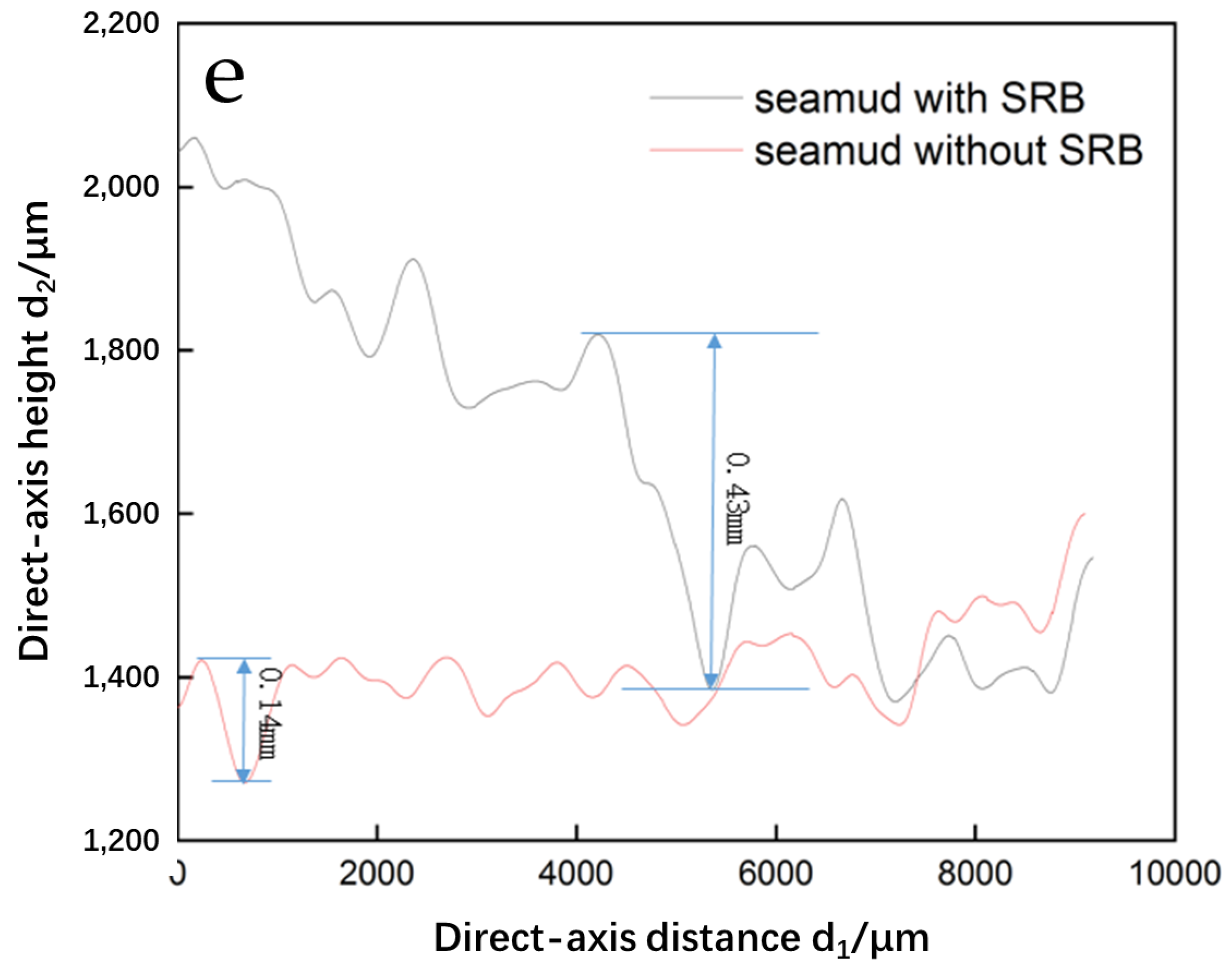
It was found that cathodic protection efficiency of Al-Zn-In-Cd alloy coupons with respect to Q355 steel in SRB media reached 40.17%, while in natural seawater, the cathodic protection efficiency achieving a remarkable CP efficiency of 99.21% [20]. In line with these findings, Al-Zn-In-Si anodes in SRB-containing sediments exhibited a localized corrosion depth of 0.43 mm—three times greater than the 0.14 mm observed in sterile environments—along with a 23%–26% reduction in electrochemical efficiency [19]. These results collectively suggest that SRB-derived sulfides disrupt passivation films and create acidic microenvironments, which intensify localized corrosion and pose a significant threat to the safety of marine engineering structures.
The effectiveness of cathodic protection depends on key performance indicators of the sacrificial anodes, including electrochemical capacity, efficiency, and operating potential. Additionally, SRB present in marine sediments not only corrode the steel structure but also directly contribute to the anodic dissolution process. This involvement accelerates anode consumption, thereby reducing both its capacity and efficiency.
Consistent evidence indicated that SRB significantly compromise the electrochemical capacity and efficiency of sacrificial anodes, with especially severe effects in marine sediment environments. The study found that in the marine mud environment, the localized corrosion depth of the Al-Zn-In-Si aluminum alloy sacrificial anode in SRB-containing marine mud reaches 0.43 mm, which is three times that in the SRB-free environment (0.14 mm), and the electrochemical efficiency decreases by 23%–26% [21]. For instance, in seawater without SRB, anode capacity and efficiency reach approximately 2502 mA·h/kg and 85%–89%, respectively [21,22]. The presence of SRB in seawater reduces these values to 2344 mA·h/kg and 82.03%, corresponding to an efficiency loss of 3%–7% [22]. In contrast, the degradation is far more pronounced in marine sediment environments: the capacity drops from about 1908 mA·h/kg (sterile) to 1223 mA·h/kg (SRB-inoculated), while efficiency plummets from 67%–69% to 43.33%, representing a substantial efficiency reduction of 23%–26% [23]. These data unequivocally demonstrated that SRB in marine sediments lead to a severe decline in anode performance.
The electrochemical performance of sacrificial anodes is typically evaluated using three primary methods: galvanostatic testing (GST, also known as constant-current testing), potentiostatic testing (PST), and self-discharge testing (FRT). Among these, GST involves applying a constant current to the anode. Since electrochemical efficiency is highly dependent on current density [24,25,26], GST conducted at high current densities over short durations can yield capacities close to the theoretical maximum. However, this method does not accurately simulate the temporal evolution of anode current or the breakdown and dissolution morphology of the passive film under real-world service conditions. As a result, standards such as UNE-EN 12496-2013 [24] specify that short-term GST results (e.g., 4 or 15 days) are not suitable as direct references for engineering design, though they may be used for comparative material screening under controlled conditions.
In PST testing, the anode is operated at a fixed potential, which often results in significant fluctuations in current density—conditions that deviate substantially from real-world service environments [27,28]. As a result, both short-term GST and PST methods do not accurately represent the polarization behavior of anode materials under practical operating conditions. The resulting data on electrochemical capacity, open-circuit potential, and closed-circuit potential lack the reliability necessary to serve as a basis for engineering design standards [25,26].
In contrast to GST and PST tests, the FRT test assesses the electrochemical performance and corrosion morphology of anodes under conditions that closely replicate their natural state in cathodic protection systems. This approach allows the anode’s polarization behavior to more accurately reflect actual service conditions, thereby reproducing electrochemical patterns observed in real-world applications. Whereas GST and PST tests are suitable primarily for comparing anodes with different formulations under specific, controlled conditions, they cannot reliably inform cathodic protection design. Therefore, to obtain dependable design parameters, long-term FRT testing under realistic field conditions is essential [24].
Marine mud represents a semi-closed anaerobic environment that supports the activity of SRB, which significantly influence the performance of sacrificial anodes [17,21,23]. Currently, most studies on the electrochemical performance of sacrificial anodes in SRB-containing marine mud environments have focused primarily on the corrosion electrochemical behavior of individual aluminum-based anodes [28,29]. However, there remains a notable scarcity of research that systematically investigates the electrochemical performance of aluminum alloy sacrificial anodes—both in the presence and absence of SRB—within a coupled system comprising the anode and the protected steel structure. Such studies are critically important, as the design of cathodic protection systems for steel structures in marine mud environments—including the calculation of required current density and estimation of service life—relies heavily on the electrochemical efficiency of sacrificial anodes under these specific conditions [22,26]. The present work addresses this knowledge gap and provides essential experimental data to support the design of sacrificial anode-based cathodic protection for large-scale steel infrastructure in marine mud, particularly in SRB-rich environments.
Motivated by this need, the present study systematically evaluates the influence of SRB on aluminum-based sacrificial anodes in marine mud environments. Short-cycle FRT testing was employed to replicate actual cathodic protection conditions, allowing for a direct comparison of anode behavior with and without SRB. By integrating electrochemical performance monitoring, corrosion morphology observations, and localized compositional analysis, this research unravels the mechanistic patterns by which SRB influence anode dissolution. It identifies the underlying causes of key phenomena, such as fluctuations in corrosion rate and protection current, providing a mechanistic explanation for SRB-induced anode degradation. The findings offer critical experimental and theoretical support for optimizing the design of long-term, reliable cathodic protection systems in marine mud environments.

2. Experimental

2.1. Materials

The aluminum-based sacrificial anodes used in the experiment were Al-Zn-In-Si anodes supplied by Zhanjiang Nanhai Western Petroleum Hezhong Offshore Construction Co., Ltd., Zhanjiang, China. Their composition complies with the national standard “Aluminum-zinc-indium alloy sacrificial anodes” (GB/T 4948-2002) [30], with specific details provided in Table 1.
Following the international standard DNVGL-RP-B401 (2017) [29], the aluminum alloy was machined into cylindrical rods (10 mm in diameter × 50 mm in length), with a small hole drilled at the top. The sample preparation procedure was as follows: First, the anode surface was ground sequentially with 180-, 600-, and 1000-grit waterproof sandpaper. It was then ultrasonically cleaned in anhydrous ethanol and acetone, followed by thorough drying. A copper wire was securely inserted into the top hole to ensure a reliable electrical connection. Finally, both ends of the rod were sealed with silicone rubber, leaving a defined central exposure area of approximately 10 cm2.
The steel plate used in this experiment was a Q235 cold-rolled steel plate from Liuzhou Iron and Steel Co., Ltd., Liuzhou, China, with a composition (Table 2) and processing in compliance with the Chinese National Standard GB/T 3274-2017 [32]. The plate, with an exposed area of 0.02 m2, was electrically connected by soldering wires, and the solder joints were insulated with silicone sealant to prevent exposure to the electrolyte.
Artificial seawater was prepared according to the formulation specified in the ASTM D1141 standard [33], with the composition provided in Table 3. The prepared solution exhibited a pH of 7.7 and a conductivity of 30 mS/cm.

2.2. Cultivation of Sulfate-Reducing Bacteria

The SRB (Desulfovibrio caledoniensis) was used in this study. The sterile culture medium (pH 7.2; composition provided in Table 4) was autoclaved at 121 °C for 20 min and then deoxygenated by purging with high-purity nitrogen for 4 h. The SRB were cultured in this medium at 37 °C for 10 days to achieve a high cell density. After cultivation, FeS particles were removed by centrifugation at 6000 rpm, and the bacterial cells were concentrated onto a 0.22 μm filter membrane. The membrane was transferred to a 200 mL flask, where the cells were resuspended and uniformly dispersed via ultrasonication to produce an enriched SRB solution. The strain was activated prior to each experiment.

2.3. Experimental Medium

The marine sediments used in the experiment were collected from Qiaodao Island, Zhuhai City. The grain size distribution of these sediments is provided in Table 5.
Sterile sediment was obtained by autoclaving at 121 °C and 103.6 kPa for 24 h. For the SRB-inoculated medium, 100 mL of sterile seawater and 100 mL of sterile culture medium, inoculated with 8 mL of a five-day-old bacterial suspension were mixed with the sterile sediment. For the sterile control, he same components were used, excluding the bacterial inoculum. The final SRB concentration in the inoculated marine sediment medium reached 106 CFU/mL [34].

2.4. Cathodic Protection Experiment

The protective current generated by the sacrificial anode was measured using a Donghua DH7000-B electrochemical workstation made by Jiangsu Donghua Analytical Instrument Co., Ltd., Taizhou, China. In this setup, the working electrode lead was connected to the sacrificial anode, the reference electrode lead to a saturated calomel electrode (SCE), and the counter electrode lead to the steel plate. The protection potential of the steel plate was simultaneously monitored using a multimeter [35].
After the test, the sacrificial anode was cleaned and dried for weighing. The mass loss (Δw, g) was determined. The electrochemical capacity (ε, Ah/kg) was then computed as: ε = (C × 1000)/Δw. The electrochemical efficiency (η, %) was derived from: η = (ε/ε0) × 100%, where ε0 is the theoretical capacity of the anode alloy, calculated based on the mass fraction and theoretical capacity of each component: ε0 = A × X + B × Y + C × Z + …. Here, A, B, C, etc., represent the percentage composition of the alloy components, and X, Y, Z, etc., denote the theoretical capacity of each component. The charge value is obtained by integrating the current-time curve using Origin 2021 software.

2.5. Surface Morphology and Compositional Analysis

The corrosion morphology on the sample surface was examined using a Leica DVM5000HD ultra-deep-field 3D video microscope (Leica Microsystems GmbH, Wetzlar, Germany). The microarea morphology and composition of the anode surface after testing were analyzed with a JSM-IT200 scanning electron microscope (SEM) (JEOL Ltd., Akishima, Japan). Anode samples containing bacteria were first immersed in a 5% glutaraldehyde solution for 2 h to fix the bacteria onto their surfaces. The samples were then dehydrated using 50%, 75%, and 100% ethanol-PBS solutions (15 min each). After drying and gold sputtering, the surface morphology and composition of the specimens were observed and analyzed using scanning electron microscopy and energy-dispersive spectroscopy (EDS).

3. Results and Discussion

3.1. Macroscopic Corrosion Morphology of Sacrificial Anodes

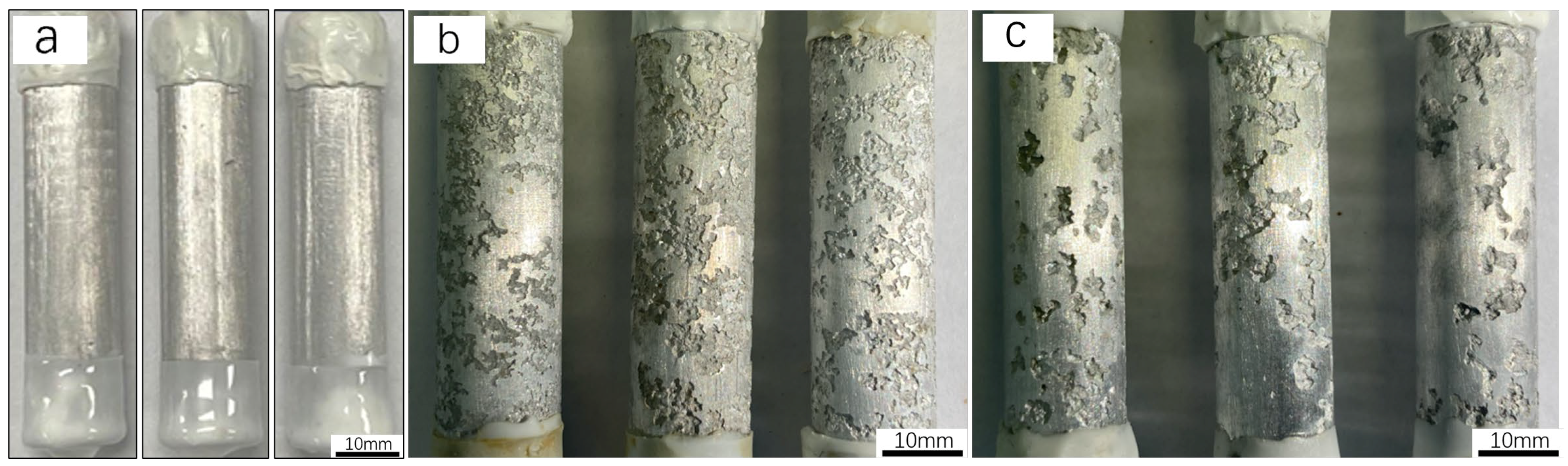
The surface morphology of the cleaned sacrificial anodes revealed distinct corrosion patterns between the two environments (Figure 1). In SRB-free marine mud, the anode exhibited relatively uniform corrosion, characterized by small, shallow pits that coalesced into interconnected areas (Figure 1a). This indicates a homogeneous activation and dissolution process during cathodic protection [22,23]. In contrast, the anode exposed to SRB-containing mud displayed a non-uniform corrosion pattern, marked by isolated pits but without the formation of large, localized deep cavities (Figure 1b).
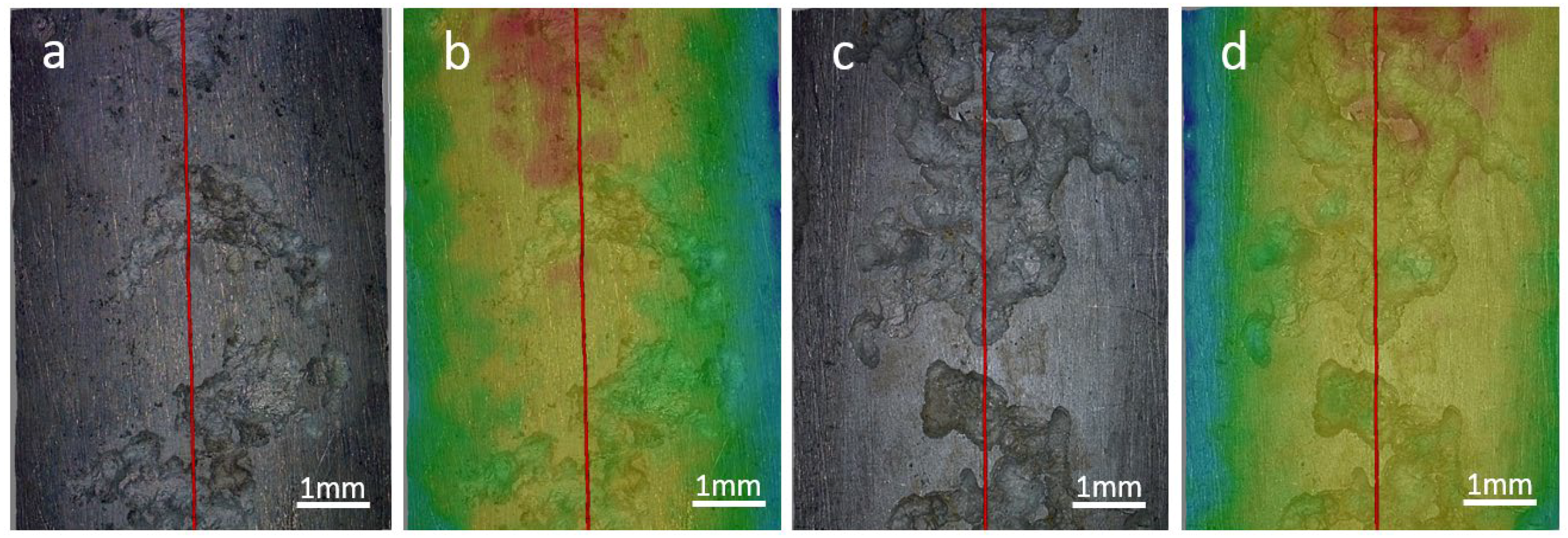
The variation in corrosion depth (direct-axis height, d2) on the anode surface with direct-axis distance (d1) was shown in Figure 2. The maximum corrosion pit depth on the aluminum anode reached 0.43 mm in SRB-containing mud, 3.07 times greater than the 0.14 mm observed in the sterile environment (Figure 2e). This significant difference highlights that the presence of SRB markedly accelerates localized corrosion.
As can be seen from the figures, in the marine mud without SRB, the surface of the sacrificial anode suffered extensive corrosion; however, the corrosion pits were relatively shallow, exhibiting typical uniform corrosion characteristics (Figure 1a and Figure 2a), similar to the “general corrosion” of carbon steel. In contrast, in the marine mud with SRB, no extensive corrosion was observed on the surface of the aluminum alloy anode; instead, deep local corrosion pits were formed, with a depth more than three times that of those in the SRB-free environment. It is evident that the anode exhibited typical localized corrosion features, analogous to the “pitting corrosion” of stainless steel. Therefore, this type of corrosion is more hazardous. The reason is that these deep local corrosion pits not only reduce the structural strength of the sacrificial anode but also cause the detachment of the undissolved local anode, thereby decreasing the electrochemical efficiency [22].
Following the cathodic protection experiment, sacrificial anodes were retrieved from the marine sediment, and the pH within individual corrosion pits was immediately measured using pH test strips (Table 6). In SRB-free sediment, the pit pH was nearly neutral (6–7), while in SRB-containing sediment, it dropped to 3–4, corresponding to a three-order-of-magnitude increase in hydrogen ion concentration.
Previous studies suggested that SRB consumed dissolved oxygen during their metabolic utilization of active metals [36], creating an anaerobic environment conducive to their growth. Concurrently, this metabolism produced hydrogen sulfide or sulfite ions [35,37], leading to localized acidification (Reaction 1). Based on this, we hypothesized that the significantly lower pH observed in the pits of anodes exposed to SRB-rich sediments was directly linked to the involvement of SRB in the corrosion and dissolution process of the aluminum alloy anode.
SO42− + 9H+ + 8e → HS + 4H2O

3.2. Sacrificial Anode Electrochemical Performance

The electrochemical parameters of the sacrificial anodes under self-discharge conditions are summarized in Table 7. In SRB-free seabed mud, the anode exhibited an average electrochemical capacity of 1972.84 Ah/kg and an efficiency of 69.01%, meeting the performance requirement (≥1500 Ah/kg) specified in the DNVGL-RP-B401 standard. In stark contrast, the average capacity and efficiency in SRB-containing mud were significantly lower, at only 1281.28 Ah/kg and 44.82%, respectively, falling short of the standard. Furthermore, while the open-circuit potential remained largely unaffected by SRB, the operating potential shifted positively by more than 100 mV, indicating significant anodic polarization [38].
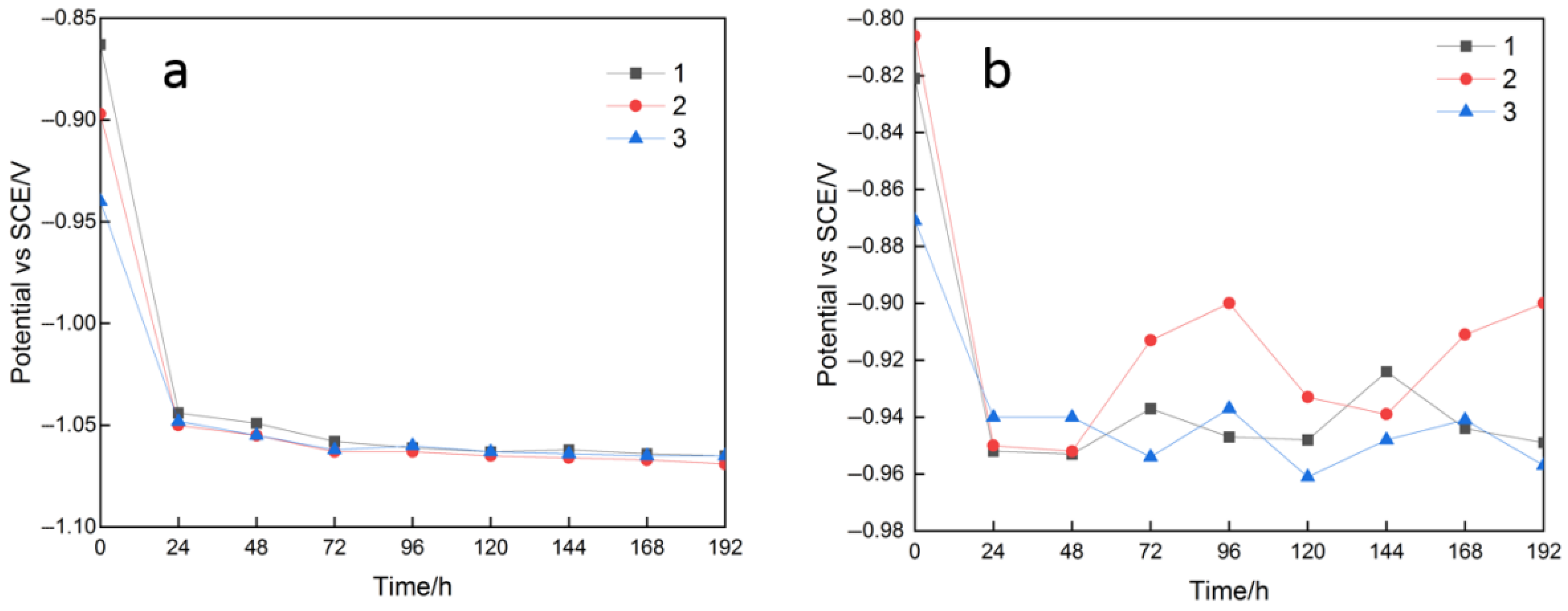
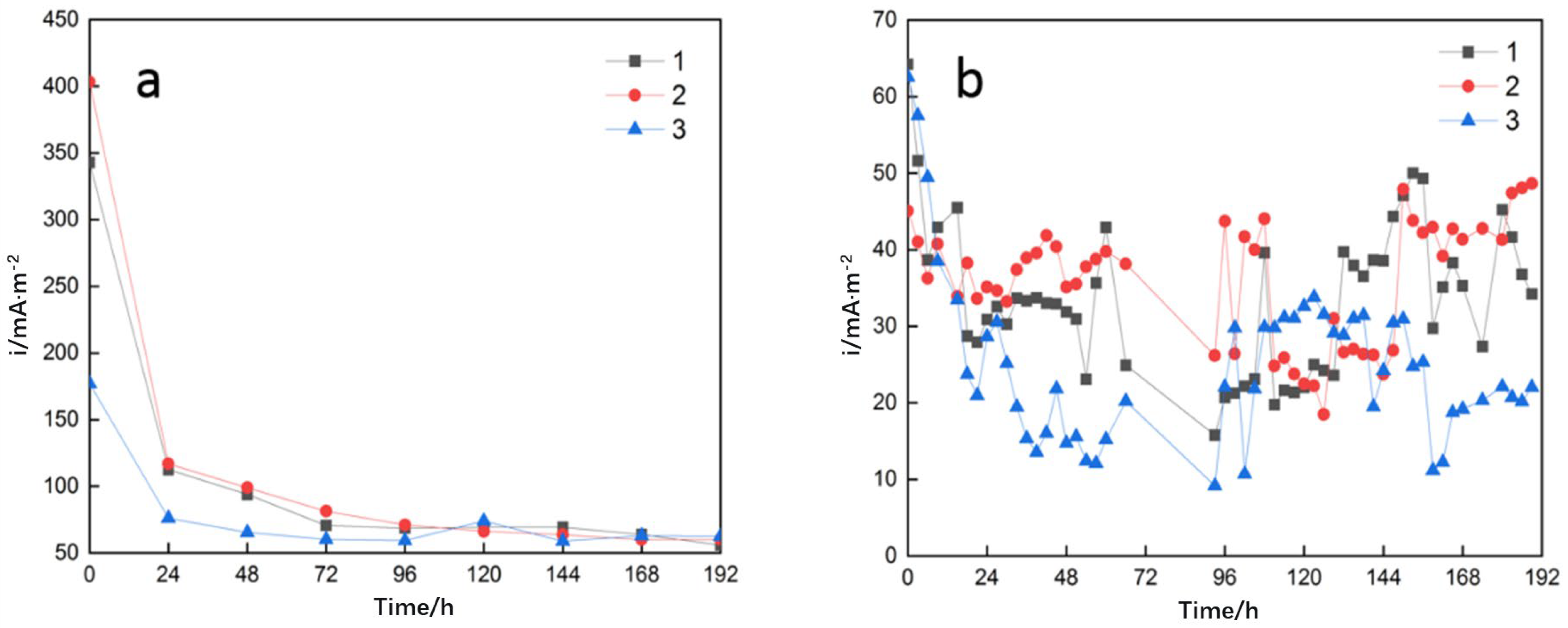
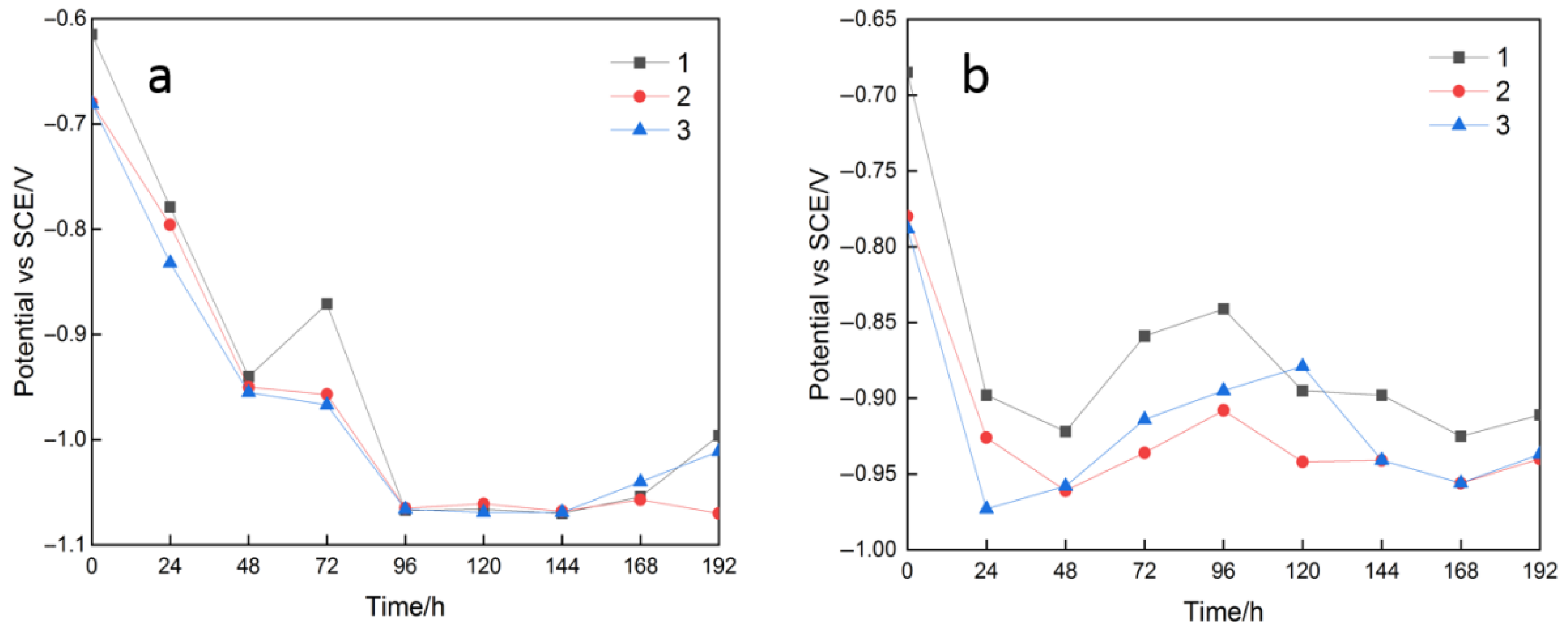
Figure 3 and Figure 4 show the time-dependent curves of the working potential and cathodic protection current density of the sacrificial anode in marine mud without (a) and with (b) SRB. In an SRB-free marine mud environment, the anodic dissolution of the aluminum alloy sacrificial anode primarily involves the surface aluminum atoms, along with minor alloying elements such as zinc and indium, generating a cathodic protection current for the structure (Equation (2)). According to the “activation-redeposition” theory, the anode surface is initially passivated, requiring a certain period to disrupt this passive layer and expose the underlying active metal for dissolution. Figure 3a explains the significant anodic polarization observed at the beginning (0 h). After 24 h, the working potential shifted rapidly in the negative direction, indicating the onset of a rapid activation phase that reduced the polarization. The potential then stabilized between −1.05 V and −1.06 V from 48 to 196 h, approaching the anode’s self-corrosion potential, signifying the completion of activation (Figure 3a). Meanwhile, the cathodic protection current density declined rapidly and stabilized at 55–60 mA/m2 after 96 h (Figure 4a), due to the rapid consumption of dissolved oxygen at the cathode (Equation (3)) and its limited replenishment through diffusion from the sediment [21].
Al → Al3+ + 3e
O2 + 2H2O + 4e → 4OH
In SRB-containing marine mud, the sacrificial anode exhibited an open-circuit potential of −1.086 V. Upon connection to the steel structure (0 h), its operating potential rapidly shifted to between −0.81 and −0.87 V, indicating significant anodic polarization (~200 mV, Figure 3b). However, the resulting cathodic protection current density was only 55–75 mA/m2, markedly lower than the 180–450 mA/m2 observed in SRB-free sediment. Unlike the behavior in sterile conditions, the anode displayed only weak depolarization after 24 h, with the potential shifting slightly to −0.94 to −0.95 V. It subsequently stabilized between −0.95 and −0.96 V until the experiment concluded, indicating a persistently polarized state.
A distinct difference in cathodic protection current density was observed between SRB-containing and SRB-free marine sediments (Figure 4b). In the SRB-inoculated environment, the current density at Anode #2 exhibited significant fluctuations. Starting at 45 mA/m2 upon activation, it gradually decreased to 25 mA/m2 by 96 h, surged back to 45 mA/m2 at 100 h, dropped again to 25 mA/m2 at 110 h, and finally rose to 48 mA/m2 by 150 h, stabilizing between 45–50 mA/m2 thereafter. In contrast, the behavior in sterile sediment was more stable, with the SRB-containing environment not only yielding a lower average current density but also showing markedly greater instability. This instability reflects an unsteady anode activation process [23].
Based on the comparative analysis, two key observations emerge: (1) In SRB-free marine mud, the sacrificial anode delivered a significantly higher initial protective current density (e.g., Anode #2 reached 400 mA/m2, Figure 5a). (2) While intense anodic polarization occurred immediately upon connection in both environments, complete depolarization occurred within 24 h in the sterile mud, allowing the operating potential to approach the self-corrosion potential. In contrast, the anode in SRB-containing mud remained polarized throughout the test, with its operating potential consistently sustained approximately 100 mV above the self-corrosion potential.

3.3. Analysis of the Micro-Area Corrosion Morphology and Composition of Sacrificial Anodes

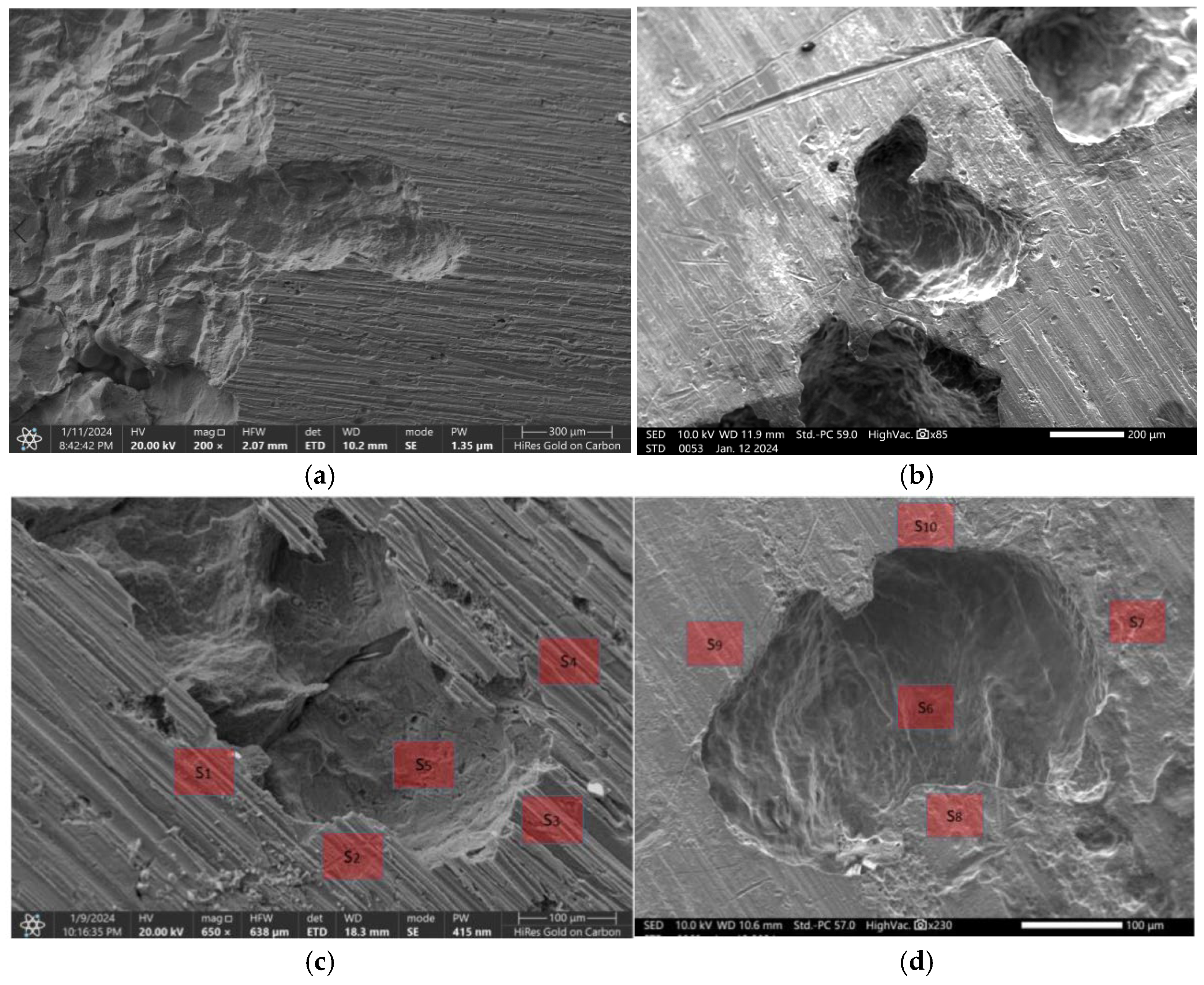
Figure 6 presented scanning electron microscopy (SEM) images of the cleaned sacrificial anode surfaces after exposure to marine mud with and without sulfate-reducing bacteria (SRB). The anode from the SRB-free medium (Figure 6a) displayed shallow corrosion pits with a relatively smooth morphology. In contrast, the anode exposed to the SRB-containing medium (Figure 6b) exhibits deep, isolated pits with steep walls, characteristic of localized, non-uniform corrosion.
To elucidate the mechanism by which SRB influence anode dissolution, energy-dispersive X-ray spectroscopy (EDS) was employed to analyze the elemental composition both inside and outside the corrosion pits on anodes exposed to SRB-containing and SRB-free environments (Figure 6c,d, respectively). The quantitative results are summarized in Table 8.
EDS analysis revealed distinct patterns of elemental distribution influenced by SRB (Table 4, Figure 6). In the sterile environment, the average Al and Zn contents outside the pits (S1–S4) were significantly depleted (64.4% Al, 1.2% Zn) compared to the original alloy composition (94.5% Al, 5.3% Zn, Table 1). Within the pit (S5), these concentrations were higher (70.7% Al, 1.7% Zn), but still lower than the original substrate, indicating non-uniform dissolution, with the least severe attack occurring inside the pit. In contrast, in SRB-containing mud, the alloy surface outside the pits (S7–S10) retained much higher elemental levels (92.3% Al, 3.8% Zn). However, inside the pit (S10), the concentrations were lower (84.5% Al, 3.5% Zn), suggesting localized attack. In summary: (1) Pit interiors in sterile mud exhibited higher Al/Zn levels than surrounding areas; (2) The presence of SRB reversed this trend, depleting Al/Zn inside the pits; and (3) SRB generally inhibited the overall dissolution of the anode, as evidenced by higher Al/Zn levels both inside and outside the pits compared to the sterile case.
Current research suggested that the widely accepted mechanism for the rupture of the passivation film during the initial corrosion stage of aluminum alloy sacrificial anodes involves a dissolution-redeposition process. Initially, active metallic elements (e.g., Zn and In) on the aluminum alloy surface undergo anodic dissolution (Equation (4)), marking the dissolution phase [39,40,41]. Subsequently, the abundant aluminum within the matrix reduces the dissolved metal ions back onto the alloy surface, constituting the redeposition phase (Equation (5)) [40]. This process coincides with the dissolution of aluminum atoms (Equation (2)), ultimately resulting in the breakdown of the passivation film. The repeated occurrence of this dissolution-redeposition cycle on the metal surface facilitates the continuous dissolution of the aluminum anode [41].
M → Mn+ + ne
Al + Mn+ → Al3+ + M
In the cathodic protection system, the aluminum alloy sacrificial anode and steel plate form a galvanic couple, where the aluminum alloy serves as the anode. Anodic oxidation primarily occurs at the aluminum alloy surface (Equation (2)), generating a protective current for the cathode, which is the carbon steel. Cathodic reduction predominantly takes place on the carbon steel surface (Equation (3)). As a result, an electric field is established between the aluminum alloy anode and the carbon steel plate within marine sediment, with field lines oriented from the aluminum alloy toward the carbon steel plate [42].
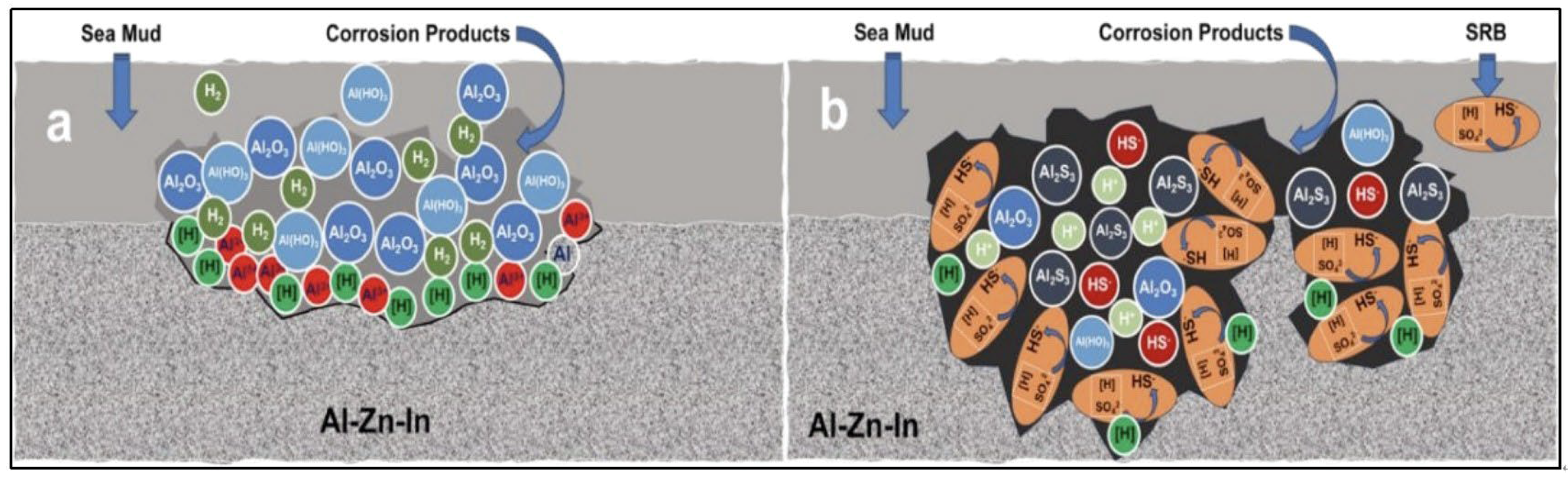
When the aluminum alloy sacrificial anode is coupled with the carbon steel plate, the dissolution-redeposition process begins on the anode surface, disrupting the passivation film and enabling continuous dissolution of the anode to supply the cathodic protection current. In non-SRB marine sediments, corrosion products—primarily aluminum oxide and hydroxide (from aluminum ion hydrolysis)—accumulate within the anode pits and interact with the surrounding sediment. This interaction hinders the diffusion and migration of corrosion products both within and outside the pits [21,22]. The resulting shielding effect reduces the cathodic protection current density inside the pits, thereby limiting the dissolution of the aluminum alloy anode. Consequently, the concentrations of aluminum and zinc on the substrate surface within the pits are higher than those in the surrounding regions (Table 8 and Figure 7a).
In SRB-containing marine sediments, the uneven distribution of microbial biofilms on the aluminum anode surface leads to localized areas with high concentrations and activity of sulfate-reducing bacteria (SRB). This results in uneven corrosion, as depicted in Figure 7b. Similar to SRB-free sediments, corrosion products in the localized pits of SRB-inoculated environments partially block the diffusion and migration of corrosion products both inside and outside the pits. However, during the SRB reduction process, acidic corrosion products (e.g., hydrogen sulfide and thiocyanate ions) generate a localized acidic environment (pH 3–4 [43,44]; see Table 6), which accelerates the dissolution of active elements such as aluminum, zinc, and indium on the aluminum alloy anode surface within the pits (see Equations (6) and (7)) [45]. As a result, the concentrations of aluminum and zinc inside the pits are lower than those outside (Table 8 and Figure 7b). The corrosion dissolution of the aluminum alloy anode then progresses deeper, forming steep, deep pits or holes (Figure 6b).
2Al + 6H+ → 2Al3+ + 3H2
2Al + 6HS→ 2Al2S3 + 3H2
2Al3+ + H2O → 2Al(OH)3 + 6H+
In SRB-containing seabed mud, the reduction reaction of sulfate-reducing bacteria (SRB) consumes a significant portion of the electrons generated by the dissolution of aluminum anodes within the pits. Moreover, the acidic corrosion byproducts, such as hydrogen sulfide, further accelerate the dissolution of aluminum alloy anodes within these localized areas. However, this consumption of aluminum alloy does not contribute to the cathodic protection of the carbon steel plates. Instead, it leads to self-corrosion, reducing the effectiveness of the sacrificial anodes. Consequently, the electrochemical capacity and efficiency of the aluminum alloy anodes are substantially diminished (Table 7).

4. Conclusions

SRB significantly diminishes the electrochemical performance of aluminum-based sacrificial anodes. In marine mud environments containing SRB, the average electrochemical capacity of the anodes was 1281.28 Ah/kg, with an electrochemical efficiency of 44.82%. Both values fell short of the required standards for cathodic protection design in marine mud environments (≥1500 Ah/kg capacity). In contrast, in SRB-free marine mud, the capacity reached 1972.84 Ah/kg, with an efficiency of 69.01%, meeting the standard requirements [46].
SRB accelerates non-uniform corrosion of sacrificial anodes. In SRB-containing marine mud, deep and discrete corrosion pits formed on the anode surface, with the maximum pit depth reaching 0.43 mm—3.07 times deeper than the pits observed in SRB-free mud (0.14 mm). The pH values within these pits ranged from 3 to 4, creating a more acidic environment. This resulted in hydrogen ion concentrations 1000 times higher than in the SRB-free environment, demonstrating classic signs of localized corrosion.
SRB influences sacrificial anode activation and current stability. In SRB-containing seabed sediments, the operating potential of sacrificial anodes remained, on average, 100 mV above the self-corrosion potential, indicating sustained polarization. The cathodic protection current density (55–75 mA/m2) was significantly lower than that observed in SRB-free sediments (180–450 mA/m2), with greater fluctuations in current. This instability reflects an unstable activation process, where a portion of the corrosion consumption did not contribute to effective protection, leading to reduced overall efficiency.

Author Contributions

Conceptualization, W.Z.; methodology, B.Z. and W.Z.; formal analysis, B.Z., W.Z., X.Z., W.Q. and H.H.; investigation, B.Z., W.Z., X.Z., W.Q. and H.H.; writing—original draft preparation, X.Z., W.Q. and H.H.; writing—review and editing, B.Z., W.Z., X.Z., W.Q. and H.H.; investigation, B.Z., W.Z., X.Z., W.Q. and H.H.; supervision, Z.L. All authors have read and agreed to the published version of the manuscript.

Funding

This research was funded by the Key R&D Program of Lianyungang (Industry Foresight and Core Technologies in Key Fields) [Grant No. CG2306], the National Natural Science Foun- dation of China [Grant Nos. 21203034 and 51771057], GF research and cultivation project of Sun Yat–sen University [Grant No. 76110–18843406], and the National Science and Technology Resources Investigation Program of China [Grant No. 2019FY101400].

Institutional Review Board Statement

Not applicable.

Informed Consent Statement

Not applicable.

Data Availability Statement

Data are contained within the article.

Acknowledgments

The authors gratefully acknowledge the support provided by above-mentioned fundings for the article.

Conflicts of Interest

The authors declare no conflicts of interest.

References

  1. Grantz, W.C. Steel-shell immersed tunnels—Forty years of experience. Tunn. Undergr. Space Technol. 1997, 12, 23–31. [Google Scholar] [CrossRef]
  2. Liu, Y.F. Research and Analysis on Key Technology of Immersed Tunnel Engineering. Master’s Thesis, Southwest Jiaotong University, Chengdu, China, 2017. [Google Scholar]
  3. Song, S.; Chen, W.; Jin, W.; Liu, J. Shenzhong Channel Immersed Tunnel—The World’s First Large-Scale Immersed Tunnel Using Steel Shell-Concrete Composite Structure. Tunn. Rail Transit. 2020, 4, 64. Available online: https://qikan.cqvip.com/Qikan/Article/Detail?id=7104169081#ByCouplingRelate (accessed on 10 October 2025).
  4. Wang, C.L. Corrosion Behavior of Galvanic Corrosion in Multi-Material System in Marine Environment. Ph.D. Thesis, Harbin Engineering University, Harbin, China, 2013. [Google Scholar]
  5. Chan, K.; Xu, L.; Fang, H. Anaerobic electrochemical corrosion of mild steel in the presence of extracellular polymeric substances produced by a culture enriched in sulfate-reducing bacteria. Environ. Sci. Technol. 2002, 36, 1720–1727. Available online: https://pubs.acs.org/doi/10.1021/es011187c (accessed on 10 October 2025). [CrossRef] [PubMed]
  6. Duan, J.Z.; Wu, S.R.; Zhang, X.J.; Huang, G.Q.; Du, M.; Hou, B.R. Corrosion of carbon steel influenced by anaerobic biofilm in natural seawater. Electrochim. Acta 2008, 54, 22–28. [Google Scholar] [CrossRef]
  7. Okabe, S.; Odagiri, M.; Ito, T.; Satoh, H. Succession of sulfur-oxidizing bacteria in the microbial community on corroding concrete in sewer systems. Appl. Environ. Microbiol. 2007, 73, 971–980. [Google Scholar] [CrossRef]
  8. Ashassi-Sorkhabi, H.; Moradi-Haghighi, M.; Zarrini, G. The effect of Pseudoxanthomonas sp. as manganese oxidizing bacterium on the corrosion behavior of carbon steel. Mater. Sci. Eng. C 2012, 32, 303–309. [Google Scholar] [CrossRef]
  9. Ching, T.H.; Yoza, B.A.; Wang, L.; Masutani, S.M.; Li, Q.X. Biodegradation of biodiesel and microbiologically induced corrosion of 1018 steel by Moniliella wahieum Y12. Int. Biodeterior. Biodegrad. 2016, 108, 122–126. [Google Scholar] [CrossRef]
  10. Xu, W.; Han, E.H.; Wang, Z. Effect of tannic acid on corrosion behavior of carbon steel in NaCl solution. J. Mater. Sci. Technol. 2019, 35, 64–75. [Google Scholar] [CrossRef]
  11. Ilhan-Sungur, E.; Cansever, N.; Cotuk, A. Microbial corrosion of galvanized steel by a freshwater strain of sulphate reducing bacteria (Desulfovibrio sp.). Corros. Sci. 2007, 49, 1097–1109. [Google Scholar] [CrossRef]
  12. Starosvetsky, D. Effect of iron exposure in SRB media on pitting initiation. Corros. Sci. 2000, 42, 345–359. [Google Scholar] [CrossRef]
  13. Castaneda, H.; Benetton, X.D. SRB-biofilm influence in active corrosion sites formed at the steel-electrolyte interface when exposed to artificial seawater conditions. Corros. Sci. 2008, 50, 1169–1183. [Google Scholar] [CrossRef]
  14. Rao, T.S.; Kora, A.J.; Anupkumar, B.; Narasimhan, S.V.; Feser, R. Pitting corrosion of titanium by a freshwater strain of sulphate reducing bacteria (Desulfovibrio vulgaris). Corros. Sci. 2005, 47, 1071–1084. [Google Scholar] [CrossRef]
  15. Sun, C.; Han, E.H.; Wang, X. Effects of SRB on Corrosion of Carbon Steel in Seamud. Corros. Sci. Prot. Technol. 2003, 15, 104–106. Available online: https://qikan.cqvip.com/Qikan/Article/Detail?id=7714900&from=Qikan_Search_Index (accessed on 10 October 2025).
  16. Xu, L.K.; Ma, L.; Xing, S.H.; Cheng, H. Review on Cathodic Protection for Marine Structures. Mater. China 2014, 33, 106–113. [Google Scholar] [CrossRef]
  17. Guan, F.; Duan, J.; Zhai, X.; Wang, N.; Zhang, J.; Lu, D.; Hou, B. Interaction between sulfate-reducing bacteria and aluminum alloys—Corrosion mechanisms of 5052 and Al-Zn-In-Cd aluminum alloys. J. Mater. Sci. Technol. 2020, 36, 55–64. [Google Scholar] [CrossRef]
  18. Zhang, T.S.; Wang, Z.Y.; Qiu, Y.B.; Iftikhar, T.; Liu, H.F. “Electrons-siphoning” of sulfate reducing bacteria biofilm induced sharp depletion of Al-Zn-In-Mg-Si sacrificial anode in the galvanic corrosion coupled with carbon steel. Corros. Sci. 2023, 216, 111103. [Google Scholar] [CrossRef]
  19. Qian, H.X.; Wang, T.G.; Xu, P.; Feng, Z.Y. Sulfate Reducing Bacteria Corrosion of a 90/10 Cu-Ni Alloy Coupled to an Al Sacrificial Anode. Bioelectrochemistry 2025, 163, 108892. [Google Scholar] [CrossRef]
  20. Zhang, L.; Guan, F.; Zhan, T.; Fan, K.; Sang, Y.; Zhao, X.; Zhai, X.; Duan, J. The Corrosion Mechanism of Q355Steel Electrically Connected to the Al-Zn-ln-Cd Sacrificial Anode: From Microbial Community to Corrosion Behavior Analysis. Bioelectrochemistry 2025, 165, 108990. [Google Scholar] [CrossRef]
  21. Zhang, J.; Liu, J.; Peng, J.; Zhang, X.; Wu, K. Electrochemical performance of Al-Zn-In-Si sacrificial anode in simulated seawater and sea mud environments. Surf. Technol. 2021, 50, 297–305. [Google Scholar] [CrossRef]
  22. Li, Y.X. Effect of Sulfate-Reducing Bacteria on Electrochemical Performance of Aluminum-Based Sacrificial Anode in Marine Mud Environment; Sun Yat-sen University: Guangzhou, China, 2024. [Google Scholar]
  23. Li, Y.X.; Wu, M.L.; Li, H.; Zhang, W. Study on the Electrochemical Performance of Al-Zn-In-Si Sacrificial Anode in Sea Mud Environment with/without Sulfate Reducing Bacteria. Chem. Eng. Technol. 2024, 14, 32–46. [Google Scholar] [CrossRef]
  24. UNE-EN 12496; Galvanic Anodes for Cathodic Protection in Seawater and Saline Mud. Comite Europeen de Normalisation: Brussels, Belgium, 2013.
  25. NACE TM0190; Impressed Current Laboratory Testing of Aluminium Alloy Anodes. National Association of Corrosion Engineers: Houston, TX, USA, 2006.
  26. ASTM G97; Standard Test Method for Laboratory Evaluation of Magnesium Sacrificial Anode Test Specimens for Underground Applications. American Society for Testing and Materials: West Conshohocken, PA, USA, 1997.
  27. Liu, F.G.; Zhang, W. Design and Performance Study of New Sacrificial Anodes for Marine Engineering (IV)—Application Research on Cathodic Protection of Jacket Platforms. Equip. Environ. Eng. 2018, 15, 14–19. [Google Scholar]
  28. Liu, F.L.; Zhang, J.; Sun, C.X.; Yu, Z.H.; Hou, B.R. The Corrosion of Two Aluminium Sacrificial Anode Alloys in SRB-Containing Sea Mud. Corros. Sci. 2014, 83, 375–381. [Google Scholar] [CrossRef]
  29. DNVGL RP B401; Cathodic Protection Design. DNV. GL.: Høvik, Norway; Hamburg, Germany, 2017.
  30. GB/T 4948; Aluminum-Zinc-Indium Alloy Sacrificial Anode. General Administration of Quality Supervision: Beijing, China, 2002.
  31. Yao, C.Q.; Wang, X.R.; Zhang, W.; Xia, W.T.; Chen, Z.W.; Han, B. Formation of calcareous deposits in the tidal zone and its effect on cathodic protection. npj Mater. Degrad. 2023, 7, 30. [Google Scholar] [CrossRef]
  32. GB/T 3274; Hot-Rolled Steel Plates and Strips for Carbon Structural Steels and Low-Alloy Structural Steels. General Administration of Quality Supervision: Beijing, China, 2017.
  33. ASTM D1141-98; Standard Practice for the Preparation of Substitute Ocean Water. American Society for TPSTesting and Materials: West Conshohocken, PA, USA, 2013.
  34. Liu, F.; Zhang, J.; Zhang, S.; Li, W.H.; Duan, J.Z.; Hou, B.R. Effect of sulphate reducing bacteria on corrosion of Al-Zn-In-Sn sacrificial anodes in marine sediment. Mater. Corros. 2012, 63, 431–437. [Google Scholar] [CrossRef]
  35. Guan, F.; Zhai, X.; Duan, J.; Zhang, M.; Hou, B. Influence of Sulfate-Reducing Bacteria on the Corrosion Behavior of High Strength Steel EQ70 under Cathodic Polarization. PLoS ONE 2016, 11, e0162315. [Google Scholar] [CrossRef]
  36. Lü, X.F.; Yang, Y.J.; Chen, X.L. Discussion on corrosion environment in the sea mud area of Huibieyang in the southern Hangzhou Bay. Mar. Bull. 2010, 29, 504–508. Available online: https://www.xueshu.com/hytb/201005/10579671.html (accessed on 10 October 2025).
  37. Zhu, Y.Y.; Huang, Y.L.; Huang, S.D. Hydrogen permeation of 16Mn steel in sea mud with sulfate reducing bacteria. Corros. Sci. Prot. Technol. 2008, 20, 118–120. [Google Scholar]
  38. Zhang, J.; Liu, F.L.; Li, W.H.; Duan, J.Z.; Hou, B.R. Effect of sulfate-reducing bacteria in sea mud on corrosion of Zn-Al-Cd sacrificial anode. Acta Metall. Sin. 2010, 46, 1250–1257. Available online: https://www.ams.org.cn/CN/10.3724/SP.J.1037.2010.00201 (accessed on 10 October 2025).
  39. Reboul, M.C.; Gimenez, P.; Ramenuj, J. A proposed activation mechanism for aluminum anodes. Corrosion 1984, 40, 366–371. Available online: https://www.x-mol.com/paperRedirect/1372174186722050048 (accessed on 10 October 2025). [CrossRef]
  40. Xu, H.Y.; Li, Y.B. Activation behavior of aluminum sacrificial anodes in sea water. J. Chin. Soc. Corros. Prot. 2008, 28, 186–192. Available online: https://www.jcscp.org/EN/Y2008/V28/I3/186 (accessed on 10 October 2025).
  41. Xu, K.; Liu, X.; Guan, K.; Yu, Y.; Lei, W.; Zhang, S.; Jia, Q.; Zhang, H. Research progress in aluminum alloy sacrificial anode materials. Equip. Environ. Eng. 2018, 15, 9–13. [Google Scholar] [CrossRef]
  42. Hu, S.X. Handbook of Cathodic Protection Engineering; Chemical Industry Press: Beijing, China, 1999. [Google Scholar]
  43. Kushkevych, I.; Dordević, D.; Vítězová, M. Analysis of pH dose-dependent growth of sulfate-reducing bacteria. Open Med. 2019, 14, 66–74. [Google Scholar] [CrossRef]
  44. Hao, O.J.; Chen, J.M.; Huang, L.; Buglass, R.L. Sulfate-reducing bacteria. Crit. Rev. Environ. Sci. Technol. 1996, 26, 155–187. [Google Scholar] [CrossRef]
  45. Jia, R.; Tan, J.L.; Jin, P.; Blackwood, D.J.; Xu, D.K.; Gu, T.Y. Effects of biogenic H2S on the microbiologically influenced corrosion of C1018 carbon steel by sulfate reducing Desulfovibrio vulgaris biofilm. Corros. Sci. 2018, 130, 1–11. [Google Scholar] [CrossRef]
  46. Wan, H.; Huangfu, W.Z.; Liu, Z.Y.; Du, C.W.; Liu, X.G.; Song, D.D.; Cao, B. Influence of sea mud state on the anodic behavior of Al-Zn-In-Mg-Ti sacrificial anode. Ocean Eng. 2017, 136, 11–17. [Google Scholar] [CrossRef]
Figure 1. Surface morphology of sacrificial anodes: (a) before the experiment; (b) after cathodic protection testing in SRB-free marine mud; (c) after cathodic protection testing in SRB-containing marine mud.
Coatings 16 00026 g001
Figure 2. 3D ultra-depth-of-field morphology of the sacrificial anode surface under cathodic protection conditions ((a,b): in SRB-free marine mud, (c,d): in SRB-containing marine mud, (e): surface depth comparison).
Coatings 16 00026 g002aCoatings 16 00026 g002b
Figure 3. Time-dependent curves of the working potential of the sacrificial anode in SRB-free (a) and SRB-containing (b) marine mud environments.
Coatings 16 00026 g003
Figure 4. Time-dependent curves of the cathodic protection current density provided by the sacrificial anode in SRB-free (a) and SRB-containing (b) marine mud environments.
Coatings 16 00026 g004
Figure 5. Time-dependent changes in the sacrificial anode cathodic protection potential in SRB-free (a) and SRB-containing (b) marine mud environments.
Coatings 16 00026 g005
Figure 6. Scanning electron microscopy (SEM) images of the sacrificial anode surfaces after removal of corrosion products: (a,c) in SRB-free marine mud; (b,d) in SRB-containing marine mud.
Coatings 16 00026 g006
Figure 7. Schematic illustration of localized corrosion mechanisms in sacrificial anodes in SRB-free (a) and SRB-containing (b) marine mud environments.
Coatings 16 00026 g007
Table 1. The composition of sacrificial anode and standard mass fraction [31].
Chemical CompositionMass Fraction (%)Standard Mass Fraction (%)
Al94.500092.555~94.115
Zn5.31005.500~7.000
In0.02650.025~0.035
Si0.0872<0.100
Fe0.0467<0.150
Ca0.0107<0.100
Other0.0189<1.500
Table 2. The composition of Q235 steel plate.
Chemical CompositionMass Fraction (%)
Fe>99.9
C<0.010
Si<0.010
Mn<0.010
S<0.001
P<0.001
Table 3. The composition of artificial seawater.
NameCASBrandPurityConcentration (g/L)
NaCl7647-14-5MacklinAR24.53
MgCl27786-30-3HUSHIAR5.20
Na2SO47757-82-6HUSHIAR4.09
CaCl210043-52-4MacklinAR > 96%1.16
KCl7447-40-7MacklinAR0.695
NaHCO3144-55-8Macklin99.99% metal basis0.201
KBr7758-02-3Macklin99.9% metal basis0.101
H3BO310043-35-3HUSHIAR0.027
SrCl210025-70-4AladdinACS0.025
NaF7681-49-4MacklinPT0.003
Table 4. The composition of SRB liquid medium.
MaterialCASScale
K2HPO47758-11-40.5 g/L
NH4Cl12125-02-91.0 g/L
CaCl210043-52-40.06 g/L
(NH4)2Fe(SO4)210045-89-30.2 g/L
Yeast extract8013-01-21.0 g/L
MgSO4·7H2O10034-99-80.06 g/L
Sodium citrate68-04-20.3 g/L
Sodium lactate312-85-66 mL/L
Ascorbic acid50-81-70.1 g/L
Table 5. Particle size distribution of sea mud.
Size (Mesh/Inch)Aperture Size (mm)Mass Fraction (%)
53.8606.48
200.90060.44
800.20026.67
4000.0386.13
>400<0.0380.28
Table 6. The pH of sacrificial anode after cathodic protection experiment in marine mud environments.
NumberEnvironmentpH
1Aseptic sea mud environment6~7
sea mud environment with SRB3~4
2Aseptic sea mud environment6~7
sea mud environment with SRB≈3
3Aseptic sea mud environment≈6
sea mud environment with SRB3~4
Table 7. Electrochemical parameters of sacrificial anodes in SRB-containing and SRB-free marine mud environments.
EnvironmentNumberElectrochemical Capacity/(A·h·kg)Electrochemical Efficiency/%Work
Potential (vs.SCE)/V
Open Circuit
Potential
(vs.SCE)/V
Sea mud
without
SRB
12065.3072.25−1.034−1.041
21997.3769.87−1.054−1.061
31855.8464.92−1.051−1.052
σ87.253.050.0090.009
Sea mud
without
SRB
11299.4545.46−0.970−1.086
21335.3146.71−0.933−1.086
31209.0842.30−0.951−1.089
σ65.052.270.0150.0014
Table 8. The elements’ content of sacrificial anode surface in SRB-free marine mud environment.
RegionS1S2S3S4Average ValueS7S8S9S10Average ValueS5S6
Al67.267.867.654.864.494.890.589.993.992.370.784.5
Zn1.11.41.30.91.23.53.73.34.83.81.73.5
Disclaimer/Publisher’s Note: The statements, opinions and data contained in all publications are solely those of the individual author(s) and contributor(s) and not of MDPI and/or the editor(s). MDPI and/or the editor(s) disclaim responsibility for any injury to people or property resulting from any ideas, methods, instructions or products referred to in the content.