Article

Microstructural Characteristics and Tensile Behavior of Vacuum-Fusion-Welded Joints in 2507 Duplex Stainless-Steel Pipes

1
Department of Automotive Engineering, Changzhou Institute of Technology, Changzhou 213000, China
2
Jiangsu Key Laboratory of Advanced Metallic Materials, Southeast University, Nanjing 211189, China
3
Jiangsu Wujin Stainless Steel Co., Ltd., Changzhou 213000, China
*
Author to whom correspondence should be addressed.
Coatings 2026, 16(1), 146; https://doi.org/10.3390/coatings16010146
Submission received: 28 December 2025 / Revised: 13 January 2026 / Accepted: 21 January 2026 / Published: 22 January 2026

Abstract

To address the performance deficiencies in welded joints in 2507 duplex stainless-steel pipes under demanding service conditions such as deep-sea operation, this study investigates drawn 2507 duplex stainless-steel pipes. Vacuum-fusion welding coupled with ER2507 wire filling is employed to fabricate the joints. The joint microstructure and tensile behavior are systematically analyzed using microstructural characterization techniques (electron backscatter diffraction and transmission electron microscopy) and uniaxial tensile testing. The results indicate that the joint exhibits a graded microstructure along the welding direction: base metal-heat affected zone-weld metal. The austenite phase fraction in the fusion zone decreases to 27.6%. The joint achieves an ultimate tensile strength of 833.3 MPa and a total elongation of close to 23%, demonstrating an excellent combination of strength and ductility. During tensile deformation, the ferrite and austenite phases undergo coordinated deformation. Strain is distributed relatively uniformly at low strain levels but localized preferentially within the fusion zone at high strain levels. Fractographic analyses reveal a ductile fracture mode. This research provides theoretical support and technical reference for optimizing welding processes and assessing the service safety of 2507 duplex stainless-steel pipes in deep-sea pipeline-engineering applications.

1. Introduction

Duplex stainless steels are widely applied in fields such as petrochemicals, marine engineering, and deep-sea energy development, owing to their unique two-phase microstructure [1,2,3,4]. The strong corrosiveness of seawater, along with the high pressure, low temperatures, and cyclic loading in deep-sea environments, imposes stringent demands on the comprehensive performances of pipeline materials. Under these conditions, 2507 duplex stainless steel (UNS S32750), as a corrosion-resistant structural material with excellent overall performance, leverages its distinctive “ferrite + austenite” dual-phase microstructure to achieve a synergy of high strength, superior pitting-corrosion resistance, and good toughness. Consequently, it has become the material of choice for critical pipeline-engineering applications, such as subsea oil and gas transportation and seawater desalination [5,6,7,8,9].
The core of pipeline engineering lies in welded joints that serve as “artificially created weak zones,” whose microstructural qualities directly determine the service life of the entire pipeline system. The failure of these joints can trigger catastrophic consequences, including leaks and pollution incidents [10,11,12].
During the welding of duplex stainless steels, the thermal cycle tends to disrupt the original dual-phase equilibrium of the base metal (BM). The solidification of the high-temperature molten pool follows a “primary ferrite formation followed by austenite precipitation” characteristic, often resulting in insufficient austenite content in the weld zone and a consequent reduction in toughness [13,14,15]. Concurrently, conventional welding processes (such as tungsten–inert-gas and metal–inert-gas welding) performed in atmospheric environments often introduce reactive gases such as oxygen and nitrogen. This can lead to defects such as oxide inclusions and porosity, which not only weaken the mechanical properties of the joint but also disrupt the uniform distribution of critical elements such as Cr and Mo, thereby degrading the corrosion resistance [16,17,18].
Vacuum-fusion welding, which leverages the “oxidation-free protection” advantage of a high-vacuum environment (vacuum level ≥ 10−2 Pa), can effectively suppress gas inclusions and element burn-off during the welding process, offering the potential to produce high-purity joints. Furthermore, precise control over the welding voltage, wire-feed speed, and other parameters facilitates the regulation of the dual-phase ratio and grain size in the weld region [19,20,21]. Currently, research on welding 2507 duplex stainless steel predominantly focuses on traditional arc-welding processes [8,22,23], with relatively few systematic studies being dedicated to vacuum-fusion welding. In particular, the intrinsic relationships between the “welding process–joint microstructure–tensile deformation behavior” in a vacuum environment remain unclear. Key scientific questions, such as the regulatory mechanism of austenite evolution in the weld zone on strength–ductility properties and the laws governing the coordinated deformation of the two phases during tensile loading, require further in-depth investigation.
Based on this, this study focuses on drawn 2507 duplex stainless-steel pipes as the research object. Welded joints are fabricated using a vacuum-fusion welding process (vacuum level ≥ 10−2 Pa, voltage 22 V, wire-feed speed 4 m/min). Through microstructural characterization techniques such as electron backscatter diffraction (EBSD), transmission electron microscopy (TEM), and backscattered electron imaging (BSD), combined with uniaxial tensile testing, the joint’s graded structural characteristics, element-distribution patterns, and tensile deformation mechanisms are systematically analyzed. This work aims to elucidate the regulatory effect of vacuum-fusion welding on the performance of 2507 duplex stainless-steel pipe joints, providing theoretical support and technical reference for optimizing the welding processes and assessing the service safety of 2507 duplex stainless-steel pipes in deep-sea pipeline-engineering applications.

2. Experimental Methods

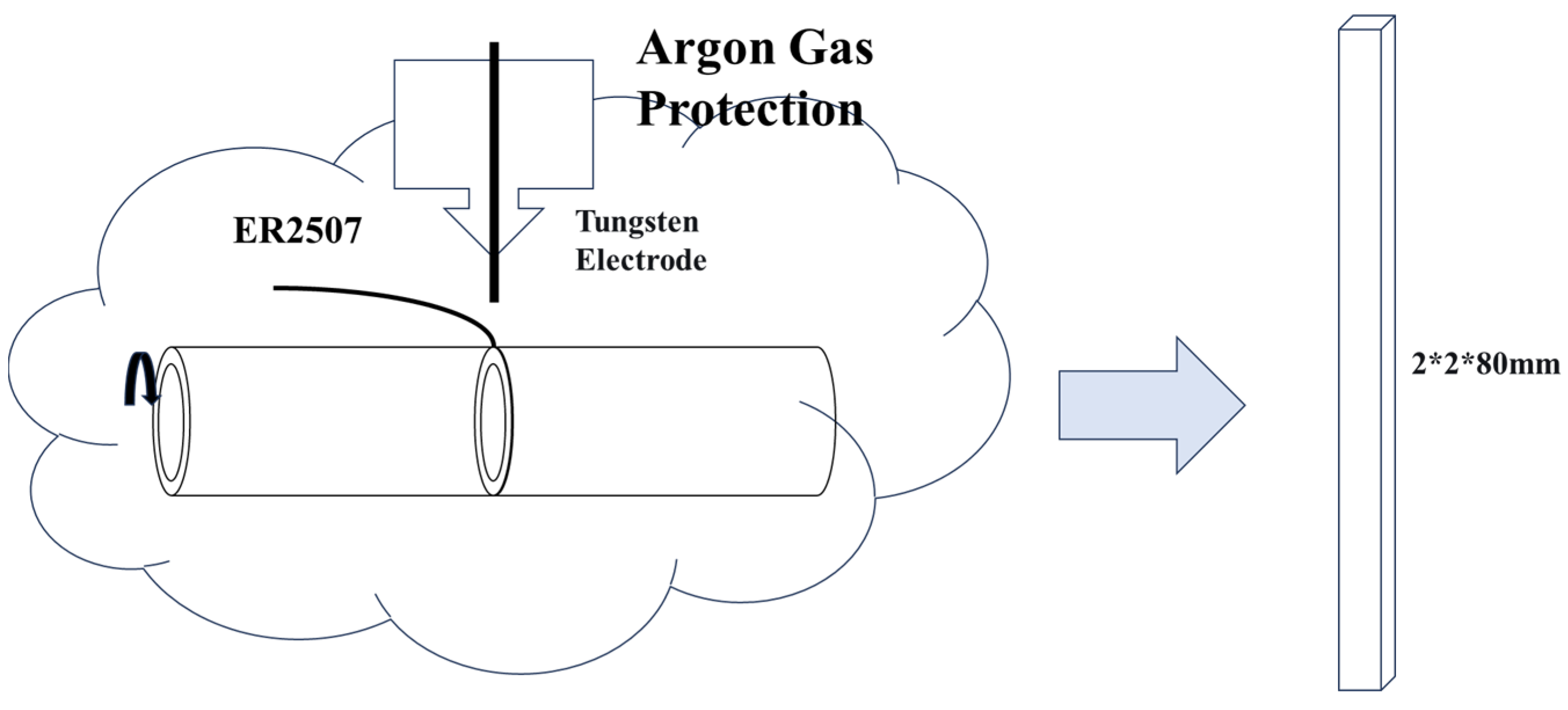
The base material used in this study was a 2507 duplex stainless-steel pipe with an outer diameter of 19 mm and wall thickness of 2.5 mm, after drawing. The filler material was a ER2507 welding wire, specifically designed for welding 2507 duplex stainless steel. Both the base pipe material and filler wire are commercially available products manufactured by Changzhou Wujin Stainless Steel; the elemental compositions of both phases and the welding wire, as determined by EDS spectroscopy, are presented in Table 1. Prior to welding, the joining surfaces of the two pipe sections were ground flat and subjected to ultrasonic cleaning in alcohol for 15 min. Welding was then performed under a vacuum level of at least 10−2 Pa. During the welding process, argon gas shielding was employed. The tensile specimens were prepared by electrical discharge machining (EDM) from the welded steel pipe, with a schematic diagram shown in Figure 1. Based on multiple preliminary experiments combined with practical production conditions, the welding parameters were as follows: voltage of 22 V, wire-feed speed of 4 m/min, welding speed maintained between 4 and 6 mm/s, and argon flow rate of 15 L/min.
Tensile strength testing was performed using a 100 kN CMT5105 uniaxial electronic universal testing machine manufactured by SANS Company (Shenzhen, China). Typical transverse and longitudinal cross-sections of the joint were observed using a Zeiss (Jena, Germany) Gemini 360 scanning electron microscope (SEM) equipped with an Oxford (Oxford, UK) EBSD detector and BSD detector. The interfaces of the joint and base metal were determined based on EBSD and BSD images. Transmission electron micrographs were obtained using a Talos (Waltham, MA, USA) P200X G2 high-resolution TEM operated at an accelerating voltage of 200 kV. The microstructural evolution and interfacial characteristics of the welded joint were characterized and analyzed using high-resolution images and energy-dispersive X-ray (EDX) spectroscopy.

3. Results

3.1. Welded Microstructure

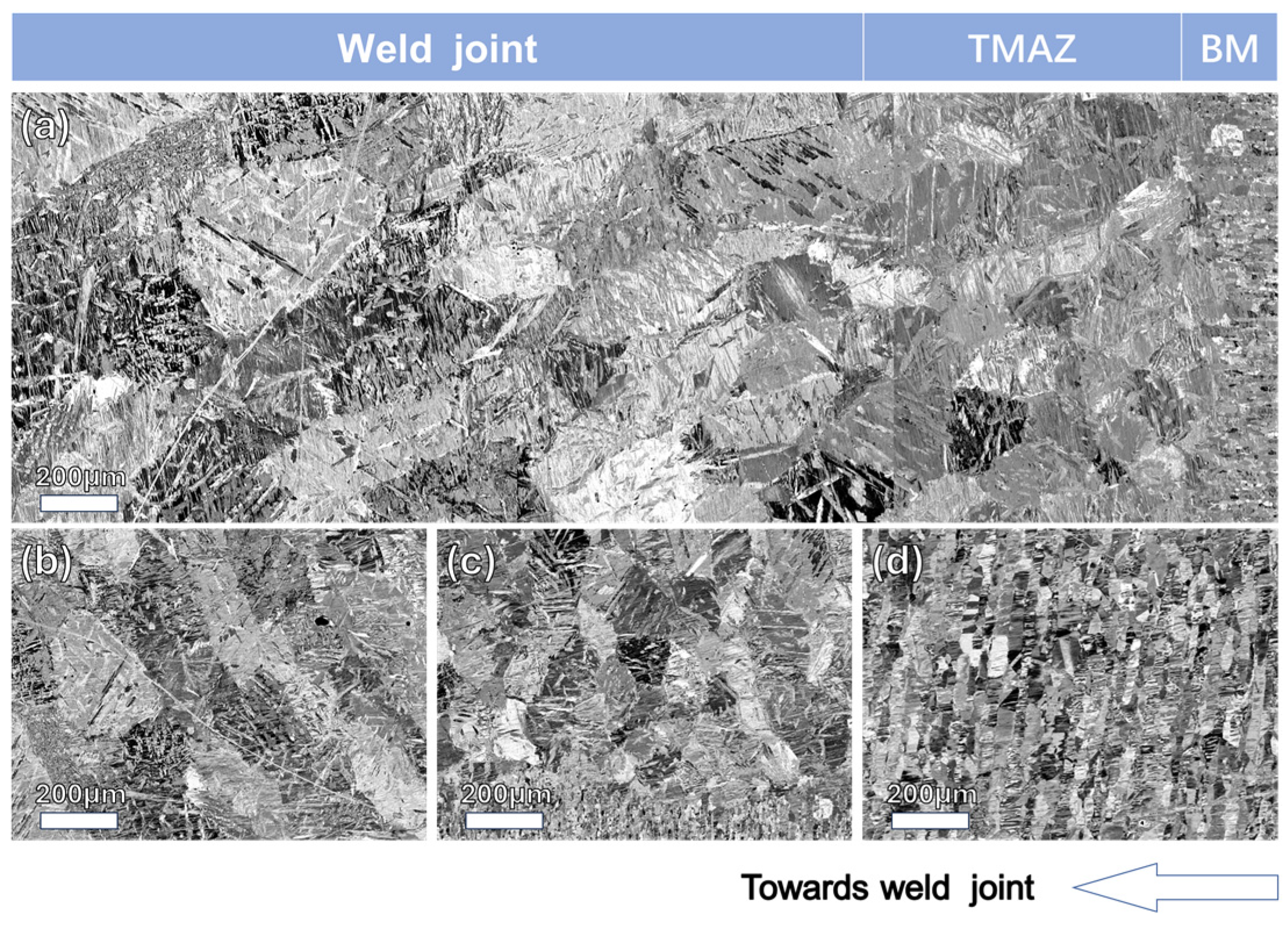
Figure 2 presents the electron-channeling-contrast (ECC) images of the welded joint and transition region between the welded and base metals. Along the welding direction, the microstructure sequentially contains the BM, heat-affected zone (HAZ), and weld metal (WM). The BM, being a drawn duplex stainless-steel pipe, exhibits significantly finer grains than those in the WM and HAZ. Figure 2b displays the dual-phase microstructure within the WM, while Figure 2c shows the microstructure of the HAZ adjacent to the BM, where the grains exhibit progressive growth along the welding direction.
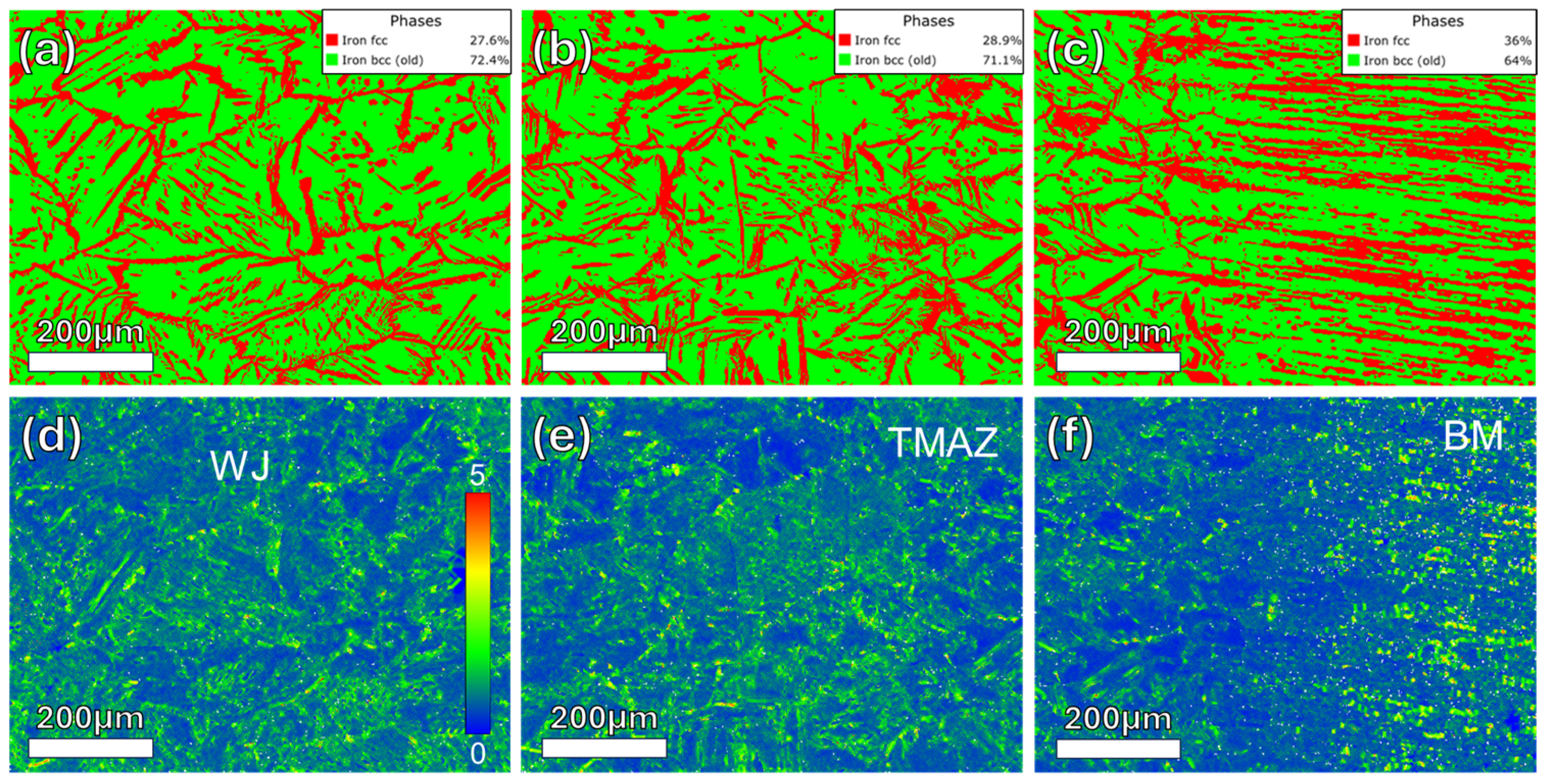
Figure 3 presents the phase distribution and evolution of the geometrically necessary dislocation (GND) density in different regions of the welded joint. The austenite phase gradually transforms from an alternating lamellar arrangement with ferrite in the BM to a continuous network-like distribution within the ferrite matrix toward the weld zone. Along the welding direction, the proportion of austenite continuously decreases, reaching 27.6% in the weld zone, while the degree of interweaving between austenite and ferrite at the joint increases significantly.
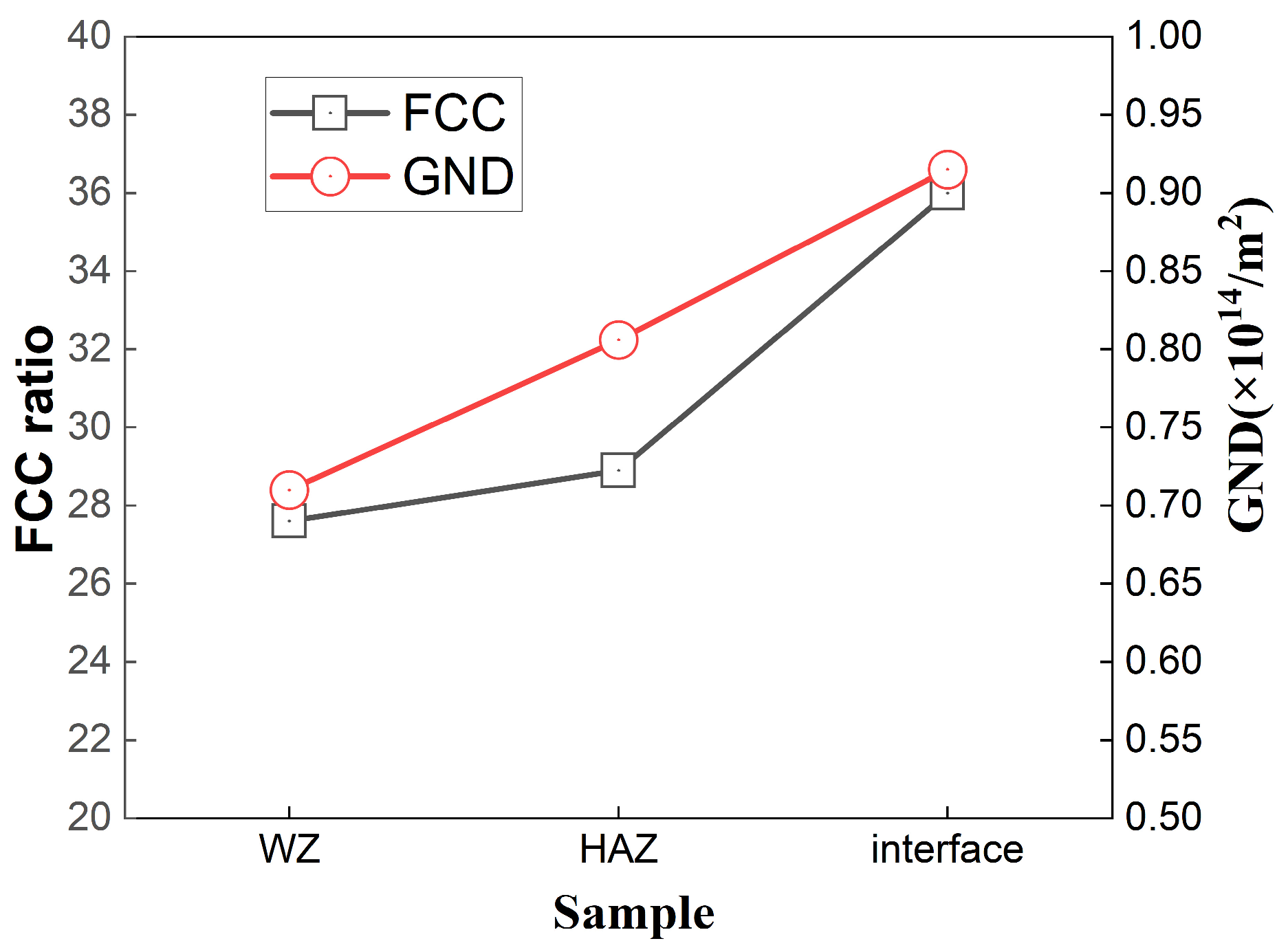
Because of cold working, the drawn BM contains a high density of dislocations. The GND density and FCC phase fraction both decrease approximately linearly along the welding direction (Figure 4). Similarly to the trend in austenite fraction, the GND density peaks in the BM. In the HAZ, grain growth occurs under the influence of the welding thermal–mechanical cycle, and partial dislocation recovery occurs. Consequently, the GND density decreases progressively along the welding direction and reaches its minimum in the weld zone. Regions with a relatively higher GND density are predominantly located within austenite grains or at the phase boundaries between the two phases.
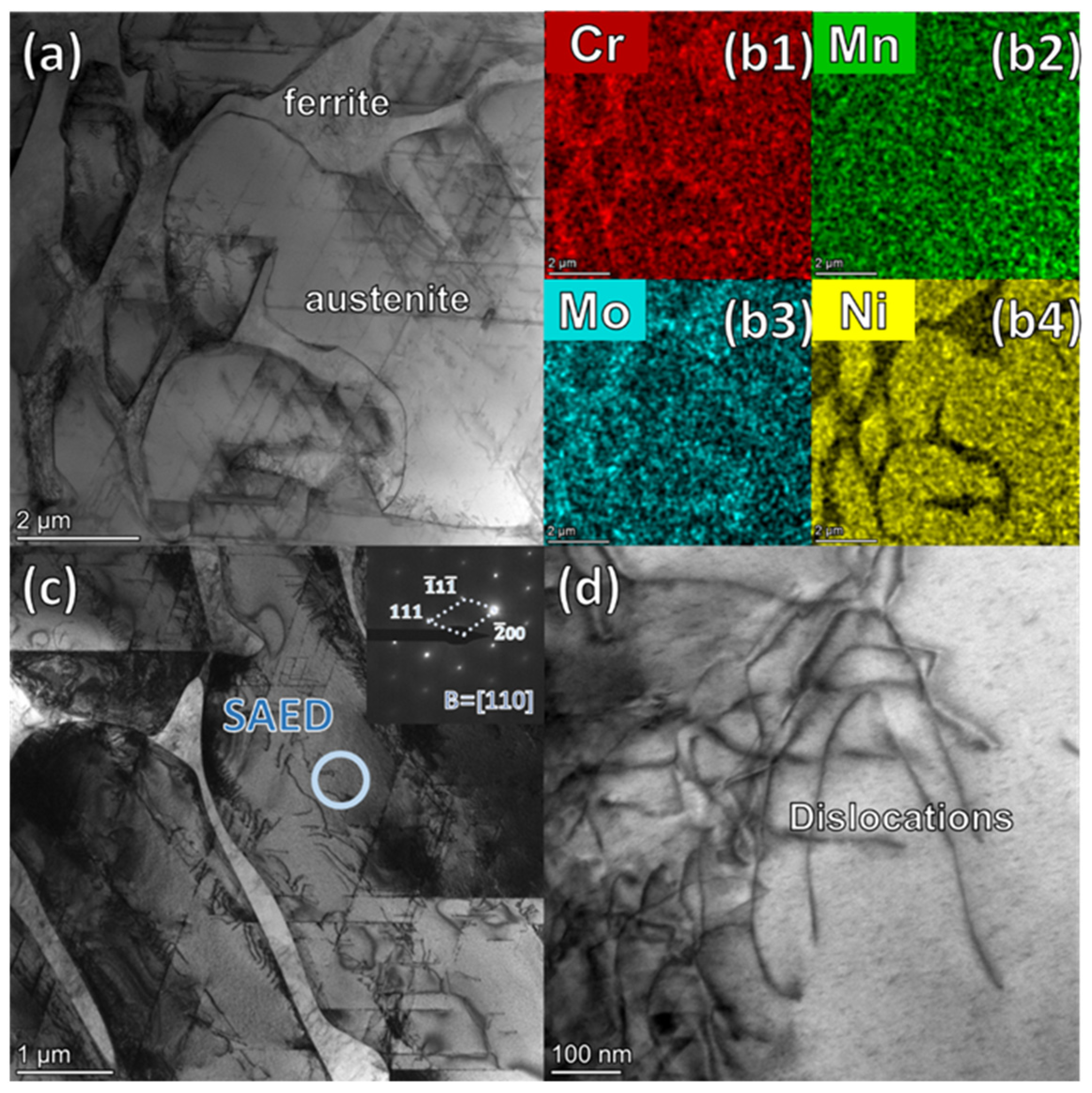
Figure 5 provides further insights into the microstructural phase characteristics and elemental distributions within the weld zone via TEM analysis and EDX spectroscopy. The bright-field image in Figure 5a clearly delineates the interface morphology between the two phases, revealing their distributions at the microscale. EDX analyses indicate that Cr and Mo are enriched in the ferrite phase, whereas the austenite phase exhibits the opposite trend. Figure 5d presents a high-magnification view of the dislocation configuration within the austenite grain. In contrast, as observed in Figure 5c, dislocations are scarcely visible in the ferrite matrix, which accords with the GND density distribution presented in Figure 3, wherein the defects are predominantly concentrated in the austenite regions. This can be attributed to the fact that ferrite solidifies as the primary phase [24,25,26]. During the welding process, under high-temperature influence, ferrite undergoes dynamic recovery and recrystallization, leading to the rapid elimination of a significant number of dislocations.

3.2. Mechanical Properties

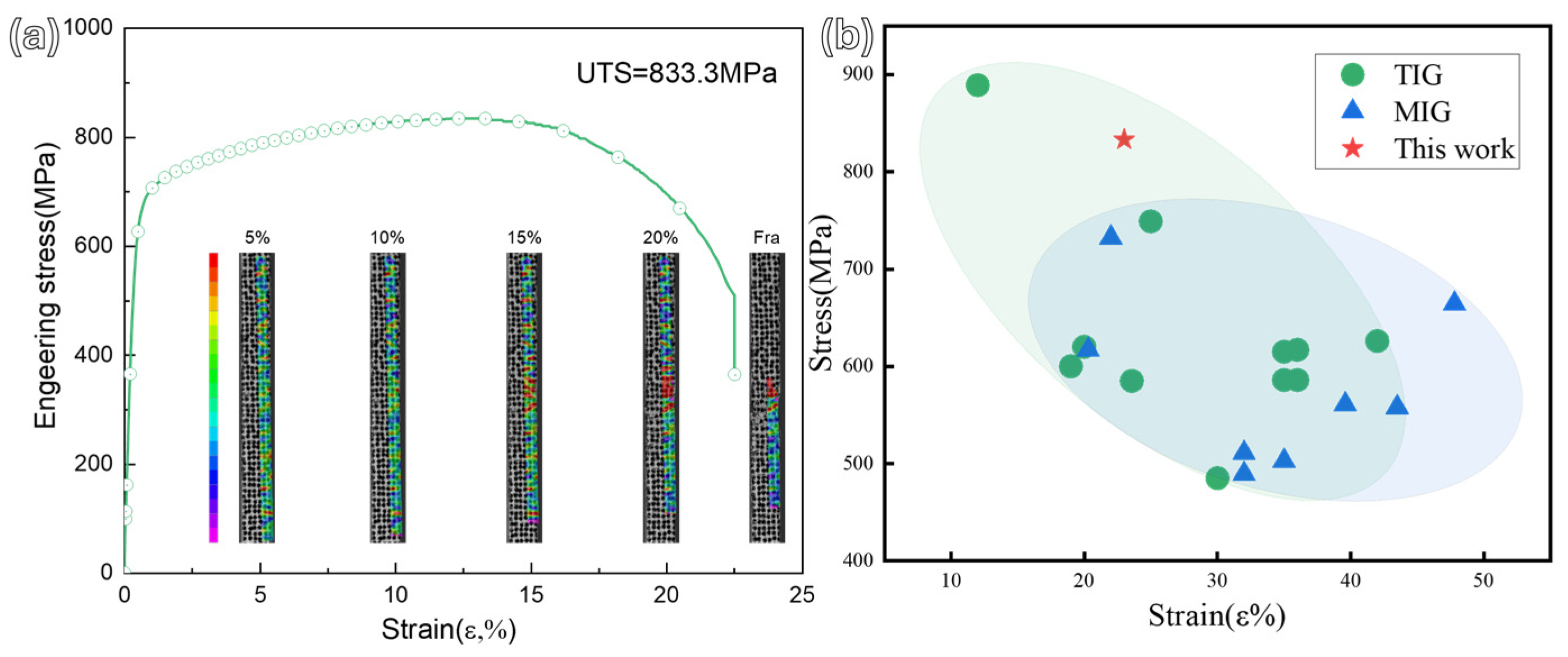
Figure 6 presents the tensile stress–strain curve of the duplex stainless-steel welded joint, the strain distribution during the tensile process, and the statistical summary of the welded joint’s mechanical properties. The curve reveals a continuous increase in stress beyond the yield point, which is characteristic of the work-hardening behavior typical of duplex stainless steels. The welded joint achieves an ultimate tensile strength (UTS) of 833.3 MPa, closely approaching the BM strength of 921.6 MPa. Compared with conventional welded joints, the joints produced in this study exhibit the most outstanding strength–ductility synergy, with their strength approaching that of the base metal. Its uniform elongation reaches approximately 15%, while the total elongation at fracture is approximately 25%, demonstrating excellent strength–ductility balance.
The strain distribution calculated using digital image correlation indicates that, at low strain levels (5–10%), both the BM and weld zone undergo deformation, with the strain being relatively uniformly distributed overall. However, when the strain exceeds 15%, the strain gradually localizes into specific regions. In the figure, areas of high strain are represented in red. Prior to fracture, the high-strain region becomes highly concentrated within the weld zone, which also corresponds to the final location of localized necking.

3.3. Evolution of Microstructure During Tensile Deformation of 2507 DSS

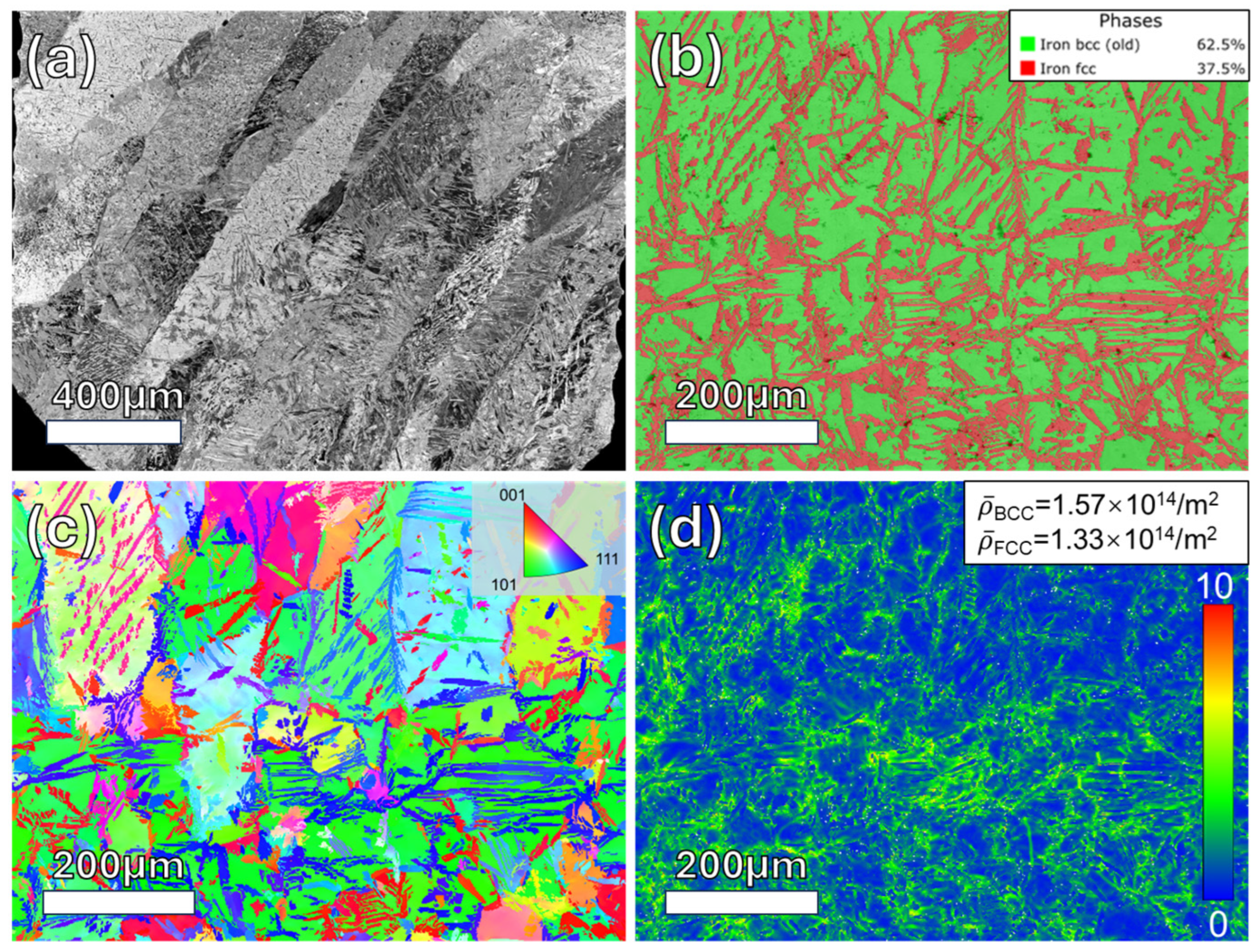
Figure 7 presents the microstructure of the welded joint after being subjected to a tensile strain of 5%. Compared with the as-welded microstructure, grains are observed to be elongated along the tensile direction in the ECC images, while austenite remains in a continuous network structure interlaced within the ferrite matrix. Based on the phase map and IPF (inverse pole figure) map, the face-centered-cubic (FCC) phase primarily exhibits {111} and {100} textures, whereas the body-centered-cubic (BCC) phase predominantly shows a {110} texture [41,42]. At this stage, the average GND density in the ferrite phase remains higher than that within the austenite phase. However, the GND densities in both phases are elevated compared with those in the undeformed welded joint. Moreover, as observed in Figure 7d, GNDs are predominantly concentrated at the phase boundaries between austenite and ferrite.
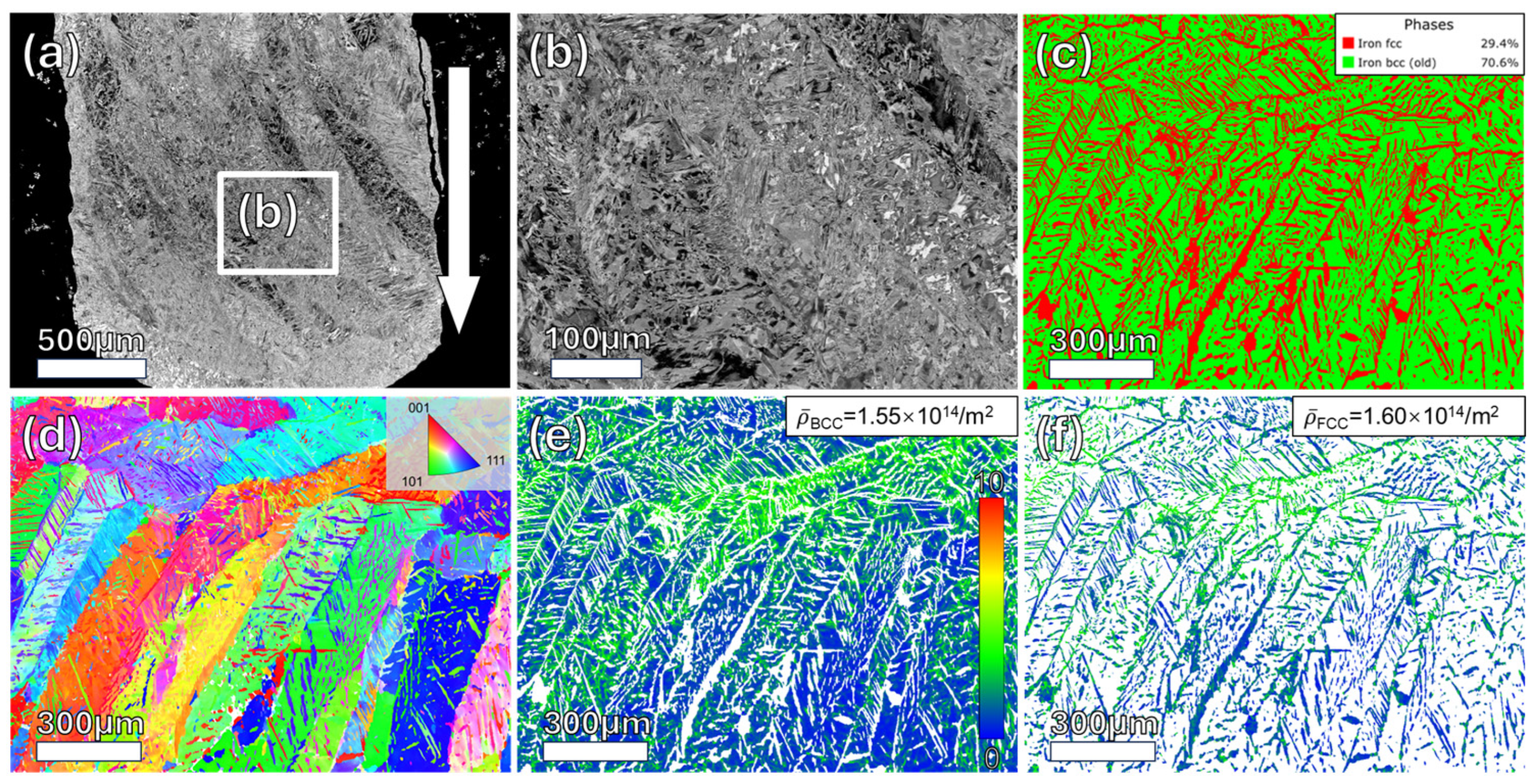
Figure 8 illustrates the microstructure of the welded joint subjected to a tensile strain of 10%. With increasing tensile strain, the large ferrite grains acting as the matrix exhibit pronounced elongation along the tensile direction. Locally, the austenite grains progressively refine and rotate toward the tensile axis. As deformation proceeds, the elongated austenite bands gradually reorient to align with the tensile direction, with a marked tendency toward the development of a {111} texture within the austenite phase. The GND density distribution maps for both phases reveal that defects are predominantly concentrated in regions where the orientation of the austenite bands is perpendicular to the tensile direction, including both the interior of the austenite grains and phase boundaries.
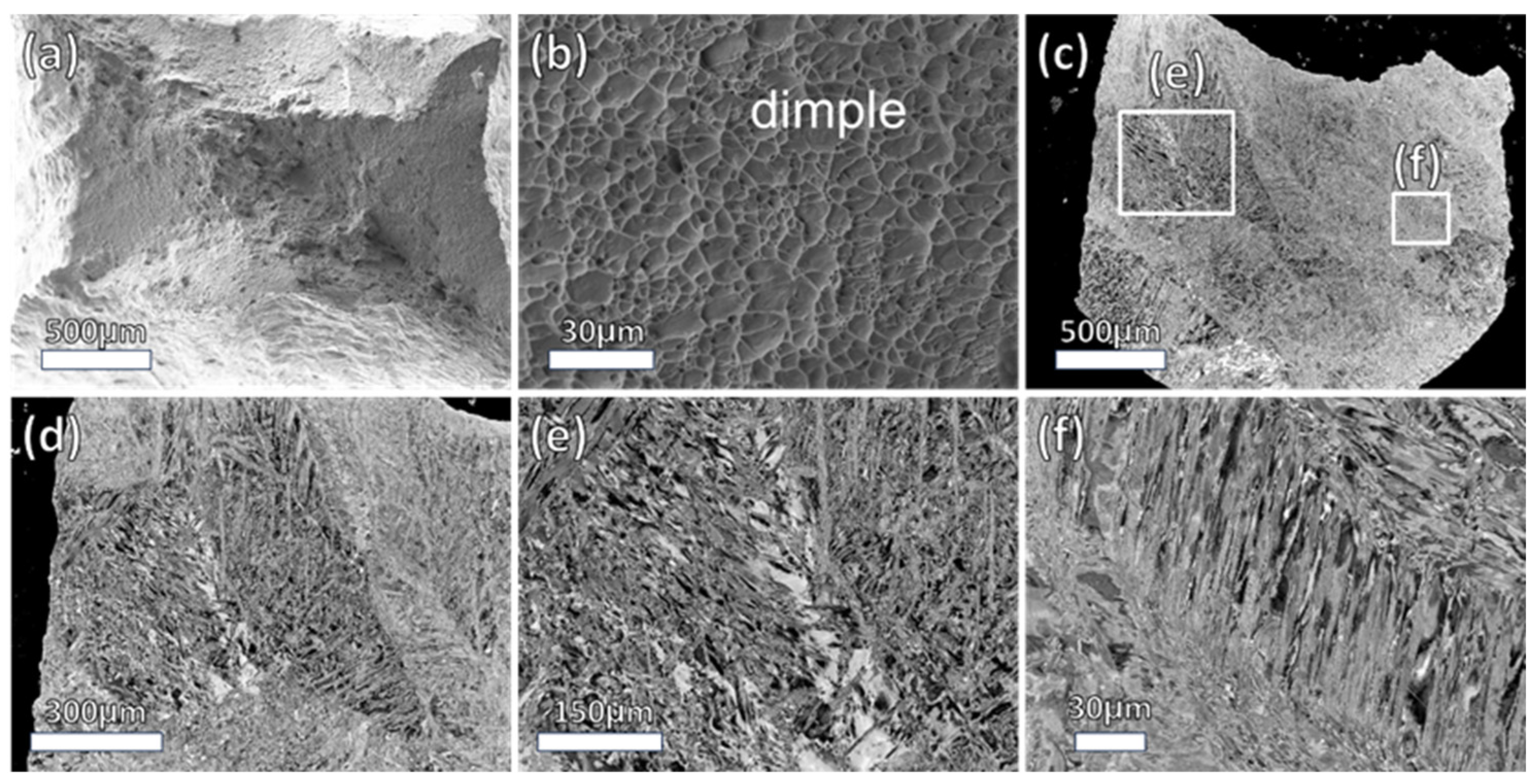
Figure 9 presents the SEM and BSD images of the fracture surface of the welded joint. The fracture exhibits typical ductile characteristics with uniformly distributed dimples of various sizes. In Figure 9c, it can be observed that the crack-propagation path traverses both the austenite and ferrite phases, indicating that fracture occurs simultaneously within both phases. Numerous brighter austenite bands, initially randomly oriented, are aligned along the tensile direction, accompanied by a significant reduction in the boundary width.
Figure 10 illustrates the microstructure of the region adjacent to the fracture surface in the duplex-steel welded joint. Similarly to the microstructure observed in the earlier lower-strain specimens, the ferrite phase exhibits a pronounced concentration of grains oriented toward the {110} texture direction after tensile deformation. Within the austenite phase, a portion of grains have rotated toward the tensile direction, ultimately developing a strong {111} texture, while another subset of grains with orientations close to {100} appear fragmented after deformation.
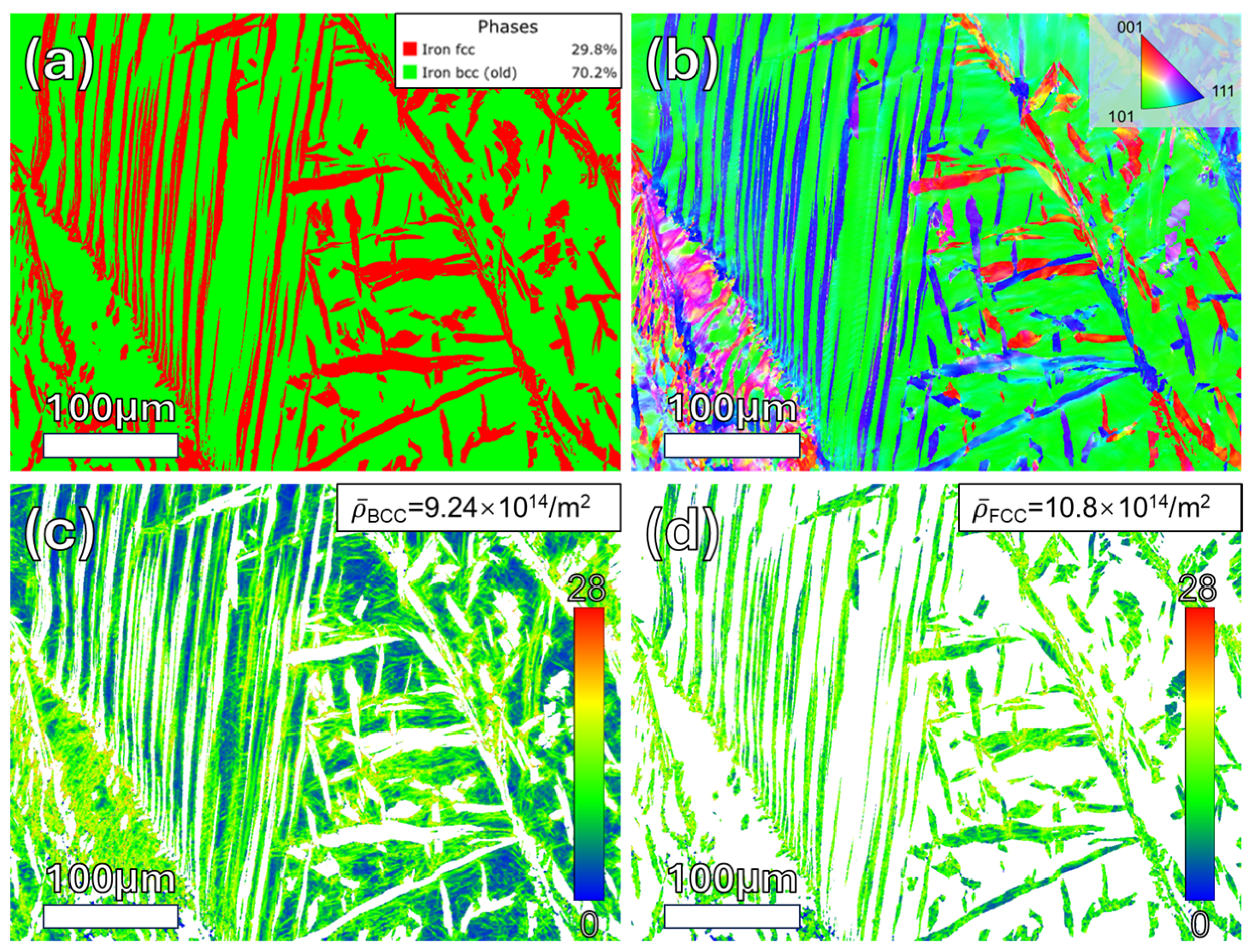
Prior to fracture, both phases undergo severe plastic deformation, resulting in a substantial increase in the GND density, compared with that of the specimen strained to 10%. The average GND density in austenite increases to 10.8 × 10¹⁴ m−2. Moreover, as shown in Figure 10d, defects are highly concentrated within the austenite grains and at the phase interfaces.
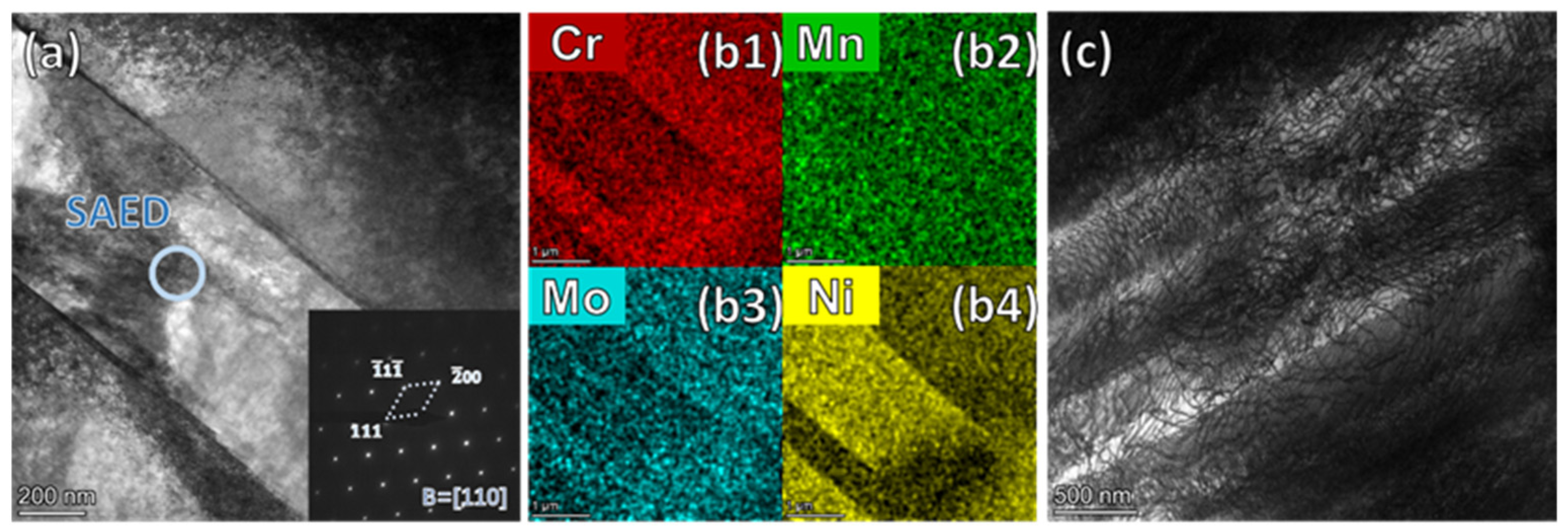
Figure 11 presents the microstructure and elemental distribution in the vicinity of the fracture surface of the welded joint. After tensile deformation, the austenite phase interfaces straighten and grains undergo significant refinement, compared with their initial condition. Notably, no martensitic transformation is observed in the austenite phase, and no elemental segregation is detected at the interfaces between austenite and ferrite. A high density of dislocations is observed within the grains of both phases. Figure 11c shows the internal structure of an austenite grain, revealing a network of densely tangled dislocations with localized formations of dislocation cell structures, indicating that the material undergoes severe plastic deformation prior to fracture. This observation is consistent with the results obtained from the earlier BSD and EBSD analyses.

4. Discussion

The microstructure of the as-welded 2507 duplex stainless-steel pipe joints fabricated in this study results from the synergistic effects of the thermal cycle and protective vacuum atmosphere during the welding process. The gradient microstructure observed from the BM to WM reflects the regulation of heat input on the grain growth. The fine-grained structure of the drawn BM, resulting from cold-working strengthening, undergoes dynamic recovery in the HAZ under the influence of welding heat, leading to gradual grain coarsening along the heat-flow direction (welding direction). In contrast, the WM, as the solidification zone of the high-temperature molten pool with a relatively slower cooling rate, ultimately forms a coarse duplex structure comprising ferrite and band-like secondary austenite. This is consistent with the solidification sequence characteristic of duplex stainless steels during welding: “primary ferrite solidification followed by austenite formation” [43,44].
The welding method employed (vacuum level ≥ 10−2 Pa) demonstrated significant advantages in suppressing gas impurities and element burn-off. Compared with conventional arc-welding processes (e.g., GTAW, GMAW), the vacuum environment can markedly reduce oxygen and nitrogen content in the weld metal, thereby minimizing the formation of oxide inclusions and porosity. Although direct chemical analysis of oxygen and nitrogen in the weld was not conducted in this study, no obvious oxide or nitride inclusions were observed via EBSD and TEM examinations (Figure 2, Figure 3, Figure 4 and Figure 5), which stands in clear contrast to the inclusion defects commonly encountered in traditional welding. This observation aligns with the reported benefits of vacuum welding documented in references [19,20,21]. Furthermore, EDX analysis revealed the enrichment of Cr and Mo in the ferrite phase and partitioning of Ni to the austenite phase (Figure 5(b1–b4)). This distribution conforms to the solid solubility characteristics of duplex stainless steels, with no evident oxidation loss of Cr/Mo due to atmospheric contamination [45,46,47]. These findings indicate that the vacuum environment not only protects the weld from contamination but also helps maintain reasonable alloy element distribution, thereby contributing to the mechanical properties and corrosion resistance of the welded joint.
Notably, the evolution of the morphology and phase fraction of austenite within the joint region (Figure 3) exhibits significant process dependency. The alternating lamellar structure of austenite and ferrite in the BM (Figure 3c) gradually transforms into discontinuous bands in the HAZ (Figure 3b) and finally evolves into a continuous network-like distribution in the WM (Figure 3a), accompanied by a slight decrease in the austenite phase fraction. This phenomenon is attributed to the effect of the welding thermal cycle on the phase equilibrium: the stability of ferrite is enhanced at elevated temperatures, leading to the partial dissolution of austenite. Meanwhile, the amount of austenite reformed during cooling is constrained by the cooling rate and diffusion kinetics of the alloying elements, ultimately resulting in reduced austenite content in the WM [41,48,49]. The network-distributed austenite phase effectively partitions the ferrite matrix, inhibiting excessive ferrite grain growth while providing favorable sites for accommodating plastic deformation during the subsequent tensile loading [2,50,51,52,53]. This constitutes a vital microstructural foundation for achieving excellent strength–ductility synergy in the joint.
The microstructural evolution from the initial state to fracture (Figure 7, Figure 8, Figure 9 and Figure 10) elucidates the dynamic “microstructure stress–strain” response mechanism during tensile deformation. At low strain levels (5–10%), the strain is distributed relatively uniformly between the BM and WM, with both ferrite and austenite undergoing an elastic-to-plastic transition. EBSD analysis indicates a higher initial GND density within the austenite grains and at phase boundaries in the undeformed joint (Figure 3d–f). Upon loading to 5% strain, the GND density in both phases increases significantly, with defects being concentrated predominantly at the phase boundaries (Figure 7d). This suggests that phase boundaries, acting as potent barriers to dislocation motion, become primary sites for stress concentration [54,55]. Concurrently, a {110} texture in ferrite and {111} texture in austenite begins developing (Figure 7c), while the grain morphology remains relatively intact, corresponding to the work-hardening stage of the tensile curve.
When the strain exceeds 15%, strain localization initiates within the weld metal region, marking the onset of the severe plastic deformation stage [41]. TEM observations reveal the formation of high-density dislocation tangles and dislocation cell structures within the austenite phase, whereas the increase in dislocation density in ferrite is comparatively moderate. This differential deformation behavior stems from the intrinsic differences in their crystal structures: Austenite, with its higher number of active slip systems, sustains work hardening through continuous dislocation multiplication and interactions. In contrast, ferrite, with fewer available slip systems, is more prone to dislocation annihilation and dynamic recovery, leading to gradual stress transfer to the austenite phase [1,9,56]. At 10% strain, austenite grains are observed to rotate toward the tensile direction and undergo refinement, accompanied by an intensification of the {111} texture [27,28]. This evolution further enhances the joint’s work-hardening capacity, contributing to the sustained stress rise post yielding. It is noteworthy that during this stage, the {110} texture in ferrite and the intensified {111} texture in austenite act synergistically. The {110} texture facilitates the coordinated deformation of ferrite along its dominant slip system, while the {111} texture maximizes the activation of the most favorable {111} <110> slip system in austenite, promoting multi-slip activity and dislocation interactions [40,41]. This significantly increases dislocation storage capacity and enhances the work-hardening rate. This strain-hardening mechanism, reinforced by texture evolution, is a key microstructural factor enabling the joint to delay necking at high strains and achieve an excellent strength–ductility balance.
The uniform dimples observed in the SEM fractography confirm a typical ductile fracture mode. The crack-propagation path traverses both phases, demonstrating the involvement of both austenite and ferrite in the plastic deformation process. EBSD analysis shows that the average GND density in austenite increases markedly to 10.8 × 10¹⁴ m−2, prior to fracture (Figure 10d), with defects highly concentrated at phase boundaries and within austenite grains. This indicates that with increasing tensile deformation, dislocation pile-up at phase boundaries intensifies continuously, ultimately promoting micro-void nucleation and growth. The network morphology of the austenite phase effectively hinders micro-void propagation, prolonging the fracture process and thereby ensuring that the joint achieves large total elongation.

5. Conclusions

In this study, the microstructural characteristics, room-temperature tensile mechanical properties, and microstructural evolution of drawn 2507 duplex stainless-steel pipe joints fabricated via vacuum-fusion welding were systematically investigated during its deformation. The research employed uniaxial tensile testing combined with multidimensional microstructural characterization techniques such as EBSD, TEM, and BSD. The main conclusions are as follows:
(1)
The welded joint exhibited a graded microstructure along the welding direction, transitioning from the BM to HAZ, and finally, to the WM. The BM, after cold working, consisted of fine grains. In the HAZ, grains gradually coarsened along the welding direction. The WM solidified into a coarse duplex structure composed of large ferrite grains and a network of fine, band-like austenite. The austenite phase fraction decreased from approximately 36% in the BM to 27.6% in the WM. During tensile deformation, no martensitic transformation occurred in the austenite. The plastic deformation was primarily governed by the dislocation slip, with the GND density mainly concentrated within the austenite grains and at the ferrite–austenite phase boundaries. Austenite accommodated the majority of the deformation through mechanisms such as dislocation multiplication, tangling, and the formation of dislocation cell structures, thereby enhancing the overall toughness of the material.
(2)
The welded joint fabricated under these process parameters demonstrated a favorable balance of strength and ductility. The joint achieved a UTS of 833.3 MPa, approaching the BM strength of 921.6 MPa, with a uniform elongation of approximately 15% and total elongation at fracture of approximately 25%. This excellent performance was attributed to the reasonable dual-phase ratio in the weld zone, microstructural purity ensured by the vacuum environment, and coordinated deformation between ferrite and austenite. These factors collectively contributed to an effective balance between joint strength and ductility requirements.
(3)
At low strain levels (5–10%), the strain was distributed relatively uniformly between the BM and weld zone. A {110} texture developed in ferrite, while {111} and {100} textures formed in austenite. The GND density in both phases increased, compared with that in the undeformed state, with defects predominantly concentrated at the phase boundaries. At high strain levels (>15%), the strain was localized within the weld region. Austenite grains rotated toward the tensile direction and underwent refinement, accompanied by an intensification of the {111} texture. Near the fracture surface, the average GND density in austenite increased significantly, to 10.8 × 10¹⁴ m−2, with defects highly enriched at phase boundaries and within the grains. The fracture surface exhibited a uniform dimple morphology, indicative of ductile fracture, and the crack-propagation path traversed both phases, confirming their collaborative participation in plastic deformation.
In summary, this study clarified the performance advantages of vacuum-fusion-welded joints for 2507 duplex stainless-steel pipes. Furthermore, it provided technical insights and theoretical support for optimizing welding processes and evaluating the service performance of 2507 duplex stainless-steel pipes in demanding environments such as subsea pipelines and seawater-desalination systems.

Author Contributions

X.C., Conceptualization, investigation, supervision, formal analysis, and writing—review and editing; L.Z. (Lichu Zhou), funding acquisition and writing—original draft; L.Z. (Lili Zhai), methodology and data curation; H.G., data curation. All authors have read and agreed to the published version of the manuscript.

Funding

National Natural Science Foundation of China: 52504406.

Institutional Review Board Statement

Not applicable.

Informed Consent Statement

Not applicable.

Data Availability Statement

The data that support the findings of this study are available from the corresponding author upon reasonable request.

Conflicts of Interest

Authors Lili Zhai and Hong Gao are employed by the company Jiangsu Wujin Stainless Steel Co., Ltd. All other authors declare no conflicts of interest.

References

  1. Belyakov, A.; Kimura, Y.; Tsuzaki, K. Microstructure evolution in dual-phase stainless steel during severe deformation. Acta Mater. 2006, 54, 2521–2532. [Google Scholar] [CrossRef]
  2. Cabrera, J. Hot deformation of duplex stainless steels. J. Mater. Process. Technol. 2003, 143, 321–325. [Google Scholar] [CrossRef]
  3. Fréchard, S.; Martin, F.; Clément, C.; Cousty, J. AFM and EBSD combined studies of plastic deformation in a duplex stainless steel. Mater. Sci. Eng. A 2006, 418, 312–319. [Google Scholar] [CrossRef]
  4. Li, Q.; Zhou, L.; Gao, H.; Pan, Y.; Ma, J.; Zhang, X.; Jiang, J.; Fang, F. 3 GPa dual-phase stainless steel from synergistic heterogeneous structure and nano-precipitate. Mater. Res. Lett. 2024, 13, 207–216. [Google Scholar] [CrossRef]
  5. Alvarez-Armas, I.; Marinelli, M.C.; Hereñú, S.; Degallaix, S.; Armas, A.F. On the cyclic softening behavior of SAF 2507 duplex stainless steel. Acta Mater. 2006, 54, 5041–5049. [Google Scholar] [CrossRef]
  6. Salvetr, P.; Školáková, A.; Melzer, D.; Brázda, M.; Duchoň, J.; Drahokoupil, J.; Svora, P.; Msallamová, Š.; Novák, P. Characterization of super duplex stainless steel SAF2507 deposited by directed energy deposition. Mater. Sci. Eng. A 2022, 857, 144084. [Google Scholar] [CrossRef]
  7. Park, Y.H.; Lee, Z.H. The effect of nitrogen and heat treatment on the microstructure and tensile properties of 25Cr–7Ni–1.5Mo–3W–xN duplex stainless steel castings. Mater. Sci. Eng. A 2001, 297, 78–84. [Google Scholar] [CrossRef]
  8. Sato, Y.S.; Nelson, T.W.; Sterling, C.J.; Steel, R.J.; Pettersson, C.O. Microstructure and mechanical properties of friction stir welded SAF 2507 super duplex stainless steel. Mater. Sci. Eng. A 2005, 397, 376–384. [Google Scholar] [CrossRef]
  9. Li, Q.; Zhou, L.; Gao, H.; Wang, J.; Cao, X.; Ma, J.; Jiang, J.; Fang, F. Ultra-strong cold-drawn 2507 stainless steel wire with heterogenous microstructure of dual-phase and grain size. J. Mater. Res. Technol. 2024, 33, 6876–6889. [Google Scholar] [CrossRef]
  10. Bai, J.; Zhang, M.; Ma, H.; Li, Z.; Mao, W.; Li, J.; Zhang, J. Investigation of hydrogen embrittlement in welded joints of the L360MH pipeline steel for hydrogen transportation. Corros. Sci. 2025, 251, 112940. [Google Scholar] [CrossRef]
  11. Vargas-Arista, B.; Balvantin, A.; Baltazar, A.; García-Vázquez, F. On the use of ultrasonic spectral analysis for the characterization of artificially degraded API 5L X52 steel pipeline welded joints. Mater. Sci. Eng. A 2012, 550, 227–234. [Google Scholar] [CrossRef]
  12. Zhong, Z.; Wei, B.; Wang, Z.; Qin, T.; Liu, L.; Wu, T.; Ramamurty, U. Microbiologically assisted stress corrosion cracking of X80 pipeline steel welded joint under cathodic protection. Acta Mater. 2026, 303, 121722. [Google Scholar] [CrossRef]
  13. Ji, S.; Zhang, L.; Liu, X.; Yang, J. Effect of Welding Technologies on Decreasing Welding Residual Stress of Francis Turbine Runner. J. Mater. Sci. Technol. 2010, 26, 951–956. [Google Scholar] [CrossRef]
  14. Moteshakker, A.; Danaee, I. Microstructure and Corrosion Resistance of Dissimilar Weld-Joints between Duplex Stainless Steel 2205 and Austenitic Stainless Steel 316L. J. Mater. Sci. Technol. 2016, 32, 282–290. [Google Scholar] [CrossRef]
  15. Van Huong, H.; Nguyen, T.T.; Nguyen, V.-T.; Nguyen, V.T.T. Material Strength Optimization of Dissimilar MIG Welding between Carbon and Stainless Steels. Metals 2024, 14, 1011. [Google Scholar] [CrossRef]
  16. Mirakhorli, F.; Ghaini, F.M.; Torkamany, M.J. Development of Weld Metal Microstructures in Pulsed Laser Welding of Duplex Stainless Steel. J. Mater. Eng. Perform. 2012, 21, 2173–2176. [Google Scholar] [CrossRef]
  17. Lu, Q.; Chen, L.; Ni, C. Improving welded valve quality by vibratory weld conditioning. Mater. Sci. Eng. A 2007, 457, 246–253. [Google Scholar] [CrossRef]
  18. Li, Z.; Li, Y.; Guo, W.; Dong, J.; Wu, Q.; Liang, K.; Luo, Z. Strength-ductility synergy in 304L stainless steel laser welded joints enabled by σ-phase incorporation. J. Manuf. Process. 2025, 137, 1–11. [Google Scholar] [CrossRef]
  19. Li, F.S.; Wu, L.H.; Li, H.J.; Hua, P.T.; Xue, P.; Ni, D.R.; Xiao, B.L.; Ma, Z.Y. Achieving high precipitation phase proportion and mechanical properties of vacuum electron beam oscillation welded joints of near β titanium alloy thick plates by the interlayer addition. Vacuum 2024, 230, 113725. [Google Scholar] [CrossRef]
  20. Aghayar, Y.; Naghashzadeh, A.; Atapour, M. An assessment of microstructure and mechanical properties of inconel 601/304 stainless steel dissimilar weld. Vacuum 2021, 184, 109970. [Google Scholar] [CrossRef]
  21. Tümer, M.; Schneider-Bröskamp, C.; Enzinger, N. Fusion welding of ultra-high strength structural steels—A review. J. Manuf. Process. 2022, 82, 203–229. [Google Scholar] [CrossRef]
  22. Köse, C.; Topal, C. Dissimilar laser beam welding of AISI 2507 super duplex stainless to AISI 317L austenitic stainless steel. Mater. Sci. Eng. A 2023, 862, 144476. [Google Scholar] [CrossRef]
  23. Tsai, Y.-T.; Lin, P.-C.; Chen, Y.-W.; Wang, S.-H.; Yang, J.-R. Fatigue behavior and microstructural characteristics of a duplex stainless steel weld metal under vibration-assisted welding. Mater. Sci. Eng. A 2018, 721, 319–327. [Google Scholar] [CrossRef]
  24. Khan, W.N.; Chhibber, R. Effect of filler metal on solidification, microstructure and mechanical properties of dissimilar super duplex/pipeline steel GTA weld. Mater. Sci. Eng. A 2021, 803, 140476. [Google Scholar] [CrossRef]
  25. Lin, Y.C.; Chen, P.Y. Effect of nitrogen content and retained ferrite on the residual stress in austenitic stainless steel weldments. Mater. Sci. Eng. A 2001, 307, 165–171. [Google Scholar] [CrossRef]
  26. Wang, J.; Uggowitzer, P.J.; Magdowski, R.; Speidel, M.O. Nickel-free duplex stainless steels. Scr. Mater. 1998, 40, 123–129. [Google Scholar] [CrossRef]
  27. Sabzi, M.; Jafarian, H.R.; Abdollahzadeh, A.; Anijdan, S.H.M.; Eivani, A.R. Continuous and pulsed TIG welded joint of ASTM A105-AISI 316L steels: Characterization of microstructure, mechanical properties, and fracture analysis. J. Mater. Res. Technol. 2025, 39, 5440–5454. [Google Scholar] [CrossRef]
  28. Surkar, H.S.; Kumar, A.; Sirohi, S.; Pandey, S.M.; Świerczyńska, A.; Fydrych, D.; Pandey, C. A dissimilar welded joint of grade 92 steel and AISI 304L steel obtained using IN82 buttering and IN617 filler: Relationship of microstructure and mechanical properties. Arch. Civ. Mech. Eng. 2024, 24, 109. [Google Scholar] [CrossRef]
  29. Li, G.; Chen, F.; Han, Y.; Liang, Y. Improving Mechanical Properties of PVPPA Welded Joints of 7075 Aluminum Alloy by PWHT. Materials 2018, 11, 379. [Google Scholar] [CrossRef] [PubMed]
  30. Wen, T.; Quan, H.; Zhang, P.; Yu, Q.; Zhang, Q. A Study on Mechanical Properties and Microstructure of Welded Joints in EH40 Steel with High Heat Input Welding. J. Mater. Eng. Perform. 2025, 35, 765–776. [Google Scholar] [CrossRef]
  31. Molak, R.M.; Paradowski, K.; Brynk, T.; Ciupinski, L.; Pakiela, Z.; Kurzydlowski, K.J. Measurement of mechanical properties in a 316L stainless steel welded joint. Int. J. Press. Vessel. Pip. 2009, 86, 43–47. [Google Scholar] [CrossRef]
  32. Zhang, R.; Buchanan, C.; Matilainen, V.-P.; Daskalaki-Mountanou, D.; Britton, T.B.; Piili, H.; Salminen, A.; Gardner, L. Mechanical properties and microstructure of additively manufactured stainless steel with laser welded joints. Mater. Des. 2021, 208, 109921. [Google Scholar] [CrossRef]
  33. Tao, P.; Wang, C.; Mi, G.; Huang, Y.; Zhang, X. Formation, microstructure, and mechanical properties of oscillating laser-welded joints of 8-mm 304 stainless steel. Int. J. Adv. Manuf. Technol. 2023, 130, 2899–2913. [Google Scholar] [CrossRef]
  34. Shanmugasundar, G.; Bansod, A.; Schindlerova, V.; Cep, R. Influence of Filler Material on the Microstructural and Mechanical Properties of 430 Ferritic Stainless Steel Weld Joints. Materials 2023, 16, 1590. [Google Scholar] [CrossRef]
  35. El-Batahgy, A.M.; Elkousy, M.R.; Al-Rahman, A.A.; Gumenyuk, A.; Rethmeier, M.; Gook, S. Retaining Mechanical Properties of GMA-Welded Joints of 9%Ni Steel Using Experimentally Produced Matching Ferritic Filler Metal. Materials 2022, 15, 8538. [Google Scholar] [CrossRef] [PubMed]
  36. Zuo, Z.; Haowei, M.; Yarigarravesh, M.; Assari, A.H.; Tayyebi, M.; Tayebi, M.; Hamawandi, B. Microstructure, Fractography, and Mechanical Properties of Hardox 500 Steel TIG-Welded Joints by Using Different Filler Weld Wires. Materials 2022, 15, 8196. [Google Scholar] [CrossRef]
  37. Yan, F.; Liu, J.; Liu, G.; Lin, P.; Gao, Z.; Zhang, P.; Lu, X.; Jiang, P. Weld morphology, microstructure and mechanical property of laser welded joint of Ti80 alloy. J. Mater. Res. Technol. 2025, 38, 3164–3174. [Google Scholar] [CrossRef]
  38. Sharma, A.; Wattal, R.; Niranjan, M.S. Consequence of Ultrasonic Vibration-Assisted Cold Metal Transfer Welding Parameters on Metallurgical and Mechanical Properties of Ferritic Stainless-Steel-Welded Joints. J. Mater. Eng. Perform. 2025. [Google Scholar] [CrossRef]
  39. Kumar, A.; Sirohi, S.; Singh, M.; Fydrych, D.; Pandey, C. Microstructure and mechanical properties of a dissimilar metal welded joint of Inconel 617 and P92 steel with Inconel 82 buttering layer for AUSC boiler application. Int. J. Press. Vessel. Pip. 2024, 209, 105196. [Google Scholar] [CrossRef]
  40. Moteshakker, A.; Danaee, I.; Moeinifar, S.; Ashrafi, A. Hardness and tensile properties of dissimilar welds joints between SAF 2205 and AISI 316L. Sci. Technol. Weld. Join. 2016, 21, 1–10. [Google Scholar] [CrossRef]
  41. Jia, N.; Peng, R.L.; Wang, Y.D.; Johansson, S.; Liaw, P.K. Micromechanical behavior and texture evolution of duplex stainless steel studied by neutron diffraction and self-consistent modeling. Acta Mater. 2008, 56, 782–793. [Google Scholar] [CrossRef]
  42. Badji, R.; Chauveau, T.; Bacroix, B. Texture, misorientation and mechanical anisotropy in a deformed dual phase stainless steel weld joint. Mater. Sci. Eng. A 2013, 575, 94–103. [Google Scholar] [CrossRef]
  43. Sieurin, H.; Sandström, R. Austenite reformation in the heat-affected zone of duplex stainless steel 2205. Mater. Sci. Eng. A 2006, 418, 250–256. [Google Scholar] [CrossRef]
  44. Ma, C.; Peng, Q.; Mei, J.; Han, E.-H.; Ke, W. Microstructure and corrosion behavior of the heat affected zone of a stainless steel 308L-316L weld joint. J. Mater. Sci. Technol. 2018, 34, 1823–1834. [Google Scholar] [CrossRef]
  45. Park, J.-Y.; Ahn, Y.-S. Effect of Ni and Mn on the Mechanical Properties of 22Cr Micro-duplex Stainless Steel. Acta Metall. Sin. (Engl. Lett.) 2014, 28, 32–38. [Google Scholar] [CrossRef]
  46. Zhang, X.; Wang, K.; Zhou, Q.; Kong, J.; Peng, Y.; Ding, J.; Diao, C.; Yang, D.; Huang, Y.; Zhang, T.; et al. Element partitioning and electron backscatter diffraction analysis from feeding wire to as-deposited microstructure of wire and arc additive manufacturing with super duplex stainless steel. Mater. Sci. Eng. A 2020, 773, 138856. [Google Scholar] [CrossRef]
  47. Han, D.; Jiang, Y.; Shi, C.; Li, Z.; Li, J. Influence of the microstructure and alloying element on the polarization behaviour within the crevice of UNS S32304 duplex stainless steel. Corros. Sci. 2011, 53, 3796–3804. [Google Scholar] [CrossRef]
  48. Wan, Y.; Jiang, W. Characterization of inhomogeneous microstructure and mechanical property in an ultra-thick duplex stainless steel welding joint. Mater. Sci. Eng. A 2021, 822, 141640. [Google Scholar] [CrossRef]
  49. Jiang, Z.L.; Chen, X.Y.; Huang, H.; Liu, X.Y. Grain refinement of Cr25Ni5Mo1.5 duplex stainless steel by heat treatment. Mater. Sci. Eng. A 2003, 363, 263–267. [Google Scholar] [CrossRef]
  50. Ibrahim, O.H.; Ibrahim, I.S.; Khalifa, T.A.F. Effect of Aging on the Toughness of Austenitic and Duplex Stainless Steel Weldments. J. Mater. Sci. Technol. 2010, 26, 810–816. [Google Scholar] [CrossRef]
  51. Verma, J.; Taiwade, R.V. Effect of welding processes and conditions on the microstructure, mechanical properties and corrosion resistance of duplex stainless steel weldments—A review. J. Manuf. Process. 2017, 25, 134–152. [Google Scholar] [CrossRef]
  52. Jiang, Y.; Sun, T.; Li, J.; Xu, J. Evaluation of Pitting Behavior on Solution Treated Duplex Stainless Steel UNS S31803. J. Mater. Sci. Technol. 2014, 30, 179–183. [Google Scholar] [CrossRef]
  53. Cho, H.-H.; Han, H.N.; Hong, S.-T.; Park, J.-H.; Kwon, Y.-J.; Kim, S.-H.; Steel, R.J. Microstructural analysis of friction stir welded ferritic stainless steel. Mater. Sci. Eng. A 2011, 528, 2889–2894. [Google Scholar] [CrossRef]
  54. Zhang, X.; Wang, P.; Li, D.; Li, Y. Multi-scale study on the heterogeneous deformation behavior in duplex stainless steel. J. Mater. Sci. Technol. 2021, 72, 180–188. [Google Scholar] [CrossRef]
  55. Yamanaka, A.; McReynolds, K.; Voorhees, P.W. Phase field crystal simulation of grain boundary motion, grain rotation and dislocation reactions in a BCC bicrystal. Acta Mater. 2017, 133, 160–171. [Google Scholar] [CrossRef]
  56. Wang, Y.; Zhou, L.; Shi, C.; Pan, Y.; Ma, J.; Li, R.; Fang, F. Synergistic twinning and deformation-induced martensite transition facilitating 3GPa duplex stainless steel wire prepared by drawing. Mater. Sci. Eng. A 2024, 916, 147379. [Google Scholar] [CrossRef]
Figure 1. Welding process schematic and sheet tensile specimen.
Coatings 16 00146 g001
Figure 2. Electron-channeling-contrast images of the welded joint. (a) Overview of the weld and base metals. (b) Local magnification of the weld zone. (c) Local magnification of the heat-affected zone. (d) Magnified view of the base metal region.
Coatings 16 00146 g002
Figure 3. Electron backscatter diffraction images of the welded joint regions. (a) Weld zone. (b) Heat-affected zone. (c) Base–metal interface. Corresponding geometrically necessary dislocation density distribution maps: (d) weld zone; (e) heat-affected zone; (f) base–metal interface.
Coatings 16 00146 g003
Figure 4. Line charts of FCC phase fraction and GND density across different samples.
Coatings 16 00146 g004
Figure 5. Transmission electron micrographs of the weld zone: (a) bright-field image showing austenite and ferrite phases; (b1b4) energy-dispersive X-ray spectra; (c) selected-area electron-diffraction pattern of austenite; (d) bright-field image revealing dislocations within the austenite grain.
Coatings 16 00146 g005
Figure 6. (a) Mechanical properties of the welded joint and strain distribution during tensile deformation (UTS; ultimate tensile strength); (b) statistics of welded-joint properties [27,28,29,30,31,32,33,34,35,36,37,38,39,40].
Coatings 16 00146 g006
Figure 7. Microstructure of welded joint under 5% tensile strain. (a) Backscattered electron image of weld zone; (b) electron backscatter diffraction phase map; (c) inverse pole figure map; (d) geometrically necessary dislocation density distribution map.
Coatings 16 00146 g007
Figure 8. Microstructure of welded joint under 10% tensile strain: (a) backscattered electron image of weld zone. (b) Local magnification of dual-phase structure. (c) Electron backscatter diffraction phase map. (d) Inverse pole figure map. (e) Geometrically necessary dislocation (GND) density distribution map in ferrite. (f) GND density distribution map in austenite.
Coatings 16 00146 g008
Figure 9. Scanning electron microscope and backscatter electron images of the tensile fracture surface of the welded joint. (a) Overall fracture morphology. (b) Local dimple morphology. Longitudinal cross-section of the fracture under different magnifications: (c) 50×, (d) 100×, (e) 200×, and (f) 500×.
Coatings 16 00146 g009
Figure 10. Electron backscatter diffraction analysis results of the microstructure near the tensile fracture of the welded joint: (a) phase map; (b) inverse pole figure map; (c) geometrically necessary dislocation (GND) density distribution in ferrite; (d) GND density distribution in austenite.
Coatings 16 00146 g010
Figure 11. Transmission electron micrographs of the tensile-fractured welded joint: (a) Low-magnification bright-field image showing dual-phase structure; (b1b4) energy-dispersive X-ray elemental mappings; (c) dislocation configuration within the austenite phase.
Coatings 16 00146 g011
Table 1. Chemical Compositions of 2507 duplex stainless steel and ER2507 filler wire.
ElementCNCrNiMoMnSiFe
2507<0.030.2425.857.543.620.5Bal.
Ferrite/0.2728.25.34.022.20.51Bal.
Austenite/0.2224.958.443.371.60.45Bal.
ER2507<0.030.226.09.041.80.9Bal.
Disclaimer/Publisher’s Note: The statements, opinions and data contained in all publications are solely those of the individual author(s) and contributor(s) and not of MDPI and/or the editor(s). MDPI and/or the editor(s) disclaim responsibility for any injury to people or property resulting from any ideas, methods, instructions or products referred to in the content.