1. Introduction
Steel slag is a by-product of the steelmaking process, generally accounting for 8%–15% of crude steel production [
1]. In 2024, China’s steel production reached 840 million tons, steel slag emission was 153 million tons, and the accumulated stockpile was 1.446 billion tons. The utilization rate of steel slag in China is still less than 30% [
2], which is far from the 90% utilization rate in developed countries. Steel slag that is not reasonably utilized is often piled up in the open air or buried underground, resulting in a serious waste of land resources [
3]. The metal elements in steel slag can leach into soil and waterways, causing harm to the environment [
4]. In addition, steel slag produces a large amount of dust during transportation, which can harm human health if not handled properly [
5]. Therefore, it is necessary to implement effective resource utilization strategies to solve the problem of the massive accumulation of steel slag.
Currently, the most widely used metallurgical technologies in China are converter steelmaking and electric furnace steelmaking. The steel slag produced is primarily basic oxygen furnace slag (BOFS) and electric arc furnace slag (EAFS). The main chemical components of steel slag include CaO, SiO
2, FeO, Al
2O
3, MgO, along with trace amounts of MnO, P
2O
5, and other constituents [
6]. The primary minerals present in steel slag include C
2S, C
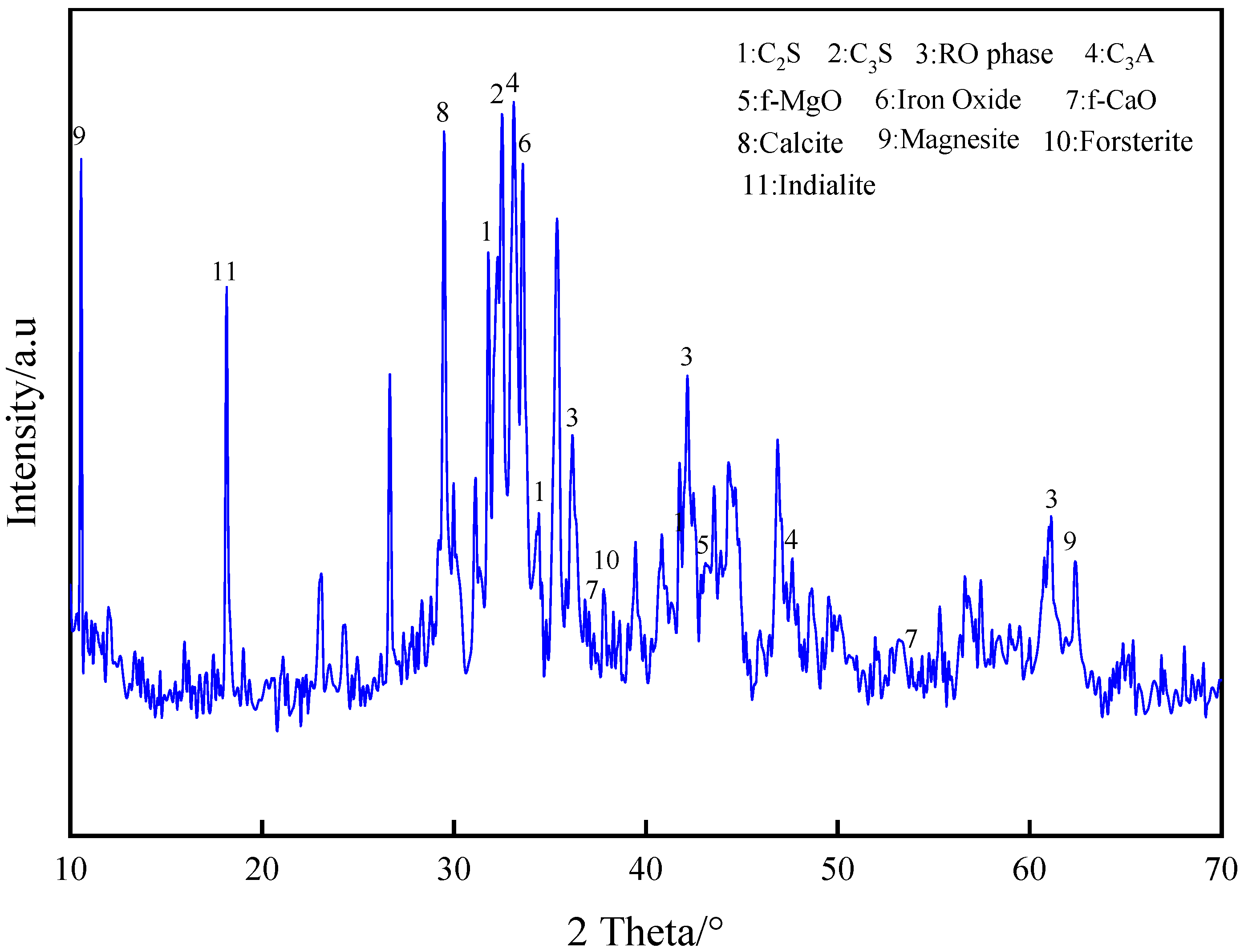
3S, the RO phase (composed of MgO, FeO, and MnO, and characterized by its high hardness and density), as well as f-CaO and f-MgO [
7]. Variations in raw materials, smelting technology, and steel types used by different manufacturers result in distinct chemical and mineral compositions of steel slag [
8]. Due to its high strength and excellent wear resistance, steel slag can be utilized as a paving material in road construction [
9]. Steel slag contains C
2S, C
3S, C
4AF, and other components similar to those found in cement clinker, and it possesses agglutinative properties, making it suitable as a supplementary cementitious material [
10]. However, the hydration activity of steel slag is inferior to that of cement clinker, and its high iron content contributes to poor grindability. Certain minerals in steel slag exhibit stability issues, which limit its utilization as a cement material.
With the expanding global infrastructure, concrete and mortar are widely used, leading to over-exploitation of natural sand and gravel. Natural aggregate resources for concrete and mortar are becoming more and more limited in some regions, making it necessary to find a material similar to natural sand as a substitute [
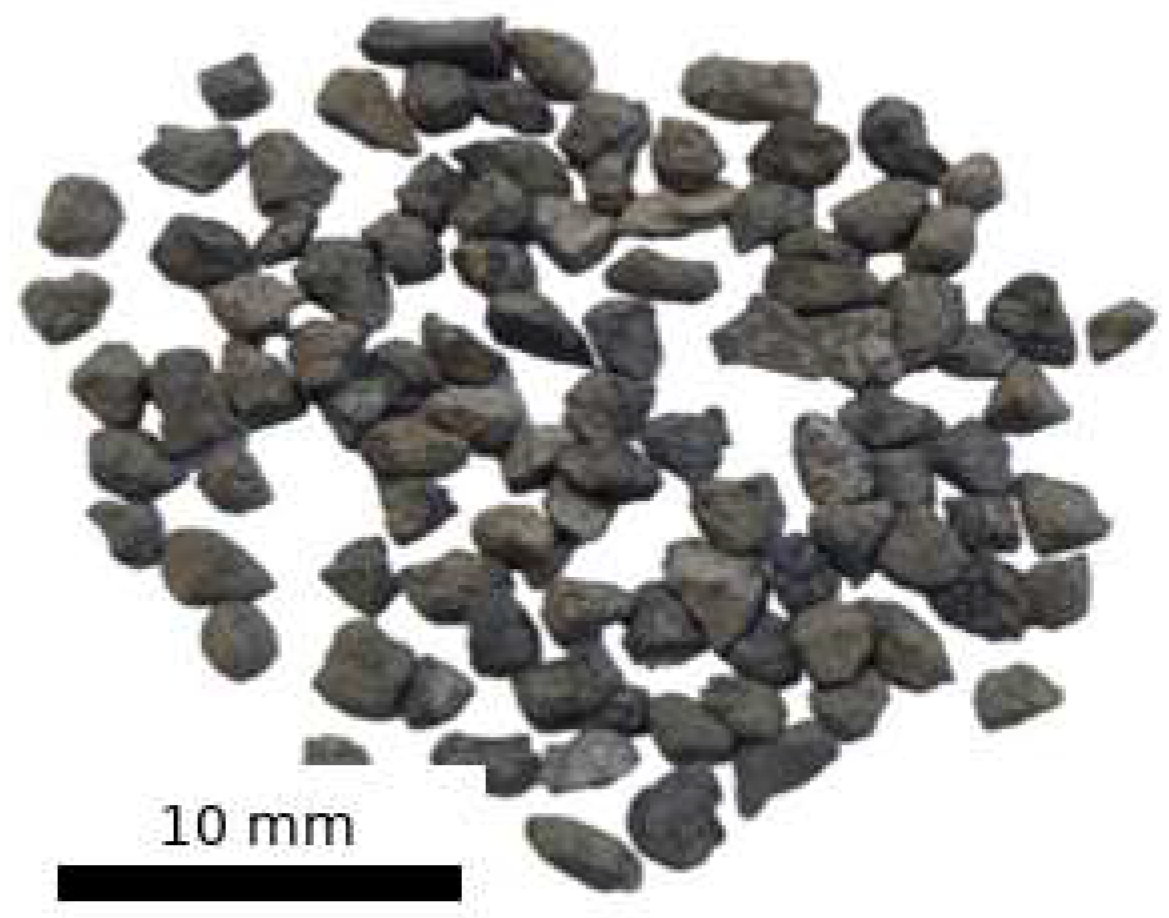
11]. The appearance of steel slag is similar to natural fine aggregate. It has high iron content, high hardness, small particle size after crushing, and excellent corrosion resistance. Therefore, it can be used as concrete aggregate or mortar fine aggregate, which alleviates the problem of shortage of natural sand and gravel resources and solves the problem of low utilization of steel slag [
12,
13]. Goyal et al. [
14] showed that replacing natural coarse aggregate in concrete with different proportions of steel slag can improve the compressive and flexural strengths. Wang et al. [
15] further demonstrated that with the substitution of fine aggregate by steel slag, the peak strength of concrete can be increased. Moreover, the ratio increases, and the peak stress of concrete increases and then decreases. Abu-Eishah et al. [
16] suggested that the use of steel slag aggregate in concrete structures has the potential to improve the mechanical properties of these structures.
The use of steel slag as aggregate creates the problem of poor volume stability. This is mainly due to the presence of f-CaO and f-MgO in steel slag. These react with water to form Ca(OH)
2 and Mg(OH)
2, resulting in volumetric expansion of 98% and 148% [
17], which can lead to cracking or even fracture of the mortar [
18]. Xue et al. [
19] found that hydration and expansion of steel slag is the main cause of mortar deterioration, which is manifested by volumetric expansion and cracking of the mortar surface. The main reason affecting the expansion of steel slag aggregate is the content of f-CaO and f-MgO. Zhou et al. [
20] found that heating accelerates the hydration of free oxides present in the steel slag in the mortar surface layer, which results in high localized expansion stresses in the mortar, leading to mortar damage or fracture damage.
To enhance the engineering applicability of steel slag aggregates, a number of mitigation approaches have been reported in the literature, including (i) natural aging/weathering or hot-water/steam conditioning to promote the pre-hydration of free oxides, (ii) accelerated carbonation (or wet carbonation) to convert CaO/Ca(OH)
2 into stable carbonates and to stabilize reactive phases, and (iii) chemical/alkali-based modification to reduce expansion and improve volumetric stability [
2,
10,
21,
22]. Despite these advances, the effectiveness of each treatment depends strongly on the form, distribution and hydration kinetics of f-CaO and f-MgO within slag particles, which motivates a systematic mechanistic investigation.
Therefore, when using steel slag as fine aggregate in mortar, attention must be paid to the problem of poor volume stability. In this study, steel slag produced by an iron and steel plant in Hebei Province will be analyzed, and its volume stability will be investigated. Although prior studies have recognized that free CaO and free MgO contribute to volumetric instability of steel slag aggregates, quantitative evidence linking time-resolved free-oxide hydration to particle cracking evolution and mortar-scale failure remains limited. In this work, we establish a multi-scale framework combining (i) accelerated boiling expansion tests, (ii) quantitative tracking of particle cracking rate, (iii) titration-based determination of f-CaO and f-MgO consumption with time, and (iv) hydrothermal simulations using over-burnt lime and dead-burnt magnesia to decouple the distinct kinetics and expansion capacities of CaO- and MgO-bearing phases. This integrated approach provides mechanistic insight into why f-CaO dominates early-age instability while f-MgO is more relevant to long-term stability. The 100 °C boiling regime is an accelerated protocol intended to promote rapid hydration of free oxides and enable comparative evaluation within a practical timeframe; accordingly, the measured expansion/damage evolution should be interpreted as a conservative (accelerated) scenario rather than a direct simulation of typical field temperatures.
3. Results and Discussion
3.1. Mortar Linear Expansion
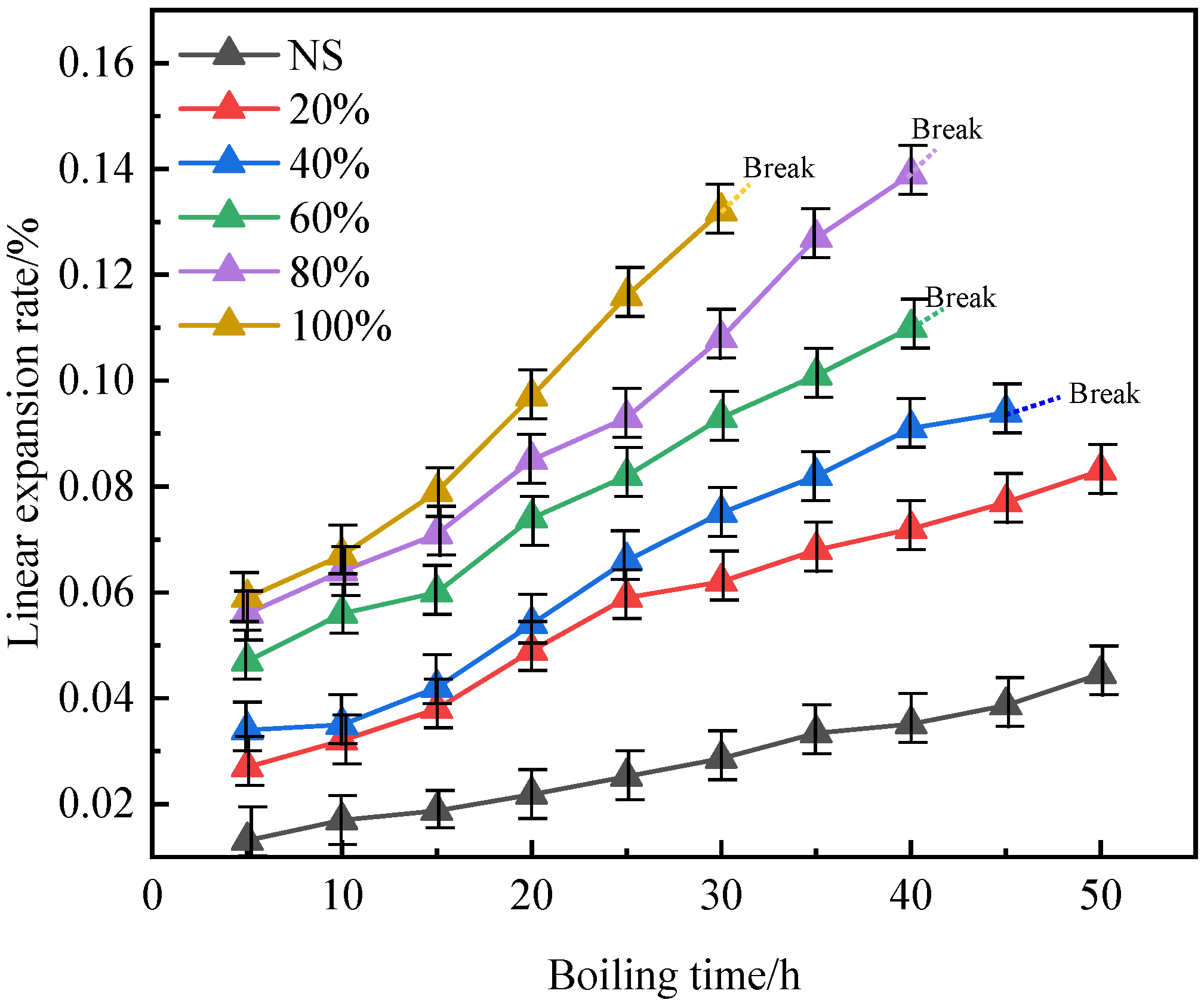
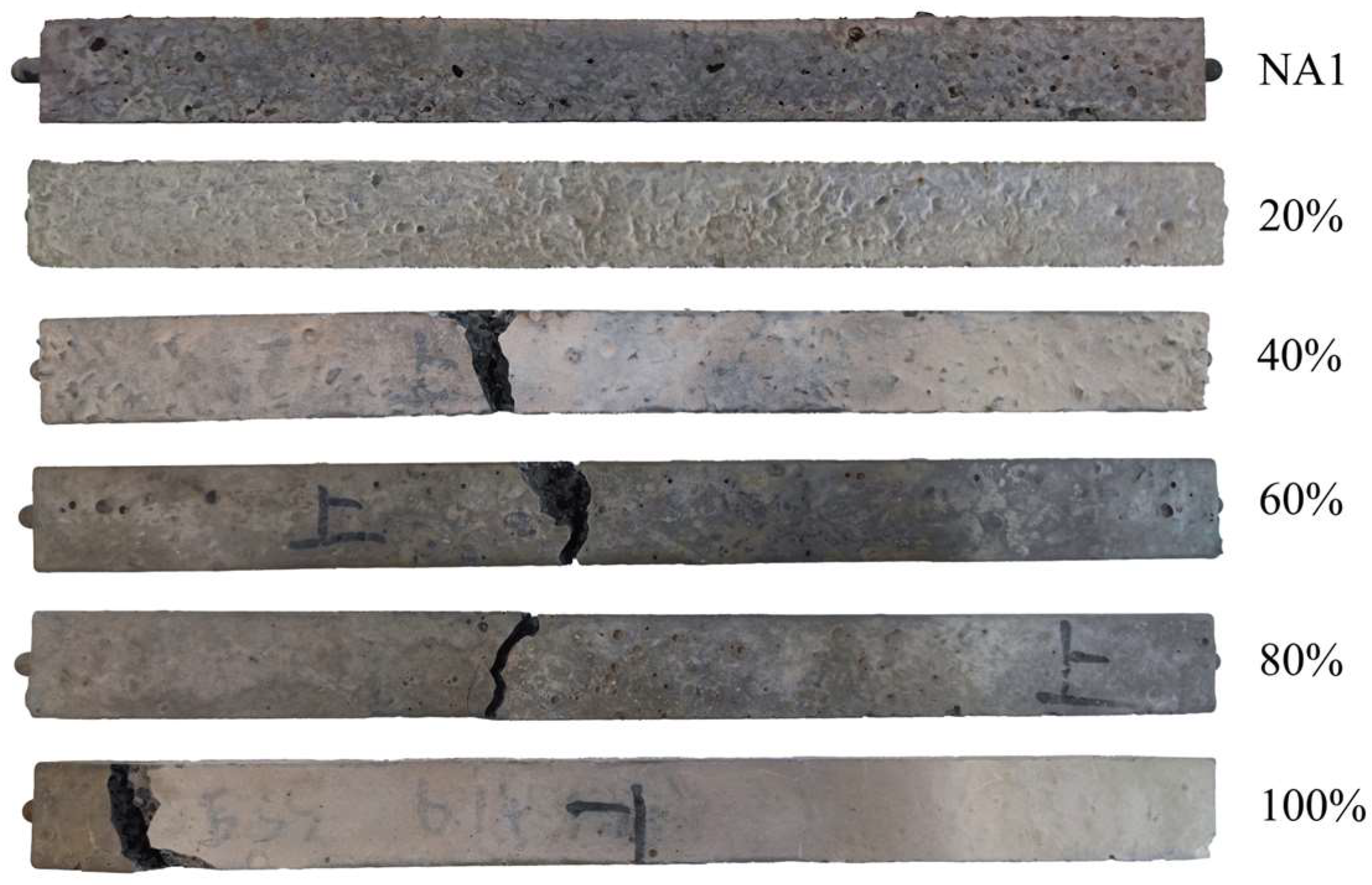
Figure 8 shows the influence of steel slag aggregate substitution rate on the linear expansion rate of mortar. The NA specimens had the lowest linear expansion of 0.045%, and the natural sand mortar specimens exhibited significant structural integrity after boiling with no cracking. However, the mortar specimens containing 20% steel slag aggregate admixture showed micro-cracks on the surface due to particle expansion.
The specimens with steel slag aggregate dosage of 40% and higher showed fracture during boiling (
Figure 9), and the higher the dosage, the earlier all the specimens fractured. This further illustrates that the use of steel slag aggregate as aggregate creates serious stability problems.
Notably,
Figure 8 and
Figure 9 indicate that the 60% replacement group fractured slightly earlier than the 80% group in this test series. This apparent non-monotonic trend is attributed to specimen-to-specimen variability and the heterogeneous distribution of expansive slag particles (e.g., an expansive particle located close to the surface or near the mid-span can trigger earlier cracking). When considering the overall linear expansion level and the observed damage severity, the deterioration still becomes more pronounced with increasing steel slag replacement. We have clarified this point in
Section 3.1 to avoid over-interpreting the fracture time as a sole stability indicator.
The addition of steel slag aggregates to mortar leads to stability problems, mainly in the form of volume expansion, surface deterioration, and fracture. This expansion originates from the hydration of f-CaO and f-MgO, which causes expansion of the steel slag aggregate, leading to expansion and cracking of the mortar.
Crack formation plays a critical role in the observed morphological changes in the mortar strips. When steel slag aggregate is located near the surface, the thinner cementitious layer offers reduced restraint against expansion. This insufficient confinement results in stress concentration at the surface, initiating microcrack development. With continued hydration of f-CaO and f-MgO, steel slag aggregate expansion intensifies, eventually leading to the detachment of the overlying material from the deformed surface region, as illustrated in
Figure 10a.
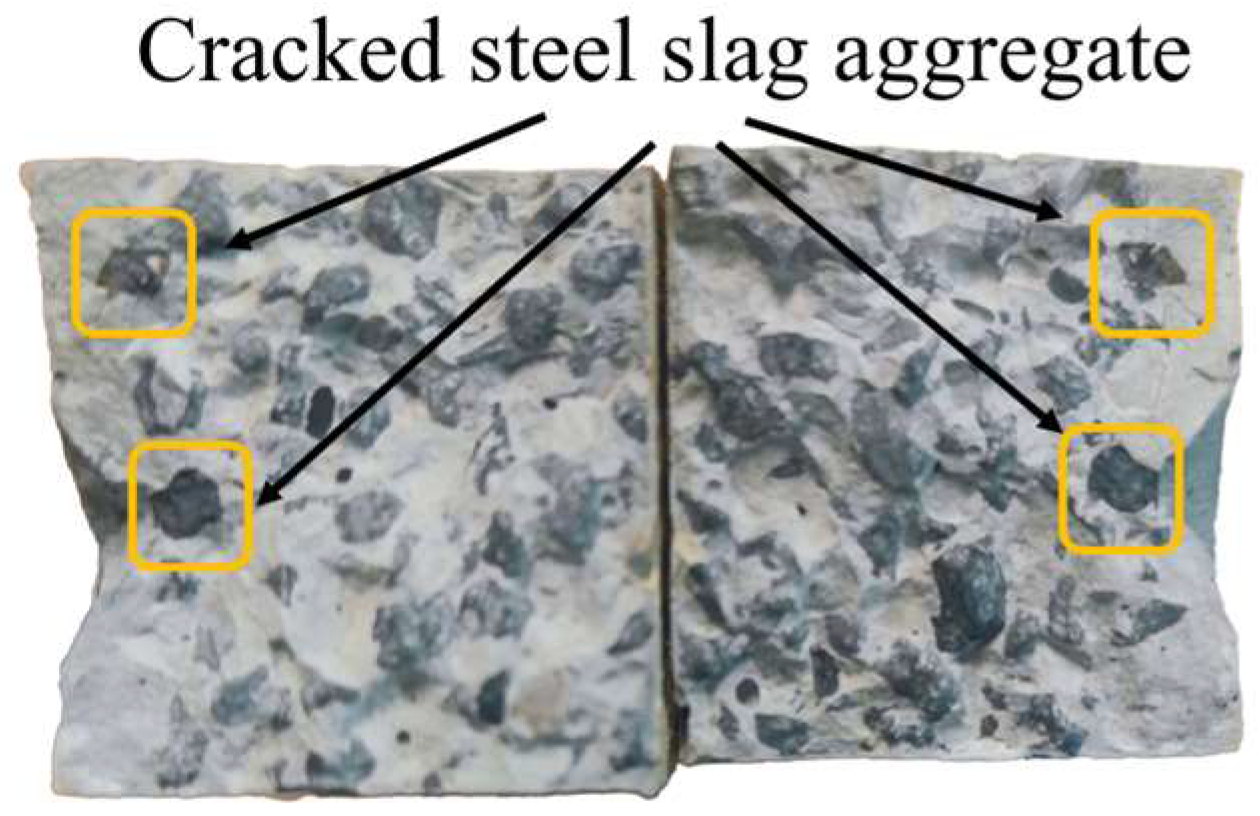
When the steel slag aggregate located near the mortar’s center interface expands, the surrounding cement matrix develops transverse cracks in response to the expansion forces. With continued expansion, these cracks gradually extend to the entire mortar cross-section, eventually leading to complete fragmentation of the mortar bar [
29] (
Figure 10b). Examination of the fractured mortar cross-section reveals visible particles of steel slag aggregate, as shown in
Figure 11.
3.2. Compressive Strength of Mortar
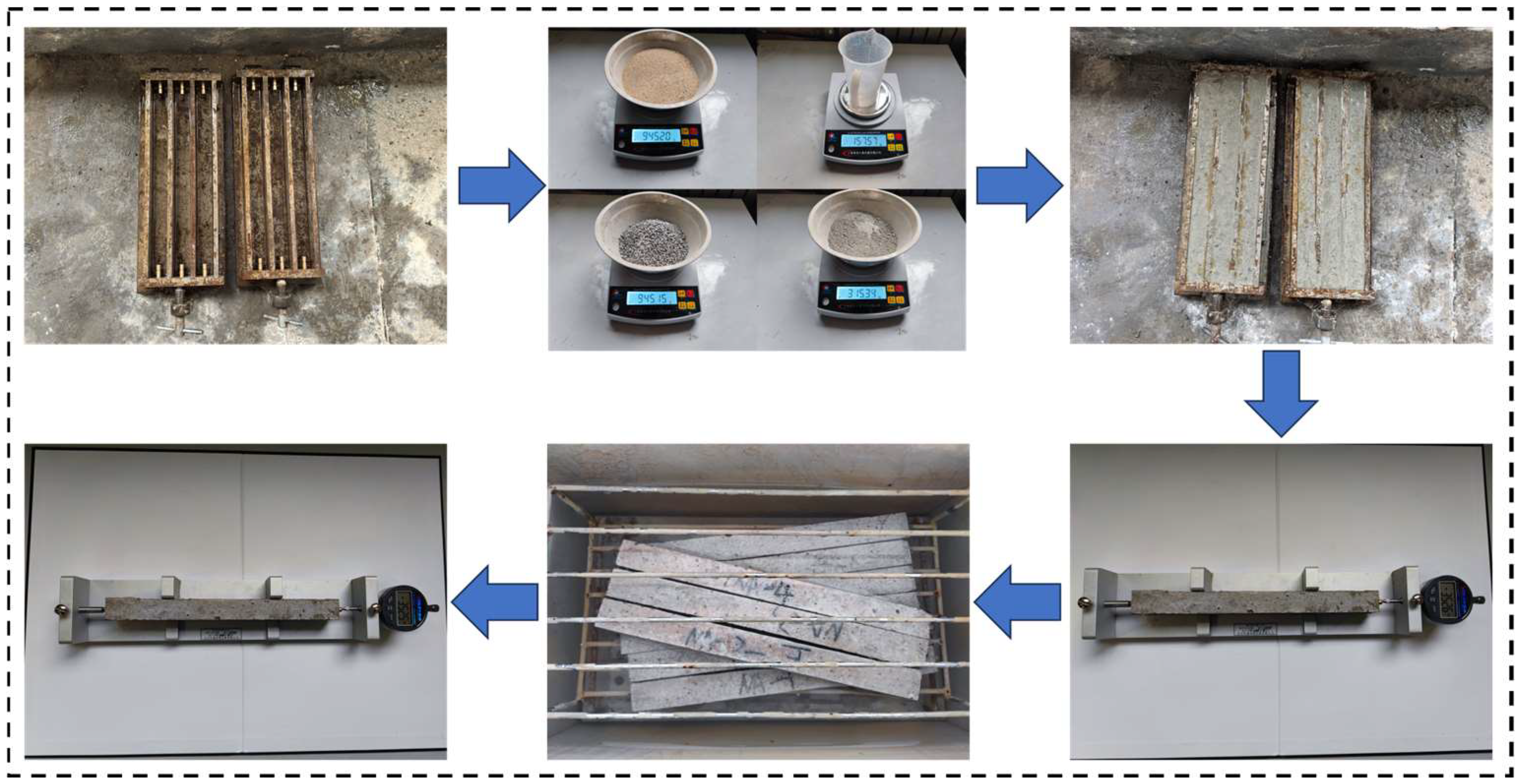
The use of linear expansion rates does not adequately reflect the internal damage to the mortar caused by steel slag cracking. Internal cracks in mortar affect its overall strength, but internal cracks are not readily detectable in the mortar’s appearance. The steel slag aggregate mortar specimens and natural mortar specimens were made in 40 × 40 × 160 mm molds. The compressive and flexural strengths of natural sand and steel slag aggregate mortars were determined after different boiling times, and the stability of steel slag aggregate was assessed by observing the strength changes.
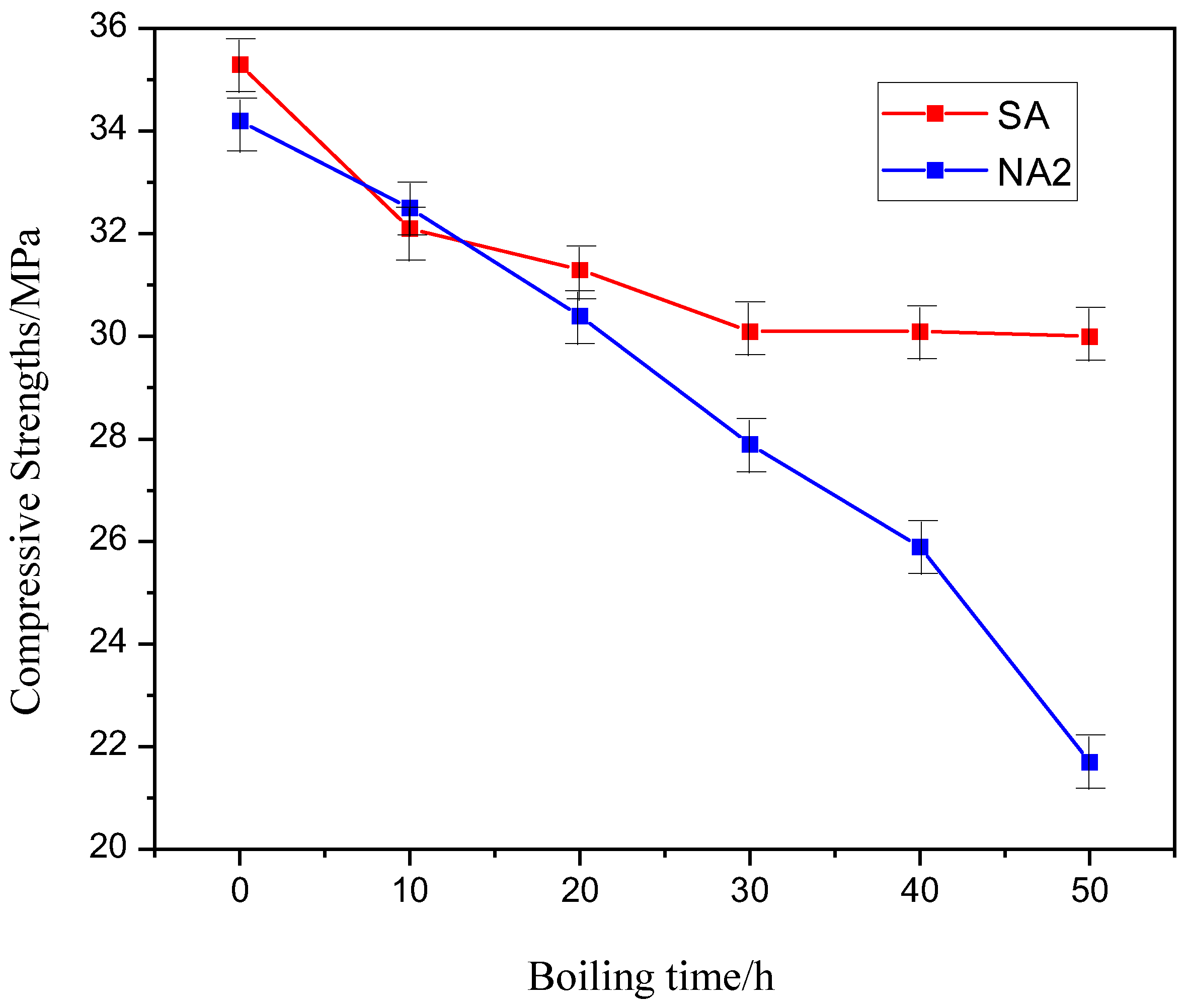
Figure 12 shows the compressive and flexural strengths of steel slag aggregate mortar and natural sand mortar after different boiling times.
The compressive strength of the steel slag aggregate mortar is slightly better than that of the conventional mortar. Steel slag aggregate has higher hardness than typical mineral admixtures, which increases the resistance to crack extension [
30]. The roughness of the steel slag aggregate surface promotes mechanical interlocking within the interfacial transition zone, which results in a stronger bond between the steel slag aggregate and the cement matrix [
31]. These combined effects contribute to improved mechanical properties.
The steel slag aggregate mortar maintained a stable compressive strength at the beginning of boiling, but after 50 h, the compressive strength was significantly reduced by 27.5% compared to the conventional mortar. Similarly, the flexural strength also decreased gradually and finally decreased by 59% after 50 h of boiling. The reason for the decrease in strength is the accelerated hydration of the swelling components in the steel slag particles under boiling conditions. Upon hydration, these components undergo volume expansion, which leads to cracking and internal stresses in the steel slag aggregate. When these stresses exceed the bearing capacity of the mortar, microcracks appear in the matrix [
32]. This fracture process gradually weakens the internal bond structure and eventually leads to a decrease in mechanical properties.
3.3. Cracking of Steel Slag Aggregate Particles
f-CaO and f-MgO cause cracking of steel slag aggregates, which generates stresses and leads to expansion and cracking of the mortar. Therefore, it is essential to analyze the effect of f-CaO and f-MgO hydration and swelling on the particles.
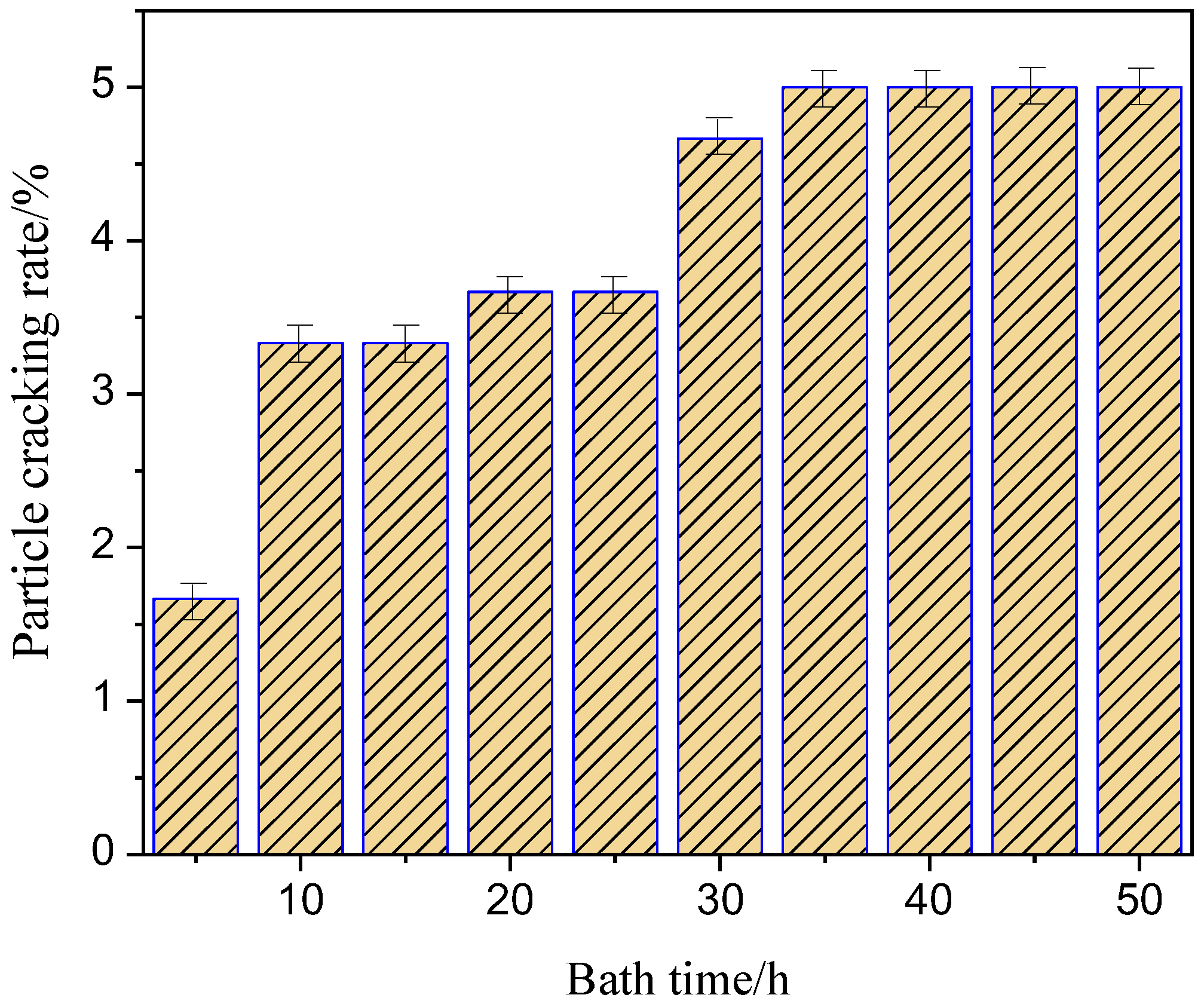
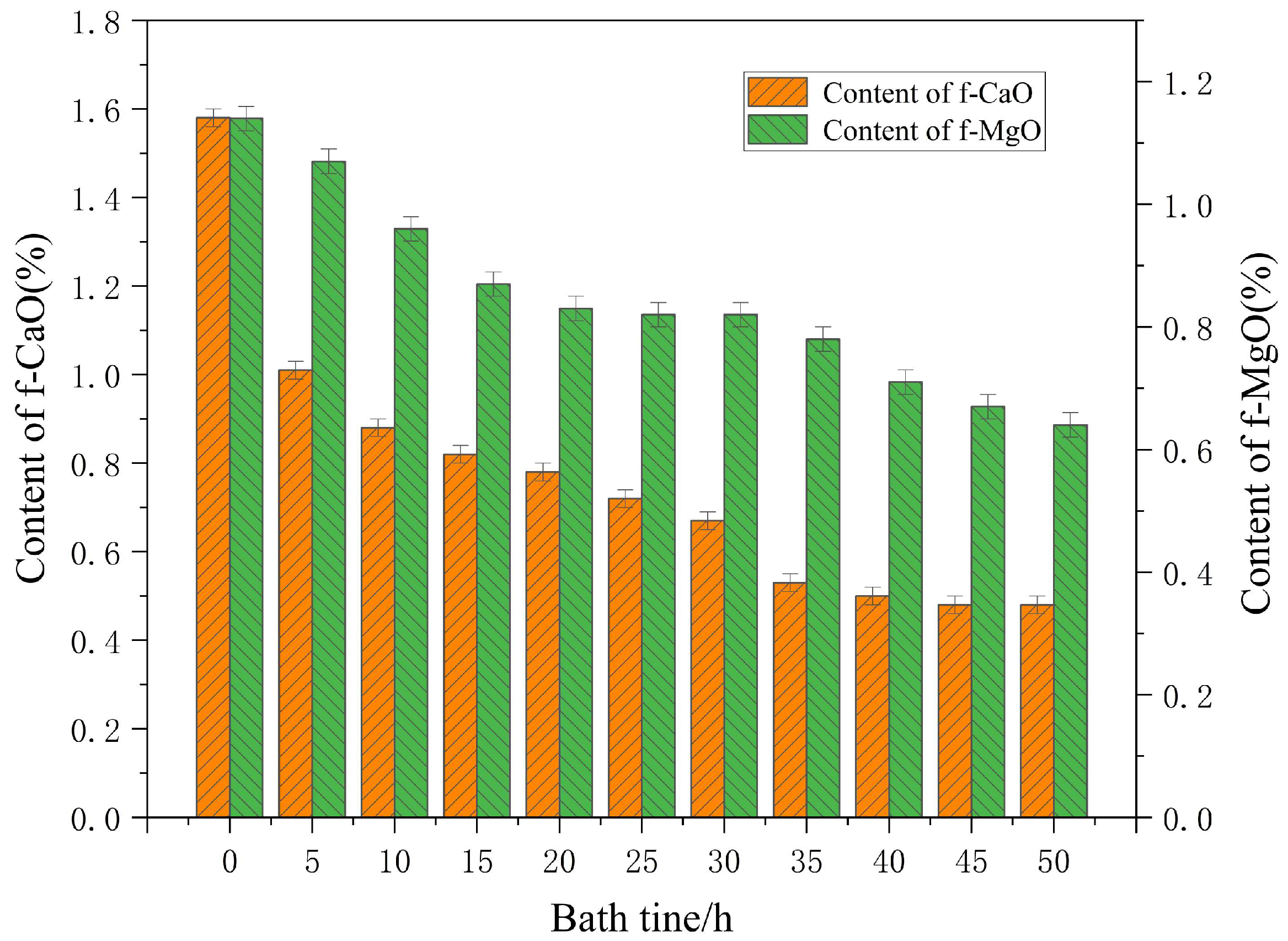
Figure 13 show the increasing trend of cracking of steel slag aggregates during the water bath process, with a final cracking rate of 5%. As shown in
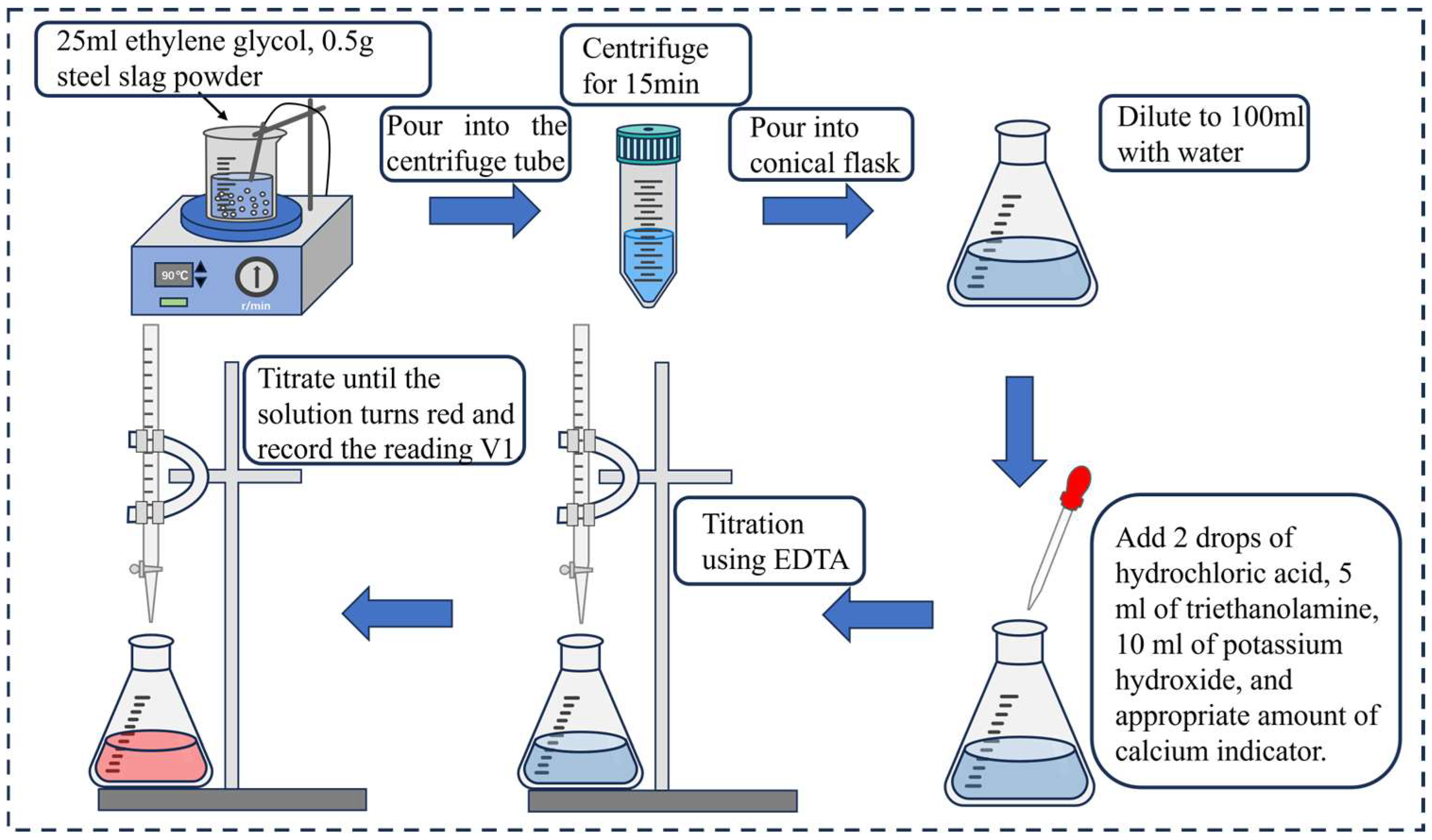
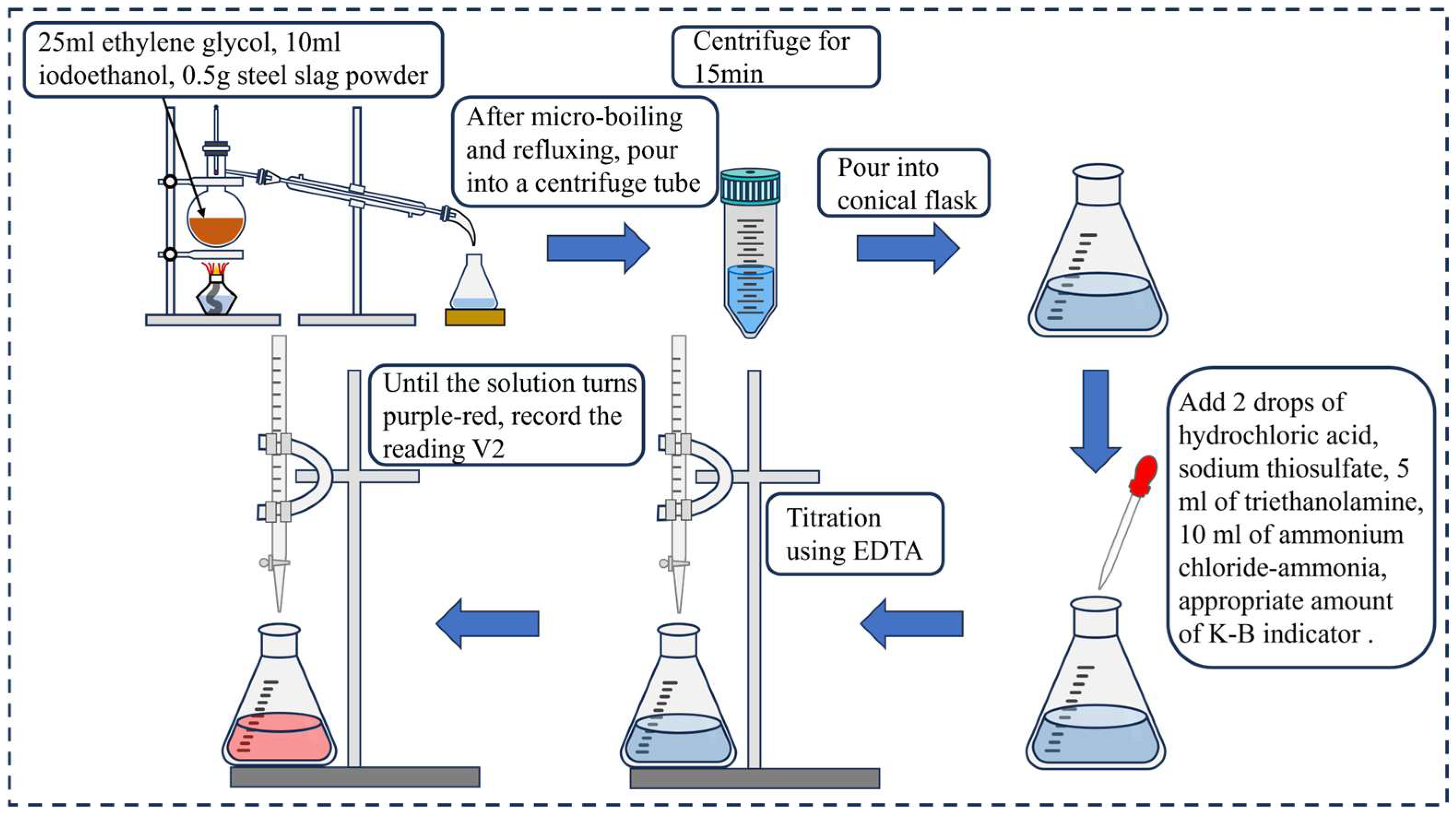
Figure 14, with the increase in boiling time, the contents of these two substances showed an increasing trend, which proved that more and more f-CaO and f-MgO were involved in the hydration to produce Ca(OH)
2 and Mg(OH)
2 with the increase in boiling time.
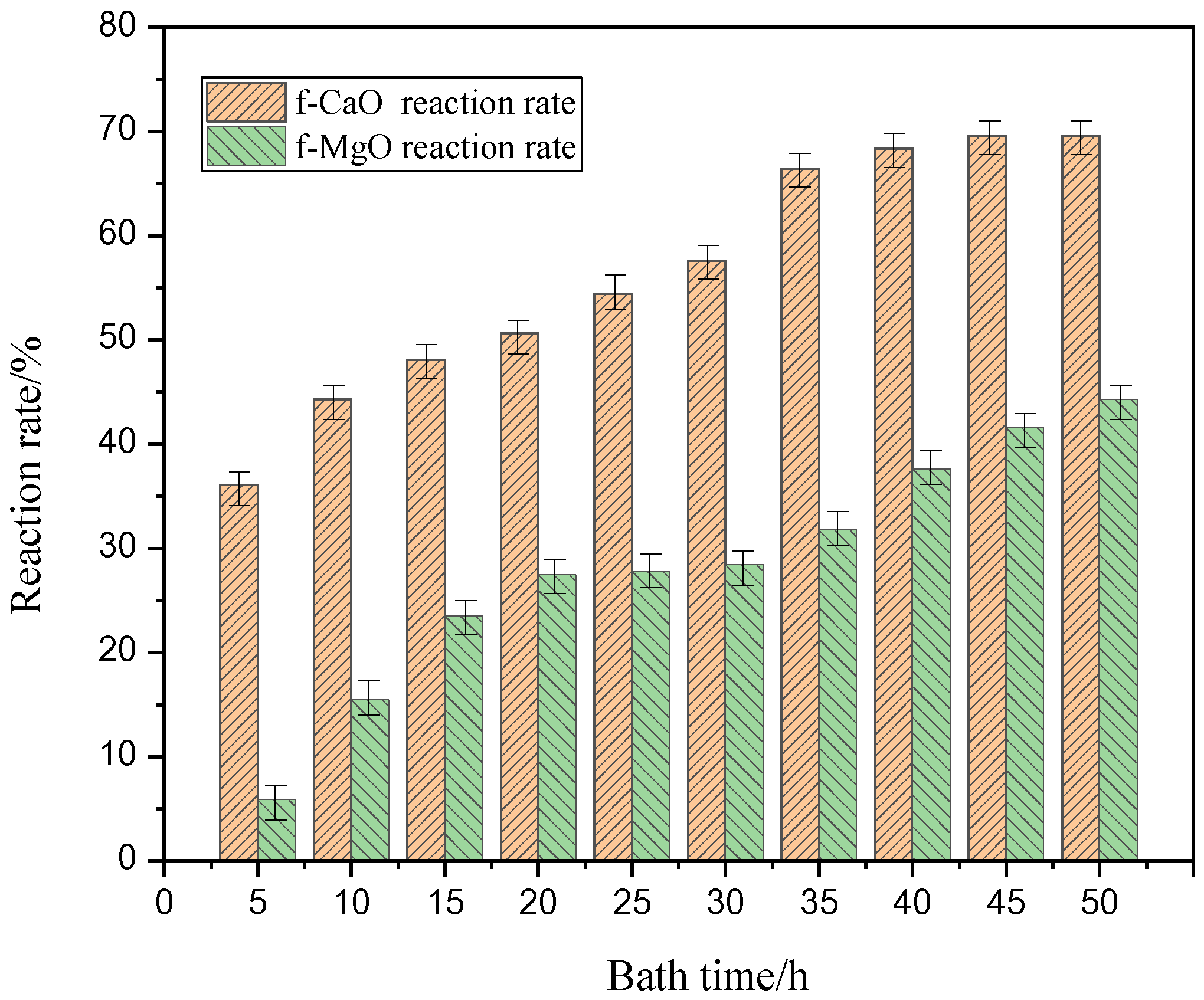
Figure 15 and
Figure 14 show the changes in f-CaO and f-MgO contents in the steel slag aggregate and the reaction rates of f-CaO and f-MgO in the steel slag aggregate for different water bath times. After 5 h of water bath, 36% of f-CaO and 5.8% of f-MgO were consumed in the steel slag aggregate, at which time cracking phenomenon appeared in the steel slag aggregate, and the number of cracks increased with the time of the water bath, which lasted until 35 h, at which time 66.4% of f-CaO and 31.7% of f-MgO had already been reacted, and the steel slag aggregate did not continue to be cracked. Finally, after 50 h of water bath, the f-CaO content in the steel slag aggregate decreased significantly from the original 1.58% to 0.48%, with a reaction rate of 69.6%, while the f-MgO content decreased from 1.14% to 0.64%, with a reaction rate of 44.3%.
From the reaction rate after the water bath, the hydration activity of f-CaO is stronger, which has a greater impact on the initial stability, while the reaction rate of f-MgO is less than 50% after 50 h of water bath, which has poor hydration activity, and the hydration of f-MgO inside the steel slag aggregate is still difficult, which has a greater impact on the long-term stability.
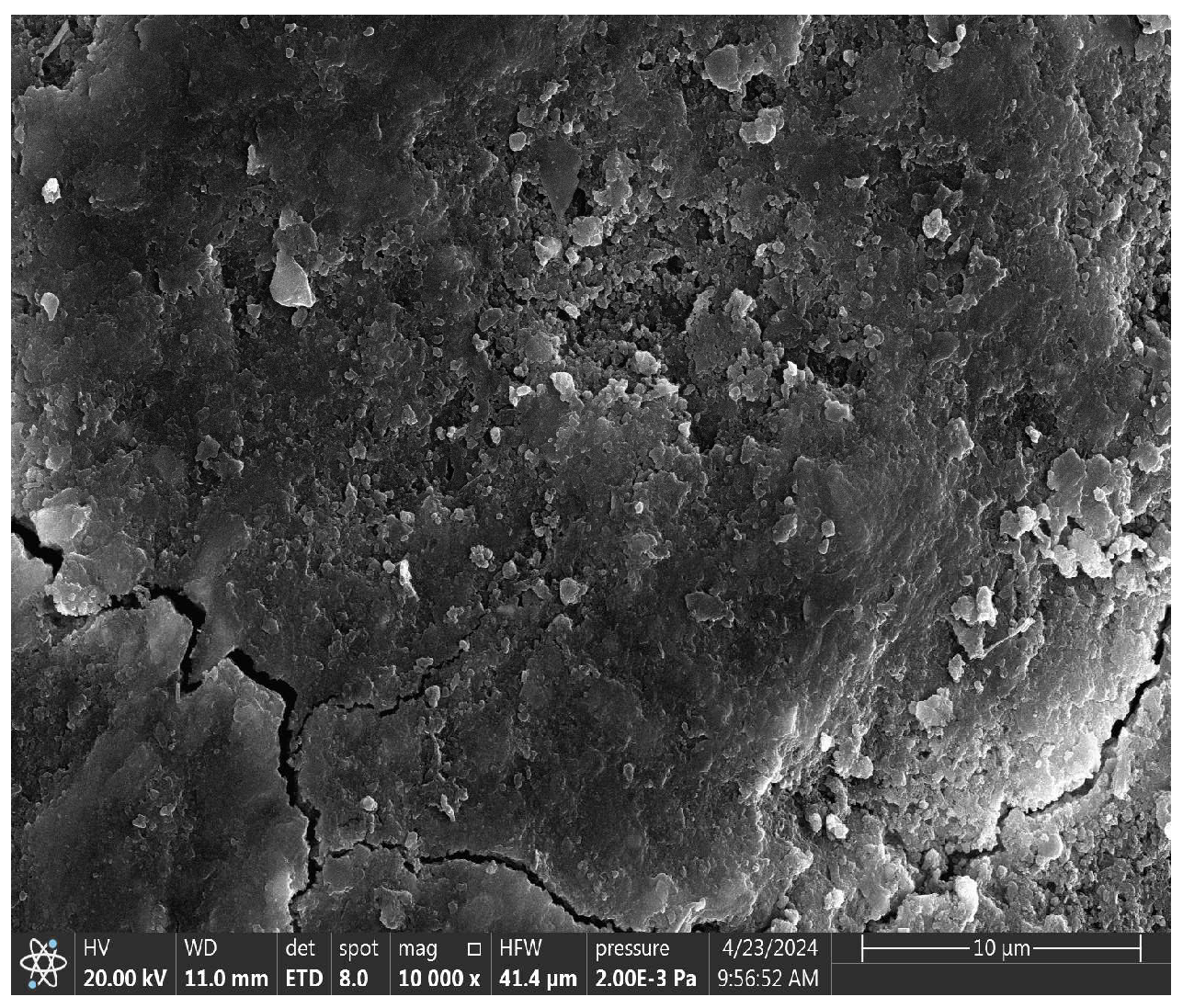
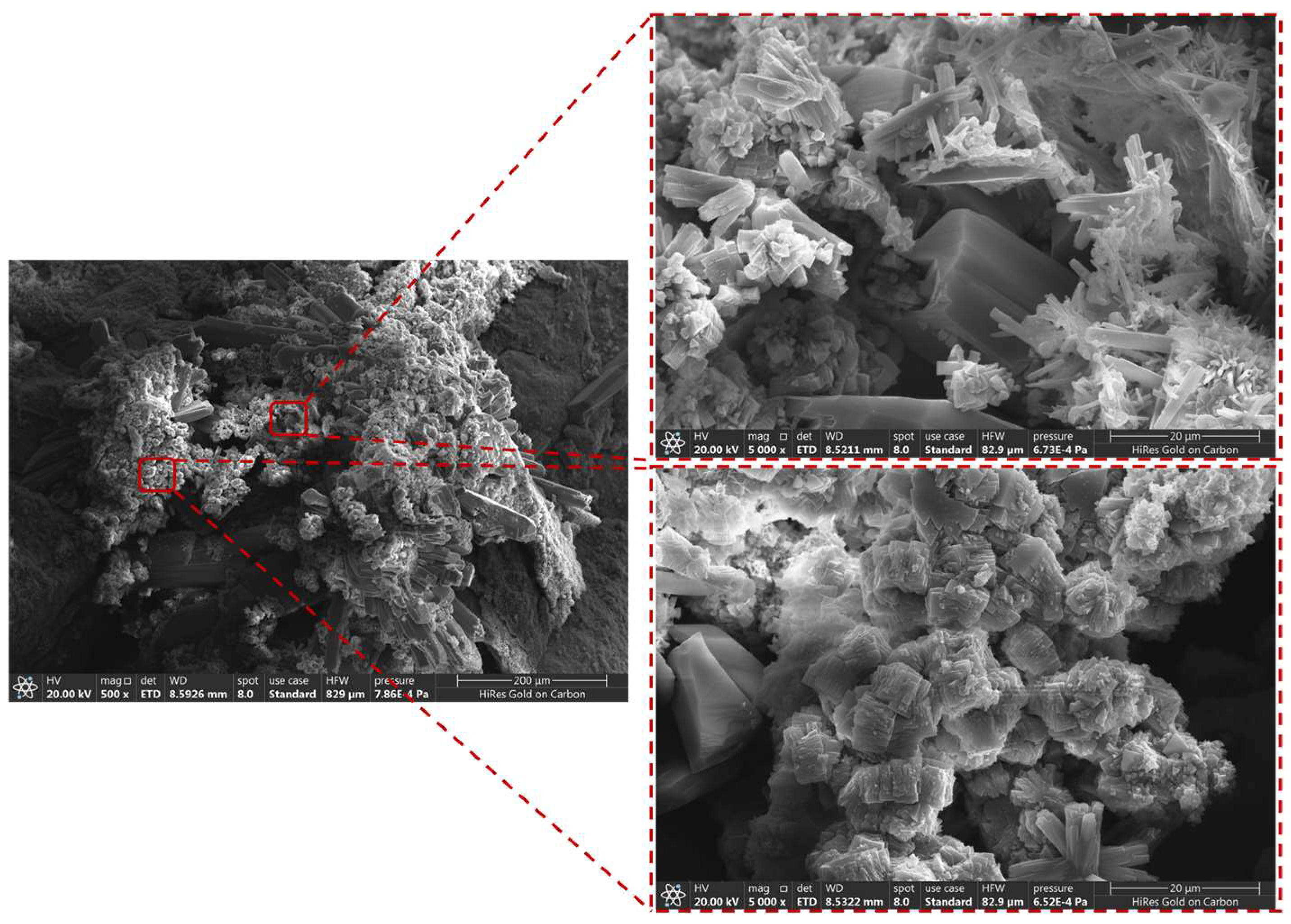
Figure 16 illustrates the microscopic morphology inside the cracked steel slag aggregate. It can be seen that there are obvious hydration products gathered at the cracks of the particles, which are Ca(OH)
2 and Mg(OH)
2 formed by the reaction of f-CaO and f-MgO with water. This reaction leads to the cracking of the steel slag particles due to the expansion of their volume.
It should be noted that SEM–EDS provides elemental distribution rather than definitive phase identification. The co-location of Ca (or Mg) and O signals may be associated with Ca-/Mg-bearing phases or hydration products, but EDS alone cannot uniquely distinguish free CaO/free MgO from other Ca-/Mg-containing minerals (e.g., silicates, ferrites) in the complex slag system. Therefore, EDS results in this study are used as supportive spatial evidence and are interpreted together with XRD/titration results and the observed cracking evolution. Elemental analysis via EDS (
Figure 17) reveals the chemical composition of different steel slag aggregates. While the slag contains substantial CaO (>30%), most calcium exists in mineral-bound forms rather than as free oxides. The observed spatial correlation between Ca and O signals does not exclusively indicate f-CaO presence. Magnesium shows limited distribution in steel slag aggregate minerals, with low overall content, making Mg-O coincident signals more likely to represent f-MgO locations.
These findings suggest that the stability problem stems mainly from the localized accumulation of the swelling phases rather than their overall content. Therefore, mitigation strategies should prioritize addressing the uneven distribution of f-CaO and f-MgO rather than focusing only on controlling their overall concentrations.
3.4. Mechanism of Poor Stability of Steel Slag Fine Aggregate
To strengthen the mechanistic interpretation, the present study integrates a multi-scale evidence chain linking macroscopic instability to meso-/micro-scale damage evolution and to the underlying chemical driving forces. Specifically, (i) the boiling expansion response of mortar bars provides a macroscopic manifestation of volumetric instability under accelerated hydration conditions and defines the damage severity and threshold behavior; (ii) the particle cracking rate directly quantifies the evolution of meso-scale damage in steel slag particles, serving as the structural “bridge” between mortar-scale expansion/failure and microstructural cracking; (iii) the titration-based tracking of f-CaO and f-MgO consumption with time offers a quantitative measure of the hydration degree (kinetics) of free oxides, allowing the temporal correspondence between chemical reactions and cracking/expansion to be evaluated; and (iv) the hydrothermal simulations using over-burnt lime and dead-burnt magnesia decouple the contributions of CaO- and MgO-bearing systems under controlled conditions, thereby supporting causal attribution of early-age damage to faster f-CaO hydration while highlighting the potential for residual long-term expansion associated with sluggish f-MgO hydration. By combining these datasets, the mechanism is not inferred from a single observation but is supported by consistent trends across scales: chemical consumption to localized damage evolution to macroscopic instability.
3.4.1. Expansion and Reaction Rates of f-CaO and f-MgO
To avoid ambiguity, we distinguish the kinetic effect from the total expansion capacity of free oxides. The kinetic effect refers to the hydration rate (i.e., how quickly f-CaO/f-MgO reacts and generates expansive products within a given exposure time), which primarily controls the timing and intensity of early-age damage under accelerated conditions. In contrast, the total expansion capacity denotes the ultimate volumetric expansion potential if hydration proceeds toward completion over a sufficiently long time. Therefore, a phase with fast kinetics (e.g., f-CaO) may dominate early cracking/expansion even if its ultimate capacity is limited, whereas a phase with slow kinetics but considerable capacity (e.g., f-MgO) may contribute less to early-age distress, yet remains a potential source of long-term expansion.
To study the mechanism of mortar damage caused by poor steel slag stability, the reactions of f-CaO and f-MgO in steel slag with water were simulated using over-burnt lime and dead-burnt magnesia.
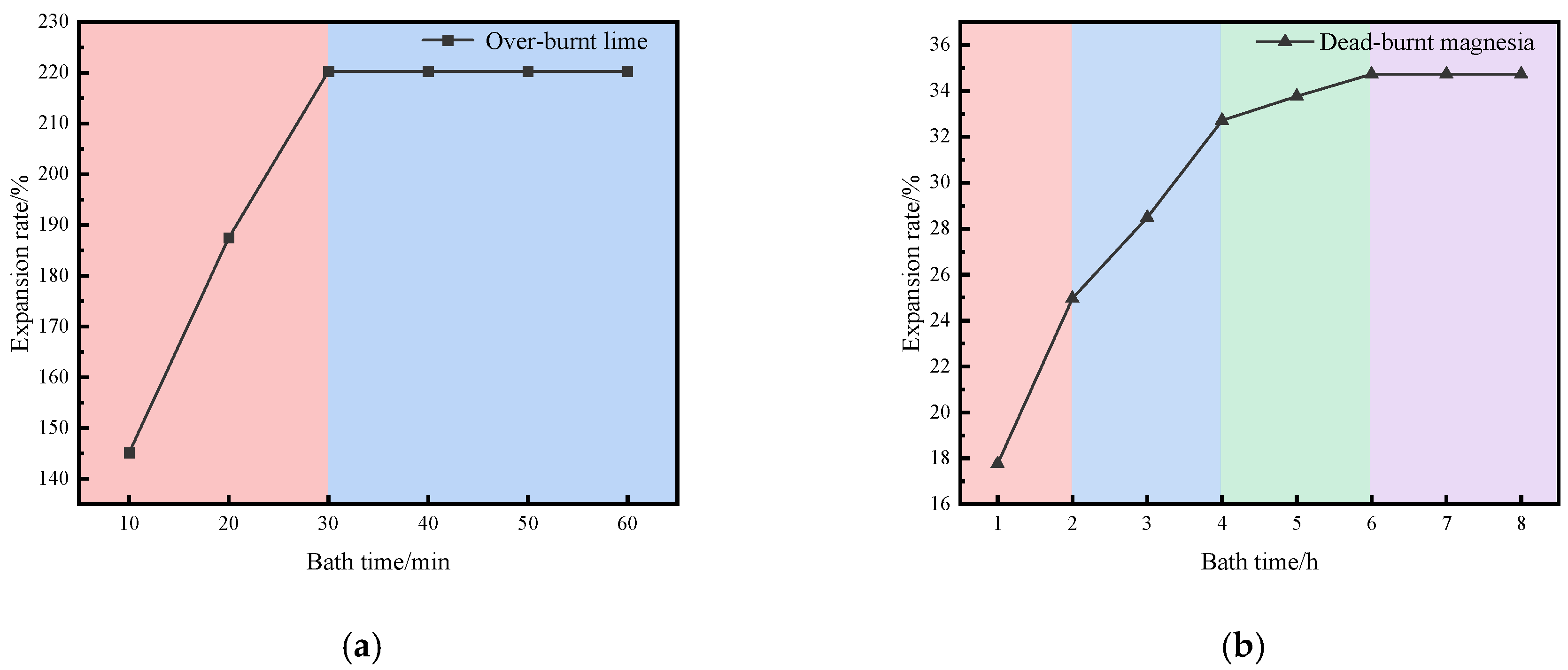
The volumetric expansion of the hydration reaction of over-burnt lime and dead-burnt magnesia is shown in
Figure 18. The reaction expansion of over-burnt lime reached 220% and ceased after 30 min, while the expansion of dead-burnt magnesia reached 35% and stopped increasing after 6 h.
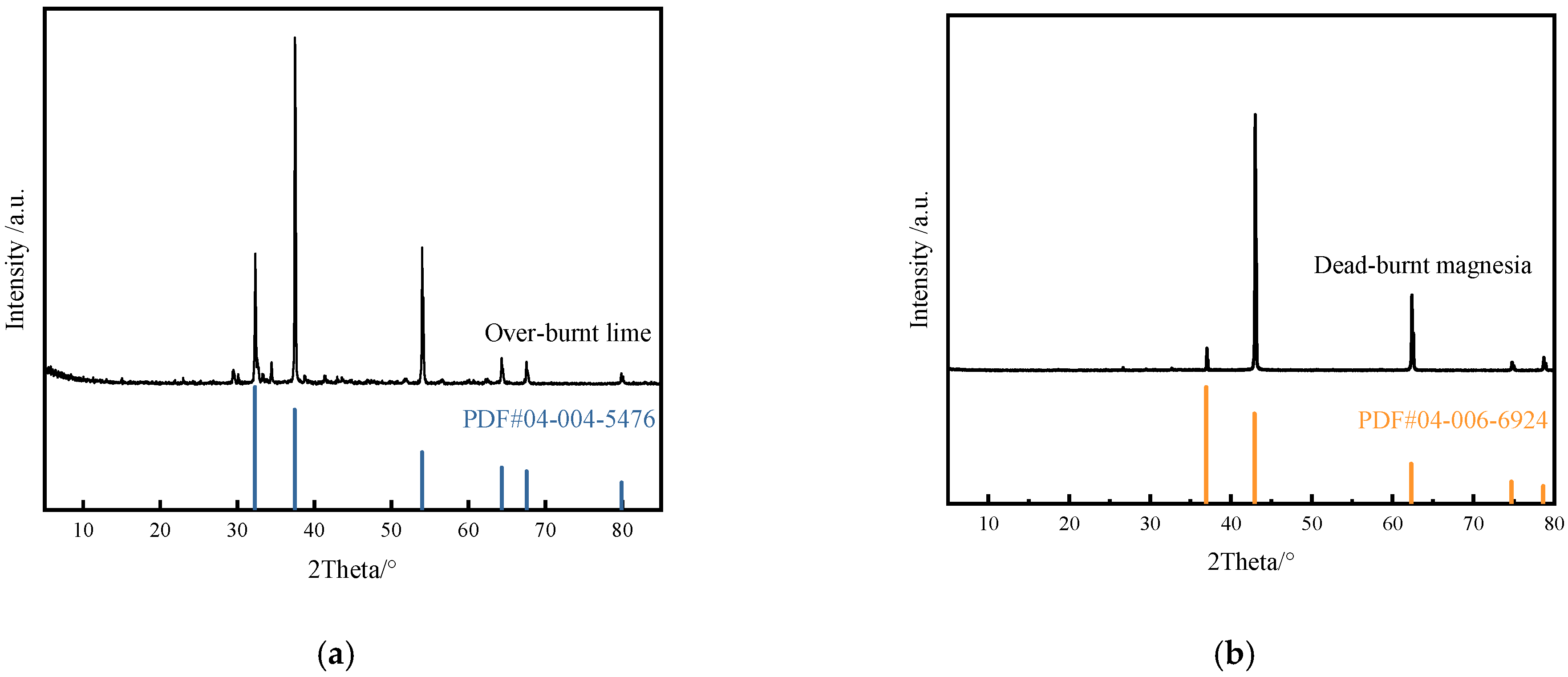
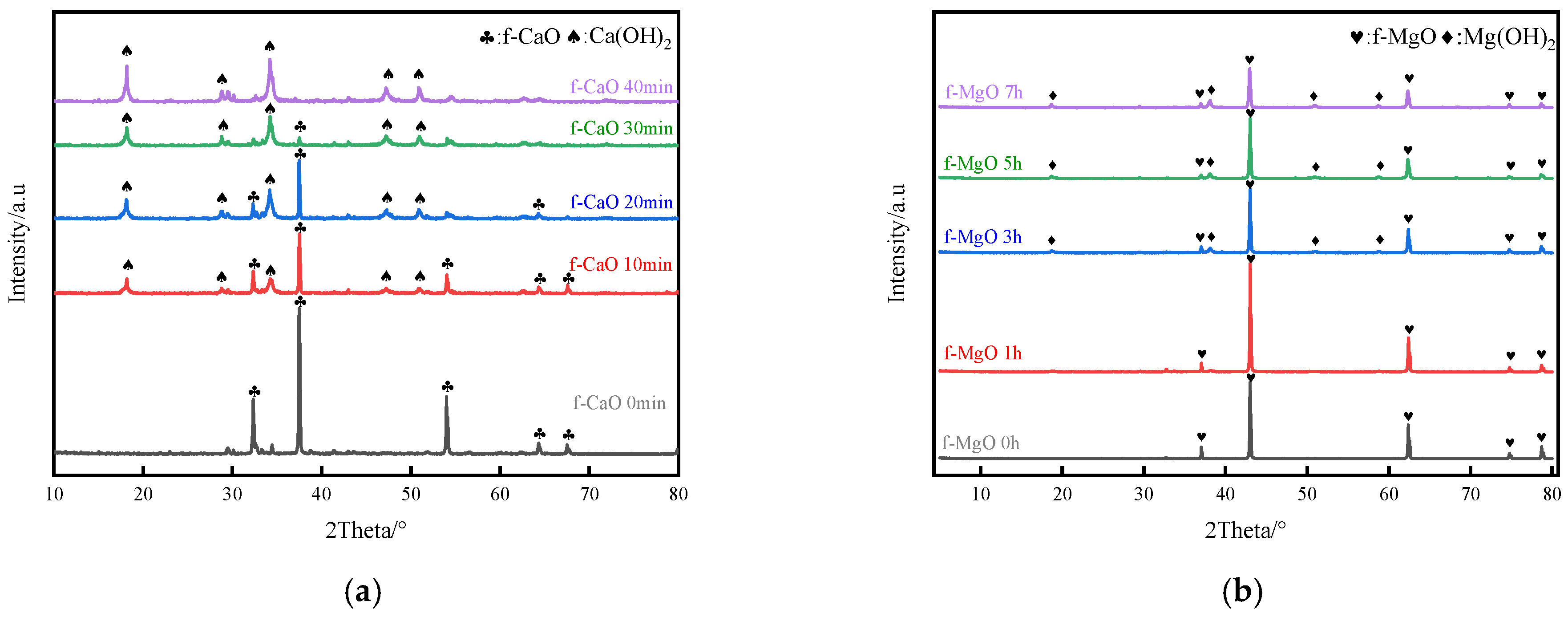
Figure 19 shows the change in the physical phase. After 40 min, the diffraction reflection corresponding to f-CaO disappears and only the reflection of calcium hydroxide remains, indicating that the over-burnt lime has completely reacted. Over-burnt lime undergoes a rapid hydration reaction under heating conditions, which can seriously affect stability. The diffraction reflection of f-MgO remains prominent even after 7 h of reaction, while the magnesium hydroxide peak is weak. This suggests that the hydration reaction of dead-burnt magnesia proceeds very slowly in the water bath, leaving most of it unreacted. Additionally, the produced magnesium hydroxide is poorly crystalline and present in low quantities.
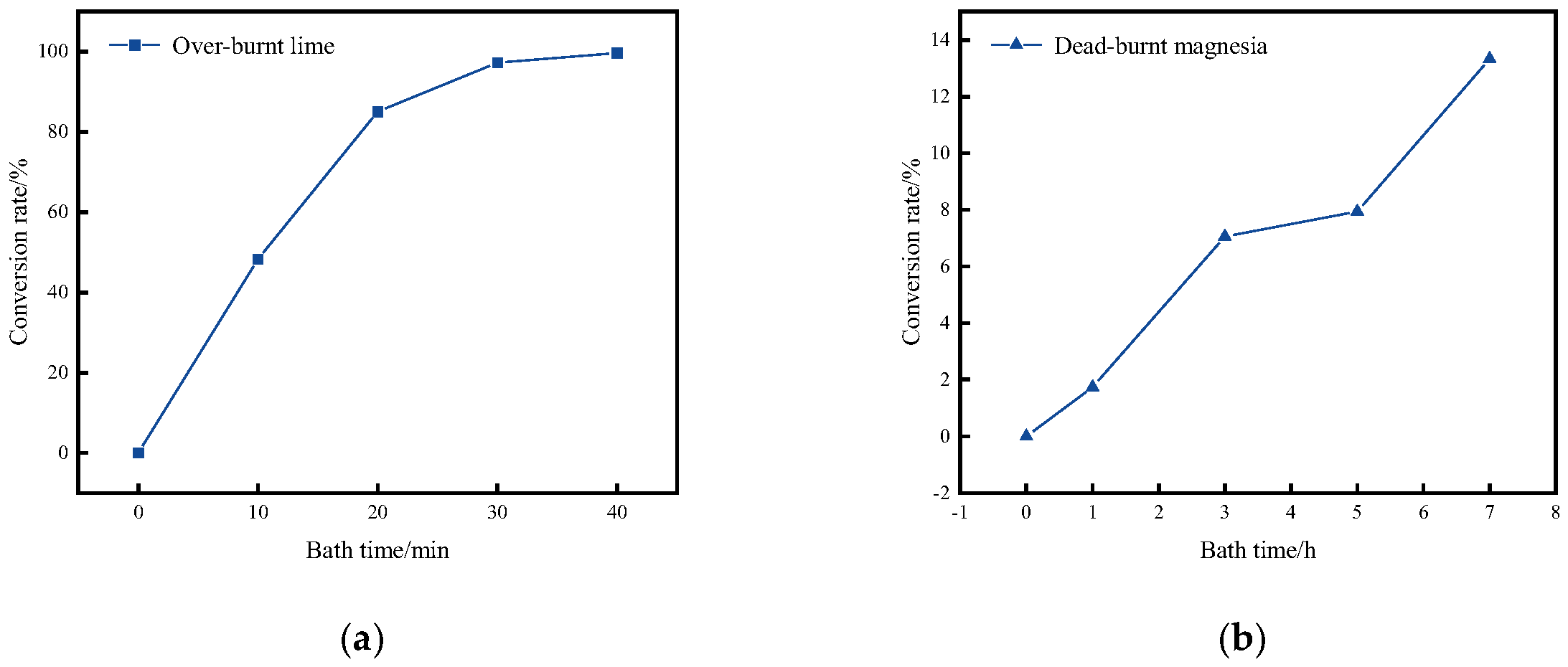
Figure 20 illustrates the hydration product content of the two substances over time. After heating the reaction for 30 min, the conversion of the over-burnt lime was close to 100%, and the reaction was carried out for 40 min of complete reaction, when the reaction rate reached 100%. While the dead-burnt magnesia in the water bath reaction after 7 h, the sample contained only 19% of the generated Mg (OH)
2, 81% of the roasted magnesium is still not reacted, and the reaction rate was only 13.3%. Dead-burnt magnesia does not undergo complete hydration under heating conditions alone.
Dead-burnt magnesia is typically calcined at temperatures between 1450 °C and 2200 °C [
33], with the dead-burnt magnesia in this test calcined at 1650 °C. This calcination temperature is similar to that of magnesia formed during the calcination of steel slag. Higher calcination temperatures and longer durations produce larger grains with reduced water reactivity, resulting in a prolonged hydration process. Dead-burnt magnesia calcined at temperatures above 1500 °C exhibits longer hydration times compared to ordinary magnesia. The hydration of f-MgO is a pivotal factor in the long-term stability of steel slag due to the sluggish hydration process of dead burnt magnesia, which can span months or years. The above macroscopic expansion and cracking observations provide the phenomenological basis; in the following, we correlate these damage evolutions with the time-resolved consumption of f-CaO and f-MgO to identify the dominant chemical driving force at each stage.
3.4.2. Analysis of Hydration Products of f-CaO and f-MgO
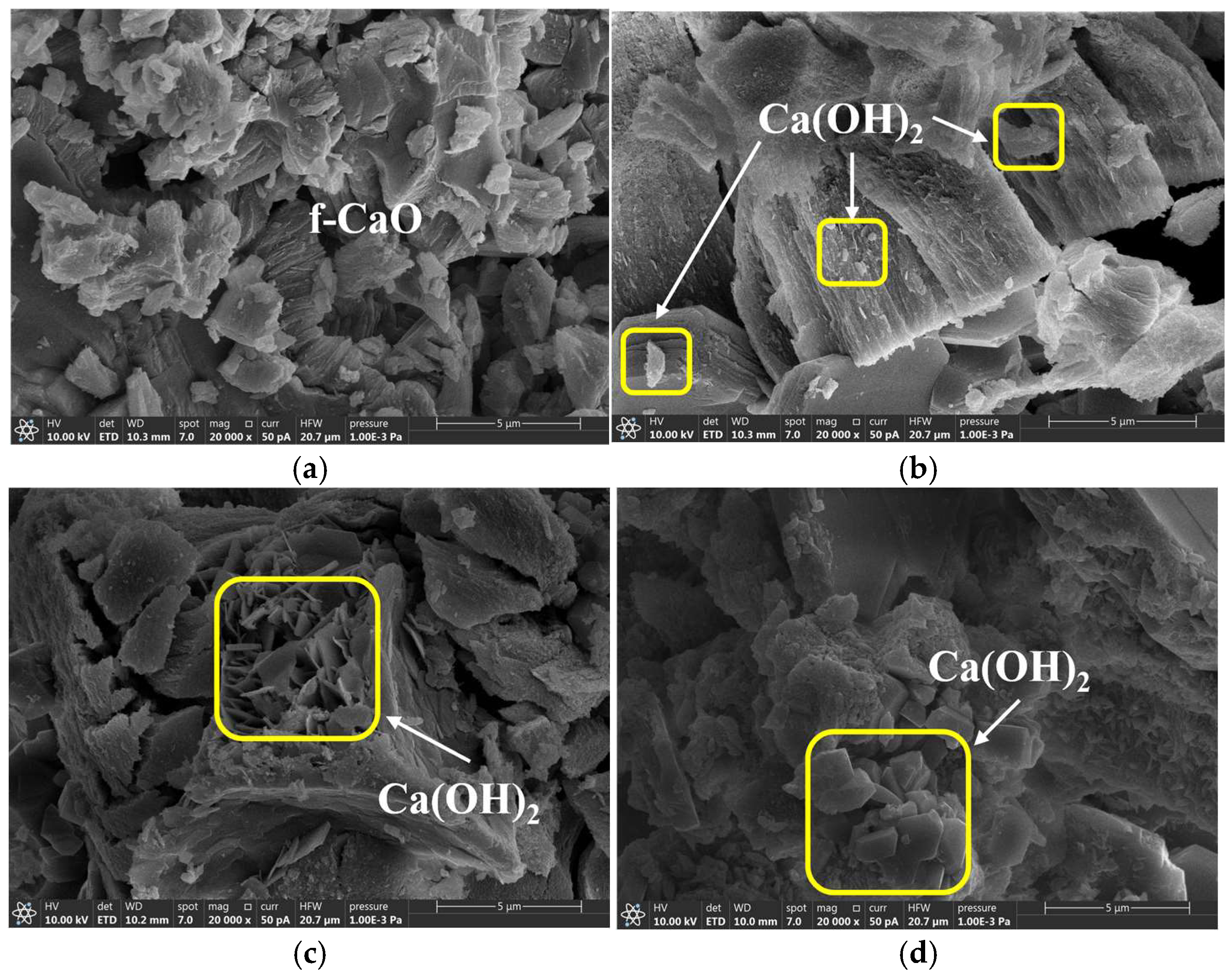
Figure 21 shows the microscopic morphology of over-burnt lime at different heating hydration times between 0 and 40 min. As shown in
Figure 21a, the observed crystals are f-CaO, with no detectable Ca(OH)
2 crystals. In
Figure 21b, flaky Ca(OH)
2 crystals are visible on the crystal surfaces. Additionally, large, flaky Ca(OH)
2 crystals were observed at the bottom, indicating that f-CaO reacted under the heating conditions of the water bath. This reaction produced flaky Ca(OH)
2, which deposited on the particle surfaces.
In
Figure 21c, many Ca(OH)
2 crystals grow outward from the interior of the particles, indicating that f-CaO inside the particles is involved in the reaction. A large number of Ca(OH)
2 crystals can be seen in
Figure 21d. Combined with the XRD image in
Figure 19, there is no longer any obvious diffraction reflections associated with f-CaO after 40 min of reaction, indicating that all the f-CaO is hydrated, which can be proved from the conversion of over-burnt lime in
Figure 22. F-CaO reacts with water to form Ca(OH)
2, which results in the agglomeration of the reaction products, a process that produces porosity and leads to volume expansion.
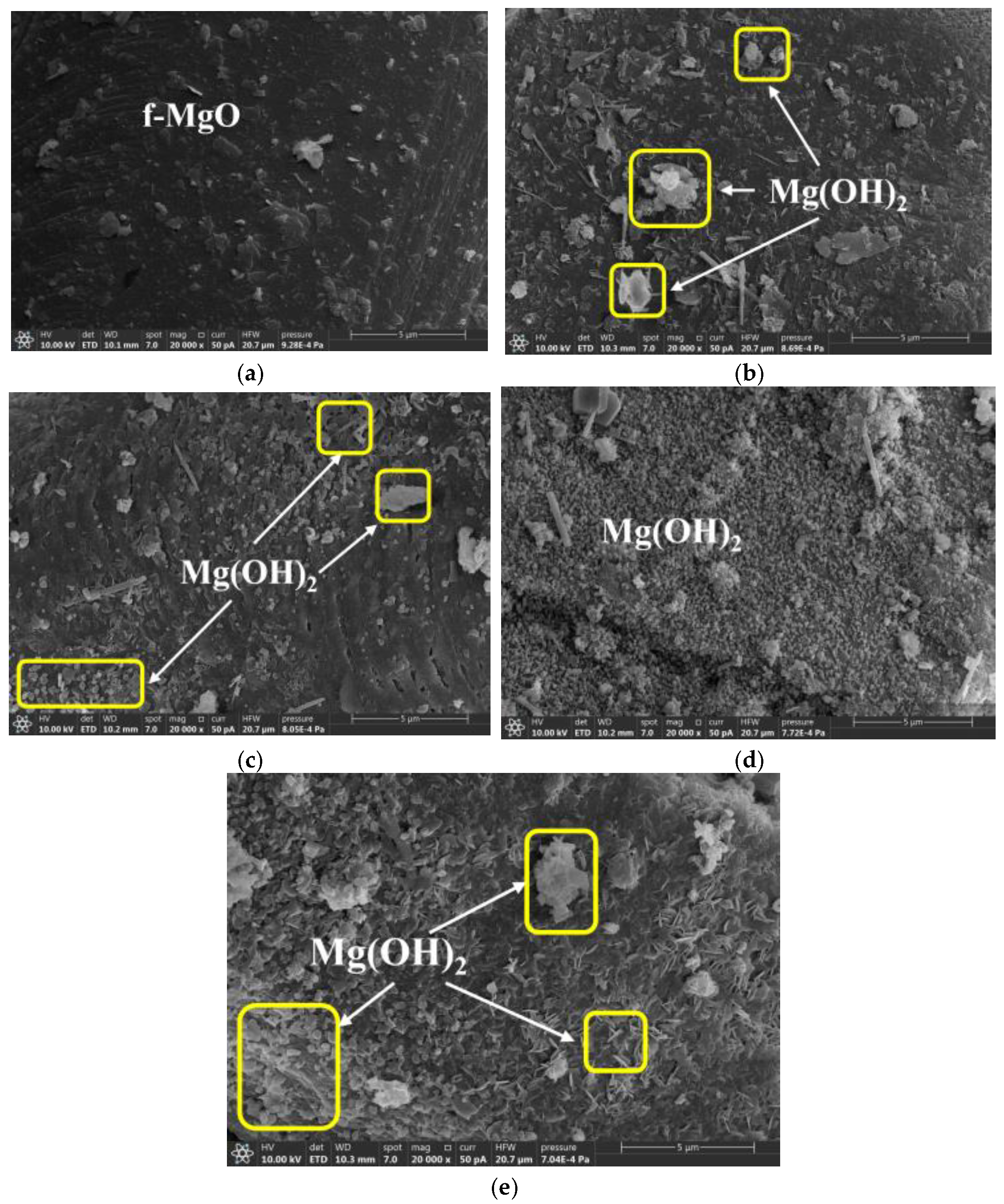
The evolution of microscopic crystal morphology in dead-burnt magnesia during hydration is presented in
Figure 22a–e, showing progressive changes after 0, 1, 3, 5, and 7 h of reaction, respectively.
Figure 22a reveals the presence of a prominent f-MgO crystal before hydration. Consistent with established literature [
34], elevated calcination temperatures and extended durations promote grain growth in magnesia. The experimental material, calcined at 1650 °C, consequently developed characteristically large f-MgO crystals.
The hydration process reveals distinct morphological changes as observed in
Figure 22b,c, where initial plate-like Mg(OH)
2 crystals appear and progressively increase in volume. Subsequent stages (
Figure 22d,e) show significant surface accumulation of Mg(OH)
2 crystals, though their particle size remains relatively small. XRD analysis demonstrates a weak Mg(OH)
2 diffraction reflection alongside a dominant diffraction reflection of f-MgO, suggesting both limited crystallization of Mg(OH)
2 and incomplete hydration of the dead-burnt magnesia. These observations are in agreement with previous findings that f-MgO particles under pressurized conditions show rupture and swelling after 12 h and take 144 h for complete dissolution [
35]. This suggests that the hydration kinetics of f-MgO are very slow. While titration quantifies the hydration degree of free oxides in the complex slag system, controlled hydrothermal simulations are further employed to decouple CaO
− and MgO-bearing contributions and to rationalize why similar total contents may lead to different damage timings.
3.4.3. Mechanistic Explanation
The observation that f-CaO is associated with early-age instability while f-MgO is linked to long-term behavior should be interpreted in terms of timescale-dependent hydration. Under the accelerated boiling regime, f-CaO typically exhibits a higher hydration degree within short durations, leading to rapid accumulation of expansive products and stress concentration near particle defects. Meanwhile, f-MgO hydration is comparatively sluggish; thus, its contribution to expansion may be limited within the early observation window even though its residual expansion capacity may persist. In other words, our results primarily indicate a kinetics-controlled dominance of f-CaO at early ages and a capacity-retaining role of f-MgO at longer timescales, rather than implying that f-MgO is irrelevant to early behavior or that f-CaO has no long-term effect.
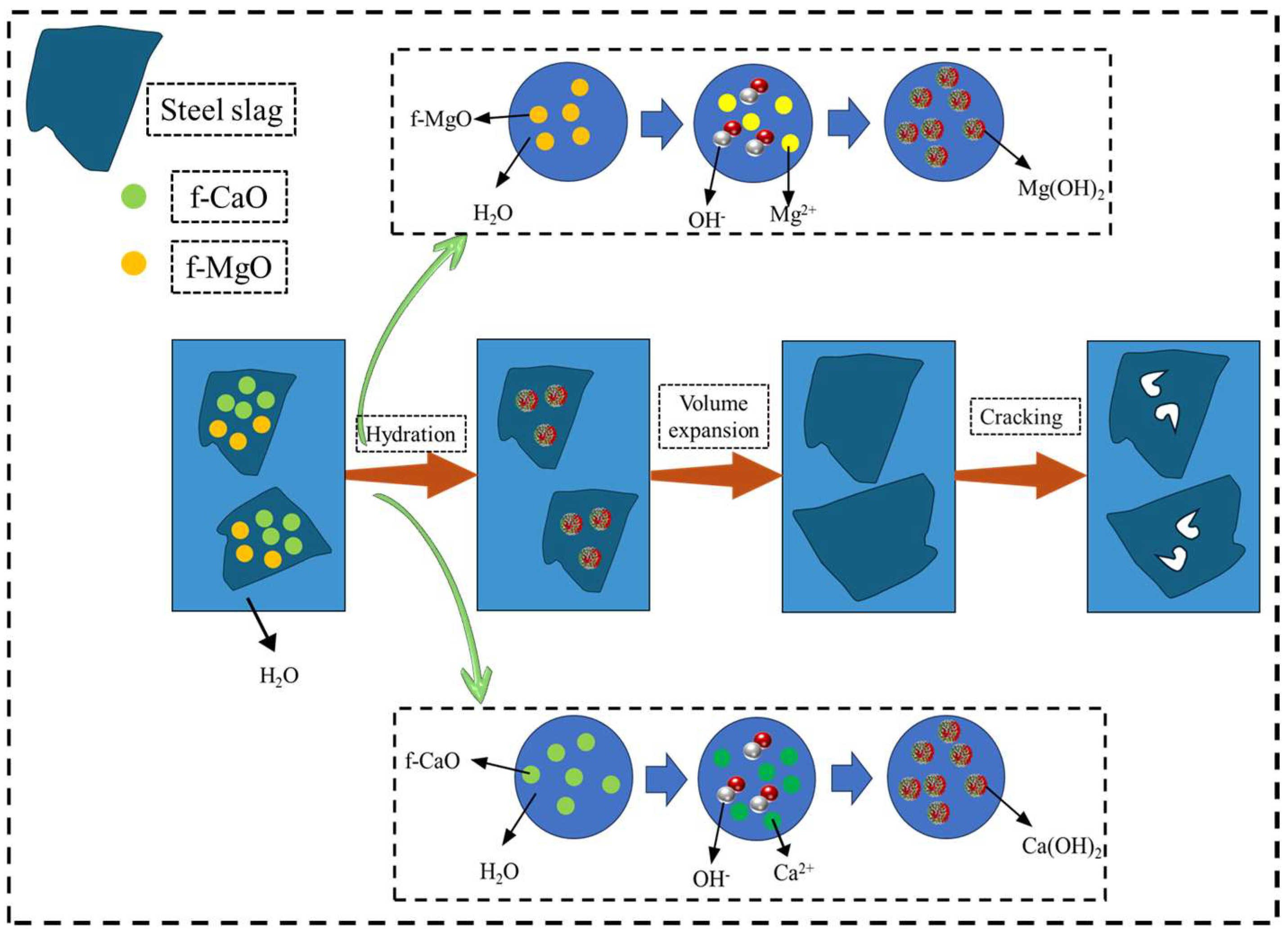
The hydration reaction of f-CaO and f-MgO in steel slag is the key factor leading to the volume expansion and structural damage of mortar. As shown in
Figure 23, the hydration reaction of f-CaO and f-MgO in steel slag aggregate starts to occur after contacting with water, and the hydration reaction speed is accelerated with the increase in temperature. According to the reaction rate in
Figure 22, the hydration activity of f-CaO is higher, and the hydration reaction is fast in a short time, which leads to early volume expansion and directly destroys the initial structural stability of mortar; the hydration reaction of f-MgO is slower, which needs a longer time to be completely hydrated, and it has a greater impact on the long-term stability problem. With the hydration reaction, the hydration products Ca(OH)
2 and Mg(OH)
2 are accumulated in the steel slag aggregate, which ultimately leads to the cracking phenomenon of the steel slag aggregate. When steel slag aggregate is mixed into mortar for use, cracking of the aggregate will lead to cracking of the mortar, causing volume stability problems. Therefore, the mechanism is supported by a coherent multi-scale consistency: the reaction kinetics quantified by titration/simulation temporally aligns with the onset of particle cracking, which in turn governs the macroscopic expansion/failure response under accelerated conditions.
4. Conclusions
To optimize the utilization of steel slag, its existing stability issues were investigated, and the stability of steel slag aggregate was evaluated. The reaction expansion, reaction rate, and product changes of over-burnt lime and dead-burnt magnesia were analyzed using a heated water bath. The study reached the following conclusions:
(1) Under the boiling condition of 100 °C, the expansion component in the steel slag aggregate undergoes a hydration reaction, and the mortar specimen mixed with steel slag aggregate has a higher linear expansion rate than the natural sand mortar, and the higher the doping amount of steel slag aggregate, the higher the linear expansion rate. When the dosage of steel slag aggregate reaches or exceeds 40%, the mortar will show different degrees of cracking and fracture.
(2) After boiling, the compressive strength of steel slag aggregate mortar specimens was 27.5% lower, and the flexural strength was 59% lower, compared to NA mortar specimens. Cracks formed within the boiled steel slag aggregate specimens caused reductions in compressive and flexural strength, highlighting the poor stability of steel slag.
(3) After 50 h of water bath, the cracking rate of steel slag particles was 5%, and the contents of f-CaO and f-MgO in steel slag decreased from 1.58% and 1.14% before boiling to 0.48% and 0.64%. 69.6% of f-CaO and 44.3% of f-MgO were involved in the hydration reaction, and the volumetric expansion led to cracking of the particles, which ultimately led to cracking and fracture of the mortar.
(4) Under heated conditions, over-burnt lime and dead-burnt magnesia accelerate hydration. The over-burnt lime expands by 220% in volume and reacts completely within 40 min, giving a reaction rate of 100%. In contrast, dead-burnt magnesium oxide increases in volume by 34%, and after 7 h, only 19% of the magnesium hydroxide is formed, a reaction rate of 13.3%. Even at high temperatures, the reaction rate of dead burned magnesium remains slow. It can be concluded that f-CaO has a great influence on the pre-stability of steel slag, while f-MgO has a greater influence on the long-term stability of steel slag. More attention should be paid to the long-term stability issues related to f-MgO than to f-CaO.
Under accelerated boiling conditions, mortar containing steel slag fine aggregate exhibited pronounced stability deterioration and even fracture at high replacement levels. Based on the observed damage evolution, a conservative upper limit (e.g., ≤20%–30%) is recommended for fine aggregate replacement unless stabilization pretreatments (such as aging, controlled hydration, or carbonation-based treatments) are implemented. The proposed framework combining expansion, cracking evolution, and free-oxide consumption can serve as a rapid screening tool to support mix-design decisions and potential acceptance criteria for steel slag aggregates.
Novelty of this study: (i) the dimensional instability of mortar incorporating unprocessed BOF steel slag fine aggregate was quantified through accelerated boiling expansion and strength degradation; (ii) the reaction degrees of f-CaO and f-MgO were determined and correlated with the cracking of individual slag particles; and (iii) a comparative hydration simulation using over-burnt lime and dead-burnt magnesia clarified the distinct roles of f-CaO (dominant in early-age instability) and f-MgO (dominant in long-term instability).
Future work: (1) investigate practical stabilization/pretreatment routes for steel slag sand (e.g., aging, carbonation, steam/hydrothermal treatment) and establish performance-based acceptance criteria; (2) perform long-term expansion monitoring under ambient curing and realistic service environments to validate the accelerated assessment; and (3) employ 3D techniques (e.g., micro-CT) to track the evolution of internal cracking and its coupling with transport properties and durability.