Article

Ultra-Long Carbon Nanotubes-Based Flexible Transparent Heaters

1
Center of Nanoscience and Nanotechnology, Institute of Chemistry, The Hebrew University of Jerusalem, Jerusalem 9190500, Israel
2
Tortech Nano Fibers, Ma’alot-Tarshiha 24952, Israel
3
Singapore-HUJ Alliance for Research and Enterprise (SHARE), Smart Grippers for Soft Robotics (SGSR) Programme, Campus for Research Excellence and Technological Enterprise (CREATE), Singapore 138602, Singapore
*
Author to whom correspondence should be addressed.
Coatings 2025, 15(12), 1487; https://doi.org/10.3390/coatings15121487
Submission received: 11 November 2025 / Revised: 7 December 2025 / Accepted: 12 December 2025 / Published: 16 December 2025

Abstract

Transparent conductive materials (TCMs) are essential for optoelectrical devices ranging from smart windows and defogging films to soft sensors, display technologies, and flexible electronics. Materials, such as indium tin oxide (ITO) and silver nanowires (AgNWs), are commonly used and offer high optical transmittance and electrical conductivity, but suffer from brittleness, oxidation susceptibility, and require high-cost materials, greatly limiting their use. Carbon nanotube (CNT) networks provide a promising alternative, featuring mechanical compliance, chemical robustness, and scalable processing. This study reports an aqueous ink formulation composed of ultra-long mix-walled carbon nanotubes (UL-CNTs), compatible with the flow coating process, yielding uniform transparent conductive films (TCFs) on polyethylene terephthalate (PET), glass, and polycarbonate (PC). The resulting films exhibit tunable transmittance (85%–88% for single layers; ~57% for three layers at 550 nm) and sheet resistance of 7.5 kΩ/□ to 1.5 kΩ/□ accordingly. These TCFs maintain stable sheet resistance for over 5000 bending cycles and show excellent mechanical durability with negligible effects on heating performance. Post-deposition treatments, including nitric acid vapor doping or flash photonic heating (FPH), further reduce sheet resistance by up to 80% (7.5 kΩ/□ to 1.2 kΩ/□). X-ray photoelectron spectroscopy (XPS) results in reduced surface oxygen content after FPH. The photonic-treated heaters attain ~100 °C within 20 s at 100 V. This scalable, water-based process provides a pathway toward low-cost, flexible, and stretchable devices in a variety of fields, including printed electronics, optoelectronics, and thermal actuators.

1. Introduction

Transparent conductive materials (TCMs) underpin a broad range of optoelectronic and thermal management devices, including smart windows, defogging/anti-icing coatings, touch panels, and photovoltaics [1,2,3,4]. Indium tin oxide (ITO) remains the industrial go-to because it combines high optical transmittance with low sheet resistance [1,4]. Yet, ITO is intrinsically brittle and typically requires high-temperature vacuum deposition and post-annealing [5,6], which significantly limits its use on flexible substrates and raises costs due to indium scarcity [1].
Other commonly used materials, silver nanowire (AgNW) networks, deliver excellent conductivity at high transmittance and can be solution-processed, making them compatible with roll-to-roll coating and other processes [4,7,8]. However, long-term reliability is undermined by thermally accelerated oxidation during Joule heating, thermal instability, cracking, and junction corrosion, all of which increase resistance [9,10,11]. Carbon-based TCMs, particularly carbon nanotube (CNT) networks, offer a compelling alternative: they are chemically stable in air, highly flexible, and compatible with scalable, low-temperature solution processing [4,12,13]. Additionally, MWCNTs are significantly more cost-effective than both SWCNTs and silver nanowires, with industrial-grade MWCNTs priced at USD 50–150/kg compared to SWCNTs at USD 1000–5000/kg [14]. These attributes have already enabled CNT-based transparent heaters with rapid thermal response and robust cycling stability [15,16,17].
At the material level, single-walled CNTs (SWCNTs) typically afford superior optical clarity at a given sheet resistance because of their small diameters and lower light scattering [18,19,20]; however, SWCNTs are costly due to highly complex and controlled production requirements [19,21]. Multi-walled CNTs (MWCNTs), on the other hand, are far more cost-effective, approximately 10–15 times cheaper [22] and readily available at scale, but the larger diameters and bundling generally raise percolation thresholds and haze, while interlayer scattering, mismatching chirality, inter-shell tunneling yield higher sheet resistance at a given density compared to metallic SWCNT networks [15,18,23].
Hecht et al. [24] reported on SWCNT transparent conductive films with Rs ≈ 80 Ω·sq−1 at 80% T550 after nitric acid treatment. Jia et al. [16] reported on SWCNT heaters with Rs ≈ 95 Ω·sq−1 at 72% T550 that reach ~100 °C within 60 s under 35 V. Kim et al. [25] reported MWCNT/PI bilayer heaters with sheet resistances decreasing from ~2.0 × 10⁵ to ~3.9 × 10³ Ω·sq−1 as the MWCNT thickness increased, while the transmittance at 550 nm decreased from ~78% to ~52%. While SWCNT-based transparent electrodes have been studied extensively across CVD [3], growth [18], stamping [20], transfer, and wet-coating routes, their limited scalability continues to impede widespread adoption in flexible heating applications. A promising route to narrow this gap is the use of ultra-long CNTs (UL-CNTs), which are a mix of single and multiwalled (length > 100 µm, potentially cm’s length): the increased tube length reduces junction density per unit area, thereby lowering junction-limited resistance in the percolating network [18,26,27].
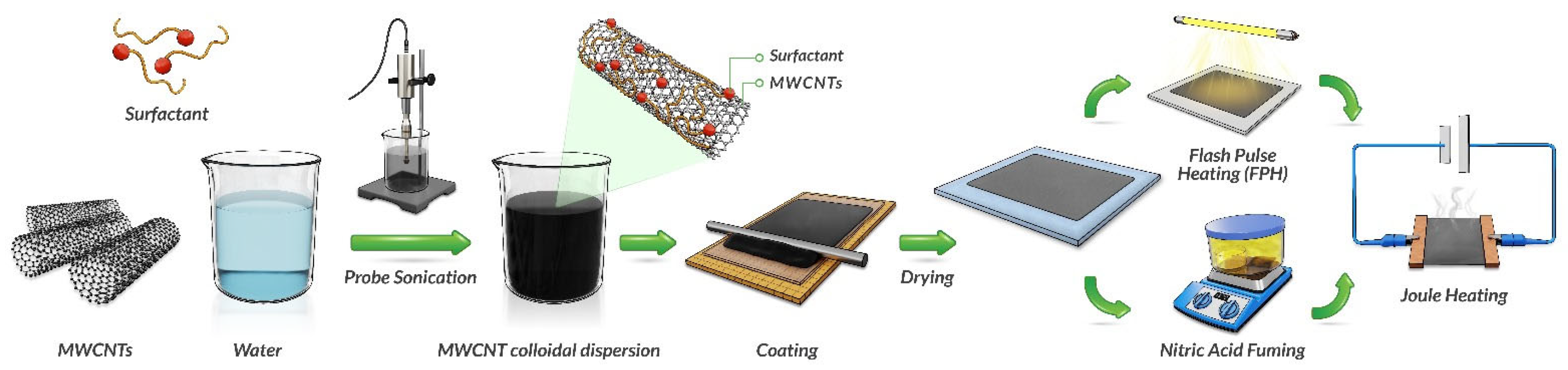
Despite these advances, ultra-long CNTs (UL-CNT) transparent heaters remain comparatively underexplored relative to SWCNT systems, particularly in water-based, low-temperature processing schemes suitable for plastics [15,16,23]. Addressing this gap is attractive because it couples material cost and supply chain advantages with manufacturing simplicity [13,19]. Figure 1 shows an illustration of the process developed to produce transparent UL-CNT-based heaters, making it an attractive material for large-area coatings, where durability and scalability are required, along with optoelectronic performance [12,28,29]. This work develops and studies aqueous UL-CNT transparent heater coatings deposited by scalable, low-temperature rod coating onto glass and flexible polymer substrates (PET and PC). This work includes (i) design of surfactant-assisted dispersions of UL-CNTs into water; (ii) relating layer count to the transmittance–sheet resistance (T–Rs) trade off, as well as heating performance while electrically biased; and (iii) evaluate two different post-deposition treatments—nitric acid fume doping and flash photonic heating to enhance optoelectrical performance further, as well as, analyze heater response under constant-voltage drive (rise time, steady-state temperature, and anisotropy performance with respect to draw direction), and durability.

2. Materials and Methods

Ultra-long carbon nanotubes (UL-CNTs, TorTech CNTM1.5, Ma’alot-Tarshiha, Israel) were used as the conductive component. Aqueous dispersions were prepared in two approaches. The first was by evaluating different surfactants, including 0.6 wt% of Triton X-100 (Sigma Aldrich, St. Louis, MO, USA), polyacrylic acid sodium salt (Sigma Aldrich, St. Louis, MO, USA), Tween 80 (Sigma Aldrich, St. Louis, MO, USA), sodium dodecyl sulfate (SDS) (Sigma Aldrich, St. Louis, MO, USA), and Solsperse 46000 (Lubrizol, Wickliffe, OH, USA), which was examined in three concentrations: 0.3 wt%, 0.6 wt%, and 1.2 wt%. The second was by functionalizing the CNT surface by refluxing in 70% nitric acid (Sigma Aldrich, St. Louis, MO, USA). Each formulation contained 0.2 wt% CNTs and 0.14 wt% BYK 348 (BYK-Chemie, Wesel, Germany) in 100 mL triple-distilled water (TDW). The mixtures were probe-sonicated (VCX 750, Sonics & Materials, Inc., Newtown, CT, USA) 85% amplitude, 2.5 h in an ice bath to prevent overheating.

2.1. Film Deposition

Glass (Microscope glass, Marienfeld Superior, Lauda-Königshofen, Germany), polycarbonate (PC), and polyethylene terephthalate (PET) (PGAS125S0297X0210, thickness: 125 micron, Jolybar, Alon Tavor, Israel) substrates were first cleaned by an ultrasonic bath for 5 min, then wiped thoroughly with isopropyl alcohol (IPA) (Sigma Aldrich, St. Louis, MO, USA) and air-dried. Flow coating was performed by pipetting 0.5 mL of ink onto the substrate with a #3 kbar (24 µm wet thickness) to form films of 1–5 layers. Each layer was dried at 75 °C for 10 min before the next layer was applied. Layer count was used to tune sheet resistance (Rs) and optical transmittance (T550).

2.2. Post-Treatments

Nitric Acid Fuming: Films were exposed to 70% HNO3 vapor at 65 °C for 0.5–36 min under an inverted glass dome, then rinsed with isopropanol (IPA) and air-dried. Flash Photonic Heating (FPH): FPH was performed using a NovaCentrix PulseForge (NovaCentrix, Austin, TX, USA) xenon-lamp system (0.1–1 J/cm2, 1–5 pulses, 500 µs each). The process was conducted in ambient air.

2.3. Characterization

Optical transmittance spectra were recorded using a UV-Vis spectrophotometer (Shimadzu 1800, Shimadzu Corporation, Kyoto, Japan). Sheet resistance was measured by a four-point probe. Heating characteristics were studied using a programmable DC power supply and a Qianli Toolplus thermal IR camera (QianLi Innovation Co., Ltd., Shenzhen, China). Mechanical durability was tested under 5000 bending cycles with the Ufactory Arm Lite 6 (UFACTORY, Shenzhen, China). with the Lite gripper attached. Surface chemistry before and after FPH was analyzed via X-ray photoelectron spectroscopy (XPS, Thermo K-Alpha, Al Kα source (Thermo Fisher Scientific, Waltham, MA, USA), focusing on C 1s and O 1s peaks.

3. Results

3.1. Ink Dispersion and Stability

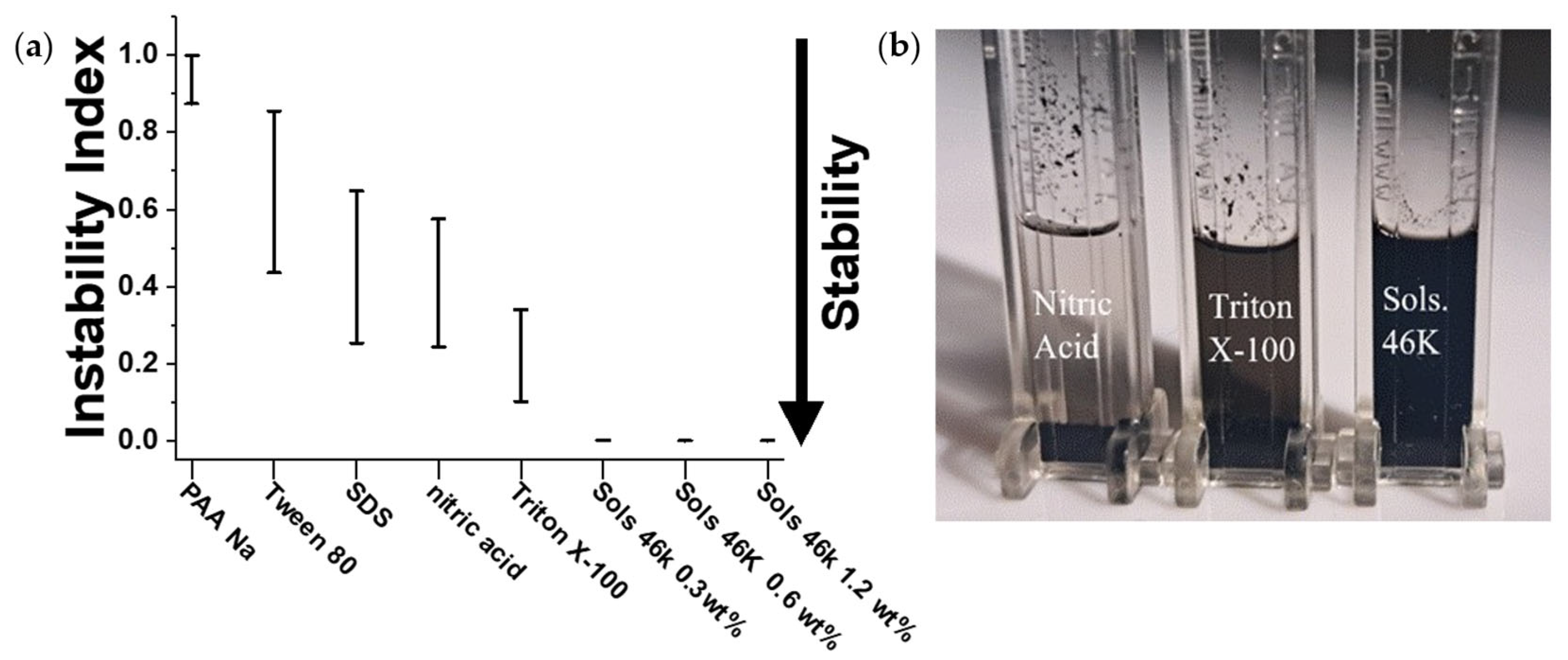
The ink formulation was prepared by dispersing mixed single- and multi-walled ultra-long carbon nanotubes (UL-CNTs) in water using surfactants to promote colloidal stability and uniform film formation. Achieving stable dispersion is critical for ensuring long shelf life, consistent coating performance, and reproducibility of the optoelectronic properties. Instability, such as CNT sedimentation or aggregation, leads to non-uniform film thickness, poor transparency, and reduced conductivity [30,31]. To identify the optimal dispersant system, several surfactants were investigated. The stability of each aqueous ink was evaluated using accelerated sedimentation analysis (Lumifuge, LUM GmbH, Berlin, Germany), which quantifies the rate and extent of phase separation under centrifugal force (4000 rpm, 25 °C). As shown in Figure 2a, the instability index for the Solsperse 46000 systems reaches a near-zero value. The difference in performance of the different surfactants can be further demonstrated in Figure 2b, as the difference there is a clear visual difference between the nitric acid (Instability Index ~0.42), Triton X-100 (Instability Index ~0.25), and Solsperse 46K 1X (Instability Index ~0.01), which appears darker and less transparent as the instability decreases. Although the measurement of 0.3 wt% concentration looks similar to that of 0.6 wt% and 1.2 wt%, it failed to disperse the whole amount of CNTs, and many big particles were observed on the walls of the measurement tube. Therefore, we proceeded with the 0.6 wt% concentration because a higher surfactant content, 1.2 wt%, would introduce excess organic material, potentially reducing film conductivity by blocking charge transport pathways between CNTs [32,33,34]. This balance between dispersion stability and final electrical performance made the 0.6 wt% Solsperse formulation the optimal choice. All other surfactants and nitric-acid-functionalized CNTs exhibited much higher instability indexes (>0.3), reflecting sedimentation or phase separation during centrifugation. 0.6 wt% Solsperse 46000 thus provided a uniform, durable dispersion with minimal aggregation due to its polymeric structure, which provides both anchoring and stabilizing functionality in water. The molecule contains multiple polar anchoring groups capable of π–π and donor–acceptor interactions with the graphitic sidewalls of carbon nanotubes, ensuring strong, multi-point adsorption [35,36]. Its long-solvated polymer chains then extend into the aqueous phase, forming a thick electrostatic barrier that prevents tube–tube re-aggregation. In contrast, the smaller ionic or nonionic surfactants (SDS, Triton X-100, and Tween 80) rely on weak, reversible physisorption and produce only a thin, labile stabilizing layer, while the polyelectrolyte PAA-Na provides purely electrostatic stabilization that is easily screened in water [31,37]. The combined electrostatic and steric mechanism of Solsperse 46000 therefore yields a more durable, ionic-strength-independent dispersion and preserves the ultra-long CNT aspect ratio essential for low percolation resistance and uniform transparent films.
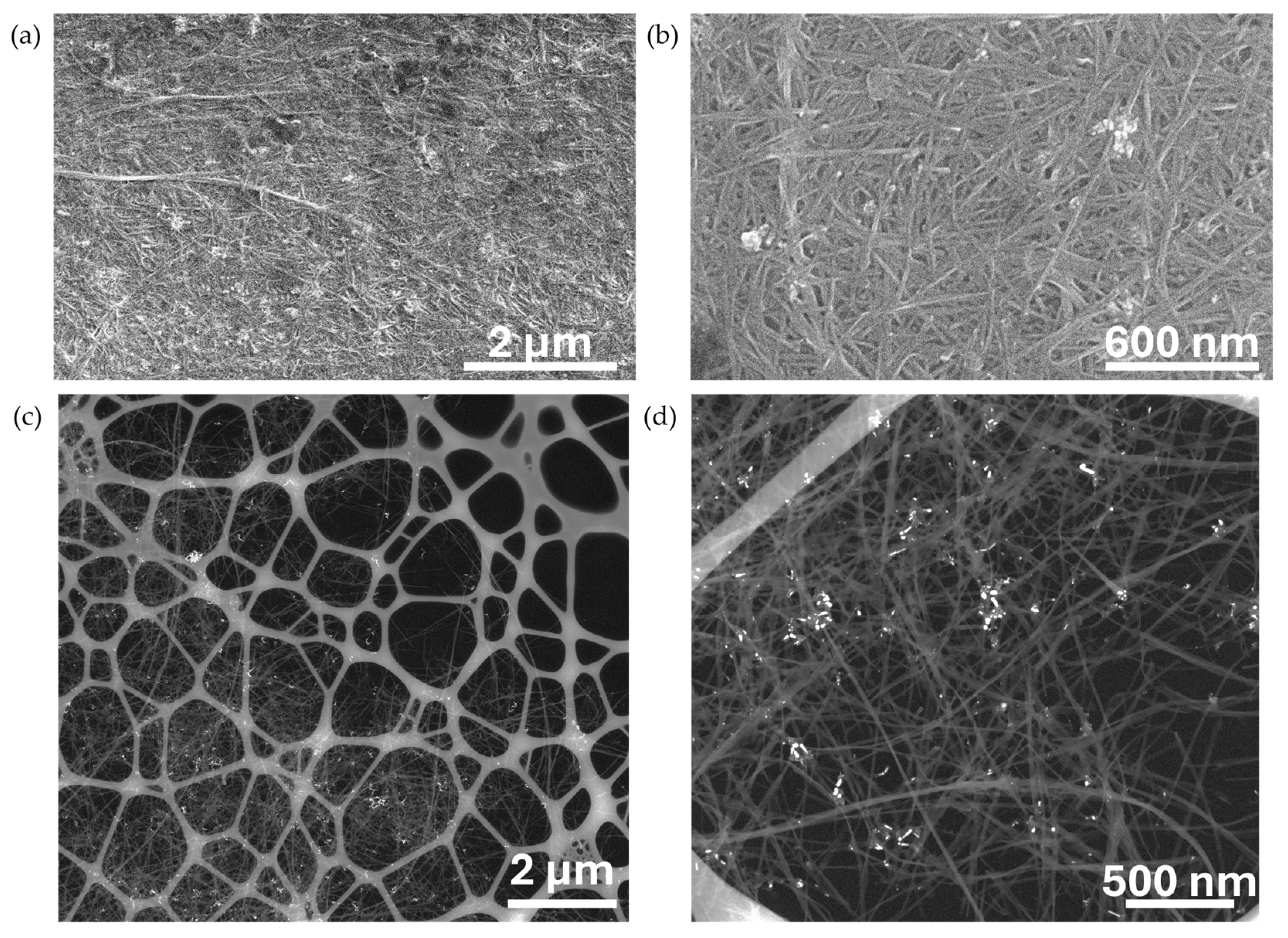
Figure 3a,b show a scanning electron microscopy (SEM) image confirming a continuous CNT network with minimal bundling when using Solsperse 46000. The images show extended nanotube paths forming dense, conductive webs. The long tube length and uniform dispersion minimize contact resistance by reducing the number of junctions [18,26]. This morphology resembles optimized CNT networks reported for transparent electrodes [12,19,20,38].
To further examine the length of the UL-CNTs in the dispersion, the ink was diluted in a ratio of 1:1000 in deionized (DI) water and drop-casted onto TEM grids. As shown in the TEM image in Figure 3c,d, the UL-CNTs form extended and entangled networks, with many segments exceeding 20 µm within a single field of view. Due to their extremely high aspect ratio and the tendency of ultra-long CNTs to coil and overlap, it was not possible to trace complete individual tubes or to construct a statistically meaningful length histogram. Nevertheless, the observable uninterrupted segments support that the nanotubes retain lengths well above the micron-scale regime after dispersion and sonication. For the as-received CNT mats, which consist of densely interwoven fibers, isolating individual CNTs for direct measurement was not feasible. These observations are consistent with the known morphology of ultra-long CNTs provided by the manufacturer and support their role in reducing junction density within the percolating network.

3.2. Optical and Electrical Properties of CNT Films

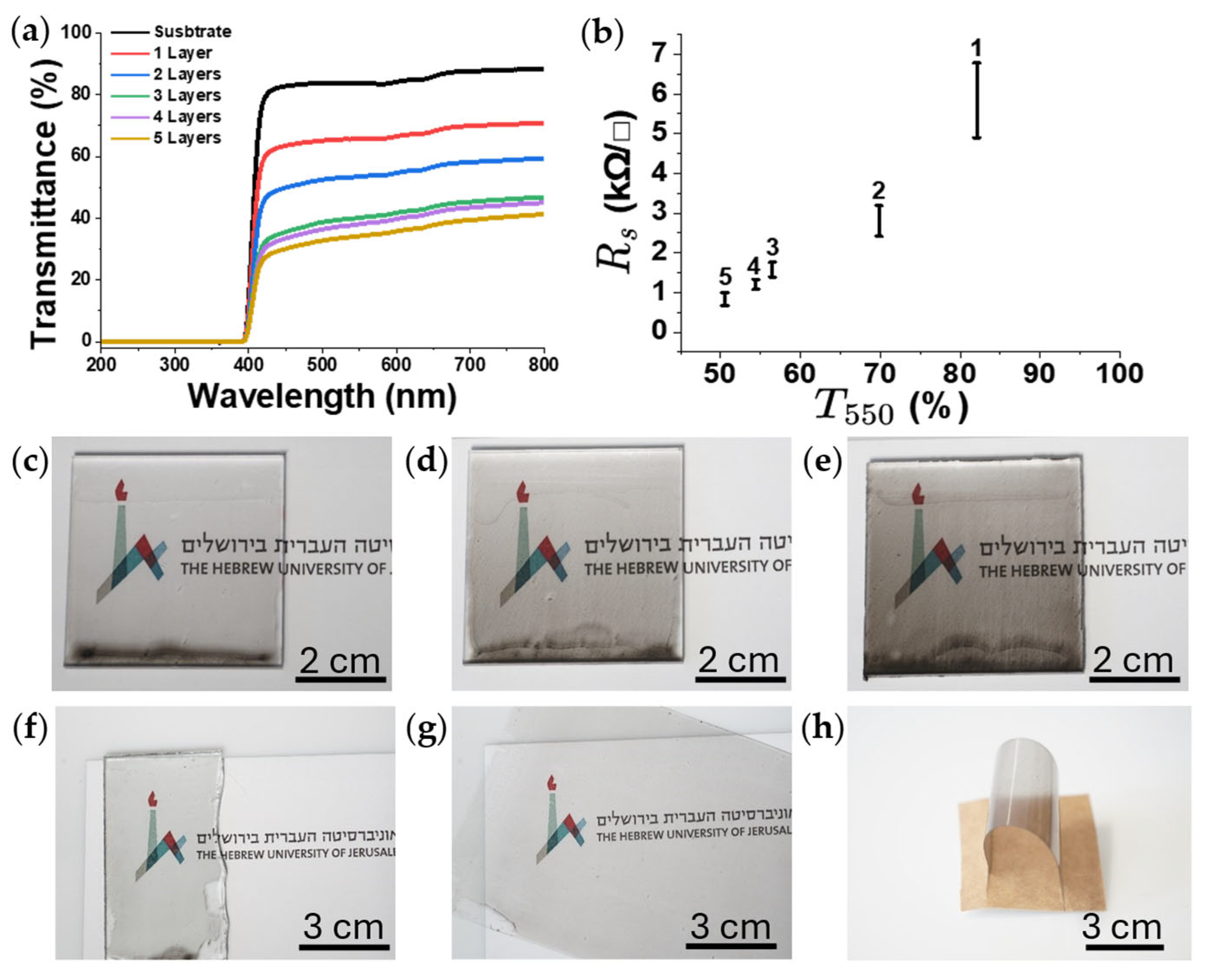
Figure 4a shows the full UV-Vis spectra indicating a trend of reduced % transmittance with the addition of more layers, i.e., more material. This effect is seen beyond the abrupt cut-off below ~400 nm (intrinsic to the PC substrate and therefore of little relevance to the transparency of the UL-CNTs coating). We subtracted the transmittance of the substrate T% PC from the transmittance of the coated samples to account for the substrate’s effect.
Figure 4b reveals a compromise between high optical transparency and low sheet resistance that emerges when layers are added successively. Each pass of the #3 Mayer Rod (~24 µm wet thickness) adds CNT to the percolating network, resulting in less optical transparency and lower sheet resistance (Rs). The reduction in transparency and sheet resistance increases with each additional layer (Figure 4c–e). From one-layer to two-layer, the sheet resistance and optical transparency (at 550 nm) decreased by ~60% and ~14%, respectively. Although a two-layer film already offers a reasonable compromise (~2.3 kΩ/□ at ~70% T550), we continued to explore the transparency limit. We therefore focused subsequent optimization on the single-layer film, accepting its higher Rs in exchange for ~85% visible transmission.
Taken together, Figure 4a,b demonstrate that flow coating provides a straightforward yet tunable route to transparent conductive films whose optoelectronic properties can be adjusted by layer count. A single-layer coating delivers the highest clarity while still establishing electrical continuity. In contrast, five layers achieve the lowest Rs but at the cost of significant darkening, illustrating the practical limits of this material system for applications that demand both high transparency and low sheet resistance. Beyond tunability, the ink also exhibits excellent versatility and substrate compatibility, yielding uniform coatings on glass (Figure 4f) and PET (Figure 4g,h) without noticeable defects. The ability to form adherent, continuous CNT networks on both rigid and flexible substrates underscores the robustness of the surfactant-assisted dispersion and the suitability of this method for scalable fabrication of transparent conductive films.

3.3. Electrical Heating Performance

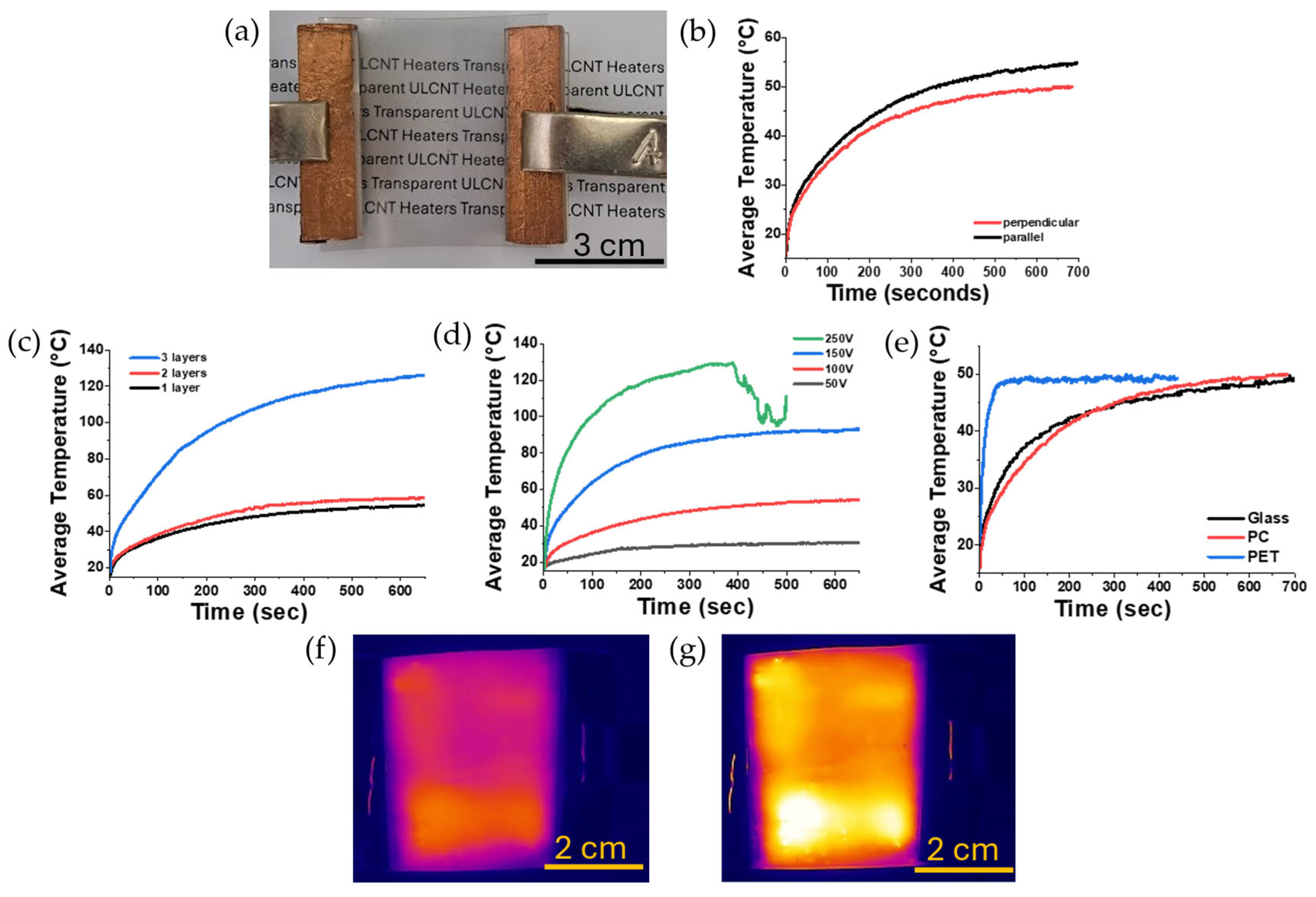
Figure 5b investigates the effect of flow-coating direction. When the electrodes are placed parallel to the coating direction, the applied current is perpendicular to it, coinciding with the preferential orientation of the percolating carbon network [39,40]. The single-layer film rises from 45 °C after 700 s at 100 V to 53 °C when the electrodes are switched from perpendicular to parallel, resulting in roughly an 8 °C increase in temperature. This directional heating behavior reflects the anisotropic conductivity characteristic of shear-aligned CNT networks, in which enhanced conductivity perpendicular to the electrode alignment direction results in greater Joule heating [39,40,41] and therefore motivates the use of the parallel-electrode geometry in all subsequent tests.
With that geometry fixed, Figure 5c overlays heating curves for one-, two-, three-layer coatings, each at 100 V. Because electrical power scales as V2/R lowering the sheet resistance by adding layers accelerates the temperature rise: the three-layer film (Rs ≈ 1.5 kΩ/□) surpasses 100 °C within 400 s, whereas the single layer (Rs ≈ 9.5 kΩ/□) levels off near 53 °C. The four- and five-layer samples initially heated rapidly, but then burned, melted, and disrupted the uniformity of the coatings, leading to a break in the percolation network and ceasing the joule heating.
Figure 5d isolates a single-layer heater while sweeping the bias from 50 V to 250 V. The response is monotonic, with the resulting plateau temperature being ≈ approximately 30 °C at 50 V, 55 °C at 100 V, 90 °C at 150 V, and exceeding 120 °C at 250 V, beyond which the substrate is damaged (melted and burned), resulting in the breaking of the coating. The infrared images in Figure 5f,g show that the CNT film heats evenly across the entire active area at both voltages, confirming uniform electrical and thermal conductivity. As expected, the sample driven at 150 V reaches a higher overall temperature than the one at 100 V, while maintaining the same homogeneous heating profile.
Substrate effects are illustrated in Figure 5e, where one-layer heaters deposited on glass, PC and PET were all driven at 100 V. While glass has the lowest specific heat of 0.85 (J/g·K) [42,43] compared to PC (1.2 J/g·K) [44] and PET (1.3 J/g·K) [45,46,47], the PET sample had significantly less mass compared to the other samples, making it heat the fastest among the sample, reaching 50 °C in under 30 ss. In contrast, it took the glass and PC samples 500+ seconds to achieve the same temperature. All three eventually plateaued at the same final temperature, while the rate of the heater was dependent on the material and mass of the substrate, and the final temperature achieved at a given voltage was not affected by the material.
Taken together, the data in Figure 5 demonstrate that a single, optically clear CNT layer can deliver ~45 °C within one minute at 100 V, readily available for low-voltage electronics. In comparison, the addition of layers or higher bias extends the operating range well above 100 °C. Crucially, every configuration settles to a stable plateau, providing predictable, self-limiting behavior desirable for transparent defoggers, flexible warmers, and related large-area devices.
To benchmark the optoelectronic performance of the UL-CNT films, the Haacke Figure of Merit (Φ_TC = T10/Rs) was calculated and compared to recent CNT-based transparent heaters. For the present system (T ≈ 0.85, Rs ≈ 1200 Ω·sq−1), we obtain Φ_TC ≈ 1.6 × 10⁻⁴ Ω−1. This value is on the same order of magnitude as that reported for SWCNT-based heaters by Jia et al. [16] (Φ_TC ≈ 4.0 × 10⁻⁴ Ω−1), despite their much lower sheet resistance (Rs ≈ 95 Ω·sq−1 at T ≈ 0.72). In contrast, multi-walled CNT films reported by Kim et al. [25] exhibit Φ_TC ≈ 2.0 × 10⁻⁵ Ω−1, roughly an order of magnitude lower than our UL-CNT system. Thus, although SWCNT networks still deliver the highest FoM values, the UL-CNT heaters demonstrate substantially better optoelectronic performance than typical MWCNT-based transparent heaters while offering a significant material–cost advantage.

3.4. Flexibility and Durability

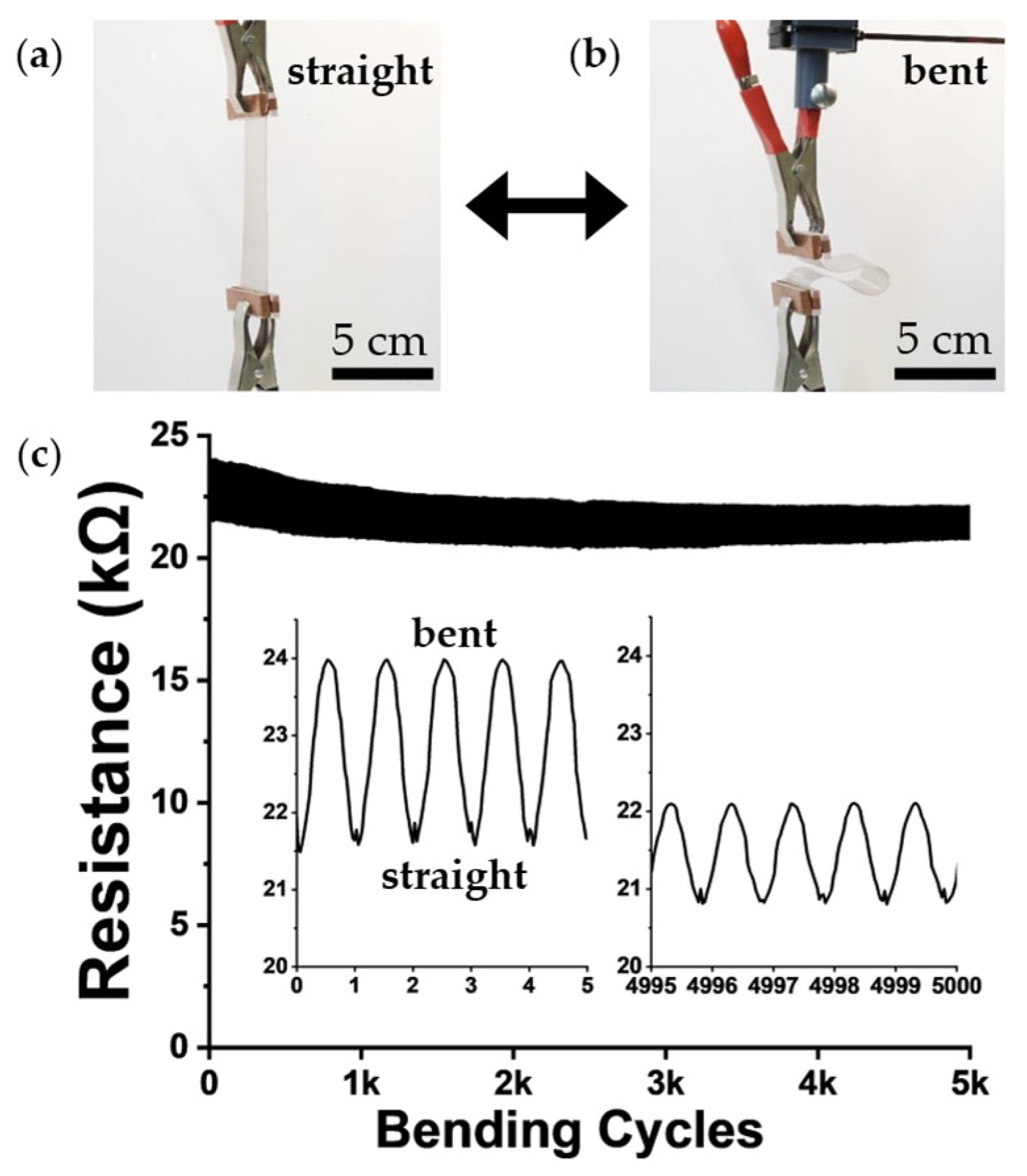
Figure 6 presents the durability of the one-layer PET sample by repeatedly bending the sample, for 5000 cycles, using an automated xArm-6 robotic platform. The sample had a length of 13 cm and was bent to bring one end straight down to the other, stopping with 3 cm in between, with the whole cycle lasting 7 s. Remarkably, the resistance of the bent sample decreased from 24 kΩ at the beginning of bending to 22 kΩ after extended cycling, while the unbent resistance started at 21.5 kΩ and ended at 21 kΩ. This gradual reduction in resistance demonstrates an improvement in UL-CNT heaters and no observable degradation caused by bending. The improved conductivity is a phenomenon consistent with CNT networks, which exhibit stable or enhanced conductivity under mechanical deformation due to possible microstructural rearrangement. After 5000 cycles, the samples showed no changes in optical appearance or heating performance during operation at 100 V, corroborating the high mechanical durability while maintaining their optoelectronic properties. Such stability far exceeds that of brittle ITO or oxidation-prone AgNW-based heaters [6,10]. Additionally, the reproducible change in resistance between straight (Figure 6a) and bent (Figure 6b) states demonstrates a promising potential as a bending sensor, with application for real-time monitoring in smart surfaces [48,49].
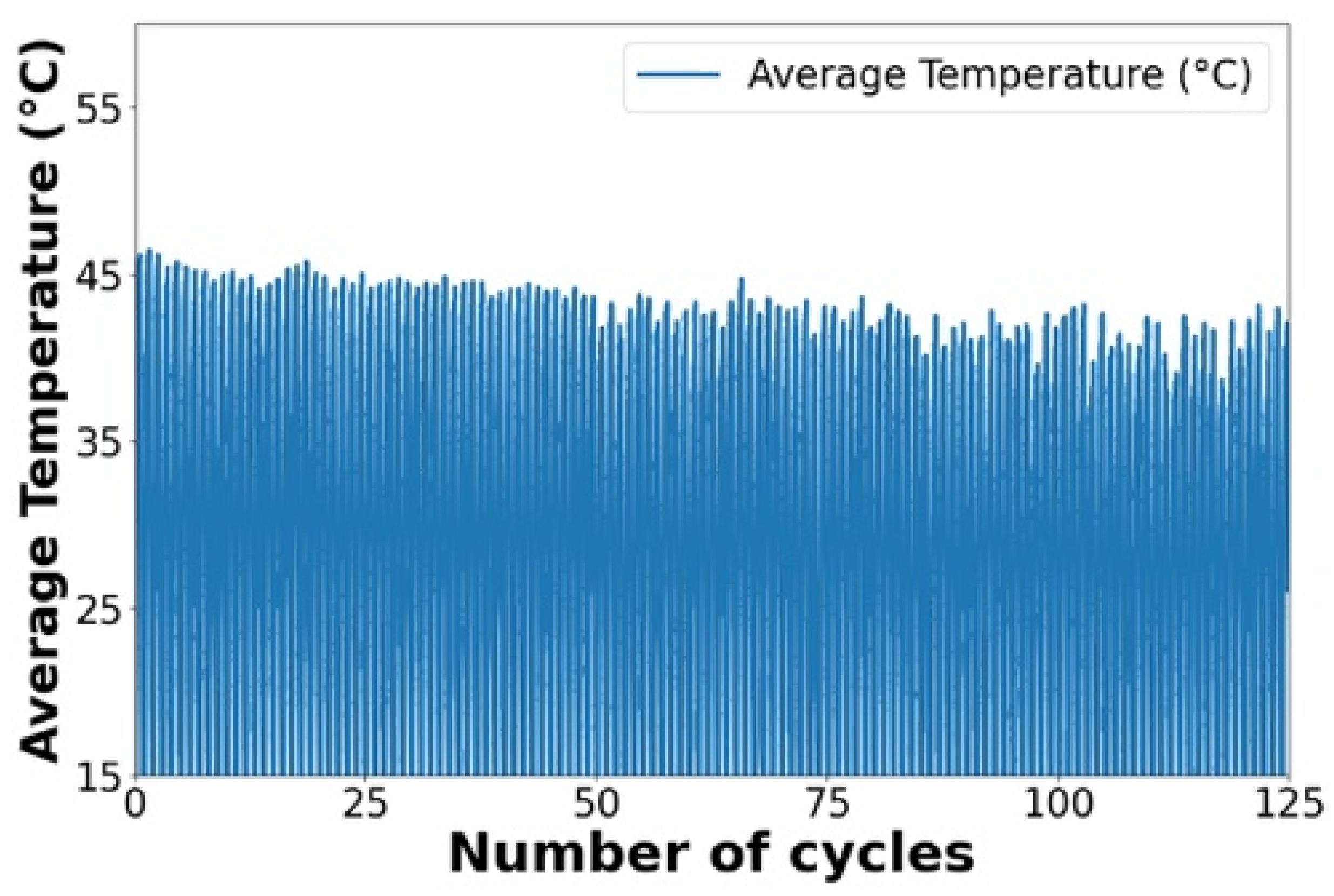
To evaluate long-term operational stability, we performed ON/OFF thermal cycling of a single-layer UL-CNT heater at 100 V using 1 min ON/1 min OFF intervals for a total of 125 cycles (15,000 s). As shown in Figure 7, the maximum temperature reached during each on-cycle remained consistent throughout the experiment, with no observable drift or hysteresis. Similarly, the baseline temperature during OFF cycles remained stable, indicating that neither joule heating nor repeated thermal expansion caused degradation of the CNT network or its interface with the PET substrate. In addition, the heater was left on for six hours, and the temperature remained constant. These results demonstrate excellent cycling durability, outperforming brittle ITO-based heaters and aligning with the robust mechanical behavior observed in CNT networks.

3.5. Post-Treatment Effects

3.5.1. Nitric Acid Fuming

To further improve the conductivity of the films, two approaches were evaluated: the first was to expose the samples to nitric acid vapor, and the second was to treat the samples with flash photonic heating (FPH). Nitric acid vapor treatment is a well-established chemical doping method for enhancing CNT film conductivity by inducing p-type doping through charge transfer and removing insulating surfactant residues [50,51].
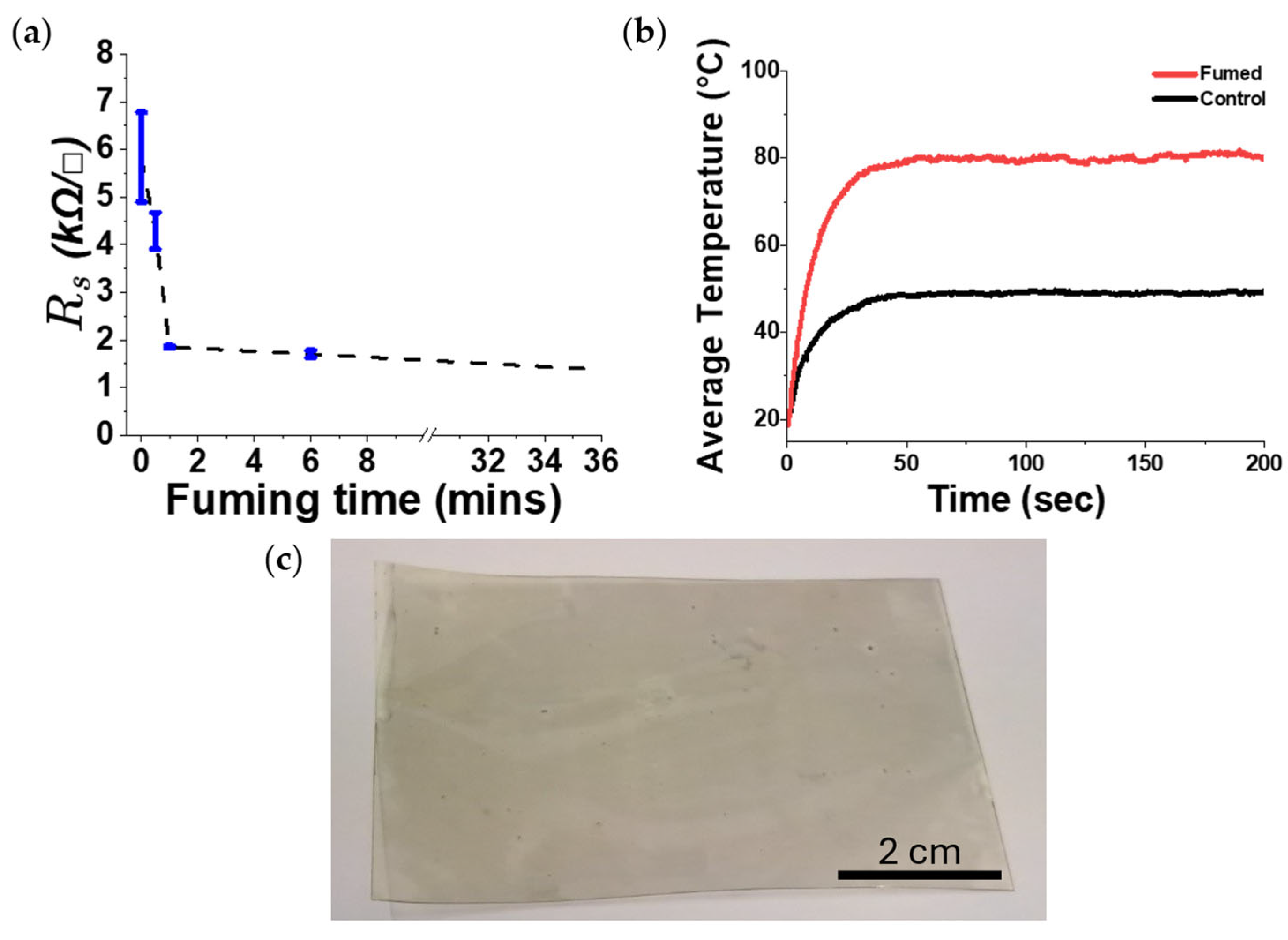
The nitric acid vapors resulted in a rapid decrease in sheet resistance of single-layer UL-CNT films on PET (Figure 8a). Most of the improvement occurred within the first minute: Rs fell from ~7.5 kΩ/□ to ~2 kΩ/□1 after 1 min, while longer fuming (≥30 min) delivered only modest additional reduction (approaching ~1.75 kΩ/□). Thus, the effective window for conductivity enhancement is in the short-exposure regime.
The electrical gains translated into higher heater output (Figure 8b). A 1 min fumed film plateaued at ~60 °C under 100 V, whereas the undoped control plateaued near ~45 °C, with similar rise-time profiles.
Figure 8c shows a non-coated PET substrate after 6 min of fuming, which resulted in visible yellowing and substrate wrapping. Discoloration intensified with longer exposures, indicating a trade-off between maximum potential conductivity and optical clarity when using polymer substrates. Short fuming times (1 min) deliver the majority of the improvement while minimizing the yellowing, although minor yellow and substrate wrapping do occur; extended fuming yields diminishing electrical returns alongside progressively worse appearance. These constraints motivated the evaluation of a non-chemical post-treatment (FPH) in the following subsection.

3.5.2. Flash Photonic Heating

Flash photonic heating (FPH), also known as intense pulsed light or photonic sintering, is a rapid, non-contact post-treatment method that delivers high-intensity broadband light pulses to materials. Unlike thermal annealing [52], FPH selectively heats the absorbing CNT network through photothermal conversion while minimizing substrate heating, making it compatible with heat-sensitive polymers. The rapid heating and cooling cycles can remove volatile impurities, improve inter-tube contacts, and potentially reduce oxygen-containing functional groups at CNT surfaces, thereby enhancing electrical conductivity [53,54,55].
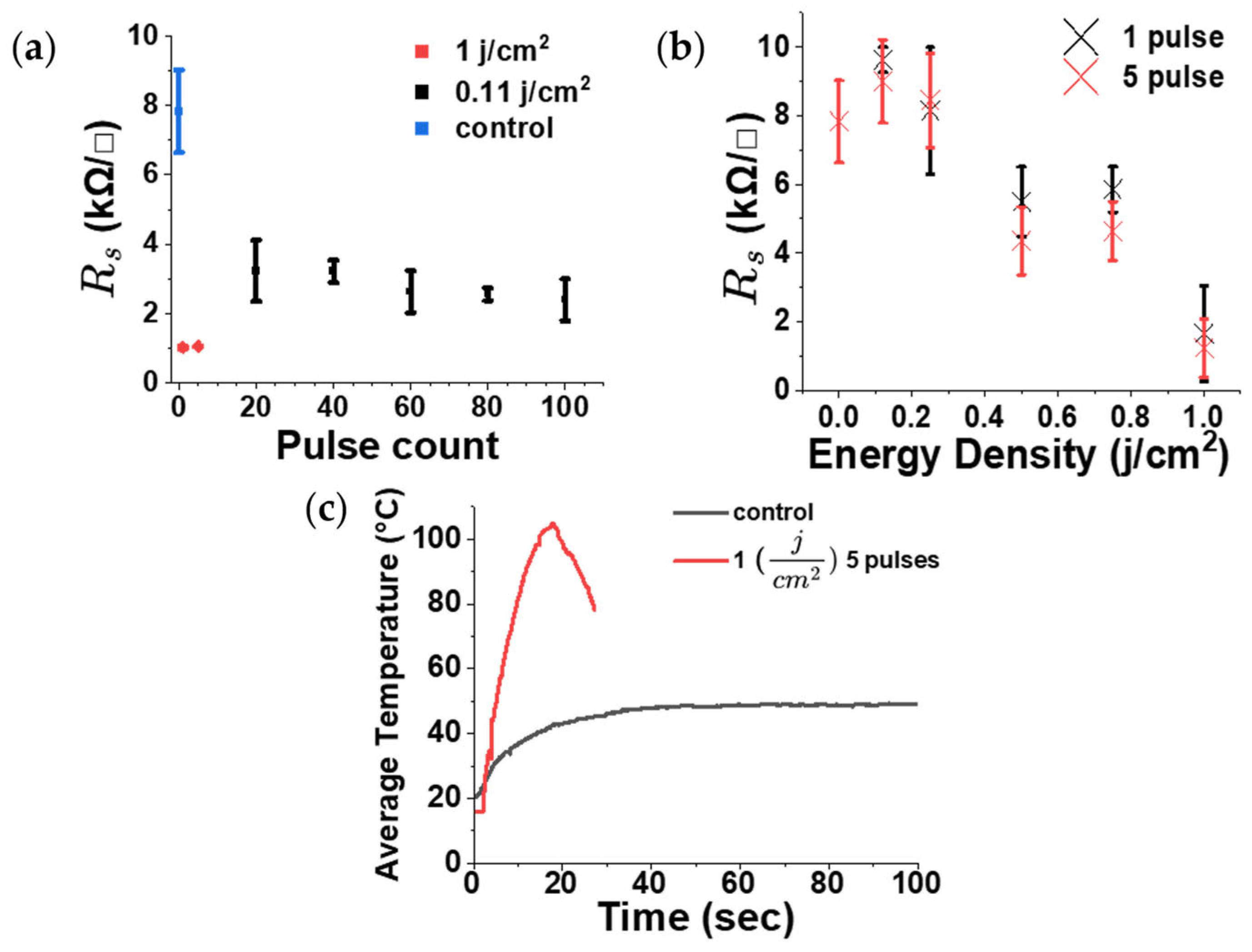
Figure 9 compares how sheet resistance changes with pulse count for two approaches: many low-energy pulses versus fewer high-energy pulses. At low pulse energy (0.11 J/cm2), increasing the number of pulses from 20 to 100 resulted in only minor reductions in sheet resistance, with most of the improvement occurring within the first 20 pulses. Conversely, even a few (one or five) high-energy pulses at 1 J cm−2 reduced the sheet resistance more effectively than all of the low-energy (0.11 J cm−2) pulsed samples, underscoring the dominant role of pulse energy. This is further explored in sheet resistance vs. energy density (fixed pulse counts) (Figure 9b), from 0 (control) to 1 J/cm2, with one-pulse and five-pulse treatments showing a clear pattern of decreasing Rs with increasing energy density. Notably, one-pulse and five-pulse traces nearly overlap at each energy, demonstrating that per-pulse energy is the dominant factor in improving conductivity rather than pulse repetition. The five-pulse samples provide only a slight additional reduction in sheet resistance compared to the one-pulse samples, but the much smaller error bars indicate improved uniformity and reliability. Therefore, due to the improved consistency at five pulses, we selected five pulses for all subsequent experiments. Under optimized conditions (1 J cm−2, 5 pulses), the sheet resistance of single-layer films decreased to ~1.2 kΩ/□, comparable to nitric-acid fuming of 2 kΩ/□ achieved after 36 min.
The electrical improvement translated to significantly higher heater output. Under 100 V on PET, FPH-treated film (1 J cm−2, five pulses) reached >100 °C within 20 s before the film started to burn and destroy the sample. In contrast, the untreated control stabilized near ~45 °C (Figure 9c).
Across 0–1 J cm−2, no measurable yellowing or visible damage was observed on PET substrates, and no measurable change in transmittance occurred. SEM imaging revealed no noticeable junction welding or large-scale reorganization of the CNT network after FPH, suggesting that the conductivity gains arise from subtle inter-tube/contact changes or chemical changes in the film rather than macroscopic restructuring.
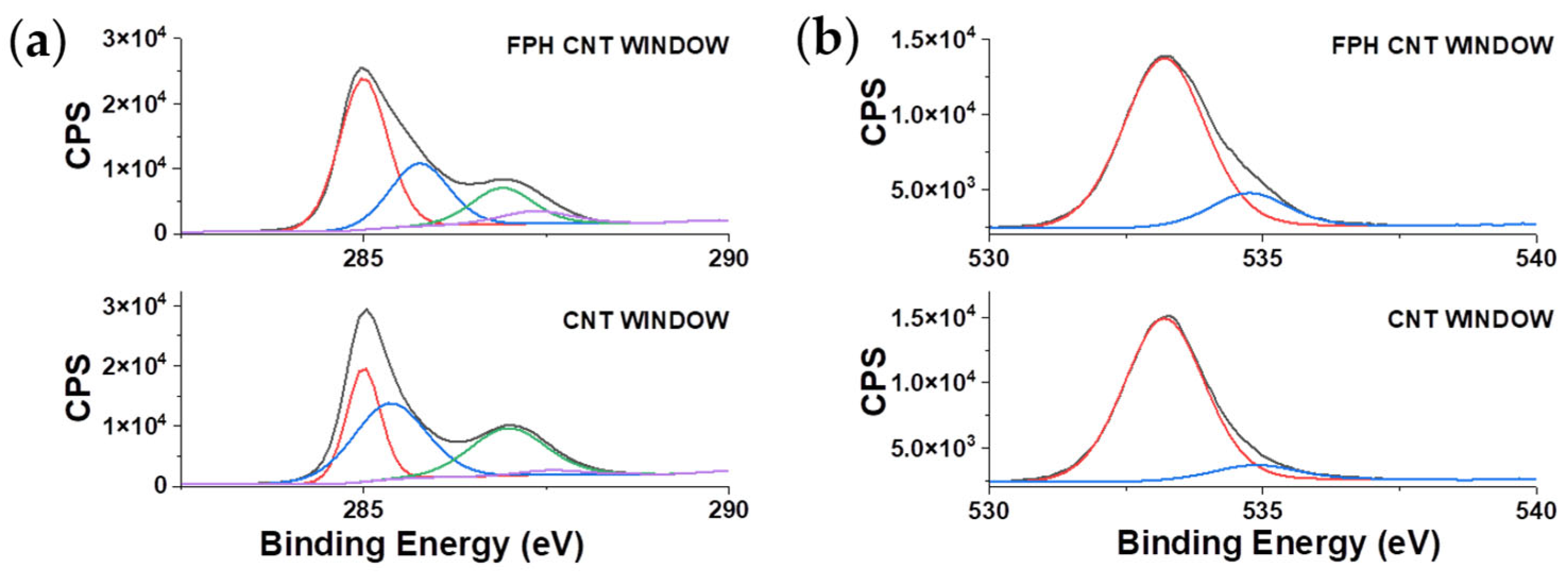
The XPS C 1s spectra of the untreated and FPH-treated MWCNT samples demonstrate substantial chemical changes on the nanotube surface following FPH processing (Table 1 and Figure 10). The untreated sample exhibited a high proportion of oxygenated carbon species, with the C–O and C=O components accounting for approximately 42% and 27% of the total signal, respectively. These groups originate primarily from surfactant residues and moderate CNT surface oxidation that occurred during dispersion.
After FPH treatment, a significant reduction in the oxygen-containing functional groups was observed. The relative proportions of C–O and C=O bonds decreased to 26% and 16%, respectively. Concurrently, the hydrocarbon (C–H) component increased from 29% in the untreated sample to 52% after treatment. This sharp rise indicates that the treatment effectively removed oxygen-rich surfactant layers and partially restored graphitic carbon domains on the CNT surface [56,57].
Interestingly, the COOH fraction increased slightly from 1.9% to 6.2%, suggesting that the treatment either generated defect-associated carboxyl groups at CNT ends or exposed preexisting carboxylic sites by stripping away overlying residues [58,59]. Overall, the FPH process acted as a chemical cleaning and mild reduction step, yielding a less oxidized, more conductive, and structurally restored CNT surface. This trend aligns with previous reports describing similar reductions in polar oxygen groups and reestablishment of sp2 carbon bonding after plasma or hydrogen-based CNT treatments [60,61]. Top-view SEM images before and after FPH did not show any significant visual change. In view of the reduction in oxygen groups and an increase in sp2 carbon, it could be that the CNT became embedded within the substrate, or it could be that the FPH induced chemical reduction [13,62]. This should be thoroughly investigated in future studies.
It should be noted that Solsperse is a good dispersing agent, but it is also an insulator. Before the post-processing step, we did not perform any washing steps, and therefore, the Solsperse amount in the layer should not have been changed with a weight ratio of 3:1 CNT: Solsperse. Following HNO3 vapor exposure, the films were rinsed with IPA, which likely removed a portion of unbound or weakly adsorbed Solsperse, whereas FPH-treated films were not rinsed, and thus any removal of the surfactant arises from photothermal decomposition. Consistent with this, XPS measurements reveal a clear decrease in oxygenated carbon species (C–O and C=O) and a relative increase in sp2-like C–C/C–H signals after FPH, indicating partial decomposition of the surfactant. This chemical evolution correlates with the substantial improvement in conductivity—from ~7.5 kΩ·sq−1 in the as-dried state to ~1.2 kΩ·sq−1 after FPH. Although these XPS trends qualitatively confirm changes in surface composition, a full quantitative determination of residual surfactant content would require further investigation.
In this work, a single flow-coated UL-CNT layer on PET after flash photonic heating (FPH) achieves Rs ≈ 1.2 kΩ·sq−1 at ~85% T550, while multilayer stacks reduce Rs further at the expense of transparency. Thus, in terms of Rs/T, our films are still not as good as the costly SWCNT (Rs ≈ 80–150 Ω·sq−1 at T_550 ≈ 70%–80%), but instead we propose better results compared to MWCNT (~2.0 × 10⁵ to ~3.9 × 10³ Ω·sq−1 at T_550 ≈ ~78% to ~52) transparent heaters. Our main contributions are (i) demonstrating that ultra-long MWCNTs can be formulated in a purely aqueous ink, (ii) scalable flow coating on multiple substrates, including flexible, and (iii) improved performance after post-treatments (HNO3 fumes and FPH).
Finally, we compared the material cost of the UL-CNT heaters to that of commercial ITO-PET films. The cost of the UL-CNT (TorTech CNTM1.5) used in this work is 3000 USD/kg; the amount of CNT in heaters is therefore calculated and compared to commercial ITO-coated PET. For the 0.2 wt% UL-CNT ink, the areal CNT is ~0.4 g/m2 for a single coating pass (k-bar #3), resulting in a CNT material cost of approximately 1.2 USD/m2. In contrast, flexible ITO-PET with T550 > 85% typically costs 55–253 USD/m2 depending on the supplier and sheet resistance grade. Thus, even without considering processing advantages, the material cost of UL-CNT-based heaters is at least two orders of magnitude lower than that of commercial ITO substrates, reinforcing the economic motivation for CNT-based transparent heaters.

4. Conclusions

Ultralong CNTs aqueous dispersions deposited onto various substrates by a scalable flow-coating process enable the fabrication of transparent heaters with tunable T–Rs trade-offs with fast, uniform Joule heating. The single-layer coating achieves good sheet resistances at ≥80% transmittance. Post-processing provides two complementary routes: short HNO3 fuming yields immediate conductivity gains but warps and yellows polymeric substrates, whereas flash-pulse heating enhances performance without liquid chemicals and avoids yellowing. The transparent heaters maintained electrical conductivity under repeated bending, underscoring suitability for flexible defogging/deicing and wearable devices. Overall, the combination of aqueous formulation, scalability of process, and a simple post-treatment to further enhance performance offers a low-cost, manufacturing-ready pathway to high-clarity CNT heaters. The heaters can be used for a variety of fields, including bending/stretching sensors and transparent thermal actuators, for applications in electronics, optoelectronics, and robotic devices.

Author Contributions

Methodology, N.D.; Investigation, N.D. and S.A.; Resources, S.Y.; Writing—original draft, N.D.; Writing—review & editing, Y.F., R.G., S.Y. and S.M.; Supervision, Y.F., R.G. and S.M.; Project administration, S.M. All authors have read and agreed to the published version of the manuscript.

Funding

This work was supported partially by the Israel Ministry of Defense and by the National Research Foundation, Prime Minister’s Office, Singapore, under its Campus of Research Excellence and Technological Enterprise (CREATE) program. We thank Tortech for providing the UL-CNTs.

Institutional Review Board Statement

Not applicable.

Informed Consent Statement

Not applicable.

Data Availability Statement

The raw data supporting the conclusions of this article will be made available by the authors on request.

Conflicts of Interest

The authors declare no conflict of interest.

References

  1. Ellmer, K. Past Achievements and Future Challenges in the Development of Optically Transparent Electrodes. Nat. Photonics 2012, 6, 809–817. [Google Scholar] [CrossRef]
  2. Granqvist, C.G. Transparent Conductors as Solar Energy Materials: A Panoramic Review. Sol. Energy Mater. Sol. Cells 2007, 91, 1529–1598. [Google Scholar] [CrossRef]
  3. Fortunato, E.; Ginley, D.; Hosono, H.; Paine, D.C. Transparent Conducting Oxides for Photovoltaics. MRS Bull. 2007, 32, 242–247. [Google Scholar] [CrossRef]
  4. Hecht, D.S.; Hu, L.; Irvin, G. Emerging Transparent Electrodes Based on Thin Films of Carbon Nanotubes, Graphene, and Metallic Nanostructures. Adv. Mater. 2011, 23, 1482–1513. [Google Scholar] [CrossRef] [PubMed]
  5. Chen, Z.; Cotterell, B.; Wang, W.; Guenther, E.; Chua, S.-J. A Mechanical Assessment of Flexible Optoelectronic Devices. Thin Solid Film. 2001, 394, 201–205. [Google Scholar] [CrossRef]
  6. Park, J.M.; Wang, Z.J.; Kwon, D.J.; Gu, G.Y.; Lawrence Devries, K. Electrical Properties of Transparent CNT and ITO Coatings on PET Substrate Including Nano-Structural Aspects. Solid State Electron. 2013, 79, 147–151. [Google Scholar] [CrossRef]
  7. Lee, J.Y.; Connor, S.T.; Cui, Y.; Peumans, P. Solution-Processed Metal Nanowire Mesh Transparent Electrodes. Nano Lett. 2008, 8, 689–692. [Google Scholar] [CrossRef] [PubMed]
  8. Tokuno, T.; Nogi, M.; Karakawa, M.; Jiu, J.; Nge, T.T.; Aso, Y.; Suganuma, K. Fabrication of Silver Nanowire Transparent Electrodes at Room Temperature. Nano Res. 2011, 4, 1215–1222. [Google Scholar] [CrossRef]
  9. Khaligh, H.H.; Xu, L.; Khosropour, A.; Madeira, A.; Romano, M.; Pradére, C.; Tréguer-Delapierre, M.; Servant, L.; Pope, M.A.; Goldthorpe, I.A. The Joule Heating Problem in Silver Nanowire Transparent Electrodes. Nanotechnology 2017, 28, 425703. [Google Scholar] [CrossRef]
  10. Choo, D.C.; Kim, T.W. Degradation Mechanisms of Silver Nanowire Electrodes under Ultraviolet Irradiation and Heat Treatment. Sci. Rep. 2017, 7, 1696. [Google Scholar] [CrossRef] [PubMed]
  11. Jeong, Y.C.; Nam, J.; Kim, J.; Kim, C.S.; Jo, S. Enhancing Thermal Oxidation Stability of Silver Nanowire Transparent Electrodes by Using a Cesium Carbonate-Incorporated Overcoating Layer. Materials 2019, 12, 1140. [Google Scholar] [CrossRef] [PubMed]
  12. Park, S.; Vosguerichian, M.; Bao, Z. A Review of Fabrication and Applications of Carbon Nanotube Film-Based Flexible Electronics. Nanoscale 2013, 5, 1727–1752. [Google Scholar] [CrossRef]
  13. Zhou, Y.; Azumi, R. Carbon Nanotube Based Transparent Conductive Films: Progress, Challenges, and Perspectives. Sci. Technol. Adv. Mater. 2016, 17, 493–516. [Google Scholar] [CrossRef]
  14. Carbon Nanotube Price: A Comparison Between Asia and Europe. Available online: https://graphenerich.com/carbon-nanotube-price-a-comparison-between-asia-and-europe/ (accessed on 28 October 2025).
  15. Jung, D.; Kim, D.; Lee, K.H.; Overzet, L.J.; Lee, G.S. Transparent Film Heaters Using Multi-Walled Carbon Nanotube Sheets. Sens. Actuators A Phys. 2013, 199, 176–180. [Google Scholar] [CrossRef]
  16. Jia, S.L.; Geng, H.Z.; Wang, L.; Tian, Y.; Xu, C.X.; Shi, P.P.; Gu, Z.Z.; Yuan, X.S.; Jing, L.C.; Guo, Z.Y.; et al. Carbon Nanotube-Based Flexible Electrothermal Film Heaters with a High Heating Rate. R. Soc. Open Sci. 2018, 5, 172072. [Google Scholar] [CrossRef]
  17. Kang, J.; Kim, H.; Kim, K.S.; Lee, S.K.; Bae, S.; Ahn, J.H.; Kim, Y.J.; Choi, J.B.; Hong, B.H. High-Performance Graphene-Based Transparent Flexible Heaters. Nano Lett. 2011, 11, 5154–5158. [Google Scholar] [CrossRef]
  18. Hu, L.; Hecht, D.S.; Gruner, G. Percolation in Transparent and Conducting Carbon Nanotube Networks. Nano Lett. 2004, 4, 2513–2517. [Google Scholar] [CrossRef]
  19. Ilatovskii, D.A.; Gilshtein, E.P.; Glukhova, O.E.; Nasibulin, A.G. Transparent Conducting Films Based on Carbon Nanotubes: Rational Design toward the Theoretical Limit. Adv. Sci. 2022, 9, 2201673. [Google Scholar] [CrossRef]
  20. Hecht, D.S.; Heintz, A.M.; Lee, R.; Hu, L.; Moore, B.; Cucksey, C.; Risser, S. High Conductivity Transparent Carbon Nanotube Films Deposited from Superacid. Nanotechnology 2011, 22, 075201. [Google Scholar] [CrossRef]
  21. Challenges in Industrial-Scale Production of Single-Walled Carbon Nanotubes (SWCNTs) and Strategies for Breakthroughs. Available online: https://graphenerich.com/challenges-in-industrial-scale-production-of-single-walled-carbon-nanotubes-swcnts-and-strategies-for-breakthroughs/ (accessed on 28 October 2025).
  22. Carbon Nanotubes Price: Best Deals in 2025. Available online: https://www.accio.com/plp/carbon-nanotubes-price (accessed on 28 October 2025).
  23. Nie, B.; Wang, J.; Cui, T.; Zhu, Y.; Peng, W.; Zhu, M.; Xi, R.; Fan, S.; Wei, R. High-Aspect-Ratio Multiwalled Carbon Nanotube Structures for Flexible Transparent Electrothermal Films. Langmuir 2025, 41, 11454–11462. [Google Scholar] [CrossRef] [PubMed]
  24. Hecht, D.S.; Hu, L.; Grüner, G. Conductivity Scaling with Bundle Length and Diameter in Single-Walled Carbon Nanotube Networks. Appl. Phys. Lett. 2006, 89, 133112. [Google Scholar] [CrossRef]
  25. Kim, Y.J.; Yu, S.J.; Jeong, Y.G. Carbon Nanotube/Polyimide Bilayer Thin Films with High Structural Stability, Optical Transparency, and Electric Heating Performance. RSC Adv. 2016, 6, 30106–30114. [Google Scholar] [CrossRef]
  26. Kang, P.S.; Kim, G.T. Effects of Junctions on Carbon Nanotube Network-Based Devices. Phys. Status Solidi (B) 2011, 248, 2644–2648. [Google Scholar] [CrossRef]
  27. Kyrylyuk, A.V.; Van Der Schoot, P. Continuum Percolation of Carbon Nanotubes in Polymeric and Colloidal Media. Proc. Natl. Acad. Sci. USA 2008, 105, 8221–8226. [Google Scholar] [CrossRef]
  28. Bae, S.; Kim, H.; Lee, Y.; Xu, X.; Park, J.S.; Zheng, Y.; Balakrishnan, J.; Lei, T.; Ri Kim, H.; Song, Y.I.; et al. Roll-to-Roll Production of 30-Inch Graphene Films for Transparent Electrodes. Nat. Nanotechnol. 2010, 5, 574–578. [Google Scholar] [CrossRef] [PubMed]
  29. Zheng, B.; Wang, H.; Wu, X.; Yang, K.; Yu, Y.; Cui, H.; Gao, F.; Qian, K.; Yao, H.; Li, J.; et al. Flexible Nanocomposite Electrothermal Films Based on Carbon Nanotubes and Waterborne Polyurethane with High Reliability, Stretchability and Low-Temperature Performance for Wind Turbine Blade Deicing. Compos. Part A Appl. Sci. Manuf. 2022, 158, 106979. [Google Scholar] [CrossRef]
  30. Choi, Y.J.; Nacpil, E.J.C.; Han, J.; Zhu, C.; Kim, I.S.; Jeon, I. Recent Advances in Dispersant Technology for Carbon Nanotubes toward Energy Device Applications. Adv. Energy Sustain. Res. 2024, 5, 2300219. [Google Scholar] [CrossRef]
  31. Rastogi, R.; Kaushal, R.; Tripathi, S.K.; Sharma, A.L.; Kaur, I.; Bharadwaj, L.M. Comparative Study of Carbon Nanotube Dispersion Using Surfactants. J. Colloid. Interface Sci. 2008, 328, 421–428. [Google Scholar] [CrossRef] [PubMed]
  32. Siljander, S.; Keinänen, P.; Räty, A.; Ramakrishnan, K.R.; Tuukkanen, S.; Kunnari, V.; Harlin, A.; Vuorinen, J.; Kanerva, M. Effect of Surfactant Type and Sonication Energy on the Electrical Conductivity Properties of Nanocellulose-CNT Nanocomposite Films. Int. J. Mol. Sci. 2018, 19, 1819. [Google Scholar] [CrossRef]
  33. Wang, J.; Sun, J.; Gao, L.; Wang, Y.; Zhang, J.; Kajiura, H.; Li, Y.; Noda, K. Removal of the Residual Surfactants in Transparent and Conductive Single-Walled Carbon Nanotube Films. J. Phys. Chem. C 2009, 113, 17685–17690. [Google Scholar] [CrossRef]
  34. Abdulhameed, A.; Halin, I.A.; Mohtar, M.N.; Hamidon, M.N. Optimization of Surfactant Concentration in Carbon Nanotube Solutions for Dielectrophoretic Ceiling Assembly and Alignment: Implications for Transparent Electronics. ACS Omega 2022, 7, 3680–3688. [Google Scholar] [CrossRef]
  35. Di Crescenzo, A.; Aschi, M.; Fontana, A. Toward a Better Understanding of Steric Stabilization When Using Block Copolymers as Stabilizers of Single-Walled Carbon Nanotubes (SWCNTs) Aqueous Dispersions. Macromolecules 2012, 45, 8043–8050. [Google Scholar] [CrossRef]
  36. Coleman, J.N. Liquid-Phase Exfoliation of Nanotubes and Graphene. Adv. Funct. Mater. 2009, 19, 3680–3695. [Google Scholar] [CrossRef]
  37. Jo, J.W.; Jung, J.W.; Lee, J.U.; Jo, W.H. Fabrication of Highly Conductive and Transparent Thin Films from Single-Walled Carbon Nanotubes Using a New Non-Ionic Surfactant via Spin Coating. ACS Nano 2010, 4, 5382–5388. [Google Scholar] [CrossRef] [PubMed]
  38. Fanchini, G.; Unalan, H.E.; Chhowalla, M. Optoelectronic Properties of Transparent and Conducting Single-Wall Carbon Nanotube Thin Films. Appl. Phys. Lett. 2006, 88, 191919. [Google Scholar] [CrossRef]
  39. Goh, P.S.; Ismail, A.F.; Ng, B.C. Directional Alignment of Carbon Nanotubes in Polymer Matrices: Contemporary Approaches and Future Advances. Compos. Part A Appl. Sci. Manuf. 2014, 56, 103–126. [Google Scholar] [CrossRef]
  40. Kim, I.T.; Tannenbaum, A.; Tannenbaum, R. Anisotropic Conductivity of Magnetic Carbon Nanotubes Embedded in Epoxy Matrices. Carbon 2011, 49, 54–61. [Google Scholar] [CrossRef]
  41. Gupta, P.; Rajput, M.; Singla, N.; Kumar, V.; Lahiri, D. Electric Field and Current Assisted Alignment of CNT inside Polymer Matrix and Its Effects on Electrical and Mechanical Properties. Polymer 2016, 89, 119–127. [Google Scholar] [CrossRef]
  42. Sharp, D.E.; Ginther, L.B. Effect of Composition and Temperature on the Specific Heat of Glass. J. Am. Ceram. Soc. 1951, 34, 260–271. [Google Scholar] [CrossRef]
  43. Kim, D.-S.; Matyáš, J. Batch Reactions of a Soda-Lime Silicate Glass (Report for G Plus Project for Libbey Inc.); Pacific Northwest National Lab: Richland, WA, USA, 2002. [Google Scholar]
  44. Jo, W.H.; Yim, H.; Kwon, I.H.; Son, T.W. Thermal Properties of Thermotropic Liquid Crystalline Polymer/Polycarbonate Blends. Polym. J. 1992, 24, 519–526. [Google Scholar] [CrossRef]
  45. Gaur, U.; Lau, S.F.; Wunderlich, B.B.; Wunderlich, B. Heat Capacity and Other Thermodynamic Properties of Linear Macromolecules. VIII. Polyesters and Polyamides. J. Phys. Chem. Ref. Data 1983, 12, 65–89. [Google Scholar] [CrossRef]
  46. Haly, A.R.; Snaith, J.W. The Specific Heat of Polyethyleneterephthalate (PET) and the Fusion of Its Absorbed Water. Text. Res. J. 1969, 39, 906–911. [Google Scholar] [CrossRef]
  47. Assfalg, A. Study of Thermal Conductivity and Specific Heat of Amorphous and Partially Crystalline Poly(Ethylene Terephthalate) in Relation to Its Structure. J. Phys. Chem. Solids 1975, 36, 1389–1396. [Google Scholar] [CrossRef]
  48. Wu, Z.; Yang, F.; Yang, J.; Yang, P.; Zhang, X.; Zhang, T.; Lu, M.; Wu, Z.; Yang, F.; Yang, J.; et al. Durable and Flexible PET-Based Bending Sensor Obtained by Immobilizing Carbon Nanotubes via Surface Micro-Dissolution for Body Motion Monitoring. Macromol. Mater. Eng. 2022, 307, 2100502. [Google Scholar] [CrossRef]
  49. Cho, D.Y.; Eun, K.; Choa, S.H.; Kim, H.K. Highly Flexible and Stretchable Carbon Nanotube Network Electrodes Prepared by Simple Brush Painting for Cost-Effective Flexible Organic Solar Cells. Carbon 2014, 66, 530–538. [Google Scholar] [CrossRef]
  50. Gao, J.; Wang, W.Y.; Cui, L.J.; Chen, L.T.; Hu, X.Y.; Li, H.; Geng, H.Z. Effect of Different Concentrations of Nitric Acid on the Conductivity of Single-Walled Carbon Nanotube Transparent Films. Adv. Mat. Res. 2013, 658, 3–7. [Google Scholar] [CrossRef]
  51. Jang, W.S.; Chae, S.S.; Lee, S.J.; Song, K.M.; Baik, H.K. Improved Electrical Conductivity of a Non-Covalently Dispersed Graphene–Carbon Nanotube Film by Chemical p-Type Doping. Carbon 2012, 50, 943–951. [Google Scholar] [CrossRef]
  52. Gottesman, R. Physical Vapor Deposition with Rapid Photonic Annealing: Enhanced Stability in Metal Oxide Photoelectrodes. J. Phys. Chem. C 2025, 129, 17363–17379. [Google Scholar] [CrossRef]
  53. Hwang, H.J.; Oh, K.H.; Kim, H.S. All-Photonic Drying and Sintering Process via Flash White Light Combined with Deep-UV and near-Infrared Irradiation for Highly Conductive Copper Nano-Ink. Sci. Rep. 2016, 6, 19696. [Google Scholar] [CrossRef]
  54. Potts, S.J.; Lau, Y.C.; Dunlop, T.; Claypole, T.; Phillips, C. Effect of Photonic Flash Annealing with Subsequent Compression Rolling on the Topography, Microstructure and Electrical Performance of Carbon-Based Inks. J. Mater. Sci. 2019, 54, 8163–8176. [Google Scholar] [CrossRef]
  55. Hwang, H.J.; Joo, S.J.; Kim, H.S. Copper Nanoparticle/Multiwalled Carbon Nanotube Composite Films with High Electrical Conductivity and Fatigue Resistance Fabricated via Flash Light Sintering. ACS Appl. Mater. Interfaces 2015, 7, 25413–25423. [Google Scholar] [CrossRef] [PubMed]
  56. Alemán, B.; Vila, M.; Vilatela, J.J. Surface Chemistry Analysis of Carbon Nanotube Fibers by X-Ray Photoelectron Spectroscopy. Phys. Status Solidi (A) 2018, 215, 1800187. [Google Scholar] [CrossRef]
  57. Acosta, S.; Sierra-Castillo, A.; Colomer, J.F.; Snyders, R.; Quintana, M.; Ewels, C.; Bittencourt, C. Thermal Stability of Oxygen Functionalization in V-CNTs by Low Kinetic Energy Ion Irradiation. Vacuum 2021, 192, 110423. [Google Scholar] [CrossRef]
  58. Ogrin, D.; Chattopadhyay, J.; Sadana, A.K.; Billups, W.E.; Barron, A.R. Epoxidation and Deoxygenation of Single-Walled Carbon Nanotubes: Quantification of Epoxide Defects. J. Am. Chem. Soc. 2006, 128, 11322–11323. [Google Scholar] [CrossRef]
  59. Acosta, S.; Casanova-Chafer, J.; Sierra-Castillo, A.; Llobet, E.; Snyders, R.; Colomer, J.F.; Quintana, M.; Ewels, C.; Bittencourt, C. Low Kinetic Energy Oxygen Ion Irradiation of Vertically Aligned Carbon Nanotubes. Appl. Sci. 2019, 9, 5342. [Google Scholar] [CrossRef]
  60. Bao, L.; Martin, O.; Wei, T.; Pérez-Ojeda, M.E.; Hauke, F.; Hirsch, A. A Straightforward Reductive Approach for the Deoxygenation, Activation and Functionalization of Ultrashort Single-Walled Carbon Nanotubes. Carbon 2021, 171, 768–776. [Google Scholar] [CrossRef]
  61. King Lai, W.C.; Xi, N.; Carmen Fung, K.M.; Chen, H.; Zhang, J.; Luo, Y. Photonic Effect on Oxygen-Doped and de-Doped Carbon Nanotubes. In Proceedings of the 2008 8th IEEE Conference on Nanotechnology, Arlington, TX, USA, 8–21 August 2008; IEEE-NANO: Washington, DC, USA, 2008; pp. 251–254. [Google Scholar] [CrossRef]
  62. Jung, S.; Han, J.T.; Woo, J.S.; Kim, J.H.; Jeong, H.J.; Lee, G.W. Microwave Flash Annealing for Stability of Chemically Doped Single-Walled Carbon Nanotube Films on Plastic Substrates. Nanoscale 2014, 6, 2971–2977. [Google Scholar] [CrossRef]
Figure 1. Illustration of ink formulation, deposition, and post-deposition treatment process for UL-CNT transparent heaters.
Coatings 15 01487 g001
Figure 2. (a) Instability indexes of UL-CNT inks formulated with various surfactants, polyacrylic acid sodium salt, Tween 80, SDS, nitric-acid functionalized CNTs, Triton X-100, and Solsperse 46000 (0.3 wt%, 0.6 wt%, and 1.2 wt%); (b) photo of induced sedimentation after LUMiFuge analysis of nitric acid, Triton, and 1X Solsperse 46000.
Coatings 15 01487 g002
Figure 3. SEM image of a dried drop of Solsperse 46000 0.6 wt% UL-CNT ink at (a) 15,000× and (b) 50,000× magnification. TEM images at magnifications of (c) 9500× and (d) 38,000×, of the diluted ink (1:1000) in deionized (DI) water, showing the ultra-long CNT.
Coatings 15 01487 g003
Figure 4. (a) UV-Vis transmission spectra of CNT films on polycarbonate (PC); (b) sheet resistance versus optical transparency with layer number; photo of polycarbonate coated with (c) one, (d) three, and (e) five layers of dried UL-CNT ink coating; photo of one layer of dried ULCNT ink coating on (f) glass and (g,h) PET substrates.
Coatings 15 01487 g004
Figure 5. (a) Photo of one-layer PET sample with electrodes during joule heating; (b) temperature of the one-layer sample at 100 V over time with the clamps placed parallel and perpendicular to the direction of rod coating; (c) temperature at 100 vs. over time with samples of one, two, and three layers of dried inks; (d) temperature of one-layer sample over time with different voltages (50, 100, 150, 250 V); (e) temperature at 100 vs. over time of one-layer sample on different substrates (PC, Glass, PET); thermal image one layer PET sample at (f) 100 V and (g) 150 V after 100 s.
Coatings 15 01487 g005
Figure 6. (a) Optical image of the unbent sample (original length 13 cm); (b) sample after bending to 3 cm end-to-end separation; (c) resistance as a function of bending cycles (total 5000). Insets: resistance traces during early and late bending cycles.
Coatings 15 01487 g006
Figure 7. Cyclic heating of a single-layer UL-CNT PET heater under 1 min ON/1 min OFF operation at 100 V for 125 cycles (total duration 15,000 s).
Coatings 15 01487 g007
Figure 8. (a) Sheet resistance of a single-layer ULMWCNT film on PET versus HNO3 fuming time. Error bars are in blue; (b) temperature–time profiles at 100 V for undoped and 1 min-fumed films; (c) photograph of the PET sample after 6 min fuming showing substrate yellowing.
Coatings 15 01487 g008
Figure 9. (a) Sheet resistance versus number of pulses at 0.11 J/cm2 (blue) and J/cm2 (red); (b) Sheet resistance versus energy density (0–1 J/cm2) for one and five pulses; (c) temperature–time curves at 100 V on one layer PET for no FPH and FPH (1 J/cm2, five pulses).
Coatings 15 01487 g009
Figure 10. High-resolution XPS spectra of CNT films before and after flash photonic heating (FPH). (a) The C 1s region (≈284–290 eV) for the FPH-treated film (top) and the as-coated film (bottom); the black line is the measured signal with the red, blue, green, and purple curves correspond to the fitted C 1s (CH), C 1s (C–C), C 1s (C=O), and C 1s (COOH) signals, respectively. (b) Shows the O 1s region (530–540 eV) for the FPH-treated film (top) and the as-coated film (bottom); the black line is the measured signal, with the red and blue curves representing the O 1s (I) and O 1s (II) signals, respectively.
Coatings 15 01487 g010
Table 1. XPS C 1s peak results of untreated and FPH-treated MWCNT samples showing the relative contributions of C–H, C–O, C=O, and COOH bonds.
Bond Type
(C 1s)
CNT Window
(Area)
CNT Window
(%Area)
FPH-Treated
(Area)
FPH-Treated
(%Area)
CH11,224.829.2519,500.551.90
C-O16,090.141.919873.226.26
C=O10,342.626.905894.115.66
COOH747.91.942330.06.19
Disclaimer/Publisher’s Note: The statements, opinions and data contained in all publications are solely those of the individual author(s) and contributor(s) and not of MDPI and/or the editor(s). MDPI and/or the editor(s) disclaim responsibility for any injury to people or property resulting from any ideas, methods, instructions or products referred to in the content.