Article

In Situ Characterization of the Growth of Passivation Films by Electrochemical-Synchrotron Radiation Methods

1
State Key Laboratory of Nonlinear Mechanics, Institute of Mechanics, Chinese Academy of Sciences, Beijing 100190, China
2
National Center for Materials Service Safety, University of Science and Technology Beijing, Beijing 100083, China
3
Petrochina Changqing Oilfield Company, Xi’an 710018, China
*
Author to whom correspondence should be addressed.
Coatings 2025, 15(12), 1477; https://doi.org/10.3390/coatings15121477
Submission received: 15 November 2025 / Revised: 7 December 2025 / Accepted: 12 December 2025 / Published: 15 December 2025

Abstract

This study employed a combined electrochemical-Raman and synchrotron GIXRD-electrochemical approach to characterize the passive film growth on Fe-30Cr in situ. During passivation, adsorbed species such as (Cr,Fe)-OH ads and FeOOH evolved into stable oxides (Cr2O3, Fe2O3, FeCr2O4), forming a dense, protective layer. The results provide direct evidence of the passivation mechanism of Cr-containing alloys in marine environments and offer insights into the structural evolution and corrosion resistance of passive films.

1. Introduction

The service performance of a passive film is governed by its structural organization, chemical composition, and morphology [1]. Incorporation of chromium facilitates the in situ formation of Cr-based oxides and hydroxides within the film, thereby enhancing its protective efficacy. It is generally believed that the passivation film of Fe-Cr alloys is composed of an internal region of Cr2O3 + metal base and an external region containing Fe(III)-Cr(III) oxide/hydroxide [2,3,4,5]. The internal oxide exhibits p-type semiconductor properties, while the external hydroxide is an n-type semiconductor with p/n heterojunction [6]. The addition of Cr can increase the content of Cr2O3, and chromium is a stable metal oxide with good corrosion resistance [7,8]. The technical methods for studying the structure of the passivation film mainly include traditional structural analysis techniques such as XPS, AES, and XRD, or morphology characterization techniques such as SEM or TEM [9]. These methods are mostly based on changes in the composition, making structural inferences, and do not accurately detect structural changes, thus requiring further study of the passivation film structure.
Conventional techniques rely on ex situ analysis, limiting real-time observation of transient structural changes during aqueous passivation. This necessitates in situ methods capable of simultaneously tracking molecular and crystallographic evolution. The compositional and morphological characteristics of a passive film are governed both by the intrinsic properties of the underlying metal and by the chemistry of the surrounding electrolyte; moreover, subsequent exposure conditions can further modify its structure. Upon transition from an aqueous environment to ambient air, the initially hydrated hydroxide-rich layer undergoes progressive dehydration, yielding a consolidated, anhydrous oxide scale consisting of mixed metal oxides [2,10]. This transformation not only alters the film’s microstructure—promoting densification and intergranular bonding—but also enhances its barrier properties by reducing porosity and stabilizing the oxide lattice against further hydration or dissolution. Therefore, it is best to conduct structural research on the passivation film in an in situ solution environment [11]. Previous studies were based on conclusions obtained from surface technology analysis after the film was removed from the solution. Recent advances focus on integrated in situ/operando methods, enabling real-time tracking of transient intermediates and structural dynamics while revealing mechanistic pathways inaccessible to ex situ analysis. Currently, with the development of in situ integrated technology, in situ electrochemical–optical microscopy [12], in situ electrochemical-atomic force microscopy [13], and Raman spectroscopy [14] are used for in situ tracking of the growth process of the passivation film.
The non-vacuum reliant, high luminance, high time resolution characteristics of synchrotron radiation [15] have already been applied to the characterization of passivation films in corrosion [16,17]. Jiang employed in situ X-ray absorption spectroscopy (XAS) to probe the real-time corrosion kinetics of copper [18], discovering that Cu2+ only formed in the solution environment when a potential was applied. This emphasizes the importance of in situ process research. Synchrotron radiation technology, combined with multi-technique, is also a trend in technological development. Multi-technique requires the use of a solution environment, so techniques with vacuum requirements are not applicable. Electrochemical techniques have characteristics such as high accuracy, high sensitivity, and short time intervals, which are often used as a component of multi-technique [19,20]. Wang et al. [16] employed in situ synchrotron-radiation electrochemical X-ray absorption spectroscopy alongside electrochemical surface-enhanced Raman spectroscopy to elucidate the passivation mechanisms of pure titanium in Hank’s simulated body fluid, identifying the O-Ti-OH moiety as the defining structural feature for a stable passive layer.
Most synchrotron-based multi-technique studies focus on thin-film systems, with limited exploration of the in situ formation of real passive films. Our integrated electrochemical-Raman/synchrotron GIXRD approach simultaneously tracks molecular restructuring and lattice evolution during Fe-30Cr passivation under controlled polarization, delivering unprecedented mechanistic insights. Utilizing a previously developed multi-technique apparatus [21,22], we systematically investigated the in situ passivation behavior of Fe-30Cr through the combination of electrochemical-Raman spectroscopy and electrochemical-synchrotron GIXRD, analyzing the evolution of the film’s structural and electrochemical characteristics during passivation.

2. Materials and Characterization

2.1. Materials

The Fe-Cr alloy was melted in a ZGXF-2 vacuum induction furnace (Jinzhou Yuanteng Electric Furnace Technology Co., Ltd., Liaoning, China) under continuous Ar protection. Its density is 7.502 g/cm3, and according to XRF (Vanta, Olympus Optical Industries, Ltd., Tokyo, Japan) testing, Cr is 30.5 wt.%.

2.2. Experiment

All solutions in in situ experiments were 3.5 wt.% NaCl solutions, simulating marine environments. Other factors were controlled at the following values: pH 6.9, DO 6.3 ppm, and temperature 25 °C. All sample surfaces were polished with sandpaper to 3000 # in each experiment.

2.2.1. Pre-Processing Experiments

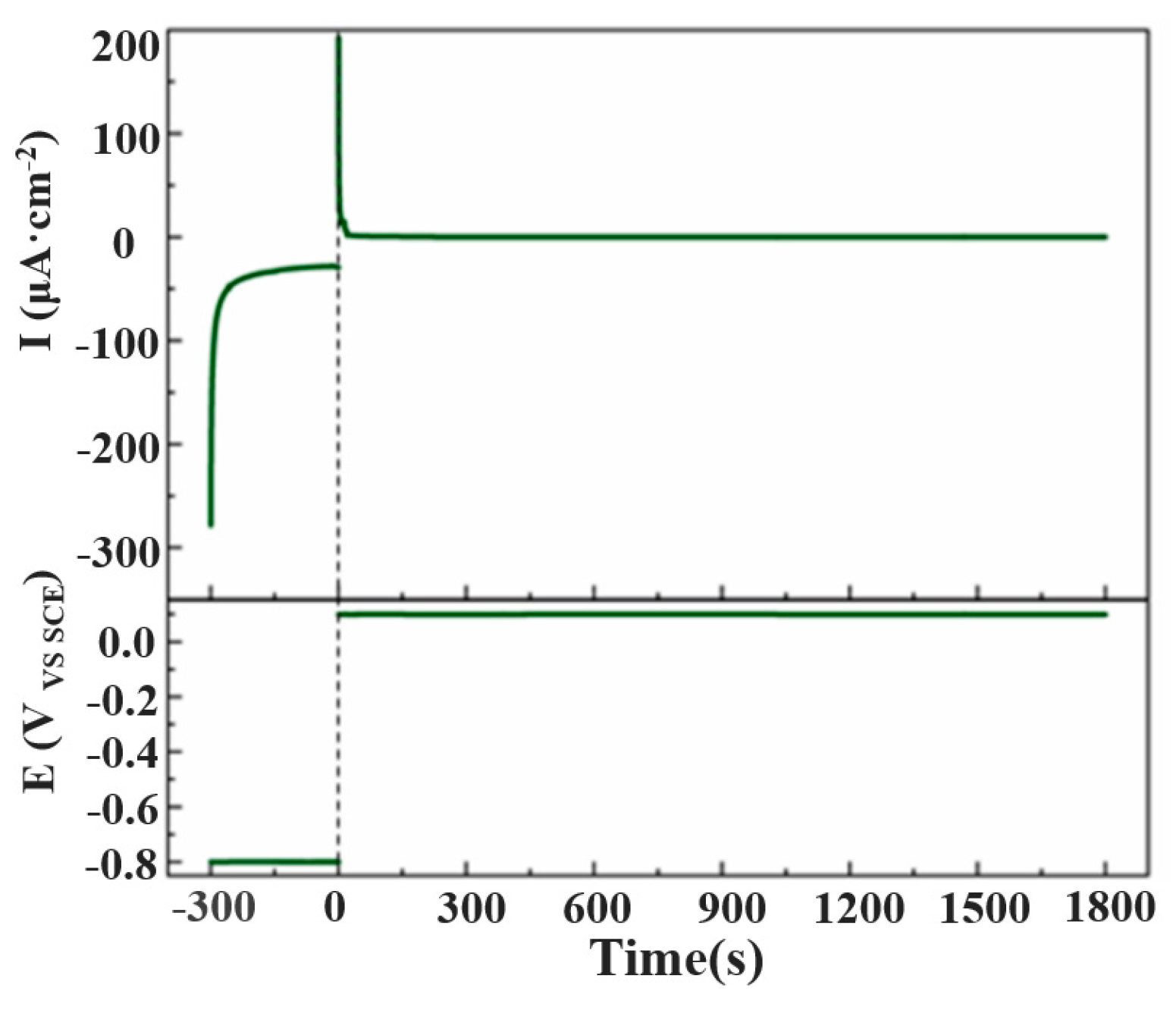
The removal potential of −800 mV vs. SCE was adopted following established reduction protocols for Fe-Cr alloys. At this potential, Cr(III)- and Fe(III)-hydroxide species are fully reduced without inducing morphological damage or hydrogen blistering. Prior electrochemical studies demonstrated that potentials between −750 and −850 mV effectively dissolve passive films in chloride environments. Preliminary tests in our system confirmed that −800 mV ensures reproducible film removal while maintaining a stable baseline for subsequent passivation [11]. Subsequently, the sample was polarized with an applied passivation potential for 1800 s, while simultaneously collecting I-t electrochemical signals. The polarization was performed using a three-electrode system from the Gamry Reference 600+ electrochemical workstation, with the working electrode being a Φ16 × 1 mm sample, the reference electrode being a saturated calomel electrode, and the counter electrode being a platinum wire.

2.2.2. In Situ Electrochemistry—Surface Enhanced Raman Spectroscopy-Coupled Experiment

Figure 1 compares the Raman spectra of uncoated and silver-coated Fe-30Cr surfaces (50 s integration time, 5 accumulations). Spectra were acquired using a WITec alpha 300 RA confocal Raman system (532 nm laser, 5 mW, 200–2000 cm−1 range, 0.761 cm−1 resolution).
As shown in Figure 1a, the uncoated surface film produced negligible Raman signal due to high noise and poor signal-to-noise ratio, precluding structural analysis. In contrast, Figure 1b demonstrates a 3–4 order of magnitude signal enhancement after silver coating, enabling clear peak identification and reliable compositional analysis. The film thickness in the formation region was determined as 1.14 nm via combined ellipsometry–electrochemical analysis [22]. Silver coating was applied by electroplating in 1 mM AgNO3 + 1 mM HNO3 solution (30 mC cm−2 surface charge density [16]), significantly improving signal quality.

2.2.3. In Situ Electrochemical-Synchrotron Grazing-Incidence X-Ray Diffraction Coupling Experiments

Firstly, cathodic film-removal stage and potentiostatic passivation stage experiments were conducted. Since the grazing-incidence X-ray diffraction (GIXRD) spectrum acquisition requires a certain amount of time, the time sequence of the GIXRD spectrum acquisition is kept consistent with the time sequence of the Raman spectrum acquisition. Grazing-incidence X-ray diffraction (GIXRD) patterns were collected immediately after the electrochemical polarization was halted in order to eliminate background contributions from the electrolyte. Experiments were carried out on beamline BL14B1 at the Shanghai Synchrotron Radiation Facility, using monochromatic X-rays with an energy of 10 keV. The incident beam struck the sample at a fixed grazing angle of 0.01°, and diffraction data were recorded for 5 s per scan. Throughout the electrochemical measurements, potential control and impedance analyses were managed by a workstation, ensuring precise polarization and de-polarization sequences. Samples were mounted in a custom electrochemical cell designed for a minimal beam path in solution and rapid transfer to the diffractometer. This protocol provided high-quality GIXRD data with minimal electrolyte scattering, enabling clear identification of surface and near-surface phase assemblages formed during polarization.

2.2.4. The Passivation Film Potential

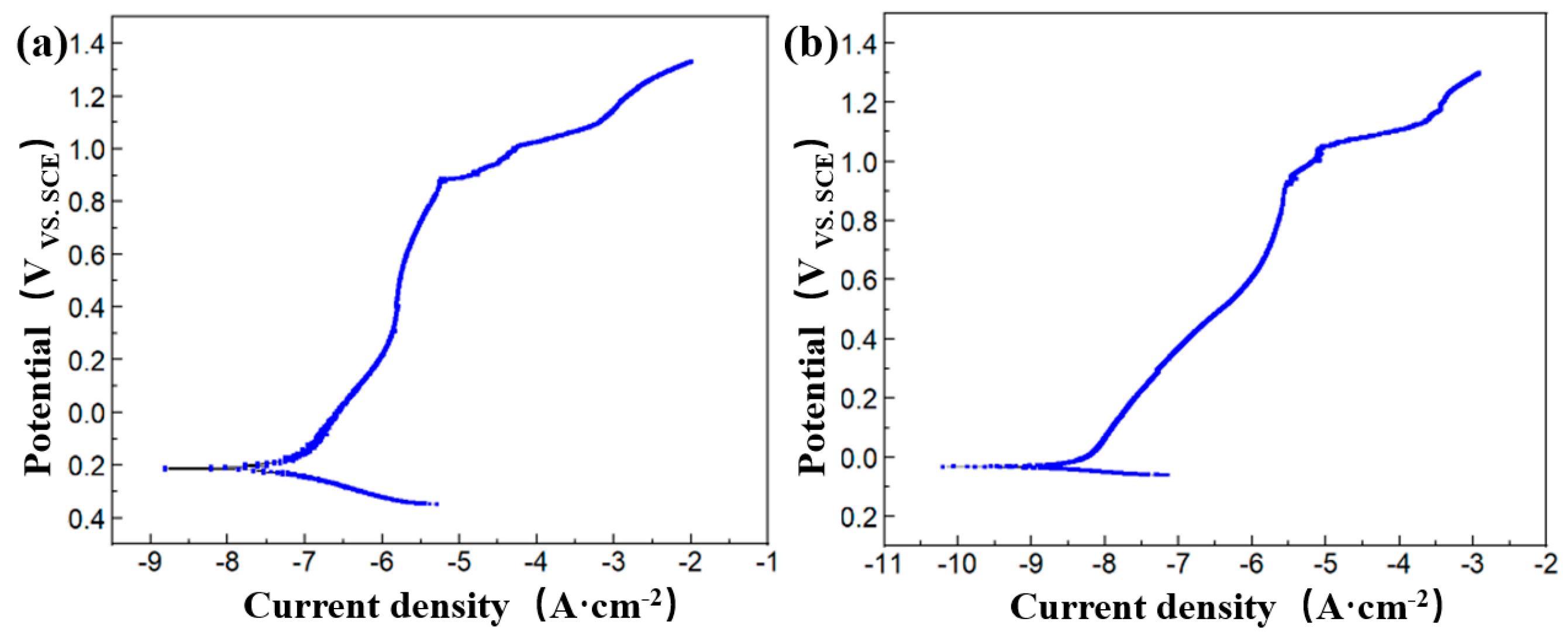
Potentiodynamic polarization measurements were utilized to determine the active/passive behavior of materials at different potentials [23]. The scanning speed in this experiment was 1 mV/s, and the scan range was from −0.2 V vs. OCP to 1.4 V vs. OCP. Figure 1 depicts the polarization curve of the Fe-30Cr alloy. Based on the passivation zone of the polarization curve, the potential for a subsequent potentiostatic passivation stage in the electrochemical control was set to 0.2 V and 0.1 V for the Raman test and GIXRD test, respectively. The potential of +0.2 V for the Raman measurements was chosen to ensure sufficient surface oxidation for detectable vibrational signals, while +0.1 V was selected for GIXRD to minimize oxide dissolution during sample transfer and to reduce X-ray beam-induced perturbations. Both potentials fall within the stable passivation plateau identified in Figure 2.

3. Results and Discussion

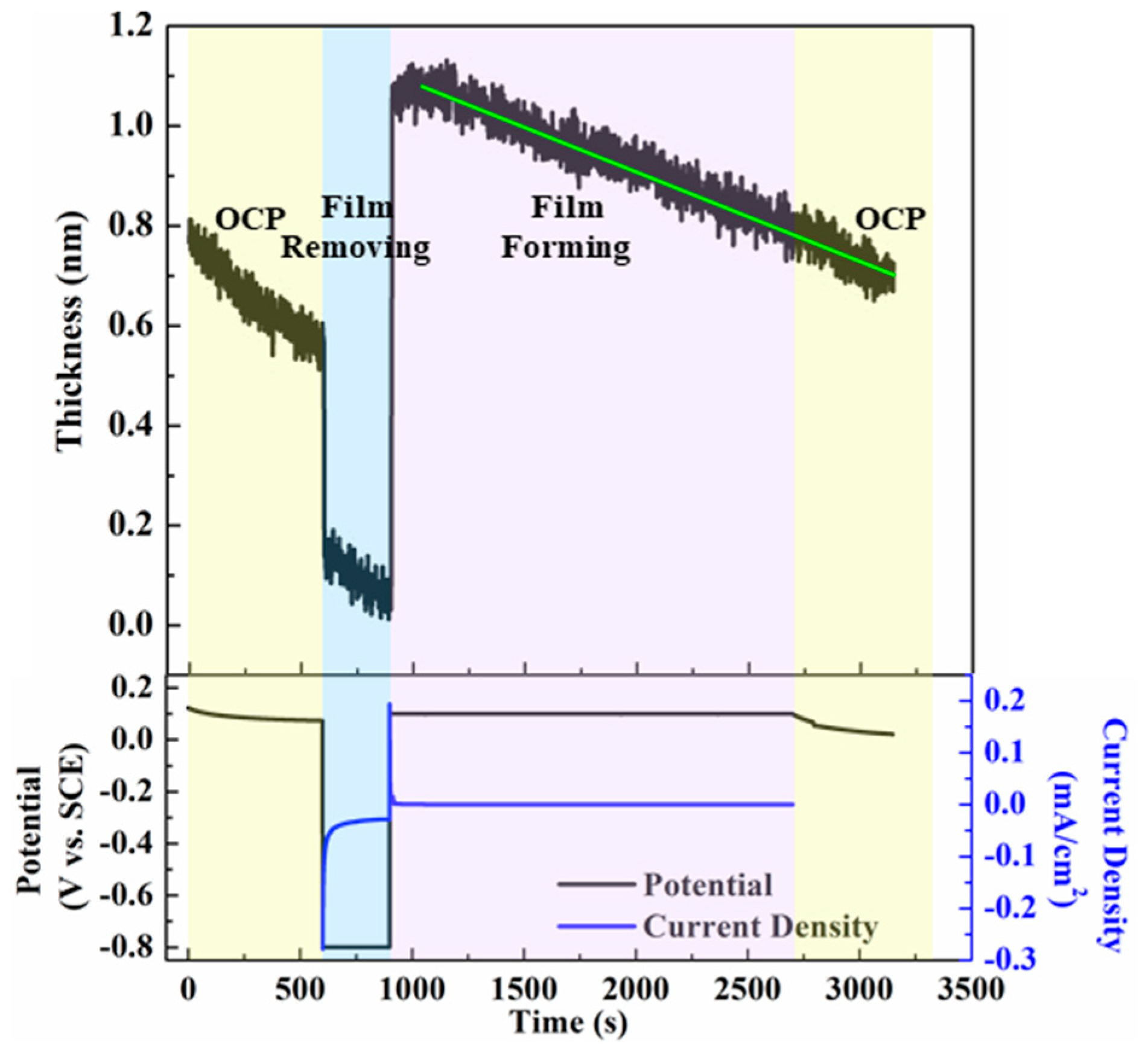
The entire experimental process begins with the application of a cathodic film-removal stage potential to remove the film on the alloy surface, followed by the application of a potentiostatic passivation stage potential to form a film on the alloy surface. This means that the entire experimental process requires precise control through electrochemical means. Figure 3 shows the growth process of the passive film during the cathodic film-removal stage and potentiostatic passivation stage processes. The thickness of the passive film is measured in real time using spectroscopic ellipsometry [22]. Different colors were used to denote the electrochemical control stages: yellow for the steady-state region (open-circuit potential), blue for cathodic film-removal stage, and red for potentiostatic passivation stage. During the steady state, the open-circuit potential drifted cathodically before stabilizing, accompanied by a gradual decrease in apparent film thickness due to densification of the native passive layer. In the film-removal stage, the thickness dropped sharply to a lower baseline and continued to decrease with time. Conversely, during the potentiostatic passivation stage, the surface layer initially grew to a maximum thickness of 1.14 nm before thinning, indicating a dynamic balance between growth and restructuring. The subsequent thinning is attributed to increasing film crystallinity and partial dissolution during passivation [24].

3.1. The Evolution Law of Passivation Film Electrochemical Properties

The evolution of current density during Fe-30Cr passivation is shown in Figure 4. The alloy exhibits a characteristic passivation-decay profile, reflecting the nucleation and growth of a Cr-enriched oxide film. The current initially peaks at 193.10 μA cm−2 due to rapid oxidation of surface Fe species, then drops by 90.62% to 18.12 μA cm−2 within 5 s as a compact (Cr,Fe)-hydroxide layer forms and impedes further dissolution. Over extended times, the current density decreases continuously, reaching 19.67 nA cm−2 after 1800 s, corresponding to a 99.99% reduction. This progressive decline indicates the transformation of hydroxides into stable Cr2O3- and FeCr2O4-rich oxides that strengthen the passive film. The absence of secondary passivation implies that high Cr content suppresses active dissolution and promotes continuous film densification [22].

3.2. The Evolutionary Rules of Passivation Film Molecular Structure

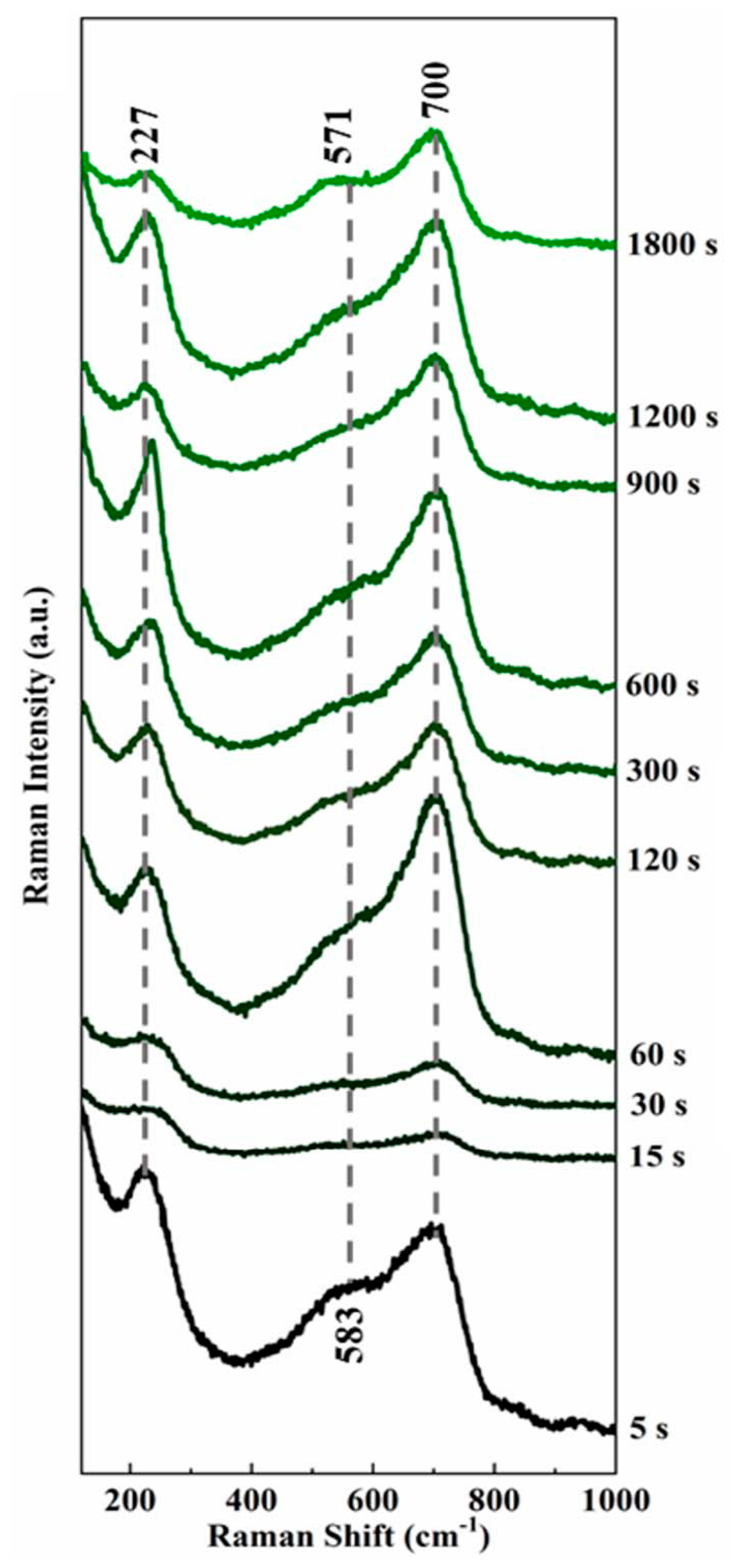
The molecular architecture of the passive film on Fe-30Cr was elucidated in situ using surface-enhanced Raman spectroscopy (SERS), enabling real-time monitoring of film evolution under electrochemical polarization. As shown in Figure 5, the film consists primarily of iron and chromium oxides/hydroxides [14,25]. Two characteristic Raman bands are observed between 500 and 700 cm−1: the feature at 571–583 cm−1 is assigned to Cr2O3 [24,26], while the band near 700 cm−1 corresponds to the spinel FeCr2O4 phase [27]. Compared with passive films on pure Fe [22], the Cr2O3 band shifts to higher wavenumbers, reflecting stronger Cr-O-Cr vibrational character and a higher Cr2O3 fraction. This is consistent with earlier findings that Cr enrichment dominates early passivation kinetics in Cr-containing alloys. The sharpening of the Cr2O3 band at later times further supports that Cr-driven oxidation precedes Fe-centered processes [22]. The 571–583 cm−1 band represents the A1g mode of Cr2O3, while the ∼700 cm−1 feature reflects the Fe-O-Cr stretching mode of FeCr2O4, consistent with reported reference spectra [24,26,27]. These assignments were confirmed by comparison with Raman databases and published oxide signatures. The disappearance of FeOOH-related peaks (∼385/480 cm−1) at later stages further confirms the predominance of Cr-rich phases. During film growth, this Cr2O3 band exhibits a gradual blue shift and narrowing of the full width at half maximum—from 239 cm−1 at 60 s to 224 cm−1 at 1800 s—indicating an increasing Cr coordination number, higher oxidation state, and improved crystalline order. In contrast, the FeCr2O4 band remains nearly unchanged in both position and width, suggesting early formation and structural stability of the spinel lattice. Prior Raman studies have established a correlation between FWHM reduction and reorganization of Cr-O polyhedra [14], indicating a transition from hydrated, defect-rich structures toward a more ordered corundum-type lattice. Our observations are consistent with this behavior and imply progressive densification and crystallization of the inner Cr-rich layer. These spectroscopic findings—together with cross-sectional TEM and ellipsometric film thickness results—demonstrate continuous structural refinement of the chromium-rich component within the passive film. This refinement enhances defect healing and barrier performance, thereby improving corrosion resistance. The weak intensity of adsorbed species suggests rapid formation of stable (Cr,Fe)-OH_ads at 30 wt.% Cr [28], while the persistence of FeCr2O4, which concentrates Cr at the metal/oxide interface [29], indicates the establishment of a stable passive state in 3.5 wt.% NaCl solution.

3.3. The Evolution Law of Passivation Film Phase and Crystal Structure

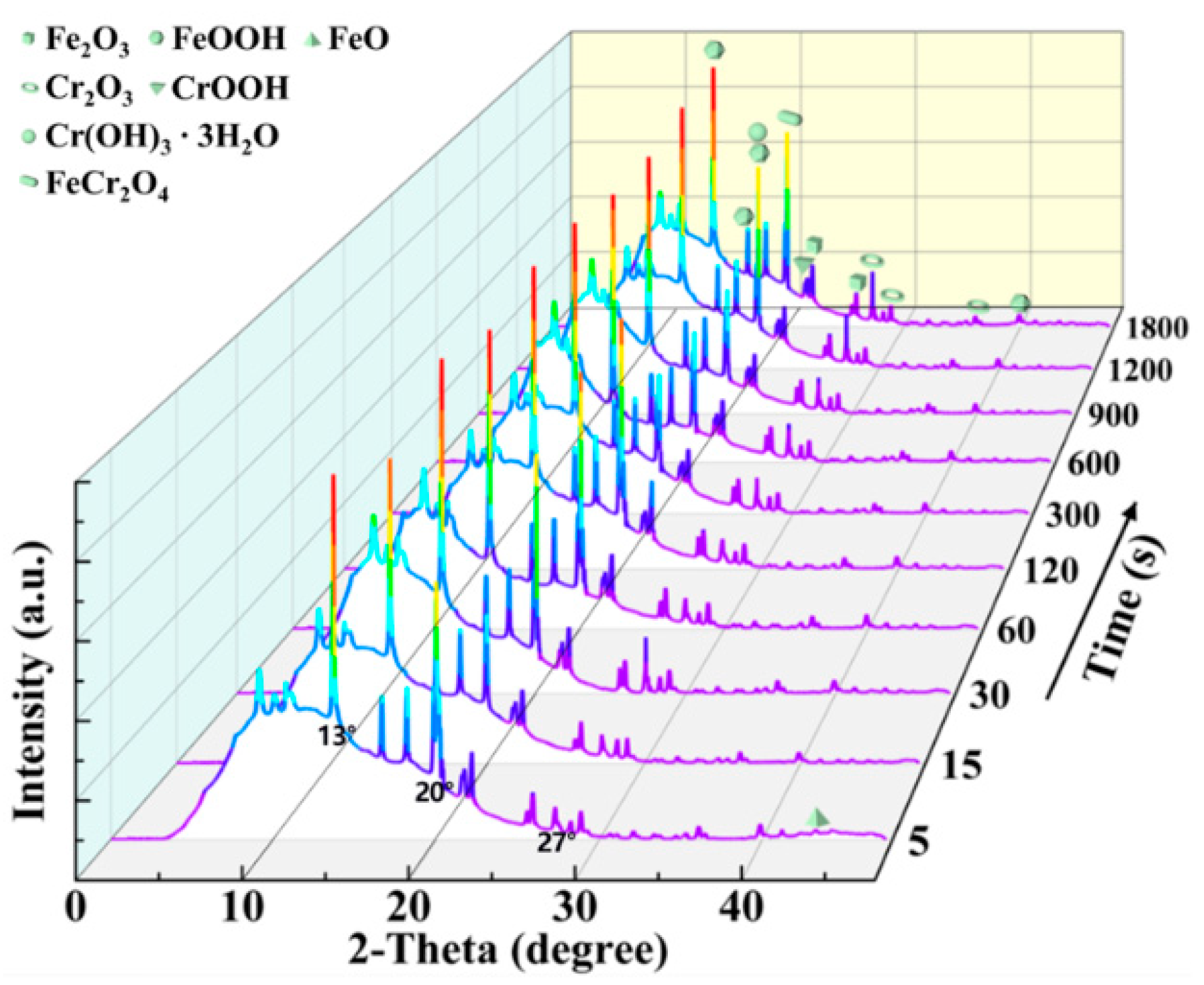
After adding 30 wt.% Cr, the in situ GIXRD patterns of the passivation process are shown in Figure 6. The passive film consists of FeO, Fe2O3, FeOOH, Cr2O3, CrOOH, Cr(OH)3·3H2O, and FeCr2O4. Phase identification was performed using the PDF-4+ database, with 2θ uncertainties within ±0.01°. During passivation, the intensities of the Cr2O3 (27°) and FeCr2O4 (20°) peaks progressively increase, indicating progressive enrichment and crystallization of the Cr-rich phases. The non-monotonic 2θ evolution—first decreasing and then increasing—reflects the concurrent effects of dissolution-induced lattice expansion and oxidation-induced contraction, a behavior also reported for high-Cr systems undergoing transient oxidation [24]. The concurrent narrowing of the FWHM of both peaks suggests defect reduction and grain reorganization within the developing passive film. These diffraction trends correlate directly with Raman results, where the Cr2O3 band exhibits a blue shift and FWHM narrowing. Together, the GIXRD and Raman data demonstrate that Cr-rich domains evolve from amorphous hydroxides into more ordered oxide structures throughout the 1800 s passivation period.
To better analyze changes during high-Cr passivation, peak distortion, interplanar spacing, intensity ratio, and FWHM evolution at different polarization times were extracted from Table 1. The slight overall increase in 2θ from 5 to 1800 s indicates lattice contraction and reduced metal dissolution. However, the evolution is cyclic rather than monotonic, reflecting alternating dominance of dissolution and passivation. Aberration-corrected TEM has shown that such contraction is characteristic of densifying Cr-rich oxides [24]. Taking the 20° FeCr2O4 peak as an example, its 2θ value shifts from 20.003° at 5 s to 19.879° at 15 s, then increases to 20.017° by 60 s. Between 60 and 900 s, the peak shifts slightly lower and stabilizes near 19.988°, indicating limited dissolution, before rising again to 20.017° by 1800 s as passivation becomes dominant. The FWHM evolution supports this conclusion; its value at 1800 s remains comparable to that at 5 s, indicating balanced nucleation and growth and no significant grain-size change throughout passivation.
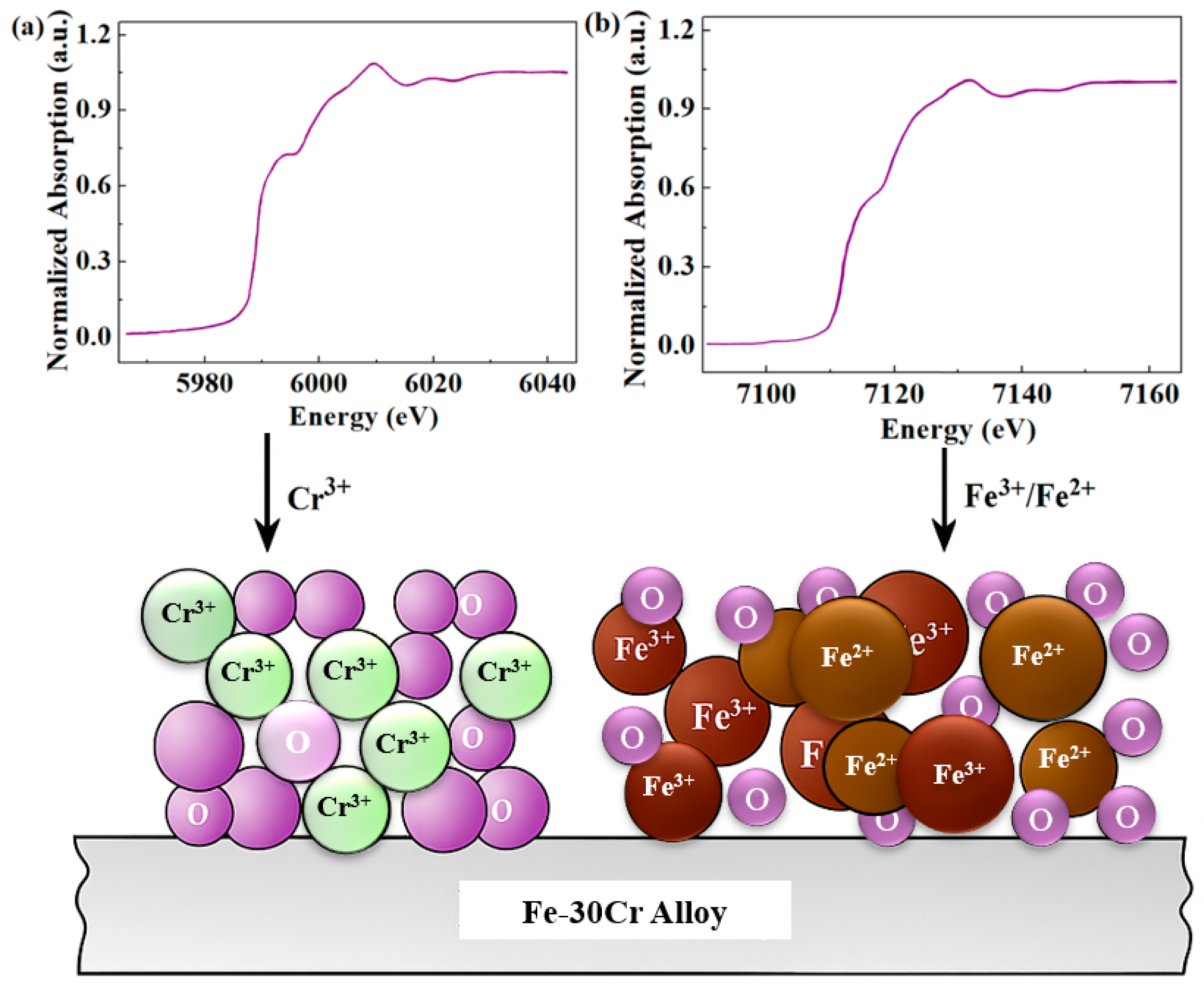
To corroborate the phase and chemical-state evolution revealed by the in situ Raman and GIXRD analyses, Cr K-edge and Fe K-edge XANES measurements were conducted on the passivated Fe-30Cr alloy. As shown in Figure 7a, the Cr K-edge rising edge at 5993–5995 eV is characteristic of Cr3+ in corundum-type Cr2O3 [30]. A weak shoulder at 6010–6020 eV arises from multiple scattering within edge-sharing CrO6 octahedra, indicating increasing structural ordering within the Cr-rich inner layer.
The Fe K-edge XANES spectrum (Figure 7b) exhibits an absorption edge at 7122–7125 eV with an intensified Fe3+ white line, consistent with FeOOH and Fe2O3 species [31]. The onset of near-edge oscillations at ~7130 eV reflects a relatively ordered Fe coordination environment. The slightly lower edge position compared with pure Fe2O3 suggests the presence of mixed Fe2+/Fe3+ states, in agreement with the formation of FeCr2O4 spinel [32].
Taken together, the XANES results substantiate the dual-layer passivation structure inferred from Raman and GIXRD: a compact Cr2O3 inner barrier layer and an outer composite layer comprising FeOOH, Fe2O3, and FeCr2O4. These findings reinforce that Cr-driven oxidation dominates the inner-layer formation, while Fe-containing oxides develop primarily in the outer region during passivation.

3.4. The Evolution Laws of in Situ Surface Passive Flim Morphology-Performance Relationships

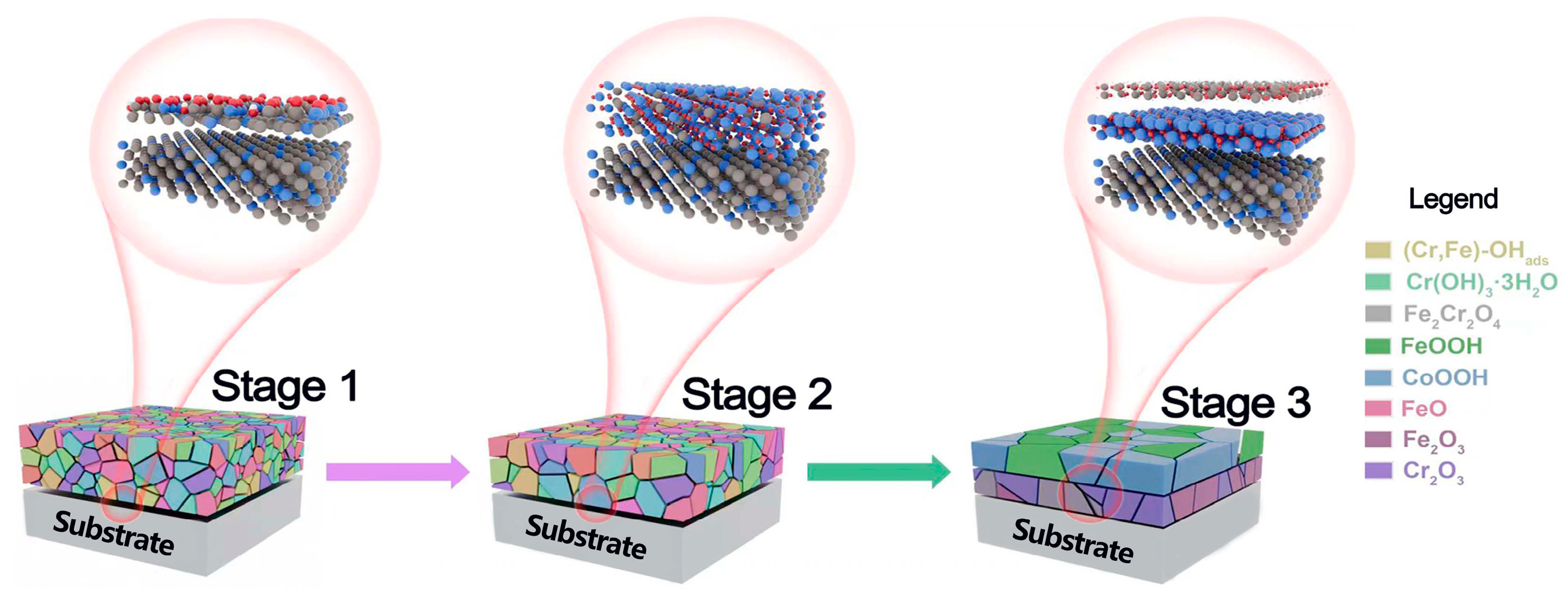
Based on the evolution of film thickness, molecular structure, crystal structure, and electrochemical behavior, the in situ structure–activity relationship of the passive film was analyzed. The passive film serves as a critical barrier protecting the metal substrate from corrosion [33]. During the initial stage, adsorption products such as Fe(OH)2 and Cr(OH)3 rapidly form on the surface, reducing the corrosion rate [33,34]. These species subsequently undergo oxidation and stabilization, transforming into stable oxides and oxyhydroxides of Fe and Cr [26,35]. Meanwhile, Fe2CrO4 also evolves within the film. The I–t curve shows a continuous decrease in current density, indicating progressively enhanced corrosion resistance. Integrating these observations, the passivation process can be divided into distinct stages, as illustrated in Figure 8.
Figure 8 summarizes the three-stage passivation mechanism of Fe-30Cr. In Stage 1 (0–60 s), FeOOH and Cr(OH)3 form a hydrated, loosely packed layer. Stage 2 (60–600 s) is governed by dissolution–reprecipitation, during which CrOOH transforms into a compact Cr2O3 inner barrier and FeCr2O4 nucleates at the metal/film interface. Stage 3 (600–1800 s) produces a stable dual-layer film, with Cr2O3 providing barrier protection and FeOOH/Fe2O3 forming the outer ion-filtering region. This model explains the current decay, Raman FWHM narrowing, and GIXRD peak sharpening observed during polarization. CrOOH forms on Fe-Cr alloys during initial passivation [33,34], dehydrating to Cr2O3 via dissolution–reprecipitation [28], forming a denser barrier. This hydroxide-to-oxide transition aligns with the multi-stage current decay and is consistent with observations in high-Cr stainless steels [31].
The structural evolution identified here is consistent with previous studies of Fe-Cr alloys. Cr-rich hydroxides are known to dehydrate into Cr2O3 under anodic polarization, accompanied by Raman band shifts and peak narrowing, matching our Stage 2 behavior [24,26]. FeCr2O4 has been reported to stabilize the interfacial region by retaining chromium during passive film growth [27], consistent with its early and persistent appearance in our results. Compared to Fe-13Cr [29], Fe-30Cr exhibits accelerated Cr2O3 crystallization kinetics, while its earlier Cr-rich layer stabilization (evidenced by Raman blue shift) surpasses that of 316L stainless steel [32]. The prominent FeCr2O4 formation in Fe-30Cr, unlike lower-Cr systems, demonstrates a distinct spinel-mediated passivation pathway in high-Cr alloys, confirming a composition-dependent acceleration of the hydroxide-to-oxide transition.
The sharpening of Cr2O3 and FeCr2O4 diffraction peaks indicates increasing crystallinity and densification of the passive film. This compaction agrees with XRR evidence of dense Cr2O3 layers in Fe-Cr systems [36]. Moreover, the dissolution–reprecipitation behavior inferred from the transient current peak and Raman/XANES evolution aligns with in situ XRF results showing Fe(II)/Fe(III) transitions at the interface [37]. These findings collectively validate the mechanistic interpretation proposed in this study.

4. Conclusions

By integrating electrochemical Raman spectroscopy with electrochemical synchrotron GIXRD, we achieved in situ tracking of the phase evolution and electrochemical response during passive film growth on Fe-30Cr. This approach revealed the dynamic structure–property relationship governing passivation behavior. The key findings are as follows. The rapid formation of an FeOOH-rich outer layer and the adsorption of OH ions markedly reduce current density. Subsequent film evolution involves compositional optimization, grain refinement, and enhanced crystallinity. Passive film development proceeds through three distinct regimes. In the initial rapid-growth stage, a porous, amorphous FeOOH-rich outer layer nucleates and thickens rapidly, concurrent with the emergence of an inner Cr2O3 sublayer, forming the essential dual-layer architecture. During the transition stage, FeOOH reorganizes and densifies, while Cr2O3 domains coalesce at the metal/oxide interface, signifying the shift from non-steady to quasi-steady growth. Finally, in the steady-state dynamic stage, further deposition of FeOOH and gradual Cr incorporation proceed in a self-limiting manner, producing a compact, defect-minimized barrier. Throughout all stages, the synergistic interaction between the conductive, ion-blocking FeOOH outer layer and the mechanically robust, chemically stable Cr2O3 inner layer leads to a continuous reduction in corrosion current density. The resulting stratified film effectively suppresses both anodic and cathodic reactions, ensuring long-term protection of the underlying alloy.

Author Contributions

Formal analysis, Z.L., Z.Z., W.Z., X.L. and L.W.; Investigation, Y.W., Z.L.; Writing—original draft, Z.L. and W.Z.; Writing—review & editing, Z.Z., W.Z., X.L. and L.W.; Funding acquisition, Z.L. and L.W. All authors have read and agreed to the published version of the manuscript.

Funding

This work was supported by the National Key R&D Program of China (No.2021YFA1601100) and the National Natural Science Foundation of China (No. 52401075, No.52394164, No. U21B2053).

Institutional Review Board Statement

Not applicable.

Informed Consent Statement

Not applicable.

Data Availability Statement

The raw/processed data required to reproduce these findings cannot be shared at this time as the data also forms part of an ongoing study.

Conflicts of Interest

Authors Zhiping Zhou and Wen Zhao were employed by Petrochina Changqing Oilfield Company. The remaining authors declare that the research was conducted in the absence of any commercial or financial relationships that could be construed as a potential conflict of interest.

References

  1. Han, Y.; Mei, J.; Peng, Q.; Han, E.H.; Ke, W. Effect of electropolishing on corrosion of nuclear grade 316L stainless steel in deaerated high temperature water. Corros. Sci. 2016, 112, 625–634. [Google Scholar] [CrossRef]
  2. Lorang, G.; Da Cunha Belo, M.; Langeron, J.P. Sputter profiling of passivation films in Fe–Cr alloys: A quantitative approach by Auger electron spectroscopy. J. Vac. Sci. Technol. A Vac. Surf. Film. 1987, 5, 1213–1219. [Google Scholar] [CrossRef]
  3. Pallotta, C.; De Cristofano, N.; Salvarezza, R.C.; Arvia, A. The influence of temperature and the role of chromium in the passive layer in relation to pitting corrosion of 316 stainless steel in NaCl solution. Electrochim. Acta 1986, 31, 1265–1270. [Google Scholar] [CrossRef]
  4. Dou, Y.; Han, S.; Wang, L.; Wang, X.; Cui, Z. Characterization of the passive properties of 254SMO stainless steel in simulated desulfurized flue gas condensates by electrochemical analysis, XPS and ToF-SIMS. Corros. Sci. 2020, 165, 108405. [Google Scholar] [CrossRef]
  5. Yao, J.; Macdonald, D.D.; Dong, C. Passivation film on 2205 duplex stainless steel studied by photo-electrochemistry and ARXPS methods. Corros. Sci. 2019, 146, 221–232. [Google Scholar] [CrossRef]
  6. Tsuchiya, H.; Fujimoto, S.; Chihara, O.; Shibata, T. Semiconductive behavior of passivation films formed on pure Cr and Fe–Cr alloys in sulfuric acid solution. Electrochim. Acta 2002, 47, 4357–4366. [Google Scholar] [CrossRef]
  7. Wang, Z.; Di-Franco, F.; Seyeux, A.; Zanna, S.; Maurice, V.; Marcus, P. Passivation-induced physicochemical alterations of the native surface oxide film on 316L austenitic stainless steel. J. Electrochem. Soc. 2019, 166, C3376–C3388. [Google Scholar] [CrossRef]
  8. Brooks, A.R.; Clayton, C.R.; Doss, K.; Lu, Y.C. On the role of Cr in the passivity of stainless steel. J. Electrochem. Soc. 1986, 133, 2459–2464. [Google Scholar] [CrossRef]
  9. Zhang, B.; Wang, J.; Wu, B.; Guo, X.W.; Wang, Y.J.; Chen, D.; Zhang, Y.C.; Du, K.; Oguzie, E.E.; Ma, X.L. Unmasking chloride attack on the passivation film of metals. Nat. Commun. 2018, 9, 2559. [Google Scholar] [CrossRef]
  10. Maurice, V.; Yang, W.P.; Marcus, P. X-Ray Photoelectron Spectroscopy and Scanning Tunneling Microscopy Study of Passivation Films Formed on (100) Fe–18Cr–13Ni Single-Crystal Surfaces. J. Electrochem. Soc. 1998, 145, 909. [Google Scholar] [CrossRef]
  11. Oblonsky, L.J.; Devine, T.M. A surface enhanced Raman spectroscopic study of the passivation films formed in borate buffer on iron, nickel, chromium and stainless steel. Corros. Sci. 1995, 37, 17–41. [Google Scholar] [CrossRef]
  12. Sander, G.; Cruz, V.; Bhat, N.; Birbilis, N. On the in-situ characterisation of metastable pitting using 316L stainless steel as a case study. Corros. Sci. 2020, 177, 109004. [Google Scholar] [CrossRef]
  13. Shi, Y.; Collins, L.; Balke, N.; Liaw, P.K.; Yang, B. In-situ electrochemical-AFM study of localized corrosion of AlxCoCrFeNi high-entropy alloys in chloride solution. Appl. Surf. Sci. 2018, 439, 533–544. [Google Scholar] [CrossRef]
  14. Ramya, S.; Nanda, D.G.K.; Mudali, U.K. In-situ Raman and X-ray photoelectron spectroscopic studies on the pitting corrosion of modified 9Cr–1Mo steel in neutral chloride solution. Appl. Surf. Sci. 2018, 428, 1106–1118. [Google Scholar]
  15. Jiang, X.M.; Wang, J.Q.; Qing, Q. Chinese high energy photon source and the test facility. Sci. Sin. Phys. Mech. Astron. 2014, 44, 1075–1094. [Google Scholar] [CrossRef]
  16. Wang, L.; Yu, H.; Wang, S.; Qiao, L.; Sun, D. In-situ XAFS and SERS study of self-healing of passivation film on Ti in Hank’s physiological solution. Appl. Surf. Sci. 2019, 496, 143657. [Google Scholar] [CrossRef]
  17. Wang, L.; Yu, H.; Wang, S.; Chen, B.; Wang, Y.; Fan, W.; Sun, D. Quantitative analysis of local fine structure on diffusion of point defects in passivation film on Ti. Electrochim. Acta 2019, 314, 161–172. [Google Scholar] [CrossRef]
  18. Jiang, P.; Chen, J.; Borondics, F.; Glans, P.-A.; West, M.W.; Chang, C.-L.; Salmeron, M.; Guo, J. In situ soft X-ray absorption spectroscopy investigation of electrochemical corrosion of copper in aqueous NaHCO3 solution. Electrochem. Commun. 2010, 12, 820–822. [Google Scholar] [CrossRef]
  19. Kerkar, M.; Robinson, J.; Forty, A. In situ structural studies of the passivation film on iron and iron/chromium alloys using X-ray absorption spectroscopy. Faraday Discuss. Chem. Soc. 1990, 89, 31–40. [Google Scholar] [CrossRef]
  20. Wurzler, N.; Schutter, J.; Wagner, R.; Dimper, M.; Lützenkirchen-Hecht, D.; Ozcan, O. Trained to corrode: Cultivation in the presence of Fe(III) increases the electrochemical activity of iron reducing bacteria—An in situ electrochemical XANES study. Electrochem. Commun. 2020, 112, 106673. [Google Scholar] [CrossRef]
  21. Wang, Y.; Yu, H.; Wang, L.; Li, B.; Li, M.; Sun, D. Structure-activity relationship of the passivation film on Fe-xCr alloys under the interaction of corrosion and biofouling revealed by synchrotron radiation. Solid State Ion. 2022, 388, 116078. [Google Scholar] [CrossRef]
  22. Li, Z.; Zhang, W.; Wang, Y.; Yu, H.; Cui, Y.; Li, M.; Sun, D. Operando characterization of Cr-containing alloy passivation film by synchrotron radiation. Corros. Sci. 2024, 236, 112233. [Google Scholar] [CrossRef]
  23. Ogieglo, W.; Wormeester, H.; Eichhorn, K.; Wessling, M.; Benes, N.E. In situ ellipsometry studies on swelling of thin polymer films: A review. Prog. Polym. Sci. 2015, 42, 42–78. [Google Scholar] [CrossRef]
  24. Zhang, B.; Wei, X.X.; Ma, X.L. New understanding on the critical factors determining stability of passivation film on Fe-Cr alloy based on aberration-corrected TEM study. Anti-Corros. Methods Mater. 2024, 71, 20–29. [Google Scholar] [CrossRef]
  25. Liu, C.; Heard, P.J.; Greenwell, S.J.; Flewitt, P.E.J. A study of breakaway oxidation of 9Cr–1Mo steel in a Hot CO2 atmosphere using Raman spectroscopy. Mater. High Temp. 2018, 35, 50–55. [Google Scholar] [CrossRef]
  26. Yang, X.; Yang, Y.; Sun, M.; Jia, J.; Cheng, X.; Pei, Z.; Li, Q.; Xu, D.; Xiao, K.; Li, X. A new understanding of the effect of Cr on the corrosion resistance evolution of weathering steel based on big data technology. J. Mater. Sci. Technol. 2022, 104, 67–80. [Google Scholar] [CrossRef]
  27. Refait, P.; Jeannin, M.; Urios, T.; Fagot, A.; Sabot, R. Corrosion of low alloy steel in stagnant artificial or stirred natural seawater: The role of Al and Cr. Mater. Corros. 2019, 70, 985–995. [Google Scholar] [CrossRef]
  28. Mehtani, H.K.; Khan, M.I.; Jaya, B.N.; Parida, S.; Prasad, M.J.N.V.; Samajdar, I. The oxidation behavior of iron-chromium alloys: The defining role of substrate chemistry on kinetics, microstructure and mechanical properties of the oxide scale. J. Alloys Compd. 2021, 871, 159583. [Google Scholar] [CrossRef]
  29. Sasidhar, K.N.; Khanchandani, H.; Zhang, S.; da Silva, A.K.; Scheu, C.; Gault, B.; Ponge, D.; Raabe, D. Understanding the protective ability of the native oxide on an Fe-13 at% Cr alloy at the atomic scale: A combined atom probe and electron microscopy study. Corros. Sci. 2023, 211, 110848. [Google Scholar] [CrossRef]
  30. Bartlett, S.A.; Moulin, J.; Tromp, M.; Reid, G.; Dent, A.J.; Cibin, G.; McGuinness, D.S.; Evans, J. Activation of [CrCl3{R-SN(H)SR}] catalysts for selective trimerization of ethene: A freeze-quench Cr K-edge XAFS study. ACS Catal. 2014, 4, 4201–4204. [Google Scholar] [CrossRef]
  31. Calvin, S. XAFS for Everyone; CRC Press: Boca Raton, FL, USA, 2013. [Google Scholar]
  32. Chen, W.T.; Hsu, C.W.; Lee, J.F.; Pao, C.W.; Hsu, I.J. Theoretical analysis of Fe K-edge XANES on iron pentacarbonyl. ACS Omega 2020, 5, 4991–5000. [Google Scholar] [CrossRef]
  33. Stratmann, M.; Bohnenkamp, K.; Engell, H.J. An electrochemical study of phase-transitions in rust layers. Corros. Sci. 1983, 23, 969–985. [Google Scholar] [CrossRef]
  34. Wei, L.; Gao, K. Understanding the general and localized corrosion mechanisms of Cr-containing steels in supercritical CO2-saturated aqueous environments. J. Alloys Compd. 2019, 792, 328–340. [Google Scholar] [CrossRef]
  35. Zhang, B.; Hao, S.; Wu, J.; Li, X.; Li, C.; Di, X.; Huang, Y. Direct evidence of passivation film growth on 316 stainless steel in alkaline solution. Mater. Charact. 2017, 131, 168–174. [Google Scholar] [CrossRef]
  36. Garai, D.; Solokha, V.; Wilson, A.; Carlomagno, I.; Gupta, A.; Gupta, M.; Reddy, V.R.; Meneghini, C.; Carla, F.; Morawe, C.; et al. Studying the onset of galvanic steel corrosion in situ using thin films: Film preparation, characterization and application to pitting. J. Phys. Condens. Matter 2021, 33, 125001. [Google Scholar] [CrossRef] [PubMed]
  37. Watanabe, M.; Yonezawa, T.; Shobu, T.; Shoji, T. Measurement methods for surface oxides on SUS 316L in simulated light water reactor coolant environments using synchrotron XRD and XRF. J. Nucl. Mater. 2013, 434, 189–197. [Google Scholar] [CrossRef]
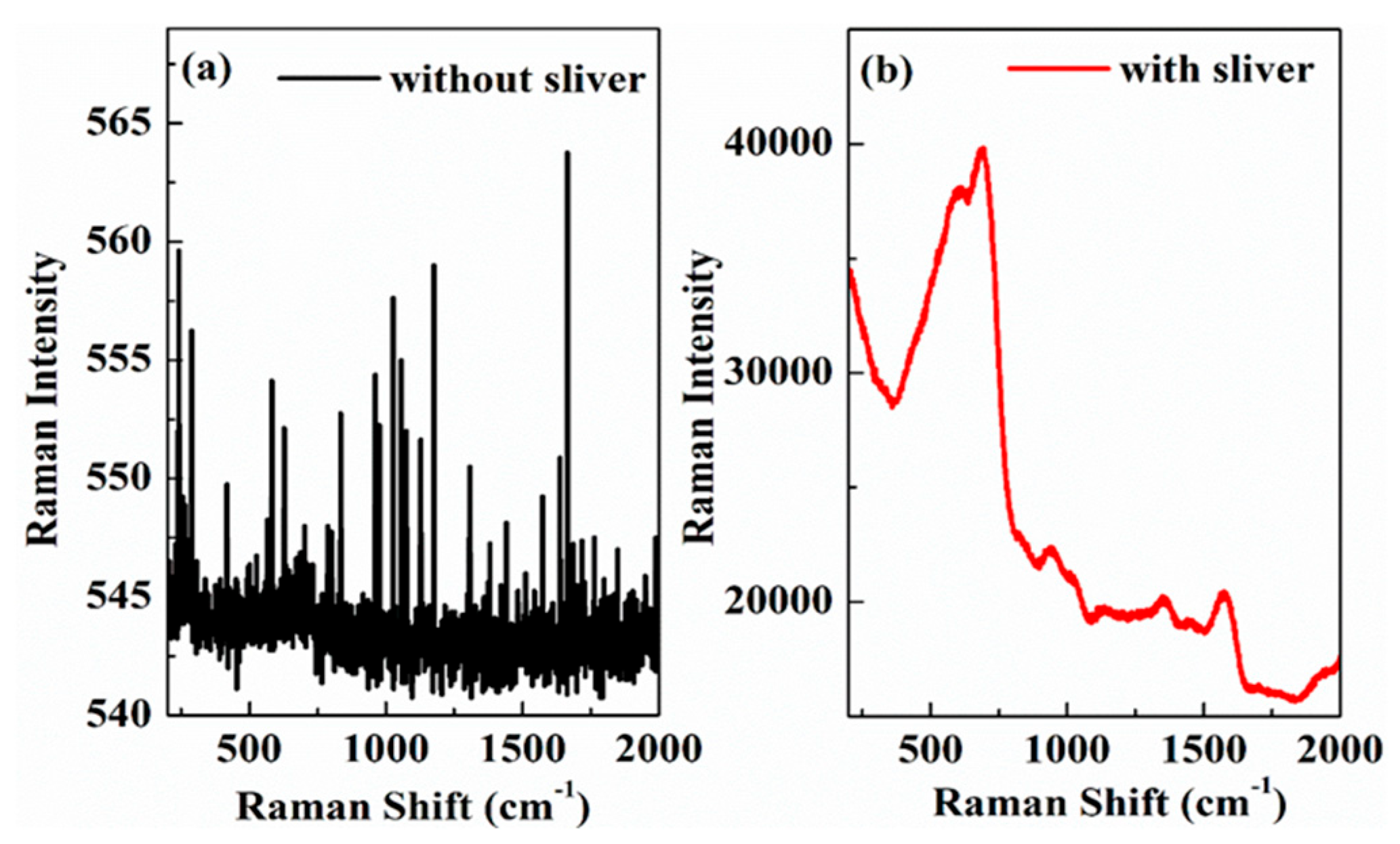
Figure 1. Comparison of Raman signals before and after silver coating, with an integration time of 50 s and five accumulations: (a) Raman signal of the uncoated surface film; (b) Raman signal of the silver-coated surface film.
Coatings 15 01477 g001
Figure 2. Potentiodynamic polarization curve of Fe-30Cr alloy in 3.5 wt.% NaCl solution: (a) without silver plating; (b) with silver plating. Scan was performed from −0.2 V vs. OCP to +1.4 V vs. OCP at 1 mV s−1.
Coatings 15 01477 g002
Figure 3. Real-time monitoring of passive film thickness evolution on Fe-30Cr using spectroscopic ellipsometry during steady-state, film-removal, and film-formation stages. The electrolyte was 3.5 wt.% NaCl. Yellow, blue, and red regions denote OCP stabilization, cathodic film removal (−800 mV vs. SCE), and anodic film formation (+0.2 V vs. OCP), respectively.
Coatings 15 01477 g003
Figure 4. Evolution of current density during potentiostatic passivation of Fe-30Cr in 3.5 wt.% NaCl solution. Potential was held at +0.2 V vs. OCP using a Gamry Reference 600+ workstation in a three-electrode configuration. The sampling interval was 0.1 s.
Coatings 15 01477 g004
Figure 5. In situ SERS spectra collected during the potentiostatic passivation of Fe-30Cr at +0.2 V vs. OCP in 3.5 wt.% NaCl. Raman measurements were performed with a 532 nm, 5 mW laser, 100× objective (NA = 0.9), and a spectral resolution of 0.761 cm−1. Integration time was 50 s per spectrum, averaged over five scans.
Coatings 15 01477 g005
Figure 6. In situ synchrotron GIXRD patterns acquired at beamline BL14B1 (SSRF) during passivation at +0.1 V vs. OCP in 3.5 wt.% NaCl. Monochromatic 10-keV X-rays were incident at a fixed grazing angle of 0.01°. Each scan was collected immediately after polarization was paused to minimize electrolyte scattering, with a 5 s acquisition time.
Coatings 15 01477 g006
Figure 7. Cr K-edge and Fe K-edge XANES spectra of the passivated Fe-30Cr alloy: (a) Cr K-edge spectrum showing a rising edge at 5993–5995 eV, characteristic of Cr3+ in corundum-type Cr2O3, and a weak shoulder at 6010–6020 eV attributed to multiple scattering within edge-sharing CrO6 octahedra. (b) Fe K-edge spectrum exhibiting an edge position at 7122–7125 eV and a pronounced Fe3+ white line associated with FeOOH/Fe2O3. The slight downward shift from pure Fe2O3 and the near-edge oscillations at ~7130 eV reflect mixed Fe2+/Fe3+ states.
Coatings 15 01477 g007
Figure 8. Schematic illustration of the three-stage passivation process of Fe-30Cr in 3.5 wt.% NaCl. Stage 1 (0–60 s): rapid nucleation of FeOOH, Cr(OH)3, Fe2O3, and Cr2O3, forming a hydrated, porous film. Stage 2 (60–600 s): dissolution–reprecipitation and dehydration of CrOOH, leading to consolidation of a Cr2O3-rich inner layer and stabilization of FeCr2O4 at the metal/oxide interface. Stage 3 (600–1800 s): steady-state growth and defect healing, forming a dual-layer passive film consisting of a dense Cr2O3 inner barrier and an FeOOH outer layer.
Coatings 15 01477 g008
Table 1. Parameters of the main peaks in the GIXRD patterns of the passivation film of a Fe-30Cr alloy.
Time of Film-Forming2-Theta (°)d (A)Height (%)FWHM
5 s13.6846.46591000.138
20.0034.435270.30.259
27.3123.262690.221
15 s13.6986.45941000.137
19.8794.462547.10.152
27.2693.26778.80.233
30 s13.6976.45951000.133
20.0034.4352650.068
27.3143.262418.90.133
60 s13.6846.46571000.137
20.0174.432182.50.159
27.2983.26429.80.214
120 s13.6846.46571000.139
20.0054.434983.10.175
27.3123.262610.50.206
300 s13.6976.45961000.135
19.9984.436340.90.079
27.3133.2625140.156
600 s13.6976.45961000.131
19.9884.438440.70.095
27.3133.262513.90.152
900 s13.6976.45951000.131
19.9884.438540.50.284
27.3133.262514.20.153
1200 s13.6976.45951000.137
20.0174.432168.80.283
27.3143.262421.50.13
1800 s13.6856.46551000.136
20.0174.43265.80.292
27.3143.262421.60.129
Disclaimer/Publisher’s Note: The statements, opinions and data contained in all publications are solely those of the individual author(s) and contributor(s) and not of MDPI and/or the editor(s). MDPI and/or the editor(s) disclaim responsibility for any injury to people or property resulting from any ideas, methods, instructions or products referred to in the content.