Article

Construction and Properties of Cu-/Zr-Based Thin Films on Glass Substrate

1
Shaanxi Key Laboratory of Surface Engineering and Remanufacturing, Xi’an University, Xi’an 710065, China
2
Department of Science and Technology Development, Xi’an Jiaotong University Suzhou Institute, Suzhou 215123, China
*
Author to whom correspondence should be addressed.
Coatings 2025, 15(12), 1472; https://doi.org/10.3390/coatings15121472
Submission received: 17 November 2025 / Revised: 10 December 2025 / Accepted: 11 December 2025 / Published: 13 December 2025

Abstract

A novel method for metallization of a glass substrate is proposed to improve adhesion strength between the glass and the metal layer. The Cu/glass substrate was fabricated using magnetron sputtering with the addition of nanoscale multilayer films (Zr/ZrN/Zr/ZrN/Zr/ZrN) as transition layers. The microstructure of the Cu capping layer and the interface between Cu and glass were investigated. The results indicate that the (ZrN/Zr)x gradient layer is uniform and dense, exhibiting crystalline characteristics that help optimize the interface structure. As the ZrN/Zr gradient layer thickens, the interfacial bonding strength between the metal layer and the glass substrate gradually increases. Among different periods, when the period is 3, the critical load of the Cu/(ZrN/Zr)3 stack structure is 80 N. This study provides an important strategy for designing and constructing a new type of glass substrate.

1. Introduction

With the development of electronic products towards lightweight, low power consumption, and high performance, the requirements for semiconductor packaging technology, especially packaging substrates, have become increasingly stringent. Glass has become a candidate material for next-generation packaging due to its zero-humidity coefficient, flatness, and good thermal and mechanical stability [1,2,3]. Compared to traditional organic substrates, glass substrates provide significant improvements in electrical and mechanical properties and can support larger packaging requirements.
Before glass packaging, it was usually necessary to perform metallization on its surface. The glass substrates generally have high flatness, low surface energy, chemical inertness, and different thermal expansion coefficients relative to Cu (3 × 10⁻⁶/K for glass vs. 17 × 10−6/K for Cu), which can easily cause poor adhesion and further substrate failure [4,5]. Huang et al. reported that introducing a metal interlayer can alleviate stress, thereby improving the adhesion strength between the metal layer and the substrate [6,7]. Among the transition metals, Zr has good chemical compatibility with the glass substrate (usually containing a silicon–oxygen network), which can provide better adhesion and a stable interface, compared with Cr and Ti. Moreover, the binary nitrides of zirconium (ZrN) show better interfacial stability than TiN, due to their thermal expansion coefficient similar to that of glass [8,9,10]. Thus, the ZrN/Zr transition layer can form a strong interface bonding with the glass substrate. Moreover, by alternating cycles of the ZrN/Zr gradient layer, the interface structure of Cu/glass substrate can be optimized.
Among various thin film preparation methods, chemical plating and magnetron sputtering are the most commonly used [11,12]. However, the deposition rate and the bonding strength of chemical plating are not high. Magnetron sputtering can prepare uniform and dense thin films with high adhesion performance, making it an excellent metallization method [13,14].
In this study, (ZrN/Zr)x transition films with different cycles (x = 1, 2, and 3) were prepared on a glass substrate using the magnetron sputtering method. Then, the Cu/(ZrN/Zr)x multilayer films were fabricated and characterized to investigate their electrical and adhesion behavior.

2. Experimental Methods

2.1. Film Preparation

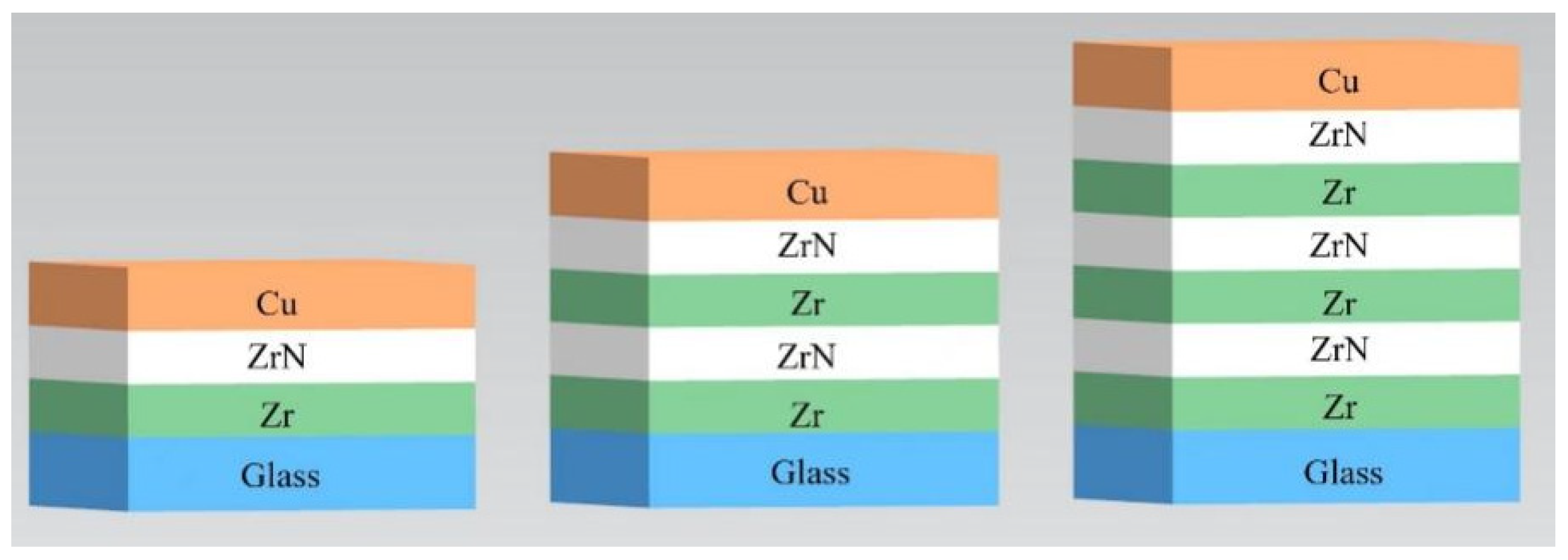
The Cu/(ZrN/Zr)x multilayer films were prepared by the JGP-450 magnetron sputtering method. Both the Zr target (99.95% purity, Ø50.8 mm) and the Cu target (99.95% purity, Ø50.8 mm) use a direct current (DC) sputtering. The p-type Si (100) wafers and quartz glass with dimensions of 2 cm × 2 cm × 0.5 mm were used as substrates. The substrates were cleaned ultrasonically with acetone, anhydrous ethanol, and deionized water for 10 min, respectively. Then the cleaned substrates were fixed in the vacuum chamber. Before film deposition, the base pressure of the sputtering chamber was pumped to 5.0 × 10⁻⁴ Pa. The Ar gas (99.999% purity) was introduced into the chamber. The targets were pre-sputtered for 10 min to remove impurities from their surface. During deposition of the Zr/ZrN multilayer films, a Zr layer was first deposited for 60 min. The substrate temperature is at 26.7 °C. The rotation speed is 4 rpm, and the target-substrate distance is 9 cm. Then, the reaction gas nitrogen was introduced to prepare the ZrN layer for 60 min. The total thickness of Zr/ZrN films was 0.45 μm, with 0.3 μm for Zr and 0.15 μm for ZrN per cycle. By controlling the deposition time for each cycle, Zr/ZrN multilayer films with different cycle numbers can be obtained (x = 1, 2, and 3). Table 1 lists the deposition parameters of Zr/ZrN multilayer films. Then, the Cu layer with a thickness of approximately 1 μm was deposited on (ZrN/Zr)x films. Figure 1 shows a schematic diagram of the Cu/(ZrN/Zr)x stacked structure on glass substrates.

2.2. Characterization of Films

The element distribution of the thin film was analyzed using a radio frequency glow discharge spectrometer (GD-Profiler 2, Horiba, Longjumeau, France), and the composition of the ZrN film was determined using an X-ray photoelectron spectrometer (XPS, Thermo Fisher ESCALAB Xi+, Waltham, MA, USA). The phase structure of the samples was characterized by a grazing incidence X-ray diffractometer with Cu Kα radiation (GIXRD, D8 Advance, Bruker, Ettlingen, Germany). The tube current and voltage were 40 mA and 40 kV. The 2θ range is 20–80°, and the scanning speed is 8°/min. Surface and cross-sectional morphologies of the samples were observed by using a scanning electron microscope (SEM, Nova Nano SEM 450, FEI, Hillsboro, OR, USA). The sheet resistance of the layers was measured using the four-point probe (FPP, RTS-9, Beijing Jiahang Bochuang Technology Co., Ltd., Beijing, China). The adhesion between the film and substrate was evaluated by a scratch tester (WS-2005, Lanzhou Zhongke Kaihua Technology Development Co., Ltd., Lanzhou, China). A diamond indenter with a tip radius of 200 µm was used. The load was linearly increased from 0 to 100 N. Scratch length was 5 mm. The scratch speed was 10 mm/min, and the loading rate was 10 N/min. The scratch morphology was observed with an optical microscope (KH-1300, HIROX, Tokyo, Japan).

3. Results and Discussion

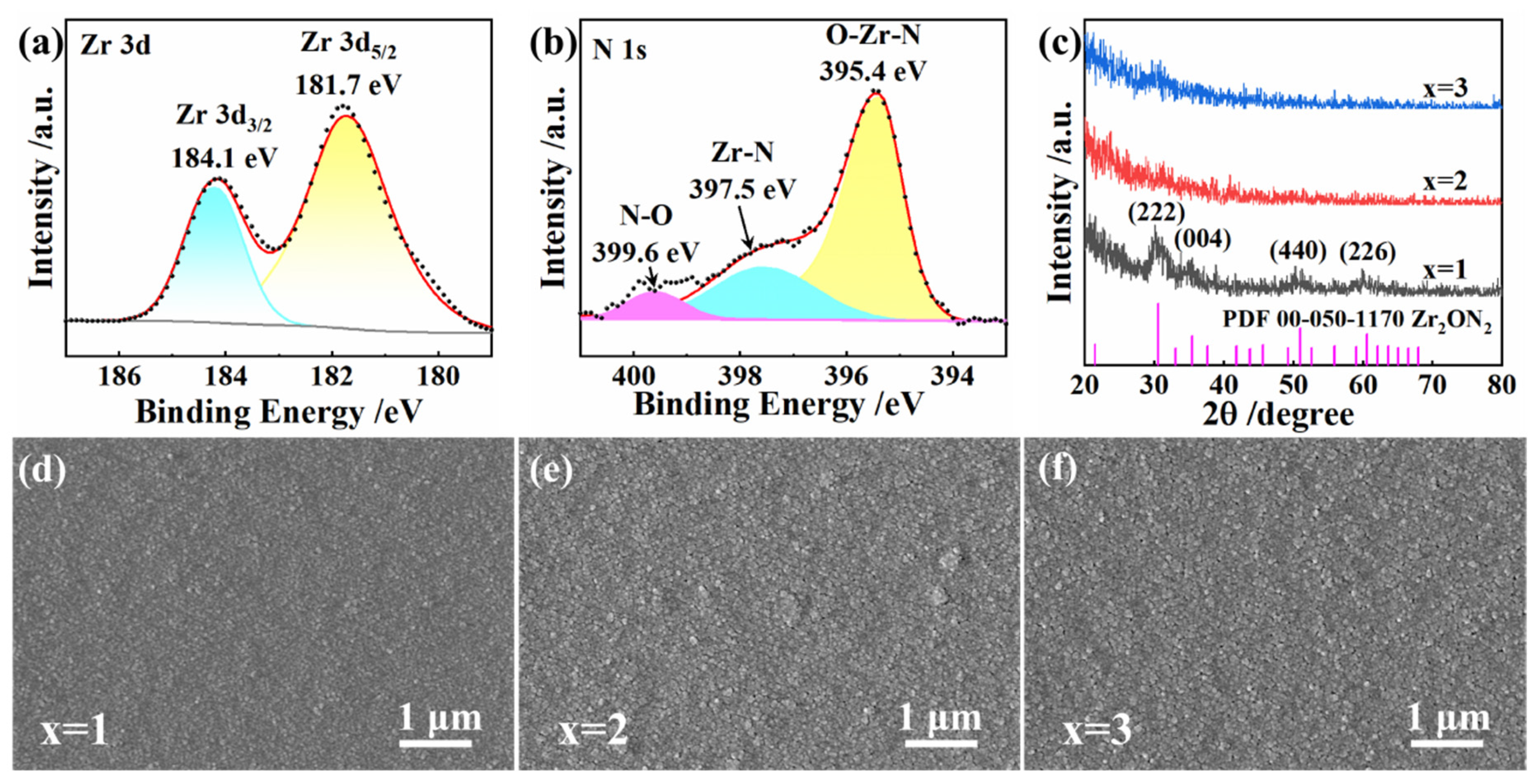
Figure 2a–c shows the different chemical states of the component elements in ZrN thin film characterized by XPS measurement. The XPS spectra of Zr 3d show two peaks at 181.7 eV and 184.1 eV, the binding energy values for the two duplets correspond to ZrO2(3d5/2) and ZrO2(3d3/2) [15]. The results of N 1s peaks indicate the presence of oxygen contamination, including oxynitride O-Zr-N (395.4 eV) and N-O (399.6 eV) bonds. A peak with a binding energy of 397.5 eV corresponds to the dominant ZrN [16], indicating that the film is mainly composed of ZrN and ZrO2. As shown in Table 2, the chemical composition of the film surface may be related to the residual oxygen in the vacuum chamber [17,18]. XRD patterns of as-deposited Zr/ZrN thin films are given in Figure 2c. The observed diffraction peaks at 2θ = 30.12°, 34.92°, 50.16°, and 60.12° are properly indexed to the (222), (004), (440), and (226) planes of Zr2ON2 (ICSD 00-050-1170), respectively. This is consistent with the XPS results. As the gradient layer increases, the nanocrystals transform into an amorphous structure.
Figure 2d–f show the surface morphology of as-deposited Zr/ZrN thin films with different periods. It can be seen that all the films are dense and show a closely packed grain structure. The small particles appear more obviously with the increase in the period of the gradient layer. This phenomenon corresponds to the kinetic energy of deposited atoms. With the increasing transition layer, more atoms deposit on the substrate and undergo stacking or recrystallization, resulting in grain growth.
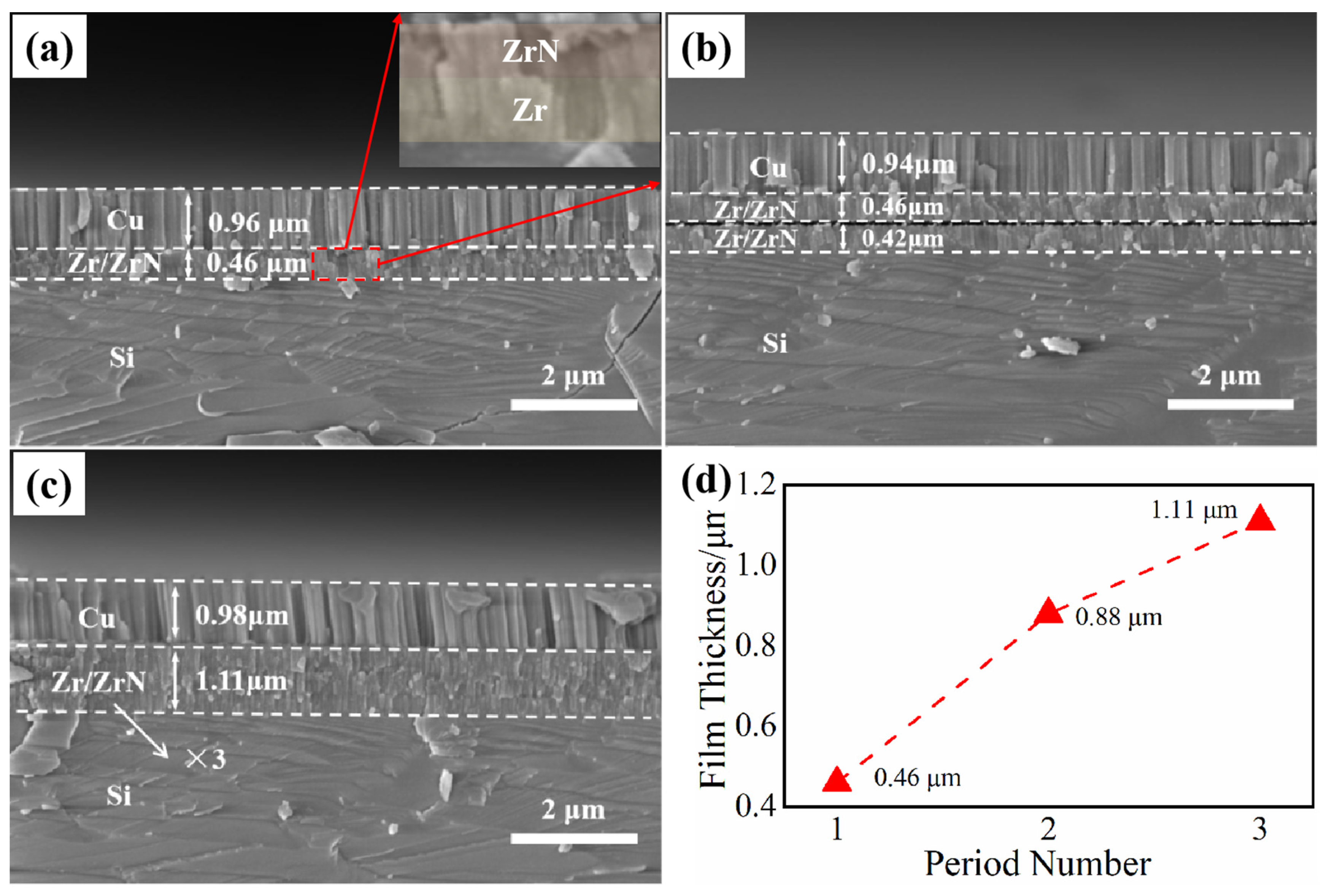
Figure 3 shows the cross-sectional morphology of Cu/(ZrN/Zr)x multilayer film on glass. It can be seen that during the deposition process, good interface bonding relationships are formed between the stacked layers and the glass substrate. The surfaces of each film layer are flat, and the thickness is uniform, exhibiting typical columnar growth. The Cu layers exhibit distinct columnar crystal characteristics, and all the thicknesses are close to 1 μm.
The Zr layer and ZrN layer are not clearly layered, which may be due to amorphous growth during the ZrN layer sputtering deposition process. The crystalline/amorphous interface could impede columnar growth [19]. The (ZrN/Zr)x gradient layer is mainly oriented towards Zr columnar crystals. ZrN particles interrupted the continuous growth of the original Zr columnar crystals and became new nucleation points, promoting the growth of new columnar crystals. Therefore, the local defect crystals between the original columnar crystals and the new columnar crystals are mainly caused by their layered growth [20].
Moreover, the thickness of the (ZrN/Zr)x gradient layer decreases with increasing cycles. During the deposition process of Zr/ZrN gradient layers, Zr and ZrN are alternately deposited and form a series of interfaces with different composition ratios. Due to the interatomic diffusion during the alternating deposition of materials, the Zr atoms diffuse into the intermediate layer of ZrN, resulting in a thinner gradient layer.
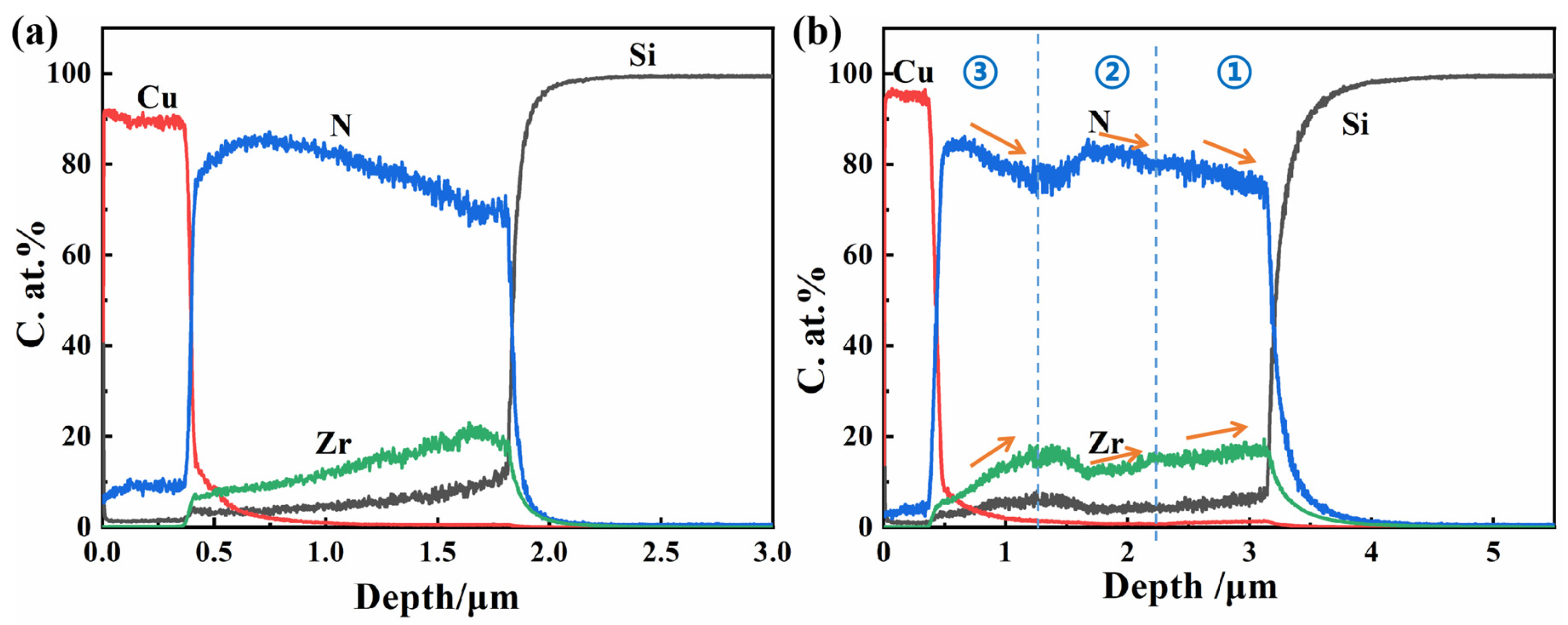
Figure 4 shows the GDOES depth profiles of Cu, Zr, N, and Si elements of the Cu/(ZrN/Zr)x/Si samples. It can be seen that abrupt interfaces exist between each layer. This is due to the effects of superficial roughness associated with the ion erosion technique [21]. According to the monotonous depth profile in Figure 4a and the identification of a single zirconium oxynitride phase in Figure 2c, it can be concluded that the deposited Zr/ZrN film forms a compositionally graded zirconium oxynitride solid solution. The Cu element in the copper layer is evenly distributed, forming a homogeneous film structure. For the Zr/ZrN gradient layer with one cycle, the pure Zr layer has a lower N component, and the ZrN layer has a higher N component [22]. When the gradient layer cycle is 3, the depth profile shows a three-step transition, caused by different periods of Zr/ZrN interfaces.
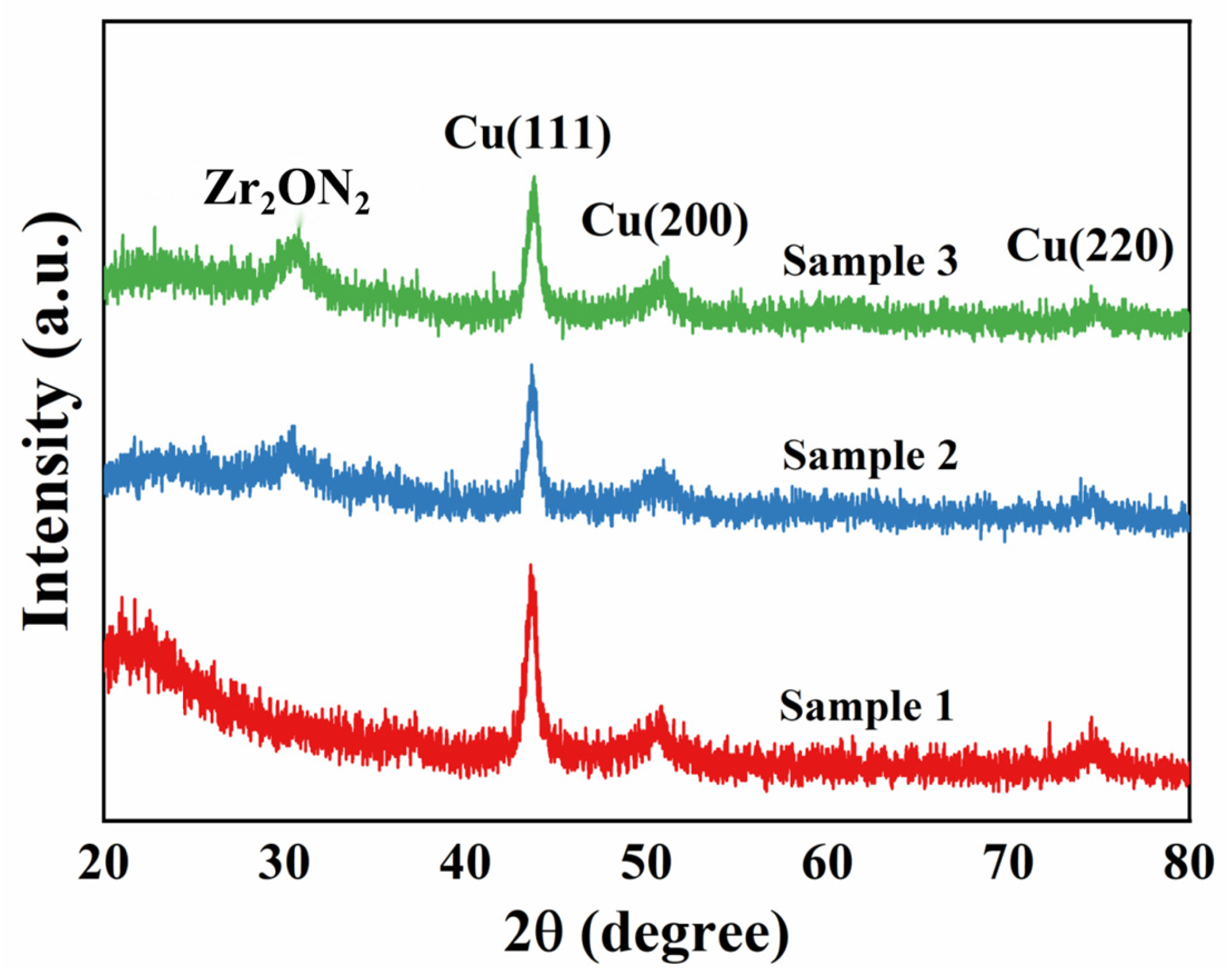
The phase structure of Cu/(ZrN/Zr)x multilayer films on a glass substrate was determined by XRD analysis, and the results are shown in Figure 5. It shows that, for FCC Cu metal, the diffraction peak intensity of (111) is higher than (200) and (220), which is beneficial for reducing electrical resistivity and internal stress of Cu films [23,24]. Table 3 lists the I(111)/I(200) and grain size of Cu films. The increasing cycle of ZrN/Zr underlayer leads to decreasing grain size of Cu films. For sample 2 and sample 3, the weak Zr2ON2 diffraction peak appears, which corresponds to the XPS result. This indicates that a Cu layer with obvious grain orientation can be obtained by adjusting key parameters such as the composite structure and material composition ratio of the gradient transition layer, which is consistent with the Cu columnar crystal structure observed in SEM images (Figure 3). The absence of the ZrO2 diffraction peak in sample 1 indicates that the Zr/ZrN film is thinner than in Samples 2 and 3, which may exceed the detection limit of XRD measurement.
Williamson–Hall analysis of the XRD data was performed, and it reveals a compressive lattice strain of approximately −0.00147 and an average crystallite size of ~10.50 nm for sample 1. Thus, the Cu (111) texture observed is likely a result of the synergistic effects of significant compressive strain and nanoscale grain refinement.
For electrical equipment circuit board applications, the surface resistivity of the metal layer is also an important factor. In practical applications, the electrical properties of copper-clad substrates are usually measured by the sheet resistance of the metal layer [25].
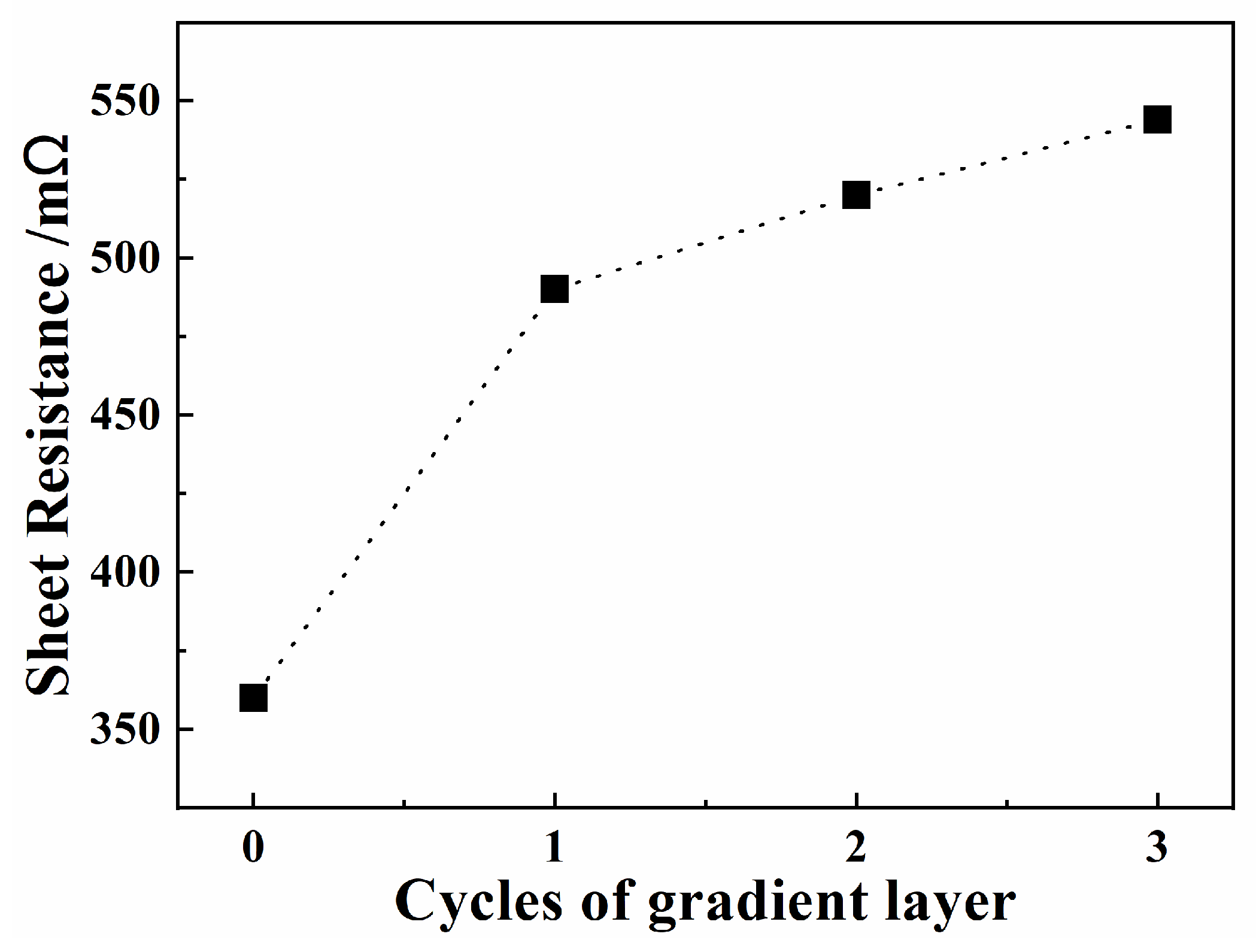
Figure 6 shows the dependence of the sheet resistance of the Cu films on different ZrN/Zr layer thickness. The resistance of the pure Cu film is 360 mΩ. As high-resistance intermediate layers are introduced into the Cu/glass structure, the sheet resistance of the multilayer shows an overall upward trend with the increase in gradient layers. When the gradient layer periods are 2 and 3, the sheet resistance is 520 mΩ and 544 mΩ, respectively, and shows a rising trend. Nevertheless, the electrical properties of the samples remain good. For multilayer, the nature of layer interfaces, GB scattering, and individual layer thickness on the mean free path often play a critical role in determining the physical properties. When an electric field is applied, free electrons could transfer along layers and form a series circuit [26].
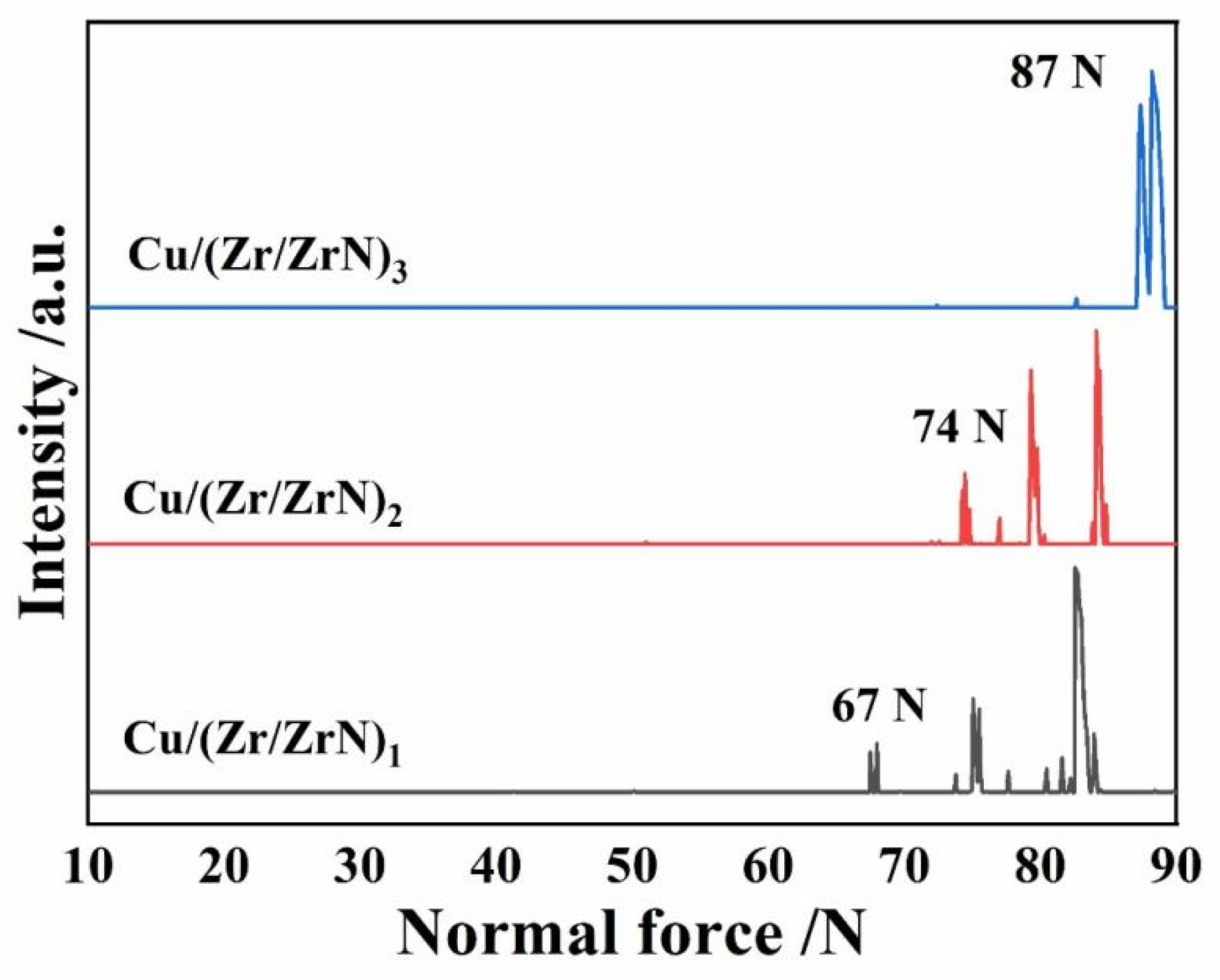
The adhesion of the film can effectively reflect the bonding strength between the copper metal layer and the substrate. The initial pronounced peak in the acoustic emission curve corresponds to the critical load (Lc) at which film delamination begins. Figure 7 shows the acoustic emission curve of the copper layer with different gradient layers on the glass substrate. The critical loads of the Cu/(ZrN/Zr)x multilayers with various cycles are 67 N, 74 N, and 87 N, respectively. As the gradient layer increases, the critical load gradually rises. This is mainly because, as the gradient layer thickness increases, the composition of the film layer changes in a gradient from the surface to the inside, which alleviates the discontinuity of stress changes inside the film layer and between the film/substrate, resulting in good toughness and strong fatigue resistance of the film layer [1].
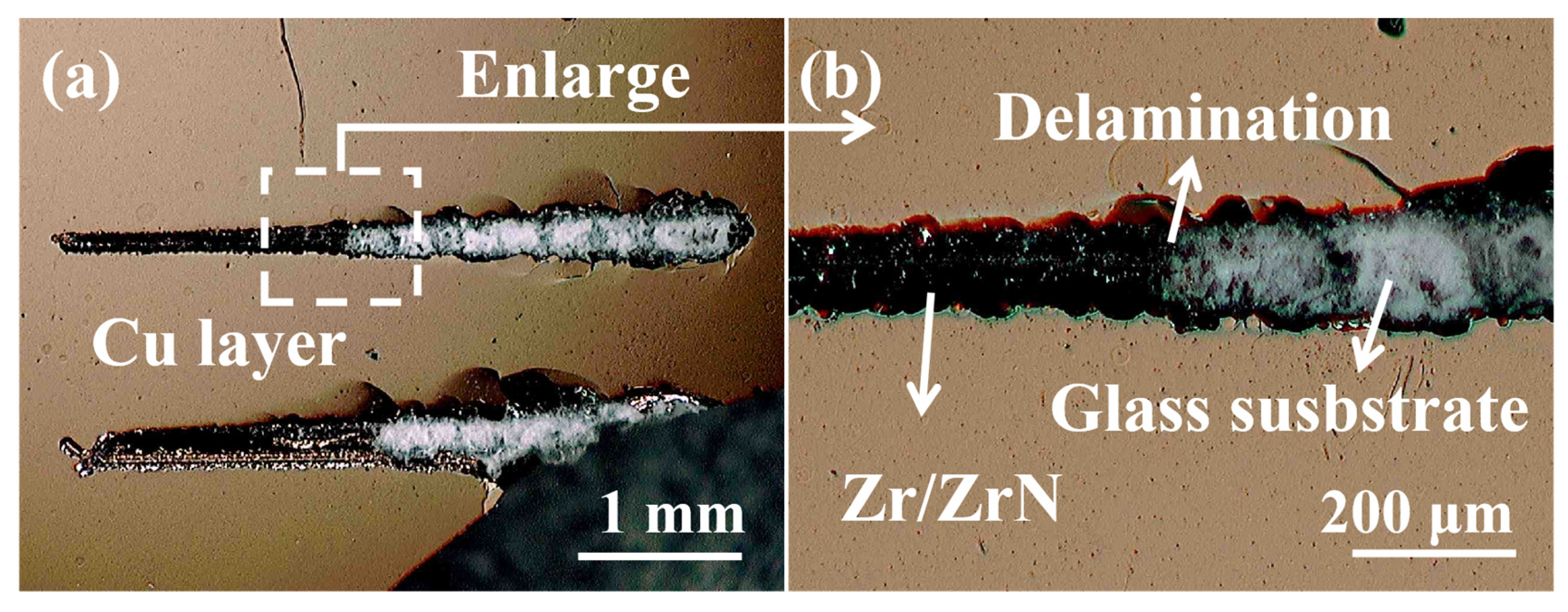
Figure 8 shows the scratch morphology of Cu/(ZrN/Zr)3 multilayer films on a glass substrate, which was observed by an optical microscope. The scratch increases from left to right as the load increases to 100 N; crack propagation in the back half is larger than in the front half. The Cu layer initially leads to decohesion and partial delamination. and then the Zr-based transition layer peels off to the glass substrate. This can be attributed to the increase in load: the indenter penetrates deep into the films, and the transition layer carries most of the load pressure [20].

4. Summary and Conclusions

In conclusion, we demonstrated the applicability of a ZrN/Zr gradient transition layer to a glass substrate. The Cu films deposited on the (ZrN/Zr)x gradient layer have a (111) preferred orientation, which is beneficial for reducing the internal stress of Cu films. With the increasing period of ZrN/Zr gradient layer, the electrical property remains good, and the interfacial bonding strength between the metal layer and the glass substrate gradually increases. When the period is 3, the critical load of the Cu/(ZrN/Zr)3 stack structure is 80 N. In summary, adding a Zr-based gradient layer between the glass substrate and the copper layer can improve the interfacial bonding strength between the two.

Author Contributions

Investigation, C.Z.; Resources, C.Z.; Data curation, C.Z. and X.H.; Writing—original draft, Y.M. and X.H.; Writing—review & editing, Y.M. and Z.S.; Project administration, Y.M.; Funding acquisition, Y.M. All authors have read and agreed to the published version of the manuscript.

Funding

This work was supported by the National Natural Science Foundation of China Grant (No. 52201087, 52101097), the Shaanxi Province Youth Science and Technology New Star Project (No.2023KJXX-068), the Shaanxi Province Technology Innovation Guidance Special Project (2024ZC-YYDP-47), the Natural Science Foundation of Suzhou (NO: SYG202341), the Xi’an Science and Technology Plan Project (Nos. 24GXFW0081-07, 24GXFW0081-16), the Open Fund of Shaanxi Provincial Key Laboratory of Surface Engineering and Remanufacturing (No. 2022SSER03).

Data Availability Statement

Data is contained within the article.

Conflicts of Interest

The authors declare no conflict of interest.

References

  1. Antony, A.; Hejduk, M.; Hrbek, T.; Kúš, P.; Bičišťová, R.; Hauschwitz, P.; Cvrček, L. Laser-assisted two-step glass wafer metallization: An experimental procedure to improve compatibility between glass and metallic films. Appl. Surf. Sci. 2023, 627, 157276. [Google Scholar] [CrossRef]
  2. Zhao, Y.; Yan, T.; Hong, M. Enhancement of laser-induced plasma-assisted ablation of glass substrate via interacting spatial double laser pulse irradiation. Opt. Laser Technol. 2025, 180, 111588. [Google Scholar] [CrossRef]
  3. Lai, Y.; Pan, K.; Park, S. Thermo-mechanical reliability of glass substrate and Through Glass Vias (TGV): A comprehensive review. Microelectron. Reliab. 2024, 161, 115477. [Google Scholar] [CrossRef]
  4. Miller, A.; Yu, L.; Blickensderfer, J.; Akolkar, R. Electrochemical copper metallization of glass substrates mediated by solution-phase deposition of adhesion-promoting layers. J. Electrochem. Soc. 2015, 162, D630–D634. [Google Scholar] [CrossRef]
  5. Pawar, K.; Dixit, P. Facilitating electroless metalization of blind holes in glass substrates by electrochemical discharge-assisted surface roughening. Mater. Lett. 2024, 358, 135853. [Google Scholar] [CrossRef]
  6. Huang, J.H.; Ting, I.S.; Zheng, T.W. Evaluation of stress and energy relief efficiency of ZrN/Ti and ZrN/Zr. Surf. Coat. Technol. 2022, 434, 128224. [Google Scholar] [CrossRef]
  7. Rao, Z.; Su, T.; Koenig, T.; Thompson, G.B.; Depla, D.; Chason, E. Effect of processing conditions on residual stress in sputtered transition metal nitrides (TiN, ZrN and TaN): Experiments and modeling. Surf. Coat. Technol. 2022, 447, 128880. [Google Scholar] [CrossRef]
  8. Cai, F.; Zhou, Q.; Chen, J.; Zhang, S. Effect of inserting the Zr layers on the tribo-corrosion behavior of Zr/ZrN multilayer coatings on titanium alloys. Corros. Sci. 2023, 213, 111002. [Google Scholar] [CrossRef]
  9. Xiao, M.Q.; Yuan, G.Z.; Lu, Z.H.; Xia, J.; Li, D.; Chen, Y.; Zhang, Y.; Pei, F.T.; Chen, C.L.; Bai, Y.; et al. Engineering Amorphous-Crystallized Interface of ZrNx Barriers for Stable Inverted Perovskite Solar Cells. Adv. Mater. 2023, 35, 2301684. [Google Scholar] [CrossRef]
  10. Zou, J.; Liu, B.; Lin, L.; Lu, Y.; Dong, Y.; Jiao, G.; Li, Q. Investigation of microstructure and properties of ultrathin graded ZrNx self-assembled diffusion barrier in deep nano-vias prepared by plasma ion immersion implantation. Appl. Surf. Sci. 2018, 427, 950–955. [Google Scholar] [CrossRef]
  11. Prajwal, K.; Priyanka, G.L.; Hasan, M.A.; Carmel Mary Esther, A.; Sridhara, N.; Rajendra, A.; Dey, A. Development of reflective co-sputtered nanostructured metallic films. Surf. Eng. 2021, 37, 400–405. [Google Scholar] [CrossRef]
  12. Kimura, T.; Tanaka, T. Properties of titanium oxynitride films deposited on glass substrate by reactive high-power pulsed magnetron sputtering. Jpn. J. Appl. Phys. 2020, 59, SHHE03. [Google Scholar] [CrossRef]
  13. An, Q.; Li, J.; Fang, H. Copper target erosion during unbalanced magnetron sputtering under different electromagnetic fields. Surf. Coat. Technol. 2024, 477, 130360. [Google Scholar] [CrossRef]
  14. Rossnagel, S.M. Magnetron sputtering. J. Vac. Sci. Technol. A 2020, 38, 060805. [Google Scholar] [CrossRef]
  15. Gabor, R.; Cvrček, L.; Kudrnová, M.; Hlinka, J.; Večeř, M.; Buřil, M.; Walter, J.; Čekada, M.; Drnovšek, A.; Unucka, P.; et al. ZrN coating as a source for the synthesis of a new hybrid ceramic layer. Appl. Surf. Sci. Adv. 2024, 22, 100615. [Google Scholar] [CrossRef]
  16. Muneshwar, T.; Cadien, K. Comparing XPS on bare and capped ZrN films grown by plasma enhanced ALD: Effect of ambient oxidation. Appl. Surf. Sci. 2018, 435, 367–376. [Google Scholar] [CrossRef]
  17. Roman, D.; Bernardi, J.; de Amorim, C.L.G.; de Souza, F.S.; Spinelli, A.; Giacomelli, C.; Figueroa, C.A.; Baumvol, I.J.R.; Basso, R.L.O. Effect of deposition temperature on microstructure and corrosion resistance of ZrN thin films deposited by DC reactive magnetron sputtering. Mater. Chem. Phys. 2011, 130, 147–153. [Google Scholar] [CrossRef]
  18. Liu, Y.L.; Huang, J.H.; Kai, J.J.; Chen, F.R. Microstructure study of a nanocrystalline two-phase ZrNxOy thin film. Mater. Chem. Phys. 2009, 116, 503–506. [Google Scholar] [CrossRef]
  19. Du, S.X.; Zhang, K.; Wen, M.; Ren, P.; Meng, Q.N.; Zhang, Y.D.; Zheng, W.T. Crystallization of SiC and its effects on microstructure, hardness and toughness in TaC/SiC multilayer films. Ceram. Int. 2018, 44, 613–621. [Google Scholar] [CrossRef]
  20. Ma, A.; Liu, D.; Zhang, X.; Liu, D.; He, G.; Yin, X. Solid particle erosion behavior and failure mechanism of TiZrN coatings for Ti-6Al-4V alloy. Surf. Coat. Technol. 2021, 426, 127701. [Google Scholar] [CrossRef]
  21. García González, L.; Hernández Torres, J.; Garnica Romo, M.G.; Zamora Peredo, L.; Courrech Arias, A.M.; León Sarabia, E.; Espinoza Beltrán, F.J. Ti/TiSiNO multilayers fabricated by co-sputtering. J. Mater. Eng. Perform. 2012, 22, 2377–2381. [Google Scholar] [CrossRef]
  22. Kiryukhantsev-Korneev, P.; Sytchenko, A.; Kaplanskii, Y.; Sheveyko, A.; Vorotilo, S.; Levashov, E. Structure, corrosion resistance, mechanical and tribological properties of ZrB2 and Zr-B-N coatings. Metals 2021, 11, 1194. [Google Scholar] [CrossRef]
  23. Ma, D.L.; Jing, P.P.; Gong, Y.L.; Wu, B.H.; Deng, Q.Y.; Li, Y.T.; Chen, C.Z.; Leng, Y.X.; Huang, N. Structure and stress of Cu films prepared by high power pulsed magnetron sputtering. Vacuum 2019, 160, 226–232. [Google Scholar] [CrossRef]
  24. Li, W.J.; Xiao, S.; Zhang, X.B.; Meng, X.Y.; Gao, Y.X.; Fan, S.Y.; Li, T.J.; Chu, P.K. Effects and modulation mechanism of crystal structure on residual stress of Cu films used for metallization. Thin Solid Films 2024, 807, 140556. [Google Scholar] [CrossRef]
  25. Liu, G.H.; Wang, D.; Xing, Y.; Zhong, X.Q.; Pan, W. Copper bonding silicon nitride substrate using atmosphere plasma spray. J. Eur. Ceram. Soc. 2023, 43, 3981–3987. [Google Scholar] [CrossRef]
  26. Wang, P.P.; Wang, X.J.; Du, J.L.; Ren, F.; Zhang, Y.; Zhang, X.; Fu, E.G. The temperature and size effect on the electrical resistivity of Cu/V multilayer films. Acta Mater. 2017, 126, 294–301. [Google Scholar] [CrossRef]
Figure 1. The schematic diagram of Cu/(ZrN/Zr)x multilayer films on a glass substrate.
Coatings 15 01472 g001
Figure 2. XPS analysis of ZrN film surface without Ar ion etching: (a) Zr 3d and (b) N 1s; (c) XRD patterns of Zr/ZrN films; SEM images of Zr/ZrN thin films with varying period: (d) 1, (e) 2, and (f) 3.
Coatings 15 01472 g002
Figure 3. Cross-sections SEM images of Cu/(ZrN/Zr)x multilayer film with different transition layer cycles: (a) 1; (b) 2; (c) 3, and (d) thickness of gradient layers.
Coatings 15 01472 g003
Figure 4. GDOES profiles for Cu/(ZrN/Zr)x multilayer film with gradient layer cycle x = 1 (a) and x = 3 (b). And the numbers represent three layers of gradient layers.
Coatings 15 01472 g004
Figure 5. XRD patterns of Cu/(ZrN/Zr)x multilayer films.
Coatings 15 01472 g005
Figure 6. Sheet resistance of Cu/(ZrN/Zr)x multilayer films with different gradient layer cycles.
Coatings 15 01472 g006
Figure 7. Acoustic emission spectra of scratches on Cu/(ZrN/Zr)x multilayer films with different gradient layer cycles.
Coatings 15 01472 g007
Figure 8. (a) Macroscopic morphology of dynamic load scratch on Cu/(ZrN/Zr)3 multilayer films; (b) local enlarged image of the interfacial delamination.
Coatings 15 01472 g008
Table 1. Deposition parameters of Zr/ZrN multilayer films.
SamplesPower (W)Pressure (Pa)Flow Rate (sccm)Time (h)
ArN2
Zr/ZrN-1800.52062
Zr/ZrN-2800.52064
Zr/ZrN-3800.52066
Table 2. Atomic percentage of as-deposited ZrN films.
SamplesChemical Composition (at.%)
ZrNO
Zr/ZrN-130.813.8165.38
Zr/ZrN-234.824.9760.21
Zr/ZrN-332.1813.3054.52
Table 3. Characteristics of the Cu films.
Sample 1Sample 2Sample 3
I(111)/I(200)2.232.001.77
Grain size of Cu (111) peaks13.2411.0611.09
Resistance/mΩ490520544
Disclaimer/Publisher’s Note: The statements, opinions and data contained in all publications are solely those of the individual author(s) and contributor(s) and not of MDPI and/or the editor(s). MDPI and/or the editor(s) disclaim responsibility for any injury to people or property resulting from any ideas, methods, instructions or products referred to in the content.