Article

High Cavitation Resistance Performance of Al0.3CoCrFeNi Coating Reinforced by Ternary Cr2AlC Compound

by
Lin Zhang
1,
Yihu Ma
2,
Wenbo Yu
2,*,
Jianhua Liu
1,*,
Bing Du
3 and
Xiaohui Ao
1
1
School of Mechanical Engineering, Beijing Institute of Technology, Beijing 100081, China
2
School of Mechanical and Electronic Control Engineering, Beijing Jiaotong University, Beijing 100044, China
3
China Academy of Machinery Science and Technology Group Co., Ltd., Beijing 100044, China
*
Authors to whom correspondence should be addressed.
Coatings 2025, 15(12), 1469; https://doi.org/10.3390/coatings15121469 (registering DOI)
Submission received: 11 November 2025 / Revised: 3 December 2025 / Accepted: 9 December 2025 / Published: 12 December 2025
(This article belongs to the Section Corrosion, Wear and Erosion)

Abstract

Cavitation resistance in hydraulic machinery requires the turbine and water pump surface to simultaneously possess high hardness and plasticity. To keep the FCC structure of the AlxCoCrFeNi alloy matrix and introduce the particle strengthening effects, the suitable weight content of Cr2AlC particles was calculated and added into Al0.3CoCrFeNi powders. Due to the decomposition of Cr2AlC during laser cladding, the microhardness of Al0.3CoCrFeNi was enhanced by Al atoms and the eutectic-like Cr7C3 structure. In comparison with 5.81 GPa of Al0.3CoCrFeNi coating measured by nanoindentation, the values of the eutectic-like structure and the matrix were measured as 7.76 GPa and 5.93 GPa in 12 wt.% Cr2AlC/Al0.3CoCrFeNi coating. Attributed to the pinning effect of hard Cr7C3 and high plastic matrix, the mass loss was reduced from 7.25 × 10⁻⁴ g/mm2 for Al0.3CoCrFeNi coating to 1.91 × 10⁻⁴ g/mm2 Cr2AlC/Al0.3CoCrFeNi coating with a ratio of 73.8%.

1. Introduction

During the operational process of hydraulic machinery, cavitation erosion is the major failure phenomenon within the devices of hydro-turbines and water pumps. The high velocity difference between the liquid flow and the overflow components arouses the repeated impacts of micro-jets and the violent collapse of cavitation bubbles [1,2]. This further causes severe cavitation damage [3,4,5]. In order to extend the service life of components, high-quality cavitation-resistant coatings are urgently desired.
In a non-corrosive environment, cavitation erosion is a purely mechanical process, which is similar to the action of shock loading or high-amplitude low-cycle fatigue [6,7]. Thus, cavitation resistance in hydraulic machinery requires the turbine and water pump surface to simultaneously possess high hardness and plasticity. Introducing hard ceramic particles into a highly plastic metal matrix is the most common route. The crack propagation during cavitation erosion can be effectively inhibited through the pinning effect [8,9,10,11]. For example, Xu et al. deposited WC-Ni coatings using cold spraying followed by laser surface melting. The composite coating exhibits excellent cavitation resistance due to the crack propagation inhibition effect of the Ni-WC grid structure [8].
Recently, ternary layered Mn+1AXn compounds (where n = 1 to 3, M is a transition metal, A is an A-group element, and X is nitrogen or carbon) with low density and high elastic modulus have been widely used to reinforce metal matrix [12,13,14,15]. Due to its self-decomposition into MX and A at high temperatures, the MAX phase can simultaneously provide solid solution strengthening and nano-strengthening effects [16,17,18]. Jiang et al. introduced a 20% mass fraction of Ti2AlC into a white iron matrix by the hot-pressing sintering method. Ti2AlC decomposed into Al and TiCx under high temperature. Attributed to the second phase strengthening and solid-solution strengthening, the maximum Young’s modulus was elevated to 380 GPa [19]. Jiao et al. introduced a 30% volume fraction of Cr2AlC into the Ni matrix by the hot-pressing sintering method. The in situ synthesized Cr3C2 particles and Ni3Al phase significantly enhanced the flexural strength to 1790 ± 25 MPa, which was seven times higher than that of the pure Ni matrix [20]. Consequently, MAX phase ceramics may further enhance the cavitation resistance of composite coatings.
Enhancing the plasticity and toughness of the metal matrix is also important. High entropy alloys (HEAs) have been widely validated to present extraordinary properties [21,22,23]. AlxCoCrFeNi is one of the most extensively studied. When x is less than 0.5, AlxCoCrFeNi exhibits a single FCC phase and possesses excellent plasticity and toughness. J. Joseph et al. [24] indicated that the Al0.3CoCrFeNi HEA exhibited excellent compressive strain (97%) and strength (1378 MPa) due to the activation of mechanical twinning. The B2 phase appears once the atomic ratio of Al in AlxCoCrFeNi exceeds 0.5 [25,26]. The B2 precipitates increase the back stress by promoting the kinematic hardening in the matrix, which provides more crack-initiation sites under low-cycle fatigue test [27,28].
Herein, to combine the advantages of MAX phases and FCC-AlxCoCrFeNi, Cr2AlC and Al0.3CoCrFeNi were chosen to produce cavitation-resistant coatings by laser cladding. To ensure complete decomposition of Cr2AlC and achieve robust interfacial bonding between the coating and substrate, the laser cladding technique was applied to fabricate the composite coatings. The microstructure, surface hardness, and cavitation erosion resistance of the composite coating were investigated.

2. Materials and Methods

2.1. Experimental Materials and Laser Cladding Parameters

High-purity Al0.3CoCrFeNi and Cr2AlC spherical powders with diameters ranging from 45 to 150 μm and 15 to 60 μm, respectively, were used as the laser cladding materials. The theoretical mass fraction(mf) of Al in Cr2AlC and Al0.3CoCrFeNi is 18.87% and 3.47%, respectively. Assuming all the Al atoms generated from the decomposition of Cr2AlC diffused into the Al0.3CoCrFeNi matrix, the mass fraction of Cr2AlC (wt(Cr2AlC)) can be calculated by the following equations:
W t ( A l ) = 0.1887 w t C r 2 A l C + 0.0347 w t A l 0.3 C o C r F e N i 0.1887 w t C r 2 A l C + w t A l 0.3 C o C r F e N i × 100 %
W t ( A l ) = A r ( A l ) x A r A l x + A r C o + A r C r + A r F e + A r ( N i ) × 100 %
w t C r 2 A l C + w t A l 0.3 C o C r F e N i = 1
where Ar(Al), Ar(Co), Ar(Cr), Ar(Fe), and Ar(Ni) correspond to the relative atomic masses of aluminum, cobalt, chromium, iron, and nickel, respectively. x is the atom ratio in AlxCoCrFeNi. To avoid the BCC structure appearing, the x value in AlxCoCrFeNi cannot exceed 0.5 [25]. According to Equations (1)–(3), the maximum mass fraction of Cr2AlC is 10.96%. To compensate for the loss of Al during the laser cladding process, the maximum mass fraction of Cr2AlC was slightly increased to 12%. Thus, Cr2AlC powders with mass fractions of 0, 5, 9, and 12% were chosen and mixed with Al0.3CoCrFeNi powder using a three-dimensional mixer for 2 h to obtain homogeneous composite powders. The laser cladding specimens with different contents of Cr2AlC additions were designated as C0, C5, C9, and C12, respectively. 00Cr13Ni4Mo martensitic stainless steel, which is widely used for hydraulic turbine steel, was selected as the substrate. Table 1 shows the specific chemical composition of the substrate and Al0.3CoCrFeNi powder. During the laser cladding process, the laser power was 1100 W, the spot diameter was 3 mm, the scanning velocity was 10 mm/s, the powder feeding rate was 12.8 g/min, and the overlapping rate was 50%. Argon gas served as both the powder carrier and cladding shield gas at a flow rate of 20 L/min. After completing the laser cladding process, the surface morphology of the claddings was directly observed with a camera (Nikon Z8, Nikon Corp., Minato City, Japan).

2.2. Phase and Microstructure Characterization

The phase of coating was characterized by using an X-ray (D/max-2500/PC, Rigaku Corporation, Tokyo, Japan, 2009) with the following parameters: Cu target, scanning speed 5 °/min; testing angle 20°~100°. Before the XRD test, the surface of the composite coatings was ground by abrasive paper and then polished by 0.5 μm diamond suspension.
The morphologies of cross-section were observed by Scanning Electron Microscope (Zeiss Merlin, Zeiss Merlin VP Compact, Jena, Germany, 2016) after being ground by abrasive paper and then polished by 0.5 μm diamond suspension.
For transmission electron microscopy analysis, the C12 cladding layer was cut from the substrate and ground down to 50 μm in thickness. After that, the specimen was prepared using the electro-polishing twin-jet technique in a 10% perchloric acid-ethanol solution. The specimen was analyzed using a transmission electron microscope (JEM-F200, Nara, Japan, 2010) operating at 200 kV. The chemical composition was simultaneously analyzed using the energy dispersive spectrometer (EDS).

2.3. Microhardness and Cavitation Erosion Resistance Test

Before the tests, the sample surface was ground by abrasive paper and then polished by a 0.5 μm diamond suspension to achieve a smooth and clean surface. HV-1000A Vickers indenter (HV-1000A, MEGA instruments, 2022) was used to measure the microhardness on the coating surfaces. The Vickers hardness was measured under a load of 0.2 kgf with a dwell time of 15 s. The tests were conducted at 15 randomly selected locations, and the average value was reported as the final result.
The nanoindentation test (FT-I04Femto, FemtoTools Compact, 2020) was introduced to obtain the hardness between different phases. The nanoindentation depth was 0.06 μm, the distance between indentations was 0.6 μm, and the experimental area was 24 μm × 20 μm. As shown in Figure 1e, the cavitation behavior of the coating was studied using an ultrasonic surface processing device (GBS-SCT 20 A, Guobiao Ultrasonic Equipment Co., 2019) according to the ASTM G32-16 standard [6,11]. The test medium was deionized water, and the temperature was maintained at room temperature. The power of the cavitation testing system was 1250 W, the vibration frequency was 20 ± 0.2 kHz, and the peak-to-peak amplitude was 36 μm. The duration of the experiment was 12 h, and the mass loss was measured every 2 h.
White light interference microscope (Contour GT-IM, Bruker, 2013) and SEM (Zeiss Merlin, Zeiss Merlin VP Compact, 2016) were used to characterize the surface morphology after the cavitation erosion test.
To provide a more intuitive representation of the cavitation erosion depth, the cross-sections of the C0 and C12 samples were further characterized using scanning electron microscopy (Zeiss Merlin, Zeiss Merlin VP Compact, 2016). Before characterization, the samples were embedded in resin and subjected to grinding and polishing.

3. Results

3.1. Microstructure Characterization

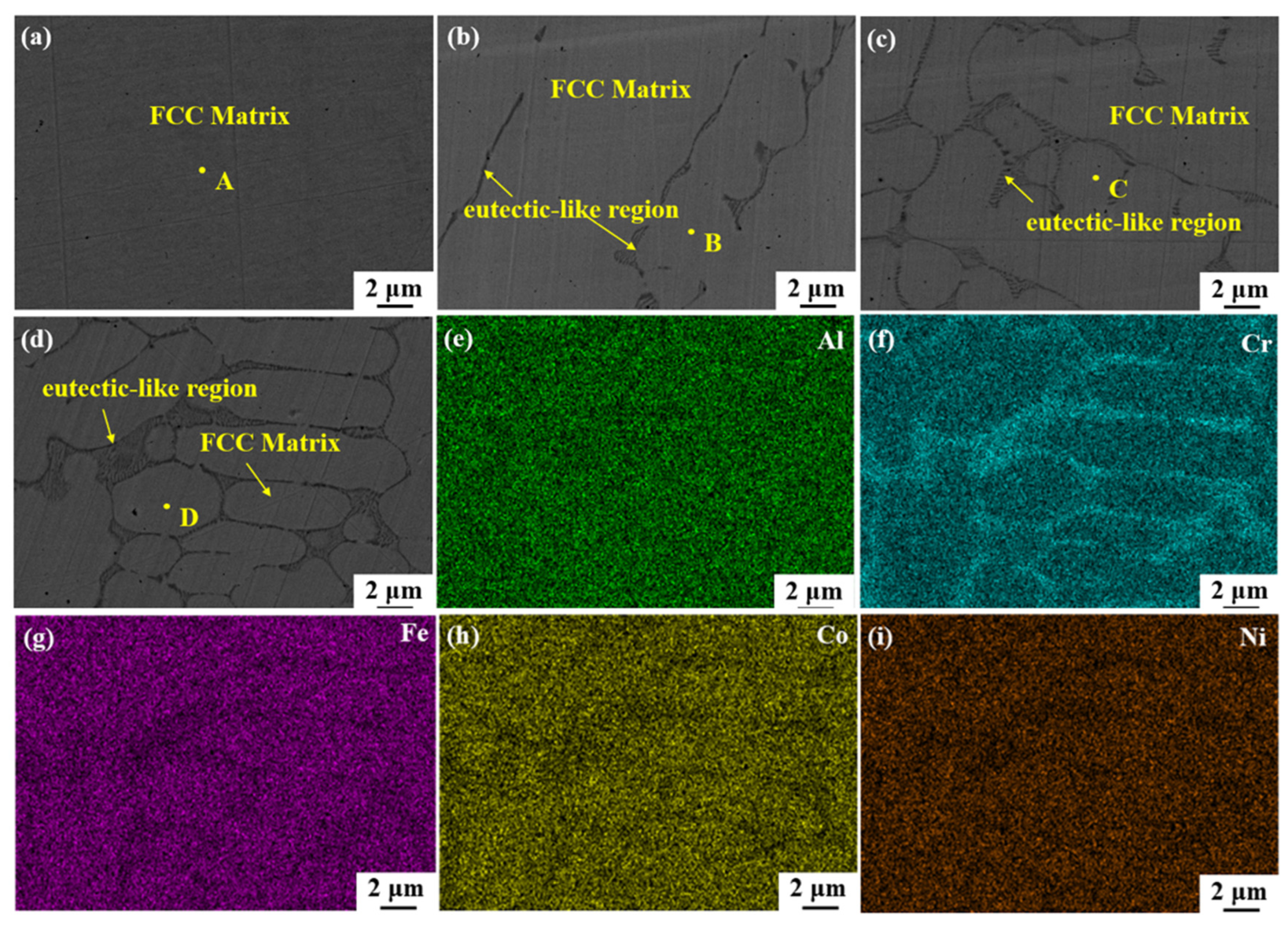
Figure 1a–d demonstrates the surface macroscopic morphology of the cladding layer. The surface of the claddings is flat, without obvious pores and crack defects. Figure 2 presents the SEM images of a cross-section. As shown in Figure 2a, the C0 coating exhibits a homogeneous single phase. As shown in Figure 2b–d, a distinct black second phase appears with the addition of Cr2AlC. In addition, the second phase forms a eutectic-like lamellar structure with the matrix. EDS mapping of C12 in Figure 2e–i demonstrates that the eutectic-like region is enriched with the Cr element. Meanwhile, the eutectic-like structure gradually forms a continuous network along the grain boundaries, with the addition of Cr2AlC.
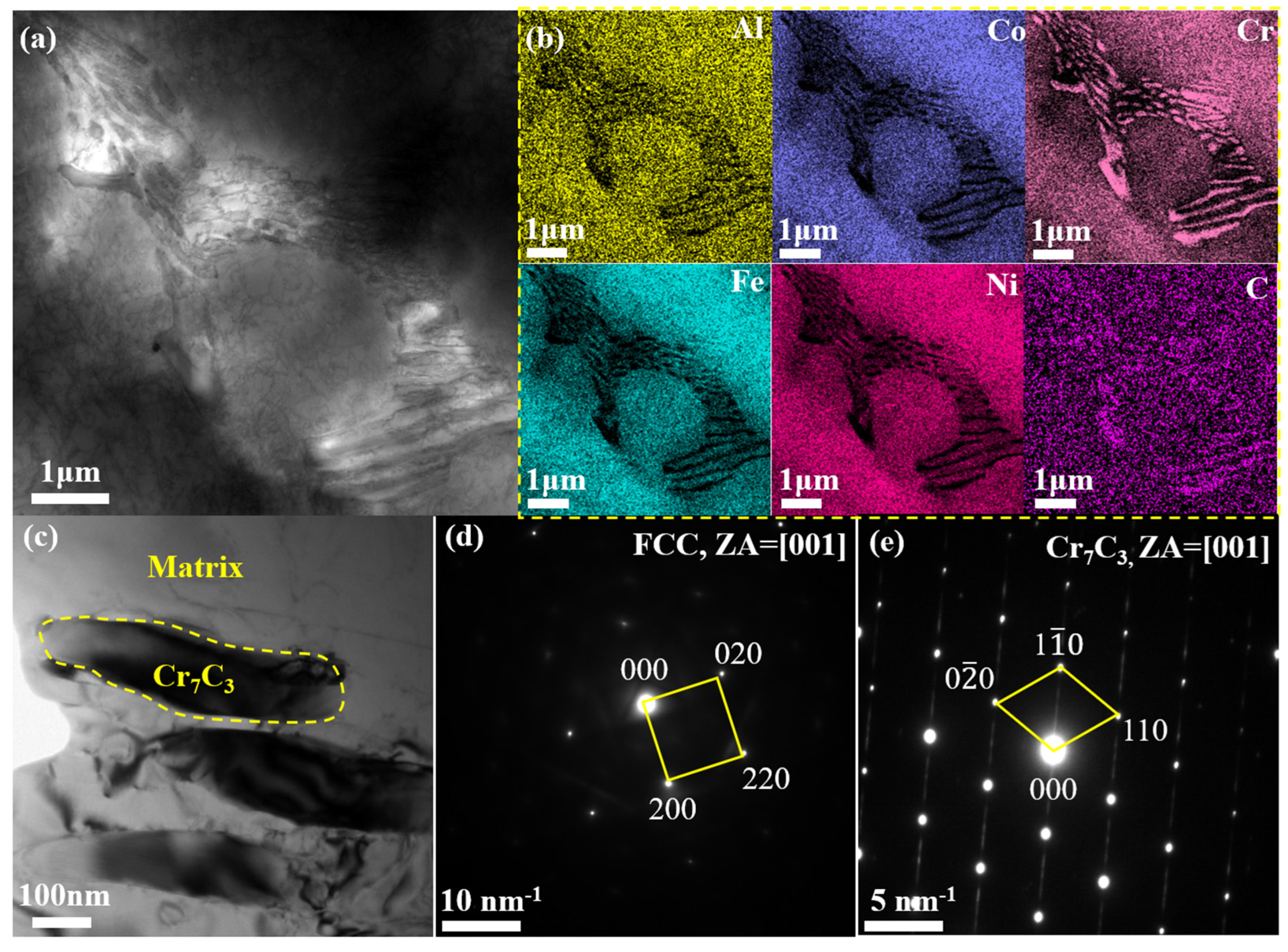
TEM results further investigate the microstructure and phase composition of the eutectic-like structure. As shown in Figure 3a,b, the STEM and EDS mappings demonstrate the eutectic-like structure distributed around the matrix clearly. As shown in Figure 3b,c, Cr and C-enriched layers are alternately distributed with the matrix layer. The Cr and C-enriched layers exhibit a uniform thickness of about 100 nm and a length of about 100 nm to 5 μm. As shown in Figure 3d,e, the SAED results indicate that the lamellae enriched with Cr and C elements are orthorhombic Cr7C3, while the Al0.3CoCrFeNi matrix lamellae remain a single FCC structure.

3.2. Cavitation Erosion Result

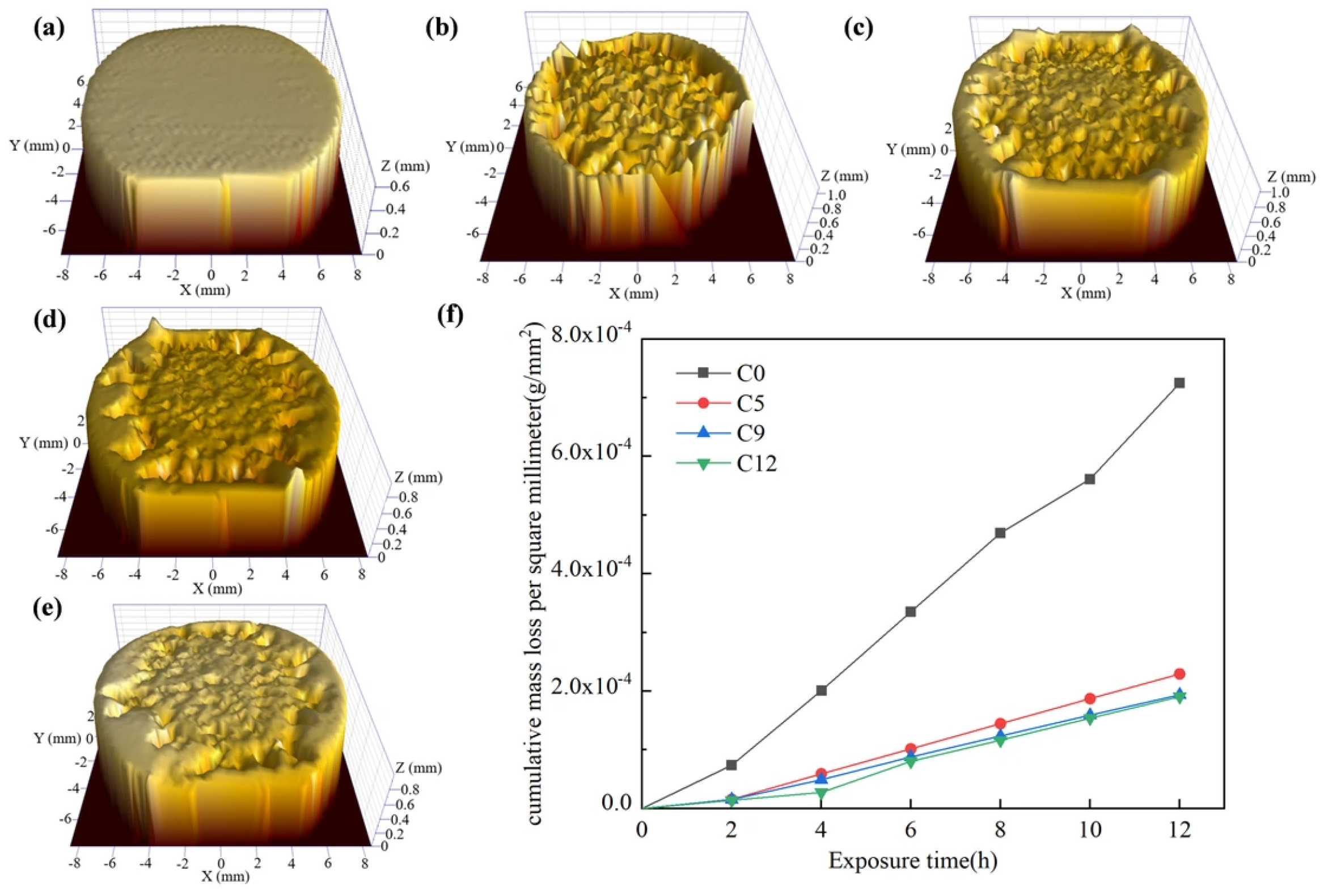
By weighing the cavitation-tested samples at 2 h intervals, the cumulative mass loss curve was plotted in Figure 4f. C0 exhibits the worst cavitation erosion resistance. The incubation stage of C0 is less than 2 h. In addition, the cumulative mass loss per square millimeter rapidly increases to 7.25 × 10⁻⁴ g/mm2 during 12 h. In contrast, C5, C9, and C12 with Cr2AlC addition exhibit a more pronounced incubation stage. C12 exhibits the longest incubation stage of approximately 4 h, and the smallest mass loss per square millimeter of approximately 1.91 × 10⁻⁴ g/mm2.
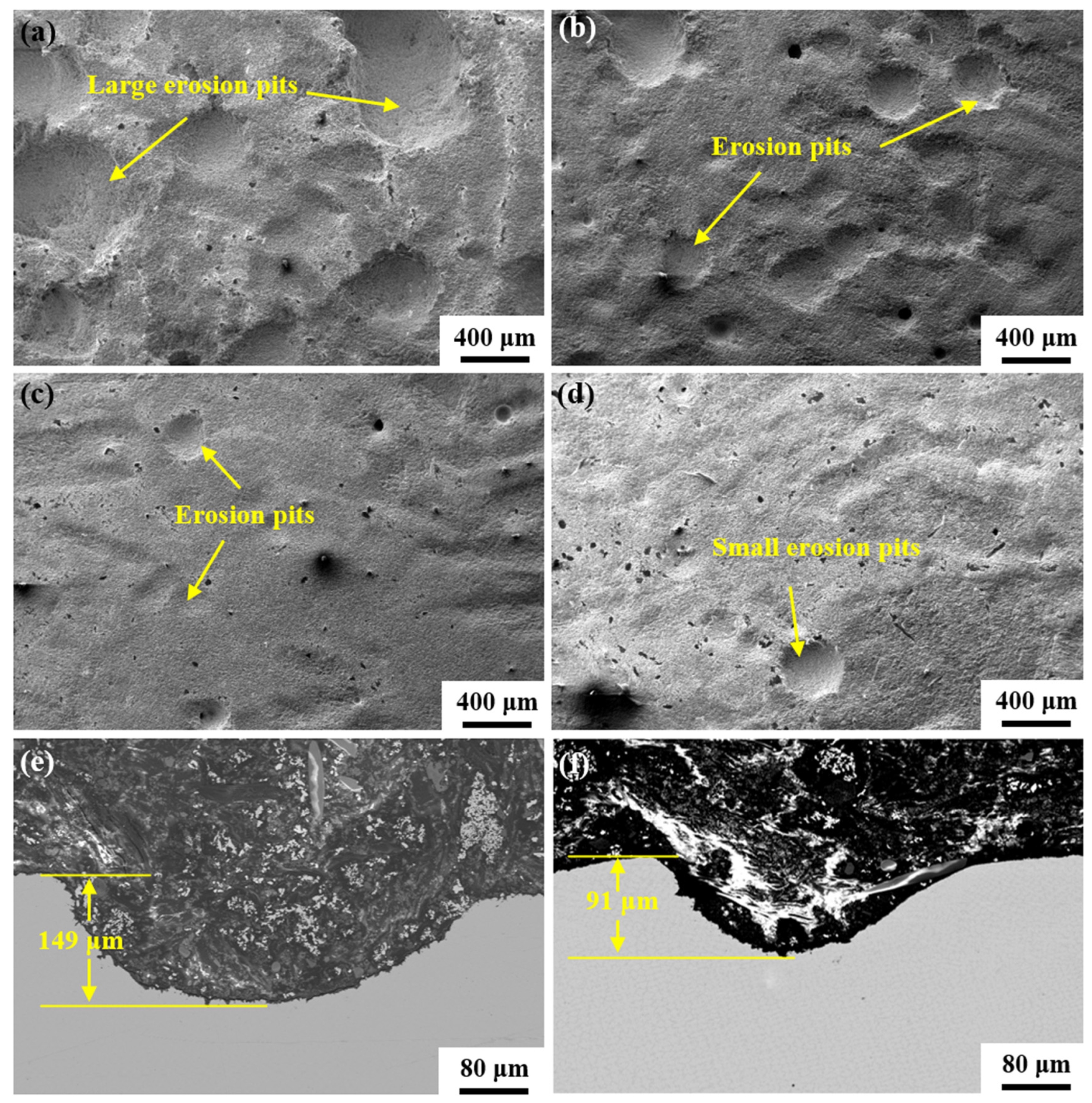
Figure 4b and Figure 5a demonstrate the surface of C0 after the cavitation erosion test. After 12 h, the surface roughness of C0 increased significantly. At the same time, surface material is ultimately removed by spalling, leading to the formation of large-scale cavitation pits (with a diameter greater than 800 μm). With the increase of Cr2AlC content as shown in Figure 4c–e and Figure 5b–d, the cavitation erosion could be significantly suppressed, and the diameter (with a diameter less than 300 μm) of individual cavitation pits are reduced significantly. Characterization of individual C0 and C12 cavitation pit cross sections could further reflect the inhibition of cavitation of C12. As shown in Figure 5e,f, the cavitation pit of C0 is almost twice as large as that of C12.
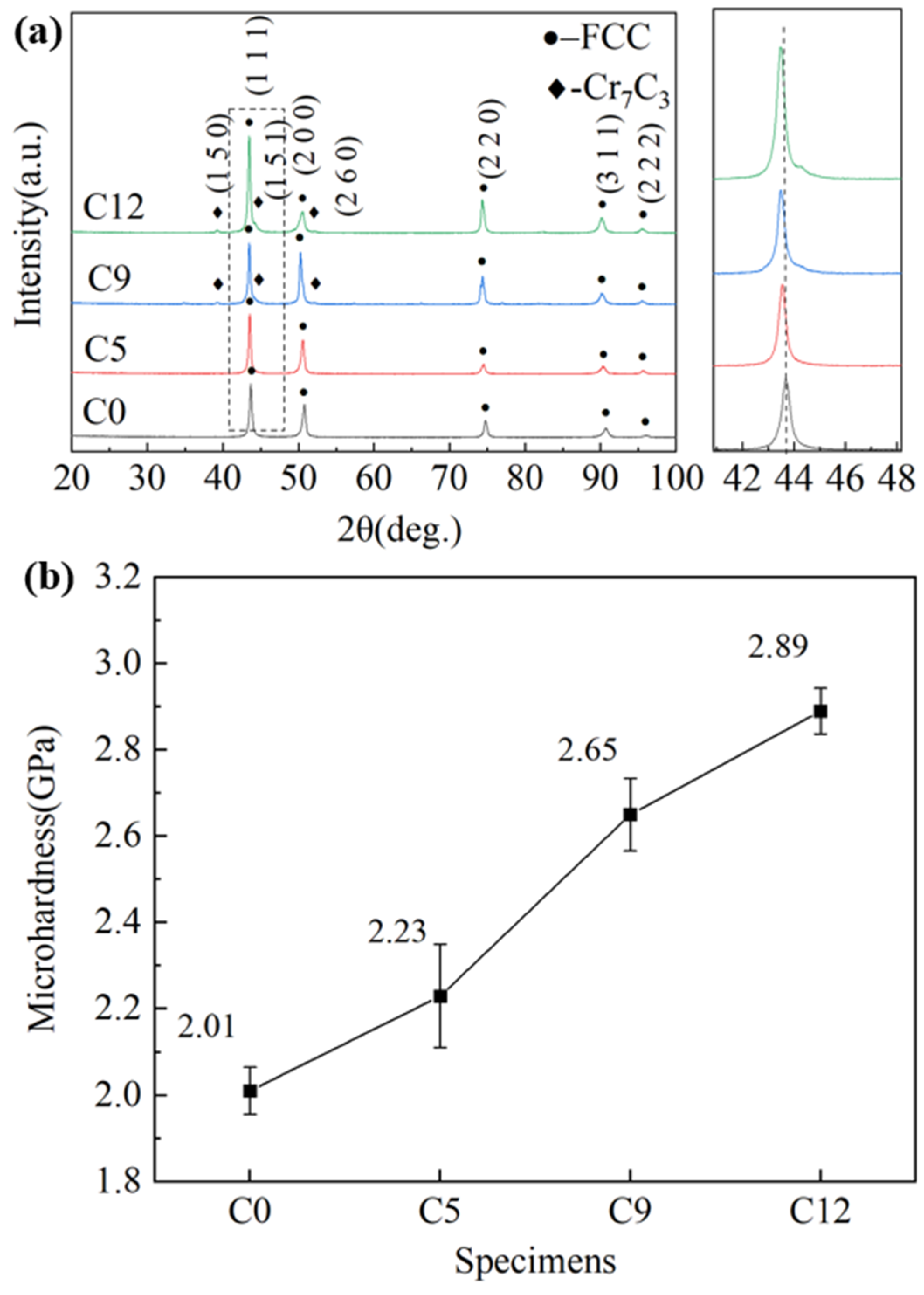
To explain the reasons for the differences in cavitation performance of the composite coating, further analysis was conducted on the coating’s phase structure and mechanical properties. As shown in Figure 6a, the XRD results demonstrate that only peaks of the FCC phase were detected in the coatings. This is consistent with the previous studies of the AlxCoCrFeNi series HEAs [25,26]. With the increase of Cr2AlC addition, the C7C3 phase appears and becomes more obvious. Furthermore, the peaks of the FCC phase are slightly shifted to the lower angle. For example, the (111) peak shifted from 43.68° to 43.54°, 43.48°, and 43.46°, respectively. This indicates that Al atoms, which are generated from the decomposition of Cr2AlC, diffuse into the Al0.3CoCrFeNi matrix. The specific element composition of A, B, C, and D locations in Figure 2a–d is demonstrated in Table 2, indicating that the Al content in coatings increases from 3.2 wt.% to 3.5 wt.%, 3.87 wt.%, and 4.15 wt.% with the increase of Cr2AlC addition.
At the same time, Cr7C3 is generated with the decomposition of Cr2AlC. Due to the apparent solid strengthening effect and the particle strengthening effect, as shown in Figure 6b, the average microhardness of Al0.3CoCrFeNi is enhanced from 2.01 GPa to 2.23 GPa, 2.65 GPa, and 2.89 GPa for C5, C9, and C12.
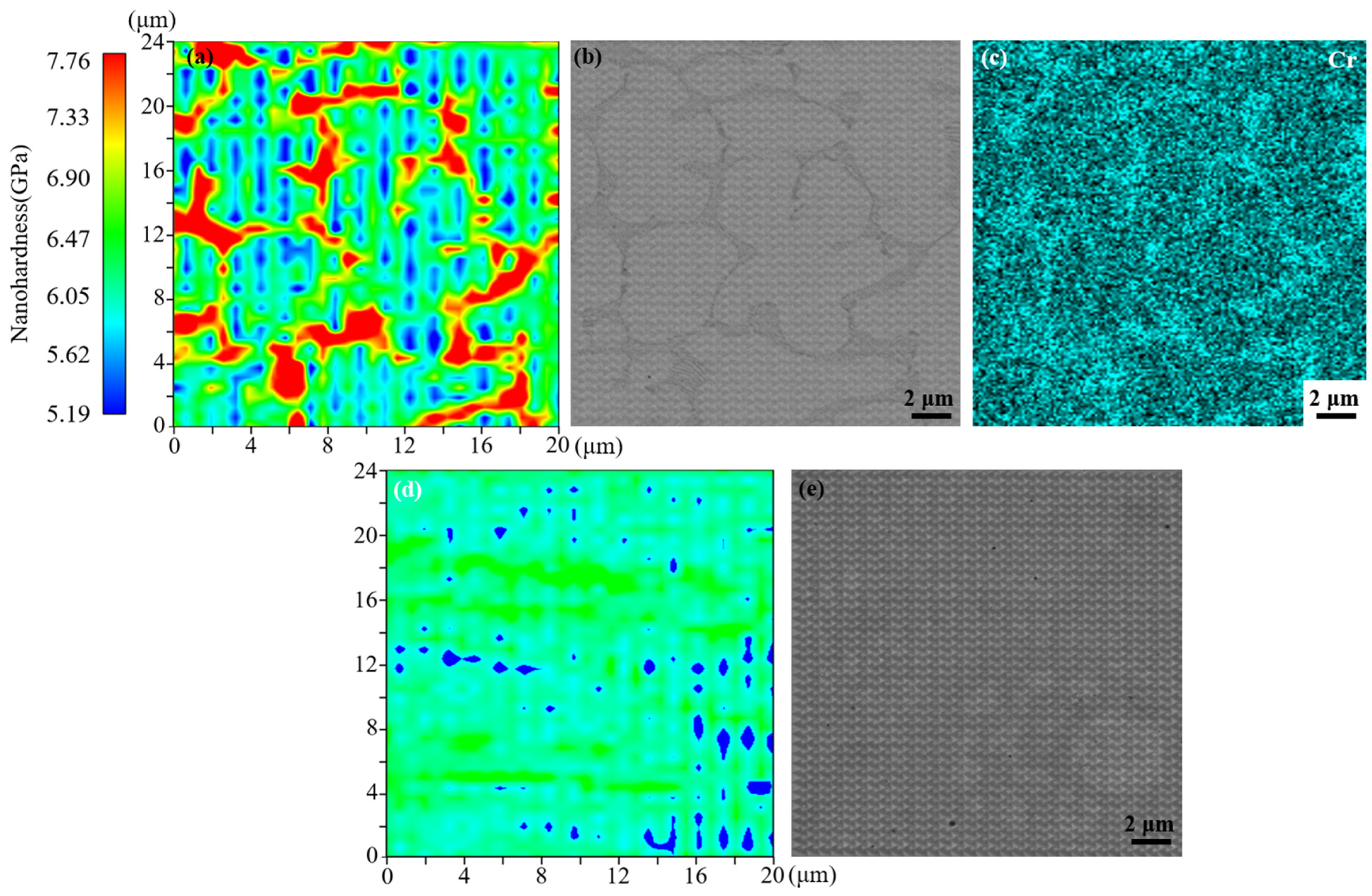
As shown in Figure 7a, the nanohardness within the selected area of C0 ranged from 5.19 GPa to 6.1 GPa. The average nanohardness is approximately 5.81 GPa. In contrast, as shown in Figure 7b, the corresponding values of the eutectic-like Cr7C3 structure and the matrix are 7.76 GPa and 5.93 GPa, respectively. Figure 7c,d indicate that the hardness distribution is highly coincident with the distribution of eutectic-like Cr7C3 and AlxCoCrFeNi matrix.

4. Discussion

Researchers have documented that the cavitation process consists of four sequential stages: material deformation, crack initiation, crack propagation, and material spalling [30]. Cavitation-resistant materials simultaneously require high modulus to resist material deformation and high toughness to delay the initiation of cracks and material spalling within localized regions.
Even though the C0 specimen has good ductility, its relatively low nanohardness (2.01 GPa) makes it difficult to resist the severe material deformation. As shown in Figure 4b and Figure 5e, large cavitation pits form on the surface of C0. Due to the solid solution of Al atoms that are generated from the decomposition of Cr2AlC, the Al0.3CoCrFeNi matrix is strongly strengthened by the solid solution effect. Simultaneously, the hard eutectic-like Cr7C3 microstructure (with nanohardness of 7.76 GPa) can effectively restrain the plastic deformation of the Al0.3CoCrFeNi matrix and inhibit the crack propagation. Consequently, as shown in Figure 4e and Figure 5f, C12 forms small cavitation pits after the erosion test. This phenomenon was also found in the previous studies about WC or TiCx reinforced metal matrix coatings. The formed hard skeleton structure around the metal grain boundaries strongly improved the wear and cavitation resistance [9,31,32]. In this work, as the formed Cr7C3 particles could pin the crack and the reinforced Al0.3CoCrFeNi matrix could limit the crack expansion, C12 exhibits the best cavitation resistance performance.

5. Conclusions

In this study, Cr2AlC/Al0.3CoCrFeNi high entropy alloy composite coatings with different additions of Cr2AlC were prepared by laser cladding. The phase composition, microstructure, hardness, and cavitation resistance performance were investigated. For keeping the single FCC Al0.3CoCrFeNi, the weight content of Cr2AlC cannot surpass 10.96%. Due to the in situ decomposition of Cr2AlC into Al and Cr7C3, the combination of solid solution strengthening effect and particle strengthening effect was successfully realized during the laser cladding process. The microhardness was enhanced from 2.01 GPa to 2.23 GPa, 2.65 GPa, and 2.89 GPa. In addition, Cr7C3 and FCC phase matrix formed a eutectic-like structure, which is distributed along grain boundaries. The nanohardnesses of the eutectic-like Cr7C3 structure and the matrix were measured as 7.76 GPa and 5.93 GPa in the Cr2AlC/Al0.3CoCrFeNi coating. Meanwhile, the nanohardness of the Al0.3CoCrFeNi coating is 5.81 GPa. Finally, the eutectic-like Cr7C3 structure plays the role of pinning the crack propagation, and the solid solution strengthened matrix could also resist the crack propagation. Cavitation erosion test indicates that the mass loss per square millimeter was reduced from 7.25 × 10⁻⁴ g/mm2 for Al0.3CoCrFeNi coating to 1.91 × 10⁻⁴ g/mm2 for Cr2AlC/Al0.3CoCrFeNi coating with a mass reduction ratio of 73.8%.

Author Contributions

W.Y. initiated and supervised the project. Y.M. and L.Z. prepared and characterized the samples and wrote the manuscript. J.L. and B.D. revised the manuscript. X.A. performed the characterization. All authors have read and agreed to the published version of the manuscript.

Funding

This work was financed by the Fundamental Research Funds for the Central Universities (No. 2024JBZY008) and the Joint Fund of the Equipment Development Department and the Ministry of Education (8091B020223).

Institutional Review Board Statement

Not applicable.

Informed Consent Statement

Not applicable.

Data Availability Statement

Data are contained within the article.

Conflicts of Interest

Author Bing Du was employed by the company China Academy of Machinery Science and Technology Group Co., Ltd. The remaining authors declare that the research was conducted in the absence of any commercial or financial relationships that could be construed as a potential conflict of interest.

References

  1. Luo, X.; Ji, B.; Tsujimoto, Y. A Review of Cavitation in Hydraulic Machinery. J. Hydrodyn. 2016, 28, 335–358. [Google Scholar] [CrossRef]
  2. Franc, J.-P.; Michel, J.-M. Cavitation Erosion Research in France: The State of the Art. J. Mar. Sci. Technol. 1997, 2, 233–244. [Google Scholar] [CrossRef]
  3. Qiao, Y.; Chen, J.; Zhou, H.; Wang, Y.; Song, Q.; Li, H.; Zheng, Z. Effect of Solution Treatment on Cavitation Erosion Behavior of High-Nitrogen Austenitic Stainless Steel. Wear 2019, 424–425, 70–77. [Google Scholar] [CrossRef]
  4. Krella, A.K. The Resistance of S235JR Steel to Cavitation Erosion. Wear 2020, 452, 203295. [Google Scholar] [CrossRef]
  5. E, M.; Hu, H.X.; Guo, X.M.; Zheng, Y.G. Comparison of the Cavitation Erosion and Slurry Erosion Behavior of Cobalt-Based and Nickel-Based Coatings. Wear 2019, 428–429, 246–257. [Google Scholar] [CrossRef]
  6. Zhao, T.; Wang, L.; Zhang, S.; Zhang, C.H.; Sun, X.Y.; Chen, H.T.; Bai, X.L.; Wu, C.L. Effect of Synergistic Cavitation Erosion-Corrosion on Cavitation Damage of CoCrFeNiMn High Entropy Alloy Layer by Laser Cladding. Surf. Coat. Technol. 2023, 472, 129940. [Google Scholar] [CrossRef]
  7. Krella, A. The Influence of TiN Coatings Properties on Cavitation Erosion Resistance. Surf. Coat. Technol. 2009, 204, 263–270. [Google Scholar] [CrossRef]
  8. Xu, Z.; Tian, Y.; Liu, X.; Yang, R.; Li, H.; Chen, X. Microstructure Evolution of the Laser Surface Melted WC-Ni Coatings Exposed to Cavitation Erosion. Tribol. Int. 2022, 173, 107615. [Google Scholar] [CrossRef]
  9. Zhu, Z.; Shi, W.; Huang, J. Microstructure and Mechanical Properties of TiC/WC-Reinforced AlCoCrFeNi High-Entropy Alloys Prepared by Laser Cladding. Crystals 2024, 14, 83. [Google Scholar] [CrossRef]
  10. Wei, Z.; Wu, Y.; Hong, S.; Cheng, J.; Qiao, L.; Cheng, J.; Zhu, S. Effect of WC-10Co on Cavitation Erosion Behaviors of AlCoCrFeNi Coatings Prepared by HVOF Spraying. Ceram. Int. 2021, 47, 15121–15128. [Google Scholar] [CrossRef]
  11. Yin, D.; Chang, J.; Wang, Y.; Ma, N.; Zhao, J.; Zhao, H.; Wang, M. Effect of ZrO2 Particles on the Microstructure and Ultrasonic Cavitation Properties of CoCrFeMnNi High-Entropy Alloy Composite Coatings. Coatings 2024, 14, 1235. [Google Scholar] [CrossRef]
  12. Zhou, J. Friction–Wear Performances and Oxidation Behaviors of Ti3AlC2 Reinforced Co–Based Alloy Coatings by Laser Cladding. Surf. Coat. Technol. 2021, 408, 126816. [Google Scholar] [CrossRef]
  13. Xu, H.; Fu, T.; Wang, P.; Zhou, Y.; Guo, W.; Su, F.; Li, G.; Xing, Z.; Ma, G. Microstructure and Properties of Plasma Sprayed Copper-Matrix Composite Coatings with Ti3SiC2 Addition. Surf. Coat. Technol. 2023, 460, 129434. [Google Scholar] [CrossRef]
  14. Grieseler, R.; Camargo, M.K.; Hopfeld, M.; Schmidt, U.; Bund, A.; Schaaf, P. Copper-MAX-Phase Composite Coatings Obtained by Electro-Co-Deposition: A Promising Material for Electrical Contacts. Surf. Coat. Technol. 2017, 321, 219–228. [Google Scholar] [CrossRef]
  15. Filimonov, D.; Gupta, S.; Palanisamy, T.; Barsoum, M.W. Effect of Applied Load and Surface Roughness on the Tribological Properties of Ni-Based Superalloys Versus Ta2AlC/Ag or Cr2AlC/Ag Composites. Tribol. Lett. 2009, 33, 9–20. [Google Scholar] [CrossRef]
  16. Chen, W. A Review of Novel Ternary Nano-Layered MAX Phases Reinforced AZ91D Magnesium Composite. J. Magnes. Alloys 2022, 10, 1457–1475. [Google Scholar] [CrossRef]
  17. Ma, C. Atomic Level Out-Diffusion and Interfacial Reactions of MAX Phases in Contact with Metals and Air. J. Eur. Ceram. Soc. 2024, 44, 1–22. [Google Scholar] [CrossRef]
  18. Yu, W. Effects of A-Site Atoms in Ti2AlC and Ti3SiC2 MAX Phases Reinforced Mg Composites: Interfacial Structure and Mechanical Properties. Mater. Sci. 2021, 826, 141961. [Google Scholar] [CrossRef]
  19. Jiang, J.; Li, D.Y. Effect of 211 MAX Phase Ti2AlC in Situ Formed TiCx on Properties of High Chromium White Iron. Mater. Lett. 2023, 352, 135112. [Google Scholar] [CrossRef]
  20. Jiao, Y.; Huang, Z.; Hu, W.; Li, X.; Yu, Q.; Wang, Y.; Zhou, Y.; Dastan, D. In-Situ Hybrid Cr3C2 and Γ′-Ni3(Al, Cr) Strengthened Ni Matrix Composites: Microstructure and Enhanced Properties. Mater. Sci. Eng. A 2021, 820, 141524. [Google Scholar] [CrossRef]
  21. Tian, Y.; Liu, J.; Xue, M.; Zhang, D.; Wang, Y.; Geng, K.; Dong, Y.; Yang, Y. Structure and Corrosion Behavior of FeCoCrNiMo High-Entropy Alloy Coatings Prepared by Mechanical Alloying and Plasma Spraying. Int. J. Miner. Metall. Mater. 2024, 31, 2692–2705. [Google Scholar] [CrossRef]
  22. Zhang, M.; Hou, J.; Yang, H.; Tan, Y.; Wang, X.; Shi, X.; Guo, R.; Qiao, J. Tensile Strength Prediction of Dual-Phase Al0.6CoCrFeNi High-Entropy Alloys. Int. J. Miner. Metall. Mater. 2020, 27, 1341–1346. [Google Scholar] [CrossRef]
  23. Chen, Z.; Huang, K.; Zhang, B.; Xia, J.; Wu, J.; Zhang, Z.; Huang, Y. Corrosion Engineering on AlCoCrFeNi High-Entropy Alloys toward Highly Efficient Electrocatalysts for the Oxygen Evolution of Alkaline Seawater. Int. J. Miner. Metall. Mater. 2023, 30, 1922–1932. [Google Scholar] [CrossRef]
  24. Joseph, J.; Stanford, N.; Hodgson, P.; Fabijanic, D.M. Tension/Compression Asymmetry in Additive Manufactured Face Centered Cubic High Entropy Alloy. Scr. Mater. 2017, 129, 30–34. [Google Scholar] [CrossRef]
  25. Li, Z.; Jing, C.; Feng, Y.; Wu, Z.; Lin, T.; Zhao, J. Phase Evolution and Properties of AlxCoCrFeNi High-Entropy Alloys Coatings by Laser Cladding. Mater. Today Commun. 2023, 35, 105800. [Google Scholar] [CrossRef]
  26. Sui, Q.; Wang, Z.; Wang, J.; Xu, S.; Yuan, Q.; Wen, H.; Xiao, T.; Liu, J. Phase Evolution and Mechanical Properties of AlxCoCrFeNi High-Entropy Alloys by Directed Energy Deposition. Mater. Charact. 2023, 204, 113217. [Google Scholar] [CrossRef]
  27. Niu, P.; Li, R.; Fan, Z.; Cao, P.; Zheng, D.; Wang, M.; Deng, C.; Yuan, T. Inhibiting Cracking and Improving Strength for Additive Manufactured Al CoCrFeNi High Entropy Alloy via Changing Crystal Structure from BCC-to-FCC. Addit. Manuf. 2023, 71, 103584. [Google Scholar] [CrossRef]
  28. Lyu, Z.; Liu, C.; Xie, D.; Feng, R.; Yu, D.; Chen, Y.; An, K.; Gao, Y.; Wang, H.; Liaw, P.K. Low Cycle Fatigue Performances of Al0.3CoCrFeNi High Entropy Alloys: In Situ Neutron Diffraction Studies on the Precipitation Effects. Intermetallics 2024, 168, 108241. [Google Scholar] [CrossRef]
  29. ASTM G32-16; Standard Test Method for Cavitation Erosion Using Vibratory Apparatus. ASTM International: West Conshohocken, PA, USA, 2021.
  30. Franc, J.-P.; Michel, J.-M. Fundamentals of Cavitation; Fluid Mechanics and Its Applications; Springer: Dordrecht, The Netherlands, 2005; Volume 76, ISBN 978-1-4020-2232-6. [Google Scholar]
  31. Tian, Y.; Yang, R.; Gu, Z.; Zhao, H.; Wu, X.; Dehaghani, S.T.; Chen, H.; Liu, X.; Xiao, T.; McDonald, A.; et al. Ultrahigh Cavitation Erosion Resistant Metal-Matrix Composites with Biomimetic Hierarchical Structure. Compos. Part B Eng. 2022, 234, 109730. [Google Scholar] [CrossRef]
  32. Gao, Z.-T.; Wang, R.-Q.; Ke, L.-C.; Liu, Y.; Gao, Z.-M.; Zhang, C.-W.; Yu, Y. Morphology Distribution and Corrosion Resistance of In-Situ TiC/CoCrFeNi High-Entropy Alloy Coating. Mater. Charact. 2025, 224, 115078. [Google Scholar] [CrossRef]
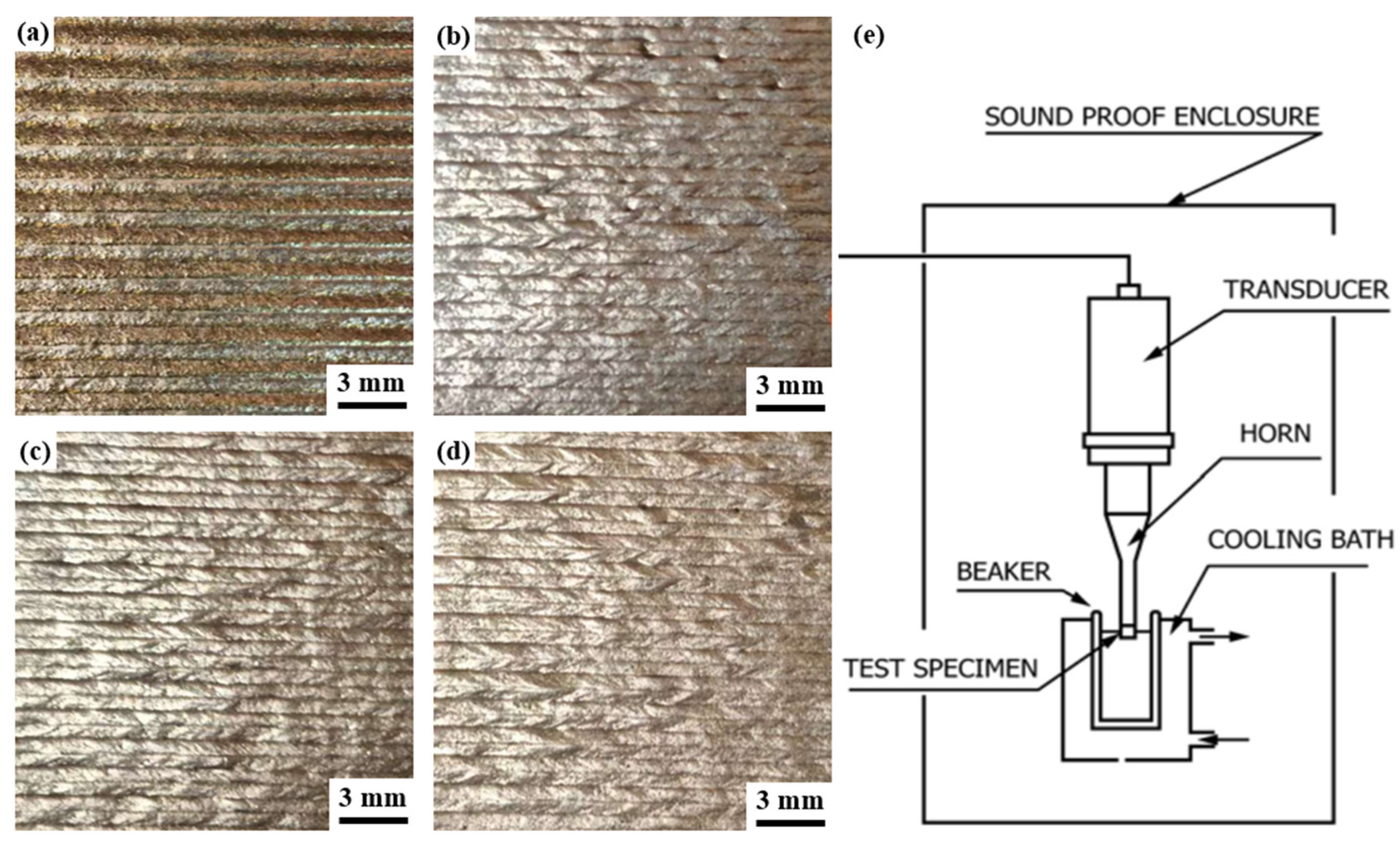
Figure 1. (ad) The surface macroscopic morphology of C0, C5, C9, and C12, (e) the typical cavitation erosion test equipment according to the ASTM G32-16 standard [29].
Coatings 15 01469 g001
Figure 2. (ad) The SEM images of the cross section of C0, C5, C9, and C12, (ei) the corresponding EDS mapping of Al, Cr, Fe, Co, Ni in C12.
Coatings 15 01469 g002
Figure 3. (a) The STEM micrograph of the eutectic zone in C12 cladding and its corresponding EDS mapping (b), (c) the BF TEM micrograph of Cr7C3 particles in matrix with their corresponding (d,e) SAED patterns.
Coatings 15 01469 g003
Figure 4. (a) The white light interference results before cavitation erosion test, (be) the surface of C0, C5, C9, and C12 after 12 h cavitation erosion test, (f) the cumulative mass loss per square millimeter vs. exposure time.
Coatings 15 01469 g004
Figure 5. (ad) The SEM of surface morphology after cavitation erosion of C0, C5, C9, and C12 composite coatings, (e,f) the cross-section of a single cavitation erosion pit of C0 and C12.
Coatings 15 01469 g005
Figure 6. (a) XRD spectrum and (b) microhardness of C0, C5, C9, and C12.
Coatings 15 01469 g006
Figure 7. Nanohardness contour maps of (a) C12 and (d) C0, the corresponding SEM image of (b) C12 and (e) C0, and (c) Cr elemental mapping of the same region in (b).
Coatings 15 01469 g007
Table 1. The specific chemical composition of the matrix and Al0.3CoCrFeNi powder.
Wt.%AlCoCrFeNiMo
00Cr13Ni4Mo0013.5Bal.4.52.0
Al0.3CoCrFeNi3.4825.3422.3624.0225.240
Table 2. The specific element composition of points A, B, C, and D in Figure 2.
Wt.%AlCoCrFeNi
Point A3.2024.322.8024.8024.90
Point B3.5022.1922.6425.1326.54
Point C3.8719.4525.7625.6225.30
Point D4.1519.1331.1026.7618.88
Disclaimer/Publisher’s Note: The statements, opinions and data contained in all publications are solely those of the individual author(s) and contributor(s) and not of MDPI and/or the editor(s). MDPI and/or the editor(s) disclaim responsibility for any injury to people or property resulting from any ideas, methods, instructions or products referred to in the content.