Article

Effect of Different Acid Treatments on the Properties of NiCoOx for CO-Catalyzed Oxidation

1
School of Electrical and Electric Engineering, Wuhan Polytechnic University, Wuhan 430048, China
2
School of Mechanical Engineering, Wuhan Polytechnic University, Wuhan 430048, China
3
School of Materials Science and Engineering, State Key Laboratory of Material Processing and Die & Mould Technology, Huazhong University of Science and Technology, Wuhan 430074, China
*
Author to whom correspondence should be addressed.
Coatings 2025, 15(12), 1463; https://doi.org/10.3390/coatings15121463 (registering DOI)
Submission received: 12 November 2025 / Revised: 7 December 2025 / Accepted: 8 December 2025 / Published: 10 December 2025

Abstract

In this study, NiCo2O4 spinel catalysts were synthesized via the coprecipitation method. These catalysts were modified using 1 mol/L HCl, H2SO4, and HNO3, and their CO oxidation performance and sulfur tolerance were systematically investigated. The physicochemical properties of the catalysts were characterized by XRD, SEM, BET, H2-TPD, CO-TPD, O2-TPD, in situ DRIFTS, and XPS. The results indicate that the sulfur resistance of NiCo2Ox catalysts was improved to varying degrees after different acid treatments. Notably, the HCl-treated NiCo2Ox catalysts exhibited significantly increased chemisorbed oxygen content, more active sites, and superior low-temperature catalytic oxidation performance and sulfur resistance, achieving a CO conversion rate of 96.67% at 90 °C. However, when exposed to 350 mg/m3 SO2 (10 times the industrial emission standard) for 260 min, the CO catalytic performance of all acid-treated catalysts decreased to varying degrees or even completely deteriorated. Only the HCl-treated NiCo2Ox catalyst demonstrated the best performance.

1. Introduction

Carbon monoxide (CO) is the most emitted gaseous pollutant in China, mainly derived from industrial emissions, vehicle exhaust, and the incomplete combustion of fossil fuels [1,2]. Industrial CO emissions primarily stem from incomplete combustion in industrial production processes, with the steel production being a major contributor. During steelmaking, the main air pollutants include CO, SO2, nitrogen oxides (NOx), and particulate matter (PM) [3]. The concentration of CO is 800, 228, and 160 times higher than that of SO2, NOx, and PM, respectively [4]. Studies have shown that converting CO into non-toxic CO2 through catalytic oxidation technology is the simplest, most practical, and economical approach to mitigating CO pollution. However, in actual exhaust emissions, CO is usually accompanied by SO2 [5]. Therefore, developing low-temperature CO oxidation catalysts with excellent stability holds significant importance.
Common materials for catalysts include precious metals and non-precious metals. Precious metal catalysts (e.g., Au, Pd, Pt.) [6,7,8] exhibit excellent catalytic activity and stability in CO catalytic oxidation at ambient temperatures and below freezing. However, precious metals are expensive, making it necessary to develop high-performance non-precious metal alternatives. Cobalt-based and nickel-based catalysts are regarded as promising alternatives to precious metals. Among them, Co3O4 is the most active in Co-based oxidation catalysts, showing excellent activity and stability under low-temperature dry conditions [9]. Gu et al. [10] synthesized a series of mesoscopically ordered, crystalline spinel-type metal oxides (Co3O4, CuCo2O4, CoCr2O4, and CoFe2O4). Their results indicated that the Co3O4 catalyst exhibited the best performance, achieving approximately 30% CO conversion at −50 °C. With increasing temperature, the CO conversion rate increased, reaching 50% at −38 °C and gradually achieving 100% CO conversion at approximately 140 °C. The excellent catalytic performance of NiO originates from its ultra-high porosity both within and between particles, combined with the high dispersion of nickel metal particles on the catalyst surface—this contributes to its strong CO oxidation ability [11]. Dey et al. [12] investigated nickel-based catalysts including NiOx, Ni/Al2O3, Ni-Co-O, NiFeO4, and Ni/TiO2. Their results showed that the most effective Ni/TiO2 catalyst achieved 100% conversion at 50 °C.
To improve the catalytic performance of catalysts, acid treatment serves as a highly effective modification method that enhances the oxygen migration rate of metal oxide catalysts [13]. Its low cost and convenient preparation characteristics make it more suitable for industrial applications. Dang et al. [14] investigated the effect of acid treatment on the preferential oxidation of CO by CuO/Cryptomelane (CuO/CR) under hydrogen-rich conditions. They treated the CR support with hydrochloric acid and prepared the corresponding CuO/CR catalyst using the incipient wetness impregnation method. Compared with the pristine CuO/CR and water-treated CuO/CRW catalysts, the acid-treated CuO/CRH catalyst exhibited the highest catalytic activity, achieving nearly 100% CO conversion at 110 °C and maintaining this performance for at least 100 h. This enhancement arises from the reduction in K+ content in the CuO/CRH catalyst induced by acid treatment, which promotes the formation of more oxygen vacancies and enhances the reducibility of the catalyst. This mechanism underlies the high catalytic activity of the acid-treated catalyst. Yang et al. [15] modified LaFeO3 (denoted as LFO) using nitric acid solution. The CO oxidation activity of the modified LFO increased slightly as the nitric acid concentration increased. Additionally, nitric acid-treated LaFeO3 (LFO-H) exhibited better CO oxidation activity than the acetic acid-treated LaFeO3. The acidified catalyst LFO-H also exhibited superior CO oxidation performance after calcination at 600 °C, primarily due to air activation at high temperatures. Additionally, a 20 h durability test of LFO-H at 260 °C showed no decrease in its CO oxidation activity.
Currently, there is limited research on the effect of acid treatment on the CO catalytic oxidation performance of catalysts. Furthermore, most of these studies only focus on the catalytic activity toward pure CO. However, in actual industrial production, CO-containing tail gas is usually accompanied by impurity gases (e.g., SO2), which can lead to catalyst poisoning. This reduces catalytic efficiency and may even cause complete catalyst deactivation. According to China’s steel industry emission standards, SO2 gas concentration must not exceed 35 mg/m3 [3]. To address this industrial challenge, this study increased the SO2 concentration to 350 mg/m3 (10 times the standard limit) to accelerate the evaluation of catalyst performance and investigate the catalytic performance of NiCo2Ox spinel catalysts modified via different acidification processes in SO2-containing CO tail gas. The NiCo2Ox spinel catalyst was prepared using the coprecipitation method, followed by modification with three different acids (HCl, H2SO4, HNO3) at a concentration of 1 mol/L. The changes in phase structure, morphology, and specific surface area of the acid-treated catalysts were investigated, along with their effects on CO catalytic efficiency and stability. Considering that all acid-treated samples, compared with the unmodified catalyst, have undergone an additional water treatment step, a reference sample treated only with water and then dried was prepared, denoted as NiCo2Ox-H2O.

2. Experimental Method

2.1. Catalyst Preparation and Acidic Modification Treatment

Preparation of Ni-Co spinel catalyst via the co-precipitation method: Weigh 8.3 g of C4H6NiO4·4H2O and 16.6 g of C4H6CoO4·4H2O separately, dissolved them in 150 mL of deionized water and stirring thoroughly at room temperature for 30 min. Label Solution A. Weigh 9.54 g of Na2CO3 and 3.2 g of NaOH separately, dissolve them in 200 mL and 40 mL of deionized water, respectively, and stir thoroughly at room temperature for 30 min; these are labeled Solution B and Solution C, respectively. Under a 60 °C water bath, add Solution A dropwise to Solution B while stirring at 200 rpm using a magnetic stirrer. During this process, adjust the pH with Solution C and maintain the pH at approximately 10 by controlling the rate of Solution C addition. After the reaction completes, continue stirring for 1 h. Then, allow the resulting precipitate to settle at 60 °C for 18 h. Wash the precipitate with deionized water using vacuum filtration until the filtrate reaches a neutral pH (6.8–7.2). Place the resulting product in an oven and dry at 120 °C for 12 h. After cooling, transfer the product to a muffle furnace and calcine at a heating rate of 2 °C/min to 600 °C for 6 h. Press the calcined crystalline particles into tablets, then grind and sieve them, and select particles with a particle size of 40–60 mesh. The final product is nickel–cobalt spinel oxide, denoted as NiCo2O4.
Take an appropriate amount of the prepared NiCo2Ox catalyst sample and place it in a beaker. Then, add a mixture of deionized water and 1 mol/L acidic solution (i.e., HCl, HNO3, H2SO4) at a liquid-to-solid ratio of 10:1 (mL/g). Place the mixture on a magnetic stirrer and stir it for 3 h. Subsequently, filter the mixture and wash the filter cake with deionized water until it is neutral. Dry the filter cake in an oven at 105 °C for 12 h, then grind it to 40–60 mesh to obtain the modified NiCo2O4 catalysts, which are designated as NiCo2Ox-HCl, NiCo2Ox-HNO3, and NiCo2Ox-H2SO4, respectively. The above experimental tests were repeated three times.

2.2. Catalyst Activity Test

The CO removal performance was tested in an integrated catalyst activity evaluation unit at GASMET, Vantaa, Finland. The catalyst was loaded into a stainless-steel reaction tube. The simulated flue gas flow rate was 1 L/min, with a gas-phase space velocity (GHSV) of 30,000 h−1. The gas composition comprised 6000 ppm CO, 16% O2, and the balance being N2. The temperature was gradually raised from 40 °C to 180 °C using an electric furnace, with measurements taken at 20 °C intervals. At each temperature point, the system was held for 10 min after all gas components had stabilized. The outlet CO concentration was monitored in real-time using a portable Fourier transform infrared (FTIR) multi-component gas analyzer. The CO removal efficiency (%) was calculated using the following formula:
CO   removal   efficient   =   [ C O ] i n [ C O ] o u t [ C O ] i n × 100 %

2.3. Characterization of Catalysts

The composition of the physical phases was tested using a D8 ADVANCE X-ray diffractometer (XRD) from Bruker, Karlsruhe, Germany, with a scanning range of 5–75°, a scanning speed of 5°/min, and a step size of 0.02. The elemental valence states, composition, and content on the catalyst surface were tested using a K-Alpha X-ray Photoelectron Spectrometer (XPS) from Thermo Fisher Scientific Inc., Waltham, MA, USA. The agglomeration and sintering of the catalyst samples were observed using a Tescan Mira4 field-emission scanning electron microscope (SEM) from Brno, Czech Republic. Programmed thermal reduction in H2 (H2-TPR) and programmed thermal desorption of CO (CO-TPD) were carried out using the Autochem II 2920, Micromeritics Instruments Corporation, Norcross, GA, USA. The species on the catalyst surface, as well as the adsorbed species, were tested using a Nicolet iS20 Fourier transform infrared spectrometer (in situ DRIFTS) from Thermo Fisher Scientific Inc., Waltham, MA, USA. The above experimental tests were repeated three times (Table 1).

3. Results and Discussion

3.1. XRD Characterization Results for Catalysts

The XRD patterns of NiCo2O4 catalysts under different modification treatments are shown in Figure 1. Analysis of the results shows that, compared with the unmodified catalyst, acid-modified samples form both NiCo2O4 and Co3O4. The intensities of the diffraction peaks of NiCo2O4 and Co3O4 in these samples remain unchanged, and no extra impurity diffraction peaks are observed. A NiO secondary phase exists in the NiCo2O4 catalyst; NiO particles tend to agglomerate and cover the surface of NiCo2O4, thereby reducing the catalyst specific surface area [16]. In contrast, the NiCo2Ox-HNO3 and NiCo2Ox-HCl catalysts exhibit a decrease in the intensity of NiO diffraction peaks at 2θ = 43.30° and 62.92°, while the NiO diffraction peaks disappear after H2SO4 modification. This indicates that acid treatment effectively exposes the active sites of the NiCo2O4 bulk phase by dissolving the agglomerated NiO secondary phase on the catalyst surface. Wang et al. investigated the effect of different element dopings on the properties of NiCo2Ox composite metal oxides; after Fe adding, the NiO secondary phase decreased, and the specific surface area increased compared with the undoped sample. Combined with catalytic performance data, the CO conversion rate of the Fe-added catalyst is significantly higher than that of the undoped sample, indicating a negative correlation between the presence of NiO and the catalytic activity of NiCo2O4 [17].

3.2. Catalytic Performance and Sulfur Tolerance of Modified NiCo2O4

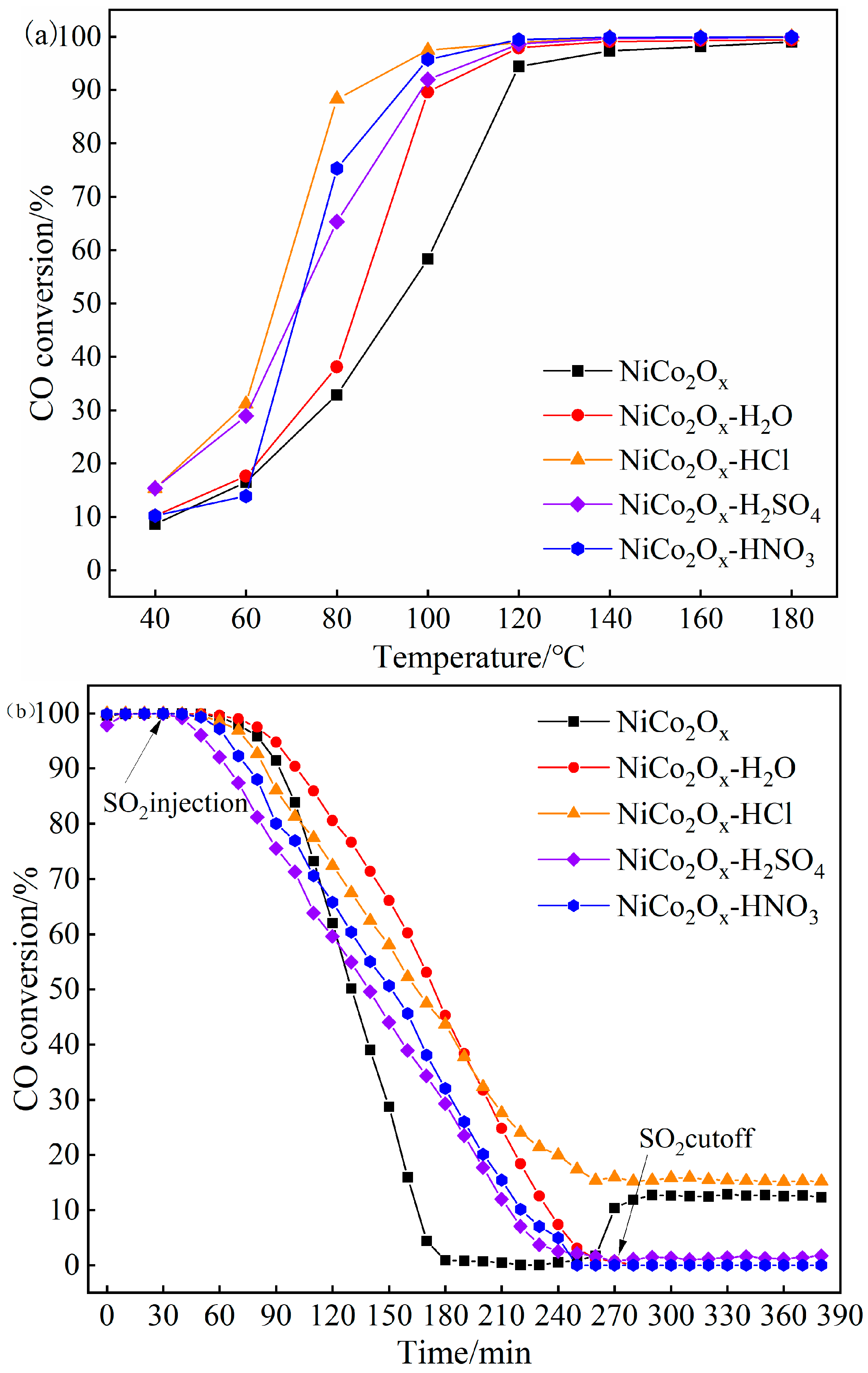
Figure 2 shows the CO activity reaction profile of the modified NiCo2O4 catalyst. Figure 2a shows that all acid-modified catalysts display better low-temperature CO catalytic activity than the unmodified NiCo2O4. Among these, the NiCo2O4-HCl catalyst attains the highest CO conversion rate of 96.67% at 90 °C. The NiCo2O4-HNO3-modified catalyst shows relatively inferior catalytic performance. Figure 2b shows that NiCo2O4 catalysts modified with H2SO4 and HNO3 exhibited delayed complete poisoning by SO2 by approximately 1.5 h, indicating enhanced sulfur resistance. The NiCo2O4-HCl catalyst shows optimal SO2 resistance. After 4 h of exposure to 350 mg/m3 SO2, the catalytic activity of all catalysts decreased to varying extents. Only the NiCo2O4-HCl catalyst maintained a certain CO conversion rate. As a volatile strong acid, HCl reacts with metal oxides to form metal chlorides, most of which are highly soluble in water. Hydrochloric acid can enhance the accessibility of the catalyst’s active sites by removing low-activity components, and the resulting products are easily removable without causing surface contamination. In relevant studies, after HCl leaching of similar Ni-Mo sulfide catalysts, impurities such as NiSx can be removed without residues, confirming the “clean treatment” characteristic of HCl [18]. Thus, compared with other acid treatments, hydrochloric acid treatment can reduce sulfation and mitigate structural damage to the catalyst.

3.3. SEM Analysis

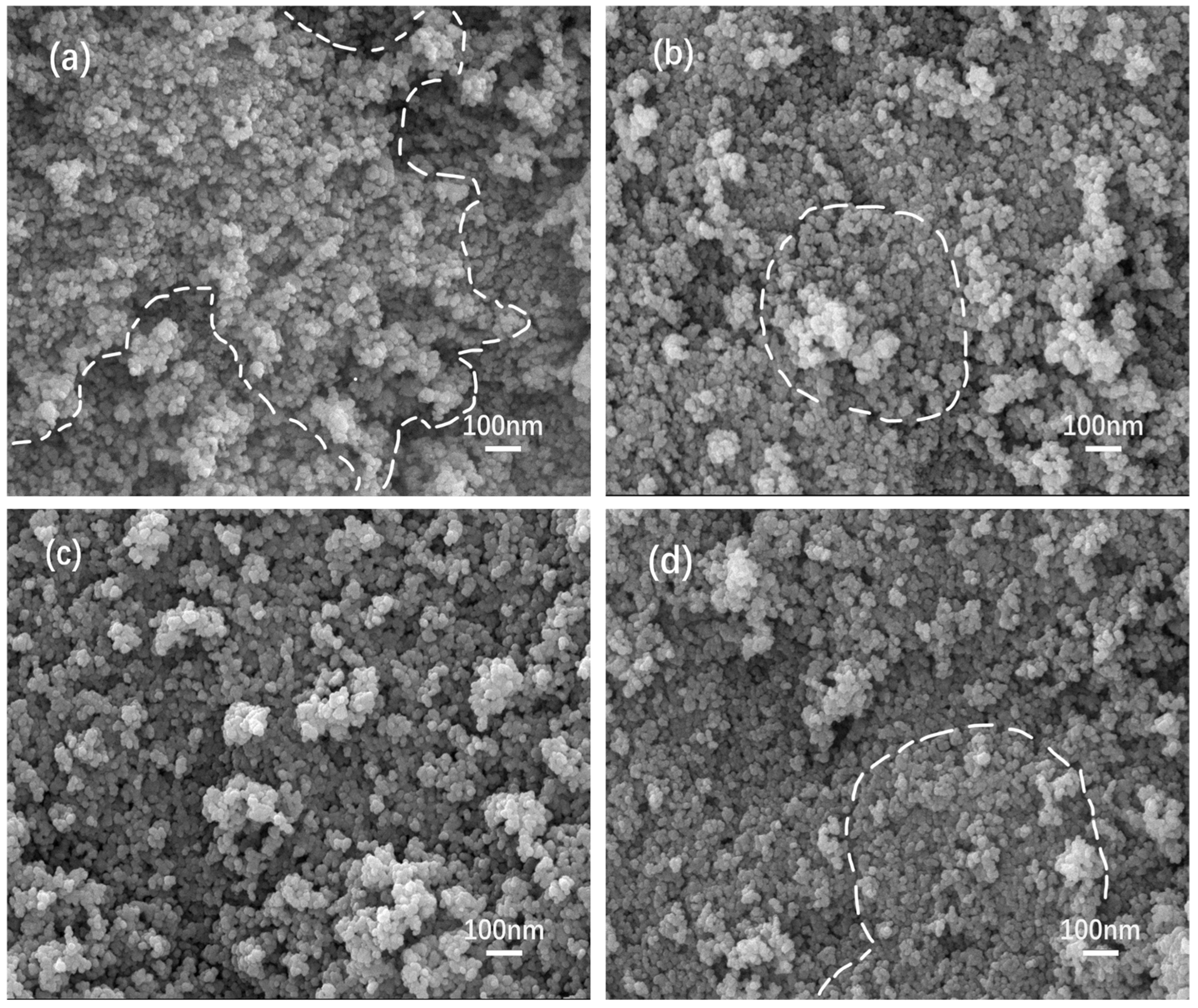
Surface morphology analysis of acid-treated NiCo2Ox composite oxide catalysts is presented in Figure 3. The NiCo2Ox-HNO3, NiCo2Ox-H2SO4, and NiCo2Ox-HCl catalysts exhibit extensive particle agglomeration over large surface areas (denoted by dashed lines in Figure 3a and 3b, respectively, corresponding to the agglomerated and caked regions of the catalysts). Agglomerated particles and caked areas are significantly accumulated on these catalysts, which reduces the exposure of active sites and thus decreases the contact area for catalytic reactions, potentially resulting in lowered catalytic efficiency. In contrast, although agglomeration was observed on the surface of the NiCo2Ox-HCl catalyst, caking was significantly alleviated. The overall morphology exhibited a compact, spherical cluster-like distribution with more uniform particle dispersion and richer surface topography, which is more favorable to the catalytic oxidation of CO.

3.4. BET Characterization of Catalysts

The detailed BET test procedure is as follows: A 0.15 g portion of the catalyst was loaded into a spherical tube, which was then mounted on a degassing station and pretreated at 120 °C for 2 h. After pretreatment, the sample was weighed. A packing rod was inserted into the weighed spherical tube, which was subsequently installed on an analysis station. Desorption experiments of the catalyst were then performed under liquid nitrogen conditions (−196 °C).
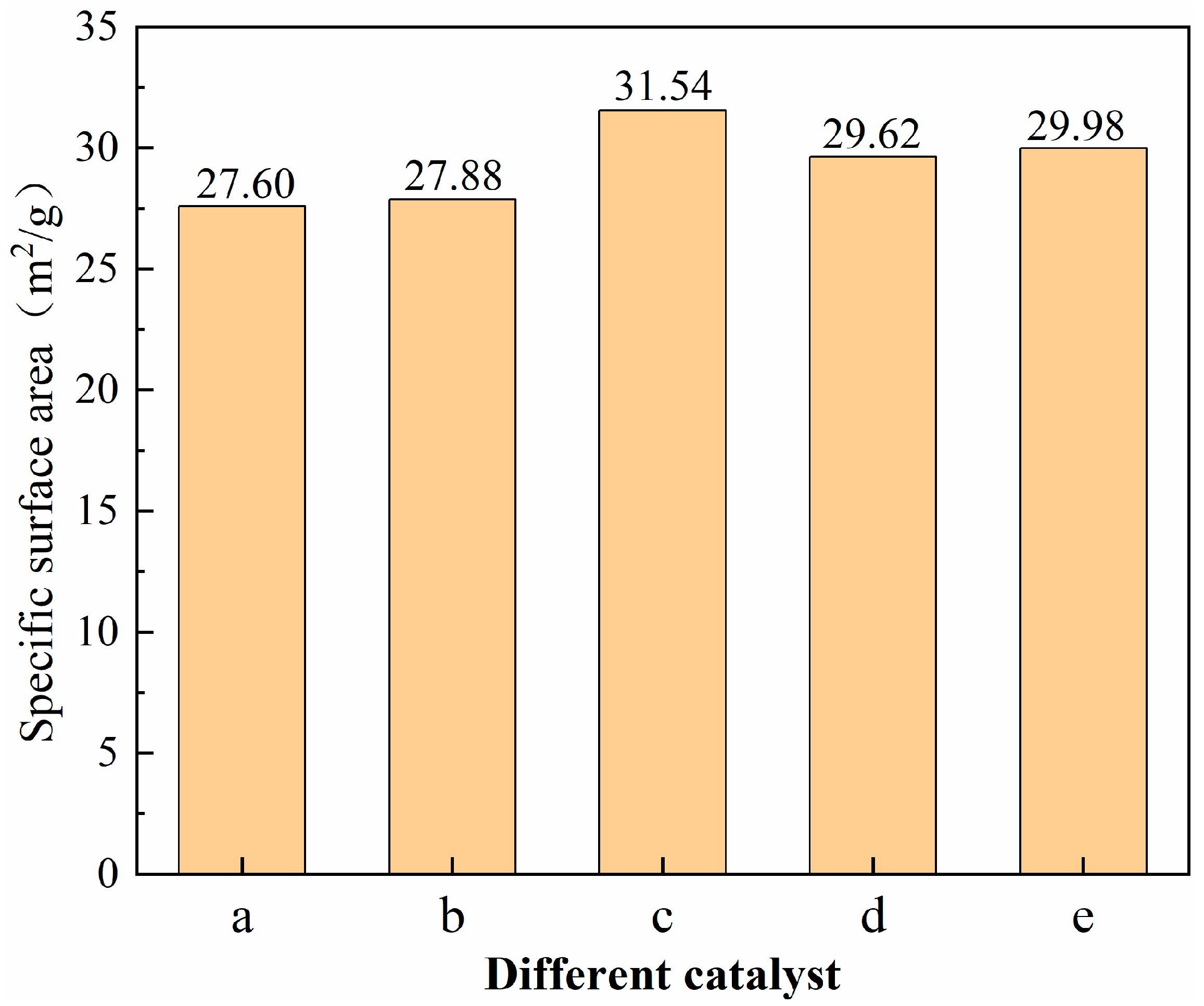
Figure 4 shows the BET results of the modified NiCo2O4 catalysts. Among them, the NiCo2Ox-HCl catalyst exhibits the largest specific surface area (31.54 m2/g), which facilitates oxidation reactions and improves CO catalytic activity. The specific surface areas of the NiCo2Ox-HNO3, NiCo2Ox-H2SO4, and NiCo2O4-H2O catalysts were 29.98 m2/g, 29.62 m2/g, and 27.88 m2/g, respectively, all showing varying degrees of increase compared with the specific surface area (27.59 m2/g) of the unmodified NiCo2Ox. A larger specific surface area implies a higher density of active sites, making NiCo2Ox-HCl the most efficient catalyst for CO conversion.

3.5. Characterization of Catalyst H2 Temperature Programmed Reduction (H2-TPR)

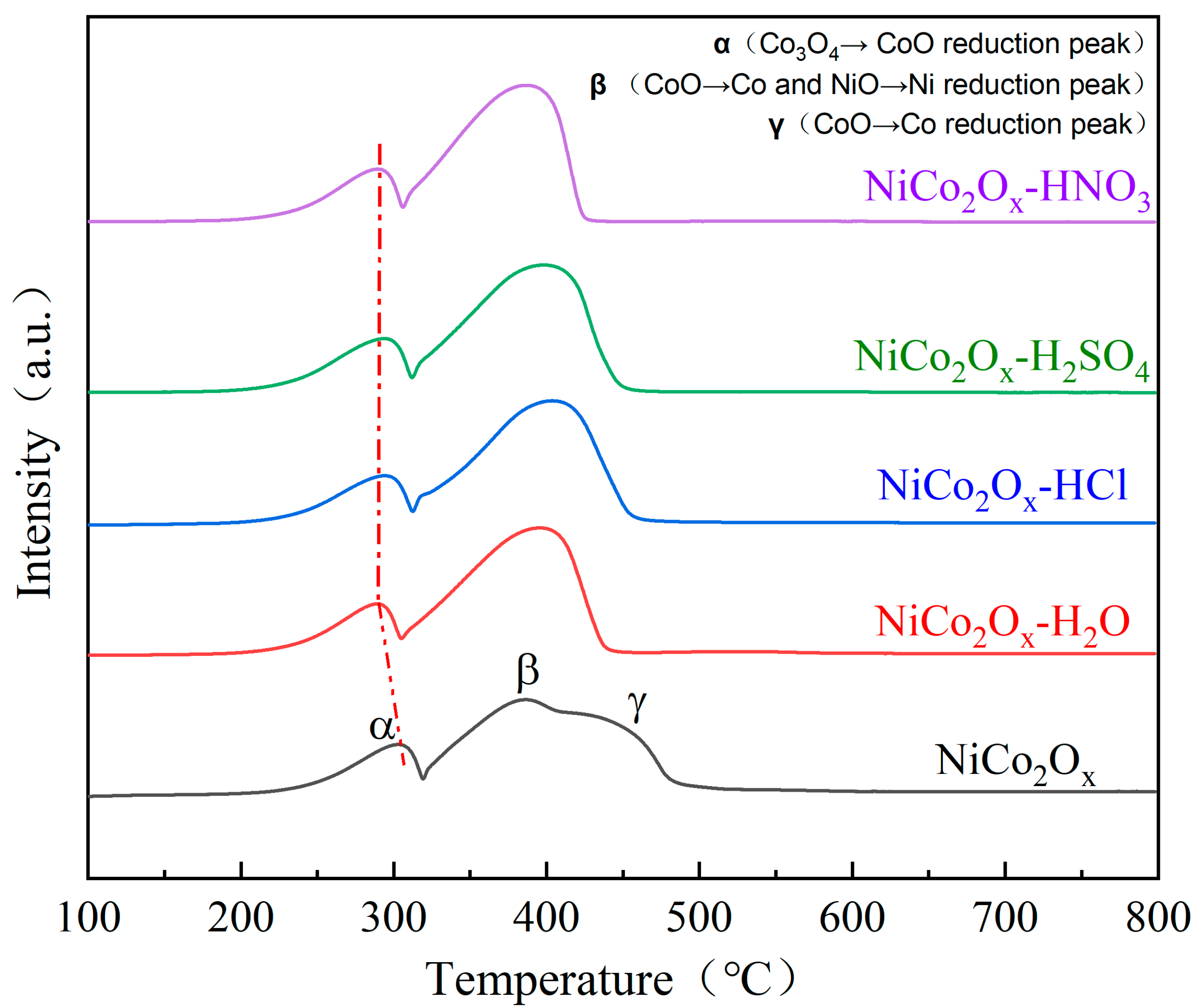
Figure 5 presents the H2-TPD characterization spectrum of the NiCo2O4 catalyst after modification. The reduction process of cobalt tetroxide (Co3O4) exhibits two reduction peaks, corresponding to Co3O4 being reduced to cobalt oxide (CoO) at 300 °C and CoO being reduced to metallic cobalt (Co0) at 430 °C [19]; a broad peak at 317 °C appears during Co3O4 reduction, which is wider than the reduction peak of CoO, indicating the occurrence of the two-step reduction reaction of Co3+→Co2+→Co0 [20]. It can be seen that the samples all show similar reduction curves in the range of 200 –500 °C, indicating that these samples have similar Co3+ reduction modes. However, for the modified NiCo2O4 catalyst, the first reduction peak shifts significantly to the left, indicating that the reduction temperature of Co3+→Co2+ becomes lower. Hydrogen consumption data are listed in Table 2. Notably, all acid-modified samples exhibit a significant increase in hydrogen consumption, featuring lower reduction temperatures and higher hydrogen consumption. Among these, the NiCo2O4-HCl catalyst demonstrates the highest hydrogen consumption (12.92 mmol/g), indicating the excellent abundance of reducible active species and oxygen vacancies, thereby contributing to its favorable CO catalytic performance.

3.6. Characterization of Catalyst with CO Temperature-Programmed Desorption (CO-TPD)

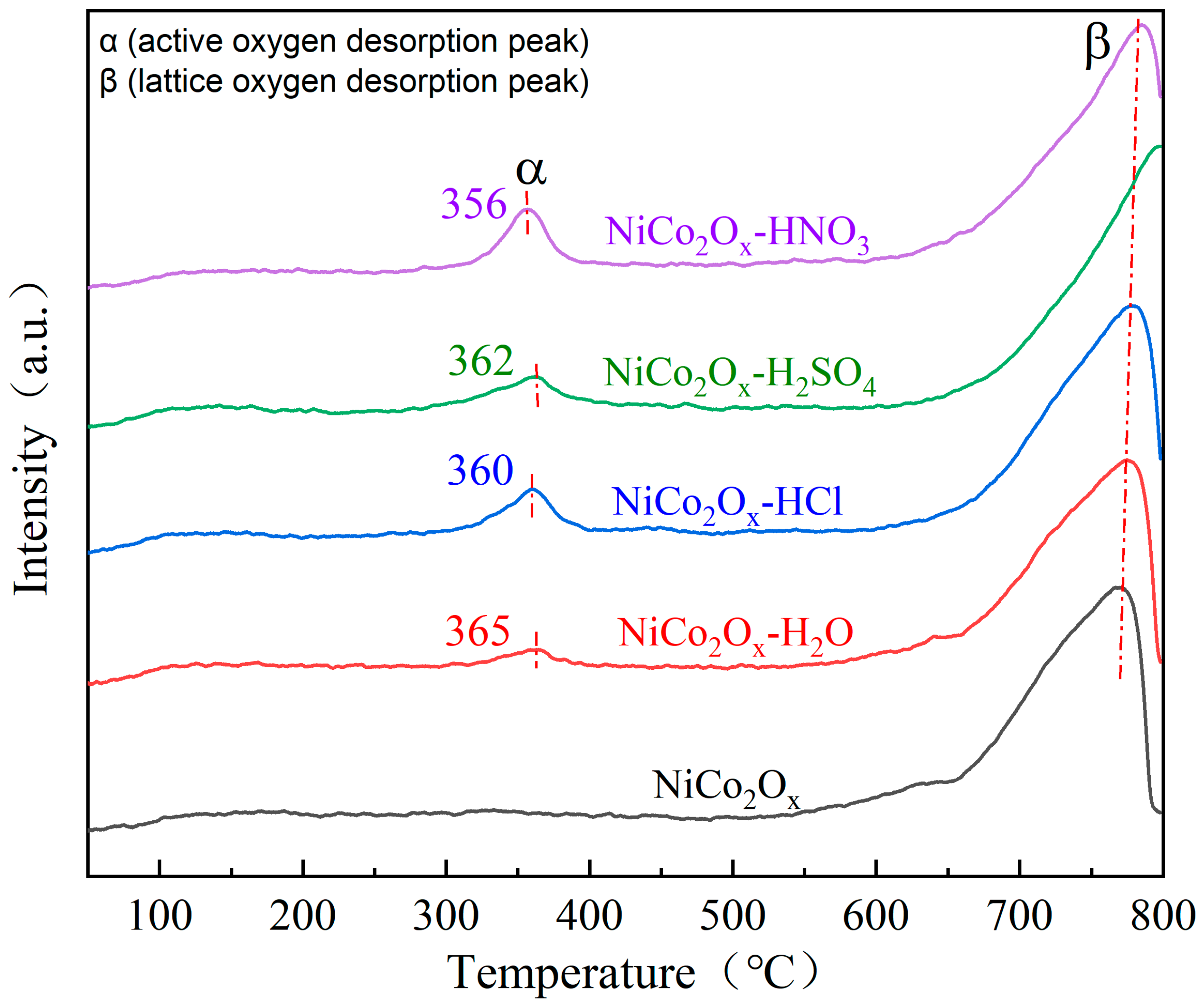
To explore the effect of modification on the CO adsorption and desorption performance of NiCo2O4 catalyst, pretreated catalysts were characterized via CO-TPD. Figure 6 shows two regions of CO2 desorption peaks in the temperature range of 100–800 °C: the α peak corresponds to the desorption peak of CO2 generated by the reaction between CO and the surface active oxygen of the catalyst, while the β peak corresponds to the desorption peak of CO2 produced by the reaction between CO and the lattice oxygen of the catalyst. For the NiCo2O4 samples after acid modification, the intensity of the α peak is significantly higher than that of the pristine sample. This is because the reaction between the acid and the surface oxides of the catalyst leads to the exposure of more oxygen vacancies on the surface [21], thereby enabling enhanced CO adsorption. Consequently, acid-modified samples exhibit superior CO catalytic performance at lower temperatures compared to the pristine samples, which is consistent with their catalytic performance trends. The gradual shift in the dominant β peak toward higher temperatures indicates that the lattice oxygen content gradually increases, along with the migration capacity of lattice oxygen. Although the reaction requires a higher temperature, the abundance and mobility of lattice oxygen enhance the overall efficiency of CO oxidation. The high-temperature peak suggests that the reaction pathway is more inclined to the lattice oxygen-involved mechanism (the Mars–van Krevelen mechanism), i.e., CO is adsorbed on oxygen vacancy sites and reacts with adjacent lattice oxygen [22].

3.7. Characterization of Oxygen Temperature-Programmed Desorption (O2-TPD)

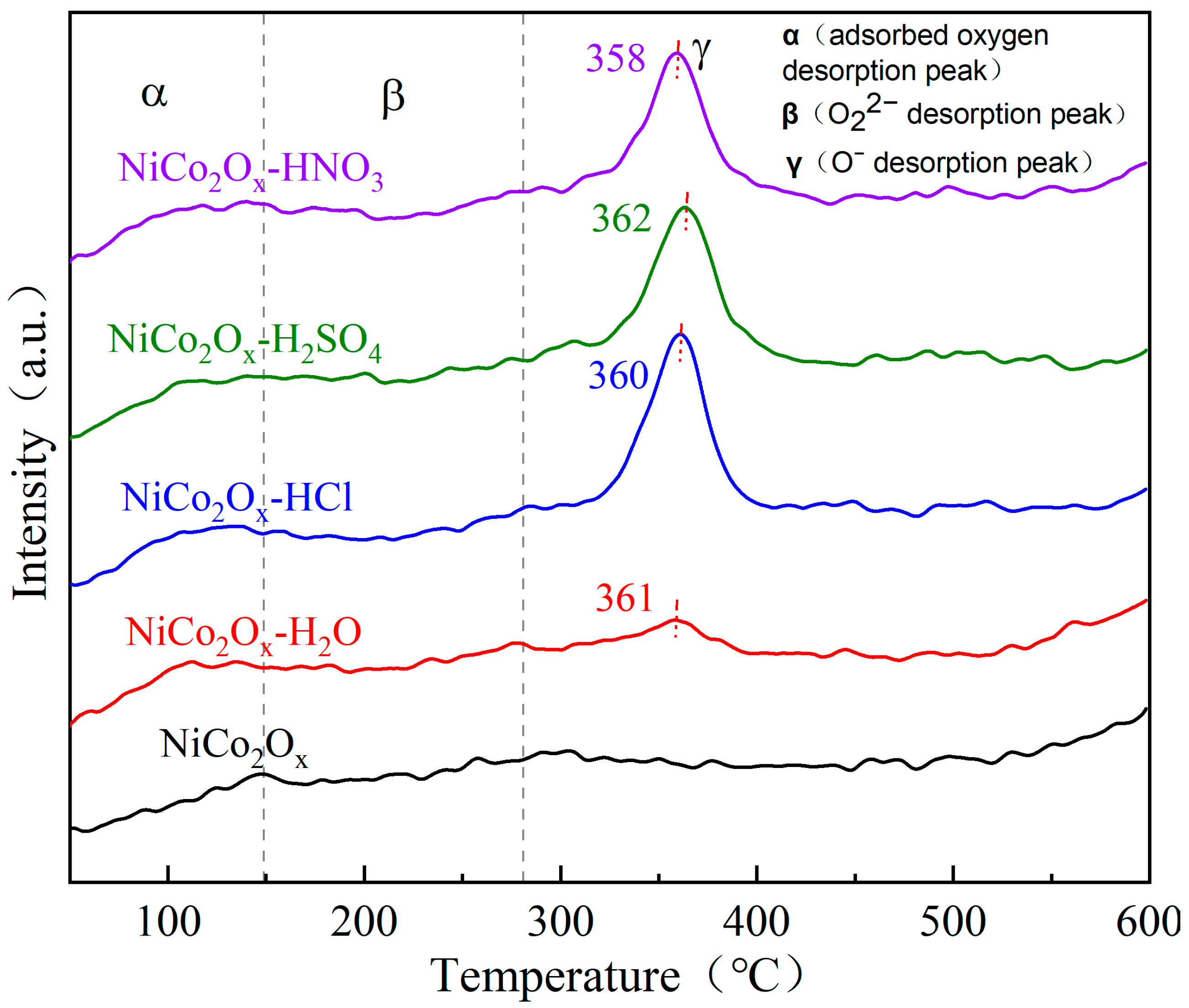
The oxygen adsorption behavior of modified NiCo2O4 catalyst was investigated via O2-TPD, and the results are presented in Figure 7. Generally, oxygen species migrating and desorbing from the catalyst surface can be divided into two categories: oxygen desorbed at low temperatures (<500 °C) is typically attributed to surface-adsorbed oxygen, while that desorbed at high temperatures (>500 °C) is assigned to lattice oxygen [23]. The α peak (~149 °C) corresponds to weakly chemisorbed oxygen molecules, while the β peak (~281 °C) and γ peak (~473 °C) correspond to the desorption of peroxide ion O22− and superoxide ion O species in surface defect oxygen, respectively [24]. Weakly chemisorbed oxygen has weak binding force, is easy to desorb, and has low activity, which does not participate in the CO oxidation reaction and only reflects the influence of the sample’s specific surface area on physical adsorption; surface defect oxygen has a strong correlation with oxygen vacancies, exists in a chemisorbed state with high activity, and directly participates in low-temperature CO oxidation [25].
Figure 7 clearly shows that acid-modified NiCo2O4 catalysts exhibit a significant enhancement in the γ peak. This indicates that during the CO oxidation reaction, these catalysts can adsorb a larger amount of O ions, thus creating more oxygen vacancies. This structure is more favorable for the proceeding of the CO oxidation reaction. Combined with CO catalytic performance results, this further confirms that surface oxygen vacancies of acid-treated NiCo2O4 catalysts improve catalytic activity.

3.8. In Situ Infrared Diffuse Reflection Characterization of Catalysts

To investigate the adsorption and reduction properties of the NiCo2O4 catalyst and the NiCo2Ox-HCl catalyst, in situ diffuse reflectance infrared Fourier transform spectroscopy (in situ DRIFTS) was employed to analyze the surface-adsorbed species at different temperatures. Specifically, 0.08 g of each sample was taken for testing. The samples were pretreated in a nitrogen-purged atmosphere at 120 °C for 10 min, and after pretreatment, they were cooled to room temperature. A gas mixture (N2 as the balance gas, with 16% O2 and 4000 ppm CO) was then introduced, and the temperature was gradually raised from 40 °C to 180 °C. After the catalytic reaction stabilized at each temperature point, in situ infrared spectrum measurements were performed, yielding Figure 8 and Figure 9.
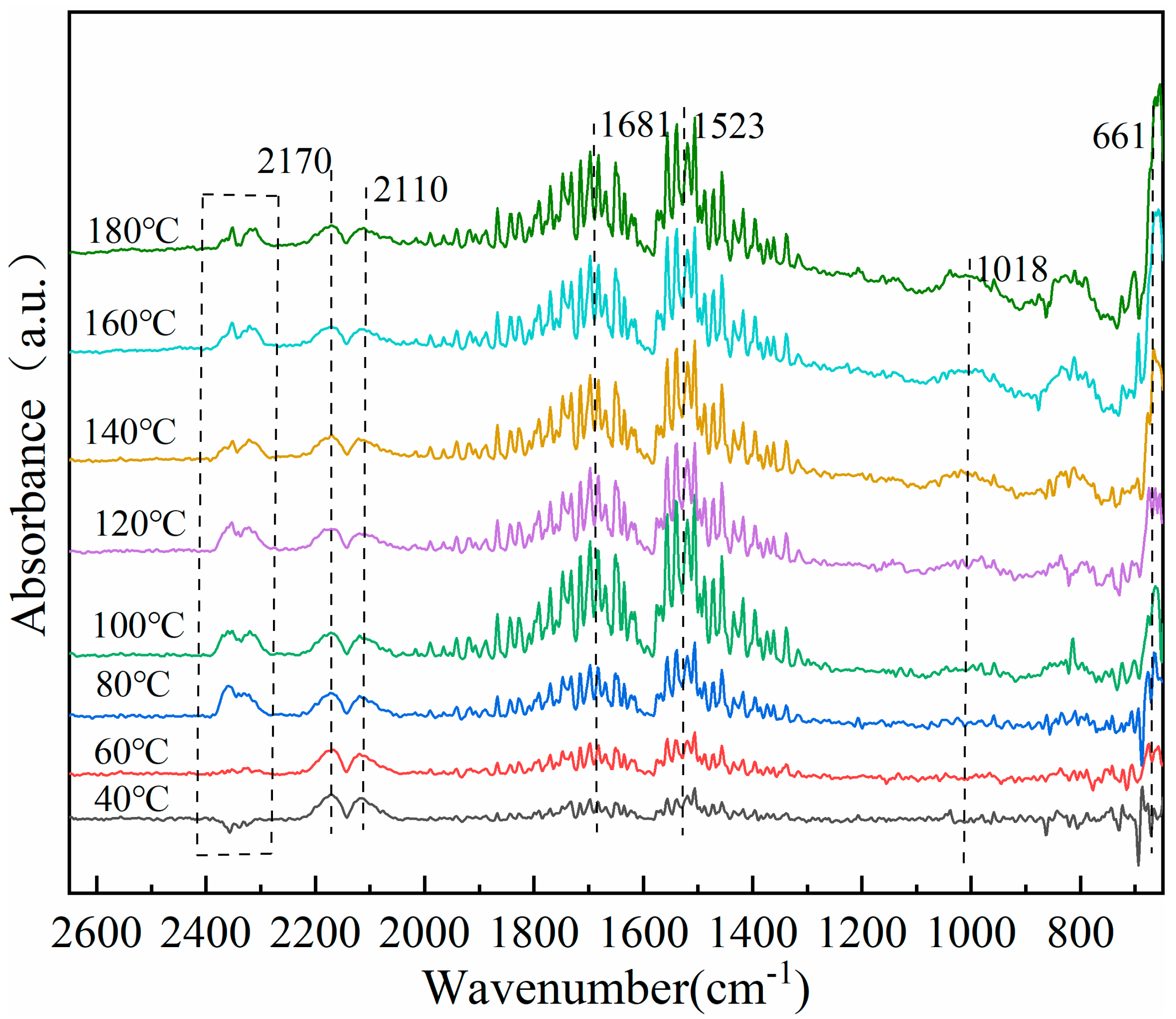
Figure 8 presents the in situ DRIFTS spectra of the NiCo2O4 catalyst interacting with CO at various temperatures. Specifically, the absorption peak at 1523 cm−1 is assigned to metal carboxylates (M-COO). Free carboxylate ions (-COO) typically exhibit characteristic peaks in the range of 1550–1600 cm−1. The Ni2+/Co3+/Co2+ active sites on the NiCo2O4 surface bind with the CO2 intermediates generated from CO oxidation, which then react with surface hydroxyl groups (-OH) to form stable M-COO. The coordination interaction of carboxylates causes a slight shift in the peak position [26,27]. The absorption peaks at 1018 cm−1 and 1681 cm−1 are attributed to bicarbonate (HCO3), corresponding to the symmetric CO stretching vibration and asymmetric CO stretching vibration, respectively [28]. Weaker absorption peaks at 2110 and 2170 cm−1 arise from low gaseous CO concentrations [29]. Peaks in the 2300–2400 cm−1 range are assigned to gaseous CO2, showing a significant increase as the temperature rises from 40 to 100 °C. Above 100 °C, the intensity of the gaseous CO2 peak remains largely unchanged, as CO reacts with surface reactive oxygen species to form CO2 until saturation is achieved [30]. Additionally, a sharp peak at 661 cm−1 is associated with the stretching vibration of Co2+-O bonds [31].
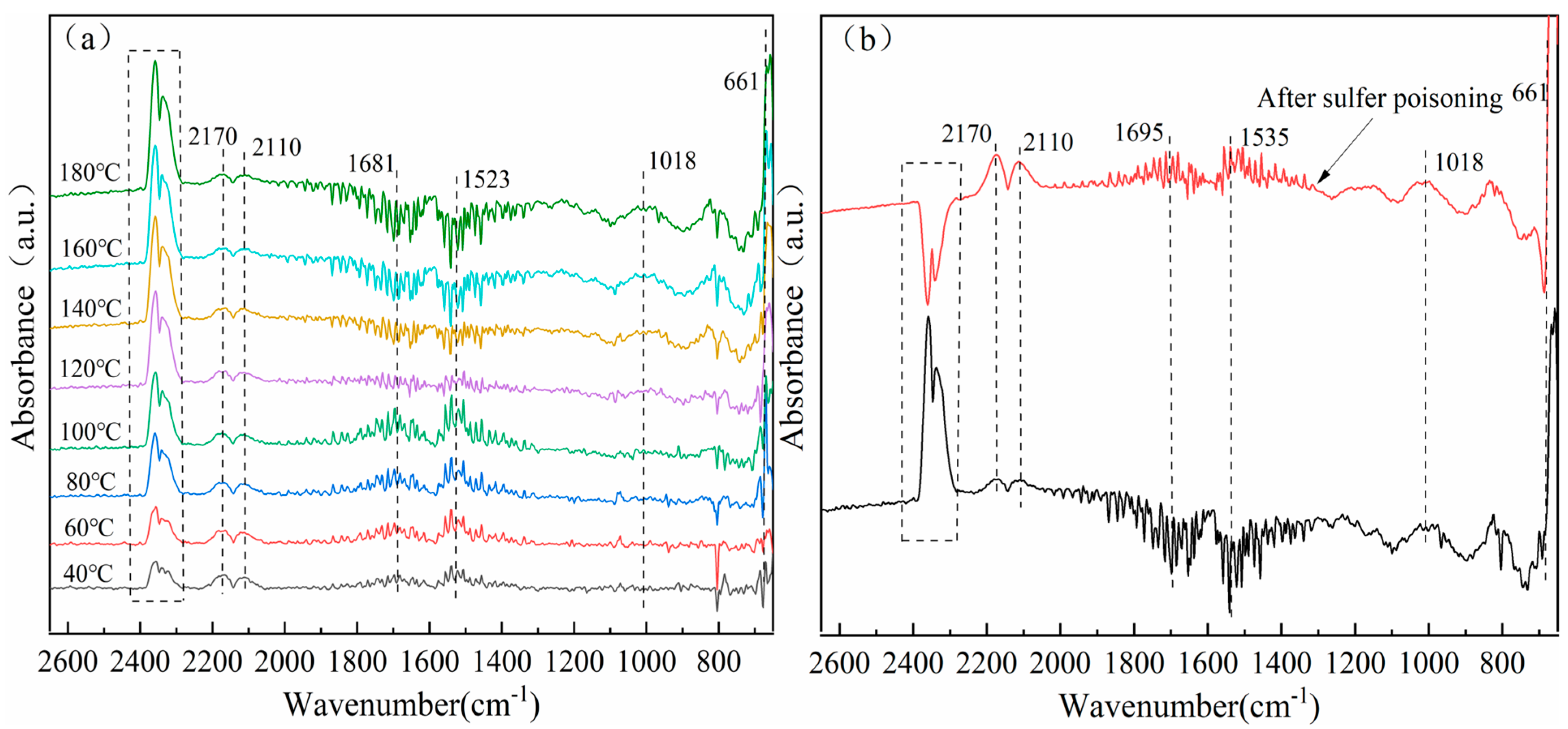
Figure 9a shows the in situ DRIFTS spectra of the NiCo2O4-HCl catalyst interacting with CO at different temperatures. Obviously, the metal carboxylate and bicarbonate species corresponding to the peaks at 1523 cm−1 and 1681 cm−1 start to decompose and decrease when the temperature exceeds 120 °C. Due to the HCl treatment of the NiCo2O4 catalyst, some bicarbonate species become more unstable and decompose at lower temperatures, which is consistent with the increased specific surface area of the modified catalyst. Peaks in the 2300–2400 cm−1 range are assigned to gaseous CO2. These peaks increase continuously as the temperature rises from 40 to 180 °C. Elevated temperatures result in a higher proportion of CO2 generated from the reaction between CO and surface reactive oxygen species. This indicates a significant increase in surface reactive oxygen species on the NiCo2O4 catalyst after HCl treatment, consistent with the conclusions from O2-TPD analysis.
Figure 9b presents the CO adsorption behavior of the NiCo2O4-HCl catalyst before and after SO2 poisoning at 200 °C. As previously discussed, the deactivation of NiCo2O4 catalysts induced by SO2 poisoning results from the sulphation of active species in the catalyst. Similarly, Figure 9b reveals that at 200 °C under high SO2 concentration, the poisoned NiCo2O4-HCl catalyst exhibits weak sulphate species at 1535 cm−1 and 1695 cm−1, while the peak at 2300–2400 cm−1 has diminished, indicating reduced gaseous CO2 concentration after poisoning and lowered CO catalytic efficiency. The acidic treatment with HCl decomposes part of the metal carboxylates and bicarbonates. Moreover, SO2 poisoning induces the sulfation of the active sites (Ni2+/Co2+/Co3+) on the surface of the NiCo2O4-HCl catalyst, which hinders the adsorption and oxidation processes of CO. As a result, the characteristic signals of these species in the sample are lower than the DRIFTS background reference signal, and negative peaks are ultimately observed through difference calculation.

3.9. XPS Characterization Results for Catalysts

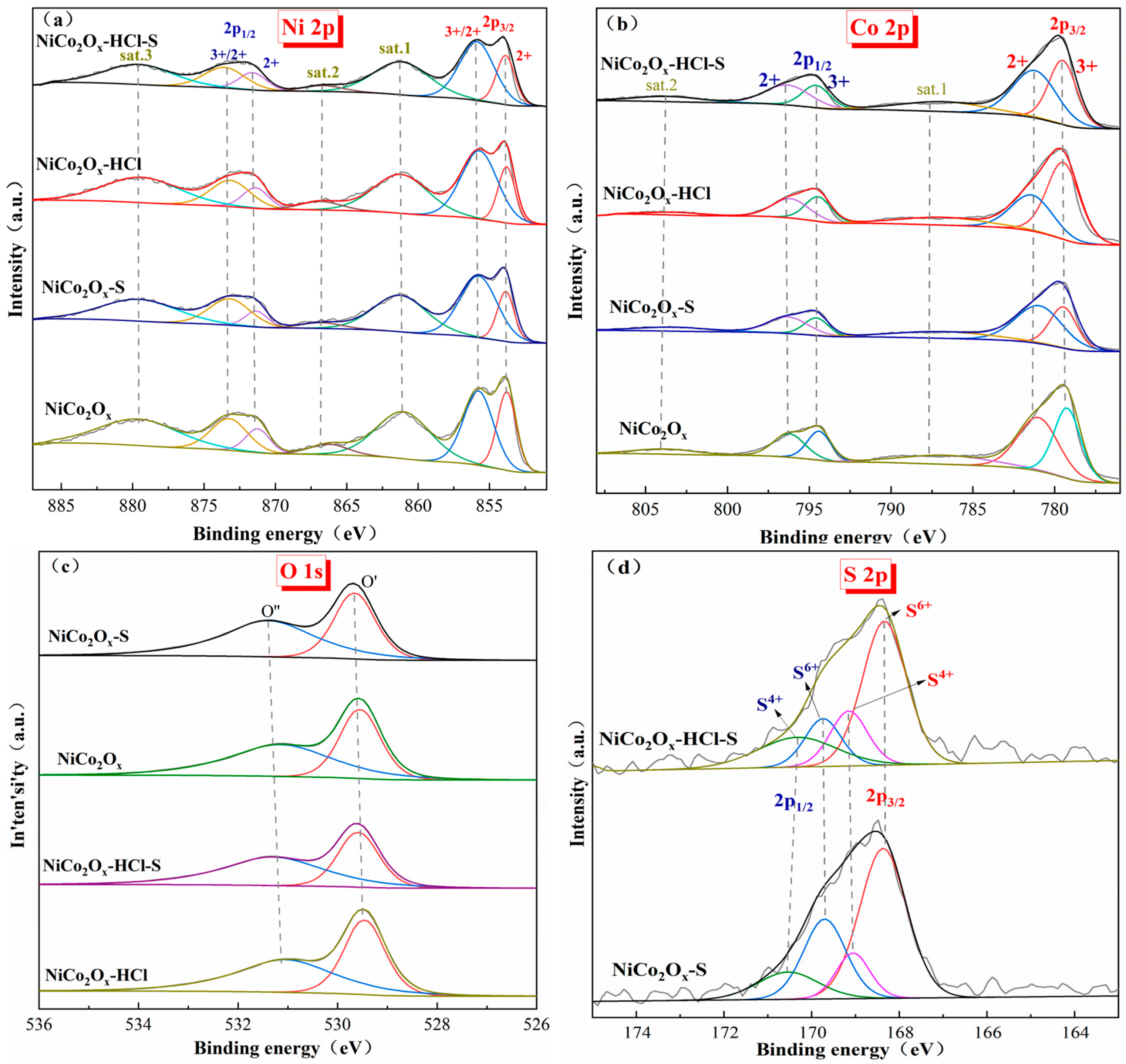
XPS measurements were performed to analyze the surface composition and elemental valence states of the NiCo2O4 and NiCo2O4-HCl catalysts before and after sulfidation, and the results are presented in Figure 10. The surface composition and atomic ratios of the samples, derived from XPS data, are summarized in Table 3 and Table 4.
Figure 10a shows the XPS spectra of Ni 2p. The spectra of the samples before and after sulfidation are analogous, consisting of two spin–orbit doublets and three shake-up satellite peaks (denoted as sat.1, sat.2, and sat.3). The first doublet (853.8 eV, 871.4 eV) and shake-up satellite peaks sat.1 and sat.2 (861.0 eV, 866.7 eV) are assigned to Ni2+ in NiO [32,33]. The second doublet (855.6 eV, 873.3 eV) and shake-up satellite peak sat.3 (879.5 eV) are assigned to the Ni2+/Ni3+ mixed-valence states in NiCo2O4 [34,35]. After HCl acidification treatment, the Ni2+-corresponding peaks in NiO decreased significantly. As shown in Table 3 and Table 4, the atomic percentage of Ni2+ also decreased partially, indicating that the main reduction corresponds to the NiO phase.
Figure 10b shows the Co 2p XPS spectrum. Four main peaks are observed at 779.5 eV, 794.5 eV, 781.3 eV, and 796.2 eV, corresponding to Co3+2p3/2, Co3+2p1/2, Co2+2p3/2, Co2+2p1/2, respectively. The Co atoms in these samples exhibit two valence states (octahedral Co3+ and tetrahedral Co2+). Concurrently, Table 3 indicates that the Ni:Co ratio approaches 1:2, indicating the formation of NiCo2O4 and partial Co3O4. Reported in the literature [36,37], octahedral Co3+ cations primarily act as active sites, promoting CO catalytic oxidation. From Table 4, the Co3+ atomic content of Co3+ significantly increases after HCl treatment. This finding also explains the enhanced low-temperature catalytic activity of NiCo2Ox after acid treatment.
Figure 10c shows the O 1s XPS spectrum, where the high-intensity peak at 529.5 eV is assigned to lattice oxygen (O2−) and the low-intensity peak at 531.2 eV is assigned to adsorbed oxygen (O22−/O) [34,38,39]. Notably, in the O 1s spectra of Ni-Co-containing oxides, the peak position of adsorbed oxygen may also be affected by the combined influence of hydroxyl groups (including those from environmental adsorption or intrinsic hydroxyl oxide sources), chemisorbed oxygen, low-coordination lattice oxygen (such as Ni2O3/Co2O3-like surface phases), and intrinsic species on the spinel surface. These species exhibit similar XPS binding energies and peak shapes, ultimately leading to signal overlap [35]. In Table 4, O′ corresponds to the lattice oxygen peak (O2−) at 529.5 eV, which refers to the strongly bound oxygen species in the catalyst lattice that interacts with metal ions (e.g., Ni2+, Ni3+); O″ corresponds to the adsorbed oxygen peak (O22−/O) at 531.2 eV, which refers to the weakly bound oxygen species adsorbed at oxygen vacancies or defect sites on the catalyst surface; O″ + O′ represents the total surface oxygen content on the catalyst surface. The ratio of O″/(O″ + O′) increases following S poisoning. This is because the introduction of S-containing anions disrupts the catalyst’s internal equilibrium, leading to the formation of intermediate species and oxygen deficiency, thereby facilitates the adsorption of gaseous O2 [40]. During the catalyst poisoning process, SO2 consumes lattice oxygen to form additional adsorbed oxygen species, which ultimately leads to gradual catalyst deactivation.
Figure 10d presents the S 2p spectrum of the sulfur-poisoned catalyst. The peaks at 168.4 eV and 169.7 eV are assigned to the 2p3/2 and 2p1/2 states of S6+, corresponding to SO42− species, while the peaks at 169.1 eV and 170.3 eV are assigned to the 2p3/2 and 2p1/2 states of S4+, corresponding to SO32− species. These results indicate that sulfur in the poisoned catalyst primarily exists as SO42− and SO32− species [41]. From Table 3 and Table 4, HCl-treated catalysts exhibit not only lower total sulfur content but also a reduced proportion of S6+ after SO2 poisoning. Higher SO42− proportions typically indicate severe sulfidation and structural degradation of the catalyst [42,43]. Consequently, HCl acidification treatment mitigates the formation of destructive SO42−, thereby maintaining superior CO catalytic activity.

4. Conclusions

In this study, NiCo2O4 catalysts were modified via acidic treatment with HCl, H2SO4, and HNO3. The results demonstrate that acid treatment enhances the CO catalytic oxidation performance of the catalysts to varying degrees. Among these, the NiCo2O4-HCl catalyst exhibits the best performance: it not only effectively reduces sulfation and alleviates catalyst structural damage but also possesses a superior surface morphology, the largest specific surface area, and the highest H2 consumption. Furthermore, it demonstrates the optimal CO catalytic activity, with a CO conversion efficiency of approximately 96.67% at 90 °C. In the stability test, with the introduction of high-concentration SO2 gas (350 mg/m3), the CO catalytic efficiency of all catalysts decreases to varying degrees after 6 h, while the NiCo2O4-HCl catalyst still maintains a catalytic efficiency of 15%. This result is attributed to the fact that HCl acidic treatment can effectively reduce the degree of catalyst sulfation and mitigate structural damage, thereby maintaining relatively stable catalytic performance under SO2 poisoning.

Author Contributions

Conceptualization, J.Y.; methodology, X.L. and J.Y.; software, Z.C.; validation, Z.C., T.C. and X.L.; formal analysis, Z.C.; investigation, H.T.; resources, Z.C.; data curation, T.C.; writing—original draft preparation, Z.C.; writing—review and editing, Z.C. and X.L.; supervision, J.Y. All authors have read and agreed to the published version of the manuscript.

Funding

This research received no external funding.

Institutional Review Board Statement

Not applicable.

Informed Consent Statement

Not applicable.

Data Availability Statement

The data presented in this study are available on request from the corresponding author.

Conflicts of Interest

All authors declare that the research was conducted in the absence of any commercial or financial relationships that could be construed as a potential conflict of interest.

References

  1. Mahajan, S.; Jagtap, S. Metal-oxide semiconductors for carbon monoxide (CO) gas sensing: A review. Appl. Mater. Today 2020, 18, 100483. [Google Scholar] [CrossRef]
  2. Ngorot Kembo, J.P.; Wang, J.; Luo, N.; Gao, F.; Yi, H.; Zhao, S.; Zhou, Y.; Tang, X. A review of catalytic oxidation of carbon monoxide over different catalysts with an emphasis on hopcalite catalysts. New J. Chem. 2023, 47, 20222–20247. [Google Scholar] [CrossRef]
  3. Xing, Y.; Zhang, W.-B.; Su, W.; Wen, W.; Zhao, X.-J.; Yu, J.-X. Research of ultra-low emission technologies of the iron and steel industry in China. Chin. J. Eng. 2021, 43, 1–9. [Google Scholar]
  4. Royer, S.; Duprez, D. Catalytic oxidation of carbon monoxide over transition metal oxides. ChemCatChem 2011, 3, 24–65. [Google Scholar]
  5. Yadava, R.N.; Bhatt, V. Carbon monoxide: Risk assessment, environmental, and health hazard. In Hazardous Gases; Elsevier: Amsterdam, The Netherlands, 2021; pp. 83–96. [Google Scholar]
  6. Feng, C.; Liu, X.; Zhu, T.; Tian, M. Catalytic oxidation of CO on noble metal-based catalysts. Environ. Sci. Pollut. Res. 2021, 28, 24847–24871. [Google Scholar] [CrossRef] [PubMed]
  7. Santos, V.P.; Carabineiro, S.A.C.; Tavares, P.B.; Pereira, M.F.R.; Órfão, J.J.M.; Figueiredo, J.L. Oxidation of CO, ethanol and toluene over TiO2 supported noble metal catalysts. Appl. Catal. B Environ. 2010, 99, 198–205. [Google Scholar] [CrossRef]
  8. Xie, S.; Dai, H.; Deng, J.; Liu, Y.; Yang, H.; Jiang, Y.; Tan, W.; Ao, A.; Guo, G. Au/3DOM Co3O4: Highly active nanocatalysts for the oxidation of carbon monoxide and toluene. Nanoscale 2013, 5, 11207–11219. [Google Scholar]
  9. Wang, Y.-G.; Yang, X.-F.; Li, J. Theoretical studies of CO oxidation with lattice oxygen on Co3O4 surfaces. Chin. J. Catal. 2016, 37, 193–198. [Google Scholar] [CrossRef]
  10. Gu, D.; Jia, C.-J.; Weidenthaler, C.; Bongard, H.-J.; Spliethoff, B.; Schmidt, W.; Schüth, F. Highly ordered mesoporous cobalt-containing oxides: Structure, catalytic properties, and active sites in oxidation of carbon monoxide. J. Am. Chem. Soc. 2015, 137, 11407–11418. [Google Scholar] [CrossRef]
  11. Han, S.W.; Kim, D.H.; Jeong, M.-G.; Park, K.J.; Kim, Y.D. CO oxidation catalyzed by NiO supported on mesoporous Al2O3 at room temperature. Chem. Eng. J. 2016, 283, 992–998. [Google Scholar]
  12. Dey, S.; Mehta, N.S. Oxidation of carbon monoxide over various nickel oxide catalysts in different conditions: A review. Chem. Eng. J. Adv. 2020, 1, 100008. [Google Scholar] [CrossRef]
  13. Su, Y.; Fu, K.; Pang, C.; Zheng, Y.; Song, C.; Ji, N.; Ma, D.; Lu, X.; Liu, C.; Han, R. Recent advances of chlorinated volatile organic compounds’ oxidation catalyzed by multiple catalysts: Reasonable adjustment of acidity and redox properties. Environ. Sci. Technol. 2022, 56, 9854–9871. [Google Scholar] [CrossRef] [PubMed]
  14. Dang, H.; Zhao, W.; Wu, R.; Yue, L.; Wang, Y.; Ren, Z.; Zhao, Y. Effect of acid treatment on the catalytic performance of CuO/Cryptomelane catalyst for CO preferential oxidation in H2-rich streams. Int. J. Hydrogen Energy 2023, 48, 27619–27630. [Google Scholar] [CrossRef]
  15. Yang, Q.; Li, J.; Wang, D.; Peng, Y.; Ma, Y. Activity improvement of acid treatment on LaFeO3 catalyst for CO oxidation. Catal. Today 2021, 376, 205–210. [Google Scholar] [CrossRef]
  16. Zhang, H.; Zhang, Y.; Song, H.; Cui, Y.; Xue, Y.; Wu, C.-E.; Pan, C.; Xu, J.; Qiu, J.; Xu, L.; et al. Transition Metal (Fe2O3, Co3O4 and NiO)-Promoted CuO-Based α-MnO2 Nanowire Catalysts for Low-Temperature CO Oxidation. Catalysts 2023, 13, 588. [Google Scholar] [CrossRef]
  17. Wang, J.; Chen, Z.; Cao, T.; Yang, J.; Kuang, Y.; Kang, J. The Effect of Adding Different Elements (Mg, Fe, Cu, and Ce) on the Properties of NiCo2OX for CO-Catalyzed Oxidation. Materials 2025, 18, 2554. [Google Scholar] [CrossRef]
  18. Wagenhofer, M.F.; Shi, H.; Gutiérrez, O.Y.; Jentys, A.; Lercher, J.A. Enhancing hydrogenation activity of Ni-Mo sulfide hydrodesulfurization catalysts. Sci. Adv. 2020, 6, eaax5331. [Google Scholar] [CrossRef] [PubMed]
  19. Le, M.T.; Nguyen, P.A.; Tran, T.T.H.; Chu, T.H.N.; Wang, Y.; Arandiyan, H. Catalytic performance of spinel-type Ni-Co Oxides for Oxidation of Carbon Monoxide and Toluene. Top. Catal. 2023, 66, 117–125. [Google Scholar] [CrossRef]
  20. Le, M.T.; Nguyen, T.T.; Pham, P.T.M.; Bruneel, E.; Van Driessche, I. Activated MnO2-Co3O4-CeO2 catalysts for the treatment of CO at room temperature. Appl. Catal. A Gen. 2014, 480, 34–41. [Google Scholar] [CrossRef]
  21. Yang, J.; Li, J.; Kang, J.; Liu, W.; Kuang, Y.; Tan, H.; Yu, Z.; Yang, L.; Yang, X.; Yu, K. Preparation of Ce-MnOx composite oxides via coprecipitation and their catalytic performance for CO oxidation. Nanomaterials 2023, 13, 2158. [Google Scholar] [CrossRef]
  22. Lewandowski, M.; Groot, I.M.N.; Shaikhutdinov, S.; Freund, H.J. Scanning tunneling microscopy evidence for the Mars-van Krevelen type mechanism of low temperature CO oxidation on an FeO(111) film on Pt(111). Catal. Today 2012, 181, 52–55. [Google Scholar] [CrossRef]
  23. Zaki, M.I.; Hasan, M.A.; Pasupulety, L. Influence of CuOx additives on CO oxidation activity and related surface and bulk behaviours of Mn2O3, Cr2O3 and WO3 catalysts. Appl. Catal. A Gen. 2000, 198, 247–259. [Google Scholar] [CrossRef]
  24. Zhang, H.; Wang, Y.; Zhang, Q.; Gu, B.; Tang, Q.; Cao, Q.; Wei, K.; Fang, W. Synergy in magnetic NixCo1Oy oxides enables base-free selective oxidation of 5-hydroxymethylfurfural on loaded Au nanoparticles. J. Energy Chem. 2023, 78, 526–536. [Google Scholar] [CrossRef]
  25. Yi, Y.; Zhang, P.; Qin, Z.; Yu, C.; Li, W.; Qin, Q.; Li, B.; Fan, M.; Liang, X.; Dong, L. Low temperature CO oxidation catalysed by flower-like Ni–Co–O: How physicochemical properties influence catalytic performance. RSC Adv. 2018, 8, 7110–7122. [Google Scholar] [CrossRef]
  26. Coates, J. Interpretation of Infrared Spectra, A Practical Approach. In Encyclopedia of Analytical Chemistry; John Wiley & Sons Ltd.: Hoboken, NJ, USA, 2006. [Google Scholar]
  27. Palacios, E.G.; Juárez-López, G.; Monhemius, A.J. Infrared spectroscopy of metal carboxylates: II. Analysis of Fe(III), Ni and Zn carboxylate solutions. Hydrometallurgy 2004, 72, 139–148. [Google Scholar] [CrossRef]
  28. Davis, A.R.; Oliver, B.G. A vibrational-spectroscopic study of the species present in the CO2−H2O system. J. Solut. Chem. 1972, 1, 329–339. [Google Scholar] [CrossRef]
  29. Wang, X.; Wang, J.; Liu, A.; Yu, Y.; Ji, J.; Guo, K.; Wan, H.; Tang, C.; Dong, L. Unravelling the structure sensitivity of CuO/SiO2 catalysts in the NO+ CO reaction. Catal. Sci. Technol. 2020, 10, 3848–3856. [Google Scholar] [CrossRef]
  30. He, Y.; Liu, J.; Zhang, G.; Wang, Y.; Zhao, Y.; Li, G.; Zhang, Y.; Lv, D. Interfacial effects promote the catalytic performance of CuCoO2-CeO2 metal oxides for the selective reduction of NO by CO. Chem. Eng. J. 2023, 465, 142856. [Google Scholar] [CrossRef]
  31. Wang, Y.-Z.; Zhao, Y.-X.; Gao, C.-G.; Liu, D.-S. Preparation and catalytic performance of Co3O4 catalysts for low-temperature CO oxidation. Catal. Lett. 2007, 116, 136–142. [Google Scholar] [CrossRef]
  32. Nesbitt, H.W.; Legrand, D.; Bancroft, G.M. Interpretation of Ni2p XPS spectra of Ni conductors and Ni insulators. Phys. Chem. Miner. 2000, 27, 357–366. [Google Scholar] [CrossRef]
  33. Biesinger, M.C.; Payne, B.P.; Lau, L.W.M.; Gerson, A.; Smart, R.S.C. X-ray photoelectron spectroscopic chemical state quantification of mixed nickel metal, oxide and hydroxide systems. Surf. Interface Anal. 2009, 41, 324–332. [Google Scholar] [CrossRef]
  34. Xu, C.; Wang, Q.; Zhao, S.; Wang, S. Nanoneedle-forest NiCo2O4@nitrogen-doped Carbon-Mo2C/CC as Double Functional Electrocatalysts for Water Hydrolysis and Zn-air Batteries. Res. Sq. 2021. [Google Scholar] [CrossRef]
  35. Kim, J.G.; Pugmire, D.L.; Battaglia, D.; Langell, M.A. Analysis of the NiCo2O4 spinel surface with Auger and X-ray photoelectron spectroscopy. Appl. Surf. Sci. 2000, 165, 70–84. [Google Scholar] [CrossRef]
  36. Liu, Z.; Li, J.; Wang, R. CeO2 nanorods supported M–Co bimetallic oxides (M = Fe, Ni, Cu) for catalytic CO and C3H8 oxidation. J. Colloid Interface Sci. 2020, 560, 91–102. [Google Scholar] [CrossRef]
  37. Zhou, M.; Cai, L.; Bajdich, M.; García-Melchor, M.; Li, H.; He, J.; Wilcox, J.; Wu, W.; Vojvodic, A.; Zheng, X. Enhancing catalytic CO oxidation over Co3O4 nanowires by substituting Co2+ with Cu2+. ACS Catal. 2015, 5, 4485–4491. [Google Scholar] [CrossRef]
  38. Solsona, B.; Concepción, P.; Hernández, S.; Demicol, B.; Nieto, J.M.L. Oxidative dehydrogenation of ethane over NiO–CeO2 mixed oxides catalysts. Catal. Today 2012, 180, 51–58. [Google Scholar] [CrossRef]
  39. Teymoori, S.M.; Alavi, S.M.; Rezaei, M. Catalytic oxidation of CO over the MOx—Co3O4 (M:Fe, Mn, Cu, Ni, Cr, and Zn) mixed oxide nanocatalysts at low temperatures. Sci. Rep. 2025, 15, 25808. [Google Scholar] [CrossRef] [PubMed]
  40. Li, Q.; Yang, H.; Qiu, F.; Zhang, X. Promotional effects of carbon nanotubes on V2O5/TiO2 for NOX removal. J. Hazard. Mater. 2011, 192, 915–921. [Google Scholar] [CrossRef]
  41. Chen, X.; Wang, X.; Xiu, J.; Williams, C.T.; Liang, C. Synthesis and characterization of ferromagnetic nickel–cobalt silicide catalysts with good sulfur tolerance in hydrodesulfurization of dibenzothiophene. J. Phys. Chem. C 2012, 116, 24968–24976. [Google Scholar] [CrossRef]
  42. Babu, K.J.; Raj Kumar, T.; Yoo, D.J.; Phang, S.-M.; Gnana Kumar, G. Electrodeposited nickel cobalt sulfide flowerlike architectures on disposable cellulose filter paper for enzyme-free glucose sensor applications. ACS Sustain. Chem. Eng. 2018, 6, 16982–16989. [Google Scholar] [CrossRef]
  43. Guo, K.; Ding, Y.; Luo, J.; Yu, Z. Nickel cobalt thiospinel nanoparticles as hydrodesulfurization catalysts: Importance of cation position, structural stability, and sulfur vacancy. ACS Appl. Mater. Interfaces 2018, 10, 19673–19681. [Google Scholar] [CrossRef] [PubMed]
Figure 1. XRD pattern of NiCo2O4 catalyst after modification.
Coatings 15 01463 g001
Figure 2. (a) CO conversion rate of modified NiCo2O4 catalyst and (b) CO conversion rate of modified NiCo2O4 catalyst under 350 mg/m3 SO2 at 200 °C.
Coatings 15 01463 g002
Figure 3. SEM images of the NiCo2Ox catalyst after modification treatment, (a) NiCo2Ox, (b) NiCo2Ox-H2SO4, (c) NiCo2Ox-HCl, and (d) NiCo2Ox-HNO.
Coatings 15 01463 g003
Figure 4. Specific surface area of modified NiCo2O4 catalysts (a) NiCo2O4, (b) NiCo2O4-H2O, (c) NiCo2O4-HCl, (d) NiCo2O4-H2SO4, and (e) NiCo2O4-HNO3.
Coatings 15 01463 g004
Figure 5. H2-TPR pattern of NiCo2Ox catalyst after modification.
Coatings 15 01463 g005
Figure 6. CO-TPD pattern of NiCo2O4 catalyst after modification.
Coatings 15 01463 g006
Figure 7. O2-TPD pattern of modified NiCo2O4 catalyst.
Coatings 15 01463 g007
Figure 8. Adsorption behavior of CO on NiCo2O4 catalyst at 40–180 °C.
Coatings 15 01463 g008
Figure 9. (a) CO adsorption on NiCo2O4-HCl catalyst at 40–180 °C and (b) CO adsorption on NiCo2O4-HCl catalyst before and after SO2 poisoning at 200 °C.
Coatings 15 01463 g009
Figure 10. XPS characterization results of NiCo2Ox and NiCo2Ox-HCl catalysts, (a) Ni 2p; (b) Co 2p; (c) O 1s; and (d) S 2.
Coatings 15 01463 g010
Table 1. Experimental gas information table.
Raw MaterialsChemical FormulaSpecificationManufacturer
NitrogenN299.99%Fanggang Changsha, China
Carbon MonoxideCO + N21.98%Fanggang Changsha, China
OxygenO299.99%Fanggang Changsha, China
Sulfur DioxideSO2 + N22.03%Fanggang Changsha, China
H2 Standard GasH2 + Ar10%Gaoke Changsha, China
CO Standard GasCO + He9.99%Chuangwei Shanghai, China
O2 Standard GasO2 + He5.01%Chuangwei Shanghai, China
Table 2. H2 consumption of NiCo2O4 catalyst after modification.
CatalystsAttribution and Temperature of Reduction PeakH2 Consumption (mmol/g)
αβγ
Co3O4→CoOCoO→CoCoO→Co
NiO→Ni
NiCo2O430338645011.53
NiCo2O4-HCl293403/12.92
NiCo2O4-H2SO4294400/12.86
NiCo2O4-HNO3288389/12.78
Table 3. Composition of several selected sample surface elements.
SamplesAtomic Concentration (at%)
NiCoOSCl
NiCo2Ox12.4422.7064.8600
NiCo2Ox-S11.9420.1064.273.690
NiCo2Ox-HCl11.1223.2265.3800.27
NiCo2Ox-HCl-S8.5522.9364.903.320.30
Table 4. Distribution of valence states of elements on the surface of several selected samples.
SamplesAtomic Concentration (at%)
S6+/(S6+ + S4+)Ni2+/Nix+Co3+/Cox+O″/(O″ + O′)
NiCo2Ox059.1943.1553.66
NiCo2Ox-S80.7957.3030.6658.94
NiCo2Ox-HCl059.0550.9655.91
NiCo2Ox-HCl-S67.4259.7036.3357.84
Disclaimer/Publisher’s Note: The statements, opinions and data contained in all publications are solely those of the individual author(s) and contributor(s) and not of MDPI and/or the editor(s). MDPI and/or the editor(s) disclaim responsibility for any injury to people or property resulting from any ideas, methods, instructions or products referred to in the content.