Article

Preparation of Ni-Based Composite Coatings on the Inner Surfaces of Tubes via Cylindrical Electro-Spark Powder Deposition


1
Guangdong Engineering Center for Intelligent Sensing and Flexible Manufacturing, School of Sino-German Intelligent Manufacturing, Shenzhen City Polytechnic, Shenzhen 518116, China
2
College of Mechatronics and Control Engineering, Shenzhen University, Shenzhen 518060, China
3
School of Further Education, Shenzhen City Polytechnic, Shenzhen 518116, China
4
Key Laboratory of Optoelectronic Devices and Systems of Ministry of Education and Guangdong Province, College of Physics and Optoelectronic Engineering, Shenzhen University, Shenzhen 518060, China
*
Author to whom correspondence should be addressed.
Coatings 2025, 15(12), 1426; https://doi.org/10.3390/coatings15121426 (registering DOI)
Submission received: 8 November 2025 / Revised: 1 December 2025 / Accepted: 3 December 2025 / Published: 4 December 2025
(This article belongs to the Section Surface Characterization, Deposition and Modification)

Abstract

To address the challenge of fabricating metal-based composite coatings on the inner surfaces of tubular and internal hole components, a novel cylindrical electro-spark powder deposition (CEPD) technique is introduced. Utilizing the CEPD process, Ni-based composite coatings are successfully prepared on the inner surface of 316L stainless-steel tubes. The resultant Ni-based composite coatings completely covered the inner surface, exhibiting a splattered morphology and forming a robust metallurgical bond. Microstructural analysis revealed that the composite coatings primarily consisted of submicron-sized fine dendrites, with the main phases identified as Ni, FeNi3, and Fe3Ni2, in addition to Ag particles. These fine grains and reinforcing phases contributed to a substantial increase in coating hardness, with an average value of 673.33 HV, representing approximately 2.82 times the hardness of the substrate. Tribological testing indicated that the high-hardness Ni-based composite coatings nearly doubled the surface wear resistance of the substrate and exhibited a significantly lower friction coefficient. Compared to other existing inner surface coating techniques, the CEPD process offers simplicity, low cost, and the ability to produce functional composite coatings with complex compositions. The prepared coatings exhibit considerable development potential and may offer a novel approach for the advancement of coating techniques for non-line-of-sight surfaces.

1. Introduction

During the service life of tubular and internal hole components, their inner surfaces are exposed to a variety of severe operating conditions, including high temperatures, high pressures, corrosive media, and frequent mechanical wear [1]. The development of high-performance inner surface coating techniques is of significant importance, as they can remarkably enhance the performance of inner surfaces, extend their service life, reduce equipment maintenance costs, and ensure stable operation. Metal matrix composites (MMCs) integrate the ductility of the metallic phase with the high strength of the reinforcing phase [2]. By adjusting the material ratios, the performance of MMC coatings can be optimized, making them highly promising for inner surface strengthening. However, the preparation of composite coatings on the inner surfaces of tubular and internal hole components has long been a technological challenge due to their non-line-of-sight characteristics. Non-line-of-sight coating techniques, such as electro-brush plating [1], chemical plating [3], chemical vapor deposition (CVD) [4], physical vapor deposition (PVD) [5], and anodizing [6], although capable of meeting the process requirements for inner surface coatings of tubular components, are not viable methods for producing composite coatings. At present, the main coating processes suitable for the preparation of composite coatings on the inner surfaces of tubular components are spraying and thermal cladding techniques. S. Nowotny et al. [7] developed a laser cladding device for the inner surfaces of tubular components, which can be used to prepare and repair metal composite coatings inside long tubular parts with an inner diameter greater than Φ100 mm. J. Meeß et al. [8] utilized a cold spraying technique to produce three different alloy coatings from alloy steel powders on the 70 mm inner diameter of a cylinder and investigated the process optimization and properties of these three coatings. L. Zhao et al. [9] employed an improved high-velocity oxygen-fuel (HVOF) technique to prepare a WC-10Co-4Cr composite coating on the inner surface of a TC4 slender tube with an inner diameter of less than 120 mm. While these coating techniques can produce relatively thick composite coatings, their complex nozzle or gun structures limit their application to large tubular components, making them unsuitable for small-diameter tubular components. Therefore, the development of efficient, environmentally friendly, and low-cost coating techniques for the inner surfaces of tubular components remains a crucial direction for future research.
Electro-spark deposition (ESD) is a sophisticated manufacturing technique that leverages high-frequency electrical spark discharges between the electrode and workpiece to melt the electrode material, with the molten droplets subsequently transferred and infiltrated onto the workpiece surface, forming a metallurgically bonded and strengthened coating [10,11,12]. The ESD technique is distinguished by its high process flexibility, extensive selection of coating materials, superior coating bonding strength, economic feasibility, environmental sustainability, and minimal heat input [10,12]. This versatility enables the preparation of a diverse array of functional coatings, encompassing metals and their alloys [12], metal matrix composites [13], metal carbides [14], amorphous materials [15], and high-entropy alloys [16]. Notably, ESD techniques can be readily adapted to various workpiece geometries by modifying the electrode configuration. For instance, the use of powders without a fixed shape as electrodes offers significant advantages. A.A. Burkov et al. [17,18,19] introduced the electro-spark granule deposition (EGD) method, in which granules of the deposition material are employed as the electrode (anode) to fabricate electro-spark deposition coatings on components, yielding composite coatings such as Fe-TaC and Cu-Ti. V. Mihailov et al. [20] proposed an innovative approach of directly feeding powdered deposition material into the discharge treatment area from within a hollow anode or from the side of a solid anode. This method enables the efficient preparation of surface composite coatings on planar or cylindrical workpieces. The direct utilization of granular powders as deposition materials not only streamlines the electrode preparation process and enhances phase transformation [18] but also facilitates the production of specialized composite coatings that are unattainable through traditional EDS techniques, such as in situ composite coatings [21]. In situ composite coatings exhibit several advantageous characteristics, including uniformly distributed reinforcing phases, excellent interfacial bonding, and fine-grained microstructures, which collectively contribute to significant enhancements in the performance of the composite coatings [22,23]. In our previous study, we developed an ultrasonic-assisted electro-spark powder deposition technique and successfully applied it to fabricate WC-Ni and in situ TiC-Ni composite coatings [22,24]. However, the aforementioned work predominantly targets the coating preparation of planar or rotary workpiece surfaces. To date, there are no reported studies on the preparation of composite coatings for small-diameter internal hole structures.
Addressing the challenge of fabricating composite coatings on the inner surfaces of small-diameter tubular and internal hole components, a novel cylindrical electro-spark powder deposition (CEPD) technique is introduced in this study. The CEPD process involves pre-fabricating composite metal powder on the inner surfaces of tubular or internal hole components, followed by electrical discharge along a predefined trajectory using a specially designed electrode. This discharge causes the prefabricated powder to melt and adhere to the workpiece surface, thereby forming a robust composite coating. Compared with other existing inner surface coating techniques, the CEPD process is not only simple and cost-effective but also enables the fabrication of composite coatings with complex compositions. In this investigation, a Ni-based composite coating was prepared on the inner surface of AISI 316 stainless-steel tubes via the CEPD process. In this paper, we provide a detailed description of the CEPD process and its underlying technical mechanisms. This research encompasses a comprehensive investigation of the surface morphology, microstructure, and hardness of the Ni-based composite coatings, in addition to their tribological properties. To more intuitively elucidate the performance of the composite coating, a substrate without a coating was employed as a control.

2. Materials and Methods

2.1. Materials

AISI 316 stainless-steel tube was used as the substrate material, with dimensions of an outer diameter of Φ14 mm, an inner diameter of Φ10 mm, and a length of 80 mm. The primary chemical composition of the stainless steel is detailed in Table 1. Both the inner and exterior surfaces of the stainless steel tube were meticulously polished using abrasive paper, with the grit size refined to 2000, until the surface roughness reaches an Ra value of 0.8 µm. Following this, the tubes underwent ultrasonic cleaning to eliminate impurities. A Ni-based composite powder, which serves as the foundational material for coating production, has a particle size ranging between 150 and 200 µm. The chemical composition of this powder is documented in Table 2. The electrode material is chromium–zirconium copper (CuCrZr), with the primary chemical composition presented in Table 3. The CuCrZr is machined into the electrode head depicted in Figure 1 by using wire electrical discharge machining (WEDM). A steel electrode rod was then affixed to the electrode head to produce the required CEPD electrode. All the raw materials are procured from e-commerce platforms.

2.2. Methods

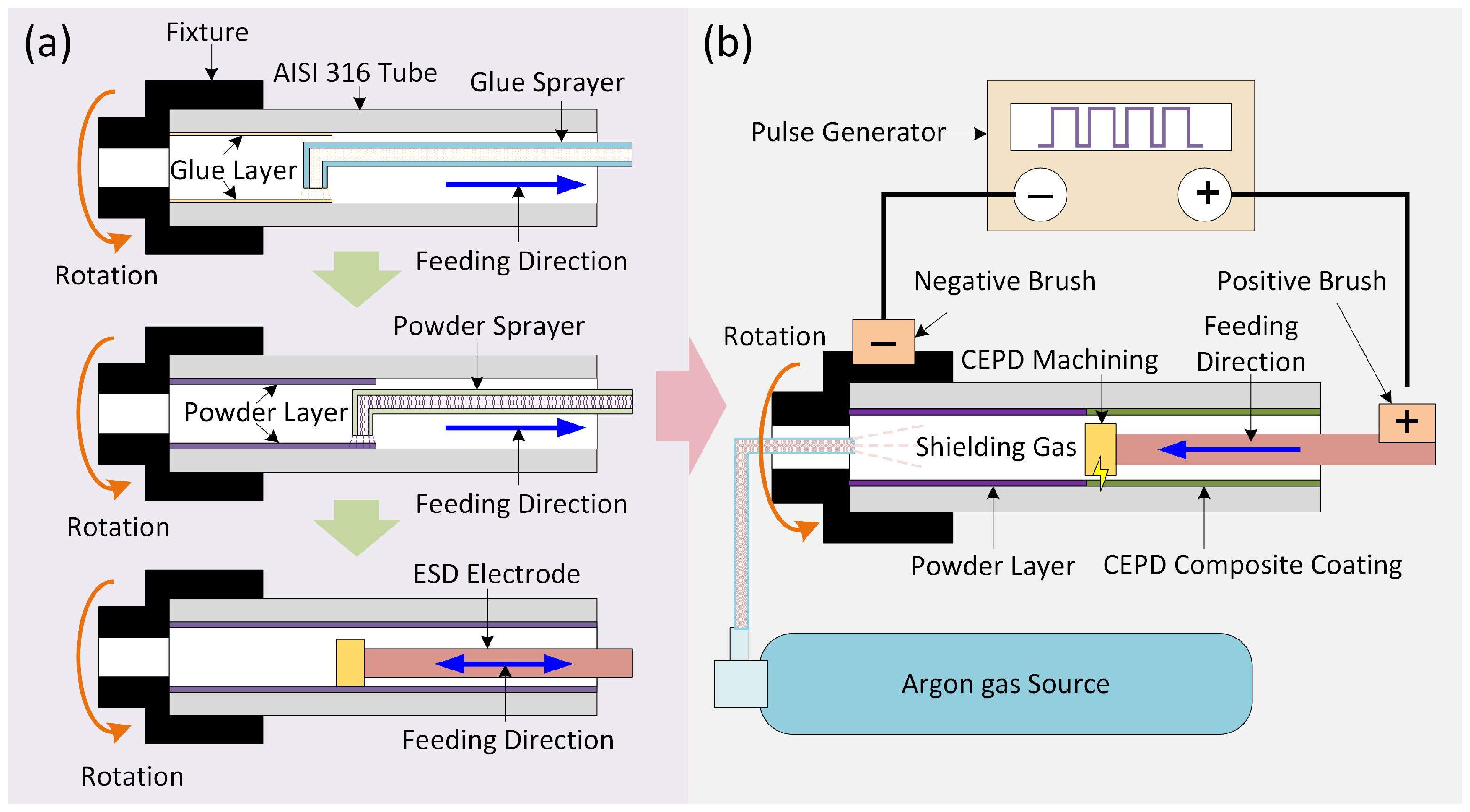
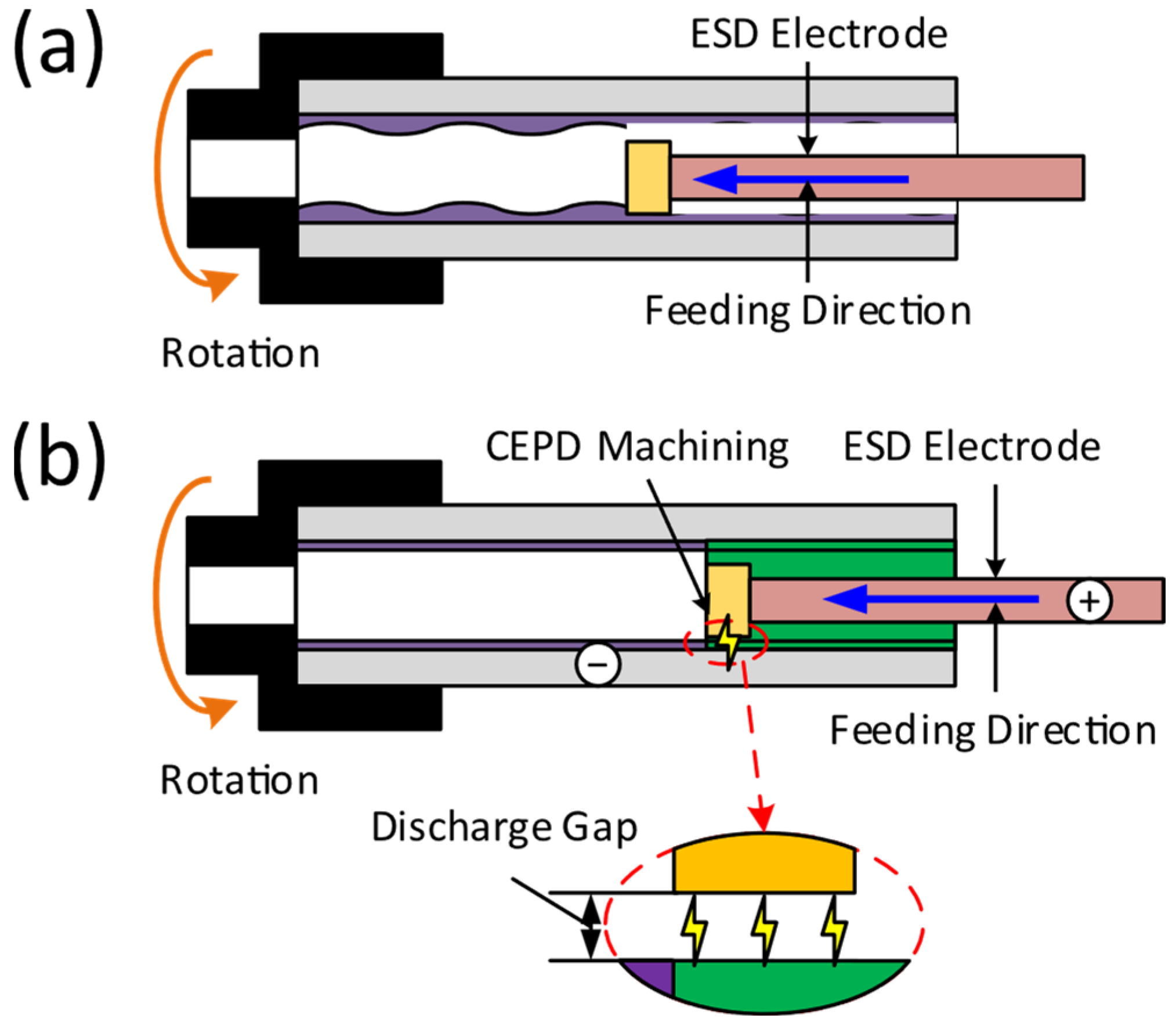
The fabrication of CEPD composite coatings involves two principal stages: (a) the preproduction of a composite powder layer and (b) the process of CEPD machining, as depicted in Figure 2. The preproduction of the composite powder layer is detailed in Figure 2a. Initially, the stainless steel tube is securely clamped onto a rotatable fixture. While this is rotating, a silver-containing conductive adhesive is sprayed onto the inner wall of the tube using a specialized glue spray gun, forming a uniform adhesive layer. Subsequently, the prepared Ni-based powder is evenly applied onto the adhesive layer using a powder spray gun, resulting in a relatively rough composite powder layer. Lastly, the CEPD electrode is employed to compact and smooth the powder layer without discharging, while simultaneously controlling the thickness of the powder layer to approximately 0.4 mm. This process yields a composite powder layer suitable for CEPD processing.
The CEPD machining procedure is illustrated in Figure 2b. The stainless steel tube, equipped with the powder layer, is clamped onto a precision workpiece fixture. The positive and negative poles of the electro-spark pulse generator are connected to the CEPD electrode and the workpiece fixture, respectively, via brushes. Subsequently, the CEPD electrode is inserted into the tube, and the radial feeding of the electrode is carefully adjusted to bring the electrode into close proximity with the powder layer for precise control of the discharge gap. The CEPD processing parameters are delineated in Table 4. Concurrently, the electrode is fed axially along the tube to ensure complete discharge processing of the entire length. During the CEPD machining, an inert argon gas is introduced into the tube to prevent oxidation of the coating and to enhance discharge efficiency.

2.3. Characteristic Analysis

Upon completion of the coating fabrication, the samples were sectioned and prepared for detailed examination. Scanning electron microscopy (FEI QUANTA 450, Thermo Fisher Scientific, Waltham, MA, USA) coupled with energy dispersive X-ray spectroscopy (EDS) was employed to conduct microanalysis of the samples. The phases of both the substrate and the coating were characterized via X-ray diffraction (XRD) analysis, using a BRUKER AXS COMPex-pro205 diffractometer (Karlsruhe, Germany), which was equipped with a monochromated Cu-Kα radiation source. The diffraction patterns were recorded over a 2θ range spanning from 20° to 100°. The surface roughness was quantitatively assessed utilizing a laser scanning confocal microscope (VK-X250, KEYENCE, Osaka, Japan). For each sample, five separate sampling points were chosen, and the mean value calculated from these points was adopted as the definitive measurement data. The microhardness of the coating was evaluated using a Vickers microhardness tester (FU- FM-ARS9000, TURE-TECH, Kawasaki, Japan), with a load of 0.05 kg applied for a duration of 10 s. To mitigate the impact of random errors, three test points were measured in each area, and their average was considered as the final test result.
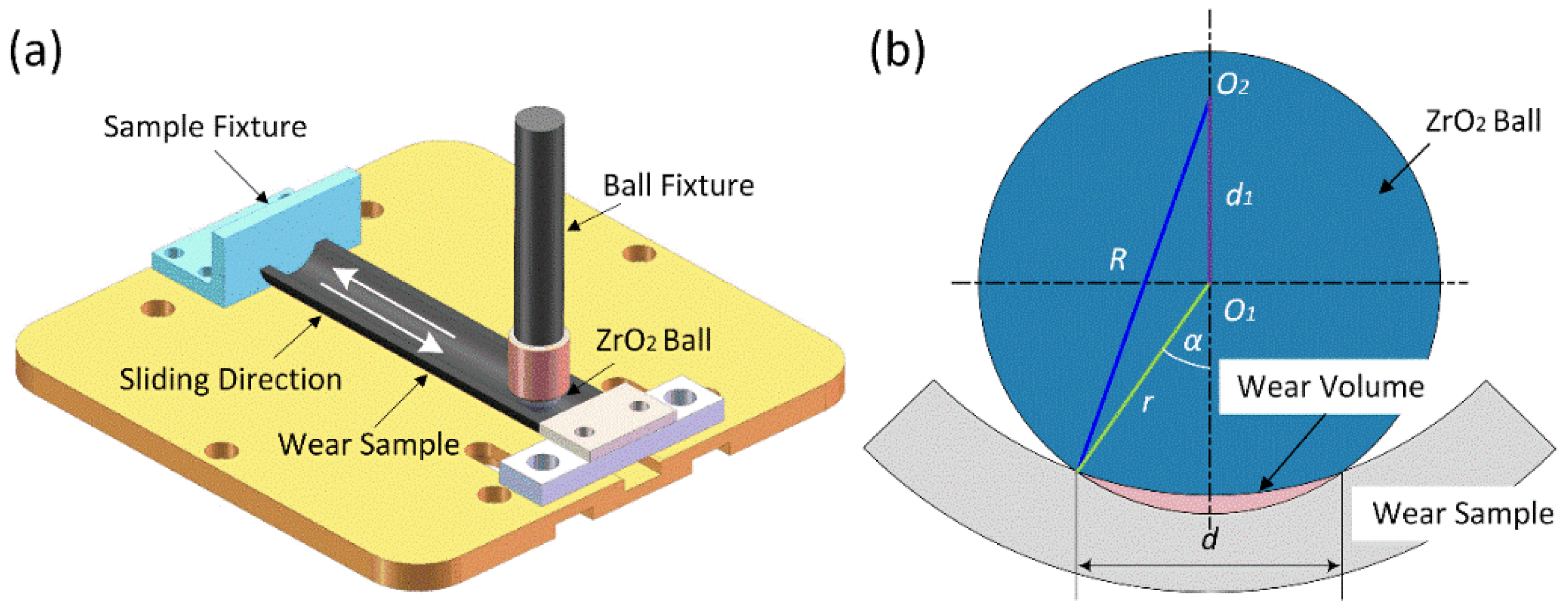
To assess the tribological characteristics of the substrate and the coating, friction and wear tests were carried out using a ball-on-plate reciprocating tribometer (MFT-5000, RTEC, San Jose, CA, USA). This instrument continuously monitored and automatically recorded the friction coefficients (FCs) throughout the testing process. The tubes were sliced along their axial direction to create the necessary friction test specimens. An 8 mm diameter ZrO2 ball was chosen as the counter-body, and the tribological tests were conducted in a ball-on-arc configuration, as illustrated in Figure 3a. The testing conditions were set to a constant temperature of 20 °C, with a constant load (P) of 25 N, a sliding distance of 10 mm, a sliding speed (v) of 5 mm/s, and a sliding duration (t) of 1800 s. The wear volume of the specimens was approximated as a spherical cap, as depicted in Figure 3b. The wear rate W (mm3/N·m) of the specimens was calculated according to Equations (1) and (2):
V = π 180 r 2 × s i n 1 d 2 r R 2 × s i n 1 d 2 R + d × d 1 2 × L
W = V P × S = V P × t × v
where V is the wear volume, r is the radius of the ZrO2 ball, R is the inner radius of the tube, S is the total sliding distance, d is the width of the wear trace, and d1 is the vertical distance between the centers of the inner circle of the tube and the ZrO2 ball.

3. Results and Discussion

3.1. Morphology of CEPD Electrode

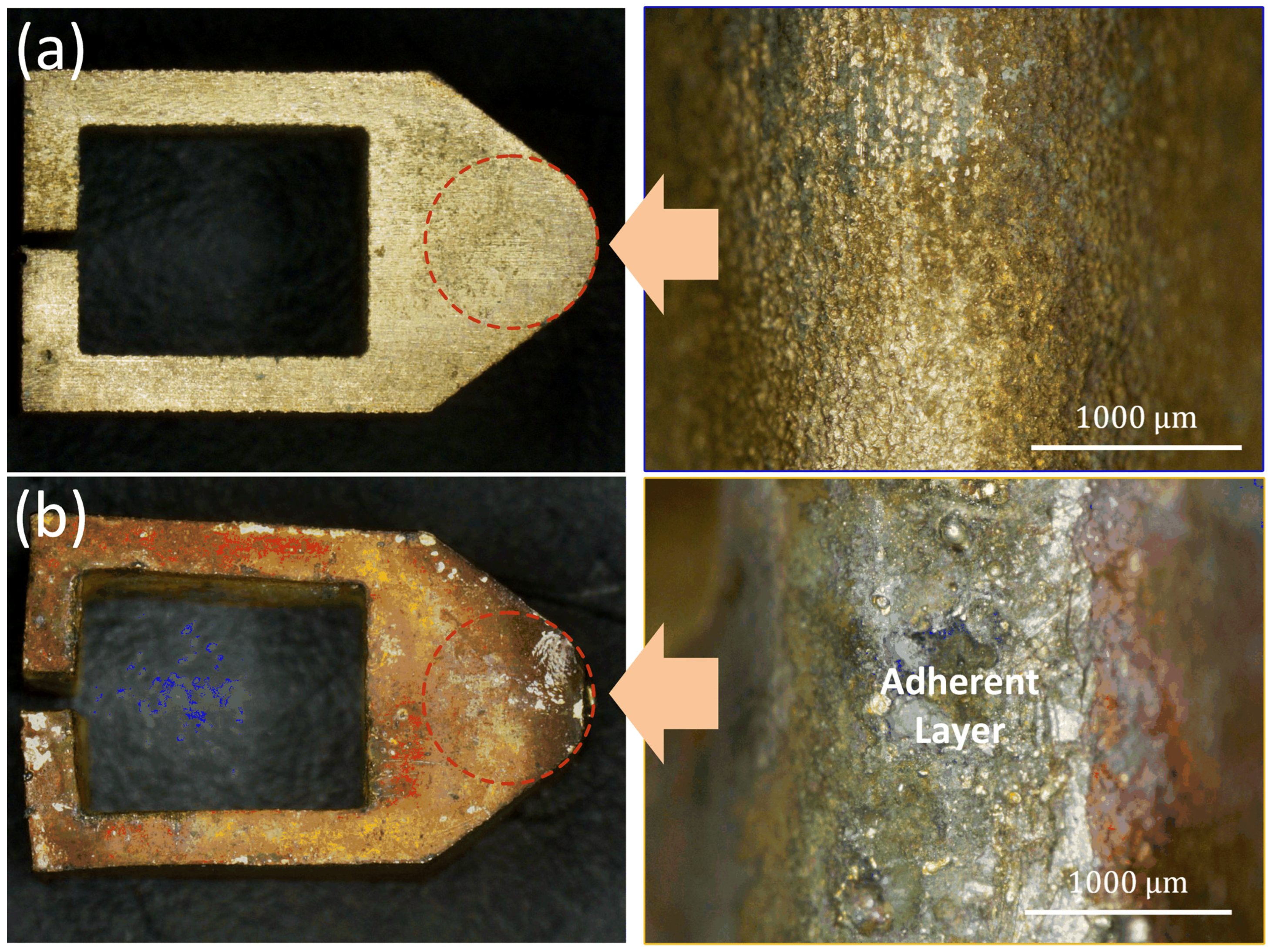
Figure 4 illustrates the morphological alterations of the CEPD electrode before and after the CEPD process. Prior to CEPD, the electrode exhibits a characteristic yellow luster of Cu alloy, with the cross-sectional profile of its processing end conforming precisely to the designed shape. The surface displays a typical recast layer morphology resultant from WEDM, as depicted in Figure 4a. In contrast, following CEPD processing, the electrode shows a dark red hue, with the processing end experiencing discernible wear. An adherent layer of silver-white metallic luster overlaid on the surface, and a significant increase in surface roughness is observed, as shown in Figure 4b. The primary cause of the color transformation is attributed to the prolonged continuous discharge, which induces excessive temperature. Subsequent exposure to air triggers surface oxidation and dezincification. Moreover, the wear observed at the processing end of the electrode substantiates that the high-temperature effect during the CEPD process induces electrode wear. The extent of this wear is primarily contingent upon the electrode material and the electro-spark process parameters [25].
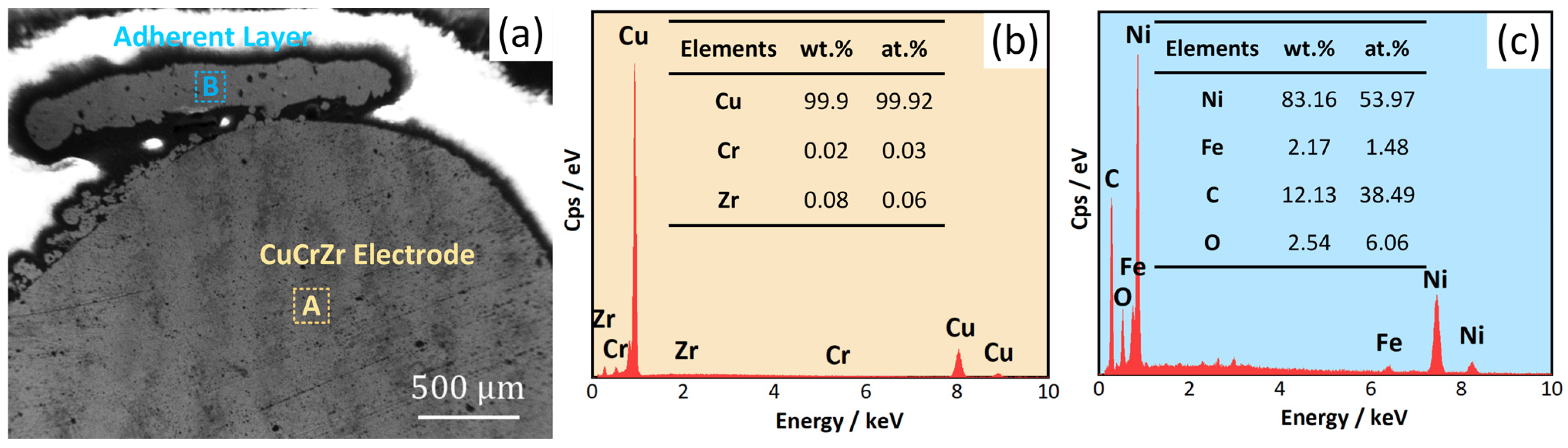
EDS analysis was conducted on the CuCrZr electrode (Figure 5a), revealing that the primary composition of the CuCrZr electrode was Cu (70.12 wt.%), as well as trace amounts of Cr and Zr, as shown in Figure 5b. In contrast, the silver-white adherent layer on the electrode surface was predominantly composed of Ni (83.16 wt.%), together with small amounts of Fe, C, O, and other elements, as depicted in Figure 5c. The marked compositional difference between the electrode and the adherent layer indicates that the latter is primarily sourced from the Ni-based composite powder. However, it is evident that the adhesion between the adherent layer and the electrode is not stable. As the CEPD machining progresses, the thickness of the adherent layer on the electrode continuously increases. When the thickness reaches a certain critical value, the majority of the adherent layer with weaker bonding strength detaches under the combined influences of spark impact, friction, and gravity. This detachment results in the rough surface morphology observed in Figure 4b.

3.2. Morphology of the CEPD Coating

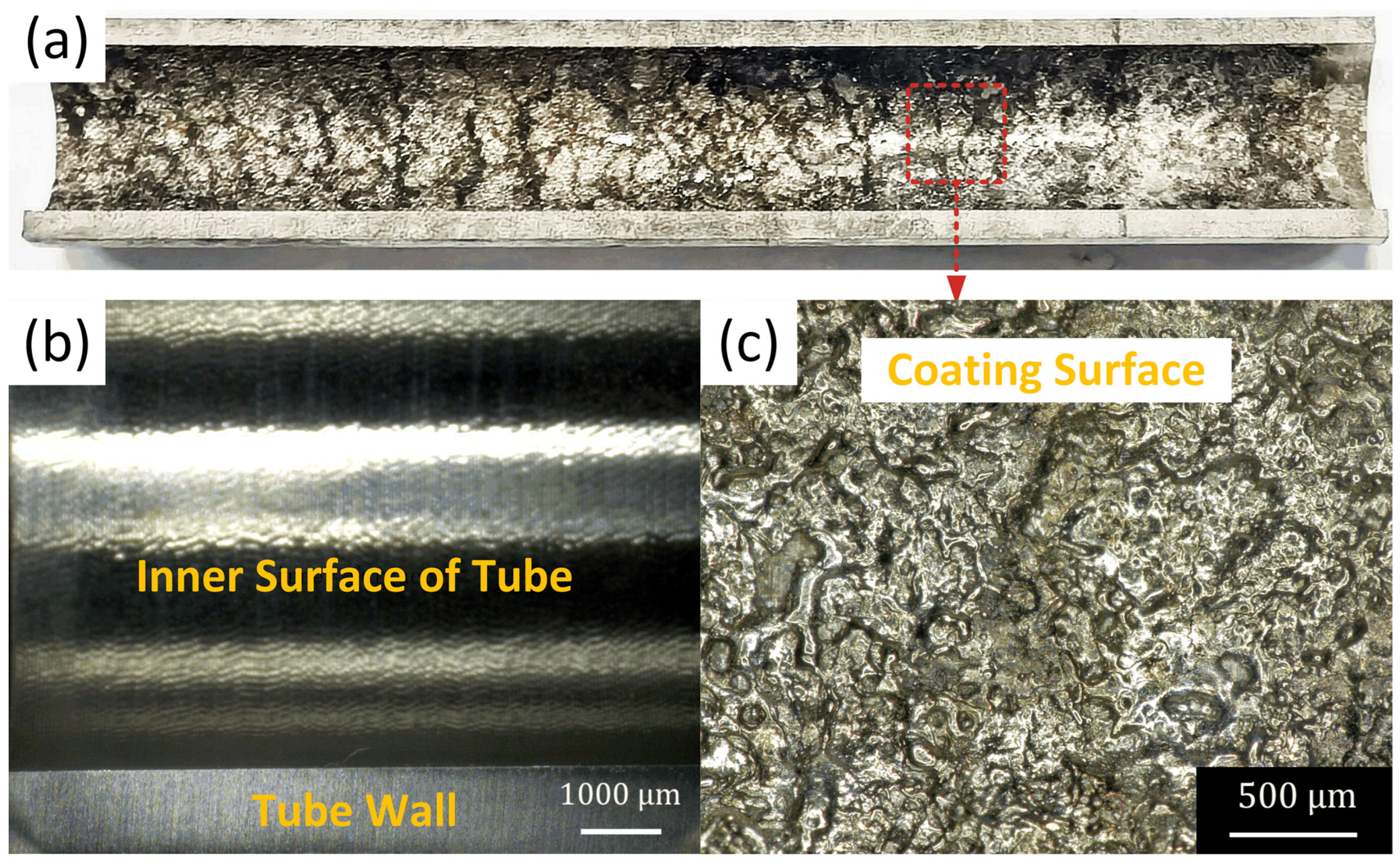
The macroscopic morphology of the Ni-based CEPD coating on the inner surface of the tube is depicted in Figure 6a. A uniform silver-white coating was observed to cover the entire inner surface of the tube, which has a diameter of 10 mm and a length of 80 mm. Prior to CEPD processing, the inner surface of the stainless steel tube was smooth and exhibited fine silver-white cutting marks, with a roughness of approximately Ra 0.8, as shown in Figure 6b. Following CEPD processing, the inner surface of the tube underwent significant changes, with the appearance of typical melting and splashing marks, in addition to the presence of microcracks and porosity defects, as shown in Figure 6c. The roughness was also markedly increased.
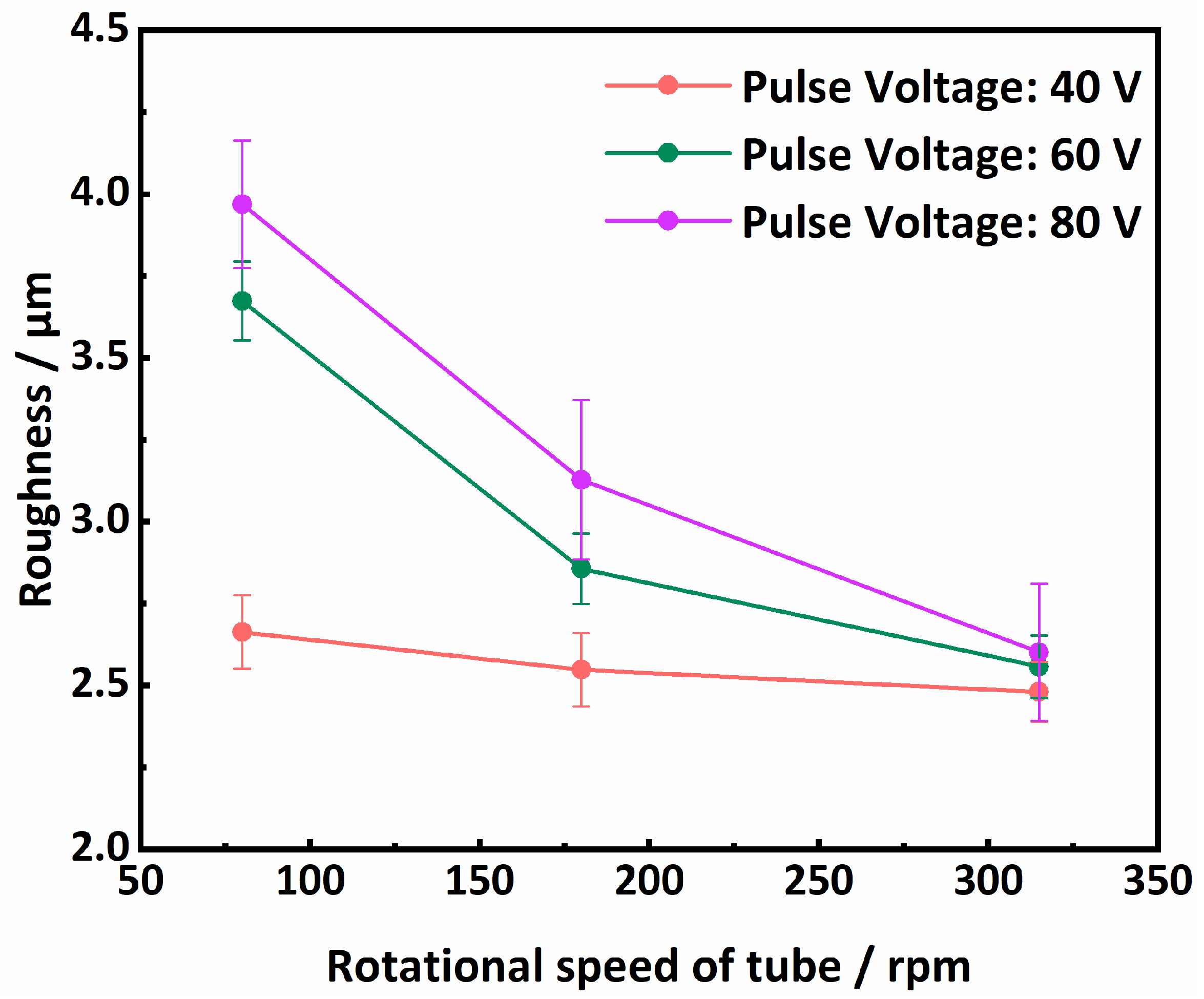
The results illustrated in Figure 7 show the change in the roughness of the CEPD coating as a function of the rotational speed of the tube (RST). It can be observed that the roughness of all coatings is significantly higher than that of the substrate (Ra 0.8). As the pulse voltage (PV) increases, the roughness of the coating exhibits an upward trend; conversely, as the RST increases, the roughness of the coating decreases. When the PV is 40 V and the RST is 315 rpm, the roughness reaches its minimum value of 2.48 μm. ESD utilizes the principle of the charging and discharging of capacitors in a pulse power supply. Within an extremely short period of approximately 10−6 s to 10−5 s, the energy stored in the capacitor is instantaneously released to form a plasma channel. The magnitude of the single-pulse energy (E) is jointly controlled by the pulse voltage (V) and the capacitance (C), with their interrelationship described in Equation (3) [12]:
E = 1 2   n C V 2
where n is the fraction of capacitor discharge that occurs during arcing. As indicated by Equation (3), PV exhibits a positive correlation with pulse energy, with the influence being more significant than that of capacitance. An elevation in pulse voltage correspondingly augments the single-pulse energy, thereby furnishing the plasma channel with a greater quantum of energy. However, this also amplifies the impact force exerted by the plasma channel on the powder layer, thereby inducing a more pronounced splashing effect and, as a consequence, a rougher coating surface. Conversely, within the interior of the tube, an increase in tube rotation implies that the energy coverage area of the plasma channel per unit time is correspondingly augmented, which effectively reduces the energy density of the plasma channel. This, in turn, mitigates the splashing phenomenon to a certain extent, thereby leading to a reduction in the surface roughness of the coating.
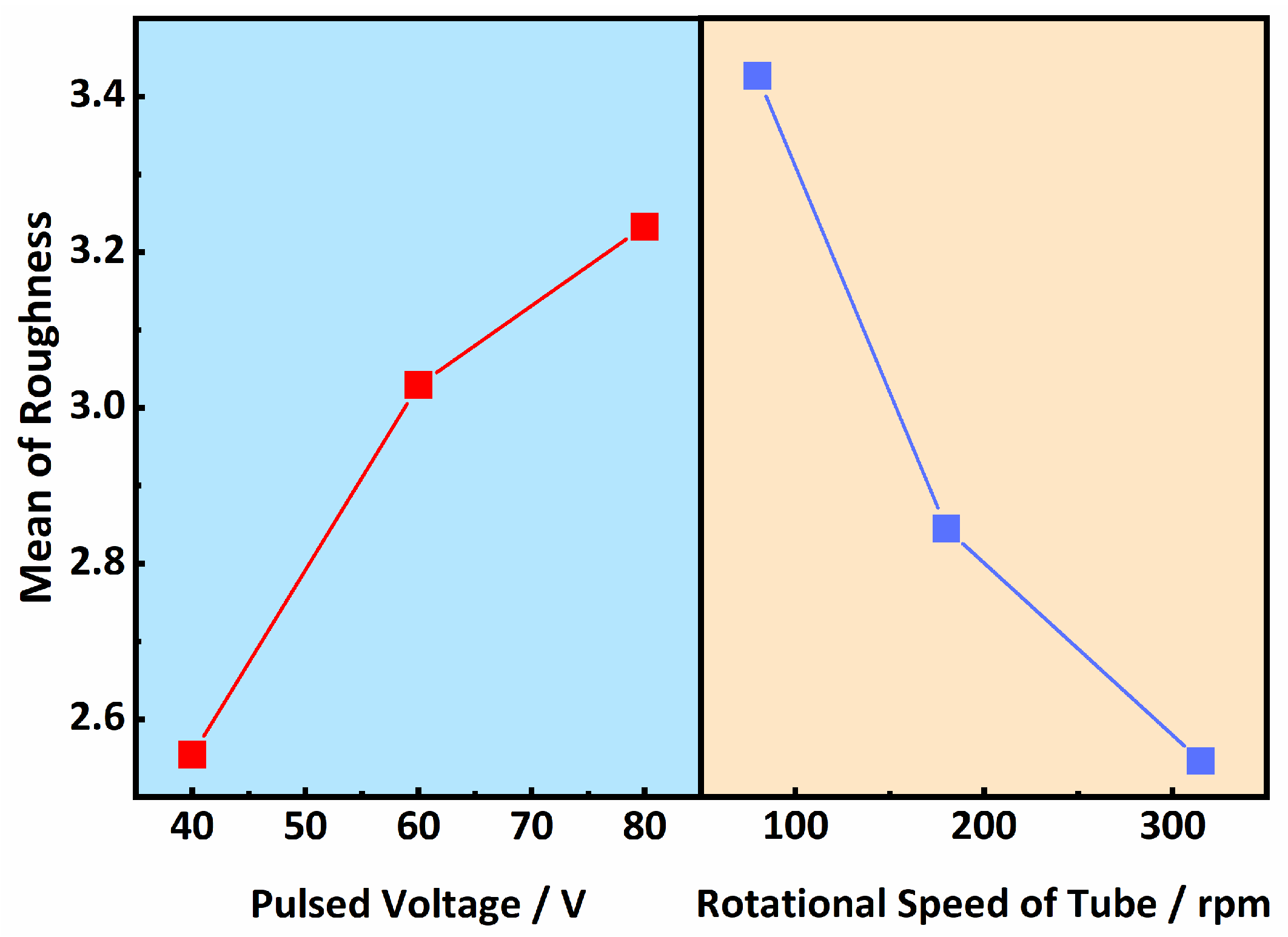
Analysis of variance was employed to calculate the mean roughness values for PV and RST, with the results presented in Figure 8 and Table 5. The Adj SS values for PV and RST are 0.7285 and 1.2006, respectively, while the corresponding Adj MS values are 0.3642 and 0.6003. Additionally, an interaction is observed between these two factors, with Adj SS and Adj MS values of 0.4332 and 0.1083, respectively. These results indicate that the effect of input factors on the roughness of the CEPD coating is in the order of RST > PV > Interaction, where RST is the dominant factor and exerts the most significant impact on the roughness of the coating.
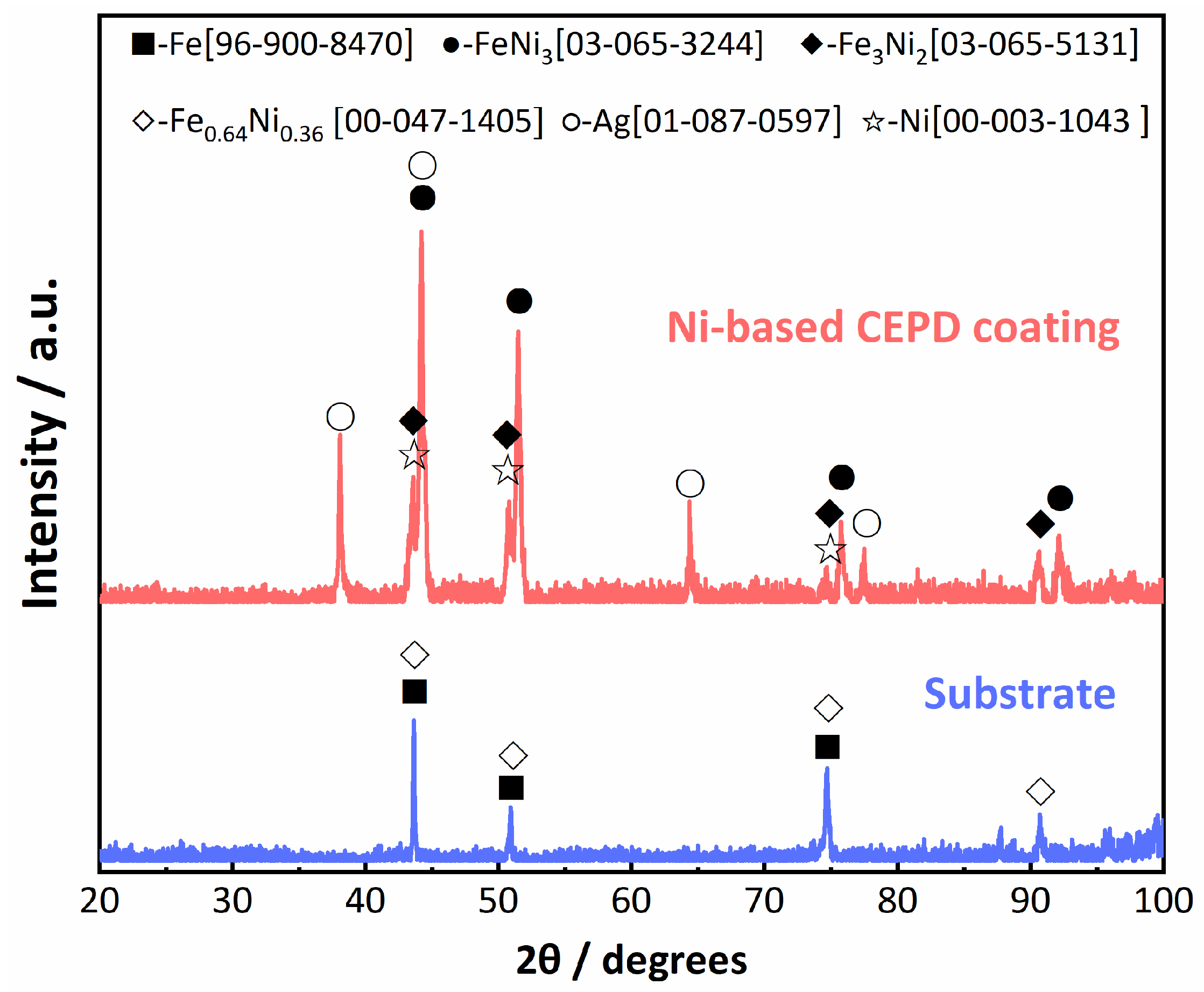
XRD patterns of the stainless steel substrate together with its CEPD coating are presented in Figure 9. Prior to the UEPD process, the substrate’s phase composition solely consisted of Fe and Fe0.64Ni0.36. In contrast, the CEPD coating’s diffraction pattern is significantly more intricate, featuring peaks attributed to Ni, Ag, and various intermetallic compounds, including FeNi3 and Fe3Ni2. These intermetallic compounds predominantly originated from in situ precipitation during coating formation, serving as reinforcements to enhance the coating’s hardness and wear resistance. Moreover, a notable presence of Ag was detected in the coating, stemming from the Ag powder in the conductive adhesive.

3.3. Microstructure of the CEPD Coating

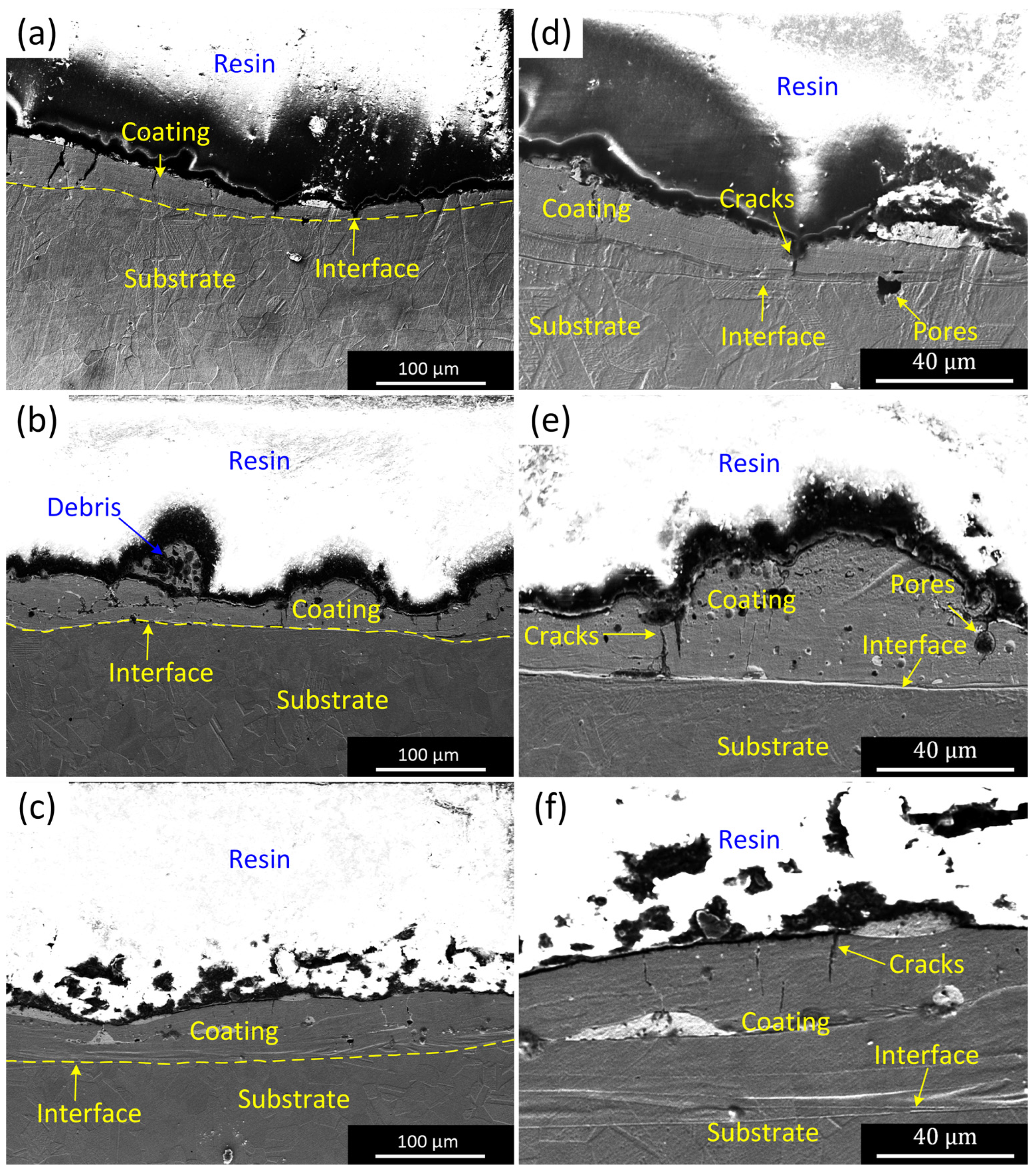
As depicted in Figure 10, the cross-sectional morphology of the CEPD coatings was examined under various PV parameters. It can be seen that high-quality Ni-based composite coatings can be obtained on the substrate surface at PVs of 40, 60 and 80 V. Specifically, at a PV of 40 V, the average thickness of the coating was approximately 13.8–42.3 µm, as shown in Figure 10a. With an increase in the PV, a corresponding increase in the thickness of the coating was observed. When the PV was elevated to 60 and 80 V, the average thicknesses reached 21.8–49.8 and 30.4–54.8 µm, respectively, as shown in Figure 10b,c. M. Salmaliyan et al. [26] also reported similar phenomena in their study on the effects of EDS process parameters on the characteristics of WC-Co coatings. As delineated by Equation (3), an augmentation in PV engenders a concomitant escalation in discharge energy, thereby augmenting the heat input during the deposition process. This enhanced thermal input enables the powder layer to be more thoroughly melted and subsequently adhered to the surface of substrate within a given time frame, culminating in an increase in the thickness of the coating. However, excessive PV can lead to an increase in coating porosity and crack formation [26], as well as an elevation in surface roughness. Upon further magnification, it can be observed that a distinct interface exists between the coating and the substrate, as illustrated in Figure 10d–f. Additionally, it should also be noted that some defects, such as microcracks and pores, are observed in the coatings. The occurrence of these defects is related to the mechanism by which the CEPD coating is processed.
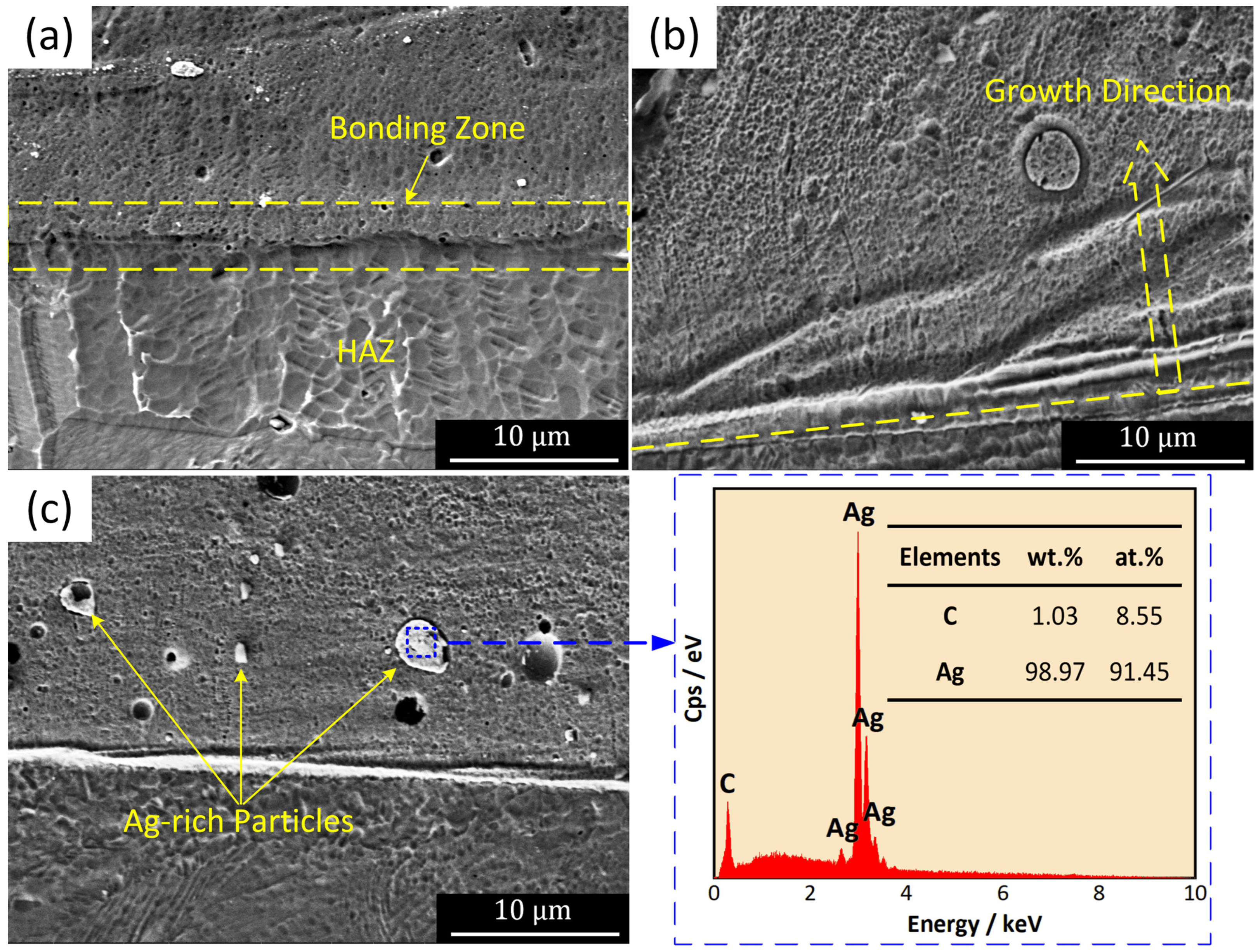
The magnified images of the CEPD coating’s cross-section are shown in Figure 11. As depicted in Figure 11a, robust metallurgical bonding was established within the bonding zone between the coating and the substrate. Additionally, a distinct heat-affected zone (HAZ) was observed in the subsurface layer of the substrate adjacent to the coating. The formation of the HAZ is attributed to the solid-state phase transformation induced by the rapid melting and solidification during the coating formation, resulting in the formation of self-quenching structures. The grains within the coating exhibited extremely fine sub-micron dendritic structures, which predominantly grew vertically to the substrate surface, as shown in Figure 11b. This can be attributed to the rapid solidification of the coating, where the self-cooling effect of the substrate induced a significant temperature gradient at the solid–liquid interface. Consequently, the crystals of the coating preferentially nucleated on the substrate surface with the lowest temperature and grew rapidly in the vertical direction. Furthermore, a small number of bright particles were identified as embedded in the coating, as shown in Figure 11c. The EDS analysis shows that the bright particles are Ag-rich. The Ag-rich particles are derived from the silver powder present in the silver-containing conductive adhesive. Due to the immiscibility of Ag and Ni, liquid-phase separation occurred during the rapid cooling process of CEPD, leading to the formation of spherical Ag-rich particles driven by surface tension [10].

3.4. Performance of CEPD Coating

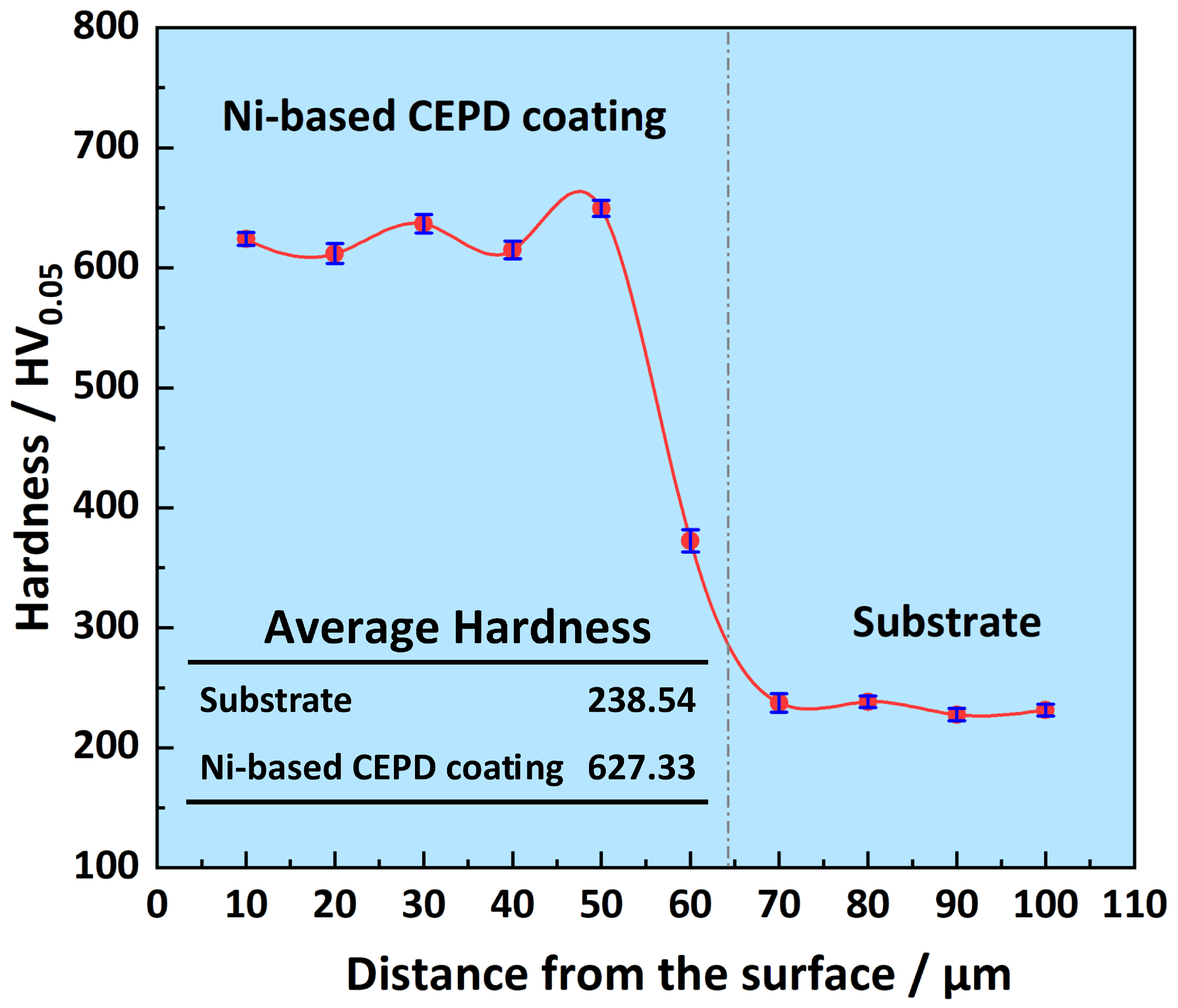
Figure 12 illustrates the microhardness profile of the CEPD coating. A pronounced difference in hardness is observed between the CEPD coating and the substrate. In the coating region, the average microhardness reaches 673.33 HV, which is approximately 2.82 times higher than the average hardness of the substrate (238.54 HV). The elevated hardness of the coating can be ascribed to two factors: firstly, the formation of intermetallic compounds such as FeNi3 and Fe3Ni2, which contribute to particle strengthening; and secondly, the fine-grain strengthening effect induced by the high cooling rate associated with the CEPD process.
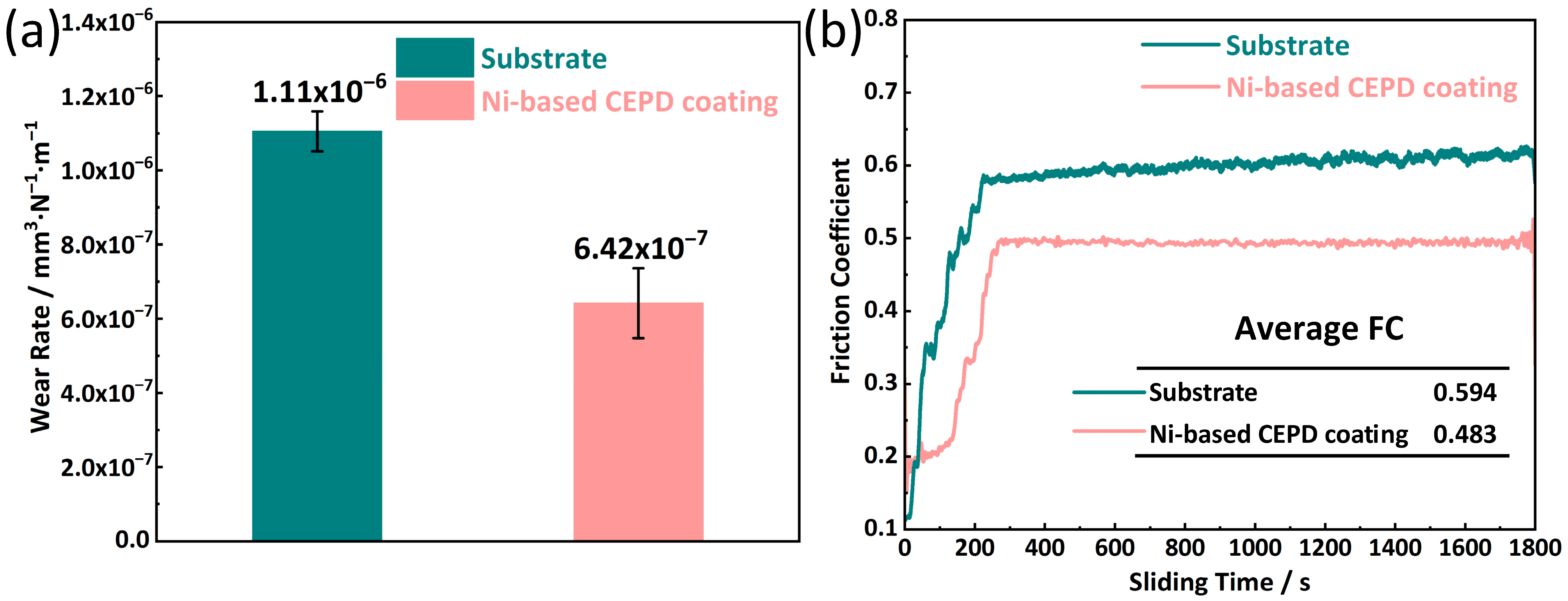
In Figure 13a, the calculated wear rates of the CEPD coating and the stainless steel substrate in the dry sliding wear test are compared. The wear rate of the CEPD coating is found to be 6.42 × 10⁻⁷ mm3/N·m, which is significantly lower than that of the substrate (1.11 × 10⁻⁶ mm3/N·m). According to Archard’s theory, the wear volume of a material is usually inversely proportional to its hardness [27]. Combined with the results of the hardness test illustrated in Figure 12, it can be concluded that the high hardness is the main reason why the wear resistance of the CEPD coating is nearly double that of the substrate. The change in the FCs of the CEPD coating and uncoated 316L stainless steel as a function of sliding time is shown in Figure 13b. In the stable stage, the average FC of the coated sample is roughly 0.483, significantly lower than that of the uncoated sample (0.594). A similar result was also reported in a previous study [24], which the authors investigated the variations in FC for an induction Ni-based composite coating and 316L stainless steel. The lower FC of the CEPD coating compared to the substrate may be attributed to three aspects: firstly, the elevated hardness of the coating can effectively suppress the cutting action from the counter-body; secondly, during the wear process of the coating, a wear debris layer containing brittle and hard oxides is formed, which can function as a granular flow lubricant; thirdly, the presence of softer Ag-rich particles within the coating can provide a certain degree of solid lubrication [24,28].

3.5. Formation Process and Mechanism of the CEPD Coating

The primary distinction between the CEPD process and conventional EDS lies in the fundamental mechanisms employed for coating formation. Conventional EDS predominantly relies on material transfer between the electrode and the workpiece surface during the discharge process. In contrast, CEPD leverages the high-temperature effect generated by the discharge between the two poles to rapidly melt and solidify the pre-prepared powder layer on the workpiece surface, thereby facilitating its adhesion and forming a coherent coating on the workpiece surface.
Prior to CEPD processing, the tube with the pre-prepared powder layer is securely clamped in a fixture. The CEPD electrode initially traverses the processing trajectory in a non-discharged state, serving two critical functions: first, to ensure the uniformity and flatness of the powder layer; and second, to maintain a consistent gap between the electrode and the powder layer, as depicted in Figure 14a. Subsequently, the electrode and the tube are connected to a pulse power supply. The electrode is then driven into the interior of the tube by the motion mechanism, and the process parameters are adjusted to initiate the discharge processing, as shown in Figure 14. It should be noted that the discharging gap between the electrode and the powder layer must be precisely controlled. During the CEPD process, the electrode, under the combined influence of axial feed and tube rotation, executes discharge processing on the inner surface of the tube in a spiral trajectory, ultimately forming a continuous coating over the entire inner surface.
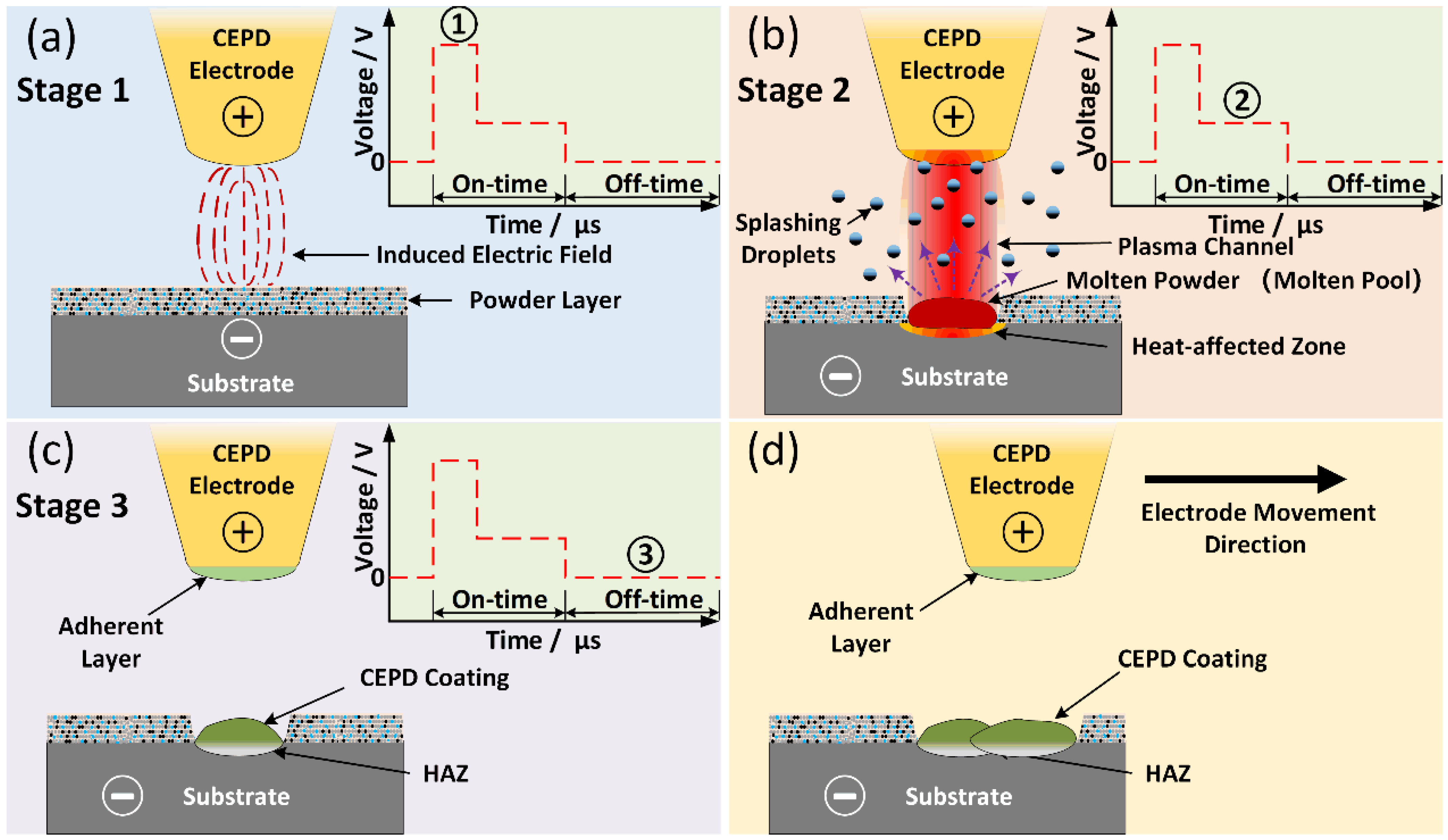
The formation process of the CEPD coating can be divided into three stages, as depicted in Figure 15. In the initial stage, the CEPD electrode enters the inner cavity of the tube and gradually approaches the powder layer. An induced electric field is generated between the electrode and the powder layer due to the presence of a gap. During this phase, the inter-electrode voltage is maintained at the preset floating voltage level, as illustrated in Figure 15a. As the gap continuously decreases, the electric field strength gradually increases. When the gap reaches a critical value, the insulating medium (Ar gas) between the poles is broken down, resulting in the formation of a local plasma channel, which triggers an electro-spark. This process is accompanied by a sharp drop in the inter-electrode voltage, marking the transition to the second stage of the process, as shown in Figure 15b. The plasma channel generates extremely high temperatures, ranging from 8000 to 12,000 °C, and produces local pressures on the order of 200 atmospheres [29]. Within the plasma channel region, the high temperature rapidly heats and melts both the powder layer and the surface layer of the substrate, forming a mixed molten pool on the substrate. This molten pool is a crucial factor for the metallurgical bonding of the coating and the substrate. Simultaneously, an HAZ is formed in the subsurface layer of the substrate, surrounding the mixed molten pool, due to the high temperature. In addition, under the impact force of the electro-spark, some of the molten powder splashes in the form of droplets above the molten pool. A small portion of these droplets adheres to the surface of the electrode, forming an adherent layer, as shown in Figure 4b and Figure 5. When the discharge of a pulse cycle ends, the circuit enters an intermittent state, the inter-electrode voltage returns to zero, and the plasma channel disappears, thereby concluding the second stage. In the third stage, the cessation of heat input marks the beginning of rapid solidification. The mixed molten pool on the substrate rapidly cools and solidifies, resulting in the formation of a local flake-like CEPD coating, as depicted in Figure 15c. As the electrode moves to a new position along the preset trajectory, a new discharge cycle is initiated, and the flake-like CEPD coatings overlap with each other until a continuous alloy coating is formed, as shown in Figure 15d. During the rapid cooling process, the disparity in the thermal expansion coefficients between the coating and the substrate induces internal stresses within the coating, thereby precipitating the formation of microcracks in specific regions, as depicted in Figure 10. Concurrently, the mixed molten pool is susceptible to capturing and dissolving gas molecules within the protective atmosphere, and the metallurgical reactions occurring within the molten pool also generate certain gases [30,31]. Due to the insufficient release of these gases during the rapid solidification process, gas pores are subsequently formed within the coating. Collectively, these factors contribute to the genesis of microcracks and gas pore defects within the coating.

4. Conclusions

This investigation successfully implemented an innovative CEPD process to deposit Ni-based composite coatings on the inner surface of 316L stainless steel tubes. Comprehensive analyses were conducted on the surface morphology, microstructure, microhardness, and tribological properties of the CEPD coating, as well as on the underlying formation mechanism. The following conclusions were drawn:
(1)
The Ni-based composite coating achieved uniform coverage of the tube inner surface and formed a robust metallurgical bond with the substrate. The coating roughness exhibited a direct relationship with the pulse voltage and an inverse relationship with the tube’s rotational speed, with the latter exerting the most pronounced influence. The coating’s microstructure consisted of submicron dendrites oriented perpendicularly to the substrate surface, primarily composed of Ni and intermetallic compounds such as FeNi3 and Fe3Ni2. Additionally, a minor presence of Ag-rich particles was detected within the coating, predominantly originating from the Ag powder in the conductive adhesive.
(2)
The fine grains and intermetallic compounds within the coating significantly enhanced its hardness and tribological performance. The coating’s average hardness reached 673.33 HV, which is approximately 2.82 times higher than that of the substrate. This elevated hardness markedly improved the coating’s wear resistance, nearly doubling that of the substrate. Furthermore, the coating demonstrated superior friction-reducing capabilities, with an average friction coefficient of approximately 0.483, significantly lower than that of the substrate.
(3)
During the CEPD process, a plasma discharge channel was established between the electrode and the powder layer on the substrate surface. Under the high-temperature effect of the plasma channel, the powder layer and the substrate’s surface layer rapidly melted to form a mixed molten pool, which subsequently solidified into a flake-like CEPD coating. The CEPD electrode traversed and discharged along the predefined processing trajectory, with each flake-like coating overlapping adjacent sections to form a continuous coating that covered the inner tube surface.
(4)
Compared with other existing inner surface coating techniques, the CEPD process is not only simpler and more cost-effective but also makes it possible to fabricate functional composite coatings with complex compositions. The prepared coatings exhibit considerable potential for development and may offer a novel approach for the advancement of coating techniques on non-line-of-sight surfaces.

Author Contributions

Methodology, H.Z.; writing—original draft preparation, H.Z. and G.Y.; writing—review and editing, H.Z. and X.G.; data curation, G.Y.; investigation, G.Y. and Y.L.; software, F.L. and F.Z.; conceptualization, F.L.; validation, X.G. and F.Z.; supervision, X.G.; funding acquisition, H.Z. and Y.L. All authors have read and agreed to the published version of the manuscript.

Funding

This research was funded by the Stable Support B Plan Program of the Shenzhen Natural Science Fund [grant number 20231122155706001], the Focal Area Program of the Guangdong Higher Education Institute [grant number 2025ZDZX1081], the Innovation Team Project in the Universities of Guangdong Province [grant number 2024KCXTD065] and the National Natural Science Foundation of China [grant number 12375299].

Institutional Review Board Statement

Not applicable.

Informed Consent Statement

Not applicable.

Data Availability Statement

The datasets are contained within the article.

Conflicts of Interest

The authors declare no conflicts of interest.

References

  1. Zhang, C.; Li, Y.; Xu, X.; Zhang, M.; Leng, H.; Sun, B. Optimization of plating process on inner wall of metal pipe and research on coating performance. Materials 2023, 16, 2800. [Google Scholar] [CrossRef]
  2. Hussain, A.K.; Al Naib, U.M.B. Recent developments in graphene based metal matrix composite coatings for corrosion protection application: A review. J. Met. Mater. Miner. 2019, 29, 1–9. [Google Scholar]
  3. Xu, Y.; Zheng, X.; Hu, X.; Yin, Y.; Lei, T. Preparation of the electroless Ni-P and Ni-Cu-P coatings on engine cylinder and their tribological behaviors under bio-oil lubricated conditions. Surf. Coat. Technol. 2014, 258, 790–796. [Google Scholar] [CrossRef]
  4. Michau, A.; Maury, F.; Schuster, F.; Lomello, F.; Brachet, J.C.; Rouesne, E.; Le Saux, M.; Boichot, R.; Pons, M. High-temperature oxidation resistance of chromium-based coatings deposited by DLI-MOCVD for enhanced protection of the inner surface of long tubes. Surf. Coat. Technol. 2018, 349, 1048–1057. [Google Scholar] [CrossRef]
  5. Xu, Y.; Li, L.H.; Chu, P.K. Deposition of diamond-like carbon films on interior surface of long and slender quartz glass tube by enhanced glow discharge plasma immersion ion implantation. Surf. Coat. Technol. 2015, 265, 218–221. [Google Scholar] [CrossRef]
  6. Su, J.F.; Nie, X.; Hu, H.; Tjong, J. Friction and counterface wear influenced by surface profiles of plasma electrolytic oxidation coatings on an aluminum A356 alloy. J. Vac. Sci. Technol. A 2012, 30, 061402. [Google Scholar] [CrossRef]
  7. Nowotny, S.; Spatzier, J.; Kubisch, F.; Scharek, S.; Ortner, J.; Beyer, E. Repair of erosion defects in gun barrels by direct Laser deposition. J. Therm. Spray Technol. 2012, 21, 1173–1183. [Google Scholar] [CrossRef]
  8. Meeß, J.; Anasenzl, M.; Ossenbrink, R.; Michailov, V.; Singh, R.; Kondas, J. Cold gas spray Inner diameter coatings and their properties. J. Therm. Spray Technol. 2022, 31, 1712–1724. [Google Scholar] [CrossRef]
  9. Zhao, L.; Zhang, Z.; Wang, B.; Xu, S.; Si, C. Microstructure and sliding wear properties of WC-10Co-4Cr coatings on the inner surface of TC4 slender tube by HVOF. Mater. Lett. 2022, 328, 133203. [Google Scholar] [CrossRef]
  10. Zhao, H.; Gao, C.; Wu, X.; Xu, B.; Lu, Y.; Zhu, L. A novel method to fabricate composite coatings via ultrasonic-assisted electro-spark powder deposition. Ceram. Int. 2019, 45, 22528–22537. [Google Scholar] [CrossRef]
  11. Wang, J.; Zhang, M.; Dai, S.; Zhu, L. Research progress in electrospark deposition coatings on titanium alloy surfaces: A short review. Coatings 2023, 13, 1473. [Google Scholar] [CrossRef]
  12. Barile, C.; Casavola, C.; Pappalettera, G.; Renna, G. Advancements in electrospark deposition (ESD) technique: A short review. Coatings 2022, 12, 1536. [Google Scholar] [CrossRef]
  13. Liu, T.X.; Guo, C.A.; Lu, F.S.; Zhang, X.Y.; Zhang, L.; Wang, Z.J.; Xu, Z.Y.; Zhu, G.L. Influence of deposition voltage on tribological properties of W-WS2 coatings deposited by electrospark deposition. Chalcogenide Lett. 2023, 20, 741–749. [Google Scholar] [CrossRef]
  14. Liu, Y.; Wang, D.; Deng, C.; Huo, L.; Wang, L.; Fang, R. Novel method to fabricate Ti-Al intermetallic compound coatings on Ti-6Al-4V alloy by combined ultrasonic impact treatment and electrospark deposition. J. Alloys Compd. 2015, 628, 208–212. [Google Scholar] [CrossRef]
  15. Sheveyko, A.N.; Kuptsov, K.A.; Antonyuk, M.N.; Bazlov, A.I.; Shtansky, D.V. Electro-spark deposition of amorphous Fe-based coatings in vacuum and in argon controlled by surface wettability. Mater. Lett. 2022, 318, 132195. [Google Scholar] [CrossRef]
  16. Yan, J.; Lopes, J.G.; Chan, K.; Scotchmer, N.; Oliveira, J.P.; Zhou, Y.N.; Peng, P. Microstructure characterization of AlCrFeCoNi high-entropy alloy coating on Inconel 718 by electrospark deposition. Mater. Charact. 2025, 225, 115139. [Google Scholar] [CrossRef]
  17. Burkov, A.A.; Pyachin, S.A. Formation of WC-Co coating by a novel technique of electrospark granules deposition. Mater. Des. 2015, 80, 109–115. [Google Scholar] [CrossRef]
  18. Burkov, A.A.; Chigrin, P.G.; Dvornik, M.I. Electrospark Cu Ti coatings on titanium alloy Ti6Al4V: Corrosion and wear properties. Surf. Coat. Technol. 2023, 469, 129796. [Google Scholar] [CrossRef]
  19. Burkov, A.A.; Chigrin, P.G.; Kulik, M.A. Effect of TaC content on microstructure and wear behavior of PRMMC Fe-TaC coating manufactured by electrospark deposition on AISI304 stainless steel. Surf. Coat. Technol. 2024, 494, 131446. [Google Scholar] [CrossRef]
  20. Mihailov, V.; Kazak, N.; Ivashcu, S.; Ovchinnikov, E.; Baciu, C.; Ianachevici, A.; Rukuiza, R.; Zunda, A. Synthesis of multicomponent coatings by electrospark alloying with powder materials. Coatings 2023, 13, 651. [Google Scholar] [CrossRef]
  21. Yan, J.; Zhang, K.; Zhou, N.Y.; Peng, P. In-situ CrFeCoNi medium entropy alloying coating via electrospark powder deposition. Surf. Eng. 2024, 40, 815–825. [Google Scholar] [CrossRef]
  22. Zhao, H.; Gao, C.; Guo, C.; Xu, B.; Wu, X.-Y.; Lei, J.-G. In-situ TiC-reinforced Ni-based composite coatings fabricated by ultrasonic-assisted electrospark powder deposition. J. Asian Ceram. Soc. 2023, 11, 26–38. [Google Scholar] [CrossRef]
  23. Li, S.; Niu, W.; Lei, Y.W.; Zheng, Y. Microstructure and wear performance of ex/in-situ TiC reinforced CoCrFeNiW0.4Si0.2 high-entropy alloy coatings by laser cladding. J. Alloys Compd. 2024, 1002, 175458. [Google Scholar] [CrossRef]
  24. Zhao, H.; Gao, C.; Wu, X.; Xu, B.; Lei, J. Microstructure and tribological properties of WC-Ni cermet coatings prepared by ultrasonic-assisted electro-spark powder deposition. Chin. J. Mech. Eng. 2021, 57, 252–261. [Google Scholar]
  25. Wu, B.; Wu, H.; Lei, J.; Shen, H.; Xu, B.; Zhao, H.; Zhu, L.; Wu, X. Experimental study on electrode wear during the EDM of microgrooves with laminated electrodes consisting of various material foils. J. Mater. Res. Technol. 2024, 29, 4191–4199. [Google Scholar] [CrossRef]
  26. Salmaliyan, M.; Malek Ghaeni, F.; Ebrahimnia, M. Effect of electro spark deposition process parameters on WC-Co coating on H13 steel. Surf. Coat. Technol. 2017, 321, 81–89. [Google Scholar] [CrossRef]
  27. Aghababaei, R.; Zhao, K. Micromechanics of material detachment during adhesive wear: A numerical assessment of Archard’s wear model. Wear 2021, 476, 203739. [Google Scholar] [CrossRef]
  28. Chauhan, B.; Singh, A.D.; Sengupta, S.; Nadakuduru, V.N.; Mundotiya, B.M. Enhancement of wear resistance in electrodeposited Ni-Ag self-lubricated alloy coatings via in-situ formation of solid lubricating phases for high-temperature tribological applications. Wear 2025, 578–579, 206177. [Google Scholar] [CrossRef]
  29. Algodi, S.J.; Murray, J.W.; Fay, M.W.; Clare, A.T.; Brown, P.D. Electrical discharge coating of nanostructured TiC-Fe cermets on 304 stainless steel. Surf. Coat. Technol. 2016, 307, 639–649. [Google Scholar] [CrossRef]
  30. Farahmand, P.; Liu, S.; Zhang, Z.; Kovacevic, R. Laser cladding assisted by induction heating of Ni-WC composite enhanced by nano-WC and La2O3. Ceram. Int. 2014, 40, 15421–15438. [Google Scholar] [CrossRef]
  31. Zhou, S.; Zeng, X.; Hu, Q.; Huang, Y. Analysis of crack behavior for Ni-based WC composite coatings by laser cladding and crack-free realization. Appl. Surf. Sci. 2008, 255, 1646–1653. [Google Scholar] [CrossRef]
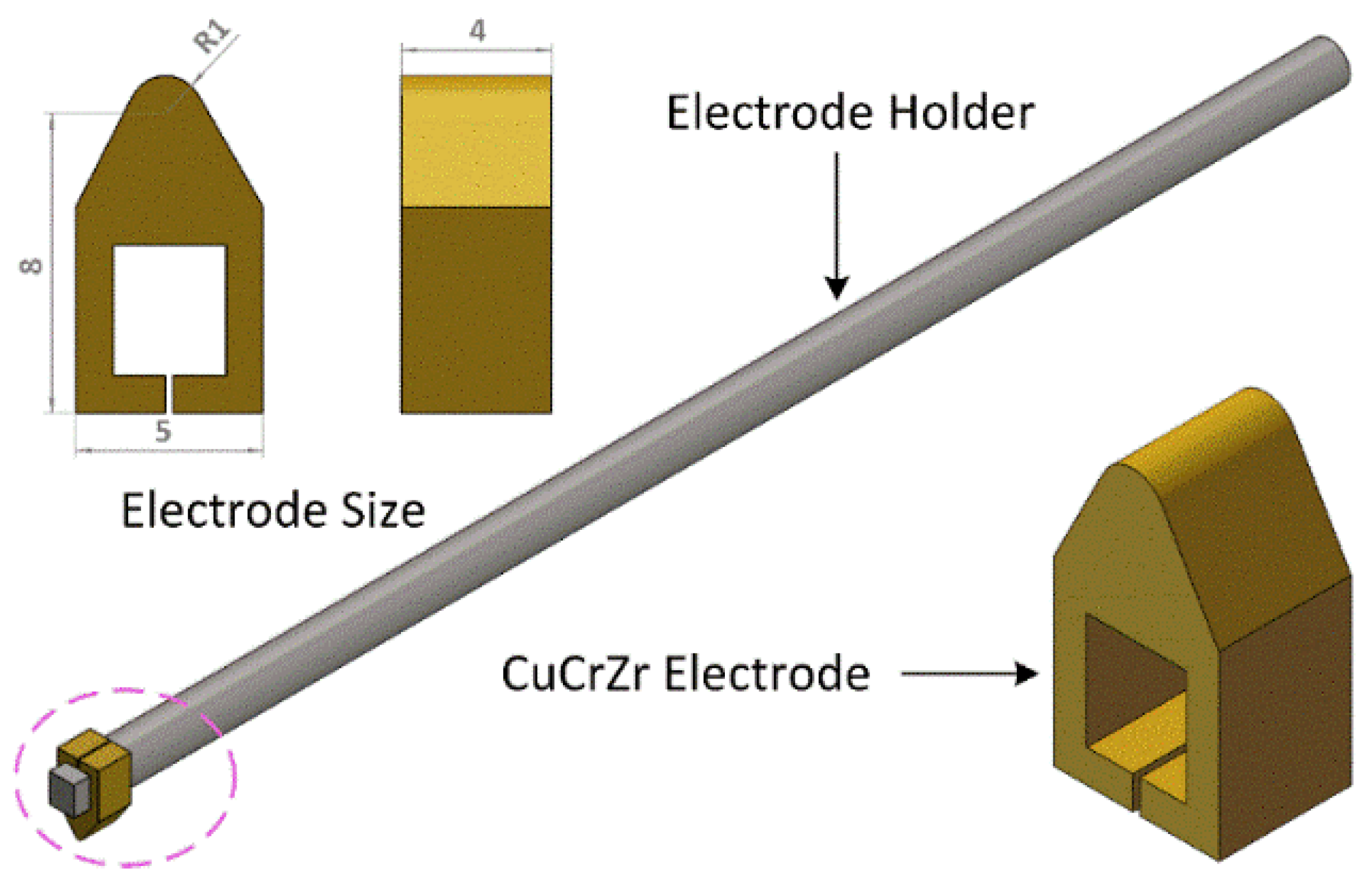
Figure 1. The structure of the CEPD electrode.
Coatings 15 01426 g001
Figure 2. Schematic diagram of the fabrication process of CEPD coatings: (a) the preproduction of the composite powder layer; (b) the process of CEPD machining.
Coatings 15 01426 g002
Figure 3. Schematic of friction and wear test: (a) testing process; (b) wear volume.
Coatings 15 01426 g003
Figure 4. The morphologies of the CEPD electrode (a) before and (b) after CEPD processing.
Coatings 15 01426 g004
Figure 5. Cross-section view of the adherent layer on the CEPD electrode (a) and the EDS result denoted as (b) A and (c) B.
Coatings 15 01426 g005
Figure 6. The appearance of the tube’s inner surface: (a) overall appearance of the CEPD coating; (b) morphology of the tube prior to CEPD; (c) morphology of the tube after CEPD.
Coatings 15 01426 g006
Figure 7. Roughness of the CEPD coating as a function of RST.
Coatings 15 01426 g007
Figure 8. Effects of PV and RST on the roughness.
Coatings 15 01426 g008
Figure 9. The XRD patterns of the substrate and the CEPD coating.
Coatings 15 01426 g009
Figure 10. Cross-sectional morphologies of the CEPD coating under the PVs of 40, 60 and 80 V: (ac) low magnification; (df) high magnification.
Coatings 15 01426 g010
Figure 11. Micrographs of the CEPD coating—(a) bonding zone; (b) grain direction; (c) Ag-rich particles—and EDS results.
Coatings 15 01426 g011
Figure 12. Microhardness profile of the CEPD coating.
Coatings 15 01426 g012
Figure 13. Results of the friction and wear tests of the substrate and CEPD coating: (a) wear rates; (b) FCs.
Coatings 15 01426 g013
Figure 14. CEPD processing procedure: (a) powder layer smoothing and (b) CEPD machining.
Coatings 15 01426 g014
Figure 15. Schematic illustration of the formation process of the CEPD coating: (a) stage 1; (b) stage 2; (c) stage 3; (d) new discharge cycle.
Coatings 15 01426 g015
Table 1. Chemical composition of AISI 316 stainless steel tube (wt.%).
Chemical ElementsCPCrSiMnMoNiFe
Contents≤0.08≤0.04516~18≤1≤22~310~14Bal.
Table 2. Chemical composition of Ni-based composite powder (wt.%).
Chemical ElementsBCCrFeSiNi
Contents0.4~0.914~173.5~4.52.5~3.05Bal.
Table 3. Chemical composition of CuCrZr alloy (wt.%).
Chemical ElementsPCrZrFeMgZnAICu
Contents0.10.1–0.80.1–0.6≤0.50.1–0.250.003≤0.5Bal.
Table 4. Main parameters of CEPD.
ParameterValue
Axial feed ratio of the electrode0.05 mm/r
Rotational speed of the tube80 rpm, 180 rpm, 315 rpm
Argon flow4 L/min
Pulse voltage40 V, 60 V, 80 V
Pulse width90 us
Pulse frequencies300 Hz
Table 5. ANOVA Results.
FactorDFAdj SSAdj MSp-Value
PV20.72850.3642≤0.01
RST21.20060.6003≤0.01
Interaction (PV × RST)40.43320.1083≤0.01
Disclaimer/Publisher’s Note: The statements, opinions and data contained in all publications are solely those of the individual author(s) and contributor(s) and not of MDPI and/or the editor(s). MDPI and/or the editor(s) disclaim responsibility for any injury to people or property resulting from any ideas, methods, instructions or products referred to in the content.