Article

Behavior of Flexible Biogas Digester Made of PVC-Coated PET Polyester Fabric with Increased Durability by Nanocoating Under Northridge (1994) Earthquake Effect


1
Textile, Clothing, Shoe and Leather Department, Technical Science Vocational School, Trakya University, 22030 Edirne, Turkey
2
Department of Civil Engineering, Faculty of Engineering, Ondokuz Mayis University, 55139 Samsun, Turkey
*
Author to whom correspondence should be addressed.
Coatings 2025, 15(12), 1401; https://doi.org/10.3390/coatings15121401
Submission received: 15 October 2025 / Revised: 18 November 2025 / Accepted: 23 November 2025 / Published: 1 December 2025

Abstract

The purpose of this study is to ascertain how the dynamic reactions of a flexible biogas digester composed of PVC coated on PET polyester fabric are affected by nanocoating retrofitting. In this study, the effects of seismic movements on a ZrO2-coated and uncoated PVC-PET biogas digester were investigated. A semi-sphere biogas digester that was 2.5 m high was chosen for development with nanocoating. Frequency values and mode shapes were acquired by first creating a three-dimensional finite element model of the biogas digester and then performing modal analysis in SAP2000 software. Later, the ground motion data from the 1994 Northridge earthquake were used to do linear assessments of the methane digester. Dynamic evaluations were then performed after a 0.25 mm ZrO2 nanocoating was installed onto the digester’s exterior. Finally, the dynamic behavior of the biogas digester, characterized by minimum and maximum von Mises stresses and corresponding displacements, was evaluated before and after the ZrO2 coating. By the end of the study, the maximum von Mises stress had decreased from 60.47 kPa to 15.18 kPa, while the minimum von Mises stress at the digester bottom was reduced from 11.41 kPa to 4.47 kPa. Additionally, the displacements along the digester height, particularly the maximum values, were reduced from 0.057 mm to 0.013 mm. The reduction in frequency values demonstrated that ZrO2 nanocoating improved the biogas digester’s rigidity. This study makes it clear that nanocoatings will have an impact on dynamic parameters and be highly beneficial for improving biogas digesters.

1. Introduction

Biogas digesters are sustainable energy production systems widely used in rural and industrial areas for renewable energy generation and waste management [1,2]. These digesters provide an economical solution by converting organic waste into biogas and organic fertilizer, thereby contributing to both energy efficiency and environmental protection [3].
Flexible biogas digesters, produced from polymer-based composite fabrics such as poly(ethylene terephthalate) (PET)/poly(vinyl chloride) (PVC) textiles, are preferred due to their ease of installation, low production cost, portability, and adaptability to different field conditions [4,5]. However, their flexible and thin-walled structure makes them vulnerable to environmental impacts such as temperature changes, ultraviolet radiation, chemical effects, and, especially, dynamic loads such as wind and earthquakes [4,6]. The structural safety of flexible biogas digesters has become an important research subject in recent years, particularly in earthquake-prone regions [7,8]. Unlike rigid reinforced concrete or steel structures, the dynamic behavior of polymer-based flexible digesters is highly nonlinear and their response depends on parameters such as membrane stiffness, geometric configuration, and material degradation over time [9].
Polyester fiber is a class of polymers containing repeating ester groups in the polymer chain. Polyester fiber sold commercially on the market is poly(ethylene terephthalate) [10]. PVC has a wide range of industrial applications. PVC is a highly popular polymer due to its low cost, excellent physical properties, compatibility with additives, wide range of applications, and versatility in processing techniques. PVC is one of the four main polymer classes commonly used in the coating of textile products. It is also widely used in the coating of polyester fabrics. While this coating provides impermeability and resistance against chemical factors, it is susceptible to aging, UV degradation, micro-cracking, and puncture under cyclic or sudden loading [11]. Therefore, strengthening methods are needed to extend the service life of such digesters and to ensure their safe performance under seismic loading. Similarly to the repair and retrofitting practices applied in civil engineering structures (chimneys, tanks, silos, bridges, etc.), methods such as fiber-reinforced polymer (FRP) wrapping, composite layer reinforcement, or ring-type strengthening have been reported in the literature [12,13,14,15]. In Obileke’s [16] study, it was reported that biogas digesters made from HDPE experienced whole formation and material degradation over time because of UV radiation. This situation raises questions about the long-term practicality and cost-effectiveness of conventional reinforcement methods (e.g., FRP wrapping, composite layer addition) that can be applied to thin and flexible membrane-type digesters. In this context, nanotechnology-based coatings (nanocoatings) have emerged as an innovative approach. With the rapid developments in nanoscience in the last 25 years, nanomaterials are increasingly being integrated into structural elements to improve durability, strength, and functional performance [17,18,19,20].
Nanotechnology refers to the production and manipulation of materials at dimensions between 1 and 100 nanometers, where quantum effects, surface-to-volume ratios, and electrostatic interactions dominate. At these scales, materials exhibit unique mechanical, thermal, and chemical properties compared to their macro-scale forms [21]. Nanocoatings applied to structural materials can enhance resistance against abrasion, chemical corrosion, ultraviolet degradation, and water permeability, while also improving strength and toughness [22,23,24]. Magnesium oxide (MgO), zirconium oxide (ZrO2), and carbon nanotubes (CNTs) are among the most widely studied nanomaterials in civil engineering. ZrO2 nanomaterials stand out for their thermal resistance and durability, while CNTs exhibit high tensile strength and effective crack bridging properties [25,26,27,28]. In a study conducted by Dhineshbabu and colleagues, SiO2 and ZrO2/SiO2 nanoparticles were obtained using the sol–gel method and coated onto cotton fabrics. It was observed that the flame retardancy of ZrO2/SiO2-coated fabrics was superior to that of SiO2-coated fabrics. Furthermore, ZrO2/SiO2-coated fabrics exhibited excellent UV protection compared to SiO2-coated fabrics. As a result of the study, it can be said that ZrO2 particles enhance UV protection and flame retardancy [29]. In another study conducted by Jia and colleagues, the mechanical properties of ZrO2-coated, basalt fabric-reinforced concrete were investigated. It was observed that ZrO2-coated basalt fabric has a high strength retention ratio in long-term alkaline environments, and as a result the ZrO2-coated basalt fabric reinforcement was observed to significantly enhance the mechanical properties of concrete [30].
Applications of nanotechnology in civil engineering have traditionally focused on improving concrete, steel, and composite materials, as seen in studies on high-strength concrete, corrosion-resistant steel, and FRP composites [31,32,33,34,35]. However, research on the use of nanocoatings in flexible, polymer-based structures such as biogas digesters is very limited. This reveals a significant research gap in the literature. Considering the increasing importance of renewable energy and sustainable structural solutions, extending the service life of flexible digesters through nanocoating reinforcement is both scientifically and practically significant.
In this study, the dynamic behavior of a flexible biogas digester made of PVC-coated PET fabric reinforced with a thin ZrO2 nanocoating layer was investigated under seismic loading conditions. To achieve this, a 3D finite element model (FEM) of the digester was constructed using the SAP2000 (v26.2.0) software package. The digester geometry was defined as a cylindrical flexible structure with a dome-shaped roof, commonly used in field applications. The PVC-coated fabric material (0.003 m) was modeled with nonlinear membrane elements, while the nanocoating reinforcement was applied as a thin surface layer (0.00025 m) covering the outer face of the digester membrane. The model was validated using previous numerical and experimental studies on membrane structures.
The 1994 Northridge earthquake severely affected industrial facilities in the United States [36]. In the study, the seismic movement records of this earthquake were simulated. Dynamic analyses were performed both for the unreinforced digester and for the digester reinforced with ZrO2 nanocoating. Comparative results were obtained in terms of maximum displacements, von Mises stress distributions, natural frequencies, and mode shapes. In addition, the effects of nanocoating on membrane stiffness and energy dissipation capacity were discussed.
The findings of this study are expected to contribute to filling the gap in the literature regarding the nanotechnology-based improvement of flexible polymeric biogas digesters, and to guide practical applications in earthquake-prone regions. With the integration of nanocoating technologies, it is aimed to increase the service life, durability, and seismic safety of such renewable energy systems.
This research is expected to contribute to the literature in the following three important ways:
  • To present one of the first comprehensive studies on flexible polymeric biogas digesters developed using nanocoating, thereby filling a gap in the literature. At the same time, filling this gap also highlights the innovative aspect of the study.
  • Demonstrating the effectiveness of ZrO2 nanocoatings in enhancing structural performance, durability, and seismic safety.
  • Guiding future applications for sustainable and earthquake-resilient renewable energy systems in rural and industrial contexts.
Integrating nanotechnology into the improvement of flexible digesters, this study aims to improve their service life, mechanical reliability, and overall resilience, thereby supporting broader global goals in sustainable infrastructure and clean energy generation.

2. Description of the Flexible Biogas Digester

A flexible biogas digester with a height of 2.5 m is simulated for dynamic analysis. The digester wall thickness was designed as 0.003 m and its outer diameter was 5 m. This thickness was chosen because the thickness of commercially available membranes is 0.003 m [37]. Figure 1 gives the general structural features of the digester.

3. Finite Element Modeling of the Digester

SAP 2000 software is used for the finite element analysis of linear and nonlinear three-dimensional structures [38]. In this study, this software was used to design three-dimensional finite element models of ZrO2-coated and uncoated digesters. It can model different types of elements such as shell, solid, and frame components. Also, it includes advanced analysis tools for evaluating modal behavior, time–history responses, and response spectrum analyses. The software enables the definition of layered shell elements with distinct material properties, making it particularly suitable for simulating composite or coated structural systems such as polymer-based biogas digesters [39].
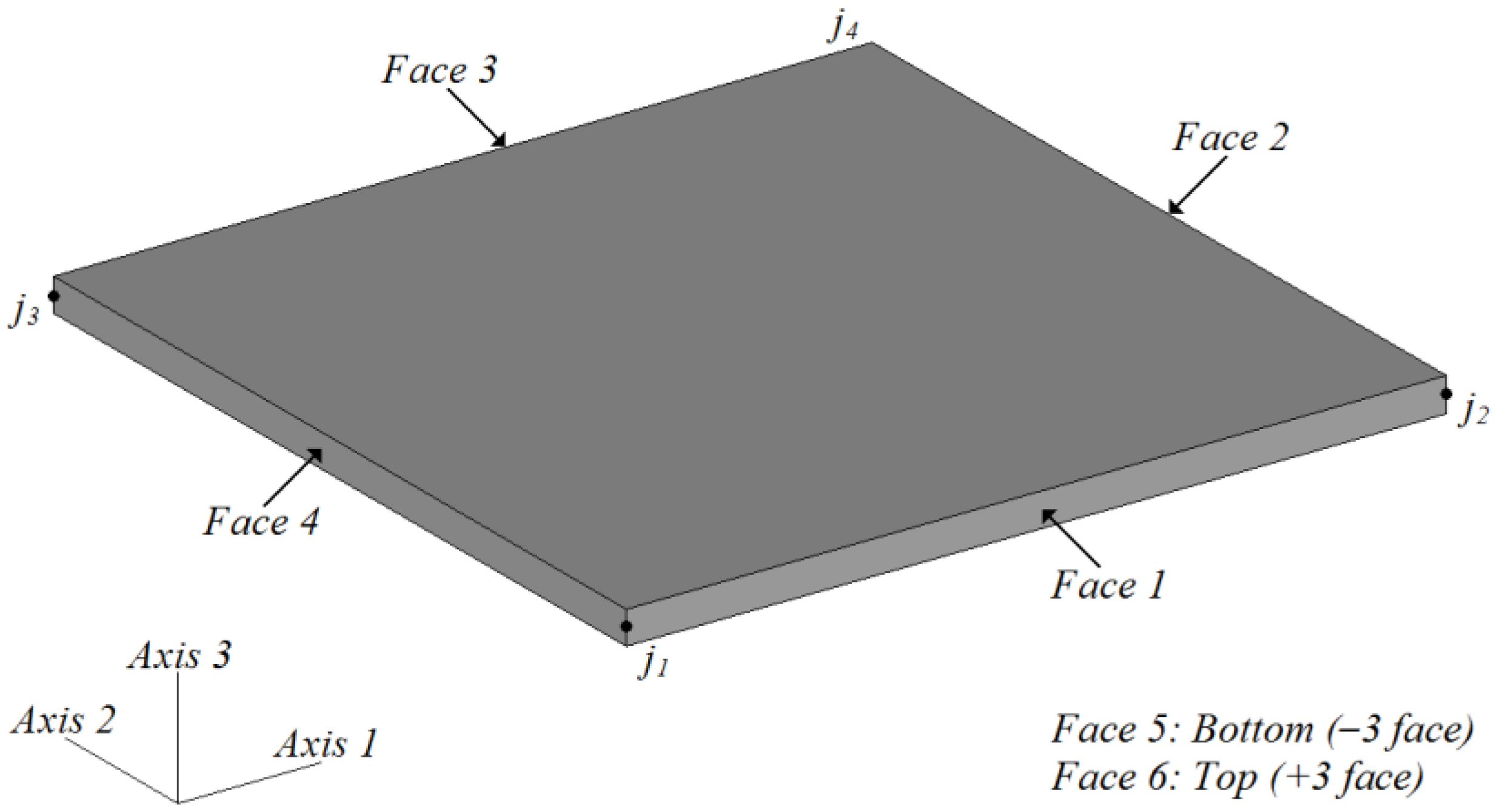
With the accurate determination of the mesh size, analytical modeling gives reliable results. Convergence analyses were performed to define the optimal mesh size of the flexible biogas digester. The three-dimensional finite element analysis of the analyzed digester was confirmed according to the literature data. The four-node shell element was used to model the digester. Each shell element is composed of nine nodes, and each node has six degrees of freedom—three translational (along the x, y, and z axes) and three rotational (about the same axes) (Figure 2).
The geometry and node arrangement of this element type are presented in Figure 2, where a layered shell element was utilized to simulate the ZrO2-coated structure. This element type can accommodate multiple material layers, each characterized by unique orientations and orthotropic mechanical properties. This element type is especially well-suited for modeling layered thick shells or solid structures. Figure 2 presents a schematic representation of the shell element.
Reliable analytical modeling of tall, slender structures like biogas digesters requires accurate characterization of material properties and boundary conditions. In this present study the materials were assumed to exhibit linear elastic behavior, with the corresponding properties of fabric and ZrO2 defined accordingly. SAP2000 modeling of the biogas digester, fabricated from PVC-coated PET polyester fabric, required specification of the modulus of elasticity, Poisson’s ratio, and unit weight. The elastic modulus, Poisson’s ratio, and mass per unit volume of fabric are presented in Table 1.
Nanomaterials, such as ZrO2, have been demonstrated to enhance the mechanical performance of reinforced concrete, masonry, steel, and timber structures, particularly under flexural and shear stresses. These enhancements are valuable in retrofitting applications involving increased loading capacity, functional modifications, defect remediation, seismic strengthening, and compliance with updated structural standards. A ZrO2 nanocoating was applied to improve the selected biogas digester, with material characteristics summarized in Table 1.
An initial meshing scheme was applied to the model. However, this produced excessively large linear transient analyses and model volumes that hindered effective visualization. Consequently, the mesh size was refined to achieve a balance between computational efficiency and accuracy. The final finite element model comprised 384 shell elements and 385 nodes, which provided a manageable yet sufficiently detailed representation for subsequent analyses.
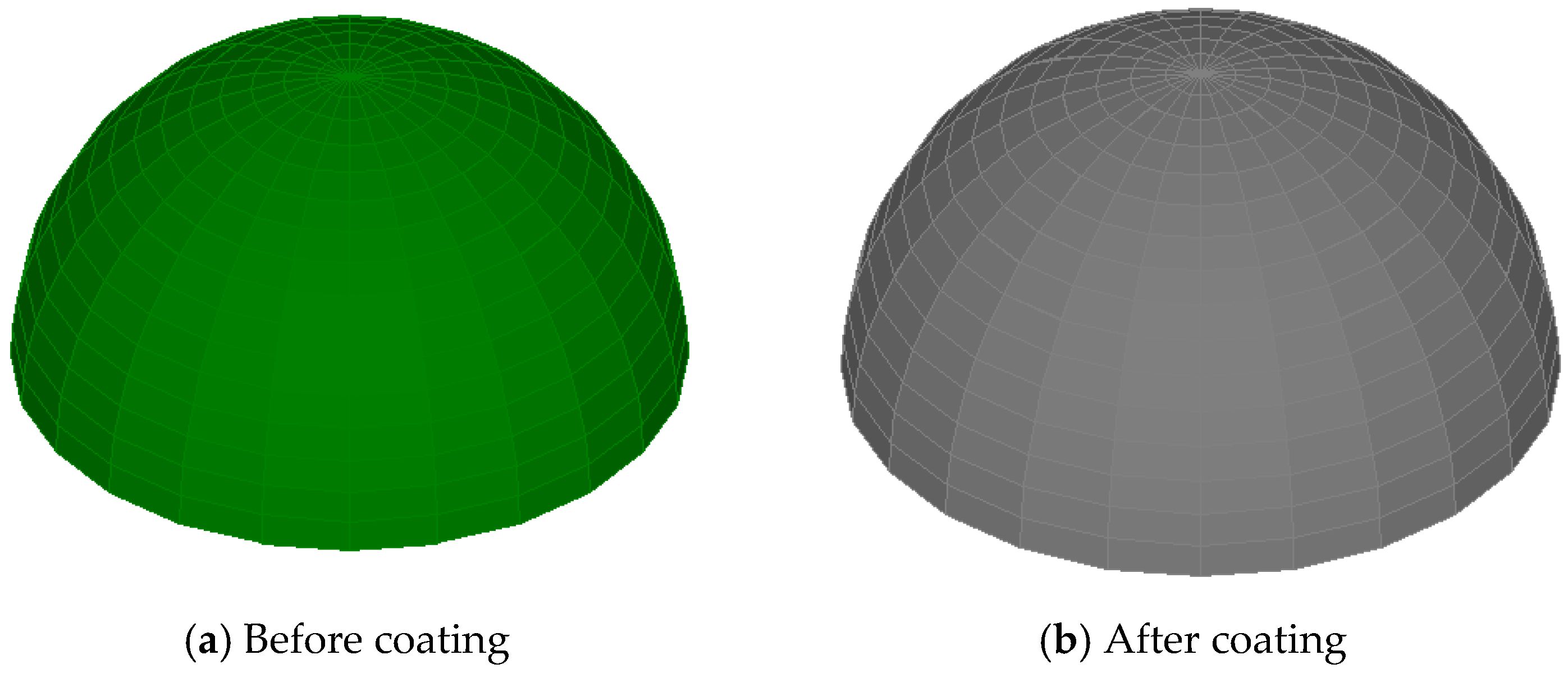
The all-digester wall was coated with 0.00025 m-thick ZrO2 (single layer). The thickness of the ZrO2 coating (0.00025 m) was thin compared to the thickness of the digester wall (0.003 m). When the literature is examined, it can be said that a coating thickness of 0.00025 m (between 0.0002 and 0.0005 m) is sufficient to strengthen the digester [40]. Attention was paid to tensile and compressive rigid behaviors of the elements. At the same time, the single direction of the fibers (zero degree) is taken as a basis. It is assumed that all degrees of freedom at the base of the digester are connected to the ground and the digester is fixed to the ground. Perfect bonding between the ZrO2-layered shell elements and fabric elements is achieved by interconnecting adjacent nodes. This ensures that the shell elements (PET/PVC fabric and ZrO2) share common nodal points. Additionally, the ZrO2-layered shell elements and fabric shell elements were meshed at identical sizes to achieve perfect interaction. Figure 3 shows images of ZrO2-reinforced and non-reinforced biogas digesters.
Generally, industrial biogas digesters exhibit thin and homogeneous mass distributions. Therefore, higher modes significantly affect these digesters’ dynamic behaviors. All modes with cumulative modal mass participation of at least 90% were considered in the time–history analyses. Modal analyses were carried out to determine the frequencies and mode shapes of the digester.
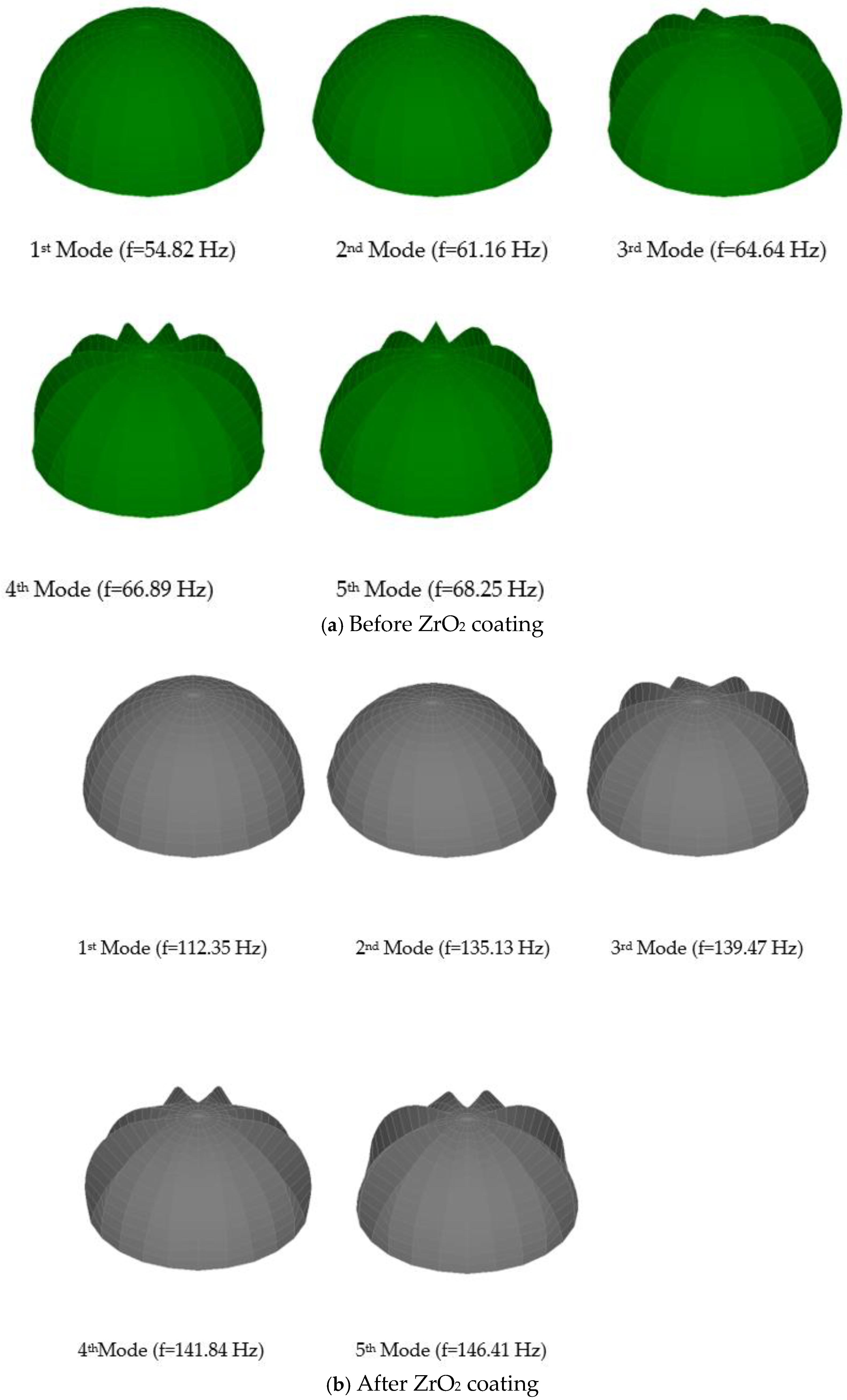
A total of five frequencies of digesters before and after ZrO2 coating were obtained in the range of 54.82–68.25 Hz and 112.35–146.41 Hz, respectively. In Figure 4, the first five mode shapes and frequencies of the digesters obtained from modal analyses were illustrated. From Figure 4, it can be seen that the same mode shapes were obtained in the modal analyses before and after ZrO2 coating. Although an increase in frequency generally means a decrease in displacement demand, the jump observed in the values here suggests a significant increase in global stiffness.

4. Dynamic Analyses of the Biogas Digester

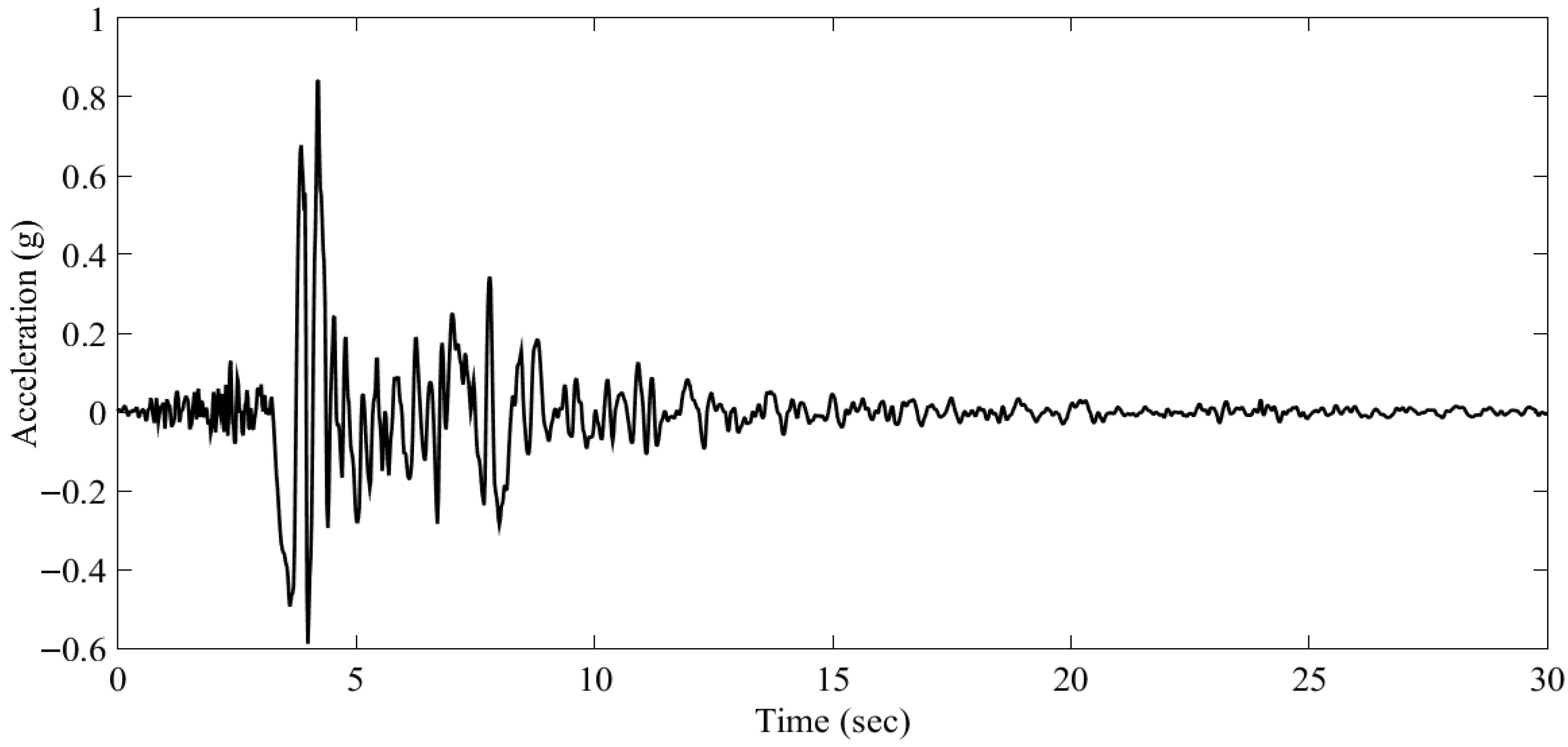
Dynamic analyses were conducted to evaluate the seismic performance of the flexible biogas digester both before and after the application of the ZrO2 nanocoating. The linear time–history analyses used the north–south ground motion records of the 1994 Northridge earthquake, characterized by a peak ground acceleration (PGA) of 0.842 g (Figure 5). These records are widely recognized for their strong near-field characteristics, making them suitable for assessing the behavior of light, flexible membrane structures such as polymer-based digesters.
A Rayleigh damping model with 5% critical damping was adopted, calibrated between the first and fifth vibration modes. This approach ensured that the model realistically captured the energy-dissipating behavior typical of thin polymeric membranes, which exhibit limited inherent damping compared to reinforced concrete or steel structures.

4.1. Displacement Response

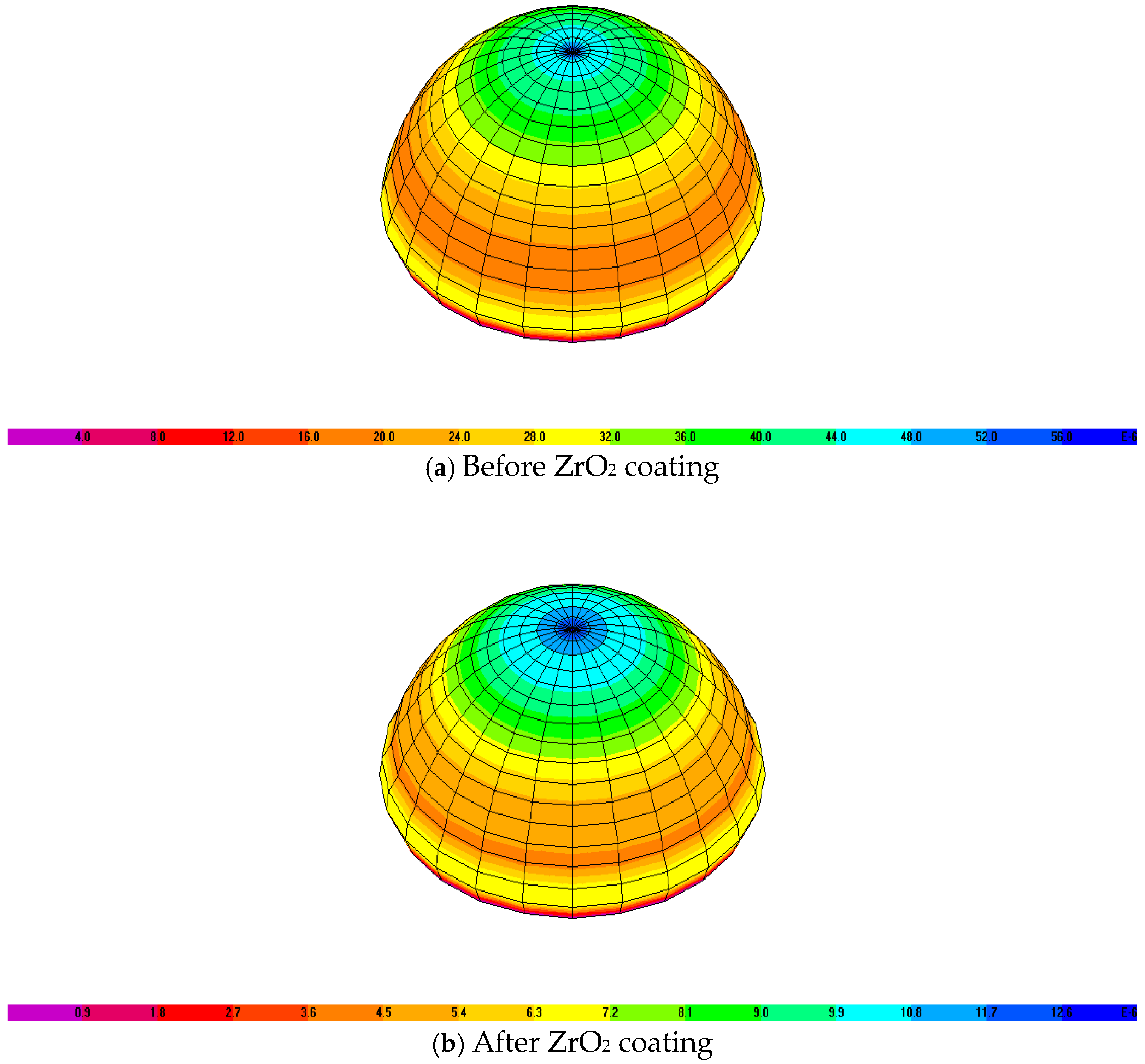
Figure 6 presents the maximum horizontal displacement contours along the digester height. Before applying the ZrO2 coating, the digester exhibited a maximum top displacement of 0.057 mm. After coating, this value decreased significantly to 0.013 mm, corresponding to a ~77% reduction. The inclusion of a ZrO2 nanolayer increases the composite modulus of the membrane system, leading to higher resistance against lateral deformation. Even though the coating’s thickness (0.00025 m) is small relative to the membrane thickness (0.003 m), nanomaterials can meaningfully alter stiffness due to their superior elastic properties [41].
The displacement attenuation observed in the coated digester indicates a more stable dynamic behavior, with reduced susceptibility to buckling-type deformations that can compromise long-term serviceability in real field conditions.

4.2. Stress Distribution and Critical Zones

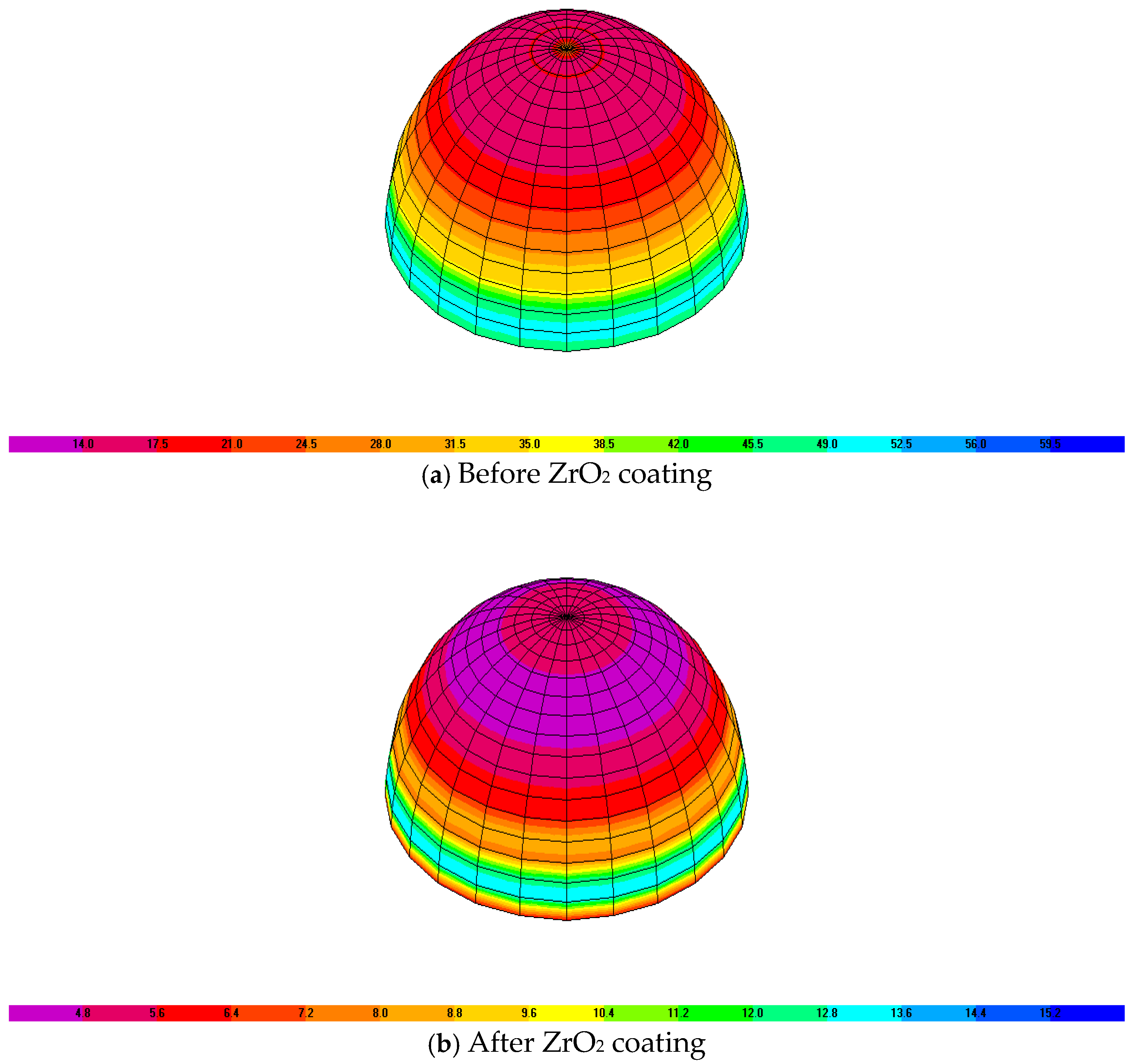
Von Mises stress contours (Figure 7) reveal the regions most affected by seismic loading. Before reinforcement, the digester exhibited a maximum von Mises stress of 60.47 kPa at the dome–cylinder transition region, where curvature changes typically induce stress concentrations. The minimum stress at the base region was 11.41 kPa. After coating, the maximum and minimum stresses dropped to 15.18 kPa and 4.47 kPa, respectively. This represents a 74.9% reduction in maximum stress and a 60.8% reduction in minimum stress. The reduction in stress levels demonstrates the improved load-bearing capacity of the coated structure.
The results collectively demonstrate that ZrO2 nanocoating provides substantial performance improvements. These improvements can be summarized as enhanced service life, reduced maintenance requirements, and improved seismic resilience.

5. Conclusions

This study investigated the dynamic behavior of fabric biogas digesters reinforced with ZrO2 coating using finite element analysis in SAP2000 and the 1994 Northridge earthquake data. The key findings are:
  • Enhanced structural rigidity: ZrO2 coating increased natural frequencies from 54.82–68.25 Hz to 112.35–146.41 Hz, indicating improved stiffness without significant mass addition.
  • Reduced displacement: Maximum horizontal displacement at the digester’s top decreased by 77% (from 0.057 mm to 0.013 mm), demonstrating superior performance compared to conventional reinforcement methods.
  • Improved stress distribution: Von Mises stress at critical bottom regions reduced significantly—minimum stress decreased from 11.41 kPa to 4.47 kPa and maximum stress from 60.47 kPa to 15.18 kPa—minimizing stress concentration at ground interface zones.
  • Practical benefits: Increased rigidity reduces crack formation, corrosion, and maintenance costs while maintaining a favorable strength-to-weight ratio.
  • Broader implications: Nanocoatings offer superior corrosion resistance, easy applicability, extended service life, and fire resistance, positioning them as viable alternatives to traditional retrofitting techniques for various biogas digester applications.
This pioneering study demonstrates that ZrO2 nanocoating significantly enhances the seismic performance of fabric biogas digesters. Further research is needed to expand the literature on nanocomposite applications in biogas infrastructure.

Author Contributions

Methodology, I.Y.; Software, S.T.; Investigation, I.Y. and S.T.; Data curation, S.T.; Writing—original draft, I.Y. and S.T.; Writing—review & editing, I.Y. and S.T.; Funding acquisition, I.Y. and S.T. All authors have read and agreed to the published version of the manuscript.

Funding

This research received no external funding.

Institutional Review Board Statement

Not applicable.

Informed Consent Statement

Not applicable.

Data Availability Statement

Data are contained within the article.

Conflicts of Interest

The authors declare no conflict of interest.

Abbreviations

The following abbreviations are used in this manuscript:
PVCPoly(vinyl chloride)
PETPoly(ethylene terephthalate)
FEMFinite Element Method
FRPFiber Reinforced Polymer
UVUltraviolet
HDPEHigh Density Polyethylene
PGAPeak Ground Acceleration
CNTsCarbon Nanotubes

References

  1. Martins das Neves, L.C.; Converti, A.; Vessoni Penna, T.C. Biogas production: New trends for alternative energy sources in rural and urban zones. Chem. Eng. Technol. Ind. Chem. Plant Equip. Process Eng. Biotechnol. 2009, 32, 1147–1153. [Google Scholar] [CrossRef]
  2. Abanades, S.; Abbaspour, H.; Ahmadi, A.; Das, B.; Ehyaei, M.A.; Esmaeilion, F.; Assad, M.E.H.; Hajilounezhad, T.; Jamali, D.H.; Hmida, A.; et al. A critical review of biogas production and usage with legislations framework across the globe. Int. J. Environ. Sci. Technol. 2022, 19, 3377–3400. [Google Scholar] [CrossRef] [PubMed]
  3. Drosg, B.; Fuchs, W.; Al Seadi, T.; Madsen, M.; Linke, B. Nutrient Recovery by Biogas Digestate Processing; IEA Bioenergy: Dublin, Ireland, 2015; Volume 2015, p. 711. [Google Scholar]
  4. Obileke, K.; Onyeaka, H.; Nwokolo, N. Materials for the design and construction of household biogas digesters for biogas production: A review. Int. J. Energy Res. 2021, 45, 3761–3779. [Google Scholar] [CrossRef]
  5. Ghiandelli, M. Development and Implementation of Small-Scale Biogas Balloon Biodigester in Bali, Indonesia. Master’s Thesis, KTH School of Industrial Engineering and Management, Stockholm, Sweden, 2017. [Google Scholar]
  6. Asadi, H.; Uhlemann, J.; Stranghoener, N.; Ulbricht, M. Tensile strength deterioration of PVC coated PET woven fabrics under single and multiplied artificial weathering impacts and cyclic loading. Constr. Build. Mater. 2022, 342, 127843. [Google Scholar] [CrossRef]
  7. Cheng, S.; Li, Z.; Mang, H.P.; Huba, E.M.; Gao, R.; Wang, X. Development and application of prefabricated biogas digesters in developing countries. Renew. Sustain. Energy Rev. 2014, 34, 387–400. [Google Scholar] [CrossRef]
  8. Budiman, I. The role of fixed-dome and floating drum biogas digester for energy security in Indonesia. Indones. J. Energy 2020, 3, 83–93. [Google Scholar] [CrossRef]
  9. Chandraul, A.; Murari, V.; Kumar, S. A review on dynamic analysis of membrane based space structures. Adv. Space Res. 2024, 74, 740–763. [Google Scholar] [CrossRef]
  10. Polyester. Available online: https://en.wikipedia.org/wiki/Polyester (accessed on 4 November 2025).
  11. Sen, A.K. Coated Textiles: Principles and Applications, 2nd ed.; CRC Press, Taylor & Francis Group: Boca Raton, FL, USA, 2008. [Google Scholar]
  12. Meier, U. Strengthening of Structures Using Carbon Fibre/Epoxy Composites. Constr. Build. Mater. 1995, 9, 341–351. [Google Scholar] [CrossRef]
  13. Mirmiran, A.; Zagers, K.; Yuan, W. Nonlinear Finite Element Modeling of Concrete Confined by Fiber Composites. Finite Elem. Anal. Des. 2000, 35, 79–96. [Google Scholar] [CrossRef]
  14. Van Den Einde, L.; Zhao, L.; Seible, F. Use of FRP Composites in Civil Structural Applications. Constr. Build. Mater. 2003, 17, 389–403. [Google Scholar] [CrossRef]
  15. Chen, C.H. Seismic Assessment of a Retrofitted Chimney by FEM Analysis and Field Testing. Int. J. Struct. Stab. Dyn. 2004, 4, 337–359. [Google Scholar] [CrossRef]
  16. Obileke, K.; Mamphweli, S.; Meyer, E.L.; Makaka, G.; Nwokolo, N. Design and fabrication of a plastic biogas digester for the production of biogas from cow dung. J. Eng. 2020, 2020, 1848714. [Google Scholar] [CrossRef]
  17. Yuce, I.; Canoglu, S.; Yukseloglu, S.M.; Li Voti, R.; Cesarini, G.; Sibilia, C.; Larciprete, M.C. Titanium and silicon dioxide-coated fabrics for management and tuning of infrared radiation. Sensors 2022, 22, 3918. [Google Scholar] [CrossRef]
  18. Farooq, S.; Akhtar, A.; Faisal, S.; Husain, M.D.; Siddiqui, M.O.R. Durable multifunction finishing on polyester knitted fabric by applying zinc oxide nanoparticles. Pigment Resin Technol. 2025, 54, 1006–1015. [Google Scholar] [CrossRef]
  19. Sharouf, H.M.; Tuhmaz, G.; Saffour, Z. Preparation of Zinc Oxide Nano-Layer on Cotton Fabric for UV Protection Application. Al-Nahrain J. Eng. Sci. 2019, 22, 18–21. [Google Scholar] [CrossRef]
  20. Mankodi, D.H.; Agarwal, D.B. Studies on nano–UV protective finish on apparel fabrics for health protection. Res. J. Text. Appar. 2011, 15, 11–20. [Google Scholar] [CrossRef]
  21. Szczyglewska, P.; Feliczak-Guzik, A.; Nowak, I. Nanotechnology–general aspects: A chemical reduction approach to the synthesis of nanoparticles. Molecules 2023, 28, 4932. [Google Scholar] [CrossRef]
  22. Farooq, S.A.; Raina, A.; Mohan, S.; Arvind Singh, R.; Jayalakshmi, S.; Irfan Ul Haq, M. Nanostructured coatings: Review on processing techniques, corrosion behaviour and tribological performance. Nanomaterials 2022, 12, 1323. [Google Scholar] [CrossRef]
  23. Gu, Y.; Xia, K.; Wu, D.; Mou, J.; Zheng, S. Technical characteristics and wear-resistant mechanism of nano coatings: A review. Coatings 2020, 10, 233. [Google Scholar] [CrossRef]
  24. Pourhashem, S.; Saba, F.; Duan, J.; Rashidi, A.; Guan, F.; Nezhad, E.G.; Hou, B. Polymer/Inorganic nanocomposite coatings with superior corrosion protection performance: A review. J. Ind. Eng. Chem. 2020, 88, 29–57. [Google Scholar] [CrossRef]
  25. Meena, K.L.; Vidyasagar, C.S.; Benny Karunakar, D. Mechanical and tribological properties of MgO/multiwalled carbon nanotube-reinforced zirconia-toughened alumina composites developed through spark plasma sintering and microwave sintering. J. Mater. Eng. Perform. 2022, 31, 682–696. [Google Scholar] [CrossRef]
  26. Gómez-Rodríguez, C.; Fernández-González, D.; García-Quiñonez, L.V.; Castillo-Rodríguez, G.A.; Aguilar-Martínez, J.A.; Verdeja, L.F. MgO refractory doped with ZrO2 nanoparticles: Influence of cold isostatic and uniaxial pressing and sintering temperature in the physical and chemical properties. Metals 2019, 9, 1297. [Google Scholar] [CrossRef]
  27. Valdez-Salas, B.; Salvador-Carlos, J.; Beltrán-Partida, E.A.; Castillo-Sáenz, J.; Chairez-González, J.; Curiel-Álvarez, M. Zirconium Nanostructures Obtained from Anodic Synthesis By-Products and Their Potential Use in PVA-Based Coatings. Ceramics 2025, 8, 74. [Google Scholar] [CrossRef]
  28. Bogas, J.A.; Ahmed, H.H.; Diniz, T. Influence of cracking on the durability of reinforced concrete with carbon nanotubes. Appl. Sci. 2021, 11, 1672. [Google Scholar] [CrossRef]
  29. Dhineshbabu, N.R.; Manivasakan, P.; Yuvakkumar, R.; Prabu, P.; Rajendran, V. Enhanced functional properties of ZrO2/SiO2 hybrid nanosol coated cotton fabrics. J. Nanosci. Nanotechnol. 2013, 13, 4017–4024. [Google Scholar] [CrossRef]
  30. Jia, M.; Xie, W.; Yu, K.; Qian, K. Preparation and characterization of basalt fabrics coated with zirconia obtained by sol-gel method for textile reinforced concrete. J. Text. Inst. 2022, 113, 527–540. [Google Scholar] [CrossRef]
  31. Matthys, S.; Toutanji, H.; Taerwe, L. Stress–Strain Behavior of Large-Scale Circular Columns Confined with FRP Composites. J. Struct. Eng. 2006, 132, 123–133. [Google Scholar] [CrossRef]
  32. Zhao, X.L.; Zhang, L. State-of-the-Art Review on FRP Strengthened Steel Structures. Eng. Struct. 2007, 29, 1808–1823. [Google Scholar] [CrossRef]
  33. Pallares, F.J.; Ivorra, S.; Pallares, L.; Adam, J.M. Seismic Assessment of a CFRP-Strengthened Masonry Chimney. Proc. Inst. Civ. Eng. Struct. Build. 2009, 162, 291–299. [Google Scholar] [CrossRef]
  34. Silvestre, J.; Silvestre, N.; De Brito, J. Review on concrete nanotechnology. Eur. J. Environ. Civ. Eng. 2016, 20, 455–485. [Google Scholar] [CrossRef]
  35. Shi, X. On the use of nanotechnology to manage steel corrosion. Recent Pat. Eng. 2010, 4, 44–50. [Google Scholar] [CrossRef]
  36. Jonczyk, J. Lessons Learned from the Northridge Earthquake (January 1994) with Respect to Design and Code Regulation on the Example of Steel Frame Behaviour (No. NEA-CSNI-R--2002-22, pp. 15–23). Available online: https://www.oecd-nea.org/upload/docs/application/pdf/2020-01/csni-r2002-22.pdf (accessed on 4 November 2025).
  37. A1 Sports VARIES PVC Coated Tarpaulin Fabric, Thickness: 3 mm. Available online: https://www.aajjo.com/product/a1-sports-varies-pvc-coated-tarpaulin-fabric-thickness-3-mm-in-mumbai-a1-sports-machines (accessed on 4 November 2025).
  38. Tuhta, S.; Günday, F. Investigation of Steel Chimney Retrofitted with Nanocoating Under Earthquake Excitation Using FEM. Coatings 2025, 15, 619. [Google Scholar] [CrossRef]
  39. Surpam, M.; Tanawade, A. Analysis and Design of Pre-engineered Building Structure Using SAP2000. In Dynamic Behavior of Soft and Hard Materials; Springer Proceedings in Materials, Volume 36; Springer: Singapore, 2024; Volume 3, p. 22. [Google Scholar] [CrossRef]
  40. Duong, X.Q.; Cao, N.V.; Lee, W.S.; Park, M.Y.; Chung, J.D.; Bae, K.J.; Kwon, O.K. Effect of coating thickness, binder and cycle time in adsorption cooling applications. Appl. Therm. Eng. 2021, 184, 116265. [Google Scholar] [CrossRef]
  41. Samad, U.A.; Alam, M.A.; Abdo, H.S.; Anis, A.; Al-Zahrani, S.M. Synergistic effect of nanoparticles: Enhanced mechanical and corrosion protection properties of epoxy coatings incorporated with SiO2 and ZrO2. Polymers 2023, 15, 3100. [Google Scholar] [CrossRef]
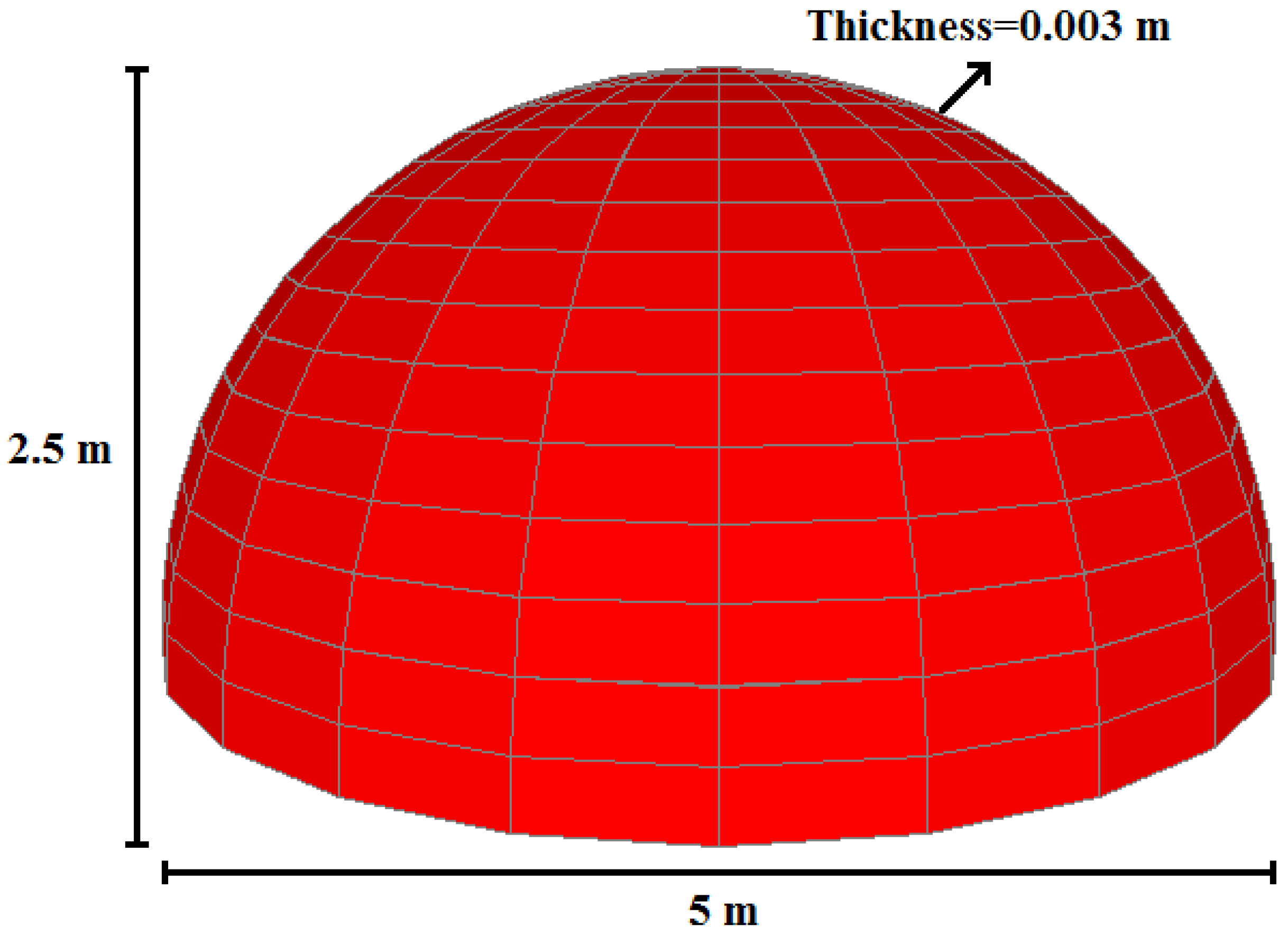
Figure 1. General properties of biogas digester.
Coatings 15 01401 g001
Figure 2. Diagram and characteristics of the shell element (SAP2000, 1997) [38].
Coatings 15 01401 g002
Figure 3. Finite element model of biogas digester before and after ZrO2 coating.
Coatings 15 01401 g003
Figure 4. Mode shapes and frequencies of biogas digesters before (green) and after ZrO2 (gray) coating.
Coatings 15 01401 g004
Figure 5. Time history of ground motion acceleration from the 1994 Northridge earthquake (PGA = 0.842 g).
Coatings 15 01401 g005
Figure 6. Comparison of maximum displacement contours before and after ZrO2 coating.
Coatings 15 01401 g006
Figure 7. Von Mises stress contours (minimum–maximum) of the biogas digester before and after ZrO2-coating application.
Coatings 15 01401 g007
Table 1. Material properties used in analysis.
MaterialModulus of Elasticity
(kN/m2)
Poisson’s RatioMass Per Unit Volume
(kN/m3)
Fabric *3.5 × 1060.401.4
ZrO21.75 × 1080.275.6
* PVC Coated PET Polyester Fabric.
Disclaimer/Publisher’s Note: The statements, opinions and data contained in all publications are solely those of the individual author(s) and contributor(s) and not of MDPI and/or the editor(s). MDPI and/or the editor(s) disclaim responsibility for any injury to people or property resulting from any ideas, methods, instructions or products referred to in the content.