1. Introduction
With the prominence of environmental issues and the scarcity of traditional fossil fuels [
1], wind power, due to its clean and renewable characteristics, has become a key element in the global energy transition, providing support for sustainable development [
2,
3,
4]. However, when developing and utilising wind energy in cold regions, wind turbine generator systems face severe meteorological challenges, among which the icing phenomenon is particularly prominent [
5,
6,
7]. Therefore, researching methods to prevent ice accumulation on wind turbine blades has become an important current research direction [
8,
9,
10,
11].
At present, the anti-icing technologies adopted for wind turbine blades can be generally divided into two categories: active anti-icing and passive anti-icing [
12,
13,
14,
15]. Passive anti-icing technologies prevent ice formation or reduce ice adhesion by modifying the surface properties of blades, featuring advantages such as low energy consumption, low cost, and convenient maintenance [
16,
17]. Among them, phase-change coatings exhibit significant advantages in preventing ice and snow accumulation on wind turbine blades by leveraging the phase transition properties of materials [
18,
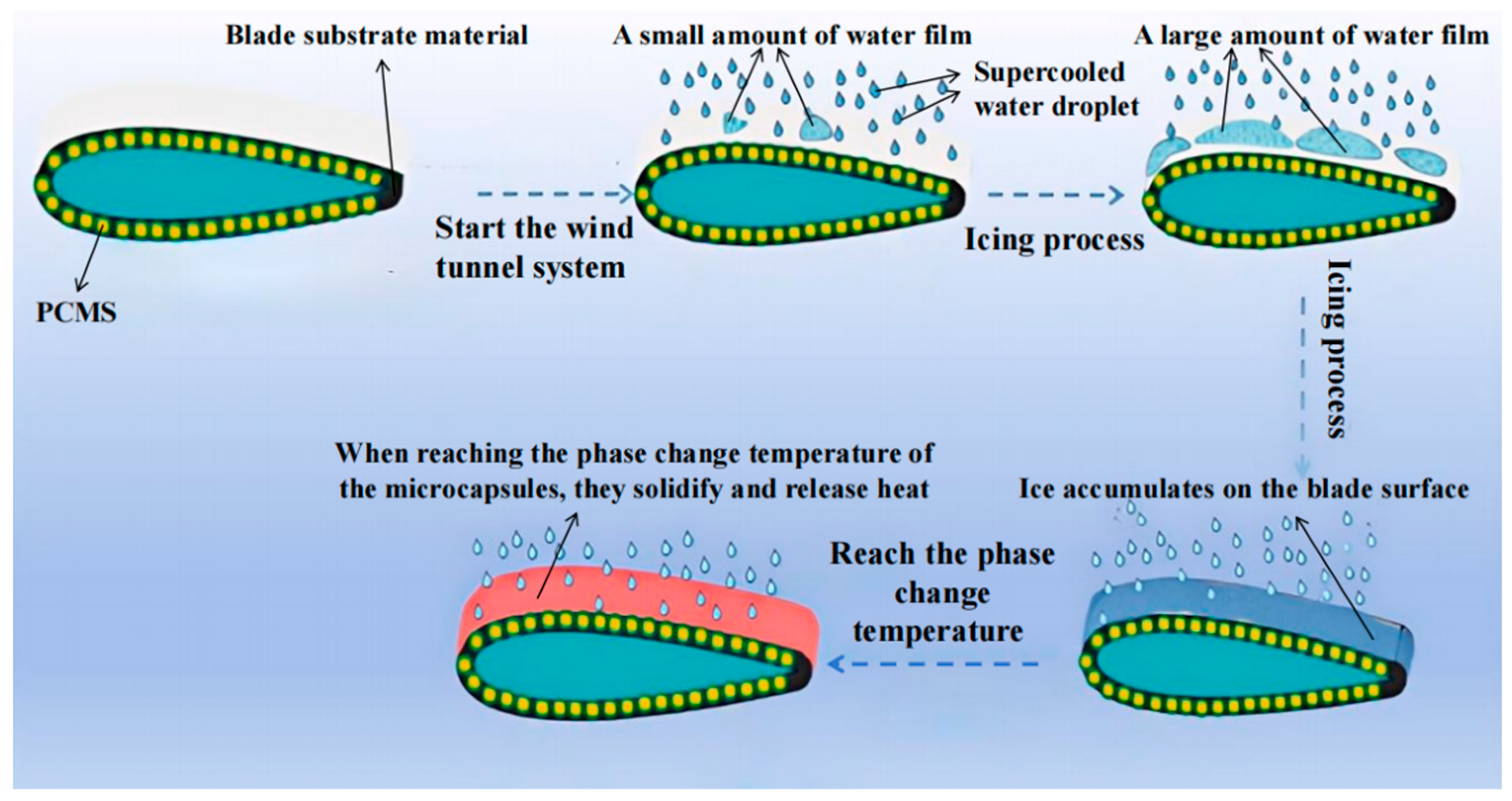
19]. Phase-change coatings achieve anti-icing effects by utilising the phase transition characteristics of materials at specific temperatures. Since phase-change materials cannot be directly added to the surface of wind turbine blades, phase-change microcapsules have become an excellent energy storage material. Phase-change microcapsules encapsulate phase-change materials. Within a specific temperature range, the phase-change materials undergo phase transition, during which they can absorb or release a large amount of heat [
20,
21]. As the temperature gradually decreases and approaches the freezing point of the phase-change material, it transitions from a liquid to a solid state. This transformation process releases heat, and throughout the transition, the phase-change material continuously emits thermal energy. The released heat effectively raises the temperature of the coating surface. By increasing the surface temperature of the coating, the formation of ice can be delayed to some extent, and in certain cases, completely prevented. The specific anti-icing mechanism of the phase-change microcapsule coating is illustrated in
Figure 1.
Capitalising on this characteristic, researchers have actively explored the application of phase-change microcapsules in the field of anti-icing and de-icing. Gao L [
22] proposed a hybrid anti-icing strategy that combines “superhydrophobic coating + local electrothermal heating”. By heating only 5%–10% of the leading-edge area, this method achieves efficient anti-icing with approximately 90% energy consumption reduction. The team led by Yuan Y [
23] developed a novel anti-icing glass coating. By utilising phase-change materials (PCMs) to release latent heat within a specific low-temperature range (−4.73 °C to 2.25 °C) and enhancing surface superhydrophobicity, this coating prolongs the freezing time of water droplets by nearly two times, demonstrating excellent anti-icing potential. Song L [
24] prepared a multifunctional film (MPPSF) via spraying, integrating the photothermal effect of carbon nanotubes and the heat storage capacity of phase-change materials. Under near-infrared light irradiation, it achieved rapid heating exceeding 150 °C within 180 s, enabling fast de-icing and residual heat storage. Zhang Q [
25] developed a polyaniline microcapsule coating, innovatively integrating the dual functions of photothermal conversion (near-infrared light) and phase-change storage (butyl stearate). Adding 10% microcapsules achieved 12.6-fold icing delay and rapid ice melting within 18 s. The introduction of natural soybean biological wax in the study further enhanced the coating’s heat storage capacity and adhesion.
However, although the aforementioned researchers have conducted extensive studies on the anti-icing performance of coatings, research on the bio-wax phase-change microcapsules applied to wind turbine blade surfaces is still relatively limited. The novelty of this study lies in the use of interfacial polymerization [
26] and impregnation technology to combine bio-wax microcapsules with a polyurethane coating and apply it to the surface of wind turbine blades, thereby enhancing the anti-icing performance of the blade surface. The anti-icing performance of the blade surface under different environmental parameters is tested through icing wind tunnel experiments.
In this study, for the pure bio-wax, its melting point (Tm) is 32 °C, the enthalpy of fusion during the melting process is 63.33 J/g, and the enthalpy of crystallisation is 82.78 J/g. Its excellent thermal stability enhances the thermal storage performance of the phase-change microcapsules. Meanwhile, the good film-forming characteristics of the bio-wax facilitate the dispersion and adhesion of the microcapsules within the polyurethane coating. The combined effects of these properties—suitable phase-change temperature, high latent heat, excellent thermal stability, and good material compatibility—enable the coating to effectively delay or inhibit ice formation through efficient and sustained heat release.
This study uses bio-wax as the core material and isophorone diisocyanate as the shell material to prepare bio-wax phase-change microcapsule–polyurethane anti-icing coatings. The surface morphology and heat storage performance of the material are analysed using various characterisation techniques such as scanning electron microscopy (SEM), differential scanning calorimetry (DSC), and thermogravimetric analysis (TGA). The anti-icing effectiveness of the coating on wind turbine blade surfaces under different environmental temperatures, wind speeds, and water droplet flow rates is investigated through icing wind tunnel experiments, confirming the feasibility of the material in practical applications.
2. Preparation of Materials
2.1. Preparation of Bio-Wax Phase-Change Microcapsules
- (1)
Preparation of oil-phase materials
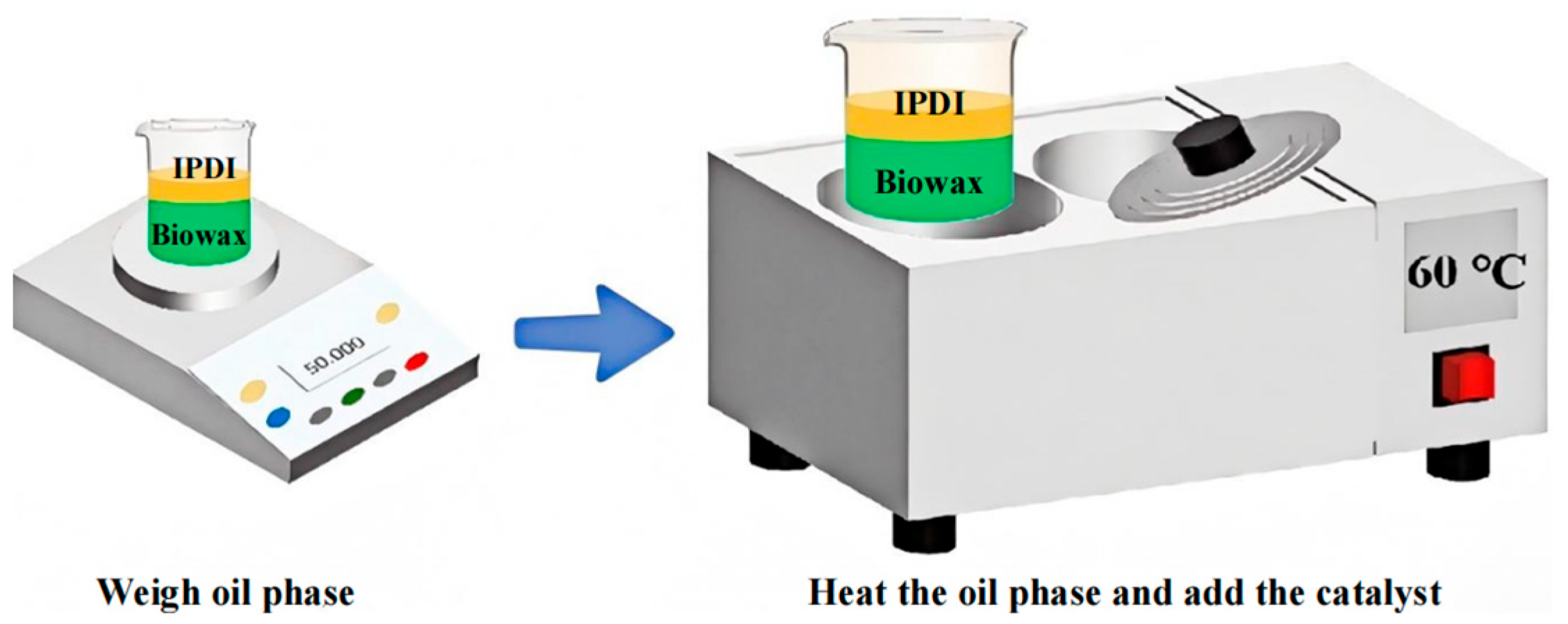
A catalyst mixture was prepared by combining 9.9 g of petroleum ether and 0.1 g of dibutyltin dilaurate.
Subsequently, 3 g of bio-wax was weighed into a beaker, adding 0.02 g of the catalyst mixture and 2 g of isophorone diisocyanate (IPDI). The beaker was sealed with plastic film and placed in a thermostatic magnetic stirrer with a heating bath, where the mixture was stirred at 60 °C (±0.5 °C) for 30 min to form the oil phase, as illustrated in
Figure 2.
Figure 2.
Preparation of oil-phase materials.
Figure 2.
Preparation of oil-phase materials.
- (2)
Preparation of water-phase materials
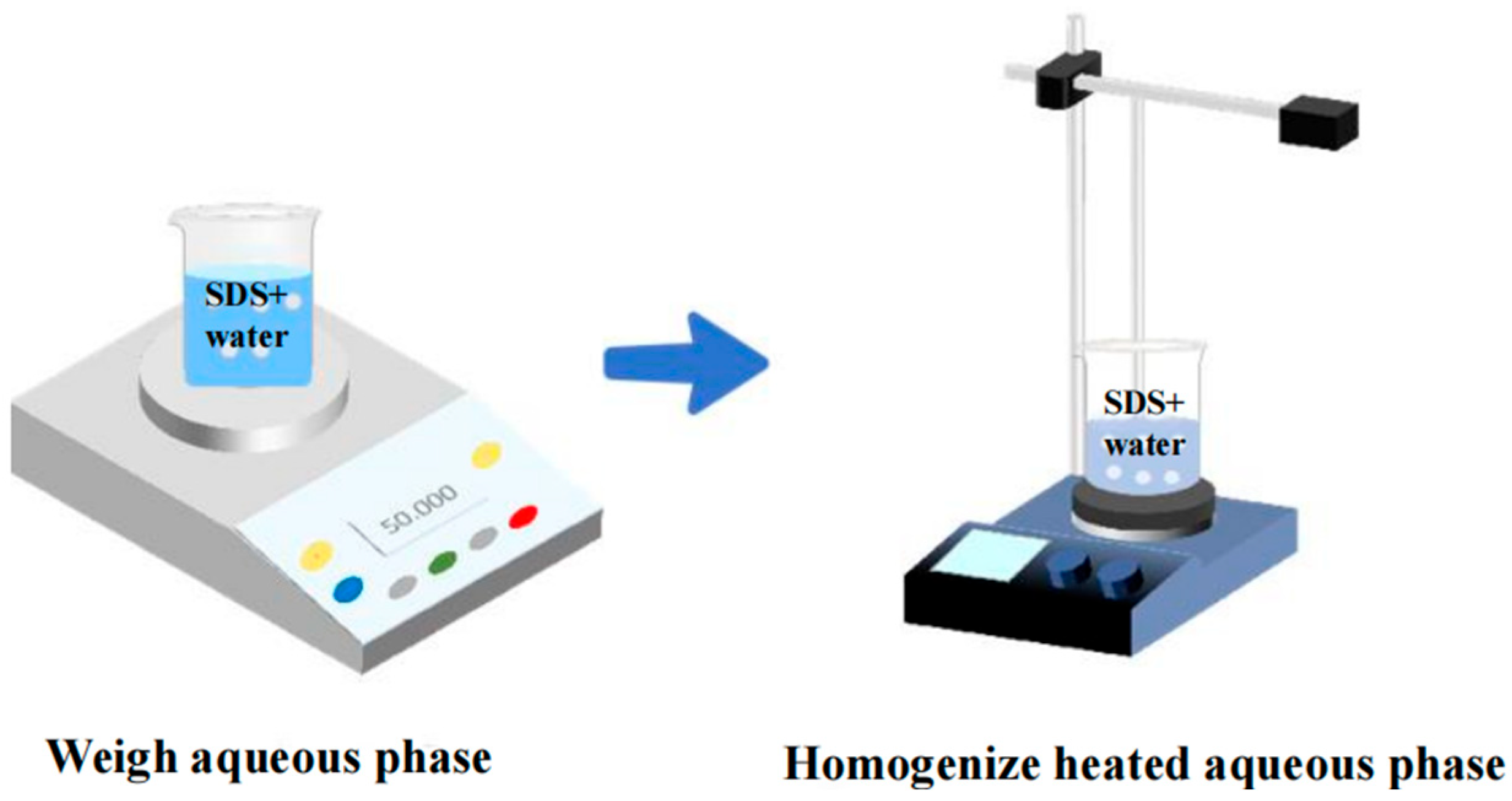
We took a clean beaker and slowly and precisely transferred 0.005 g of sodium dodecyl sulphate (SDS) into it.
Subsequently, 50 g of deionised water was poured into the beaker, which was immersed in a thermostatically controlled water bath at 60 °C.
The solution was homogenised at 10,000 rpm for 3 min to form the aqueous phase, as illustrated in
Figure 3.
Figure 3.
Preparation of water-phase materials.
Figure 3.
Preparation of water-phase materials.
- (3)
Preparation of bio-wax phase-change microcapsules
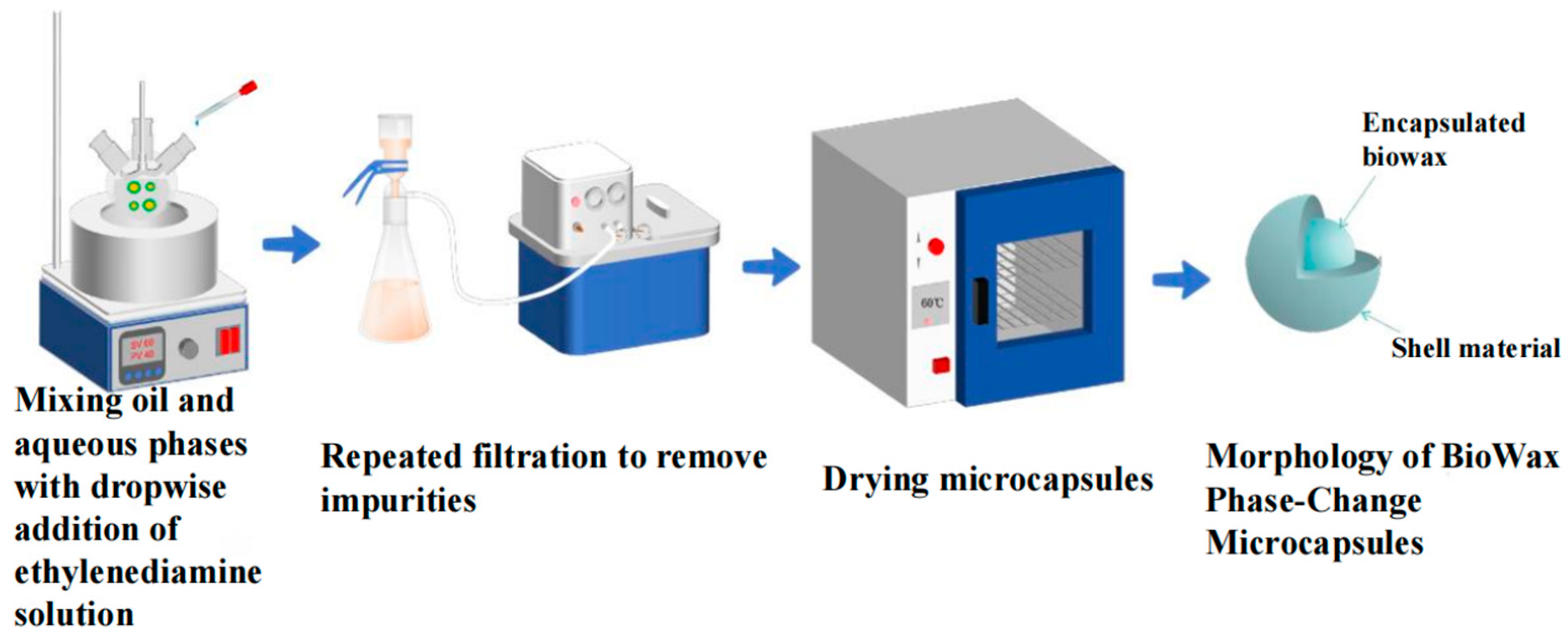
An aqueous ethylenediamine solution was prepared by dissolving 1.275 g ethylenediamine in 24.43 g of deionised water.
The oil phase was then added to the aqueous phase, and the mixture was homogenised at 60 °C (±0.5 °C) and 10,000 rpm for 3 min.
The emulsion was transferred to a three-neck round-bottom flask and reacted at 60 °C for 6 h under continuous stirring. A total of 50% of the ethylenediamine solution was added during the first 3 h, and the remaining 50% was introduced over the subsequent 3 h.
Following the reaction, the product was isolated via vacuum filtration, dried, and ground into a fine powder to obtain the final bio-wax phase-change microcapsules, as illustrated in
Figure 4.
Figure 4.
Preparation of bio-wax phase-change microcapsules.
Figure 4.
Preparation of bio-wax phase-change microcapsules.
2.2. Preparation of Bio-Wax Phase-Change Microcapsule–Polyurethane Coating
(1) A glass-fibre-reinforced polymer (GFRP) blade section was immersed in an ultrasonic cleaner and cleaning parameters were set (the cleaning time is 10 min) to remove surface contaminants. After cleaning, the blade was transferred to a vacuum drying oven, dried under controlled temperature, and then vacuumed until complete surface dehydration was achieved.
(2) Precisely weighed polyurethane components A and B (1:1 mass ratio) were added to a container with 0.9 g thinner. The mixture was homogenised using a magnetic stirrer at a controlled speed and duration until complete dispersion.
(3) Bio-wax phase-change microcapsules (PCMs) from
Section 2.1 were precisely aliquoted at 12 wt%, 26 wt%, and 36 wt% concentrations, ground to homogeneous fine powders using an agate mortar, then sequentially incorporated into the solution from Step (2). The mixtures underwent probe sonication for one hour to ensure uniform PCM distribution.
(4) The GFRP blade was dip-coated in the PCM–polyurethane suspension, ensuring full surface coverage. The thicknesses of the coatings prepared in this study were uniformly controlled within the range of 50 ± 10 μm through dip-coating and curing control to ensure the reliability of performance comparisons. The coated blade was cured in a vacuum drying oven at 50 °C for four hours until film formation was complete, and then stored for subsequent testing.
2.3. Material Characterisation Methods
To systematically evaluate the physicochemical properties of the prepared bio-wax phase-change microcapsules and their polyurethane composite coatings, this study employed multiple characterisation techniques, including scanning electron microscopy (SEM), laser particle size analysis, differential scanning calorimetry (DSC), and thermogravimetric analysis (TGA). All tests were conducted under standard conditions, with the specific equipment models and parameter settings detailed below:
- (1)
Scanning Electron Microscopy (SEM): A Hitachi S-3400N SEM (Tokyo, Japan) was employed to examine the surface morphology of the microcapsules and coatings. Samples were sputter-coated with gold under vacuum prior to testing to enhance conductivity, and the operating voltage was set at 15 kV.
- (2)
Laser Particle Size Analysis: The particle size distribution of the microcapsules was determined using a SYNC laser particle size analyser (Microtrac, Montgomeryville, PA, USA). Samples were dispersed in deionized water at a concentration of 0.1 wt%, and each sample was measured three times with the average value reported.
- (3)
Differential Scanning Calorimetry (DSC): Phase-change behaviour was evaluated using a DSC250 differential scanning calorimeter (TA Instruments, New Castle, DE, USA). Tests were performed under a nitrogen atmosphere with both heating and cooling rates set at 10 °C/min, covering a temperature range from −50 °C to 70 °C. The melting enthalpy (ΔHm) and crystallisation enthalpy (ΔHc) were analysed to calculate the encapsulation efficiency and energy storage efficiency.
- (4)
Thermogravimetric Analysis (TGA): Thermal stability was assessed using an SDT 650 thermogravimetric analyser (TA Instruments, USA). Measurements were conducted under a nitrogen atmosphere, heating from 30 °C to 600 °C at a rate of 10 °C/min, while recording the mass change in the sample as a function of temperature.
3. Testing and Analysis of Basic Properties of Bio-Wax Phase-Change Microcapsule–Polyurethane Coating
3.1. Microscopic Morphology
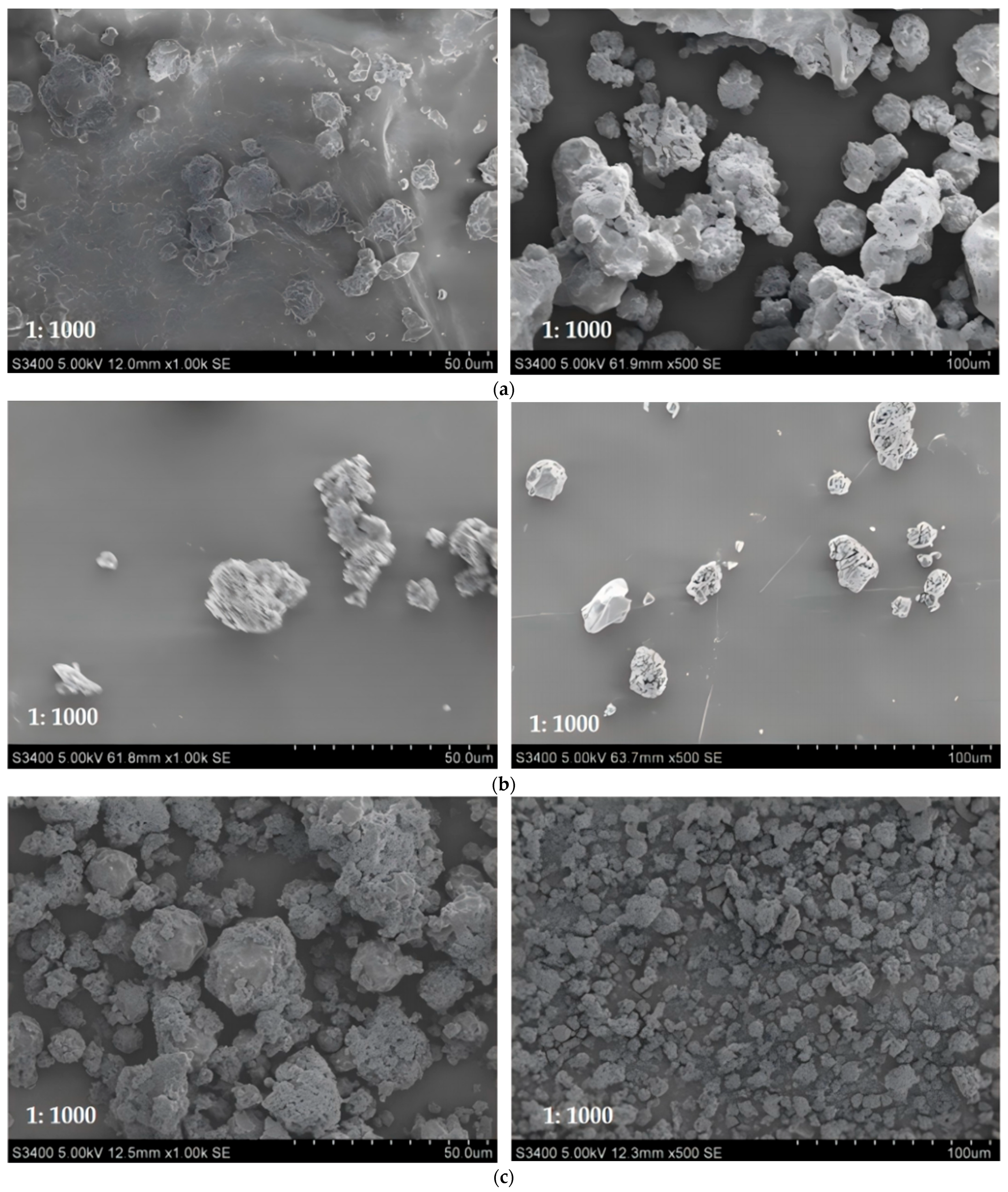
During phase-change microcapsule preparation, precise emulsifier type and concentration control are essential for optimal particle size and performance. Morphological analysis was conducted on microcapsules synthesised with emulsifier concentrations of 1 wt%, 0.5 wt%, and 0.01 wt% in the aqueous phase, as illustrated in
Figure 5.
Microcapsules exhibit significant aggregation at 0.01% emulsifier content and lack distinct morphology. This is due to an insufficient emulsifier, which fails to adequately reduce interfacial tension or stabilise the emulsion, leading to strong inter-droplet attraction and a high aggregation tendency. This compromises microcapsule appearance, morphology, and potentially performance. Increasing the emulsifier to 0.5% improves dispersion but fails to produce distinct microcapsules. While stability is somewhat enhanced, the emulsifier concentration remains insufficient to fully stabilise the oil droplets, likely because it cannot fully cover their surfaces and prevent aggregation. Only at 1% emulsifier content are ideal results achieved: SEM images reveal uniform, well-dispersed microcapsules with distinct morphology. This demonstrates that this concentration sufficiently reduces interfacial tension, enabling stable oil droplet dispersion and complete microcapsule formation. Here, the emulsifier fully coats the droplet surfaces, forming a stable interfacial film that effectively prevents aggregation.
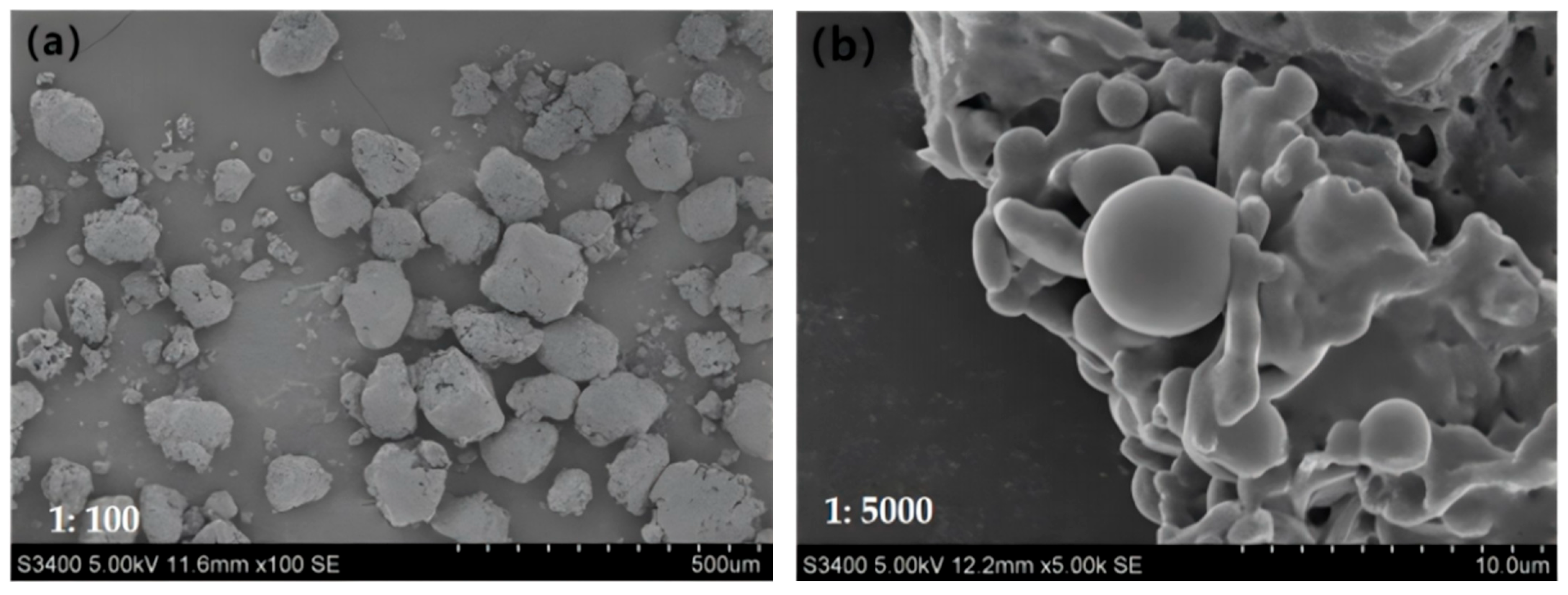
Figure 6a shows the SEM image of bio-wax PCM microcapsules with optimal emulsifier content. The microcapsules exhibit uniform size and distribution, enhancing coating stability, uniformity, and application effectiveness. Their distinct spherical morphology indicates an ideal formation process under these conditions.
Figure 6b reveals the surface morphology of the microcapsule–polyurethane coating. Microcapsules are evenly distributed on the coating surface, demonstrating good compatibility. This compatibility improves microcapsule stability within the coating, preventing detachment or agglomeration. Furthermore, the orderly distribution of microcapsules facilitates their phase-change function within the coating.
The surface roughness observed in the bio-wax PCM–polyurethane coating (
Figure 6b) is mainly attributed to the protrusion of microcapsules and interfacial inhomogeneity within the polyurethane matrix, rather than the substrate’s morphology. This characteristic is intrinsic to the composite coating system and may enhance its anti-icing performance by disrupting continuous ice formation.
3.2. Particle Size
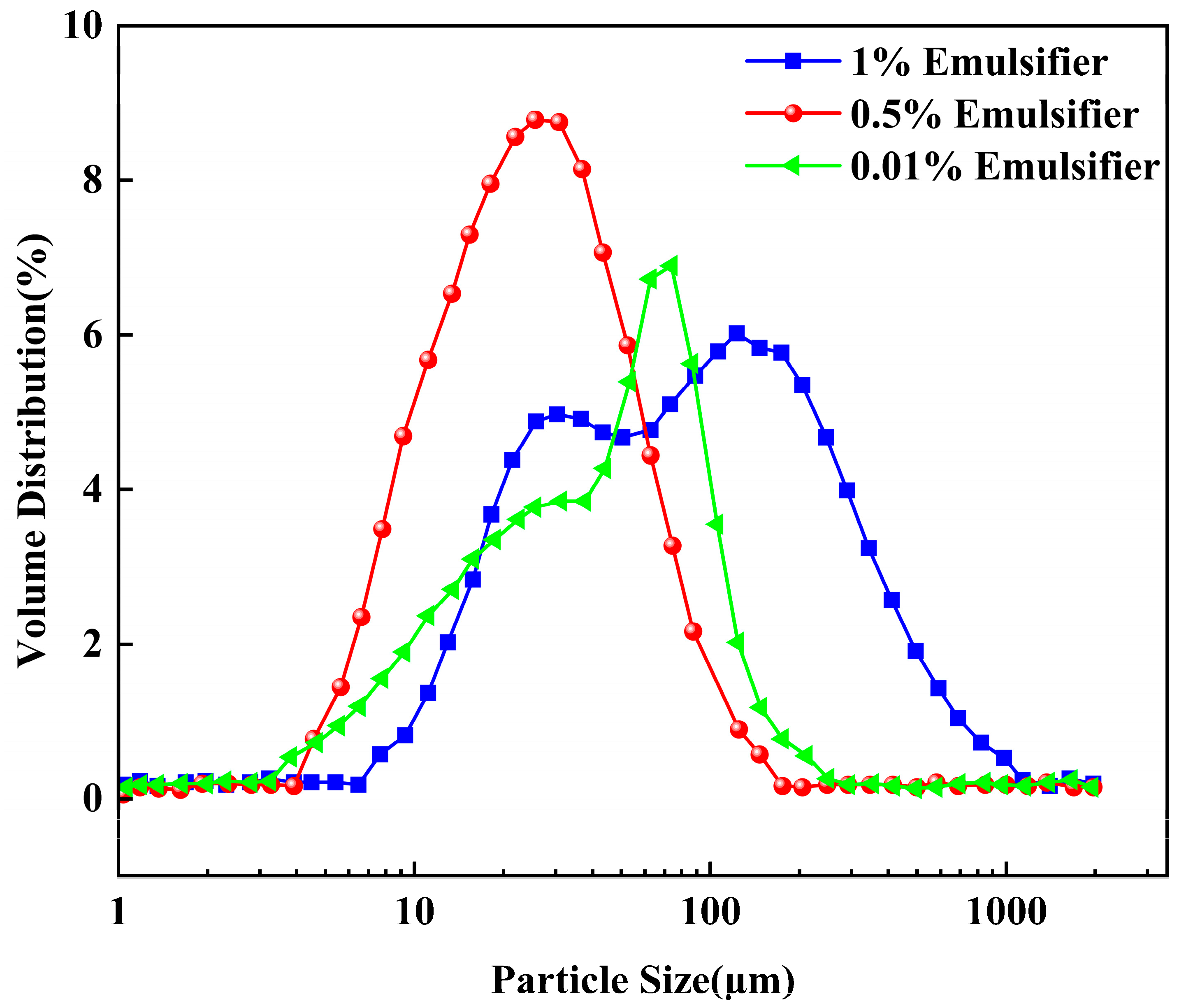
To determine the optimal emulsifier content for bio-wax phase-change microcapsules (PCMs), suspensions (0.1 wt% in deionised water) were analysed using laser particle size analysis (average of three replicates).
Figure 7 reveals the significant influence of emulsifier content on particle size distribution. At 0.01% emulsifier, insufficient interfacial activity leads to poor emulsion stability, causing oil droplet coalescence and aggregation. This results in a broad particle size distribution, compromising microcapsule quality and potentially affecting application performance (e.g., heat transfer or release rate).
Increasing the emulsifier to 0.5% moderately improves stability, yielding a more concentrated distribution with a peak near 100 μm. However, incomplete interfacial coverage still permits droplet interaction, resulting in relatively large microcapsules with a slightly broad distribution.
In contrast, at the optimal 1% emulsifier content, sufficient emulsifier ensures complete adsorption at the oil–water interface, forming a stable protective layer. This effectively prevents droplet coalescence, maintains emulsion stability, and promotes the formation of uniform microcapsules during polymerisation. Consequently, the particle size distribution becomes highly concentrated with a sharp peak at approximately 20 μm, indicating superior size uniformity crucial for PCM performance. Increasing emulsifier content significantly reduces microcapsule size and enhances distribution uniformity, with 1% delivering the optimal results.
3.3. Thermal Storage Properties
Differential scanning calorimetry (DSC) characterised the thermal properties of phase-change microcapsules (PCMs) with core-to-shell ratios of 7:3, 6:4, and 1:1, quantifying melting temperature (Tm), crystallisation temperature (Tc), and phase-change enthalpy (ΔH). Pure bio-wax exhibited a Tm of 32 °C, with melting and crystallisation enthalpies of 63.33 J/g and 82.78 J/g, respectively.
Table 1 shows that PCMs with a 7:3 ratio demonstrated superior thermal performance: a Tm of −17.72 °C (enabling low-temperature energy release), a high melting enthalpy of 49.73 J/g (indicating good energy storage), and a crystallisation enthalpy of 59.44 J/g (crucial for cooling stability). In contrast, PCMs with a 6:4 ratio showed a higher Tm (15.79 °C) and lower melting enthalpy (39.98 J/g) and crystallisation enthalpy (49.70 J/g). PCMs with a 1:1 ratio exhibited the lowest thermal storage capacity, with a
Tm of 12.10 °C, melting enthalpy of 31.58 J/g, and crystallisation enthalpy of 41.71 J/g. The 7:3 core-to-shell ratio yielded the most favourable combination of low melting temperature and high phase-change enthalpy.
Based on the melting enthalpy obtained from DSC, the encapsulation efficiency (
EPI) of the microcapsules is calculated as follows:
where
ΔHm,micro-PCM—melting enthalpy of bio-wax phase-change microcapsules;
ΔHm,PCM—melting enthalpy of bio-wax.
Microcapsules with a 7:3 core-to-shell ratio achieved the highest encapsulation efficiency (EPI) of 78%, demonstrating that a thinner polymer shell can effectively protect the bio-wax core and enhance stability. In contrast, EPI decreased to 63% for the 6:4 ratio and dropped to only 50% for the 1:1 ratio. This decline is likely due to the excessive polymer shell hindering complete coverage of the phase-change material (PCM).
Microencapsulated phase-change materials’ energy storage efficiencies (
Ees) are calculated using Equation (2).
where
ΔHc,micro-PCM—crystallisation enthalpy of bio-wax phase-change microcapsules;
ΔHc,PCM—crystallisation enthalpy of bio-wax.
Microcapsules with a 7:3 core-to-shell ratio exhibit the highest energy storage efficiency (Ees) of 74%, compared to 61% for the 6:4 ratio and 50% for the 1:1 ratio. This demonstrates that the core-to-shell ratio critically impacts encapsulation efficiency and energy storage performance. The higher Ees of the 7:3 microcapsules signify their superior effectiveness in absorbing and releasing heat during phase change. Consequently, this optimal ratio (7:3) is selected for further study due to its high encapsulation and energy storage efficiencies, efficient low-temperature heat release, and suitability for low-temperature energy storage applications.
After determining the optimal core-to-shell ratio, the concentrations of PCMS mixed with polyurethane coatings were calculated using Equation (3). Three concentrations were determined, and DSC tests were conducted to analyse the effect of the PCM concentration on thermal storage properties.
where
Following the preparation of phase-change microcapsules (7:3 core–shell ratio), three concentrations (12%, 26%, 36%) were incorporated into polyurethane coatings for DSC analysis (
Table 2). Results demonstrate significant concentration dependence: PCM content reductions progressively decrease melting and crystallisation parameters. Specifically, lower concentrations correlate with diminished melting temperatures (
Tm, fusion enthalpies (Δ
Hm), crystallisation temperatures (
Tc), and crystallisation enthalpies (Δ
Hc), indicating attenuated heat absorption/release during phase transitions. These systematic declines suggest modified thermal stability or crystalline reorganisation, likely due to altered crystallisation kinetics (e.g., suppressed nucleation or crystallinity degradation). The findings confirm that PCM concentration critically governs thermal energy regulation capacity by modulating phase transition thermodynamics and crystalline behaviour.
3.4. Thermal Stability
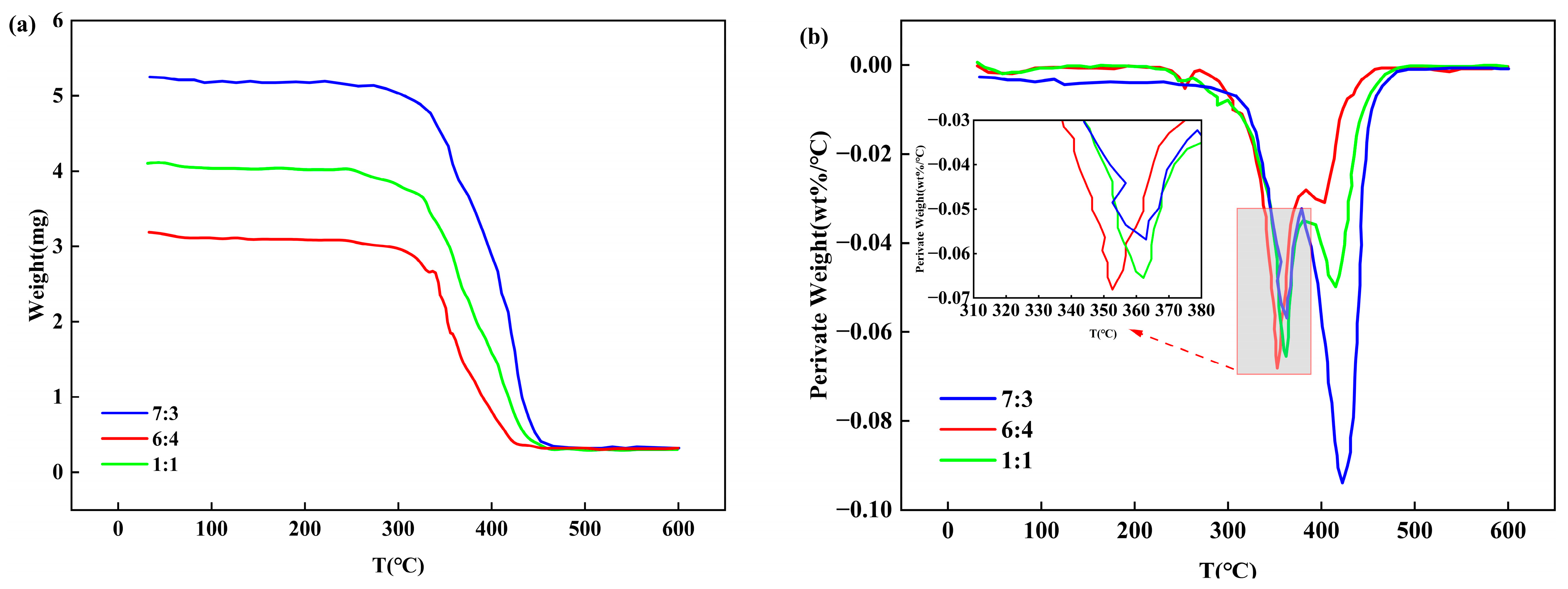
The thermal stability of bio-wax phase-change microcapsules with varying core-to-shell ratios (7:3, 6:4, 1:1) and their polyurethane composites was investigated through thermogravimetric analysis (TGA). All tests maintained a constant heating/cooling rate of 10 °C/min across a temperature range of 30–600 °C under a continuous nitrogen atmosphere. Significant structural modifications induced by different core–shell ratios necessitated comparative TGA evaluation.
Figure 8 presents the resultant thermograms and processed derivative thermogravimetry (DTG) curves for thermal stability assessment.
TGA reveals superior thermal stability in 7:3 core–shell microcapsules, evidenced by their flat mass-loss curve and low DTG peak, indicating slow decomposition kinetics. This stability originates from robust core–shell interactions that effectively confine the bio-wax core, suppressing high-temperature volatilisation. Conversely, microcapsules with lower core ratios (6:4, 1:1) exhibit accelerated degradation through synergistic mechanisms: (1) dispersed core distribution weakens interfacial adhesion, promoting leakage; (2) excessive shell material develops structural defects (agglomeration/cracking) under thermal stress, further compromising protective functionality—manifested as steep TGA mass loss and elevated DTG peaks.
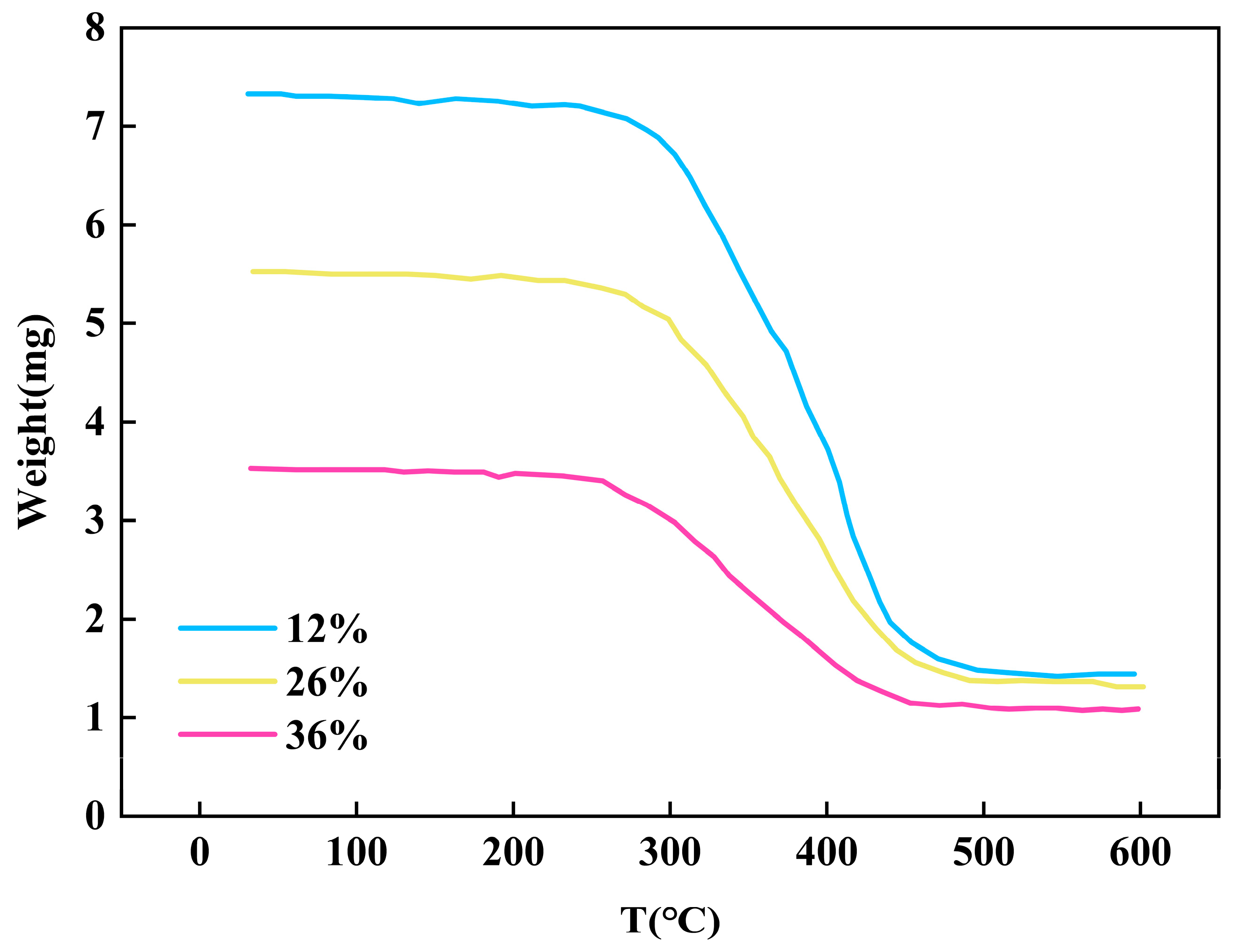
TGA tests were conducted on phase-change microcapsule–polyurethane coatings with different PCM concentrations, as shown in
Figure 9.
It can be analysed from the figure that PCMS with different concentrations exhibit significant differences in the temperature range of 0–600 °C. With the change in PCM concentration, the thermogravimetric curves differ in trend and weight loss degree, indicating that concentration significantly impacts their thermal stability. The 36% PCM with a higher concentration shows a relatively flat thermogravimetric curve in the entire temperature range, with relatively good thermal stability, while PCMS with lower concentrations (such as 13% PCMS and 26% PCMS) have relatively fast-declining thermogravimetric curves and poor thermal stability.
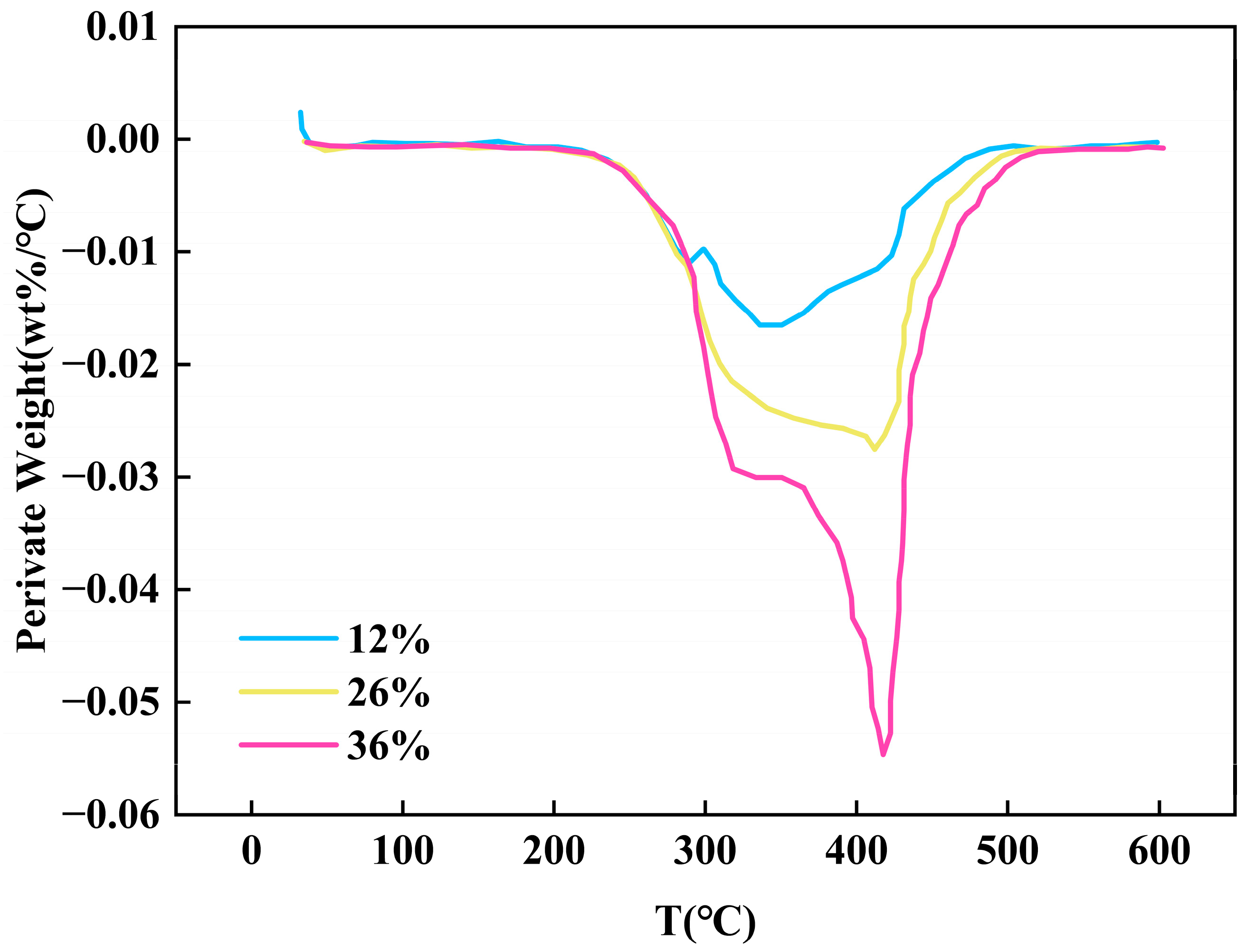
The DTG curves of different concentrations (
Figure 10) show that the peak of the thermal decomposition rate of PCMS with higher concentrations is relatively low, indicating better thermal stability. In comparison, the opposite is true for those with lower concentrations. This may be because, within the entire temperature range, PCMS of different concentrations undergo thermal decomposition as the temperature rises. The low-temperature stage may involve the volatilisation of surface moisture and other substances; as the temperature increases, thermal decomposition begins, and the time at which obvious thermal decomposition starts varies among different concentrations at different temperatures.
4. Anti-Icing Performance Tests
4.1. Icing Wind Tunnel System
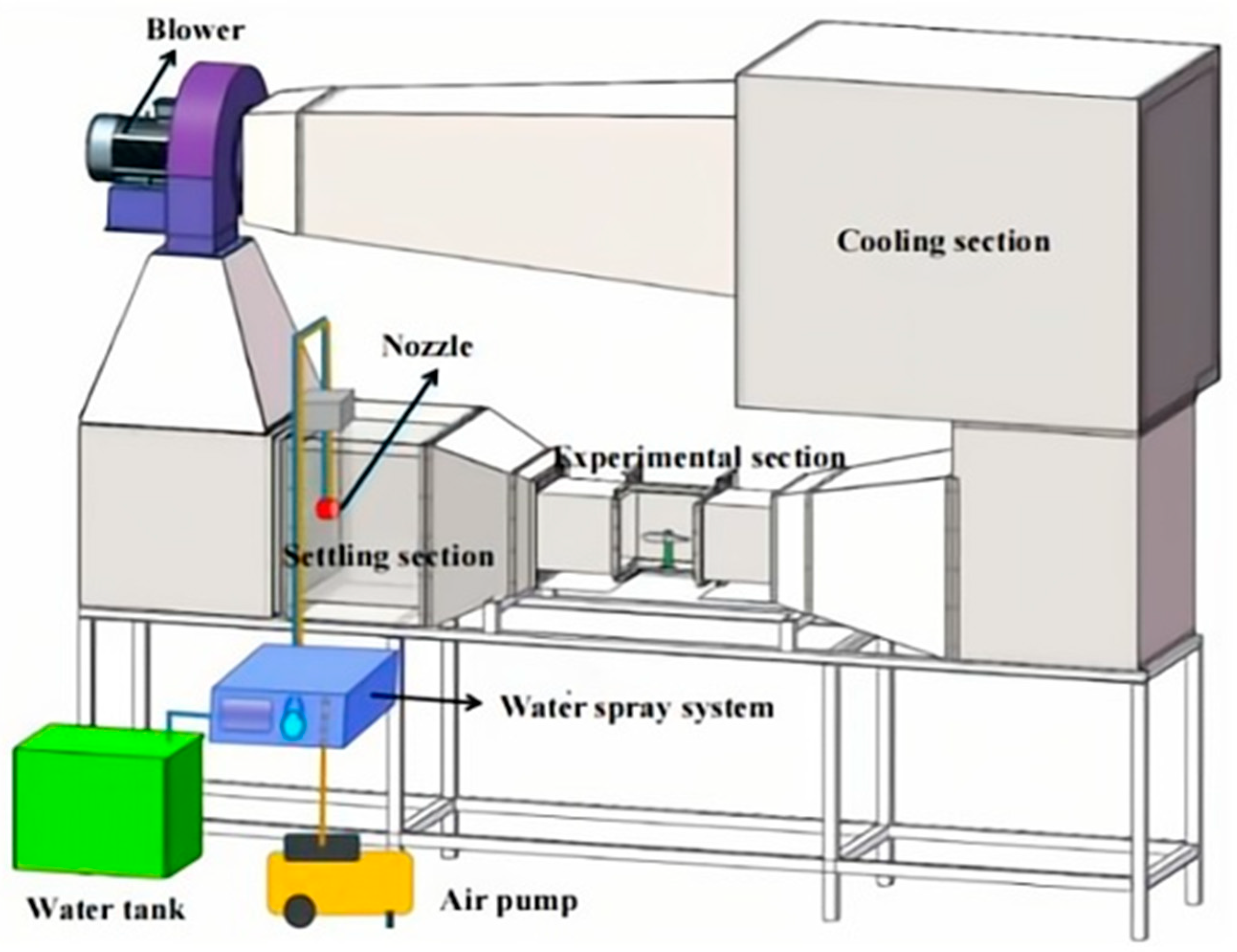
The anti-icing tests in the icing wind tunnel of this study were carried out in the return-flow low-temperature icing wind tunnel at the Wind Energy Laboratory of Northeast Agricultural University. This return-flow icing wind tunnel test system includes components such as a fan, cooling section, test section, stabilisation section, water mist control system, and nozzles. The cross-section of the wind tunnel test section is a rectangle with dimensions of 250 mm × 250 mm. The nozzle is located at the centre of the cross-section of the air duct’s stabilisation section. The blade samples used in the test are fixed on the test frame in the test section, as shown in
Figure 11. The key operational parameters of the wind tunnel during testing are summarised in
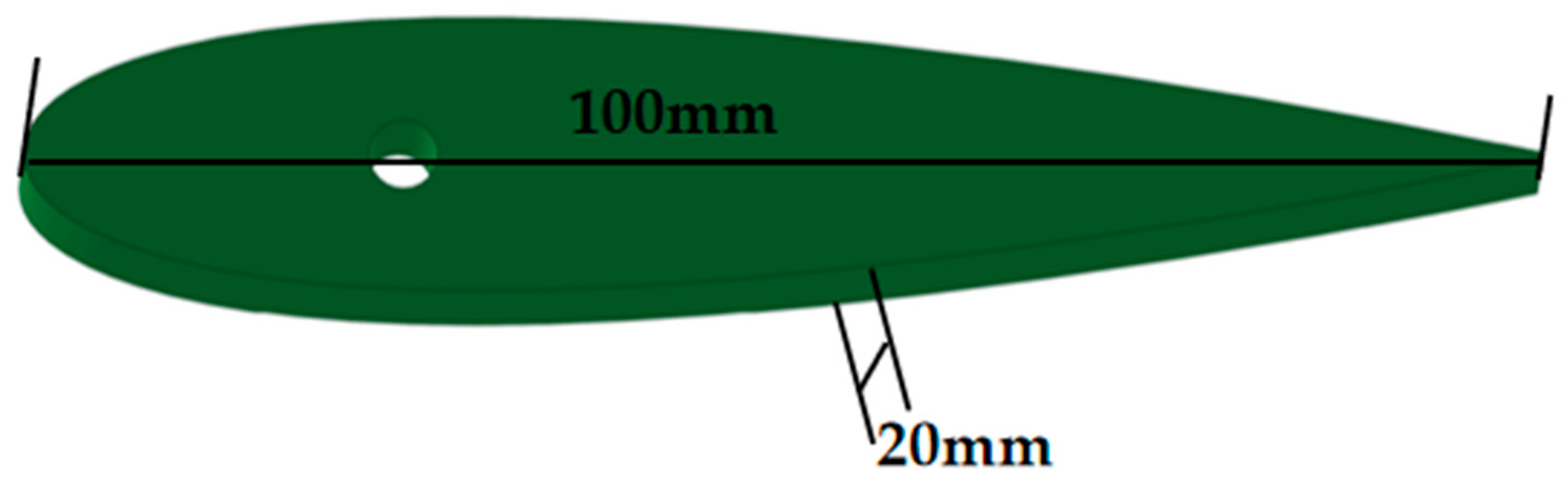
Table 3. Based on its known thermophysical properties, fibreglass is selected as the blade material, featuring an NACA0018 airfoil profile with a chord length of 100 mm and a thickness of 20 mm, as shown in
Figure 12.
4.2. Test Scheme
To investigate the differences in the anti-icing effects of bio-wax phase-change microcapsule–polyurethane coatings with different concentrations applied on blade surfaces, this study designed three single-variable experiments, namely, to examine the impact of wind speed, ambient temperature, and water spray flow rate on the coatings’ anti-icing effects. The icing time was 5 min, and the test schemes are shown in
Table 4.
Pre-experimental studies in this work find that at a 36% concentration, the microcapsules just reach a critical state of uniform distribution within the coating. Further increasing the concentration leads to agglomeration of microcapsules, which compromises the uniformity of the coating. For example, when the concentration reaches 40%, the cured coating exhibits increased brittleness and a tendency to peel. Therefore, the upper limit for the PCM concentration is set at 36%.
4.3. Evaluation Indicators
To analyse the anti-icing effects of bio-wax phase-change microcapsule–polyurethane coatings with different concentrations, as well as the impacts of varying flow rates, temperatures, and wind speeds on phase-change microcapsules (PCMS) with four concentrations, indices such as icing mass, icing area, icing thickness, and anti-icing rate were set as evaluation indicators:
- (1)
Icing mass: After the 5 min icing wind tunnel test, the icing mass was measured using an analytical balance (model BSA124S).
- (2)
Icing area: After the 5 min icing wind tunnel test, a high-speed camera (model 107 Phantom v5.1, boasting a resolution of 1024 × 1024 pixels) was used to record photos of the iced surfaces of the three materials. Graphic software was employed for image processing to depict the icing contour after 5 min.
- (3)
Icing thickness: Graphic software was used for image processing to measure the icing thickness at the blade’s leading edge.
- (4)
Anti-icing rate: After image processing via graphic software, the calculation formula of the anti-icing rate was used, as shown in Equation (4):
where
In Equation (4), the smaller the area of the iced region (Aice), the smaller the anti-icing rate (F) and the better the coating’s anti-icing effect.
4.4. Results and Discussion
4.4.1. Anti-Icing Performance of Coatings Under Different Ambient Temperatures
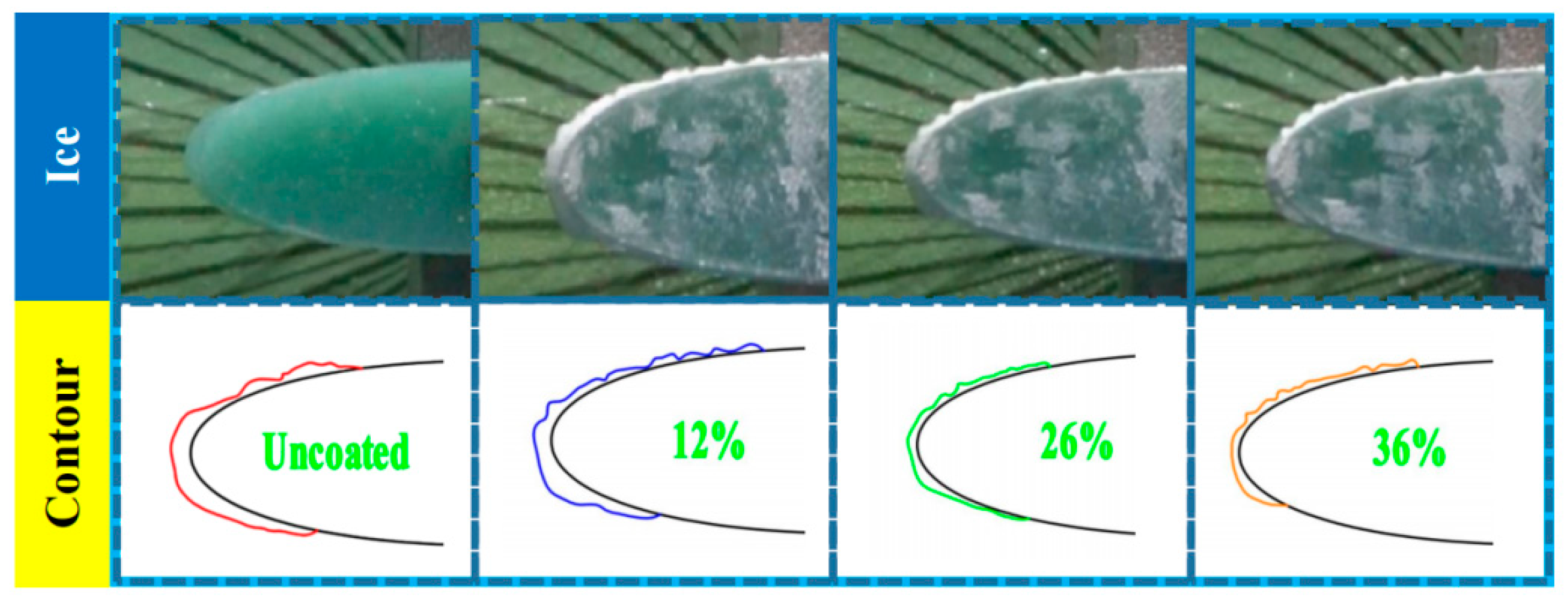
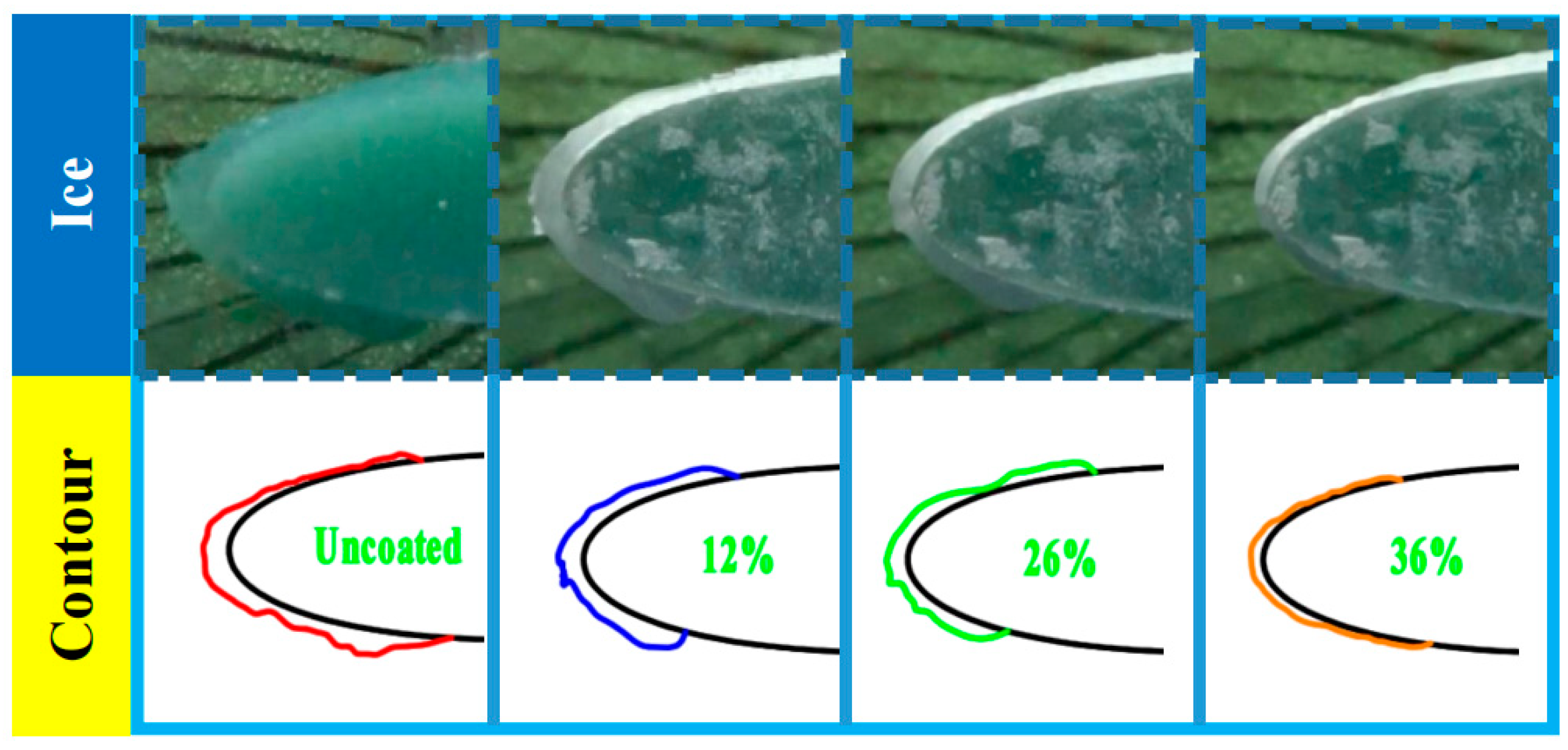
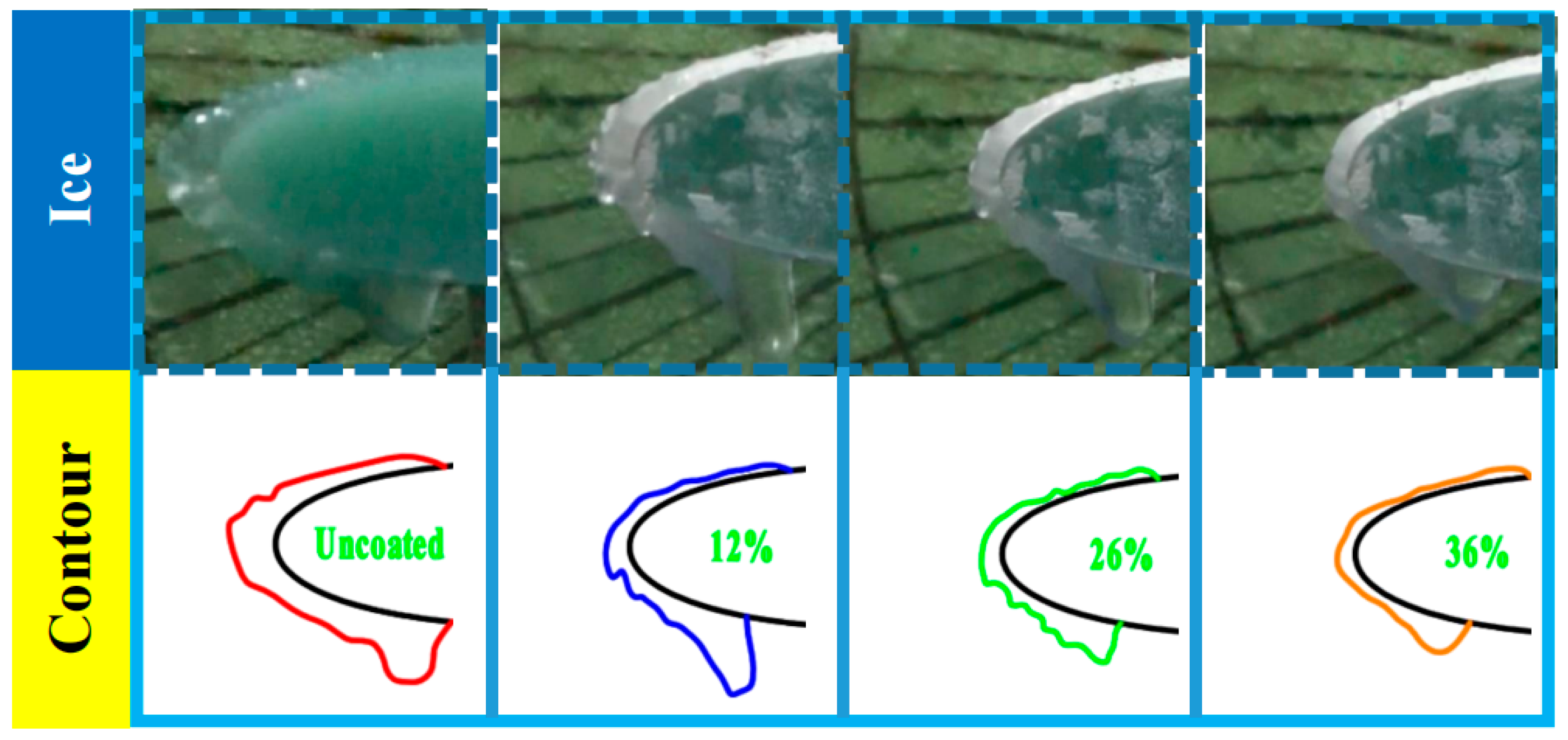
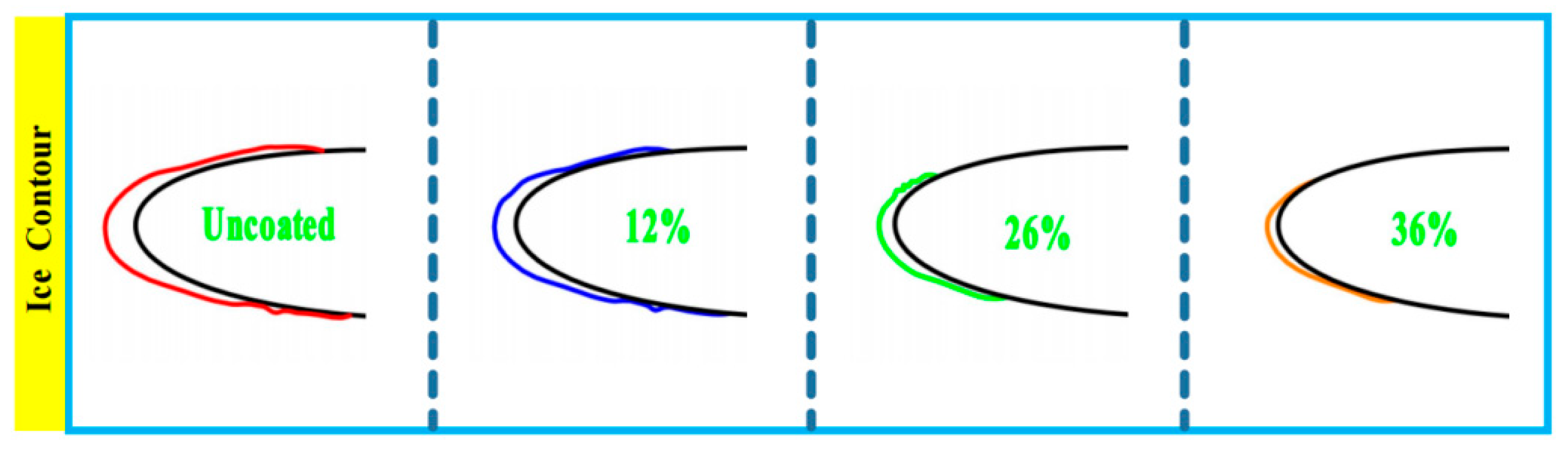
Figure 13,
Figure 14 and
Figure 15 present ice accretion patterns on uncoated and bio-wax PCM–polyurethane-coated GFRP blades after 5 min icing tests (3 m/s wind speed, varying ambient temperatures).
Blade leading-edge icing remains minimal at −5 °C with low wind speed (3 m/s).
Figure 13,
Figure 14 and
Figure 15 show that increasing phase-change microcapsule (PCM) concentration progressively reduces surface ice accumulation due to enhanced latent heat release. When temperatures decrease further, ice formation intensifies on all blades. However, PCM–polyurethane coatings continuously release phase-change heat, slowing ice-layer growth and resulting in significantly less ice accumulation than uncoated surfaces. Higher PCM concentrations maximise anti-icing efficacy by optimising heat output, reducing ice-induced blade damage. These results demonstrate concentration-dependent anti-icing performance across temperature conditions.
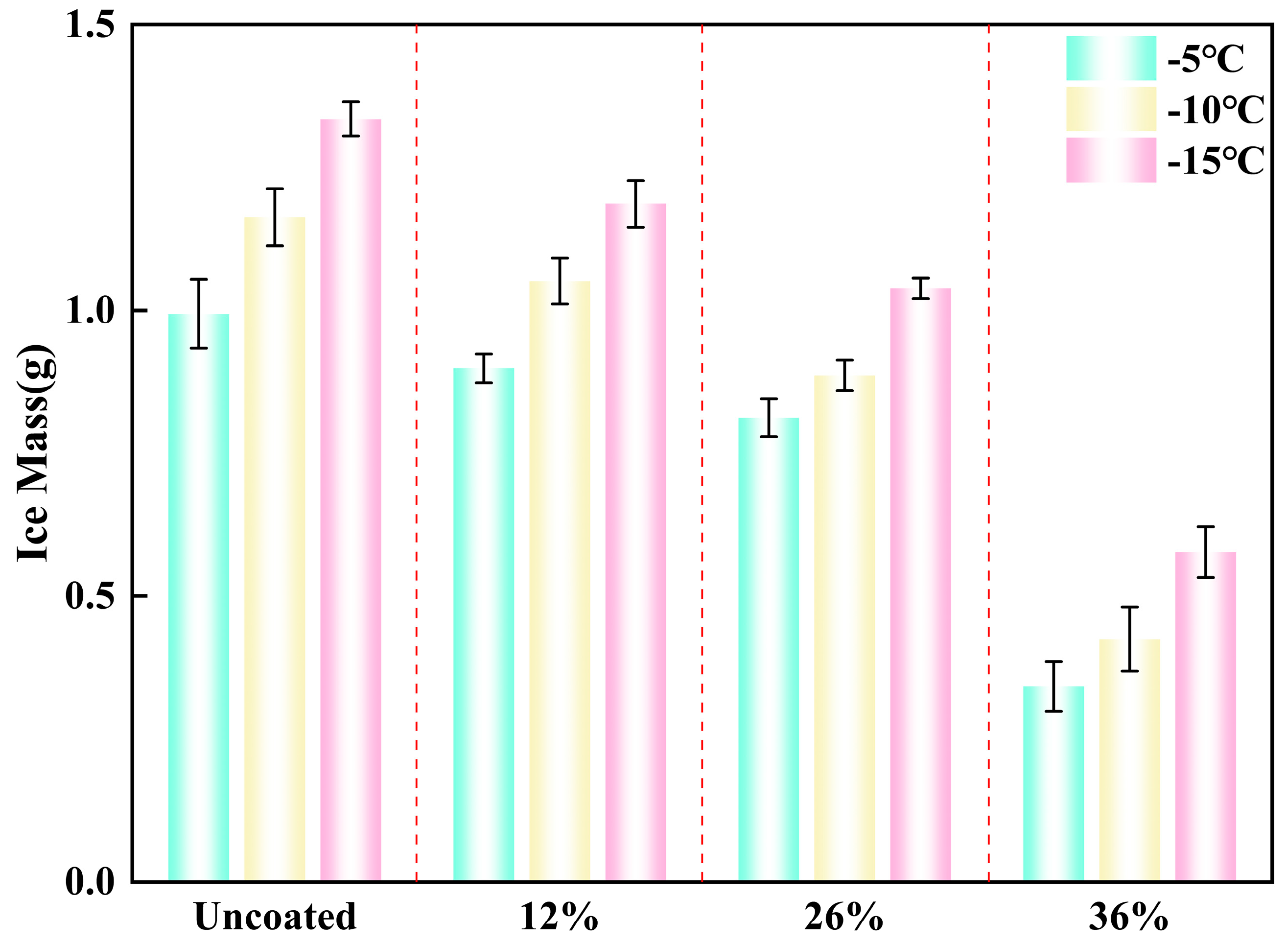
Figure 16 quantifies the leading-edge ice accumulation under controlled conditions (3 m/s wind speed, 20 mL/min water spray), demonstrating the consistent anti-icing efficacy of bio-wax PCM–polyurethane coatings across subzero temperatures. Compared to uncoated blades, coated specimens exhibit significant ice mass reductions: at −5 °C, 12%, 26%, and 36% PCM coatings decreased ice mass by 9.53%, 18.27%, and 65.10%, respectively; at −10 °C, reductions reached 9.49%, 23.63%, and 63.24%; while at −15 °C, ice suppression remained substantial at 11.34%, 21.92%, and 56.00% for corresponding concentrations. This progressive enhancement with increased PCM loading confirms the coating’s temperature-resilient performance.
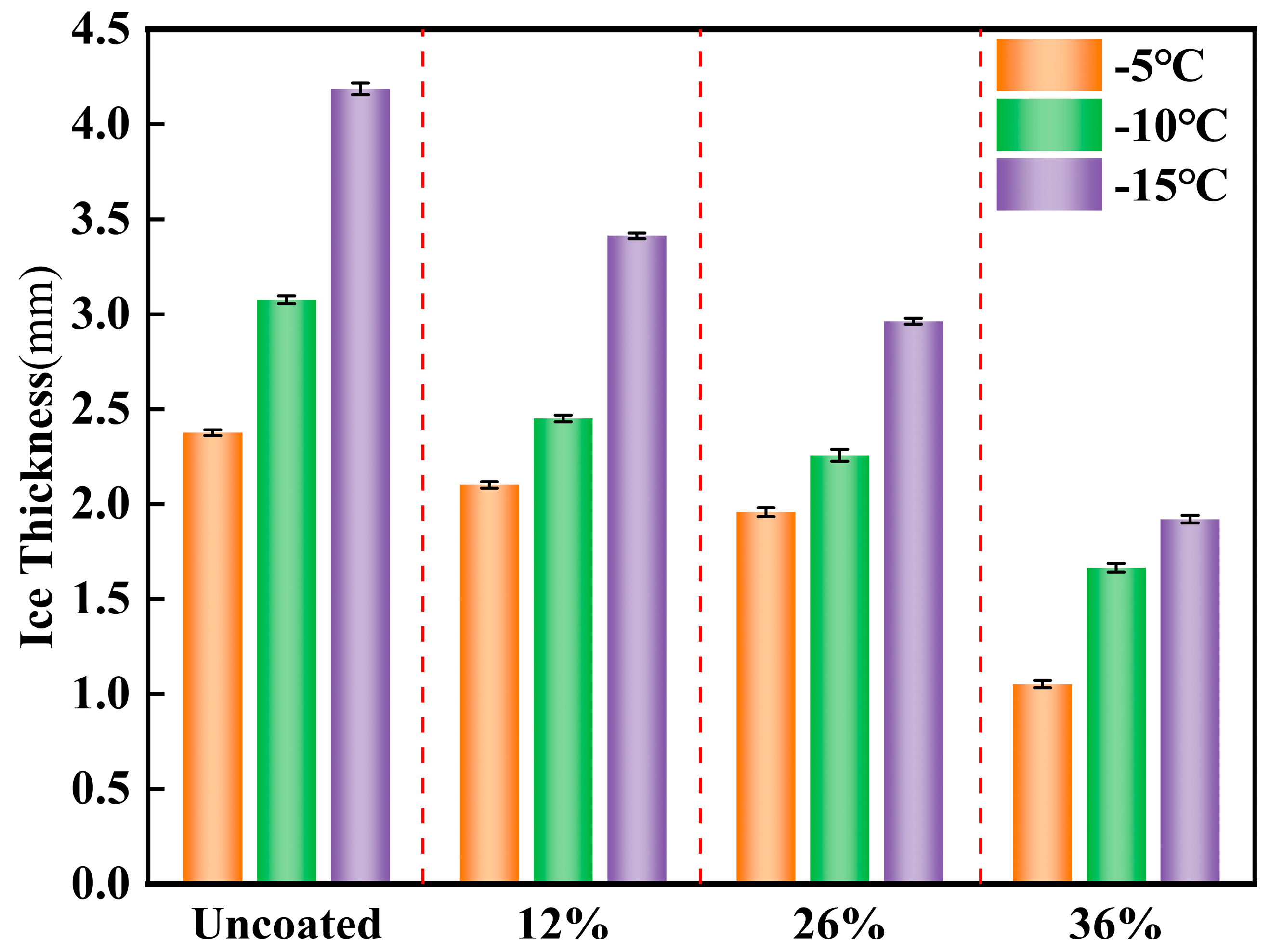
Figure 17 confirms thinner ice accretion on coated blades, with significant thickness reduction versus uncoated specimens: at −5 °C, 12%/26%/36% PCM coatings decreased ice thickness by 10.94%/17.21%/54.97%; at −10 °C, by 20.19%/26.71%/45.93%; and at −15 °C, by 18.23%/29.02%/53.72%. This anti-icing effect stems from PCMs’ phase transition heat release within their operational temperature range. A higher PCM concentration increases latent heat release per unit area, elevating blade surface temperature. This thermal regulation reduces water vapour condensation probability by enhancing molecular kinetic energy, thereby suppressing ice formation and growth.
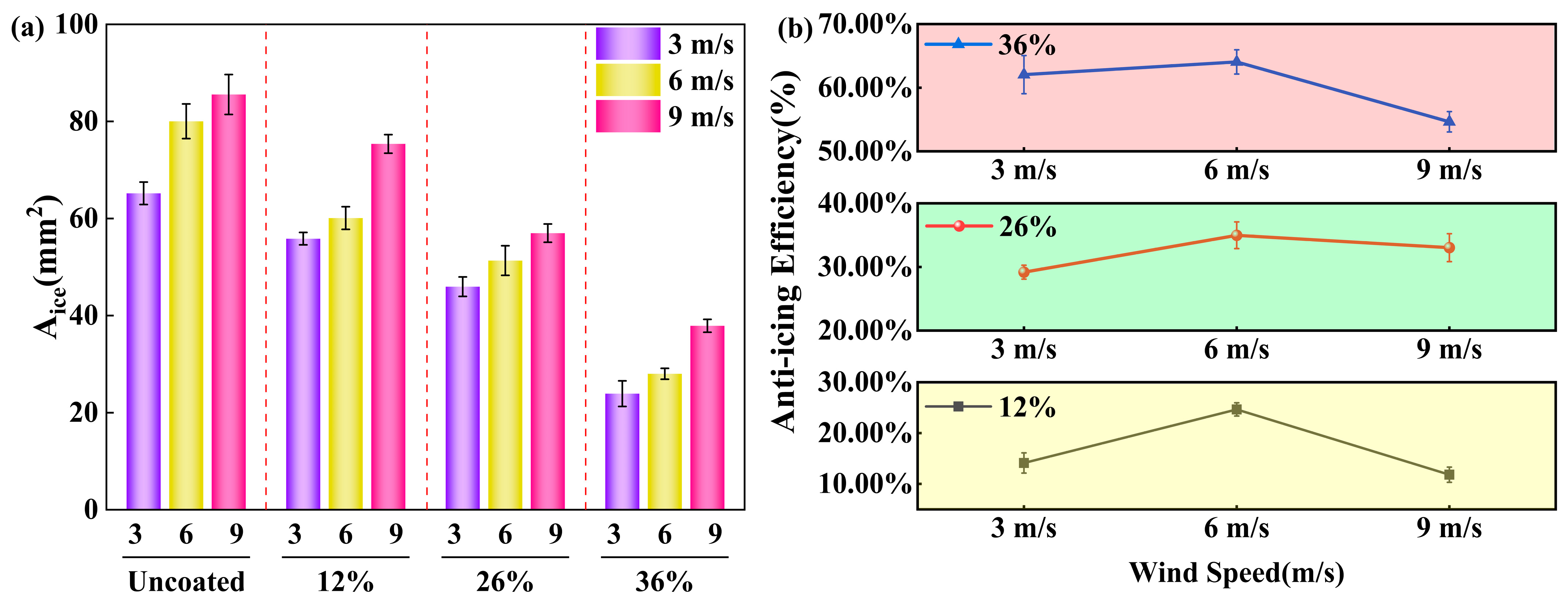
Figure 18 and
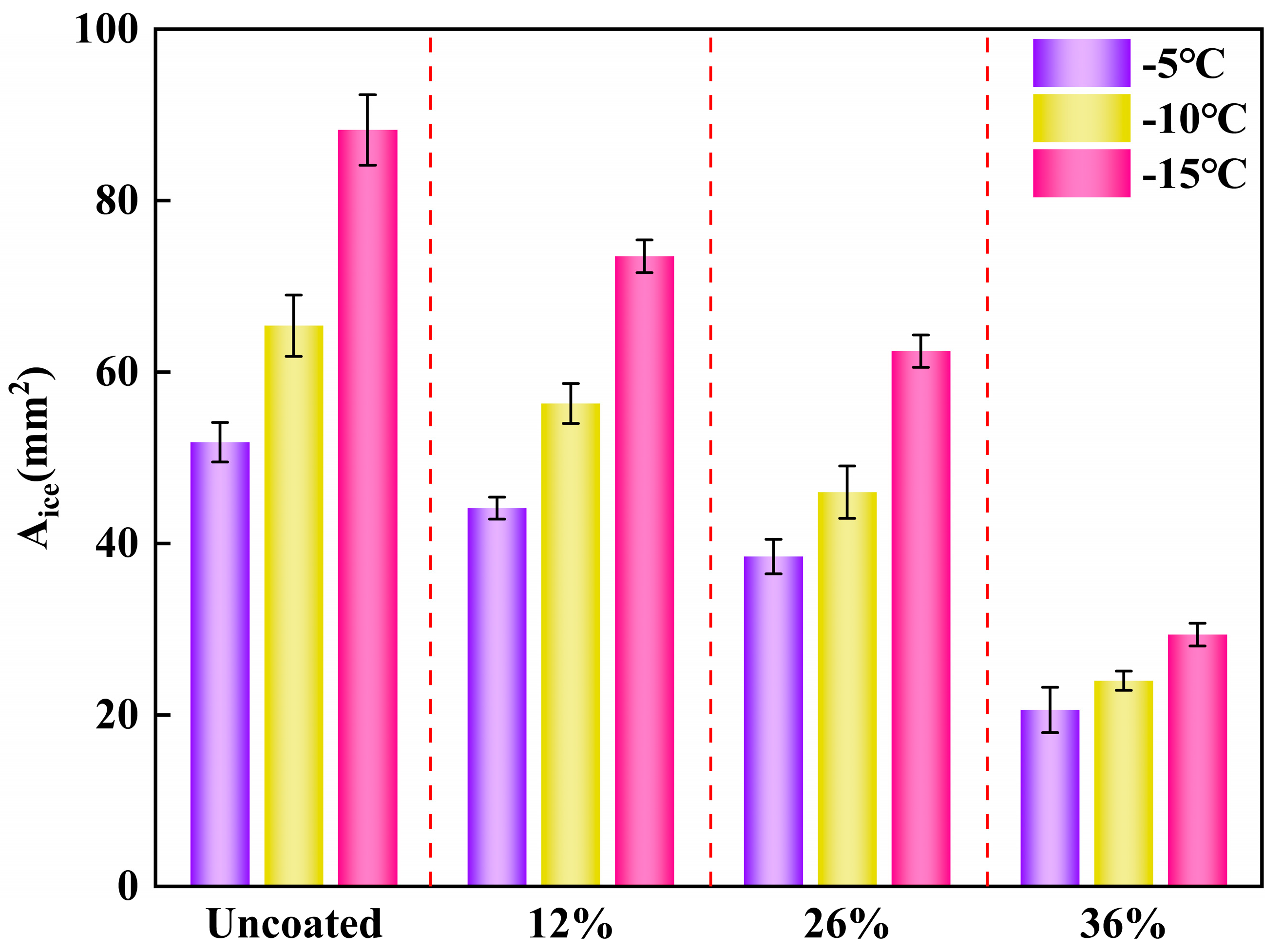
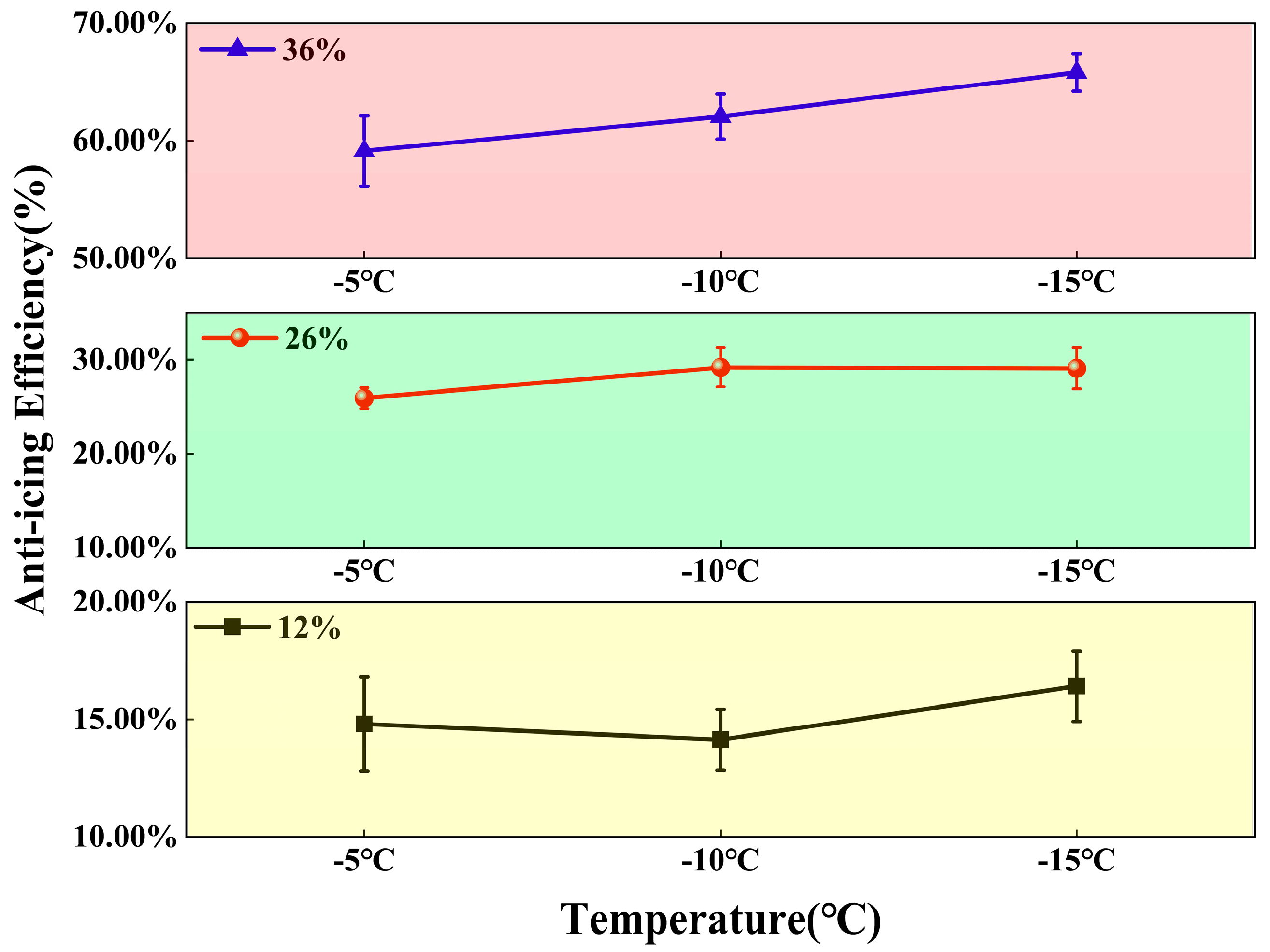
Figure 19 demonstrated reduced icing area and enhanced anti-icing rates on bio-wax PCM–polyurethane-coated blades versus uncoated counterparts under a 3 m/s wind speed. At −5 °C/3 m/s/20 mL·min
−1, anti-icing rates reached 14.80% (12% PCM), 25.91% (26% PCM), and 59.12% (36% PCM); at −10 °C, rates measured 14.13%, 29.18%, and 62.05%; and at −15 °C, they were 16.41%, 29.08%, and 65.80%. This concentration-dependent efficacy stems from PCMs’ targeted phase-change heat release within their operational temperature range. Increased microcapsule density per unit area elevates cumulative latent heat output, maintaining blade surface temperature above freezing. The resulting thermal barrier suppresses water vapour condensation and ice nucleation, thereby proportionally enhancing anti-icing performance with PCM loading.
High-concentration PCM coatings form dense thermal barriers on blade surfaces, effectively inhibiting heat dissipation and blocking convective heat loss to cold air. This maintains elevated surface temperatures, significantly reducing icing risk. Increasing PCM concentration fundamentally alters the surface temperature distribution: a low concentration creates localised anti-icing zones, whereas higher loading enables uniform thermal coverage. By eliminating cold spots that trigger localised icing, this temperature-field homogenization synergistically enhances overall anti-icing performance with increasing PCM density.
4.4.2. Anti-Icing Performance of Coatings Under Different Ambient Wind Speeds
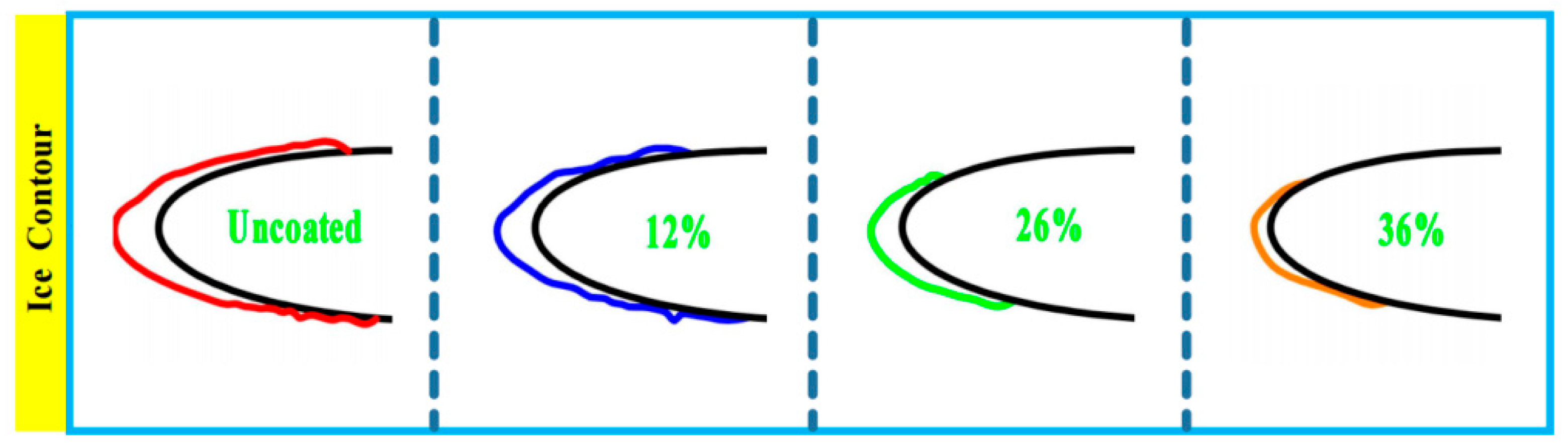
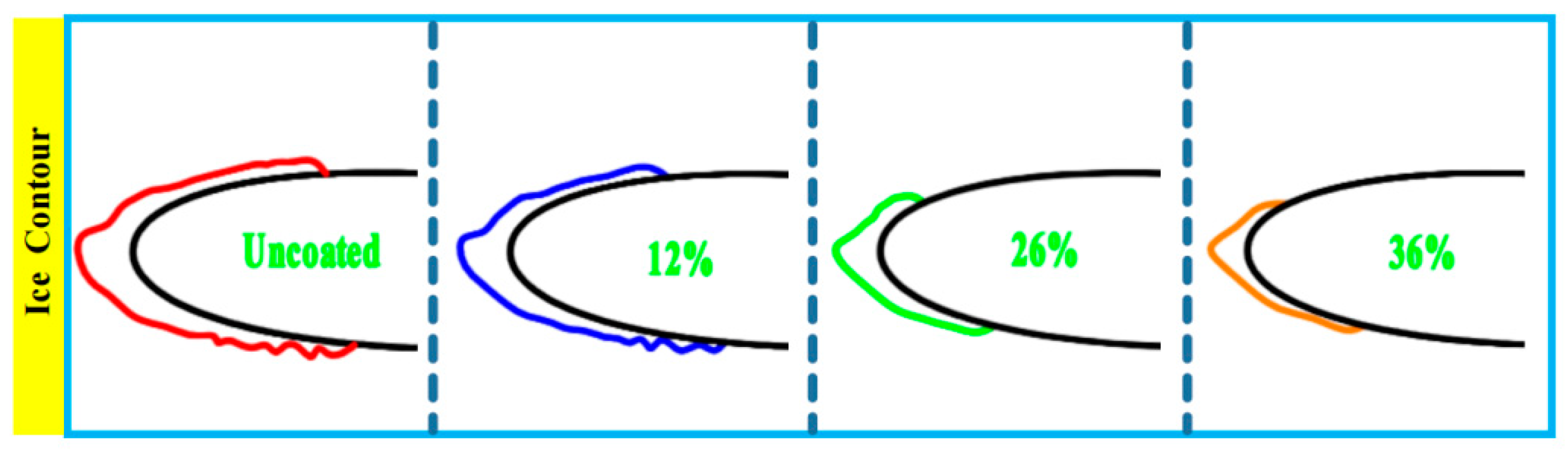
Figure 20,
Figure 21 and
Figure 22 depict icing morphologies on uncoated and bio-wax PCM–polyurethane-coated GFRP blades after 5 min of icing at −10 °C under varying wind speeds. At 3 m/s, uncoated blades show significant leading-edge icing with uniformly thickening layers due to rapid freezing of supercooled droplets. As wind speed increases, ice accretion intensifies on all blades, but coated specimens maintain notable anti-icing advantages: while uncoated blades exhibit rapid ice-layer thickening, PCM coatings persistently release latent heat in response to accelerated convective cooling. This creates localised thermal buffers that decelerate ice growth, even under high-wind conditions. Crucially, high-concentration coatings maximise this buffering capacity through greater microcapsule density and cumulative heat output, demonstrating wind-resilient anti-icing functionality.
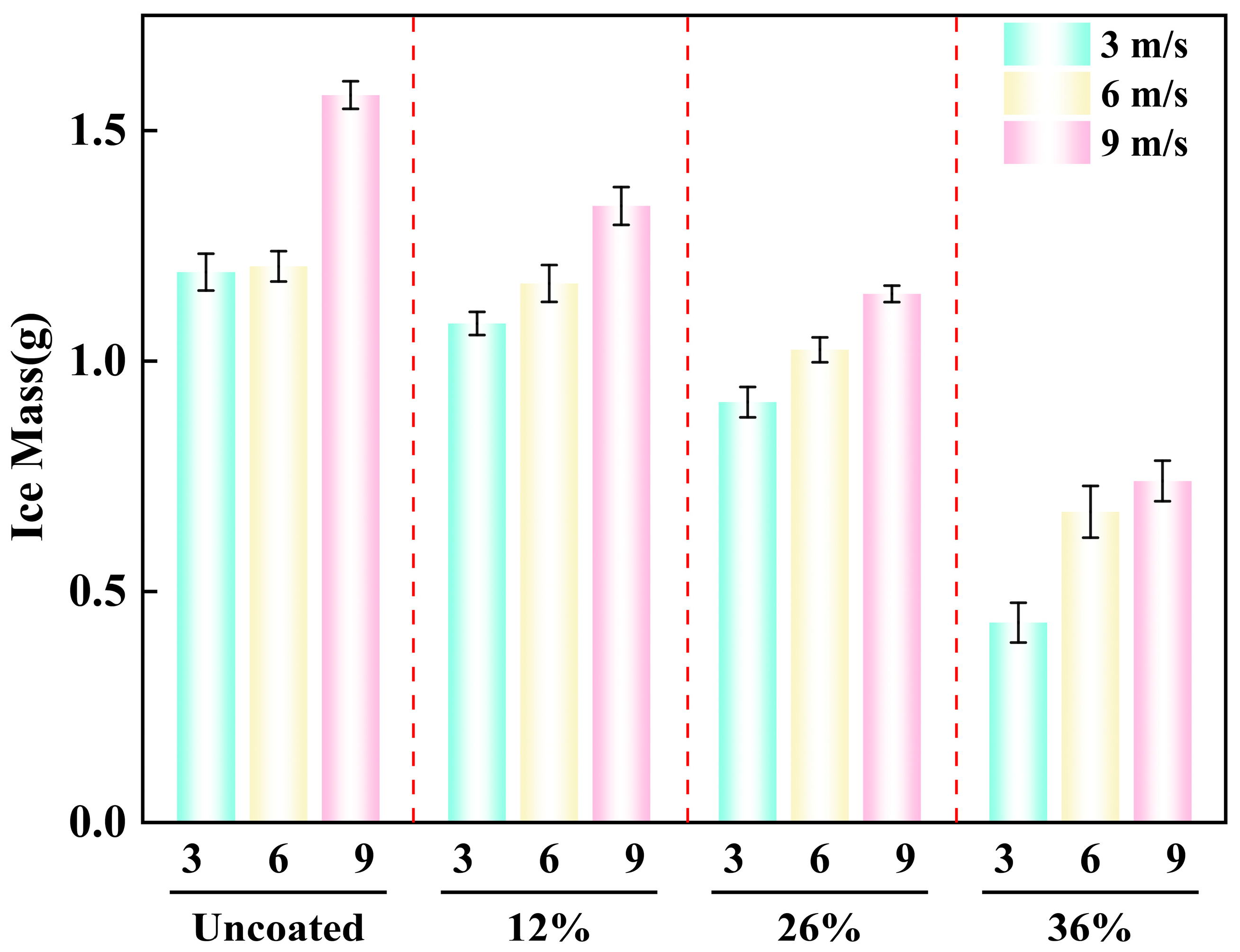
Figure 23 quantifies ice mass reduction on bio-wax PCM–polyurethane-coated blades (12%/26%/36%) versus uncoated specimens under −10 °C with 20 mL/min water spray.
At 3 m/s, ice mass decreased by 9.47% (12% PCM), 23.58% (26% PCM), and 63.25% (36% PCM); at 6 m/s, reductions measured 3.06%, 6.54%, and 43.93%; while at 9 m/s, decreases reached 15.18%, 27.04%, and 52.95%. Low-concentration coatings (12%) exhibited significant wind speed dependency: they were effective at 3 m/s through sustained heat retention but compromised at 9 m/s due to accelerated convective heat loss. Conversely, medium–high-concentration coatings (26%/36%) maintained robust anti-icing performance across wind regimes—their elevated microcapsule density delivered sufficient latent heat to mitigate convective dissipation. However, efficacy progressively declined with increasing wind intensity.
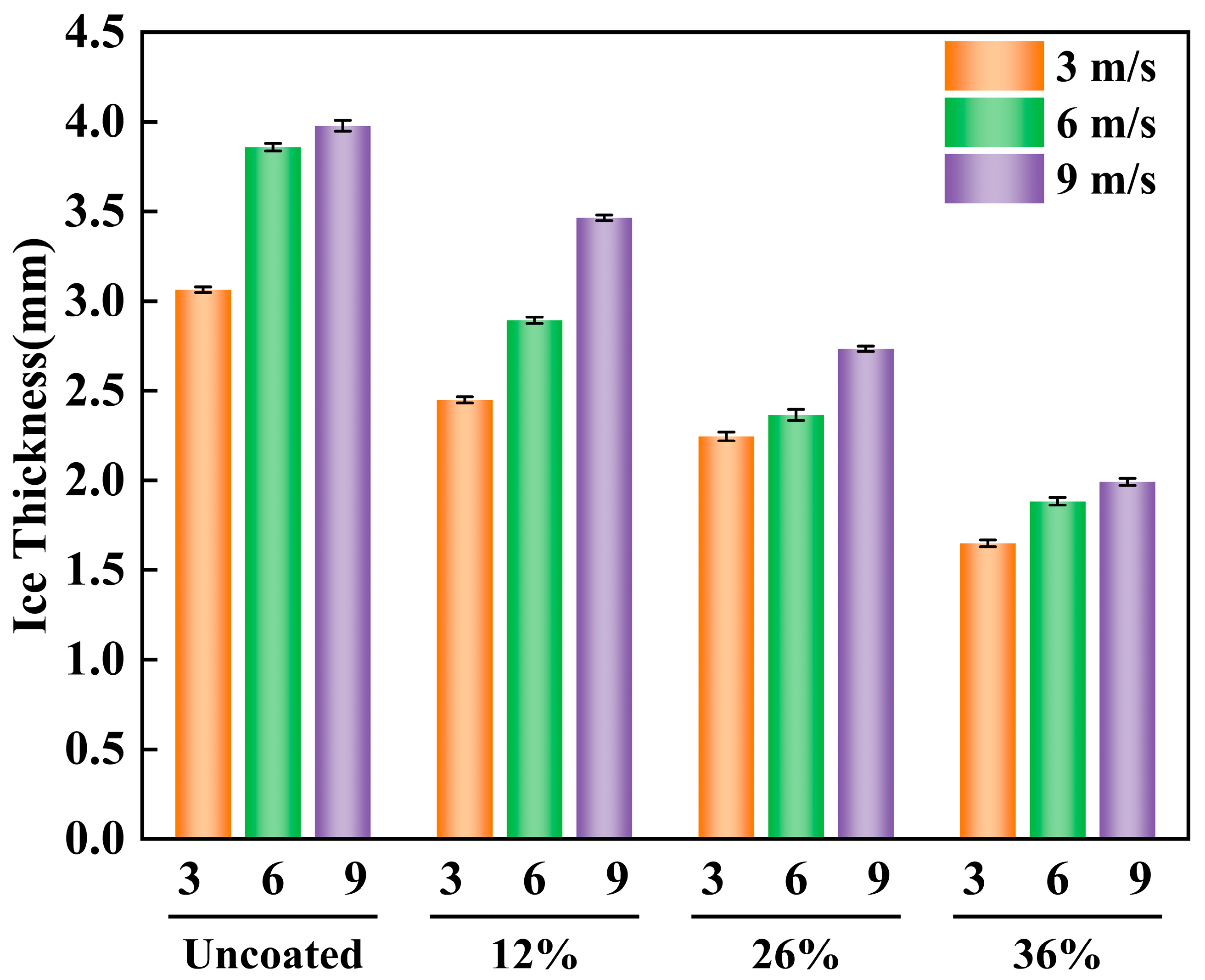
Figure 24 shows that bio-wax PCM–polyurethane coatings consistently reduce ice thickness versus uncoated blades at −10 °C/20 mL/min, with significant concentration-dependent efficacy. At 3 m/s, thickness decreased by 20.20% (12% PCM), 26.71% (26% PCM), and 45.93% (36% PCM); at 6 m/s, reductions reached 24.94%, 38.44%, and 51.17%; while at 9 m/s, decreases measured 11.81%, 30.90%, and 50.00%. The coating’s anti-icing mechanism leveraged PCM phase-change heat release to suppress ice nucleation and decelerate crystal growth. Higher concentrations (26%/36%) maximised this effect through greater latent heat output. Crucially, although elevated wind speeds intensified icing by increasing supercooled droplet impact, the coatings counteracted convective acceleration through sustained thermal regulation, maintaining wind-resilient performance across 3–9 m/s conditions.
Figure 25 demonstrates the superior anti-icing performance of bio-wax PCM–polyurethane coatings at −10 °C across wind speeds.
From
Figure 25, it can be seen that higher-concentration coatings (26%/36%) significantly outperform 12% formulations due to enhanced latent heat release, suppressing ice nucleation and growth more effectively, as evidenced by the 36% coatings consistently achieving the highest anti-icing rates. While increased wind speed (3–9 m/s) intensifies supercooled droplet impact and generally elevates icing risk for all blades, the coatings exhibit adaptive thermal regulation: at 3 m/s, all concentrations show optimal performance; at 6 m/s, medium–high concentrations (26%/36%) maintain or even improve efficacy, potentially due to wind-accelerated heat dissipation optimising phase-change release. However, at the 9 m/s threshold, all coatings experience reduced anti-icing rates as convective forces exceed thermal compensation capacity. Crucially, coated blades retain significant advantages over uncoated counterparts even at extreme winds, confirming wind-resilient functionality.
4.4.3. Anti-Icing Performance of Coatings Under Different Water Spray Rates
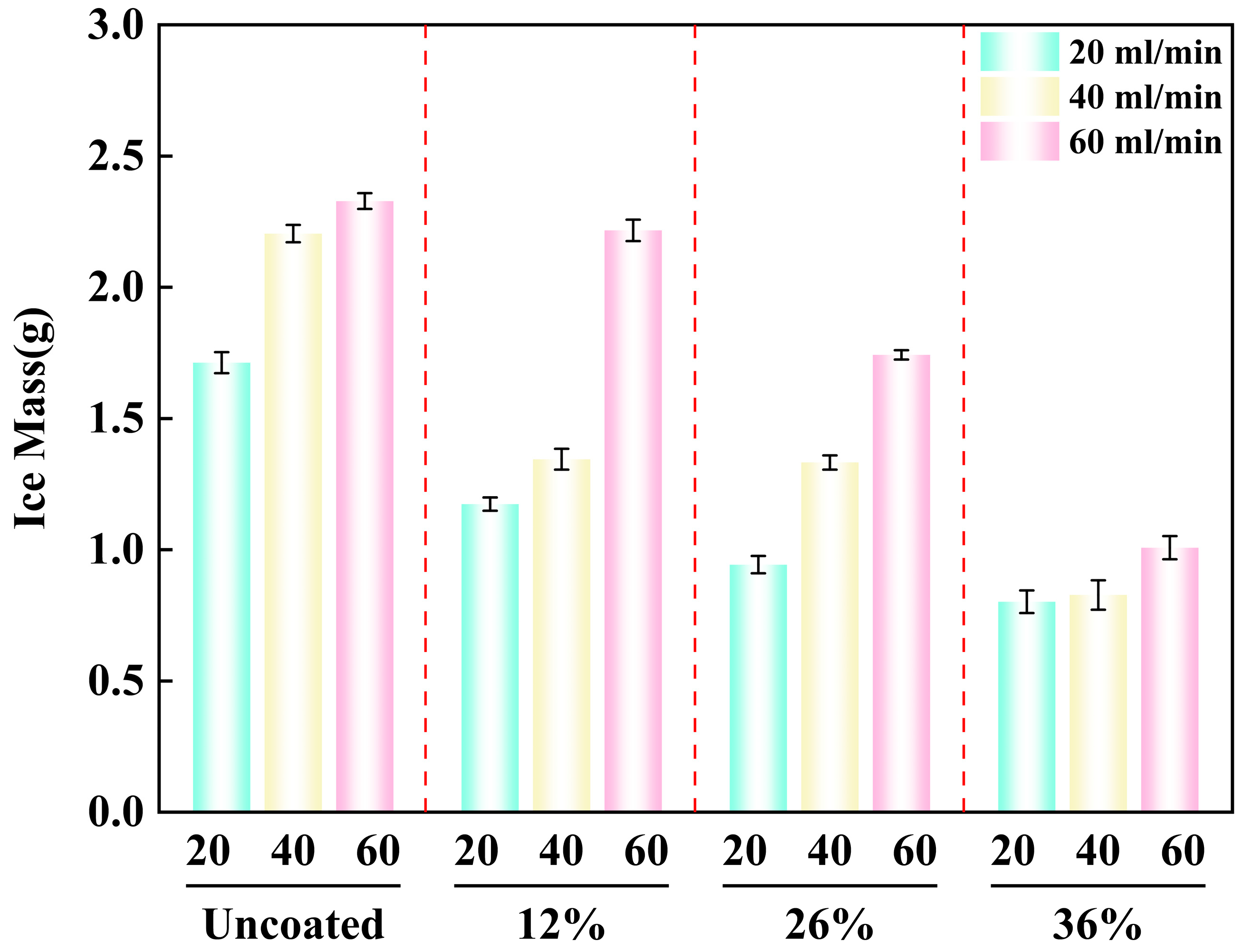
Figure 26 demonstrates that bio-wax PCM–polyurethane coatings consistently reduce ice mass versus uncoated blades at −15 °C/9 m/s across water spray rates. Higher concentrations (26%/36%) exhibit superior efficacy by releasing greater latent heat, suppressing droplet freezing and ice accretion, as evidenced by 36% coatings maintaining the highest ice mass reduction. At 20 mL/min, all concentrations significantly lower ice mass through effective thermal regulation of limited water influx. When spray rates increase to 40 mL/min, medium-concentration coatings (26%) show marginally reduced efficacy as microcapsule-derived heat struggles to inhibit accelerated freezing fully. Critically, at 60 mL/min, the 12% coating’s ice mass reduction plummets to 4.7%, confirming that spray rates beyond the thermal compensation threshold (>40 mL/min) overwhelm the coating’s capacity to delay ice nucleation. Nevertheless, coated blades retain measurable anti-icing advantages even under extreme spray conditions, validating functional resilience despite diminished efficiency.
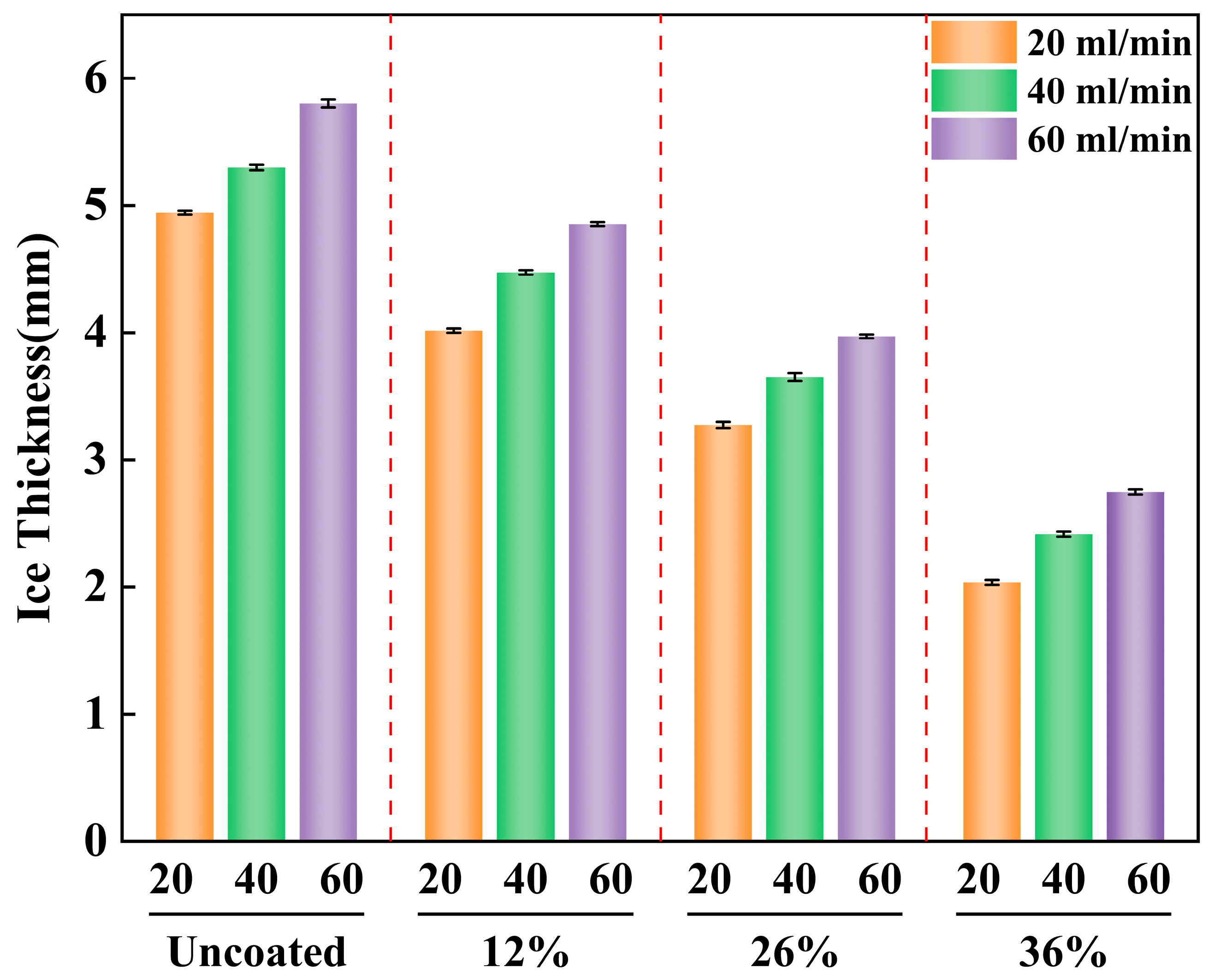
Figure 27 confirms significantly reduced ice thickness on bio-wax PCM–polyurethane-coated blades versus uncoated counterparts, with 36% concentration consistently outperforming 12% formulations across spray rates. At 20 mL/min, all concentrations substantially suppress ice accretion through effective phase-change heat release. When spray rates increase to 40 mL/min, low-concentration coatings (12%) exhibit diminished efficacy due to accelerated water influx overwhelming their limited thermal regulation capacity, though coated blades retain measurable advantages. Crucially, all coatings maintain stable ice-thickness reduction at the extreme 60 mL/min condition, demonstrating persistent functionality through sustained latent heat release. While optimisation diminishes at higher spray intensities, the coatings consistently decelerate ice-layer growth and preserve critical anti-icing margins even under hydraulic overload conditions.
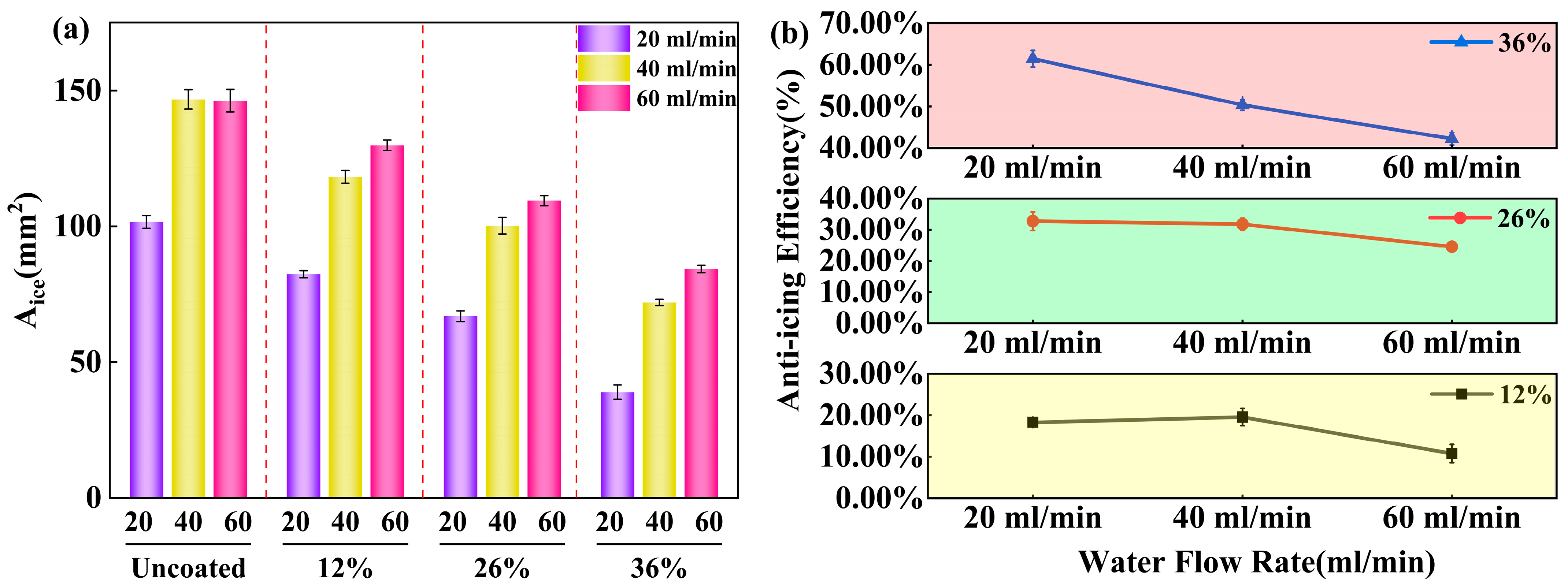
Figure 28 reveals systematic anti-icing patterns for bio-wax PCM–polyurethane coatings under varying spray rates. At 20 mL/min, high-concentration coatings achieve optimal efficacy by thermally regulating limited water influx, significantly suppressing the icing area. Increasing to 40 mL/min reduces efficiency (notably for the 36% concentration) as accelerated water delivery partially overwhelms latent heat release, though coated blades retain clear advantages. Critically, at 60 mL/min, all coatings exhibit sharply diminished anti-icing rates—confirming hydraulic overload beyond thermal compensation thresholds—yet persistently outperform uncoated blades. Concentration-dependent resilience is evident: higher PCM loading maintains superior stability across spray regimes, though all formulations experience efficacy decay with increasing water flux.
According to the DSC test results in
Section 3.3, under conditions of −15 °C to −5 °C and 3–9 m/s, the 36% PCM coating exhibits the highest melting enthalpy (16.45 J/g) and crystallisation enthalpy (21.67 J/g), which are 3.4 times and 12.6 times those of the 26% and 13% samples, respectively. This is crucial for anti-icing applications, as greater heat release can more effectively delay or prevent ice formation. Its phase transition temperature is also closer to the instantaneous peak temperature of the actual blade surface during heating–cooling cycles, allowing more latent heat to be released before ice nucleation occurs. The 36% PCM coating significantly outperforms the 26% and 12% samples in terms of thermal energy storage and release, resulting in more effective ice suppression.
4.5. The Coating Surface Temperature
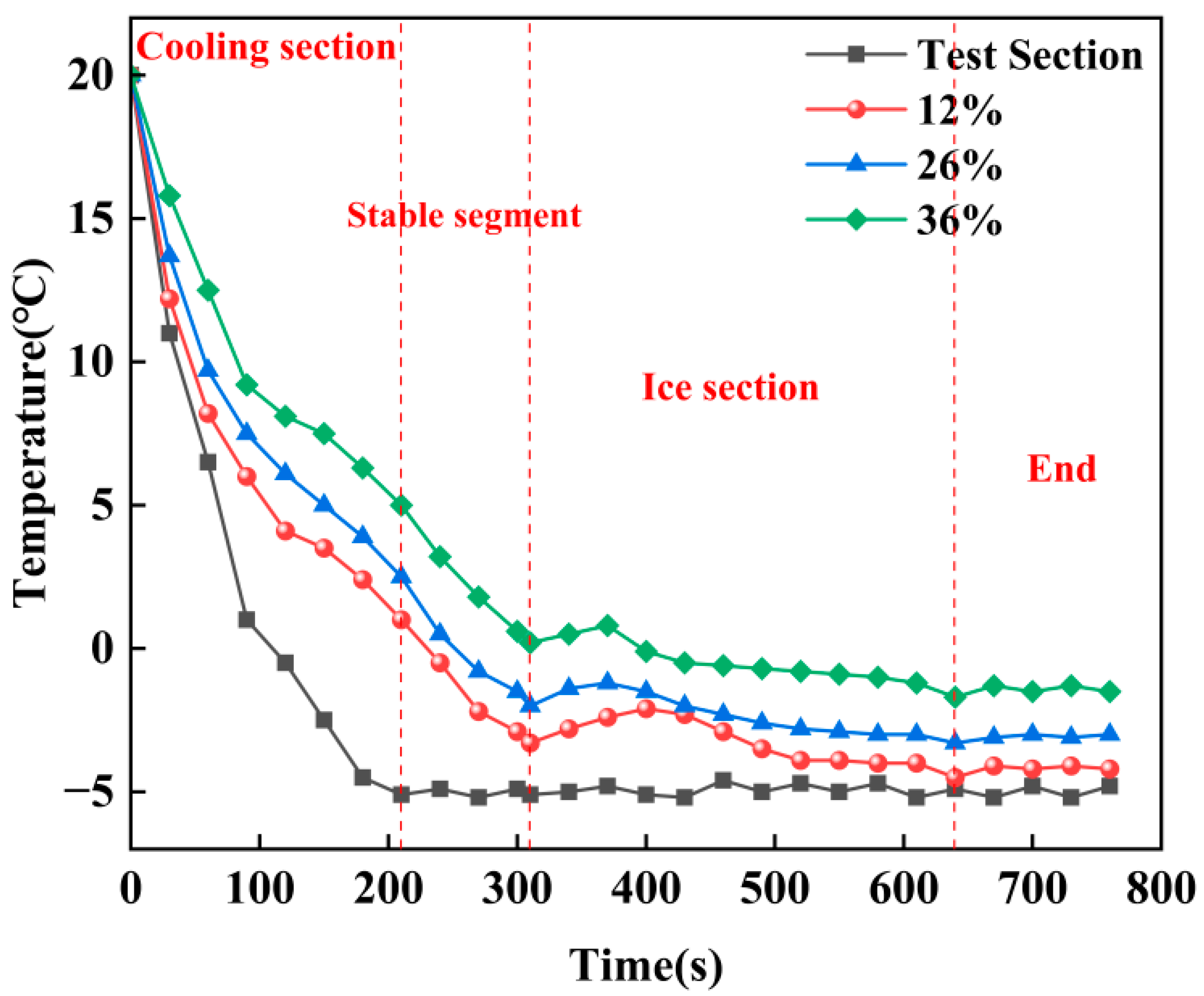
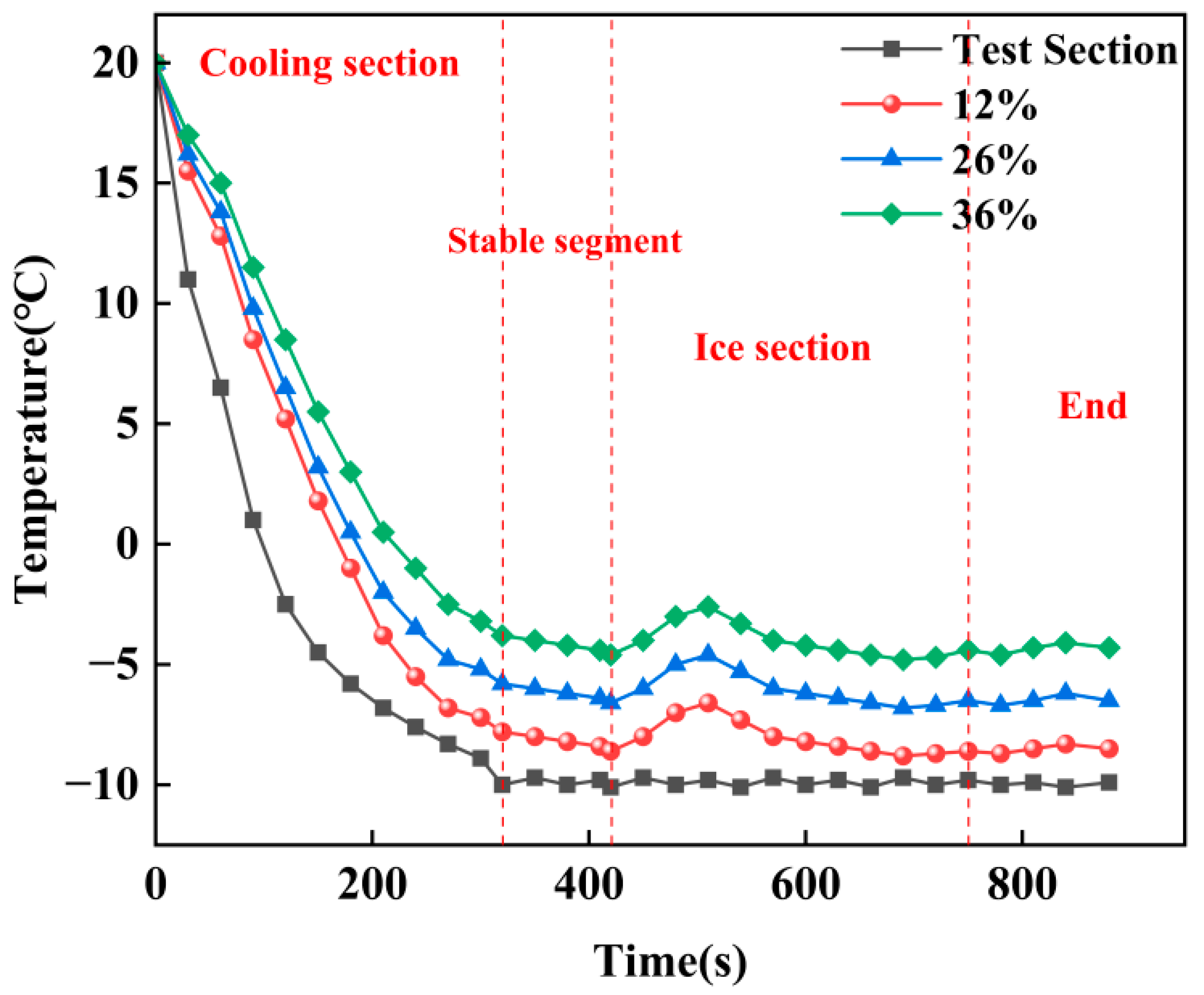
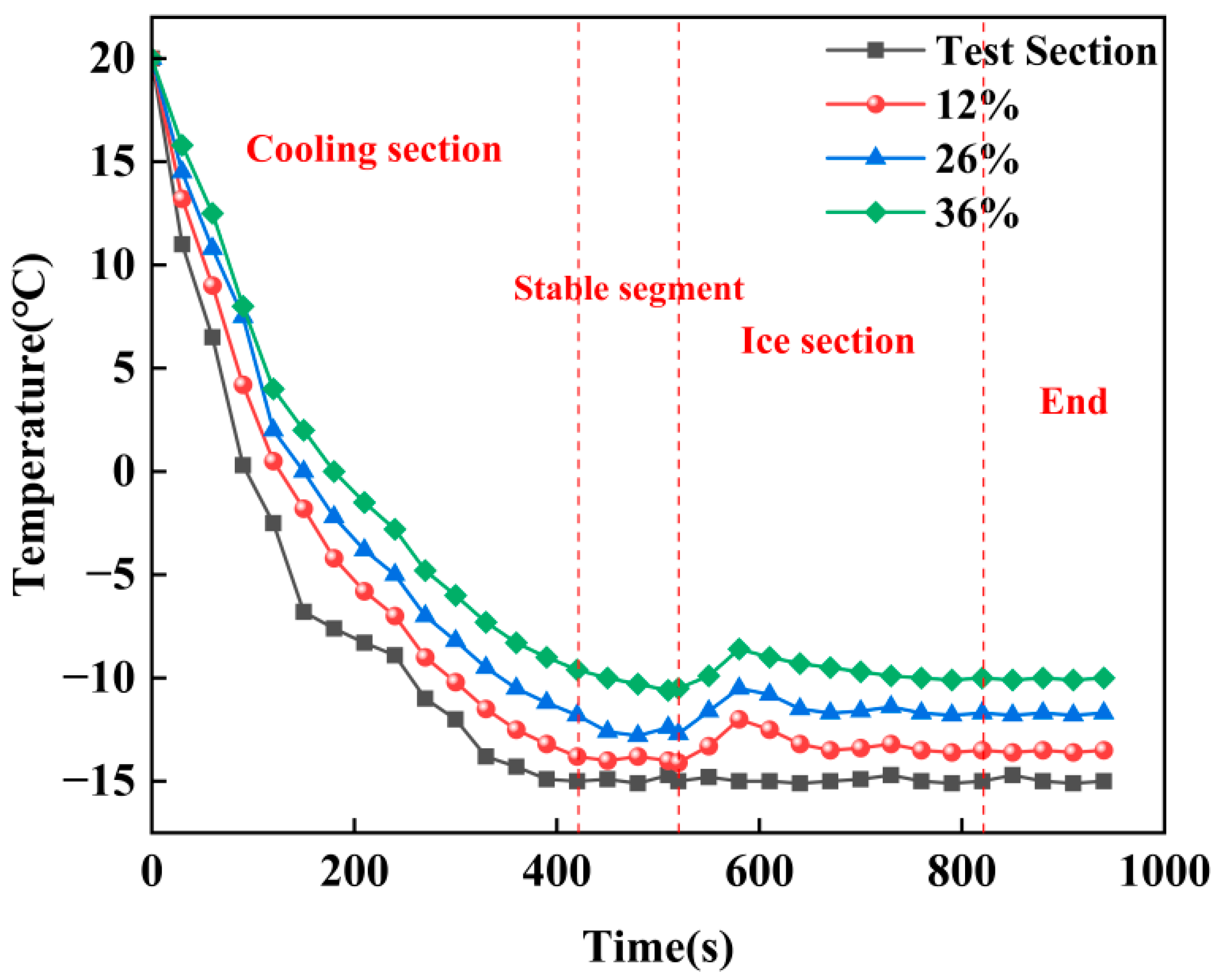
Figure 29,
Figure 30 and
Figure 31 illustrate the temporal temperature variation at the blade’s leading edge under controlled environmental conditions. The tests were performed at temperatures of −5, −10, and −15 °C, with a constant wind speed of 9 m/s. To minimise experimental error, the airflow was stabilised for 100 s prior to the initiation of freezing.
Under ambient temperature conditions of −5 °C and a wind speed of 9 m/s, it took approximately 210 s for the wind tunnel test section to cool down to −5 °C, and the icing test was initiated at 310 s. As the ambient temperatures further decreased to −10 °C and −15 °C, the time required for the test section to reach the target temperature increased accordingly to approximately 320 s and 420 s, respectively. Consequently, the start time of the icing tests was progressively delayed.
Based on continuous temperature monitoring and data acquisition, the temperature at the leading edge of the blade generally exhibited a downward trend over time. Under different ambient temperatures, blades coated with varying concentrations of phase-change material (PCM) showed significant differences. The leading edge of the blade with a 36% PCM coating maintained a relatively higher temperature at most monitoring locations, while the 26% and 12% coatings showed lower temperatures at the same positions. This is attributed to the higher PCM concentration providing greater heat storage capacity. The latent heat of the phase change for the 36% concentration coating was significantly higher than that of the lower concentration coatings, enabling it to release or absorb more heat during the phase-change process.
During the pre-cooling phase, as the ambient temperature decreased, the higher concentration PCM exhibited a slower cooling rate due to its reduced heat absorption rate, resulting in a more gradual temperature decline. At the onset of icing, all PCM coatings displayed a characteristic “initial rise followed by a decline” in temperature. The blade with the 36% concentration coating reached the highest peak temperature at the leading edge, while the 12% concentration coating showed the lowest peak temperature. This phenomenon occurred because the freezing of supercooled water droplets released latent heat of solidification, and the higher latent heat capacity of the high-concentration PCM coating allowed it to absorb more heat, thereby significantly elevating the peak temperature.
During the cooling phase in the static cold environment, the continuous release of latent heat from the phase change in the coating slowed down the temperature decrease rate on the blade surface and reduced the freezing rate. On the other hand, under dynamic icing conditions after the formal start of the icing test, supercooled water droplets impacted the blade surface at high velocity, resulting in an adiabatic stagnation effect where their kinetic energy was converted into thermal energy. Simultaneously, the process of water droplets freezing into ice also released latent heat. The combined effect of these two heat sources caused an increase in the temperature of the blade surface.
During the phase following the icing test, the temperature at the leading edge of the blade eventually stabilised, showing a consistent trend where higher concentrations resulted in higher stable temperatures. Thus, the 36% PCM coating maintained a relatively higher temperature at the blade leading edge under various low-temperature conditions, demonstrating superior thermal regulation performance. In comparison, the leading-edge temperature of the blade coated with the 12% coating was relatively low, and its regulatory effect was limited. The experimental results indicate that higher PCM concentrations enhance the ability to maintain the temperature at the blade leading edge in low-temperature environments.
5. Conclusions
(1) Phase-change microcapsules with bio-wax inside and isophorone diisocyanate outside (7:3 ratio) were formed using interfacial polymerisation. They stored heat well: melting enthalpy of 49.73 J/g, crystallisation enthalpy of 59.44 J/g, 78% coating rate, and 74% energy storage efficiency—better than other ratios. When mixed with polyurethane, they formed an anti-icing coating (PCMS-PUR) that worked well in ice wind tunnel tests.
(2) At −15 °C and 3 m/s, the 36% concentration coating reduced the blade icing area to 4.1% (uncoated: 8.5%), with a 65.80% anti-icing rate. At −10 °C and 6 m/s, the rate was still 64.05%, showing it worked reliably in cold.
(3) At high wind (9 m/s) and −10 °C, the 36% coating maintained a 54.64% anti-icing rate, with 50% less ice thickness. It released heat to create a thermal barrier, stopping temperature drops from the wind.
(4) When water spray was 60 mL/min (−15 °C, 9 m/s), the 36% coating still worked better than the uncoated condition (42.24% anti-icing rate), but its effect dropped. This showed its limit in very wet and cold conditions.
In summary, the bio-wax phase-change microcapsule–polyurethane coating regulates blade surface temperature with low energy consumption, offering an eco-friendly (biodegradable bio-wax) and efficient anti-icing solution for wind turbines. It achieves an over 60% anti-icing rate under typical conditions (−15 °C to −5 °C, wind speeds 3–9 m/s), providing technical support for stable wind power operation in cold regions.