Article

Evolution of Microstructure at the Surface of 40CrNiMo7 Steel Treated by High-Current Pulsed Electron Beam


1
School of Fundamental Education, Dalian Neusoft University of Information, Dalian 116023, China
2
Key Laboratory of Intelligent Control and Optimization for Industrial Equipment of Ministry of Education, Dalian University of Technology, Dalian 116024, China
3
Key Laboratory of Materials Modification by Laser, Ion and Electron Beams & School of Material Science and Engineering, Dalian University of Technology, Dalian 116024, China
*
Author to whom correspondence should be addressed.
Coatings 2020, 10(4), 311; https://doi.org/10.3390/coatings10040311

Submission received: 26 February 2020 / Revised: 17 March 2020 / Accepted: 19 March 2020 / Published: 25 March 2020

Abstract

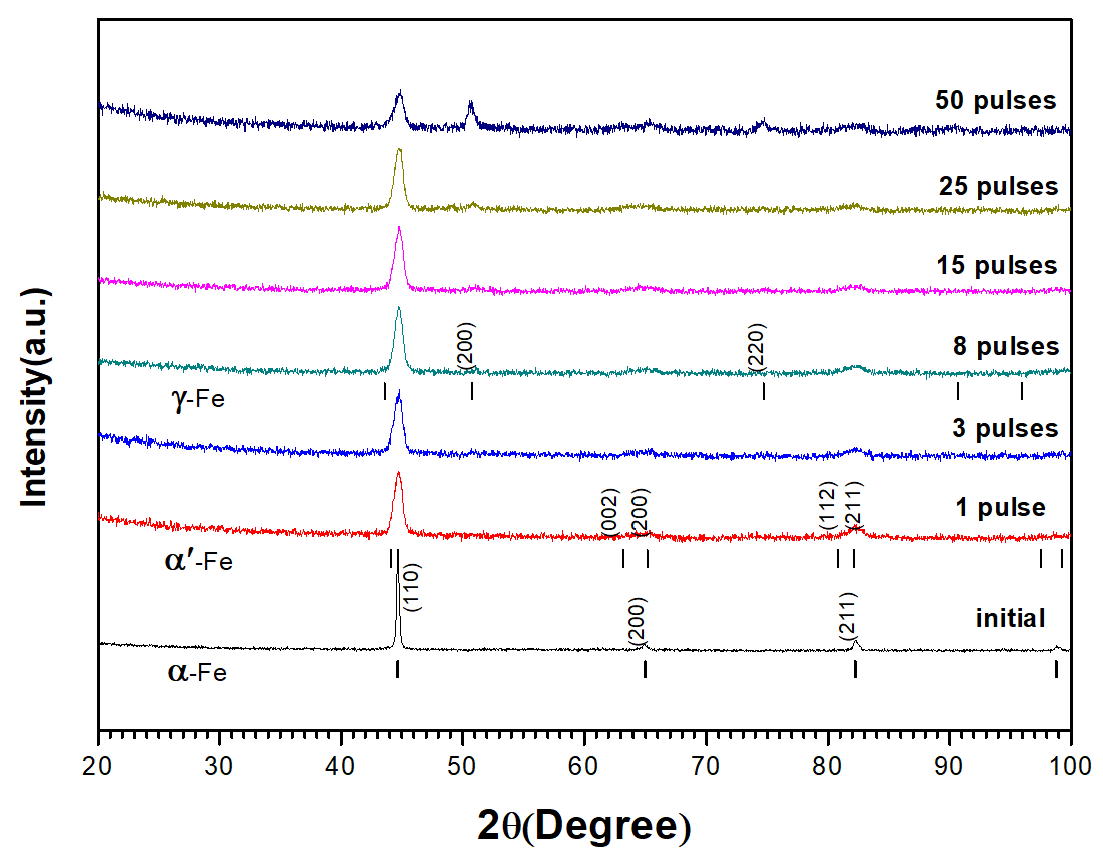
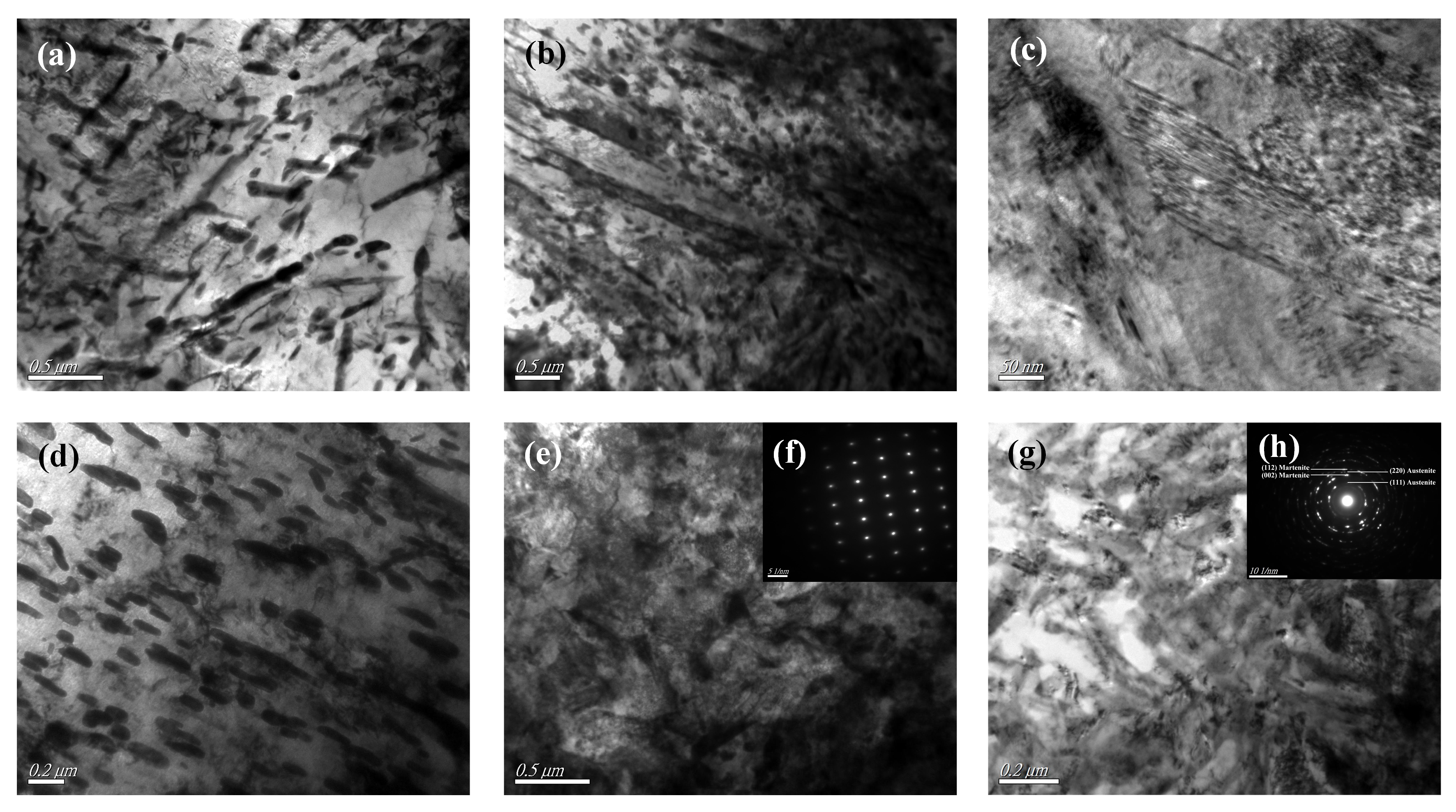
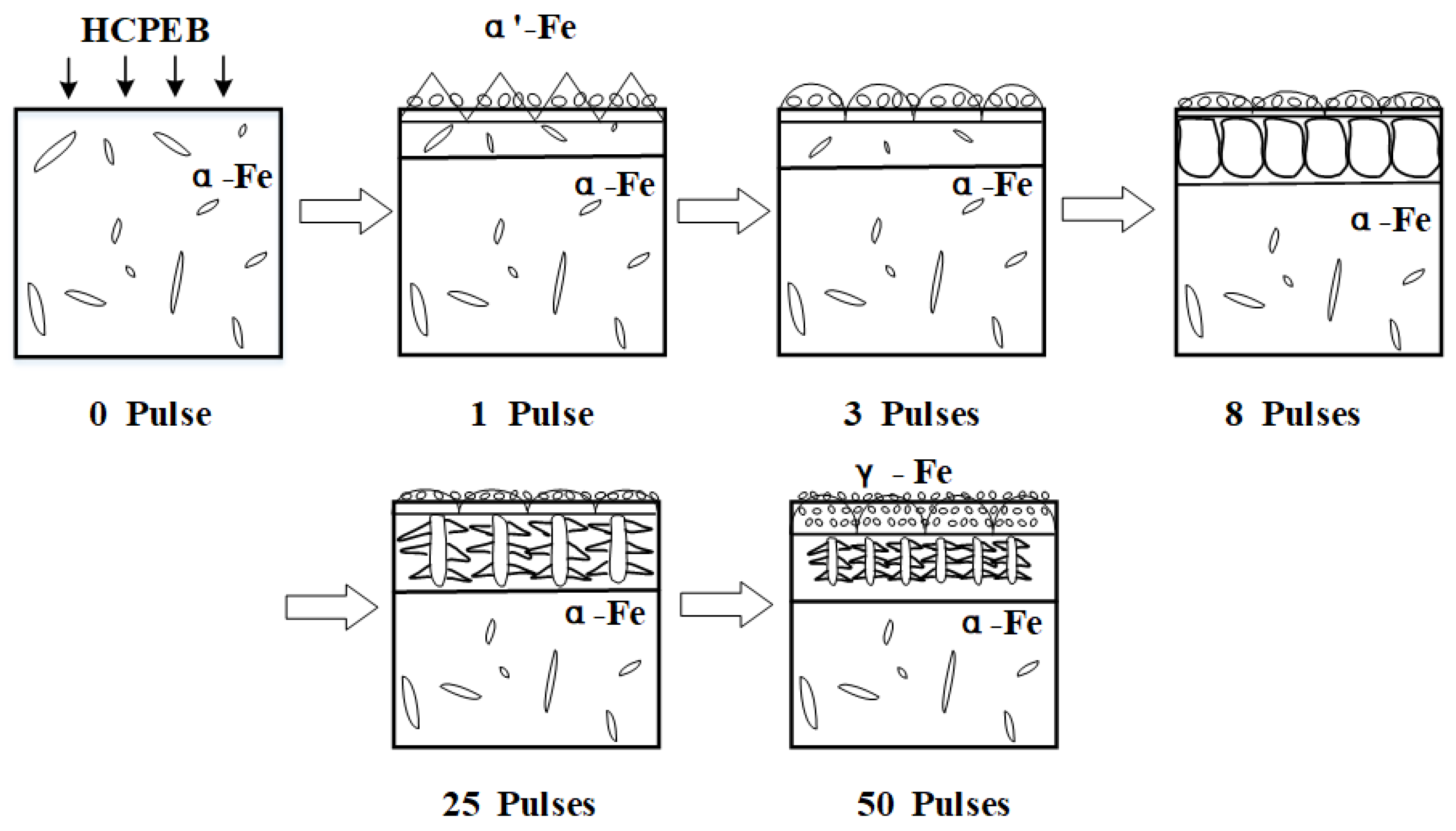
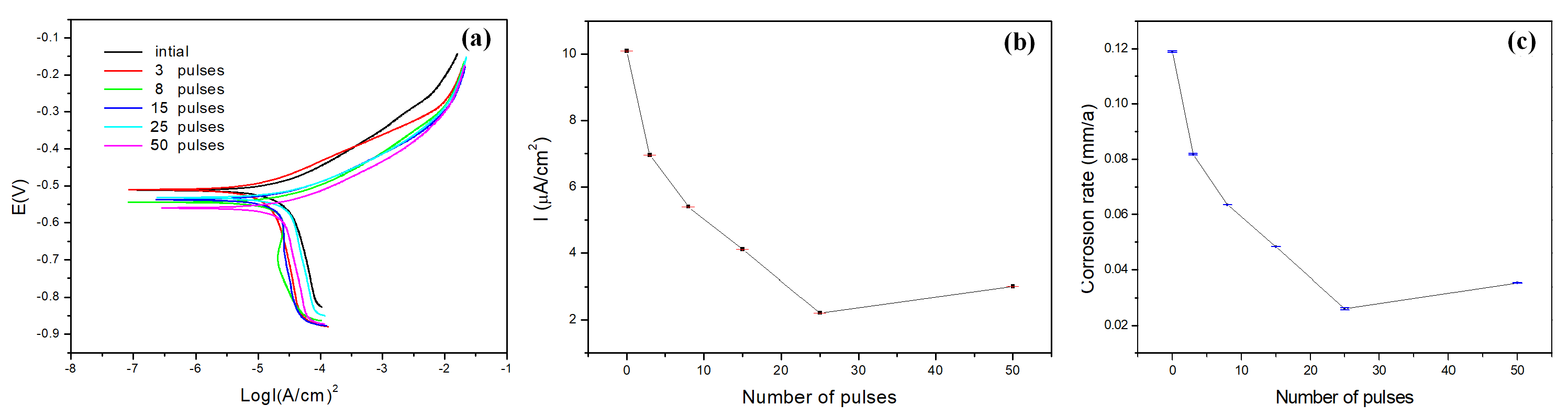
High current pulsed electron beam (HCPEB) has recently been developed as an effective technique of material surface modification. In this research, a self-developed HCPEB equipment (HOPE-I) was adopted to perform surface modification on quenched and tempered 40CrNiMo7 steel. A composite nanometer structure was formed on the modified surface layer, and the martensite transformation and the dissolution and fracture of cementite can be observed. After initial irradiation, the high cooling rate caused the formation of nanocrystalline on the surface. With continuous irradiation treatments, the cooling rate gradually reduced, while the carbon kept dissolving and ended with surface composition homogenization. Both competitive factors result in the evolution rule of nanometer dimensions of surface structure. After HCPEB treatment, the average size of austenite phase on the modified surface decreased from micron-sized to nanoscale. The corrosion rate decreased from 0.12 mm/a to 0.02 mm/a, showing remarkable improvement of corrosion resistance. The main factors of the improvements of corrosion resistance property are the flat, dense structured and preferred crystal orientation on the modification layer of the treated material surface.
Keywords: high current pulsed electron beam; 40CrNiMo7 steel; surface nanocrystallization; surface modification high current pulsed electron beam; 40CrNiMo7 steel; surface nanocrystallization; surface modification