Isoflavones with Multifaceted Activities Synergistically Sensitize Pseudomonas aeruginosa to Antibiotics In Vitro and In Vivo

 , and
, and
Abstract
1. Introduction
2. Results
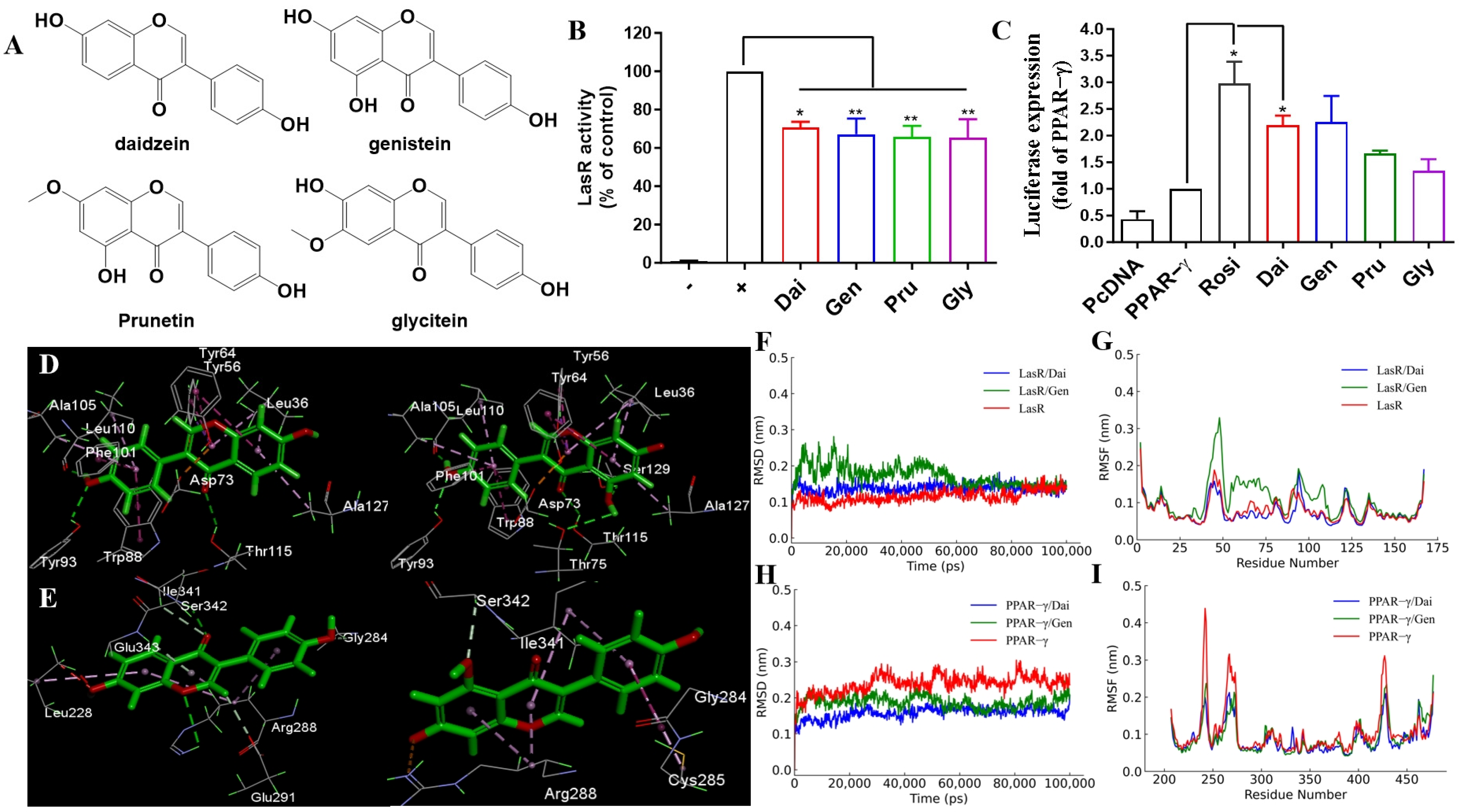
2.1. Daidzein and Genistein Exhibited Anti-QS and PPAR-γ Transactivation Activities
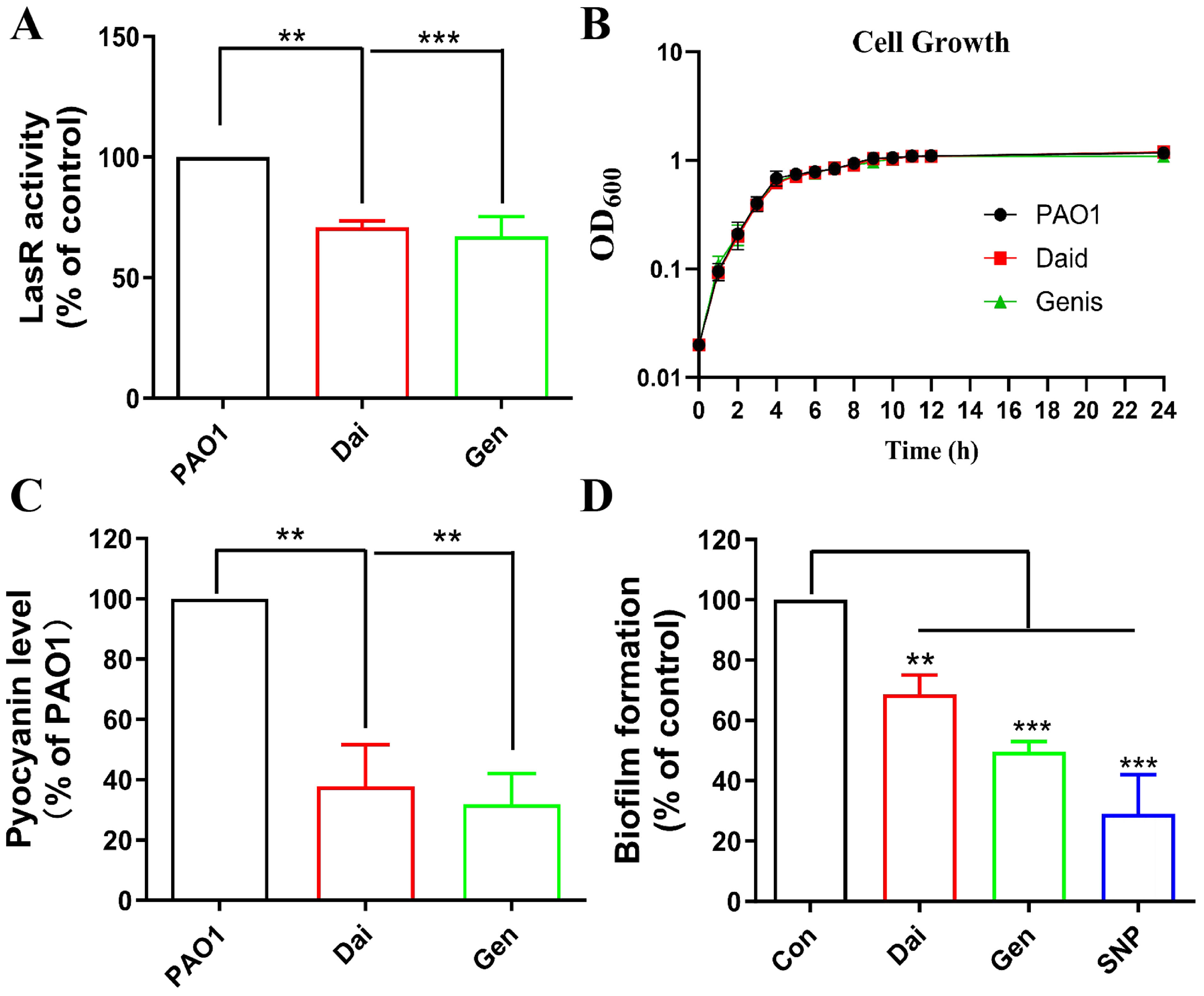
2.2. Daidzein and Genistein Inhibited Pyocyanin Generation and Biofilm Formation of P. aeruginosa Through Disrupting QS
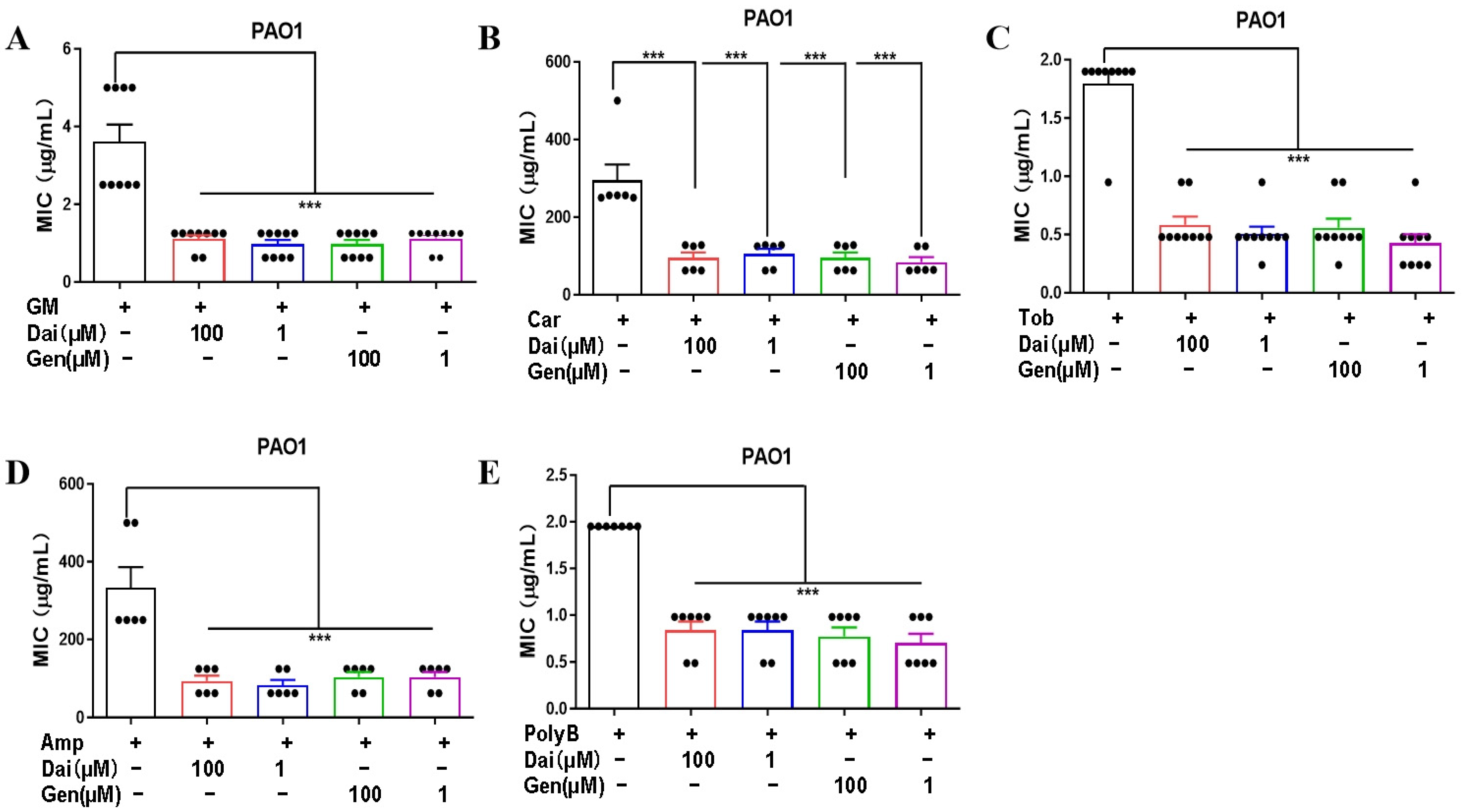
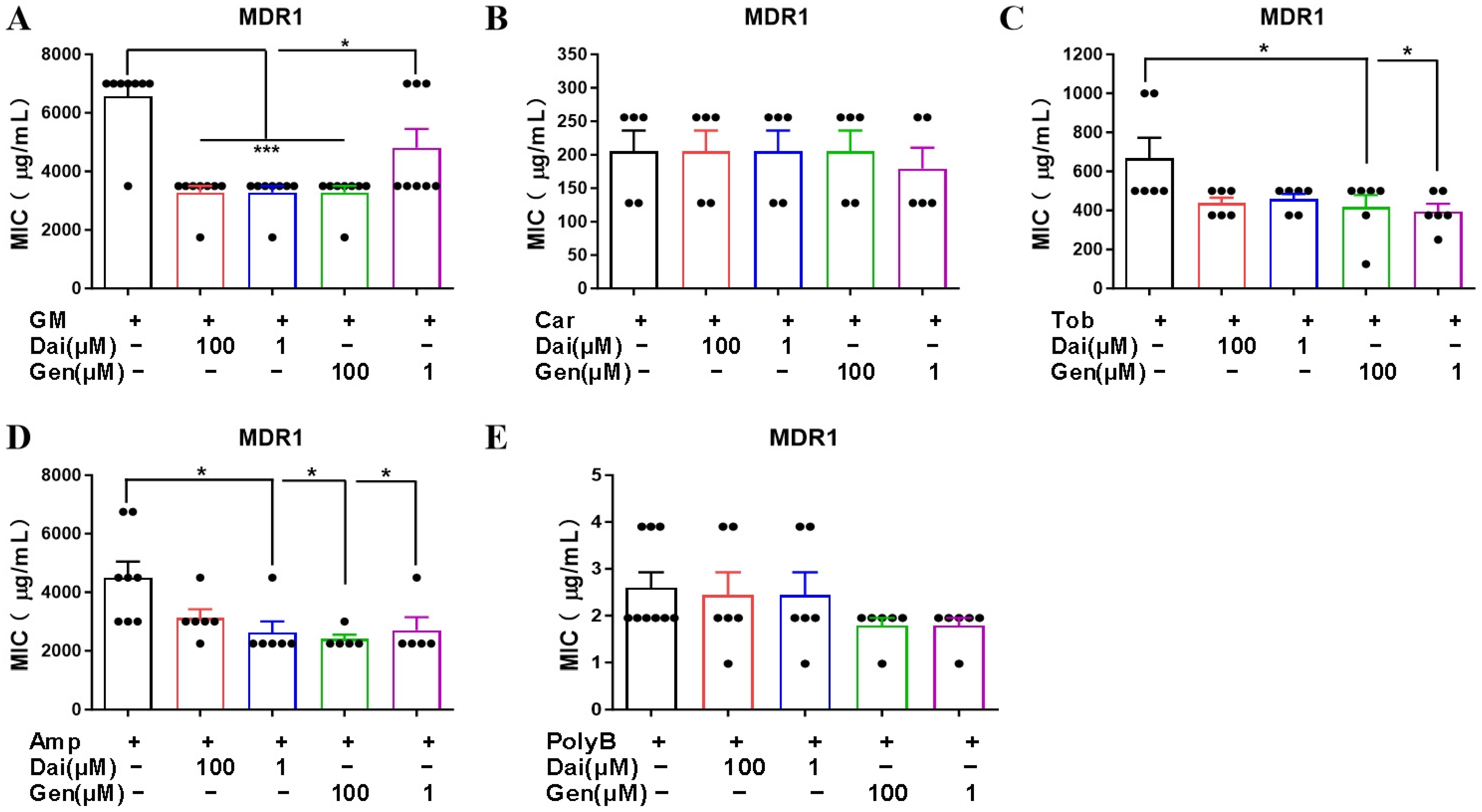
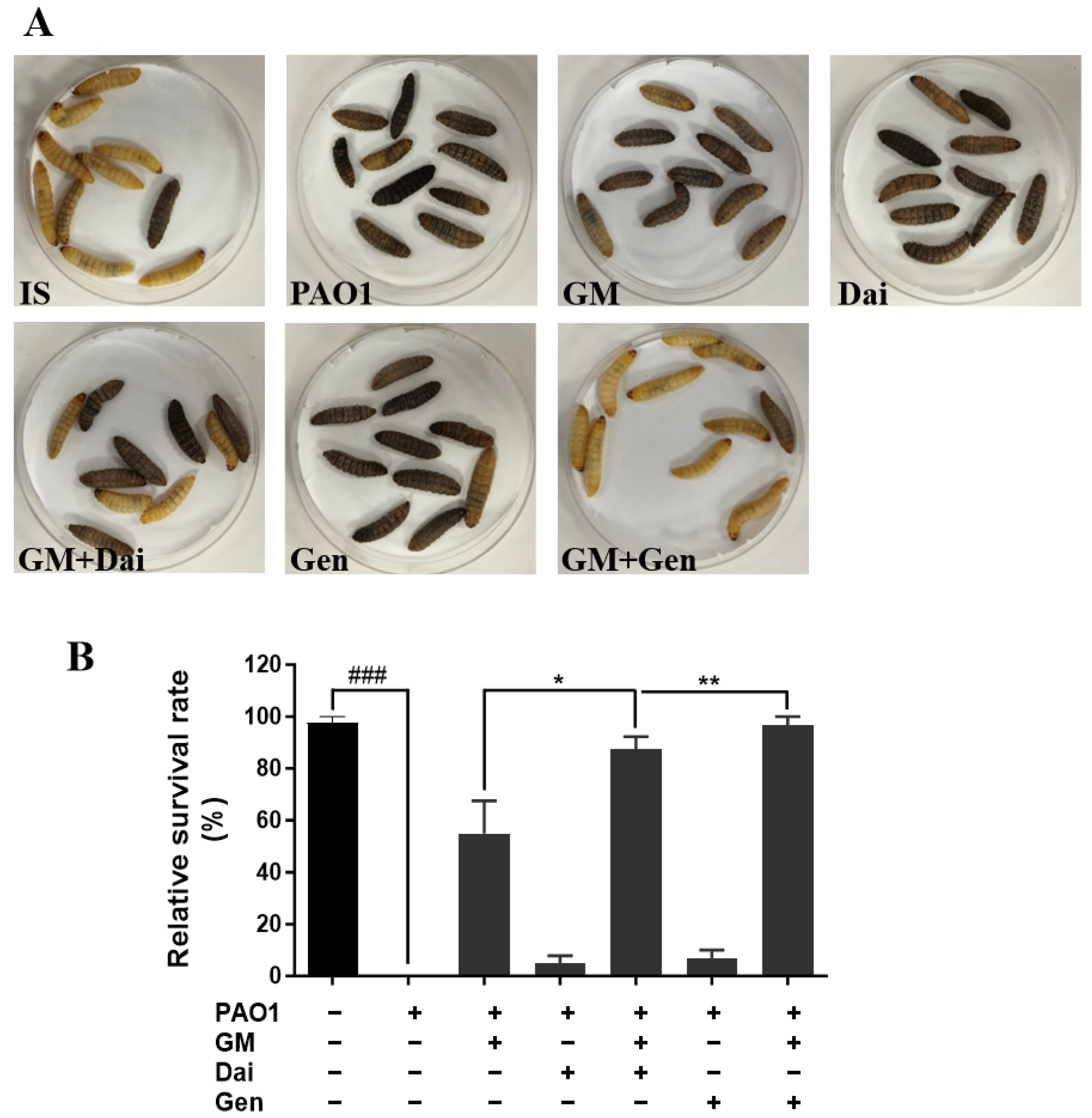
2.3. Daidzein and Genistein Synergistically Enhance the Efficacy of Antibiotics Against P. aeruginosa In Vitro and In Vivo
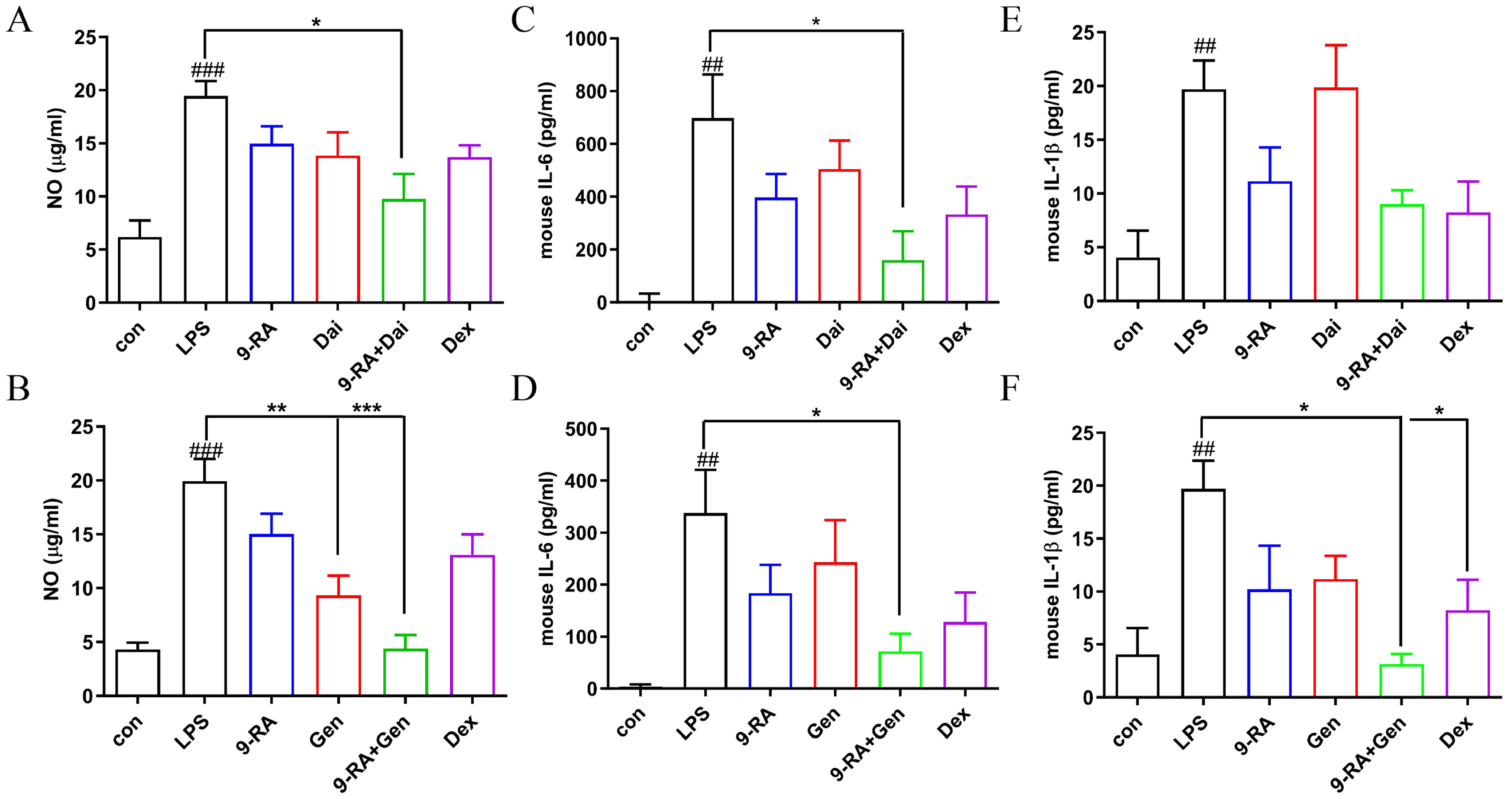
2.4. Daidzein and Genistein Inhibited the Production of Inflammatory Cytokines When Combined with RXR Agonist
3. Discussion
4. Materials and Methods
4.1. Bacterial Strains, Plasmids and Cell Culture Conditions
4.2. Measurement of Anti-QS Activity
4.3. Luciferase Reporter Assay
4.4. Minimum Inhibitory Concentration (MIC) Assay
4.5. Biofilm Formation Assay
4.6. Pyocyanin Generation Assay
4.7. Virulence Assay of P. aeruginosa
4.8. Nitric Oxide (NO) Production
4.9. ELISA Assay
4.10. Docking Simulation
4.11. Molecular Dynamics (MD) Simulations
4.12. Statistical Analysis
5. Conclusions
Supplementary Materials
Author Contributions
Funding
Institutional Review Board Statement
Informed Consent Statement
Data Availability Statement
Conflicts of Interest
Abbreviations
| 3OC12-HSL | N-(3-oxododecanoyl)-L-homoserine lactone |
| Amp | ampicillin |
| Car | carbenicillin |
| CFU | Colony-Forming Unit |
| ELISA | Enzyme-Linked Immunosorbent Assay |
| FIC | Fractional Inhibitory Concentration |
| FICI | Fractional Inhibitory Concentration Index |
| GM | Gentamicin |
| IL-1β | Interleukin-1β |
| IL-6 | Interleukin-6 |
| LPS | Lipopolysaccharide |
| MIC | Minimum Inhibitory Concentration |
| NO | Nitric Oxide |
| Poly B | polymyxin B |
| PPAR | Peroxisome Proliferator-Activated Receptor |
| PPAR-γ | Peroxisome Proliferator-Activated Receptor γ |
| PPRE | Peroxisome Proliferator Response Elements |
| QS | Quorum Sensing |
| QSIs | Quorum Sensing Inhibitors |
| Rg | Radius of gyration |
| RMSD | Root-Mean-Square Deviation |
| RMSF | Root-Mean-Square Fluctuation |
| RXR | Retinoid X Receptor |
| TNF-α | Tumor Necrosis Factor-α |
| Tob | tobramycin |
References
- Qin, S.; Xiao, W.; Zhou, C.; Pu, Q.; Deng, X.; Lan, L.; Liang, H.; Song, X.; Wu, M. Pseudomonas aeruginosa: Pathogenesis, virulence factors, antibiotic resistance, interaction with host, technology advances and emerging therapeutics. Signal Transduct. Target. Ther. 2022, 7, 199. [Google Scholar] [CrossRef]
- Zhang, Y.; Sass, A.; Van Acker, H.; Wille, J.; Verhasselt, B.; Van Nieuwerburgh, F.; Kaever, V.; Crabbé, A.; Coenye, T. Coumarin Reduces Virulence and Biofilm Formation in Pseudomonas aeruginosa by Affecting Quorum Sensing, Type III Secretion and C-di-GMP Levels. Front. Microbiol. 2018, 9, 1952. [Google Scholar] [CrossRef]
- Chen, K.; Fu, Q.; Li, D.; Wu, Y.; Sun, S.; Zhang, X. Wnt3a suppresses Pseudomonas aeruginosa-induced inflammation and promotes bacterial killing in macrophages. Mol. Med. Rep. 2016, 13, 2439–2446. [Google Scholar] [CrossRef]
- Blomquist, K.C.; Nix, D.E. A Critical Evaluation of Newer β-Lactam Antibiotics for Treatment of Pseudomonas aeruginosa Infections. Ann. Pharmacother. 2021, 55, 1010–1024. [Google Scholar] [CrossRef]
- Pang, Z.; Raudonis, R.; Glick, B.R.; Lin, T.J.; Cheng, Z. Antibiotic resistance in Pseudomonas aeruginosa: Mechanisms and alternative therapeutic strategies. Biotechnol. Adv. 2019, 37, 177–192. [Google Scholar] [CrossRef]
- Xiao, G.; Li, J.; Sun, Z. The Combination of Antibiotic and Non-Antibiotic Compounds Improves Antibiotic Efficacy against Multidrug-Resistant Bacteria. Int. J. Mol. Sci. 2023, 24, 15493. [Google Scholar] [CrossRef]
- Cooper, M.A.; Shlaes, D. Fix the antibiotics pipeline. Nature 2011, 472, 32. [Google Scholar] [CrossRef]
- Walsh, C. Molecular mechanisms that confer antibacterial drug resistance. Nature 2000, 406, 775–781. [Google Scholar] [CrossRef]
- Letizia, M.; Diggle, S.P.; Whiteley, M. Pseudomonas aeruginosa: Ecology, evolution, pathogenesis and antimicrobial susceptibility. Nat. Rev. Microbiol. 2025, 23, 701–717. [Google Scholar] [CrossRef]
- Chen, J.; Wang, B.; Lu, Y.; Guo, Y.; Sun, J.; Wei, B.; Zhang, H.; Wang, H. Quorum Sensing Inhibitors from Marine Microorganisms and Their Synthetic Derivatives. Mar. Drugs 2019, 17, 80. [Google Scholar] [CrossRef]
- Kiran, S.; Sharma, P.; Harjai, K.; Capalash, N. Enzymatic quorum quenching increases antibiotic susceptibility of multidrug resistant Pseudomonas aeruginosa. Iran. J. Microbiol. 2011, 3, 1–12. [Google Scholar]
- Gupta, P.; Chhibber, S.; Harjai, K. Efficacy of purified lactonase and ciprofloxacin in preventing systemic spread of Pseudomonas aeruginosa in murine burn wound model. Burns 2015, 41, 153–162. [Google Scholar] [CrossRef]
- Mion, S.; Rémy, B.; Plener, L.; Brégeon, F.; Chabrière, E.; Daudé, D. Quorum Quenching Lactonase Strengthens Bacteriophage and Antibiotic Arsenal Against Pseudomonas aeruginosa Clinical Isolates. Front. Microbiol. 2019, 10, 2049. [Google Scholar] [CrossRef]
- Shukla, A.; Shukla, G.; Parmar, P.; Patel, B.; Goswami, D.; Saraf, M. Exemplifying the next generation of antibiotic susceptibility intensifiers of phytochemicals by LasR-mediated quorum sensing inhibition. Sci. Rep. 2021, 11, 22421. [Google Scholar] [CrossRef]
- Bedi, B.; Maurice, N.M.; Ciavatta, V.T.; Lynn, K.S.; Yuan, Z.; Molina, S.A.; Joo, M.; Tyor, W.R.; Goldberg, J.B.; Koval, M.; et al. Peroxisome proliferator-activated receptor-γ agonists attenuate biofilm formation by Pseudomonas aeruginosa. FASEB J. 2017, 31, 3608–3621. [Google Scholar] [CrossRef]
- Tyagi, S.; Gupta, P.; Saini, A.S.; Kaushal, C.; Sharma, S. The peroxisome proliferator-activated receptor: A family of nuclear receptors role in various diseases. J. Adv. Pharm. Technol. Res. 2011, 2, 236–240. [Google Scholar] [CrossRef]
- Riquelme, S.A.; Prince, A. Airway immunometabolites fuel Pseudomonas aeruginosa infection. Respir. Res. 2020, 21, 326. [Google Scholar] [CrossRef]
- Wieland, C.W.; Siegmund, B.; Senaldi, G.; Vasil, M.L.; Dinarello, C.A.; Fantuzzi, G. Pulmonary inflammation induced by Pseudomonas aeruginosa lipopolysaccharide, phospholipase C, and exotoxin A: Role of interferon regulatory factor 1. Infect. Immun. 2002, 70, 1352–1358. [Google Scholar] [CrossRef]
- Ramirez, T.; Shrestha, A.; Kishen, A. Inflammatory potential of monospecies biofilm matrix components. Int. Endod. J. 2019, 52, 1020–1027. [Google Scholar] [CrossRef]
- Zhou, J.-P.; Yang, X.-N.; Song, Y.; Zhou, F.; Liu, J.-J.; Hu, Y.-Q.; Chen, L.-G. Rosiglitazone alleviates lipopolysaccharide-induced inflammation in RAW264.7 cells via inhibition of NF-κB and in a PPARγ-dependent manner. Exp. Ther. Med. 2021, 22, 743. [Google Scholar] [CrossRef]
- Yu, H.; Wang, L.; Huang, K.; Guo, Q.; Lin, B.; Liu, Y.; Yu, M.; Ma, G. PPAR-γ agonist pioglitazone alleviates inflammatory response induced by lipopolysaccharides in osteoblast cells. J. Orthop. Res. 2022, 40, 2471–2479. [Google Scholar] [CrossRef]
- Li, D.; Wang, Y.; Li, H.; Niu, W.; Hong, J.; Jung, J.H.; Lee, J. Multifaceted Antipathogenic Activity of Two Novel Natural Products, Chermesiterpenoid B and Chermesiterpenoid B Seco Acid Methyl Ester, Against Pseudomonas aeruginosa. Microb. Biotechnol. 2025, 18, e70101. [Google Scholar] [CrossRef]
- Li, D.; Luo, X.; Ying, W.; La Kim, E.; Hong, J.; Lee, J.; Jung, J.H. Peroxisome Proliferator Activated Receptor-γ Agonistic Compounds from the Jellyfish-Derived Fungus Cladosporium oxysporum. Chem. Biodivers. 2023, 20, e202300851. [Google Scholar] [CrossRef]
- Bruning, J.B.; Chalmers, M.J.; Prasad, S.; Busby, S.A.; Kamenecka, T.M.; He, Y.; Nettles, K.W.; Griffin, P.R. Partial agonists activate PPARgamma using a helix 12 independent mechanism. Structure 2007, 15, 1258–1271. [Google Scholar] [CrossRef]
- Garcia-Vallvé, S.; Guasch, L.; Tomas-Hernández, S.; del Bas, J.M.; Ollendorff, V.; Arola, L.; Pujadas, G.; Mulero, M. Peroxisome Proliferator-Activated Receptor γ (PPARγ) and Ligand Choreography: Newcomers Take the Stage. J. Med. Chem. 2015, 58, 5381–5394. [Google Scholar] [CrossRef]
- Blazer-Yost, B.L. PPARgamma Agonists: Blood Pressure and Edema. PPAR Res. 2010, 2010, 785369. [Google Scholar] [CrossRef]
- Dickey, S.W.; Cheung, G.Y.C.; Otto, M. Different drugs for bad bugs: Antivirulence strategies in the age of antibiotic resistance. Nat. Rev. Drug Discov. 2017, 16, 457–471. [Google Scholar] [CrossRef]
- Simoska, O.; Sans, M.; Eberlin, L.S.; Shear, J.B.; Stevenson, K.J. Electrochemical monitoring of the impact of polymicrobial infections on Pseudomonas aeruginosa and growth dependent medium. Biosens. Bioelectron. 2019, 142, 111538. [Google Scholar] [CrossRef]
- Liu, L.; Cao, X.; Ma, W.; Chen, L.; Li, S.; Hu, B.; Xu, Y. In-situ and continuous monitoring of pyocyanin in the formation process of Pseudomonas aeruginosa biofilms by an electrochemical biosensor chip. Sens. Actuators B Chem. 2021, 327, 128945. [Google Scholar] [CrossRef]
- Ménard, G.; Rouillon, A.; Cattoir, V.; Donnio, P.-Y. Galleria mellonella as a Suitable Model of Bacterial Infection: Past, Present and Future. Front. Cell. Infect. Microbiol. 2021, 11, 782733. [Google Scholar] [CrossRef]
- Wood, S.J.; Kuzel, T.M.; Shafikhani, S.H. Pseudomonas aeruginosa: Infections, Animal Modeling, and Therapeutics. Cells 2023, 12, 199. [Google Scholar] [CrossRef]
- Ogawara, H. Possible drugs for the treatment of bacterial infections in the future: Anti-virulence drugs. J. Antibiot. 2021, 74, 24–41. [Google Scholar] [CrossRef]
- Oh, H.-Y.; Jalde, S.S.; Chung, I.-Y.; Yoo, Y.-J.; Jang, H.-J.; Choi, H.-K.; Cho, Y.-H. An antipathogenic compound that targets the OxyR peroxide sensor in Pseudomonas aeruginosa. J. Med. Microbiol. 2021, 70, 1341. [Google Scholar] [CrossRef]
- Intharuksa, A.; Arunotayanun, W.; Na Takuathung, M.; Chaichit, S.; Prasansuklab, A.; Chaikhong, K.; Sirichanchuen, B.; Chupradit, S.; Koonrungsesomboon, N. Daidzein and Genistein: Natural Phytoestrogens with Potential Applications in Hormone Replacement Therapy. Int. J. Mol. Sci. 2025, 26, 6973. [Google Scholar] [CrossRef]
- Sawant, S.; Shaikh, S.; Baldwin, T.C.; Karakoula, A.; Rahman, A. Pseudomonas aeruginosa: Associated pathogenesis, epidemiology, resistance mechanisms, host response and emerging treatment strategies. Arch. Microbiol. 2026, 208, 351. [Google Scholar] [CrossRef] [PubMed]
- Jin, S.; Zheng, Y.; Li, D.; Liu, X.; Zhu, T.; Wang, S.; Liu, Z.; Liu, Y. Effect of genistein supplementation on microenvironment regulation of breast tumors in obese mice. Breast Cancer Res. 2024, 26, 147. [Google Scholar] [CrossRef]
- Sakamoto, Y.; Naka, A.; Ohara, N.; Kondo, K.; Iida, K. Daidzein regulates proinflammatory adipokines thereby improving obesity-related inflammation through PPARγ. Mol. Nutr. Food Res. 2014, 58, 718–726. [Google Scholar] [CrossRef]
- Shimizu, M.; Moriwaki, H. Synergistic Effects of PPARγ Ligands and Retinoids in Cancer Treatment. PPAR Res. 2008, 2008, 181047. [Google Scholar] [CrossRef]
- Soltani, S.; Biron, E.; Ben Said, L.; Subirade, M.; Fliss, I. Bacteriocin-Based Synergetic Consortia: A Promising Strategy to Enhance Antimicrobial Activity and Broaden the Spectrum of Inhibition. Microbiol. Spectr. 2022, 10, e0040621. [Google Scholar] [CrossRef]




| FICI | Daidzein | Genistein | ||
|---|---|---|---|---|
| 1 μM | 100 μM | 1 μM | 100 μM | |
| GM | 0.29 ± 0.13 | 0.33 ± 0.13 | 0.28 ± 0.08 | 0.35 ± 0.15 |
| Car | 0.38 ± 0.14 | 0.33 ± 0.13 | 0.29 ± 0.10 | 0.35 ± 0.17 |
| Tob | 0.29 ± 0.13 | 0.34 ± 0.12 | 0.25 ± 0.15 | 0.32 ± 0.14 |
| Amp | 0.29 ± 0.17 | 0.31 ± 0.15 | 0.35 ± 0.17 | 0.33 ± 0.13 |
| Poly B | 0.43 ± 0.12 | 0.43 ± 0.12 | 0.36 ± 0.14 | 0.39 ± 0.14 |
| FICI | Daidzein | Genistein | ||
|---|---|---|---|---|
| 1 μM | 100 μM | 1 μM | 100 μM | |
| GM | 0.46 ± 0.09 | 0.46 ± 0.09 | 0.71 ± 0.27 | 0.46 ± 0.09 |
| Car | 1.10 ± 0.55 | 1.20 ± 0.76 | 1.00 ± 0.61 | 1.20 ± 0.76 |
| Tob | 0.75 ± 0.22 | 0.71 ± 0.19 | 0.65 ± 0.23 | 0.67 ± 0.30 |
| Amp | 0.58 ± 0.17 | 0.70 ± 0.18 | 0.72 ± 0.24 | 0.65 ± 0.18 |
| Poly B | 0.92 ± 0.20 | 0.92 ± 0.20 | 0.75 ± 0.27 | 0.75 ± 0.27 |
| Compounds/Antibiotics | The Concentration Range for MIC Assay (µg/mL) | |
|---|---|---|
| PAO1 | MRPA | |
| GM | 0.625–80 | 218.75–14,000 |
| Car | 8–1024 | 8–1024 |
| Tob | 0.12–15.2 | 31.25–2000 |
| Amp | 7.8–1000 | 562.5–9000 |
| Poly B | 0.12–15.6 | 0.4875–62.4 |
Disclaimer/Publisher’s Note: The statements, opinions and data contained in all publications are solely those of the individual author(s) and contributor(s) and not of MDPI and/or the editor(s). MDPI and/or the editor(s) disclaim responsibility for any injury to people or property resulting from any ideas, methods, instructions or products referred to in the content. |
© 2026 by the authors. Licensee MDPI, Basel, Switzerland. This article is an open access article distributed under the terms and conditions of the Creative Commons Attribution (CC BY) license.
Share and Cite
Li, D.-D.; Xia, T.; Zhang, X.-Y.; Li, H.; Niu, W.-X.; Yao, T.; Lee, J.-H.; Wang, L.-L. Isoflavones with Multifaceted Activities Synergistically Sensitize Pseudomonas aeruginosa to Antibiotics In Vitro and In Vivo. Antibiotics 2026, 15, 829. https://doi.org/10.3390/antibiotics15090829
Li D-D, Xia T, Zhang X-Y, Li H, Niu W-X, Yao T, Lee J-H, Wang L-L. Isoflavones with Multifaceted Activities Synergistically Sensitize Pseudomonas aeruginosa to Antibiotics In Vitro and In Vivo. Antibiotics. 2026; 15(9):829. https://doi.org/10.3390/antibiotics15090829
Chicago/Turabian StyleLi, Dan-Dan, Tong Xia, Xin-Yu Zhang, Huiyan Li, Wen-Xin Niu, Tie Yao, Joon-Hee Lee, and Li-Li Wang. 2026. "Isoflavones with Multifaceted Activities Synergistically Sensitize Pseudomonas aeruginosa to Antibiotics In Vitro and In Vivo" Antibiotics 15, no. 9: 829. https://doi.org/10.3390/antibiotics15090829
APA StyleLi, D.-D., Xia, T., Zhang, X.-Y., Li, H., Niu, W.-X., Yao, T., Lee, J.-H., & Wang, L.-L. (2026). Isoflavones with Multifaceted Activities Synergistically Sensitize Pseudomonas aeruginosa to Antibiotics In Vitro and In Vivo. Antibiotics, 15(9), 829. https://doi.org/10.3390/antibiotics15090829