Transcriptome-Integrated Metabolic Modeling Identifies Candidate Metabolic Adjuvants in Antibiotic-Resistant Pseudomonas aeruginosa


Abstract
1. Introduction
2. Results
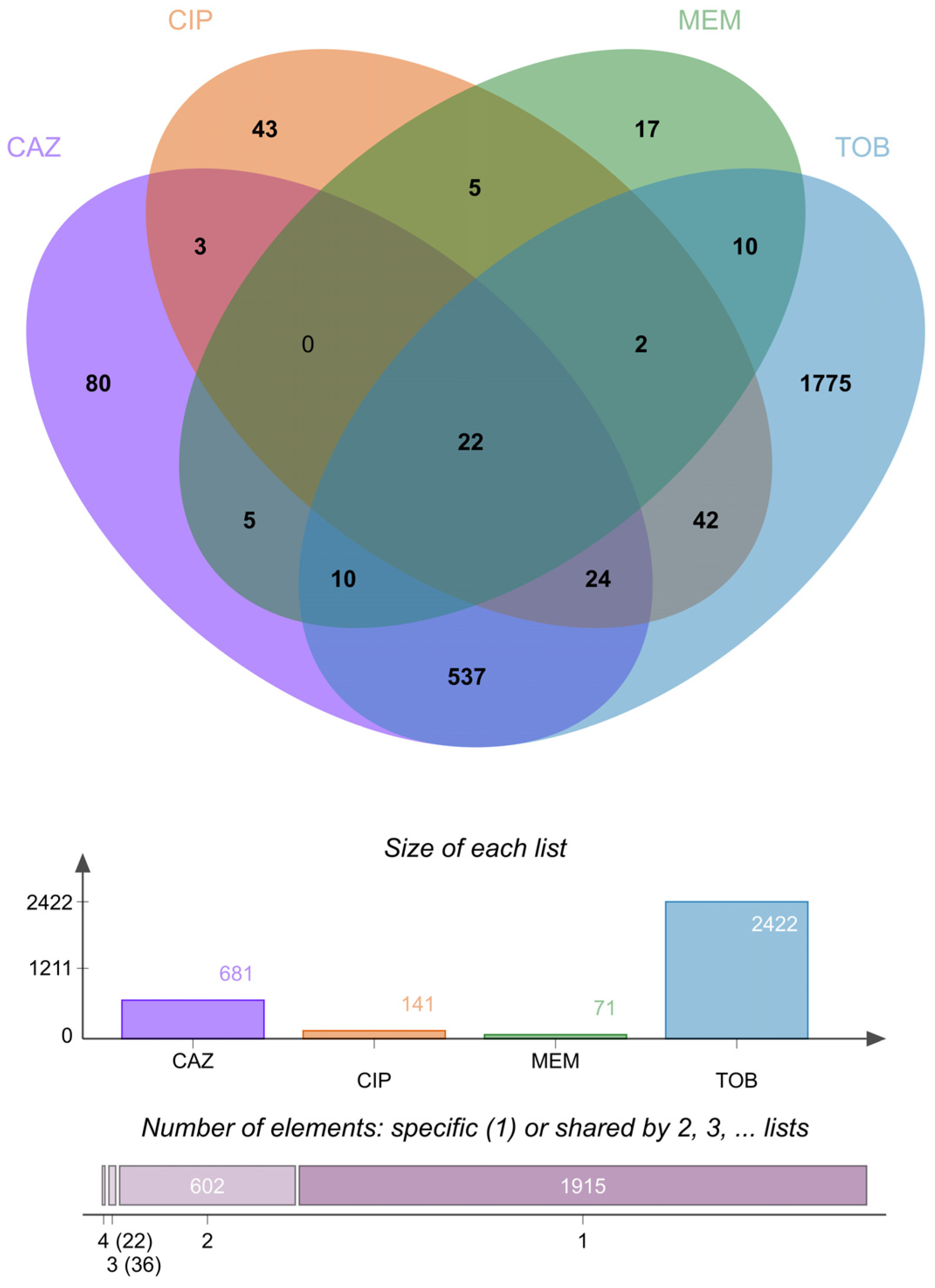
2.1. Transcriptional Responses Were Largely Antibiotic-Specific
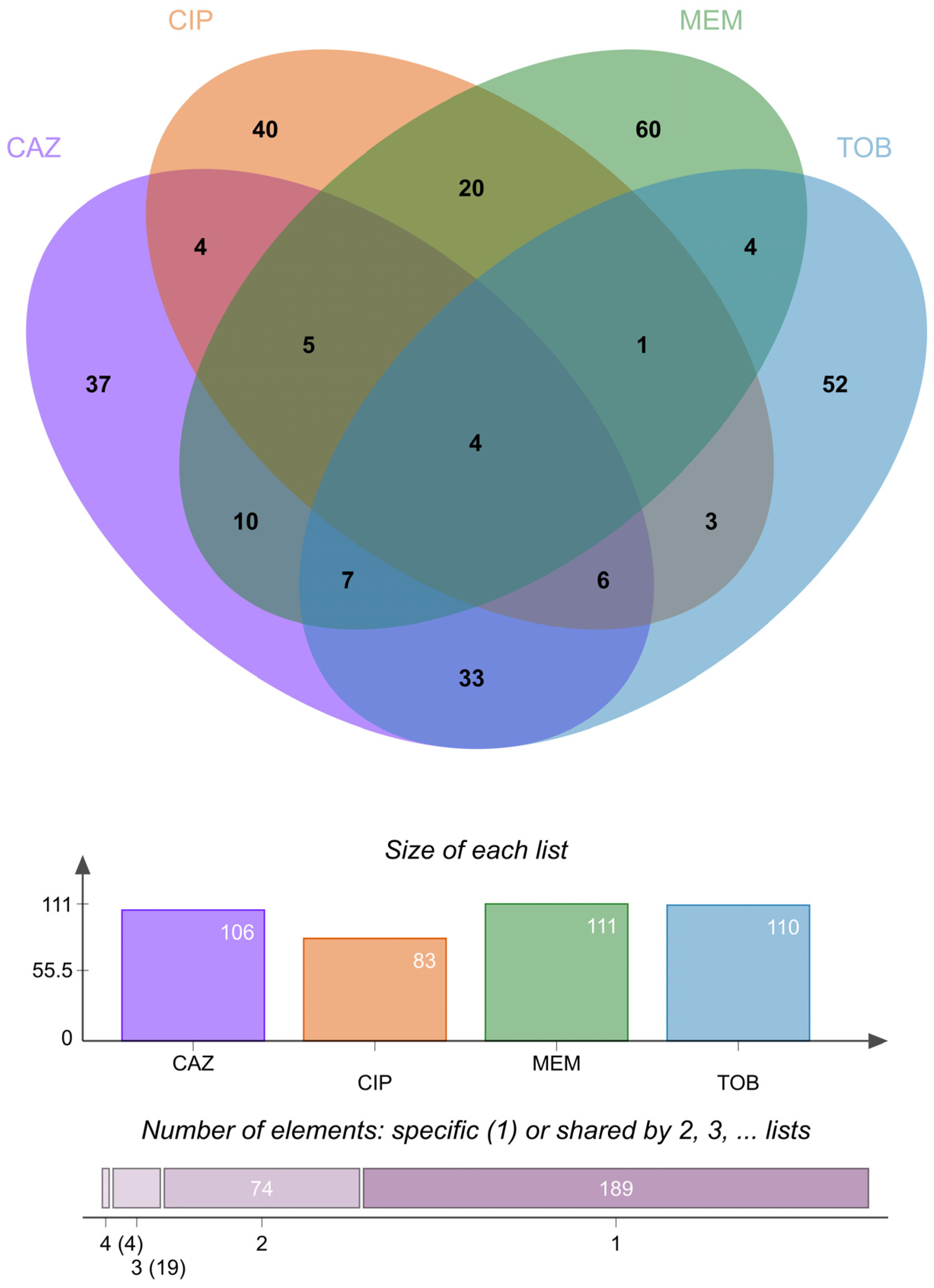
2.2. Shared and Drug-Specific Reporter Metabolites
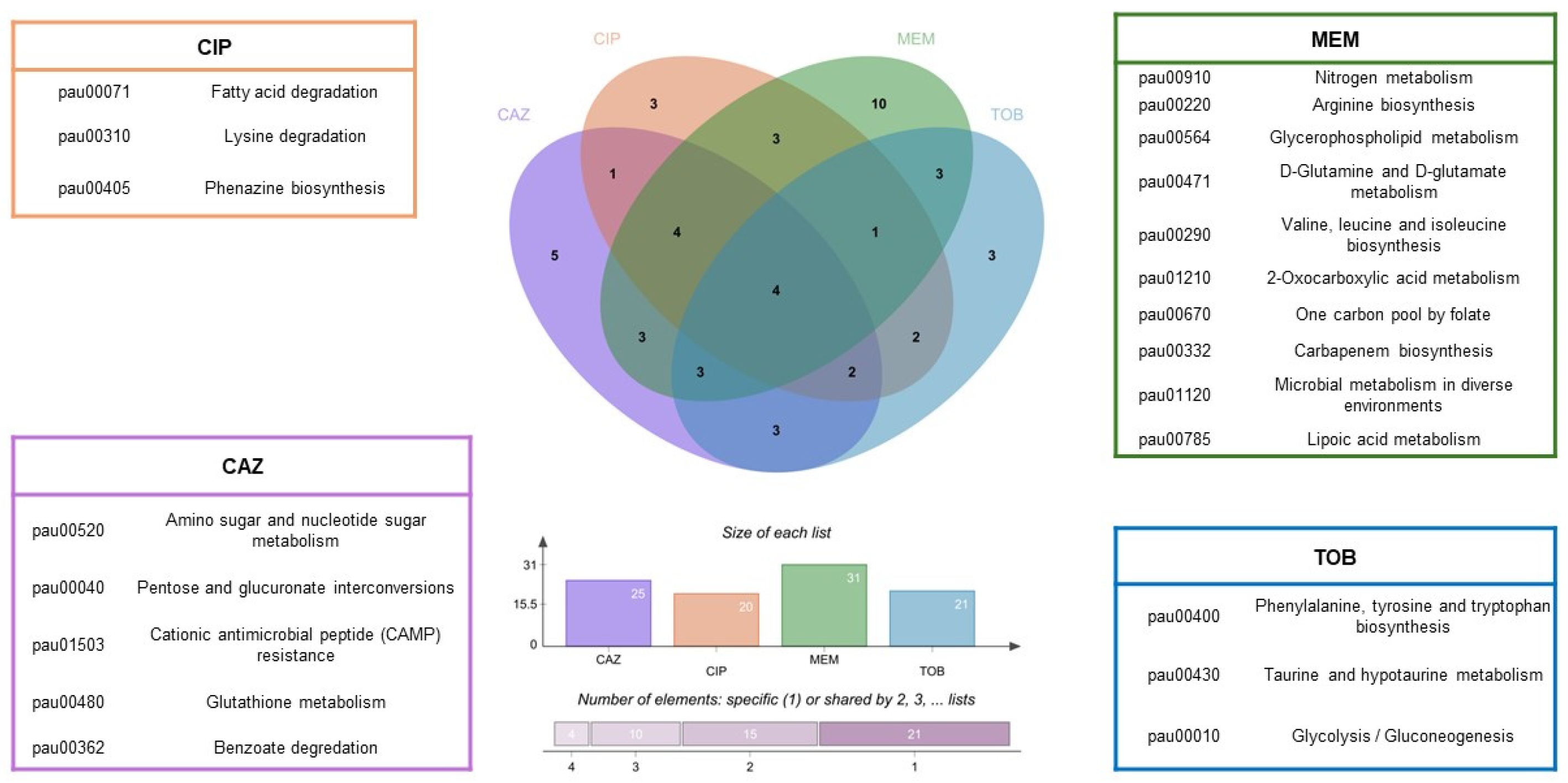
2.3. Enrichment Analysis of Reporter Metabolites
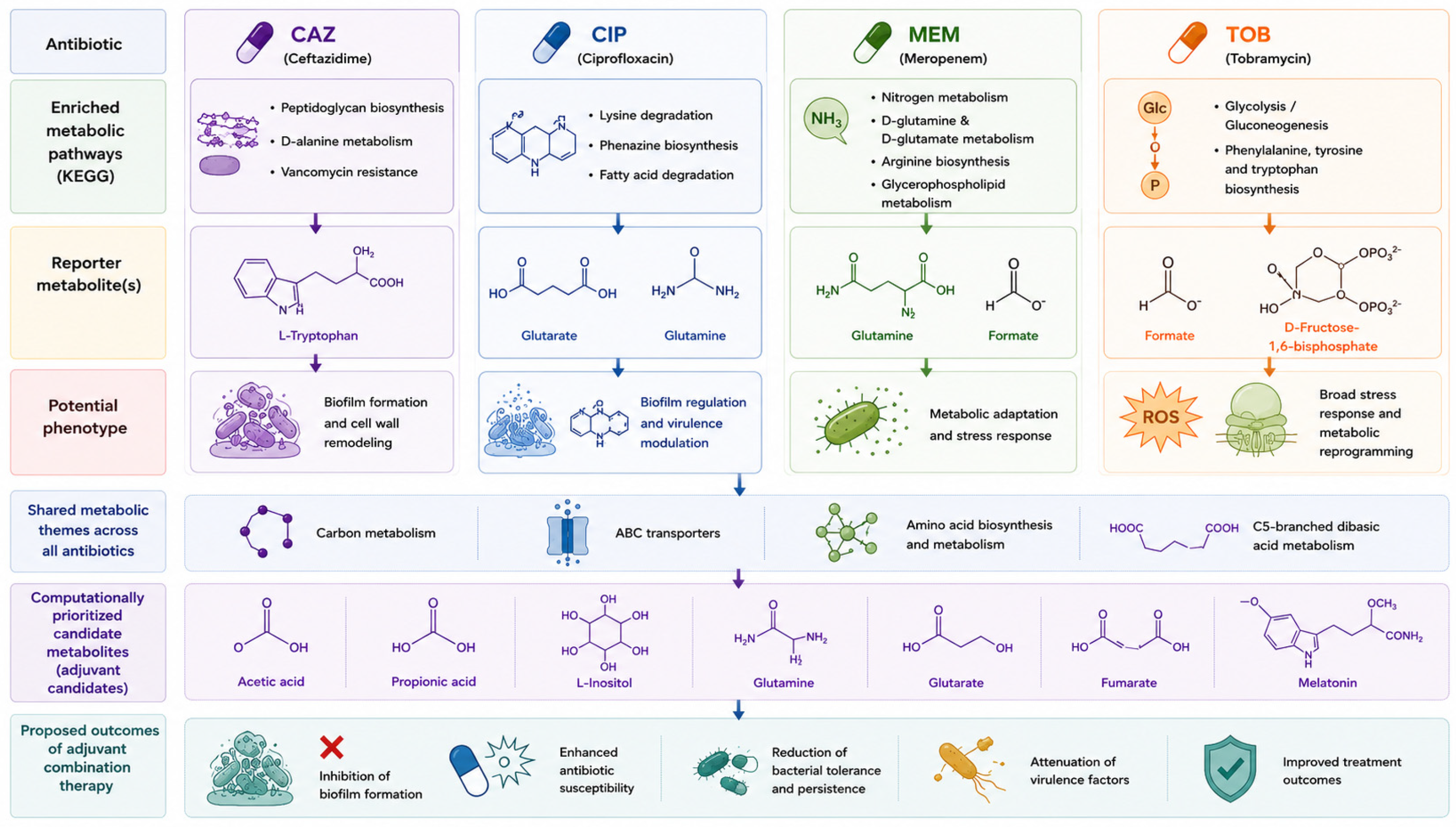
3. Discussion
4. Limitations and Future Directions
5. Materials and Methods
5.1. Gene Expression Profiles of Clinical Strains
5.2. Genome-Scale Metabolic Model of P. aeruginosa UCBPP-PA14
5.3. Reporter Metabolite Analysis
5.4. Pathway Enrichment Analysis
6. Conclusions
Supplementary Materials
Author Contributions
Funding
Institutional Review Board Statement
Informed Consent Statement
Data Availability Statement
Conflicts of Interest
Abbreviations
| ABC | ATP-binding cassette |
| AMR | antimicrobial resistance |
| CAZ | ceftazidime |
| CAMP | cationic antimicrobial peptide |
| CIP | ciprofloxacin |
| CLSI | Clinical and Laboratory Standards Institute |
| CoA | coenzyme A |
| CPA | common polysaccharide antigen |
| DEG | differentially expressed gene |
| DGE | differential gene expression |
| FDR | false discovery rate |
| GEM | genome-scale metabolic model |
| GlcNAc | N-acetylglucosamine |
| KEGG | Kyoto Encyclopedia of Genes and Genomes |
| LB | Luria–Bertani |
| LPS | lipopolysaccharide |
| MBRole | Metabolite Biological Role |
| MEM | meropenem |
| MIC | minimum inhibitory concentration |
| NCBI | National Center for Biotechnology Information |
| PA14 | UCBPP-PA14 strain of Pseudomonas aeruginosa |
| PAO1 | Pseudomonas aeruginosa PAO1 strain |
| RM | reporter metabolite |
| RNA-seq | RNA sequencing |
| SBML | Systems Biology Markup Language |
| sRNA | small RNA |
| TCA | tricarboxylic acid |
| TOB | tobramycin |
| WHO | World Health Organization |
References
- Davies, J.; Davies, D. Origins and evolution of antibiotic resistance. Microbiol. Mol. Biol. Rev. 2010, 74, 417–433. [Google Scholar] [CrossRef] [PubMed]
- World Health Organization (WHO). Antimicrobial Resistance; World Health Organization: Geneva, Switzerland, 2023; Available online: https://www.who.int/news-room/fact-sheets/detail/antimicrobial-resistance (accessed on 15 June 2026).
- Blair, J.M.A.; Webber, M.A.; Baylay, A.J.; Ogbolu, D.O.; Piddock, L.J.V. Molecular mechanisms of antibiotic resistance. Nat. Rev. Microbiol. 2015, 13, 42–51. [Google Scholar] [CrossRef] [PubMed]
- von Wintersdorff, C.J.H.; Penders, J.; Van Niekerk, J.M.; Mills, N.D.; Majumder, S.; Van Alphen, L.B.; Savelkoul, P.H.M.; Wolffs, P.F.G. Dissemination of antimicrobial resistance through horizontal gene transfer. Front. Microbiol. 2016, 7, 173. [Google Scholar] [CrossRef] [PubMed]
- Vital-Lopez, F.G.; Reifman, J.; Wallqvist, A. Biofilm formation mechanisms of Pseudomonas aeruginosa predicted via genome-scale kinetic models of bacterial metabolism. PLoS Comput. Biol. 2015, 11, e1004452. [Google Scholar] [CrossRef] [PubMed]
- Costerton, J.W.; Stewart, P.S.; Greenberg, E.P. Bacterial biofilms: A common cause of persistent infections. Science 1999, 284, 1318–1322. [Google Scholar] [CrossRef] [PubMed]
- Flemming, H.-C.; Wingender, J. The biofilm matrix. Nat. Rev. Microbiol. 2010, 8, 623–633. [Google Scholar] [CrossRef] [PubMed]
- Høiby, N.; Bjarnsholt, T.; Givskov, M.; Molin, S.; Ciofu, O. Antibiotic resistance of bacterial biofilms. Int. J. Antimicrob. Agents 2010, 35, 322–332. [Google Scholar] [CrossRef] [PubMed]
- Letizia, M.; Diggle, S.P.; Whiteley, M. Pseudomonas aeruginosa: Ecology, evolution, pathogenesis and antimicrobial susceptibility. Nat. Rev. Microbiol. 2025, 23, 701–717. [Google Scholar] [CrossRef] [PubMed]
- Kula, C.; Erguven, I.; Ozcelik, B.; Gulfidan, G.; Arga, K.Y. Transcriptome-Based Machine Learning Models to Predict Antimicrobial Resistance in Pseudomonas aeruginosa. OMICS 2026, 30, 94–104. [Google Scholar] [CrossRef] [PubMed]
- Piubeli, F. Systems Biology: New Insight into Antibiotic Resistance. Microorganisms 2022, 10, 2362. [Google Scholar] [CrossRef] [PubMed]
- Kitano, H. Systems biology: A brief overview. Science 2002, 295, 1662–1664. [Google Scholar] [CrossRef] [PubMed]
- O’Brien, E.J.; Monk, J.M.; Palsson, B.O. Using genome-scale models to predict biological capabilities. Cell 2015, 161, 971–987. [Google Scholar] [CrossRef] [PubMed]
- Alonso-Vásquez, T.; Fondi, M.; Perrin, E. Understanding Antimicrobial Resistance Using Genome-Scale Metabolic Modeling. Antibiotics 2023, 12, 896. [Google Scholar] [CrossRef] [PubMed]
- Tao, J.; Lin, Y.-W.; Zhong, L.; Zhu, Y.; Yao, X.; Aichem, M.; Schreiber, F.; Zhao, J.; Li, J. Genome-scale metabolic modelling in antimicrobial pharmacology: Present and future. Adv. Drug Deliv. Rev. 2025, 225, 115672. [Google Scholar] [CrossRef] [PubMed]
- Dahal, S.; Renz, A.; Dräger, A.; Zielinski, D.C.; Klamt, S. Genome-scale model of Pseudomonas aeruginosa metabolism unveils virulence and drug potentiation. Commun. Biol. 2023, 6, 165. [Google Scholar] [CrossRef] [PubMed]
- Patil, K.R.; Nielsen, J. Uncovering transcriptional regulation of metabolism by using metabolic network topology. Proc. Natl. Acad. Sci. USA 2005, 102, 2685–2689. [Google Scholar] [CrossRef] [PubMed]
- Khaledi, A.; Weimann, A.; Schniederjans, M.; Asgari, E.; Kuo, T.; Oliver, A.; Cabot, G.; Kola, A.; Gastmeier, P.; Hogardt, M.; et al. Predicting antimicrobial resistance in Pseudomonas aeruginosa with machine learning-enabled molecular diagnostics. EMBO Mol. Med. 2020, 12, e10264. [Google Scholar] [CrossRef] [PubMed]
- Kohanski, M.A.; Dwyer, D.J.; Collins, J.J. How antibiotics kill bacteria: From targets to networks. Nat. Rev. Microbiol. 2010, 8, 423–435. [Google Scholar] [CrossRef] [PubMed]
- Bushell, F.M.L.; Tonner, P.D.; Jabbari, S.; Schmid, A.K.; Lund, P.A. Synergistic impacts of organic acids and pH on growth of Pseudomonas aeruginosa: A comparison of parametric and Bayesian non-parametric methods to model growth. Front. Microbiol. 2019, 10, 3196. [Google Scholar] [CrossRef] [PubMed]
- She, P.; Wang, Y.; Liu, Y.; Tan, F.; Chen, L.; Luo, Z.; Wu, Y. Effects of exogenous glucose on Pseudomonas aeruginosa biofilm formation and antibiotic resistance. MicrobiologyOpen 2019, 8, e933. [Google Scholar] [CrossRef] [PubMed]
- Wang, S.; Hao, Y.; Lam, J.S.; Vlahakis, J.Z.; Szarek, W.A.; Vinnikova, A.; Veselovsky, V.V.; Brockhausen, I. Biosynthesis of the common polysaccharide antigen of Pseudomonas aeruginosa PAO1: Characterization and role of GDP-d-rhamnose:GlcNAc/GalNAc-diphosphate-lipid α1,3-d-rhamnosyltransferase WbpZ. J. Bacteriol. 2015, 197, 2012–2025. [Google Scholar] [CrossRef] [PubMed]
- Lam, J.S.; Taylor, V.L.; Islam, S.T.; Hao, Y.; Kocíncová, D. Genetic and functional diversity of Pseudomonas aeruginosa lipopolysaccharide. Front. Microbiol. 2011, 2, 118. [Google Scholar] [CrossRef] [PubMed]
- Hao, Y.; Murphy, K.; Lo, R.Y.; Khursigara, C.M.; Lam, J.S. Single-nucleotide polymorphisms in migA and wbpX glycosyltransferase genes account for intrinsic LPS defects in Pseudomonas aeruginosa PA14. J. Bacteriol. 2015, 197, 2780–2791. [Google Scholar] [CrossRef] [PubMed]
- Trivedi, R.R.; Crooks, J.A.; Auer, G.K.; Pendry, J.; Foik, I.P.; Siryaporn, A.; Abbott, N.L.; Gitai, Z.; Weibel, D.B. Mechanical genomic studies reveal the role of D-alanine metabolism in Pseudomonas aeruginosa cell stiffness. mBio 2018, 9, e01340-18. [Google Scholar] [CrossRef] [PubMed]
- Rawson, T.M.; Moore, L.S.P.; Castro-Sanchez, E.; Charani, E.; Davies, F.; Satta, G.; Ellington, M.J.; Holmes, A.H. COVID-19 and the potential long-term impact on antimicrobial resistance. J. Antimicrob. Chemother. 2020, 75, 1681–1684. [Google Scholar] [CrossRef] [PubMed]
- Kariyawasam, R.M.; Julien, D.A.; Jelinski, D.C.; Larose, S.L.; Rennert-May, E.; Conly, J.M.; Dingle, T.C.; Chen, J.Z.; Tyrrell, G.J.; Ronksley, P.E.; et al. Antimicrobial resistance in COVID-19 patients: A systematic review and meta-analysis. Antimicrob. Resist. Infect. Control 2022, 11, 45. [Google Scholar] [CrossRef] [PubMed]
- Liu, Y.; Tong, Z.; Shi, J.; Li, R.; Upton, M.; Wang, Z. Drug repurposing for next-generation combination therapies against multidrug-resistant bacteria. Theranostics 2021, 11, 4910–4928. [Google Scholar] [CrossRef] [PubMed]
- Peng, B.; Li, H.; Peng, X.X. Call for next-generation drugs that remove the uptake barrier to combat antibiotic resistance. Drug Discov. Today 2023, 28, 103753. [Google Scholar] [CrossRef] [PubMed]
- Zhao, X.; Chen, Z.; Yang, T.; Jiang, M.; Wang, J.; Cheng, Z.; Yang, M.; Zhu, J.; Zhang, T.; Li, H.; et al. Glutamine promotes antibiotic uptake to kill multidrug-resistant uropathogenic bacteria. Sci. Transl. Med. 2021, 13, eabe5750. [Google Scholar] [CrossRef] [PubMed]
- Leggett, A.; Li, D.W.; Sindeldecker, D.; Staats, A.; Rigel, N.; Bruschweiler-Li, L.; Brüschweiler, R.; Stoodley, P. Cadaverine is a switch in the lysine degradation pathway in Pseudomonas aeruginosa biofilm identified by untargeted metabolomics. Front. Cell. Infect. Microbiol. 2022, 12, 833269. [Google Scholar] [CrossRef] [PubMed]
- Abdelhamid, A.G.; Yousef, A.E. Untargeted metabolomics unveiled the role of butanoate metabolism in the development of Pseudomonas aeruginosa hypoxic biofilm. Front. Cell. Infect. Microbiol. 2024, 14, 1346813. [Google Scholar] [CrossRef] [PubMed]
- Lee, Y.; Song, S.; Sheng, L.; Zhu, L.; Kim, J.S.; Wood, T.K. Substrate binding protein DppA1 of ABC transporter DppBCDF increases biofilm formation in Pseudomonas aeruginosa by inhibiting Pf5 prophage lysis. Front. Microbiol. 2018, 9, 30. [Google Scholar] [CrossRef] [PubMed]
- Poudyal, B.; Sauer, K. The ABC of biofilm drug tolerance: The MerR-like regulator BrlR is an activator of ABC transport systems, with PA1874-77 contributing to the tolerance of Pseudomonas aeruginosa biofilms to tobramycin. Antimicrob. Agents Chemother. 2018, 62, e01981-17. [Google Scholar] [CrossRef] [PubMed]
- Zhang, L.; Mah, T.F. Involvement of a novel efflux system in biofilm-specific resistance to antibiotics. J. Bacteriol. 2008, 190, 4447–4452. [Google Scholar] [CrossRef] [PubMed]
- Gil-Gil, T.; Valverde, J.R.; Martínez, J.L.; Corona, F. In vivo genetic analysis of Pseudomonas aeruginosa carbon catabolic repression through CrcZ pseudo-revertants shows that Crc-mediated metabolic robustness is needed for virulence and antibiotic resistance. Microbiol. Spectr. 2023, 11, e02350-23. [Google Scholar] [CrossRef] [PubMed]
- Meylan, S.; Porter, C.B.M.; Yang, J.H.; Belenky, P.; Gutierrez, A.; Lobritz, M.A.; Park, J.; Kim, S.H.; Moskowitz, S.M.; Collins, J.J. Carbon sources tune antibiotic susceptibility in Pseudomonas aeruginosa via TCA cycle control. Cell Chem. Biol. 2017, 24, 195–206. [Google Scholar] [CrossRef] [PubMed]
- Wang, Y.; Wang, Z.; Chen, W.; Ren, Z.H.; Gao, H.; Dai, J.; Luo, G.Z.; Wu, Z.; Ji, Q. A KDPG sensor RccR governs Pseudomonas aeruginosa carbon metabolism and aminoglycoside antibiotic tolerance. Nucleic Acids Res. 2024, 52, 967–976. [Google Scholar] [CrossRef] [PubMed]
- Peng, L.T.; Tian, S.Q.; Guo, W.X.; Chen, X.W.; Wu, J.H.; Liu, Y.L.; Peng, B. α-Ketoglutarate downregulates thiosulphate metabolism to enhance antibiotic killing. Int. J. Antimicrob. Agents 2024, 64, 107214. [Google Scholar] [CrossRef] [PubMed]
- Schiessl, K.T.; Hu, F.; Jo, J.; Nazia, S.Z.; Wang, B.; Price-Whelan, A.; Min, W.; Dietrich, L.E.P. Phenazine production promotes antibiotic tolerance and metabolic heterogeneity in Pseudomonas aeruginosa biofilms. Nat. Commun. 2019, 10, 8733. [Google Scholar] [CrossRef] [PubMed]
- Costaglioli, P.; Barthe, C.; Claverol, S.; Brözel, V.S.; Perrot, M.; Crouzet, M.; Bonneu, M.; Garbay, B.; Vilain, S. Evidence for the involvement of the anthranilate degradation pathway in Pseudomonas aeruginosa biofilm formation. MicrobiologyOpen 2012, 1, 326–339. [Google Scholar] [CrossRef] [PubMed]
- Hall, C.W.; Farkas, E.; Zhang, L.; Mah, T.F. Potentiation of aminoglycoside lethality by C4-dicarboxylates requires RpoN in antibiotic-tolerant Pseudomonas aeruginosa. Antimicrob. Agents Chemother. 2019, 63, e01313-19. [Google Scholar] [CrossRef] [PubMed]
- Panayidou, S.; Georgiades, K.; Christofi, T.; Tamana, S.; Promponas, V.J.; Apidianakis, Y. Pseudomonas aeruginosa core metabolism exerts growth-independent control on virulence. Sci. Rep. 2020, 10, 66194. [Google Scholar] [CrossRef] [PubMed]
- Chen, H.; Gong, X.; Fan, Z.; Xia, Y.; Jin, Y.; Bai, F.; Cheng, Z.; Pan, X.; Wu, W. Pseudomonas aeruginosa citrate synthase GltA influences antibiotic tolerance and the type III secretion system through the stringent response. Microbiol. Spectr. 2023, 11, e03239-22. [Google Scholar] [CrossRef] [PubMed]
- He, F.; Liu, Y.; Li, P.; Wu, X.; Xia, Y.; Zhang, D.; Li, N.; Peng, Y.; Zhu, G.; Hardeland, R.; et al. Melatonin inhibits Gram-negative pathogens by targeting citrate synthase. Sci. China Life Sci. 2022, 65, 1430–1444. [Google Scholar] [CrossRef] [PubMed]
- Stokes, J.M.; Lopatkin, A.J.; Lobritz, M.A.; Collins, J.J. Bacterial metabolism and antibiotic efficacy. Cell Metab. 2019, 30, 251–259. [Google Scholar] [CrossRef] [PubMed]
- Peng, B.; Su, Y.B.; Li, H.; Han, Y.; Guo, C.; Tian, Y.M.; Peng, X.X. Exogenous alanine and/or glucose plus kanamycin kills antibiotic-resistant bacteria. Cell Metab. 2015, 21, 249–262. [Google Scholar] [CrossRef] [PubMed]
- Yong, Y.; Zhou, Y.; Liu, K.; Liu, G.; Wu, L.; Fang, B. Exogenous citrulline and glutamine reverse Salmonella resistance to apramycin. Front. Microbiol. 2021, 12, 759170. [Google Scholar] [CrossRef] [PubMed]
- Clinical and Laboratory Standards Institute (CLSI). Performance Standards for Antimicrobial Susceptibility Testing, 28th ed.; CLSI Supplement M100; Clinical and Laboratory Standards Institute: Wayne, PA, USA, 2018. [Google Scholar]
- Love, M.I.; Huber, W.; Anders, S. Moderated estimation of fold change and dispersion for RNA-seq data with DESeq2. Genome Biol. 2014, 15, 550. [Google Scholar] [CrossRef] [PubMed]
- Payne, D.D.; Renz, A.; Dunphy, L.J.; Lewis, T.; Dräger, A.; Papin, J.A. An updated genome-scale metabolic network reconstruction of Pseudomonas aeruginosa PA14 to characterize mucin-driven shifts in bacterial metabolism. npj Syst. Biol. Appl. 2021, 7, 198. [Google Scholar] [CrossRef] [PubMed]
- Kanehisa, M.; Furumichi, M.; Sato, Y.; Matsuura, Y.; Ishiguro-Watanabe, M. KEGG: Biological systems database as a model of the real world. Nucleic Acids Res. 2025, 53, D672–D677. [Google Scholar] [CrossRef] [PubMed]
- Lopez-Ibanez, J.; Pazos, F.; Chagoyen, M. MBROLE3: Improved functional enrichment of chemical compounds for metabolomics data analysis. Nucleic Acids Res. 2023, 51, W305–W309. [Google Scholar] [CrossRef] [PubMed]



| Treatment | ||||
|---|---|---|---|---|
| CAZ | CIP | MEM | TOB | |
| Number of DEGs | 681 | 141 | 72 | 2422 |
| Number of upregulated genes | 346 | 72 | 13 | 1252 |
| Number of downregulated genes | 335 | 69 | 59 | 1170 |
| Metabolite ID (ModelSEED) | Metabolite Location | KEGG ID | Metabolite | p-Value |
|---|---|---|---|---|
| CAZ | ||||
| cpd11567 | Cytosol | 14-Methyl-3-hydroxy-pentadecanoyl-ACP | 2.22 × 10⁻⁷ | |
| cpd00136 | Cytosol | C00156 | 4-Hydroxybenzoate | 1.19 × 10⁻³ |
| cpd11568 | Cytosol | 14-Methyl-trans-pentadec-2-enoyl-ACP | 3.44 × 10⁻³ | |
| cpd00154 | Cytosol | C00181 | Xylose | 5.39 × 10⁻³ |
| cpd02172 | Cytosol | C04145 | Solanesyl diphosphate | 6.55 × 10⁻³ |
| cpd17088 | Cytosol | Rha4glcnacppund | 7.51 × 10⁻³ | |
| cpd00105 | Cytosol | C00121 | D-Ribose | 9.84 × 10⁻³ |
| cpd11543 | Cytosol | 15-Methyl-trans-hexa-dec-2-enoyl-ACP | 1.12 × 10⁻² | |
| cpd11566 | Cytosol | 14-Methyl-3-oxo-pentadecanoyl-ACP | 1.14 × 10⁻² | |
| cpd11551 | Cytosol | 6-Methyl-3-hydroxy-heptanoyl-ACP | 1.41 × 10⁻² | |
| CIP | ||||
| cpd11587 | Cytosol | C00041, C00064 | Ala-Gln | 3.14 × 10⁻⁴ |
| cpd02229 | Cytosol | C04574 | Bactoprenyl diphosphate | 6.35 × 10⁻⁴ |
| cpd17044 | Cytosol | C21477 | 1-Hydroxyphenazine | 1.96 × 10⁻³ |
| cpd17077 | Cytosol | C19830 | Trans-2,3-dihydro-3-hydroxyanthranilic acid | 4.44 × 10⁻³ |
| cpd03187 | Cytosol | C05379 | Oxalosuccinate | 6.13 × 10⁻³ |
| cpd11587 | Extracellular | C00041, C00064 | Ala-Gln | 8.68 × 10⁻³ |
| cpd00021 | Extracellular | C00023 | Fe2+ | 1.23 × 10⁻² |
| cpd01352 | Cytosol | C01968 | Undecaprenol | 1.32 × 10⁻² |
| cpd00449 | Cytosol | C00579 | Dihydrolipoamide | 1.32 × 10⁻² |
| cpd00379 | Cytosol | C00489 | Glutarate | 1.35 × 10⁻² |
| MEM | ||||
| cpd11922 | Cytosol | C01651 | tRNA (Thr) | 1.72 × 10⁻¹⁰ |
| cpd12229 | Cytosol | C02992 | L-Threonyl-tRNA (Thr) | 1.72 × 10⁻¹⁰ |
| cpd02096 | Cytosol | C03284 | L-3-Amino-isobutyrate | 1.40 × 10⁻⁵ |
| cpd11652 | Cytosol | C00344 | Phosphatidylglycerol | 1.49 × 10⁻⁴ |
| cpd23005 | Cytosol | C20850 | N5-hydroxy-L-ornithine | 1.88 × 10⁻⁴ |
| cpd00806 | Cytosol | C01099 | L-Fuculose1-phosphate | 2.99 × 10⁻⁴ |
| cpd11580 | Cytosol | C00037,C00064 | Gly-Gln | 3.96 × 10⁻⁴ |
| cpd00869 | Cytosol | C01180 | 4-Methylthio 2-oxobutyrate | 4.97 × 10⁻⁴ |
| cpd00047 | Extracellular | C00058 | Formate | 5.19 × 10⁻⁴ |
| cpd11624 | Cytosol | C00157 | Lecithin | 1.01 × 10⁻³ |
| TOB | ||||
| cpd02857 | Cytosol | C04691 | DAHP | 1.08 × 10⁻³ |
| cpd15555 | Cytosol | Phosphatidylserine—dihexadecanoyl | 1.21 × 10⁻³ | |
| cpd02991 | Cytosol | C04916 | Phosphoribulosylformimino–AICAR–phosphate | 2.19 × 10⁻³ |
| cpd01476 | Cytosol | C02191 | Protoporphyrin | 3.89 × 10⁻³ |
| cpd03279 | Cytosol | C05512 | Deoxyinosine | 4.03 × 10⁻³ |
| cpd00810 | Cytosol | C01103 | Orotidylic acid | 4.10 × 10⁻³ |
| cpd11455 | Cytosol | C02737 | ps—BS | 4.39 × 10⁻³ |
| cpd00868 | Cytosol | C01179 | p-Hydroxyphenylpyruvate | 4.50 × 10⁻³ |
| cpd00290 | Cytosol | C00354 | D-fructose-1,6-bisphosphate | 5.32 × 10⁻³ |
| cpd00856 | Cytosol | C01163 | 3-Carboxy-cis,cis-muconate | 5.60 × 10⁻³ |
| CAZ|CIP|MEM|TOB | |
|---|---|
| pau02010 | ABC transporters |
| pau01200 | Carbon metabolism |
| pau01230 | Biosynthesis of amino acids |
| pau00660 | C5-branched dibasic acid metabolism |
| CAZ|CIP | |
| pau00460 | Cyanoamino acid metabolism |
| CAZ|MEM | |
| pau00330 | Arginine and proline metabolism |
| pau00053 | Ascorbate and aldarate metabolism |
| pau00620 | Pyruvate metabolism |
| CAZ|TOB | |
| pau00473 | D-alanine metabolism |
| pau01502 | Vancomycin resistance |
| pau00550 | Peptidoglycan biosynthesis |
| CIP|MEM | |
| pau00280 | Valine, leucine and isoleucine degradation |
| pau00640 | Propanoate metabolism |
| pau00730 | Thiamine metabolism |
| CIP|TOB | |
| pau04122 | Sulfur relay system |
| pau00920 | Sulfur metabolism |
| MEM|TOB | |
| pau00630 | Glyoxylate and dicarboxylate metabolism |
| pau00061 | Fatty acid biosynthesis |
| pau00680 | Methane metabolism |
| CAZ|CIP|MEM | |
| pau00970 | Aminoacyl-tRNA biosynthesis |
| pau00250 | Alanine, aspartate and glutamate metabolism |
| pau02020 | Two-component system |
| pau02030 | Bacterial chemotaxis |
| CAZ|CIP|TOB | |
| pau00230 | Purine metabolism |
| pau00240 | Pyrimidine metabolism |
| CIP|MEM|TOB | |
| pau00270 | Cysteine and methionine metabolism |
| CAZ|MEM|TOB | |
| pau00770 | Pantothenate and CoA biosynthesis |
| pau00260 | Glycine, serine and threonine metabolism |
| pau01240 | Biosynthesis of cofactors |
| Number of Strains/Antibiotics | CAZ | CIP | MEM | TOB |
|---|---|---|---|---|
| Resistant strains | 165 | 199 | 244 | 130 |
| Susceptible strains | 169 | 159 | 110 | 276 |
| Intermediate | 80 | 56 | 60 | 8 |
Disclaimer/Publisher’s Note: The statements, opinions and data contained in all publications are solely those of the individual author(s) and contributor(s) and not of MDPI and/or the editor(s). MDPI and/or the editor(s) disclaim responsibility for any injury to people or property resulting from any ideas, methods, instructions or products referred to in the content. |
© 2026 by the authors. Licensee MDPI, Basel, Switzerland. This article is an open access article distributed under the terms and conditions of the Creative Commons Attribution (CC BY) license.
Share and Cite
Kula, C.; Kerek, R.C.; Arga, K.Y. Transcriptome-Integrated Metabolic Modeling Identifies Candidate Metabolic Adjuvants in Antibiotic-Resistant Pseudomonas aeruginosa. Antibiotics 2026, 15, 730. https://doi.org/10.3390/antibiotics15080730
Kula C, Kerek RC, Arga KY. Transcriptome-Integrated Metabolic Modeling Identifies Candidate Metabolic Adjuvants in Antibiotic-Resistant Pseudomonas aeruginosa. Antibiotics. 2026; 15(8):730. https://doi.org/10.3390/antibiotics15080730
Chicago/Turabian StyleKula, Ceyda, Rabia Cankul Kerek, and Kazim Yalcin Arga. 2026. "Transcriptome-Integrated Metabolic Modeling Identifies Candidate Metabolic Adjuvants in Antibiotic-Resistant Pseudomonas aeruginosa" Antibiotics 15, no. 8: 730. https://doi.org/10.3390/antibiotics15080730
APA StyleKula, C., Kerek, R. C., & Arga, K. Y. (2026). Transcriptome-Integrated Metabolic Modeling Identifies Candidate Metabolic Adjuvants in Antibiotic-Resistant Pseudomonas aeruginosa. Antibiotics, 15(8), 730. https://doi.org/10.3390/antibiotics15080730