Systematic Review

Emerging Global Patterns of Terbinafine Resistance in Trichophyton Species: A Systematic Review and Meta-Analysis


by
Imdat Kilbas
1,
Elmas Pinar Kahraman Kilbas
2,
Ihsan Hakki Ciftci
3,*,
Norberth-Istvan Varga
4 and
Florin George Horhat
5
1
Dental Prosthesis Technology Program, Vocational School of Health Services, Fenerbahce University, Istanbul 34758, Türkiye
2
Medical Laboratory Techniques Program, Vocational School of Health Services, Fenerbahce University, Istanbul 34758, Türkiye
3
Department of Medical Microbiology, Faculty of Medicine, Sakarya University, Sakarya 54100, Türkiye
4
Multidisciplinary Research Center on Antimicrobial Resistance (MULTI-REZ), Microbiology Department, Victor Babes University of Medicine and Pharmacy, 300041 Timisoara, Romania
5
Department of Microbiology, Victor Babes University of Medicine and Pharmacy, Eftimie Murgu Square No. 2, 300041 Timisoara, Romania
*
Author to whom correspondence should be addressed.
Antibiotics 2026, 15(7), 699; https://doi.org/10.3390/antibiotics15070699

Submission received: 6 June 2026 / Revised: 7 July 2026 / Accepted: 8 July 2026 / Published: 17 July 2026
(This article belongs to the Special Issue Evaluation of Emerging Antimicrobials, 2nd Edition)

Abstract

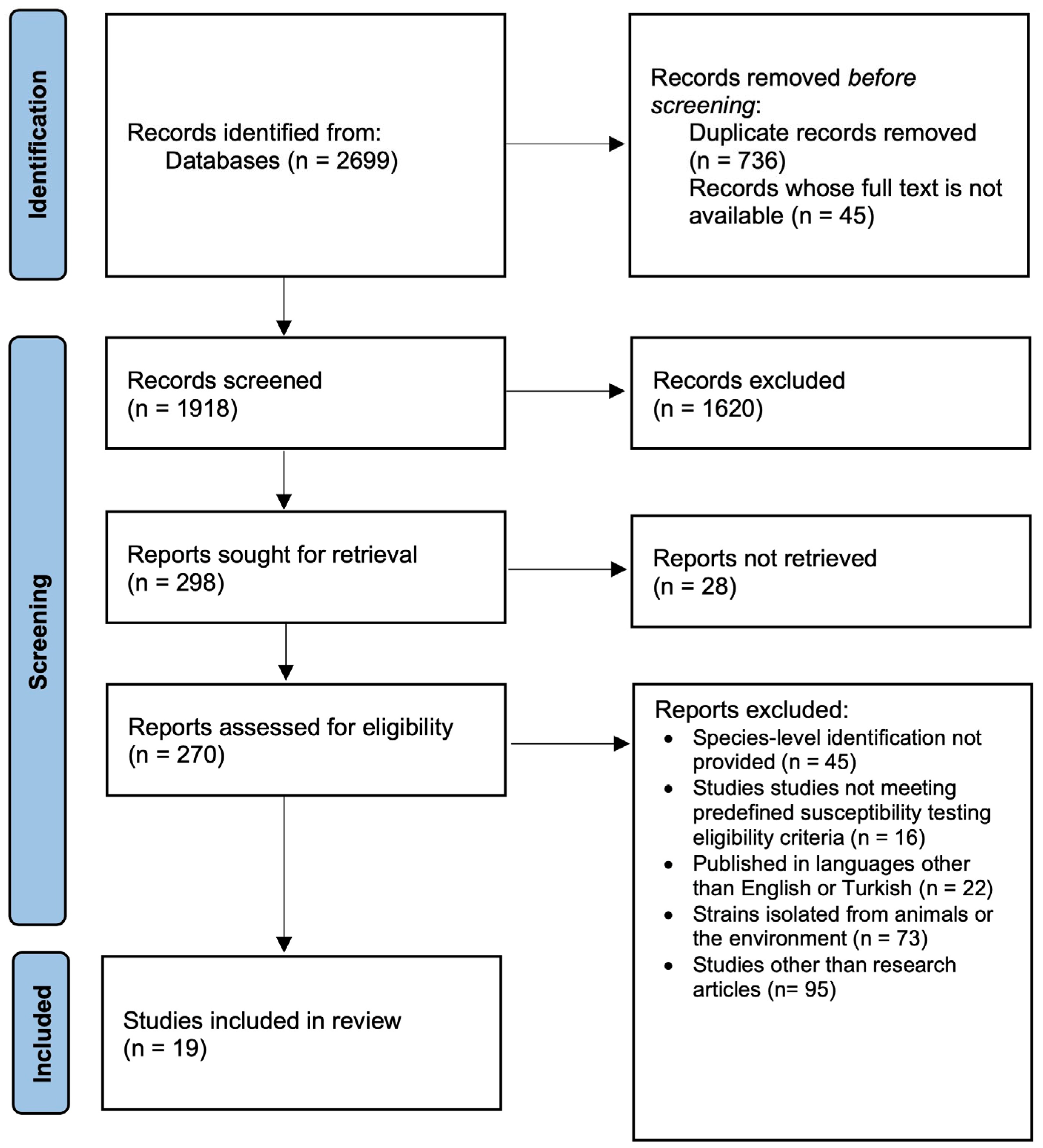
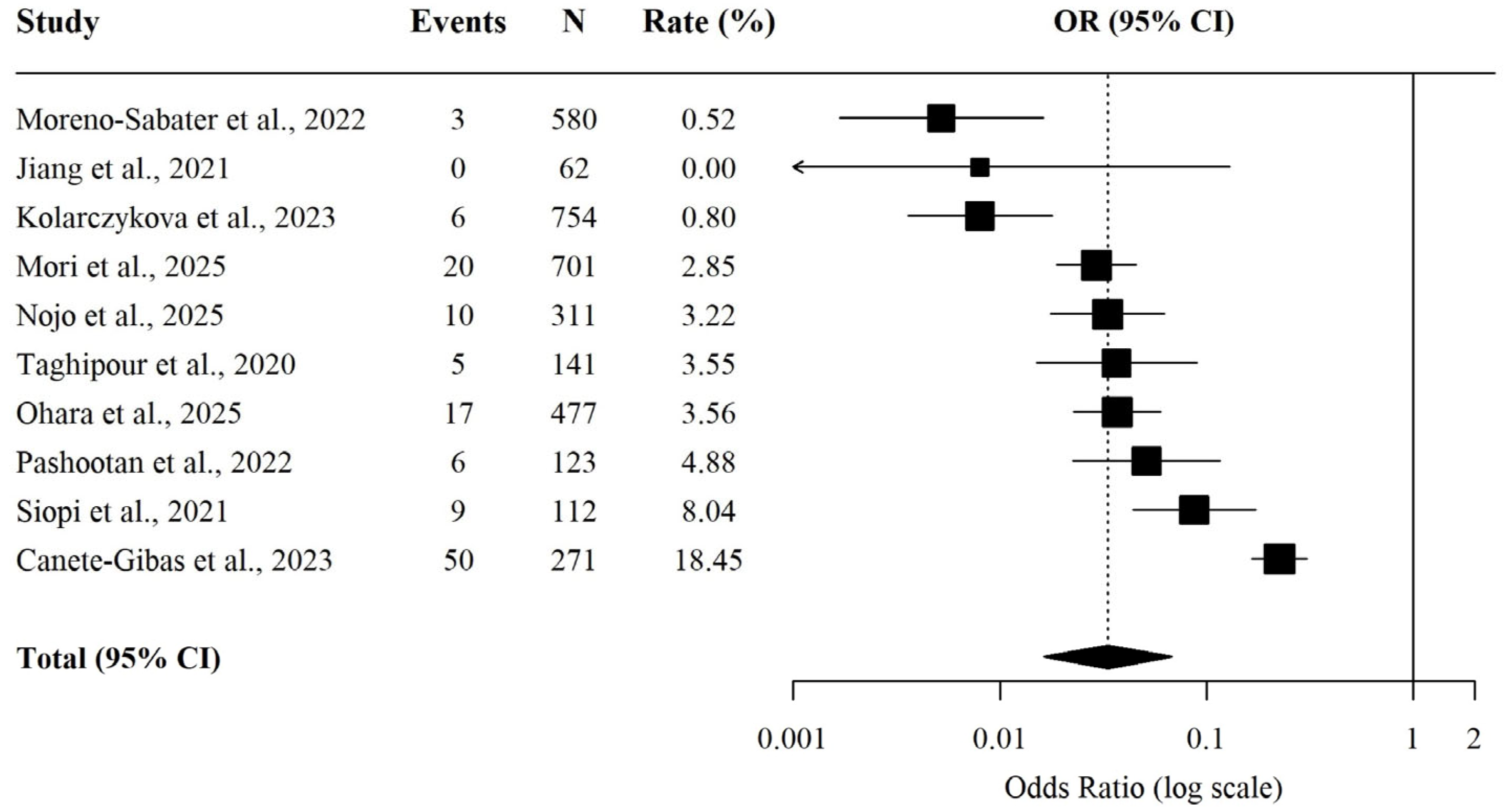
Background/Objectives: In recent years, reports regarding terbinafine resistance in Trichophyton spp. have increased. The aim of this study is to evaluate the prevalence of terbinafine resistance in Trichophyton spp. species on a regional and species basis and to systematically analyze the antifungal susceptibility testing methods used and the available data. Methods: This systematic review and meta-analysis was conducted in accordance with the PRISMA guideline. Studies published until 1 December 2025 were searched in the PubMed/MEDLINE, Scopus, Web of Science, and Embase databases. Studies reporting antifungal susceptibility test results using species-level identification, standardized, or study-defined methodologies were included. Pooled prevalence estimates were calculated with a random-effects model. Heterogeneity was evaluated with the I2 statistic. Subgroup analyses were performed according to publication period, resistance definition groups, species, and geographic region. SQLE mutation patterns were summarized descriptively. Results: Nineteen studies reported from 13 different countries were included in the meta-analysis. In sensitivity analyses that included surveillance-based studies, the combined prevalence rate was found to be 3.2% (95% confidence interval 1.5–6.7). Higher descriptive resistance levels were observed in T. indotineae and T. mentagrophytes, although species-related differences were not statistically significant. Among studies reporting SQLE mutations, alterations involving codons 393 and 397 were the most frequently described; however, mutation patterns were summarized descriptively because of methodological heterogeneity among studies. Conclusions: Trichophyton spp. terbinafine resistance is an emerging global threat. Standardized susceptibility testing, harmonized epidemiological cut-off values, and enhanced molecular surveillance are essential for accurate detection, resistance monitoring, and effective clinical management.
Keywords: Trichophyton; terbinafine; drug resistance; antifungal agents; prevalence Trichophyton; terbinafine; drug resistance; antifungal agents; prevalence