
Evaluation of Short Versus Long Course of Tobramycin Combined with Piperacillin/Tazobactam Against Antibiotic-Resistant Pseudomonas aeruginosa in a Hollow Fibre Infection Model
 , , , ,
Abstract
1. Introduction
2. Results
2.1. In Vitro Susceptbility of the Bacterial Isolates
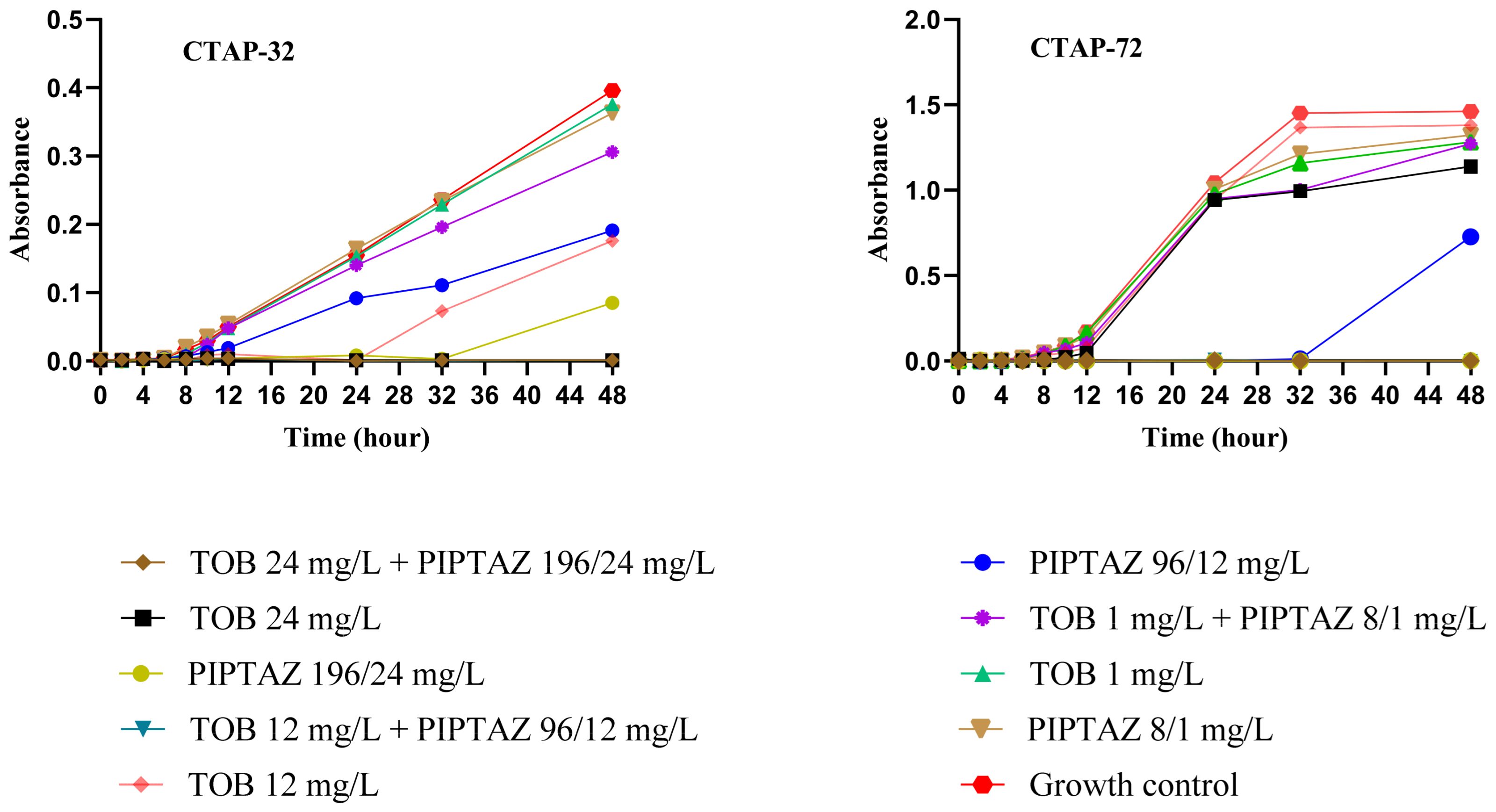
2.2. Static Concentration Time-Kill Study
2.3. Bacterial Population Profile Analysis
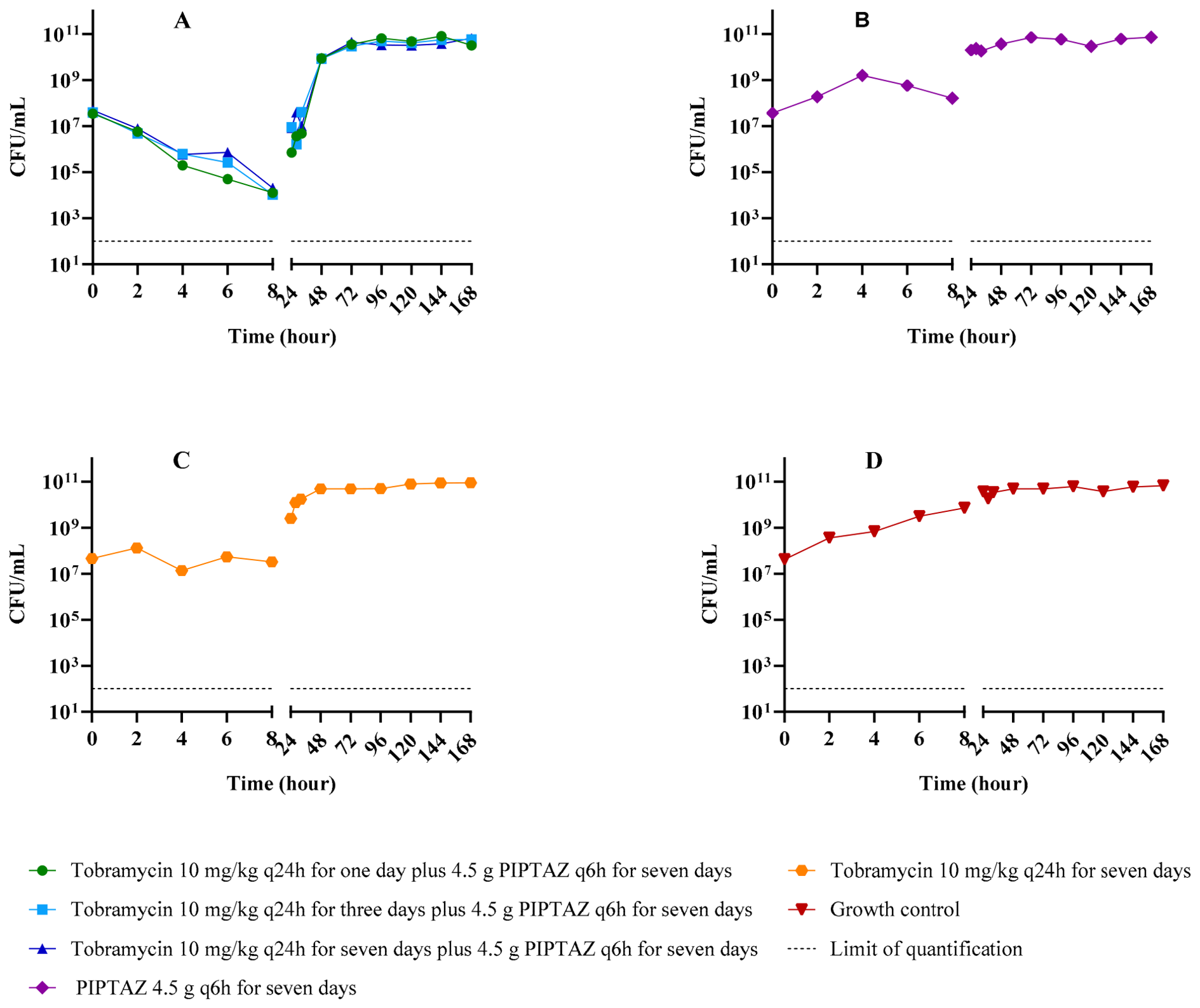
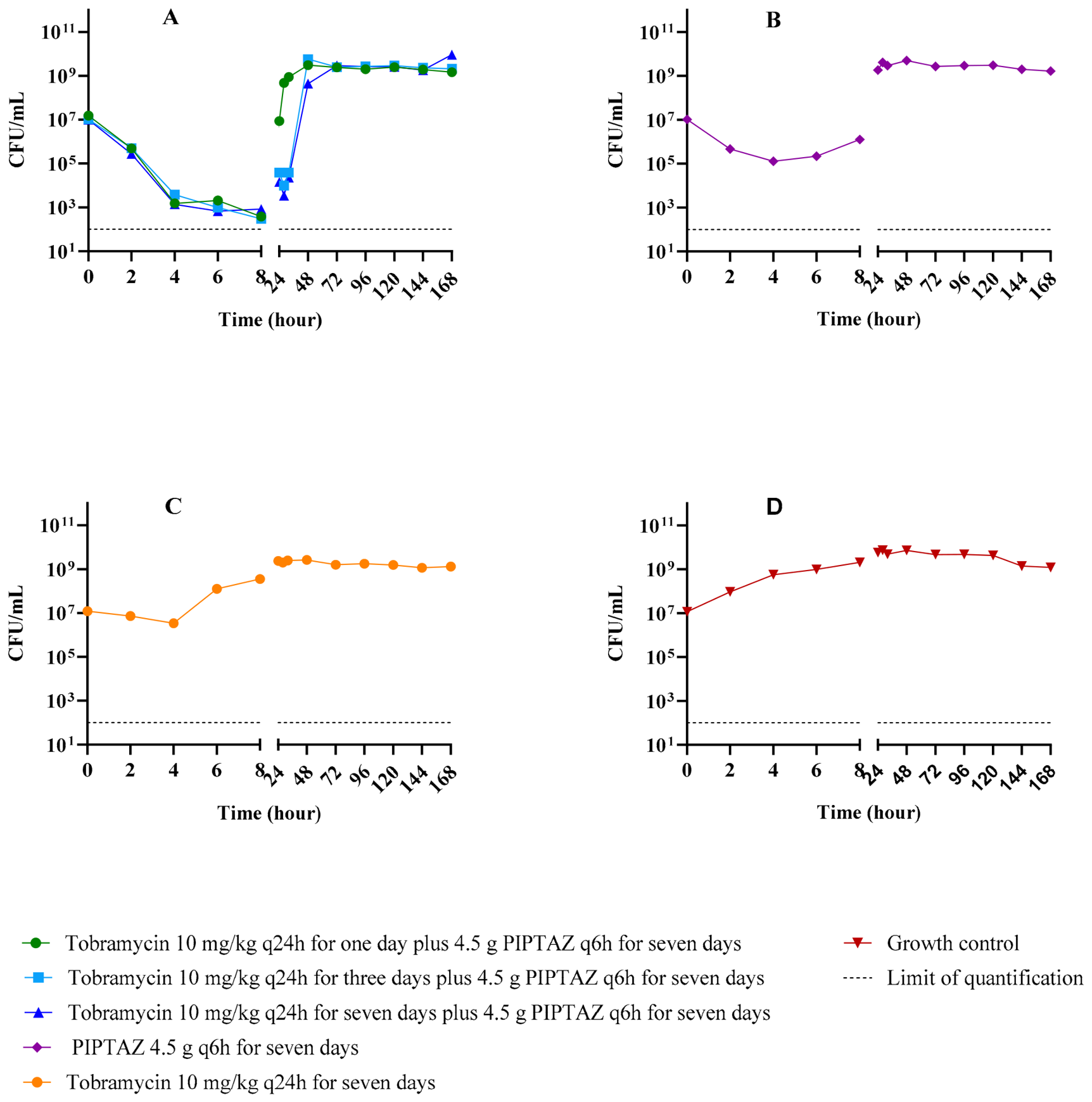
2.4. Hollow Fibre Infection Model
2.5. Whole Genome Sequencing and Bioinformatic Analysis
3. Discussion
4. Methods
4.1. Antibiotic Preparations
4.2. Bacterial Inoculum Preparations
4.3. Minimum Inhibitory Concentration
4.4. Static Concentration Time-Kill Study
4.5. Bacterial Population Profile Analysis
4.6. Hollow Fibre Infection Model
- Tobramycin 10 mg/kg q24h for one day plus 4.5 g PIPTAZ q6h for seven days;
- Tobramycin 10 mg/kg q24h for three days plus 4.5 g PIPTAZ q6h for seven days;
- Tobramycin 10 mg/kg q24h for seven days plus 4.5 g PIPTAZ q6h for seven days;
- PIPTAZ monotherapy 4.5 g q6h for seven days;
- Tobramycin monotherapy 10 mg/kg q24h for seven days;
- Growth control.
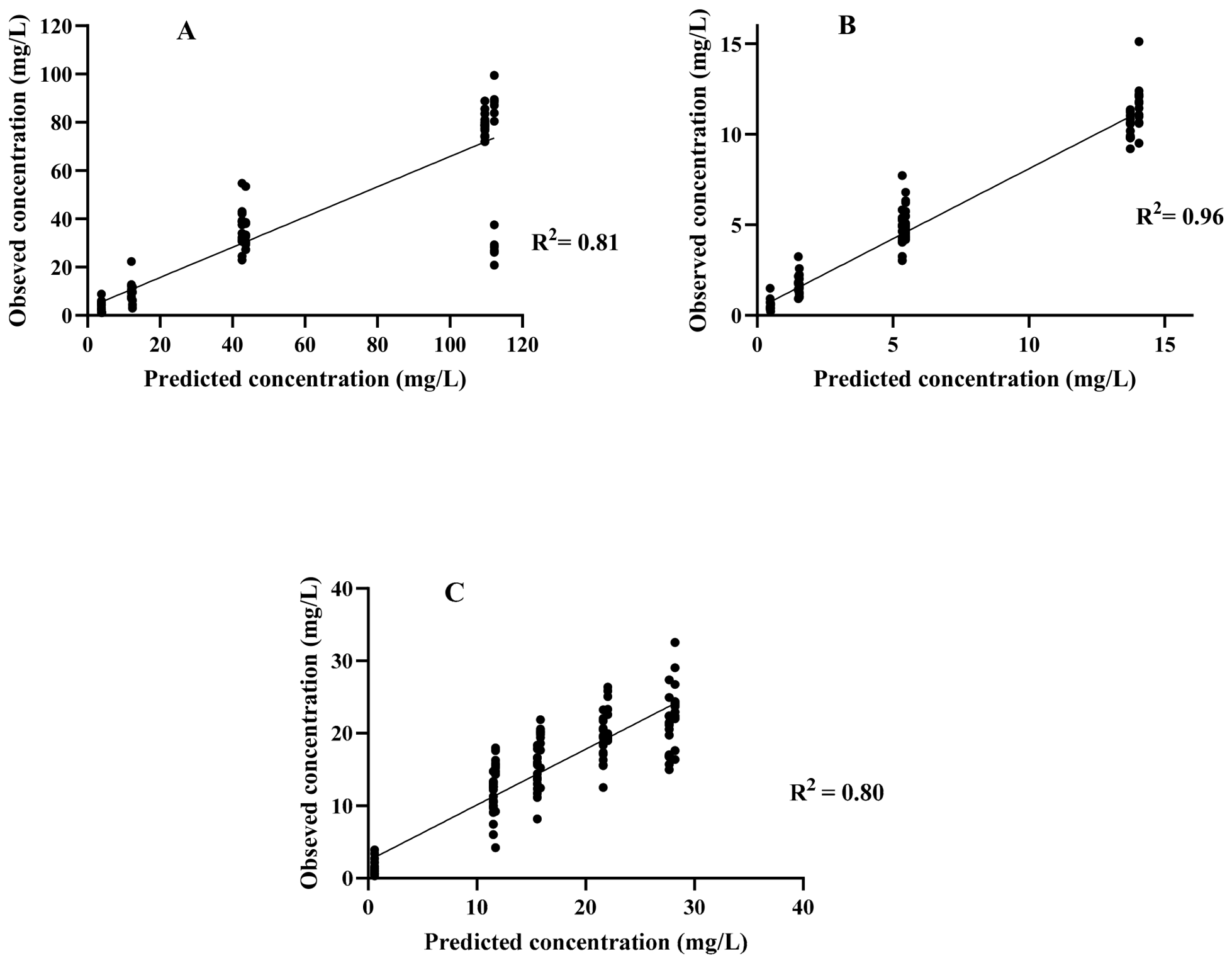
4.7. Antibiotic Assay
4.8. DNA Extraction, Whole Genome Sequencing, and Bioinformatic Analysis
5. Conclusions
Supplementary Materials
Author Contributions
Funding
Institutional Review Board Statement
Data Availability Statement
Acknowledgments
Conflicts of Interest
References
- Bassetti, M.; Shorr, A.F. Update on epidemiology and appropriate treatment of life-threatening gram-negative infections. Curr. Opin. Infect. Dis. 2018, 31, 553–554. [Google Scholar] [CrossRef] [Scilit]
- Yassin, A.; Huralska, M.; Pogue, J.M.; Dixit, D.; Sawyer, R.G.; Kaye, K.S. State of the Management of Infections Caused by Multidrug-Resistant Gram-Negative Organisms. Clin. Infect. Dis. 2023, 77, e46–e56. [Google Scholar] [CrossRef] [Scilit]
- Breijyeh, Z.; Jubeh, B.; Karaman, R. Resistance of Gram-Negative Bacteria to Current Antibacterial Agents and Approaches to Resolve It. Molecules 2020, 25, 1340. [Google Scholar] [CrossRef] [Scilit] [PubMed]
- Gauba, A.; Rahman, K.M. Evaluation of Antibiotic Resistance Mechanisms in Gram-Negative Bacteria. Antibiotics 2023, 12, 1590. [Google Scholar] [CrossRef] [Scilit] [PubMed]
- De Oliveira, D.M.P.; Forde, B.M.; Kidd, T.J.; Harris, P.N.A.; Schembri, M.A.; Beatson, S.A.; Paterson, D.L.; Walker, M.J. Antimicrobial Resistance in ESKAPE Pathogens. Clin. Microbiol. Rev. 2020, 33, e00181-19. [Google Scholar] [CrossRef] [Scilit] [PubMed]
- Santajit, S.; Indrawattana, N. Mechanisms of Antimicrobial Resistance in ESKAPE Pathogens. Biomed. Res. Int. 2016, 2016, 2475067. [Google Scholar] [CrossRef] [Scilit] [PubMed]
- Lee, C.H.; Su, T.Y.; Ye, J.J.; Hsu, P.C.; Kuo, A.J.; Chia, J.H.; Lee, M.H. Risk factors and clinical significance of bacteremia caused by Pseudomonas aeruginosa resistant only to carbapenems. J. Microbiol. Immunol. Infect. 2017, 50, 677–683. [Google Scholar] [CrossRef] [Scilit] [PubMed]
- El Husseini, N.; Carter, J.A.; Lee, V.T. Urinary tract infections and catheter-associated urinary tract infections caused by Pseudomonas aeruginosa. Microbiol. Mol. Biol. Rev. 2024, 88, e0006622. [Google Scholar] [CrossRef] [Scilit] [PubMed]
- Miller, B.; Popejoy, M.W.; Hershberger, E.; Steenbergen, J.N.; Alverdy, J. Characteristics and Outcomes of Complicated Intra-abdominal Infections Involving Pseudomonas aeruginosa from a Randomized, Double-Blind, Phase 3 Ceftolozane-Tazobactam Study. Antimicrob. Agents Chemother. 2016, 60, 4387–4390. [Google Scholar] [CrossRef] [Scilit] [PubMed]
- Reynolds, D.; Kollef, M. The Epidemiology and Pathogenesis and Treatment of Pseudomonas aeruginosa Infections: An Update. Drugs 2021, 81, 2117–2131. [Google Scholar] [CrossRef] [Scilit] [PubMed]
- Bodey, G.P.; Bolivar, R.; Fainstein, V.; Jadeja, L. Infections caused by Pseudomonas aeruginosa. Rev. Infect. Dis. 1983, 5, 279–313. [Google Scholar] [CrossRef] [Scilit] [PubMed]
- Strich, J.R.; Heil, E.L.; Masur, H. Considerations for Empiric Antimicrobial Therapy in Sepsis and Septic Shock in an Era of Antimicrobial Resistance. J. Infect. Dis. 2020, 222, S119–S131. [Google Scholar] [CrossRef] [Scilit] [PubMed]
- Micek, S.T.; Welch, E.C.; Khan, J.; Pervez, M.; Doherty, J.A.; Reichley, R.M.; Kollef, M.H. Empiric combination antibiotic therapy is associated with improved outcome against sepsis due to Gram-negative bacteria: A retrospective analysis. Antimicrob. Agents Chemother. 2010, 54, 1742–1748. [Google Scholar] [CrossRef] [Scilit] [PubMed]
- Bassetti, M.; Vena, A.; Croxatto, A.; Righi, E.; Guery, B. How to manage Pseudomonas aeruginosa infections. Drugs Context 2018, 7, 212527. [Google Scholar] [CrossRef] [Scilit] [PubMed]
- Baltch, A.L.; Smith, R.P. Combinations of antibiotics against Pseudomonas aeruginosa. Am. J. Med. 1985, 79, 8–16. [Google Scholar] [CrossRef] [Scilit] [PubMed]
- Pegram, P.S.; Phair, J.P.; McMahan, R.; Murphy, R.L.; Gordon, L.I.; Washton, H.; Faubion, C.; Saviteer, S.; Cohen, M.S. Prospective comparative trial of short course (four day) and continuous tobramycin in combination with cefoperazone or mezlocillin in febrile, granulocytopenic patients. J. Antimicrob. Chemother. 1989, 24, 591–604. [Google Scholar] [CrossRef] [Scilit] [PubMed]
- Goodlet, K.J.; Benhalima, F.Z.; Nailor, M.D. A Systematic Review of Single-Dose Aminoglycoside Therapy for Urinary Tract Infection: Is It Time To Resurrect an Old Strategy? Antimicrob. Agents Chemother. 2019, 63, e02165-18. [Google Scholar] [CrossRef] [Scilit] [PubMed]
- Australian Theraputic Guidelines. Antibiotics; Principles of Aminoglycoside Use. Available online: https://tgldcdp.tg.org.au/viewTopic?etgAccess=true&guidelinePage=Antibiotic&topicfile=aminoglycoside-use-principles&guidelinename=Antibiotic§ionId=toc_d1e206#toc_d1e206 (accessed on 22 August 2024).
- Wale, Y.M.; Roberts, J.A.; Wolie, Z.T.; Sime, F.B. Is there evidence on the optimal duration of aminoglycoside therapy in beta-lactam/aminoglycoside combination regimens used for the treatment of Gram-negative bacterial infections?—A Systematic Review. Int. J. Antimicrob. Agents 2024, 64, 107297. [Google Scholar] [CrossRef] [Scilit] [PubMed]
- Bae, M.; Jeong, Y.; Bae, S.; Kim, M.J.; Chong, Y.P.; Kim, S.H.; Lee, S.O.; Choi, S.H.; Kim, Y.S.; Jung, J. Short versus prolonged courses of antimicrobial therapy for patients with uncomplicated Pseudomonas aeruginosa bloodstream infection: A retrospective study. J. Antimicrob. Chemother. 2021, 77, 223–228. [Google Scholar] [CrossRef] [Scilit] [PubMed]
- Calandra, T.; Klastersky, J.; Gaya, H.; Glauser, M.P.; Meunier, F.; Zinner, S.H. Ceftazidime combined with a short or long course of amikacin for empirical therapy of gram-negative bacteremia in cancer patients with granulocytopenia. N. Engl. J. Med. 1987, 317, 1692–1698. [Google Scholar] [CrossRef] [Scilit] [PubMed]
- Gentry, L.O. Efficacy and safety of cefamandole plus either gentamicin or tobramycin in therapy of severe gram-negative bacterial infections. J. Infect. Dis. 1978, 137, S144–S149. [Google Scholar] [CrossRef] [Scilit] [PubMed]
- Pajot, O.; Burdet, C.; Couffignal, C.; Massias, L.; Armand-Lefevre, L.; Foucrier, A.; Da Silva, D.; Lasocki, S.; Laouénan, C.; Mentec, H.; et al. Impact of imipenem and amikacin pharmacokinetic/pharmacodynamic parameters on microbiological outcome of Gram-negative bacilli ventilator-associated pneumonia. J. Antimicrob. Chemother. 2015, 70, 1487–1494. [Google Scholar] [CrossRef] [Scilit] [PubMed]
- Wale, Y.M.; Roberts, J.A.; Sime, F.B. Dynamic In Vitro PK/PD Infection Models for the Development and Optimisation of Antimicrobial Regimens: A Narrative Review. Antibiotics 2024, 13, 1201. [Google Scholar] [CrossRef] [Scilit] [PubMed]
- Hou, Y.; Mi, K.; Sun, L.; Zhou, K.; Wang, L.; Zhang, L.; Liu, Z.; Huang, L. The Application of Hollow Fiber Cartridge in Biomedicine. Pharmaceutics 2022, 14, 1485. [Google Scholar] [CrossRef] [Scilit] [PubMed]
- Johnson, J.R.; Lyons, M.F., 2nd; Pearce, W.; Gorman, P.; Roberts, P.L.; White, N.; Brust, P.; Olsen, R.; Gnann, J.W., Jr.; Stamm, W.E. Therapy for women hospitalized with acute pyelonephritis: A randomized trial of ampicillin versus trimethoprim-sulfamethoxazole for 14 days. J. Infect. Dis. 1991, 163, 325–330. [Google Scholar] [CrossRef] [Scilit] [PubMed]
- Cappelletty, D.M.; Rybak, M.J. Comparison of methodologies for synergism testing of drug combinations against resistant strains of Pseudomonas aeruginosa. Antimicrob. Agents Chemother. 1996, 40, 677–683. [Google Scholar] [CrossRef] [Scilit] [PubMed]
- Bulitta, J.B.; Ly, N.S.; Landersdorfer, C.B.; Wanigaratne, N.A.; Velkov, T.; Yadav, R.; Oliver, A.; Martin, L.; Shin, B.S.; Forrest, A.; et al. Two mechanisms of killing of Pseudomonas aeruginosa by tobramycin assessed at multiple inocula via mechanism-based modeling. Antimicrob. Agents Chemother. 2015, 59, 2315–2327. [Google Scholar] [CrossRef] [Scilit] [PubMed]
- Yadav, R.; Bulitta, J.B.; Schneider, E.K.; Shin, B.S.; Velkov, T.; Nation, R.L.; Landersdorfer, C.B. Aminoglycoside Concentrations Required for Synergy with Carbapenems against Pseudomonas aeruginosa Determined via Mechanistic Studies and Modeling. Antimicrob. Agents Chemother. 2017, 61, e00722-1. [Google Scholar] [CrossRef] [Scilit] [PubMed]
- Beal, J.; Farny, N.G.; Haddock-Angelli, T.; Selvarajah, V.; Baldwin, G.S.; Buckley-Taylor, R.; Gershater, M.; Kiga, D.; Marken, J.; Sanchania, V.; et al. Robust estimation of bacterial cell count from optical density. Commun. Biol. 2020, 3, 512. [Google Scholar] [CrossRef] [Scilit] [PubMed]
- Drusano, G.L.; Vanscoy, B.; Liu, W.; Fikes, S.; Brown, D.; Louie, A. Saturability of granulocyte kill of Pseudomonas aeruginosa in a murine model of pneumonia. Antimicrob. Agents Chemother. 2011, 55, 2693–2695. [Google Scholar] [CrossRef] [Scilit] [PubMed]
- Drusano, G.L.; Liu, W.; Fikes, S.; Cirz, R.; Robbins, N.; Kurhanewicz, S.; Rodriquez, J.; Brown, D.; Baluya, D.; Louie, A. Interaction of drug- and granulocyte-mediated killing of Pseudomonas aeruginosa in a murine pneumonia model. J. Infect. Dis. 2014, 210, 1319–1324. [Google Scholar] [CrossRef] [Scilit] [PubMed]
- Ishak, A.; Mazonakis, N.; Spernovasilis, N.; Akinosoglou, K.; Tsioutis, C. Bactericidal versus bacteriostatic antibacterials: Clinical significance, differences and synergistic potential in clinical practice. J. Antimicrob. Chemother. 2025, 80, 1–17. [Google Scholar] [CrossRef] [Scilit] [PubMed]
- Alonso, A.; Campanario, E.; Martínez, J.L. Emergence of multidrug-resistant mutants is increased under antibiotic selective pressure in Pseudomonas aeruginosa. Microbiology 1999, 145, 2857–2862. [Google Scholar] [CrossRef] [Scilit] [PubMed]
- Chen, Z. Mechanisms and Clinical Relevance of Pseudomonas aeruginosa Heteroresistance. Surg. Infect. 2023, 24, 27–38. [Google Scholar] [CrossRef] [Scilit] [PubMed]
- Jin, L.; Ye, H.; Xu, H.; Shahzadi, A.; Pan, X.; Lou, D. Genomic epidemiology and characterization of difficult-to-treat resistant Pseudomonas aeruginosa isolates co-harboring bla(OXA-50) and crpP causing bronchiectasis. Sci. Rep. 2025, 15, 12932. [Google Scholar] [CrossRef] [Scilit] [PubMed]
- Zahedi Bialvaei, A.; Rahbar, M.; Hamidi-Farahani, R.; Asgari, A.; Esmailkhani, A.; Mardani Dashti, Y.; Soleiman-Meigooni, S. Expression of RND efflux pumps mediated antibiotic resistance in Pseudomonas aeruginosa clinical strains. Microb. Pathog. 2021, 153, 104789. [Google Scholar] [CrossRef] [Scilit] [PubMed]
- Khan, M.; Stapleton, F.; Summers, S.; Rice, S.A.; Willcox, M.D.P. Antibiotic Resistance Characteristics of Pseudomonas aeruginosa Isolated from Keratitis in Australia and India. Antibiotics 2020, 9, 600. [Google Scholar] [CrossRef] [Scilit] [PubMed]
- Bolard, A.; Plésiat, P.; Jeannot, K. Mutations in Gene fusA1 as a Novel Mechanism of Aminoglycoside Resistance in Clinical Strains of Pseudomonas aeruginosa. Antimicrob. Agents Chemother. 2018, 62, e01835-17. [Google Scholar] [CrossRef] [Scilit] [PubMed]
- Ali, K.A.; Ghassan, E. Detection of Efflux pump MexX and MexY genes in Multidrug Resistant Pseudomonas aeruginosa. Iraqi J. Sci. 2024, 65, 5455–5465. [Google Scholar] [CrossRef] [Scilit]
- Thacharodi, A.; Lamont, I.L. Aminoglycoside resistance in Pseudomonas aeruginosa: The contribution of the MexXY-OprM efflux pump varies between isolates. J. Med. Microbiol. 2022, 71, 001551. [Google Scholar] [CrossRef] [Scilit]
- Laborda, P.; Hernando-Amado, S.; Martínez, J.L.; Sanz-García, F. Antibiotic Resistance in Pseudomonas. Adv. Exp. Med. Biol. 2022, 1386, 117–143. [Google Scholar] [CrossRef] [Scilit]
- White, R.L. What in vitro models of infection can and cannot do. Pharmacotherapy 2001, 21, 292s–301s. [Google Scholar] [CrossRef] [Scilit] [PubMed]
- EUCAST. Clinical Microbiology and Infection. EUCAST Discussion Document; European Society of Clinical Microbiology and Infectious Diseases: Munich, Germany, 2003; Volume 9. [Google Scholar]
- The European Committee on Antimicrobial Susceptibility Testing. Breakpoint Tables for Interpretation of MICs and Zone Diameters. Available online: http://www.eucast.org (accessed on 26 August 2024).
- Blaser, J. In-vitro model for simultaneous simulation of the serum kinetics of two drugs with different half-lives. J. Antimicrob. Chemother. 1985, 15, 125–130. [Google Scholar] [CrossRef] [Scilit] [PubMed]
- Xuan, D.; Lu, J.F.; Nicolau, D.P.; Nightingale, C.H. Population pharmacokinetics of tobramycin in hospitalized patients receiving once-daily dosing regimen. Int. J. Antimicrob. Agents 2000, 15, 185–191. [Google Scholar] [CrossRef] [Scilit] [PubMed]
- Chen, R.; Qian, Q.; Sun, M.R.; Qian, C.Y.; Zou, S.L.; Wang, M.L.; Wang, L.Y. Population Pharmacokinetics and Pharmacodynamics of Piperacillin/Tazobactam in Patients with Nosocomial Infections. Eur. J. Drug Metab. Pharmacokinet. 2016, 41, 363–372. [Google Scholar] [CrossRef] [Scilit] [PubMed]
- U.S. Food and Drug Administration. Bioanalytical Method Validation Guidance for Industry; U.S. Food and Drug Administration: Silver Spring, MD, USA, 2018.
- Forde, B.M.; Bergh, H.; Cuddihy, T.; Hajkowicz, K.; Hurst, T.; Playford, E.G.; Henderson, B.C.; Runnegar, N.; Clark, J.; Jennison, A.V.; et al. Clinical Implementation of Routine Whole-genome Sequencing for Hospital Infection Control of Multi-drug Resistant Pathogens. Clin. Infect. Dis. 2023, 76, e1277–e1284. [Google Scholar] [CrossRef] [Scilit] [PubMed]
- Bolger, A.M.; Lohse, M.; Usadel, B. Trimmomatic: A flexible trimmer for Illumina sequence data. Bioinformatics 2014, 30, 2114–2120. [Google Scholar] [CrossRef] [Scilit] [PubMed]
- FastQC: A Quality Control Tool for High Throughput Sequence Data. Available online: https://www.bioinformatics.babraham.ac.uk/projects/fastqc/ (accessed on 26 August 2024).
- Bankevich, A.; Nurk, S.; Antipov, D.; Gurevich, A.A.; Dvorkin, M.; Kulikov, A.S.; Lesin, V.M.; Nikolenko, S.I.; Pham, S.; Prjibelski, A.D.; et al. SPAdes: A new genome assembly algorithm and its applications to single-cell sequencing. J. Comput. Biol. 2012, 19, 455–477. [Google Scholar] [CrossRef] [Scilit] [PubMed]
- Inouye, M.; Dashnow, H.; Raven, L.-A.; Schultz, M.B.; Pope, B.J.; Tomita, T.; Zobel, J.; Holt, K.E. SRST2: Rapid genomic surveillance for public health and hospital microbiology labs. Genome Med. 2014, 6, 90. [Google Scholar] [CrossRef] [Scilit] [PubMed]
- Feldgarden, M.; Brover, V.; Gonzalez-Escalona, N.; Frye, J.G.; Haendiges, J.; Haft, D.H.; Hoffmann, M.; Pettengill, J.B.; Prasad, A.B.; Tillman, G.E.; et al. AMRFinderPlus and the Reference Gene Catalog facilitate examination of the genomic links among antimicrobial resistance, stress response, and virulence. Sci. Rep. 2021, 11, 12728. [Google Scholar] [CrossRef] [Scilit] [PubMed]



| Isolates | MIC Results | |||
|---|---|---|---|---|
| Tobramycin | PIPTAZ | |||
| MIC (mg/L) | Susceptibility | MIC (mg/L) | Susceptibility | |
| CTAP-32 | 16 | R | >128/4 | R |
| CTAP-72 | 64 | R | >128/4 | R |
| Antibiotic Concentrations in Agar | Bacterial Density (CFU/mL) | ||
|---|---|---|---|
| Antibiotic | Concentration (mg/L) | CTAP-32 | CTAP-72 |
| Tobramycin | 2 | 3.3 × 10⁸ | 3 × 10⁸ |
| 4 | 3.1 × 10⁸ | 3.2 × 10⁸ | |
| 8 | 9.4 × 10⁷ | 2.26 × 10⁸ | |
| 16 | 6.7 × 10⁴ | 1.04 × 10⁷ | |
| 32 | 4.5 × 10² | 5.2 × 10⁴ | |
| 64 | 0.00 | 1.16 × 10⁴ | |
| PIPTAZ | 16/4 | 9.6 × 10⁷ | 1.47 × 10⁵ |
| 32/4 | 1.18 × 10⁸ | 1.35 × 10⁵ | |
| 64/4 | 9.7 × 10⁷ | 9.6 × 10⁴ | |
| 128/4 | 3.3 × 10⁷ | 2.7 × 10⁴ | |
| Antibiotic-free agar | 0 | 3.2 × 10⁸ | 2.6 × 10⁸ |
| Isolate | Treatment Arm | Antibiotic-Resistant Genes | MLSTs |
|---|---|---|---|
| CTAP-32 | Prior to antibiotic exposure | aph(3′)-IIb, fusA1_Y552C, blaOXA-50, blaPDC-97, ftsI_R504C, oprD_V359L, mexA, mexE, mexX, fosA, catB7, gyrA_T83A | 782 |
| A, B, and C | aph(3′)-IIb, fusA1_Y552C, blaOXA-50, blaPDC-97, ftsI_R504C, oprD_V359L, mexA, mexE, mexX, fosA, catB7, gyrA_T83A | ||
| CTAP-72 | Prior to antibiotic exposure | aph(3′)-IIb, aadA6, blaOXA-488, blaIMP-1, blaPDC-35, mexA, mexE, mexX, crpP, fosA, catB7, gyrA_T83I, sul1 | 235 |
| A, B, C, and D | aph(3′)-IIb, aadA6, blaOXA-488, blaIMP-1, blaPDC-35, mexA, mexE, mexX, crpP, fosA, catB7, gyrA_T83I, sul1 |
Disclaimer/Publisher’s Note: The statements, opinions and data contained in all publications are solely those of the individual author(s) and contributor(s) and not of MDPI and/or the editor(s). MDPI and/or the editor(s) disclaim responsibility for any injury to people or property resulting from any ideas, methods, instructions or products referred to in the content. |
© 2026 by the authors. Licensee MDPI, Basel, Switzerland. This article is an open access article distributed under the terms and conditions of the Creative Commons Attribution (CC BY) license.
Share and Cite
Wale, Y.M.; Roberts, J.A.; Won, H.; Reghu, S.; Marjanovic, D.; Assefa, G.M.; Permana, B.; Ford, B.; Sime, F.B. Evaluation of Short Versus Long Course of Tobramycin Combined with Piperacillin/Tazobactam Against Antibiotic-Resistant Pseudomonas aeruginosa in a Hollow Fibre Infection Model. Antibiotics 2026, 15, 685. https://doi.org/10.3390/antibiotics15070685
Wale YM, Roberts JA, Won H, Reghu S, Marjanovic D, Assefa GM, Permana B, Ford B, Sime FB. Evaluation of Short Versus Long Course of Tobramycin Combined with Piperacillin/Tazobactam Against Antibiotic-Resistant Pseudomonas aeruginosa in a Hollow Fibre Infection Model. Antibiotics. 2026; 15(7):685. https://doi.org/10.3390/antibiotics15070685
Chicago/Turabian StyleWale, Yalew M., Jason A. Roberts, Hayoung Won, Sheethal Reghu, Dusan Marjanovic, Getnet M. Assefa, Budi Permana, Brian Ford, and Fekade B. Sime. 2026. "Evaluation of Short Versus Long Course of Tobramycin Combined with Piperacillin/Tazobactam Against Antibiotic-Resistant Pseudomonas aeruginosa in a Hollow Fibre Infection Model" Antibiotics 15, no. 7: 685. https://doi.org/10.3390/antibiotics15070685
APA StyleWale, Y. M., Roberts, J. A., Won, H., Reghu, S., Marjanovic, D., Assefa, G. M., Permana, B., Ford, B., & Sime, F. B. (2026). Evaluation of Short Versus Long Course of Tobramycin Combined with Piperacillin/Tazobactam Against Antibiotic-Resistant Pseudomonas aeruginosa in a Hollow Fibre Infection Model. Antibiotics, 15(7), 685. https://doi.org/10.3390/antibiotics15070685