Case Report

Use of Ceftazidime–Avibactam in a Late-Preterm Newborn with Multidrug-Resistant Enterobacter hormaechei Sepsis


1
Infectious and Tropical Diseases Unit, Sicilian Regional Reference Center for the Fight Against AIDS, AOU Policlinico “P. Giaccone”, 90133 Palermo, Italy
2
Neonatology and Neonatal Intensive Care Unit, AOU Policlinico “P. Giaccone”, 90127 Palermo, Italy
3
Department of Health Promotion, Mother and Child Care, Internal Medicine and Medical Specialties “G. D’Alessandro”, University of Palermo, 90133 Palermo, Italy
4
Pediatric Surgery Unit, AOU Policlinico “P. Giaccone”, 90127 Palermo, Italy
*
Authors to whom correspondence should be addressed.
These authors contributed equally to this work.
Antibiotics 2026, 15(7), 690; https://doi.org/10.3390/antibiotics15070690
Submission received: 8 June 2026 / Revised: 9 July 2026 / Accepted: 14 July 2026 / Published: 16 July 2026
(This article belongs to the Section Antibiotic Therapy in Infectious Diseases)

Abstract

Background: Neonatal sepsis caused by multidrug-resistant (MDR) Gram-negative pathogens poses significant therapeutic challenges in neonatal intensive care units (NICUs), particularly in surgical neonates. Ceftazidime-avibactam (CAZ-AVI), a novel β-lactam/β-lactamase inhibitor combination, offers activity against extended-spectrum β-lactamases (ESBLs), AmpC, and serine carbapenemases, but neonatal experience remains limited. Methods and Results: We present a 35-week preterm neonate with long-gap esophageal atresia who developed late-onset sepsis caused by MDR Enterobacter hormaechei, including a KPC-producing carbapenem-resistant isolate, during postoperative recovery. After a multidisciplinary review, the patient received off-label CAZ-AVI at 25 mg/kg/dose (20/5 mg/kg) every 8 h, infused over 2 h, informed by available neonatal pharmacokinetic evidence and weight-adjusted dosing recommendations. Amikacin was administered contextually. Consecutive blood cultures obtained 48–72 h after dual antibiotic therapy initiation became negative and remained sterile, with concordant decline in inflammatory biomarkers, confirming rapid microbiological clearance. Unfortunately, the newborn died in the hours immediately following the final surgery performed to repair the esophageal atresia via end-to-end anastomosis; the cause was complications (hemothorax) unrelated to infectious diseases, although the onset of such severe sepsis may have compromised an already impaired immunological status. Discussion: This case shows mechanism-concordant antimicrobial selection and the feasibility of neonatal dosing when MDR Enterobacterales drive invasive infection. Our experience supports prospective evaluation of CAZ-AVI in carefully selected septic newborns while emphasizing the importance of rapid carbapenemase genotyping, susceptibility testing, and multidisciplinary oversight.

1. Introduction

Neonatal sepsis remains a leading cause of morbidity and mortality worldwide, with particularly high incidence and case fatality in preterm and low-birth-weight infants along with substantial burden within NICUs [1,2,3]. Escalating multidrug resistance among Gram-negative pathogens, especially Enterobacterales and Pseudomonadales (i.e., Pseudomonas aeruginosa), increasingly undermines standard empiric regimens and compels susceptibility-driven, stewardship-aligned therapeutic strategies in NICU settings [2,4,5,6]. Current international and World Health Organization (WHO)-aligned guidance endorses narrow-spectrum combinations such as ampicillin plus gentamicin or vancomycin plus amikacin for initial management, yet acknowledges the evidence gaps and clinical challenges posed by hospital-acquired MDR infections in early life [3,7]. Among the new generation drugs, increasingly used even in neonatal age, there is ceftazidime-avibactam (CAZ-AVI) that combines a third-generation cephalosporin with a non-β-lactam β-lactamase inhibitor active against ESBLs, AmpC, and serine carbapenemases (i.e., KPC and OXA-48) producing microorganisms such as Enterobacterales spp., capable of triggering severe infections [6,8,9]. Across adult and pediatric populations aged ≥3 months, CAZ-AVI has demonstrated efficacy in complicated intra-abdominal and urinary tract infections and hospital-acquired/ventilator-associated pneumonia, with pooled analyses showing favorable microbiological responses against β-lactamase-producing pathogens and improved clinical outcomes in selected settings [8,9,10]. In difficult-to-treat bacteremia and nosocomial pneumonia, comparative syntheses report higher clinical cure rates and lower mortality with CAZ-AVI-based therapy than with alternative regimens, reinforcing its role when non-MBL resistance mechanisms predominate [8,9]. Until recently, neonatal use was constrained by the absence of age-specific pharmacokinetic data, but a phase 2a multicenter study supports weight- and age-adjusted regimens for infants < 3 months now, with CAZ-AVI 25 mg/kg/dose (20/5 mg/kg) every 8 h, over 2 h, in both full-term ≤ 28 days of life and preterm neonates from 31 to 44 wks of postmenstrual age (PMA), and a higher 37.5 mg/kg/dose (30/7.5 mg/kg) regimen in full-term neonates > 28 days of life and preterms with PMA > 44 wks, achieving plasma exposures comparable to those observed in older pediatric populations and an acceptable safety profile [11]. This case report describes a late-preterm twin neonate with a long-gap esophageal atresia who developed MDR Enterobacter hormaechei sepsis responsive in vitro to CAZ-AVI, and details the off-label dosing, safety monitoring, and multidisciplinary decision-making to inform pragmatic NICU stewardship when susceptibility and clinical context warrant this agent [5,11,12].

2. Case Presentation

T. is a male second child born from a first twin pregnancy, monochorionic, diamniotic, at 35 weeks of gestation, resulting in an urgent CT scan due to alterations in the tocographic tracing. On the fourth day of life (DOL), due to a suspected long-gap esophageal atresia, he was admitted to the NICU of the “Paolo Giaccone University Hospital” in Palermo for stabilization and staged surgical management. On the sixth DOL, the newborn underwent gastrostomy and right muscle-sparing thoracotomy with distal tracheoesophageal fistula closure and traction sutures across the long esophageal gap, followed by chest drainage, invasive ventilation, central vascular access, and total parenteral nutrition according to NICU standards for complex foregut anomalies. In the immediate postoperative period, renal indices allowed standard neonatal dosing without reduction (creatinine baseline ~0.52 mg/dL, subsequently ~0.18–0.39 mg/dL), while inflammatory activity was initially mild (C-reactive protein, CRP 3.9 mg/L) before sepsis developed. Within the first week, blood cultures yielded methicillin-resistant Staphylococcus epidermidis, successfully treated with vancomycin; the antibiogram had shown vancomycin MIC 1–2 mg/L (S), linezolid 2 mg/L (S), teicoplanin ≤ 2–4 mg/L (S), with resistance to oxacillin (>2 mg/L), gentamicin (>4 mg/L), and several fluoroquinolones, consistent with methicillin-resistant Staphylococcus epidermidis (MRSE) bacteremia in a line-exposed neonate. The central venous access was removed and replaced due to suspected CLABSI. Soon after, Enterobacterales emerged as the primary concern: a thoracic/device source grew Enterobacter hormaechei with ESBL/AmpC phenotype and broad β-lactam resistance, while serial blood cultures isolated Enterobacter cloacae complex with blaCTX-M (Cefotaxime-Munich β-lactamase), confirming late-onset Gram-negative sepsis in the postoperative course (13 days after surgery). Also in this case, the thoracic device was removed. Inflammatory biomarkers rose sharply (PCT 13.4–24.3 μg/L, IL-6 up to ~3268 pg/mL, CRP up to 158 mg/L), in parallel with hematologic/coagulation evidence of severe sepsis-associated DIC marked by profound thrombocytopenia (platelets 2–9 × 10³/μL), anemia (Hb nadir 6.9 g/dL), very high D-dimer (3.7 × 10⁴ ng/mL FEU), hypofibrinogenemia (97 mg/dL), and severe antithrombin deficiency (7–15%), necessitating intensive supportive and transfusional care (repeated transfusions of packed red blood cells, platelets, fresh frozen plasma and antithrombin-III). Cholestasis and hypoalbuminemia developed (total/direct bilirubin up to 17/9.9 mg/dL; albumin 21–30 g/L), while renal function remained within neonatal range, supporting appropriate antibiotic dosing. Empiric meropenem was initiated/escalated with device reassessment for source control, yet persistent recovery of Enterobacter hormaechei from blood and devices indicated ongoing Gram-negative sepsis with ESBL/AmpC mechanisms and concerning carbapenem profiles depending on the isolate and site. Key susceptibility data informing definitive therapy were as follows: blood E. cloacae (ESBL/CTX-M) was susceptible to amikacin (≤4 mg/L, S), CAZ-AVI (MIC 0.5/4 mg/L, S), ceftolozane/tazobactam (1/4 mg/L, S), meropenem (≤0.125 mg/L, S), meropenem-vaborbactam (≤2/8 mg/L, S), colistin (≤0.5 mg/L, S), while resistant to most cephalosporins, piperacillin/tazobactam, and fluoroquinolones. A device-associated Enterobacter hormaechei isolate showed amikacin ≤ 4 mg/L (S), CAZ-AVI MIC 0.5/4 mg/L (S), ceftolozane/tazobactam 2/4 mg/L (S), meropenem ≤ 0.125 mg/L (S), imipenem 0.5 mg/L (S), colistin ≤ 1 mg/L (S), with resistance to third/fourth-generation cephalosporins, piperacillin/tazobactam, and fluoroquinolones. Critically, a subsequent bloodstream Enterobacter hormaechei exhibited a KPC-producing carbapenem-resistant profile with CAZ-AVI MIC 1/4 mg/L (S), amikacin ≤ 4 mg/L (S) and meropenem-vaborbactam ≤ 2/8 mg/L (S), while resistant to meropenem (>16 mg/L), imipenem (>8 mg/L), ertapenem (>1 mg/L), ceftazidime (>16 mg/L), fluoroquinolones, with PCR confirming KPC positive and NDM (new Delhi Metallo-β-lactamase)/OXA-48/VIM (Verona Integron-encoded Metallo-β-lactamase) negative, aligning perfectly with avibactam’s serine carbapenemase inhibition spectrum. In the respiratory tract, endotracheal aspirates repeatedly yielded Enterobacter hormaechei susceptible to CAZ-AVI (0.5/4 mg/L, S) and amikacin (≤4 mg/L, S), with variable susceptibility to carbapenems and ceftolozane/tazobactam across sampling episodes, consistent with airway colonization under ventilatory support.
At 25 days of age, after a multidisciplinary review and parental consent, off-label CAZ-AVI was started at 25 mg/kg/dose (20/5 mg/kg) every 8 h, infused over 2 h, according to the available neonatal pharmacokinetic evidence, with renal, hepatic and clinical monitoring throughout. The test results were always within the normal range for the patient’s age. This dose was established according to the gestational and postnatal age of the newborn and it was administered alongside amikacin (typically 15 mg/kg, once daily, in newborns, up to 30 mg/kg, once daily, in children and adults) both to reduce the likelihood of resistance developing with CAZ-AVI monotherapy alone and because of the worsening clinical condition of our newborn.
The decision to use CAZ-AVI rather than colistin was based on the fact that the latter is more difficult to manage in pediatric patients and it is used only as a rescue therapy. Furthermore, compared to meropenem-vaborbactam, CAZ-AVI is associated with lower rates of resistance, while offering virtually identical pharmacological profiles.
Following initiation, consecutive blood cultures obtained 48–72 h apart were negative and remained sterile, while CRP fell from peak values to 20 mg/L and IL-6 normalized, confirming microbiological and inflammatory responses. Surgical re-interventions included an exploratory laparotomy for an acute abdomen that excluded intra-abdominal infection on culture. CAZ-AVI and amikacin were discontinued after 15 days (after 2 consecutive negative blood cultures). The slow clinical and laboratory improvement allowed the patient to undergo a new surgical operation approximately 12 days after the last negative blood culture, to obtain a definitive esophageal termino-terminal reconstruction with drains, focusing on ongoing source control on thoracic and device management while maintaining prophylactic antimicrobial coverage. Unfortunately, the child died in the hours immediately following surgery due to complications (hemothorax) unrelated to infectious diseases. Maybe, the previously compromised immune status caused a complication during the procedure.
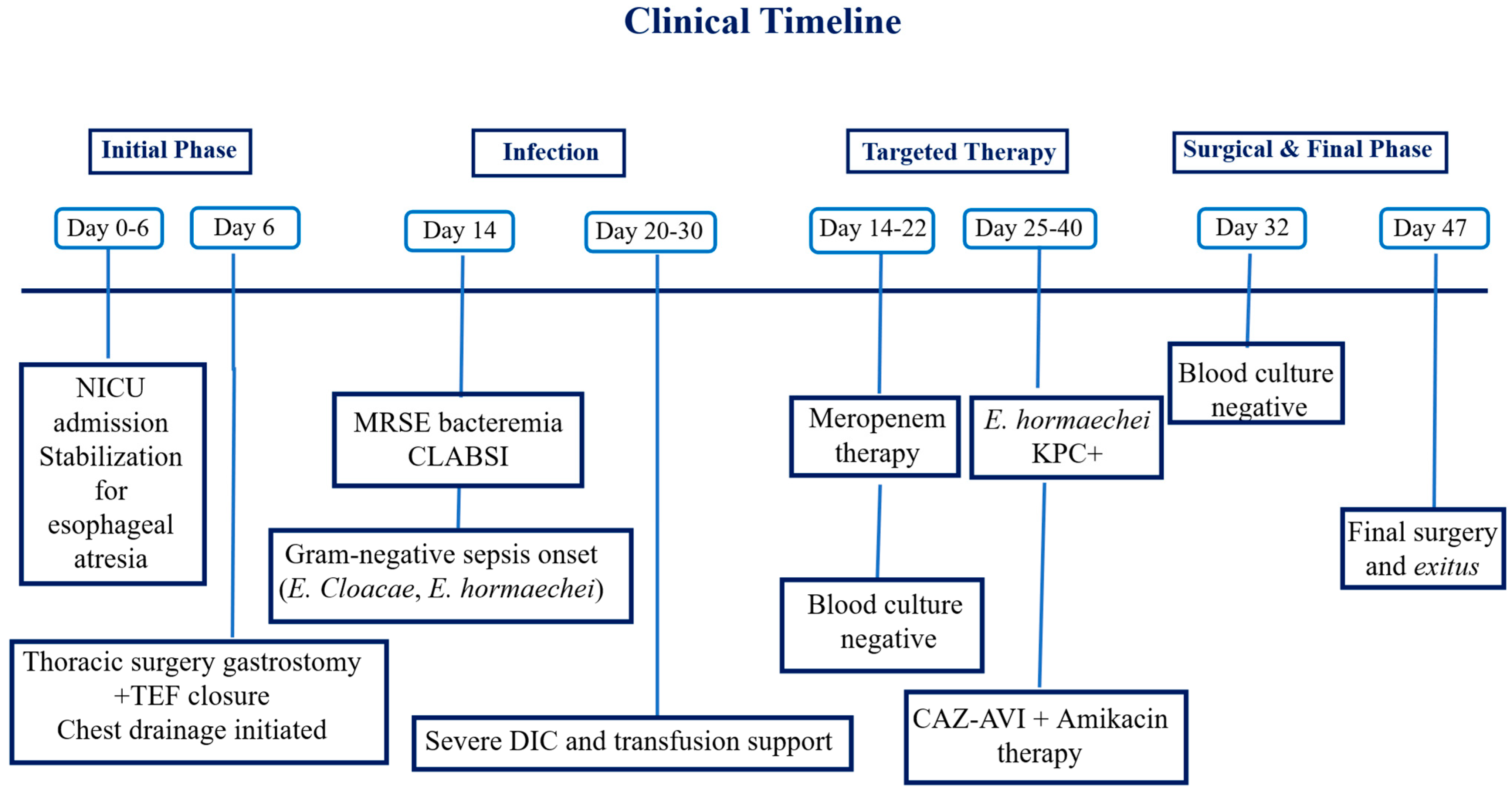
The clinical course, microbiological findings, and antimicrobial and surgical management are summarized in Figure 1.
Microbiological isolates and antimicrobial susceptibility are shown in Table 1.
Spectrum of in vitro activity of antibiotics against Enterobacter strains is shown in Table 2.

3. Discussion

This case illustrates three converging elements that are rarely documented together in neonates: complex foregut surgery with long-gap esophageal atresia, multidrug-resistant Enterobacterales sepsis including KPC-producing Enterobacter hormaechei, and rapid bloodstream sterilization after a dual antibiotic therapy with Amikacin and CAZ-AVI, consistent with neonatal exposure targets for time-dependent β-lactams [5,6,11,12,13]. The organism’s resistance profile aligned with avibactam’s spectrum against ESBLs/AmpC and serine carbapenemases (KPC/OXA-48), with explicit absence of metallo-β-lactamases, supporting a mechanism-concordant selection that is central to stewardship in the NICU setting [6,8,9]. Amikacin (15 mg/kg IV once daily) was administered alongside ceftazidime-avibactam in consideration of the very severe and rapidly worsening clinical conditions of the child, despite recent scoping reviews suggest comparable microbiological and clinical outcomes between ceftazidime-avibactam monotherapy and combination regimens against CRE, without evidence of superior efficacy for the latter [14,15]. Nevertheless, two consecutive blood cultures turned negative within 48–72 h of dual antibiotic therapy initiation and remained sterile thereafter, paralleled by falling CRP and IL-6 levels, meeting primary microbiological endpoints despite the patient’s subsequent noninfectious demise from hemorrhagic DIC after definitive reconstruction [8,9], as documented in neonatal cases of extensively drug-resistant and pan-resistant Klebsiella pneumoniae [16]. The dosing and infusion strategy of CAZ-AVI reflects neonatal dosing recommendations from the first multicenter study, which demonstrated that 25 mg/kg/dose (20/5 mg/kg) every 8 h, infused over 2 h, in both full-term ≤ 28 days of life and preterm neonates from 31 to 44 wks of postmenstrual age (PMA), and a higher 37.5 mg/kg/dose (30/7.5 mg/kg) regimen in full-term neonates > 28 days of life and preterms with PMA > 44 wks, provides a rational template for neonatal bloodstream infections [11]. This data is consistent with successful off-label CAZ-AVI use reported in premature infants with multidrug-resistant Klebsiella pneumoniae infection [15] and pandrug-resistant infections [17]. Within older pediatric and adult evidence, pooled phase 3 analyses and a focused meta-analysis in bacteremia and nosocomial pneumonia show that CAZ-AVI delivers robust microbiological responses against non-MBL β-lactamase producers and it is associated with improved clinical cure and reduced mortality in bacteremia compared with alternative regimens, which strengthens confidence when translating to carefully selected neonatal cases with matching mechanisms and susceptibilities [8,9,10]. In this infant, alternative actives (e.g., meropenem-vaborbactam, ceftolozane-tazobactam, colistin) were documented in vitro, but CAZ-AVI was prioritized for direct KPC coverage, β-lactam safety profile, and neonatal feasibility, reserving nephrotoxic or less characterized options as contingency, while ensuring device management and source control proceeded in parallel [5,6]. Two stewardship points are salient for NICUs: first, rapid carbapenemase genotyping (using molecular methods) combined with EUCAST-interpreted MICs (v. 15.0) can pivot management toward avibactam-containing regimens when KPC or OXA-48 are present, and MBLs are excluded; second, prolonged infusion coupled with preserved renal function helps secure pharmacodynamic exposure without dose reduction, particularly critical in high-inoculum postoperative sepsis [5,6,11,12]. The sustained airway colonization by Enterobacter hormaechei without relapse to bacteremia under CAZ-AVI underscores that ventilator-associated reservoirs may persist despite bloodstream clearance, reinforcing device care bundles and selective culture surveillance while avoiding reflex broadening in the absence of invasive infection. Importantly, early negative blood cultures should be read with context: in this case, biomarker convergence (CRP and IL-6 decline), negative serial blood cultures, and lack of peritoneal growth after laparotomy triangulated microbiological success despite persistent nonbacteremic morbidity from surgical and coagulopathic complications. The case also illustrates the evolving therapeutic landscape in neonatal MDR sepsis, where conventional empiric regimens are increasingly undermined by ESBL and CRE epidemiology; expert reviews and WHO-aligned guidance emphasize susceptibility-driven escalation and the judicious incorporation of newer β-lactam/β-lactamase inhibitors in sentinel situations, an approach mirrored here by mechanism-matched CAZ-AVI with documented clinical and laboratory response [3,5,6,7]. While single-patient inference is limited and confounded by concurrent surgeries, the temporal association between appropriately dosed CAZ-AVI and bloodstream sterilization, together with corroborating clinical literature and adult/pediatric outcome syntheses, offers pragmatic evidence supporting its off-label use when non-MBL Enterobacterales drive neonatal sepsis [8,9,11,12] and alternatives are compromised or less suitable for neonatal use and safety. Nevertheless, the concomitant administration of amikacin makes it impossible to definitively attribute the successful resolution of the sepsis to CAZ-AVI alone.
Ethical and regulatory guardrails remain essential—documented multidisciplinary review, parental informed consent, and adherence to local stewardship policies—particularly given that neonatal datasets are still maturing and treatment-emergent resistance to advanced inhibitors, though uncommon, has been reported in older cohorts. Practice implications include a simple NICU algorithm: confirm mechanism (exclude MBL), verify CAZ-AVI susceptibility with EUCAST MICs, start the correct dosage of the drug based on the gestational and postmenstrual age of the newborn [11] with renal-adjusted considerations, optimize device and source control, and trend paired microbiology with CRP and IL-6 to document concordant response while planning de-escalation or cessation on clearance and clinical stability [5,11,12,18].
Unfortunately, the newborn died in the hours immediately following the final surgery performed to repair the esophageal atresia via end-to-end anastomosis; the cause was complications (hemothorax) unrelated to infectious diseases, although the onset of such severe sepsis may have compromised an already impaired immunological status. In particular, the previous state of coagulopathy caused by the infection certainly could have predisposed the newborn to bleeding risk.

4. Materials and Methods

We present a case report that describes a late-preterm twin neonate with a long-gap esophageal atresia who developed MDR Enterobacter hormaechei sepsis responsive in vitro to CAZ-AVI, and details the off-label dosing, safety monitoring, and multidisciplinary decision-making to inform pragmatic NICU stewardship when susceptibility and clinical context warrant this agent. Serial culture tests were performed to determine the most appropriate and specific antibiotic therapy, initially as monotherapy and subsequently as dual therapy. In particular, the highly accurate BioFire FilmArray (Salt Lake City, UT, USA) was used to obtain the fastest possible results for blood cultures. Informed consent was obtained from the parents of the child involved in the study. The ethics committee approved the off-label use of the drugs.

5. Conclusions

This experience complements neonatal clinical data by adding real-world, mechanism-aligned bacteremia clearance in a <28-day infant, encouraging prospective registries and targeted trials to refine dosing, infusion strategies, and comparative effectiveness against other novel agents in the neonatal MDR sepsis domain. Further studies are, then, warranted.

Author Contributions

M.T. and V.N. co-conceived the study, coordinated clinical data collection and case reconstruction, performed the primary analysis of laboratory and microbiology data, and drafted the original manuscript, integrating the neonatal pharmacokinetic rationale for ceftazidime–avibactam and the NICU stewardship framework. M.C., V.I. and G.S. curated NICU documentation and provided critical revisions for accuracy and clarity. M.R.D.P. supervised the description of the surgical and perioperative pathway, verified clinical–surgical reporting, and contributed to critical manuscript revision. T.M.A.F. and B.R. supervised microbiological diagnostics, validated species-level identification and EUCAST-based susceptibility interpretation with carbapenemase genotyping, and critically reviewed methods and results to ensure mechanism-concordant therapy. L.P. managed project administration and submission, prepared figures (the EUCAST susceptibility table and a date-free clinical timeline), harmonized references, and contributed to the final editing. A.C., V.N. and M.G. provided senior supervision, contributed to conceptual framing and interpretation of infectious disease and stewardship aspects, ensured the accuracy of clinical support reporting, critically reviewed and approved the final manuscript. All authors have read and agreed to the published version of the manuscript.

Funding

This research received no external funding.

Informed Consent Statement

Written informed consent for off-label ceftazidime–avibactam was obtained from the parents after counseling on risks, benefits, alternatives, and neonatal pharmacokinetic considerations, in line with pediatric off-label prescribing guidance. The intervention and reporting were conducted with institutional ethics committee approval and in accordance with applicable standards for neonatal care and research ethics.

Data Availability Statement

Data supporting reported results can be found on Pubmed research.

Conflicts of Interest

The authors declare no conflicts of interest.

References

  1. Fleischmann, C.; Reichert, F.; Cassini, A.; Horner, R.; Harder, T.; Markwart, R.; Tröndle, M.; Savova, Y.; Kissoon, N.; Schlattmann, P.; et al. Global incidence and mortality of neonatal sepsis: A systematic review and meta-analysis. Arch. Dis. Child. 2021, 106, 745–752. [Google Scholar] [CrossRef] [Scilit] [PubMed]
  2. Wang, J.; Zhang, H.; Yan, J.; Zhang, T. Literature review on the distribution characteristics and antimicrobial resistance of bacterial pathogens in neonatal sepsis. J. Matern.-Fetal Neonatal Med. 2022, 35, 861–870. [Google Scholar] [CrossRef] [Scilit] [PubMed]
  3. Gray, J.W.; Ubhi, H.; Milner, P. Antimicrobial treatment of serious gram-negative infections in newborns. Curr. Infect. Dis. Rep. 2014, 16, 400. [Google Scholar] [CrossRef] [Scilit] [PubMed]
  4. Tsai, M.H.; Chu, S.M.; Hsu, J.F.; Lien, R.; Huang, H.R.; Chiang, M.C.; Fu, R.H.; Lee, C.W.; Huang, Y.C. Risk factors and outcomes for multidrug-resistant Gram-negative bacteremia in the NICU. Pediatrics 2014, 133, e322–e329. [Google Scholar] [CrossRef] [Scilit] [PubMed]
  5. Darlow, C.A.; da Costa, R.M.A.; Ellis, S.; Franceschi, F.; Sharland, M.; Piddock, L.; Das, S.; Hope, W. Potential Antibiotics for the Treatment of Neonatal Sepsis Caused by Multidrug-Resistant Bacteria. Paediatr. Drugs 2021, 23, 465–484. [Google Scholar] [CrossRef] [Scilit] [PubMed]
  6. Bassetti, M.; Garau, J. Current and future perspectives in the treatment of multidrug-resistant Gram-negative infections. J. Antimicrob. Chemother. 2021, 76, iv23–iv37. [Google Scholar] [CrossRef] [Scilit] [PubMed]
  7. Fuchs, A.; Bielicki, J.; Mathur, S.; Sharland, M.; Van Den Anker, J.N. Reviewing the WHO guidelines for antibiotic use for sepsis in neonates and children. Paediatr. Int. Child Health 2018, 38, S3–S15. [Google Scholar] [CrossRef] [Scilit] [PubMed]
  8. Torres, A.; Wible, M.; Tawadrous, M.; Irani, P.; Stone, G.G.; Quintana, A.; Debabov, D.; Burroughs, M.; Bradford, P.A.; Kollef, M. Efficacy and safety of ceftazidime/avibactam in patients with infections caused by β-lactamase-producing Gram-negative pathogens: A pooled analysis from the Phase 3 clinical trial programme. J. Antimicrob. Chemother. 2023, 78, 2672–2682. [Google Scholar] [CrossRef] [Scilit] [PubMed]
  9. Shields, R.K.; Horcajada, J.P.; Kamat, S.; Irani, P.M.; Tawadrous, M.; Welte, T. Ceftazidime-Avibactam in the Treatment of Patients with Bacteremia or Nosocomial Pneumonia: A Systematic Review and Meta-analysis. Infect. Dis. Ther. 2024, 13, 1639–1664. [Google Scholar] [CrossRef] [Scilit] [PubMed]
  10. Bradley, J.S.; Broadhurst, H.; Cheng, K.; Mendez, M.; Newell, P.; Prchlik, M.; Stone, G.G.; Talley, A.K.; Tawadrous, M.; Wajsbrot, D.; et al. Safety and Efficacy of Ceftazidime-Avibactam Plus Metronidazole in the Treatment of Children ≥ 3 Months to <18 Years with Complicated Intra-Abdominal Infection: Results from a Phase 2, Randomized, Controlled Trial. Pediatr. Infect. Dis. J. 2019, 38, 816–824. [Google Scholar] [CrossRef] [Scilit] [PubMed]
  11. Bradley, J.; Roilides, E.; Tawadrous, M.; Yan, J.L.; Soto, E.; Stone, G.G.; Kamat, S.; Irani, P.; England, R. Pharmacokinetics and Safety of Ceftazidime-Avibactam in Neonates and Young Infants: A Phase 2a, Multicenter Prospective Trial. J. Pediatr. Infect. Dis. Soc. 2025, 14, piaf028. [Google Scholar] [CrossRef] [Scilit] [PubMed]
  12. Ftergioti, A.; Degli Antoni, M.; Kontou, A.; Kourti, M.; Pantzartzi, K.; Zarras, C.; Agakidou, E.; Sarafidis, K.; Roilides, E.; Iosifidis, E. Off-label Use of Ceftazidime/Avibactam in Neonatal Intensive Care Unit: A Real-life Experience and Literature Review. Pediatr. Infect. Dis. J. 2024, 43, e149–e154. [Google Scholar] [CrossRef] [Scilit] [PubMed]
  13. Evans, L.; Rhodes, A.; Alhazzani, W.; Antonelli, M.; Coopersmith, C.M.; French, C.; Machado, F.R.; Mcintyre, L.; Ostermann, M.; Prescott, H.C.; et al. Surviving sepsis campaign: International guidelines for management of sepsis and septic shock 2021. Intensive Care Med. 2021, 47, 1181–1247. [Google Scholar] [CrossRef] [Scilit] [PubMed] [PubMed Central]
  14. Aslan, A.T.; Ezure, Y.; Horcajada, J.P.; Harris, P.N.A.; Paterson, D.L. In vitro, in vivo and clinical studies comparing the efficacy of ceftazidime-avibactam monotherapy with ceftazidime-avibactam-containing combination regimens against carbapenem-resistant Enterobacterales and multidrug-resistant Pseudomonas aeruginosa isolates or infections: A scoping review. Front. Med. 2023, 10, 1249030. [Google Scholar] [CrossRef] [Scilit] [PubMed] [PubMed Central]
  15. Nascimento, A.D.S.; Passaro, M.F.; Silva, P.S.S.; Rodriguez, S.F.; Martins, M.K.; Oliveira, S.C.P.; Moriel, P.; Visacri, M.B. Off-Label Use of Ceftazidime-Avibactam in a Premature Infant with Multidrug-Resistant Klebsiella pneumoniae Infection: A Case Report. J. Pharm. Pract. 2023, 36, 1020–1025. [Google Scholar] [CrossRef] [Scilit] [PubMed]
  16. Iosifidis, E.; Chorafa, E.; Agakidou, E.; Kontou, A.; Violaki, A.; Volakli, E.; Christou, E.I.; Zarras, C.; Drossou-Agakidou, V.; Sdougka, M.; et al. Use of Ceftazidime-avibactam for the Treatment of Extensively drug-resistant or Pan drug-resistant Klebsiella pneumoniae in Neonates and Children < 5 Years of Age. Pediatr. Infect. Dis. J. 2019, 38, 812–815. [Google Scholar] [CrossRef] [Scilit] [PubMed]
  17. Coskun, Y.; Atici, S. Successful Treatment of Pandrug-resistant Klebsiella pneumoniae Infection with Ceftazidime-avibactam in a Preterm Infant: A Case Report. Pediatr. Infect. Dis. J. 2020, 39, 854–856. [Google Scholar] [CrossRef] [Scilit] [PubMed]
  18. Notarbartolo, V.; Bacile, D.; Badiane, B.A.; Lo Leggio, A.; Angileri, V.M.; Duca, V.; Giuffrè, M. Use of RESERVE-Antibiotics in Newborns: Clinical Experience of Two NICUs in the Metropolitan Area of Palermo. Antibiotics 2026, 15, 231. [Google Scholar] [CrossRef] [Scilit] [PubMed]
Figure 1. Clinical timeline of MDR Gram-negative sepsis in a 35-week preterm neonate with long-gap esophageal atresia post-thoracotomy. TEF: tracheoesophageal fistula; CLABSI: central line-associated bloodstream infection; DIC: disseminated intravascular coagulation.
Antibiotics 15 00690 g001
Table 1. Microbiological isolates and antimicrobial susceptibility.
SpecimenMicrorganismSusceptible to Antibiotics
MICs (mg/L)
Resistant to Antibiotics
MICs (mg/L)
blood (DOL 9)Staphylococcus epidermidisDaptomycin 0.5
Linezolid 2
Teicoplanin 4
Tigecycline 0.25
Trimethoprim/Sulfamethoxazole ≤ 0.5/9.5
Vancomycin 2
Clindamycin > 1
Gentamicin > 4
Oxacillin > 2
blood (DOL 14)Staphylococcus epidermidisDaptomycin 1
Clindamycin ≤ 0.25
Linezolid 2
Teicoplanin ≤ 2
Tigecycline 0.5
Trimethoprim/Sulfamethoxazole ≤ 0.5/9.5
Vancomycin 1
Gentamicin > 4
Oxacillin > 2
catheter/chest drain (DOL 14)Enterobacter hormaechei (ESBL/AmpC)Amikacin ≤ 4
Ceftazidime-avibactam 0.5/4
Ceftolozane-tazobactam 2/4
Colistin ≤ 1
Meropenem ≤ 0.125
Ampicillin > 16
Cefotaxime > 4
Ceftazidime > 16
Gentamicin > 4
Piperacillin-tazobactam 32/4
Trimethoprim/Sulfamethoxazole > 8/152
blood (DOL 19)Enterobacter cloacae (ESBL/CTX-M)Amikacin ≤ 4
Ceftazidime-avibactam 0.5/4
Ceftolozane-tazobactam 1/4
Colistin ≤ 0.5
Meropenem-vaborbactam ≤ 2/8
Meropenem ≤ 0.125
Ampicillin > 8
Ceftazidime > 16
Ciprofloxacin > 1
Gentamicin > 4
Piperacillin-tazobactam 32/4
Trimethoprim/Sulfamethoxazole > 4/76
central venous catheter (DOL 20)Enterobacter cloacae (ESBL/CTX-M)the same as abovethe same as above
blood (DOL 22)negative
blood (DOL 25)Enterobacter hormaechei (KPC-producing CRE)Amikacin ≤ 4
Ceftazidime-avibactam 1/4
Colistin 1
Meropenem-vaborbactam ≤ 2/8
Ampicillin > 8
Ceftazidime > 16
Ceftolozane-tazobactam > 4/4
Ciprofloxacin > 1
Gentamicin > 4
Meropenem > 16
Piperacillin-tazobactam > 64/4
Trimethoprim/Sulfamethoxazole > 4/76
blood (DOL 25)Enterobacter hormaechei (KPC-producing CRE)the same as abovethe same as above
endotracheal tube (DOL 32)Enterobacter hormaechei (ESBL)Amikacin ≤ 4
Ceftazidime-avibactam 0.5/4
Ceftolozane-tazobactam ≤ 0.5/4
Meropenem-vaborbactam ≤ 2/8
Meropenem ≤ 0.125
Ampicillin > 8
Ceftazidime 16
Ciprofloxacin > 1
Gentamicin > 4
Piperacillin-tazobactam 16/4
Trimethoprim/Sulfamethoxazole > 4/76
blood (DOL 32)negative
central venous catheter (DOL 32)negative
blood (DOL 35)negative
DOL: day of life.
Table 2. Spectrum of in vitro activity of antibiotics against Enterobacter strains isolated from the patient. R, resistant; S, susceptible; -, Not tested.
Antibiotic ClassE. cloacae
(ESBL/CTX-M)
E. hormaechei
(ESBL/AmpC)
E. hormaechei
(KPC-CRE)
3rd/4th Gen CephalosporinsRRR
Ceftazidime-Avibactam (CAZ-AVI)SSS
Ceftolozane-Tazobactam (C/T)SR-
MeropenemSSR
Meropenem-VaborbactamS-S
Carbapenems (Imi/Ert)SSR
Piperacillin-TazobactamRRR
FluoroquinolonesRRR
ColistinSSS
Gentamicin-RR
AmikacinSSS
Disclaimer/Publisher’s Note: The statements, opinions and data contained in all publications are solely those of the individual author(s) and contributor(s) and not of MDPI and/or the editor(s). MDPI and/or the editor(s) disclaim responsibility for any injury to people or property resulting from any ideas, methods, instructions or products referred to in the content.