Exploring the Antifungal, Antibiofilm, and Wound Healing In Vitro Properties of N-(4-Methoxycinnamoyl)-Anthranilic Acid as a Supportive Strategy for Ocular Fungal Infections
 , ,
, ,  , , ,
, , ,  and
and 
Abstract
1. Introduction
2. Results
2.1. Antifungal Activity Against Candida Albicans and Non-Albicans Species
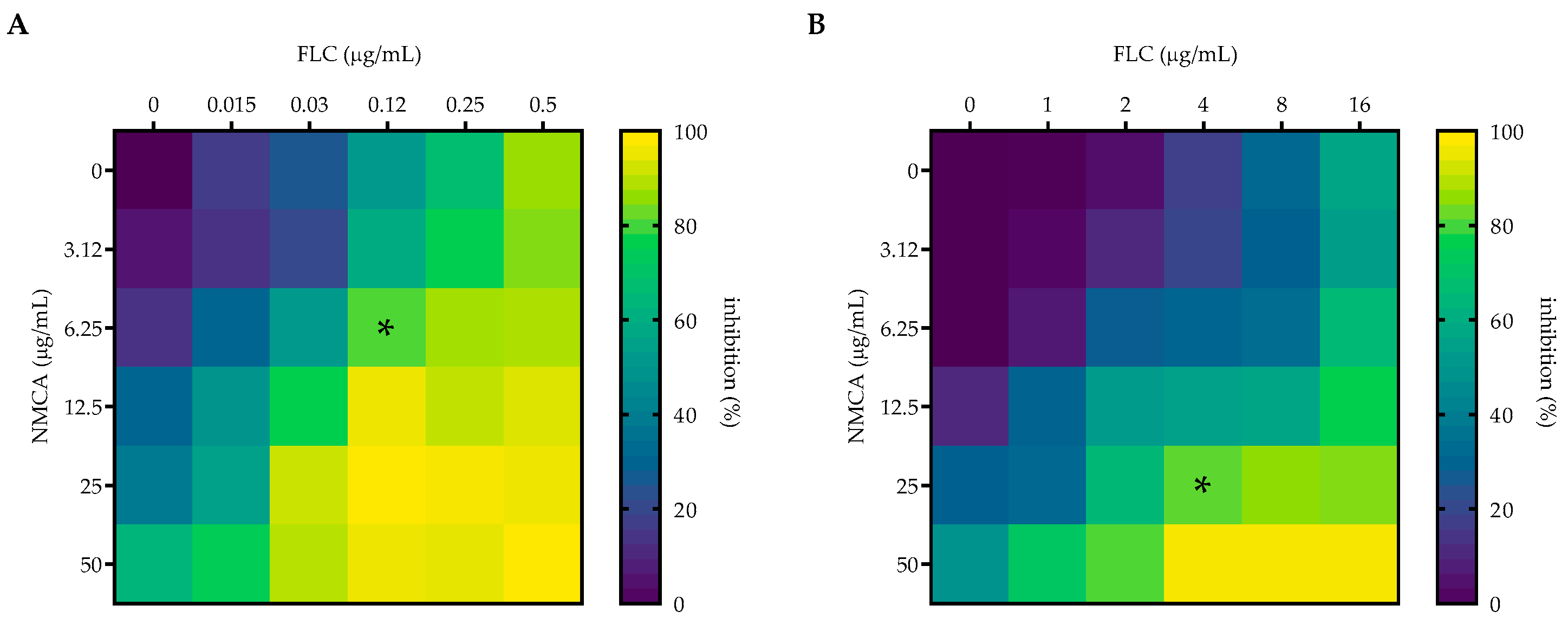
2.2. Checkerboard Assay: NMCA Synergizes with FLC Against the Two Fungal Pathogens
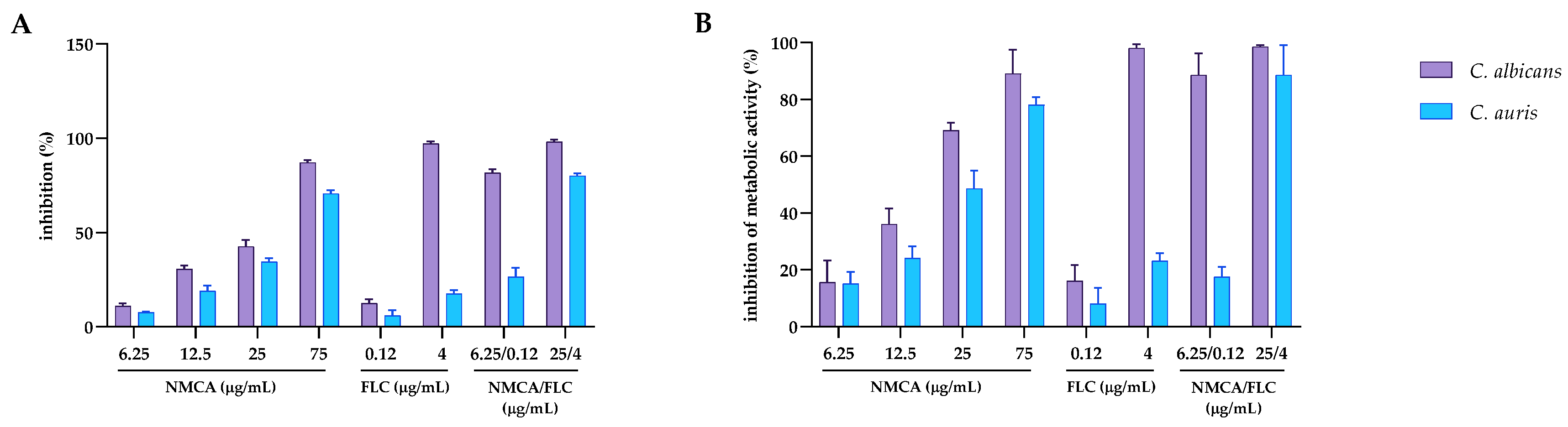
2.3. NMCA Exhibited Activity Against C. albicans and C. auris Biofilm Formation
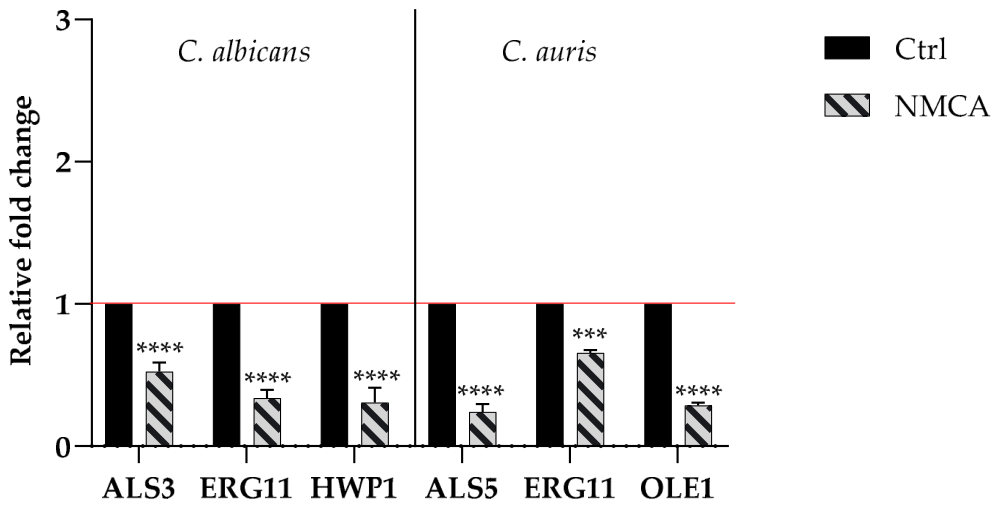
2.4. Effect of the Two Drugs on Gene Expression in C. albicans and C. auris
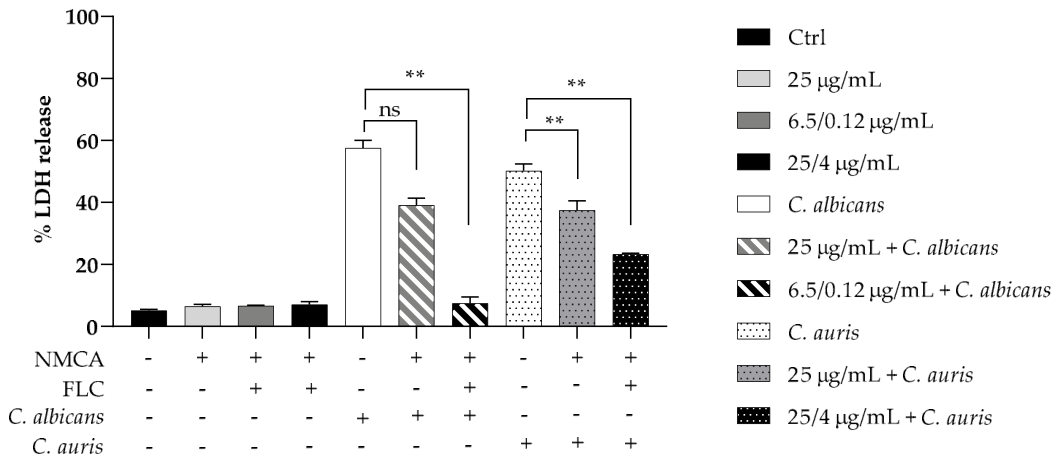
2.5. LDH Release
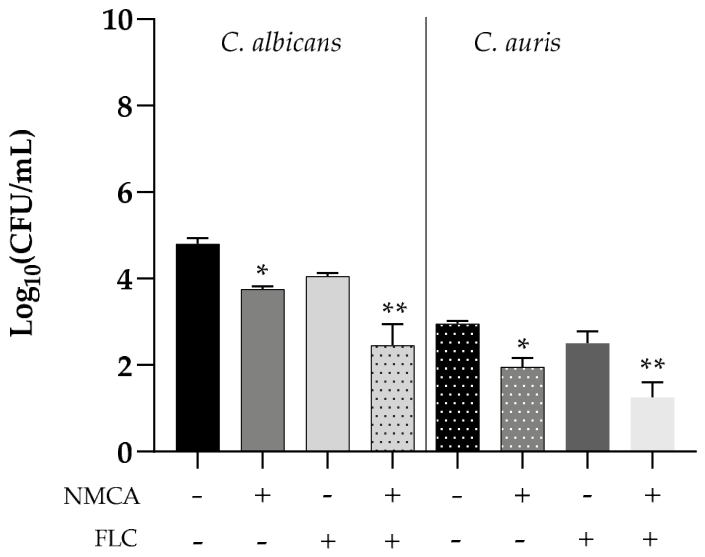
2.6. Evaluation of NMCA Invasion Capability
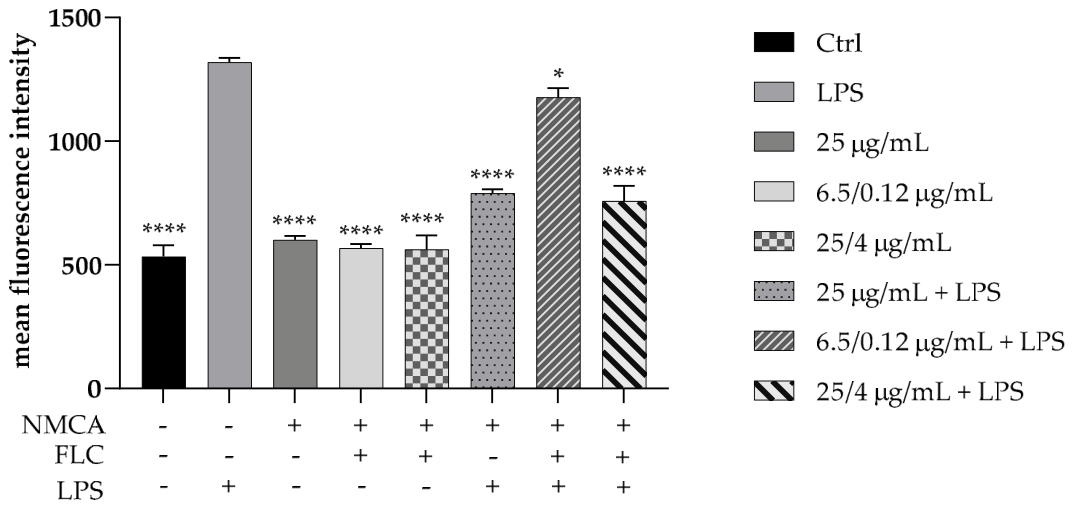
2.7. Evaluation of Intracellular Reactive Oxygen Species (ROS)
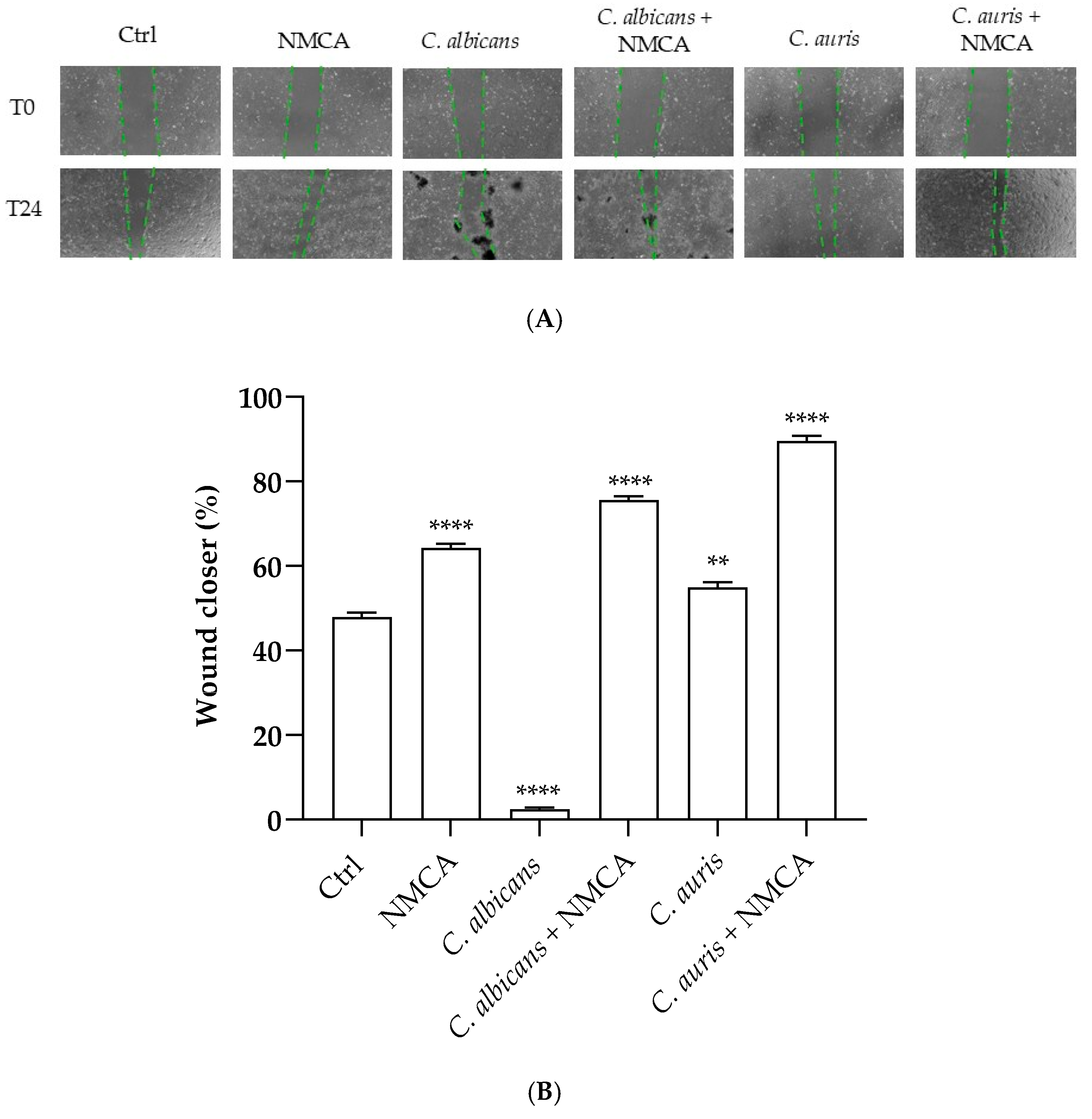
2.8. Wound Healing and Scratch Assay
3. Discussion
4. Materials and Methods
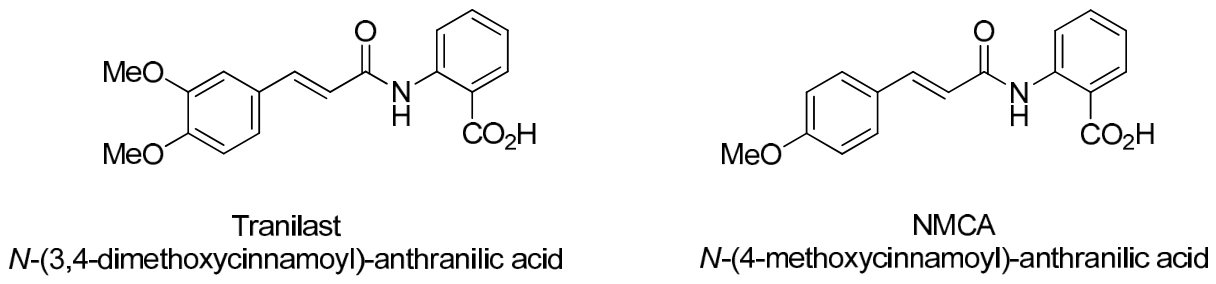
4.1. Tested Substance
4.2. Yeast Strains
4.3. Determination of Minimum Inhibitory Concentration (MIC) and Minimum Fungicidal Concentration (MFC)
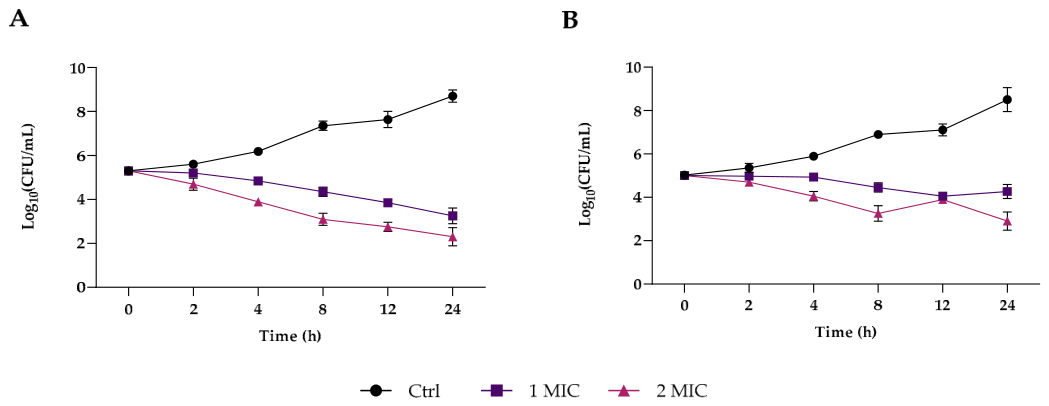
4.4. Time-Killing Assay Against C. albicans and C. auris
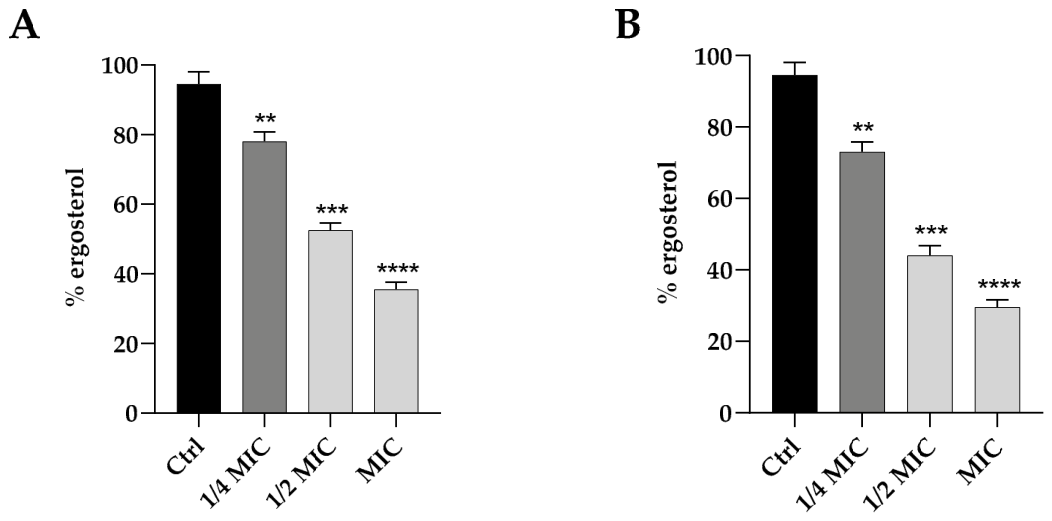
4.5. Determination of Ergosterol Content
4.6. Checkerboard Assay
4.7. Examination of Ability to Inhibit Biofilm Formation in Cultures of C. albicans and Non-albicans Candida
4.8. Detection of Biofilm Gene Expression by RT-qPCR
4.9. Cell Culture Conditions
4.10. Lactate Dehydrogenase (LDH) Release Assay
4.11. Effect of NMCA on the Invasion Ability of Microbial Cells to HaCat
4.12. Assessment of Intracellular Reactive Oxygen Species (ROS)
4.13. Cell Migration Assay-Wound Closure
5. Conclusions
Supplementary Materials
Author Contributions
Funding
Institutional Review Board Statement
Informed Consent Statement
Data Availability Statement
Conflicts of Interest
Abbreviations
| ALS3 | Agglutinin-Like Sequence 3 |
| ALS5 | Agglutinin-Like Sequence 5 |
| ANOVA | Analysis of Variance |
| ATCC | American Type Culture Collection |
| cDNA | Complementary DNA |
| CFU | Colony Forming Units |
| CLSI | Clinical and Laboratory Standards Institute |
| CO2 | Carbon Dioxide |
| CV | Crystal Violet |
| DCFH-DA | 2′,7′-Dichlorofluorescein Diacetate |
| DMEM | Dulbecco’s Modified Eagle Medium |
| DSM | Deutsche Sammlung von Mikroorganismen |
| ERG11 | Lanosterol 14α-Demethylase Gene |
| FBS | Fetal Bovine Serum |
| FICI | Fractional Inhibitory Concentration Index |
| FLC | Fluconazole |
| HWP1 | Hyphal Wall Protein 1 |
| LDH | Lactate Dehydrogenase |
| LPS | Lipopolysaccharide |
| MFC | Minimum Fungicidal Concentration |
| MIC | Minimum Inhibitory Concentration |
| MIC80 | Minimum Inhibitory Concentration Causing 80% Inhibition |
| MOI | Multiplicity of Infection |
| MOPS | Morpholinopropanesulfonic Acid |
| NMCA | N-(4-Methoxycinnamoyl)-Anthranilic Acid |
| OD | Optical Density |
| OLE1 | Fatty Acid Desaturase Gene |
| PBS | Phosphate-Buffered Saline |
| RPMI | Roswell Park Memorial Institute Medium |
| ROS | Reactive Oxygen Species |
| RT-qPCR | Reverse Transcription Quantitative Polymerase Chain Reaction |
| XTT | 2,3-bis-(2-Methoxy-4-Nitro-5-Sulfophenyl)-2H-Tetrazolium-5-Carboxanilide |
| YPD | Yeast Extract Peptone Dextrose Medium |
References
- Denning, D.W. Global incidence and mortality of severe fungal disease. Lancet Infect. Dis. 2024, 24, e428–e438. [Google Scholar] [CrossRef]
- Fisher, M.C.; Alastruey-Izquierdo, A.; Berman, J.; Bicanic, T.; Bignell, E.M.; Bowyer, P.; Bromley, M.; Brüggemann, R.; Garber, G.; Cornely, O.A.; et al. Tackling the emerging threat of antifungal resistance to human health. Nat. Rev. Microbiol. 2022, 20, 557–571. [Google Scholar] [CrossRef]
- Kontoyiannis, D.P. Antifungal Resistance: An Emerging Reality and a Global Challenge. J. Infect. Dis. 2017, 216, S431–S435. [Google Scholar] [CrossRef]
- Bisen, A.C.; Sanap, S.N.; Agrawal, S.; Biswas, A.; Mishra, A.; Verma, S.K.; Singh, V.; Bhatta, R.S. Etiopathology, Epidemiology, Diagnosis, and Treatment of Fungal Keratitis. ACS Infect. Dis. 2024, 10, 2356–2380. [Google Scholar] [CrossRef] [PubMed]
- Petrillo, F.; Maione, A.; Spampinato, M.; Massa, L.D.; Guida, M.; Zarrelli, A.; Galdiero, E.; Longobardo, L. Antifungal and Antibiofilm Activities of 2-Aminobenzoic Acid Derivatives Against a Clinical Ocular Candida albicans Isolate for Biomedical Applications. Antibiotics 2025, 14, 432. [Google Scholar] [CrossRef]
- Gautam, M.; Lal, B.; Patel, S.; Mohan, R.R.; Barathi, A.; Yadav, N.; Verma, S.K.; Nyodu, R.; Sampath, A.; Koshti, D.; et al. An Emerging Global Threat of Mycotic Keratitis Caused by Uncommon Fungal Species: A Systematic Review and Meta-Analysis. Transl. Vis. Sci. Technol. 2025, 14, 4. [Google Scholar] [CrossRef]
- Lopes, J.P.; Lionakis, M.S. Pathogenesis and virulence of Candida albicans. Virulence 2022, 13, 89–121. [Google Scholar] [CrossRef]
- Silva, L.J.; Silva, C.R.; Sá, L.G.; Barroso, F.D.; Cândido, T.M.; Queiroz, H.A.; Almeida Moreira, L.E.; Baccallini, O.V.; Cavalcanti, B.C.; Silva, J.; et al. Antifungal activity of dexamethasone against fluconazole-resistant Candida albicans and its activity against biofilms. Future Microbiol. 2022, 17, 607–620. [Google Scholar] [CrossRef]
- Wang, S.; Pan, J.; Gu, L.; Wang, W.; Wei, B.; Zhang, H.; Chen, J.; Wang, H. Review of treatment options for a multidrug-resistant fungus: Candida auris. Med. Mycol. 2024, 62, myad127. [Google Scholar] [CrossRef] [PubMed]
- Parslow, B.Y.; Thornton, C.R. Continuing Shifts in Epidemiology and Antifungal Susceptibility Highlight the Need for Improved Disease Management of Invasive Candidiasis. Microorganisms 2022, 10, 1208. [Google Scholar] [CrossRef] [PubMed]
- Breazzano, M.P.; Tooley, A.A.; Godfrey, K.J.; Iacob, C.E.; Yannuzzi, N.A.; Flynn, H.W. Candida auris and endogenous panophthalmitis: Clinical and histopathological features. Am. J. Ophthalmol. Case Rep. 2020, 19, 100738. [Google Scholar] [CrossRef] [PubMed]
- Gómez-Gaviria, M.; Contreras-López, L.M.; Aguilera-Domínguez, J.I.; Mora-Montes, H.M. Strategies of Pharmacological Repositioning for the Treatment of Medically Relevant Mycoses. Infect. Drug Resist. 2024, 17, 2641–2658. [Google Scholar] [CrossRef]
- Retore, Y.I.; Lucini, F.; Pimentel, L.R.; de Oliveira, H.C.; Simionatto, S.; Rossato, L. Screening of the global health priority Box® reveals potential new disinfectants against the emerging multidrug-resistant pathogen Candida auris. Microb. Pathog. 2024, 194, 106828. [Google Scholar] [CrossRef]
- Maione, A.; Imparato, M.; Cirillo, L.; Guida, M.; Galdiero, E.; Zarrelli, A.; Longobardo, L. Sustainable Synthesis of Novel Hydroxylated Tranilast Analogues and Their Bioactivities. Molecules 2026, 31, 1340. [Google Scholar] [CrossRef] [PubMed]
- Reginatto, P.; Agostinetto, G.J.; Fuentefria, R.D.N.; Marinho, D.R.; Pizzol, M.D.; Fuentefria, A.M. Eye fungal infections: A mini review. Arch. Microbiol. 2023, 205, 236. [Google Scholar] [CrossRef] [PubMed]
- Kumar, D.; Kumar, A. Molecular Determinants Involved in Candida albicans Biofilm Formation and Regulation. Mol. Biotechnol. 2024, 66, 1640–1659. [Google Scholar] [CrossRef]
- Brilhante, R.S.N.; Brasil, J.A.; Oliveira, J.S.; Pereira, V.S.; Pereira-Neto, W.A.; Sidrim, J.J.C.; Rocha, M.F.G. Diclofenac exhibits synergism with azoles against planktonic cells and biofilms of Candida tropicalis. Biofouling 2020, 36, 528–536. [Google Scholar] [CrossRef]
- Alem, M.A.; Douglas, L.J. Effects of aspirin and other nonsteroidal anti-inflammatory drugs on biofilms and planktonic cells of Candida albicans. Antimicrob. Agents Chemother. 2004, 48, 41–47. [Google Scholar] [CrossRef]
- Yazdanpanah, S.; Shafiekhani, M.; Emami, M.; Khodadadi, H.; Pakshir, K.; Zomorodian, K. Exploring the anti-biofilm and gene regulatory effects of anti-inflammatory drugs on Candida albicans. Naunyn-Schmiedeberg’s Arch. Pharmacol. 2025, 398, 7263–7272. [Google Scholar] [CrossRef]
- Su, L.; Li, Y.; Liu, Y.; Ma, R.; Liu, Y.; Huang, F.; An, Y.; Ren, Y.; van der Mei, H.C.; Busscher, H.J.; et al. Antifungal-Inbuilt Metal–Organic-Frameworks Eradicate Candida albicans Biofilms. Adv. Funct. Mater. 2020, 30, 2000537. [Google Scholar] [CrossRef]
- Pereira, R.; Dos Santos Fontenelle, R.O.; de Brito, E.H.S.; de Morais, S.M. Biofilm of Candida albicans: Formation, regulation and resistance. J. Appl. Microbiol. 2021, 131, 11–22. [Google Scholar] [CrossRef]
- Gao, M.; Wang, H.; Zhu, L. Quercetin Assists Fluconazole to Inhibit Biofilm Formations of Fluconazole-Resistant Candida albicans in In Vitro and In Vivo Antifungal Managements of Vulvovaginal Candidiasis. Cell. Physiol. Biochem. 2016, 40, 727–742. [Google Scholar] [CrossRef]
- da Silva, C.R.; de Andrade Neto, J.B.; de Sousa Campos, R.; Figueiredo, N.S.; Sampaio, L.S.; Magalhães, H.I.F.; Cavalcanti, B.C.; Gaspar, D.M.; de Andrade, G.M.; Lima, I.S.P.; et al. Synergistic effect of the flavonoid catechin, quercetin, or epigallocatechin gallate with fluconazole induces apoptosis in Candida tropicalis resistant to fluconazole. Antimicrob. Agents Chemother. 2014, 58, 1468–1478. [Google Scholar] [CrossRef] [PubMed]
- Liu, W.; Li, L.P.; Zhang, J.D.; Li, Q.; Shen, H.; Chen, S.M.; He, L.J.; Yan, L.; Xu, G.T.; An, M.M.; et al. Synergistic antifungal effect of glabridin and fluconazole. PLoS ONE 2014, 9, e103442. [Google Scholar] [CrossRef] [PubMed]
- Hoyer, L.L.; Green, C.B.; Oh, S.H.; Zhao, X. Discovering the secrets of the Candida albicans agglutinin-like sequence (ALS) gene family—A sticky pursuit. Med. Mycol. 2008, 46, 1–15. [Google Scholar] [CrossRef]
- Ribeiro, S.; Moraes, M.C.; Scoaris, D.O.; Madeira, J.; Fialho, S.L.; Moreira, C.P.S. Rosemary Essential Oil Microemulsion for Fungal Keratitis Treatment. Chem. Biodivers. 2025, 22, e02124. [Google Scholar] [CrossRef] [PubMed]
- Saeedi-Boroujeni, A.; Mahmoudian-Sani, M.R.; Nashibi, R.; Houshmandfar, S.; Tahmaseby Gandomkari, S.; Khodadadi, A. Tranilast: A potential anti-Inflammatory and NLRP3 inflammasome inhibitor drug for COVID-19. Immunopharmacol. Immunotoxicol. 2021, 43, 247–258. [Google Scholar] [CrossRef]
- Zarrelli, A.; Longobardo, L. Eco-Friendly Synthesis of 2-Styryl-benzo[d][1,3]oxazin-4-ones from N-Cinnamoyl-Anthranilic Acids. Molecules 2026, 31, 709. [Google Scholar] [CrossRef]
- CLSI Standard M27; Reference Method for Broth Dilution Antifungal Susceptibility Testing of Yeasts. Clinical and Laboratory Standards Institute: Malvern, PA, USA, 2017.
- Buonanno, A.; Salvatore, M.M.; Feola, A.; Siciliano, A.; Bellavita, R.; Imbò, L.E.; Guida, M.; Andolfi, A.; Nicoletti, R.; Maione, A.; et al. Sphaeropsidin A Loaded in Liposomes to Reduce Its Cytotoxicity and Preserve Antifungal Activity Against Candida auris. Molecules 2024, 29, 5949. [Google Scholar] [CrossRef]
- Rahimi-Verki, N.; Shapoorzadeh, A.; Razzaghi-Abyaneh, M.; Atyabi, S.M.; Shams-Ghahfarokhi, M.; Jahanshiri, Z.; Gholami-Shabani, M. Cold atmospheric plasma inhibits the growth of Candida albicans by affecting ergosterol biosynthesis and suppresses the fungal virulence factors in vitro. Photodiagn. Photodyn. Ther. 2016, 13, 66–72. [Google Scholar] [CrossRef]
- Livak, K.J.; Schmittgen, T.D. Analysis of relative gene expression data using real-time quantitative PCR and the 2−ΔΔCT Method. Methods 2001, 25, 402–408. [Google Scholar] [CrossRef] [PubMed]



| NMCA (µg mL−1) | FLC (µg mL−1) | |||
|---|---|---|---|---|
| MIC80 | MFC | MIC | MFC | |
| C. albicans ATCC 90028 | 75 | >200 | 1 | nd |
| C. auris DSM 21092 | 100 | >200 | 32 | nd |
Disclaimer/Publisher’s Note: The statements, opinions and data contained in all publications are solely those of the individual author(s) and contributor(s) and not of MDPI and/or the editor(s). MDPI and/or the editor(s) disclaim responsibility for any injury to people or property resulting from any ideas, methods, instructions or products referred to in the content. |
© 2026 by the authors. Licensee MDPI, Basel, Switzerland. This article is an open access article distributed under the terms and conditions of the Creative Commons Attribution (CC BY) license.
Share and Cite
Petrillo, F.; Buonanno, A.; Maione, A.; Longobardo, L.; Reibaldi, M.; Galdiero, E.; Zarrelli, A.; Guida, M. Exploring the Antifungal, Antibiofilm, and Wound Healing In Vitro Properties of N-(4-Methoxycinnamoyl)-Anthranilic Acid as a Supportive Strategy for Ocular Fungal Infections. Antibiotics 2026, 15, 597. https://doi.org/10.3390/antibiotics15060597
Petrillo F, Buonanno A, Maione A, Longobardo L, Reibaldi M, Galdiero E, Zarrelli A, Guida M. Exploring the Antifungal, Antibiofilm, and Wound Healing In Vitro Properties of N-(4-Methoxycinnamoyl)-Anthranilic Acid as a Supportive Strategy for Ocular Fungal Infections. Antibiotics. 2026; 15(6):597. https://doi.org/10.3390/antibiotics15060597
Chicago/Turabian StylePetrillo, Francesco, Annalisa Buonanno, Angela Maione, Luigi Longobardo, Michele Reibaldi, Emilia Galdiero, Armando Zarrelli, and Marco Guida. 2026. "Exploring the Antifungal, Antibiofilm, and Wound Healing In Vitro Properties of N-(4-Methoxycinnamoyl)-Anthranilic Acid as a Supportive Strategy for Ocular Fungal Infections" Antibiotics 15, no. 6: 597. https://doi.org/10.3390/antibiotics15060597
APA StylePetrillo, F., Buonanno, A., Maione, A., Longobardo, L., Reibaldi, M., Galdiero, E., Zarrelli, A., & Guida, M. (2026). Exploring the Antifungal, Antibiofilm, and Wound Healing In Vitro Properties of N-(4-Methoxycinnamoyl)-Anthranilic Acid as a Supportive Strategy for Ocular Fungal Infections. Antibiotics, 15(6), 597. https://doi.org/10.3390/antibiotics15060597