Article

Genetic and Phenotypic Characterization of a Salmonella Enteritidis ST11 Clinical Isolate Carrying blaNDM-13 in Jiaxing City, China

1
Jiaxing Center for Disease Control and Prevention, Jiaxing 314050, China
2
Pediatric Department, Affiliated Hospital of Jiaxing University, Jiaxing 314000, China
*
Authors to whom correspondence should be addressed.
These authors contributed equally to this work.
Antibiotics 2026, 15(4), 381; https://doi.org/10.3390/antibiotics15040381
Submission received: 22 February 2026 / Revised: 27 March 2026 / Accepted: 3 April 2026 / Published: 9 April 2026
(This article belongs to the Special Issue Antibiotic Resistance Genes: Mechanisms, Evolution and Dissemination)

Abstract

Background/Objectives: Multidrug-resistant Salmonella enterica serovar Enteritidis, especially those isolated from humans, remains a public concern. In the present study, S. Enteritidis strain 31404 was obtained clinically from a fecal sample of a fifteen-year-old girl, who was positive for blaNDM-13. Methods: Antibiotic susceptibility testing and whole genome sequencing were performed. Core genome MLST and hierarchical clustering (HierCC) were performed using EnteroBase. Population structure analysis of 57 S. Enteritidis isolates collected between 2023 and 2025 in Jiaxing city was conducted. A comparative structure analysis of blaNDM-13-positive plasmids was also performed. Results: S. Enteritidis strain 31404 was resistant to 13 antimicrobial agents. We found that strain 31404 belonged to ST11 and carried resistance genes, such as blaNDM-13, blaCTX-M-14, bleMBL, fosA3, qnrS, and tet (A). blaNDM-13 was located on an IncI1-I (α) plasmid designated as p31404-NDM13. S. Enteritidis isolate 31404 was closely related to PNUSAS514422, which was isolated from the United States in 2025. Comparative genetic environment related to blaNDM-13-positive plasmids available in the NCBI database indicates that ΔTn125-mediated contexts were commonly associated with blaNDM-13. IS1294 (IS91 family), which replaces ISAba125, is likely to mobilize blaNDM-13. Conclusions: The findings in this study provide insights into the molecular characterization and diversification of blaNDM-13. The identification of blaNDM-13-containing transferable plasmids in different serotypes of Salmonella isolates (such as S. Rissen, S. Typhimurium, and S. Enteritidis) in different cities in China highlights the risk of the spread of carbapenem-resistant genes among Salmonella isolates.

1. Introduction

Salmonella infection is a major public health concern and contributes substantially to the global burden of foodborne disease. Salmonella causes about 95 million infections, resulting in approximately 150,000 deaths globally [1]. Over 2600 Salmonella serotypes have been identified. For Non-Typhoid Salmonella (NTS), Salmonella Enteritidis (S. Enteritidis) spreads in a pandemic-like manner [2] and together with S. enterica serovar Typhimurium, consistently ranks among the top two serotypes associated with human disease worldwide [3]. The clinical outcome of salmonellosis from S. Enteritidis infection typically causes gastrointestinal-related symptoms. Children, senior citizens, and people with impaired immunity are populations that are more vulnerable to unfavorable consequences [4].
Many virulence factors play diverse roles in the pathogenesis of Salmonella infections. Salmonella pathogenicity islands (SPIs) are genomic clusters in chromosomes that increase infection risks and lead to severe disease manifestations [5]. It has been estimated that Salmonella causes nearly 100,000 antimicrobial-resistant infections annually in the United States [6]. The serious adverse effects and consequences of antibiotic-resistant Salmonella infections are bloodstream infections, meningitis, septicemia, and high hospitalization and fatality rates [7,8]. The multidrug resistance (MDR) of Salmonella has raised significant concerns worldwide because of rising morbidity, mortality, and economic costs [9]. In the United States, an increased incidence of resistance to clinically important antimicrobials (ampicillin and ceftriaxone) or nonsusceptibility to ciprofloxacin has been identified among S. Enteritidis from 2015 to 2016, compared with the incidence from 2004 to 2008 [10]. The World Health Organization has declared that antibiotic-resistant S. Enteritidis is a critical-priority bacterium [11].
Plasmid-mediated resistance to third- and fourth-line antibiotics, including colistin (mcr genes) [12], β-lactam antibiotics, and azithromycin (mph or erm (B) genes) in Salmonella remained a public health issue. β-lactamases, the major resistance determinant for β-lactam antibiotics in Gram-negative bacteria, are divided into Ambler classes A, B, C, and D based on their protein sequence homology [13]. Class B β-lactamases, the metallo-β-lactamases (MBLs), can hydrolyze substrates through one or two essential zinc ions in the active-site groove. MBLs, including IMP-type [14], VIM-type [15], and NDM-type [16] enzymes, have been among the most prevalent carbapenemases among carbapenem-resistant Enterobacteriaceae around the world [17].
blaNDM, the class B β-lactamases, can hydrolyze all classes of β-lactam antibiotics (penicillins, cephalosporins, and carbapenems), except monobactams [18]. blaNDM-1 was initially isolated from a carbapenem-resistant Klebsiella pneumoniae from an Indian hospital in 2009 [16]. Since then, up to 90 distinct New Delhi metallo-β-lactamase (NDM) variants have been identified globally [19]. In Salmonella, the highest number of reports corresponds to NDM-1, which has been detected in a variety of serovars, such as Senftenberg [20], Stanley [21], Agona [22], and Mbandaka [23] from clinical isolates and Indiana [24] and Corvallis [25] from animals and foods. The monophasic variant of S. Typhimurium [26], S. Idikan, and S. London [27] proved to be positive for the blaNDM-5 gene. Additionally, an extensively drug-resistant S. Indiana strain harbored chromosomal blaNDM-9 [28]. NDM-13 has two amino acid substitutions (D95N and M154L) compared with NDM-1, resulting in the increased hydrolytic activity against cefotaxime [29]. NDM-13 was first identified in the chromosome of a multidrug-resistant Escherichia coli (E. coli) clinical isolate in Nepal. After that, blaNDM-13 was also found on the plasmids of clinically isolated Enterobacteriaceae. To date, NDM-13 has been identified in five E. coli strains obtained from Nepal (n = 1) [29], China (n = 3), and Korea (n = 1) [30], and one S. Rissen isolate [31], and one S. Typhimurium ST19 isolate [32].
β-lactamase-encoding genes can be acquired horizontally by different means, but mainly by plasmid acquisition. The blaNDM-1 gene in Salmonella previously appears on the IncA/C-, IncL/M-, IncX3-, and IncHI2-type plasmids. Different types, including IncFII, IncHI2, IncFIB, and IncX3, were also reported to be positive for blaNDM-5 [33,34]. Salmonella strains carrying blaNDM-13 are rare, but IncI1 plasmids carrying blaNDM-13 have still been discovered in S. Rissen [31] and S. Typhimurium ST19 [32].
Various studies demonstrated an increase in first-line agents, such as third-generation cephalosporins and fluoroquinolones, in Salmonella [35]. In 2017, the WHO considered d fluoroquinolones-resistant Salmonella spp. as pathogens for which novel antibiotics are urgently required [36]. In Enterobacterales, including Salmonella, quinolone resistance typically develops from the accumulation of chromosomal mutations in the quinolone resistance-determining region (QRDR) (gyrA, gyrB, parC, and parE genes) and plasmid-mediated quinolone resistance (PMQR) mechanisms. Three types of PMQR mechanisms have been identified: (1) quinolone resistance proteins (Qnr), (2) aac (6′)-Ib-cr resistance mechanism, and (3) plasmid-mediated resistance by OqxAb and QepA efflux systems [37,38,39]. The Qnr, including qnrA, qnrB, qnrC, qnrD, qnrE, qnrS, and qnrVC, was the major PMQR gene among NTS human isolates [40]. The qnr genes and extended-spectrum β-lactams (ESBLs) resistance gene usually coexist on the same plasmid, as also identified in some studies, which may pose a significant threat to antimicrobial therapy [41,42].
In the present study, an MDR Salmonella strain 31404 was found to be positive for blaNDM-1 and belonged to S. Enteritidis. Detection of carbapenemase resistance in S. Enteritidis is a cause of concern, as this serotype remains the most common S. enterica serovar in many parts of the world. Hence, we characterized the antibiotic resistance of strain 31404 using phenotypic susceptibility data. Whole-genome sequencing (WGS) was used to analyze the population structure of S. Enteritidis isolates collected in Jiaxing city, China. Comparative genetic analysis was also used to clarify the evolution of blaNDM-13-positive plasmids in different species.

2. Results

2.1. General Features of Strain 31404

Strain 31404 was identified as S. Enteritidis ST11 by multilocus sequence typing after WGS analysis. We found that this strain had MDR against 13 antimicrobial agents belonging to six distinct classes, excluding susceptibility to azithromycin, gentamicin, amikacin, tigecycline, trimethoprim-sulfamethoxazole, chloramphenicol, and florfenicol and intermediate resistance to imipenem, meropenem, polymyxin, and colistin (Table 1). In addition to blaNDM-13, strain 31404 carried genes that mediate resistance to β-lactams (blaCTX-M-14), bleomycin (bleMBL), fosfomycin (fosA3), ciprofloxacin (qnrS), and tetracycline [tet (A)]. Plasmid replicon types, such as IncFIB (S), IncFII (S), IncX1, IncI1-I (α), IncQ1, and pXuzhou21, were identified in strain 31404. Based on the annotation of the virulence factor database (VFDB), strain 31404 harbored virulence genes, including fimbrial adherence determinants, nonfimbrial adherence determinants (misL), iron uptake (entAB and fepG), macrophage inducible gene (mig-14), motility (e.g., flgCGHI), type III secretion systems (T3SS), and serum resistance (ompA) (Table 2).

2.2. The Population Structure of S. Enteritidis Strains

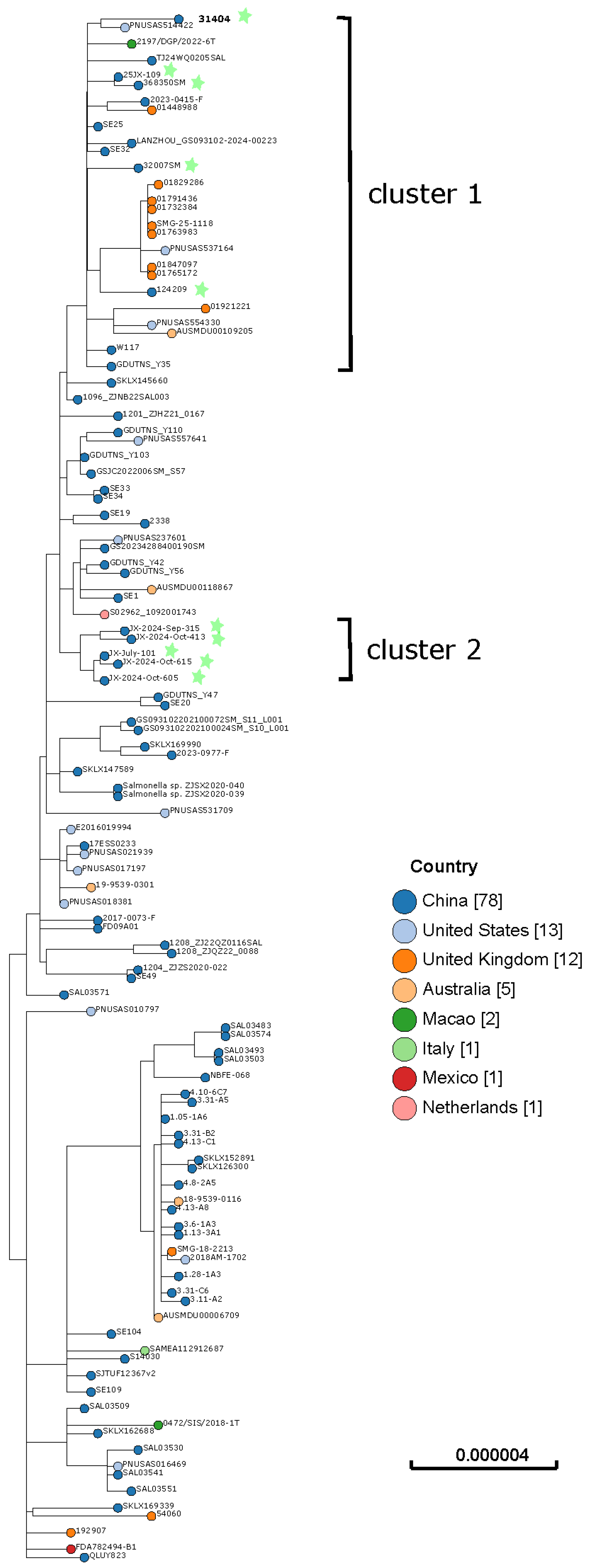
In this study, S. Enteritidis isolate 31404 clustered within HC20-7952. In the Enterobase, we found 277 HC20-7952 sequences. After filtering, 133 sequences were finally selected for the cgMLST analysis (Table S1). As shown in Figure 1, 31404 was closely related to PNUSAS514422, which was isolated from the United States in 2025. Also, 25JX-109, 368350SM, 32007SM, and 124249 collected in this study were clustered into the same group with 31404 and belonged to different HC2. In this cluster, strains collected from China (n = 7), the United Kingdom (n = 9), the United States (n = 3), Australia (n = 1), and Macao (n = 1) were also identified. Notably, five strains collected from Jiaxing city in 2024 fell within a single clade, comprising isolates collected from two regions of Jiaxing in different months.
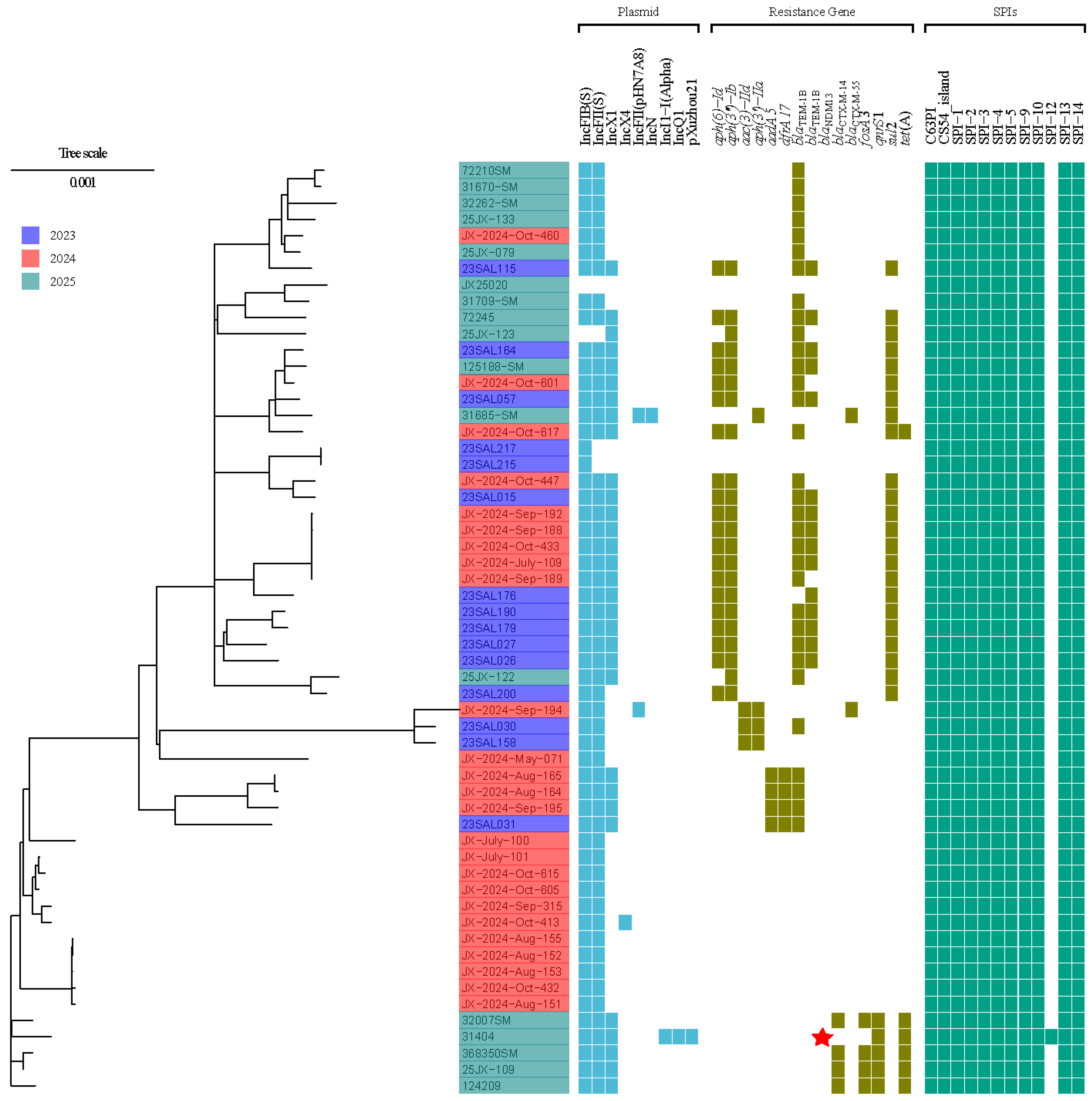
All 57 S. Enteritidis isolates collected in this study belonged to ST11. The single-nucleotide polymorphism (SNP) analysis showed clustering of several isolates from different years, suggesting phylogenetic relatedness. The SNPs of the 57 isolates ranged from 0 to 163. Strain 31404 exhibited a close genetic relationship with strain 25JX-109 (SNP = 17). Information regarding these strains is listed in Table 3.
At least one antibiotic-resistant gene was found in 42 of 57 S. Enteritidis isolates. Among them, blaTEM-1B was the most prevalent, followed by aph (3″)-Ib and sul2. Other β-lactamase genes were identified, including blaCTX-M-14 in four isolates, and blaCTX-M-55 in two.
In the studied isolates, two types of SPIs were detected. Most strains (96.7%, 56/57) were uniformly carrying C63PI, CS54_island, SPI-1, SPI-2, SPI-3, SPI-4, SPI-5, SPI-9, SPI-10, SPI-13, and SPI-14. Additionally, SPI12 was only found in strain 31404. IncFIB (S)-IncFII (S)-IncX1 (52.6%, 30/57) and IncFIB (S)-IncFII (S) (40.4%, 23/57) were the most common incompatibility group profiles among the 57 isolates (Figure 2).

2.3. Characteristics of blaNDM-13-Positive Plasmids

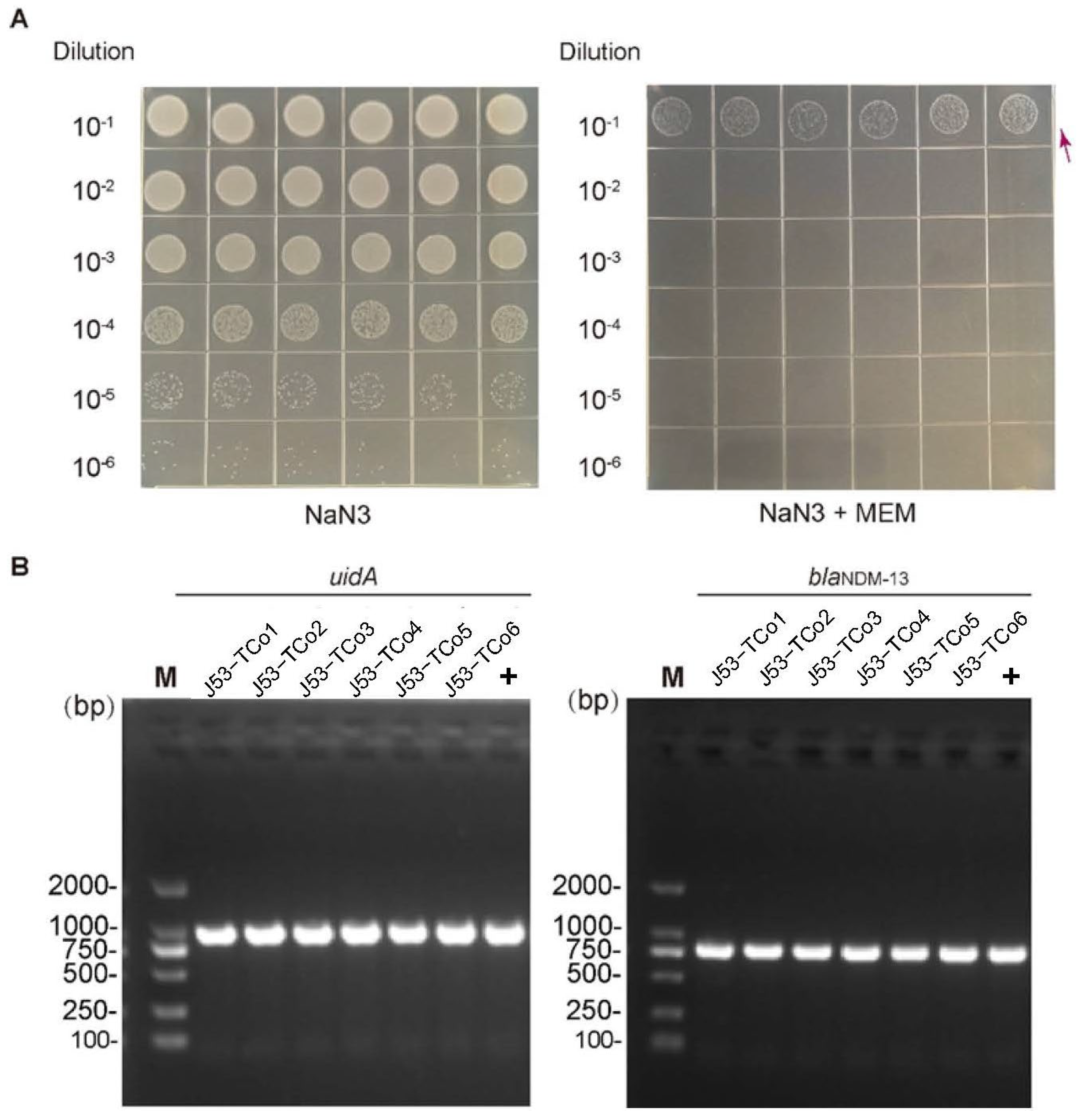
WGS showed that blaNDM-13 and bleMBL were located on an IncI1-I (α) plasmid designated as p31404-NDM13, which is 88,385 bp in length with an average GC content of 50.4%. The mobility analysis based on plasmid sequence showed that p31404-NDM13 was predicted as conjugative. To investigate the horizontal transfer capacity of p31404-NDM13, conjugation assays were also performed. Results demonstrated that p31404-NDM13 was successfully transferred to the recipient strain E. coli strain J53 and conferred meropenem resistance (Figure 3).
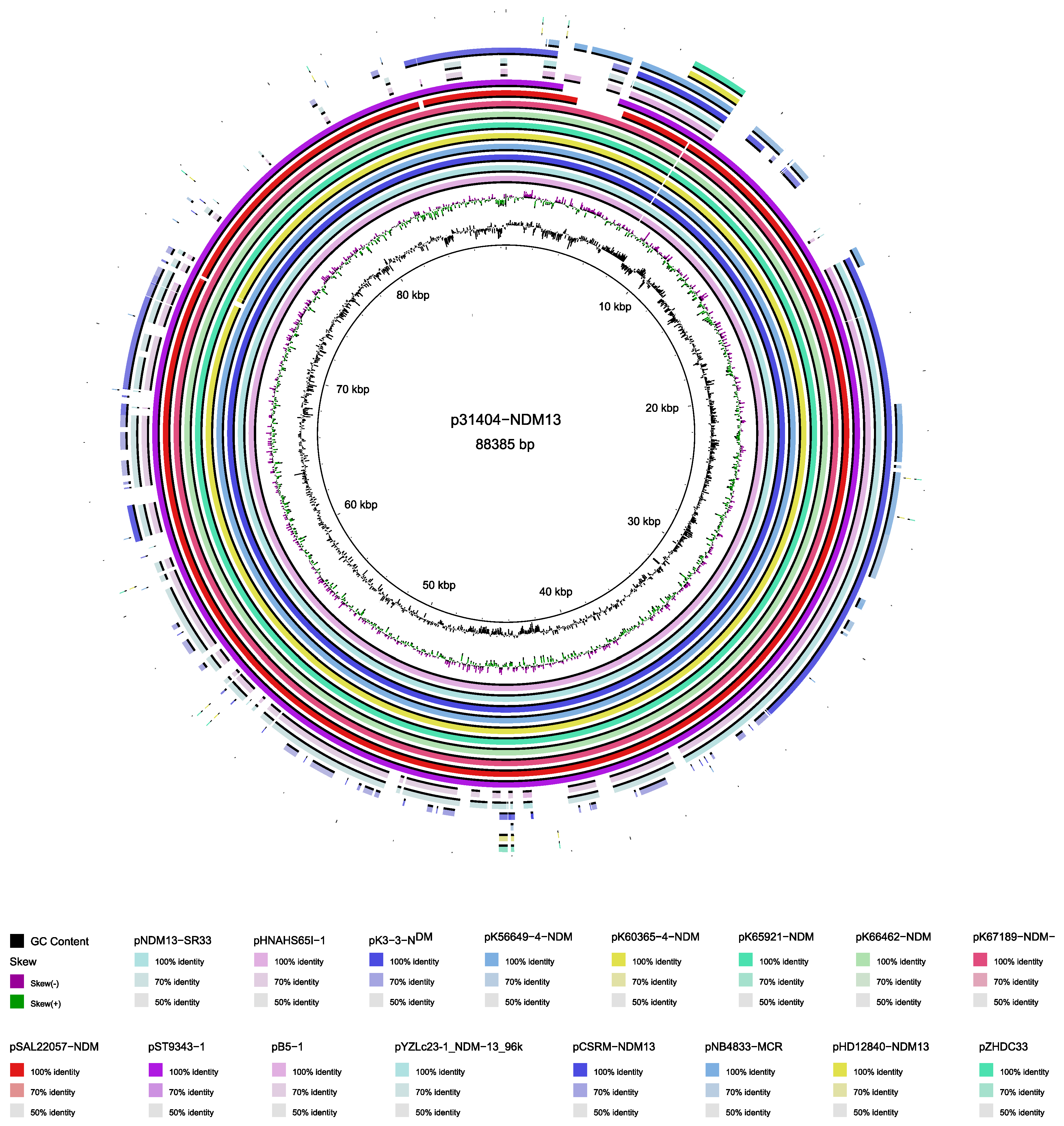
As of 28 December 2025, we investigated all 16 blaNDM-13-positive plasmid sequences publicly available in NCBI, as well as p31404-NDM13 in the present study, and observed that these samples were collected between 1984 and 2025 (Table 4). All strains of these plasmids originated in China, except for one strain of unknown origin. Most of these plasmids were identified from E. coli (41.2%, 7/17), followed by K. pneumoniae (35.3%, 6/17), and Salmonella spp. (23.5%, 4/17). The IncI1-I (α) plasmid remained a key mediator of blaNDM-13 (70.6%, 12/17). Sequence alignments demonstrated that p31404-NDM13 was identical to pNDM13-SR33, which was identified from a clinical S. enterica serovar Rissen strain in 2021. It also showed high similarity with blaNDM-13-carrying plasmids isolated from K. pneumoniae (100% coverage and 99.99% identity) (Figure 4). Resistance genes blaNDM-13 and bleMBL were the two carried by the IncI1-I (α) plasmid in K. pneumoniae, Salmonella spp., and one E. coli strain. Several plasmids in E. coli, including IncB/O/K/Z, IncI1-I (α), IncFIB (AP001918)/IncFII (pHN7A8), and IncX3, were found to be positive for blaNDM-13. Other resistance genes, such as blaSHV-12 and fosA3, were also carried by blaNDM-13-carrying plasmids in E. coli (Table 4).

2.4. Genetic Context Comparison of the blaNDM-13 Region in blaNDM-13-Positive Plasmids

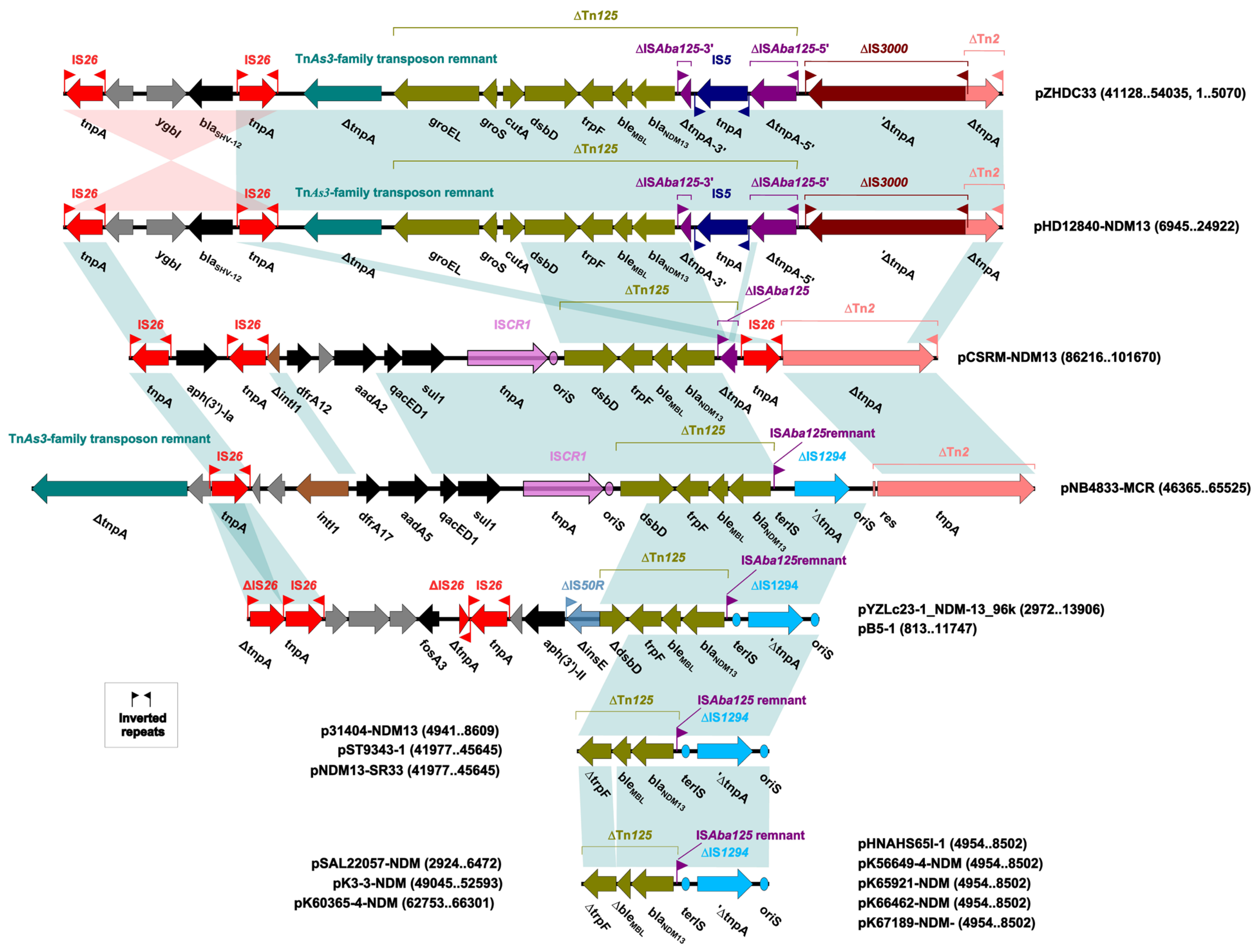
The genetic environment related to blaNDM-13 in p31404-NDM13 is shown in Figure 5. Structural analysis revealed that the blaNDM-13 regions from 17 plasmids were classified into seven groups. The blaNDM-13 region in pHD12840-NDM13 and pZHDC33 was the longest and contained several truncated transposons (ΔTnAs3-family transposon, ΔTn125, and ΔTn2) and insertion sequences (IS26, IS5, and ΔIS3000). The blaNDM-13 gene was carried by a truncated Tn125 composed of ∆ISAba125-5′—IS5—∆ISAba125-3′—blaNDM-13bleMBLtrpFdsbDcutAgrosgroEL. Compared with pHD12840-NDM13/pZHDC33, the ISAba125 upstream of blaNDM-13 in pCSRM-NDM13 was interrupted by IS26. An integron carrying dfrA12, aadA2 (pseudogene), qacED1, and sul1, as well as ISCR1, was located downstream of dsbD. In pNB4833-MCR, ΔIS1294, rather than IS26, was present upstream of blaNDM-13. Also, an integron carrying dfrA17, aadA5, qacED1, and sul1, as well as the insertion sequence ISCR1, was located downstream of dsbD. The blaNDM-13 region in pYZLc23-1_NDM-13_96k/pB5-1, was carried by a ΔTn125 (∆ISAba125blaNDM-13bleMBLtrpF—∆dsbD) flanked by ΔIS1294 and ΔIS50R. The corresponding region in p31404-NDM13/pST9343-1 was arranged by ΔIS1294—∆ISAba125blaNDM-13bleMBL—∆trpF. The relative region in pSAL22057-NDM/pHNAHS65I-1/pK3-3-NDM was similar to that in p31404-NDM13, with a truncated bleMBL between blaNDM-13 and ∆trpF.

3. Discussion

Salmonella enterica is a major cause of bacterial gastroenteritis worldwide. Infections caused by Salmonella are commonly observed as acute gastroenteritis [43]. S. Enteritidis ranked as the first serotype of all foodborne Salmonella isolates collected from the laboratories of 37 countries between 2001 and 2007 [44]. The emergence and spread of antimicrobial resistance (AMR) in Salmonella have posed a serious public health challenge. Here, we report the identification of an NDM-13-positive Salmonella strain 31404 clinically isolated from a child in Jiaxing, China. The formation of the blaNDM-13 region results from diverse recombination events involving multiple mobile genetic elements (MGEs). We unveiled the genome structure of S. Enteritidis isolates in Jiaxing. The data generated here and made publicly available provide a basis for further work on the evolution and transmission of blaNDM-13 across diverse Salmonella serotypes.
S. Enteritidis sequence type (ST)11 is the most common sequence type, geographically widespread [45,46]. ST183, ST1925, ST1974, and ST5895 have been found in this serotype [47]. In the present study, all 57 S. Enteritidis strains were identified as ST11 across various sectors (human, food, and environment), which may result from the scale and scope of the study. Bacterial virulence-related genes present in Salmonella efficiently initiate and accelerate the development of foodborne illnesses. The invA gene within SPI-1 is a critical factor in host cell penetration. The spiC encoding SPI-2 produces T3SS-2 translocated effectors [48]. SPI-12 was only identified in strain 31404, whereas it is absent in the other 56 S. Enteritidis strains. SPI-12 contributes to the fitness of S. Typhimurium in vivo and encodes a remnant phage known to contribute to bacterial virulence and improve fitness in the host [49]. The clustering of isolates from different sources and location consistent with the result that S. Enteritidis was spread in a pandemic-like manner [2].
Several β-lactamase genes, such as those for extended-spectrum β-lactamase (ESBL) and AmpC-like lactamases, including blaCTX-M-55, blaTEM-1B, and blaCMY-2, were abundant in the China subclade as well as in a clade from sub-Saharan Africa [47]. Notably, these genes were also reported as the most common ESBL genes carried in the ceftriaxone-resistant isolates in China from 2007 to 2016 [50]. blaTEM-1B followed by blaCTX-M-14 were the most frequently detected β-lactamase genes among 57 S. Enteritidis strains from Jiaxing, consistent with previous studies. The first report of blaNDM-13 in Salmonella was from a clinical MDR strain S. Rissen [31]. To our knowledge, the present study is the first report of blaNDM-13 in S. Enteritidis.
Salmonella spp. are important pathogens because they are very adaptive to antimicrobial selection pressure [51]. Plasmids play a role in the transmission of AMR in Salmonella spp. [52]. Plasmid replicons IncFII (S) and IncFIB (S) were the most frequently detected in S. Enteritidis isolates in Jiaxing, consistent with findings from a study conducted by Ewelina Kamińska in Poland [47,53]. As found in the present study, most strains carried two to three replicons. The coexistence and horizontal dissemination of plasmids in Salmonella spp. provide significant evolutionary advantages by expanding the host range and enhancing bacterial persistence across diverse ecological niches. For strain 31404, the IncI1-I (α) replicon was associated with the blaNDM-13. These plasmids have previously been identified as carrying blaNDM-13 in other Salmonella serovars, for example, Rissen [31] and Typhimurium [32], as well as in other species, such as K. pneumoniae and E. coli. Plasmid mobility analysis and conjugation experiments provide evidence that the IncI1 plasmid in this study acts as an efficient vector facilitating the acquisition of the blaNDM-13 gene in 31404.
Exceptionally dense and diverse MGEs, including transposons (Tn3, Tn125 [54], and IS26-flanked pseudo composite transposons [55]), integrons (intI1), and ISs (ISAba125, IS3000, IS26 [56], IS5, and ISCR1) are thought to play important roles in blaNDM dissemination through a multilayer process involving genetic recombination, transposition, conjugation, and transformation of plasmids [19,57]. The carbapenem resistance of strain 31404 was attributed to the presence of a plasmid-mediated β-lactamase gene, blaNDM-13, located on a truncated Tn125 of a different length. The structure of Tn125 was composed of ISAba125blaNDM-1bleMBLtrpFdsbDcutAgroESgros—ISCR21—ISAba125, which was originally obtained from Acinetobacter lwoffii [56]. The Tn125 transposon appears to have played an important role in early plasmid-mediated jumps of blaNDM. blaNDM can be found in a variety of genomic contexts, and ΔTn125-mediated contexts were commonly associated with blaNDM-13 in the present study. Notably, IS1294 (IS91 family), which replaces ISAba125, is likely to mobilize blaNDM-13 [58].

4. Conclusions

In conclusion, we reported the genetic and phenotypic characterization of a Salmonella Enteritidis ST11 clinical isolate carrying blaNDM-13. ΔTn125-mediated contexts were commonly associated with blaNDM-13 in the present study. Notably, IS1294 (IS91 family), which replaces ISAba125, is likely to mobilize blaNDM-13. The findings in this study provide insights into the molecular characterization and diversification of blaNDM-13. Strain 31404 shows a high degree of similarity to a strain isolated from the United States, which indicates that we need to strengthen the monitoring of the spread of antibiotic resistance in S. Enteritidis. Additionally, the identification of blaNDM-13-containing plasmids in different serotypes of Salmonella isolates (such as S. Rissen, S. Typhimurium, and S. Enteritidis) from unrelated regions further validates the widespread dissemination of blaNDM-13 and carbapenem resistance in China.

5. Materials and Methods

5.1. Isolates Collection

Strain 31404 was isolated from a fecal sample of a fifteen-year-old girl. This patient was hospitalized due to occasional fever and diarrhea. Fecal samples from the patient were collected to isolate Salmonella spp. Within 4 h of collection, undiluted samples were streaked onto Columbia Blood Agar plates (CHROMagar, Shanghai, China) and cultured overnight at 37 °C. Suspected Salmonella spp. colonies were analyzed using matrix-assisted laser desorption/ionization–time of flight mass spectrometry. Serotyping was conducted using the slide agglutination method to detect somatic (O) antigen and flagellar (H) antigens (phases 1 and 2) following the White–Kaufmann–Le Minor Scheme. Salmonella Serotyping by Whole Genome Sequencing was confirmed using the Sequence query tool implemented in SeqSero 1.2 (https://genomicepidemiology.org/services/, accessed on 30 June 2025).

5.2. Antimicrobial Susceptibility Testing

Antimicrobial susceptibility testing (AST) of the following antimicrobial agents was performed to determine the minimum inhibitory concentration (MIC) of each using the microdilution method: ampicillin, ampicillin/sulbactam, amoxicillin/clavulanic acid, cefuroxime, ceftiofur, cefazolin, cefoxitin, cefotaxime, ceftazidime, cefepime, meropenem, imipenem, ertapenem, tetracycline, gentamicin, amikacin, trimethoprim/sulfamethoxazole, florfenicol, chloramphenicol, ciprofloxacin, nalidixic acid, colistin, polymixin, streptomycin, tigecycline, and azithromycin. The resistance breakpoints of ampicillin, ceftiofur, imipenem, meropenem, ertapenem, azithromycin, tetracycline, ciprofloxacin, trimethoprim/sulfamethoxazole, nalidixic acid, and chloramphenicol were determined in accordance with the principles outlined in relevant documents from the Clinical and Laboratory Standards Institute (CLSI) (M100-S32, M45-A3). Ampicillin/sulbactam, cefazolin, cefepime, cefotaxime, cefoxitin, ceftazidime, cefuroxime, gentamicin, and amikacin were determined in accordance with the European Committee on Antimicrobial Susceptibility Testing (EUCAST). Tigecycline was determined in accordance with the Food and Drug Administration (FDA). Colistin, polymixin, and florfenicol were interpreted in accordance with the “National Food Contamination and Hazardous Factor Risk Monitoring Work Manual 2025” (China National Center for Food Safety Risk Assessment, 2025). Escherichia coli ATCC 25922, Enterococcus faecalis ATCC 29212, and Staphylococcus aureus ATCC 29213 were used as quality control strains for AST.

5.3. Whole-Genome Sequencing Bioinformatics Analysis

Total genomic DNA was extracted from overnight (16–18 h) cultures of strains using the QIAamp DNA Mini Kit (Qiagen, Hilden, Germany) following the manufacturer’s instructions. WGS was performed using NextSeq 550 (Illumina, San Diego, CA, USA) platforms. The plasmid sequence of 31404 was performed using both the long-read Nanopore MinION (Nanopore, Oxford, UK) and the short-read NextSeq 550 (Illumina, San Diego, CA, USA) platforms. Briefly, for short-read sequencing, DNA libraries were prepared using the metagenomic DNA library construction kit (MD001T-P1, Hangzhou, China), purified using the magnetic bead purification kit (MATRIDX MD012, Hangzhou, China), and quantified using the KAPA Library Quantification Kit (07960140001, Roche, Switzerland). Following the manufacturer’s guidelines, the libraries were normalized, denatured, and diluted to a final concentration of 1.7 pM, then loaded onto the Illumina NextSeq 550 reagent cartridge (Mid Output Reagent Cartridge v2 300 cycles) for sequencing. For long-read sequencing, a sequencing library was constructed in accordance with the manufacturer’s protocols provided with the Sequencing Ligation Kit (Oxford Nanopore Technologies, Oxford, UK) and the library building kit (Baiyi Technology Co., Ltd., Hangzhou, China). Following quantitative dilution, the library was loaded onto the flow cell R10.4.1 (Oxford Nanopore Technologies, Oxford, UK) and sequenced using the P2 Solo protocol (Oxford Nanopore Technologies, Oxford, UK). The derived short reads and long reads were assembled using SPAdes (version 3.9.0) software. The average sequencing depth was >150. The completeness and contamination rate of the genome were evaluated using CheckM2 (V1.0.2) software (generally, a completeness of ≥ 90% and a contamination rate of ≤5% are required). With the Salmonella reference genome from the RefSeq database, the average nucleotide identity was calculated using Skani (V0.3.0) software (generally, an identity of ≥95% is required). The assembled sequence was annotated by RAST (Rapid Annotation using Subsystem Technology, https://rast.nmpdr.org/). The sequence type (ST) was determined using MLST (https://pubmlst.org/organisms?title=salmonella, accessed on 30 June 2025). Additionally, PlasmidFinder v2.1, ResFinder v4.7.2, and SPIFinder available at the Center for Genomic Epidemiology (https://genomicepidemiology.org/services/, accessed on 30 June 2025) were utilized for plasmid replicon, AMR genotypes, and SPI identification, respectively. The virulence genes were identified based on the annotation of the virulence factor database.

5.4. Genetic Analyses

S. Enteritidis 31404 was uploaded to the EnteroBase platform, where core genome multilocus sequence typing (cgMLST) and hierarchical clustering (HierCC) analyses were performed using built-in algorithms. Based on cgMLST allelic profiles, HierCC grouped the isolates at various hierarchical levels according to allele differences, such as HC2 and HC20. Each HC level represents the maximum number of allele differences allowed within a cluster, enabling the formation of genetically related groups. To identify genetically related isolates of the S. Enteritidis 31404 isolated in this study, the “Search Strains” function in EnteroBase was used to retrieve all genomes assigned to the same H20 clusters as of March 2026. Metadata of genomes belonging to the same HC2 clusters were filtered to remove redundant isolates. Briefly, isolates with incomplete metadata (e.g., missing country of origin or collection year) were excluded. Within each HC2 cluster, strains from the same country and the same year, depending on their source, will be retained with one sample. This strategy ensured the selection of representative and diverse isolates within each HC2.
Also, to comprehend the population structure of S. Enteritidis prevalent in Jiaxing City, the genome sequences of fifty-seven clinical and foodborne isolates collected between 2023 and 2025 were included for phylogenetic analysis. Data analysis was conducted using the BAIYI MicroGeno Platform (v5.4, Hangzhou Baiyi Technology Co., Ltd., http://www.baiyi-tech.cn/) for data analysis. SNPs were called using Snippy with default settings, except that only positions with base quality ≥Q30 and coverage ≥10× were retained, and SNPs in repetitive or low-complexity regions were excluded. Potential recombinant regions were identified and removed using Gubbins v3.3.5 (https://github.com/nickjcroucher/gubbins/, accessed on 29 December 2025) to ensure accurate phylogenetic inference. Maximum-likelihood (ML) phylogenetic trees were constructed using iqtree (v2.0.3 https://github.com/iqtree/iqtree2, accessed on 29 December 2025). The best-fit substitution model was selected with ModelFinder Plus (MFP), and branch support was evaluated using ultrafast bootstrap with 1000 replicates.

5.5. Plasmid Analysis

To further analyze the genetic environment and perform plasmid structural comparative studies, Easyfig v2.2.2 and BLAST Ring Image Generator (BRIG, v0.95) were used, respectively. Transposon and insertion sequence (IS) elements were scanned using the ISFinder database. BLASTn was used to determine the identity of the genetic environment between NDM-13-positive sequences.

5.6. Plasmid Mobility Prediction and Conjugation Experiment

The plasmid prediction was performed using MOB-suite, with identity and coverage thresholds set at 85% and 60%, respectively [59], which characterized the associated relaxase types, mating pair formation (MPF) systems, and origins of transfer (oriT), potentially involved in plasmid-mediated transfer.
The transferability of plasmids was evaluated via a filter membrane conjugation assay [60,61]. Briefly, the sodium azide-resistant E. coli strain J53 served as the recipient, while isolate 31404 was used as the donor. Donor and recipient cells were mixed at a 1:1 ratio. Transconjugants were selected on plates supplemented with sodium azide (100 mg/L) and meropenem (1 mg/L), then further verified by PCR targeting the blaNDM and uidA genes. The specific primers used were NDM813-F (5′-ATGGAATTGCCCAATATTATGCA-3′), NDM813-R (5′-TCAGCGCAGCTTGTCGGC-3′), uidA-F (5′-CGAACTGAACTGGCAGACTATCC-3′), and uidA-R (5′-TAATGTTCTGCGACGCTCACA-3′).

5.7. Genbank Accession

The genomes of the Salmonella isolate 31404, 25 S. Enteritidis isolates from 2024, and 16 other S. Enteritidis isolates from 2025 reported in this study have been deposited in the National Center for Biotechnology Information and registered as BioProject numbers PRJNA1392682, PRJNA1439886, PRJNA1440394, and PRJNA1440466, respectively. Fifteen S. Enteritidis isolates from 2023 have been deposited in the National Center for Biotechnology Information previously [62]. The sequence of plasmid p31404-NDM13 was submitted to the GenBank database and assigned accession number PX754648.

Supplementary Materials

The following supporting information can be downloaded at https://www.mdpi.com/article/10.3390/antibiotics15040381/s1. Table S1: Information of 113 HC20-7952 strains from Enterobase analyzed in this study.

Author Contributions

Conceptualization, P.L. and W.Y.; methodology, X.L. and Z.C.; software, Y.Y.; validation, Z.C., H.W. and M.J.; formal analysis, G.Z. and YY; investigation, M.J.; data curation, P.L. and W.Y.; writing—original draft preparation, W.Y. and Y.Y.; writing—review and editing, G.Z.; visualization, Z.C.; supervision, P.L.; project administration, P.L. and G.Z.; funding acquisition, P.L. and G.Z. All authors have read and agreed to the published version of the manuscript.

Funding

This research was funded by the Medical Science and Technology Program of Zhejiang Province [2024KY1697], Disease Prevention and Control Innovation Team of Zhejiang Province [2026JKP-07], and Technology Bureau of Jiaxing City [No. 2025CGW026].

Institutional Review Board Statement

Not applicable.

Informed Consent Statement

Not applicable.

Data Availability Statement

The data can be obtained upon request from the corresponding author.

Conflicts of Interest

The authors declare no conflicts of interest.

References

  1. Cuypers, W.L.; Meysman, P.; Weill, F.-X.; Hendriksen, R.S.; Beyene, G.; Wain, J.; Nair, S.; Chattaway, M.A.; Perez-Sepulveda, B.M.; Ceyssens, P.-J.; et al. A global genomic analysis of Salmonella Concord reveals lineages with high antimicrobial resistance in Ethiopia. Nat. Commun. 2023, 14, 3517. [Google Scholar] [CrossRef]
  2. van Asten, A.J.; van Dijk, J.E. Distribution of “classic” virulence factors among Salmonella spp. FEMS Immunol. Med. Microbiol. 2005, 44, 251–259. [Google Scholar]
  3. Hendriksen, R.S.; Vieira, A.R.; Karlsmose, S.; Lo Fo Wong, D.M.A.; Jensen, A.B.; Wegener, H.C.; Aarestrup, F.M. Global monitoring of Salmonella serovar distribution from the World Health Organization Global Foodborne Infections Network Country Data Bank: Results of quality assured laboratories from 2001 to 2007. Foodborne Pathog. Dis. 2011, 8, 887–900. [Google Scholar] [CrossRef]
  4. Waterfield, K.C.; Shah, G.H.; Etheredge, G.D.; Ikhile, O. Consequences of COVID-19 crisis for persons with HIV: The impact of social determinants of health. BMC Public Health 2021, 21, 299. [Google Scholar] [CrossRef]
  5. Kombade, S.; Kaur, N. Pathogenicity Island in Salmonella spp.—A Global Challenge; Lamas, A., Regal, P., Franco Abuin, C.M., Eds.; IntechOpen: London, UK, 2021. [Google Scholar]
  6. Angelo, K.M.; Reynolds, J.; Karp, B.E.; Hoekstra, R.M.; Scheel, C.M.; Friedman, C. Antimicrobial Resistance Among Nontyphoidal Salmonella Isolated From Blood in the United States, 2003–2013. J. Infect. Dis. 2016, 214, 1565–1570. [Google Scholar] [CrossRef]
  7. Aldrich, C.; Hartman, H.; Feasey, N.; Chattaway, M.A.; Dekker, D.; Al-Emran, H.M.; Larkin, L.; McCormick, J.; Sarpong, N.; Le Hello, S.; et al. Emergence of phylogenetically diverse and fluoroquinolone resistant Salmonella Enteritidis as a cause of invasive nontyphoidal Salmonella disease in Ghana. PLoS Negl. Trop. Dis. 2019, 13, e0007485. [Google Scholar] [CrossRef]
  8. Shen, H.; Chen, H.; Ou, Y.; Huang, T.; Chen, S.; Zhou, L.; Zhang, J.; Hu, Q.; Zhou, Y.; Ma, W. Prevalence, serotypes, and antimicrobial resistance of Salmonella isolates from patients with diarrhea in Shenzhen, China. BMC Microbiol. 2020, 20, 197. [Google Scholar] [CrossRef] [PubMed]
  9. Bisola Bello, A.; Olamilekan Adesola, R.; Idris, I.; Yawson Scott, G.; Alfa, S.; Akinfemi Ajibade, F. Combatting extensively drug-resistant Salmonella: A global perspective on outbreaks, impacts, and control strategies. Pathog. Glob. Health 2024, 118, 559–573. [Google Scholar] [PubMed]
  10. Medalla, F.; Gu, W.; Friedman, C.R.; Judd, M.; Folster, J.; Griffin, P.M.; Hoekstra, R.M. Increased Incidence of Antimicrobial-Resistant Nontyphoidal Salmonella Infections, United States, 2004–2016. Emerg. Infect. Dis. 2021, 27, 1662–1672. [Google Scholar] [CrossRef]
  11. Dai, W.; Zhang, Y.; Zhang, J.; Xue, C.; Yan, J.; Li, X.; Zheng, X.; Dong, R.; Bai, J.; Su, Y.; et al. Analysis of antibiotic-induced drug resistance of Salmonella enteritidis and its biofilm formation mechanism. Bioengineered 2021, 12, 10254–10263. [Google Scholar] [CrossRef] [PubMed]
  12. Mondal, A.H.; Khare, K.; Saxena, P.; Debnath, P.; Mukhopadhyay, K.; Yadav, D. A Review on Colistin Resistance: An Antibiotic of Last Resort. Microorganisms 2024, 12, 772. [Google Scholar] [CrossRef]
  13. Bush, K. Past and Present Perspectives on β-Lactamases. Antimicrob. Agents Chemother. 2018, 62, e01076-18. [Google Scholar] [CrossRef]
  14. Watanabe, M.; Iyobe, S.; Inoue, M.; Mitsuhashi, S. Transferable imipenem resistance in Pseudomonas aeruginosa. Antimicrob. Agents Chemother. 1991, 35, 147–151. [Google Scholar] [CrossRef]
  15. Lauretti, L.; Riccio, M.L.; Mazzariol, A.; Cornaglia, G.; Amicosante, G.; Fontana, R.; Rossolini, G.M. Cloning and characterization of blaVIM, a new integron-borne metallo-beta-lactamase gene from a Pseudomonas aeruginosa clinical isolate. Antimicrob. Agents Chemother. 1999, 43, 1584–1590. [Google Scholar]
  16. Yong, D.; Toleman, M.A.; Giske, C.G.; Cho, H.S.; Sundman, K.; Lee, K.; Walsh, T.R. Characterization of a new metallo-β-lactamase gene, blaNDM-1, and a novel erythromycin esterase gene carried on a unique genetic structure in Klebsiella pneumoniae sequence type 14 from India. Antimicrob. Agents Chemother. 2009, 53, 5046–5054. [Google Scholar] [CrossRef]
  17. Han, R.; Shi, Q.; Wu, S.; Yin, D.; Peng, M.; Dong, D.; Zheng, Y.; Guo, Y.; Zhang, R.; Hu, F. Dissemination of Carbapenemases (KPC, NDM, OXA-48, IMP, and VIM) Among Carbapenem-Resistant Enterobacteriaceae Isolated From Adult and Children Patients in China. Front. Cell. Infect. Microbiol. 2020, 10, 314. [Google Scholar] [CrossRef]
  18. Li, X.; Zhao, D.; Li, W.; Sun, J.; Zhang, X. Enzyme Inhibitors: The Best Strategy to Tackle Superbug NDM-1 and Its Variants. Int. J. Mol. Sci. 2021, 23, 197. [Google Scholar] [CrossRef] [PubMed]
  19. Hu, Y.J.; Huang, P.Y.; Tian, M.S.; Zheng, L.; He, J.; Li, B.B.; Zhao, J.Y.; Fanning, S.; Bai, L.; Dong, Y.P. Genomic Epidemiology of Foodborne bla (NDM-9)Gene-Carrying Extensively Drug-Resistant (XDR) Salmonella enterica Serovar Indiana ST17. Biomed. Environ. Sci. 2025, 38, 1558–1563. [Google Scholar]
  20. Savard, P.; Gopinath, R.; Zhu, W.; Kitchel, B.; Rasheed, J.K.; Tekle, T.; Roberts, A.; Ross, T.; Razeq, J.; Landrum, B.M.; et al. First NDM-positive Salmonella sp. strain identified in the United States. Antimicrob. Agents Chemother. 2011, 55, 5957–5958. [Google Scholar] [CrossRef] [PubMed]
  21. Huang, J.; Wang, M.; Ding, H.; Ye, M.; Hu, F.; Guo, Q.; Xu, X.; Wang, M. New Delhi metallo-β-lactamase-1 in carbapenem-resistant Salmonella strain, China. Emerg. Infect. Dis. 2013, 19, 2049–2051. [Google Scholar] [PubMed]
  22. Irfan, S.; Khan, E.; Jabeen, K.; Bhawan, P.; Hopkins, K.L.; Day, M.; Nasir, A.; Meunier, D.; Woodford, N. Clinical isolates of Salmonella enterica serovar Agona producing NDM-1 metallo-β-lactamase: First report from Pakistan. J. Clin. Microbiol. 2015, 53, 346–348. [Google Scholar] [CrossRef]
  23. Song, H.; Zou, S.; Wang, Y.; Chen, Z.; Sun, Z.; Jian, C. Emergence of carbapenem-resistant Salmonella Mbandaka through IS26-driven bla(NDM-1) mobilization and chromosomal structural variation. Microbiol. Spectr. 2025, 13, e0096725. [Google Scholar] [CrossRef]
  24. Wang, W.; Baloch, Z.; Peng, Z.; Hu, Y.; Xu, J.; Fanning, S.; Li, F. Genomic characterization of a large plasmid containing a bla (NDM-1) gene carried on Salmonella enterica serovar Indiana C629 isolate from China. BMC Infect. Dis. 2017, 17, 479. [Google Scholar] [CrossRef]
  25. Fischer, J.; Schmoger, S.; Jahn, S.; Helmuth, R.; Guerra, B. NDM-1 carbapenemase-producing Salmonella enterica subsp. enterica serovar Corvallis isolated from a wild bird in Germany. J. Antimicrob. Chemother. 2013, 68, 2954–2956. [Google Scholar] [CrossRef]
  26. McMillan, E.A.; Gupta, S.K.; Williams, L.E.; Jové, T.; Hiott, L.M.; Woodley, T.A.; Barrett, J.B.; Jackson, C.R.; Wasilenko, J.L.; Simmons, M.; et al. Antimicrobial Resistance Genes, Cassettes, and Plasmids Present in Salmonella enterica Associated with United States Food Animals. Front. Microbiol. 2019, 10, 832. [Google Scholar] [CrossRef]
  27. Tan, S.; Li, X.; Lu, B.; Lin, Y.; Cai, Y.; He, J.; Chen, S.; Gao, J.; Gao, J.; Qiang, X. Genomic Insights into the First Emergence of bla(NDM-5)-Carrying Carbapenem-Resistant Salmonella enterica Serovar London Strain in China. Infect. Drug Resist. 2024, 17, 1781–1790. [Google Scholar]
  28. Wang, J.; Jiang, Y.; Mei, C.Y.; Wang, Z.Y.; Zhong, F.G.; Zhang, X.X.; Lv, L.C.; Lu, M.J.; Wu, H.; Jiao, X. Characterization of an Extensively Drug-Resistant Salmonella enterica Serovar Indiana Strain Harboring Chromosomal bla (NDM-9) in China. Infect. Drug Resist. 2022, 15, 2015–2019. [Google Scholar] [CrossRef]
  29. Shrestha, B.; Tada, T.; Miyoshi-Akiyama, T.; Shimada, K.; Ohara, H.; Kirikae, T.; Pokhrel, B.M. Identification of a novel NDM variant, NDM-13, from a multidrug-resistant Escherichia coli clinical isolate in Nepal. Antimicrob. Agents Chemother. 2015, 59, 5847–5850. [Google Scholar] [CrossRef]
  30. Kim, J.S.; Jin, Y.H.; Park, S.H.; Han, S.; Kim, H.S.; Park, J.H.; Gong, Y.; An, J.H.; Jung, S.W.; Kim, S.; et al. Emergence of a multidrug-resistant clinical isolate of Escherichia coli ST8499 strain producing NDM-13 carbapenemase in the Republic of Korea. Diagn. Microbiol. Infect. Dis. 2019, 94, 410–412. [Google Scholar] [CrossRef] [PubMed]
  31. Huang, Y.; Ma, X.; Zeng, S.; Fu, L.; Xu, H.; Li, X. Emergence of a Salmonella Rissen ST469 clinical isolate carrying bla (NDM-13) in China. Front. Cell. Infect. Microbiol. 2022, 12, 936649. [Google Scholar]
  32. Ke, Y.; Zhu, Z.; Lu, W.; Liu, W.; Ye, L.; Jia, C.; Yue, M. Emerging bla(NDM)-positive Salmonella enterica in Chinese pediatric infections. Microbiol. Spectr. 2024, 12, e0148524. [Google Scholar] [CrossRef]
  33. Fernández, J.; Guerra, B.; Rodicio, M.R. Resistance to Carbapenems in Non-Typhoidal Salmonella enterica Serovars from Humans, Animals and Food. Vet. Sci. 2018, 5, 40. [Google Scholar] [CrossRef]
  34. Bai, Y.M.; Gao, X.J.; Yue, C.; Cai, Z.P.; Gao, G.L.; Lv, L.C.; Cai, Y.H.; Mo, H.M.; Liu, J.H. Salmonella Stanley ST29 carrying IncHI2/ST3-bla(NDM-5) plasmid emerged in a 4-month-old infant with diarrhea. Antimicrob. Agents Chemother. 2026, 70, e0147125. [Google Scholar] [CrossRef]
  35. Chen, H.; Song, J.; Zeng, X.; Chen, D.; Chen, R.; Qiu, C.; Zhou, K. National Prevalence of Salmonella enterica Serotype Kentucky ST198 with High-Level Resistance to Ciprofloxacin and Extended-Spectrum Cephalosporins in China, 2013 to 2017. Msystems 2021, 6, e00935-20. [Google Scholar] [CrossRef] [PubMed]
  36. Tacconelli, E.; Carrara, E.; Savoldi, A.; Harbarth, S.; Mendelson, M.; Monnet, D.L.; Pulcini, C.; Kahlmeter, G.; Kluytmans, J.; Carmeli, Y.; et al. Discovery, research, and development of new antibiotics: The WHO priority list of antibiotic-resistant bacteria and tuberculosis. Lancet Infect. Dis. 2018, 18, 318–327. [Google Scholar] [CrossRef] [PubMed]
  37. Jacoby, G.A.; Strahilevitz, J.; Hooper, D.C. Plasmid-mediated quinolone resistance. Microbiol. Spectr. 2014, 2. [Google Scholar] [CrossRef] [PubMed]
  38. Robicsek, A.; Jacoby, G.A.; Hooper, D.C. The worldwide emergence of plasmid-mediated quinolone resistance. Lancet Infect. Dis. 2006, 6, 629–640. [Google Scholar] [CrossRef]
  39. Aldred, K.J.; Kerns, R.J.; Osheroff, N. Mechanism of quinolone action and resistance. Biochemistry 2014, 53, 1565–1574. [Google Scholar] [CrossRef]
  40. Fang, S.B.; Lauderdale, T.Y.; Huang, C.H.; Chang, P.R.; Wang, Y.H.; Shigemura, K.; Lin, Y.H.; Chang, W.C.; Wang, K.C.; Huang, T.W.; et al. Genotypic Diversity of Ciprofloxacin Nonsusceptibility and Its Relationship with Minimum Inhibitory Concentrations in Nontyphoidal Salmonella Clinical Isolates in Taiwan. Antibiotics 2021, 10, 1383. [Google Scholar] [CrossRef]
  41. Sriyapai, P.; Pulsrikarn, C.; Chansiri, K.; Nyamniyom, A.; Sriyapai, T. Molecular Characterization of Cephalosporin and Fluoroquinolone Resistant Salmonella Choleraesuis Isolated from Patients with Systemic Salmonellosis in Thailand. Antibiotics 2021, 10, 844. [Google Scholar] [CrossRef]
  42. Salah, F.D.; Soubeiga, S.T.; Ouattara, A.K.; Sadji, A.Y.; Metuor-Dabire, A.; Obiri-Yeboah, D.; Banla-Kere, A.; Karou, S.; Simpore, J. Distribution of quinolone resistance gene (qnr) in ESBL-producing Escherichia coli and Klebsiella spp. in Lomé, Togo. Antimicrob. Resist. Infect. Control 2019, 8, 104. [Google Scholar] [CrossRef]
  43. Han, D.; Yu, F.; Chen, X.; Zhang, R.; Li, J. Challenges in Vibrio parahaemolyticus infections caused by the pandemic clone. Future Microbiol. 2019, 14, 437–450. [Google Scholar] [CrossRef]
  44. Sharahi, J.Y.; Hashemi, A.; Javad Mousavi, S.M.; Pournajaf, A.; Bidhendi, S.M. Antimicrobial resistance patterns and virulence gene profiles of Salmonella enteritidis and Salmonella typhimurium recovered from patients with gastroenteritis in three cities of Iran. Acta Microbiol. Immunol. Hung. 2022, 69, 323–331. [Google Scholar] [CrossRef] [PubMed]
  45. Aung, K.T.; Khor, W.C.; Ong, K.H.; Tan, W.L.; Wong, Z.N.; Oh, J.Q.; Wong, W.K.; Tan, B.Z.Y.; Maiwald, M.; Tee, N.W.S.; et al. Characterisation of Salmonella Enteritidis ST11 and ST1925 Associated with Human Intestinal and Extra-Intestinal Infections in Singapore. Int. J. Environ. Res. Public Health 2022, 19, 5671. [Google Scholar] [CrossRef]
  46. Duong, V.T.; The, H.C.; Nhu, T.D.H.; Tuyen, H.T.; Campbell, J.I.; Minh, P.V.; Phuc, H.L.; Chau, T.T.H.; Ngoc, N.M.; Vi, L.L.; et al. Genomic Serotyping, Clinical Manifestations, and Antimicrobial Resistance of Nontyphoidal Salmonella Gastroenteritis in Hospitalized Children in Ho Chi Minh City, Vietnam. J. Clin. Microbiol. 2020, 58, e01465-20. [Google Scholar] [CrossRef]
  47. Cao, G.; Zhao, S.; Kuang, D.; Hsu, C.H.; Yin, L.; Luo, Y.; Chen, Z.; Xu, X.; Strain, E.; McDermott, P.; et al. Geography shapes the genomics and antimicrobial resistance of Salmonella enterica Serovar Enteritidis isolated from humans. Sci. Rep. 2023, 13, 1331. [Google Scholar] [CrossRef]
  48. Wang, Y.; Liu, G.; Zhang, J.; Gu, D.; Hu, M.; Zhang, Y.; Pan, Z.; Geng, S.; Jiao, X. WbaP is required for swarm motility and intramacrophage multiplication of Salmonella Enteritidis spiC mutant by glucose use ability. Microbiol. Res. 2021, 245, 126686. [Google Scholar] [CrossRef]
  49. Tomljenovic-Berube, A.M.; Henriksbo, B.; Porwollik, S.; Cooper, C.A.; Tuinema, B.R.; McClelland, M.; Coombes, B.K. Mapping and regulation of genes within Salmonella pathogenicity island 12 that contribute to in vivo fitness of Salmonella enterica Serovar Typhimurium. Infect. Immun. 2013, 81, 2394–2404. [Google Scholar] [CrossRef] [PubMed]
  50. Yang, F.; Jiang, Y.; Yang, L.; Qin, J.; Guo, M.; Lu, Y.; Chen, H.; Zhuang, Y.; Zhang, J.; Zhang, H.; et al. Molecular and Conventional Analysis of Acute Diarrheal Isolates Identifies Epidemiological Trends, Antibiotic Resistance and Virulence Profiles of Common Enteropathogens in Shanghai. Front. Microbiol. 2018, 9, 164. [Google Scholar] [CrossRef]
  51. Chen, H.-M.; Wang, Y.; Su, L.-H.; Chiu, C.-H. Nontyphoid Salmonella Infection: Microbiology, Clinical Features, and Antimicrobial Therapy. Pediatr. Neonatol. 2013, 54, 147–152. [Google Scholar] [CrossRef] [PubMed]
  52. Jajere, S.M. A review of Salmonella enterica with particular focus on the pathogenicity and virulence factors, host specificity and antimicrobial resistance including multidrug resistance. Vet. World 2019, 12, 504–521. [Google Scholar] [CrossRef]
  53. Kamińska, E.; Zając, M.; Skarżyńska, M.; Lalak, A.; Bielińska, K.; Gymoese, P.; Wasyl, D. Molecular Characteristics of Epidemiologically Successful Salmonella Enteritidis in Poland. Transbound. Emerg. Dis. 2025, 2025, 5598487. [Google Scholar] [CrossRef]
  54. Poirel, L.; Bonnin, R.A.; Boulanger, A.; Schrenzel, J.; Kaase, M.; Nordmann, P. Tn125-related acquisition of blaNDM-like genes in Acinetobacter baumannii. Antimicrob. Agents Chemother. 2012, 56, 1087–1089. [Google Scholar] [CrossRef]
  55. Feng, Y.; Liu, L.; McNally, A.; Zong, Z. Coexistence of Two blaNDM-5 Genes on an IncF Plasmid as Revealed by Nanopore Sequencing. Antimicrob. Agents Chemother. 2018, 62, e00110-18. [Google Scholar] [CrossRef]
  56. Zhao, Q.Y.; Zhu, J.H.; Cai, R.M.; Zheng, X.R.; Zhang, L.J.; Chang, M.X.; Lu, Y.W.; Fang, L.X.; Sun, J.; Jiang, H.X. IS26 Is Responsible for the Evolution and Transmission of blaNDM-Harboring Plasmids in Escherichia coli of Poultry Origin in China. Msystems 2021, 6, e0064621. [Google Scholar] [CrossRef] [PubMed]
  57. Acman, M.; Wang, R.; van Dorp, L.; Shaw, L.P.; Wang, Q.; Luhmann, N.; Yin, Y.; Sun, S.; Chen, H.; Wang, H.; et al. Role of mobile genetic elements in the global dissemination of the carbapenem resistance gene blaNDM. Nat. Commun. 2022, 13, 1131. [Google Scholar] [CrossRef]
  58. Lyu, Y.Y.; Tai, J.H.; Guo, C.Y.; Zhang, Y.Y.; Chen, Y.; Zhou, Q.; Chu, W.W.; Wu, Y.L. First report of an Escherichia coli ST131 clinical isolate co-harboring blaKPC-2 and blaNDM-13 on an IncB/O/K/Z plasmid in China. Microbiol. Spectr. 2026, 14, e0052825. [Google Scholar] [CrossRef] [PubMed]
  59. Robertson, J.; Nash, J.H.E. MOB-suite: Software tools for clustering, reconstruction and typing of plasmids from draft assemblies. Microb. Genom. 2018, 4, e000206. [Google Scholar] [CrossRef] [PubMed]
  60. Li, J.; Chang, J.; Ma, J.; Zhou, W.; Yang, Y.; Wu, J.; Guan, C.; Yuan, X.; Xu, L.; Yu, B.; et al. Genome-based assessment of antimicrobial resistance of Escherichia coli recovered from diseased swine in eastern China for a 12-year period. mBio 2025, 16, e0065125. [Google Scholar] [CrossRef]
  61. Biao, T.; Guan, C.; Lin, H.; Liu, C.; Yang, H.; Zhao, G.; Yue, M. Emergence of co-existence of mcr-1 and blaNDM-5 in Escherichia fergusonii. Int. J. Antimicrob. Agents 2023, 61, 106742. [Google Scholar]
  62. Ping, L.; Zhan, L.; Wang, H.; Yan, Y.; Jia, M.; Gao, L.; Sun, Y.; Zhu, G.; Chen, Z. Prevalence and Antimicrobial Resistance Diversity of Salmonella Isolates in Jiaxing City, China. Antibiotics 2024, 13, 443. [Google Scholar] [CrossRef] [PubMed]
Figure 1. cgMLST analysis of 113 S. Entertidis HC20-7952 strains obtained in Enterobase in March 2026. The “n” in the brackets represents the number of isolated strains for each country. Blue circles with star symbols indicate isolates from this study.
Antibiotics 15 00381 g001
Figure 2. SNP analysis of 57 S. Enteritidis isolates from Jiaxing City, China. The presence of plasmid replicon sequence, resistance genes, and SPIs is indicated in different colors. The presence of blaNDM13 in 31404 was indicated with red stars.
Antibiotics 15 00381 g002
Figure 3. (A) Conjugation assay of isolate 31404 using sodium azide-resistant E. coli J53 as the recipient. From left to right: selection results on agar containing sodium azide alone, and a combination of sodium azide and meropenem. Arrows indicate transconjugant colonies. (B) PCR verification of transconjugants selected on sodium azide and meropenem. The uidA gene serves as an E. coli-specific marker. The + sign denotes the positive control.
Antibiotics 15 00381 g003
Figure 4. Sequence alignment between plasmid p31404-NDM13 and 16 other blaNDM-13-carrying plasmids retrieved from the Genebank database. The figure was generated by BRIG.
Antibiotics 15 00381 g004
Figure 5. Genetic environments related to the blaNDM-13 gene in bacterial plasmids. The figure was generated by Easyfig. Confirmed and putative open reading frames (ORFs) are indicated by block arrows and their orientations with different colors.
Antibiotics 15 00381 g005
Table 1. Antimicrobial susceptibility of S. Enteritidis 31404 to a panel of antimicrobial agents.
Antimicrobial ClassAntimicrobial Agent (Abbreviation)Breakpoint Interpretive Criteria (μg/mL)MIC (μg/mL)R/I/S
SIR
β-Lactam combination agentsAmpicillin/sulbactam (AMS)≤8/416/8≥32/16>64R
PenicillinsAmpicillin (AMP)≤816≥32>64R
CephalosporinsCefotaxime (CTX)≤12≥4>8R
Ceftazidime (CAZ)≤48≥16>32R
Cefoxitin (CFX)≤816≥32>64R
Cefazolin (CFZ)≤24≥8>32R
Ceftiofur (CEF)≤24≥8>16R
Cefepime (CPM)≤2≥1632R
Cefuroxime (CXM)≤48≥16>64R
CarbapenemsImipenem (IPM)≤12≥42I
Meropenem (MEM)≤12≥42I
Ertapenem (ETP)0.51≥28R
MacrolidesAzithromycin (AZM)≤16≥324S
AminoglycosidesGentamicin (GEN)≤48≥16≤1S
Amikacin (AMK)≤1632≥64≤4S
Streptomycin (STR)≤4NA
TetracyclinesTetracycline (TET)≤48≥16>32R
Tigecycline (TIG)≤24≥8≤0.25S
(Fluoro) QuinolonesNalidixic Acid (NAL)≤16≥32>64R
Ciprofloxacin (CIP)≤0.060.12∼0.5≥12R
Folate pathway inhibitorsTrimethoprim-sulfamethoxazole (SXT)≤2/38≥4/76≤0.25S
PhenicolsChloramphenicol (CHL)≤816≥324S
Florfenicol (FFC)≤48≥164S
PolymyxinsPolymixin (POL)≤2≥41I
Colistin (COL)≤2≥41I
Note: R, resistant; I, intermediate; S, susceptible; NA, not applicable.
Table 2. Virulence-associated genes in 31404.
VF ClassesVirulence FactorsGenes
Fimbrial adherence determinantsAgf (thin aggregative fimbriae/curli)csgABCDEFG, steABCD
Lpf (long polar fimbriae)lpfABCDE
Type 1 fimbriaefimACDFHIWYZ
Non-fimbrial adherence determinantsMisLmisL
SinHsinH
Iron uptakeEnterobactinentAB, fepG
Macrophage inducible geneMig-14mig-14
MotilityFlagellacheBRWYZ, flgCGHI, fliGIMNQ, flhAC, motA,
Secretion systemT3SS (SPI-1 encoded)invABCEFGHIJ, orgABC, prgHIJK, sicAP, sipD, spaOPQRS, hilACD, iacP, iagB,
T3SS-1 translocated effectorsavrA, sipABC/sspABC, sopABDD2E2, sptP, slrP
T3SS (SPI-2 encoded)ssaCDEGHIJKLMNOPQRSTUVX, sscAB, sseABCDE, ssrAB,
T3SS-2 translocated effectorspipBB2, sifAB, sseFGIJK1L, spiC/ssaB
Serum resistanceOmpA (Outer membrane protein A)ompA
Table 3. Information for 57 S. Enteritidis isolates collected in Jiaxing City, China.
IsolatesJiaxingSample TypeIsolation_SourceGenderAgeCollection DateSerotype
23SAL176JiaxingClinical samplesfecesMale51-00-0014 June 2023S. Enteritidis
23SAL057JiaxingClinical samplesfecesFemale55-00-0020 June 2023S. Enteritidis
23SAL026JiaxingClinical samplesfecesFemale54-00-0022 April 2023S. Enteritidis
23SAL027JiaxingClinical samplesfecesMale62-00-006 May 2023S. Enteritidis
23SAL015JiaxingClinical samplesfecesMale39-00-007 May 2023S. Enteritidis
23SAL031JiaxingClinical samplesfecesMale07-00-008 April 2023S. Enteritidis
23SAL030JiaxingClinical samplesfecesFemale41-00-004 May 2023S. Enteritidis
23SAL115JiaxingClinical samplesfecesFemale17-00-0010 September 2023S. Enteritidis
23SAL158JiaxingFoodMeat and meat product//17 October 2023S. Enteritidis
23SAL179JiaxingClinical samplesfecesFemale58-00-0010 July 2023S. Enteritidis
23SAL190JiaxingClinical samplesfecesFemale02-09-0015 October 2023S. Enteritidis
23SAL200JiaxingClinical samplesfecesMale80-00-005 October 2023S. Enteritidis
23SAL215JiaxingClinical samplesfecesMale00-09-291 October 2023S. Enteritidis
23SAL217JiaxingClinical samplesfecesMale00-10-019 October 2023S. Enteritidis
23SAL164JiaxingClinical samplesfecesFemale38-00-0012 August 2023S. Enteritidis
JX-2024-Sep-194JiaxingClinical samplesfecesMale2-08-006 July 2024S. Enteritidis
JX-May-071JiaxingClinical samplesfecesMale40-00-0021 April 2024S. Enteritidis
JX-2024-Oct-447JiaxingClinical samplesfecesMale02-05-0016 August 2024S. Enteritidis
JX-2024-Oct-460JiaxingClinical samplesfecesMale02-01-004 September 2024S. Enteritidis
JX-2024-Oct-617JiaxingFoodMeat and meat product//16 October 2024S. Enteritidis
JX-2024-Oct-601JiaxingClinical samplesfecesMale41-00-0024 September 2024S. Enteritidis
JX-2024-Sep-188JiaxingClinical samplesfecesFemale4-00-0026 June 2024S. Enteritidis
JX-2024-Oct-433JiaxingClinical samplesfecesMale02-03-001 August 2024S. Enteritidis
JX-2024-Sep-192JiaxingClinical samplesfecesFemale04-00-0015 July 2024S. Enteritidis
JX-2024-July-109JiaxingClinical samplesfecesFemale61-00-003 July 2024S. Enteritidis
JX-2024-Sep-189JiaxingClinical samplesfecesFemale24-00-005 July 2024S. Enteritidis
JX-2024-Sep-195JiaxingClinical samplesfecesFemale41-00-0022 July 2024S. Enteritidis
JX-2024-Aug-165JiaxingClinical samplesfecesFemale5-00-0010 May 2024S. Enteritidis
JX-2024-Aug-164JiaxingClinical samplesfecesMale4-00-006 May 2024S. Enteritidis
JX-2024-Oct-432JiaxingClinical samplesfecesFemale7-00-0025 July 2024S. Enteritidis
JX-2024-Aug-155JiaxingEnvironmental samplesswabs from the inner wall of the refrigerator//29 July 2024S. Enteritidis
JX-2024-Aug-153JiaxingOthersRags//29 July 2024S. Enteritidis
JX-2024-Aug-152JiaxingClinical samplesfecesFemale6-00-0028 July 2024S. Enteritidis
JX-2024-Aug-151JiaxingClinical samplesfecesFemale7-00-0028 July 2024S. Enteritidis
JX-July-100JiaxingClinical samplesfecesMale56-00-0010 May 2024S. Enteritidis
JX-2024-Oct-615JiaxingClinical samplesfecesFemale43-00-008 October 2024S. Enteritidis
JX-2024-Oct-605JiaxingClinical samplesfecesMale64-00-0023 September 2024S. Enteritidis
JX-2024-Sep-315JiaxingClinical samplesfecesMale25-00-0010 August 2024S. Enteritidis
JX-2024-Oct-413JiaxingClinical samplesfecesMale40-00-006 September 2024S. Enteritidis
JX-July-101JiaxingClinical samplesfecesMale78-00-0025 May 2024S. Enteritidis
124209JiaxingClinical samplesfecesFemale81-00-0013 July 2025S. Enteritidis
72210SMJiaxingClinical samplesfecesMale68-00-002 September 2025S. Enteritidis
72245JiaxingClinical samplesfecesMale18-00-001 October 2025S. Enteritidis
25JX-133JiaxingClinical samplesfecesFemale66-00-0013 June 2025S. Enteritidis
25JX-079JiaxingClinical samplesfecesMale18-00-0020 May 2025S. Enteritidis
31404JiaxingClinical samplesfecesFemale15-00-0013 June 2025S. Enteritidis
32262-SMJiaxingClinical samplesfecesMale1-00-0029 September 2025S. Enteritidis
368350SMJiaxingClinical samplesfecesFemale49-00-0013 September 2025S. Enteritidis
125188-SMJiaxingClinical samplesfecesMale21-00-0022 August 2025S. Enteritidis
32007SMJiaxingClinical samplesfecesMale3-00-0016 January 2025S. Enteritidis
JX25020JiaxingClinical samplesfecesMale35-00-0017 March 2025S. Enteritidis
25JX-122JiaxingClinical samplesfecesMale54-00-0015 June 2025S. Enteritidis
25JX-123JiaxingClinical samplesfecesMale71-00-005 June 2025S. Enteritidis
31709-SMJiaxingClinical samplesfecesFemale36-00-0025 October 2025S. Enteritidis
31670-SMJiaxingClinical samplesfecesMale30-00-0030 September 2025S. Enteritidis
31685-SMJiaxingClinical samplesfecesFemale37-00-0014 October 2025S. Enteritidis
25JX-109JiaxingClinical samplesfecesFemale02-06-0012 May 2025S. Enteritidis
Table 4. Information on blaNDM13-carrying plasmids (last accessed 28 December 2025).
Plasmid NamePlasmid TypeSerotypeGeo_Loc_NameCollection DateIsolation_SourceCompare with p31404-NDM13Resistant GenesGenebank Accession Number
p31404-NDM13IncI1-I (Alpha)S. EnteritidisChina: Jiaxing13 June 2025Feces specimen/blaNDM13PX754648
pHNAHS65I-1IncI1-I (Alpha)E. coliChinaNAChicken meat100%/100%blaNDM13MN219406
pNDM13-SR33IncI1-I (Alpha)S. RissenChina: Xiamen, Fujian14 September 2021Stool100%/100%blaNDM13CP092912
pK3-3-NDMIncI1-I (Alpha)K. pneumoniaeChina: Chengdu15 July 2024Urine100%/99.99%blaNDM13CP196483
pK56649-4-NDMIncI1-I (Alpha)K. pneumoniaeChina: BeijingMarch 2023Blood100%/99.99%blaNDM13CP168404
pK60365-4-NDMIncI1-I (Alpha)K. pneumoniaeChina: BeijingJuly 2023Blood100%/99.99%blaNDM13CP168412
pK65921-NDMIncI1-I (Alpha)K. pneumoniaeChina: Beijing2023Sputum100%/99.99%blaNDM13CP169925
pK66462-NDMIncI1-I (Alpha)K. pneumoniaeChina: Beijing2023Blood100%/99.99%blaNDM13CP169928
pK67189-NDMIncI1-I (Alpha)K. pneumoniaeChina: Beijing2023Urine100%/99.99%blaNDM13CP169934
pSAL22057-NDMIncI1-I (Alpha)S. StanlyChina: ZhengzhouJune 2022Feces97%/100%blaNDM13CP195667
pST9343-1IncI1-I (Alpha)4,5,12:i:-China: Zhuhai27 November 2023Feces specimen97%/100%blaNDM13CP162126
pB5-1IncB/O/K/ZE. coliChina8 September 2023An unused razor head61%/95.34%blaNDM-13, blaSHV-12, aph (3′)-IIa, fosA3, rmtB, blaKPC-2, blaCTX-M-65, blaTEM-1BCP176052
pYZLc23-1_NDM-13_96kIncB/O/K/ZE. coliChina: Yangzhou1 April 2019Feces61%/89.91%blaNDM13, aph (3′)-IIa, fosA3CP123269
pCSRM-NDM13IncI1-I (Alpha)E. coliChina: Hangzhou2022Wastewater50%/95.97%blaNDM13, sul1, dfrA12, aph (3′)-Ia, aadA2CP123198
pNB4833-MCRIncFIB (AP001918)/IncFII (pHN7A8)E. coliChina: Ningbo14 October 1984Urine18%/99.95%blaNDM13, sul1, dfrA17, aadA5CP118603
pHD12840-NDM13IncX3E. coliChina: Ningxia27 September 2016Pleural fluid3%/99.85%blaNDM13, blaSHV-12CP143394
pZHDC33IncX3E. coliNANANA3%/99.85%blaNDM13, blaSHV-12KX094555
Disclaimer/Publisher’s Note: The statements, opinions and data contained in all publications are solely those of the individual author(s) and contributor(s) and not of MDPI and/or the editor(s). MDPI and/or the editor(s) disclaim responsibility for any injury to people or property resulting from any ideas, methods, instructions or products referred to in the content.