Antibiotic Mechanisms and Resistance: Molecular Insights and Therapeutic Strategies
 ,
,
Abstract
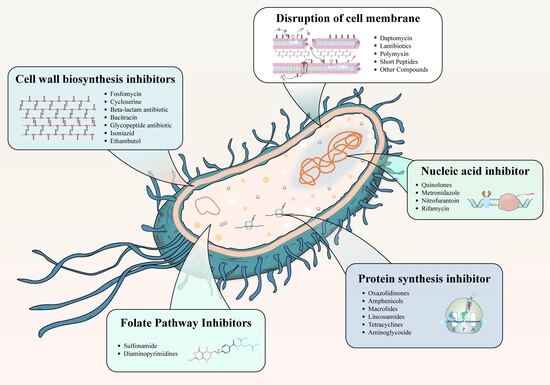
1. Introduction
2. Inhibitors of Cell Wall Biosynthesis
- Inhibition of cytoplasmic precursor synthesis
2.1. Fosfomycin
2.2. D–Cycloserine
- Inhibition of transglycosylation and transpeptidation
2.3. β–Lactam Antibiotics
2.4. Glycopeptide Antibiotic
- Inhibition of lipid carrier recycling
2.5. Bacitracin
- Other lipid carrier recycling inhibitors
- Mycobacterial cell wall inhibitors
2.6. Isoniazid
2.7. Ethambutol
3. Membrane–Disrupting Antibiotics
3.1. Daptomycin
3.2. Lantibiotics
3.3. Polymyxin
3.4. Short Peptides and Other Compounds
4. Inhibitors of Nucleic Acid
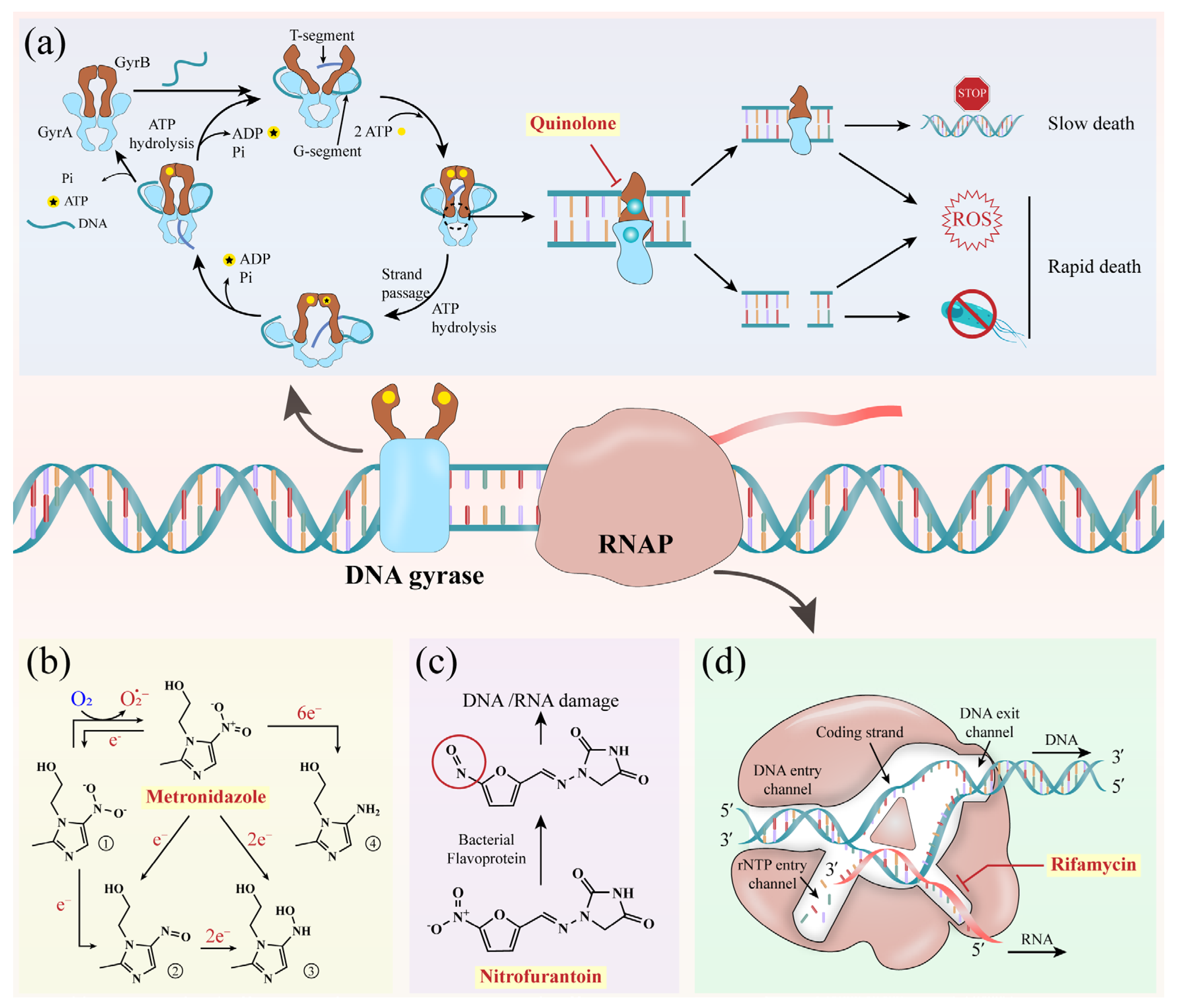
4.1. Quinolones
4.2. Metronidazole
4.3. Nitrofurantoin
4.4. Rifamycin
5. Inhibitors of Protein Synthesis
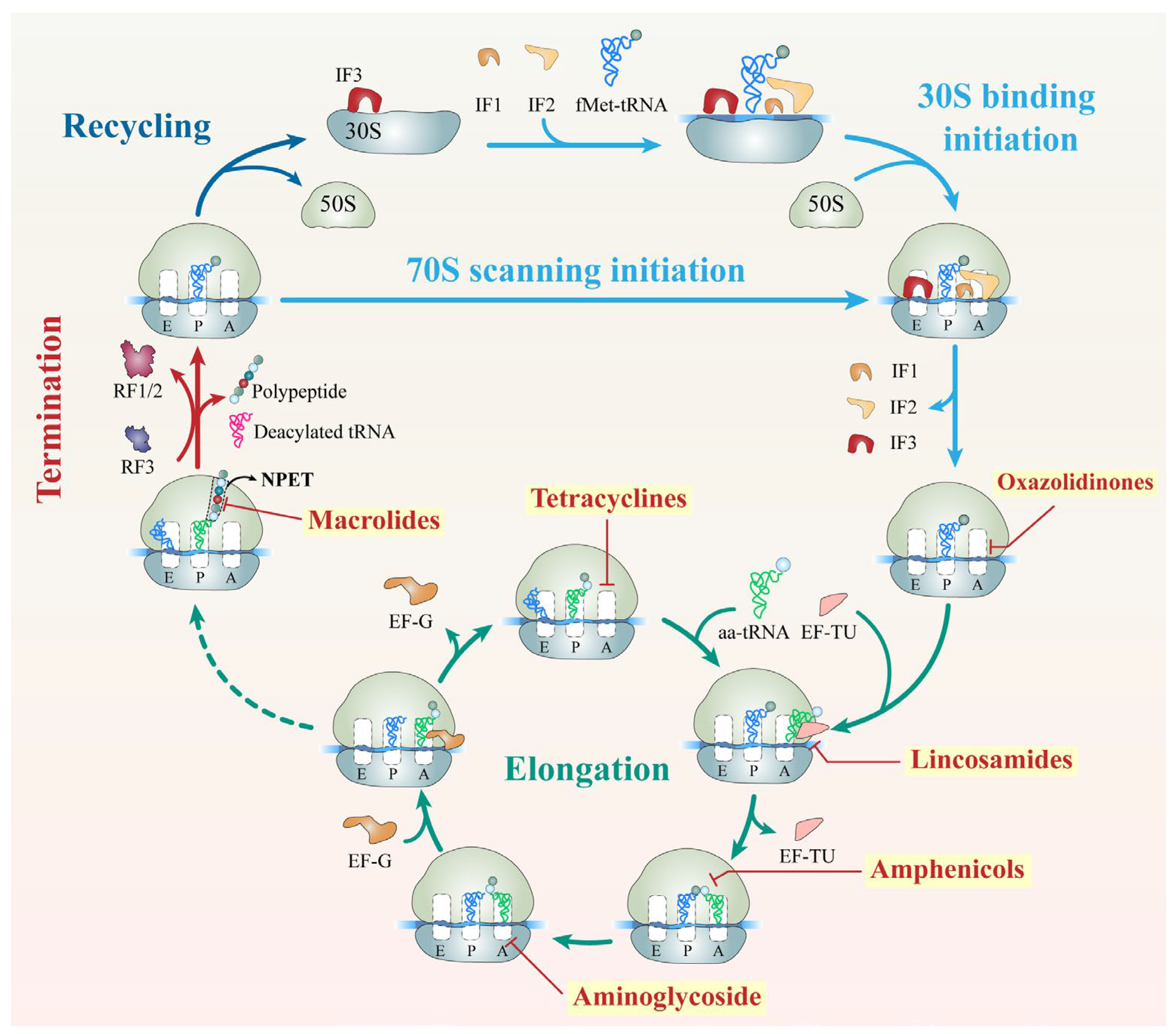
5.1. Oxazolidinones
5.2. Amphenicols
5.3. Macrolides
5.4. Lincosamides
5.5. Tetracyclines
5.6. Aminoglycosides
6. Metabolic Pathway Inhibitors: Targeting Folate Biosynthesis
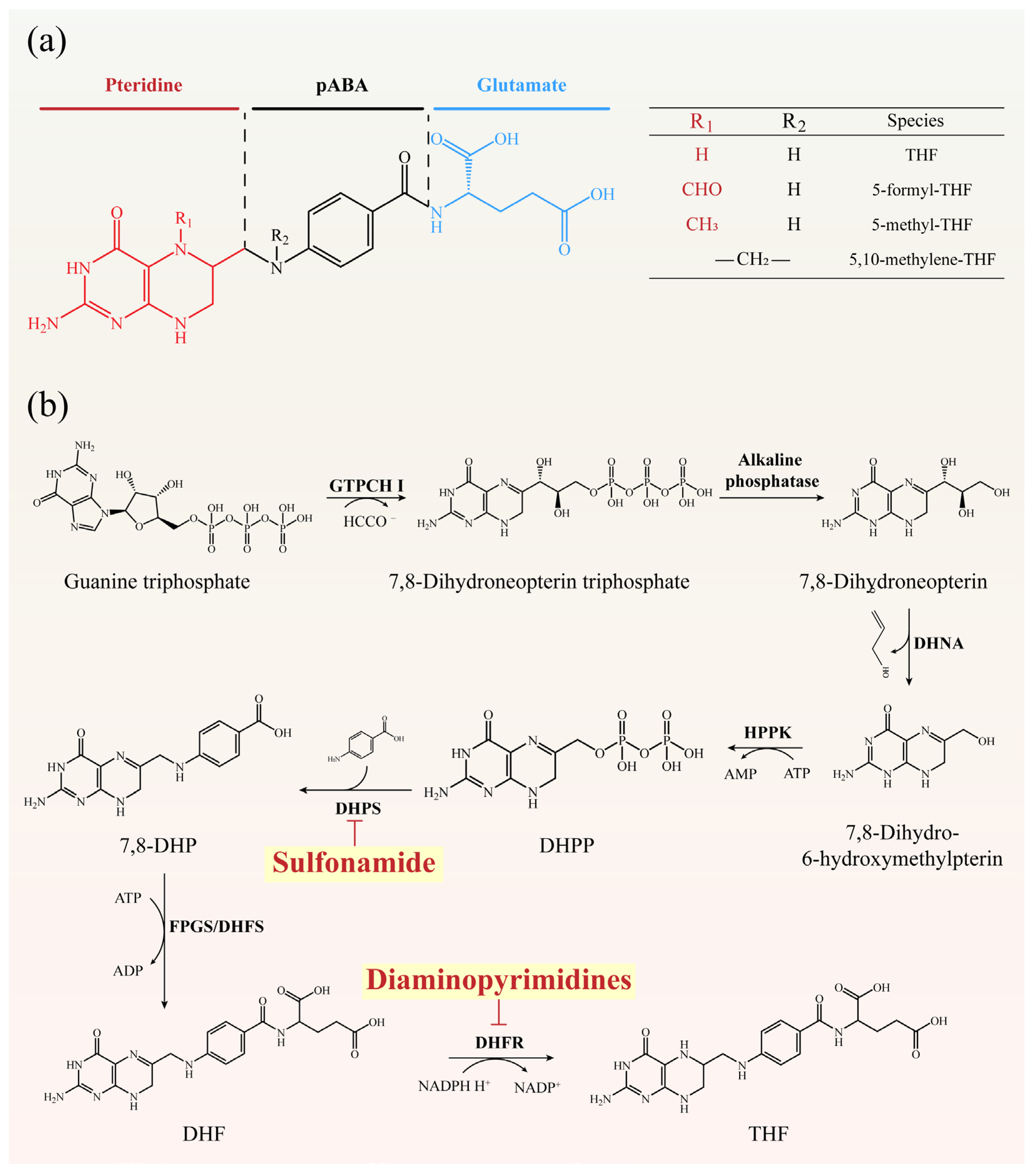
6.1. Sulfonamide
6.2. Diaminopyrimidines
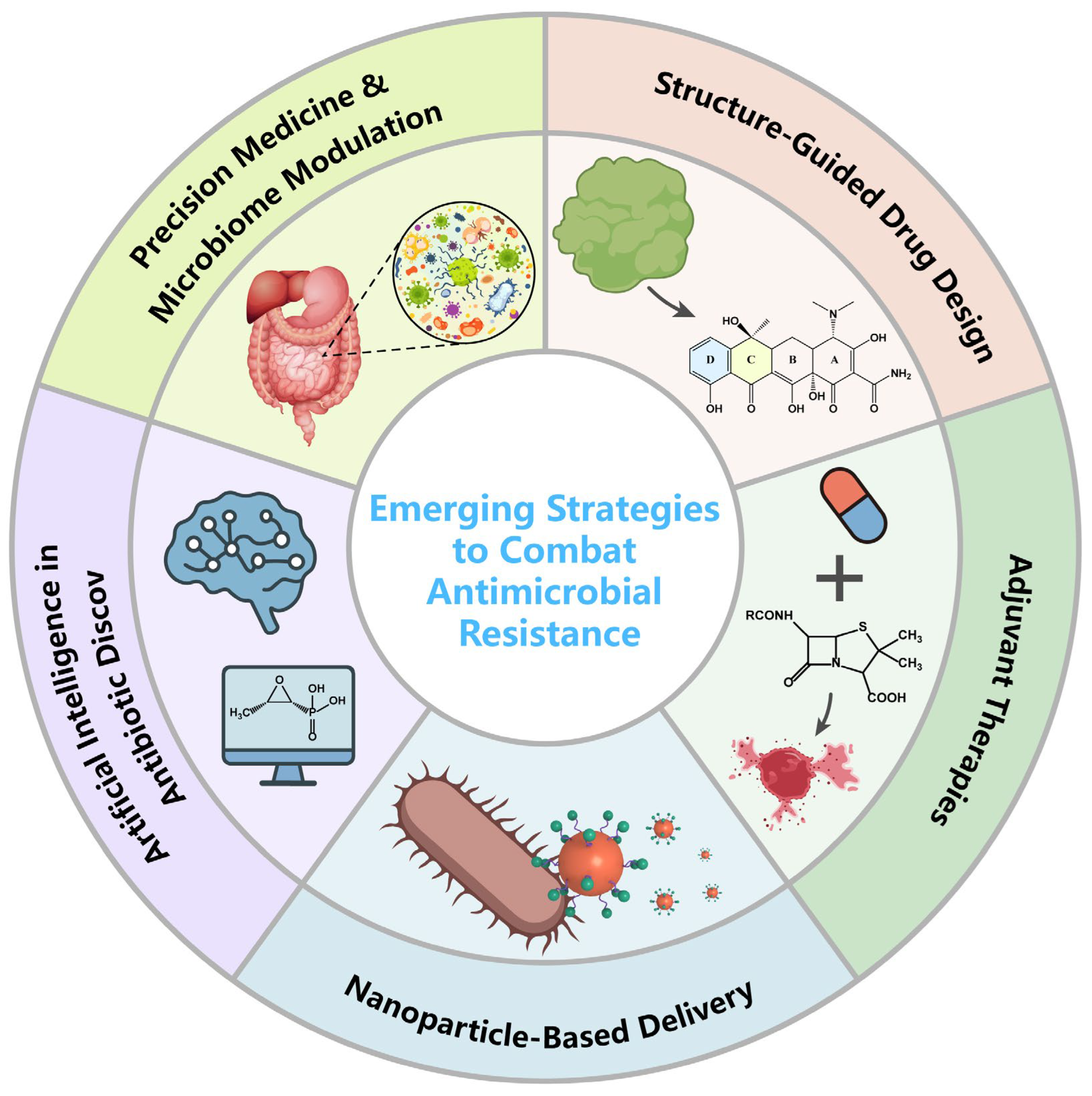
7. Emerging Strategies to Combat Antimicrobial Resistance
7.1. Structure–Guided Drug Design
7.2. Adjuvant Therapies
7.3. Nanoparticle–Based Delivery
7.4. Artificial Intelligence in Antibiotic Discovery
7.5. Precision Medicine and Microbiome Modulation
8. Conclusions
Supplementary Materials
Author Contributions
Funding
Institutional Review Board Statement
Informed Consent Statement
Data Availability Statement
Acknowledgments
Conflicts of Interest
Abbreviations
| AMR | Antimicrobial resistance |
| GLASS | Global Antimicrobial Resistance and Use Surveillance System |
| MRSA | Methicillin–resistant Staphylococcus aureus |
| PG | Peptidoglycan |
| NAG | N–acetylglucosamine |
| NAM | N–acetylmuramic acid |
| Alr | Alanine racemase |
| Ddl | D–alanine–D–alanine ligase |
| PBPs | Penicillin–binding proteins |
| SBLs | Serine β–lactamases |
| MBLs | Metallo–β–lactamases |
| BLIs | Β–lactamase inhibitors |
| C55–PP | Undecaprenyl pyrophosphate |
| C55–P | Undecaprenyl phosphate |
| UppP | Undecaprenyl pyrophosphate phosphatase |
| INH | Isoniazid |
| EMB | Ethambutol |
| PZA | Pyrazinamide |
| mAGP | Mycolyl–arabinogalactan–peptidoglycan |
| AMPs | Antimicrobial peptides |
| RIF | Regions of increased fluidity |
| PmB | Polymyxin B |
| PmE | Polymyxin E (colistin) |
| MDR | Multidrug–resistant |
| LPS | Lipopolysaccharide |
| FQs | Fluoroquinolones |
| ROS | Reactive oxygen species |
| QRDRs | Quinolone resistance–determining regions |
| RNAP | RNA polymerase |
| DC | Decoding center |
| PTC | Peptidyl transferase center |
| NPET | Nascent peptide exit tunnel |
| MAMs | Macrolide arrest motifs |
| AGAs | Aminoglycosides |
| 2–DOS | 2–deoxystreptamine |
| THF | Tetrahydrofolate |
| DHPS | Dihydropteroate synthase |
| DHFR | Dihydrofolate reductase |
| pABA | p–aminobenzoic acid |
| AI | Artificial intelligence |
References
- Cook, M.A.; Wright, G.D. The past, present, and future of antibiotics. Sci. Transl. Med. 2022, 14, eabo7793. [Google Scholar] [CrossRef]
- Habib, S.H.; Saha, S. Burden of non–communicable disease: Global overview. Diabetes Metab. Syndr. 2010, 4, 41–47. [Google Scholar] [CrossRef]
- GBD 2021 Antimicrobial Resistance Collaborators. Global burden of bacterial antimicrobial resistance 1990–2021: A systematic analysis with forecasts to 2050. Lancet 2024, 404, 1199–1226. [Google Scholar] [CrossRef]
- Miethke, M.; Pieroni, M.; Weber, T.; Brönstrup, M.; Hammann, P.; Halby, L.; Arimondo, P.B.; Glaser, P.; Aigle, B.; Bode, H.B.; et al. Towards the sustainable discovery and development of new antibiotics. Nat. Rev. Chem. 2021, 5, 726–749. [Google Scholar] [CrossRef]
- Daruka, L.; Czikkely, M.S.; Szili, P.; Farkas, Z.; Balogh, D.; Grézal, G.; Maharramov, E.; Vu, T.–H.; Sipos, L.; Juhász, S.; et al. ESKAPE pathogens rapidly develop resistance against antibiotics in development in vitro. Nat. Microbiol. 2025, 10, 313–331. [Google Scholar] [CrossRef]
- Ghannoum, M.A.; Rice, L.B. Antifungal agents: Mode of action, mechanisms of resistance, and correlation of these mechanisms with bacterial resistance. Clin. Microbiol. Rev. 1999, 12, 501–517. [Google Scholar] [CrossRef] [PubMed]
- Hasan, C.M.; Dutta, D.; Nguyen, A.N.T. Revisiting Antibiotic Resistance: Mechanistic Foundations to Evolutionary Outlook. Antibiotics 2021, 11, 40. [Google Scholar] [CrossRef] [PubMed]
- Reygaert, W.C. An overview of the antimicrobial resistance mechanisms of bacteria. AIMS Microbiol. 2018, 4, 482–501. [Google Scholar] [CrossRef] [PubMed]
- Barreteau, H.; Kovač, A.; Boniface, A.; Sova, M.; Gobec, S.; Blanot, D. Cytoplasmic steps of peptidoglycan biosynthesis. FEMS Microbiol. Rev. 2008, 32, 168–207. [Google Scholar] [CrossRef]
- Lovering, A.L.; Safadi, S.S.; Strynadka, N.C. Structural perspective of peptidoglycan biosynthesis and assembly. Annu. Rev. Biochem. 2012, 81, 451–478. [Google Scholar] [CrossRef]
- Egan, A.J.; Errington, J.; Vollmer, W. Regulation of peptidoglycan synthesis and remodelling. Nat. Rev. Microbiol. 2020, 18, 446–460. [Google Scholar] [CrossRef] [PubMed]
- Goer, A.; Blanchard, L.S.; Van Belkum, A.; Loftus, K.J.; Armstrong, T.P.; Gatermann, S.G.; Shortridge, D.; Olson, B.J.; Meece, J.K.; Fritsche, T.R.; et al. Multicenter evaluation of the novel ETEST fosfomycin for antimicrobial susceptibility testing of Enterobacterales, Enterococcus faecalis, and Staphylococcus species. J. Clin. Microbiol. 2022, 60, e0002122. [Google Scholar] [CrossRef]
- Dos Santos, C.; Dos Santos, L.S.; Franco, O.L. Fosfomycin and nitrofurantoin: Classic antibiotics and perspectives. J. Antibiot. 2021, 74, 547–558. [Google Scholar] [CrossRef]
- Kahan, F.M.; Kahan, J.S.; Cassidy, P.J.; Kropp, H. The mechanism of action of fosfomycin (phosphonomycin). Ann. N. Y. Acad. Sci. 1974, 235, 364–386. [Google Scholar] [CrossRef]
- Eschenburg, S.; Priestman, M.; Schönbrunn, E. Evidence that the fosfomycin target Cys115 in UDP–N–acetylglucosamine enolpyruvyl transferase (MurA) is essential for product release. J. Biol. Chem. 2005, 280, 3757–3763. [Google Scholar] [CrossRef]
- Laborda, P.; Martínez, J.L.; Amado, S. Convergent phenotypic evolution towards fosfomycin collateral sensitivity of Pseudomonas aeruginosa antibiotic–resistant mutants. Microb. Biotechnol. 2022, 15, 613–629. [Google Scholar] [CrossRef]
- Ramos, J.R.; Lletí, M.S. Fosfomycin in infections caused by multidrug–resistant Gram–negative pathogens. Rev. Esp. Quimioter. 2019, 32, 45–54. [Google Scholar] [PubMed] [PubMed Central]
- Corvec, S.; Furustrand Tafin, U.; Betrisey, B.; Borens, O.; Trampuz, A. Activities of fosfomycin, tigecycline, colistin, and gentamicin against extended–spectrum–β–lactamase–producing Escherichia coli in a foreign–body infection model. Antimicrob. Agents Chemother. 2013, 57, 1421–1427. [Google Scholar] [CrossRef]
- Harris, P.H.H.; Vernon, V.Y.; Roger, L.H.; Glenn, A.B.; Prosser, G.A.; de Carvalho, L.P. Kinetic mechanism and inhibition Structure and reactions of cycloserine. J. Am. Chem. Soc. 1955, 77, 2345–2346. [Google Scholar] [CrossRef]
- Prosser, G.A.; de Carvalho, L.P. Kinetic mechanism and inhibition of Mycobacterium tuberculosis D–alanine:D–alanine ligase by the antibiotic D–cycloserine. FEBS J. 2013, 280, 1150–1166. [Google Scholar] [CrossRef] [PubMed]
- Caminero, J.A.; Sotgiu, G.; Zumla, A.; Migliori, G.B. Best drug treatment for multidrug–resistant and extensively drug–resistant tuberculosis. Lancet Infect. Dis. 2010, 10, 621–629. [Google Scholar] [CrossRef]
- Franco, T.M.A.; Favrot, L.; Vergnolle, O.; Blanchard, J.S. Mechanism–based inhibition of the Mycobacterium tuberculosis branched–chain aminotransferase by D– and L–cycloserine. ACS Chem. Biol. 2017, 12, 1235–1240. [Google Scholar] [CrossRef]
- Gao, S.; Liu, H.; Lagard, V.; Zhu, W.; Richards, N.G.J.; Naismith, J.H. PMP–diketopiperazine adducts form at the active site of a PLP dependent enzyme involved in formycin biosynthesis. Chem. Commun. 2019, 55, 14502–14505. [Google Scholar] [CrossRef]
- Wohlleben, W.; Mast, Y.; Stegmann, E.; Ziemert, N. Antibiotic drug discovery. Microb. Biotechnol. 2016, 9, 541–548. [Google Scholar] [CrossRef] [PubMed]
- Kohanski, M.A.; Dwyer, D.J.; Collins, J.J. How antibiotics kill bacteria: From targets to networks. Nat. Rev. Microbiol. 2010, 8, 423–435. [Google Scholar] [CrossRef] [PubMed]
- Miyachiro, M.M.; Martel, C.; Dessen, A. Penicillin–binding proteins (PBPs) and bacterial cell wall elongation complexes. Subcell. Biochem. 2019, 93, 273–289. [Google Scholar] [CrossRef]
- Rotondo, C.M.; Wright, G.D. Inhibitors of metallo–β–lactamases. Curr. Opin. Microbiol. 2017, 39, 96–105. [Google Scholar] [CrossRef]
- Kebriaei, R.; Rice, S.A.; Singh, N.B.; Stamper, K.C.; Nguyen, L.; Sheikh, Z.; Rybak, M.J. Combinations of (lipo)glycopeptides with β–lactams against MRSA: Susceptibility insights. J. Antimicrob. Chemother. 2020, 75, 2894–2901. [Google Scholar] [CrossRef]
- Bush, K.; Bradford, P.A. Interplay between β–lactamases and new β–lactamase inhibitors. Nat. Rev. Microbiol. 2019, 17, 295–306. [Google Scholar] [CrossRef]
- Sarkar, P.; Yarlagadda, V.; Ghosh, C.; Haldar, J. A review on cell wall synthesis inhibitors with an emphasis on glycopeptide antibiotics. MedChemComm 2017, 8, 516–533. [Google Scholar] [CrossRef] [PubMed]
- Kaniusaite, M.; Kittila, T.; Goode, R.J.A.; Schittenhelm, R.B.; Cryle, M.J. Redesign of substrate selection in glycopeptide antibiotic biosynthesis enables effective formation of alternate peptide backbones. ACS Chem. Biol. 2020, 15, 2444–2455. [Google Scholar] [CrossRef] [PubMed]
- Blaskovich, M.A.T.; Hansford, K.A.; Butler, M.S.; Jia, Z.; Mark, A.E.; Cooper, M.A. Developments in glycopeptide antibiotics. ACS Infect. Dis. 2018, 4, 715–735. [Google Scholar] [CrossRef] [PubMed]
- Butler, M.S.; Hansford, K.A.; Blaskovich, M.A.; Halai, R.; Cooper, M.A. Glycopeptide antibiotics: Back to the future. J. Antibiot. 2014, 67, 631–644. [Google Scholar] [CrossRef] [PubMed]
- Abruzzo, A.; Giordani, B.; Miti, A.; Vitali, B.; Zuccheri, G.; Cerchiara, T.; Luppi, B.; Bigucci, F. Mucoadhesive and mucopenetrating chitosan nanoparticles for glycopeptide antibiotic administration. Int. J. Pharm. 2021, 606, 120874. [Google Scholar] [CrossRef]
- Zhu, J.; Wang, S.; Wang, C.; Wang, Z.; Luo, G.; Li, J.; Zhan, Y.; Cai, D.; Chen, S. Microbial synthesis of bacitracin: Recent progress, challenges, and prospects. Synth. Syst. Biotechnol. 2023, 8, 314–322. [Google Scholar] [CrossRef]
- Siewert, G.; Strominger, J.L. Bacitracin: An inhibitor of the dephosphorylation of lipid pyrophosphate, an intermediate in the biosynthesis of the peptidoglycan of bacterial cell walls. Proc. Natl. Acad. Sci. USA 1967, 57, 767–773. [Google Scholar] [CrossRef]
- Ming, L.J.; Epperson, J.D. Metal binding and structure–activity relationship of the metalloantibiotic peptide bacitracin. J. Inorg. Biochem. 2002, 91, 46–58. [Google Scholar] [CrossRef]
- Singh, S.; Mishra, P. Bacitracin and isothiocyanate functionalized silver nanoparticles for synergistic and broad spectrum antibacterial and antibiofilm activity with selective toxicity to bacteria over mammalian cells. Biomater. Adv. 2022, 133, 112649. [Google Scholar] [CrossRef]
- Lin, T.; Jiang, G.; Lin, D.; Lai, Y.; Hou, L.; Zhao, S. Bacitracin–functionalized dextran–MoSe2 with peroxidase–like and near–infrared photothermal activities for low–temperature and synergetic antibacterial applications. ACS Appl. Bio Mater. 2022, 5, 2347–2354. [Google Scholar] [CrossRef]
- Diehl, A.; Wood, T.M.; Gebhard, S.; Martin, N.I.; Fritz, G. The cell envelope stress response of Bacillus subtilis towards L–aspartomycin C. Antibiotics 2020, 9, 729. [Google Scholar] [CrossRef]
- Jukič, M.; Auger, R.; Folcher, V.; Proj, M.; Barreteau, H.; Gobec, S.; Touzé, T. Towards discovery of inhibitors of the undecaprenyl–pyrophosphate phosphatase BacA by virtual high–throughput screening. Comput. Struct. Biotechnol. J. 2022, 20, 2360–2371. [Google Scholar] [CrossRef]
- Dulberger, C.L.; Rubin, E.J.; Boutte, C.C. The mycobacterial cell envelope—A moving target. Nat. Rev. Microbiol. 2020, 18, 47–59. [Google Scholar] [CrossRef]
- Zhang, Y.; Shi, W.; Zhang, W.; Mitchison, D. Mechanisms of pyrazinamide action and resistance. Microbiol. Spectr. 2013, 2, 1–12. [Google Scholar] [CrossRef]
- Brandao, A.P.; Ferreira, F.M.d.A.; Simeao, F.C.d.S.; Ferrazoli, L.; Chimara, E.; de Oliveira, R.S.; Pinhata, J.M.W. Off–label evaluation of the BD MAX MDR–TB assay for rapid diagnosis of rifampicin and isoniazid resistance of Mycobacterium tuberculosis clinical isolates in a high–volume reference laboratory. J. Clin. Microbiol. 2025, 63, e0091225. [Google Scholar] [CrossRef]
- Mohammadnabi, N.; Shamseddin, J.; Emadi, M.; Bodaghi, A.B.; Varseh, M.; Shariati, A.; Rezaei, M.; Dastranj, M.; Farahani, A. Mycobacterium tuberculosis: The Mechanism of Pathogenicity, Immune Responses, and Diagnostic Challenges. J. Clin. Lab. Anal. 2024, 38, e25122. [Google Scholar] [CrossRef]
- Ahmad, Z.; Klinkenberg, L.G.; Pinn, M.L.; Fraig, M.M.; Peloquin, C.A.; Bishai, W.R.; Nuermberger, E.L.; Grosset, J.H.; Karakousis, P.C. Biphasic kill curve of isoniazid reveals the presence of drug–tolerant, not drug–resistant, Mycobacterium tuberculosis in the guinea pig. J. Infect. Dis. 2009, 200, 1136–1143. [Google Scholar] [CrossRef] [PubMed]
- Chakraborty, S.; Rhee, K.Y. Tuberculosis drug development: History and evolution of the mechanism–based paradigm. Cold Spring Harb. Perspect. Med. 2015, 5, a021147. [Google Scholar] [CrossRef] [PubMed]
- Sun, Q.; Xiao, T.Y.; Liu, H.C.; Zhao, X.Q.; Liu, Z.G.; Li, Y.N.; Zeng, H.; Zhao, L.L.; Wan, K.L. Mutations within embCAB are associated with variable level of ethambutol resistance in Mycobacterium tuberculosis isolates from China. Antimicrob. Agents Chemother. 2018, 62, e01279–17. [Google Scholar] [CrossRef] [PubMed]
- Zhao, L.L.; Sun, Q.; Liu, H.C.; Wu, X.C.; Xiao, T.Y.; Zhao, X.Q.; Li, G.L.; Jiang, Y.; Zeng, C.Y.; Wan, K.L. Analysis of embCAB mutations associated with ethambutol resistance in multidrug–resistant Mycobacterium tuberculosis isolates from China. Antimicrob. Agents Chemother. 2015, 59, 2045–2050. [Google Scholar] [CrossRef]
- Zhang, L.; Zhao, Y.; Gao, Y.; Wu, L.; Gao, R.; Zhang, Q.; Wang, Y.; Wu, C.; Wu, F.; Gurcha, S.S.; et al. Structures of cell wall arabinosyltransferases with the anti–tuberculosis drug ethambutol. Science 2020, 368, 1211–1219. [Google Scholar] [CrossRef]
- Strahl, H.; Errington, J. Bacterial membranes: Structure, domains and function. Annu. Rev. Microbiol. 2017, 71, 519–538. [Google Scholar] [CrossRef]
- Bahar, A.A.; Ren, D. Antimicrobial peptides. Pharmaceuticals 2013, 6, 1543–1575. [Google Scholar] [CrossRef]
- Epand, R.M.; Walker, C.; Epand, R.F.; Magarvey, N.A. Molecular mechanisms of membrane targeting antibiotics. Biochim. Biophys. Acta 2016, 1858, 980–987. [Google Scholar] [CrossRef]
- Brogden, K.A. Antimicrobial peptides: Pore formers or metabolic inhibitors in bacteria? Nat. Rev. Microbiol. 2005, 3, 238–250. [Google Scholar] [CrossRef] [PubMed]
- Gordon, Y.J.; Romanowski, E.G.; McDermott, A.M. A review of antimicrobial peptides and their therapeutic potential as anti–infective drugs. Curr. Eye Res. 2005, 30, 505–515. [Google Scholar] [CrossRef]
- Wang, Z.Z.; Weng, J.; Qi, J.; Fu, X.X.; Xing, B.B.; Hu, Y.; Huang, C.H.; Chen, C.Y.; Wei, Z. Structure–guided discovery of novel dUTPase inhibitors with anti–Nocardia activity by computational design. J. Enzym. Inhib. Med. Chem. 2024, 39, 2411573. [Google Scholar] [CrossRef]
- Gray, D.A.; Wenzel, M. More than a pore: A current perspective on the in vivo mode of action of the lipopeptide antibiotic daptomycin. Antibiotics 2020, 9, 17. [Google Scholar] [CrossRef]
- Canepari, P.; Boaretti, M.; Lleo, M.M.; Satta, G. Lipoteichoic acid as a new target for activity of antibiotics: Mode of action of daptomycin (LY146032). Antimicrob. Agents Chemother. 1990, 34, 1220–1226. [Google Scholar] [CrossRef]
- Zhang, T.; Muraih, J.K.; MacCormick, B.; Silverman, J.; Palmer, M. Daptomycin forms cation– and size–selective pores in model membranes. Biochim. Biophys. Acta 2014, 1838, 2425–2430. [Google Scholar] [CrossRef] [PubMed]
- Jiang, L.; Ding, L.; Liu, G. Nanoparticle formulations for therapeutic delivery, pathogen imaging and theranostic applications in bacterial infections. Theranostics 2023, 13, 1545–1570. [Google Scholar] [CrossRef] [PubMed]
- Islam, M.R.; Nagao, J.; Zendo, T.; Sonomoto, K. Antimicrobial mechanism of lantibiotics. Biochem. Soc. Trans. 2012, 40, 1528–1533. [Google Scholar] [CrossRef]
- Panina, I.; Taldaev, A.; Efremov, R.; Chugunov, A. Molecular dynamics insight into the lipid II recognition by type A lantibiotics: Nisin, epidermin, and gallidermin. Micromachines 2021, 12, 1169. [Google Scholar] [CrossRef]
- Hasper, H.E.; Kramer, N.E.; Smith, J.L.; Hillman, J.; Zachariah, C.; Kuipers, O.P.; De Kruijff, B.; Breukink, E. An alternative bactericidal mechanism of action for lantibiotic peptides that target lipid II. Science 2006, 313, 1636–1637. [Google Scholar] [CrossRef]
- Barbosa, J.C.; Gonçalves, S.; Makowski, M.; Caetano, T.; Schneider, T.; Mösker, E.; Süssmuth, R.D.; Santos, N.C.; Mendo, S. Insights into the mode of action of the two–peptide lantibiotic lichenicidin. Colloids Surf. B Biointerfaces 2022, 211, 112308. [Google Scholar] [CrossRef]
- Field, D.; Cotter, P.D.; Ross, R.P.; Hill, C. Bioengineering of the model lantibiotic nisin. Bioengineered 2015, 6, 187–192. [Google Scholar] [CrossRef]
- Kwa, A.; Kasiakou, S.K.; Tam, V.H.; Falagas, M.E. Polymyxin B: Similarities to and differences from colistin (polymyxin E). Expert Rev. Anti Infect. Ther. 2007, 5, 811–821. [Google Scholar] [CrossRef] [PubMed]
- Falagas, M.E.; Kasiakou, S.K. Toxicity of polymyxins: A systematic review of the evidence from old and recent studies. Crit. Care 2006, 10, R27. [Google Scholar] [CrossRef] [PubMed]
- Khondker, A.; Dhaliwal, A.K.; Saem, S.; Mahmood, A.; Fradin, C.; Mirabal, J.; Rheinstädter, M.C. Membrane charge and lipid packing determine polymyxin–induced membrane damage. Commun. Biol. 2019, 2, 67. [Google Scholar] [CrossRef]
- Khondker, A.; Rheinstädter, M.C. How do bacterial membranes resist polymyxin antibiotics? Commun. Biol. 2020, 3, 77. [Google Scholar] [CrossRef]
- Sabnis, A.; Hagart, K.L.; Klöckner, A.; Becce, M.; Evans, L.E.; Furniss, R.C.D.; Mavridou, D.A.; Murphy, R.; Stevens, M.M.; Davies, J.C.; et al. Colistin kills bacteria by targeting lipopolysaccharide in the cytoplasmic membrane. eLife 2021, 10, e65836. [Google Scholar] [CrossRef] [PubMed]
- Fu, L.; Wan, M.; Zhang, S.; Gao, L.; Fang, W. Polymyxin B loosens lipopolysaccharide bilayer but stiffens phospholipid bilayer. Biophys. J. 2020, 118, 138–150. [Google Scholar] [CrossRef]
- Clausell, A.; Busquets, M.A.; Pujol, M.; Alsina, A.; Cajal, Y. Polymyxin B–lipid interactions in Langmuir–Blodgett monolayers of Escherichia coli lipids: A thermodynamic and atomic force microscopy study. Biopolymers 2004, 75, 480–490. [Google Scholar] [CrossRef]
- Luo, X.; Wu, W.; Feng, L.; Treves, H.; Ren, M. Short peptides make a big difference: The role of botany–derived AMPs in disease control and protection of human health. Int. J. Mol. Sci. 2021, 22, 11363. [Google Scholar] [CrossRef]
- Strøm, M.B.; Haug, B.E.; Skar, M.L.; Stensen, W.; Stiberg, T.; Svendsen, J.S. The pharmacophore of short cationic antibacterial peptides. J. Med. Chem. 2003, 46, 1567–1570. [Google Scholar] [CrossRef] [PubMed]
- Dias, B.E.; Stensen, W.; Kalaaji, M.; Svendsen, J.S. Synthetic antimicrobial peptidomimetics with therapeutic potential. J. Med. Chem. 2008, 51, 4306–4314. [Google Scholar] [CrossRef] [PubMed]
- Mardirossian, M.; Rubini, M.; Adamo, M.F.A.; Scocchi, M.; Saviano, M.; Tossi, A.; Gennaro, R.; Caporale, A. Natural and synthetic halogenated amino acids—Structural and bioactive features in antimicrobial peptides and peptidomimetics. Molecules 2021, 26, 7401. [Google Scholar] [CrossRef]
- Epand, R.F.; Pollard, J.E.; Wright, J.O.; Savage, P.B.; Epand, R.M. Depolarization, bacterial membrane composition, and the antimicrobial action of ceragenins. Antimicrob. Agents Chemother. 2010, 54, 3708–3713. [Google Scholar] [CrossRef]
- Baker, J.L.; Tang, X.; LaBonte, S.; Uranga, C.; Edlund, A. mucG, mucH, and mucI modulate production of mutanocyclin and reutericyclins in Streptococcus mutans B04Sm5. J. Bacteriol. 2022, 204, e0004222. [Google Scholar] [CrossRef] [PubMed]
- Caffrey, P.; Hogan, M.; Song, Y. New glycosylated polyene macrolides: Refining the ore from genome mining. Antibiotics 2022, 11, 334. [Google Scholar] [CrossRef]
- Leclercq, M.P.; Décout, J.L. Bacterial lipid membranes as promising targets to fight antimicrobial resistance, molecular foundations and illustration through the renewal of aminoglycoside antibiotics and emergence of amphiphilic aminoglycosides. MedChemComm 2016, 7, 586–611. [Google Scholar] [CrossRef]
- Khodursky, A.B.; Peter, B.J.; Schmid, M.B.; DeRisi, J.; Botstein, D.; Brown, P.O.; Cozzarelli, N.R. Analysis of topoisomerase function in bacterial replication fork movement: Use of DNA microarrays. Proc. Natl. Acad. Sci. USA 2000, 97, 9419–9424. [Google Scholar] [CrossRef]
- Heeb, S.; Fletcher, M.P.; Chhabra, S.R.; Diggle, S.P.; Williams, P.; Cámara, M. Quinolones: From antibiotics to autoinducers. FEMS Microbiol. Rev. 2011, 35, 247–274. [Google Scholar] [CrossRef]
- Bax, B.D.; Chan, P.F.; Eggleston, D.S.; Fosberry, A.; Gentry, D.R.; Gorrec, F.; Giordano, I.; Hann, M.M.; Hennessy, A.; Hibbs, M.; et al. Type IIA topoisomerase inhibition by a new class of antibacterial agents. Nature 2010, 466, 935–940. [Google Scholar] [CrossRef]
- Bush, N.G.; Santos, I.; Abbott, L.R.; Maxwell, A. Quinolones: Mechanism, lethality and their contributions to antibiotic resistance. Molecules 2020, 25, 5662. [Google Scholar] [CrossRef]
- Drlica, K.; Malik, M.; Kerns, R.J.; Zhao, X. Quinolone–mediated bacterial death. Antimicrob. Agents Chemother. 2008, 52, 385–392. [Google Scholar] [CrossRef]
- Hong, Y.; Li, L.; Luan, G.; Drlica, K.; Zhao, X. Contribution of reactive oxygen species to thymineless death in Escherichia coli. Nat. Microbiol. 2017, 2, 1667–1675. [Google Scholar] [CrossRef] [PubMed]
- Liu, Y.; Imlay, J.A. Cell death from antibiotics without the involvement of reactive oxygen species. Science 2013, 339, 1210–1213. [Google Scholar] [CrossRef] [PubMed]
- Kareem, S.M.; Kadmy, I.M.S.; Kazaal, S.S.; Mohammed Ali, A.N.; Aziz, S.N.; Makharita, R.R.; Algammal, A.M.; Al–Rejaie, S.; Behl, T.; Batiha, G.E.–S.; et al. Detection of gyrA and parC mutations and prevalence of plasmid–mediated quinolone resistance genes in Klebsiella pneumoniae. Infect. Drug Resist. 2021, 14, 555–563. [Google Scholar] [CrossRef] [PubMed]
- Ruiz, J. Mechanisms of resistance to quinolones: Target alterations, decreased accumulation and DNA gyrase protection. J. Antimicrob. Chemother. 2003, 51, 1109–1117. [Google Scholar] [CrossRef]
- Dingsdag, S.A.; Hunter, N. Metronidazole: An update on metabolism, structure–cytotoxicity and resistance mechanisms. J. Antimicrob. Chemother. 2018, 73, 265–279. [Google Scholar] [CrossRef]
- Leitsch, D. A review on metronidazole: An old warhorse in antimicrobial chemotherapy. Parasitology 2019, 146, 1167–1178. [Google Scholar] [CrossRef]
- Löfmark, S.; Edlund, C.; Nord, C.E. Metronidazole is still the drug of choice for treatment of anaerobic infections. Clin. Infect. Dis. 2010, 50, S16–S23. [Google Scholar] [CrossRef]
- Muller, A.E.; Verhaegh, E.M.; Harbarth, S.; Mouton, J.W.; Huttner, A. Nitrofurantoin’s efficacy and safety as prophylaxis for urinary tract infections: A systematic review of the literature and meta–analysis of controlled trials. Clin. Microbiol. Infect. 2017, 23, 355–362. [Google Scholar] [CrossRef] [PubMed]
- Wijma, R.A.; Fransen, F.; Muller, A.E.; Mouton, J.W. Optimizing dosing of nitrofurantoin from a PK/PD point of view: What do we need to know? Drug Resist. Updates 2019, 43, 1–9. [Google Scholar] [CrossRef]
- Wan, F.; Wong, F.; Collins, J.J.; Nunez, C. Machine learning for antimicrobial peptide identification and design. Nat. Rev. Bioeng. 2024, 2, 392–407. [Google Scholar] [CrossRef]
- Giedraitiene, A.; Pereckaite, L.; Gruodiene, E.; Virgailis, M.; Ciapiene, I.; Tatarunas, V. CTX–M–producing Escherichia coli strains: Resistance to temocillin, fosfomycin, nitrofurantoin and biofilm formation. Future Microbiol. 2022, 17, 789–802. [Google Scholar] [CrossRef] [PubMed]
- Whiteway, J.; Koziarz, P.; Veall, J.; Sandhu, N.; Kumar, P.; Hoecher, B.; Lambert, I.B. Oxygen–insensitive nitroreductases: Analysis of the roles of nfsA and nfsB in development of resistance to 5–nitrofuran derivatives in Escherichia coli. J. Bacteriol. 1998, 180, 5529–5539. [Google Scholar] [CrossRef]
- Adams, R.A.; Leon, G.; Miller, N.M.; Reyes, S.P.; Thantrong, C.H.; Thokkadam, A.M.; Lemma, A.S.; Sivaloganathan, D.M.; Wan, X.; Brynildsen, M.P. Rifamycin antibiotics and the mechanisms of their failure. J. Antibiot. 2021, 74, 786–798. [Google Scholar] [CrossRef]
- Hoy, S.M. Rifamycin SV MMX®: A review in the treatment of traveller’s diarrhoea. Clin. Drug Investig. 2019, 39, 691–697. [Google Scholar] [CrossRef] [PubMed]
- Campbell, E.A.; Korzheva, N.; Mustaev, A.; Murakami, K.; Nair, S.; Goldfarb, A.; Darst, S.A. Structural mechanism for rifampicin inhibition of bacterial RNA polymerase. Cell 2001, 104, 901–912. [Google Scholar] [CrossRef]
- Wehrli, W. Rifampin: Mechanisms of action and resistance. Rev. Infect. Dis. 1983, 5, S407–S411. [Google Scholar] [CrossRef]
- Severinov, K.; Mustaev, A.; Severinova, E.; Kozlov, M.; Darst, S.A.; Goldfarb, A. The β subunit Rif–cluster I is only angstroms away from the active center of Escherichia coli RNA polymerase. J. Biol. Chem. 1995, 270, 29428–29432. [Google Scholar] [CrossRef]
- Ramakrishnan, V. Ribosome structure and the mechanism of translation. Cell 2002, 108, 557–572. [Google Scholar] [CrossRef] [PubMed]
- Choi, J.; Marks, J.; Zhang, J.; Chen, D.H.; Wang, J.; Laslop, N.; Mankin, A.S.; Puglisi, J.D. Dynamics of the context–specific translation arrest by chloramphenicol and linezolid. Nat. Chem. Biol. 2020, 16, 310–317. [Google Scholar] [CrossRef] [PubMed]
- Leach, K.L.; Swaney, S.M.; Colca, J.R.; McDonald, W.G.; Blinn, J.R.; Thomasco, L.M.; Gadwood, R.C.; Shinabarger, D.; Xiong, L.; Mankin, A.S. The site of action of oxazolidinone antibiotics in living bacteria and in human mitochondria. Mol. Cell. 2007, 26, 393–402. [Google Scholar] [CrossRef] [PubMed]
- Marks, J.; Kannan, K.; Roncase, E.J.; Klepacki, D.; Kefi, A.; Orelle, C.; Vázquez-Laslop, N.; Mankin, A.S. Context–specific inhibition of translation by ribosomal antibiotics targeting the peptidyl transferase center. Proc. Natl. Acad. Sci. USA 2016, 113, 12150–12155. [Google Scholar] [CrossRef]
- Almutairi, M.M.; Svetlov, M.S.; Hansen, D.A.; Khabibullina, N.F.; Klepacki, D.; Kang, H.Y.; Sherman, D.H.; Vázquez–Laslop, N.; Polikanov, Y.S.; Mankin, A.S. Co–produced natural ketolides methymycin and pikromycin inhibit bacterial growth by preventing synthesis of a limited number of proteins. Nucleic Acids Res. 2017, 45, 9573–9582. [Google Scholar] [CrossRef]
- Zhanel, G.G.; Esquivel, J.; Zelenitsky, S.; Lawrence, C.K.; Adam, H.J.; Golden, A.; Hink, R.; Berry, L.; Schweizer, F.; Zhanel, M.A.; et al. Omadacycline: A novel oral and intravenous aminomethylcycline antibiotic agent. Drugs 2020, 80, 285–313. [Google Scholar] [CrossRef]
- Beckert, B.; Leroy, E.C.; Sothiselvam, S.; Bock, L.V.; Svetlov, M.S.; Graf, M.; Arenz, S.; Abdelshahid, M.; Seip, B.; Grubmüller, H.; et al. Structural and mechanistic basis for translation inhibition by macrolide and ketolide antibiotics. Nat. Commun. 2021, 12, 4466. [Google Scholar] [CrossRef]
- Spizek, J.; Rezanka, T. Lincosamides: Chemical structure, biosynthesis, mechanism of action, resistance, and applications. Biochem. Pharmacol. 2017, 133, 20–28. [Google Scholar] [CrossRef]
- Schwarz, S.; Shen, J.; Kadlec, K.; Wang, Y.; Brenner Michael, G.; Fessler, A.T.; Vester, B. Lincosamides, Streptogramins, Phenicols, and Pleuromutilins: Mode of Action and Mechanisms of Resistance. Cold Spring Harb. Perspect. Med. 2016, 6, a027037. [Google Scholar] [CrossRef]
- Arenz, S.; Wilson, D.N. Bacterial protein synthesis as a target for antibiotic inhibition. Cold Spring Harb. Perspect. Med. 2016, 6, a025361. [Google Scholar] [CrossRef]
- Mori, T.; Kadlcik, S.; Lyu, S.; Kamenik, Z.; Sakurada, K.; Mazumdar, A.; Wang, H.; Janata, J.; Abe, I. Molecular basis for carrier protein–dependent amide bond formation in the biosynthesis of lincosamide antibiotics. Nat. Catal. 2023, 6, 531–542. [Google Scholar] [CrossRef]
- Mori, T.; Abe, I. Lincosamide antibiotics: Structure, activity, and biosynthesis. ChemBioChem 2024, 25, e202300840. [Google Scholar] [CrossRef]
- Chopra, I.; Roberts, M. Tetracycline antibiotics: Mode of action, applications, molecular biology, and epidemiology of bacterial resistance. Microbiol. Mol. Biol. Rev. 2001, 65, 232–260. [Google Scholar] [CrossRef]
- Nguyen, F.; Starosta, A.L.; Arenz, S.; Sohmen, D.; Donhofer, A.; Wilson, D.N. Tetracycline antibiotics and resistance mechanisms. Biol. Chem. 2014, 395, 559–575. [Google Scholar] [CrossRef]
- Rusu, A.; Buta, E.L. The development of third–generation tetracycline antibiotics and new perspectives. Pharmaceutics 2021, 13, 2085. [Google Scholar] [CrossRef] [PubMed]
- Hawkey, P.; Finch, R. Tigecycline: In–vitro performance as a predictor of clinical efficacy. Clin. Microbiol. Infect. 2007, 13, 354–362. [Google Scholar] [CrossRef] [PubMed]
- Zhanel, G.G.; Walters, M.; Noreddin, A.; Vercaigne, L.M.; Wierzbowski, A.; Embil, J.M.; Gin, A.S.; Douthwaite, S.; Hoban, D.J. The ketolides: A critical review. Drugs 2002, 62, 1771–1804. [Google Scholar] [CrossRef] [PubMed]
- Kaufman, M.; Siomin, L.; Fridman, M. The relationship between the structure and toxicity of aminoglycoside antibiotics. Bioorganic Med. Chem. Lett. 2020, 30, 127218. [Google Scholar] [CrossRef]
- Magnet, S.; Blanchard, J.S. Molecular insights into aminoglycoside action and resistance. Chem. Rev. 2005, 105, 477–498. [Google Scholar] [CrossRef]
- Wohlgemuth, I.; Garofalo, R.; Samatova, E.; Gunenc, A.N.; Lenz, C.; Urlaub, H.; Rodnina, M.V. Translation error clusters induced by aminoglycoside antibiotics. Nat. Commun. 2021, 12, 1830. [Google Scholar] [CrossRef]
- Hanson, A.D.; Gregory, J.F. Folate biosynthesis, turnover, and transport in plants. Annu. Rev. Plant Biol. 2011, 62, 105–125. [Google Scholar] [CrossRef] [PubMed]
- Chen, X.; Mirihana Arachchilage, G.; Breaker, R.R. Biochemical validation of a second class of tetrahydrofolate riboswitches in bacteria. RNA 2019, 25, 1091–1097. [Google Scholar] [CrossRef]
- Bermingham, A.; Derrick, J.P. The folic acid biosynthesis pathway in bacteria: Evaluation of potential for antibacterial drug discovery. BioEssays 2002, 24, 637–648. [Google Scholar] [CrossRef] [PubMed]
- Green, J.M.; Matthews, R.G. Folate biosynthesis, reduction, and polyglutamylation and the interconversion of folate derivatives. EcoSal Plus 2007, 2. [Google Scholar] [CrossRef]
- He, J.; Qiao, W.; An, Q.; Yang, T.; Luo, Y. Dihydrofolate reductase inhibitors for use as antimicrobial agents. Eur. J. Med. Chem. 2020, 195, 112268. [Google Scholar] [CrossRef] [PubMed]
- Ovung, A.; Bhattacharyya, J. Sulfonamide drugs: Structure, antibacterial property, toxicity, and biophysical interactions. Biophys. Rev. 2021, 13, 259–272. [Google Scholar] [CrossRef]
- Wrobel, A.; Arciszewska, K.; Maliszewski, D.; Drozdowska, D. Trimethoprim and other nonclassical antifolates an excellent template for searching modifications of dihydrofolate reductase enzyme inhibitors. J. Antibiot. 2020, 73, 5–27. [Google Scholar] [CrossRef]
- Osuna, M.; Cortes, P.; Llagostera, M.; Barbe, J.; Erill, I. Exploration into the origins and mobilization of di–hydrofolate reductase genes and the emergence of clinical resistance to trimethoprim. Microb. Genom. 2020, 6, e000370. [Google Scholar] [CrossRef]
- Gil, T.; Laborda, P.; Martínez, J.L.; Amado, S. Use of adjuvants to improve antibiotic efficacy and reduce the burden of antimicrobial resistance. Expert Rev. Anti Infect. Ther. 2025, 23, 31–47. [Google Scholar] [CrossRef]
- Padmapriyadarsini, C.; Szumowski, J.D.; Akbar, N.; Shanmugasundaram, P.; Jain, A.; Bathragiri, M.; Pattnaik, M.; Turuk, J.; Karunaianantham, R.; Balakrishnan, S.; et al. A dose–finding study to guide use of verapamil as an adjunctive therapy in tuberculosis. Clin. Pharmacol. Ther. 2024, 115, 324–332. [Google Scholar] [CrossRef]
- Escudero, A.; Belii, M.; Nader, K.; Insausti, M.; Rubio, I.; Arrasate, S.; Montemore, M.M.; González–Díaz, H. IFE.PTML: Advancing neurotherapeutic nanoparticle release–system design for enhanced brain delivery. Mach. Learn. Sci. Technol. 2025, 6, 035065. [Google Scholar] [CrossRef]
- Sattar, S.; Imran, M.; Anwar, A.; Akhtar, M.N.; Alsafari, I.A.; Khan, F.A.; Iqbal, H.M. Formulation of biodegradable alginate–based nano–carriers for in–vitro drug delivery and antibacterial activity. Int. J. Biol. Macromol. 2024, 274, 133274. [Google Scholar] [CrossRef] [PubMed]
- Liu, J.; Zhang, L.; Ma, H.; Sun, H.; Ge, S.A.; Liu, J.; Fan, S.; Quan, C. Quaternary ammonium chitosan–functionalized mesoporous silica nanoparticles: A promising targeted drug delivery system for the treatment of intracellular MRSA infection. Carbohydr. Polym. 2025, 352, 123184. [Google Scholar] [CrossRef]
- Kumar, B.; Kumar, P. Synthesis and characterization of pH–sensitive nanocarrier based chitosan–g–poly(itaconic acid) for ciprofloxacin delivery for anti–bacterial application. Int. J. Biol. Macromol. 2024, 268, 131604. [Google Scholar] [CrossRef] [PubMed]
- Party, P.; Klement, M.L.; Gaudio, B.M.; Sorrenti, M.; Ambrus, R. Nanoparticle–based dry powder inhaler containing ciprofloxacin for enhanced targeted antibacterial therapy. Pharmaceutics 2025, 17, 486. [Google Scholar] [CrossRef] [PubMed]
- Wong, F.; Nunez, C.; Collins, J.J. Leveraging artificial intelligence in the fight against infectious diseases. Science 2023, 381, 164–170. [Google Scholar] [CrossRef]
- Stokes, J.M.; Yang, K.; Swanson, K.; Jin, W.; Ruiz, A.; Donghia, N.M.; Macnair, C.R.; French, S.; Carfrae, L.A.; Bloom–Ackermann, Z.; et al. A deep learning approach to antibiotic discovery. Cell 2020, 180, 688–702.e13. [Google Scholar] [CrossRef]
- Spaulding, C.N.; Klein, R.D.; Schreiber, H.L.; Janetka, J.W.; Hultgren, S.J. Precision antimicrobial therapeutics: The path of least resistance? npj Biofilms Microbiomes 2018, 4, 4. [Google Scholar] [CrossRef]
- Koncz, M.; Stirling, T.; Hadj Mehdi, H.; Méhi, O.; Eszenyi, B.; Asbóth, A.; Apjok, G.; Tóth, Á.; Orosz, L.; Vásárhelyi, B.M.; et al. Genomic surveillance as a scalable framework for precision phage therapy against antibiotic–resistant pathogens. Cell 2024, 187, 5901–5918.e28. [Google Scholar] [CrossRef]
- Silver, L.L. Fosfomycin: Mechanism and Resistance. Cold Spring Harb Perspect Med. 2017, 7, a025262. [Google Scholar] [CrossRef] [PubMed]
- Polc, P.; Pieri, L.; Bonetti, E.P.; Scherschlicht, R.; Moehler, H.; Kettler, R.; Burkard, W.; Haefely, W. L–cycloserine: Behavioural and biochemical effects after single and repeated administration to mice, rats and cats. Neuropharmacology 1986, 25, 411–418. [Google Scholar] [CrossRef]
- Mora–Ochomogo, M.; Lohans, C.T. β–Lactam antibiotic targets and resistance mechanisms: From covalent inhibitors to substrates. RSC Med Chem. 2021, 12, 1623–1639. [Google Scholar] [CrossRef]
- Hunashal, Y.; Kumar, G.S.; Choy, M.S.; D’Andréa, É.D.; Da Silva Santiago, A.; Schoenle, M.V.; Desbonnet, C.; Arthur, M.; Rice, L.B.; Page, R.; et al. Molecular basis of β lactam antibiotic resistance of ESKAPE bacterium E. faecium Penicillin Binding Protein PBP5. Nat Commun. 2023, 14, 4268. [Google Scholar] [CrossRef]
- Ciulla, M.G.; Gelain, F. Structure–activity relationships of antibacterial peptides. Microb Biotechnol. 2023, 16, 757–777. [Google Scholar] [CrossRef]
- Wang, F.; Zhou, H.; Olademehin, O.P.; Kim, S.J.; Tao, P. Insights into Key Interactions between Vancomycin and Bacterial Cell Wall Structures. ACS Omega 2018, 3, 37–45. [Google Scholar] [CrossRef]
- Sampiron, E.G.; Calsavara, L.L.; Baldin, V.P.; Montaholi, D.C.; Leme, A.L.D.; Namba, D.Y.; Olher, V.G.A.; Caleffi-Ferraciolli, K.R.; Cardoso, R.F.; Siqueira, V.L.D.; et al. Isoniazid–N–acylhydrazones as promising compounds for the anti–tuberculosis treatment. Tuberculosis 2023, 141, 102363. [Google Scholar] [CrossRef] [PubMed]
- Dias, C.; Rauter, A.P. Membrane–targeting antibiotics: Recent developments outside the peptide space. Future Med Chem. 2019, 11, 211–228. [Google Scholar] [CrossRef] [PubMed]


Disclaimer/Publisher’s Note: The statements, opinions and data contained in all publications are solely those of the individual author(s) and contributor(s) and not of MDPI and/or the editor(s). MDPI and/or the editor(s) disclaim responsibility for any injury to people or property resulting from any ideas, methods, instructions or products referred to in the content. |
© 2026 by the authors. Licensee MDPI, Basel, Switzerland. This article is an open access article distributed under the terms and conditions of the Creative Commons Attribution (CC BY) license.
Share and Cite
Ma, H.; Zhang, L.; Wang, L.; Yang, Z.; Liu, J.; Sun, H.; Ge, S.; Quan, C. Antibiotic Mechanisms and Resistance: Molecular Insights and Therapeutic Strategies. Antibiotics 2026, 15, 351. https://doi.org/10.3390/antibiotics15040351
Ma H, Zhang L, Wang L, Yang Z, Liu J, Sun H, Ge S, Quan C. Antibiotic Mechanisms and Resistance: Molecular Insights and Therapeutic Strategies. Antibiotics. 2026; 15(4):351. https://doi.org/10.3390/antibiotics15040351
Chicago/Turabian StyleMa, Haodi, Liying Zhang, Lulu Wang, Zimeng Yang, Junfeng Liu, Haoyang Sun, Shuai Ge, and Chunshan Quan. 2026. "Antibiotic Mechanisms and Resistance: Molecular Insights and Therapeutic Strategies" Antibiotics 15, no. 4: 351. https://doi.org/10.3390/antibiotics15040351
APA StyleMa, H., Zhang, L., Wang, L., Yang, Z., Liu, J., Sun, H., Ge, S., & Quan, C. (2026). Antibiotic Mechanisms and Resistance: Molecular Insights and Therapeutic Strategies. Antibiotics, 15(4), 351. https://doi.org/10.3390/antibiotics15040351