Probiotic Potential, Genomic Characterization, and In Silico Insights of Five Lactiplantibacillus plantarum Strains Isolated from Fermented Cacao Beans Against Multidrug-Resistant Pseudomonas aeruginosa
 ,
, 
Abstract
1. Introduction
2. Results
2.1. Bacterial Isolation and Identification
2.2. Antimicrobial Activity
2.3. Characterization of Probiotic Properties
2.3.1. Simulation of Gastrointestinal Tract (GIT) Tolerance
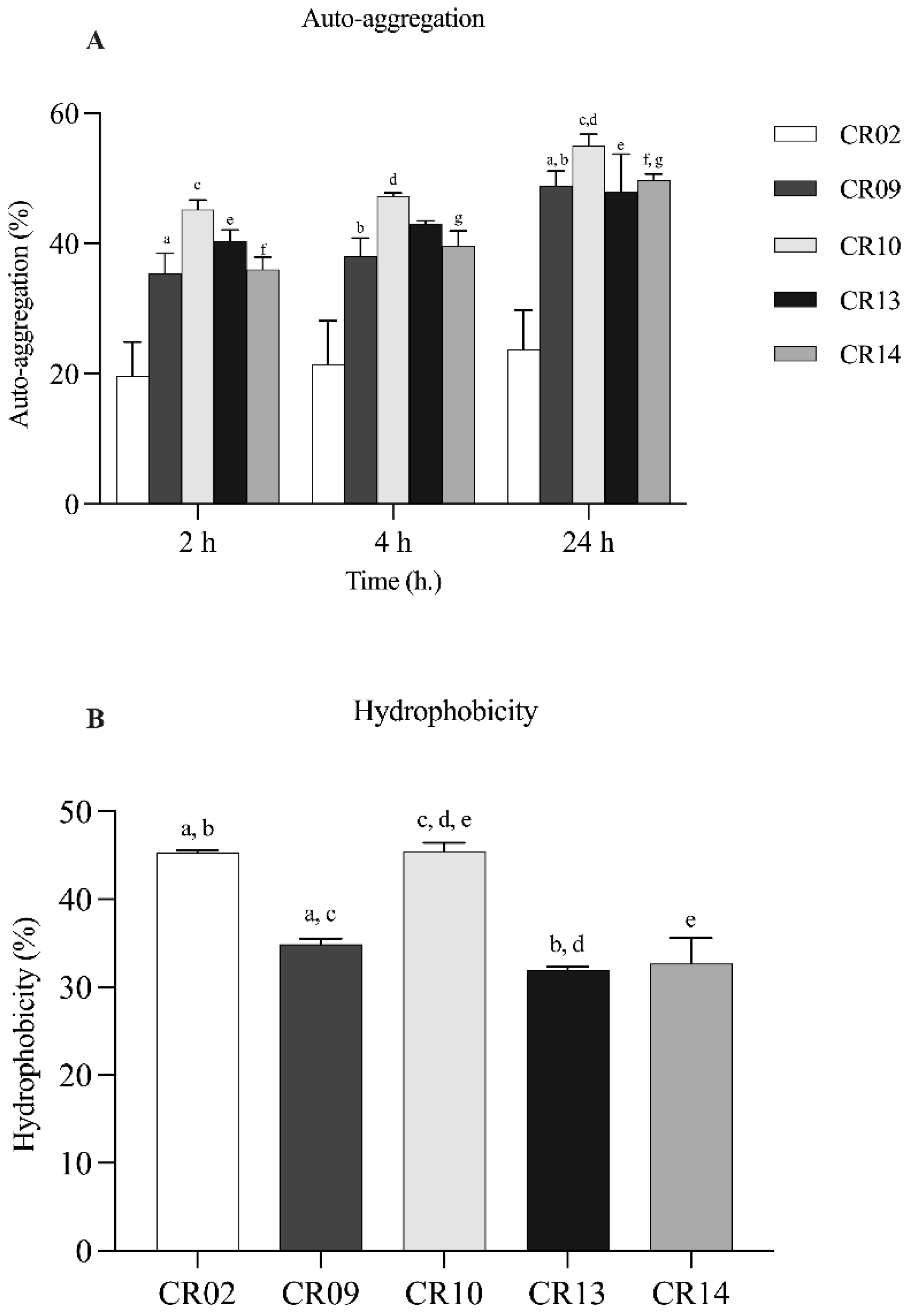
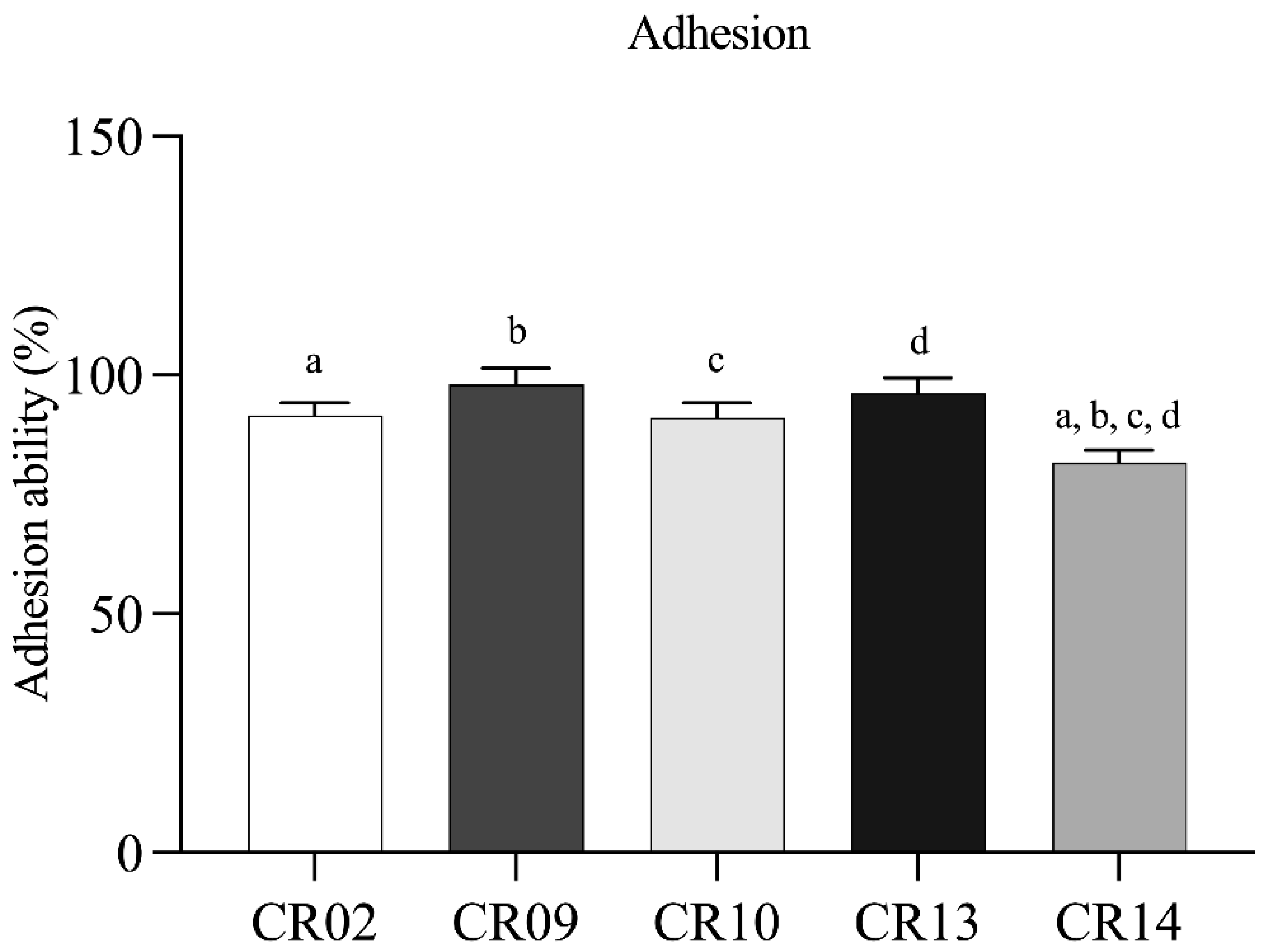
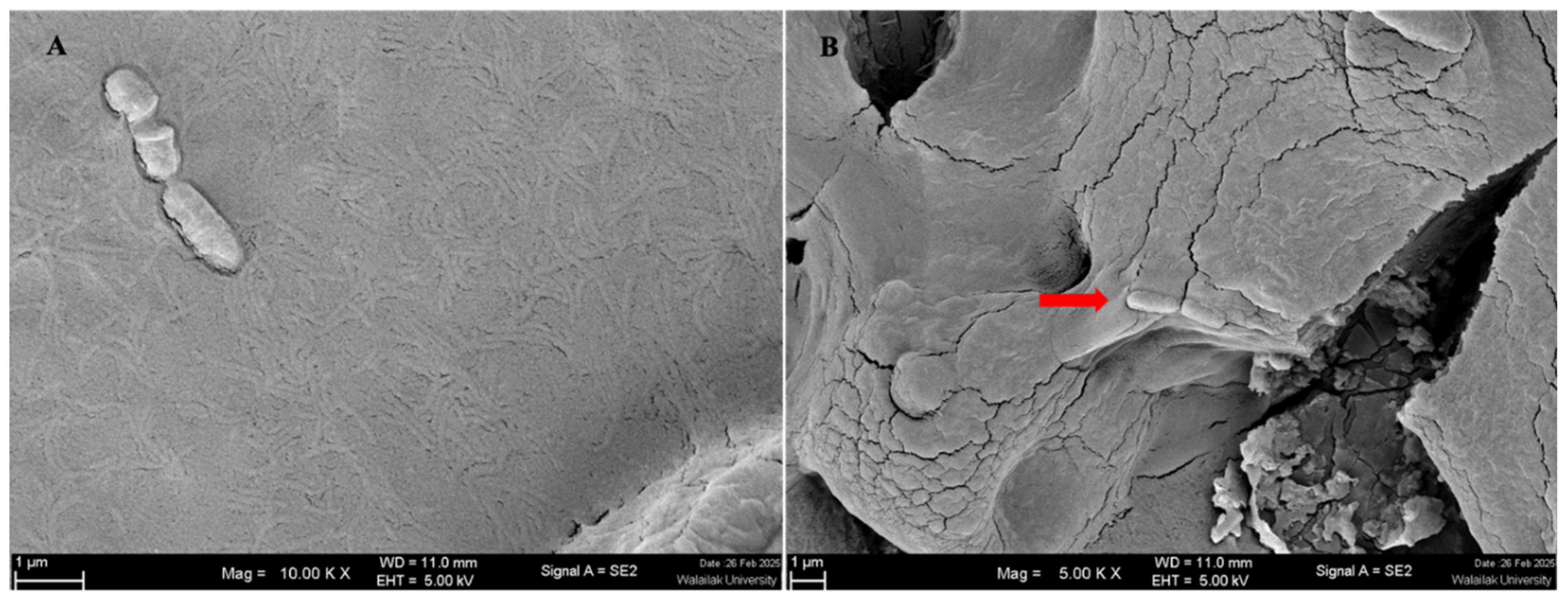
2.3.2. Auto-Aggregation and Enhancement of Adhesion Ability
2.3.3. Antibiotic Susceptibility and Hemolysis
2.3.4. Characterization of Antimicrobial Substances
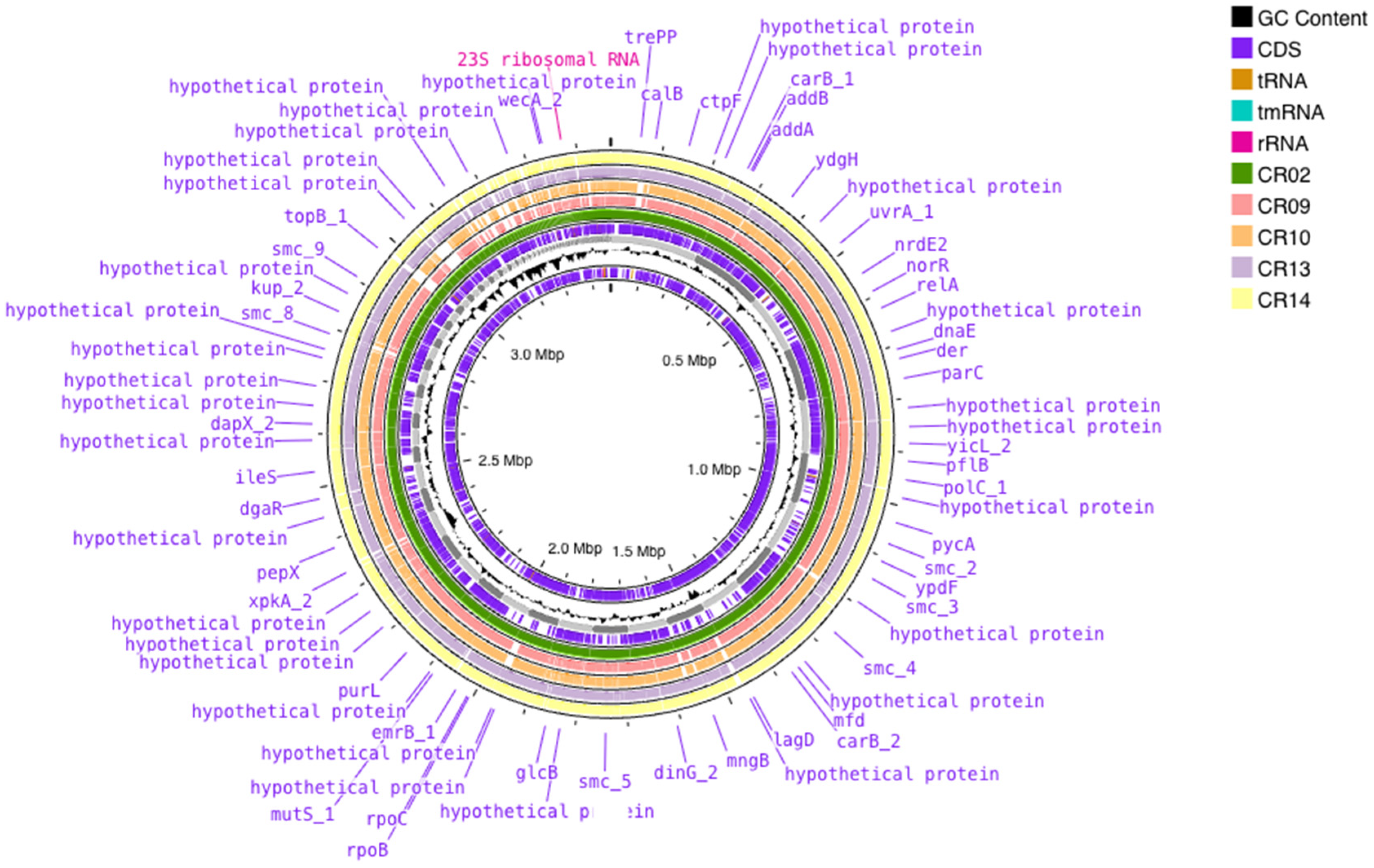
2.4. Genome Characteristics, Functional Analysis, and Antimicrobial Substances
2.5. In Silico Safety Evaluation
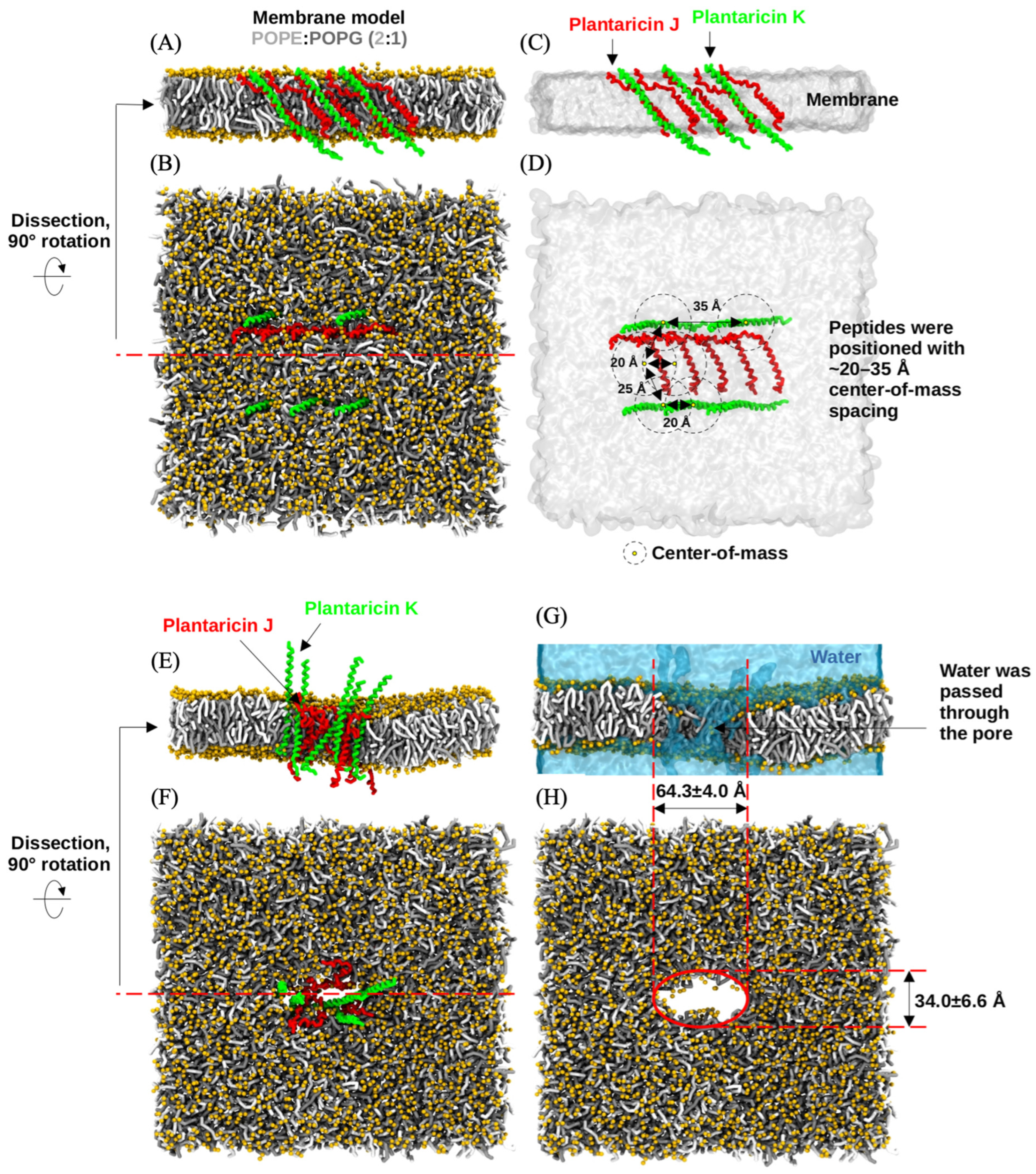
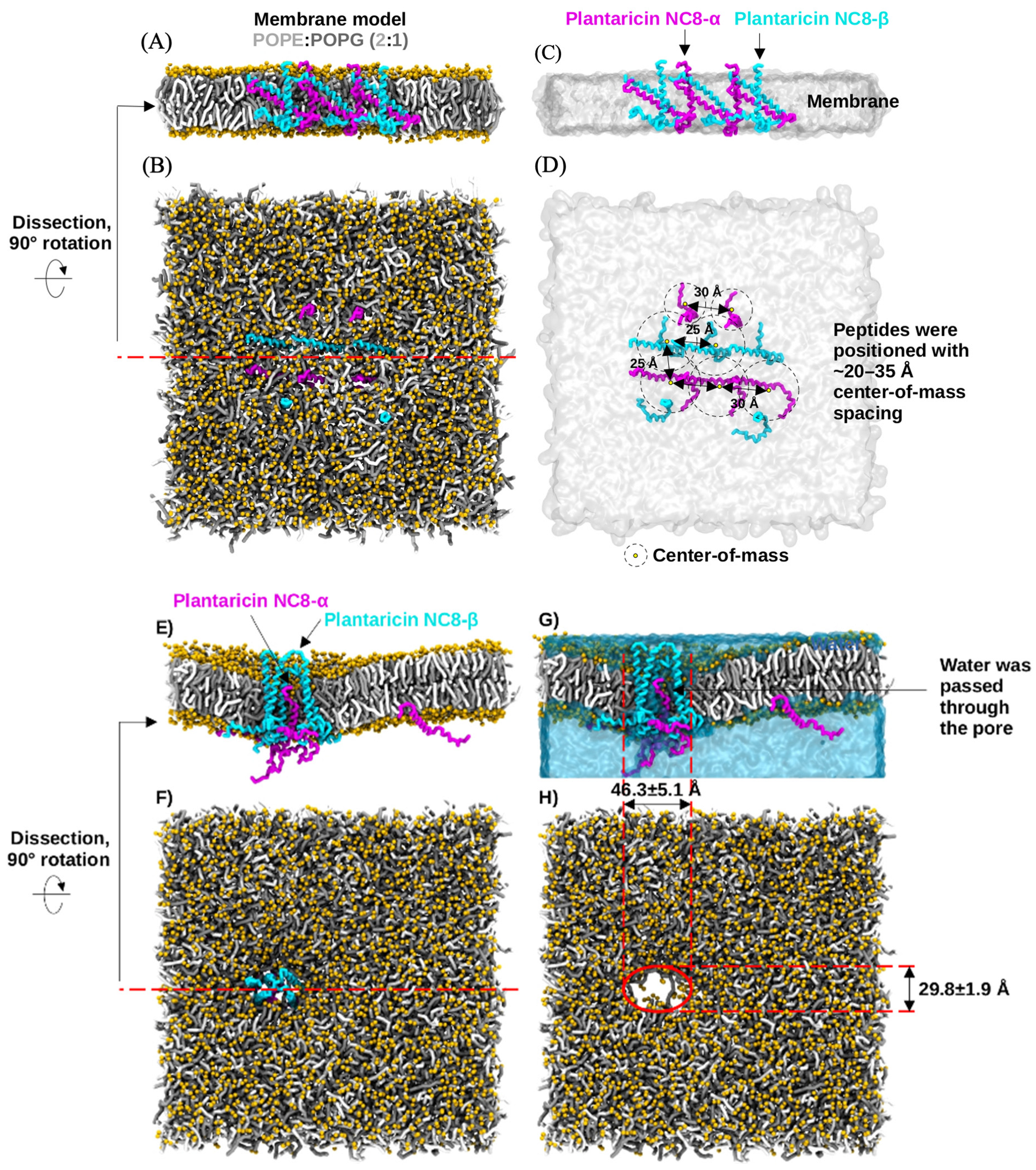
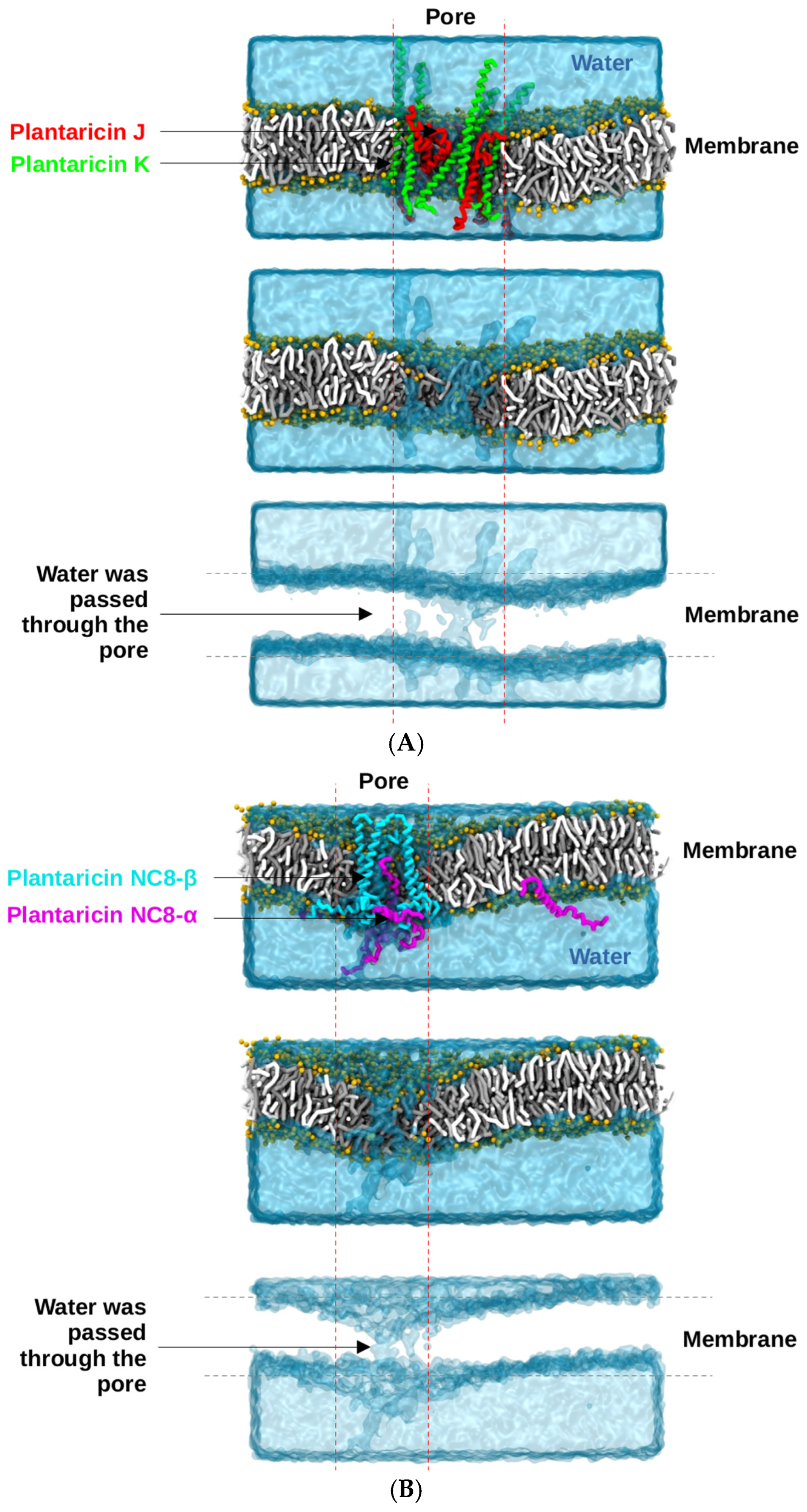
2.6. Molecular Dynamics Simulations
3. Discussion
4. Materials and Methods
4.1. Bacterial Strains and Growth Conditions
4.2. Collection of Fermented Cacao Beans and Isolation of Lactiplantibacillus plantarum
4.3. Phenotypic and MALDI-TOF Identification
4.4. Inhibition of P. aeruginosa by L. plantarum Strains
4.5. Characterization of Probiotic Properties
4.5.1. Tolerance to Low pH
4.5.2. Tolerance to Pepsin, Pancreatin, and Bile Salt
4.5.3. Auto-Aggregation Assay
4.5.4. Cell Surface Hydrophobicity Assay
4.5.5. Adhesion to the Caco-2 Cell Line
4.5.6. SEM of L. plantarum Adhered to Caco-2 Cells
4.5.7. Hemolytic Activity
4.5.8. Antibiotic Susceptibility
4.5.9. Bacteriocin Activity Screening and pH-Neutralized Assay
4.6. DNA Extraction and Genomic Analysis
4.7. Computational Methods
4.7.1. Peptide Preparation
4.7.2. System Preparation
4.7.3. CG Simulation and Visualization
4.8. Statistical Analysis
5. Conclusions
Supplementary Materials
Author Contributions
Funding
Institutional Review Board Statement
Informed Consent Statement
Data Availability Statement
Acknowledgments
Conflicts of Interest
References
- WHO. WHO Bacterial Priority Pathogens List, 2024: Bacterial Pathogens of Public Health Importance to Guide Research, Development and Strategies to Prevent and Control Antimicrobial Resistance; WHO: Geneva, Switzerland, 2024.
- Strateva, T.; Mitov, I. Contribution of an arsenal of virulence factors to pathogenesis of Pseudomonas aeruginosa infections. Ann. Microbiol. 2011, 61, 717–732. [Google Scholar] [CrossRef]
- Letizia, M.; Diggle, S.P.; Whiteley, M. Pseudomonas aeruginosa: Ecology, evolution, pathogenesis and antimicrobial susceptibility. Nat. Rev. Microbiol. 2025, 23, 701–717. [Google Scholar] [CrossRef]
- GBD 2019 Antimicrobial Resistance Collaborators. Global mortality associated with 33 bacterial pathogens in 2019: A systematic analysis for the Global Burden of Disease Study 2019. Lancet 2022, 400, 2221–2248. [CrossRef]
- Cosentino, F.; Viale, P.; Giannella, M. MDR/XDR/PDR or DTR? Which definition best fits the resistance profile of Pseudomonas aeruginosa? Curr. Opin. Infect. Dis. 2023, 36, 564–571. [Google Scholar] [CrossRef]
- Liao, C.; Huang, X.; Wang, Q.; Yao, D.; Lu, W. Virulence Factors of Pseudomonas aeruginosa and Antivirulence Strategies to Combat Its Drug Resistance. Front. Cell. Infect. Microbiol. 2022, 12, 926758. [Google Scholar] [CrossRef]
- Ding, F.; Oinuma, K.-I.; E Smalley, N.; Schaefer, A.L.; Hamwy, O.; Greenberg, E.P.; A Dandekar, A. The Pseudomonas aeruginosa Orphan Quorum Sensing Signal Receptor QscR Regulates Global Quorum Sensing Gene Expression by Activating a Single Linked Operon. mBio 2018, 9, e01274-18. [Google Scholar] [CrossRef] [PubMed]
- Pang, Z.; Raudonis, R.; Glick, B.R.; Lin, T.-J.; Cheng, Z. Antibiotic resistance in Pseudomonas aeruginosa: Mechanisms and alternative therapeutic strategies. Biotechnol. Adv. 2019, 37, 177–192. [Google Scholar] [CrossRef] [PubMed]
- Drumond, M.M.; Tapia-Costa, A.P.; Neumann, E.; Nunes, Á.C.; Barbosa, J.W.; Kassuha, D.E.; Mancha-Agresti, P. Cell-free supernatant of probiotic bacteria exerted antibiofilm and antibacterial activities against Pseudomonas aeruginosa: A novel biotic therapy. Front. Pharmacol. 2023, 14, 1152588. [Google Scholar] [CrossRef] [PubMed]
- Hill, C.; Guarner, F.; Reid, G.; Gibson, G.R.; Merenstein, D.J.; Pot, B.; Morelli, L.; Canani, R.B.; Flint, H.J.; Salminen, S.; et al. The International Scientific Association for Probiotics and Prebiotics consensus statement on the scope and appropriate use of the term probiotic. Nat. Rev. Gastroenterol. Hepatol. 2014, 11, 506–514. [Google Scholar] [CrossRef]
- El-Saadony, M.T.; Alagawany, M.; Patra, A.K.; Kar, I.; Tiwari, R.; Dawood, M.A.; Dhama, K.; Abdel-Latif, H.M. The functionality of probiotics in aquaculture: An overview. Fish. Shellfish. Immunol. 2021, 117, 36–52. [Google Scholar] [CrossRef]
- Nandha, M.C.; Shukla, R.M. Exploration of probiotic attributes in lactic acid bacteria isolated from fermented Theobroma cacao L. fruit using in vitro techniques. Front. Microbiol. 2023, 14, 1274636. [Google Scholar] [CrossRef] [PubMed]
- Quintana-Fuentes, L.F.; García-Jerez, A.; Rodríguez-Negrette, A.C.; Hoyos-Merlano, N.T.; Alvis-Bermúdez, A. Impact of Spontaneous Fermentation on the Physicochemical and Sensory Qualities of Cacao. Fermentation 2025, 11, 377. [Google Scholar] [CrossRef]
- Ayivi, R.D.; Gyawali, R.; Krastanov, A.; Aljaloud, S.O.; Worku, M.; Tahergorabi, R.; Da Silva, R.; Ibrahim, S.A. Lactic Acid Bacteria: Food Safety and Human Health Applications. Dairy 2020, 1, 202–232. [Google Scholar] [CrossRef]
- Simons, A.; Alhanout, K.; Duval, R.E. Bacteriocins, Antimicrobial Peptides from Bacterial Origin: Overview of Their Biology and Their Impact against Multidrug-Resistant Bacteria. Microorganisms 2020, 8, 639. [Google Scholar] [CrossRef]
- Rocchetti, M.T.; Russo, P.; Capozzi, V.; Drider, D.; Spano, G.; Fiocco, D. Bioprospecting Antimicrobials from Lactiplantibacillus plantarum: Key Factors Underlying Its Probiotic Action. Int. J. Mol. Sci. 2021, 22, 12076. [Google Scholar] [CrossRef]
- Wang, L.; Zhang, H.; Rehman, M.U.; Mehmood, K.; Jiang, X.; Iqbal, M.; Tong, X.; Gao, X.; Li, J. Antibacterial activity of Lactobacillus plantarum isolated from Tibetan yaks. Microb. Pathog. 2018, 115, 293–298. [Google Scholar] [CrossRef]
- Ołdak, A.; Zielińska, D.; Łepecka, A.; Długosz, E.; Kołożyn-Krajewska, D. Lactobacillus plantarum Strains Isolated from Polish Regional Cheeses Exhibit Anti-Staphylococcal Activity and Selected Probiotic Properties. Probiotics Antimicrob. Proteins 2020, 12, 1025–1038. [Google Scholar] [CrossRef]
- Kim, M.; Seo, D.H.; Park, Y.S.; Cha, I.T.; Seo, M.J. Isolation of Lactobacillus plantarum subsp. plantarum Producing C(30) Carotenoid 4,4′-Diaponeurosporene and the Assessment of Its Antioxidant Activity. J. Microbiol. Biotechnol. 2019, 29, 1925–1930. [Google Scholar] [CrossRef]
- Horcajada, J.P.; Gales, A.C.; Isler, B.; Kaye, K.S.; Kwa, A.; Landersdorfer, C.B.; Montero, M.M.; Oliver, A.; Pogue, J.M.; Shields, R.K.; et al. Current and future options for the treatment of serious infections due to carbapenem-resistant Pseudomonas aeruginosa. Clin. Microbiol. Rev. 2025, 38, e0023324. [Google Scholar] [CrossRef]
- Taylor, A.J.; Cardenas-Torres, E.; Miller, M.J.; Zhao, S.D.; Engeseth, N.J. Microbes associated with spontaneous cacao fermentations—A systematic review and meta-analysis. Curr. Res. Food Sci. 2022, 5, 1452–1464. [Google Scholar] [CrossRef] [PubMed]
- EFSA. Scientific Opinion of the Panel on Biological Hazards on the maintenance of the list of QPS microorganisms intentionally added to food or feed. EFSA J. 2008, 6, 923. [Google Scholar] [CrossRef]
- Wu, A.; Fu, Y.; Kong, L.; Shen, Q.; Liu, M.; Zeng, X.; Wu, Z.; Guo, Y.; Pan, D. Production of a Class IIb Bacteriocin with Broad-spectrum Antimicrobial Activity in Lactiplantibacillus plantarum RUB1. Probiotics Antimicrob. Proteins 2021, 13, 1820–1832. [Google Scholar]
- Golneshin, A.; Gor, M.-C.; Williamson, N.; Vezina, B.; Van, T.T.H.; May, B.K.; Smith, A.T. Discovery and characterisation of circular bacteriocin plantacyclin B21AG from Lactiplantibacillus plantarum B21. Heliyon 2020, 6, e04715. [Google Scholar] [CrossRef]
- Ng, Z.J.; Zarin, M.A.; Lee, C.K.; Tan, J.S. Application of bacteriocins in food preservation and infectious disease treatment for humans and livestock: A review. RSC Adv. 2020, 10, 38937–38964. [Google Scholar] [CrossRef]
- Lebeer, S.; Vanderleyden, J.; De Keersmaecker, S.C. Genes and molecules of Lactobacilli supporting probiotic action. Microbiol. Mol. Biol. Rev. 2008, 72, 728–764. [Google Scholar] [CrossRef]
- Campedelli, I.; Mathur, H.; Salvetti, E.; Clarke, S.; Rea, M.C.; Torriani, S.; Ross, R.P.; Hill, C.; O’Toole, P.W. Genus-Wide Assessment of Antibiotic Resistance in Lactobacillus spp. Appl. Environ. Microbiol. 2019, 85, e01738-18. [Google Scholar] [CrossRef]
- Sneath, P.H.; Mair, N.S.; Sharpe, M.E.; Holt, J.G. Bergey’s manual of systematic bacteriology. In The Firmicutes, 2nd ed.; Springer: Dordrecht, Germany; New York, NY, USA, 2009; Volume 3. [Google Scholar]
- Nigam, A.; Kumar, A.; Iyengar, M.H.V.; Bhola, N. In-vitro Screening of antibacterial activity of lactic acid bacteria against common enteric pathogens. J. Biomed. Sci. 2012, 1. [Google Scholar]
- Monteagudo-Mera, A.; Rodríguez-Aparicio, L.; Rúa, J.; Martínez-Blanco, H.; Navasa, N.; García-Armesto, M.R.; Ferrero, M.Á. In vitro evaluation of physiological probiotic properties of different lactic acid bacteria strains of dairy and human origin. J. Funct. Foods 2012, 4, 531–541. [Google Scholar] [CrossRef]
- Somashekaraiah, R.; Shruthi, B.; Deepthi, B.V.; Sreenivasa, M.Y. Probiotic properties of lactic acid bacteria isolated from neera: A naturally fermenting coconut palm nectar. Front. Microbiol. 2019, 10, 1382. [Google Scholar] [CrossRef] [PubMed]
- Vlkova, E.; Rada, V.; Smehilova, M.; Killer, J. Auto-aggregation and co-aggregation ability in bifidobacteria and clostridia. Folia Microbiol. 2008, 53, 263–269. [Google Scholar] [CrossRef]
- Zawistowska-Rojek, A.; Kośmider, A.; Stępień, K.; Tyski, S. Adhesion and aggregation properties of Lactobacillaceae strains as protection ways against enteropathogenic bacteria. Arch. Microbiol. 2022, 204, 285. [Google Scholar] [CrossRef]
- Talib, N.; Mohamad, N.E.; Yeap, S.K.; Hussin, Y.; Aziz, M.N.M.; Masarudin, M.J.; Sharifuddin, S.A.; Hui, Y.W.; Ho, C.L.; Alitheen, N.B. Isolation and characterization of Lactobacillus spp. from Kefir samples in malaysia. Molecules 2019, 24, 2606. [Google Scholar] [CrossRef]
- Leite, A.; Miguel, M.; Peixoto, R.; Ruas-Madiedo, P.; Paschoalin, V.; Mayo, B.; Delgado, S. Probiotic potential of selected lactic acid bacteria strains isolated from Brazilian kefir grains. J. Dairy Sci. 2015, 98, 3622–3632. [Google Scholar] [CrossRef]
- CLSI. Methods for Antimicrobial Susceptibility Testing of Anaerobic bacteria, 35th ed.; CLSI: Wayne, PA, USA, 2025. [Google Scholar]
- Sornsenee, P.; Singkhamanan, K.; Sangkhathat, S.; Saengsuwan, P.; Romyasamit, C. Probiotic Properties of Lactobacillus Species Isolated from Fermented Palm Sap in Thailand. Probiotics Antimicrob. Proteins 2021, 13, 957–969. [Google Scholar] [CrossRef]
- Chukamnerd, A.; Jeenkeawpiam, K.; Chusri, S.; Pomwised, R.; Singkhamanan, K.; Surachat, K. BacSeq: A User-Friendly Automated Pipeline for Whole-Genome Sequence Analysis of Bacterial Genomes. Microorganisms 2023, 11, 1769. [Google Scholar] [CrossRef] [PubMed]
- Holzer, M.; Marz, M. De novo transcriptome assembly: A comprehensive cross-species comparison of short-read RNA-Seq assemblers. Gigascience 2019, 8, giz039. [Google Scholar] [CrossRef]
- Seemann, T. Prokka: Rapid prokaryotic genome annotation. Bioinformatics 2014, 30, 2068–2069. [Google Scholar] [CrossRef] [PubMed]
- Gurevich, A.; Saveliev, V.; Vyahhi, N.; Tesler, G. QUAST: Quality assessment tool for genome assemblies. Bioinformatics 2013, 29, 1072–1075. [Google Scholar] [CrossRef] [PubMed]
- Waterhouse, R.M.; Seppey, M.; Simão, F.A.; Manni, M.; Ioannidis, P.; Klioutchnikov, G.; Kriventseva, E.V.; Zdobnov, E.M. BUSCO Applications from Quality Assessments to Gene Prediction and Phylogenomics. Mol. Biol. Evol. 2018, 35, 543–548. [Google Scholar] [CrossRef]
- Brown, C.L.; Mullet, J.; Hindi, F.; Stoll, J.E.; Gupta, S.; Choi, M.; Keenum, I.; Vikesland, P.; Pruden, A.; Zhang, L. mobileOG-db: A Manually Curated Database of Protein Families Mediating the Life Cycle of Bacterial Mobile Genetic Elements. Appl. Environ. Microbiol. 2022, 88, e0099122. [Google Scholar] [CrossRef]
- Wishart, D.S.; Han, S.; Saha, S.; Oler, E.; Peters, H.; Grant, J.R.; Stothard, P.; Gautam, V. PHASTEST: Faster than PHASTER, better than PHAST. Nucleic Acids Res. 2023, 51, W443–W450. [Google Scholar] [CrossRef] [PubMed]
- Malberg Tetzschner, A.M.; Johnson, J.R.; Johnston, B.D.; Lund, O.; Scheutz, F. In Silico Genotyping of Escherichia coli Isolates for Extraintestinal Virulence Genes by Use of Whole-Genome Sequencing Data. J. Clin. Microbiol. 2020, 58, 10-1128. [Google Scholar] [CrossRef]
- Bortolaia, V.; Kaas, R.S.; Ruppe, E.; Roberts, M.C.; Schwarz, S.; Cattoir, V.; Philippon, A.; Allesoe, R.L.; Rebelo, A.R.; Florensa, A.F.; et al. ResFinder 4.0 for predictions of phenotypes from genotypes. J. Antimicrob. Chemother. 2020, 75, 3491–3500. [Google Scholar] [CrossRef]
- Couvin, D.; Bernheim, A.; Toffano-Nioche, C.; Touchon, M.; Michalik, J.; Néron, B.; Rocha, E.P.C.; Vergnaud, G.; Gautheret, D.; Pourcel, C. CRISPRCasFinder, an update of CRISRFinder, includes a portable version, enhanced performance and integrates search for Cas proteins. Nucleic Acids Res. 2018, 46, W246–W251. [Google Scholar] [CrossRef]
- van Heel, A.J.; de Jong, A.; Song, C.X.; Viel, J.H.; Kok, J.; Kuipers, O.P. BAGEL4: A user-friendly web server to thoroughly mine RiPPs and bacteriocins. Nucleic Acids Res. 2018, 46, W278–W281. [Google Scholar] [CrossRef]
- Page, A.J.; Cummins, C.A.; Hunt, M.; Wong, V.K.; Reuter, S.; Holden, M.T.G.; Fookes, M.; Falush, D.; Keane, J.A.; Parkhill, J. Roary: Rapid large-scale prokaryote pan genome analysis. Bioinformatics 2015, 31, 3691–3693. [Google Scholar] [CrossRef] [PubMed]
- Stothard, P.; Grant, J.R.; Van Domselaar, G. Visualizing and comparing circular genomes using the CGView family of tools. Brief Bioinform. 2019, 20, 1576–1582. [Google Scholar] [CrossRef]
- Camacho, C.; Coulouris, G.; Avagyan, V.; Ma, N.; Papadopoulos, J.; Bealer, K.; Madden, T.L. BLAST plus: Architecture and applications. BMC Bioinform. 2009, 10, 421. [Google Scholar] [CrossRef] [PubMed]
- Lee, I.; Ouk Kim, Y.; Park, S.C.; Chun, J. OrthoANI: An improved algorithm and software for calculating average nucleotide identity. Int. J. Syst. Evol. Microbiol. 2016, 66, 1100–1103. [Google Scholar] [CrossRef]
- Abramson, J.; Adler, J.; Dunger, J.; Evans, R.; Green, T.; Pritzel, A.; Ronneberger, O.; Willmore, L.; Ballard, A.J.; Bambrick, J.; et al. Accurate structure prediction of biomolecular interactions with AlphaFold 3. Nature 2024, 630, 493–500. [Google Scholar] [CrossRef] [PubMed]
- Xu, Y.; Yang, L.; Li, P.; Gu, Q. Heterologous expression of Class IIb bacteriocin Plantaricin JK in Lactococcus lactis. Protein Expr. Purif 2019, 159, 10–16. [Google Scholar] [CrossRef] [PubMed]
- Bengtsson, T.; Selegård, R.; Musa, A.; Hultenby, K.; Utterström, J.; Sivlér, P.; Skog, M.; Nayeri, F.; Hellmark, B.; Söderquist, B.; et al. Plantaricin NC8 αβ exerts potent antimicrobial activity against Staphylococcus spp. and enhances the effects of antibiotics. Sci. Rep. 2020, 10, 3580. [Google Scholar] [CrossRef] [PubMed]
- Souza, P.C.T.; Alessandri, R.; Barnoud, J.; Thallmair, S.; Faustino, I.; Grünewald, F.; Patmanidis, I.; Abdizadeh, H.; Bruininks, B.M.H.; Wassenaar, T.A.; et al. Martini 3: A general purpose force field for coarse-grained molecular dynamics. Nat. Methods 2021, 18, 382–388. [Google Scholar] [CrossRef] [PubMed]
- Yusuf, M.; Destiarani, W.; Firdaus, A.R.R.; Rohmatulloh, F.G.; Novianti, M.T.; Pradini, G.W.; Dwiyana, R.F. Residual Interactions of LL-37 with POPC and POPE:POPG Bilayer Model Studied by All-Atom Molecular Dynamics Simulation. Int. J. Mol. Sci. 2022, 23, 13413. [Google Scholar] [CrossRef]
- Rzycki, M.; Drabik, D. Multifaceted Activity of Fabimycin: Insights from Molecular Dynamics Studies on Bacterial Membrane Models. J. Chem. Inf. Model. 2024, 64, 4204–4217. [Google Scholar] [CrossRef]
- Brasnett, C.; Marrink, S.J. MartiniGlass: A Tool for Enabling Visualization of Coarse-Grained Martini Topologies. J. Chem. Inf. Model. 2025, 65, 3137–3141. [Google Scholar] [CrossRef]
- Humphrey, W.; Dalke, A.; Schulten, K. VMD: Visual molecular dynamics. J. Mol. Graph. 1996, 14, 33–38. [Google Scholar] [CrossRef]



| Bacteria | CR02 | CR09 | CR10 | CR13 | CR14 |
|---|---|---|---|---|---|
| P. aeruginosa ATCC 15692 | 17.67 ± 0.58 | 20.67 ± 0.58 | 20.00 ± 1.73 | 18.00 ± 0.00 | 21.00 ± 0.00 |
| P. aeruginosa 532610 | 16.67 ± 0.58 | 20.33 ± 0.58 | 20.00 ± 0.00 | 20.00 ± 0.00 | 19.67 ± 0.58 |
| P. aeruginosa 4293-04 | 20.33 ± 0.58 | 18.00 ± 0.00 | 18.00 ± 0.00 | 19.33 ± 0.58 | 19.00 ± 0.00 |
| P. aeruginosa 3285-10 | 18.67 ± 0.58 | 22.33 ± 1.15 | 20.67 ± 0.58 | 20.33 ± 0.58 | 20.67 ± 0.58 |
| P. aeruginosa 479-11 | 16.33 ± 0.58 | 20.33 ± 0.58 | 16.67 ± 0.58 | 18.33 ± 0.58 | 19.33 ± 0.58 |
| P. aeruginosa 2910-10 | 20.33 ± 0.58 | 22.00 ± 0.00 | 20.33 ± 0.58 | 20.33 ± 0.58 | 20.00 ± 0.00 |
| P. aeruginosa 1032-10 | 16.67 ± 0.58 | 17.67 ± 0.58 | 18.00 ± 1.00 | 18.33 ± 0.58 | 18.33 ± 0.58 |
| P. aeruginosa 1533-04 | 21.67 ± 0.58 | 19.67 ± 0.58 | 18.33 ± 0.58 | 19.33 ± 0.58 | 17.33 ± 0.58 |
| P. aeruginosa 4591-10 | 18.33 ± 0.58 | 20.33 ± 0.58 | 21.33 ± 0.58 | 18.67 ± 0.58 | 18.33 ± 0.58 |
| P. aeruginosa 2285-10 | 20.33 ± 0.58 | 20.33 ± 0.58 | 18.33 ± 0.58 | 20.00 ± 0.00 | 20.33 ± 0.58 |
| P. aeruginosa 3685-10 | 18.67 ± 0.58 | 21.00 ± 0.00 | 21.67 ± 058 | 19.7 ± 0.58 | 20.67 ± 0.58 |
| P. aeruginosa 730-10 | 20.00 ± 0.00 | 18.33 ± 0.58 | 18.33 ± 0.58 | 20.00 ± 0.00 | 19.33 ± 0.58 |
| P. aeruginosa 4135-03 | 19.33 ± 0.58 | 20.33 ± 0.58 | 21.00 ± 0.00 | 20.00 ± 1.00 | 20.00 ± 0.00 |
| P. aeruginosa 4712-04 | 17.67 ± 0.58 | 18.33 ± 0.58 | 16.33 ± 0.58 | 18.67 ± 0.58 | 20.67 ± 0.58 |
| P. aeruginosa 4260-03 | 17.67 ± 0.58 | 17.33 ± 0.58 | 18.33 ± 0.58 | 20.33 ± 058 | 20.67 ± 0.58 |
| P. aeruginosa 1918-10 | 22.00 ± 0.00 | 20.33 ± 0.58 | 21.33 ± 0.58 | 24.00 ± 0.00 | 21.33 ± 0.58 |
| P. aeruginosa 1091-10 | 20.33 ± 0.58 | 20.33 ± 0.58 | 18.33 ± 0.58 | 19.67 ± 0.58 | 20.33 ± 0.58 |
| P. aeruginosa 1450-11 | 19.33 ± 0.58 | 18.33 ± 0.58 | 19.33 ± 0.58 | 19.00 ± 0.00 | 19.33 ± 0.58 |
| Isolates | pH 2 | pH 3 | pH 4 | pH 7 | Pepsin | Pancreatin | 0.3% Bile Salts |
|---|---|---|---|---|---|---|---|
| CR02 | 29.67 ±3.04 | 29.57 ± 5.07 | 80.65 ± 5.38 | 90.08 ± 8.73 | 96.12 ± 1.20 | 91.37 ± 0.72 | 98.92 ± 0.75 |
| CR09 | 12.78 ±4.10 | 17.36 ± 5.98 | 21.12 ± 1.11 | 98.61 ± 2.40 | 93.84 ± 0.16 | 99.39 ± 0.26 | 98.98 ± 0.80 |
| CR10 | 17.22 ± 2.55 | 19.09 ± 2.05 | 55.72 ± 8.90 | 96.22 ± 0.42 | 92.50 ± 0.07 | 99.88 ± 0.21 | 92.79 ± 1.03 |
| CR13 | 14.38 ±5.00 | 15.89 ± 7.03 | 71.18 ± 7.64 | 91.53 ± 7.50 | 88.08 ± 1.46 | 99.75 ± 0.07 | 98.51 ± 1.29 |
| CR14 | 61.15 ± 7.75 | 27.32 ± 9.94 | 41.63 ± 5.66 | 83.33 ± 5.56 | 89.65 ± 1.08 | 99.78 ± 0.21 | 98.35 ± 1.00 |
| Feature | CR02 | CR09 | CR09 | CR13 | CR13 |
|---|---|---|---|---|---|
| Total length | 3,465,846 | 3,233,809 | 3,232,214 | 3,291,372 | 3,291,974 |
| GC (%) | 44.14 | 44.48 | 44.48 | 44.41 | 44.41 |
| N50 | 101,367 | 421,222 | 421,222 | 195,932 | 483,721 |
| L50 | 12 | 3 | 4 | 4 | 3 |
| Number of contigs | 154 | 21 | 26 | 36 | 30 |
| CDS | 3311 | 3039 | 3036 | 3119 | 3121 |
| rRNA | 2 | 4 | 4 | 4 | 3 |
| tRNA | 50 | 60 | 58 | 61 | 61 |
| tmRNA | 1 | 1 | 1 | 1 | 1 |
| Prophage | 8 | 5 | 5 | 5 | 5 |
| Bacteriocin-like encoding gene | 6 | 4 | 4 | 6 | 6 |
| Function | Gene | CR02 | CR09 | CR10 | CR13 | CR14 |
|---|---|---|---|---|---|---|
| Gastrointestinal tract survival | pbpB | + | + | + | + | + |
| penA | + | + | + | + | + | |
| pbpE | - | - | - | - | - | |
| ponA | + | + | + | + | + | |
| pbpF_1 | - | - | - | - | - | |
| pbpF_2 | - | - | - | - | - | |
| pbpX | + | - | - | - | - | |
| pbp | - | - | - | - | - | |
| Acid tolerance | nhaK_2 | + | + | + | + | + |
| atpA | + | + | + | + | + | |
| atpF | + | + | + | + | + | |
| atpG | + | + | + | + | + | |
| atpB | + | + | + | + | + | |
| atpD | + | + | + | + | + | |
| atpH | + | + | + | + | + | |
| atpE | + | + | + | + | + | |
| Bile salt tolerance | murE | + | + | + | + | + |
| mleS | + | + | + | + | + | |
| Temperature tolerance | cspB | - | - | - | - | - |
| cspLA | + | + | + | + | + | |
| csp | + | + | + | + | + | |
| hrcA | + | + | + | + | + | |
| dnaJ | + | + | + | + | + | |
| dnaK | + | + | + | + | + | |
| clpC_1 | + | + | + | + | + | |
| clpB | + | + | + | + | + | |
| Osmotic shock tolerance | grpE | + | + | + | + | + |
| gbuA | - | - | - | - | - | |
| gbuC | - | - | - | - | - | |
| gbuB | - | - | - | - | - | |
| opuCD | + | + | + | + | + | |
| opuCC | + | + | + | + | + | |
| Oxidative stress survival | hslO | + | + | + | + | + |
| nox_2 | + | + | + | + | + | |
| nox_1 | + | + | + | + | + | |
| tpx | + | + | + | + | + | |
| npr | - | - | - | - | - | |
| Cell wall formation | murA1 | + | + | + | + | + |
| epsH_2 | - | - | - | - | - | |
| ykoT_1 | - | - | - | - | - | |
| tagE | + | + | + | - | - | |
| dltC | - | - | - | - | - | |
| dltA | + | + | + | + | + | |
| dltD | + | + | + | + | + | |
| dltC | - | - | - | - | - | |
| Biofilm formation | ywqC | - | - | - | - | - |
| luxS | - | + | + | + | + | |
| desR | + | + | + | + | + | |
| ccpA_2 | + | + | + | + | + | |
| brpA_2 | - | - | - | - | - | |
| brpA_4 | - | - | - | - | - | |
| brpA_3 | - | - | - | - | - | |
| Vitamin synthesis | btuD_14 | - | - | - | - | - |
| btuD_14 | - | - | - | - | - | |
| btuD_2 | + | + | + | + | + | |
| btuD_8 | - | - | - | - | - | |
| btuD_13 | - | - | - | - | - | |
| btuD_4 | + | + | + | + | + | |
| btuD_15 | - | - | - | - | - | |
| btuD_5 | + | + | + | + | + | |
| btuD_9 | - | - | - | - | - | |
| btuD_12 | - | - | - | - | - | |
| btuD_11 | - | - | - | - | - | |
| btuD_7 | - | - | - | - | - | |
| btuD_6 | + | + | + | + | + | |
| btuD_1 | + | + | + | + | + | |
| btuD_3 | + | + | + | + | + | |
| Bacteriocin-encoding gene | plnA | + | + | - | + | + |
| plnK | + | + | + | + | + | |
| plnJ | + | + | + | + | + | |
| plnN | + | + | - | + | + | |
| plnE | + | - | - | + | + | |
| plnF | + | - | - | + | + | |
| plnNC8-β | - | - | + | - | - | |
| plnNC8-α | - | - | + | - | - |
Disclaimer/Publisher’s Note: The statements, opinions and data contained in all publications are solely those of the individual author(s) and contributor(s) and not of MDPI and/or the editor(s). MDPI and/or the editor(s) disclaim responsibility for any injury to people or property resulting from any ideas, methods, instructions or products referred to in the content. |
© 2026 by the authors. Licensee MDPI, Basel, Switzerland. This article is an open access article distributed under the terms and conditions of the Creative Commons Attribution (CC BY) license.
Share and Cite
Sornsenee, P.; Pattaranggoon, N.C.; Suksabay, P.; Leepromma, Y.; Turni, C.; Romyasamit, C. Probiotic Potential, Genomic Characterization, and In Silico Insights of Five Lactiplantibacillus plantarum Strains Isolated from Fermented Cacao Beans Against Multidrug-Resistant Pseudomonas aeruginosa. Antibiotics 2026, 15, 334. https://doi.org/10.3390/antibiotics15040334
Sornsenee P, Pattaranggoon NC, Suksabay P, Leepromma Y, Turni C, Romyasamit C. Probiotic Potential, Genomic Characterization, and In Silico Insights of Five Lactiplantibacillus plantarum Strains Isolated from Fermented Cacao Beans Against Multidrug-Resistant Pseudomonas aeruginosa. Antibiotics. 2026; 15(4):334. https://doi.org/10.3390/antibiotics15040334
Chicago/Turabian StyleSornsenee, Phoomjai, Nawanwat C. Pattaranggoon, Pinkanok Suksabay, Yosita Leepromma, Conny Turni, and Chonticha Romyasamit. 2026. "Probiotic Potential, Genomic Characterization, and In Silico Insights of Five Lactiplantibacillus plantarum Strains Isolated from Fermented Cacao Beans Against Multidrug-Resistant Pseudomonas aeruginosa" Antibiotics 15, no. 4: 334. https://doi.org/10.3390/antibiotics15040334
APA StyleSornsenee, P., Pattaranggoon, N. C., Suksabay, P., Leepromma, Y., Turni, C., & Romyasamit, C. (2026). Probiotic Potential, Genomic Characterization, and In Silico Insights of Five Lactiplantibacillus plantarum Strains Isolated from Fermented Cacao Beans Against Multidrug-Resistant Pseudomonas aeruginosa. Antibiotics, 15(4), 334. https://doi.org/10.3390/antibiotics15040334