Bacteriophage Therapy Against Shigella spp.: A Precision Antimicrobial Strategy

 ,
,  ,
,  , ,
, ,  and
and 
Abstract
1. Introduction
2. Materials and Methods
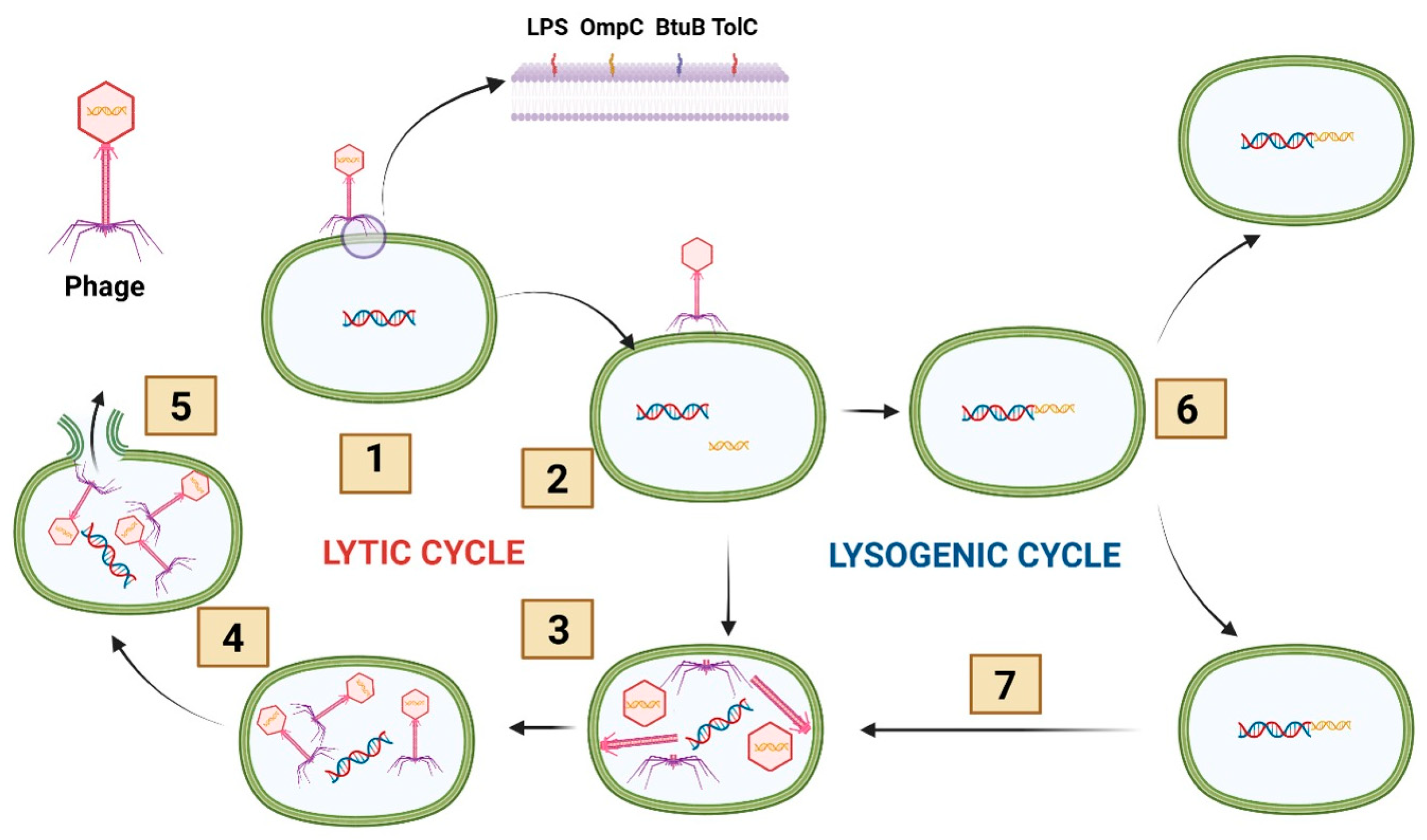
3. Historical Perspective and Biological Basis of Bacteriophage Therapy
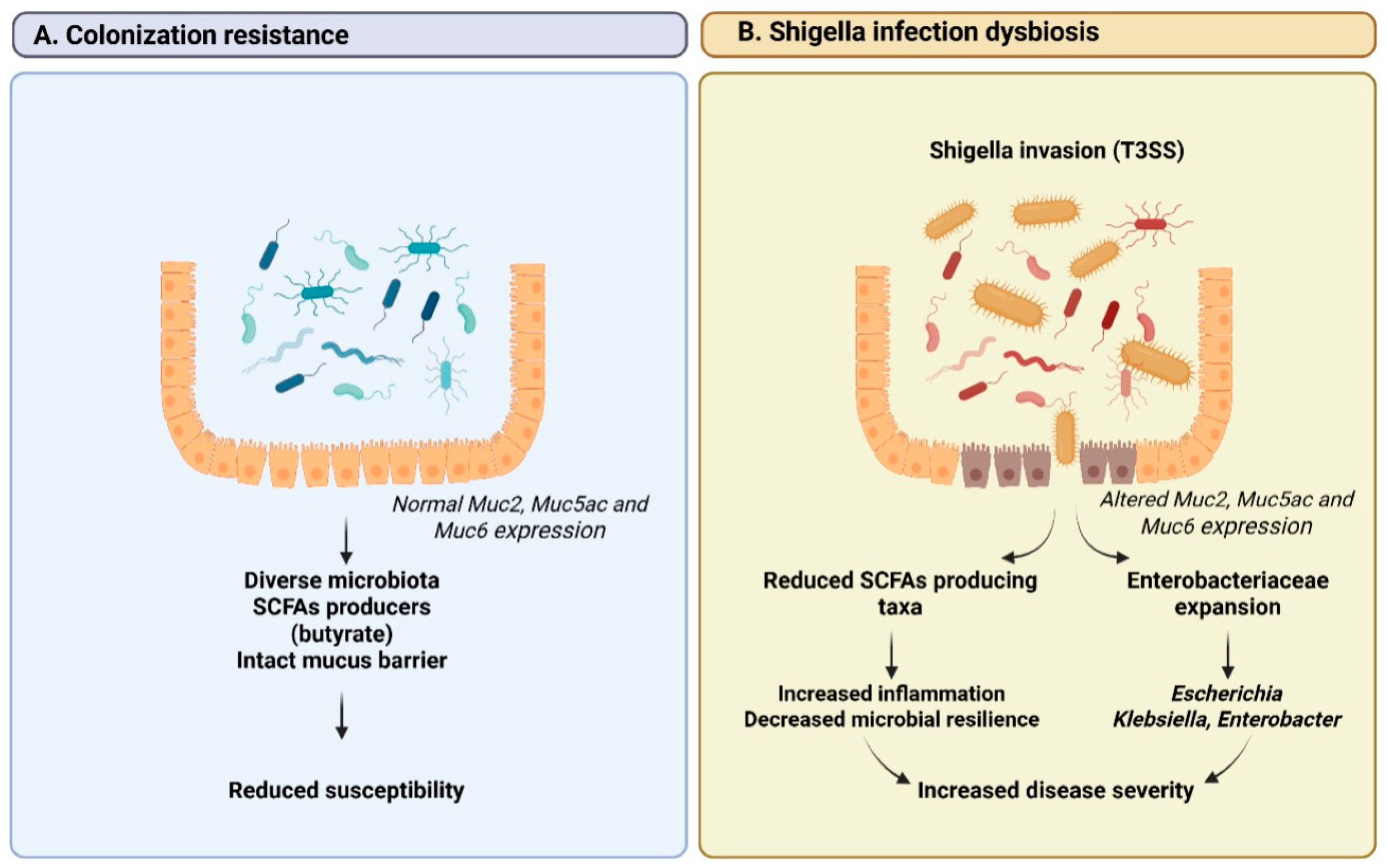
4. Gut Microbiota and Shigella Infection
5. Bacteriophage Therapy Targeting Shigella spp.
Oral Delivery Systems and Stability—Gut PK/PD Considerations
6. Safety and Regulatory Challenges
7. Future Perspectives: Toward Personalized Phage Therapy in Gastroenterology Field
7.1. Phage Cocktails and Personalized Phage Selection
7.2. Integration with Metagenomics and Precision Medicine
7.3. Artificial Intelligence and Phage Discovery Platforms
7.4. Roadmap for Clinical Translation
8. Conclusions
Author Contributions
Funding
Institutional Review Board Statement
Informed Consent Statement
Data Availability Statement
Acknowledgments
Conflicts of Interest
Abbreviations
| AMR | Antimicrobial resistance |
| AI | Artificial intelligence |
| EOP | Efficiency of plating |
| HGT | Horizontal gene transfer |
| LPS | Lipopolysaccharide |
| MDR | Multidrug-resistant |
| PCR | Polymerase chain reaction |
| PFU | Plaque-forming unit |
| RBP | Receptor binding protein |
| SCFAs | Short-chain fatty acids |
References
- Khalil, I.A.; Troeger, C.; Blacker, B.F.; Rao, P.C.; Brown, A.; Atherly, D.E.; Brewer, T.G.; Engmann, C.M.; Houpt, E.R.; Kang, G.; et al. Morbidity and mortality due to shigella and enterotoxigenic Escherichia coli diarrhoea: The Global Burden of Disease Study 1990–2016. Lancet Infect. Dis. 2018, 18, 1229–1240. [Google Scholar] [CrossRef]
- Mason, L.C.E.; Greig, D.R.; Cowley, L.A.; Partridge, S.R.; Martinez, E.; Blackwell, G.A.; Chong, C.E.; De Silva, P.M.; Bengtsson, R.J.; Draper, J.L.; et al. The evolution and international spread of extensively drug resistant Shigella sonnei. Nat. Commun. 2023, 14, 1983. [Google Scholar]
- Baker, S.; Scott, T.A. Antimicrobial-resistant Shigella: Where do we go next? Nat. Rev. Microbiol. 2023, 21, 409–410. [Google Scholar] [CrossRef]
- Kotloff, K.L.; Riddle, M.S.; Platts-Mills, J.A.; Pavlinac, P.; Zaidi, A.K.M. Shigellosis. Lancet 2018, 391, 801–812. [Google Scholar] [CrossRef]
- Baumgart, S.; Phan, T.; McKew, G. Epidemiology and antimicrobial resistance rates for Shigella species in a resource-rich setting. Pathology 2025, 57, 94–99. [Google Scholar] [PubMed]
- Ranjbar, R.; Farahani, A. Shigella: Antibiotic-Resistance Mechanisms and New Horizons for Treatment. Infect. Drug Resist. 2019, 12, 3137–3167. [Google Scholar] [CrossRef] [PubMed]
- Cusumano, G.; Flores, G.A.; Venanzoni, R.; Angelini, P. The Impact of Antibiotic Therapy on Intestinal Microbiota: Dysbiosis, Antibiotic Resistance, and Restoration Strategies. Antibiotics 2025, 14, 371. [Google Scholar] [CrossRef]
- Kim, M.K.; Suh, G.A.; Cullen, G.D.; Perez Rodriguez, S.; Dharmaraj, T.; Chang, T.H.W.; Li, Z.; Chen, Q.; Green, S.I.; Lavigne, R.; et al. Bacteriophage therapy for multidrug-resistant infections: Current technologies and therapeutic approaches. J. Clin. Investig. 2025, 135, e187996. [Google Scholar] [CrossRef]
- De Sordi, L.; Lourenço, M.; Debarbieux, L. The Battle Within: Interactions of Bacteriophages and Bacteria in the Gastrointestinal Tract. Cell Host Microbe 2019, 25, 210–218. [Google Scholar] [CrossRef]
- Youssef, R.A.; Sakr, M.M.; Shebl, R.I.; Aboshanab, K.M. Recent insights on challenges encountered with phage therapy against gastrointestinal-associated infections. Gut Pathog. 2025, 17, 60. [Google Scholar] [CrossRef] [PubMed]
- Kim, S.M.; Heo, H.R.; Kim, C.S.; Shin, H.H. Genetically engineered bacteriophages as novel nanomaterials: Applications beyond antimicrobial agents. Front. Bioeng. Biotechnol. 2024, 12, 1319830. [Google Scholar] [CrossRef] [PubMed]
- Khambhati, K.; Bhattacharjee, G.; Gohil, N.; Maurya, R.; Singh, V. Exploring the potential of phage and their applications. Prog. Mol. Biol. Transl. Sci. 2023, 200, 1–12. [Google Scholar]
- Hitchcock, N.M.; Devequi Gomes Nunes, D.; Shiach, J.; Valeria Saraiva Hodel, K.; Dantas Viana Barbosa, J.; Alencar Pereira Rodrigues, L.; Coler, B.S.; Botelho Pereira Soares, M.; Badaró, R. Current Clinical Landscape and Global Potential of Bacteriophage Therapy. Viruses 2023, 15, 1020. [Google Scholar] [CrossRef]
- Chanishvili, N.; Myelnikov, D.; Blauvelt, T.K. Professor Giorgi Eliava and the Eliava Institute of Bacteriophage. Phage 2022, 3, 71–80. [Google Scholar] [CrossRef]
- Ling, Z.; Ding, W.; Liu, X.; Zhang, J.; Cheng, Y.; Zhu, Z.; Wu, L.; Xu, X.; Gao, Y.; Jiang, R. Gut microbiota dysbiosis and systemic immune dysfunction in critical ill patients with multidrug-resistant bacterial colonization and infection. J. Transl. Med. 2025, 23, 981. [Google Scholar] [CrossRef]
- Patel, R.R.; Arun, P.P.; Singh, S.K.; Singh, M. Overcoming antimicrobial resistance: Phage therapy as a promising solution to combat ESKAPE pathogens. Int. J. Antimicrob. Agents 2025, 66, 107640. [Google Scholar] [CrossRef]
- Islam, M.Z.; Fokine, A.; Mahalingam, M.; Zhang, Z.; Garcia-Doval, C.; van Raaij, M.J.; Rossmann, M.G.; Rao, V.B. Molecular anatomy of the receptor binding module of a bacteriophage long tail fiber. PLoS Pathog. 2019, 15, e1008193. [Google Scholar] [CrossRef]
- Chen, P.; Sun, H.; Ren, H.; Liu, W.; Li, G.; Zhang, C. LamB, OmpC, and the Core Lipopolysaccharide of Escherichia coli K-12 Function as Receptors of Bacteriophage Bp7. J. Virol. 2020, 94, e00325-20. [Google Scholar] [CrossRef] [PubMed]
- Filik, K.; Szermer-Olearnik, B.; Oleksy, S.; Brykała, J.; Brzozowska, E. Bacteriophage Tail Proteins as a Tool for Bacterial Pathogen Recognition—A Literature Review. Antibiotics 2022, 11, 555. [Google Scholar] [CrossRef]
- Monteiro, R.; Pires, D.P.; Costa, A.R.; Azeredo, J. Phage Therapy: Going Temperate? Trends Microbiol. 2019, 27, 368–378. [Google Scholar] [CrossRef] [PubMed]
- Schwarzkopf, J.M.F.; Viveros, R.P.; Burdur, A.N.; Mehner-Breitfeld, D.; Tschowri, N.; Brüser, T. The short cytoplasmic region of phage T4 holin is essential for the transition from impermeable membrane protein complexes to permeable pores. Front. Microbiol. 2025, 16, 1579756. [Google Scholar] [CrossRef] [PubMed]
- Young, R. Phage lysis: Do we have the hole story yet? Curr. Opin. Microbiol. 2013, 16, 790–797. [Google Scholar] [CrossRef] [PubMed]
- Lourenço, M.; Chaffringeon, L.; Lamy-Besnier, Q.; Pédron, T.; Campagne, P.; Eberl, C.; Bérard, M.; Stecher, B.; Debarbieux, L.; De Sordi, L. The Spatial Heterogeneity of the Gut Limits Predation and Fosters Coexistence of Bacteria and Bacteriophages. Cell Host Microbe 2020, 28, 390–401.e5. [Google Scholar] [CrossRef]
- Ali, Y.; Inusa, I.; Sanghvi, G.; Mandaliya, V.B.; Bishoyi, A.K. The current status of phage therapy and its advancement towards establishing standard antimicrobials for combating multi drug-resistant bacterial pathogens. Microb. Pathog. 2023, 181, 106199. [Google Scholar] [CrossRef] [PubMed]
- Porcari, S.; Fusco, W.; Spivak, I.; Fiorani, M.; Gasbarrini, A.; Elinav, E.; Cammarota, G.; Ianiro, G. Fine-tuning the gut ecosystem: The current landscape and outlook of artificial microbiome therapeutics. Lancet Gastroenterol. Hepatol. 2024, 9, 460–475. [Google Scholar] [CrossRef]
- Hampton, H.G.; Watson, B.N.J.; Fineran, P.C. The arms race between bacteria and their phage foes. Nature 2020, 577, 327–336. [Google Scholar] [CrossRef]
- Dedrick, R.M.; Freeman, K.G.; Nguyen, J.A.; Bahadirli-Talbott, A.; Smith, B.E.; Wu, A.E.; Ong, A.S.; Lin, C.T.; Ruppel, L.C.; Parrish, N.M.; et al. Potent antibody-mediated neutralization limits bacteriophage treatment of a pulmonary Mycobacterium abscessus infection. Nat. Med. 2021, 27, 1357–1361. [Google Scholar] [CrossRef]
- Barr, J.J.; Auro, R.; Furlan, M.; Whiteson, K.L.; Erb, M.L.; Pogliano, J.; Stotland, A.; Wolkowicz, R.; Cutting, A.S.; Doran, K.S.; et al. Bacteriophage adhering to mucus provide a non-host-derived immunity. Proc. Natl. Acad. Sci. USA 2013, 110, 10771–10776. [Google Scholar] [CrossRef]
- Li, Y.; Xia, S.; Jiang, X.; Feng, C.; Gong, S.; Ma, J.; Fang, Z.; Yin, J.; Yin, Y. Gut microbiota and diarrhoea: An updated review. Front. Cell Infect. Microbiol. 2021, 11, 625210. [Google Scholar]
- Chung The, H.; Le, S.H. Dynamics of the human gut microbiome under infectious diarrhoea. Curr. Opin. Microbiol. 2022, 66, 79–85. [Google Scholar] [CrossRef]
- The, H.C.; Florez de Sessions, P.; Jie, S.; Pham Thanh, D.; Thompson, C.N.; Nguyen Ngoc Minh, C.; Chu, C.W.; Tran, T.A.; Thomson, N.R.; Thwaites, G.E.; et al. Assessing gut microbiota perturbations during the early phase of infectious diarrhoea in Vietnamese children. Gut Microbes 2018, 9, 38–54. [Google Scholar] [CrossRef] [PubMed]
- Worby, C.J.; Sridhar, S.; Turbett, S.E.; Becker, M.V.; Kogut, L.; Sanchez, V.; Bronson, R.A.; Rao, S.R.; Oliver, E.; Walker, A.T.; et al. Gut microbiome perturbation, antibiotic resistance, and Escherichia coli strain dynamics associated with international travel: A metagenomic analysis. Lancet Microbe 2023, 4, e790–e799. [Google Scholar] [CrossRef]
- Sasakawa, C. A new paradigm of bacteria–gut interplay brought through the study of Shigella. Proc. Jpn. Acad. Ser. B Phys. Biol. Sci. 2010, 86, 229–243. [Google Scholar] [CrossRef] [PubMed]
- Peng, J.; Cai, K.; Chen, G.; Liu, L.; Peng, L. Genetic evidence strengthens the bidirectional connection between gut microbiota and Shigella infection: Insights from a two-sample Mendelian randomisation study. Front. Microbiol. 2024, 15, 1361927. [Google Scholar] [CrossRef]
- Yang, J.; Chen, W.; Xia, P.; Zhang, W. Dynamic comparison of gut microbiota of mice infected with Shigella flexneri via two different infective routes. Exp. Ther. Med. 2020, 19, 2273–2281. [Google Scholar] [CrossRef]
- Liechty, Z.; Baldwin, A.; Isidean, S.; Suvarnapunya, A.; Frenck, R.; Porter, C.; Goodson, M. Dynamics of the gut microbiome in subjects challenged with Shigella sonnei 53G in a controlled human infection model. mSphere 2025, 10, e00906-24. [Google Scholar] [CrossRef]
- Ndungo, E.; Holm, J.B.; Gama, S.; Buchwald, A.G.; Tennant, S.M.; Laufer, M.K.; Pasetti, M.F.; Rasko, D.A. Dynamics of the gut microbiome in Shigella-infected children during the first two years of life. mSystems 2022, 7, e00442-22. [Google Scholar] [CrossRef]
- Lindsay, B.; Oundo, J.; Hossain, M.A.; Antonio, M.; Tamboura, B.; Walker, A.W.; Paulson, J.N.; Parkhill, J.; Omore, R.; Faruque, A.S.G.; et al. Microbiota that affect risk for shigellosis in children in low-income countries. Emerg. Infect. Dis. 2015, 21, 242–250. [Google Scholar] [CrossRef]
- Fan, Y.; Li, Y.; Wang, L.; Zhao, D.; Zhou, Y.; Houpt, E.R.; Liu, J. Fecal microbiome profiling of children with Shigella diarrhoea from low- and middle-income countries. Microbiol. Spectr. 2025, 13, e00573-25. [Google Scholar] [CrossRef]
- Hitch, T.C.A.; Hall, L.J.; Walsh, S.K.; Leventhal, G.E.; Slack, E.; de Wouters, T.; Walter, J.; Clavel, T. Microbiome-based interventions to modulate gut ecology and the immune system. Mucosal Immunol. 2022, 15, 1095–1113. [Google Scholar] [CrossRef] [PubMed]
- Goodridge, L.D. Bacteriophages for managing Shigella in various clinical and non-clinical settings. Bacteriophage 2013, 3, e25098. [Google Scholar] [CrossRef]
- Wang, X.; Li, J.; Ge, Z.; Fan, J.; Ma, D.; Cao, H.; Shen, J.; Wang, Y.; Liu, Z.; Gomaa, S.E.; et al. Phage therapy for intestinal infections: Efficacy, challenges, and future directions in translational research. Front. Microbiol. 2025, 16, 1672198. [Google Scholar] [CrossRef]
- Zaidi, M.B.; Estrada-García, T. Shigella: A Highly Virulent and Elusive Pathogen. Curr. Trop. Med. Rep. 2014, 1, 81–87. [Google Scholar] [CrossRef]
- Schnupf, P.; Sansonetti, P.J. Shigella Pathogenesis: New Insights through Advanced Methodologies. Microbiol. Spectr. 2019, 7, 15–39. [Google Scholar] [CrossRef]
- Ioannou, P.; Baliou, S.; Samonis, G. Bacteriophages in Infectious Diseases and Beyond—A Narrative Review. Antibiotics 2023, 12, 1012. [Google Scholar] [CrossRef] [PubMed]
- Matanza, X.M.; Clements, A. Pathogenicity and virulence of Shigella sonnei: A highly drug-resistant pathogen of increasing prevalence. Virulence 2023, 14, 2280838. [Google Scholar] [CrossRef] [PubMed]
- Mangalea, M.R.; Duerkop, B.A. Fitness Trade-Offs Resulting from Bacteriophage Resistance Potentiate Synergistic Antibacterial Strategies. Infect. Immun. 2020, 88, e00926-19. [Google Scholar] [CrossRef]
- Song, Y.; Ma, F.; Sun, M.; Mu, G.; Tuo, Y. The Chemical Structure Properties and Promoting Biofilm Activity of Exopolysaccharide Produced by Shigella flexneri. Front. Microbiol. 2022, 12, 807397. [Google Scholar] [CrossRef]
- Guo, Z.; Liu, M.; Zhang, D. Potential of phage depolymerase for the treatment of bacterial biofilms. Virulence 2023, 14, 2273567. [Google Scholar] [CrossRef]
- Mai, V.; Ukhanova, M.; Reinhard, M.K.; Li, M.; Sulakvelidze, A. Bacteriophage administration significantly reduces Shigella colonization and shedding by Shigella-challenged mice without deleterious side effects and distortions in the gut microbiota. Bacteriophage 2015, 5, e1088124. [Google Scholar] [CrossRef] [PubMed]
- Mondal, P.; Mallick, B.; Haldar, T.; Ramesh, A.; Sarbajna, A.; Koley, H.; Das, S. Utilizing the effectiveness of phage cocktail to combat Shigella and Salmonella infections and their polymicrobial biofilm control activity. BMC Microbiol. 2025, 25, 649. [Google Scholar] [CrossRef] [PubMed]
- Mondal, P.; Das, S.; Ramesh, A.; Sarbajna, A.; Banerjee, S.; Bhaumik, S.; Koley, H. Therapeutic potential of Shigella phage SSG23 against Shigella sonnei biofilms and in BALB/c mice. npj Viruses 2025, 3, 73. [Google Scholar] [CrossRef]
- Llanos-Chea, A.; Citorik, R.J.; Nickerson, K.P.; Ingano, L.; Serena, G.; Senger, S.; Lu, T.K.; Fasano, A.; Faherty, C.S. Bacteriophage Therapy Testing Against Shigella flexneri in a Novel Human Intestinal Organoid-Derived Infection Model. J. Pediatr. Gastroenterol. Nutr. 2019, 68, 509–516. [Google Scholar] [CrossRef] [PubMed]
- Chen, W.H.; Woolston, J.; Grant-Beurmann, S.; Robinson, C.K.; Bansal, G.; Nkeze, J.; Permala-Booth, J.; Fraser, C.M.; Tennant, S.M.; Shriver, M.C.; et al. Safety and Tolerability of ShigActive™, a Shigella spp. Targeting Bacteriophage Preparation, in a Phase 1 Randomized, Double-Blind, Controlled Clinical Trial. Antibiotics 2024, 13, 858. [Google Scholar] [CrossRef]
- Zhao, J.; Chen, B.; Wang, W.; Kang, Y.; Hu, E.; Zhang, Y.; Chen, H.; Xu, X.; Ji, X.; Wang, Y.; et al. Synergistic efficacy of phage Henu10 with antibiotics against Shigella dysenteriae with insight into phage resistance and fitness trade-offs. Front. Cell Infect. Microbiol. 2024, 14, 1499325. [Google Scholar] [CrossRef]
- Dlamini, S.B.; Gigante, A.M.; Hooton, S.P.T.; Atterbury, R.J. Efficacy of Different Encapsulation Techniques on the Viability and Stability of Diverse Phage under Simulated Gastric Conditions. Microorganisms 2023, 11, 2389. [Google Scholar] [CrossRef]
- Vinner, G.K.; Vladisavljević, G.T.; Clokie, M.R.J.; Malik, D.J. Microencapsulation of Clostridium difficile specific bacteriophages using microfluidic glass capillary devices for colon delivery using pH triggered release. PLoS ONE 2017, 12, e0186239. [Google Scholar] [CrossRef]
- Vinner, G.K.; Malik, D.J. High precision microfluidic microencapsulation of bacteriophages for enteric delivery. Res. Microbiol. 2018, 169, 522–530. [Google Scholar] [CrossRef] [PubMed]
- Wei, G.; Yue Feng, M.T.; Si, Z.; Chan-Park, M.B. Single-Cell Oral Delivery Platform for Enhanced Acid Resistance and Intestinal Adhesion. ACS Appl. Mater. Interfaces 2024, 16, 21498–21508. [Google Scholar] [CrossRef]
- Karthika, C.; Malligarjunan, N.; Pandian, S.K.; Gowrishankar, S. Chitosan-encapsulated bacteriophage cocktail as promising oral delivery system to surpass gastrointestinal infection caused by Klebsiella aerogenes. Int. J. Biol. Macromol. 2025, 292, 139236. [Google Scholar] [CrossRef]
- Kim, P.; Sanchez, A.M.; Penke, T.J.R.; Tuson, H.H.; Kime, J.C.; McKee, R.W.; Slone, W.L.; Conley, N.R.; McMillan, L.J.; Prybol, C.J.; et al. Safety, pharmacokinetics, and pharmacodynamics of LBP-EC01, a CRISPR-Cas3-enhanced bacteriophage cocktail, in uncomplicated urinary tract infections due to Escherichia coli (ELIMINATE): The randomised, open-label, first part of a two-part phase 2 trial. Lancet Infect. Dis. 2024, 24, 1319–1332. [Google Scholar] [CrossRef]
- Nang, S.C.; Lin, Y.W.; Petrovic Fabijan, A.; Chang, R.Y.K.; Rao, G.G.; Iredell, J.; Chan, H.K.; Li, J. Pharmacokinetics/pharmacodynamics of phage therapy: A major hurdle to clinical translation. Clin. Microbiol. Infect. 2023, 29, 702–709. [Google Scholar] [CrossRef]
- Van Belleghem, J.D.; Dąbrowska, K.; Vaneechoutte, M.; Barr, J.J.; Bollyky, P.L. Interactions between Bacteriophage, Bacteria, and the Mammalian Immune System. Viruses 2018, 11, 10. [Google Scholar] [CrossRef]
- Hodyra-Stefaniak, K.; Miernikiewicz, P.; Drapała, J.; Drab, M.; Jończyk-Matysiak, E.; Lecion, D.; Kaźmierczak, Z.; Beta, W.; Majewska, J.; Harhala, M.; et al. Mammalian Host-Versus-Phage immune response determines phage fate in vivo. Sci. Rep. 2015, 5, 14802. [Google Scholar]
- Górski, A.; Międzybrodzki, R.; Łobocka, M.; Głowacka-Rutkowska, A.; Bednarek, A.; Borysowski, J.; Jończyk-Matysiak, E.; Łusiak-Szelachowska, M.; Weber-Dąbrowska, B.; Bagińska, N.; et al. Phage Therapy: What Have We Learned? Viruses 2018, 10, 288. [Google Scholar] [CrossRef] [PubMed]
- Torres-Barceló, C.; Hochberg, M.E. Evolutionary Rationale for Phages as Complements of Antibiotics. Trends Microbiol. 2016, 24, 249–256. [Google Scholar] [CrossRef] [PubMed]
- Labrie, S.J.; Samson, J.E.; Moineau, S. Bacteriophage resistance mechanisms. Nat. Rev. Microbiol. 2010, 8, 317–327. [Google Scholar] [CrossRef]
- Brüssow, H.; Canchaya, C.; Hardt, W.D. Phages and the evolution of bacterial pathogens: From genomic rearrangements to lysogenic conversion. Microbiol. Mol. Biol. Rev. 2004, 68, 560–602. [Google Scholar] [CrossRef] [PubMed]
- Pirnay, J.P.; De Vos, D.; Verbeken, G.; Merabishvili, M.; Chanishvili, N.; Vaneechoutte, M.; Zizi, M.; Laire, G.; Lavigne, R.; Huys, I.; et al. The phage therapy paradigm: Prêt-à-porter or sur-mesure? Pharm. Res. 2011, 28, 934–937. [Google Scholar] [CrossRef]
- Dąbrowska, K.; Abedon, S.T. Pharmacologically Aware Phage Therapy: Pharmacodynamic and Pharmacokinetic Obstacles to Phage Antibacterial Action in Animal and Human Bodies. Microbiol. Mol. Biol. Rev. 2019, 83, e00012-19. [Google Scholar] [CrossRef]
- Roach, D.R.; Leung, C.Y.; Henry, M.; Morello, E.; Singh, D.; Di Santo, J.P.; Weitz, J.S.; Debarbieux, L. Synergy between the Host Immune System and Bacteriophage Is Essential for Successful Phage Therapy against an Acute Respiratory Pathogen. Cell Host Microbe 2017, 22, 38–47.e4. [Google Scholar] [CrossRef]
- Łusiak-Szelachowska, M.; Zaczek, M.; Weber-Dąbrowska, B.; Międzybrodzki, R.; Kłak, M.; Fortuna, W.; Letkiewicz, S.; Rogóż, P.; Szufnarowski, K.; Jończyk-Matysiak, E.; et al. Phage neutralization by sera of patients receiving phage therapy. Viral Immunol. 2014, 27, 295–304. [Google Scholar] [CrossRef] [PubMed]
- Fauconnier, A. Phage Therapy Regulation: From Night to Dawn. Viruses 2019, 11, 352. [Google Scholar] [CrossRef]
- Verbeken, G.; Pirnay, J.P. European regulatory aspects of phage therapy: Magistral phage preparations. Curr. Opin. Virol. 2022, 52, 24–29. [Google Scholar] [CrossRef]
- Pelfrene, E.; Willebrand, E.; Cavaleiro Sanches, A.; Sebris, Z.; Cavaleri, M. Bacteriophage therapy: A regulatory perspective. J. Antimicrob. Chemother. 2016, 71, 2071–2074. [Google Scholar] [CrossRef] [PubMed]
- Anderson, M.; Sansonetti, P.J.; Marteyn, B.S. Shigella Diversity and Changing Landscape: Insights for the Twenty-First Century. Front. Cell Infect. Microbiol. 2016, 6, 45. [Google Scholar] [CrossRef]
- Pickard, J.M.; Zeng, M.Y.; Caruso, R.; Núñez, G. Gut microbiota: Role in pathogen colonization, immune responses, and inflammatory disease. Immunol. Rev. 2017, 279, 70–89. [Google Scholar] [CrossRef]
- Baker, K.S.; Dallman, T.J.; Ashton, P.M.; Day, M.; Hughes, G.; Crook, P.D.; Gilbart, V.L.; Zittermann, S.; Allen, V.G.; Howden, B.P.; et al. Intercontinental dissemination of azithromycin-resistant shigellosis through sexual transmission: A cross-sectional study. Lancet Infect. Dis. 2015, 15, 913–921. [Google Scholar] [CrossRef]
- Pirnay, J.P.; Verbeken, G.; Ceyssens, P.J.; Huys, I.; De Vos, D.; Ameloot, C.; Fauconnier, A. The Magistral Phage. Viruses 2018, 10, 64. [Google Scholar] [CrossRef] [PubMed]
- Schooley, R.T.; Biswas, B.; Gill, J.J.; Hernandez-Morales, A.; Lancaster, J.; Lessor, L.; Barr, J.J.; Reed, S.L.; Rohwer, F.; Benler, S.; et al. Development and use of personalized bacteriophage-based therapeutic cocktails to treat a patient with a disseminated resistant Acinetobacter baumannii infection. Antimicrob. Agents Chemother. 2017, 61, e00954-17. [Google Scholar] [CrossRef]
- Xu, M.; Chen, S.; Pei, H.; Hu, L.; Zhang, Y. Engineering bacteriophages for gut health: Precision antimicrobials and beyond. J. Nanobiotechnol. 2026, 24, 62. [Google Scholar] [CrossRef] [PubMed]
- Harper, D.R. Criteria for Selecting Suitable Infectious Diseases for Phage Therapy. Viruses 2018, 10, 177. [Google Scholar] [CrossRef]
- Khan Mirzaei, M.; Nilsson, A.S. Isolation of phages for phage therapy: A comparison of spot tests and efficiency of plating analyses for determination of host range and efficacy. PLoS ONE 2015, 10, e0118557. [Google Scholar] [CrossRef]
- Li, C.; Shi, T.; Sun, Y.; Zhang, Y. A Novel Method to Create Efficient Phage Cocktails via Use of Phage-Resistant Bacteria. Appl. Environ. Microbiol. 2022, 88, e02323-21. [Google Scholar] [CrossRef]
- Fujimoto, K.; Kimura, Y.; Shimohigoshi, M.; Satoh, T.; Sato, S.; Tremmel, G.; Uematsu, M.; Kawaguchi, Y.; Usui, Y.; Nakano, Y.; et al. Metagenome Data on Intestinal Phage-Bacteria Associations Aids the Development of Phage Therapy against Pathobionts. Cell Host Microbe 2020, 28, 380–389.e9. [Google Scholar] [CrossRef]
- Mallick, B.; Dutta, A.; Mondal, P.; Dutta, M. Proteomic analysis and protein structure prediction of Shigella phage Sfk20 based on a comparative study using structure prediction approaches. Proteins 2024, 92, 637–648. [Google Scholar] [CrossRef] [PubMed]
- Gonzales, M.E.M.; Ureta, J.C.; Shrestha, A.M.S. Protein embeddings improve phage-host interaction prediction. PLoS ONE 2023, 18, e0289030. [Google Scholar] [CrossRef] [PubMed]
- Gonzales, M.E.M.; Ureta, J.C.; Shrestha, A.M.S. PHIStruct: Improving phage-host interaction prediction at low sequence similarity settings using structure-aware protein embeddings. Bioinformatics 2024, 41, btaf016. [Google Scholar] [CrossRef]
- Gaborieau, B.; Vaysset, H.; Tesson, F.; Charachon, I.; Dib, N.; Bernier, J.; Dequidt, T.; Georjon, H.; Clermont, O.; Hersen, P.; et al. Prediction of strain level phage-host interactions across the Escherichia genus using only genomic information. Nat. Microbiol. 2024, 9, 2847–2861. [Google Scholar] [CrossRef]
- Camejo, P.Y.; Rojas, F.; Ossa, A.; Hurtado, R.; Tichy, D.; Pieringer, C.; Pino, M.; Mora-Uribe, P.; Ulloa, S.; Norambuena, R.; et al. A machine learning approach to predict strain-specific phage-host interactions. Sci. Rep. 2025, 15, 38249. [Google Scholar] [CrossRef]
- Romero-Calle, D.; Guimarães Benevides, R.; Góes-Neto, A.; Billington, C. Bacteriophages as Alternatives to Antibiotics in Clinical Care. Antibiotics 2019, 8, 138. [Google Scholar] [CrossRef]
- Yerushalmy, O.; Braunstein, R.; Alkalay-Oren, S.; Rimon, A.; Coppenhagen-Glazer, S.; Onallah, H.; Nir-Paz, R.; Hazan, R. Towards Standardization of Phage Susceptibility Testing: The Israeli Phage Therapy Center “Clinical Phage Microbiology”-A Pipeline Proposal. Clin. Infect. Dis. 2023, 77, S337–S351. [Google Scholar] [PubMed]
- Moore, M.S.; McCann, C.D.; Jordan, J.A. Molecular detection of culture-confirmed bacterial bloodstream infections with limited enrichment time. J. Clin. Microbiol. 2013, 51, 3720–3725. [Google Scholar] [CrossRef]
- Quirino, A.; Marascio, N.; Scarlata, G.G.M.; Cicino, C.; Pavia, G.; Pantanella, M.; Carlisi, G.; Mercurio, M.; Familiari, F.; Rotundo, S.; et al. Orthopedic Device-Related Infections Due to Emerging Pathogens Diagnosed by a Combination of Microbiological Approaches: Case Series and Literature Review. Diagnostics 2022, 12, 3224. [Google Scholar] [CrossRef]
- Spagnuolo, R.; Scarlata, G.G.M.; Paravati, M.R.; Abenavoli, L.; Luzza, F. Change in Diagnosis of Helicobacter pylori Infection in the Treatment-Failure Era. Antibiotics 2024, 13, 357. [Google Scholar] [CrossRef] [PubMed]
- Jault, P.; Leclerc, T.; Jennes, S.; Pirnay, J.P.; Que, Y.A.; Resch, G.; Rousseau, A.F.; Ravat, F.; Carsin, H.; Le Floch, R.; et al. Efficacy and tolerability of a cocktail of bacteriophages to treat burn wounds infected by Pseudomonas aeruginosa (PhagoBurn): A randomised, controlled, double-blind phase 1/2 trial. Lancet Infect. Dis. 2019, 19, 35–45. [Google Scholar] [PubMed]
- Gelman, D.; Yerushalmy, O.; Alkalay-Oren, S.; Rakov, C.; Ben-Porat, S.; Khalifa, L.; Adler, K.; Abdalrhman, M.; Coppenhagen-Glazer, S.; Aslam, S.; et al. Clinical Phage Microbiology: A suggested framework and recommendations for the in-vitro matching steps of phage therapy. Lancet Microbe 2021, 2, e555–e563. [Google Scholar] [CrossRef]
- Khanna, S.; Montassier, E.; Schmidt, B.; Patel, R.; Knights, D.; Pardi, D.S.; Kashyap, P. Gut microbiome predictors of treatment response and recurrence in primary Clostridium difficile infection. Aliment. Pharmacol. Ther. 2016, 44, 715–727. [Google Scholar] [CrossRef]
- Kolenda, C.; Jourdan, J.; Roussel-Gaillard, T.; Medina, M.; Laurent, F. Phage susceptibility testing methods or “phagograms”: Where do we stand and where should we go? J. Antimicrob. Chemother. 2024, 79, 2742–2749. [Google Scholar]
- Riddle, M.S.; Louis Bourgeois, A.; Clifford, A.; Jeon, S.; Giersing, B.K.; Jit, M.; Tufet Bayona, M.; Ovitt, J.; Hausdorff, W.P. Challenges and opportunities in developing a Shigella-containing combination vaccine for children in low- and middle-income countries: Report of an expert convening. Vaccine 2023, 41, 2634–2644. [Google Scholar]



| Study | Model | Phages Evaluated | Main Findings | Key Translational Implications |
|---|---|---|---|---|
| Mai et al. [50] | Murine model of Shigella intestinal infection | Oral phage cocktail | Significant reduction in intestinal colonization and fecal shedding; efficacy comparable to ampicillin; no detectable toxicity; preservation of gut microbiota diversity. | Proof of concept for oral phage therapy; microbiota-sparing antimicrobial activity compared with antibiotics. |
| Mondal et al. [51] | In vitro assays and human cell lines | Lytic phage Sspk23 | Strong lytic activity against S. sonnei; effective disruption of established biofilms; no cytotoxicity in intestinal epithelial and macrophage-like cell lines. | Demonstration of biofilm-targeting capacity and favorable in vitro safety profile. |
| Mondal et al. [52] | Murine model (S. sonnei-infected BALB/c mice) | Lytic phage SSG23 | Broad host range covering all four Shigella spp.; high stability across pH and temperature ranges; absence of toxin or resistance genes; significant reduction in bacterial burden and shedding; maintained efficacy despite antibody development. | Strong in vivo efficacy and genomic safety; supports feasibility of oral administration. |
| Llanos-Chea et al. [53] | Human intestinal organoid-derived epithelial monolayers | S. flexneri-specific phage | Efficient killing of Shigella; prevention of epithelial adherence and invasion; strict pathogen specificity; no effect on commensal Escherichia coli. | Mechanistic insight into interference with early pathogenic steps; high translational relevance. |
| Chen et al. [54] | Phase 1 randomized, double-masked, placebo-controlled clinical trial | Lytic phage cocktail targeting all Shigella spp. | Good tolerability and safety after oral administration; no serious adverse events; no significant changes in inflammatory biomarkers or gut microbiota composition. | Evidence of safety and feasibility in humans. |
| Zhao et al. [55] | In vitro and in vivo experimental models | Various Shigella-specific phages | Decreased biofilm formation, impaired colonization capacity, and increased antibiotic susceptibility in some strains. | Phage resistance may impose biological costs and attenuate pathogenicity rather than confer a selective advantage. |
| Translational Barrier | What Exists Now | What Is Needed |
|---|---|---|
| Immunogenicity and host immune clearance | Clinical trials demonstrate favorable safety profiles, but phages may be neutralized by circulating antibodies or cleared by the reticuloendothelial system, potentially reducing persistence and efficacy. Limited pharmacokinetic data are available for enteric applications. | Improved characterization of phage pharmacokinetics and immune interactions, optimized dosing regimens, and formulation strategies (e.g., encapsulation or buffered delivery) to enhance intestinal persistence and therapeutic effectiveness. |
| HGT risk and genomic safety | Whole-genome sequencing is routinely used to exclude lysogenic phages and those carrying virulence or AMR genes. Obligate lytic phages are preferentially selected for therapeutic use. | Standardized genomic screening pipelines, internationally harmonized safety criteria, and real-time monitoring systems to minimize HGT risk and ensure long-term genomic stability of therapeutic phage |
| Manufacturing, scalability, and quality control | Small-scale production of clinical-grade bacteriophage preparations is feasible, but manufacturing remains labor-intensive and difficult to scale. Batch-to-batch variability and the absence of universally standardized production and purification workflows limit broader clinical implementation. | Scalable, automated production platforms with standardized purification, sterility assurance, and quality control procedures to ensure consistency, safety, reproducibility, and timely availability of therapeutic phage preparations. |
| Regulatory pathway and clinical framework | Regulatory pathways are emerging but remain heterogeneous across jurisdictions. Phage therapy is often regulated under compassionate use, magistral preparation, or experimental frameworks. | Clear, harmonized regulatory frameworks defining classification, approval pathways, quality standards, and clinical trial requirements to support routine clinical adoption. |
| Diagnostic infrastructure and susceptibility testing | Phage susceptibility testing (“phagograms”) is technically feasible but not standardized and remains limited to specialized laboratories. Turnaround times may delay therapeutic decision-making. | Rapid, automated, and standardized phage susceptibility testing platforms integrated into clinical microbiology workflows to enable timely personalization and routine clinical use. |
Disclaimer/Publisher’s Note: The statements, opinions and data contained in all publications are solely those of the individual author(s) and contributor(s) and not of MDPI and/or the editor(s). MDPI and/or the editor(s) disclaim responsibility for any injury to people or property resulting from any ideas, methods, instructions or products referred to in the content. |
© 2026 by the authors. Licensee MDPI, Basel, Switzerland. This article is an open access article distributed under the terms and conditions of the Creative Commons Attribution (CC BY) license.
Share and Cite
Scarlata, G.G.M.; Belančić, A.; Štimac, D.; Fajkić, A.; Meštrović, T.; Abenavoli, L. Bacteriophage Therapy Against Shigella spp.: A Precision Antimicrobial Strategy. Antibiotics 2026, 15, 317. https://doi.org/10.3390/antibiotics15030317
Scarlata GGM, Belančić A, Štimac D, Fajkić A, Meštrović T, Abenavoli L. Bacteriophage Therapy Against Shigella spp.: A Precision Antimicrobial Strategy. Antibiotics. 2026; 15(3):317. https://doi.org/10.3390/antibiotics15030317
Chicago/Turabian StyleScarlata, Giuseppe Guido Maria, Andrej Belančić, Davor Štimac, Almir Fajkić, Tomislav Meštrović, and Ludovico Abenavoli. 2026. "Bacteriophage Therapy Against Shigella spp.: A Precision Antimicrobial Strategy" Antibiotics 15, no. 3: 317. https://doi.org/10.3390/antibiotics15030317
APA StyleScarlata, G. G. M., Belančić, A., Štimac, D., Fajkić, A., Meštrović, T., & Abenavoli, L. (2026). Bacteriophage Therapy Against Shigella spp.: A Precision Antimicrobial Strategy. Antibiotics, 15(3), 317. https://doi.org/10.3390/antibiotics15030317