Next Article in Journal
Vancomycin Dosing Regimen to Obtain the Target Area Under the Concentration–Time Curve, Which Provides an Early Treatment Response for Patients on Haemodialysis
Previous Article in Journal
Community Pharmacists’ Perspectives on Antibiotic Misuse and Antimicrobial Resistance in Cyprus: A Reflexive Thematic Analysis
Previous Article in Special Issue
Enteric Pathogens in Wild Boars Across the European Union: Prevalence and Antimicrobial Resistance Within a One Health Framework
error_outline You can access the new MDPI.com website here. Explore and share your feedback with us.
 
 
Article

Characterization of Salmonella spp. Isolates from European Hedgehogs (Erinaceus europaeus) in Italy: Serotypes and Antimicrobial Susceptibility Profiles

by
Sara Barbarulo
1,
Elisa Rampacci
1,
Sara Primavilla
2,
Valentina Stefanetti
1,* and
Fabrizio Passamonti
1,3
1
Department of Veterinary Medicine, University of Perugia, Via San Costanzo 4, 06126 Perugia, Italy
2
Istituto Zooprofilattico Sperimentale dell’Umbria e delle Marche “Togo Rosati”, Via G. Salvemini 1, 06126 Perugia, Italy
3
Wildlife Veterinary Research Center SELVA-VET, 06126 Perugia, Italy
*
Author to whom correspondence should be addressed.
Antibiotics 2026, 15(1), 46; https://doi.org/10.3390/antibiotics15010046
Submission received: 25 November 2025 / Revised: 29 December 2025 / Accepted: 31 December 2025 / Published: 3 January 2026
(This article belongs to the Special Issue Antimicrobial Resistance in the Wildlife)

Abstract

Background: Wildlife is increasingly recognized as an important component in the epidemiology of zoonotic pathogens. Salmonella spp., a leading cause of foodborne disease worldwide, can circulate across human, domestic animal, and environmental interfaces. European hedgehogs (Erinaceus europaeus), a synanthropic species frequently inhabiting urban and peri-urban areas, may act as reservoirs or sentinels for Salmonella. Objectives: The aim of this study was to investigate the prevalence, serotype distribution, and antimicrobial susceptibility profiles of Salmonella spp. isolated from European hedgehogs admitted to wildlife rehabilitation centers in Italy. Methods: Fecal samples were collected from 100 European hedgehogs housed in five wildlife rehabilitation centers located in four Italian regions. Salmonella spp. were isolated using standard bacteriological methods, serotyped according to the Kaufmann–White–Le Minor scheme, and tested for antimicrobial susceptibility by broth microdilution for ampicillin, enrofloxacin, and sulfamethoxazole-trimethoprim. Minimum inhibitory concentrations (MICs) were interpreted following CLSI guidelines. Results: Salmonella spp. was isolated from 30% of the animals sampled. Four serovars were identified, with S. Enteritidis (50%) and S. Typhimurium (36.7%) being the most prevalent, followed by S. Agona (10%) and S. Chester (3.3%). Antimicrobial susceptibility testing revealed a high level of susceptibility, with 90% of isolates sensitive to all tested antibiotics. One S. enteritidis strain showed resistance to enrofloxacin and sulfamethoxazole–trimethoprim, while two isolates exhibited intermediate susceptibility to enrofloxacin. Conclusions: The detection of Salmonella serovars commonly associated with human infections in European hedgehogs highlights the potential role of this species in the ecology of zoonotic Salmonella. Although antimicrobial resistance levels were low, the presence of resistant and intermediate strains underscores the importance of continued surveillance. Despite some limitations related to the study design and sample representativeness, these results support the need for further large-scale investigations, reinforcing the need for integrated One Health surveillance strategies.

1. Introduction

In recent decades, urban expansion and the alteration of natural habitats have intensified interactions between humans and wildlife, thereby promoting the spread of zoonotic diseases [1,2]. Among these, salmonellosis is the second most prevalent zoonosis in the European Union, with over 91,000 cases reported annually, and it is the leading cause of foodborne outbreaks, according to the European Food Safety Authority (EFSA) and European Centre for Disease Prevention and Control (ECDC) [3]. Globally, it causes over 90 million cases and approximately 150,000 deaths each year [4]. S. enterica subsp. enterica serovar Typhimurium (S. Typhimurium) and S. Enteritidis are responsible for non-typhoidal forms with predominantly gastrointestinal manifestations. Other serovars relevant in human medicine are S. Infantis, S. Newport and S. Derby [3]. Salmonella spreads mainly via the fecal-oral route, through contaminated food, water, or contact with infected animals. Salmonella spp. is recognized as capable of infecting a wide range of host species, including food-producing and companion animals, as well as wildlife [5]. From a One Health perspective, the circulation of Salmonella across different ecological compartments represents a relevant public health concern, as wildlife may act as reservoirs, sentinels, or spillover hosts at the human–animal–environment interface [6]. In several European countries, Salmonella surveillance and control programs are primarily focused on food-producing animals due to their direct role in food safety and human exposure [3]. In contrast, the monitoring of Salmonella in wild animals is not routinely included in national surveillance systems and is generally limited to sporadic investigations conducted for research purposes [7,8,9]. Although several studies have addressed the presence and epidemiology of Salmonella in wild birds [10,11], comparatively limited information is available regarding its occurrence, ecological role, and potential public health implications in wild mammal populations, including the European hedgehog (Erinaceus europaeus) [12,13]. A quintessential synanthropic species, the hedgehog has progressively adapted to urban and suburban environments, where it shares space with humans and domestic animals [14]. Moreover, hedgehogs are often infested with ticks and ectoparasites [15,16] and may contribute to maintaining ticks in suburban areas, especially in winter [17]. Hedgehogs’ interaction with several animals and their high population density make them promising candidates for spreading zoonotic pathogens, including Salmonella spp., whose non-foodborne routes of transmission have been documented in recent phylogenetic studies [3]. These studies revealed genetic similarities between strains isolated from hedgehogs and humans, suggesting potential interspecies transmission, particularly in rural areas of the United Kingdom [18]. Importantly, analyzing Salmonella isolates from wildlife for the presence of antimicrobial resistance (AMR) yields information about the extent of the environmental pollution [19]. Several free-ranging species have been investigated to rule out their role in antibiotic resistance, and the most represented group of animals in scientific literature is wild birds [20]. Uelze et al. analyzed, through an in silico approach, the distribution of Salmonella serovars across the different wildlife species, such as wild boar, red foxes, deer, hedgehogs, raccoons, badgers, wildcats, and wolves. The most found serovars were S. Choleraesuis, S. Enteritidis and S. Typhimurium with a low AMR burden [13].
The actual role of the hedgehog in the dissemination of Salmonella spp. remains poorly understood, especially in continental Europe. This knowledge gap highlights the need for integrated surveillance strategies that include humans, domestic animals, and wildlife in order to better understand transmission dynamics and antimicrobial resistance dissemination within a One Health context [21,22,23]. This study aims to investigate the prevalence of Salmonella spp. and its antimicrobial susceptibility profiles in Italian European hedgehogs.

2. Results

This study examined the presence and distribution of Salmonella spp. serotypes in European hedgehogs admitted to wildlife rehabilitation centers in Lazio, Umbria, Tuscany, and Piedmont. Between 2023 and 2024, Salmonella spp. was isolated from 30 out of 100 animals (30% prevalence). Among the positive samples, four different Salmonella serovars were identified, as reported in Table 1.
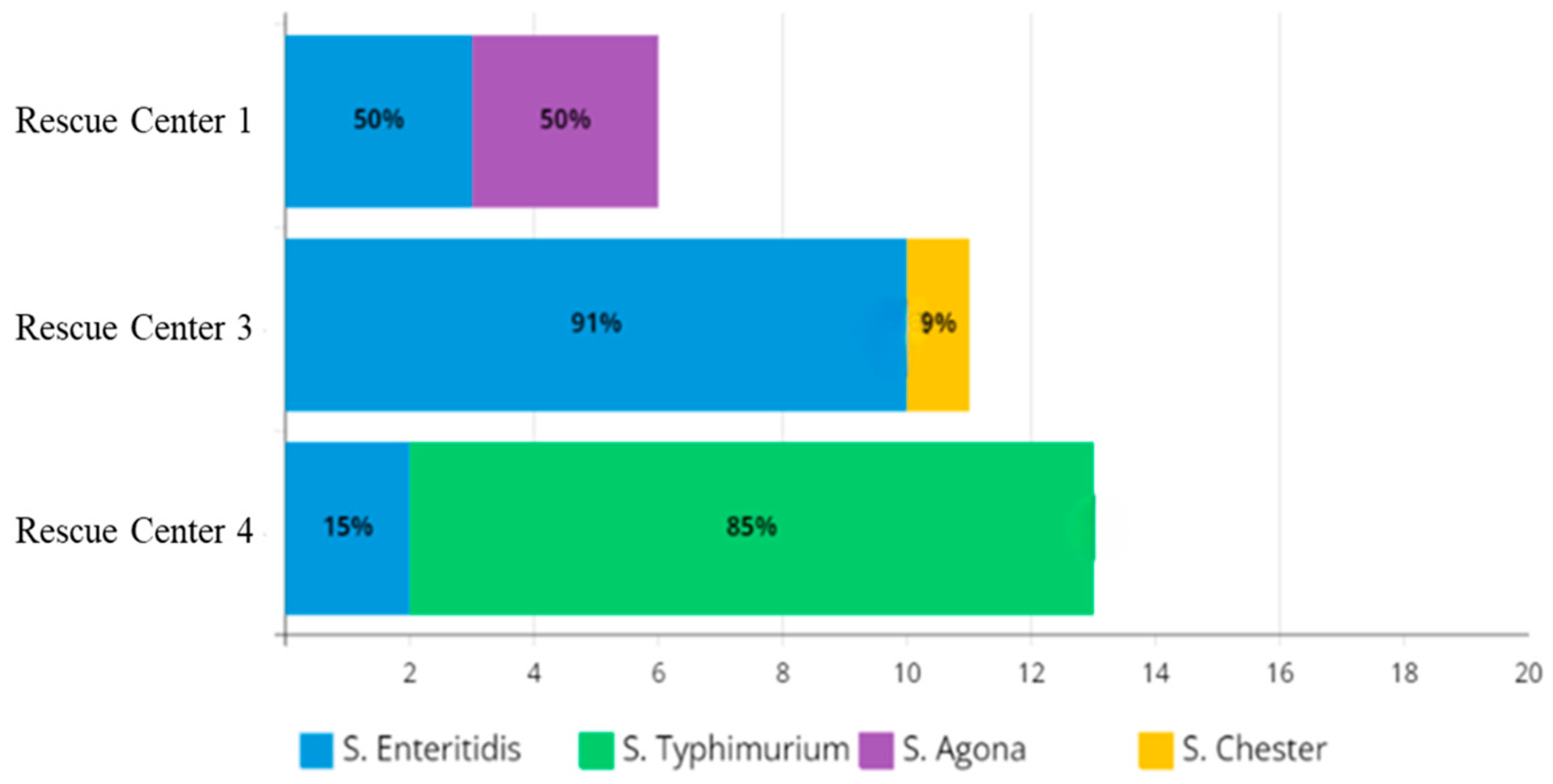
S. Enteritidis was the most frequently isolated serotype, accounting for 50% of the cases, followed by S. Typhimurium (36.7%), S. Agona (10%), and S. Chester (3.3%).
Figure 1 shows the prevalence of serovars for Wildlife Rescue Centers 1, 3 and 4. No Salmonella species were isolated in Rescue Center 2 and the University Veterinary Teaching Hospital of Perugia (UVTH).
Broth microdilution testing revealed high antibiotic susceptibility: 90% of Salmonella isolates were sensitive to all antibiotics tested. One S. enteritidis strain, isolated from a hedgehog housed at Rescue Center 1, was found to be resistant to both enrofloxacin and sulfatrimethoprim. MIC testing by broth microdilution revealed values of 4 µg/mL for enrofloxacin and 10 µg/mL for sulfatrimethoprim. Two isolates, corresponding to S. enteritidis and S. chester, showed intermediate susceptibility to enrofloxacin. The S. enteritidis isolate, obtained from a sample provided by Rescue Center 1, exhibited a MIC value of 2 µg/mL, while the S. chester isolate, derived from a specimen received from Rescue Center 3, showed a MIC value of 1 µg/mL. Detailed results of the broth microdilution test, including MIC values for each isolate, are reported in Table 2. No statistically significant differences were identified among the susceptibility patterns and the rescue centers.

3. Discussion

Salmonellosis is one of the most widespread zoonoses globally. The analysis of collected data helps to outline the epidemiology of Salmonella spp. in the European hedgehog population, highlighting both the pathogenic potential of this bacterium and its ability to develop antibiotic resistance.
The prevalence observed in the present study aligns with previous findings in Emilia-Romagna, which reported a 39% prevalence from 2019 to 2022 [24], although it may still be underestimated.
Most Italian epidemiological studies focus on northern regions, while the south is largely neglected. However, the lack of data prevents a full understanding of the real epidemiological situation in these areas. Further investigations into the distribution of Salmonella serotypes circulating in urban wildlife would be advisable to fill this geographical and ecological gap.
Considering the overall prevalence of serotypes, S. Enteritidis and S. Typhimurium were the most isolated, accounting for 50% and 36.7% of cases, respectively.
The survey conducted between 2019 and 2022 on hedgehogs at the Wildlife Rescue Center 1 in Ferrara confirms S. enteritidis as the predominant serotype [24]. The isolation of S. Enteritidis and S. Typhimurium in this study is particularly relevant, since these serotypes are not host-specific and can infect a wide range of species, facilitating environmental persistence [25]. Uelze et al. investigated through Whole Genome Sequencing (WGS) Salmonella enterica subsp. enterica in several wildlife species, including badgers, deer, hedgehogs, pigeons, raccoons, wild birds, wild boar, wild cats, and foxes. They found S. Choleraesuis, S. Enteritidis and S. Typhimurium as the most common serovars. Interestingly, within these serovars, different sequence types were found to be associated with different animal species. All hedgehog isolates belonged to S. Enteritidis ST183 [13].
Scientific literature reports numerous cases of human illness linked to these serotypes, often following consumption of contaminated food or contact with pet animals carrying bacteria. Likewise, African pygmy hedgehogs have also been recognized as vectors [26]. Their growing popularity as pets has raised health and safety concerns; in 2020, they were identified as the primary source of S. Typhimurium outbreaks in the United States and Canada [27].
Only a strain of S. Chester was reported in our study. Major foodborne outbreaks caused by S. Chester in humans have been documented in Australia [28], Japan [29], and Canada [30]. Data on the prevalence of S. Chester in animals intended for human consumption indicated the presence of this bacterium in camel meat [31].
However, particular interest was raised by an analysis of Salmonella prevalence in the feces of wild hedgehogs, which in Burkina Faso are also a food source for the local population. Although the prevalence of Salmonella in hedgehogs was high (96%), the S. Chester serotype was not reported in this species [32].
In hedgehogs from Rescue Center 1 in Rome, three S. Agona were identified.
S. Agona serotype, rarely isolated in humans, is often associated with contamination of animal feed and food products [33].
The role of wildlife in Salmonella transmission is less clear, mainly due to the difficulty in establishing direct connections between human infections and wild animal contact. Nevertheless, animals in wildlife rescue centers require constant care, increasing the likelihood of human–animal interaction. Salmonella can persist in the environment by producing biofilms [34]. Biofilms allow the pathogen to survive on inanimate surfaces (fomites), such as cages, bedding, food containers, and medical equipment, promoting indirect transmission. Therefore, strict hygiene protocols are essential in managing captive wild animals to prevent outbreaks. This includes regular cleaning, frequent bedding changes, and the use of personal protective equipment, which should be replaced among animals to avoid cross-contamination. Proper implementation of these measures reduces the animals’ susceptibility to infection and the need for medical treatment. Minimizing antibiotic use is crucial to preserve their effectiveness.
The global concern over antimicrobial resistance is growing. In wildlife centers, the repeated use of common antibiotics—often due to a limited range of approved drugs—encourages the selection of resistant strains [35]. Nonetheless, this study shows high levels of susceptibility, possibly linked to inherent characteristics of Salmonella phage types found in European hedgehogs [27]. Our results are in line with previous studies: Lawson et al. found 46 hedgehog isolates investigated susceptible to antibiotics [18], and no resistance genes were observed in isolates obtained from hedgehogs by Uelze and collaborators [13]. Still, strains with intermediate resistance must be monitored, as they could evolve toward full resistance. The confined conditions in shelters facilitate high bacterial loads and create ideal conditions for genetic exchange among microorganisms. These findings reinforce the need for ongoing surveillance and cautious antibiotic use in wildlife rehabilitation settings.
Further sampling and genomic sequencing are essential to define the circulating genotypes of Salmonella spp. and to determine any biological similarities between strains found in hedgehogs. Comparative studies involving African pygmy hedgehogs would also be highly informative due to their evolutionary proximity to Erinaceus species and possible pathogen overlap. Exploring these similarities could enhance understanding of cross-species transmission and help identify potential emerging zoonoses. Advancing this research is crucial for improving our grasp of host–pathogen interactions and for designing effective disease prevention strategies.

4. Conclusions

This study highlights the presence of Salmonella spp. in hedgehogs temporarily housed in wildlife rehabilitation centers, confirming their potential role as reservoirs of zoonotic pathogens. Although we found low antimicrobial-resistant strains, our findings provide valuable baseline data and underscore the importance of integrating wildlife into One Health surveillance programs. Further large-scale and longitudinal studies are warranted to better assess the epidemiological significance of hedgehogs in the maintenance and transmission of Salmonella and antimicrobial resistance.

5. Materials and Methods

5.1. Sample Collection and Bacterial Isolation

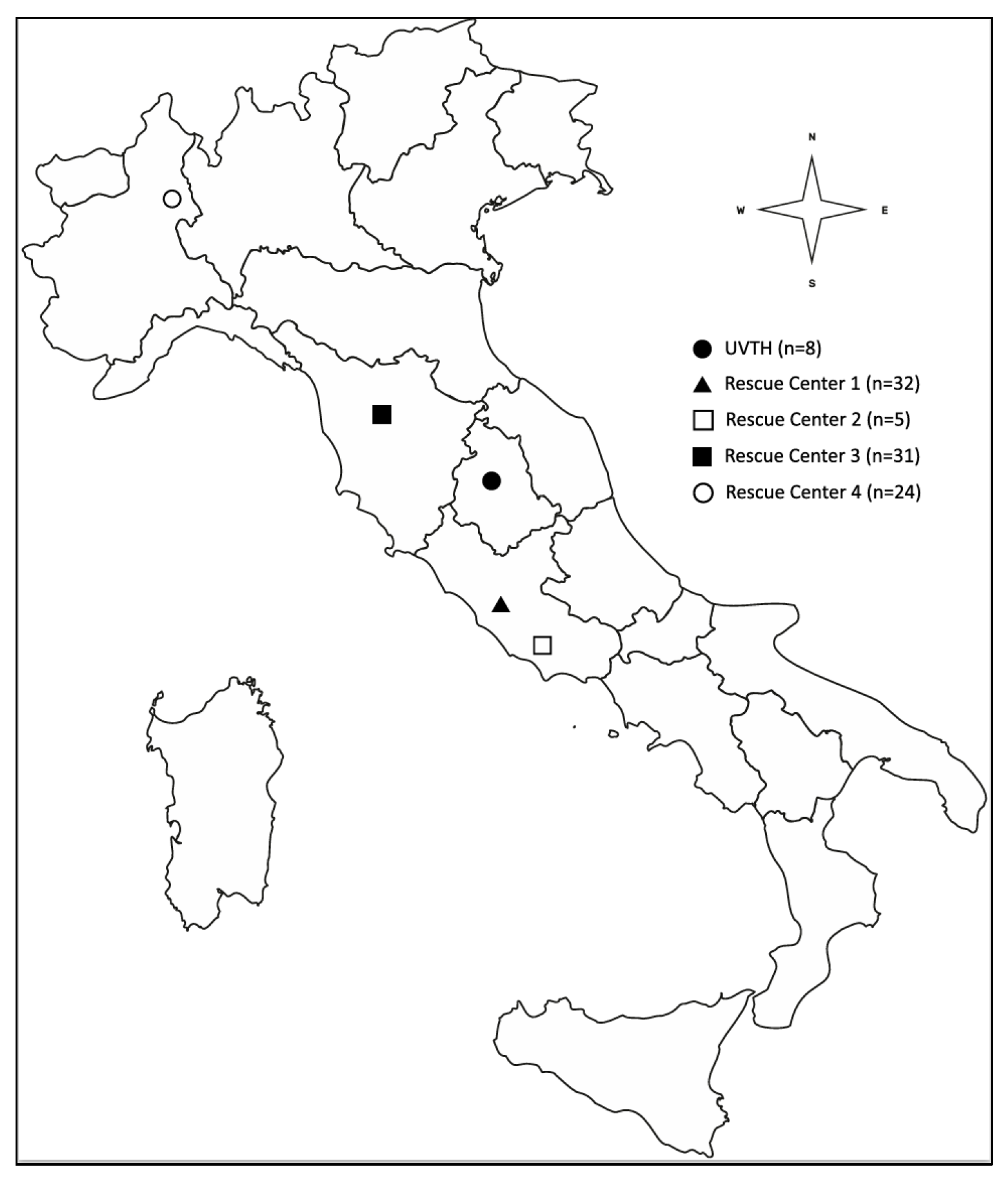
A total of 100 fecal samples were collected over a four-month period, from December 2023 to March 2024, from European hedgehogs housed in five wildlife rehabilitation centers located in four Italian regions. The animals examined were hedgehogs originating from their natural environment and only temporarily admitted to wildlife rehabilitation centers. Their stay was limited in duration, ranging from a few days to several months, depending on the individual case. Animals originated from the University Veterinary Teaching Hospital of Perugia (UVTH), Umbria (n = 8); Rescue Center 1 in Rome, Lazio (n = 32); Rescue Center 2 in Latina, Lazio (n = 5); Rescue Center 3 in Montespertoli (FI), Tuscany (n = 31); and Rescue Center 4 in Novara, Piedmont (n = 24), located as shown in Figure 2.
Most individuals were housed in separate cages within dedicated indoor facilities, except for those from Rescue Center 1, which were moved to outdoor shared enclosures prior to release. At this center, higher levels of interaction between hedgehogs and wild birds were also observed. To reduce potential bias, only hedgehogs that had not received antibiotic treatment in the two weeks prior to sampling were included, except for those from UVTH, which had been treated with enrofloxacin for trauma-related conditions.

5.2. Bacteriological Examination

Fresh fecal samples were collected using sterile dry cotton swabs, stored under refrigeration for a maximum of 48 h, and submitted to the Microbiology Laboratory of the Department of Veterinary Medicine, University of Perugia, for bacteriological examination.
The protocol adopted for the isolation of Salmonella spp. was performed according to the standard procedures [36]. Initially, 10 mL of Buffered Peptone Water (BPW) Liofilchem® (Roseto degli Abruzzi, Teramo, Italy) was added to the fecal swabs, which were then incubated at 37 °C ± 1 °C for a period ranging from 16 to 20 h. After this pre-enrichment phase, 0.1 mL of the culture was transferred into 10 mL of Rappaport Vassiliadis Broth Liofilchem® and incubated at 42 °C ± 1 °C for 18 to 24 h. For the isolation step, 0.01 mL of the broth culture was taken using a bacteriological loop and streaked onto solid selective-differential agar media, specifically XLD agar Liofilchem® and Chromogenic Salmonella agar (CSA) Liofilchem®, to obtain isolated colonies. The plates were then incubated at 37 °C ± 1 °C for 18 to 24 h under aerobic conditions.
Salmonella spp. isolates were then serotyped by direct slide agglutination using specific antisera (Statens Serum Institute, Copenhagen, Denmark) to detect somatic (O) and flagellar (H) antigens. The analysis was performed according to the Kaufmann-White-Le Minor scheme, as described in ISO/TR 6579-3:2014, at the Istituto Zooprofilattico Sperimentale dell’Umbria e delle Marche “Togo Rosati”. When necessary, the Sven Gard method was used to perform phase inversion to detect the inapparent H antigen phase of biphasic Salmonella [36].

5.3. Antimicrobial Susceptibility Testing

Salmonella strains were subjected to antimicrobial susceptibility testing (AST) using the broth microdilution method. The antibiotics tested were selected according to CLSI guidelines [37]. Specifically, ampicillin was used to represent the β-lactam class, enrofloxacin for the quinolones, and sulfamethoxazole-trimethoprim for the sulfonamides.
Briefly, two-fold drug dilutions were performed in Cation-Adjusted Mueller Hinton Broth (CAMHB) to test the following concentration ranges: 256–2 μg/mL for ampicillin, 32–0.25 μg/mL for enrofloxacin, and 640–5 μg/mL for sulfamethoxazole-trimethoprim. Bacterial inoculum was diluted in CAMHB starting from a suspension at the spectrophotometric 0.5 McFarland standard to obtain a final concentration of 5 × 10⁵ CFU/mL (5 × 10⁴ CFU/well). Positive (bacterial inoculum without drug) and negative control (sterile CAMHB) wells were tested in each plate, then incubated at 37 °C. The standard reading was established at 24 h, and all the experiments were performed in triplicate. A preliminary quality control test was performed before the experiments using the S. enteritidis reference strain ATCC 13076. The interpretation of MIC values (expressed in μg/mL) was based on the clinical breakpoints established by the CLSI for Enterobacteriaceae [37].

5.4. Statistical Analysis

Data were analyzed using commercially available statistical software (JASP, JASP Team 2022, version 0.16.1). Fisher’s exact test was applied to identify differences in antimicrobial susceptibility between the different rescue centers, as indicated. Statistical significance was set at a p-value of less than 0.05.

Author Contributions

Conceptualization, S.B. and F.P.; methodology, E.R. and S.P.; formal analysis, S.B.; resources, F.P.; data curation, V.S.; writing—original draft preparation, S.B. and V.S.; writing—review and editing, E.R., S.P. and V.S.; supervision, E.R. and V.S.; funding acquisition, F.P. All authors have read and agreed to the published version of the manuscript.

Funding

This research received no external funding.

Institutional Review Board Statement

This study did not require approval from the Ethics Committee, as sampling procedures were performed by veterinary personnel under non-invasive conditions during health examinations to which all wild animals are subjected prior to admission to the wildlife rehabilitation centers.

Informed Consent Statement

Not applicable.

Data Availability Statement

The original contributions presented in the study are included in the main article; further inquiries can be directed at the corresponding author.

Acknowledgments

The authors would like to thank Valeria Toppi and Massimo Arcangeli for their technical support.

Conflicts of Interest

The authors declare no conflicts of interest.

References

  1. Daszak, P.; Cunningham, A.A.; Hyatt, A.D. Emerging Infectious Diseases of Wildlife--Threats to Biodiversity and Human Health. Science 2000, 287, 443–449. [Google Scholar] [CrossRef] [PubMed]
  2. Faeth, S.H.; Warren, P.S.; Shochat, E.; Marussich, W.A. Trophic Dynamics in Urban Communities. BioScience 2005, 55, 399–407. [Google Scholar] [CrossRef]
  3. European Food Safety Authority (EFSA); European Centre for Disease Prevention and Control (ECDC). The European Union One Health 2022 Zoonoses Report. EFSA J. 2023, 21, e8442. [Google Scholar] [CrossRef]
  4. Cuypers, W.L.; Meysman, P.; Weill, F.-X.; Hendriksen, R.S.; Beyene, G.; Wain, J.; Nair, S.; Chattaway, M.A.; Perez-Sepulveda, B.M.; Ceyssens, P.-J.; et al. A Global Genomic Analysis of Salmonella Concord Reveals Lineages with High Antimicrobial Resistance in Ethiopia. Nat. Commun. 2023, 14, 3517. [Google Scholar] [CrossRef]
  5. Lamichhane, B.; Mawad, A.M.M.; Saleh, M.; Kelley, W.G.; Harrington, P.J.; Lovestad, C.W.; Amezcua, J.; Sarhan, M.M.; El Zowalaty, M.E.; Ramadan, H.; et al. Salmonellosis: An Overview of Epidemiology, Pathogenesis, and Innovative Approaches to Mitigate the Antimicrobial Resistant Infections. Antibiotics 2024, 13, 76. [Google Scholar] [CrossRef] [PubMed]
  6. Ferrari, R.G.; Rosario, D.K.A.; Cunha-Neto, A.; Mano, S.B.; Figueiredo, E.E.S.; Conte-Junior, C.A. Worldwide Epidemiology of Salmonella Serovars in Animal-Based Foods: A Meta-Analysis. Appl. Environ. Microbiol. 2019, 85, e00591-19. [Google Scholar] [CrossRef] [PubMed]
  7. Marenzoni, M.L.; Stefanetti, V.; Del Rossi, E.; Zicavo, A.; Scuota, S.; Origgi, F.C.; Deli, G.; Corti, C.; Trabalza Marinucci, M.; Olivieri, O. Detection of Testudinid Alphaherpesvirus, Chlamydia Spp., Mycoplasma Spp., and Salmonella Spp. in Free-ranging and Rescued Italian Testudo hermanni hermanni. Vet. Ital. 2022, 58, 25–34. [Google Scholar] [CrossRef]
  8. Skarżyńska, M.; Zając, M.; Kamińska, E.; Bomba, A.; Żmudzki, J.; Jabłoński, A.; Wasyl, D. Salmonella and Antimicrobial Resistance in Wild Rodents-True or False Threat? Pathogens 2020, 9, 771. [Google Scholar] [CrossRef]
  9. Gambi, L.; Ravaioli, V.; Rossini, R.; Tranquillo, V.; Boscarino, A.; Mattei, S.; D’incau, M.; Tosi, G.; Fiorentini, L.; Donato, A.D. Prevalence of Different Salmonella Enterica Subspecies and Serotypes in Wild Carnivores in Emilia-Romagna Region, Italy. Animals 2022, 12, 3368. [Google Scholar] [CrossRef]
  10. Hughes, L.A.; Shopland, S.; Wigley, P.; Bradon, H.; Leatherbarrow, A.H.; Williams, N.J.; Bennett, M.; de Pinna, E.; Lawson, B.; Cunningham, A.A.; et al. Characterisation of Salmonella Enterica Serotype Typhimurium Isolates from Wild Birds in Northern England from 2005–2006. BMC Vet. Res. 2008, 4, 4. [Google Scholar] [CrossRef]
  11. Wigley, P. Salmonella and Salmonellosis in Wild Birds. Animals 2024, 14, 3533. [Google Scholar] [CrossRef]
  12. Jota Baptista, C.V.; Seixas, F.; Gonzalo-Orden, J.M.; Oliveira, P.A. Can the European Hedgehog (Erinaceus europaeus) Be a Sentinel for One Health Concerns? Biologics 2021, 1, 61–69. [Google Scholar] [CrossRef]
  13. Uelze, L.; Bloch, A.; Borowiak, M.; Grobbel, M.; Deneke, C.; Fischer, M.; Malorny, B.; Pietsch, M.; Simon, S.; Szabó, I.; et al. What WGS Reveals about Salmonella Enterica Subsp. Enterica in Wildlife in Germany. Microorganisms 2021, 9, 1911. [Google Scholar] [CrossRef]
  14. Hof, A.R.; Bright, P.W. The Value of Agri-Environment Schemes for Macro-Invertebrate Feeders: Hedgehogs on Arable Farms in Britain. Anim. Conserv. 2010, 13, 467–473. [Google Scholar] [CrossRef]
  15. Bezerra-Santos, M.A.; Sgroi, G.; Mendoza-Roldan, J.A.; Khedri, J.; Camarda, A.; Iatta, R.; Sazmand, A.; Otranto, D. Ectoparasites of Hedgehogs: From Flea Mite Phoresy to Their Role as Vectors of Pathogens. Int. J. Parasitol. Parasites Wildl. 2021, 15, 95–104. [Google Scholar] [CrossRef] [PubMed]
  16. Krawczyk, A.I.; van Leeuwen, A.D.; Jacobs-Reitsma, W.; Wijnands, L.M.; Bouw, E.; Jahfari, S.; van Hoek, A.H.A.M.; van der Giessen, J.W.B.; Roelfsema, J.H.; Kroes, M.; et al. Presence of Zoonotic Agents in Engorged Ticks and Hedgehog Faeces from Erinaceus europaeus in (Sub) Urban Areas. Parasit. Vectors 2015, 8, 210. [Google Scholar] [CrossRef]
  17. Pfäffle, M.; Petney, T.; Skuballa, J.; Taraschewski, H. Comparative Population Dynamics of a Generalist (Ixodes ricinus) and Specialist Tick (I. hexagonus) Species from European Hedgehogs. Exp. Appl. Acarol. 2011, 54, 151–164. [Google Scholar] [CrossRef] [PubMed]
  18. Lawson, B.; Franklinos, L.H.V.; Rodriguez-Ramos Fernandez, J.; Wend-Hansen, C.; Nair, S.; Macgregor, S.K.; John, S.K.; Pizzi, R.; Núñez, A.; Ashton, P.M.; et al. Salmonella Enteritidis ST183: Emerging and Endemic Biotypes Affecting Western European Hedgehogs (Erinaceus europaeus) and People in Great Britain. Sci. Rep. 2018, 8, 2449. [Google Scholar] [CrossRef] [PubMed]
  19. Dolejska, M.; Literak, I. Wildlife Is Overlooked in the Epidemiology of Medically Important Antibiotic-Resistant Bacteria. Antimicrob. Agents Chemother. 2019, 63, e01167-19. [Google Scholar] [CrossRef]
  20. Torres, R.T.; Carvalho, J.; Cunha, M.V.; Serrano, E.; Palmeira, J.D.; Fonseca, C. Temporal and Geographical Research Trends of Antimicrobial Resistance in Wildlife—A Bibliometric Analysis. One Health Amst. Neth. 2021, 11, 100198. [Google Scholar] [CrossRef]
  21. Bellil, Z.; Meyer, S.; Tilloy, V.; Mairi, A.; Barraud, O.; De Champs, C.; Touati, A. Comprehensive Genomic Characterization of Antibiotic Resistance, Virulence, and Clonality in Salmonella Isolates from Wild Animals in Algeria. EcoHealth 2023, 20, 343–348. [Google Scholar] [CrossRef]
  22. Plaza-Rodríguez, C.; Alt, K.; Grobbel, M.; Hammerl, J.A.; Irrgang, A.; Szabo, I.; Stingl, K.; Schuh, E.; Wiehle, L.; Pfefferkorn, B.; et al. Wildlife as Sentinels of Antimicrobial Resistance in Germany? Front. Vet. Sci. 2020, 7, 627821. [Google Scholar] [CrossRef]
  23. Thomas, M.; Fenske, G.J.; Antony, L.; Ghimire, S.; Welsh, R.; Ramachandran, A.; Scaria, J. Whole Genome Sequencing-Based Detection of Antimicrobial Resistance and Virulence in Non-Typhoidal Salmonella Enterica Isolated from Wildlife. Gut Pathog. 2017, 9, 66. [Google Scholar] [CrossRef] [PubMed]
  24. Carrera, M.; Tolini, C.; Trogu, T.; Boscarino, A.; Tranquillo, V.; Munari, M.; Callegari, E.; Tartari, D.; Moreno, A.; Rubini, S. Spatiotemporal Distribution of Salmonella Enterica in European Hedgehogs in Northern Italy. Pathogens 2023, 12, 946. [Google Scholar] [CrossRef] [PubMed]
  25. Billah, M.M.; Rahman, M.S. Salmonella in the Environment: A Review on Ecology, Antimicrobial Resistance, Seafood Contaminations, and Human Health Implications. J. Hazard. Mater. Adv. 2024, 13, 100407. [Google Scholar] [CrossRef]
  26. African Pygmy Hedgehog-Associated Salmonellosis—Washington, 1994. Available online: https://www.cdc.gov/mmwr/preview/mmwrhtml/00038010.htm (accessed on 24 November 2025).
  27. Keeble, E.; Koterwas, B. Salmonellosis in Hedgehogs. Vet. Clin. N. Am. Exot. Anim. Pract. 2020, 23, 459–470. [Google Scholar] [CrossRef]
  28. O’Grady, K.A.; Krause, V. An Outbreak of Salmonellosis Linked to a Marine Turtle. Southeast Asian J. Trop. Med. Public Health 1999, 30, 324–327. [Google Scholar]
  29. Aoki, Y.; Watanabe, Y.; Kitazawa, K.; Ando, N.; Hirai, S.; Yokoyama, E. Emergence of Salmonella enterica Subsp. Enterica Serovar Chester in a Rural Area of Japan. J. Vet. Med. Sci. 2020, 82, 580–584. [Google Scholar] [CrossRef]
  30. Taylor, J.; Galanis, E.; Wilcott, L.; Hoang, L.; Stone, J.; Ekkert, J.; Quibell, D.; Huddleston, M.; McCormick, R.; Whitfield, Y.; et al. An Outbreak of Salmonella Chester Infection in Canada: Rare Serotype, Uncommon Exposure, and Unusual Population Demographic Facilitate Rapid Identification of Food Vehicle. J. Food Prot. 2012, 75, 738–742. [Google Scholar] [CrossRef]
  31. Ghoneim, N.H.; Abdel-Moein, K.A.; Zaher, H. Camel as a Transboundary Vector for Emerging Exotic Salmonella Serovars. Pathog. Glob. Health 2017, 111, 143–147. [Google Scholar] [CrossRef]
  32. Kagambèga, A.; Lienemann, T.; Aulu, L.; Traoré, A.S.; Barro, N.; Siitonen, A.; Haukka, K. Prevalence and Characterization of Salmonella Enterica from the Feces of Cattle, Poultry, Swine and Hedgehogs in Burkina Faso and Their Comparison to Human Salmonella Isolates. BMC Microbiol. 2013, 13, 253. [Google Scholar] [CrossRef]
  33. Siddique, A.; Ullah, N.; Ali, A.; Patel, A.; Moore, T.; Kenney, S.M.; Ganda, E.; Rahman, A. Draft Genome Sequences of 25 Salmonella Enterica Serovar Agona Strains Isolated from Poultry and Associated Food Products Harbouring Multiple Antibiotic Resistance Genes. J. Glob. Antimicrob. Resist. 2022, 29, 131–135. [Google Scholar] [CrossRef] [PubMed]
  34. Musa, L.; Toppi, V.; Stefanetti, V.; Spata, N.; Rapi, M.C.; Grilli, G.; Addis, M.F.; Di Giacinto, G.; Franciosini, M.P.; Casagrande Proietti, P. High Biofilm-Forming Multidrug-Resistant Salmonella Infantis Strains from the Poultry Production Chain. Antibiotics 2024, 13, 595. [Google Scholar] [CrossRef] [PubMed]
  35. Rolain, J.-M.; Abat, C.; Jimeno, M.-T.; Fournier, P.-E.; Raoult, D. Do We Need New Antibiotics? Clin. Microbiol. Infect. Off. Publ. Eur. Soc. Clin. Microbiol. Infect. Dis. 2016, 22, 408–415. [Google Scholar] [CrossRef] [PubMed]
  36. EN ISO 6579-1; Salmonella Detection Procedure. ISO: Geneva, Switzerland, 2017. Available online: https://www.sigmaaldrich.com/IT/it/technical-documents/protocol/food-and-beverage-testing-and-manufacturing/regulatory-compliance-for-food-and-beverage/iso-6579-1-salmonella-detection?srsltid=AfmBOorT6wdJgu-_QBzYT62UEj1H1uBTTyQp7SYN-tDfD5ZoC6RhRhuo (accessed on 7 November 2025).
  37. CLSI VET01S; Performance Standards for Antimicrobial Disk and Dilution Susceptibility Tests for Bacteria Isolated from Animals. Clinical and Laboratory Standards Institute (CLSI): Wayne, PA, USA, 2024.
Figure 1. Distribution of serovars of Salmonella enterica subsp. enterica across different rescue centers.
Antibiotics 15 00046 g001
Figure 2. Geographical origin of the animals and number of hedgehogs sampled in each sampling center.
Antibiotics 15 00046 g002
Table 1. Salmonella enterica subsp. enterica serovar isolated from fecal samples of hedgehogs housed in three rescue centers in Italy.
N. SampleRegionSerovars
1LazioS. Agona
2LazioS. Enteritidis
3LazioS. Agona
4LazioS. Agona
5LazioS. Enteritidis
6LazioS. Enteritidis
7TuscanyS. Chester
8TuscanyS. Enteritidis
9TuscanyS. Enteritidis
10TuscanyS. Enteritidis
11TuscanyS. Enteritidis
12TuscanyS. Enteritidis
13TuscanyS. Enteritidis
14TuscanyS. Enteritidis
15TuscanyS. Enteritidis
16TuscanyS. Enteritidis
17TuscanyS. Enteritidis
18PiedmontS. Typhimurium
19PiedmontS. Typhimurium
20PiedmontS. Typhimurium
21PiedmontS. Typhimurium
22PiedmontS. Enteritidis
23PiedmontS. Typhimurium
24PiedmontS. Typhimurium
25PiedmontS. Typhimurium
26PiedmontS. Typhimurium
27PiedmontS. Typhimurium
28PiedmontS. Typhimurium
29PiedmontS. Typhimurium
30PiedmontS. Enteritidis
Table 2. MIC values for each isolate according to CLSI guidelines.
N. SampleAmpicillinEnrofloxacinSulfatrimethoprim
12 µg/mL (S)≤0.25 µg/mL (S)≤5 µg/mL (S)
28 µg/mL (S)4 µg/mL (R)10 µg/mL (R)
3≤2 µg/mL (S)≤0.25 µg/mL (S)≤5 µg/mL (S)
4≤2 µg/mL (S)≤0.25 µg/mL (S)≤5 µg/mL (S)
54 µg/mL (S)≤0.25 µg/mL (S)≤5 µg/mL (S)
64 µg/mL (S)2 µg/mL (I)≤5 µg/mL (S)
7≤2 µg/mL (S)1 µg/mL (I)≤5 µg/mL (S)
8≤2 µg/mL (S)≤0.25 µg/mL (S)≤5 µg/mL (S)
9≤2 µg/mL (S)≤0.25 µg/mL (S)≤5 µg/mL (S)
10≤2 µg/mL (S)≤0.25 µg/mL (S)≤5 µg/mL (S)
11≤2 µg/mL (S)≤0.25 µg/mL (S)≤5 µg/mL (S)
12≤2 µg/mL (S)≤0.25 µg/mL (S)≤5 µg/mL (S)
13≤2 µg/mL (S)≤0.25 µg/mL (S)≤5 µg/mL (S)
14≤2 µg/mL (S)≤0.25 µg/mL (S)≤5 µg/mL (S)
15≤2 µg/mL (S)≤0.25 µg/mL (S)≤5 µg/mL (S)
16≤2 µg/mL (S)≤0.25 µg/mL (S)≤5 µg/mL (S)
17≤2 µg/mL (S)≤0.25 µg/mL (S)≤5 µg/mL (S)
18≤2 µg/mL (S)≤0.25 µg/mL (S)≤5 µg/mL (S)
19≤2 µg/mL (S)≤0.25 µg/mL (S)≤5 µg/mL (S)
20≤2 µg/mL (S)≤0.25 µg/mL (S)≤5 µg/mL (S)
21≤2 µg/mL (S)≤0.25 µg/mL (S)≤5 µg/mL (S)
22≤2 µg/mL (S)≤0.25 µg/mL (S)≤5 µg/mL (S)
23≤2 µg/mL (S)≤0.25 µg/mL (S)≤5 µg/mL (S)
24≤2 µg/mL (S)≤0.25 µg/mL (S)≤5 µg/mL (S)
25≤2 µg/mL (S)≤0.25 µg/mL (S)≤5 µg/mL (S)
26≤2 µg/mL (S)≤0.25 µg/mL (S)≤5 µg/mL (S)
274 µg/mL (S)≤0.25 µg/mL (S)≤5 µg/mL (S)
28≤2 µg/mL (S)≤0.25 µg/mL (S)≤5 µg/mL (S)
294 µg/mL (S)≤0.25 µg/mL (S)≤5 µg/mL (S)
30≤2 µg/mL (S)≤0.25 µg/mL (S)≤5 µg/mL (S)
S: sensitive; I: intermediate; R: resistant.
Disclaimer/Publisher’s Note: The statements, opinions and data contained in all publications are solely those of the individual author(s) and contributor(s) and not of MDPI and/or the editor(s). MDPI and/or the editor(s) disclaim responsibility for any injury to people or property resulting from any ideas, methods, instructions or products referred to in the content.