Article

Pharmacists’ Knowledge, Perception, and Prescribing Practice of Probiotics in the UAE: A Cross-Sectional Study


by
Maram O. Abbas
1,2,
Hanan Ahmed
3,
Eisha Hamid
3,
Dyshania Padayachee
3,
Menah Talla Abdulbadia
3,
Sohila Khalid
3,
Ahmed Abuelhana
4 and
Bazigha K. Abdul Rasool
3,*
1
Institute of Public Health, College of Medicine & Health Sciences, UAE University, Al Ain 15551, United Arab Emirates
2
Pharmacy Practice Department, Dubai Pharmacy College for Girls, Dubai P.O. Box 19099, United Arab Emirates
3
Pharmaceutical Sciences Department, Dubai Pharmacy College for Girls, Dubai P.O. Box 19099, United Arab Emirates
4
School of Pharmacy and Pharmaceutical Sciences, Ulster University, Coleraine BT52 1SA, UK
*
Author to whom correspondence should be addressed.
Antibiotics 2024, 13(10), 967; https://doi.org/10.3390/antibiotics13100967

Submission received: 16 September 2024 / Revised: 10 October 2024 / Accepted: 12 October 2024 / Published: 13 October 2024

Abstract

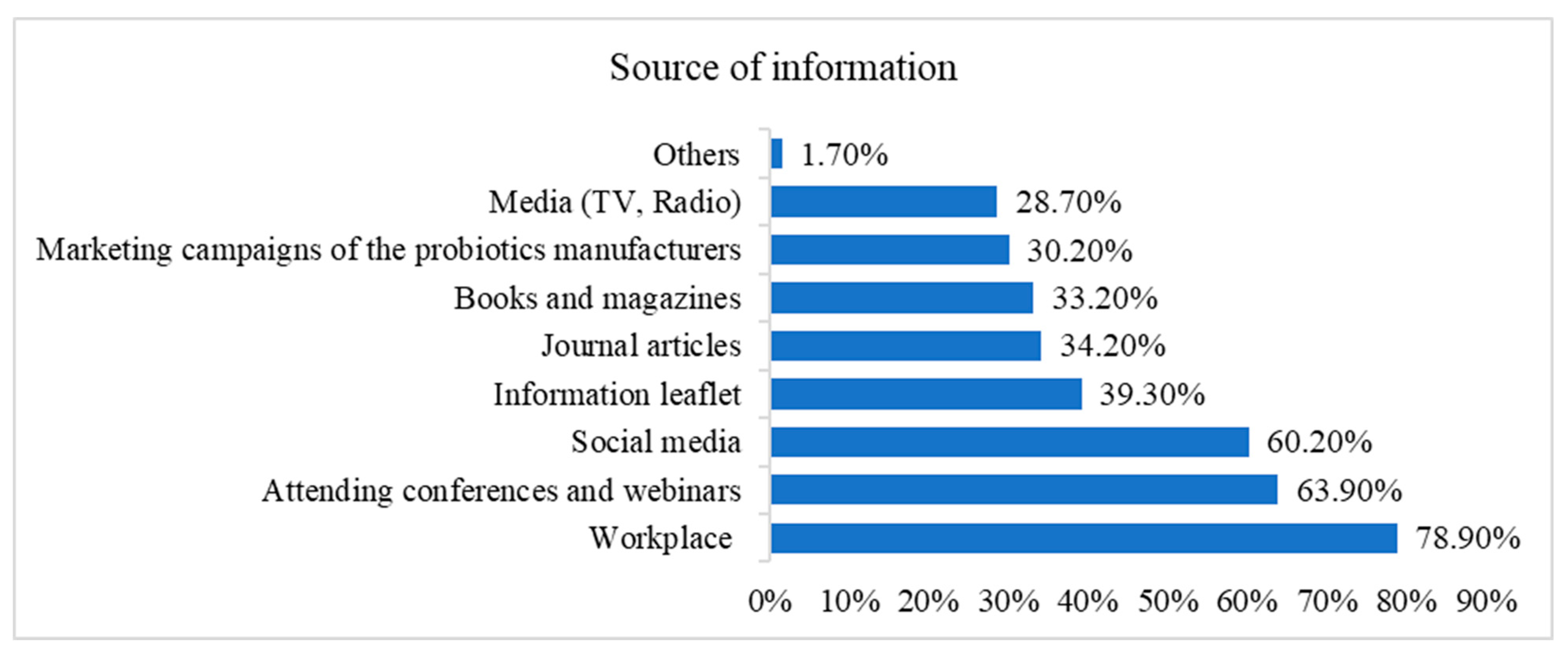
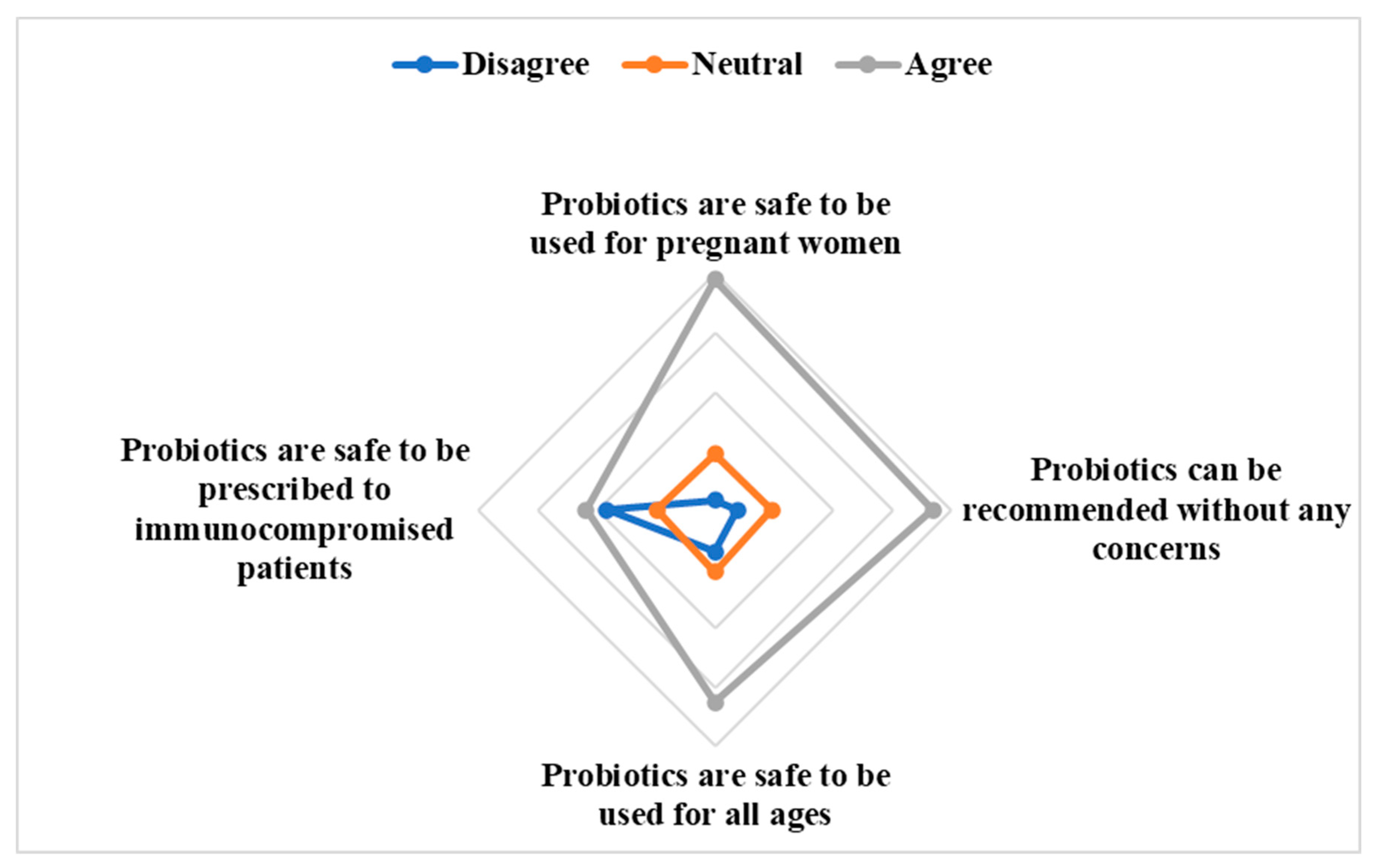
Background: The human body is a complex and interconnected system where trillions of microorganisms, collectively known as the gut microbiota, coexist with these cells. Besides maintaining digestive health, this relationship also impacts well-being, including immune function, metabolism, and mental health. As frontline healthcare providers, pharmacists are pivotal in promoting the benefits of probiotics for immune support. This study explored pharmacists’ knowledge, perception, and practice behavior in the UAE towards the implication of probiotic application beyond digestive health, such as cardiovascular and mental health impacts and their diverse dosage forms. Method: An online self-administered survey was distributed among pharmacists in the UAE. Data were collected through personal visits to pharmacies, where pharmacists were approached and asked to complete the questionnaire. The sample size included 407 pharmacists, determined using the formula for proportions with a 95% confidence level and a 5% margin of error. Statistical analysis was performed using SPSS version 29. Descriptive statistics were used to summarize demographic characteristics and survey responses. The knowledge levels were categorized into poor, moderate, and good. Chi-square analysis was employed to investigate associations between demographic factors and knowledge levels, with a significance level set at p < 0.05, enhancing the robustness of the study’s findings. Results: This study included 407 completed eligible responses. About 63.56% of participants were female, with 52.1% employed in pharmacy chains. While 91.2% of pharmacists recognized probiotics’ role in immune support, only 30% were aware of their cardiovascular benefits. Moreover, chewing gum was the least known dosage form of probiotics, recognized by only 16.7% of respondents. Additionally, only 57% of the participants recognized liposomes as a dosage form. In practice, most pharmacists recommended storing probiotics at room temperature, accounting for 66.6%. The most prevalent misconception encountered in the pharmacy setting was the belief that probiotics are primarily intended for gastrointestinal tract problems, at 79.1% of the respondents. Regarding perception, the agreement was observed regarding the safety of probiotics for all ages. Perceived barriers included the high cost of probiotics, with the majority (86.5%) indicating this as a significant obstacle, while lack of demand was identified as the minor barrier by 64.6%. Additionally, an association was found at a significance level of p < 0.05 with knowledge, gender, educational level, type and location of pharmacy, and source of information. Conclusions: The study highlights knowledge gaps in pharmacists’ understanding of probiotic applications beyond digestive health, particularly cardiovascular health and depression. Targeted educational interventions are necessary to address these gaps. The findings underscore the importance of ongoing professional development for pharmacists, enhancing their role in patient education and the promotion of probiotics for overall health.
Keywords: probiotics; pharmacists’ knowledge; prescribing practices; UAE; gastrointestinal health; immune support probiotics; pharmacists’ knowledge; prescribing practices; UAE; gastrointestinal health; immune support