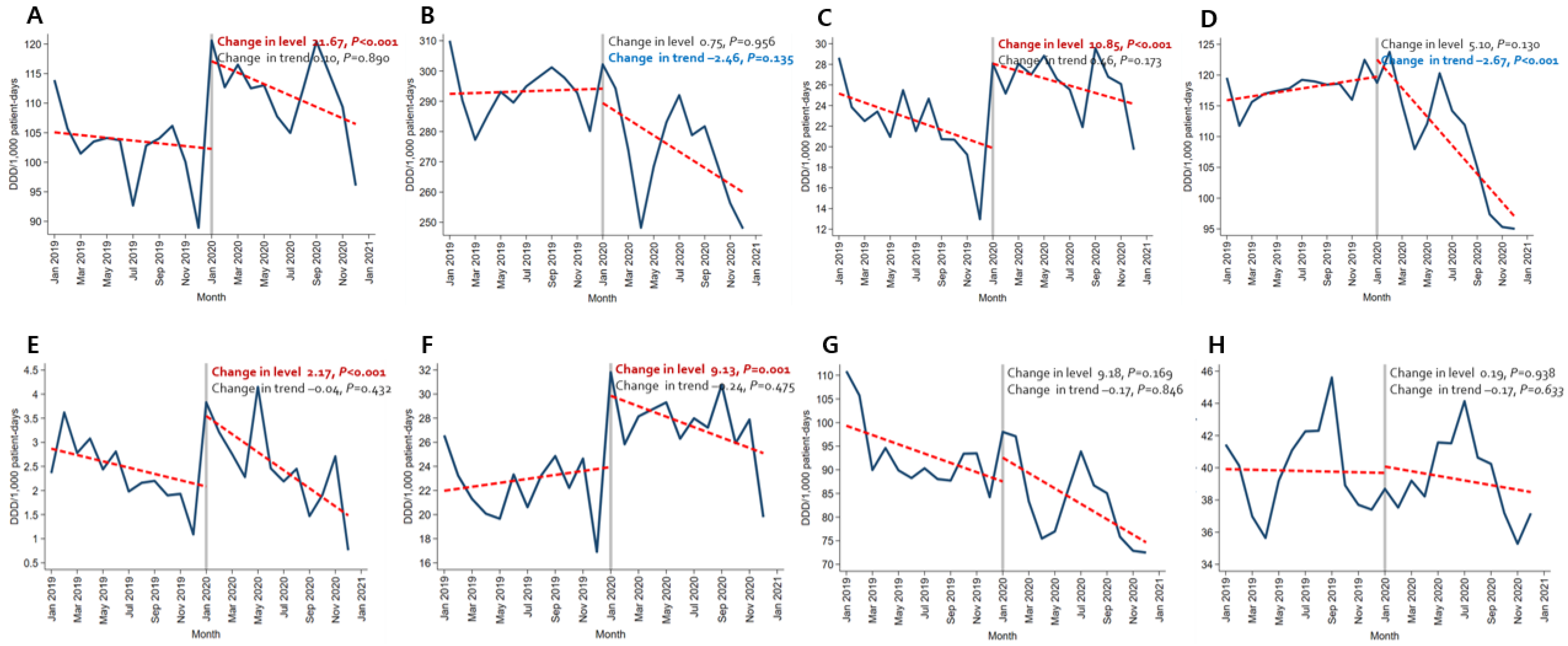
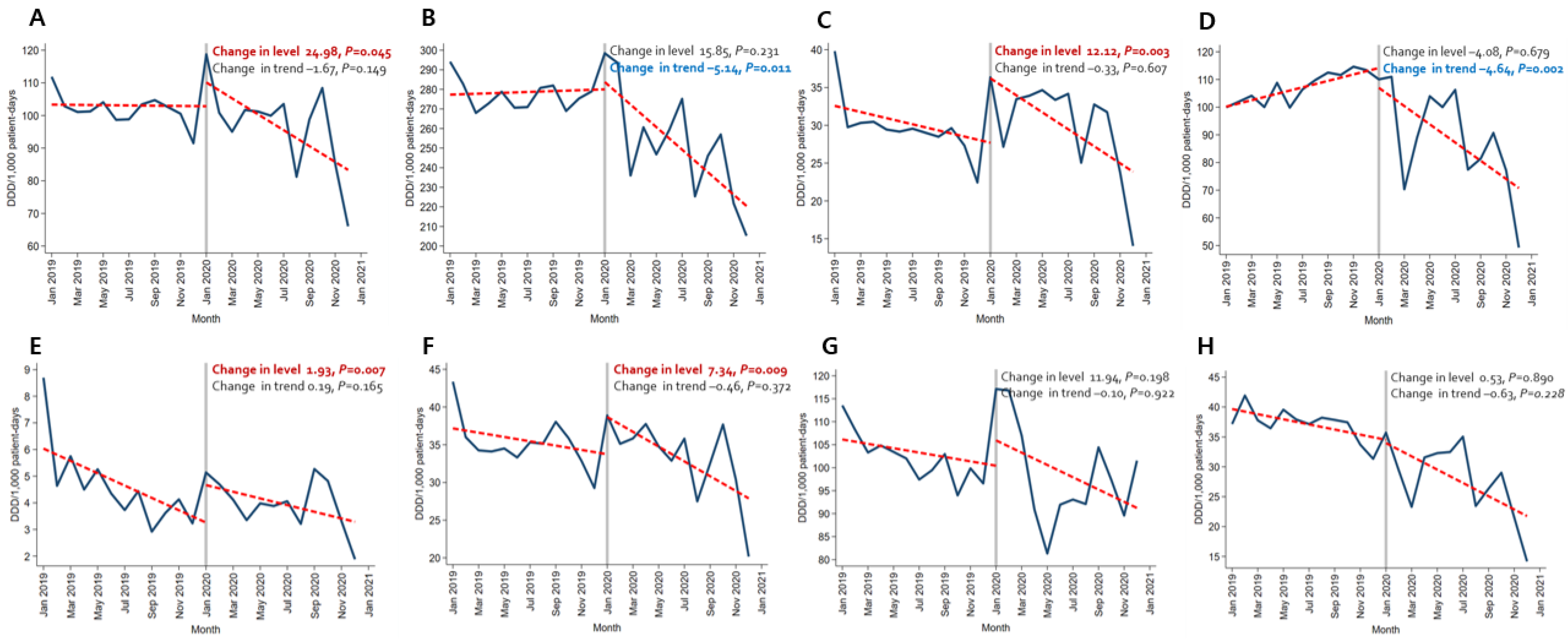
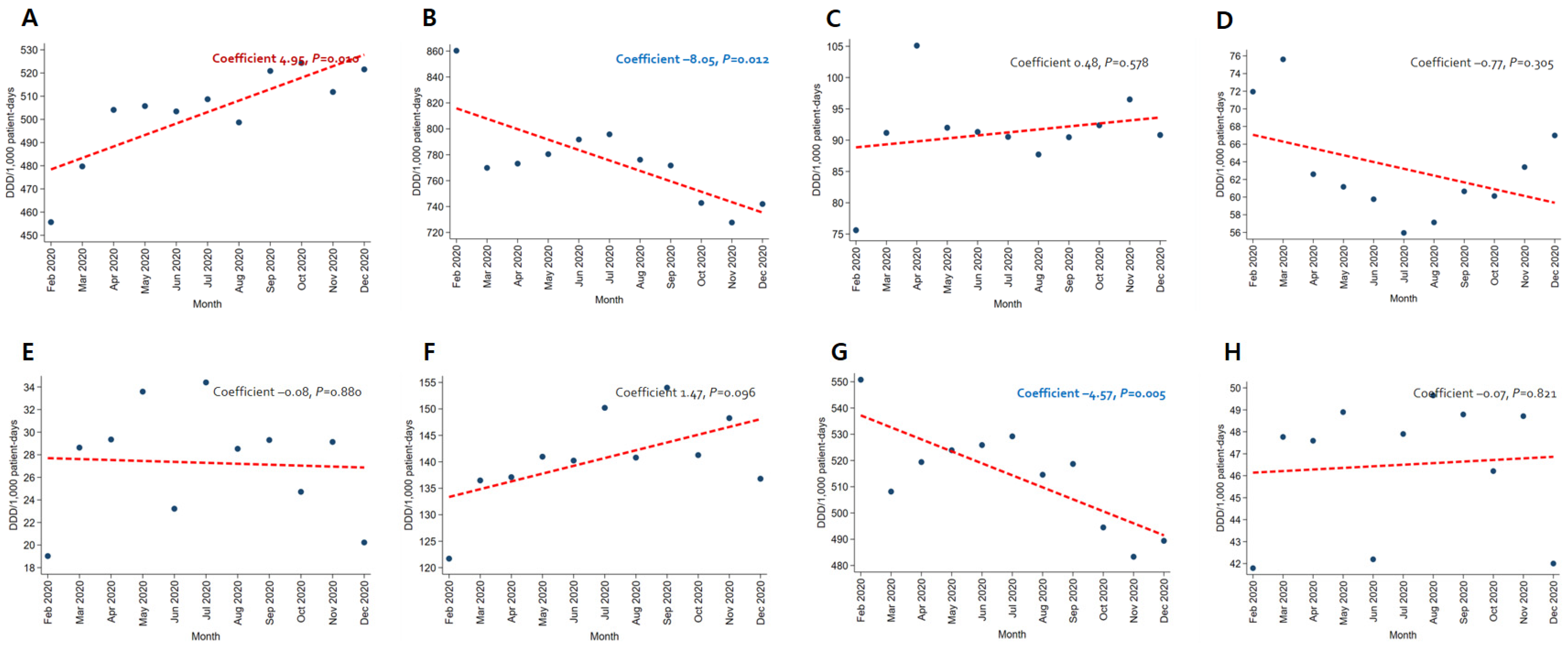
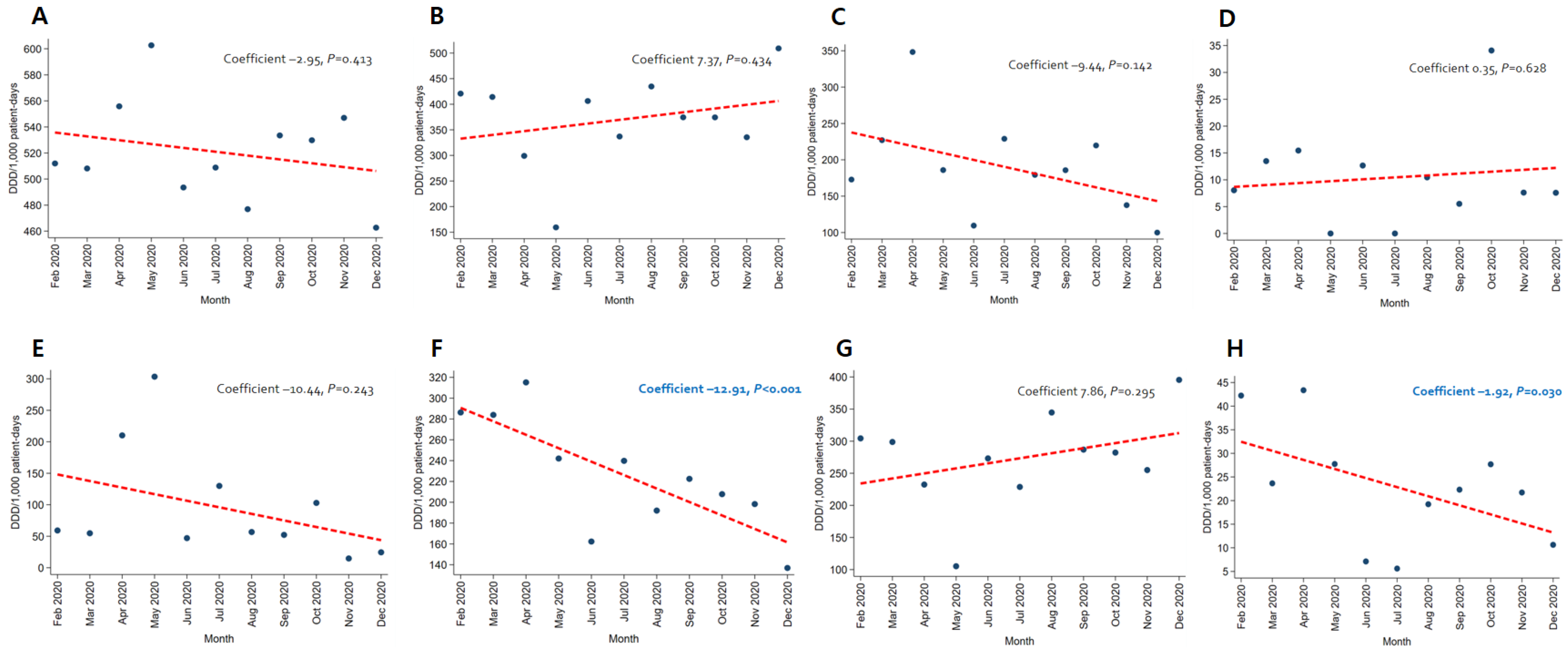
Analysis of Changes in Antibiotic Use Patterns in Korean Hospitals during the COVID-19 Pandemic


Abstract
Share and Cite
Kim, B.; Hwang, H.; Chae, J.; Kim, Y.S.; Kim, D.-S. Analysis of Changes in Antibiotic Use Patterns in Korean Hospitals during the COVID-19 Pandemic. Antibiotics 2023, 12, 198. https://doi.org/10.3390/antibiotics12020198
Kim B, Hwang H, Chae J, Kim YS, Kim D-S. Analysis of Changes in Antibiotic Use Patterns in Korean Hospitals during the COVID-19 Pandemic. Antibiotics. 2023; 12(2):198. https://doi.org/10.3390/antibiotics12020198
Chicago/Turabian StyleKim, Bongyoung, Hyeonjun Hwang, Jungmi Chae, Yun Seop Kim, and Dong-Sook Kim. 2023. "Analysis of Changes in Antibiotic Use Patterns in Korean Hospitals during the COVID-19 Pandemic" Antibiotics 12, no. 2: 198. https://doi.org/10.3390/antibiotics12020198
APA StyleKim, B., Hwang, H., Chae, J., Kim, Y. S., & Kim, D.-S. (2023). Analysis of Changes in Antibiotic Use Patterns in Korean Hospitals during the COVID-19 Pandemic. Antibiotics, 12(2), 198. https://doi.org/10.3390/antibiotics12020198