Article

Role of AmpC-Inducing Genes in Modulating Other Serine Beta-Lactamases in Escherichia coli
1
Department of Biotechnology, Indian Institute of Technology Kharagpur, Kharagpur 721302, India
2
Department of Biological Sciences, Institute of Structural and Molecular Biology, Birkbeck, University of London, Malet Street, London WC1E 7HX, UK
*
Author to whom correspondence should be addressed.
Antibiotics 2022, 11(1), 67; https://doi.org/10.3390/antibiotics11010067

Submission received: 19 November 2021 / Revised: 21 December 2021 / Accepted: 5 January 2022 / Published: 6 January 2022

Abstract

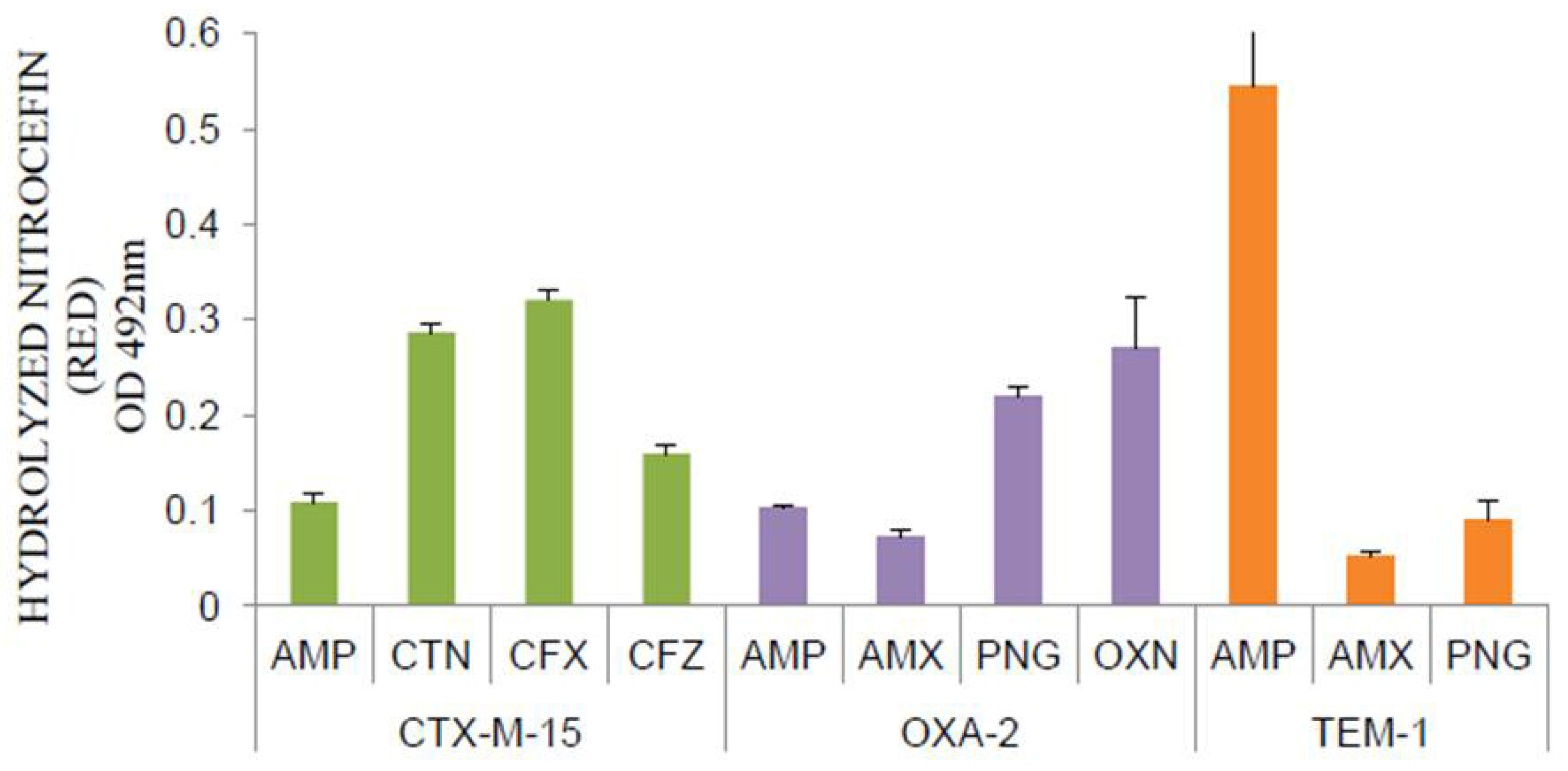
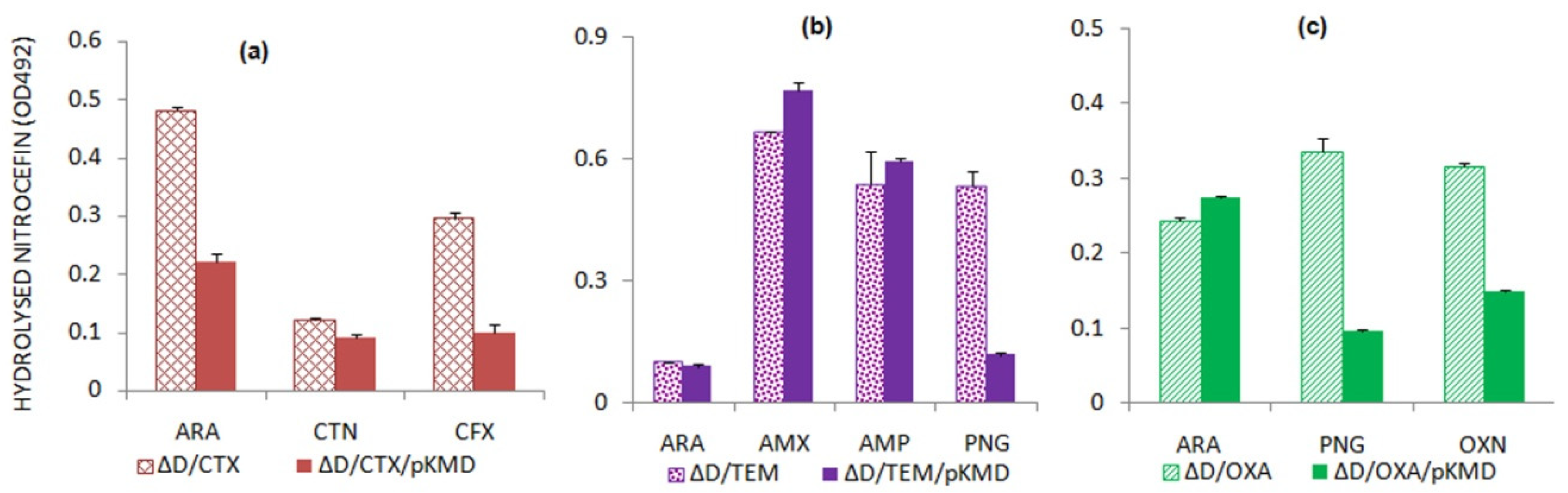
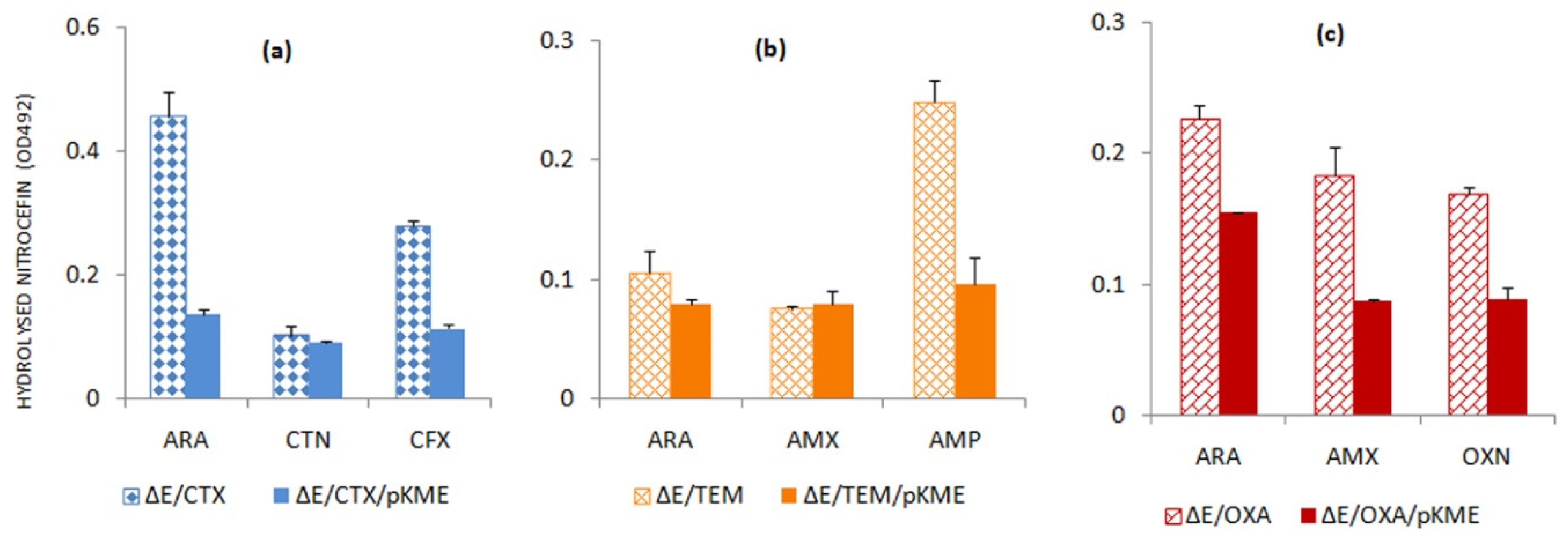
The consistently mutating bacterial genotypes appear to have accelerated the global challenge with antimicrobial resistance (AMR); it is therefore timely to investigate certain less-explored fields of targeting AMR mechanisms in bacterial pathogens. One of such areas is beta-lactamase (BLA) induction that can provide us with a collection of prospective therapeutic targets. The key genes (ampD, ampE and ampG) to which the AmpC induction mechanism is linked are also involved in regulating the production of fragmented muropeptides generated during cell-wall peptidoglycan recycling. Although the involvement of these genes in inducing class C BLAs is apparent, their effect on serine beta-lactamase (serine-BLA) induction is little known. Here, by using ∆ampD and ∆ampE mutants of E. coli, we attempted to elucidate the effects of ampD and ampE on the expression of serine-BLAs originating from Enterobacteriaceae, viz., CTX-M-15, TEM-1 and OXA-2. Results show that cefotaxime is the preferred inducer for CTX-M-15 and amoxicillin for TEM-1, whereas oxacillin for OXA-2. Surprisingly, exogenous BLA expressions are elevated in ∆ampD and ∆ampE mutants but do not always alter their beta-lactam susceptibility. Moreover, the beta-lactam resistance is increased upon in trans expression of ampD, whereas the same is decreased upon ampE expression, indicating a differential effect of ampD and ampE overexpression. In a nutshell, depending on the BLA, AmpD amidase moderately facilitates a varying level of serine-BLA expression whereas AmpE transporter acts likely as a negative regulator of serine-BLA.
Keywords: beta-lactamase; antimicrobial resistance; peptidoglycan recycling; therapeutic target; WHO-priority pathogen; E. coli beta-lactamase; antimicrobial resistance; peptidoglycan recycling; therapeutic target; WHO-priority pathogen; E. coli