Laser-Induced Graphene Electrodes for Wrist-Worn Impedance Plethysmography Measurements: A Feasibility Study

 ,
,  ,
,  and
and
Abstract
1. Introduction
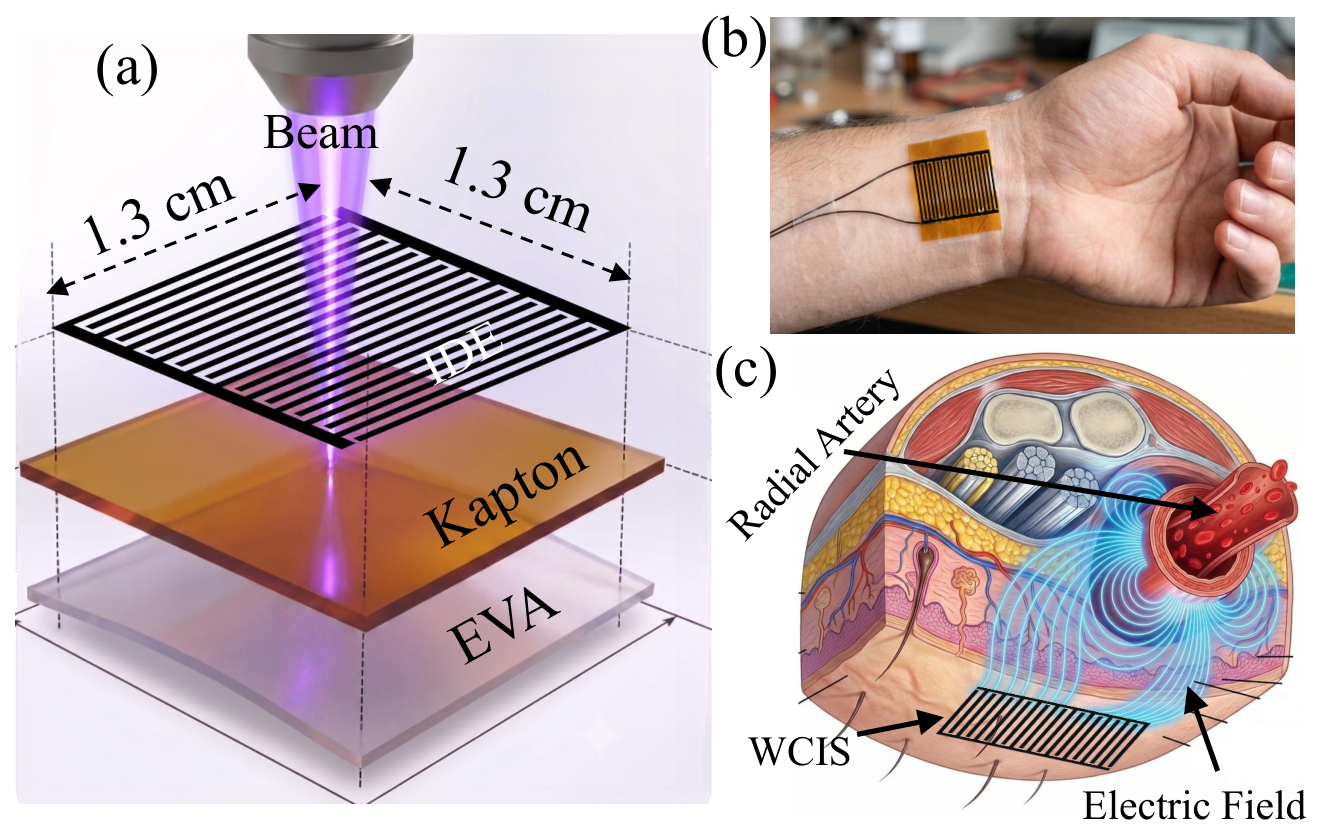
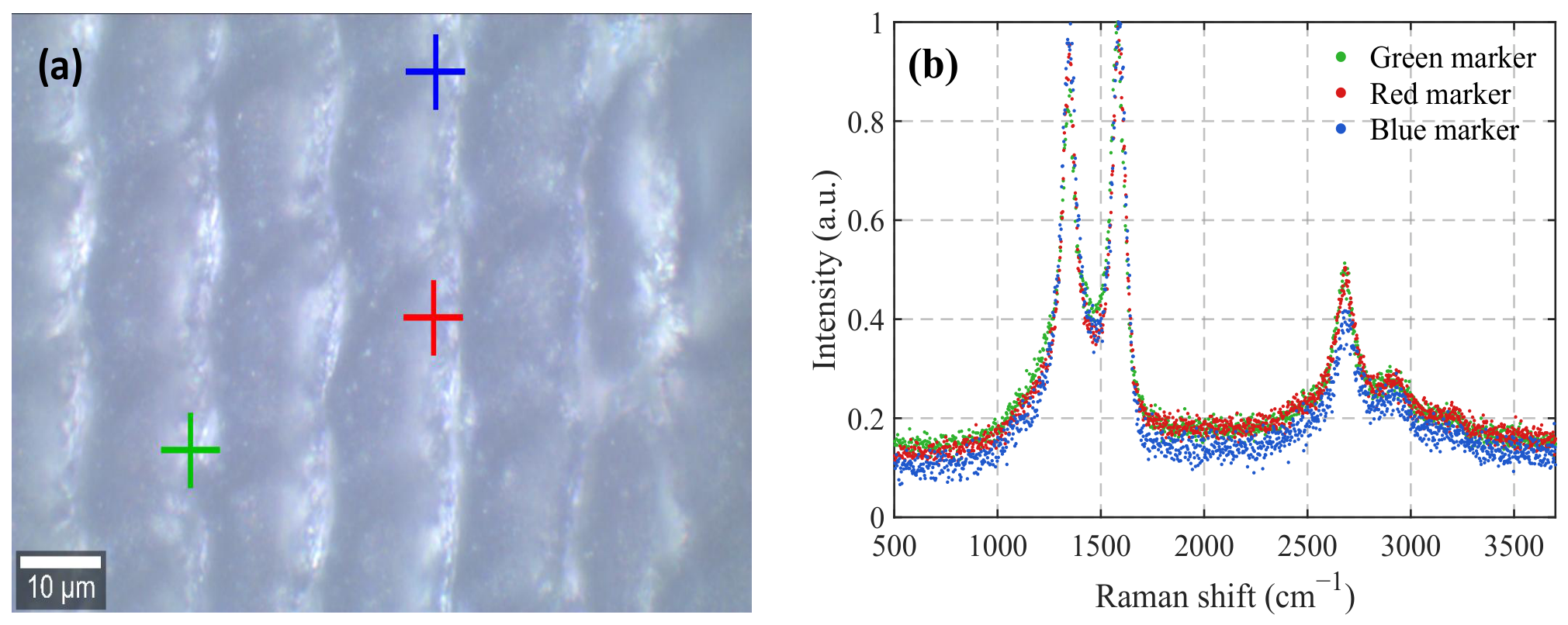
- The fabrication of laser-induced graphene (LIG) for bioimpedance applications using a laser, whose use for LIG fabrication has been previously reported [44,45], yielding a homogeneous chemical and structural composition validated by Raman spectroscopy. The resulting D, G, and 2D peaks exhibit errors below relative to values reported for laser-generated LIG.
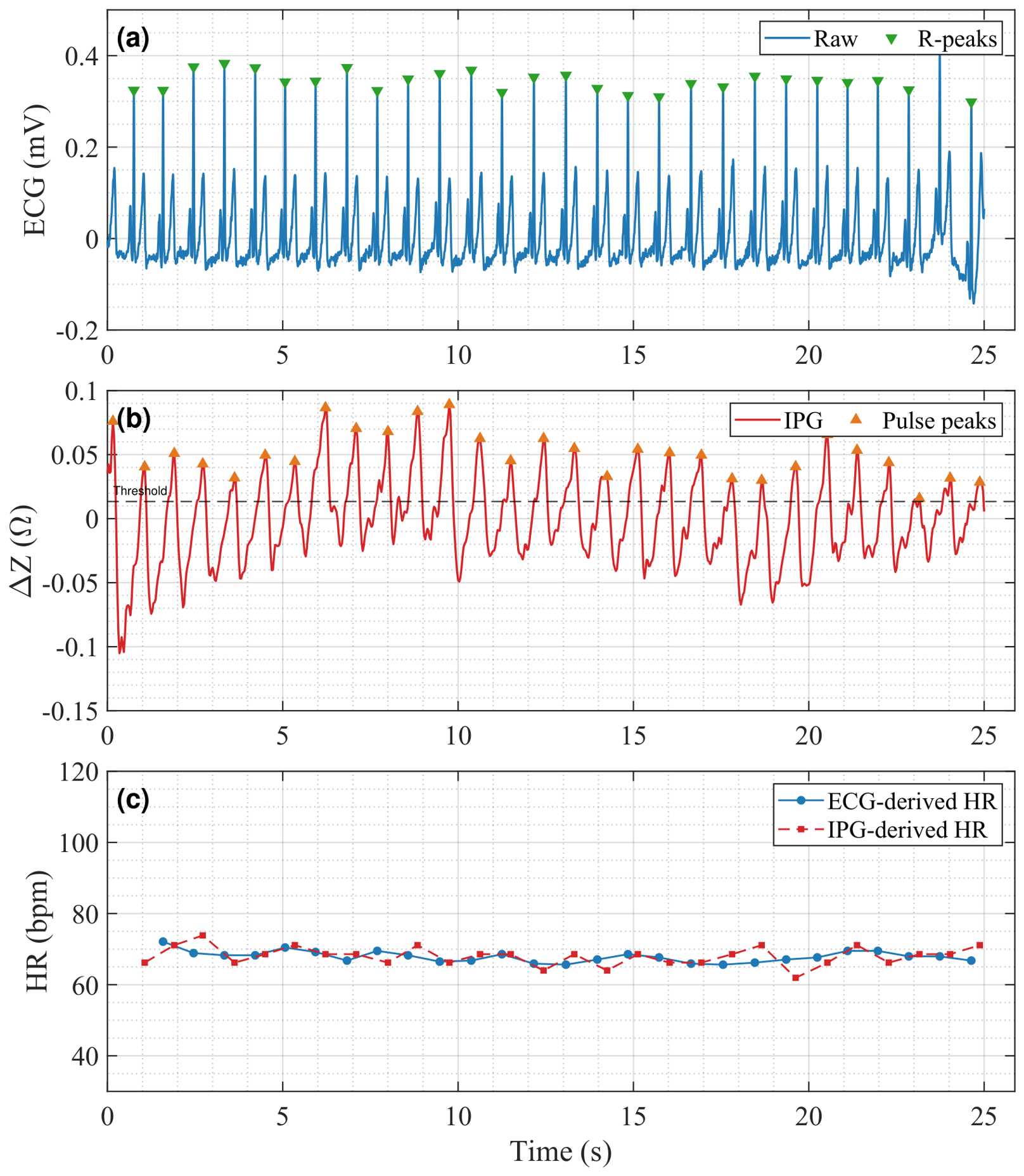
- The design and fabrication of a LIG-based wrist-worn cardiac impedance sensor that successfully transduces pulsatile hemodynamic activity into a quantifiable signal, relying on a single electrode structure to offer a more practical alternative to conventional three-electrode configurations.
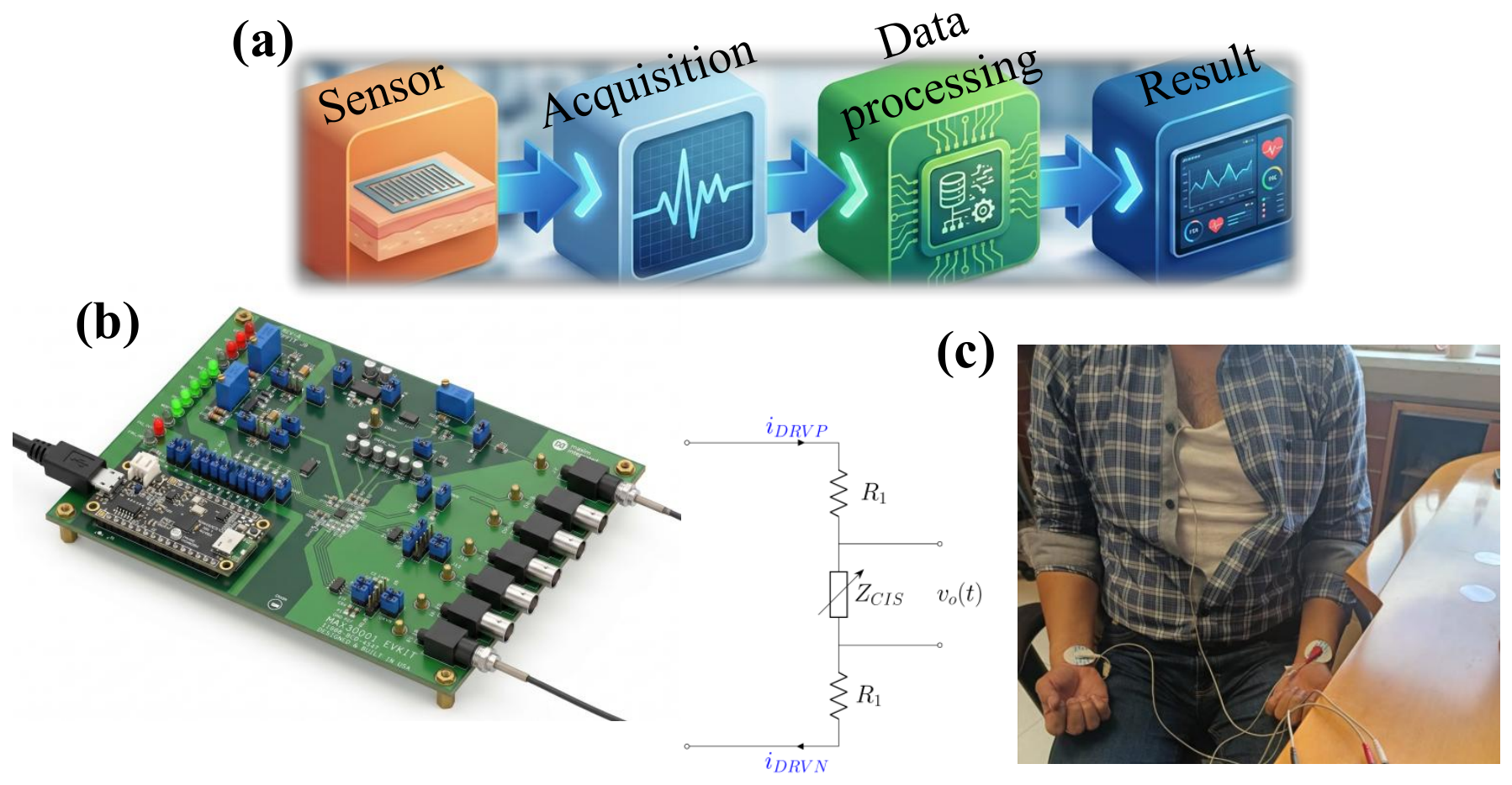
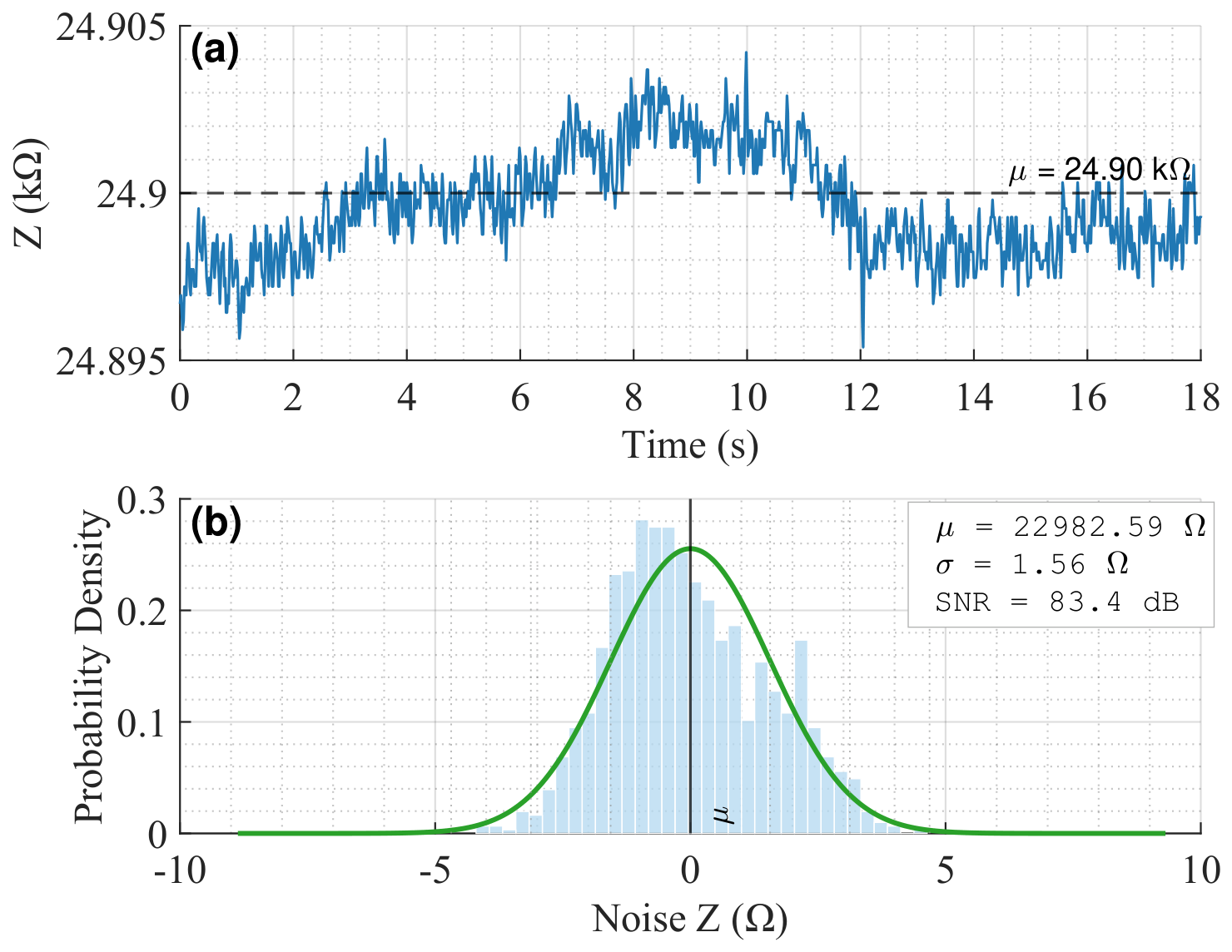
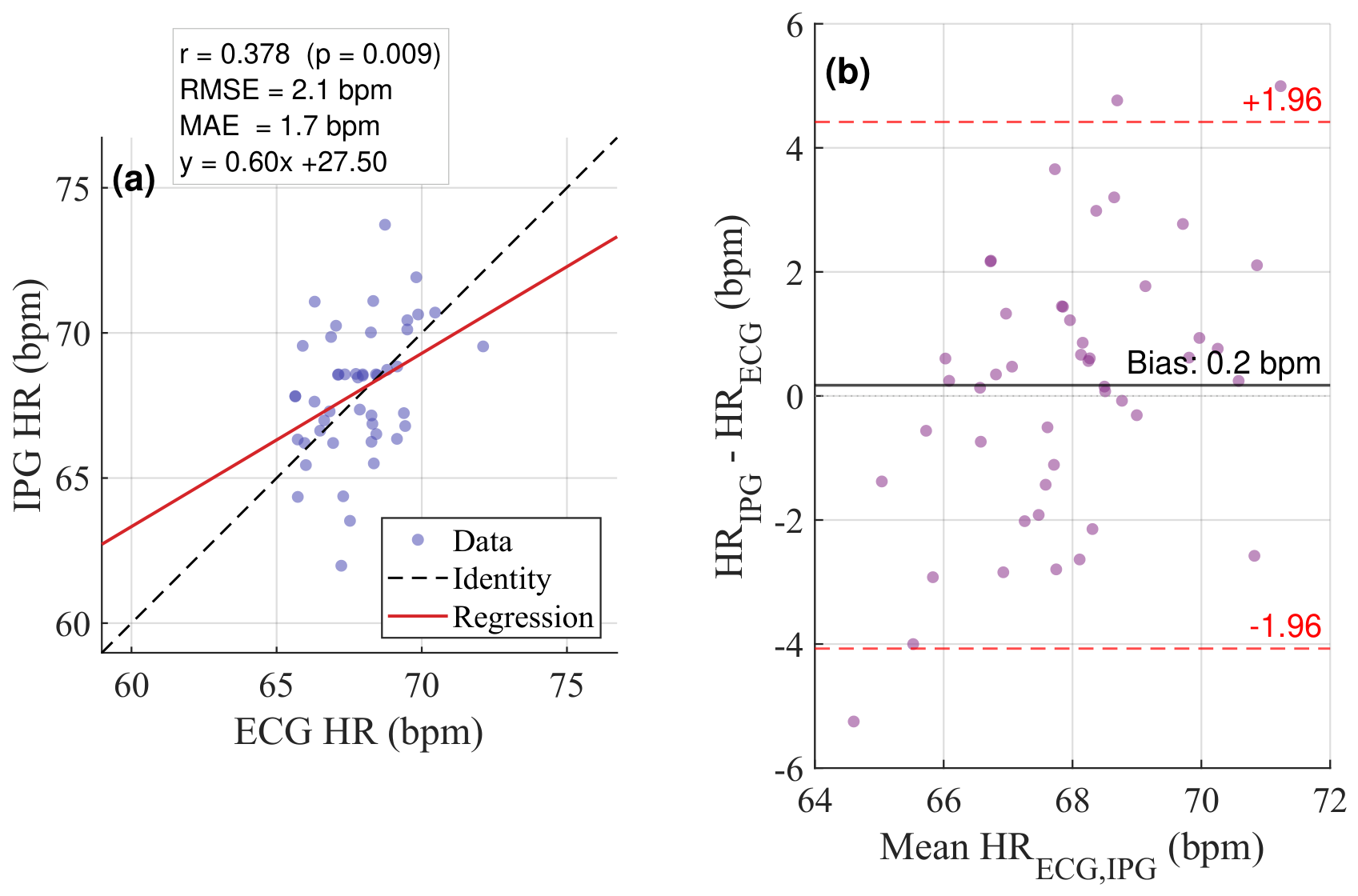
- A non-invasive cardiac measurement methodology that presents a limit of agreement (LoA) of approximately and a signal-to-noise ratio (SNR) of , positioning the device within the performance specifications required for precision physiological monitoring.
2. Materials and Methods
2.1. Electrode Design and Fabrication
2.2. Measurement Principle
2.3. Instrumentation and Signal Acquisition
3. Results and Discussion
3.1. Evaluation of the Electrode Manufacturing Process
3.2. Structural Analysis
3.3. Morphological Analysis
3.4. Electrical Characterization
3.5. Bioimpedance Measurement Analysis
3.6. Wrist-Based IPG Signal Analysis
4. Conclusions
Author Contributions
Funding
Institutional Review Board Statement
Informed Consent Statement
Data Availability Statement
Acknowledgments
Conflicts of Interest
References
- Gerardo, D.; Houeix, Y.; García-Ávila, Á.; Toral, V.; Castillo, E.; Rivadeneyra, A.; Romero, F.J. Remote R-Peak Detection in Single-Lead ECG Chest Monitors Using Clustering Classification and Laser-Induced Graphene Electrodes. IEEE J. Flex. Electron. 2025, 4, 342–349. [Google Scholar] [CrossRef] [Scilit]
- Timmis, A.; Townsend, N.; Gale, C.P.; Torbica, A.; Lettino, M.; Petersen, S.E.; Mossialos, E.A.; Maggioni, A.P.; Kazakiewicz, D.; May, H.T.; et al. European Society of Cardiology: Cardiovascular disease statistics 2021. Eur. Heart J. 2022, 43, 716–799, Erratum in Eur. Heart J. 2022, 43, 799. https://doi.org/10.1093/eurheartj/ehac064. [Google Scholar] [CrossRef] [Scilit] [PubMed]
- McAloon, C.J.; Boylan, L.M.; Hamborg, T.; Stallard, N.; Osman, F.; Lim, P.B.; Hayat, S.A. The Changing Face of Cardiovascular Disease 2000–2012: An Analysis of the World Health Organisation Global Health Estimates Data. Int. J. Cardiol. 2016, 224, 256–264. [Google Scholar] [CrossRef] [Scilit] [PubMed]
- Jakovljevic, D.G.; Trenell, M.I.; MacGowan, G.A. Bioimpedance and Bioreactance Methods for Monitoring Cardiac Output. Best Pract. Res. Clin. Anaesthesiol. 2014, 28, 381–394. [Google Scholar] [CrossRef] [Scilit] [PubMed]
- Kim, J.; Campbell, A.S.; de Ávila, B.E.F.; Wang, J. Wearable Biosensors for Healthcare Monitoring. Nat. Biotechnol. 2019, 37, 389–406. [Google Scholar] [CrossRef] [Scilit] [PubMed]
- Xian, X. Frontiers of Wearable Biosensors for Human Health Monitoring. Biosensors 2023, 13, 964. [Google Scholar] [CrossRef] [Scilit] [PubMed]
- Xue, Z.; Gai, Y.; Wu, Y.; Liu, Z.; Li, Z. Wearable Mechanical and Electrochemical Sensors for Real-Time Health Monitoring. Commun. Mater. 2024, 5, 211. [Google Scholar] [CrossRef] [Scilit]
- Lin, J.; Fu, R.; Zhong, X.; Yu, P.; Tan, G.; Li, W.; Zhang, H.; Li, Y.; Zhou, L.; Ning, C. Wearable Sensors and Devices for Real-Time Cardiovascular Disease Monitoring. Cell Rep. Phys. Sci. 2021, 2, 100541. [Google Scholar] [CrossRef] [Scilit]
- Diercks, D.B.; Shumaik, G.M.; Harrigan, R.A.; Brady, W.J.; Chan, T.C. Electrocardiographic manifestations: Electrolyte abnormalities. J. Emerg. Med. 2004, 27, 153–160, Erratum in J. Emerg. Med. 2005, 28, 117. https://doi.org/10.1016/j.jemermed.2004.11.011. [Google Scholar] [CrossRef] [Scilit] [PubMed]
- Liu, X.; Wang, H.; Li, Z.; Qin, L. Deep Learning in ECG Diagnosis: A Review. Knowl.-Based Syst. 2021, 227, 107187. [Google Scholar] [CrossRef] [Scilit]
- Lin, C.; Chau, T.; Lin, C.S.; Shang, H.S.; Fang, W.H.; Lee, D.J.; Lee, C.C.; Tsai, S.H.; Wang, C.H.; Lin, S.H. Point-of-Care Artificial Intelligence-Enabled ECG for Dyskalemia: A Retrospective Cohort Analysis for Accuracy and Outcome Prediction. npj Digit. Med. 2022, 5, 8. [Google Scholar] [CrossRef] [Scilit] [PubMed]
- Nguyen, L.S.; Squara, P. Non-Invasive Monitoring of Cardiac Output in Critical Care Medicine. Front. Med. 2017, 4, 200. [Google Scholar] [CrossRef] [Scilit] [PubMed]
- Ruste, M.; Jacquet-Lagrèze, M.; Fellahi, J.L. Advantages and Limitations of Noninvasive Devices for Cardiac Output Monitoring: A Literature Review. Curr. Opin. Crit. Care 2023, 29, 259–267. [Google Scholar] [CrossRef] [Scilit] [PubMed]
- Huygh, J.; Peeters, Y.; Bernards, J.; Malbrain, M.L.N.G. Hemodynamic Monitoring in the Critically Ill: An Overview of Current Cardiac Output Monitoring Methods. F1000Research 2016, 5, 2855. [Google Scholar] [CrossRef] [Scilit] [PubMed]
- Reeder, B.; David, A. Health at hand: A systematic review of smart watch uses for health and wellness. J. Biomed. Inform. 2016, 63, 269–276. [Google Scholar] [CrossRef] [Scilit] [PubMed]
- Allen, J. Photoplethysmography and its application in clinical physiological measurement. Physiol. Meas. 2007, 28, R1. [Google Scholar] [CrossRef] [Scilit] [PubMed]
- Charlton, P.H.; Marozas, V. Wearable Photoplethysmography Devices. In Photoplethysmography: Technology, Signal Analysis and Applications; Kyriacou, P.A., Allen, J., Eds.; Academic Press: Cambridge, MA, USA, 2022; pp. 401–439. [Google Scholar] [CrossRef] [Scilit]
- Zhang, Y.; Song, S.; Vullings, R.; Biswas, D.; Simões-Capela, N.; van Helleputte, N.; van Hoof, C.; Groenendaal, W. Motion Artifact Reduction for Wrist-Worn Photoplethysmograph Sensors Based on Different Wavelengths. Sensors 2019, 19, 673. [Google Scholar] [CrossRef] [Scilit] [PubMed]
- Rong, G.; Zheng, Y.; Sawan, M. Energy Solutions for Wearable Sensors: A Review. Sensors 2021, 21, 3806. [Google Scholar] [CrossRef] [Scilit] [PubMed]
- Koerber, D.; Khan, S.; Shamsheri, T.; Kirubarajan, A.; Mehta, S. Accuracy of Heart Rate Measurement with Wrist-Worn Wearable Devices in Various Skin Tones: A Systematic Review. J. Racial Ethn. Health Disparities 2023, 10, 2676–2684. [Google Scholar] [CrossRef] [Scilit] [PubMed]
- Singh, S.; Bennett, M.R.; Chen, C.; Shin, S.; Ghanbari, H.; Nelson, B.W. Impact of Skin Pigmentation on Pulse Oximetry Blood Oxygenation and Wearable Pulse Rate Accuracy: Systematic Review and Meta-Analysis. J. Med. Internet Res. 2024, 26. [Google Scholar] [CrossRef] [Scilit] [PubMed]
- Biswas, D.; Simões-Capela, N.; Van Hoof, C.; Van Helleputte, N. Heart Rate Estimation From Wrist-Worn Photoplethysmography: A Review. IEEE Sens. J. 2019, 19, 6560–6570. [Google Scholar] [CrossRef] [Scilit]
- Mohammadzadeh, N.; Safdari, R. Patient Monitoring in Mobile Health: Opportunities and Challenges. Med. Arch. 2014, 68, 57–60. [Google Scholar] [CrossRef] [Scilit] [PubMed]
- Cao, G.; Liang, H.; Xiong, J.; Huang, T.; Yang, M.; Zhang, H.; Wang, Z. Silver Nanowire-Based Flexible Transparent Electrodes: Fabrication and Applications. Coatings 2026, 16, 704. [Google Scholar] [CrossRef] [Scilit]
- Yi, J.; Gu, Y.; Yang, J.; Wang, Z.; Wang, Y.; Yan, W.; Sun, Q.; Zhou, P.; Xu, Y.; He, X.; et al. Ultrathin and permeable silver nanowires/polyvinyl alcohol epidermal electrode for continuous electrophysiological monitoring. Mater. Horiz. 2025, 12, 4714–4723. [Google Scholar] [CrossRef] [Scilit] [PubMed]
- Li, X.; Rytkin, E.; Zhao, Q.; Bhat, P.; Pfenniger, A.; Yin, L.; Huang, X.; Yang, L.; Yang, B.; Burrell, A.; et al. High-resolution liquid metal–based stretchable electronics enabled by colloidal self-assembly and microtransfer printing. Sci. Adv. 2025, 11, eadw3044. [Google Scholar] [CrossRef] [Scilit] [PubMed]
- Sharma, P.; Baloda, S.; Verma, D.; Janyani, V.; Sharma, R.; Gupta, N. Multiwall Carbon Nanotube/Polydimethylsiloxane Composites-Based Dry Electrodes for Bio-Signal Detection. IEEE J. Flex. Electron. 2024, 3, 108–114. [Google Scholar] [CrossRef] [Scilit]
- Ijaz, H.; Mahmood, A.; Abdel-Daim, M.M.; Sarfraz, R.M.; Zaman, M.; Zafar, N.; Alshehery, S.; Salem-Bekhit, M.M.; Ali, M.A.; Eltayeb, L.B.; et al. Review on Carbon Nanotubes (CNTs) and Their Chemical and Physical Characteristics, with Particular Emphasis on Potential Applications in Biomedicine. Inorg. Chem. Commun. 2023, 155, 111020. [Google Scholar] [CrossRef] [Scilit]
- Baloda, S.; Sriram, S.K.; Singh, S.; Gupta, N. Reduced Graphene Oxide-Polydimethylsiloxane Based Flexible Dry Electrodes for Electrophysiological Signal Monitoring. IEEE Trans. Nanotechnol. 2024, 23, 644–651. [Google Scholar] [CrossRef] [Scilit]
- Baheiraei, N.; Razavi, M.; Ghahremanzadeh, R. Reduced Graphene Oxide Coated Alginate Scaffolds: Potential for Cardiac Patch Application. Biomater. Res. 2023, 27, 109. [Google Scholar] [CrossRef] [Scilit] [PubMed]
- Kim, G.; Hong, Y.; Lee, H.; Kim, M.; Eun, J.; Lee, J.; Lee, S.; Chou, N.; Shin, H. Single-Step Patterning of Biocompatible Neural Electrodes Using Black-Pt Functionalized Laser-Induced Graphene for in Vivo Electrophysiology. Small Methods 2025, 9, e01384. [Google Scholar] [CrossRef] [Scilit] [PubMed]
- Houeix, Y.; Gerardo, D.; Romero, F.J.; Toral, V.; Hernandez, L.; Rivadeneyra, A.; Castillo, E.; Morales, D.P.; Rodriguez, N. Dry Laser-Induced Graphene Fractal-like ECG Electrodes. Adv. Electron. Mater. 2024, 10, 2300767. [Google Scholar] [CrossRef] [Scilit]
- Ramulu Torati, S.; Slaughter, G. Laser-Induced Graphene for Early Disease Detection: A Review. ChemElectroChem 2025, 12, e202400672. [Google Scholar] [CrossRef] [Scilit]
- Marin, E.; Bridges, M.; Villarini, N.; Scangarello, G.J.; Henry, C.S. Laser-Induced Graphene for Electrochemical Biosensing: Advances in Functionalization and Integration into Point-of-Care Devices. TrAC Trends Anal. Chem. 2026, 199, 118809. [Google Scholar] [CrossRef] [Scilit]
- Xu, K.; Cai, Z.; Luo, H.; Lu, Y.; Ding, C.; Yang, G.; Wang, L.; Kuang, C.; Liu, J.; Yang, H. Toward Integrated Multifunctional Laser-Induced Graphene-Based Skin-Like Flexible Sensor Systems. ACS Nano 2024, 18, 26435–26476. [Google Scholar] [CrossRef] [Scilit] [PubMed]
- Yang, J.; Wu, S.; Yu, J.; Deng, Y.; Qiao, F.; Zhang, K. Flexible Micro-Strain Graphene Sensors Enhanced by Laser-Induced Cracks for Health Monitoring. Diam. Relat. Mater. 2024, 148, 111401. [Google Scholar] [CrossRef] [Scilit]
- Vivaldi, F.M.; Dallinger, A.; Bonini, A.; Poma, N.; Sembranti, L.; Biagini, D.; Salvo, P.; Greco, F.; Di Francesco, F. Three-Dimensional (3D) Laser-Induced Graphene: Structure, Properties, and Application to Chemical Sensing. ACS Appl. Mater. Interfaces 2021, 13, 30245–30260. [Google Scholar] [CrossRef] [Scilit] [PubMed]
- Le, T.S.D.; Phan, H.P.; Kwon, S.; Park, S.; Jung, Y.; Min, J.; Chun, B.J.; Yoon, H.; Ko, S.H.; Kim, S.W.; et al. Recent Advances in Laser-Induced Graphene: Mechanism, Fabrication, Properties, and Applications in Flexible Electronics. Adv. Funct. Mater. 2022, 32, 2205158. [Google Scholar] [CrossRef] [Scilit]
- Lin, J.; Peng, Z.; Liu, Y.; Ruiz-Zepeda, F.; Ye, R.; Samuel, E.L.G.; Yacaman, M.J.; Yakobson, B.I.; Tour, J.M. Laser-Induced Porous Graphene Films from Commercial Polymers. Nat. Commun. 2014, 5, 5714. [Google Scholar] [CrossRef] [Scilit] [PubMed]
- Phipps, J.F.; Sel, K.; Jafari, R. Arterial Pulse Localization with Varying Electrode Sizes and Spacings in Wrist-Worn Bioimpedance Sensing. In Proceedings of the 2022 44th Annual International Conference of the IEEE Engineering in Medicine & Biology Society (EMBC); IEEE: New York, NY, USA, 2022; pp. 2886–2890. [Google Scholar] [CrossRef] [Scilit] [PubMed]
- Namkoong, M.; McMurray, J.; Branan, K.; Hernandez, J.; Gandhi, M.; Ida-Oze, S.; Cote, G.; Tian, L. Contact Pressure-Guided Wearable Dual-Channel Bioimpedance Device for Continuous Hemodynamic Monitoring. Adv. Mater. Technol. 2024, 9, 2301407. [Google Scholar] [CrossRef] [Scilit] [PubMed]
- Chowdhury, A.H.; Jafarizadeh, B.; Pala, N.; Wang, C. Wearable Capacitive Pressure Sensor for Contact and Non-Contact Sensing and Pulse Waveform Monitoring. Molecules 2022, 27, 6872. [Google Scholar] [CrossRef] [Scilit] [PubMed]
- Lapsa, D.; Janeliukstis, R.; Metshein, M.; Selavo, L. PPG and Bioimpedance-Based Wearable Applications in Heart Rate Monitoring—A Comprehensive Review. Appl. Sci. 2024, 14, 7451. [Google Scholar] [CrossRef] [Scilit]
- Stanford, M.G.; Zhang, C.; Fowlkes, J.D.; Hoffman, A.N.; Ivanov, I.N.; Rack, P.D.; Tour, J.M. High-Resolution Laser-Induced Graphene: Flexible Electronics beyond the Visible Limit. ACS Appl. Mater. Interfaces 2020, 12, 10902–10907. [Google Scholar] [CrossRef] [Scilit] [PubMed]
- Nasraoui, S.; Al-Hamry, A.; Ameur, S.; Ali, M.B.; Kanoun, O. Graphene Induced Using 405 nm Laser as Electrode Material for the Electrochemical Sensing Application. In Proceedings of the IEEE International Conference on Nanoelectronics, Nanophotonics, Nanomaterials, Nanobioscience & Nanotechnology (NanofIM); IEEE: New York, NY, USA, 2019. [Google Scholar] [CrossRef] [Scilit]
- Habboush, S.; Rojas, S.; Rodríguez, N.; Rivadeneyra, A. The Role of Interdigitated Electrodes in Printed and Flexible Electronics. Sensors 2024, 24, 2717. [Google Scholar] [CrossRef] [Scilit] [PubMed]
- Geselowitz, D.B. An Application of Electrocardiographic Lead Theory to Impedance Plethysmography. IEEE Trans. Biomed. Eng. 1971, BME-18, 38–41. [Google Scholar] [CrossRef] [Scilit] [PubMed]
- Böttrich, M.; Tanskanen, J.M.A.; Hyttinen, J.A.K. Lead Field Theory Provides a Powerful Tool for Designing Microelectrode Array Impedance Measurements for Biological Cell Detection and Observation. Biomed. Eng. OnLine 2017, 16, 85. [Google Scholar] [CrossRef] [Scilit] [PubMed]
- Critcher, S.; Freeborn, T.J. Localized Bioimpedance Measurements with the MAX3000x Integrated Circuit: Characterization and Demonstration. Sensors 2021, 21, 3013. [Google Scholar] [CrossRef] [Scilit] [PubMed]
- Paucar, Y.I.; Pantoja-Suárez, F.; Bertran-Serra, E.; Sánchez, F.; Moreno, K. Laser-Induced Graphene on Polyimide: Material Characterization toward Strain-Sensing Applications. Sensors 2025, 25, 7641. [Google Scholar] [CrossRef] [Scilit] [PubMed]
- Hamidi, H.; Murray, R.; Vezzoni, V.; Bozorgzadeh, S.; O’Riordan, A.; Pontiroli, D.; Riccò, M.; Quinn, A.J.; Iacopino, D. A High Performance Laser-Induced Graphene (LIG) Dual Biosensor for Simultaneous Monitoring of Glucose and Lactate. Biosens. Bioelectron. X 2025, 24, 100600. [Google Scholar] [CrossRef] [Scilit]
- Styapshin, V.M.; Zlobin, I.A.; Mikheev, K.G.; Ryabov, E.I.; Mikheev, G.M. Synthesis of Laser-Induced Graphene Using a 450 nm Diode Laser. Bull. Lebedev Phys. Inst. 2025, 52, S429–S440. [Google Scholar] [CrossRef]
- Wang, L.; Wang, Z.; Bakhtiyari, A.N.; Zheng, H. A Comparative Study of Laser-Induced Graphene by CO2 Infrared Laser and 355 Nm Ultraviolet (UV) Laser. Micromachines 2020, 11, 1094. [Google Scholar] [CrossRef] [Scilit] [PubMed]
- Grossi, M.; Riccò, B. Electrical impedance spectroscopy (EIS) for biological analysis and food characterization: A review. J. Sens. Sens. Syst. 2017, 6, 303–325. [Google Scholar] [CrossRef] [Scilit]





| Parameter | Value |
|---|---|
| Analog HPF Cutoff | 1 kHz |
| INA Power Mode | Low Noise |
| Channel Gain | 10 V/V |
| Sample Rate | 32 Samples/s |
| Digital LPF Cutoff | 4 Hz |
| Digital HPF Cutoff | 0.5 Hz |
| Current Generator Mode | Chopped w/o LPF |
| Current Generator Monitor | Disabled |
| Generator Frequency | 4 FMSTR (128 kHz) |
| Magnitude | 96 A |
| External Resistor Bias Enable | Internal |
| Parameter | Value |
|---|---|
| Channel Gain | 20 V/V |
| Sample Rate | 512 Samples/s |
| Digital LPF Cutoff | 40.96 Hz |
| Digital HPF Cutoff | 0.5 Hz |
| Fast Recovery Mode | Normal |
| Fast Recovery Threshold | 63 × 2048 LSB |
| Peak | Raman Shift Obtained [] | Raman Shift Reported [] | Percent Error [%] |
|---|---|---|---|
| D peak | 1350 | 0.06 | |
| G peak | 1580 | 0.21 | |
| 2D peak | 2690 | 0.32 |
Disclaimer/Publisher’s Note: The statements, opinions and data contained in all publications are solely those of the individual author(s) and contributor(s) and not of MDPI and/or the editor(s). MDPI and/or the editor(s) disclaim responsibility for any injury to people or property resulting from any ideas, methods, instructions or products referred to in the content. |
© 2026 by the authors. Licensee MDPI, Basel, Switzerland. This article is an open access article distributed under the terms and conditions of the Creative Commons Attribution (CC BY) license.
Share and Cite
Uc-Martín, J.A.; Cortés-Díaz-Sandi, A.; Castellón-Pérez, I.; Ramírez-Chavarría, R.G. Laser-Induced Graphene Electrodes for Wrist-Worn Impedance Plethysmography Measurements: A Feasibility Study. Biosensors 2026, 16, 425. https://doi.org/10.3390/bios16080425
Uc-Martín JA, Cortés-Díaz-Sandi A, Castellón-Pérez I, Ramírez-Chavarría RG. Laser-Induced Graphene Electrodes for Wrist-Worn Impedance Plethysmography Measurements: A Feasibility Study. Biosensors. 2026; 16(8):425. https://doi.org/10.3390/bios16080425
Chicago/Turabian StyleUc-Martín, Jorge A., Alejandro Cortés-Díaz-Sandi, Ilianny Castellón-Pérez, and Roberto G. Ramírez-Chavarría. 2026. "Laser-Induced Graphene Electrodes for Wrist-Worn Impedance Plethysmography Measurements: A Feasibility Study" Biosensors 16, no. 8: 425. https://doi.org/10.3390/bios16080425
APA StyleUc-Martín, J. A., Cortés-Díaz-Sandi, A., Castellón-Pérez, I., & Ramírez-Chavarría, R. G. (2026). Laser-Induced Graphene Electrodes for Wrist-Worn Impedance Plethysmography Measurements: A Feasibility Study. Biosensors, 16(8), 425. https://doi.org/10.3390/bios16080425