1. Introduction
Neuropeptide Y (NPY) is a 36-amino acid peptide neurotransmitter that plays a crucial role in regulating multiple physiological processes, including appetite control, energy homeostasis, stress response, circadian rhythm, and cardiovascular regulation [
1,
2]. Abnormal expression levels of NPY have been closely associated with various pathological conditions, such as obesity, hypertension, metabolic syndrome, depression, and neurodegenerative diseases [
3,
4]. Therefore, accurate and sensitive detection of NPY is of great significance for both basic biomedical research and clinical diagnostics.
Traditional methods for NPY detection mainly include enzyme-linked immunosorbent assay (ELISA) [
5], radioimmunoassay (RIA) [
6], high-performance liquid chromatography (HPLC) [
7], and mass spectrometry (MS) [
8]. Although these techniques generally offer high sensitivity and specificity, they are often limited by complicated sample pretreatment, lengthy procedures, expensive instrumentation, and the requirement for trained personnel. These limitations restrict their implementation in point-of-care testing and wearable monitoring scenarios, highlighting the need for alternative analytical platforms that combine high sensitivity, rapid response, cost-effectiveness, and operational simplicity.
Electrochemical biosensing has emerged as a powerful approach for biomolecular detection owing to its high sensitivity, rapid signal transduction, portability, and suitability for miniaturization [
9,
10]. Among various electrode platforms, screen-printed electrodes (SPEs) have attracted widespread attention because of their low fabrication cost, ease of mass production, and compatibility with flexible and wearable devices [
11,
12,
13]. The performance of SPE-based sensors can be significantly improved by integrating functional nanomaterials such as MXene, gold nanoparticles (AuNPs), and carbon-based nanostructures, which provide a large surface area, excellent conductivity, and abundant sites for probe immobilization [
14,
15,
16,
17,
18]. Aptamers, which are single-stranded DNA or RNA oligonucleotides selected through systematic evolution of ligands by exponential enrichment (SELEX), have emerged as highly promising molecular recognition probes [
19]. Compared with conventional antibodies, aptamers offer several advantages, including low-cost synthesis, excellent chemical stability, and facile modification [
20,
21,
22]. These properties make them particularly suitable for integration into electrochemical sensing platforms [
23]. In this study, a previously validated aptamer with high specificity toward NPY was employed [
24,
25,
26]. Furthermore, methylene blue (MB) was introduced as an intrinsic electroactive label, enabling direct electrochemical readout without additional labeling procedures [
27,
28]. This strategy simplifies the sensing process while maintaining high analytical sensitivity and reliability. Collectively, these characteristics make electrochemical aptasensors particularly attractive for portable and wearable biofluid monitoring applications.
In recent years, wearable biochemical sensing technologies have attracted increasing attention owing to their potential for continuous and non-invasive health monitoring [
29,
30]. Among various biofluids, sweat has emerged as an attractive analytical medium because it can be collected painlessly and repeatedly without specialized personnel or invasive sampling procedures. Previous studies have identified NPY as a promising sweat-associated biomarker related to stress regulation and neurological conditions, and flexible sweat-based sensing platforms for NPY detection have been reported [
31]. Reported physiological concentrations of NPY in sweat generally fall within the low-pg mL
−1 to hundreds-pg mL
−1 range, while previously reported sweat-based NPY sensing systems typically cover analytical ranges of approximately 1–256 pg mL
−1. These concentration levels place stringent requirements on sensor sensitivity and analytical performance, highlighting the need for highly sensitive and wearable-compatible sensing platforms for non-invasive sweat NPY analysis.
Although graphene/gold-based electrochemical NPY aptasensors have been reported previously, including the graphene–gold nanocomposite platform developed by Fernandez et al. for label-free NPY detection through dielectrophoretic enrichment, their application has primarily focused on buffer-based analytical systems rather than wearable biofluid monitoring [
32,
33,
34,
35,
36]. Quantitative validation in sweat-related matrices and integration with wearable-compatible sampling configurations remain largely unexplored. To address these challenges, we developed an MB-labeled NPY aptamer sensor on rGO/AuNP-modified screen-printed electrodes (
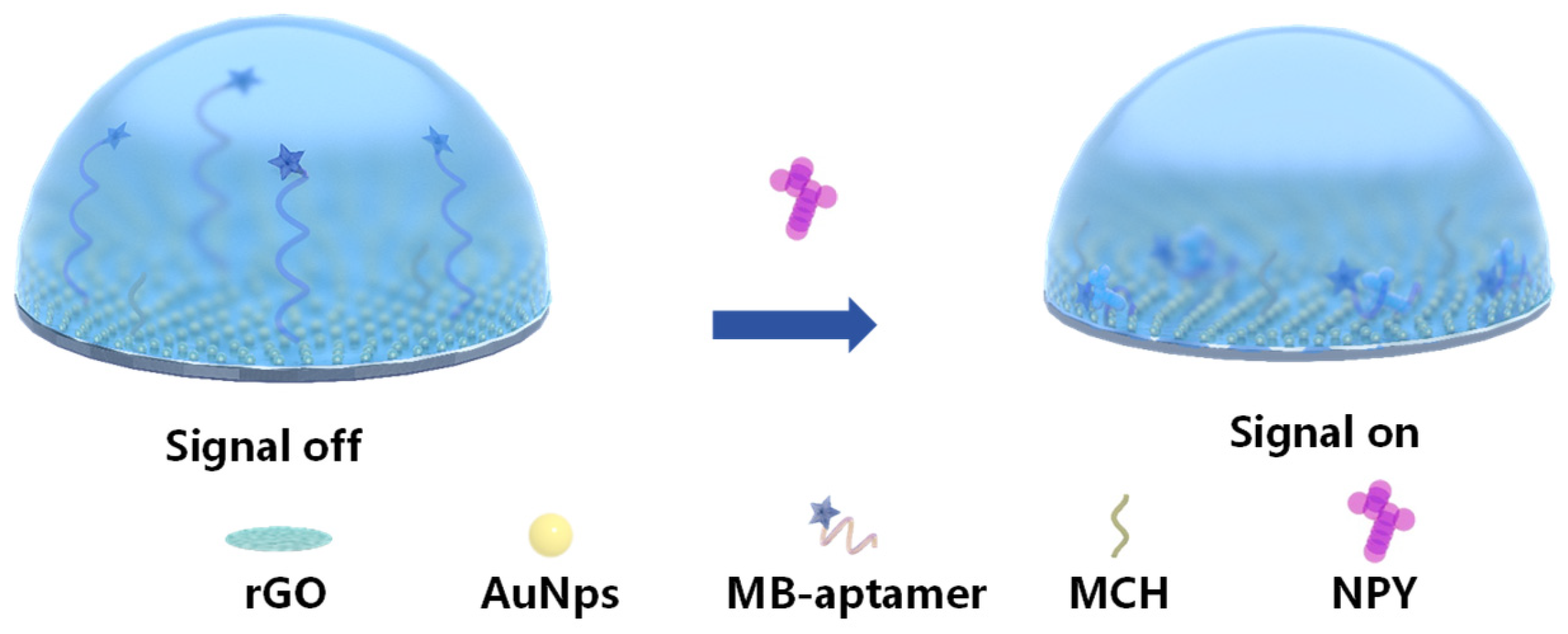
Scheme 1). The rGO/AuNP layer served as a conductive and high-surface-area immobilization interface, while the MB-labeled aptamer enabled direct square-wave voltammetry (SWV)-based signal readout. Furthermore, the sensing platform was integrated with an agarose hydrogel-assisted sampling interface and a reverse-iontophoresis-compatible wearable configuration. The developed platform was systematically evaluated in terms of sensitivity, selectivity, reproducibility, mechanical stability, and recovery performance in artificial sweat. Compared with previously reported graphene/gold-based NPY sensing systems, the present platform combines flexible screen-printed electrodes, artificial sweat validation, and wearable-compatible sampling integration, thereby extending NPY sensing toward portable and non-invasive biofluid monitoring applications. This integrated design provides a proof-of-concept platform for sweat-related NPY analysis and highlights the translational potential of wearable electrochemical sensing for future biofluid monitoring applications.
2. Materials and Methods
2.1. Materials and Apparatus
The Neuropeptide Y (NPY)-specific aptamer, purified by HPLC, was purchased from Sangyo Biotech (Shanghai, China). Its sequence was 5′-HS-SH C6-AGC AGC ACA GAG GTC AGA TGC AAA CCA CAG CCT GAG TGG TTA GCG TAT GTC ATT TAC GGA CCT ATG CGT GCT ACC GTG AA-MB-3′, with a methylene blue (MB) modification at the 3′ terminus completed by the supplier. Tris-HCl buffer (1 M, pH 8.0, sterile) was also obtained from Sangyo Biotech. NPY and tetrachloroauric acid (HAuCl4) were used directly. Artificial sweat (pH 7.4) was acquired from Yuan Ye (Shanghai, China). Additional chemicals included NaCl, MgCl2, FeCl3, K3[Fe(CN)6], K4[Fe(CN)6], Tris[2-carboxyethyl] phosphine (TCEP), ultrapure water, glucose (Glu), cortisol, BSA, graphene oxide dispersion (2 mg/mL), cysteine, agarose, and phosphate-buffered saline (PBS, 0.1 M, pH 7.4). All reagents were of analytical grade and used without further purification. Scanning electron microscopy (SEM, FEI Inspect F50, Thermo Fisher, Waltham, MA, USA) and electrochemical analyses were performed on the Autolab electrochemical workstation (Metrohm, Herisau, Switzerland).
2.2. Preparation of rGO/AuNP-Modified SPE
First, 2 mL of graphene oxide dispersion (2 mg mL−1) was placed in a clean glass vial and stirred at room temperature for 30 min. L-cysteine was dissolved in 2 mL of ultrapure water and sonicated in an ice bath for 30 min. To optimize the reduction condition, different mass ratios of L-cysteine to GO (1:1, 2:1, 4:1, and 8:1) were investigated. The cysteine solution was then slowly added to the GO dispersion and stirred at room temperature for 1 h. For the fabrication of the final sensor, the optimal mass ratio of 4:1 was used. Screen-printed electrodes (SPEs) were rinsed with ultrapure water, dried, and treated with plasma. Then, 5 μL of the GO/L-cysteine mixture was drop-cast onto the working electrode area. The electrodes were placed in a sealed container and incubated in a 70 °C water bath for 12 h to obtain SPE/rGO. To optimize AuNP deposition, different electrodeposition times (20, 30, 40, 50, and 60 s) were examined in 1.5 mg mL−1 HAuCl4 solution at −0.6 V. For the fabrication of the final sensor, the optimal deposition time of 50 s was used. After deposition, the electrodes were rinsed with ultrapure water and dried at 60 °C to obtain SPE/rGO/AuNPs.
2.3. Fabrication of NPY Aptasensor
The aptamer was reduced using tris (2-carboxyethyl) phosphine (TCEP). A 200 µL solution of 15 µM aptamer was mixed with 5 µL of 1 M TCEP in binding buffer (50 mM Tris-HCl, 137 mM NaCl, 5 mM MgCl2) and incubated at room temperature for 30 min. After dilution, 7 µL of the solution was dropped onto the electrode surface and incubated at 4 °C for 18 h. Unbound aptamers were removed by rinsing, and the electrode was dried under nitrogen. Subsequently, 5 µL of 1 mM β-mercaptoethanol (MCH) was added and left for 30 min to block residual active sites on the gold surface. The electrode was rinsed and nitrogen-dried to obtain the final SPE/rGO/AuNPs aptasensor.
2.4. NPY Detection with Aptasensor
All cyclic voltammetry (CV) and electrochemical impedance spectroscopy (EIS) measurements were carried out in a 5 mM [Fe(CN)6]3−/4− solution containing 0.1 M KCl as the supporting electrolyte. PBS and artificial sweat solutions with varying NPY concentrations were directly applied to the working electrode (10 μL). Square-wave voltammetry (SWV) measurements were performed over a potential range from −0.6 V to 0.2 V (vs. Ag/AgCl) with a step potential of 5 mV, a modulation amplitude of 0.1 mV, a frequency of 5 Hz, an interval time of 0.2 s, and a scan rate of 0.025 V s−1. ΔI represents the change in current, where ΔI = I − I0, I is the peak SWV current under test conditions and I0 is the peak SWV current in the absence of NPY. The limit of detection (LOD) was calculated from blank measurements according to the 3σ criterion. Specifically, the threshold signal was defined as ΔILOD = ΔIblank + 3.3σblank, where σblank is the standard deviation of repeated blank measurements (n = 3). The corresponding NPY concentration was then obtained by substituting ΔILOD into the logarithmic calibration equation.
3. Results and Discussion
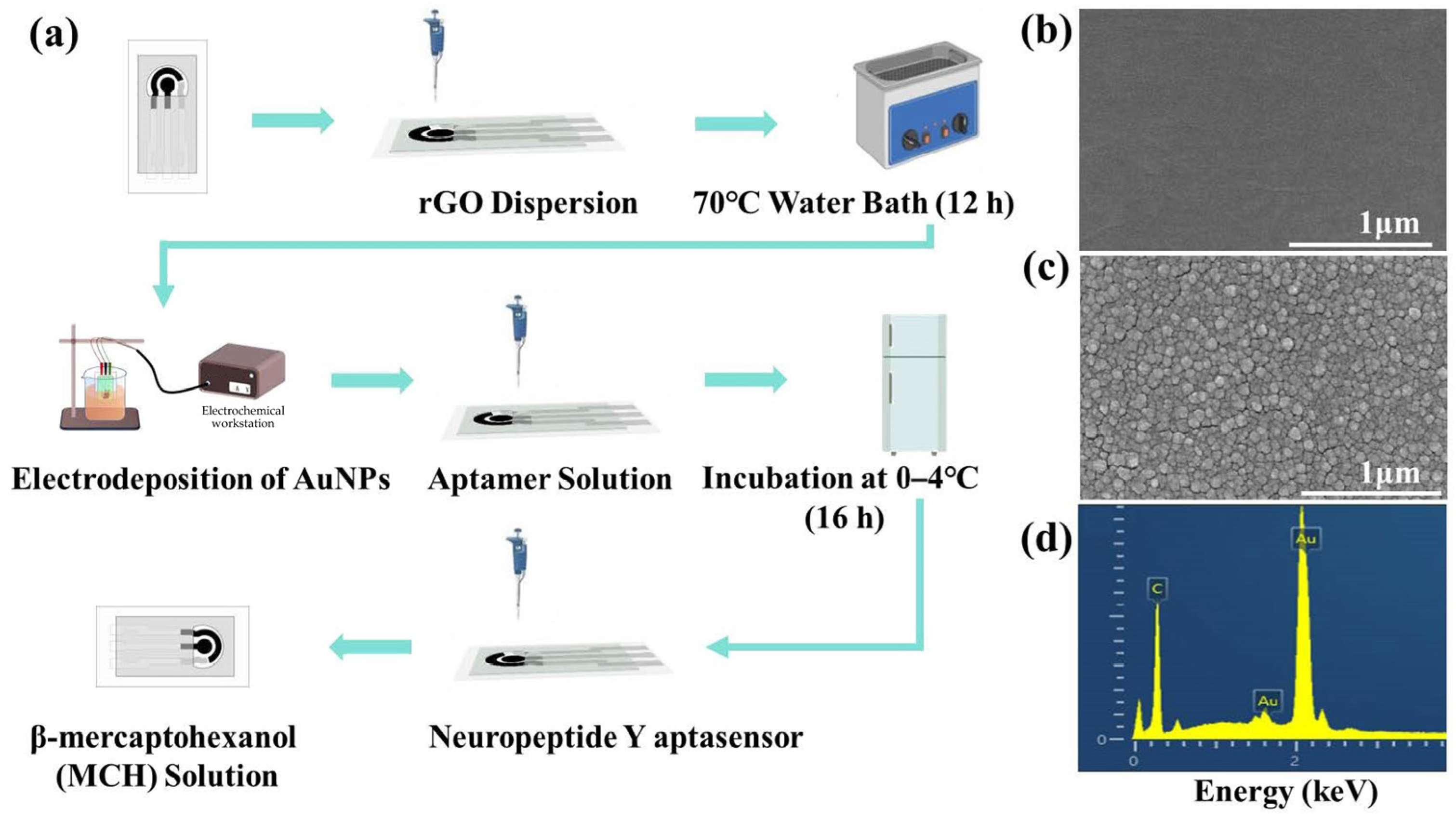
Figure 1a illustrates the fabrication procedure of the rGO/AuNP-based electrochemical aptasensor for NPY detection. The preparation process involves the drop-casting of rGO onto the screen-printed electrode (SPE), followed by electrodeposition of Au nanoparticles (AuNPs), immobilization of the methylene blue-labeled aptamer, and subsequent blocking with β-mercaptohexanol (MCH) to obtain the final NPY aptasensor. The surface morphology of the modified electrodes was characterized by scanning electron microscopy (SEM). As shown in
Figure 1b, the rGO-modified SPE exhibits a relatively uniform and smooth surface morphology, indicating that rGO forms a continuous coating on the electrode surface, which provides a conductive substrate for subsequent AuNP deposition. After electrodeposition, densely distributed AuNPs with a well-defined spherical morphology are observed on the rGO surface (
Figure 1c), confirming the successful formation of the nanostructured Au layer. The corresponding energy-dispersive X-ray spectroscopy (EDS) spectrum (
Figure 1d) displays characteristic peaks of Au and C. The C signal originates from both rGO and the conductive carbon ink substrate of the SPE, while the pronounced Au signal further verifies the successful deposition of AuNPs on the electrode surface.
Electrochemical measurements were further carried out to evaluate the electrode modification process.
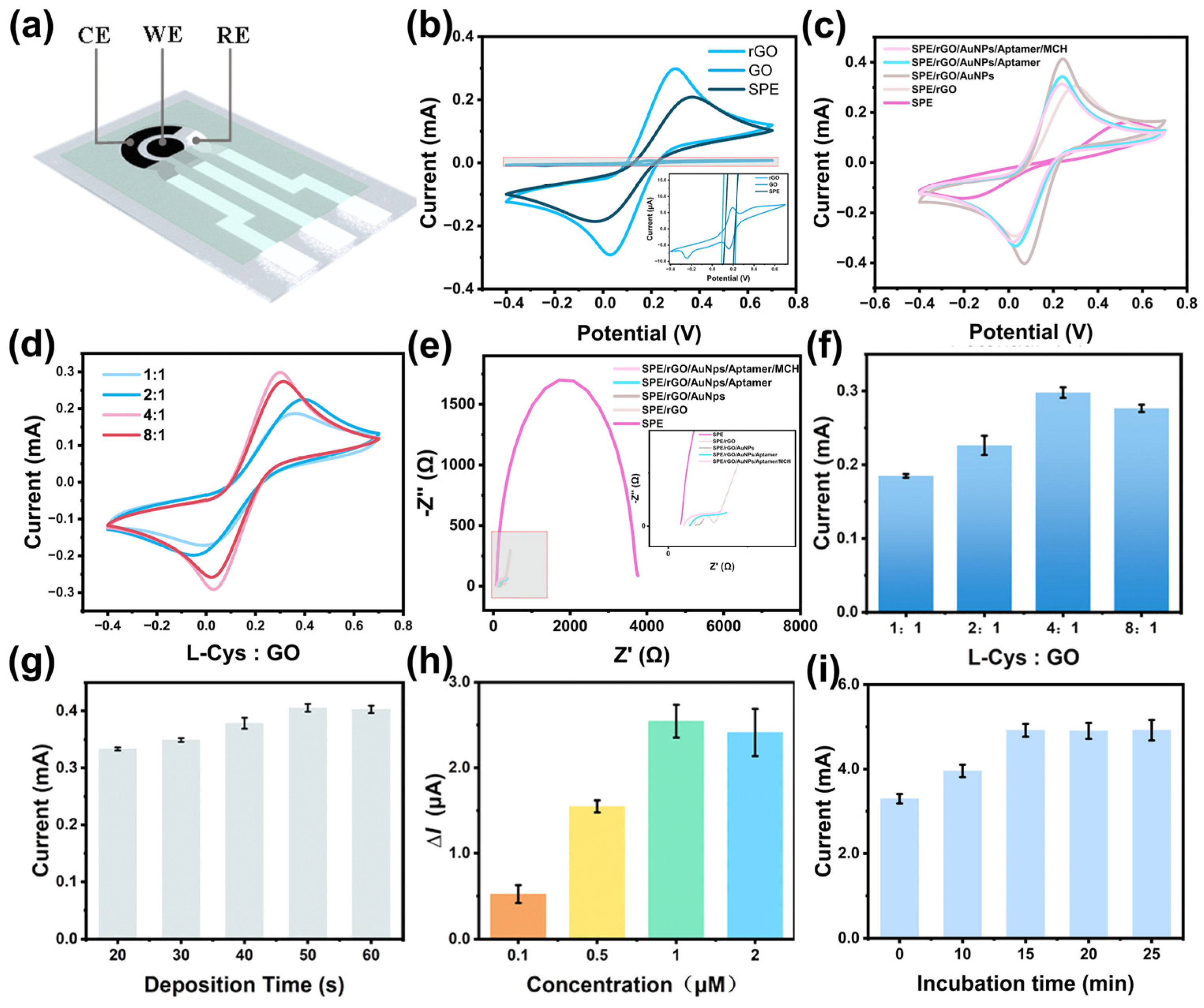
Figure 2a shows a schematic diagram of the screen-printed electrode (SPE), including the counter electrode (CE), working electrode (WE), and reference electrode (RE). To verify the successful reduction of GO, cyclic voltammetry (CV) measurements were performed in a 5 mM [Fe(CN)
6]
3−/4− solution containing 0.1 M KCl over a potential range of −0.4 to 0.7 V at a scan rate of 50 mV s
−1 using bare SPE, SPE/GO, and SPE/rGO electrodes. As shown in
Figure 2b, GO modification leads to a noticeable decrease in the redox peak currents due to its relatively low conductivity. In contrast, SPE/rGO exhibits significantly enhanced peak currents, indicating that GO was effectively reduced to rGO. To further monitor each modification step, cyclic voltammetry (CV) and electrochemical impedance spectroscopy (EIS) measurements were conducted for SPE, SPE/rGO, SPE/rGO/AuNPs, SPE/rGO/AuNPs/Aptamer, and SPE/rGO/AuNPs/Aptamer/MCH electrodes. As shown in
Figure 2c,e, the EIS spectra were further fitted using an equivalent circuit model to quantitatively evaluate the interfacial electron-transfer properties (
Figure S3, Supplementary Materials). The corresponding Rct values (
Table S1, Supplementary Materials) were determined to be 3584.0 Ω, 110.2 Ω, 22.6 Ω, 240.7 Ω, and 219.4 Ω for SPE, SPE/rGO, SPE/rGO/AuNPs, SPE/rGO/AuNPs/Aptamer, and SPE/rGO/AuNPs/Aptamer/MCH, respectively. The dramatic decrease in R
ct after rGO modification and subsequent AuNP deposition, together with the enhanced CV peak currents, confirms the significant improvement in electrode conductivity and electron-transfer kinetics. This enhancement can be attributed to the excellent conductivity of rGO and the additional conductive pathways and high-surface-area interface provided by AuNPs. Following aptamer immobilization and MCH blocking, the CV peak currents decreased while Rct increased markedly, owing to the formation of insulating biomolecular layers on the electrode surface. These results further verify the successful stepwise assembly of the sensing interface.
To further improve the electrochemical performance of the sensor, the mass ratio of L-cysteine to graphene oxide was optimized. As shown in
Figure 2d,f, the oxidation peak current gradually increases with increasing L-cysteine content and reaches a maximum at a ratio of 4:1. When the ratio is further increased to 8:1, the current slightly decreases, which may be attributed to excessive cysteine coverage that hinders electron transfer. Therefore, a ratio of 4:1 was selected as the optimal condition for subsequent experiments. The electrodeposition time of AuNPs was also optimized to achieve the best electrochemical performance. As shown in
Figure 2g, the oxidation peak current increases with increasing deposition time from 20 to 50 s, indicating improved conductivity and effective formation of AuNPs. When the deposition time is extended to 60 s, the current response shows only a slight increase, suggesting that excessive deposition provides limited additional benefit. Therefore, 50 s was selected as the optimal electrodeposition time.
Furthermore, the aptamer concentration was optimized to obtain the best sensing response toward NPY. As illustrated in
Figure 2h, the signal change (ΔI) increases with increasing aptamer concentration and reaches a maximum at 1 μM, suggesting that an appropriate surface coverage of aptamer molecules was achieved at this concentration. Therefore, 1 μM was selected as the optimal aptamer concentration. Finally, the incubation time between the aptamer-modified electrode and NPY was optimized. As shown in
Figure 2i, the sensing response increases with incubation time and reaches a plateau at approximately 15 min, indicating that the binding between the aptamer and NPY approaches equilibrium. Therefore, an incubation time of 15 min was selected for subsequent experiments.
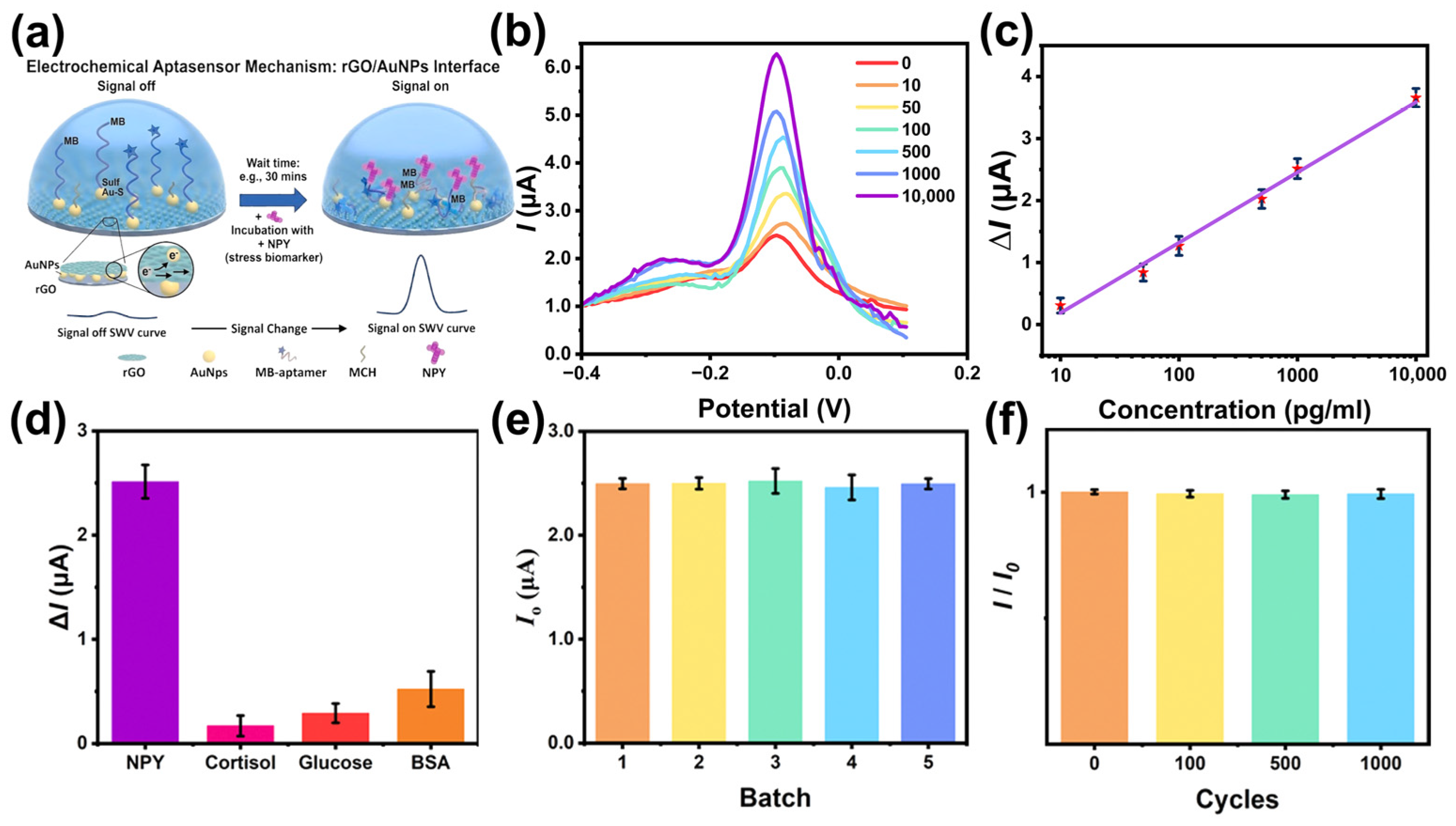
Figure 3a illustrates the sensing mechanism of the rGO/AuNP-based electrochemical aptasensor for NPY detection. Upon binding of NPY to the methylene blue (MB)-labeled aptamer immobilized on the electrode surface, the interfacial electron-transfer behavior is altered, resulting in a measurable change in the square-wave voltammetry (SWV) signal. The concentration-dependent response of the aptasensor toward NPY in PBS is shown in
Figure 3b. As the NPY concentration increases from 0 to 10,000 pg mL
−1, the SWV peak current gradually increases, indicating enhanced interactions between NPY and the MB-labeled aptamer. This binding process influences the spatial orientation of the MB tag and thereby modulates the electron-transfer efficiency between MB and the electrode surface. As shown in
Figure 3c, a clear linear relationship is observed between ΔI and NPY concentration within the tested range. The regression equation can be expressed as ΔI
μA = (1.133 ± 0.049) log(C
NPY) [×10–12 g mL
−1] − (0.946 ± 0.121), with a correlation coefficient (R
2) of 0.991 (
n = 3). The sensitivity of the sensor was calculated to be 9.25 μA (lg[pg mL
−1])
−1 cm
−2. Based on repeated blank measurements and the 3σ criterion, the LOD was calculated to be 1.17 pg mL
−1 by converting the threshold current response through the logarithmic calibration equation. These results demonstrate that the aptasensor provides a stable and concentration-dependent electrochemical response toward NPY.
The selectivity of the electrochemical aptasensor was evaluated using cortisol, glucose, and bovine serum albumin (BSA) as potential interferents, representing endogenous small molecules, metabolites, and macromolecular proteins, respectively. As shown in
Figure 3d, under the conditions of 1 ng mL
−1 NPY and 100 ng mL
−1 interferents, the ΔI response toward NPY is significantly higher than that toward cortisol, glucose, and BSA, with all interference signals remaining below 0.7 μA. The non-overlapping error bars further confirm the statistical difference, indicating good selectivity of the sensor toward NPY. The inter-electrode reproducibility of the aptasensor was assessed using five independently prepared electrodes from the same fabrication batch. As shown in
Figure 3e, the initial peak currents (I
0) of the five electrodes are highly consistent, demonstrating good within-batch fabrication reproducibility. Batch-to-batch reproducibility was not systematically evaluated in this study and will be further investigated in future scale-up fabrication. To evaluate the mechanical durability of the sensor, cyclic bending tests were performed, in which one bending cycle was defined as bending the device to 90° and then returning it to a flat state. The electrochemical response toward 1000 pg mL
−1 NPY was recorded after 0, 100, 500, and 1000 bending cycles. As shown in
Figure 3f, the SWV peak current ratio (I/I
0) remains close to 1.0 without obvious decay, indicating that the rGO/AuNP-modified flexible electrode maintains stable interfacial integrity and electrochemical performance after repeated mechanical deformation.
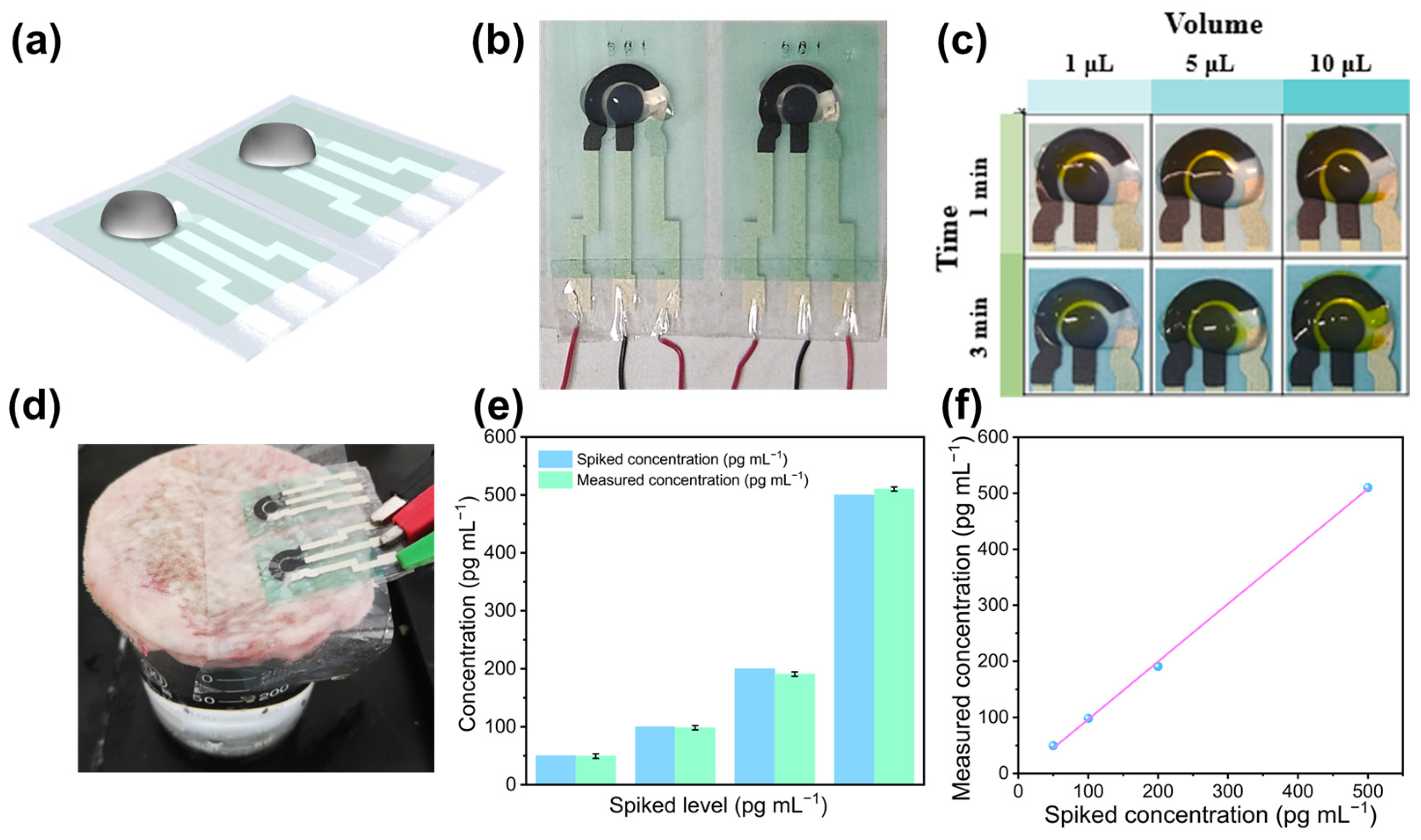
To explore the wearable compatibility of the aptasensor in sweat-related scenarios, a reverse-iontophoresis-compatible sensing platform was further constructed as a proof-of-concept device configuration. As shown in
Figure 4a, the wearable device integrates the electrochemical sensing unit with an electrically assisted sampling module, indicating the potential to combine sweat-related sampling and electrochemical detection in a single platform. It should be noted that, in the present study, quantitative NPY detection was validated using spiked artificial sweat rather than NPY extracted through human skin or a skin-mimicking membrane.
Figure 4b presents a photograph of the fabricated sensor, demonstrating its flexible structure and wearable-compatible configuration. To improve sweat collection and maintain interfacial stability, an agarose hydrogel layer was introduced onto the sensing area of the flexible electrode. The hydrogel-modified sensor was further evaluated by diffusion experiments using orange food dye at different loading volumes (1, 5, and 10 μL) and standing times (1 and 3 min). As shown in
Figure 4c, the 10 μL droplet exhibits the most uniform distribution within the hydrogel layer after 3 min, indicating sufficient liquid spreading and effective coverage of the sensing area. This result suggests that 10 μL is an appropriate sample volume for subsequent NPY detection and also demonstrates that the hydrogel-modified sensor can operate with only a small amount of test solution.
Figure 4d shows the wearable sensor during the artificial sweat extraction experiment, further demonstrating the feasibility of the integrated device for practical operation. To verify the analytical accuracy of the aptasensor in complex matrices, recovery experiments were performed in artificial sweat by spiking NPY standard solutions at concentrations ranging from 50 to 500 pg mL
−1. As shown in
Figure 4e, the measured concentrations are in good agreement with the corresponding spiked values, indicating satisfactory recovery performance. The detailed recovery results are summarized in
Table 1. The recoveries range from 91.8% to 107.8%, with relative standard deviations (RSDs) below 5%, confirming the high analytical accuracy of the developed aptasensor in artificial sweat. Furthermore, the relationship between the spiked and measured NPY concentrations is shown in
Figure 4f, where a good linear correlation is obtained. These results confirm that the developed electrochemical aptasensor exhibits reliable quantitative performance in artificial sweat and supports its potential for sweat-related wearable analysis. However, several challenges remain before practical on-body NPY monitoring can be achieved. First, sweat secretion rate, pH, ionic strength, and biomolecular composition vary substantially among individuals and physiological states, which may affect aptamer accessibility and electrochemical signal stability. Second, skin deformation and body motion during long-term wear may disturb the hydrogel–electrode–skin interface and lead to unstable sampling or signal drift. Third, the agarose hydrogel layer must maintain sufficient hydration and anti-fouling performance during prolonged operation. In addition, reverse iontophoresis parameters should be optimized to balance sampling efficiency, skin comfort, and electrical safety. Therefore, future work will focus on real-sweat validation, skin-model extraction studies, long-term on-body stability assessment, and integration with miniaturized electronics to enable continuous wearable monitoring.



 ,
,